August 9th, 2026
(this post is long but it’s mostly photos and video – enjoy!)
Zambia, officially the Republic of Zambia, is a landlocked country in Southern Africa bordered by several countries: to the north by the DR, Tanzania to the northeast, Malawi to the east, Mozambique to the southeast, Zimbabwe and Botswana to the south, Namibia to the southwest, and Angola to the west. The capital city of Zambia is Lusaka.
Zambia is about twice the size of Germany, and slightly larger than Alberta and slightly smaller than Texas.
Originally inhabited by Khoisan peoples, the region was affected by the Bantu expansion of the 13th century. Following European expeditions in the eighteenth century, the British Empire began to consolidate control of the area following the 1890 British Ultimatum against the Portuguese, who had claimed the area between Angola and Mozambique in 1885. The lands were merged in 1911 to form Northern Rhodesia. For most of the colonial period, Zambia was governed by an administration appointed from London with the advice of the British South Africa Company.
On 24 October 1964, Zambia became independent of the United Kingdom as a republic in the Commonwealth, and prime minister Kenneth Kaunda became the first president. His socialist party maintained power from 1964 until 1991 with him playing a role in regional diplomacy, cooperating with the United States in search of solutions to conflicts in Zimbabwe (formerly Southern Rhodesia), Angola, and Namibia. From 1972 to 1991, Zambia was a one-party state with UNIP as the sole legal political party under the motto “One Zambia, One Nation” coined by Kaunda. Following the introduction of a multiparty system in the early 1990s, Kaunda was defeated in 1991. Zambia has since continued to experience peaceful transitions of power.
Natural resources in Zambia include minerals, wildlife, forestry, freshwater, and arable land. As of an estimate in 2018, 47.9% of the population is affected by multi-dimensional poverty.
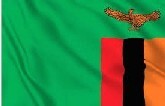
The flag was adopted on October 24, 1964 andfeatures a green field with an orange African fish eagle in flight over three vertical stripes of red, black, and orange. The colors symbolize the country’s natural resources (green), struggle for freedom (red), people (black), and mineral wealth (orange), with the eagle representing freedom and the ability to rise above challenges.
Currency: the Zambian Kwacha ZMW – $0.053 USD; $0.073 CDN
Gas: 25.29 ZMW – about $5.05 USD per gallon
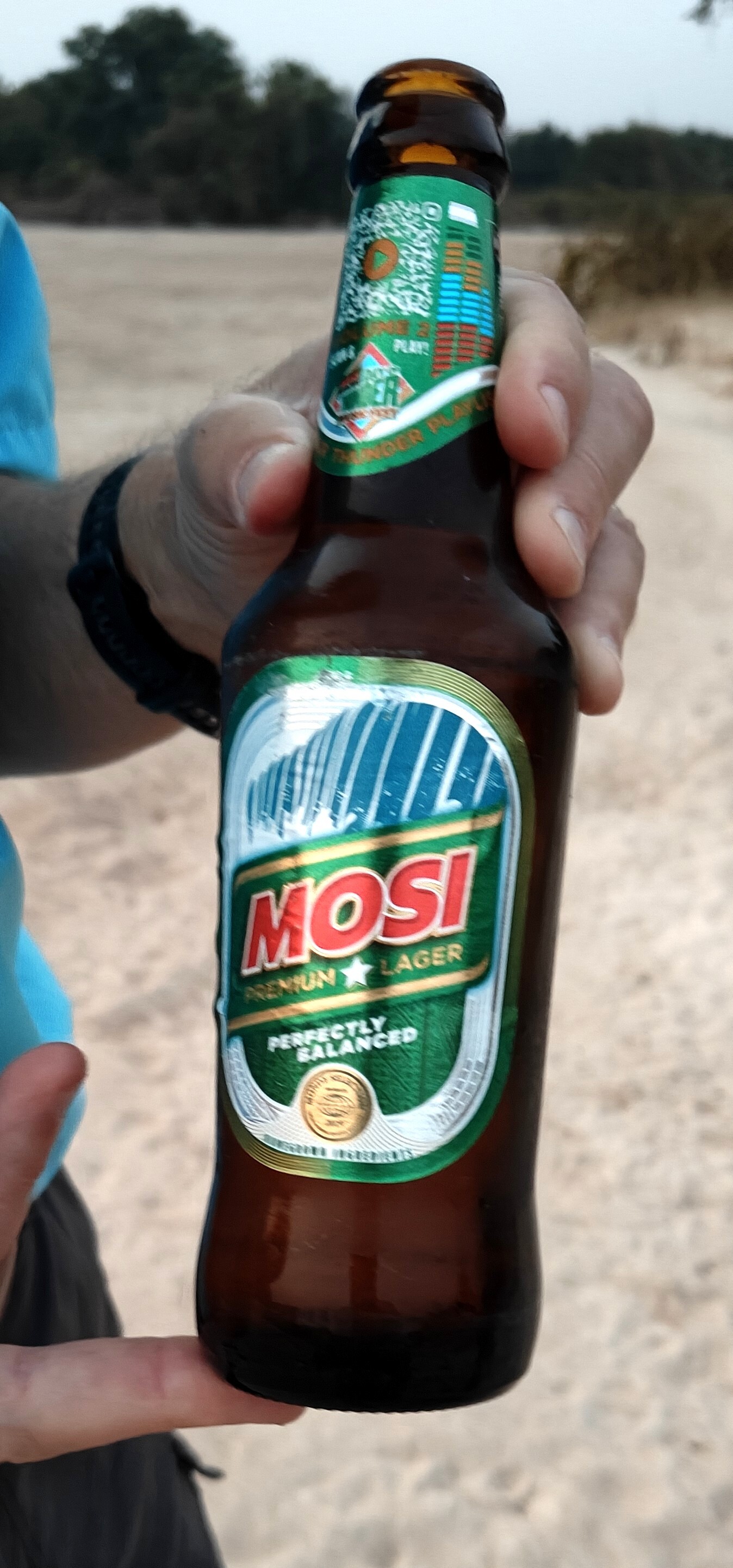
Beer: Mosi
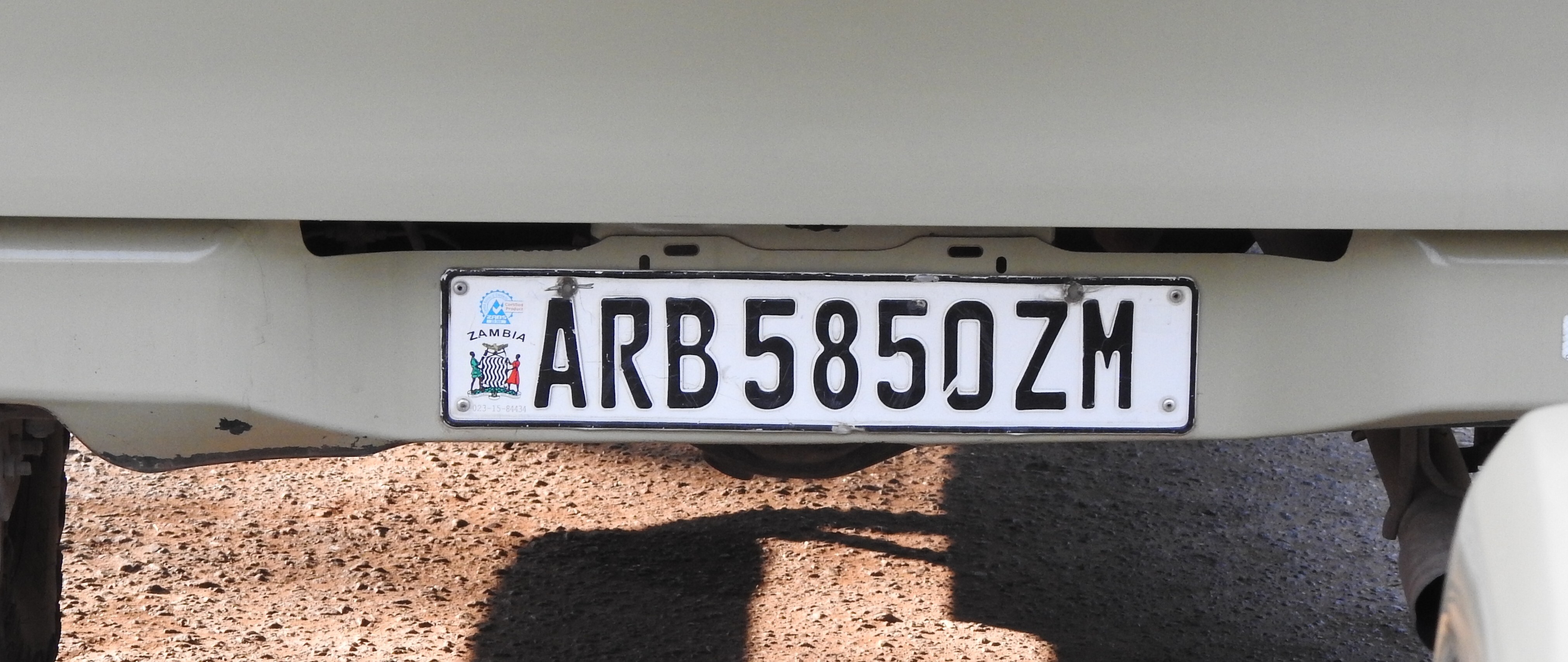
License plate:
We want to point out that we have been to Zambia before; when we lived in South Africa back in the mid 80’s, we visited, crossing the border on foot, on a trip to Victoria Falls in Zimbabwe. So we really did not visit much of the country at all.
August 9th, 2026
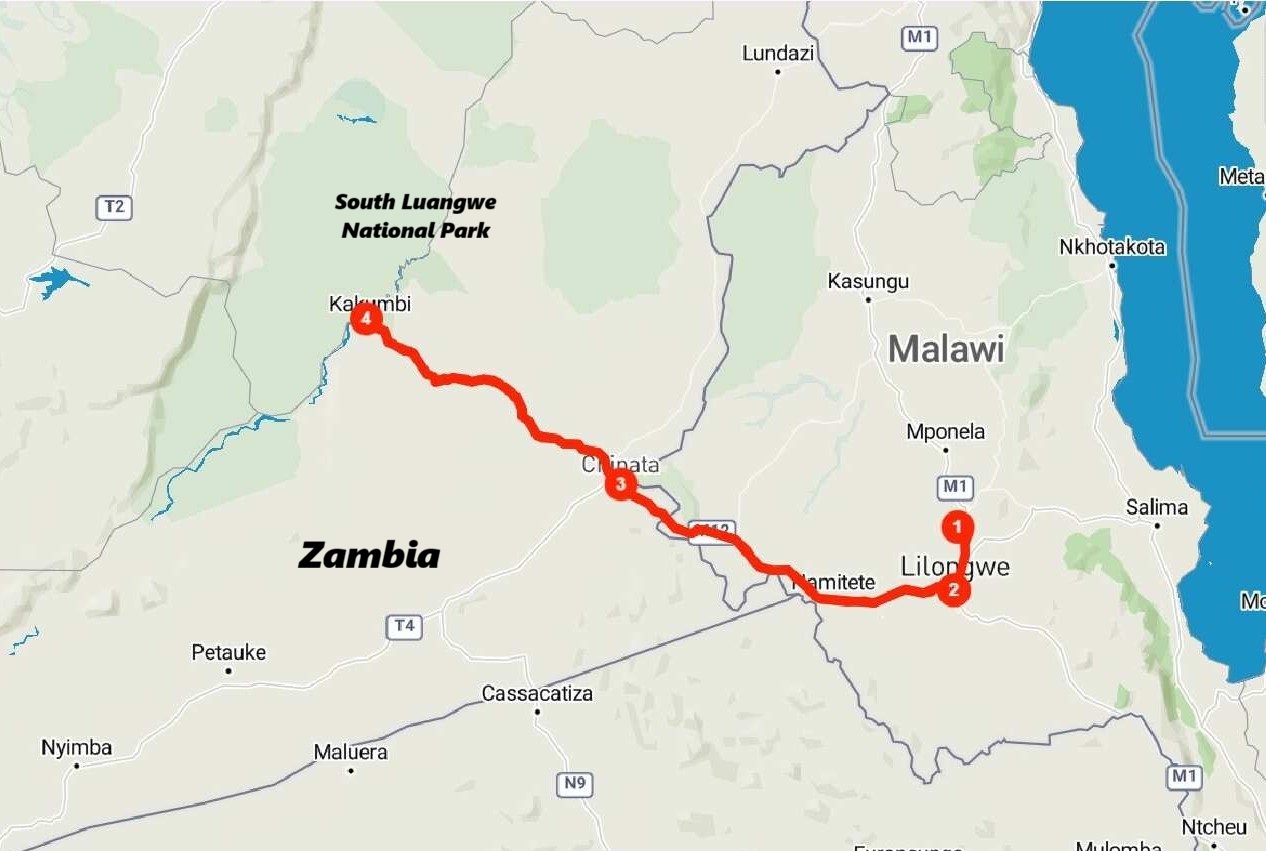
In order to get here, we flew from Johannesburg to Lilongwe, Malawi, landed safe and sound along with our bags. The first line up was the “Health Form” which we’d completed online but they needed to scan the QR code and that sent us from one line to another. Once again, our eSims worked perfectly. So far so good with Saily.
Next immigration, was a bit weird as we had received our multi entry visa online already so we started in the eVisa line and then had to go to a different line to get another stamp!
Customs was no issue and we went directly to an ATM for cash and then the Avis office where after a bit of paperwork (we needed permission to take the car across the border tomorrow), we were given a Suzuki Jimny and away we went.
It was approaching five o’clock now, we hoped to get to a shop and then our booked AirBNB in this city before dark to spend one night.

Well, the two grocery stories we’d found on Google, were not actually there and finally we just went to look for the Seven Eleven on the map only to find, it was not a 7-11 but a small grocery store. We managed to get a few things for dinner and some water. One thing that we found but was ridiculously priced was a flat of 24 of coke zero cans for which they wanted the equivalent of $84! Forget that!
Finding the apartment proved challenging because we are not used to the AirBNB app and didn’t realize there were “host provided directions” rather than the address given. The traffic was awful as it was Sunday night and we were near a big stadium. After finding the place and getting settled in, we could hear the “call to prayer” – we didn’t realize we’d be that close to a mosque. Oh well, ear plugs are always in our bags. Despite our info on Malawi being a mostly Christian country, we saw many more mosques than churches.
The place we rented was a large two bedroom apartment in a gated complex with AC and StarLink WiFi. After a light dinner we were off to bed by 9:30 as we wanted to get an early start tomorrow since we had no idea how bad the roads would be and how long the border crossing would take. It was not a very good night what with the noise of the stadium and the early morning call to prayer but we were up early as planned and left about 6:15.
Leaving this early meant we beat the city traffic but the road is not fast and full of pot holes – it reminded us of driving in Guatemala. We made it to the border by 8 after a number of “road blocks”. These are total waste of time. Sometimes it’s just a couple of cones, sometimes it’s a barrier but for the most part, as “whites” we just get waved through but about one third of the time they want to chat – they just ask how you are, where are you coming from and where you are going and then you’re on your way.
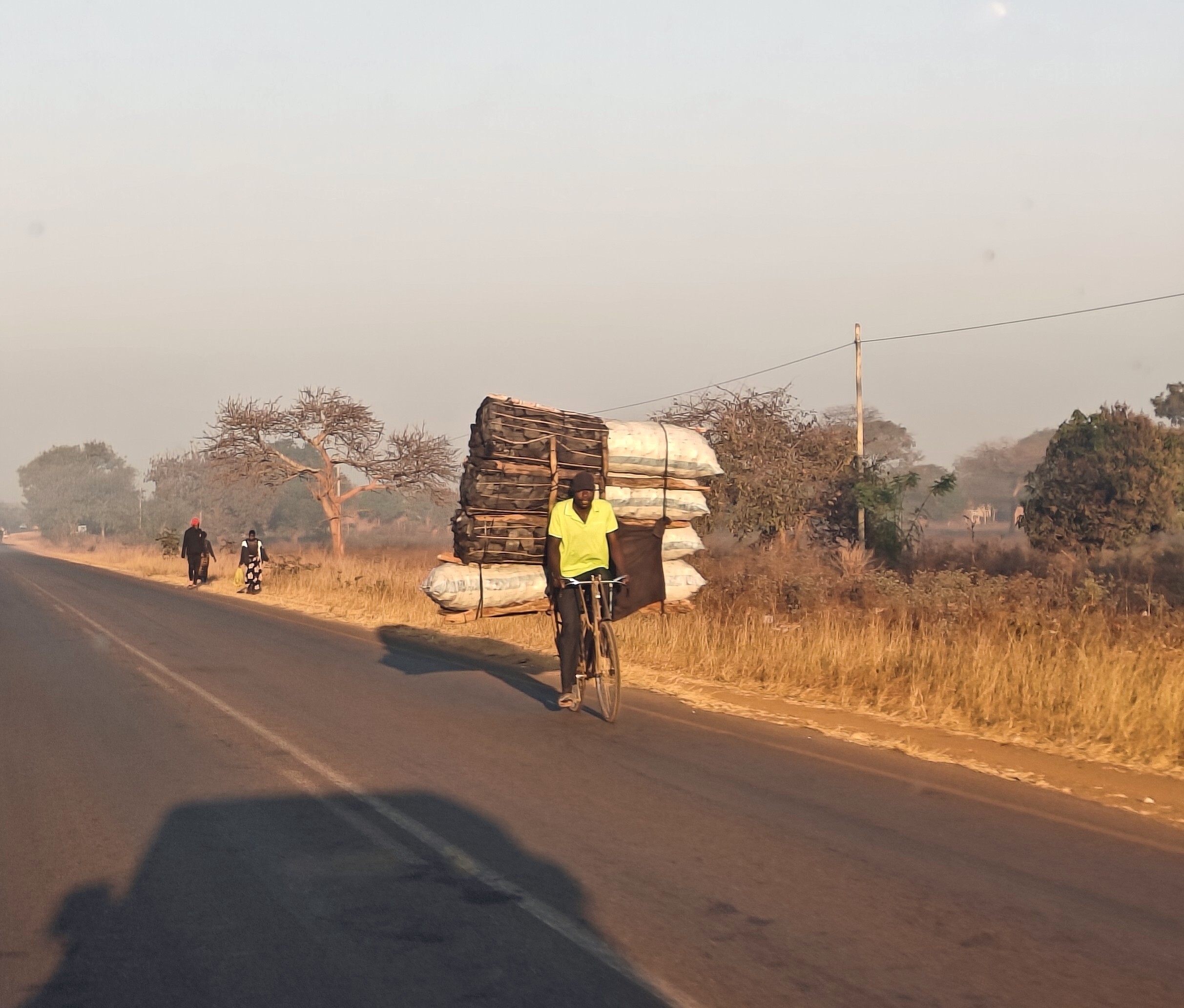
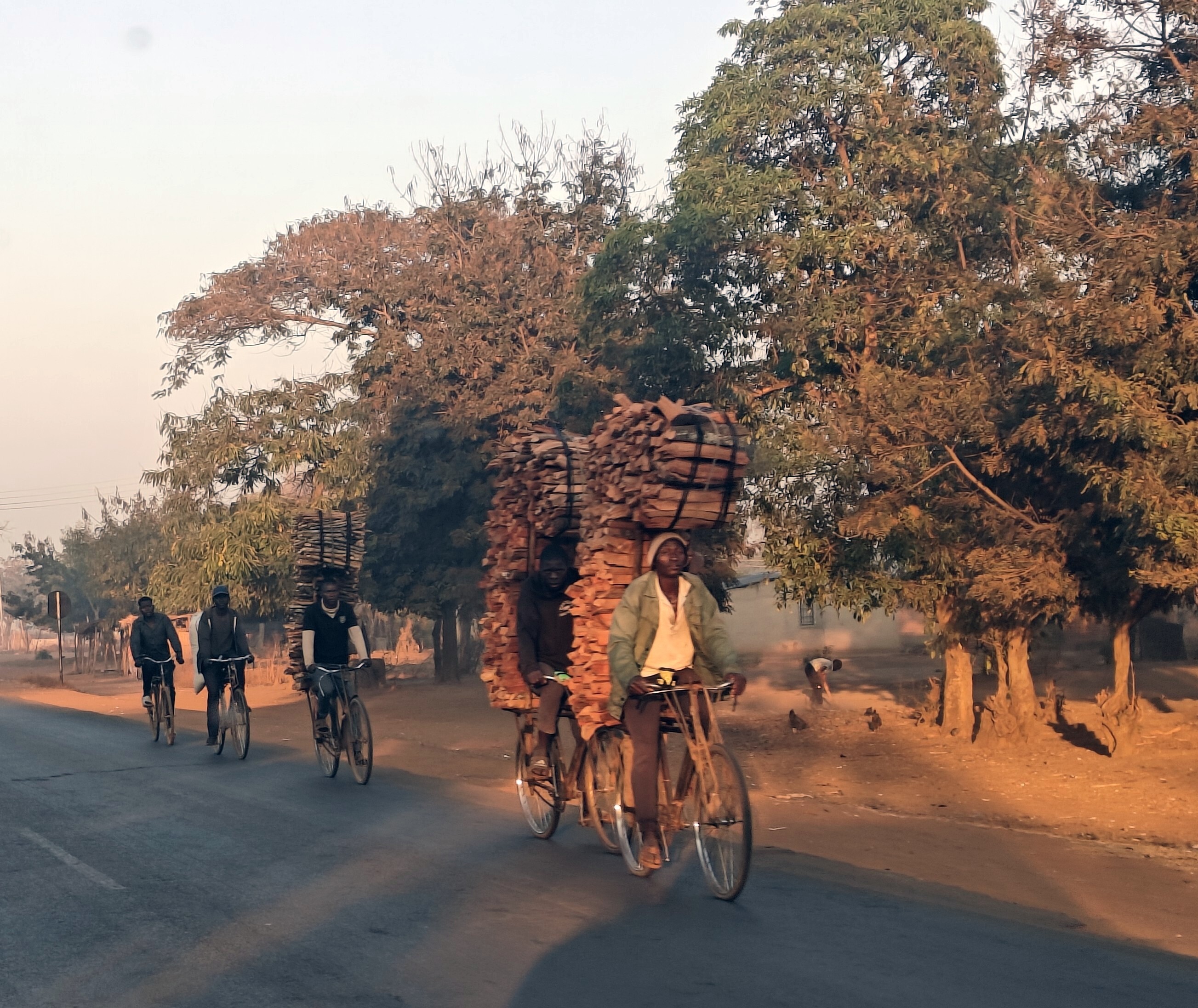
Enroute we observed how goods are transported in a country with very high petrol prices, too many people and a great deal of poverty:
At this border, they have what you call a “one stop” border for both countries. A “helper” named Alie approached us and offered his assistance – he was wearing an official vest and we felt confident he was legit (Doug confirmed this with a border agent and asked him what he would suggest for a “tip”). First we had to exit Malawi – we had purchased a multi entry visa for this country; no issues there. Then it was the Temporary Import Permit for the Car from Malawi and we paid $30 USD for that paperwork. Alie had prepped all that for us or assisted Doug in filling out forms. We didn’t have the exact amount in USD (they won’t take kwacha from foreigners) and we had to wait for change.
Then you walk a bit further down the building to the Zambian section where we received our stamps to enter the country, then it was Customs for the vehicle and payment of a number of fees: road tax, import tax and more. Again, we had to pay in USD but they didn’t have change and someone actually had to run to the other border office and get it – took at least 20 minutes this time. All in all, we spent nearly two hours going through border control – not the worst we’ve experienced but no where near the fastest. We’re sure without Alie, it would have taken even longer!
The roads here were better than inn Malawi and had no road blocks (so far).
Our first stop in Zambia was in the city of Chipata to get cash, and some drinks/snacks and petrol as it’s much cheaper here than in Malawi. Zambia was the first time we had issues with our eSims – we could never get bars or connect here; bad marks for Saily in this country. We got gas first, parked on the side of the station and Doug walked over to the ATM and then the SPAR grocery store for what we needed. We don’t like to both leave the vehicle when we have all our luggage in the back of the vehicle (it has no trunk) in plain view.
Like before, we had purchased Saily eSims for Zambia, but they never connected the entire four days we were here – once we get back to Malawi and assuming we never do connect, we’ll reach out for a refund.
The road to this point had been better in Zambia than Malawi but after we left the outskirts of Chipata it quickly deteriorated with long potholed sections. Ah, Africa!
We drove 130 km / 81 mi after that to reach the outskirts of South Luangwe National Park in the early afternoon.
We had looked into a few lodges and this seemed the most economical, not the cheapest and no where near the most expensive. We saw some that were $300+ per night! We got checked in at the Croc Valley Camp lodge, paid the 50% balance of our booking and booked six game drives (one today, two both Tuesday and Wednesday and one Thursday morning before leaving). The drives and four meals a day (tea time included which we did not participate in) were included in the price we paid. The only part that is not included is the daily $25 pp per day park entrance fee.

The weather was warmer than Joburg and Lilongwe – upper 20’s C / 80’s F and sunny. The next couple of days got warmer but nothing beyond 34C / 93F. It cooled down at night but not enough for Fran to sleep so we used AC every night.
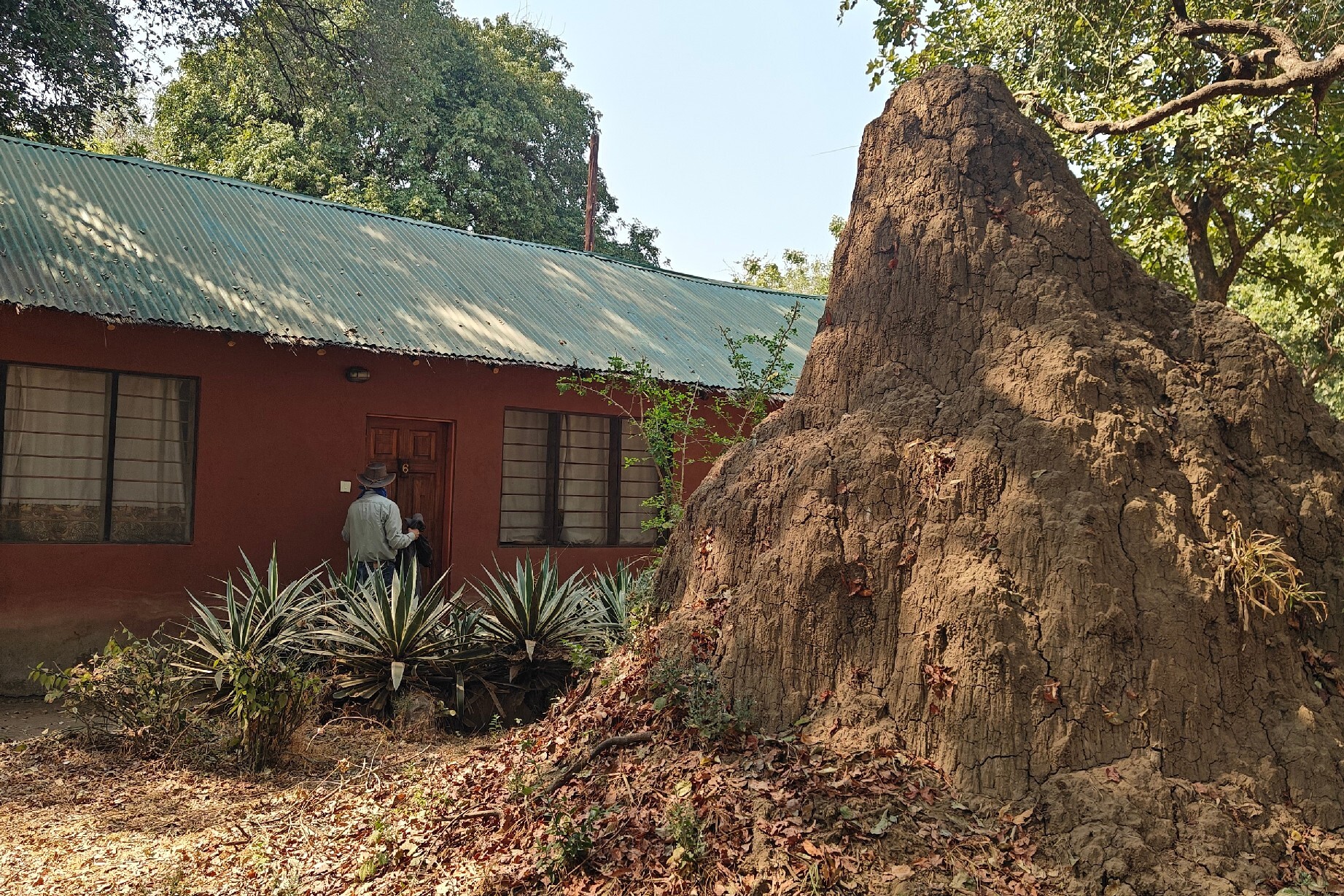
We were booked into a “turtle room” which had twin beds, a closet, AC and a desk – we had a shared bathroom – not our favourite but we made it work (the place was not busy). Outside our room is a giant termite hill:
 There is StarLink internet available in the bar/restaurant area only and to be honest, it functioned about half the time. The meals were served in a separate dining area and at some meals, we were all alone.
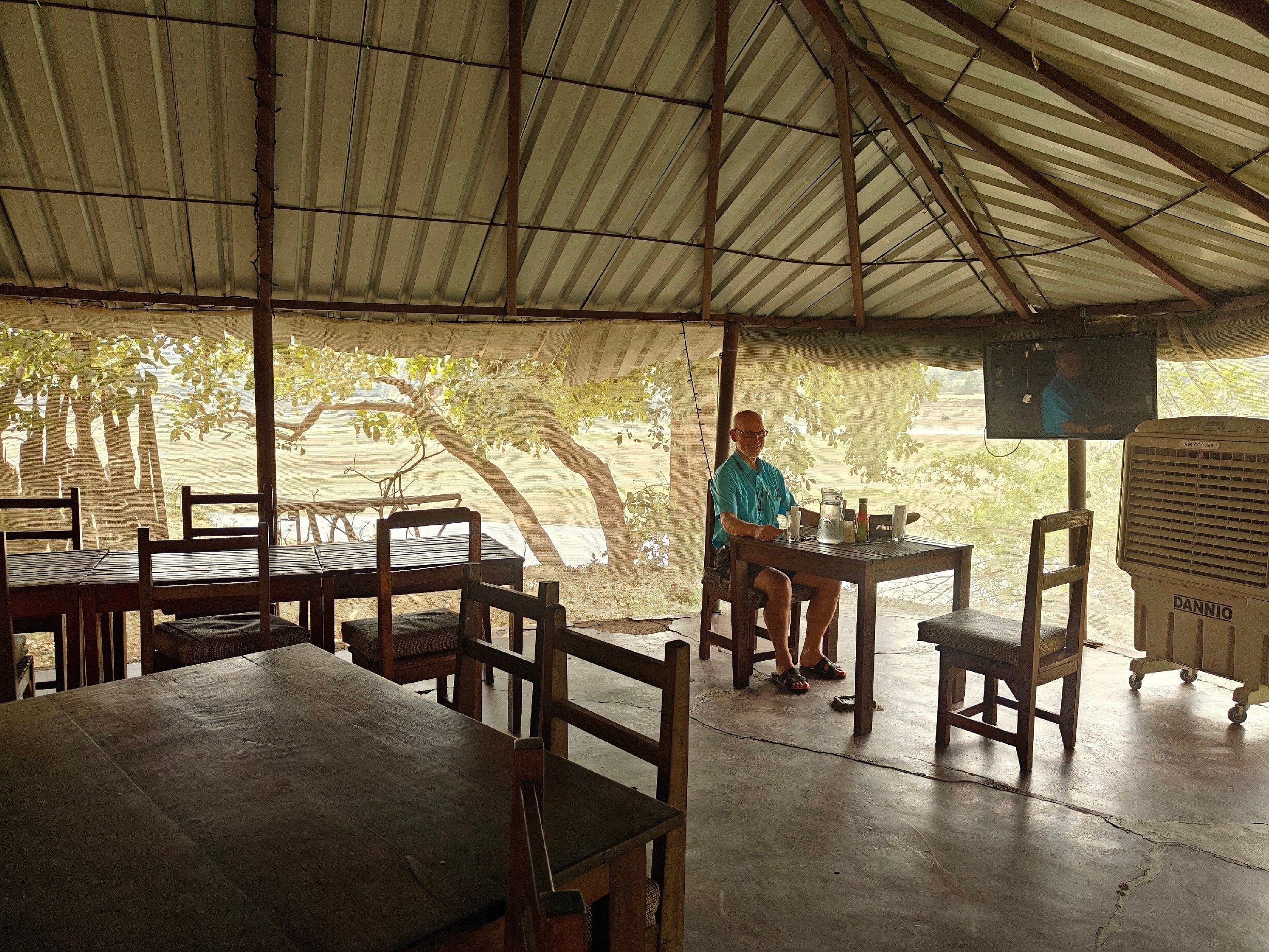
Many of the other guests here are on those giant overlanding buses and do their own meals. From the bar you can see crocs and hippos in the river which is rather low this time of year.
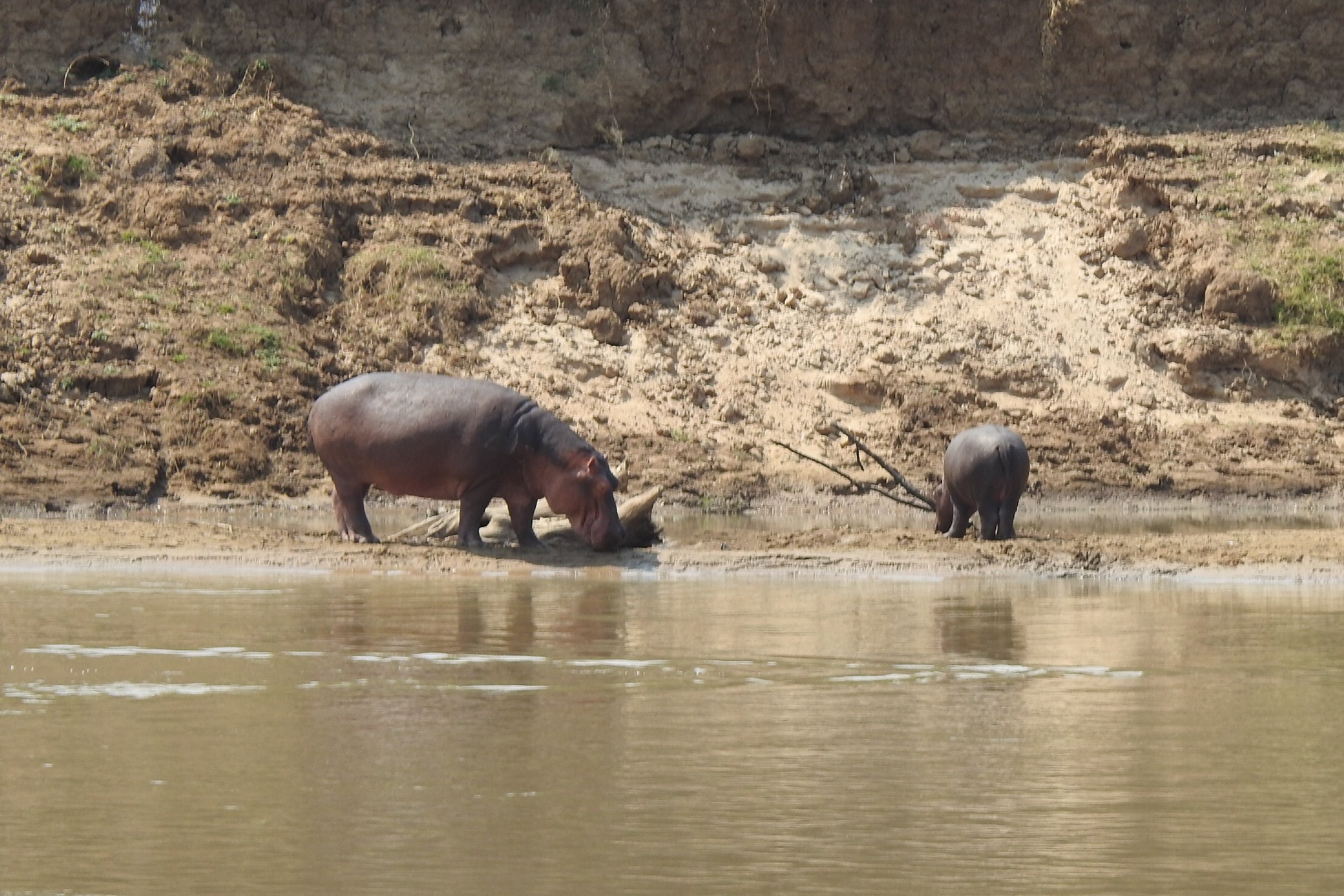
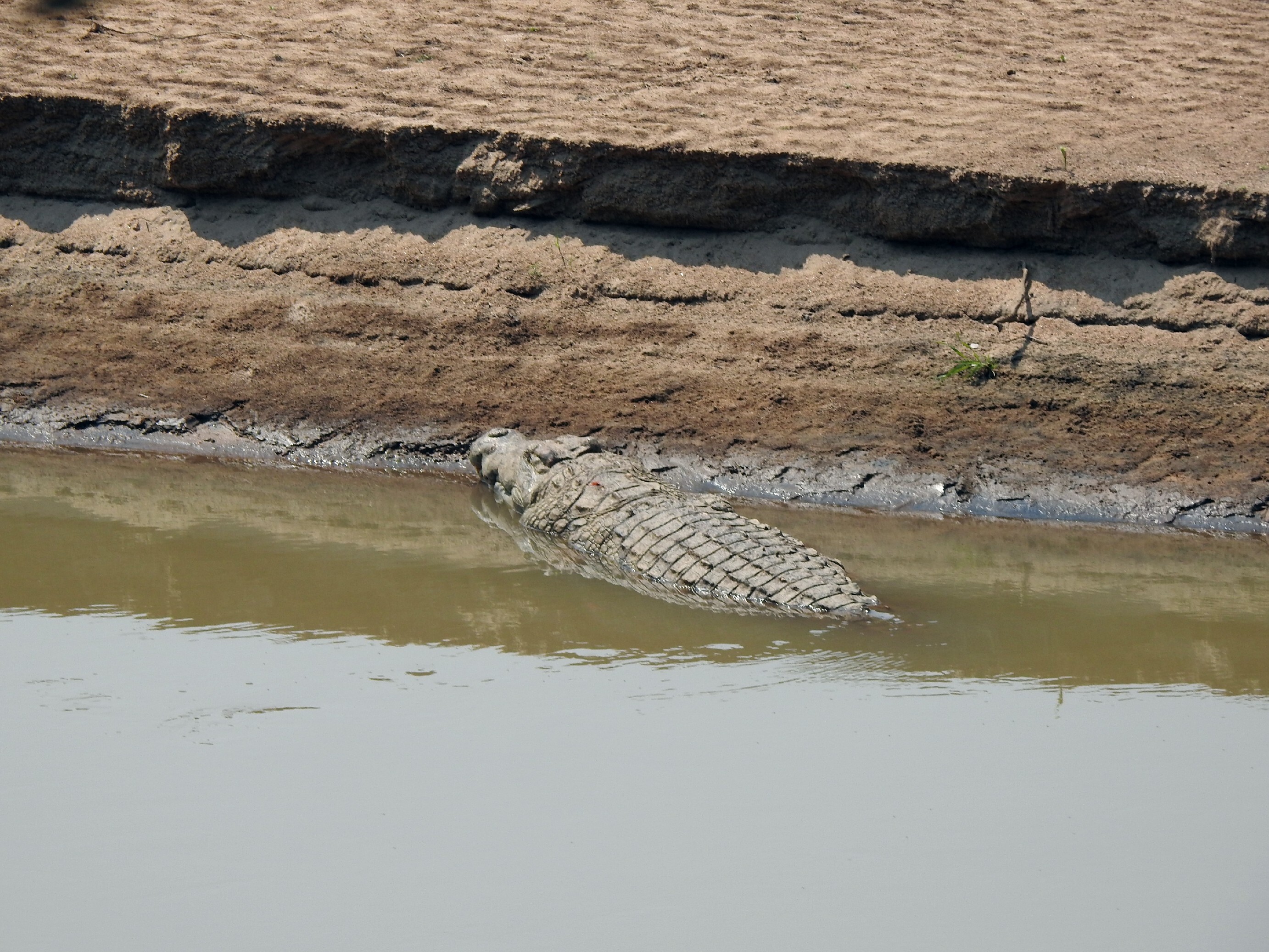

We settled into our room and went to the bar for WiFi and to read. We considered going in the pool to cool off as it’s considerably warmer here (near 30C / 86F) but sitting under the trees with a breeze off the river was enough. They actually had Coke Zero here so we were getting our caffeine every day.
At 4pm we were ready for our first safari drive in the national park. The night drives are from 4 to 8 and the morning ones are 6-10.
Our safari vehicle was full – it was us and seven young people from one of those huge overlanding touring rigs. During our time here there have been four overlanding buses and we’ve met people from around the world on them doing trips of 20 – 77 days in Africa. They sleep in tents each night, do their own meals and pay extra for the game drives.
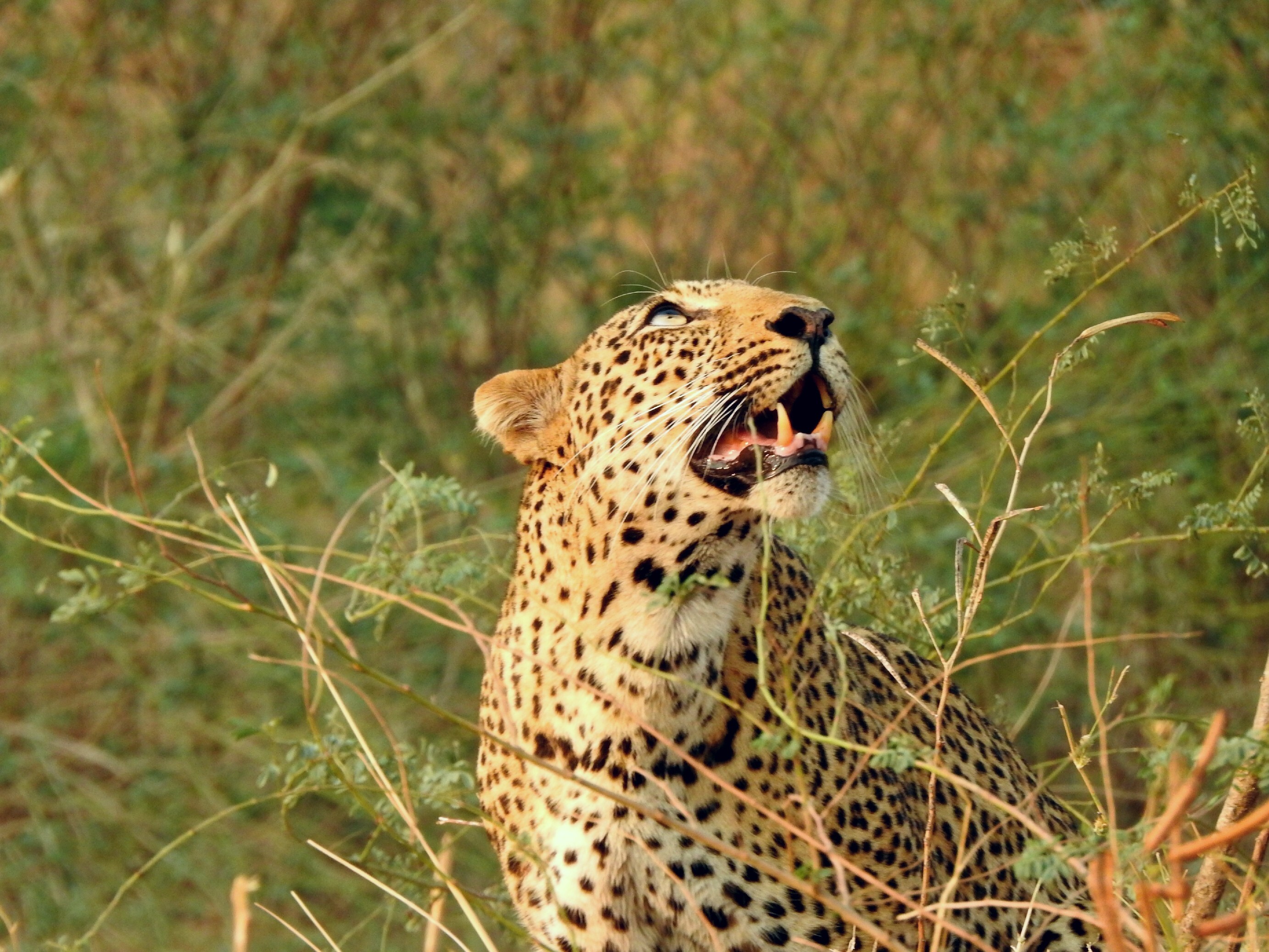
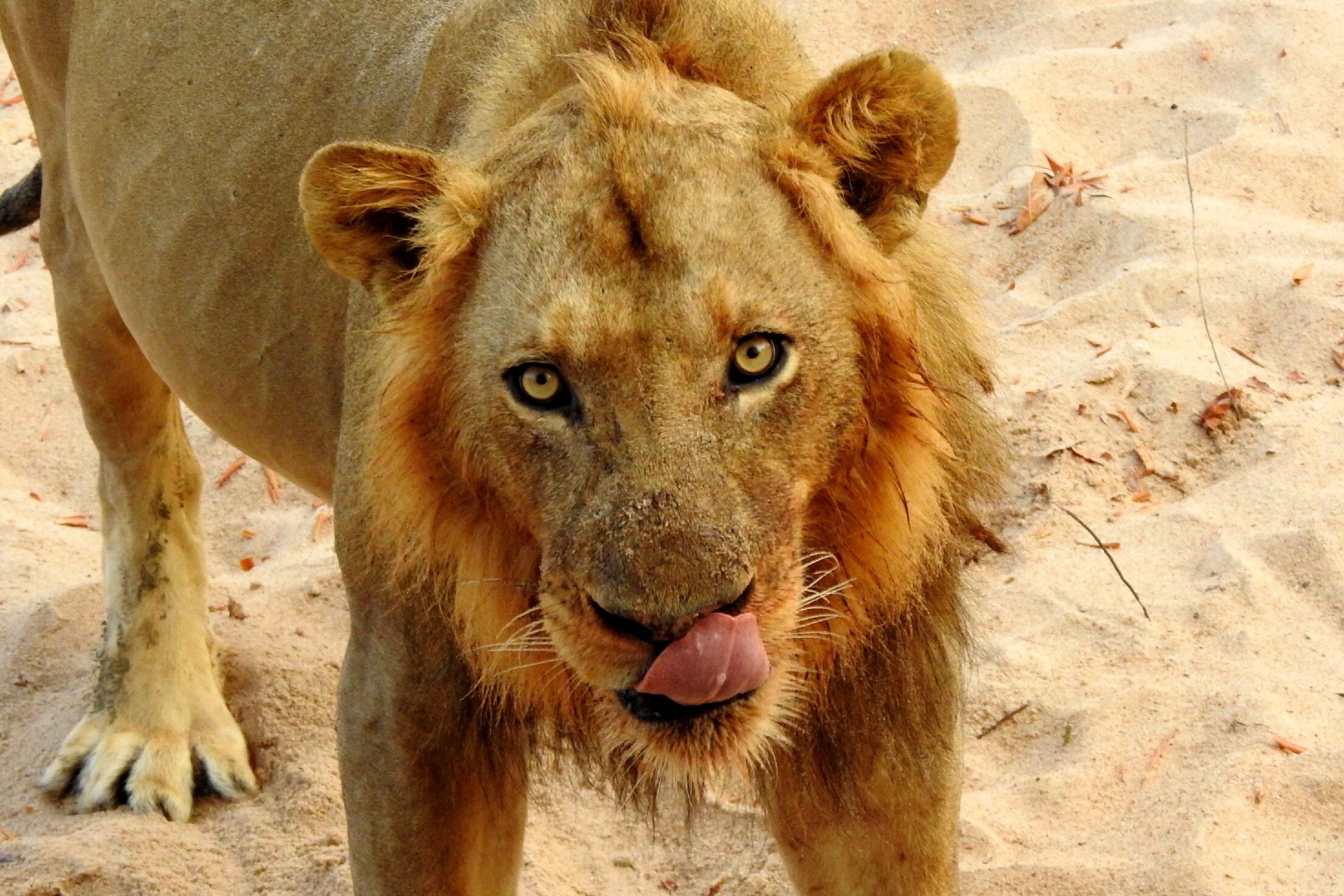
This park has four of the Big Five: lion, leopard, elephant and cape buffalo – missing rhino. The last one was here in 1997 so it’s been a while. Well, this first drive we saw all FOUR! As well as a hyena helping itself to the kill of a leopard!
Here’s a list with photos of what we saw this first drive:
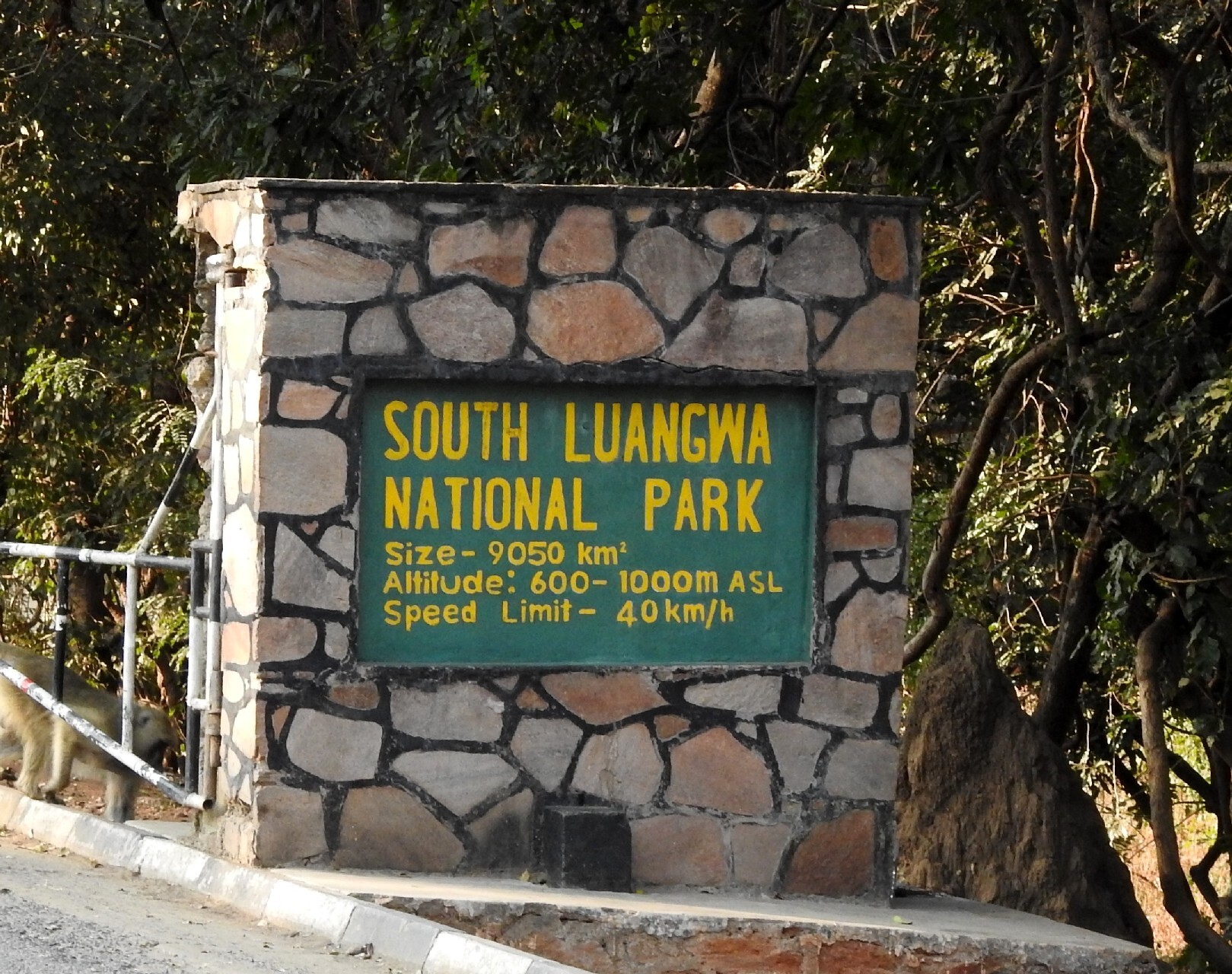
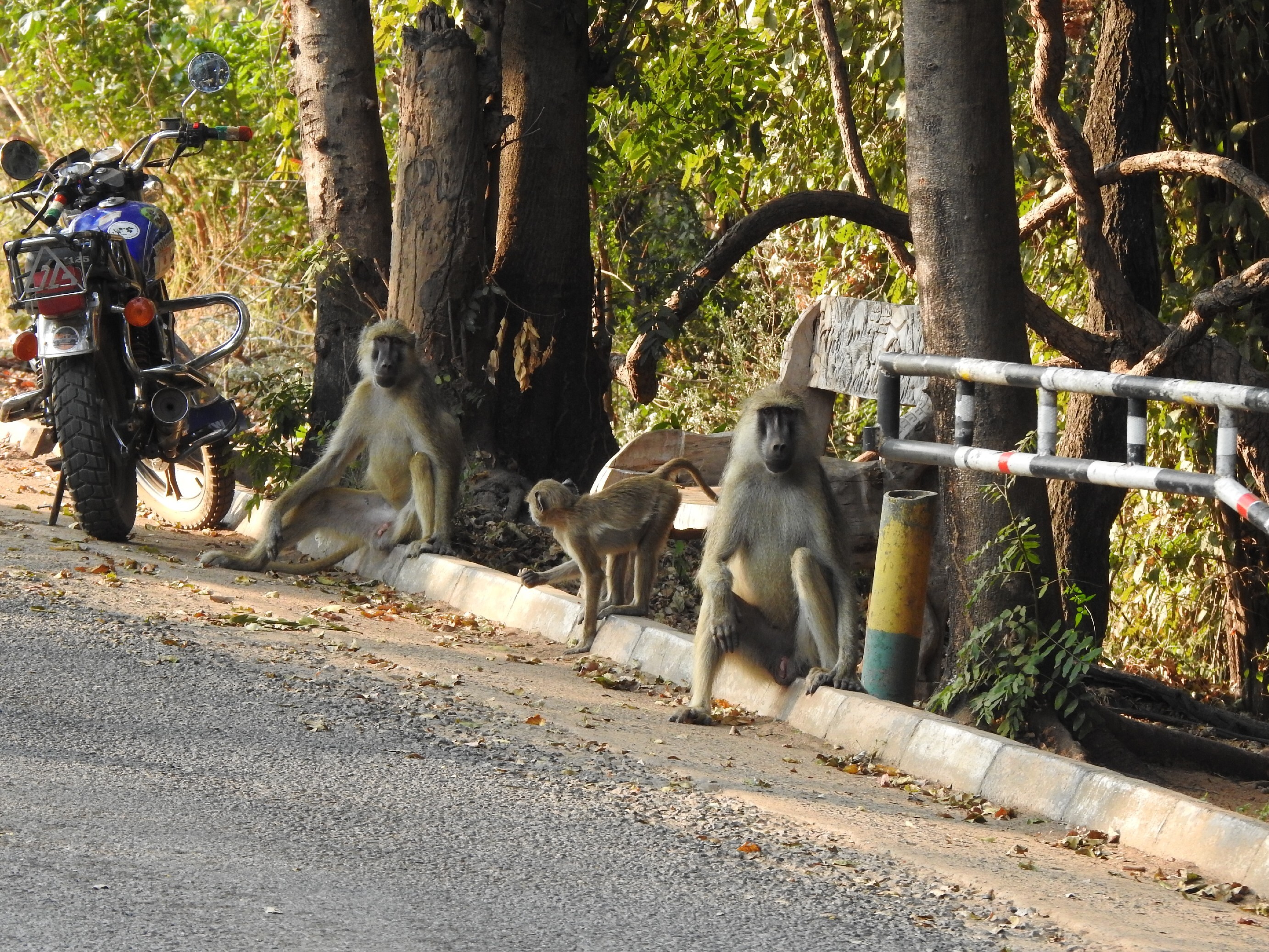
There were yellow baboons at the entrance gate:
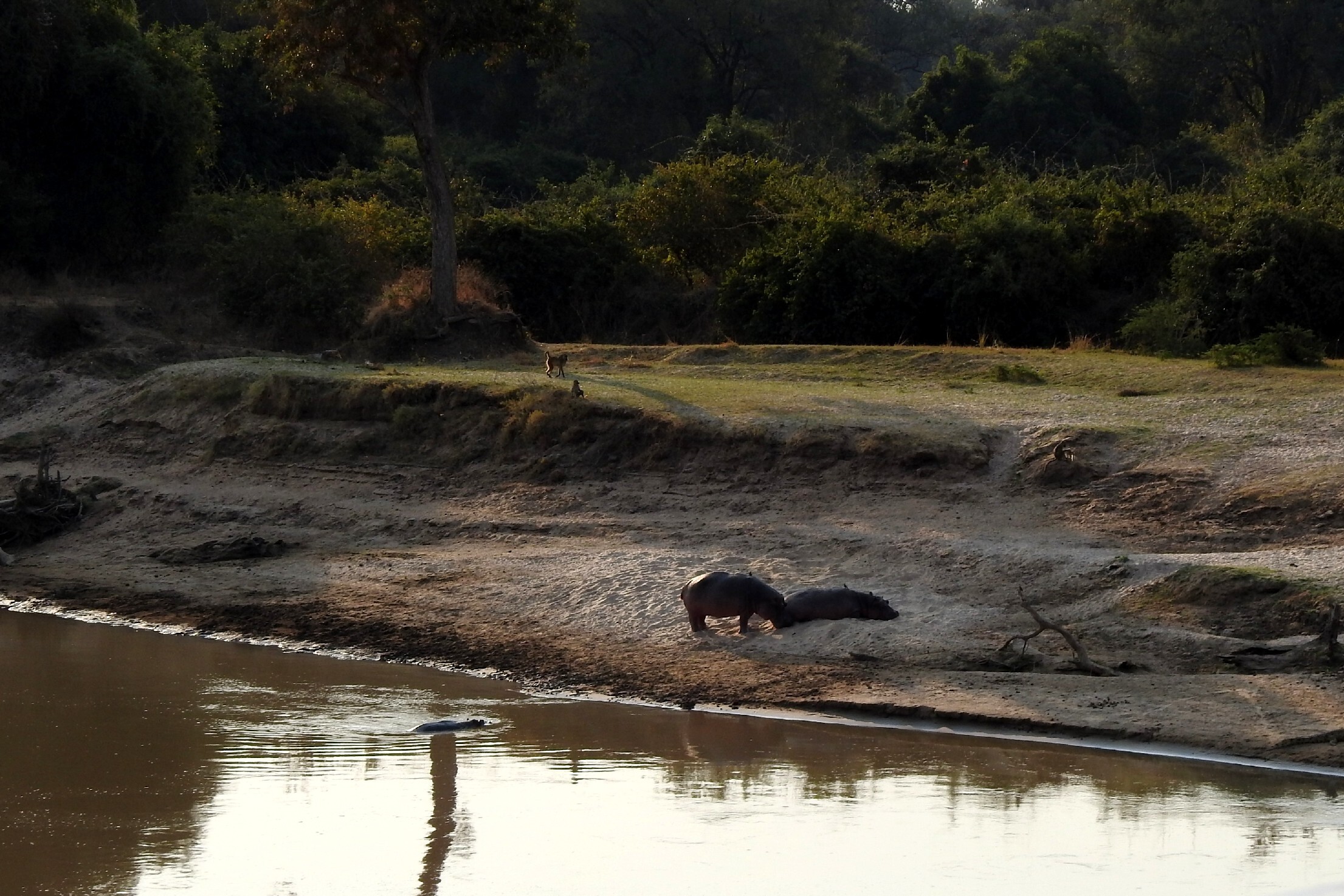
Hippos on the river bank as we crossed the bridge:
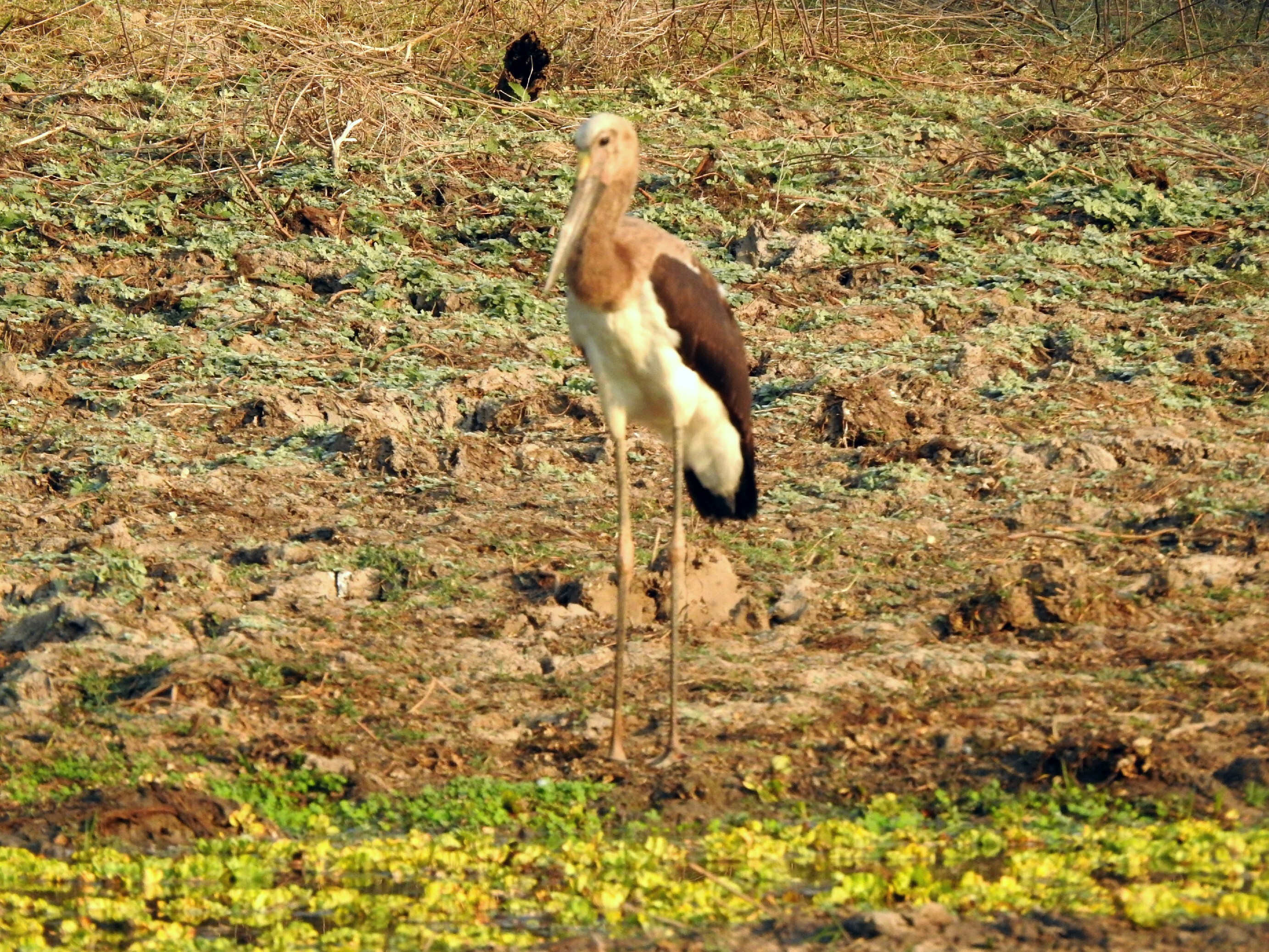
a juvenile saddle billed stork
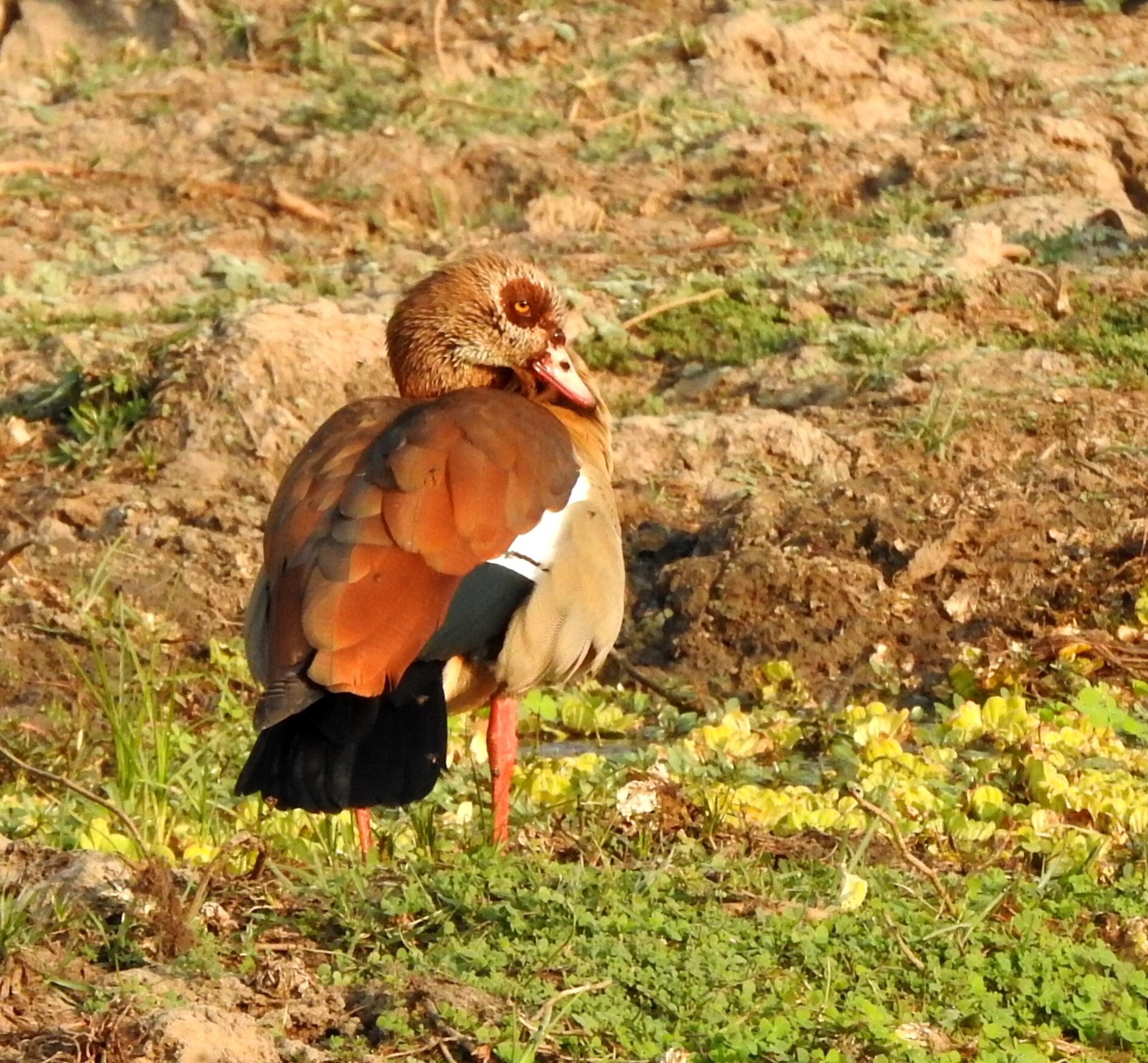
Egyptian goosse
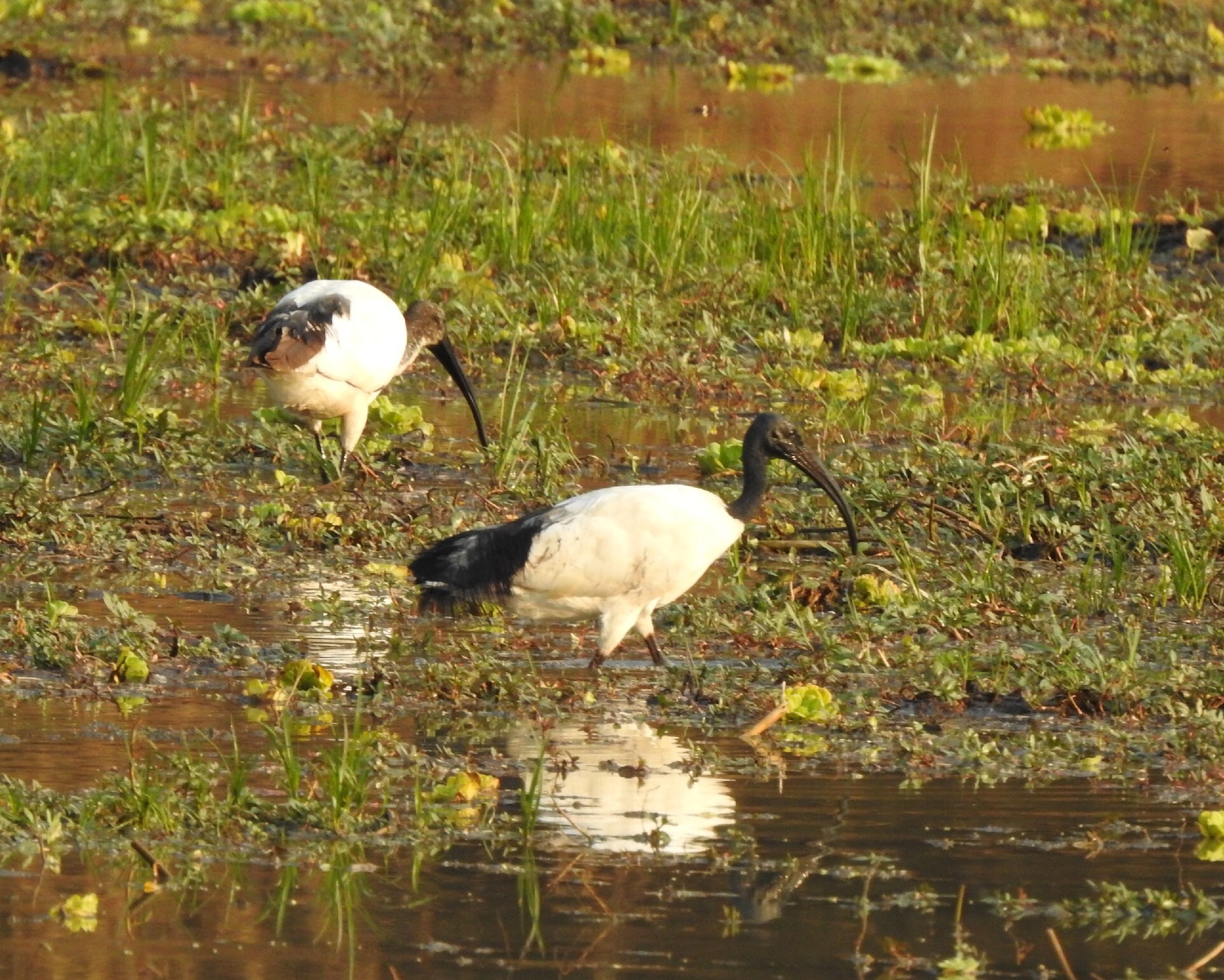
Sacred ibis
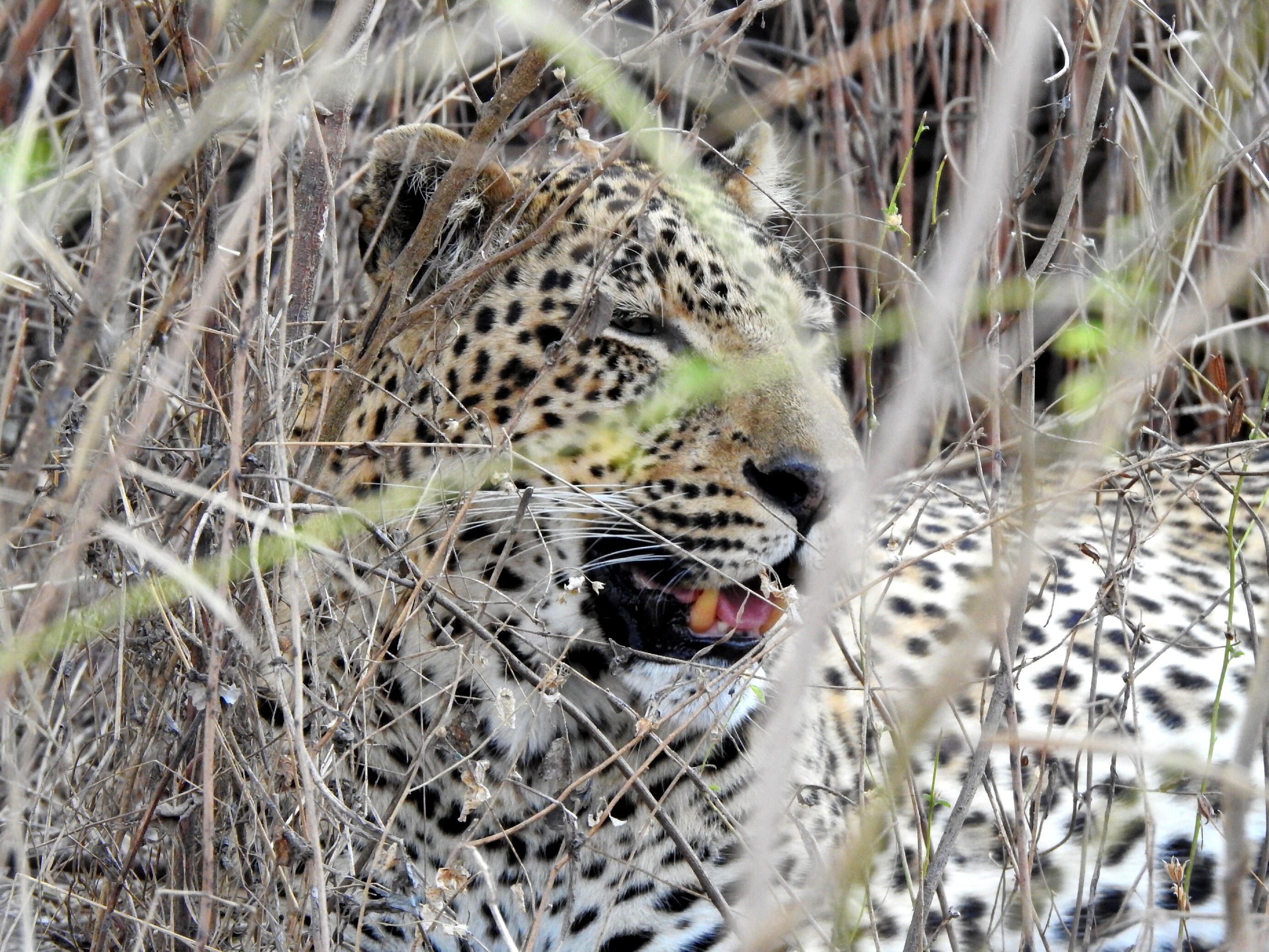
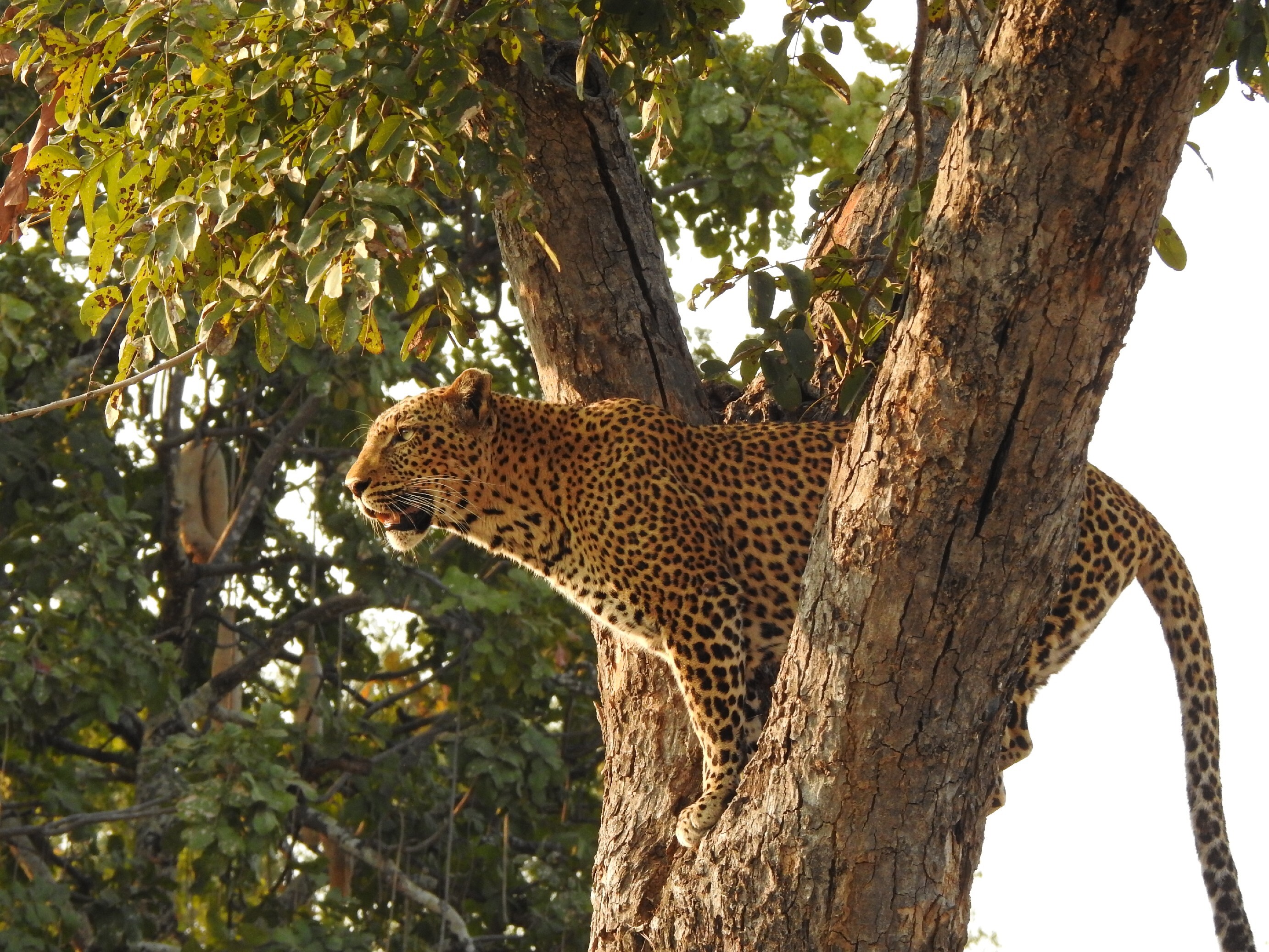
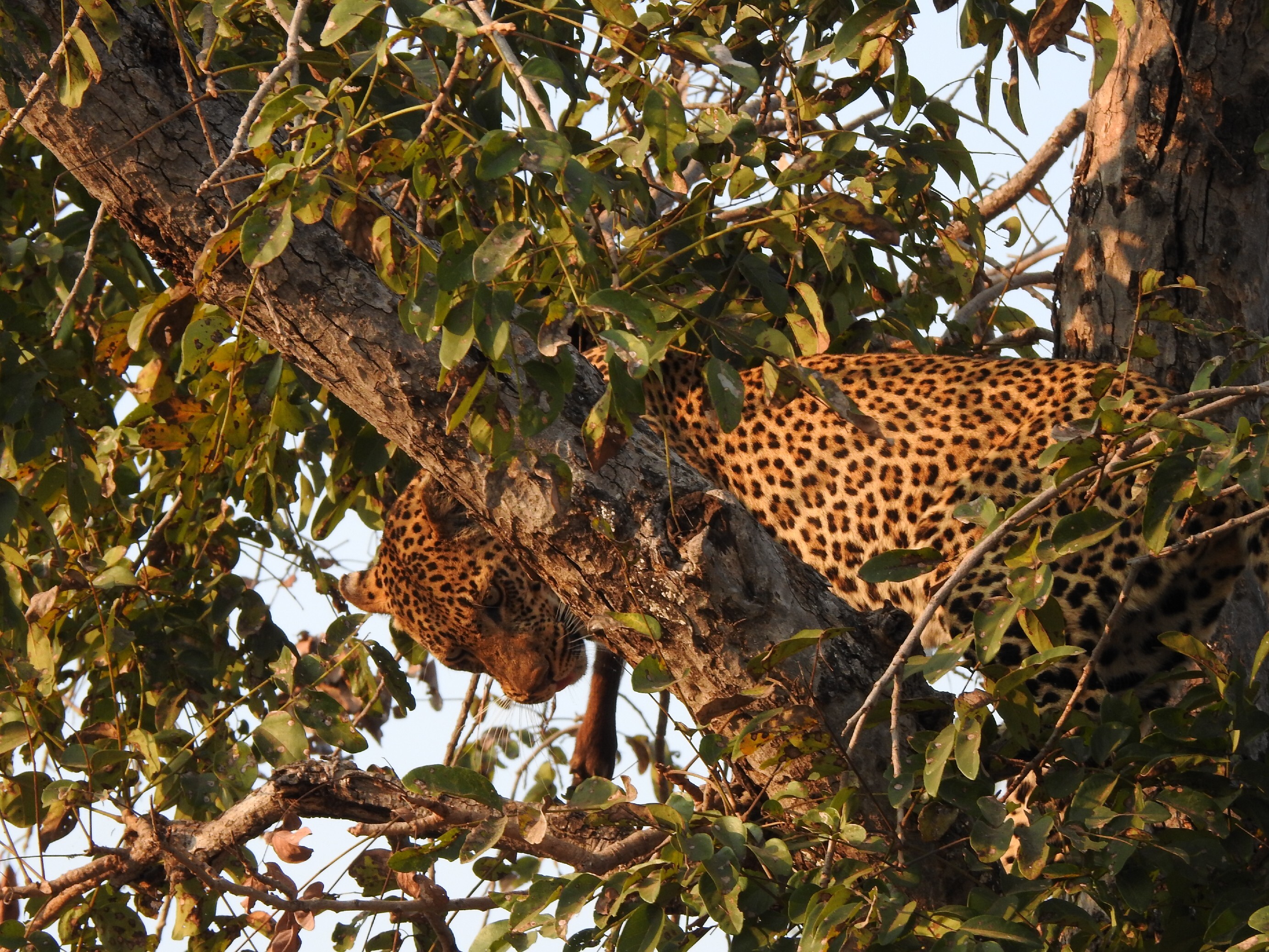
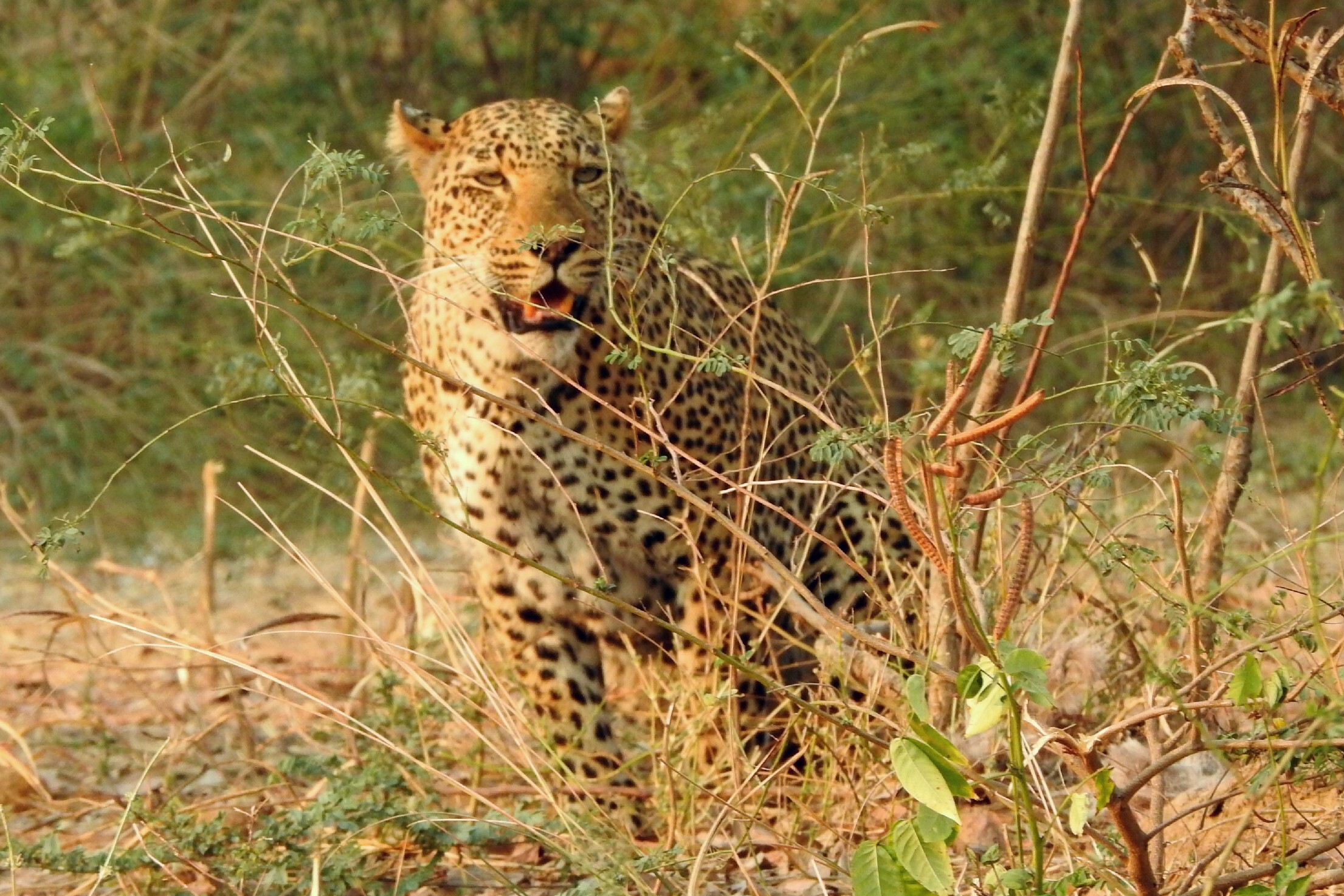
Leopard – her name is Lucy and she was born in the park about a dozen years ago – the drivers all know her territory and we saw her everyday – today she had just killed a waterbuck and was resting in the grass
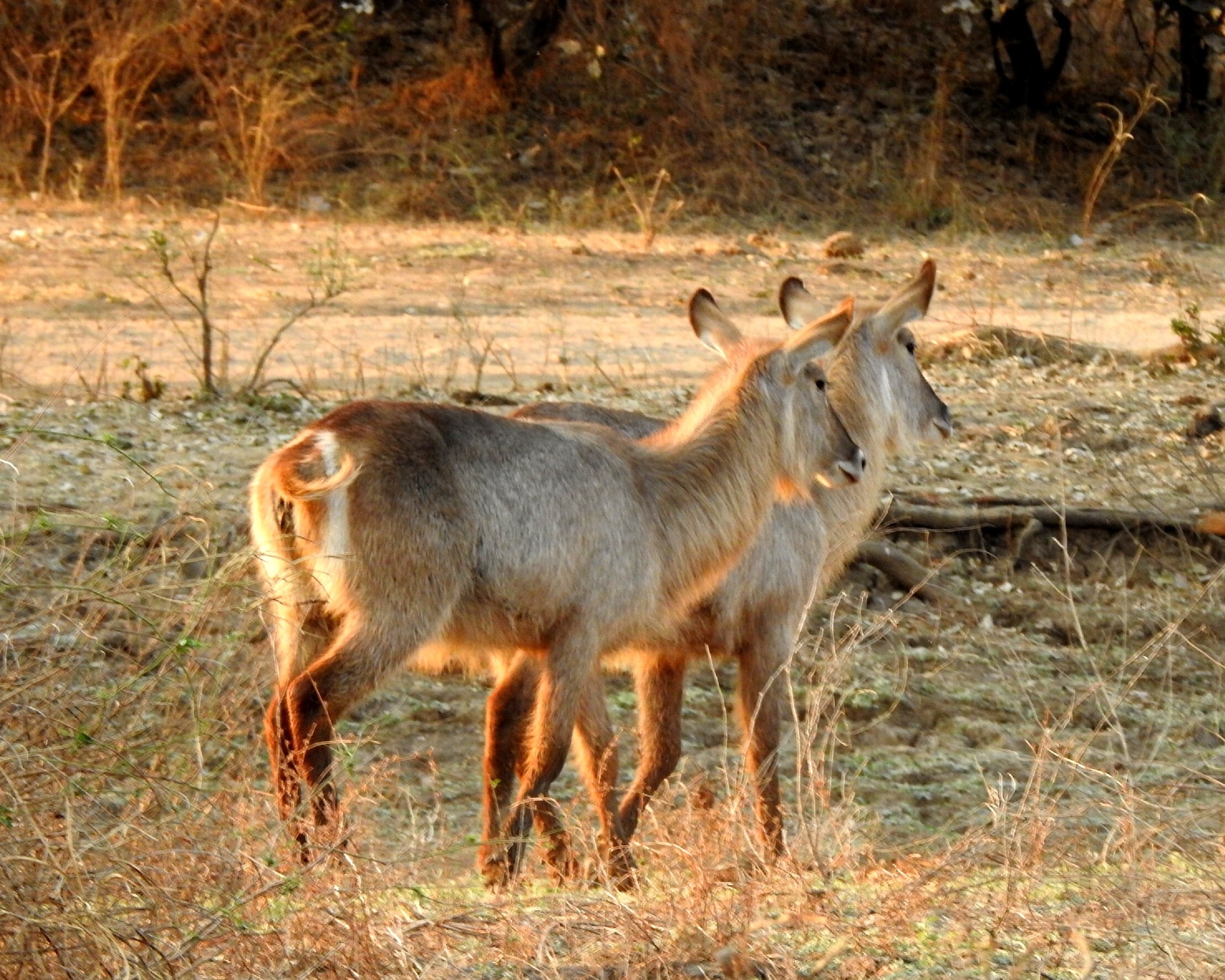
Water buck
Impalas
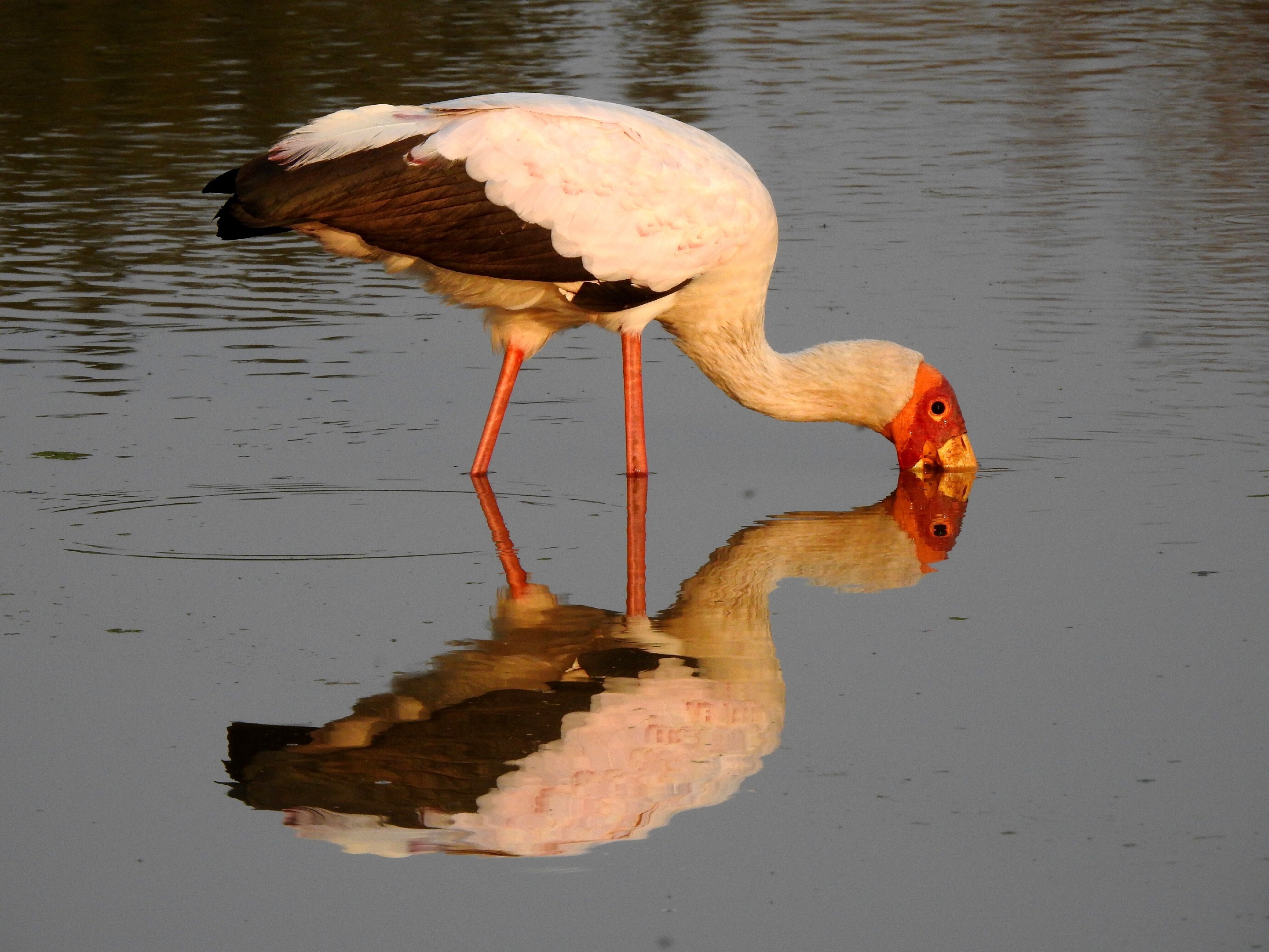
Yellow billed stork
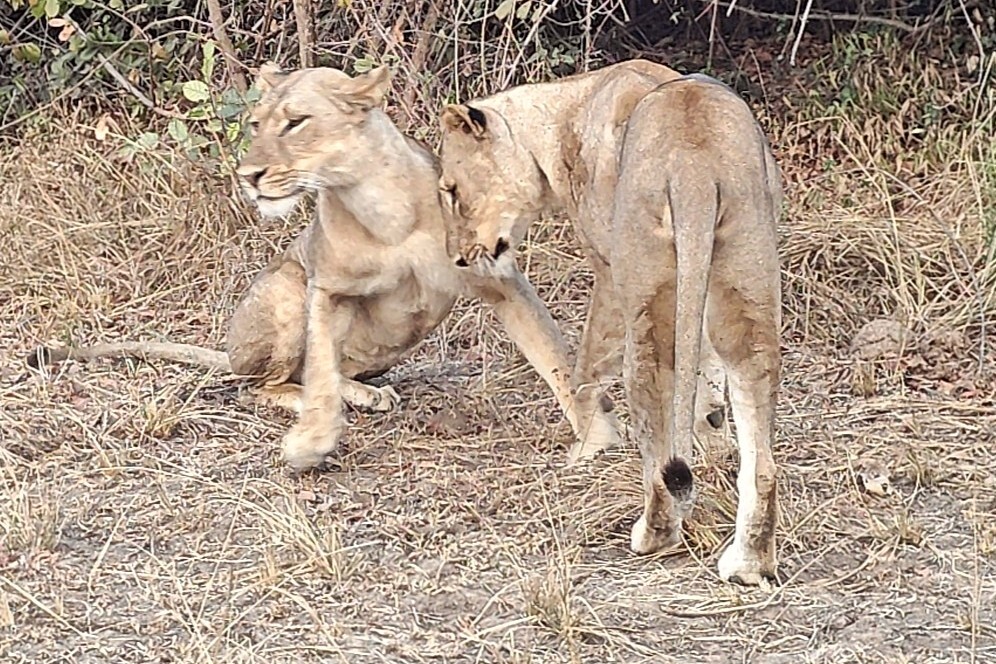
3 lionesses – two of whom crossed the road – one right beside us:


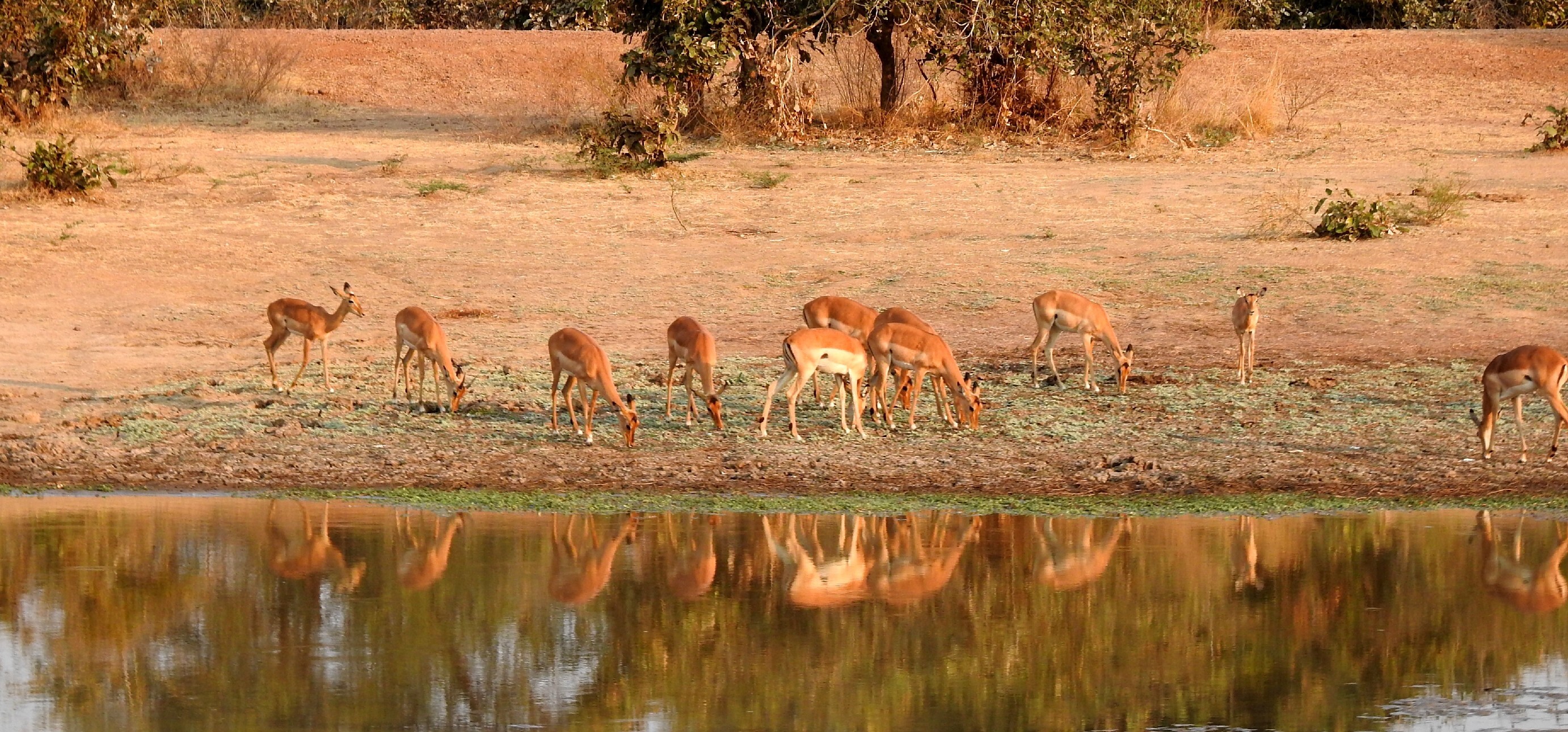
Puku & Impala

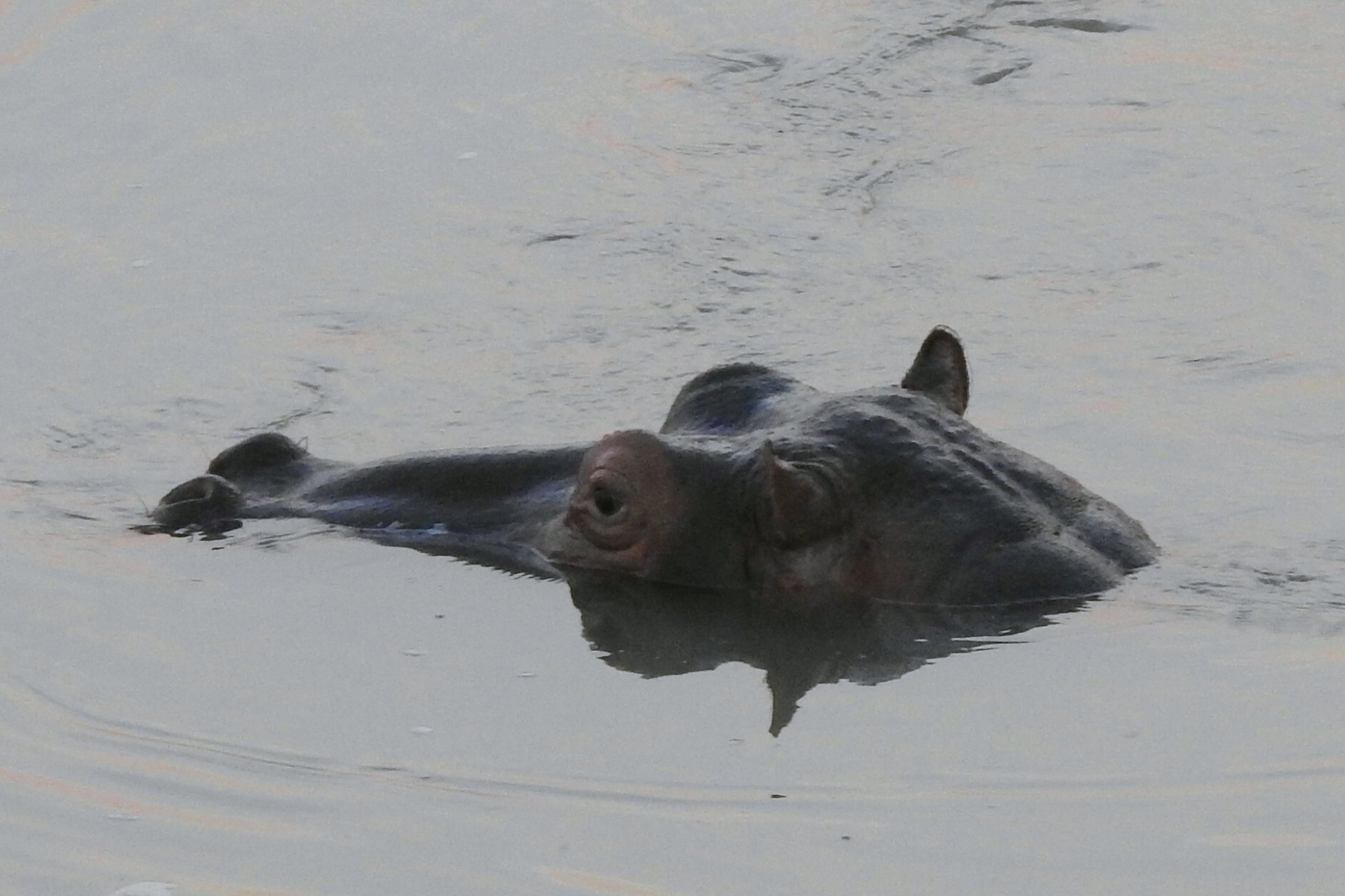
Hippos
Halfway through the drive, there is a break during which they are drinks and snacks – if we’d known we could have ordered beer/cider from the bar (which we did the next two nights). This is around sunset. It’s also a bio break for those that need. 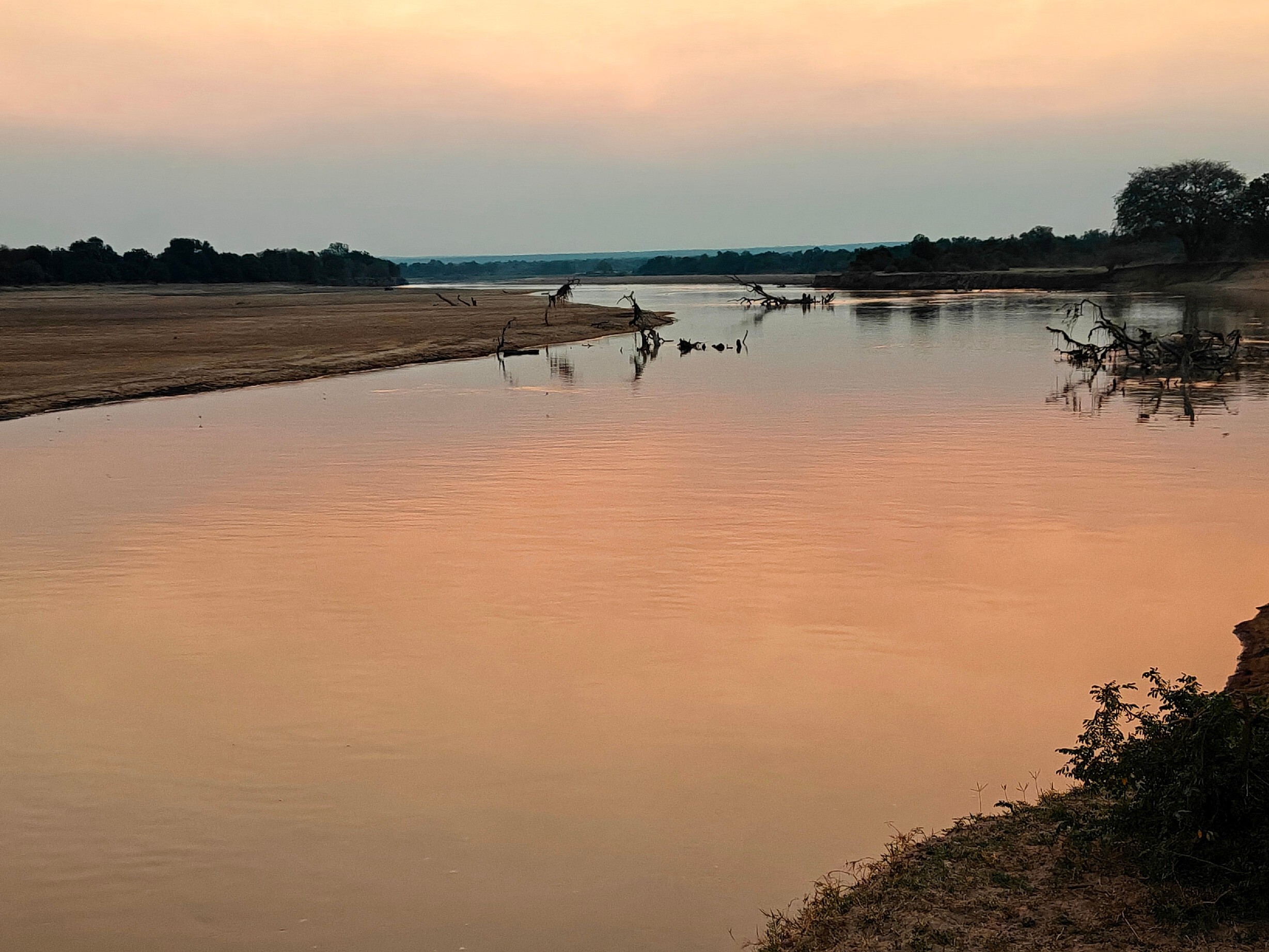
Elephant

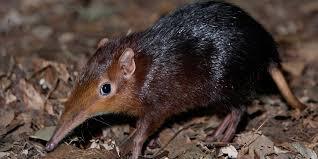
Buffalo
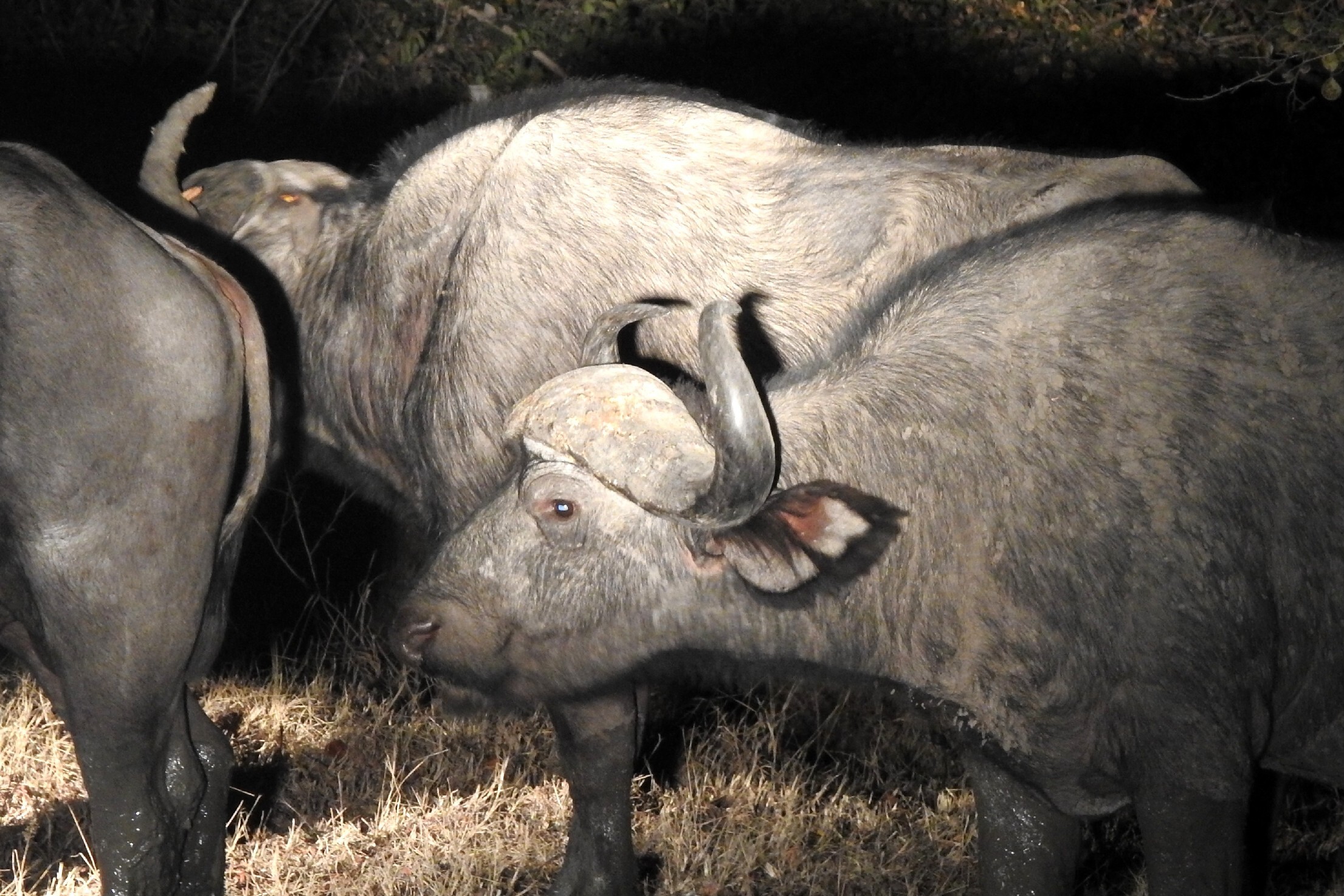
Hyena – he was running too far away for a photo but here’s what he probably looked like:
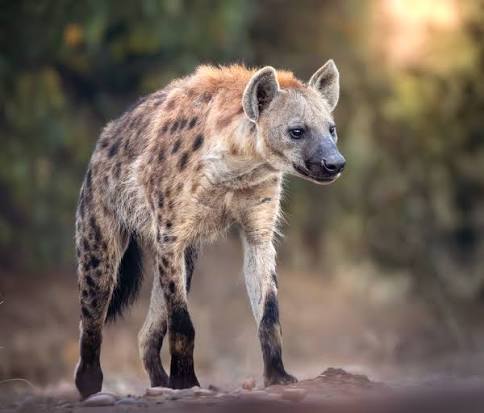
Elephant shrew – he was too small and quick for a photo so here’s one from Google:
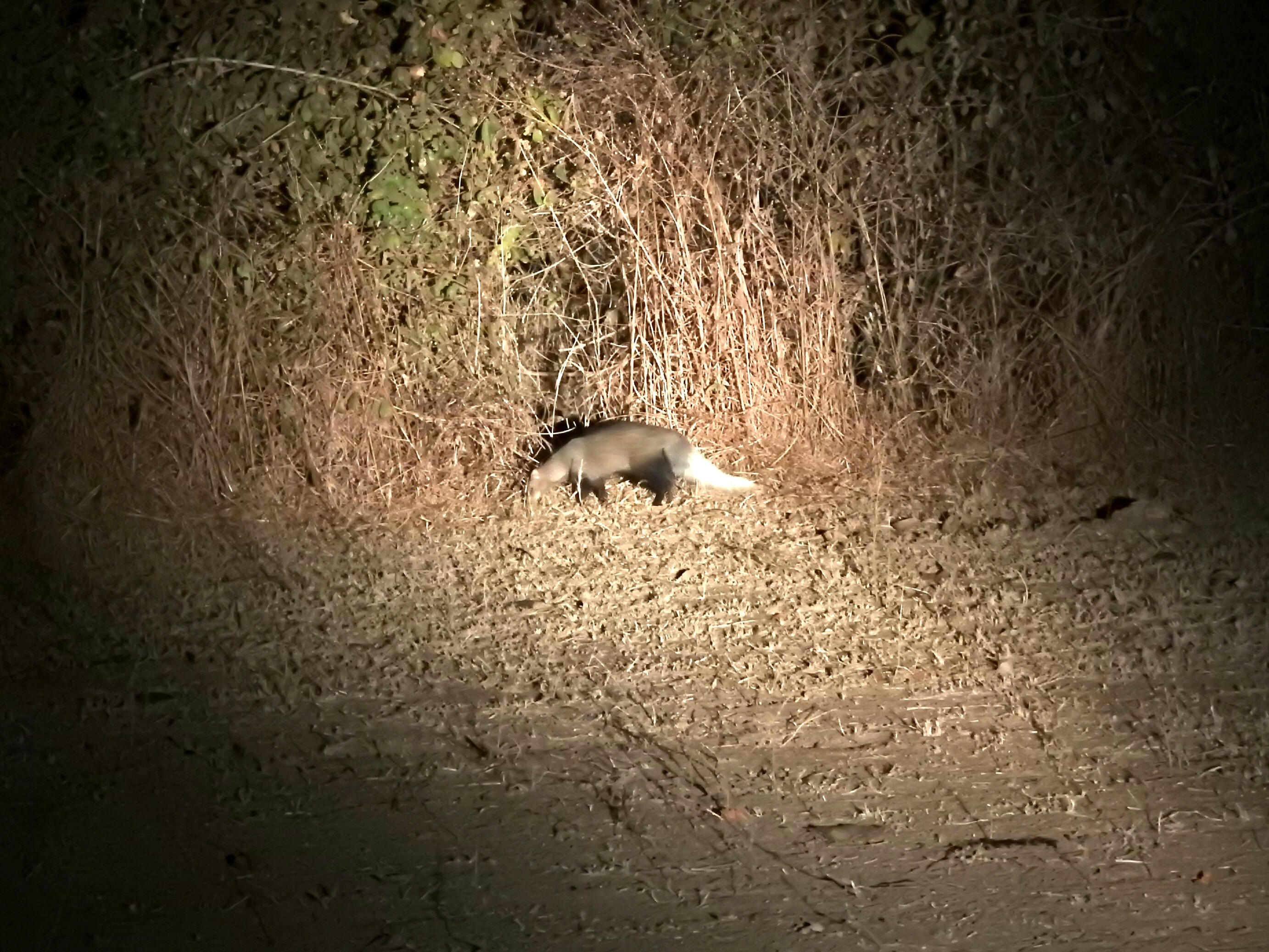
White tailed mongoose – not a great shot:
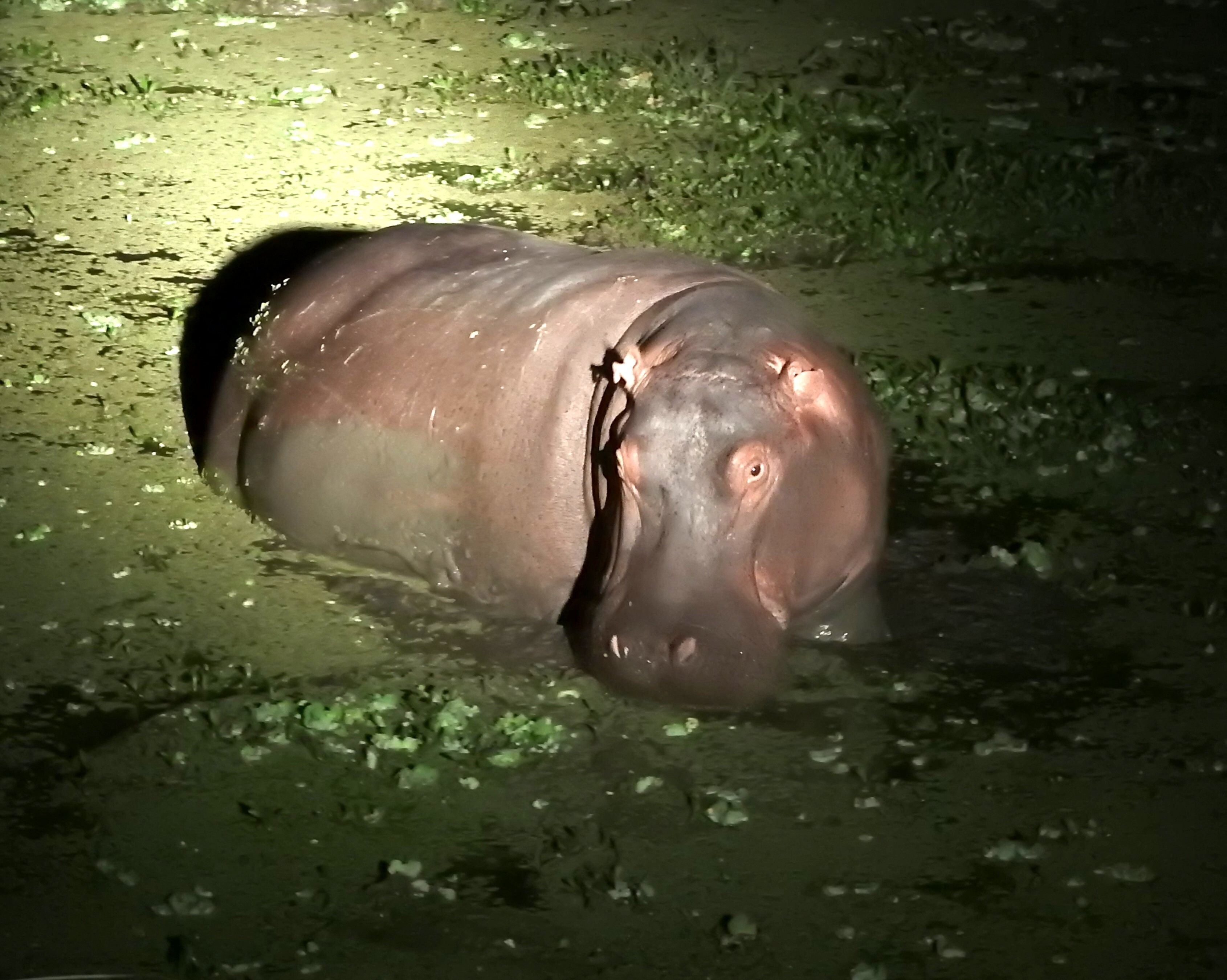
Hippo
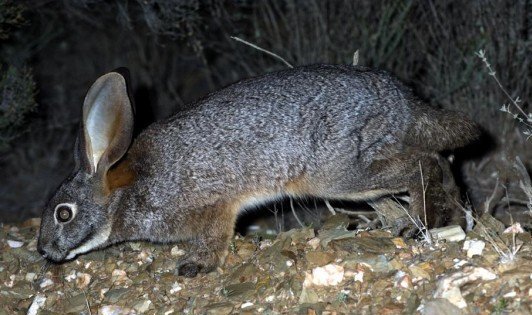
3 African rabbits that look like this:
the highlight: a hyena eating kill w leopard watching – this was the kill we’d seen Lucy next to earlier in the day. Guess she should have taken it up in the tree earlier where the hyena couldn’t get at it!
Lucy, was just sitting nearby watching:

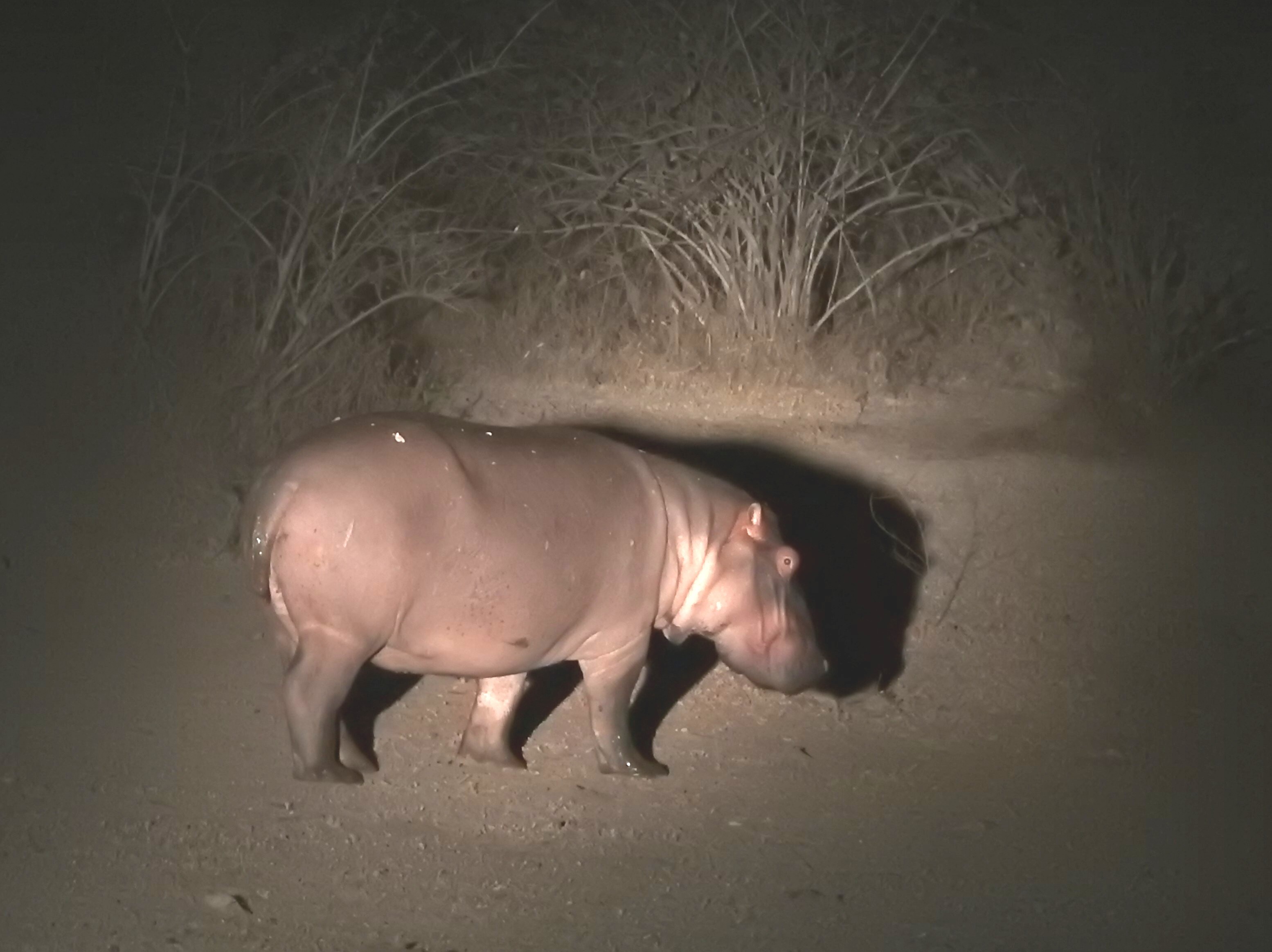
another hippo looking for good grazing:
We had dinner after the safari and it was pretty much straight to bed as we had to be up before 5:30 to get breakfast before the morning game drive. The dinner was roasted chicken, potatoes and cabbage.
We were up at 5 for breakfast at 5:30. Every day we got cornflakes, 2 slices of toast, juice, tea and coffee. Some days they added yoghurt and small muffins.
All six of our drives were with the same driver, Simon, and on the night drives he had an assistant who held the torch after dark.
Tuesday morning at 6 and we were the only ones on board. It was equally fantastic with sightings of:
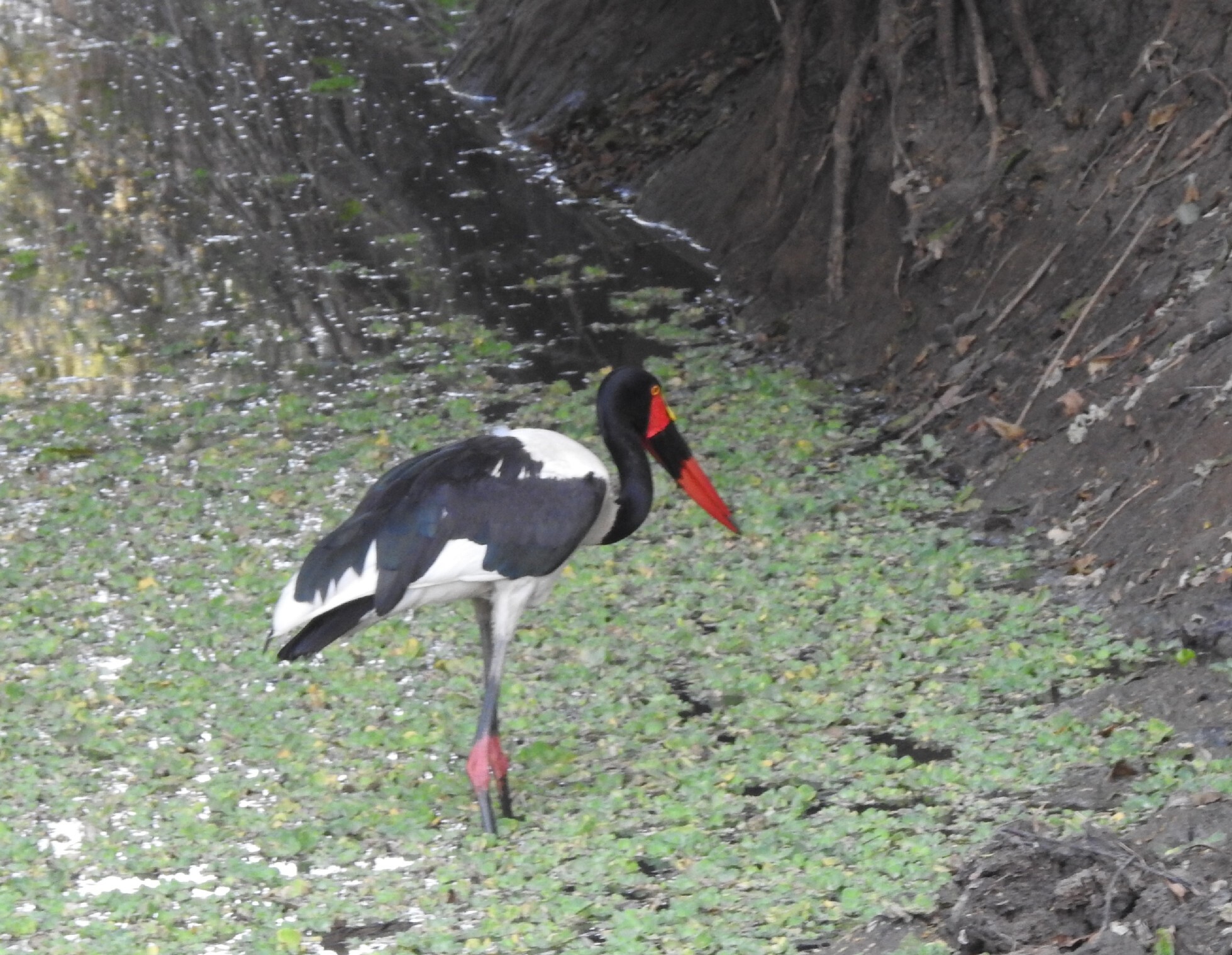
Adult saddle billed stork
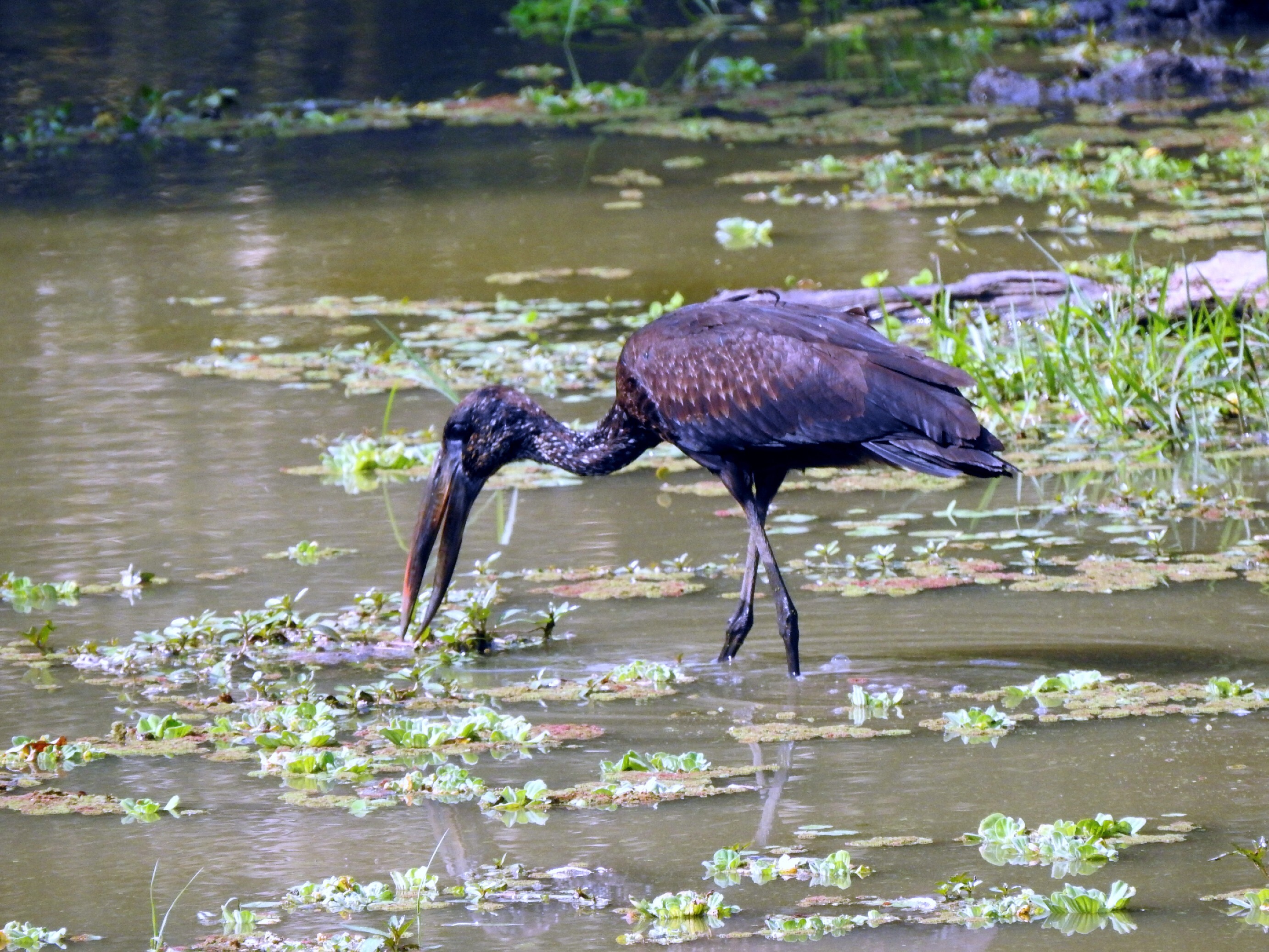
 Open billed Stork
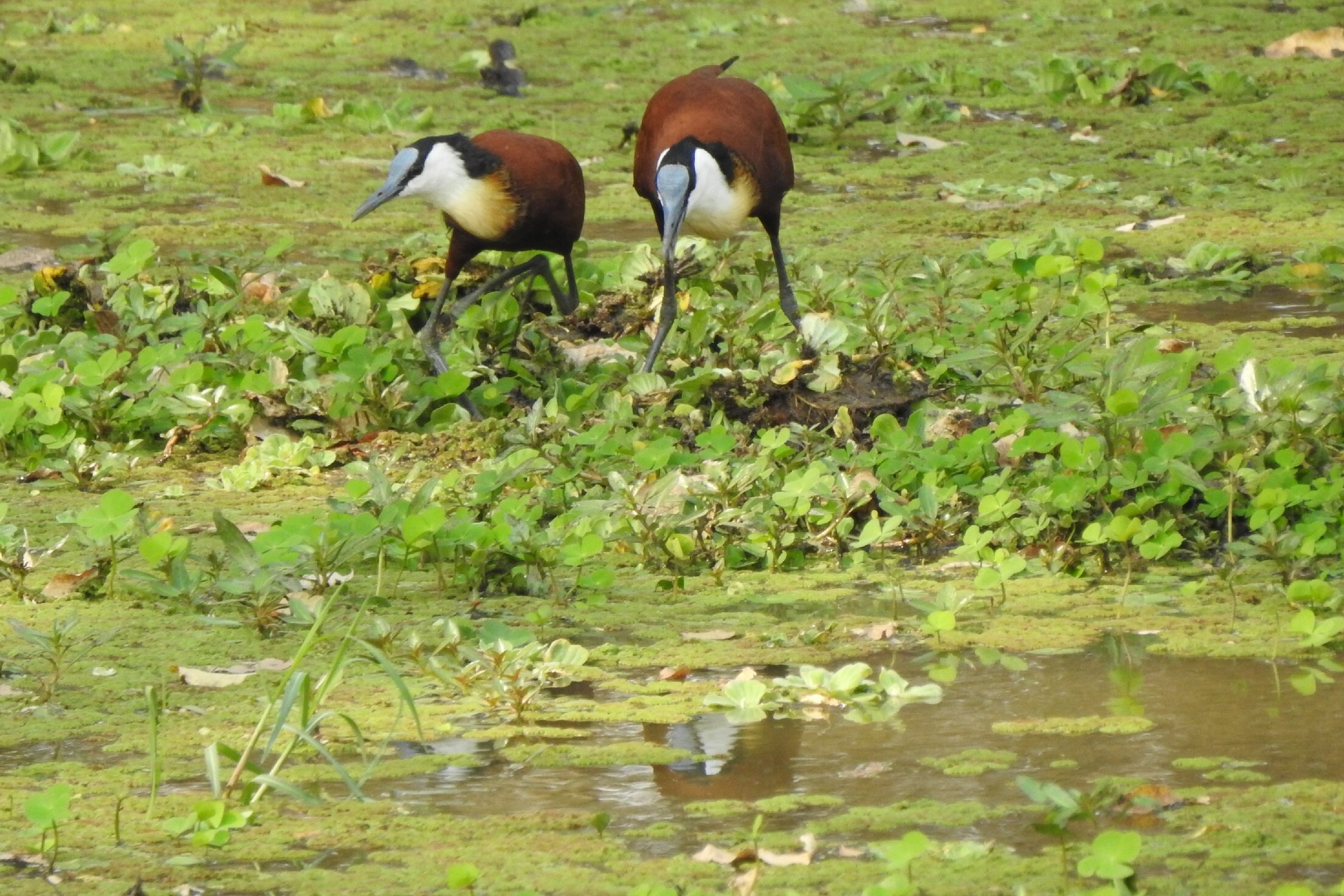
Jacuna also known as “Jesus Birds” as it appears they walk on water:
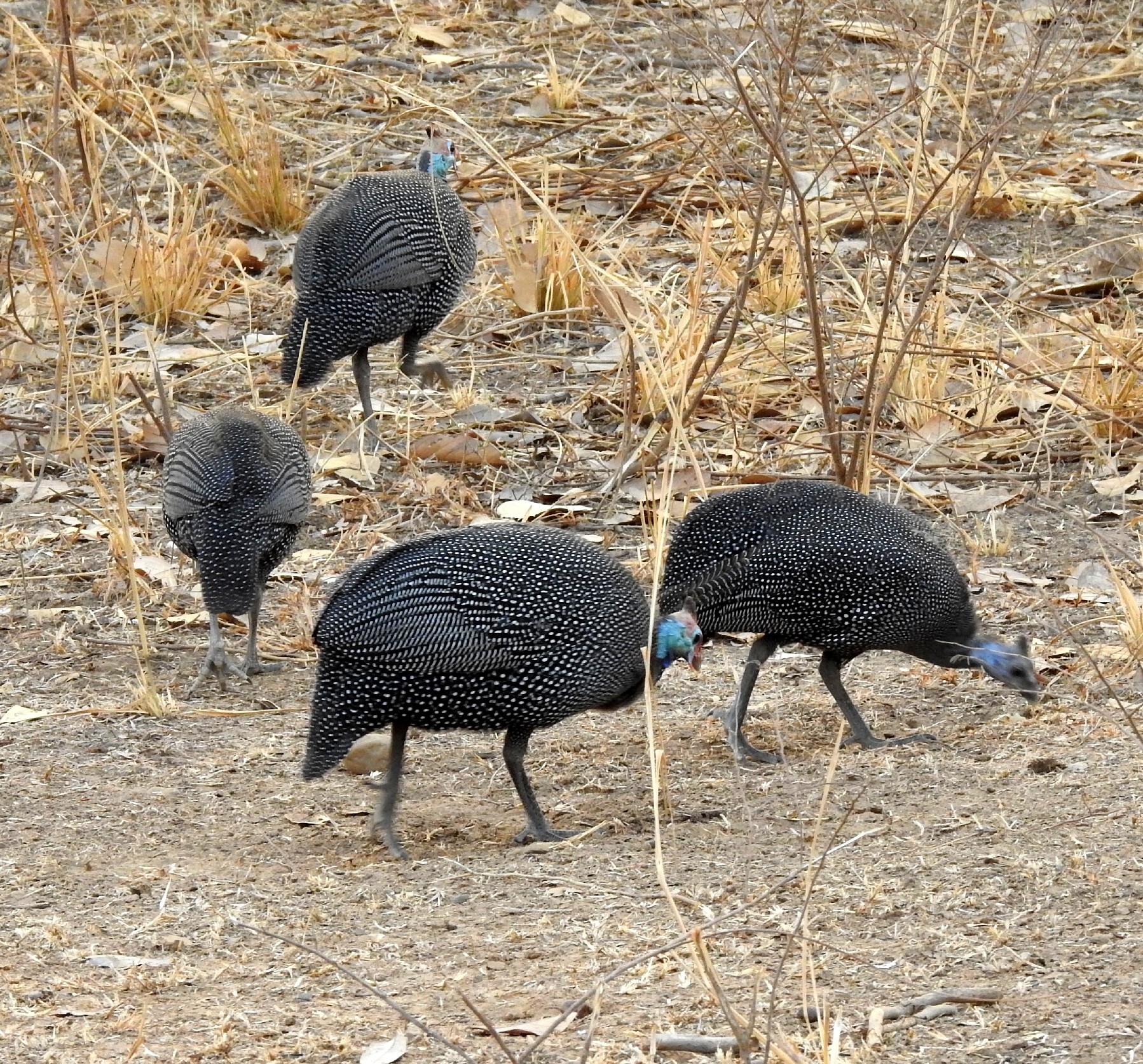
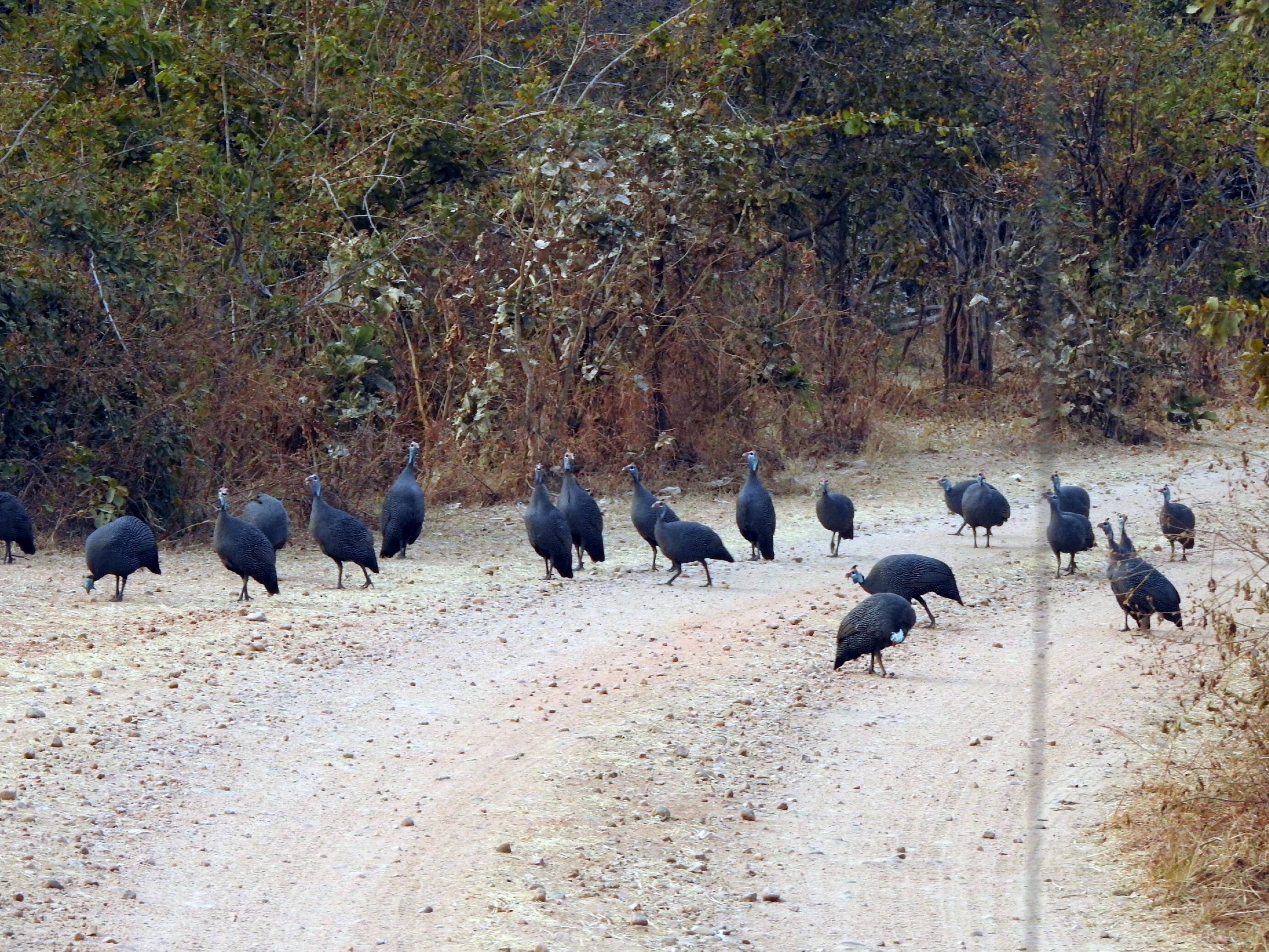
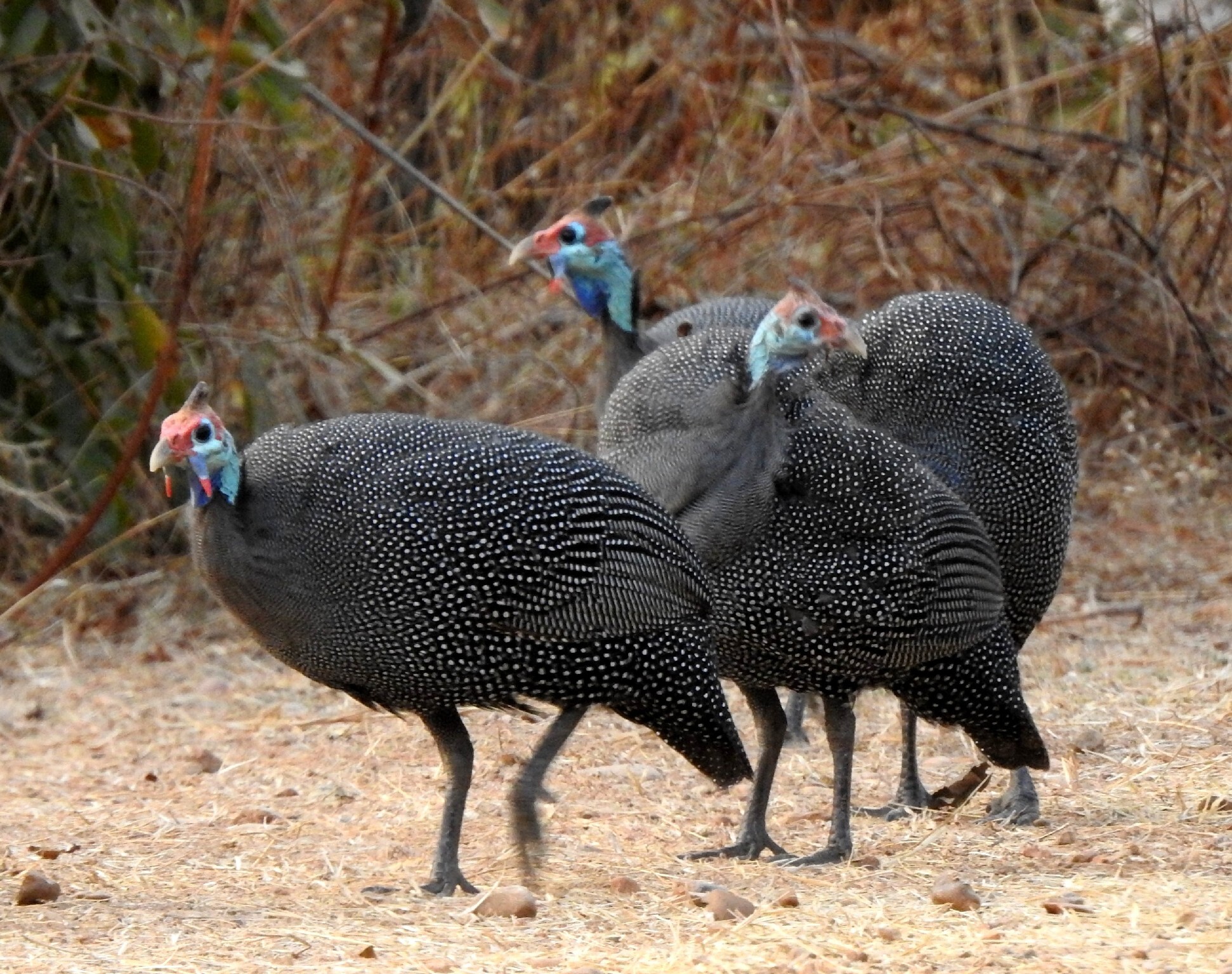
Helmeted Guinea fowl
yellow billed stork

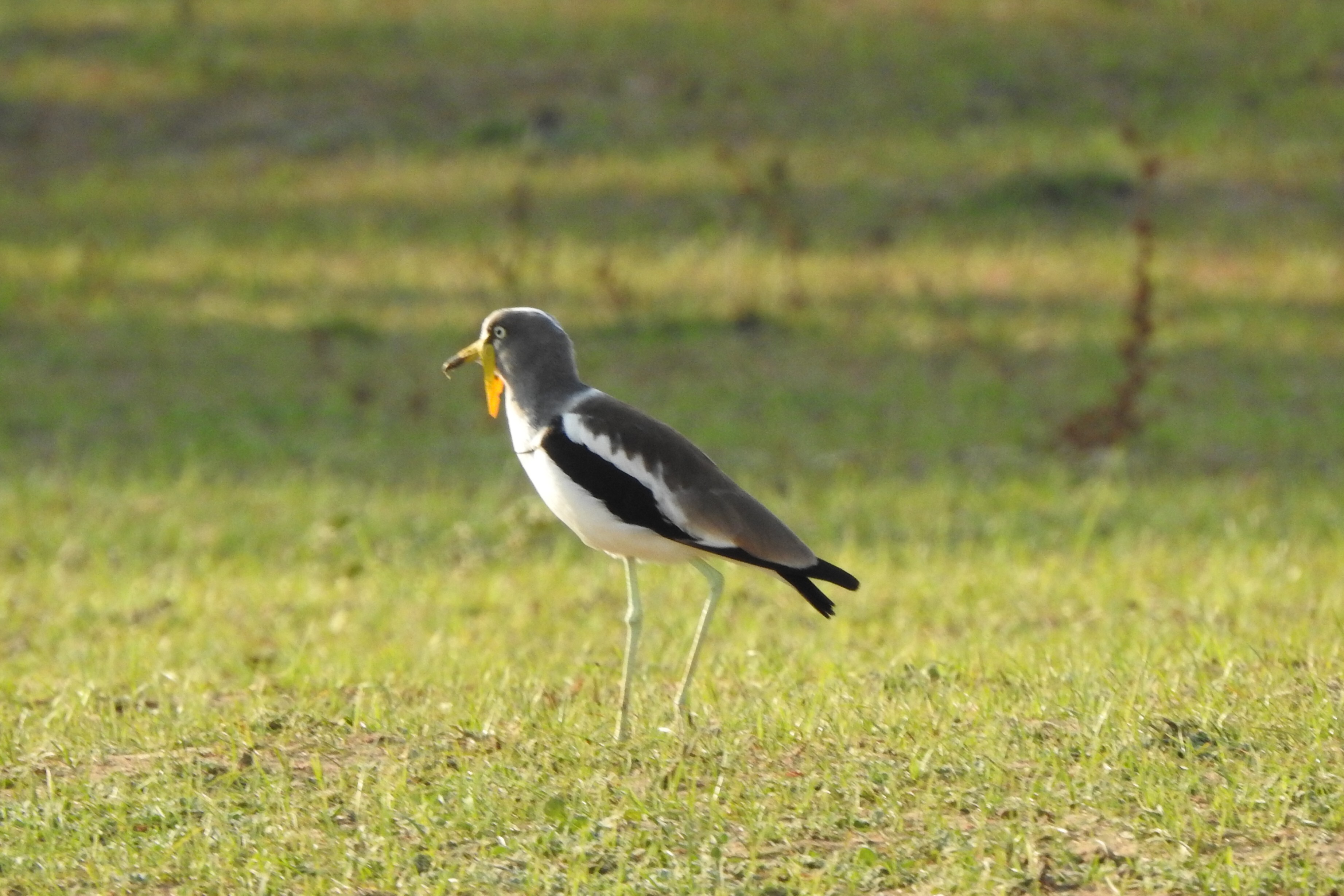
Blacksmith lapwing
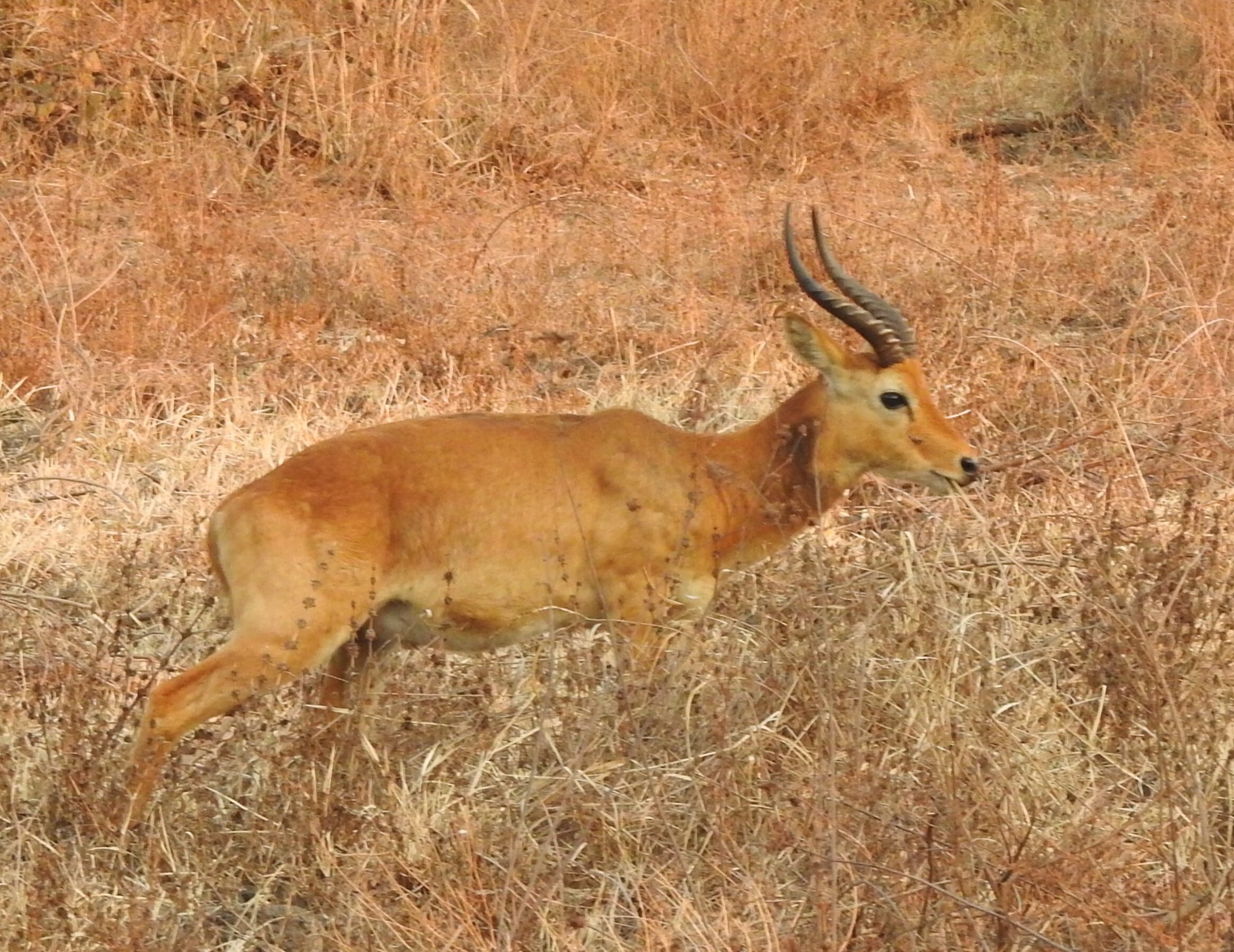
puku
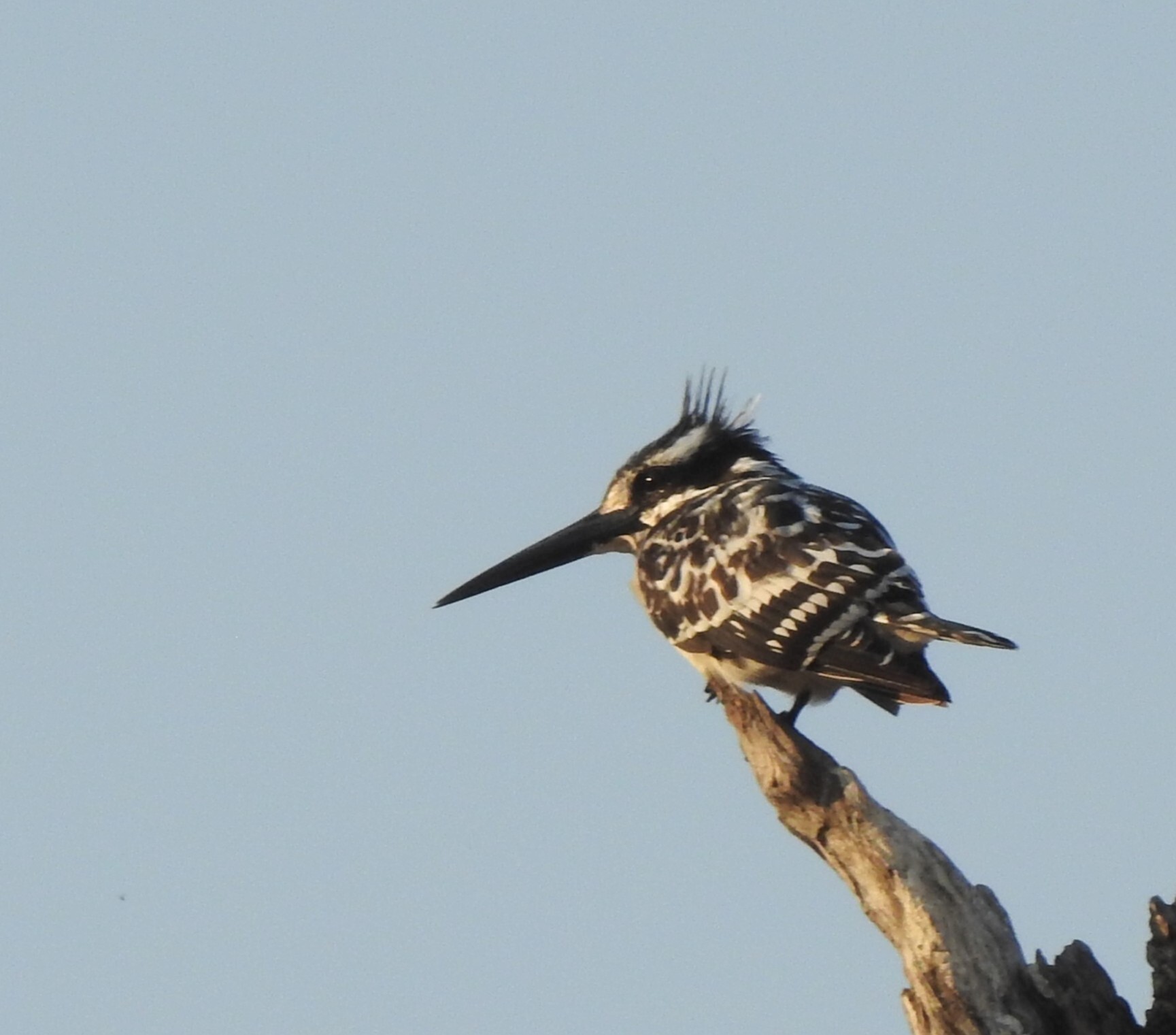
Pied kingfisher
plains zebra

African Squirrels

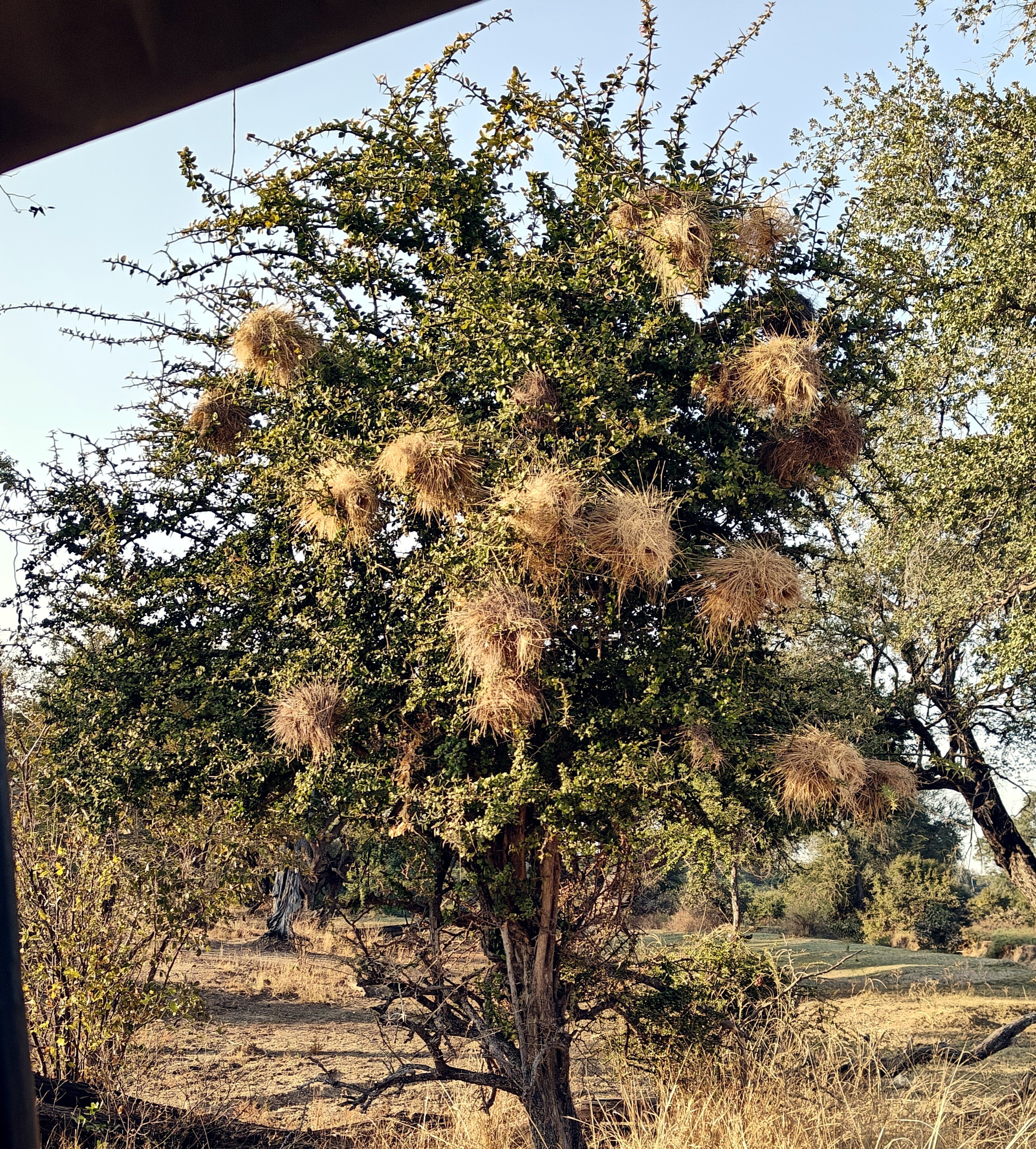
White browed sparrow weaver nests
Brown hooded kingfisher

Malachite kingfisher
 Impalas
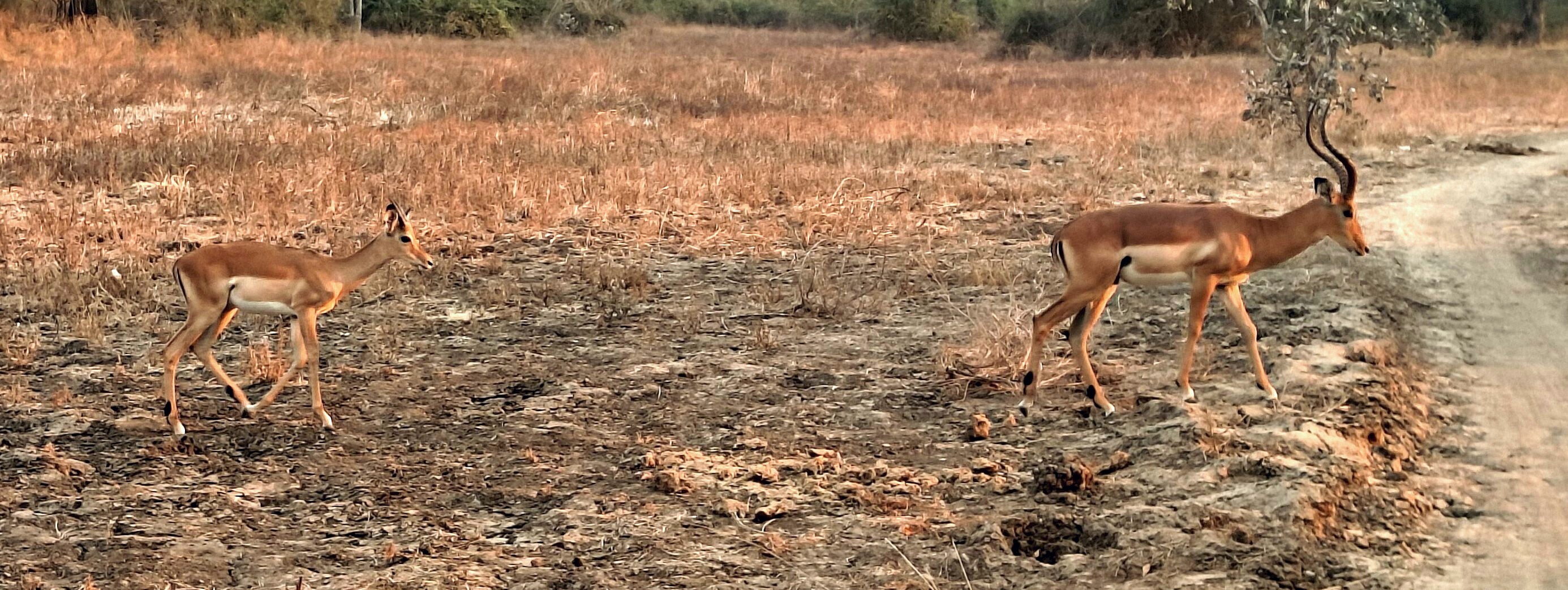
Another lone Zebra

Lilac breasted roller

Water buck

Puku and impala

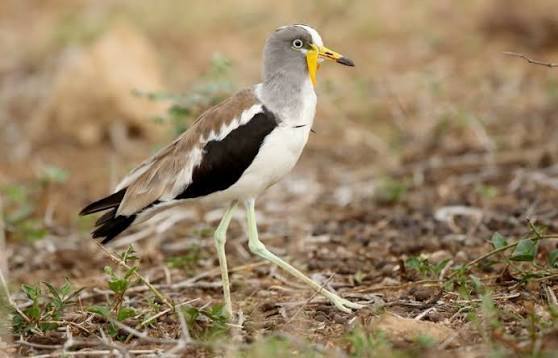
White crowned lapwing
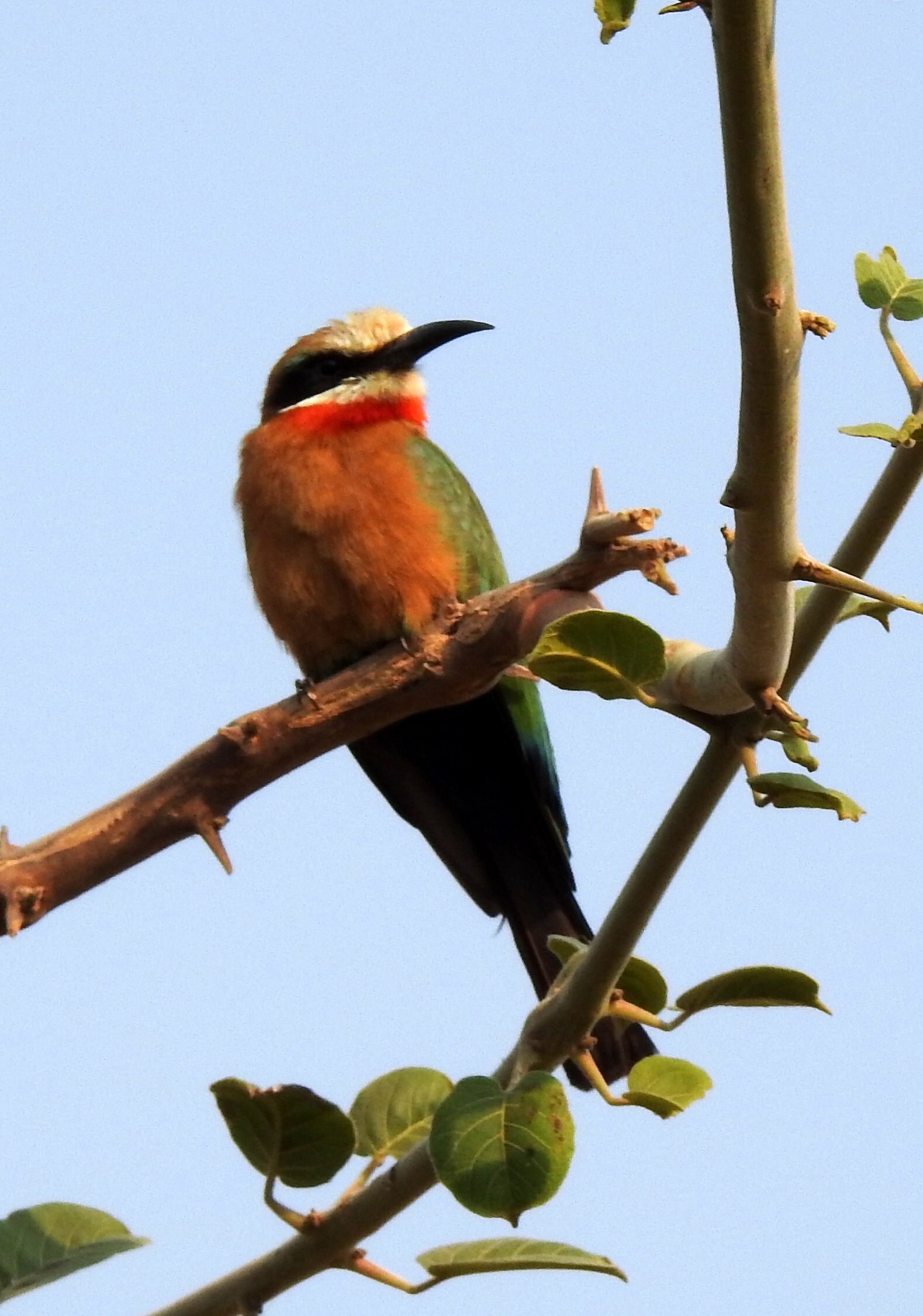
White fronted bee eater:
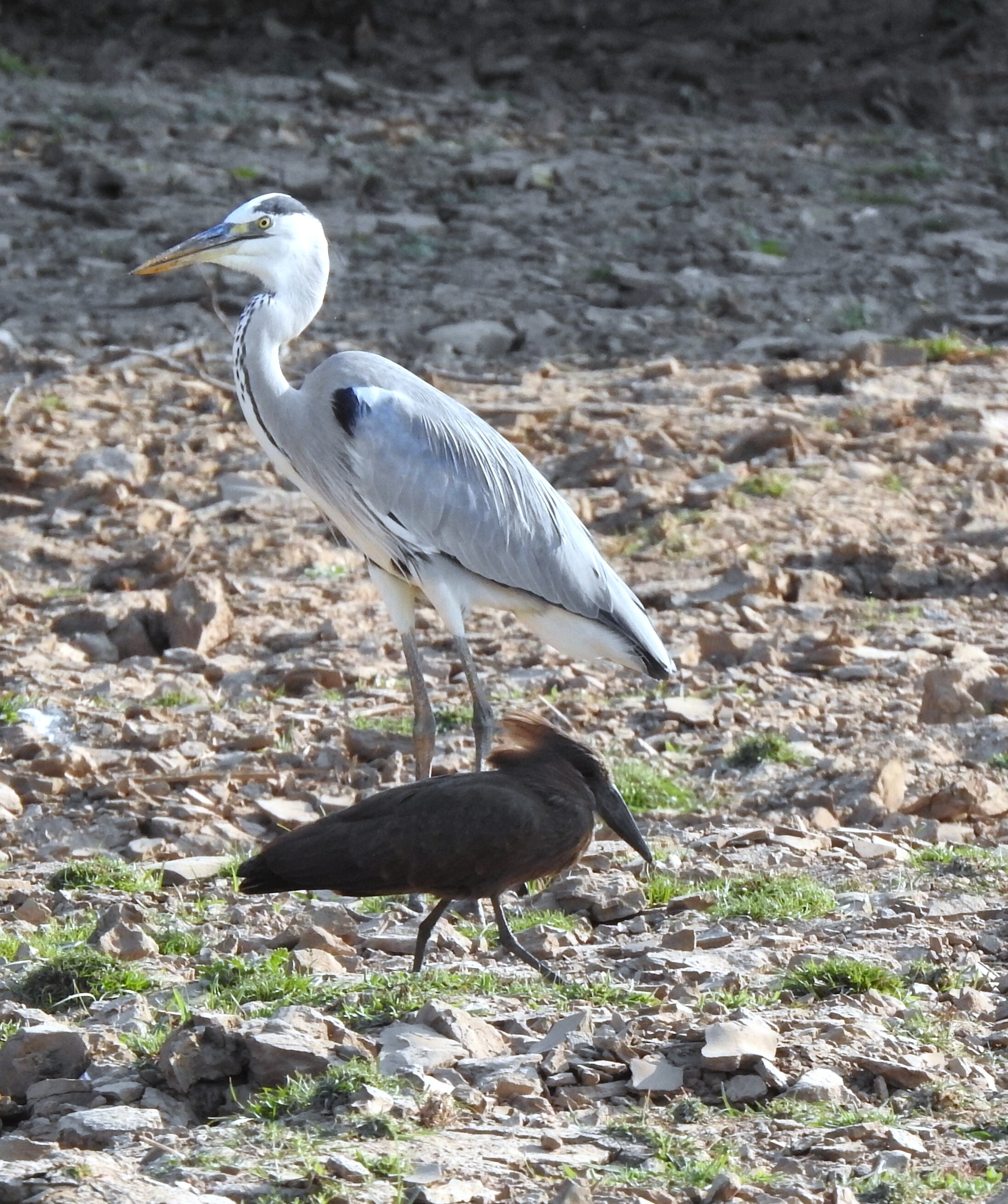
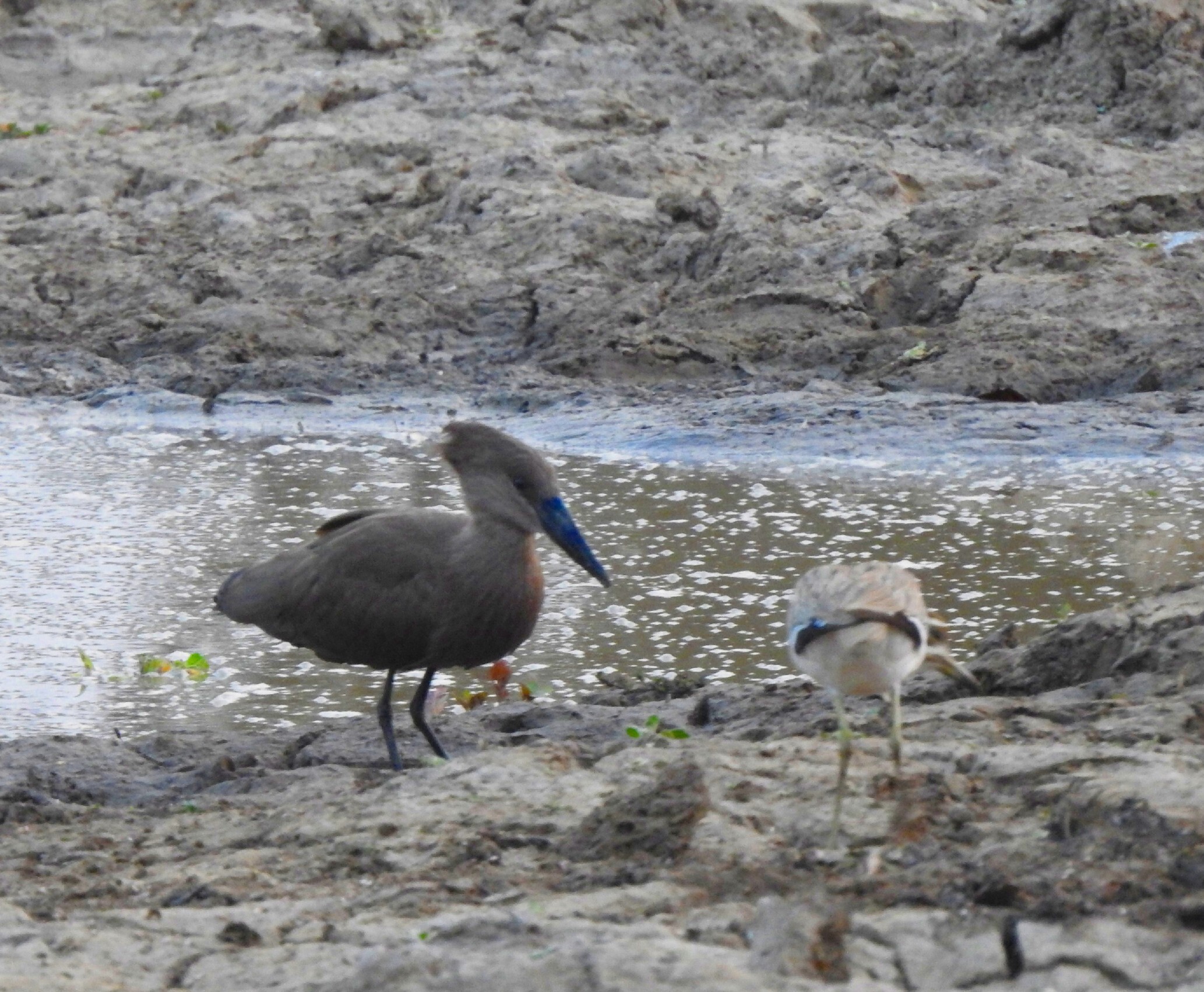
Grey heron and a hammerkop
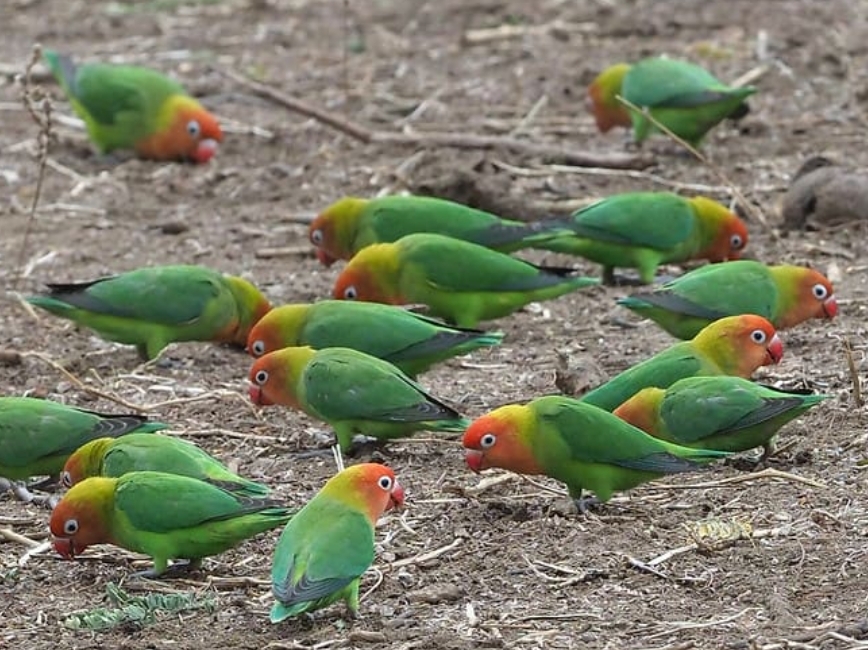
Lillian love birds

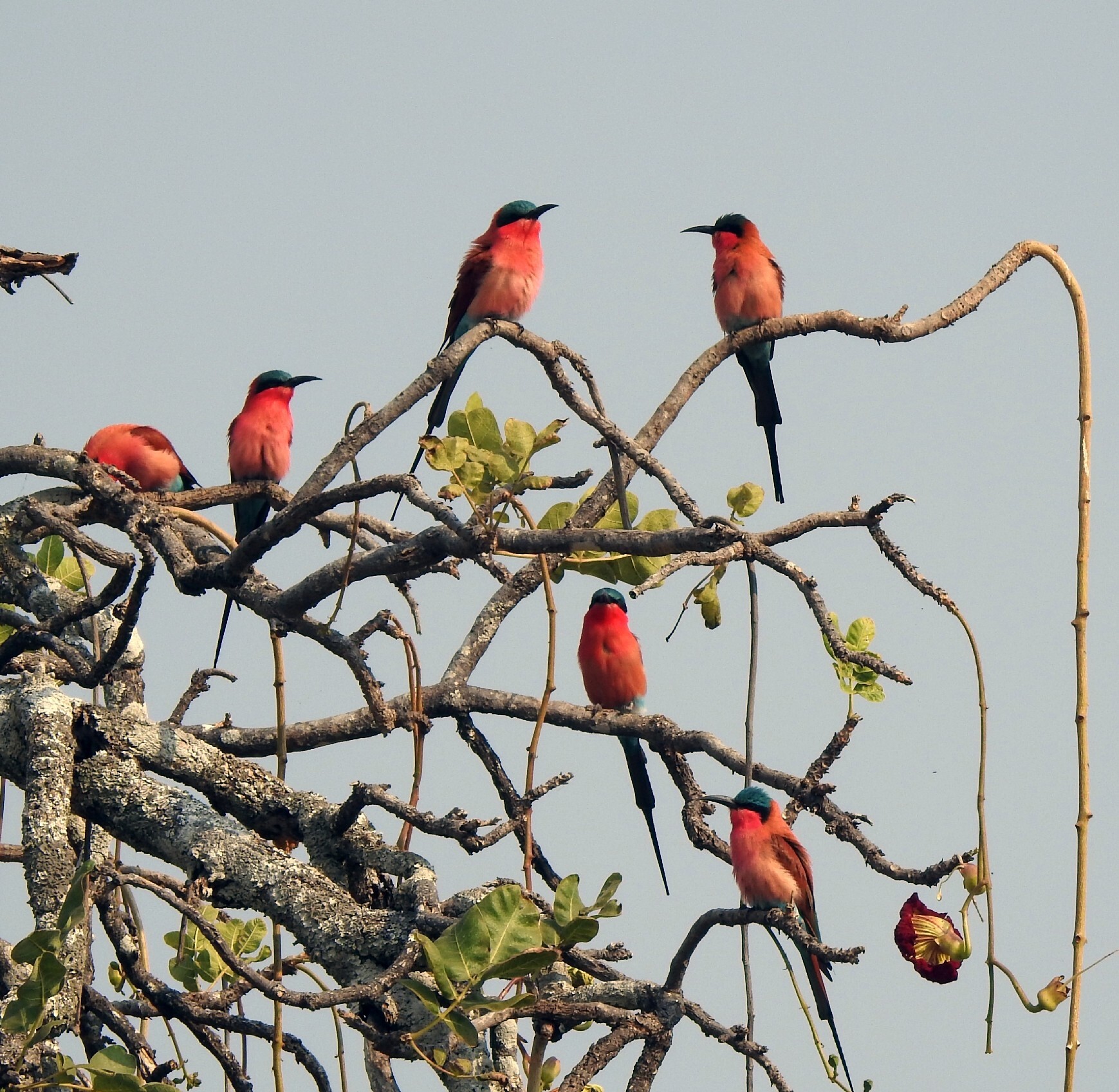
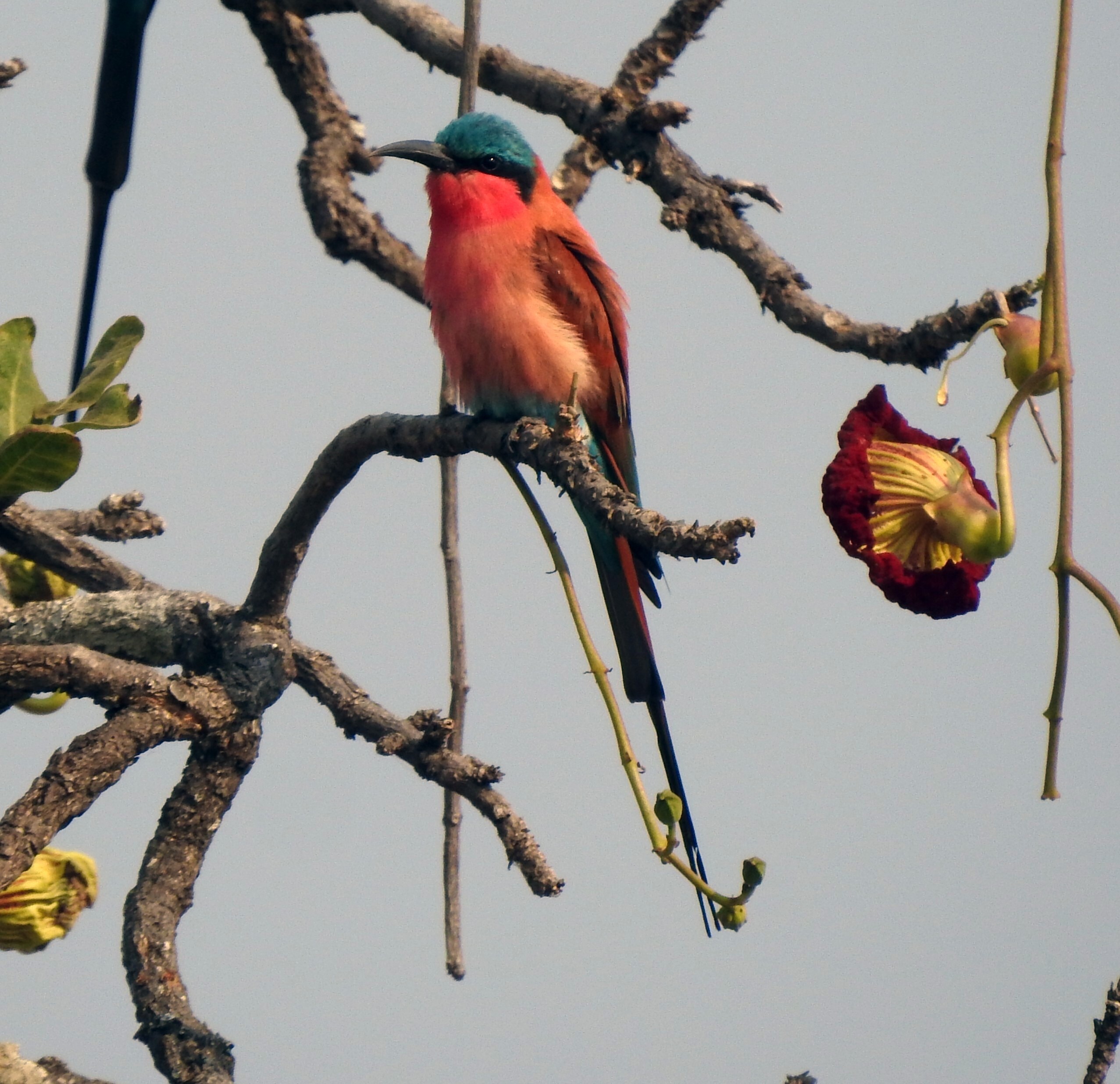
Carmine bee eaters
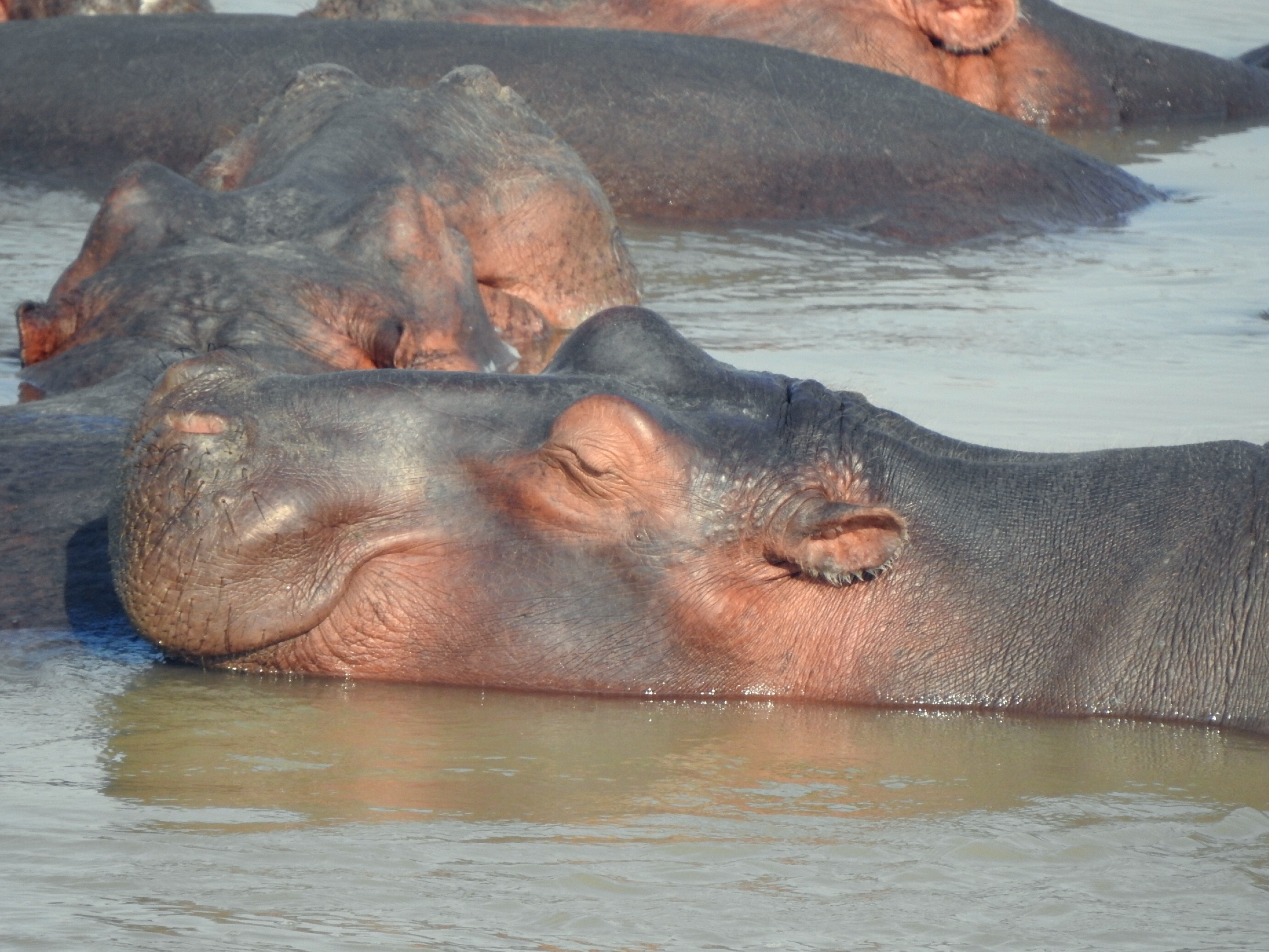
Hippos
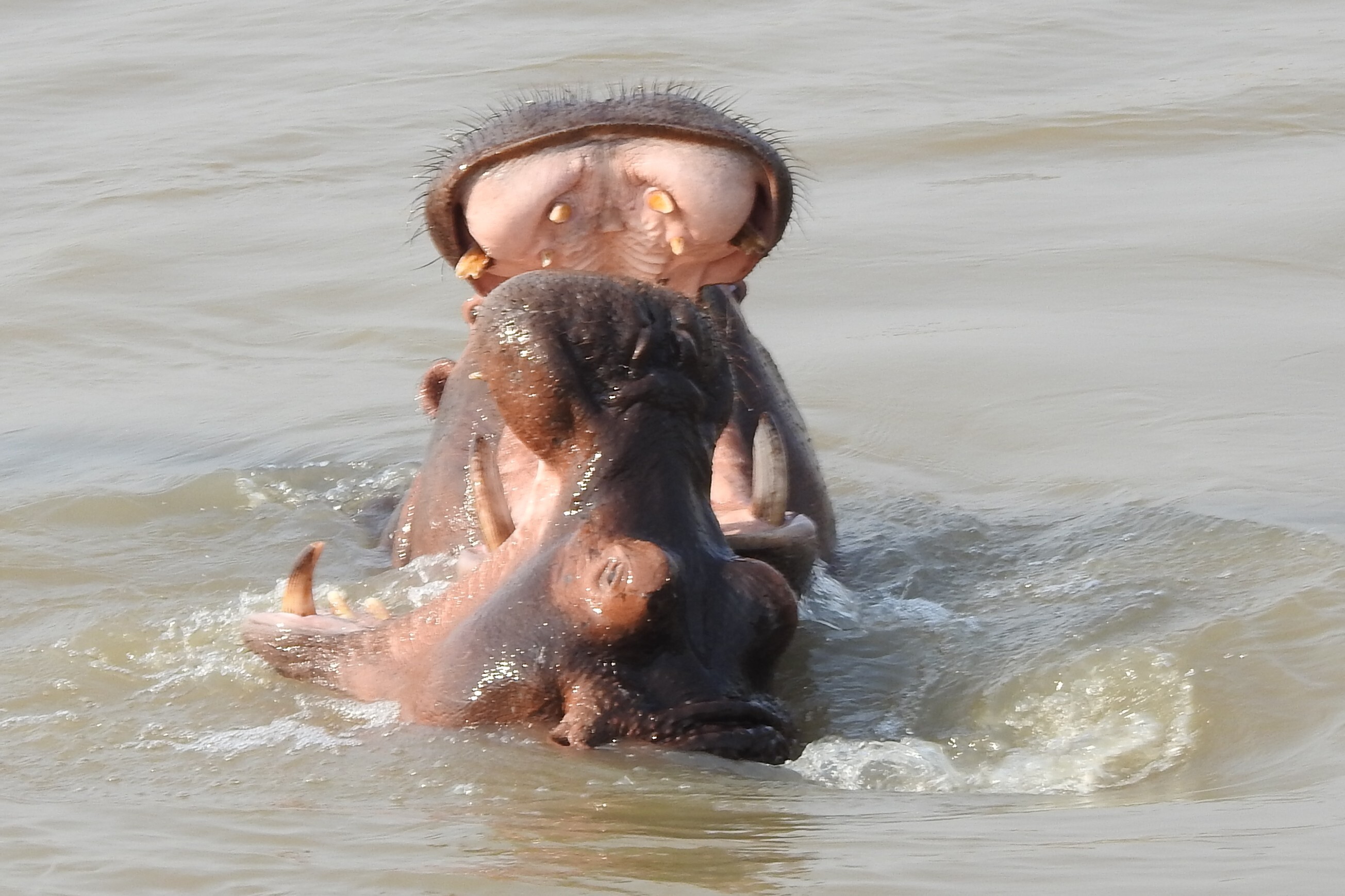
Little bee eater
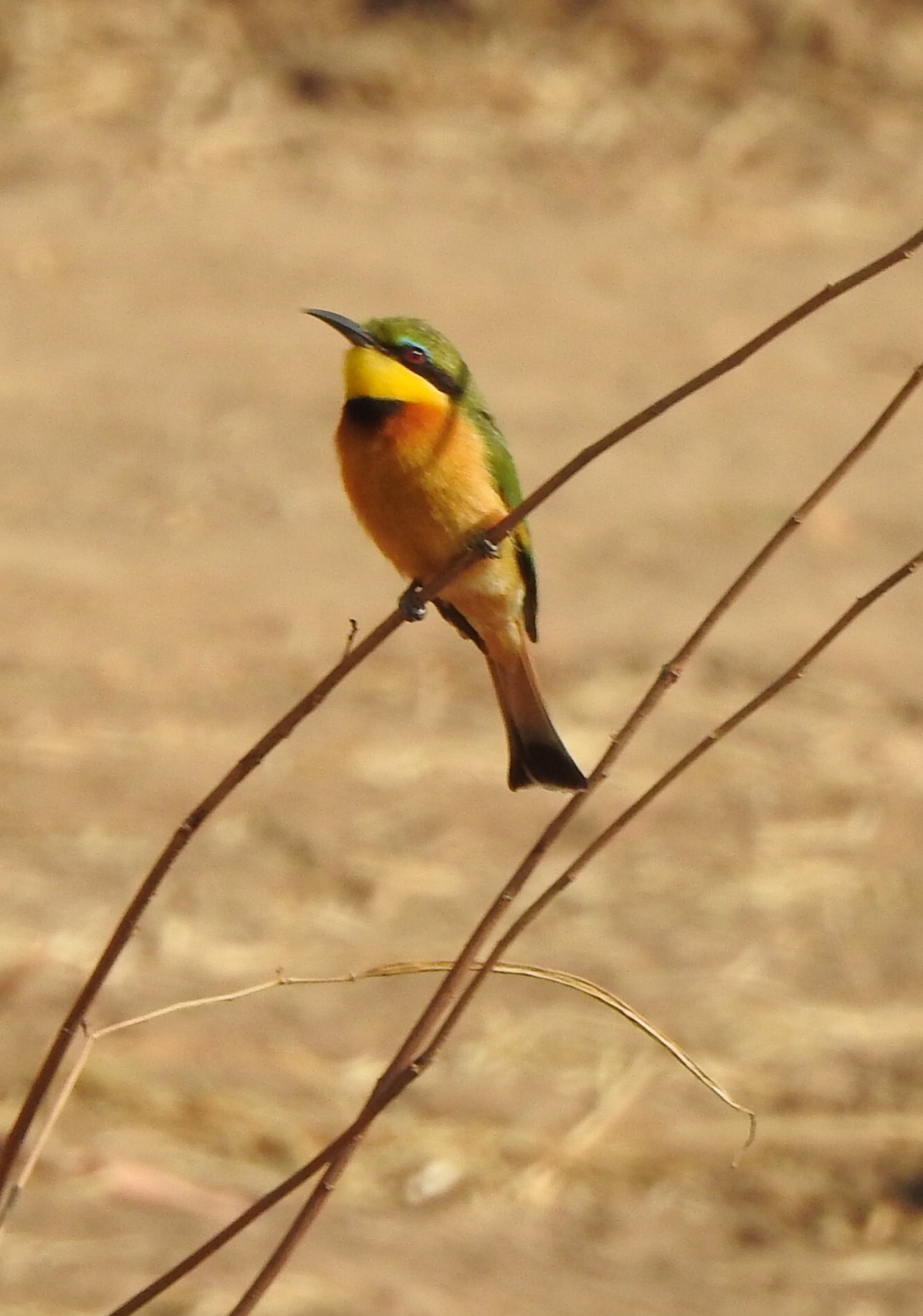
Hippos in the watering hole:
Ground hornbill

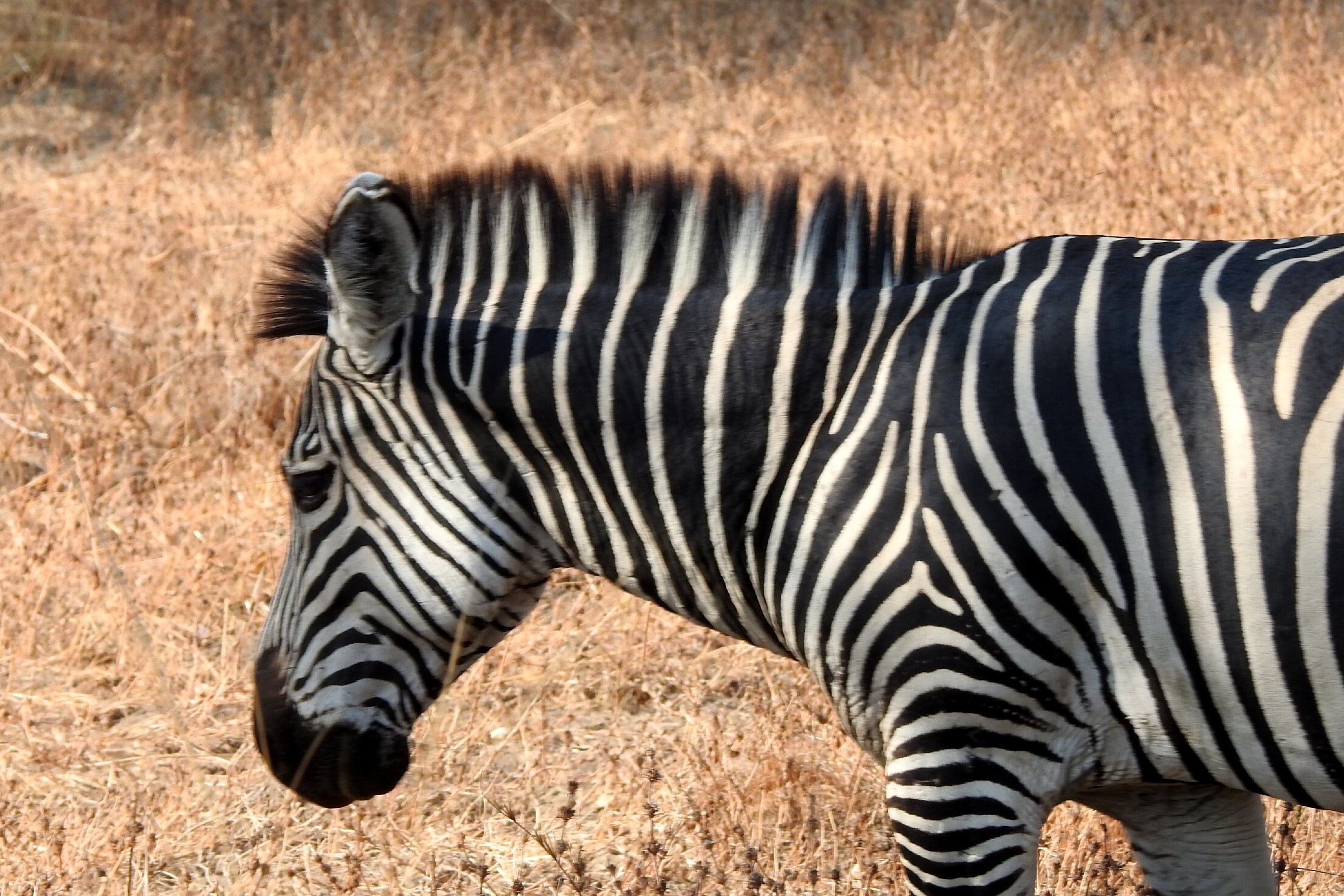
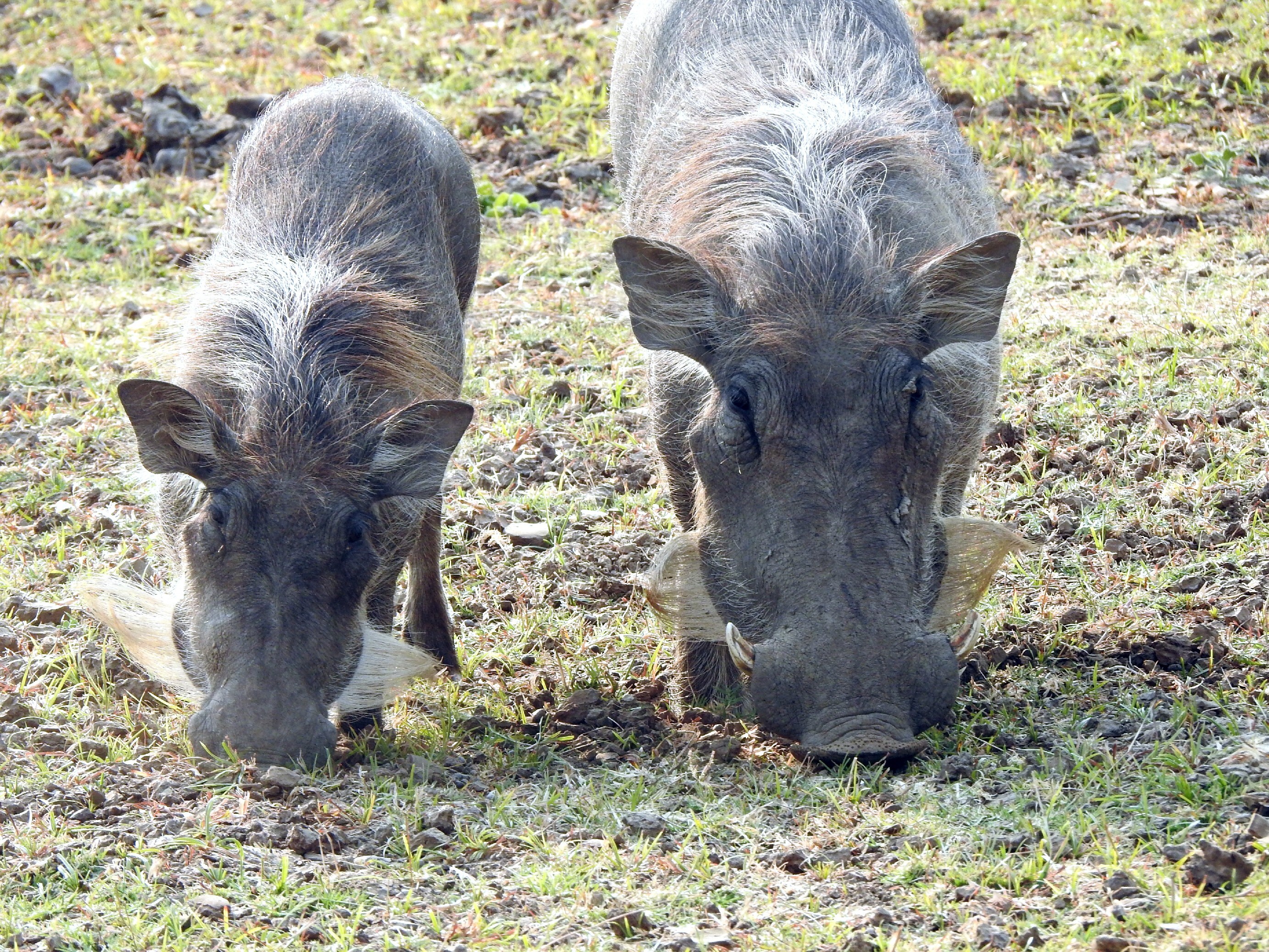
Wart hogs

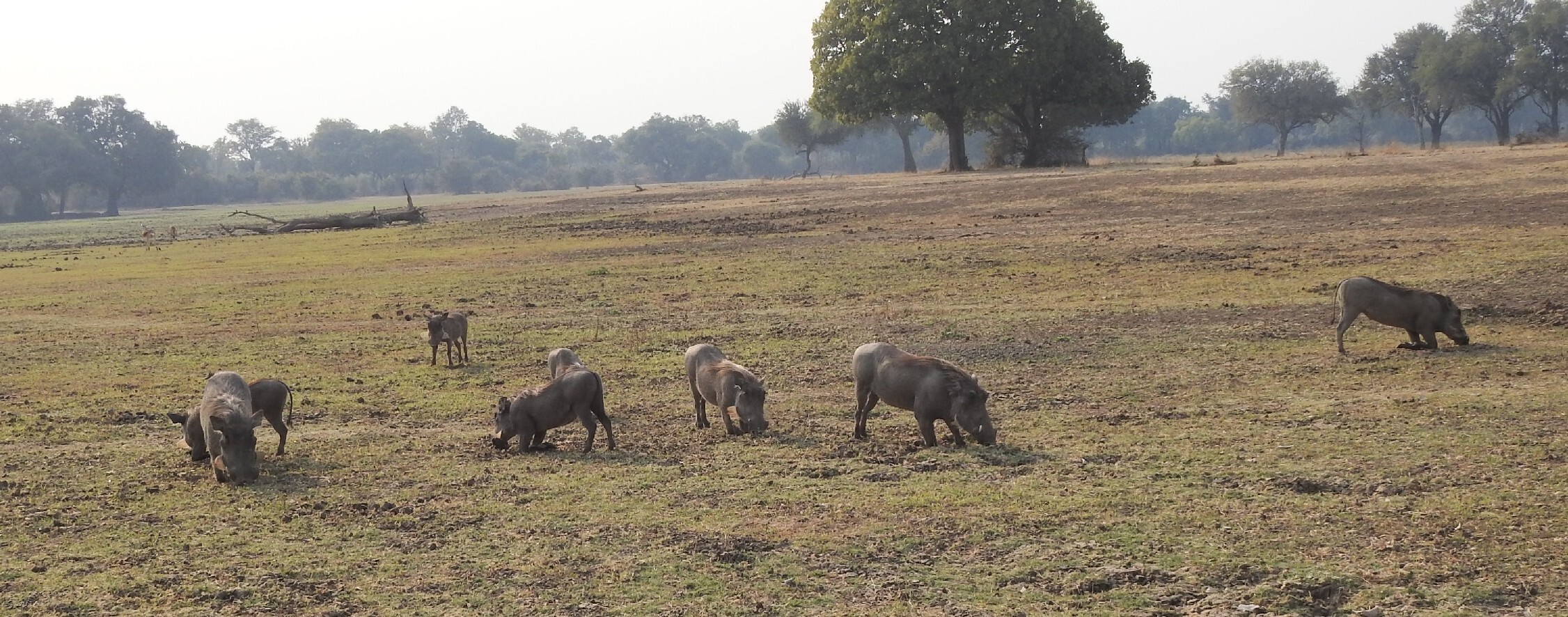
yet another zebra
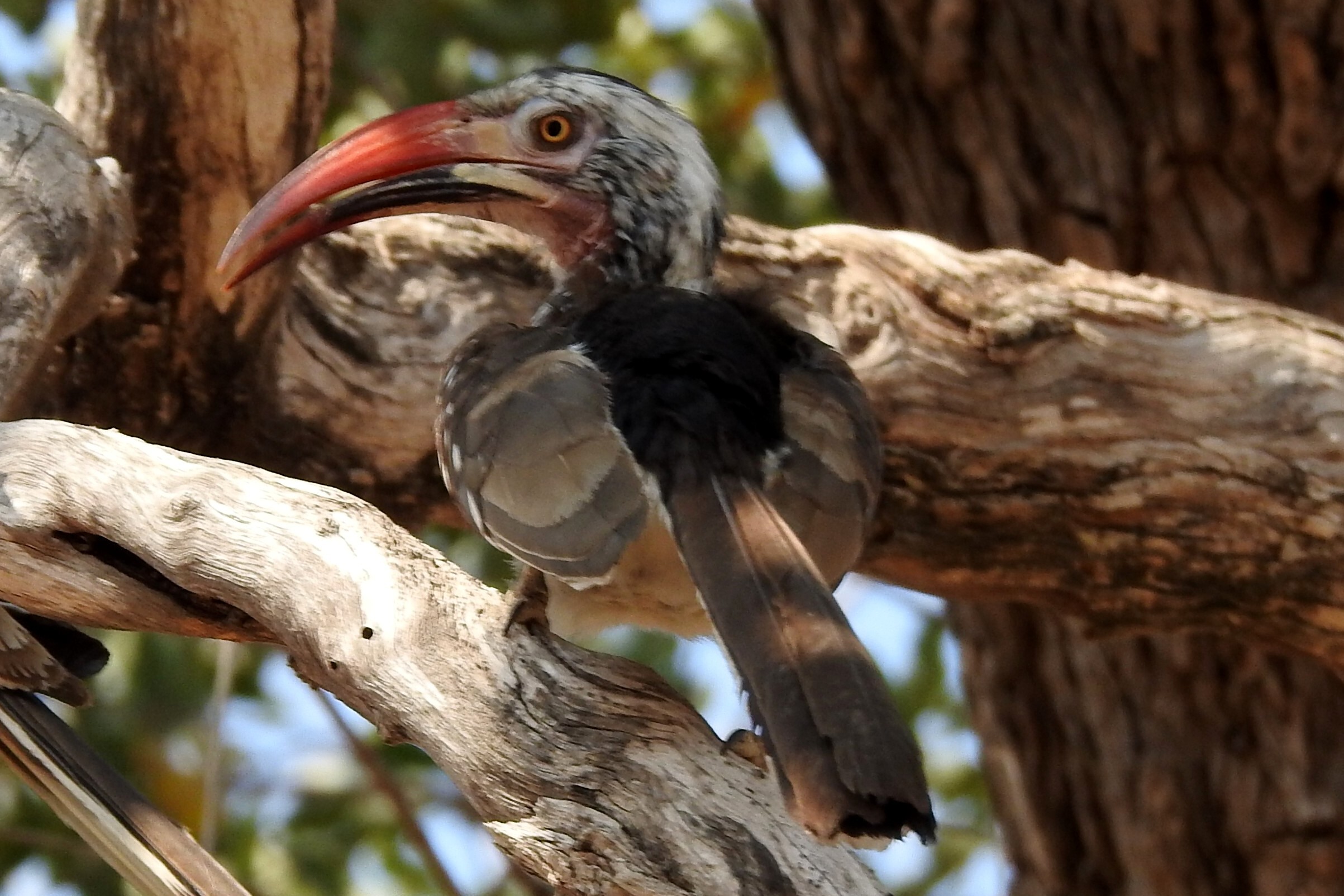
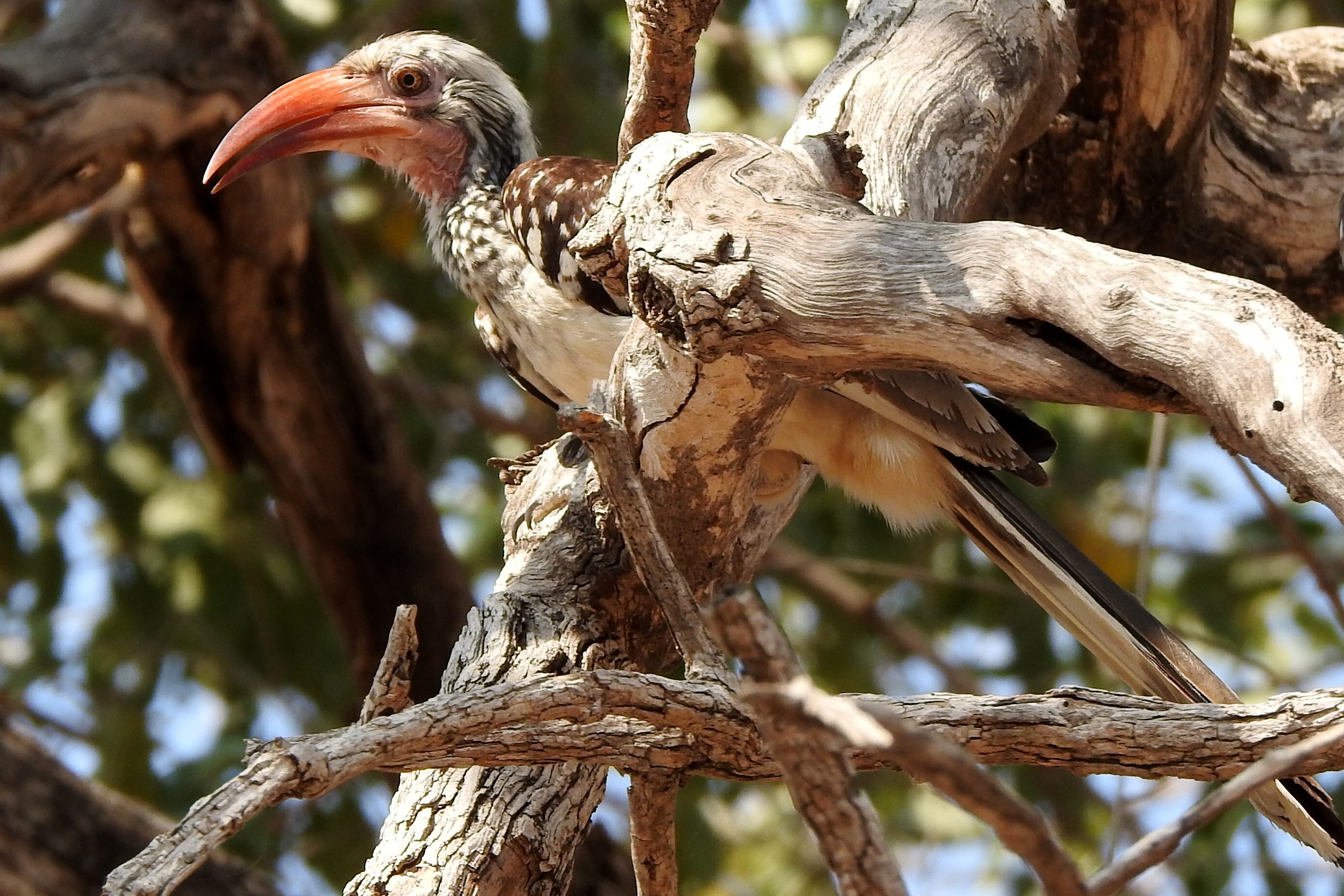
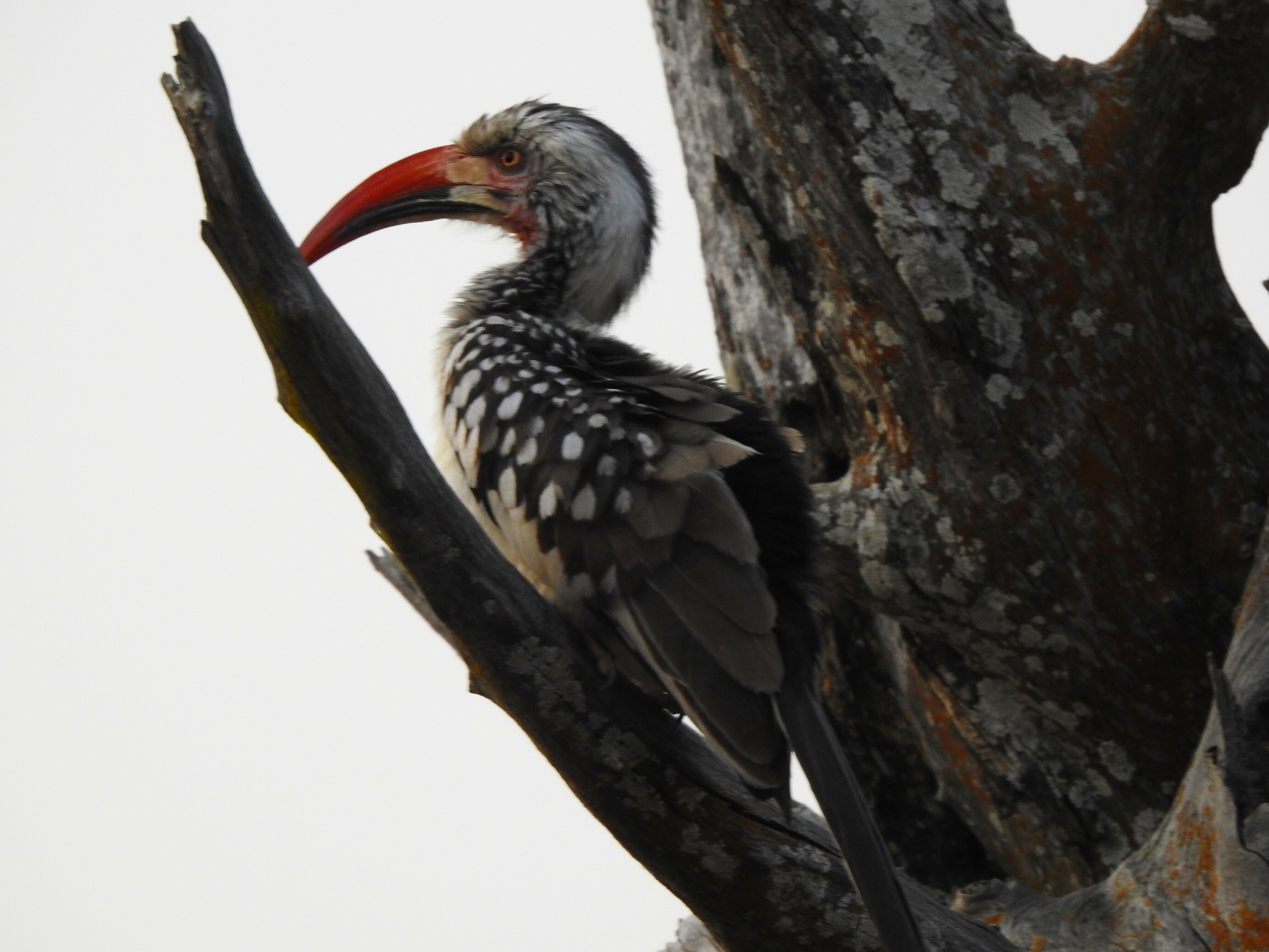
Red billed hornbill – male and female
wart hogs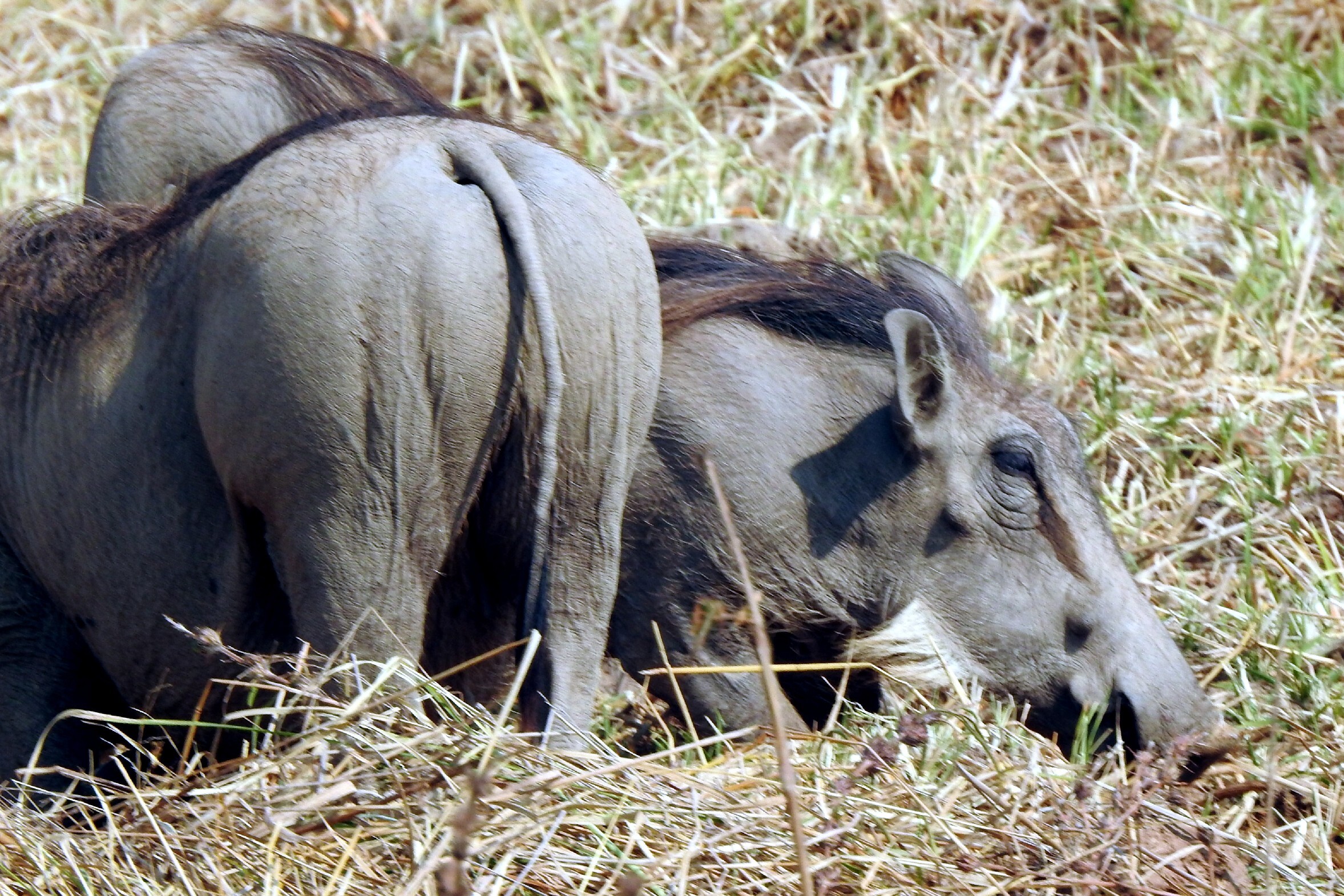
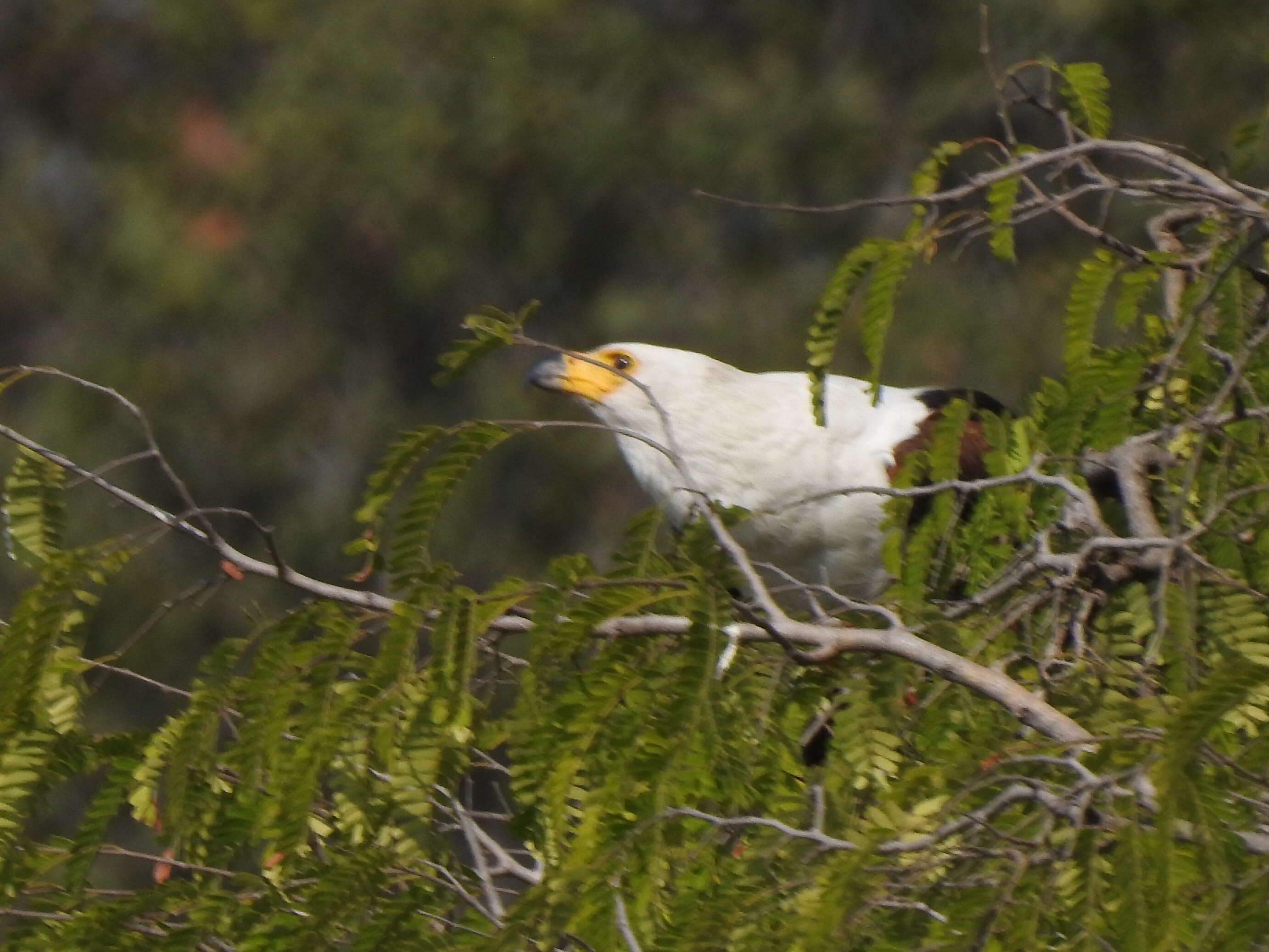
Fish eagle – not a great shot
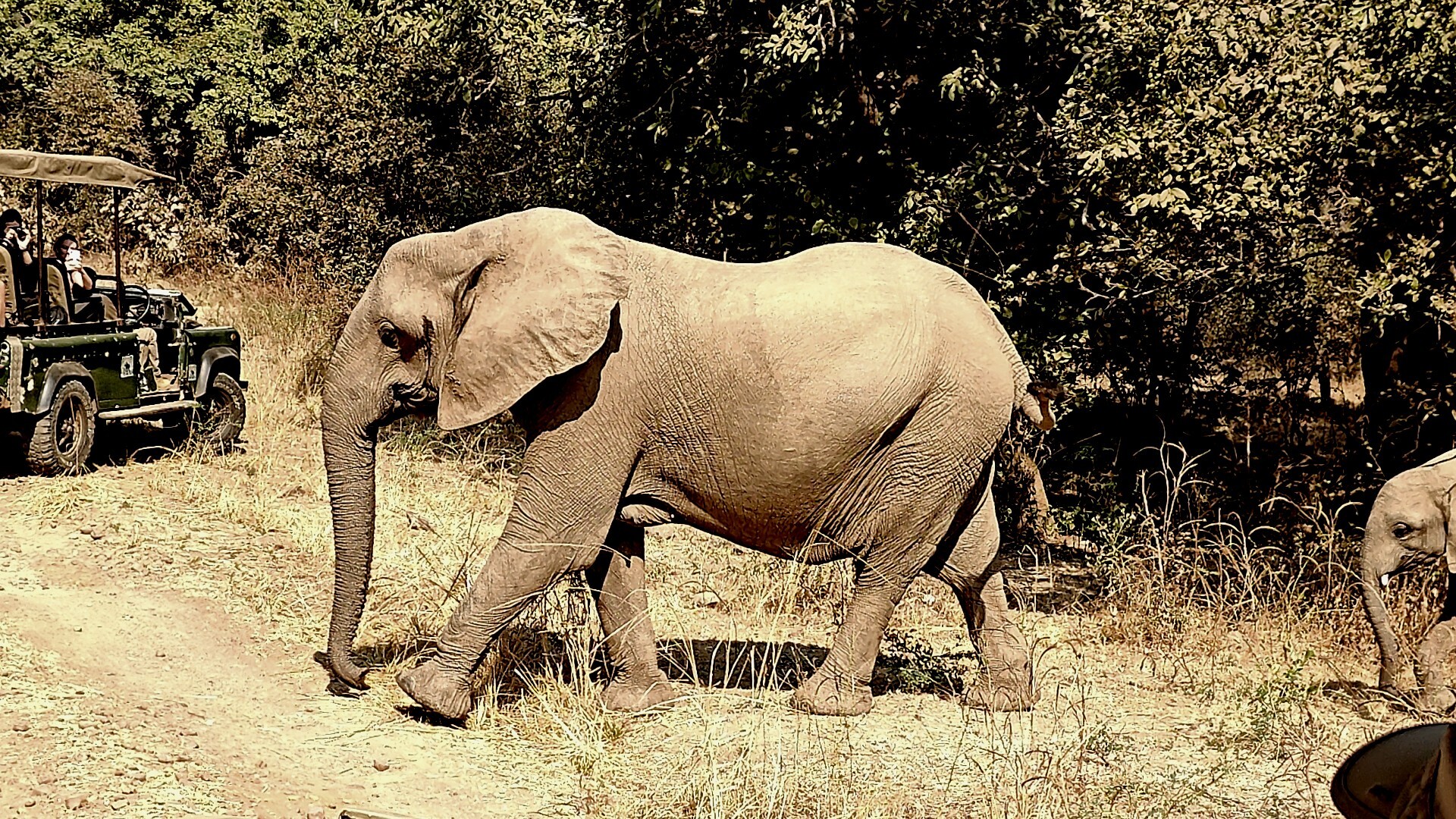
Elephants
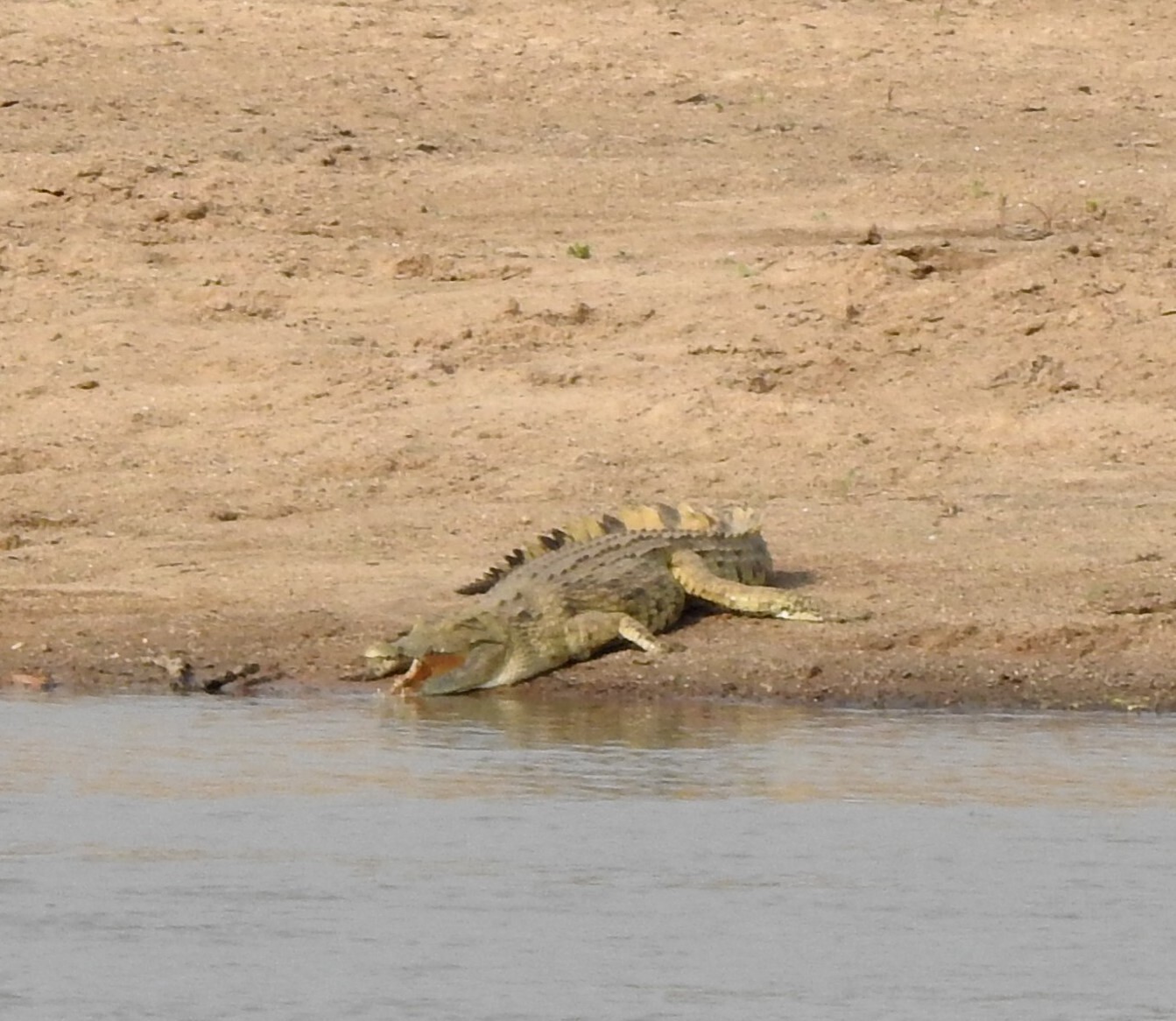
crocs on the opposite shore
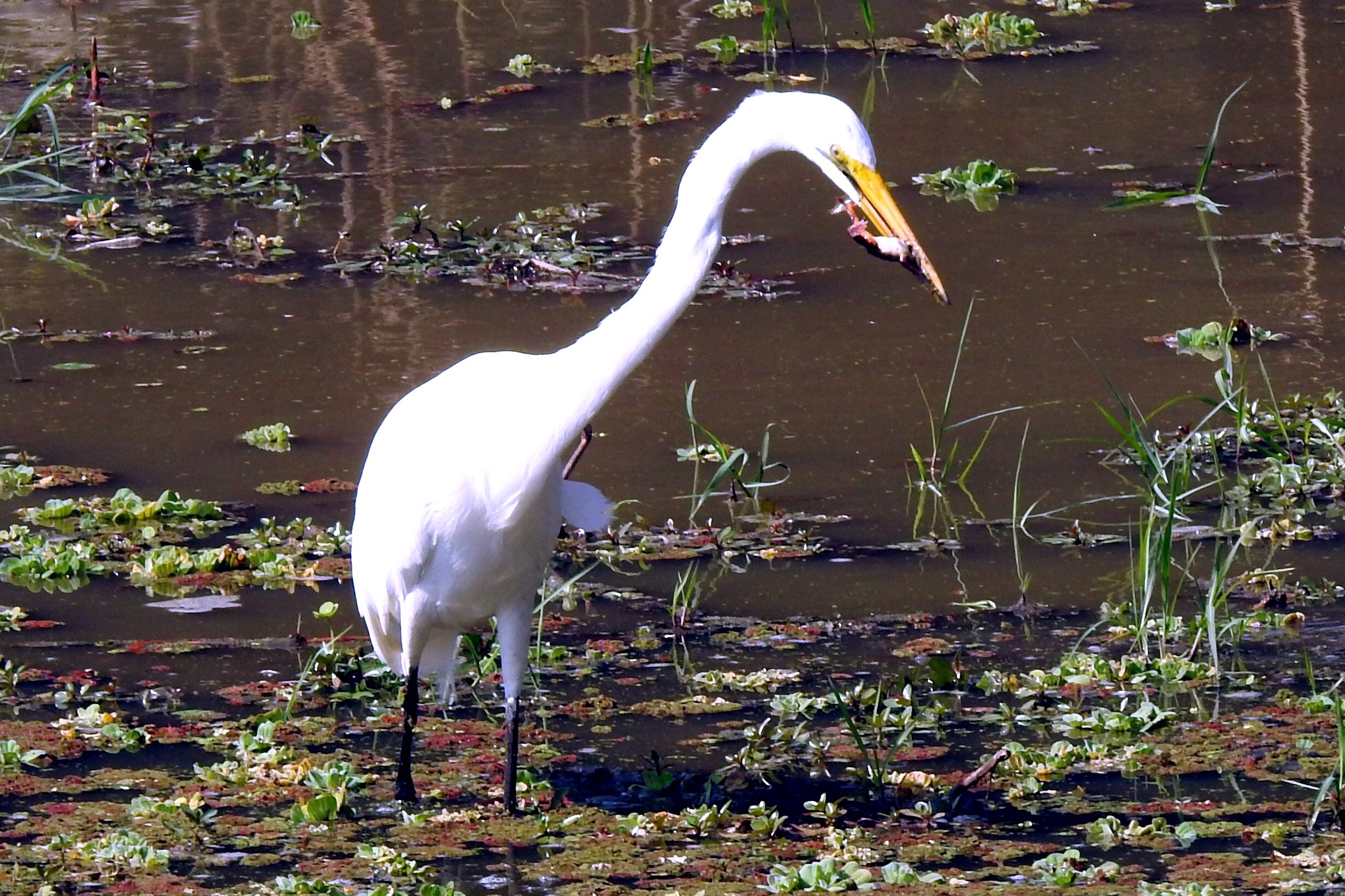
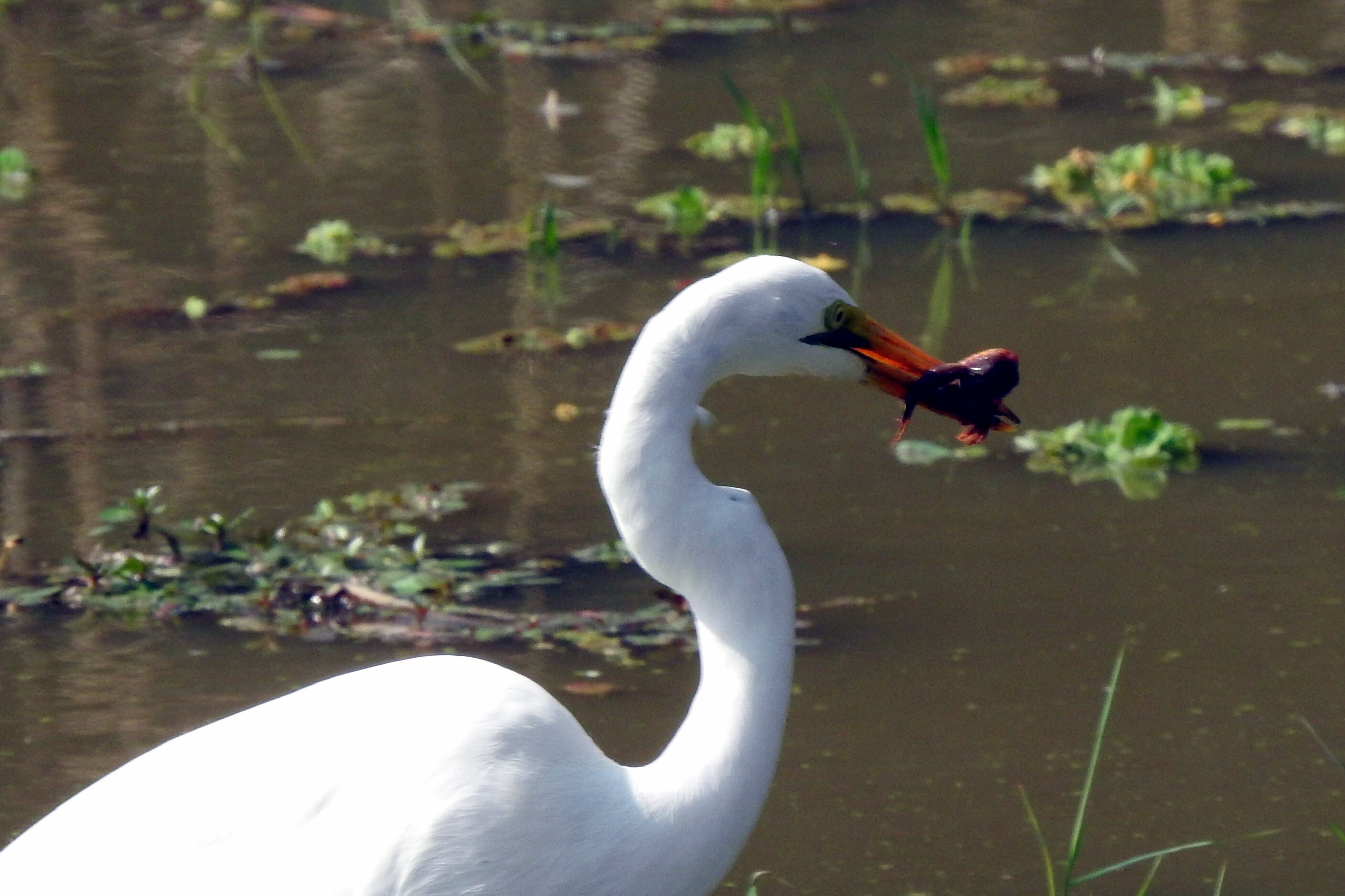
Great white egret fishing
Halfway through the morning drives, there is also a break with tea/coffee and snacks. We saw these baboons before stopping:
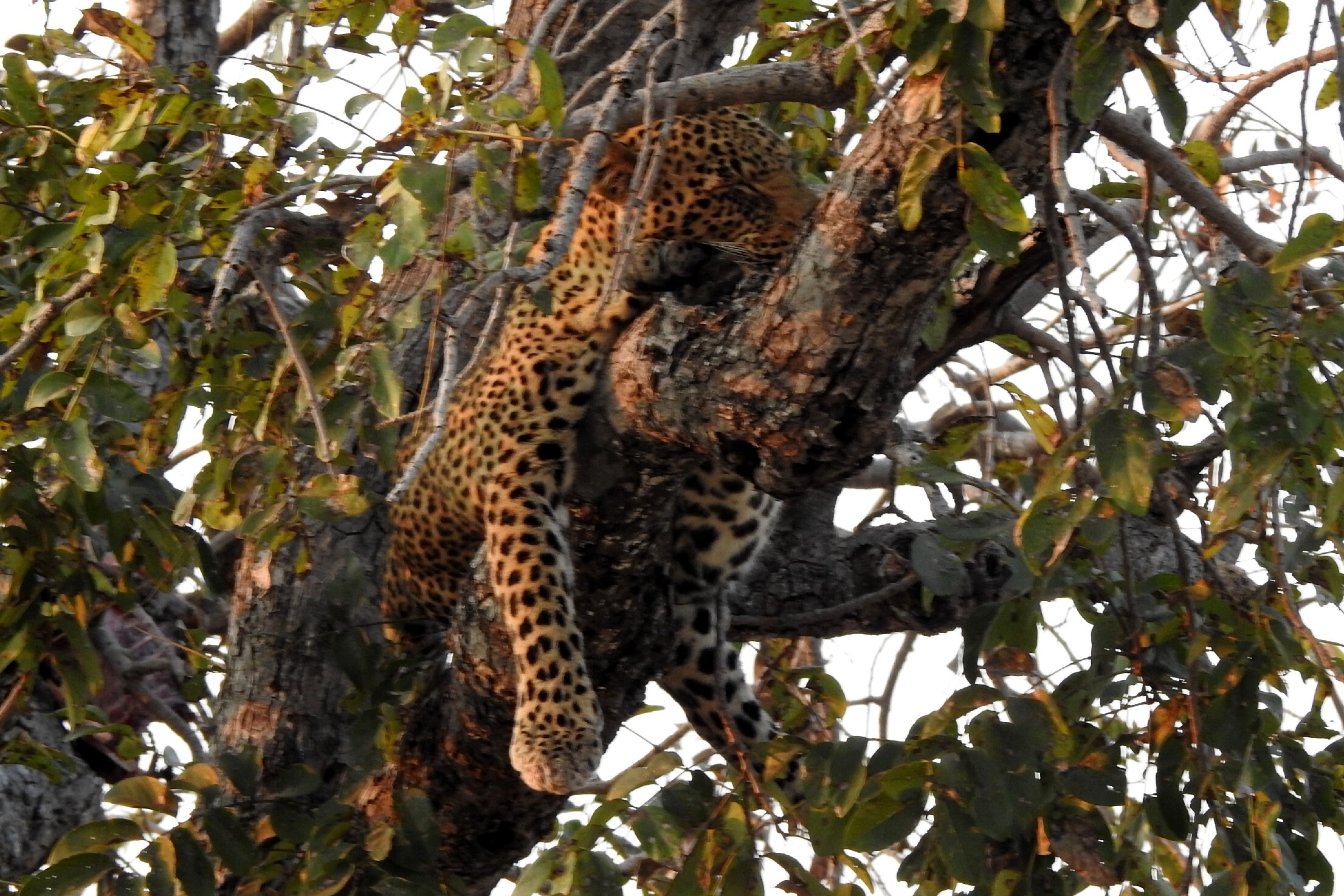
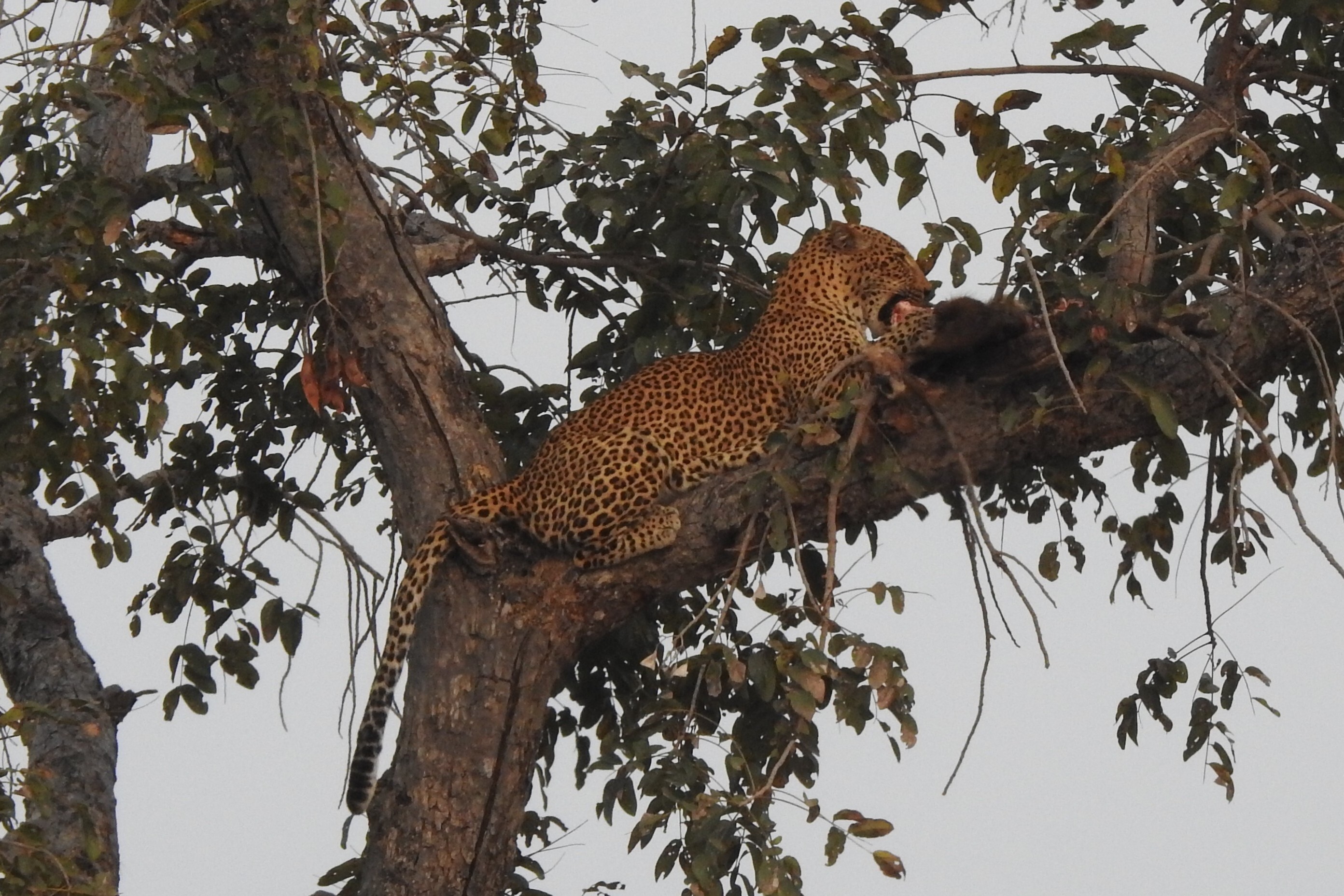
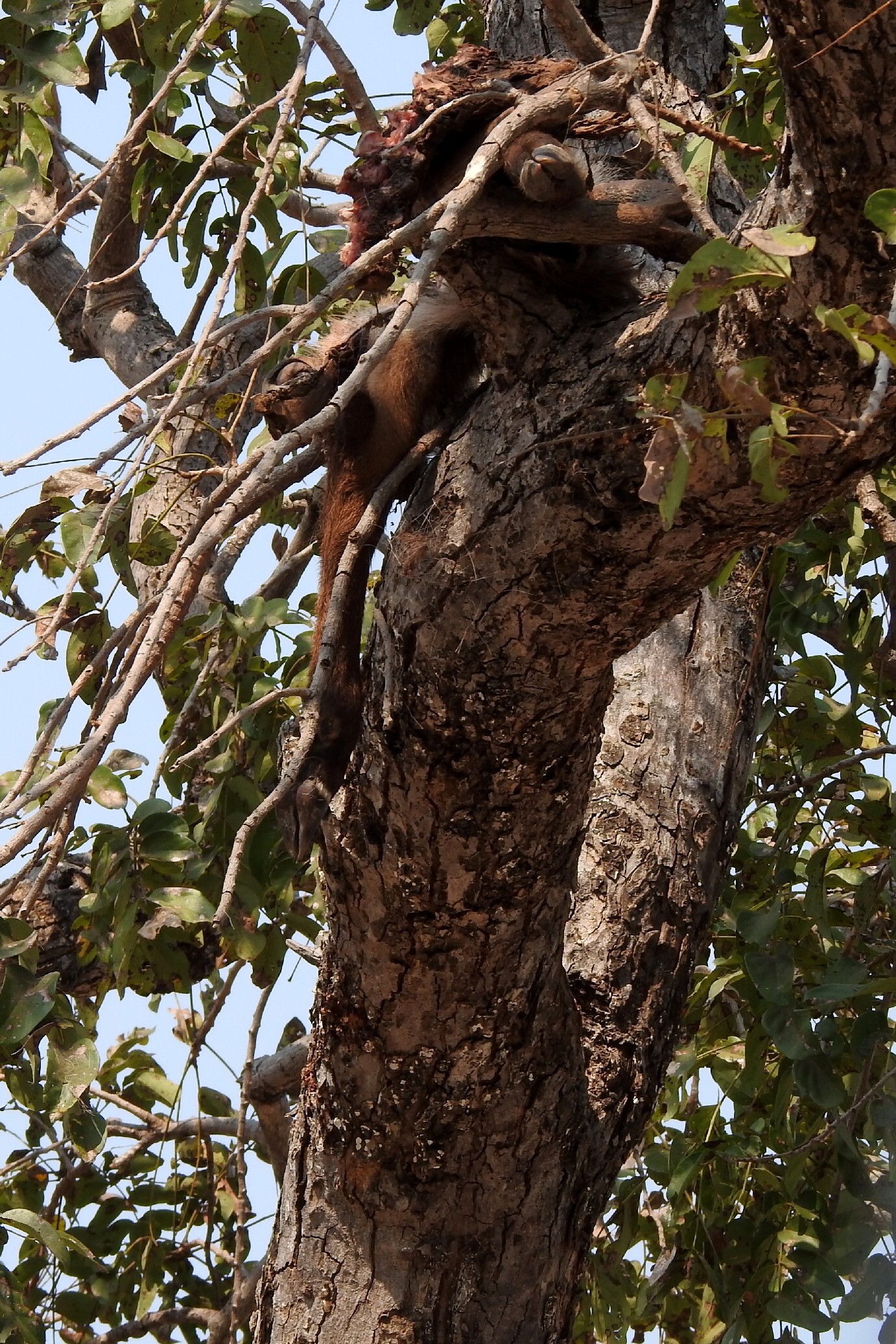
We stop to check on Lucy, the leopard – she’s got a new kill – a water buck – which she got up into the tree where it’s safer:
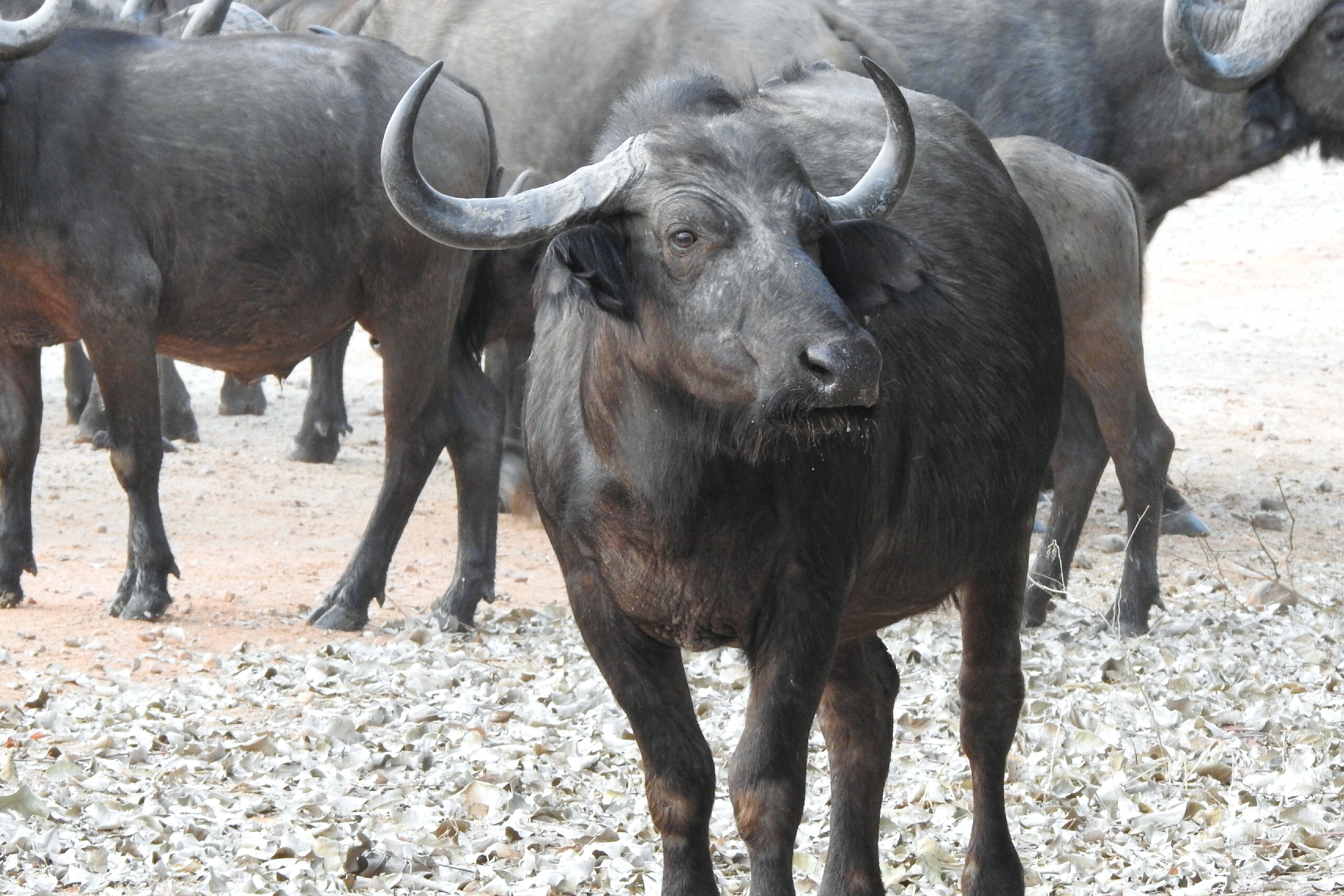
We came upon a HUGE herd of cape buffalo some of whom entering the watering hole for a drink:

Upon returning to the camp, Fran showered and we got online for a couple of hours before lunch at 11:30. At lunch which was an omelet, salad and fries, a vervet monkey entered the dining hut and stole half of Fran’s dessert crepe! Wish we’d gotten that on film!
After lunch the WiFi connection was not so good so we gave up and read before our night drive.
That night we had only one other occupant on our vehicle, a young man off another big overlanding rig named Dominic, from Switzerland and off we went to see:
Elephant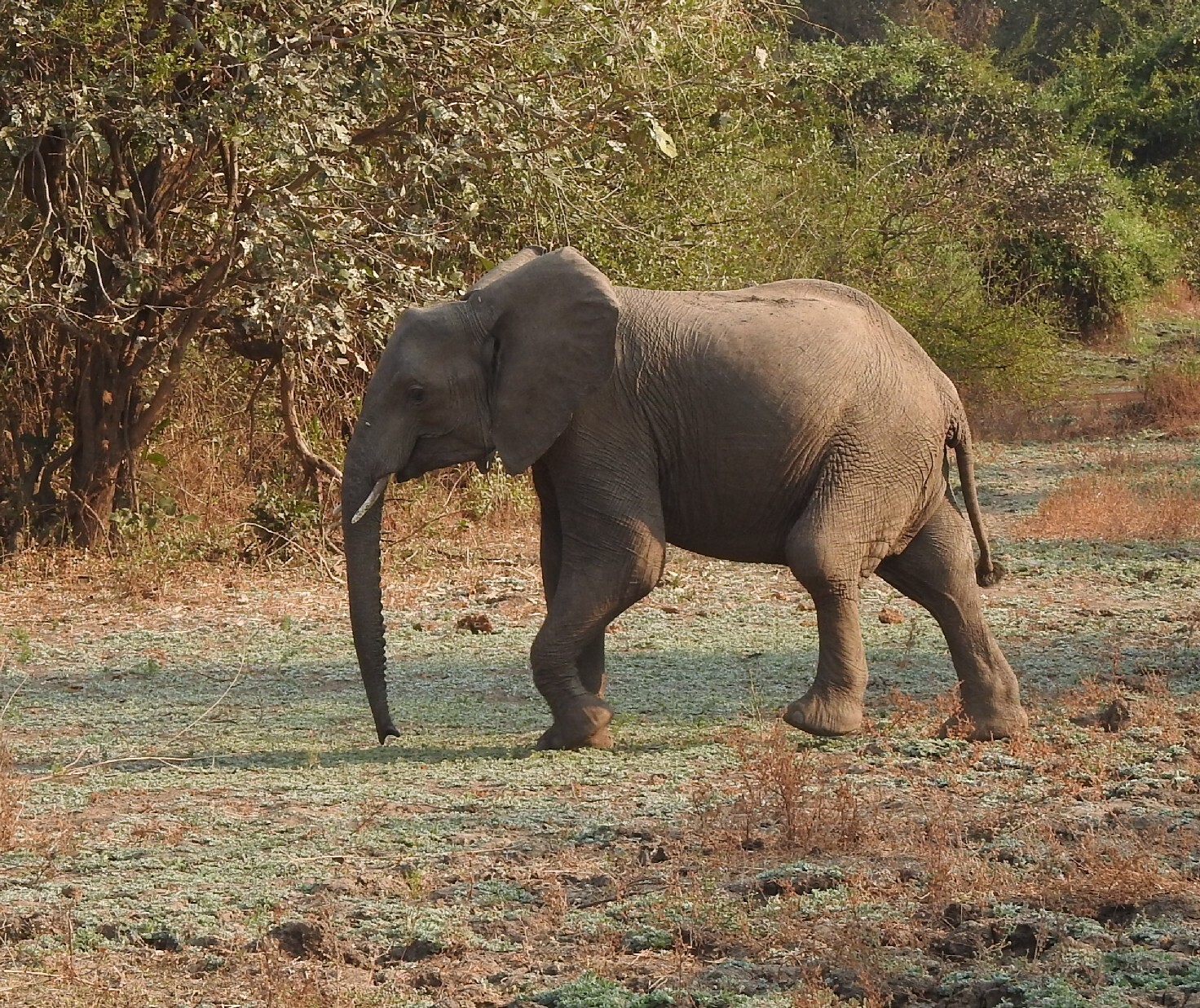
Elephant crossing river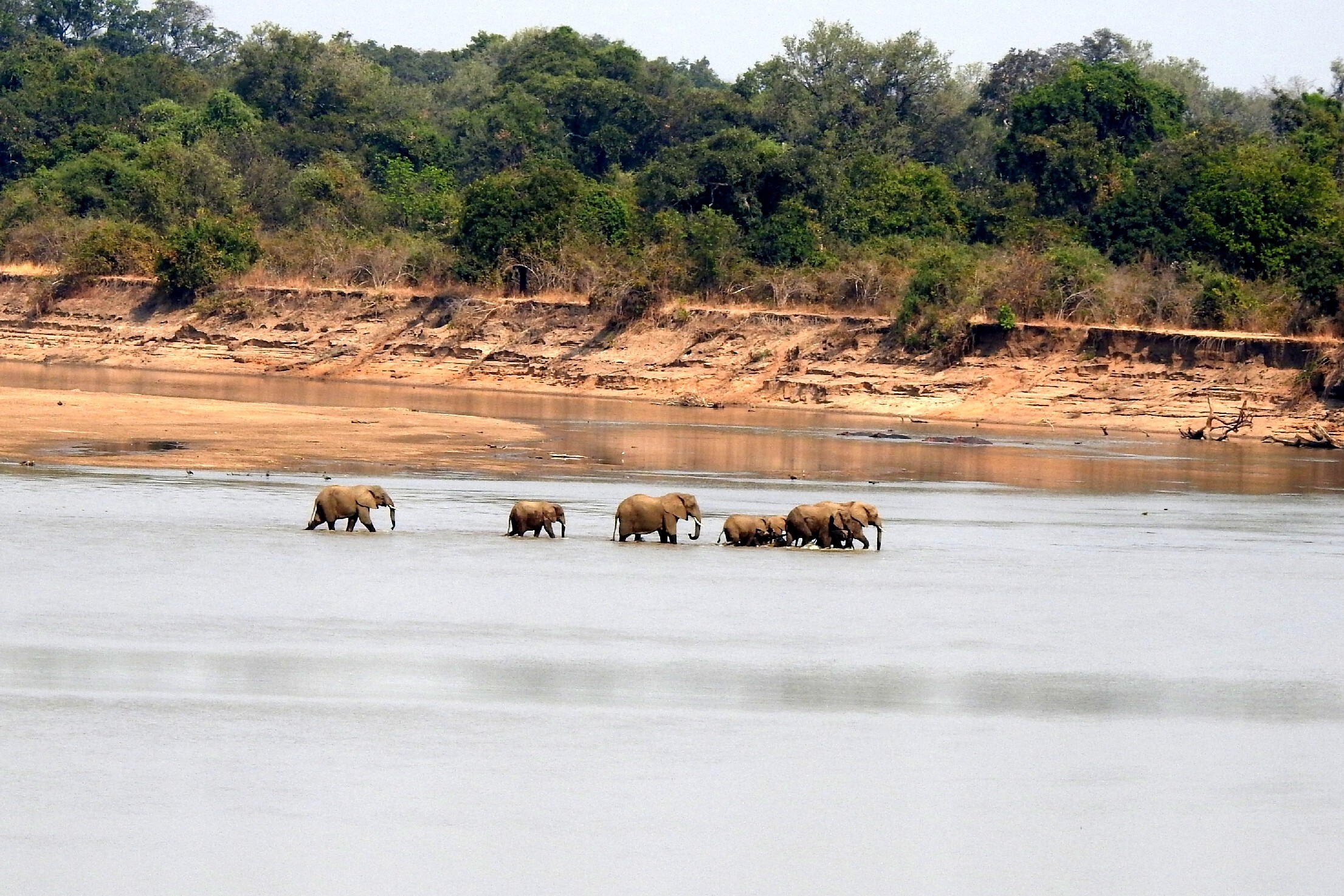
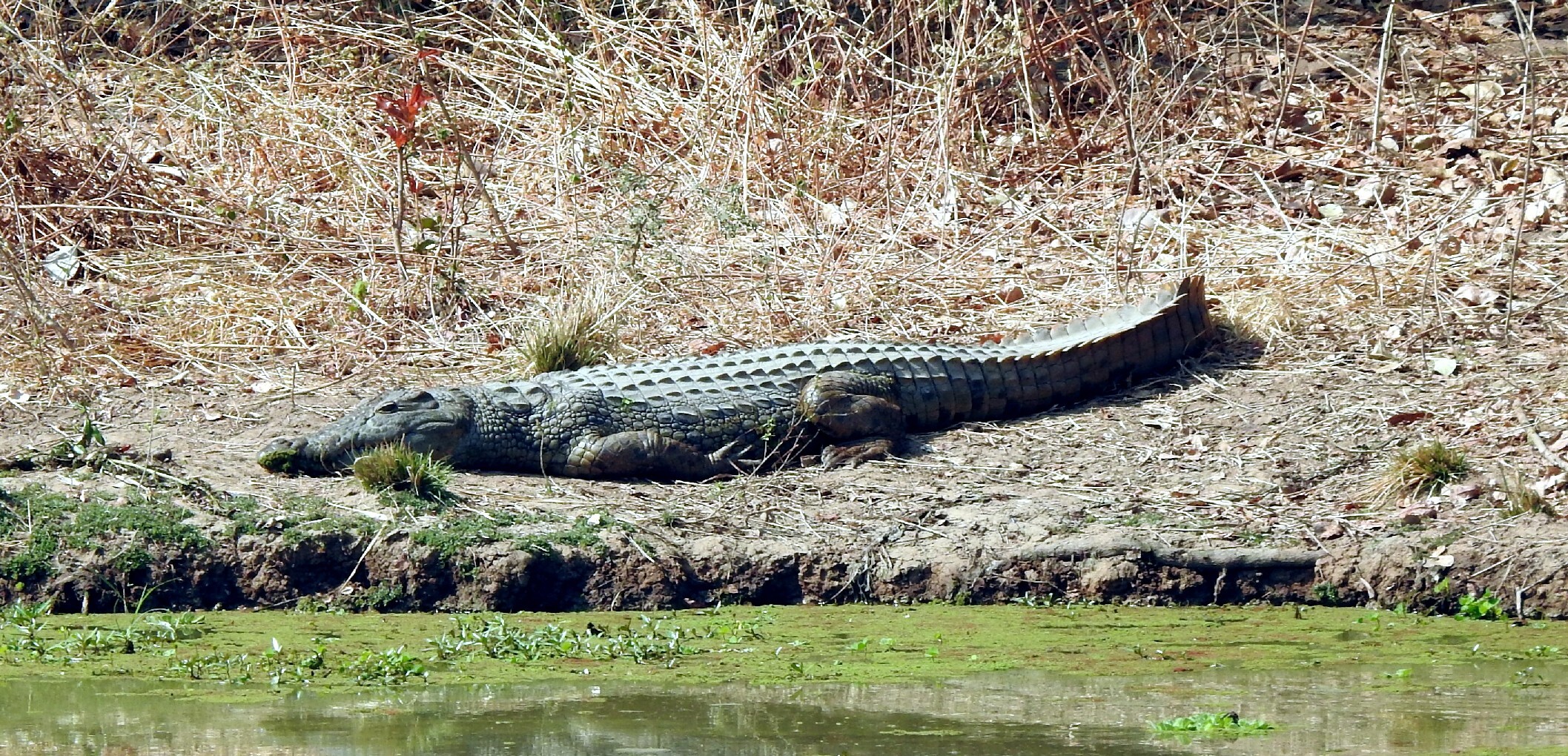
Some crocs on the shore of a hippo pond:
Back at Lucy’s tree:
Water buck
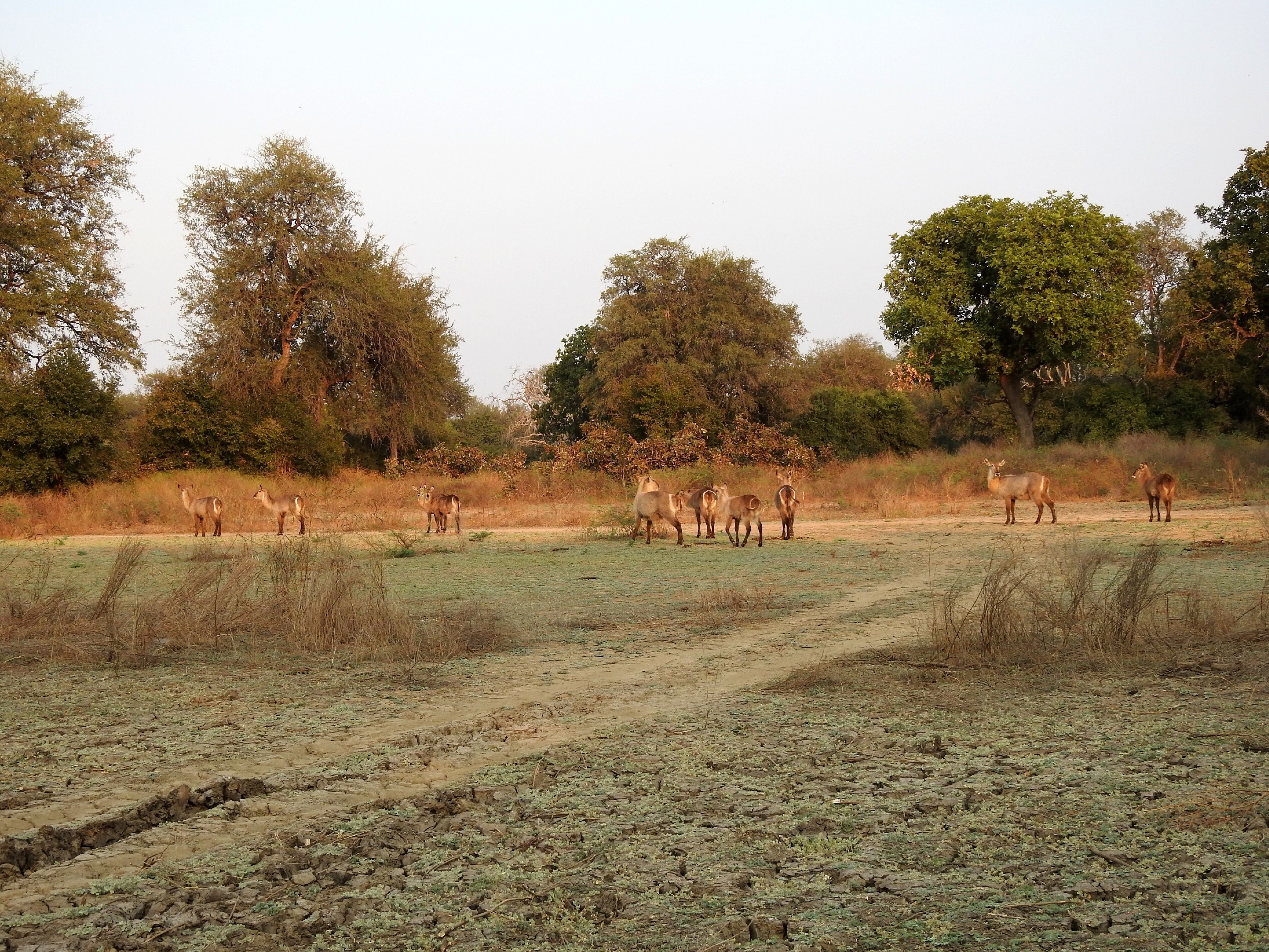
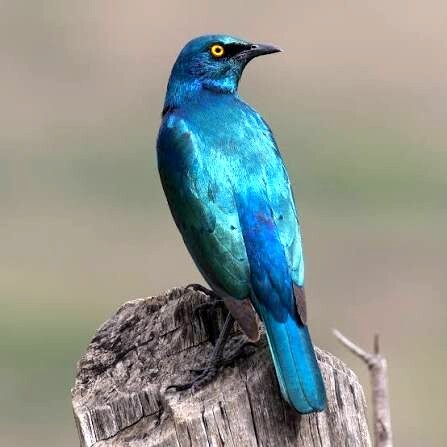
Blue eared glossy starling
Black winged stilt – not a great shot

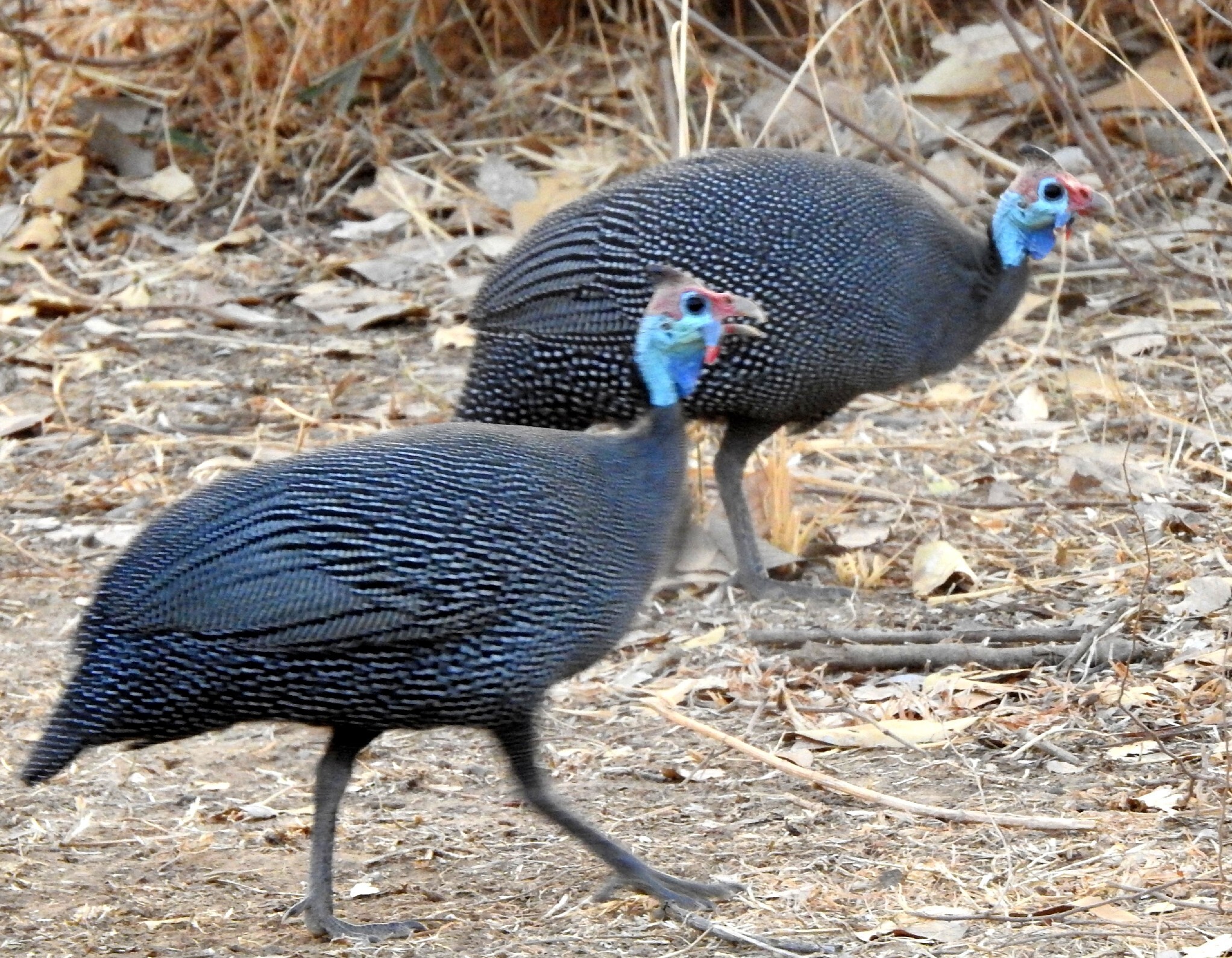
Guinea fowl
Egrets in a tree

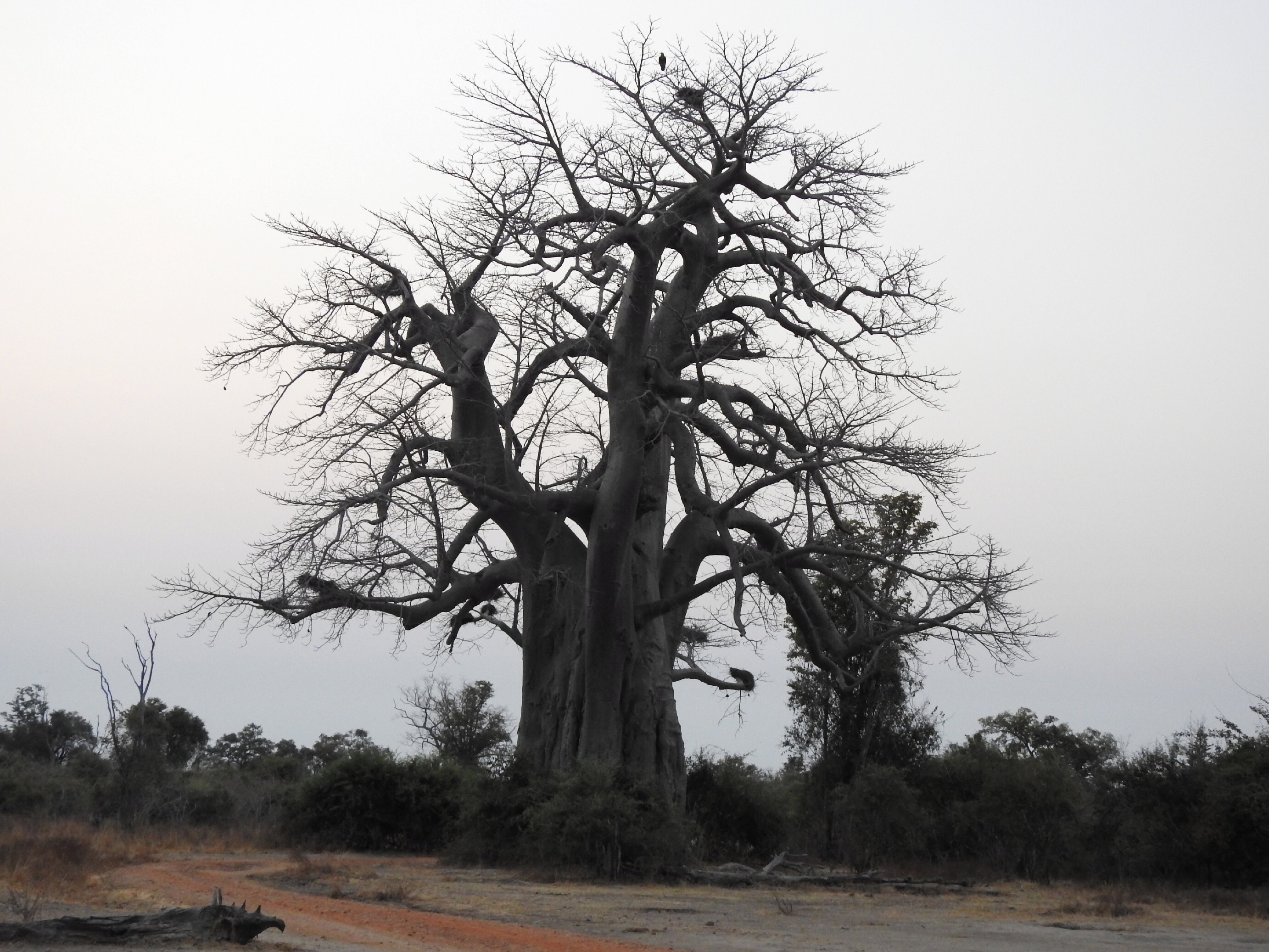
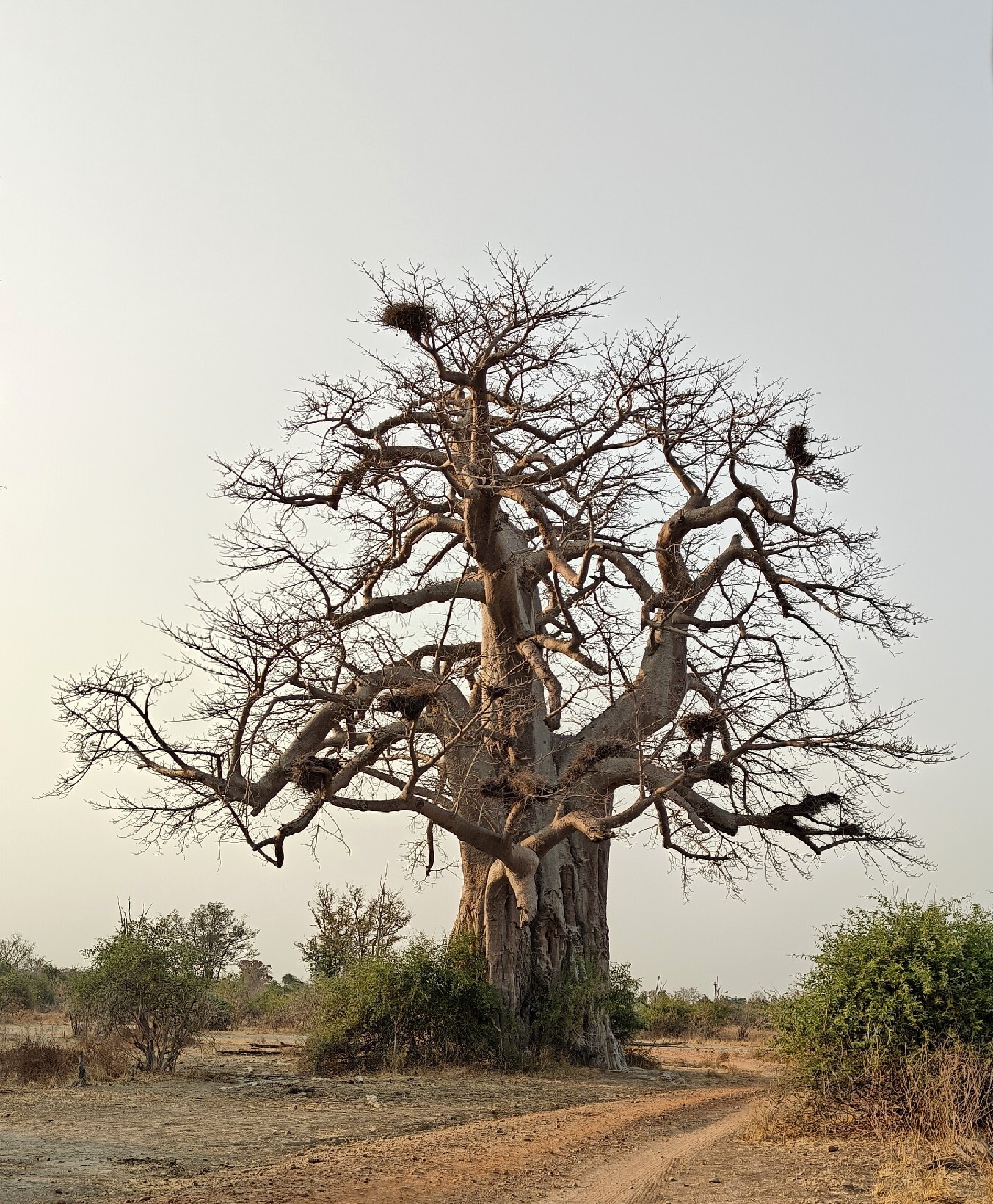
The Big Baobab
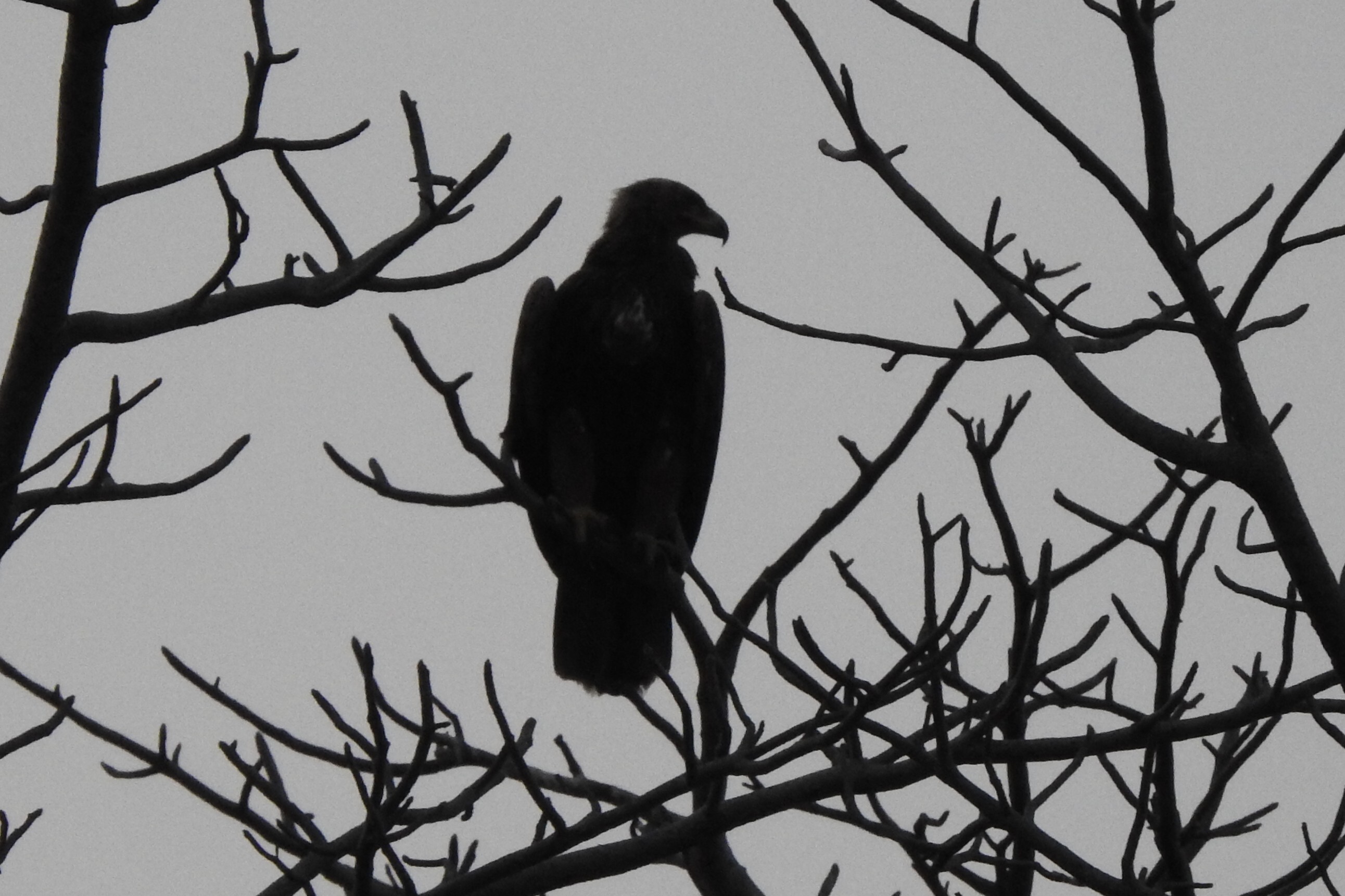
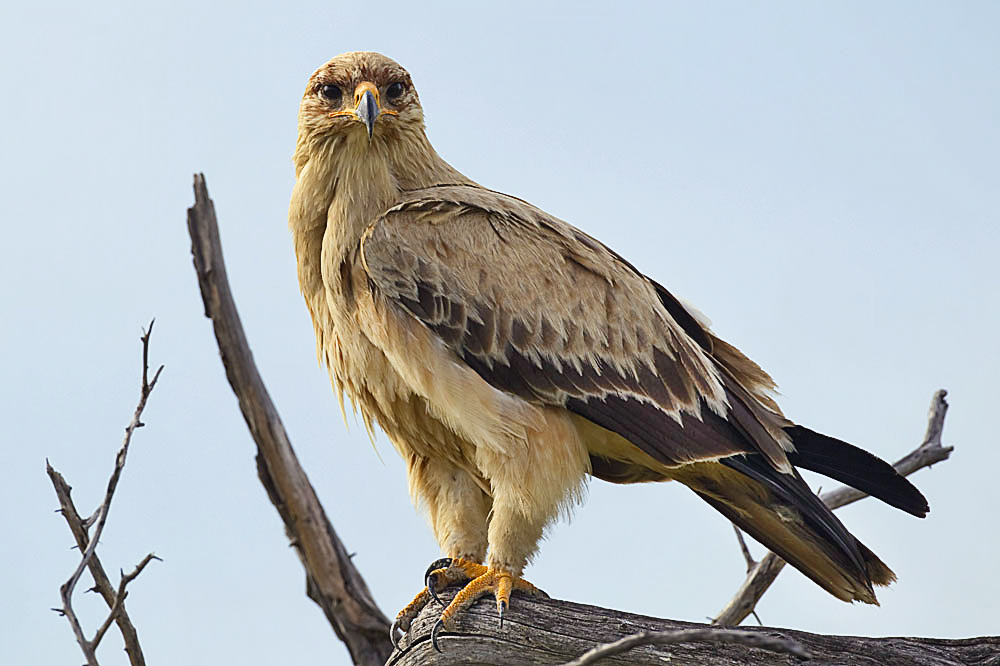
tawny hawk – now our photo is take in poor light so below this one is a photo from Wikipedia
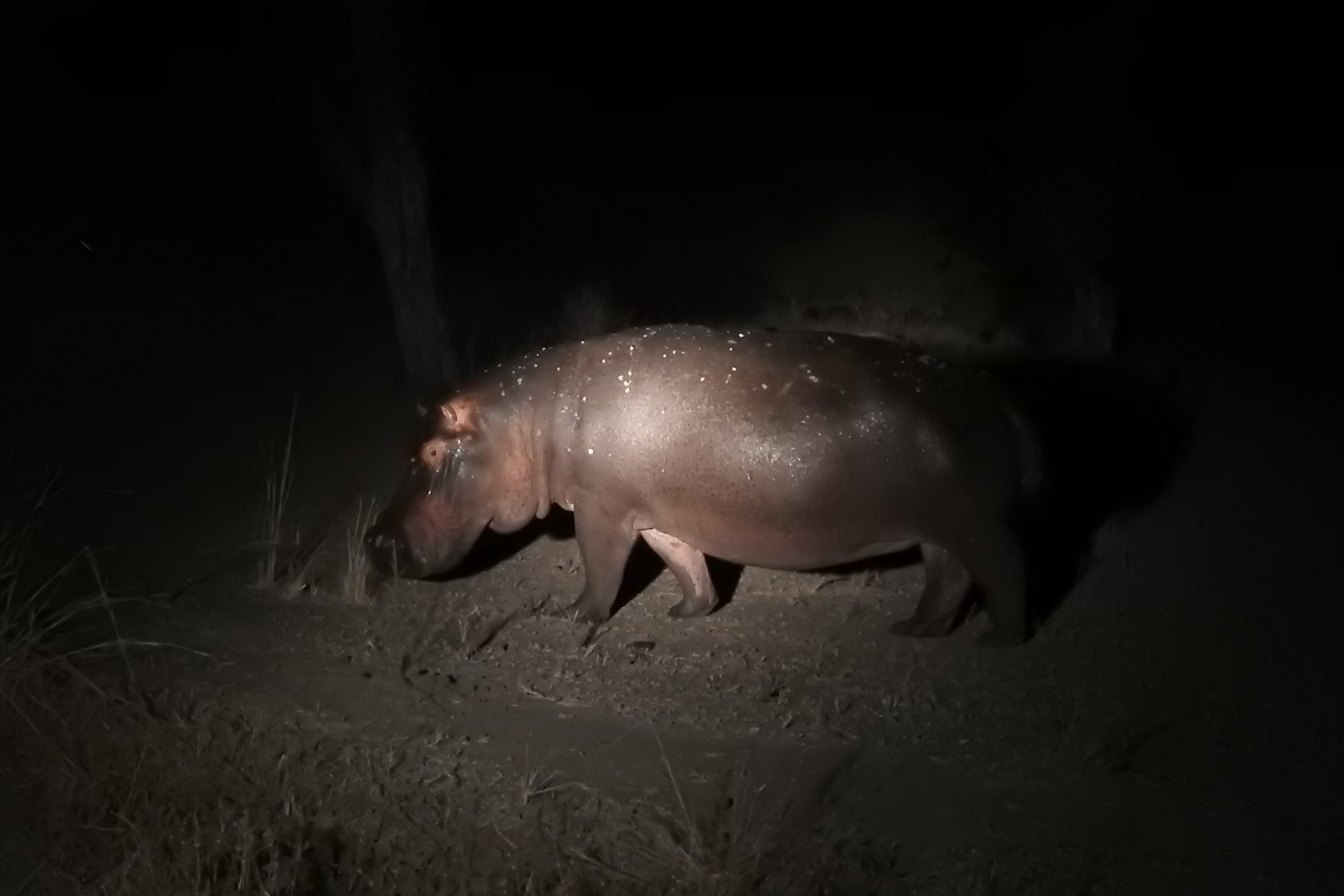
Hippo – this is a bloat of hippos at the evening break:

Hippo on land after dark
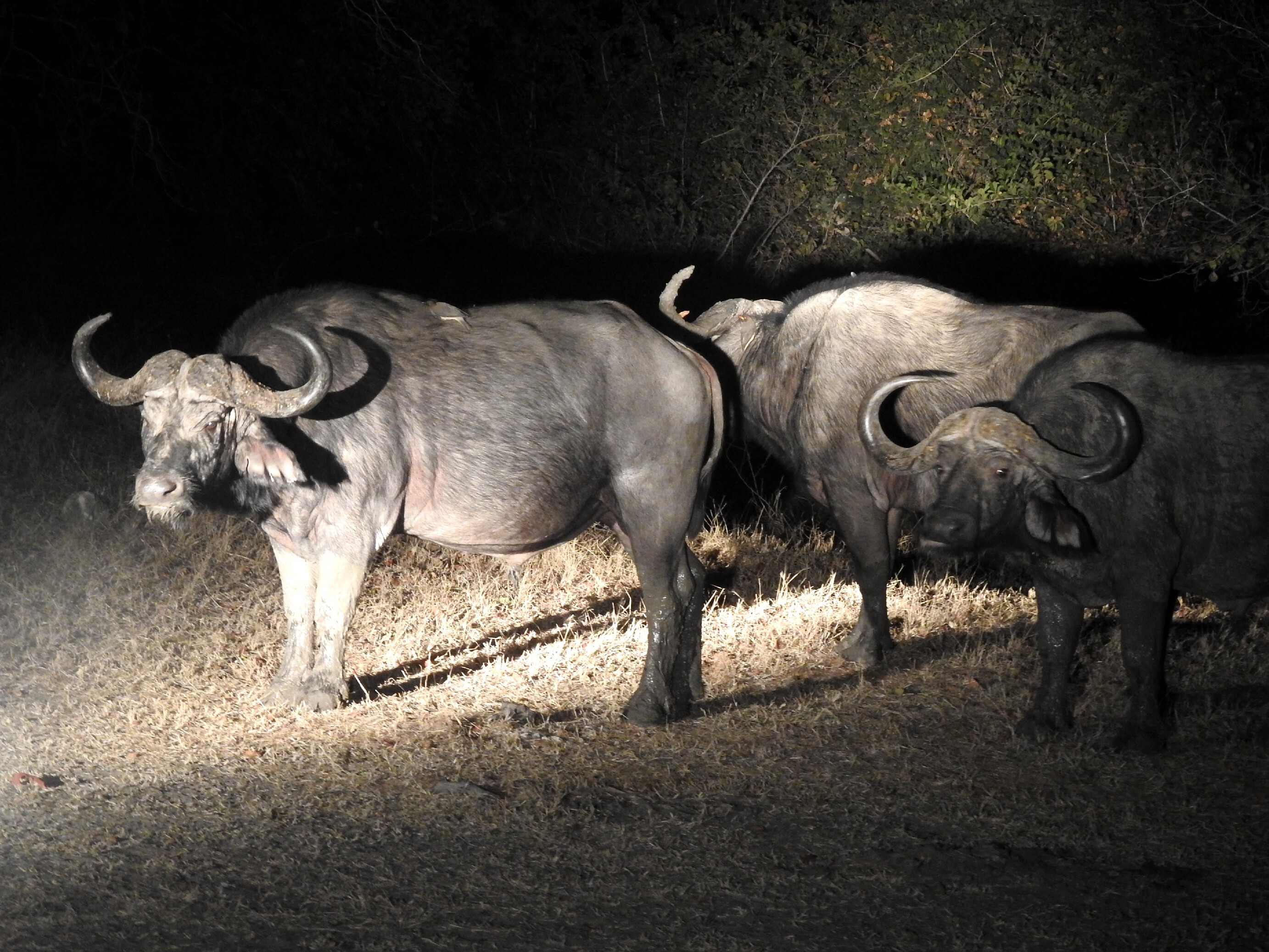
 Cape buffalo
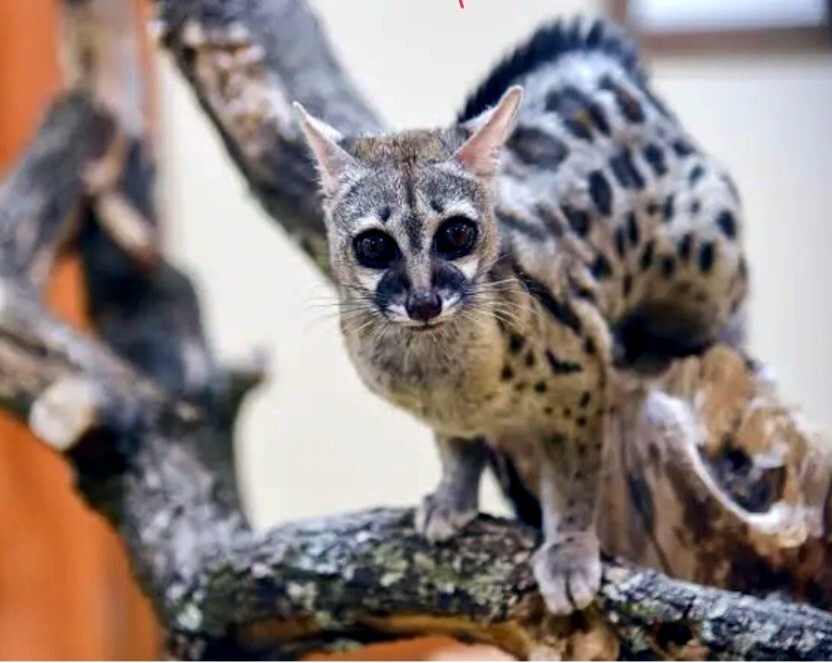
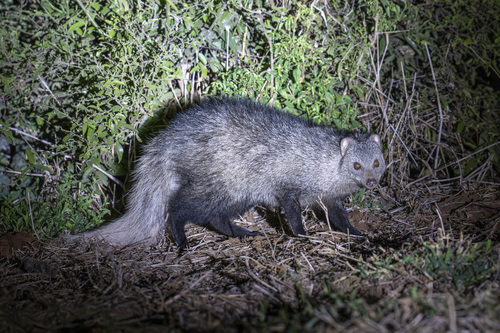
White tailed mongoose with a Genet
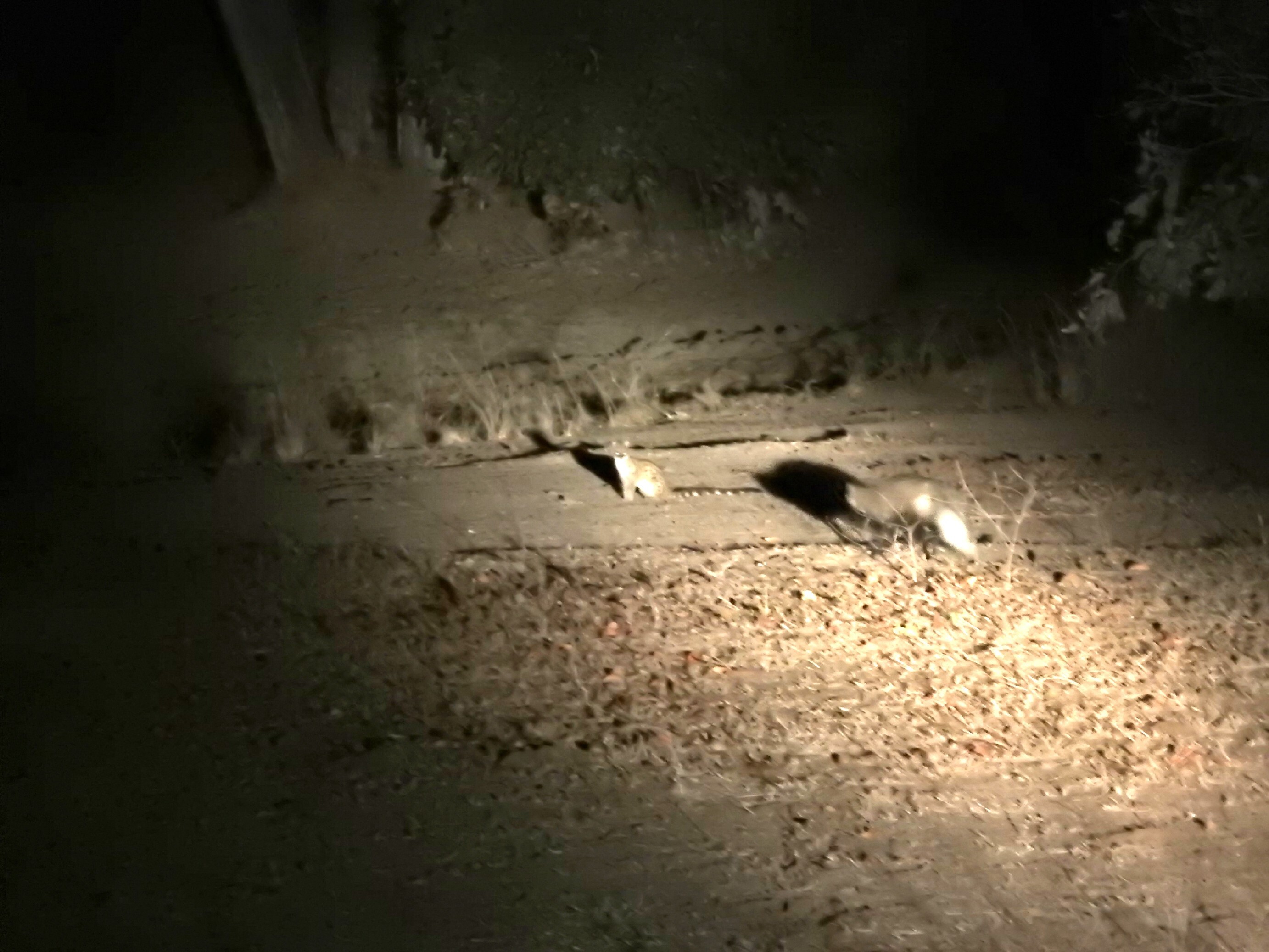
now as you can see that photo is quite bad so here is what a genet really looks like:
and this is a white tailed mongoose:
we also spotted an African civet but it ran into the bush as soon as the light shone on it.
Before leaving the park that evening, Lucy the Leopard had left her tree and was prowling around:
At dinner, Fran wasn’t hungry and didn’t like what we had. Tonight it was a huge, very thick overcooked pork chop, rice with a weird sauce and eggplant. Fran also loses her appetite when it’s hot (over 30C / 86F today) and she barely ate anything.
Wednesday morning’s game drive, Dominic also joined us as well as two others from their large group; a couple from Winnipeg, Tomar and Ariel along with an English woman named Katie who was staying in the lodge.
Before even leaving camp, we saw bush buck quietly eating:
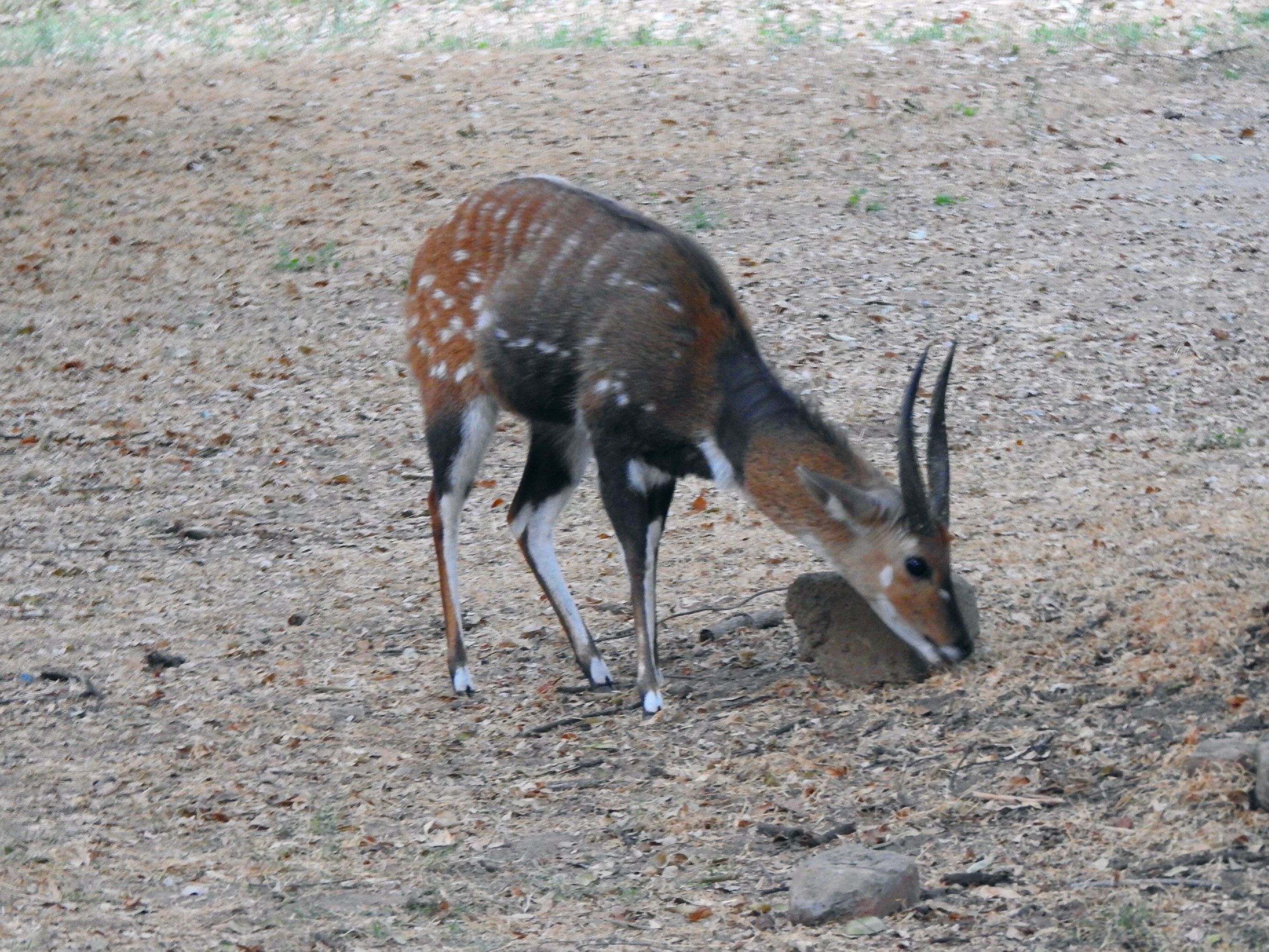
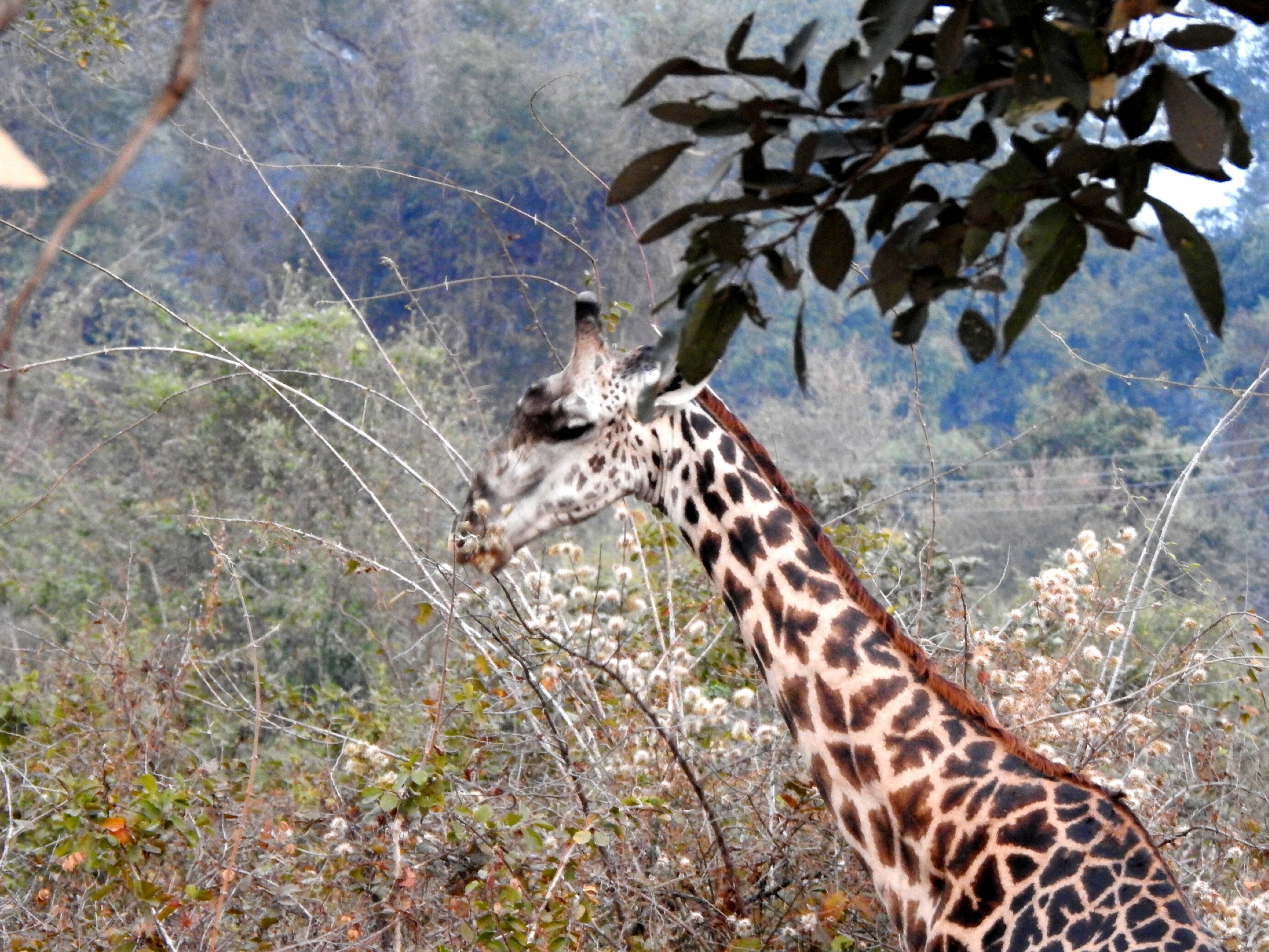
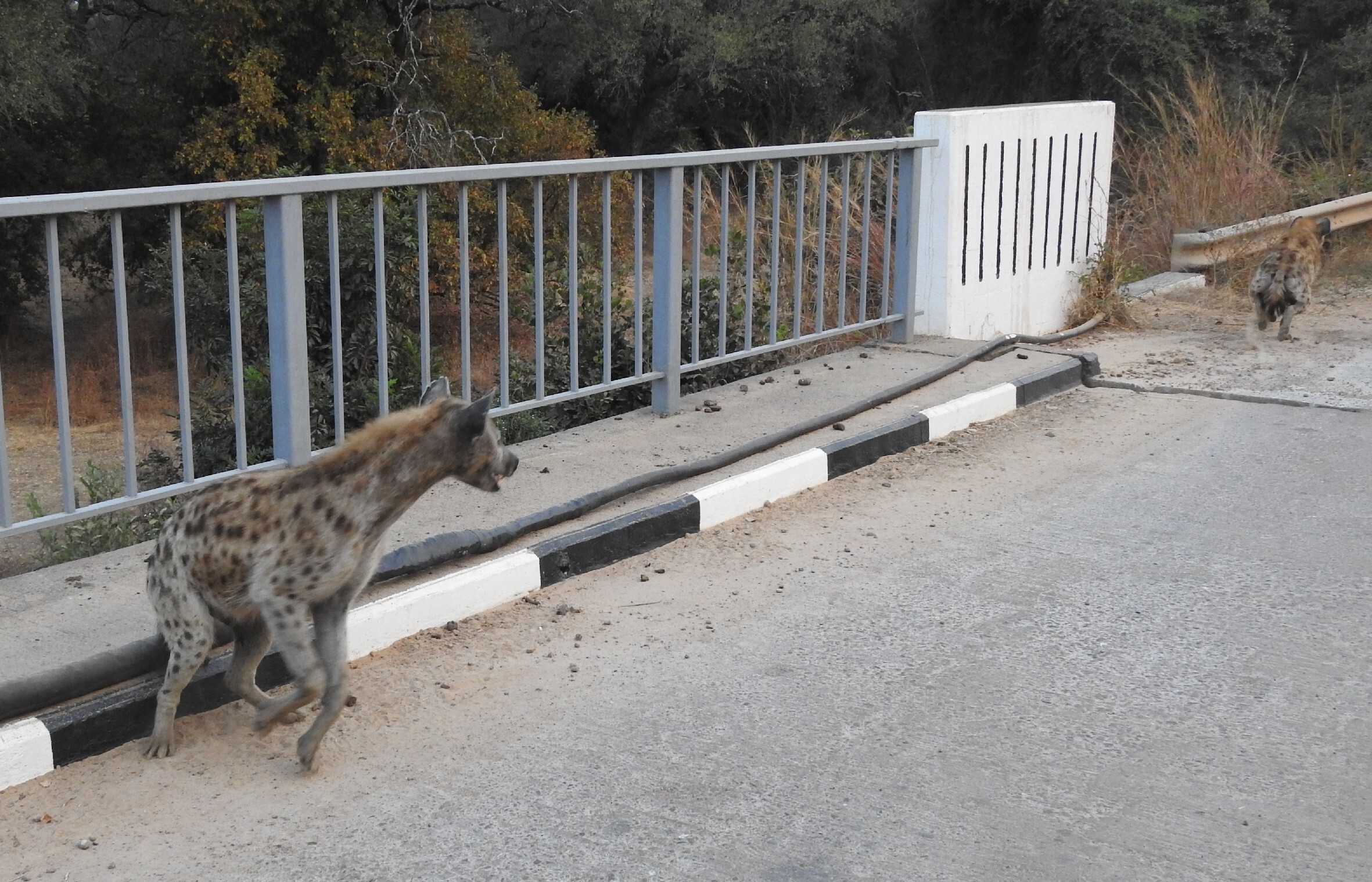
This ride started off amazing, with two giraffes and two hyenas before even entering the park boundary! We followed the first hyena across the bridge into the park and the second joined him.

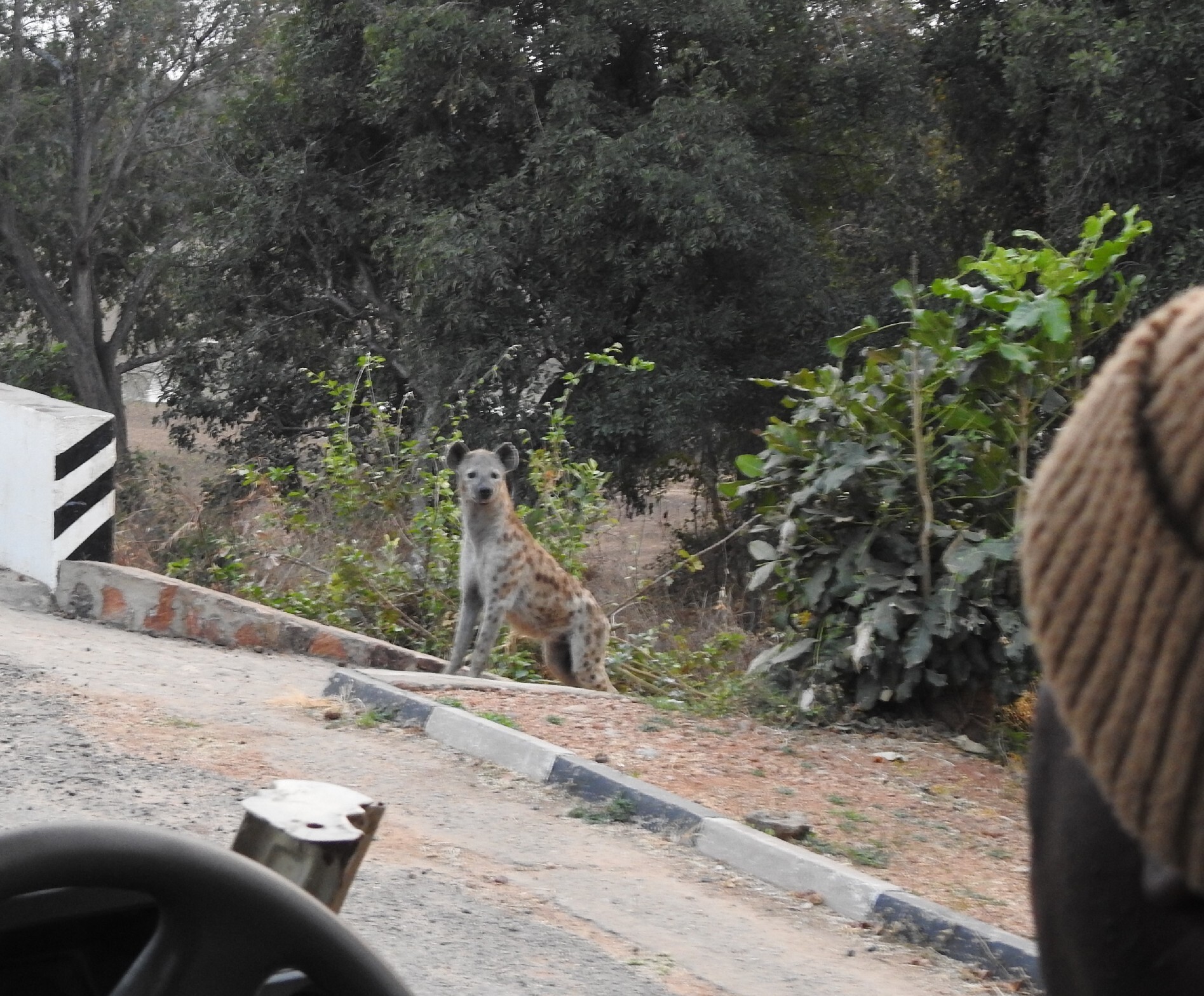
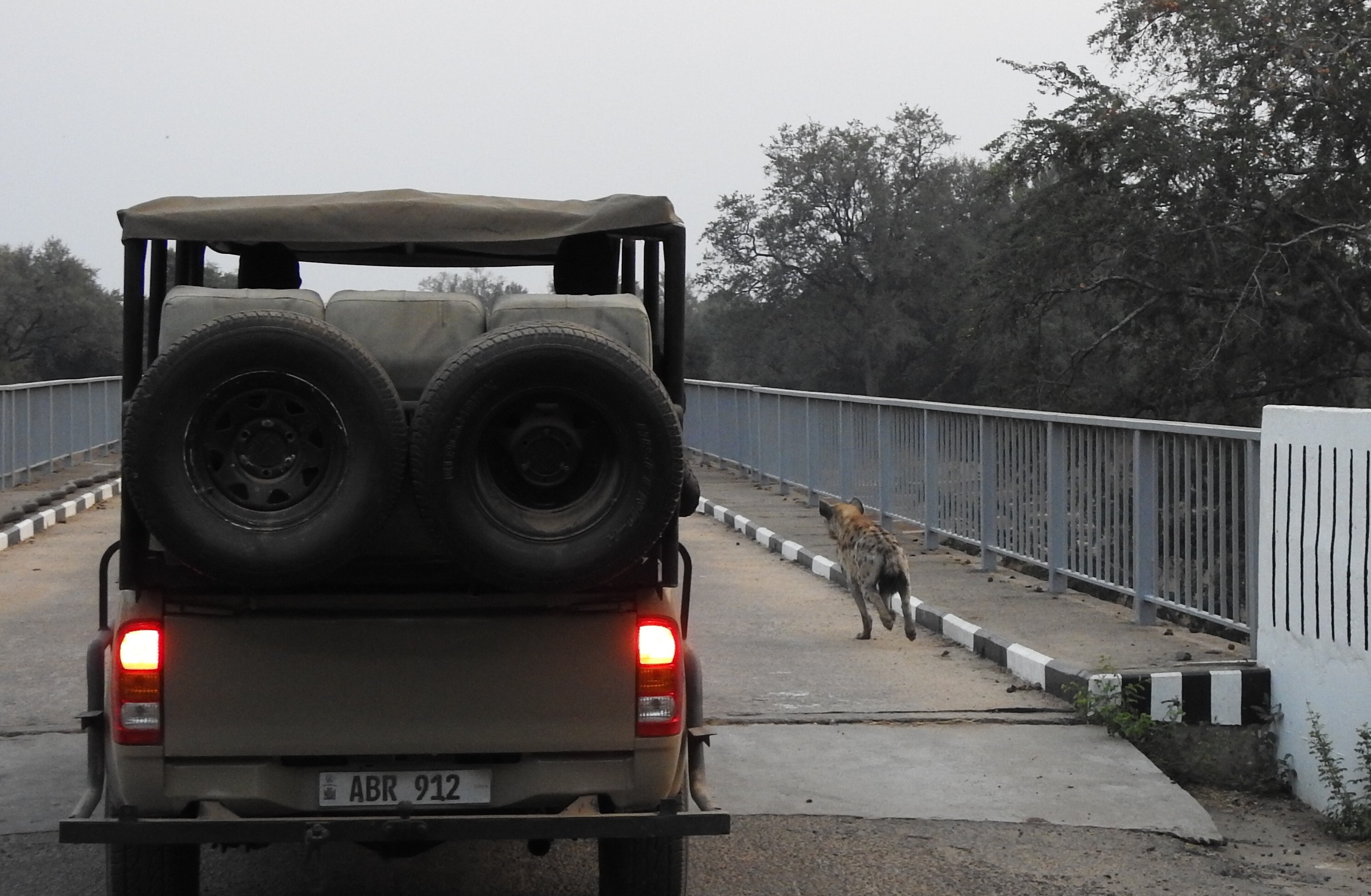
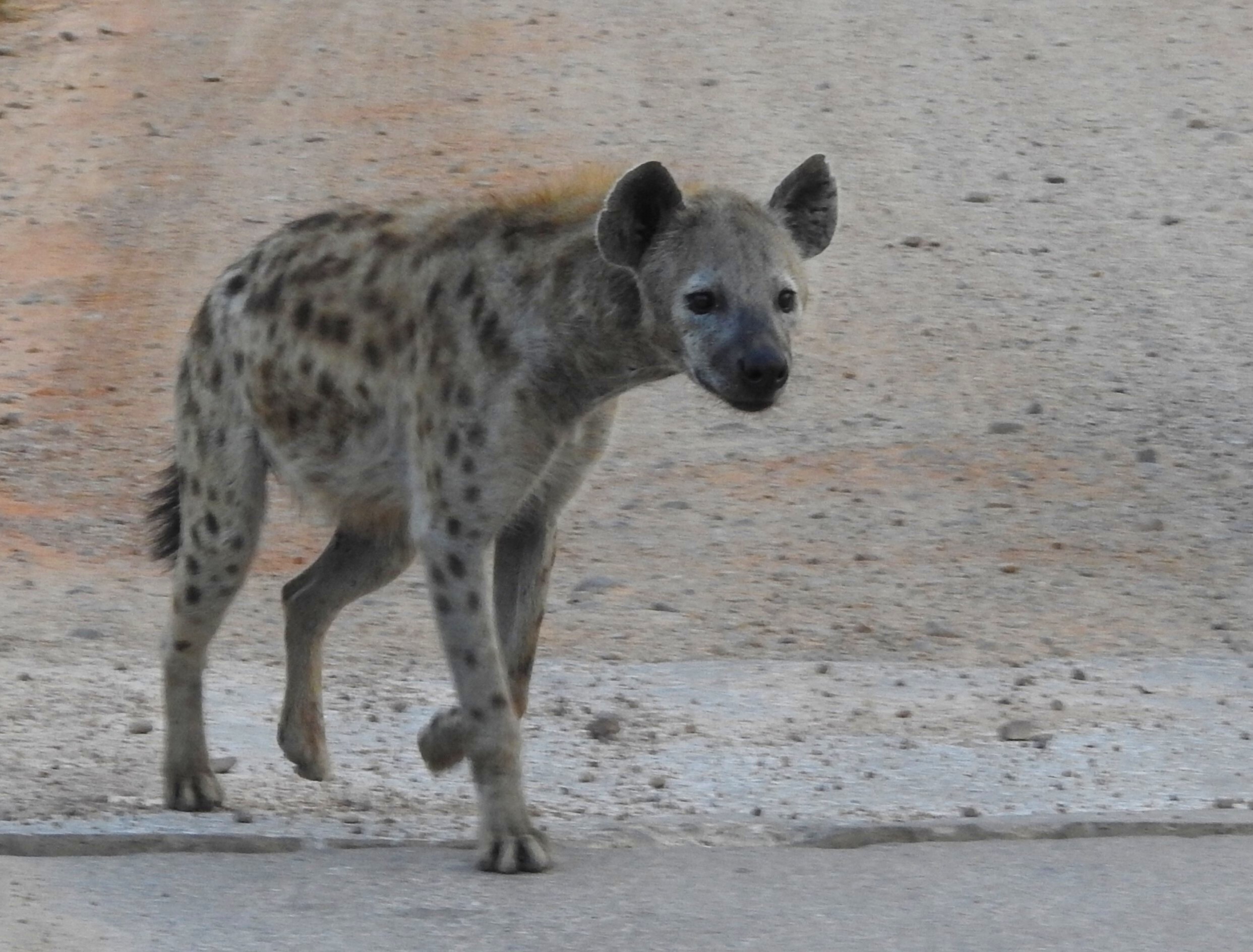
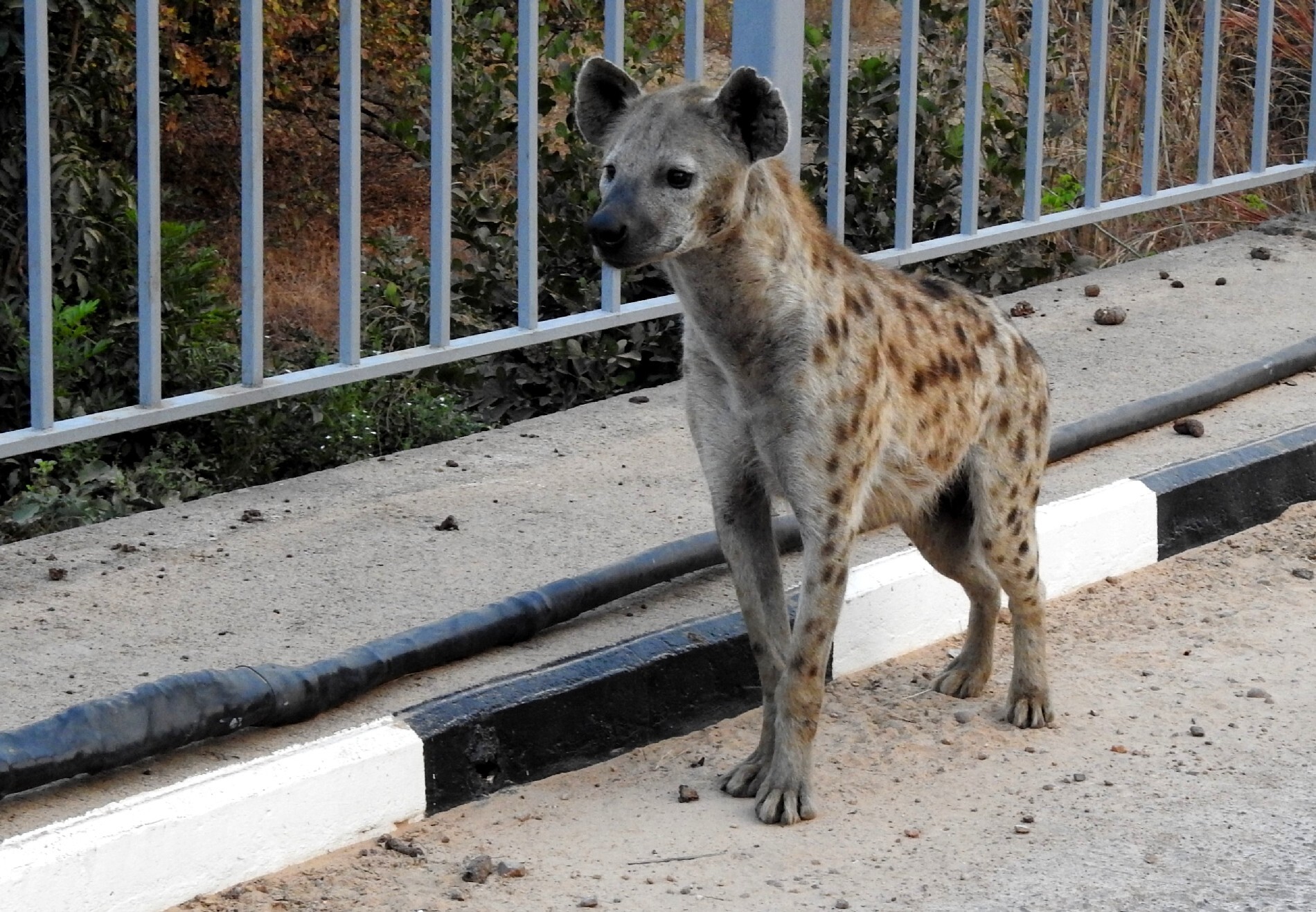

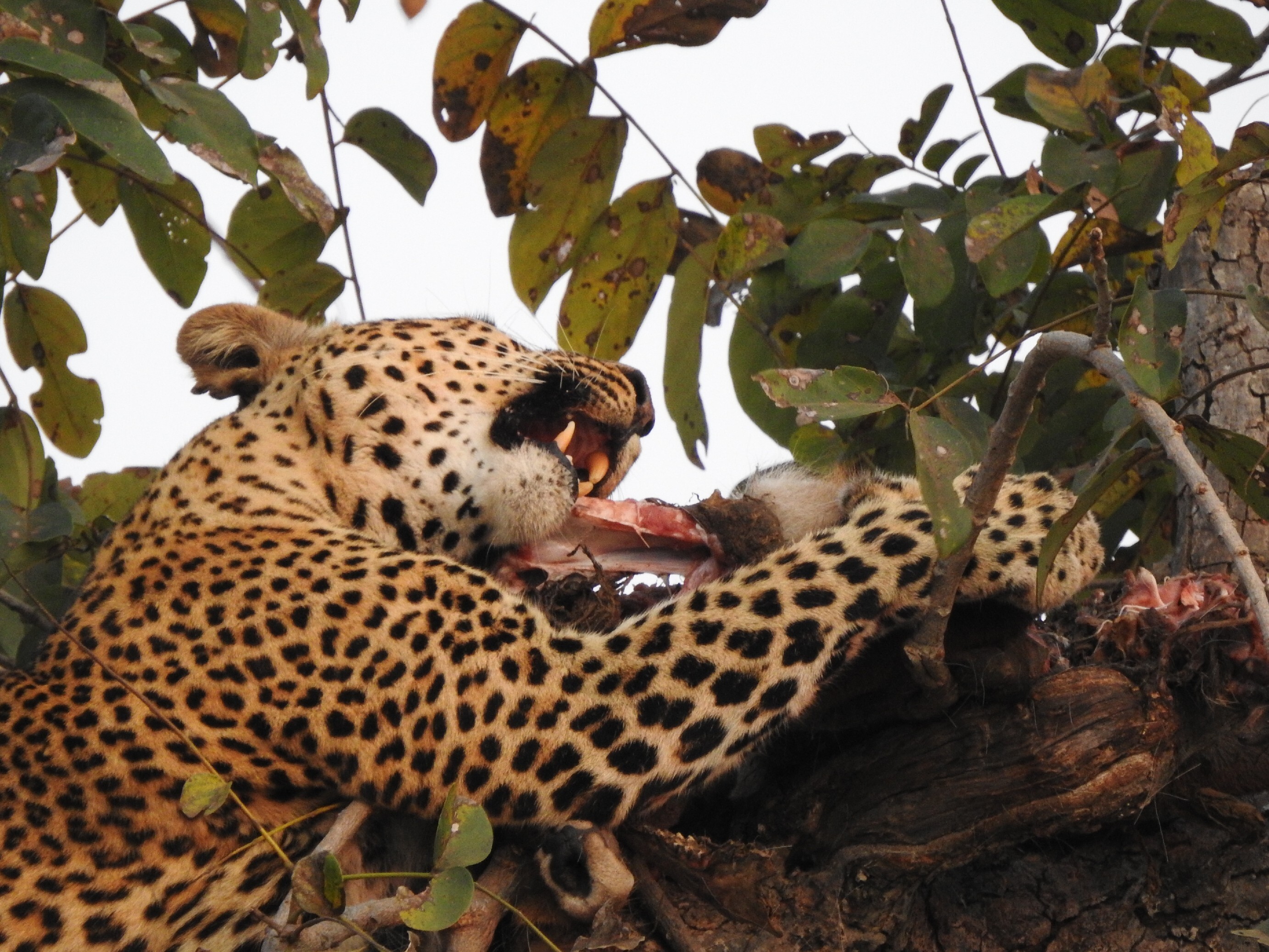
Later we saw the leopard eating it’s kill some more,
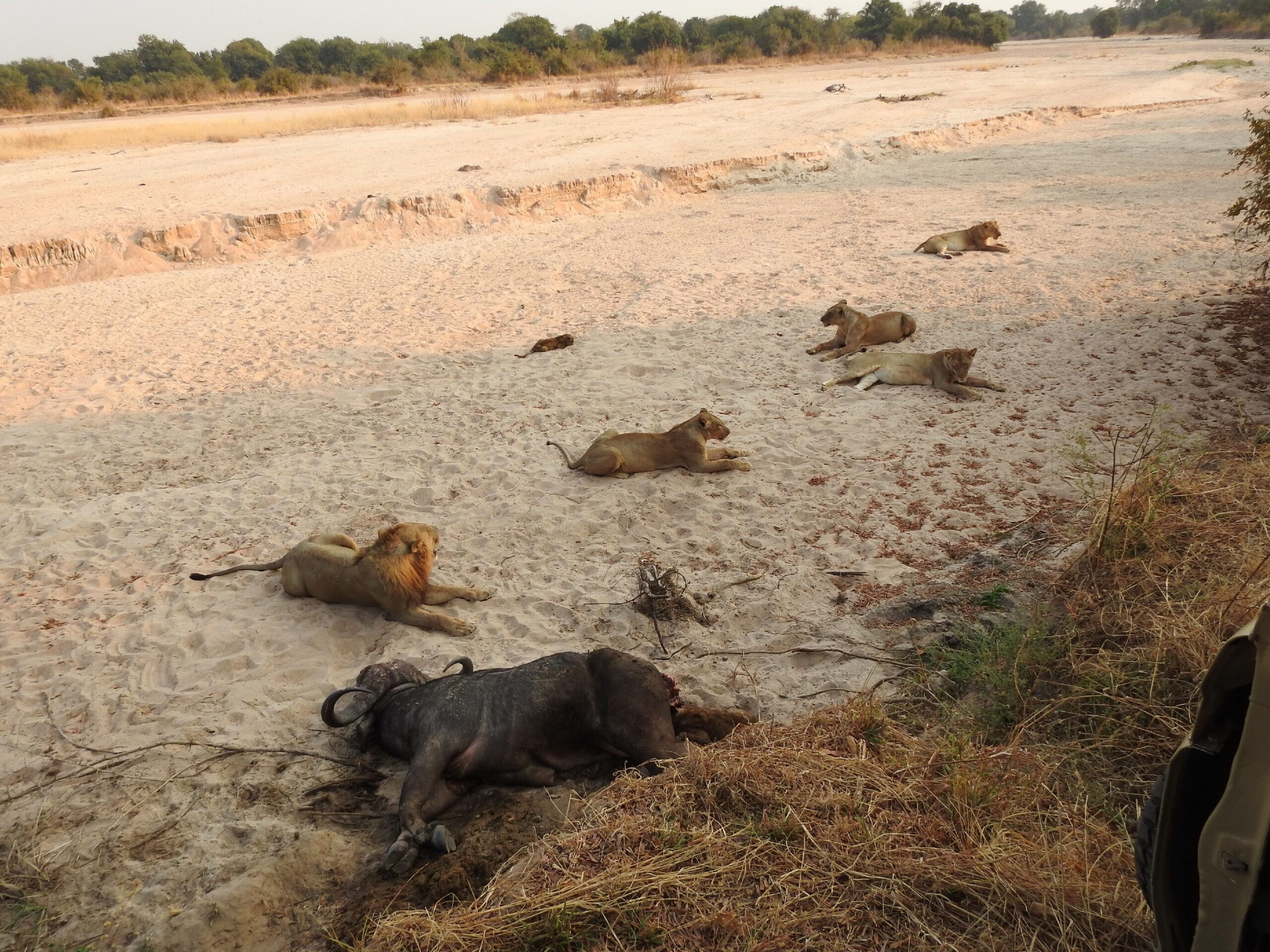
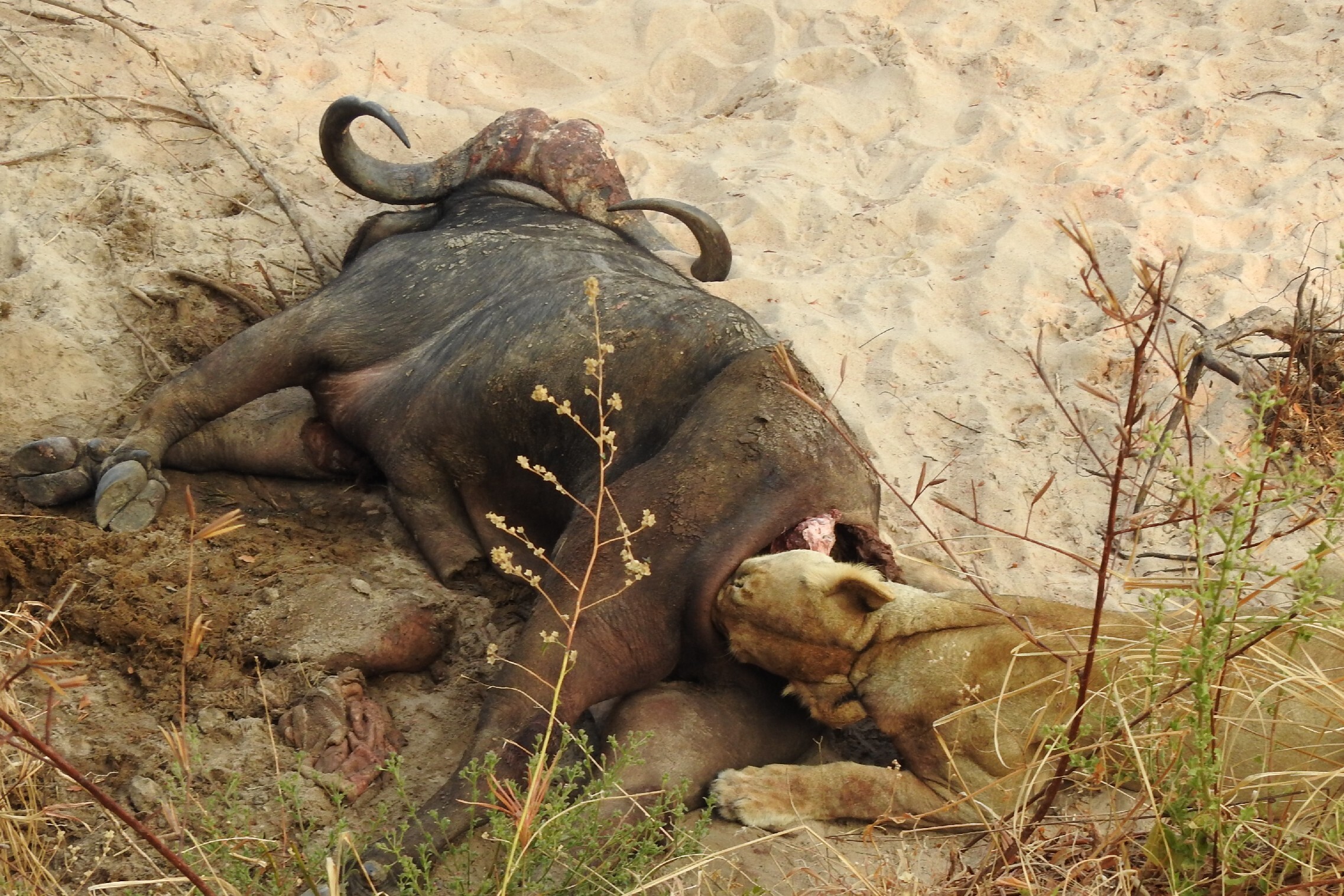
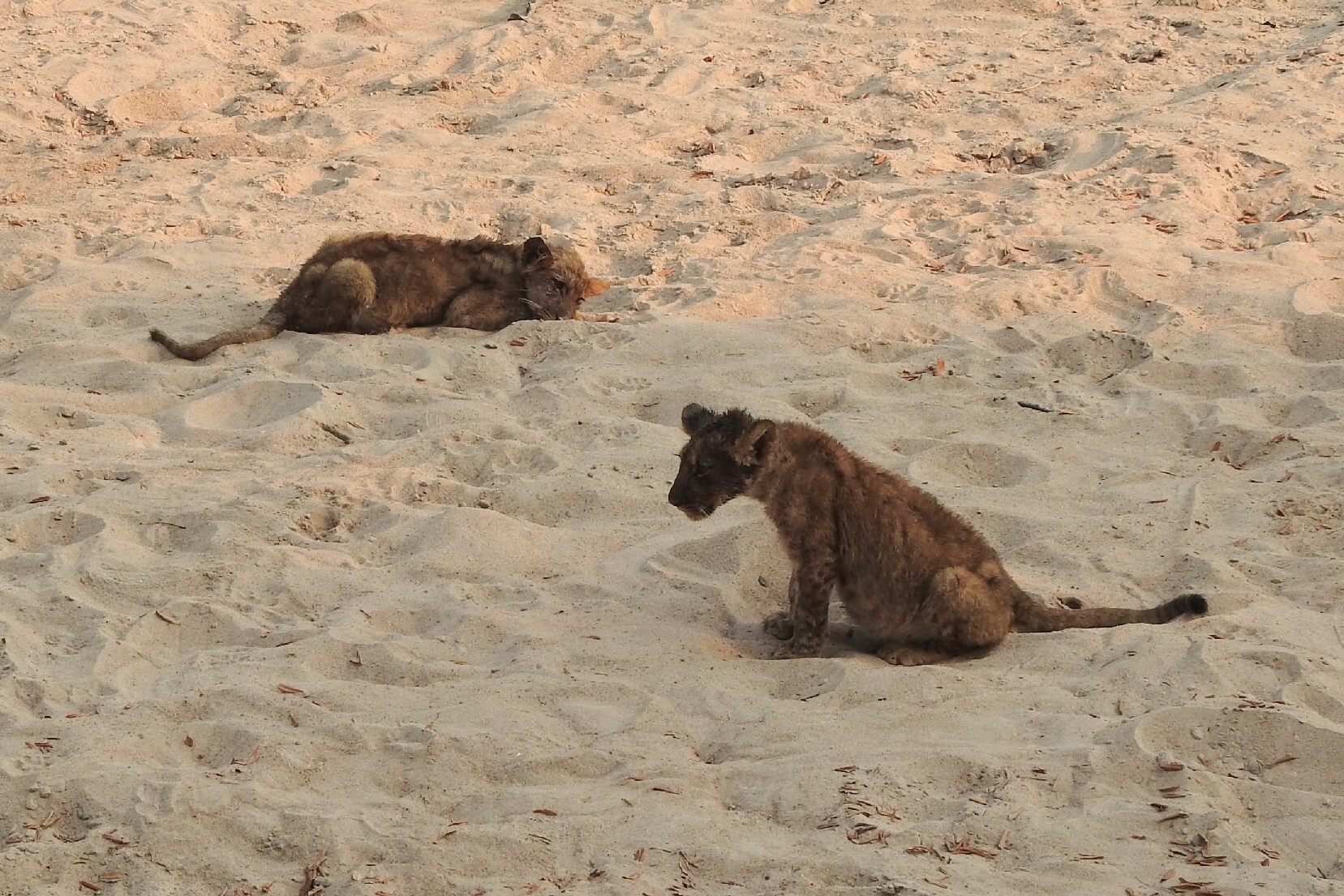
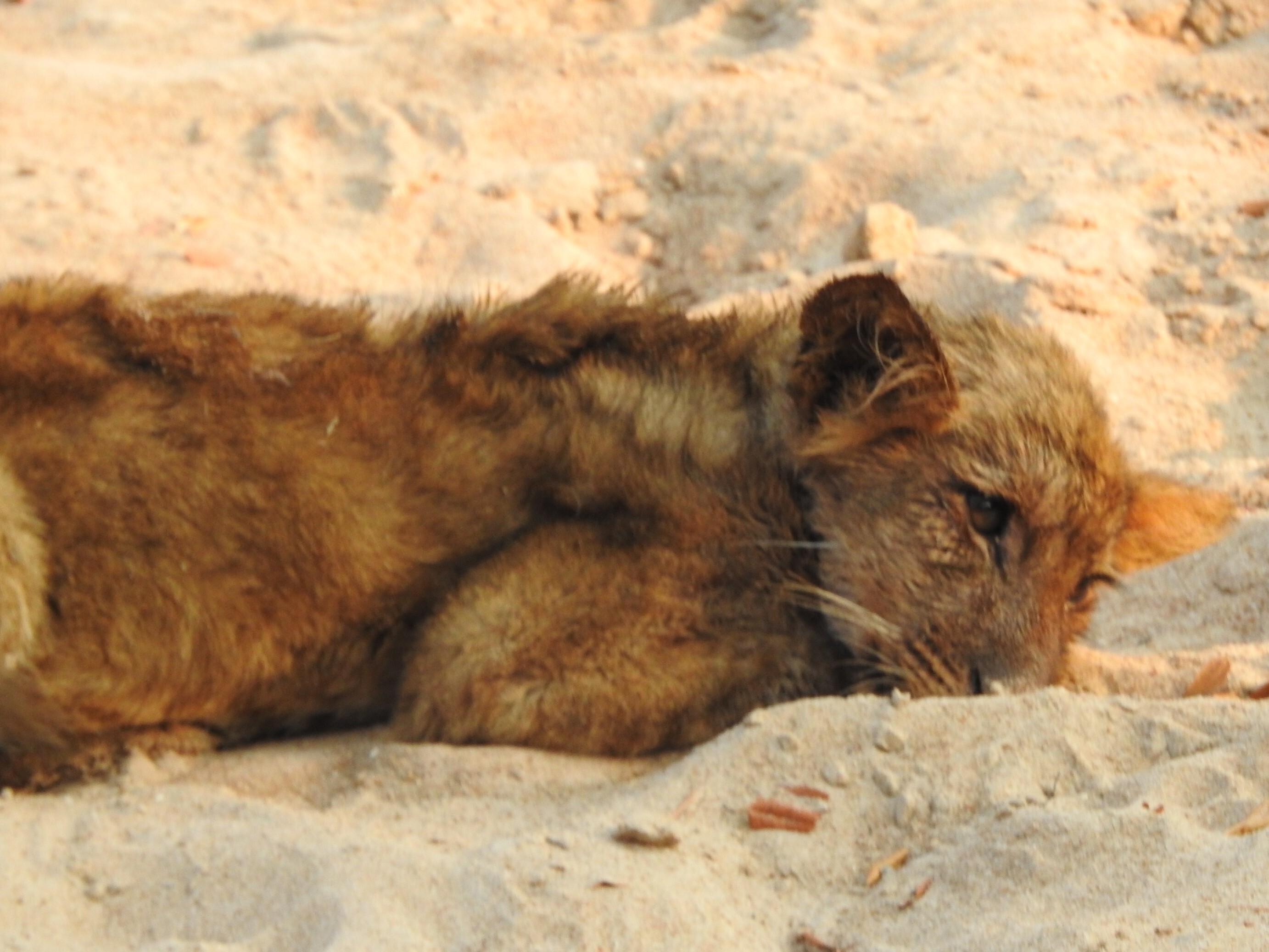
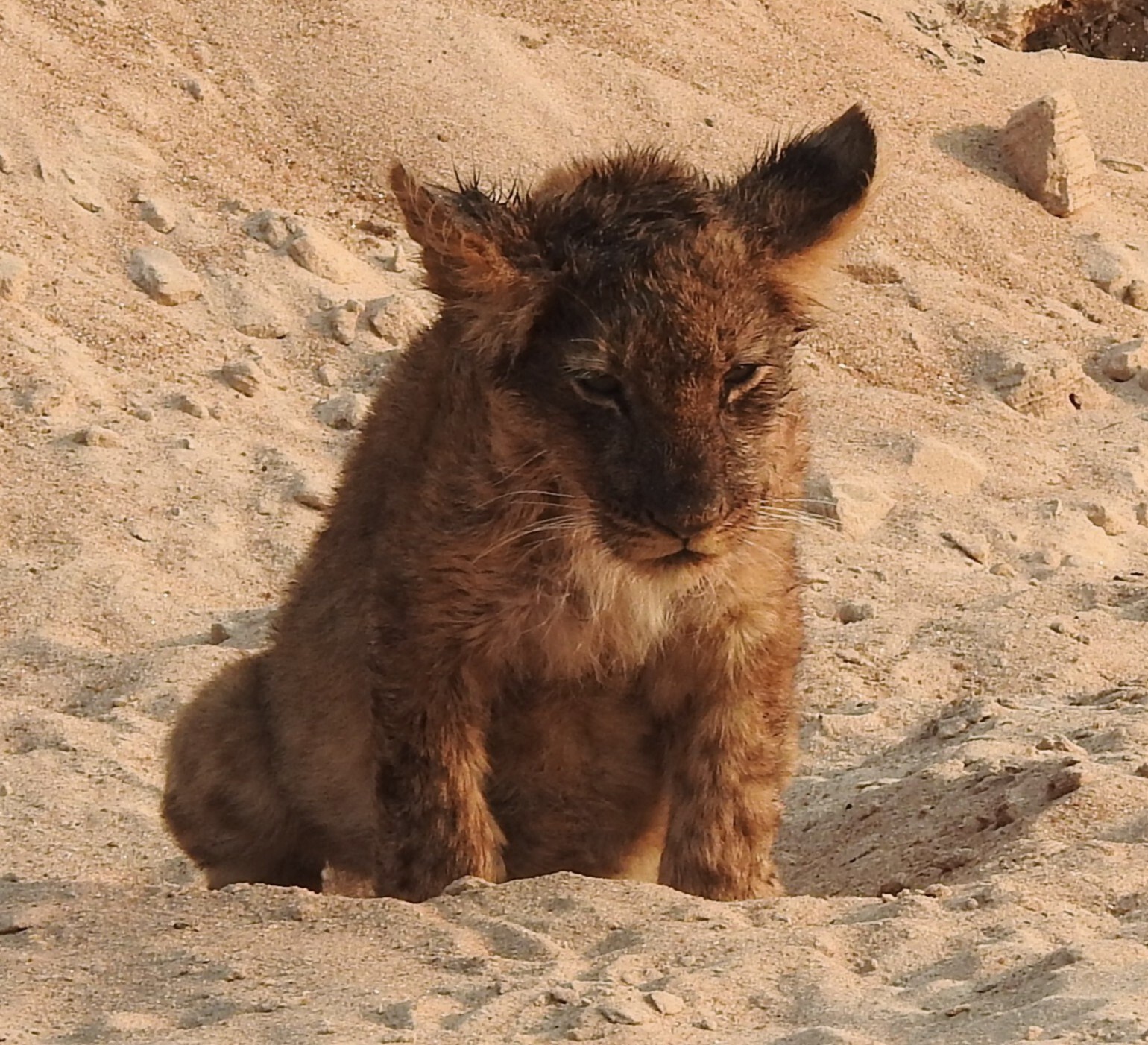
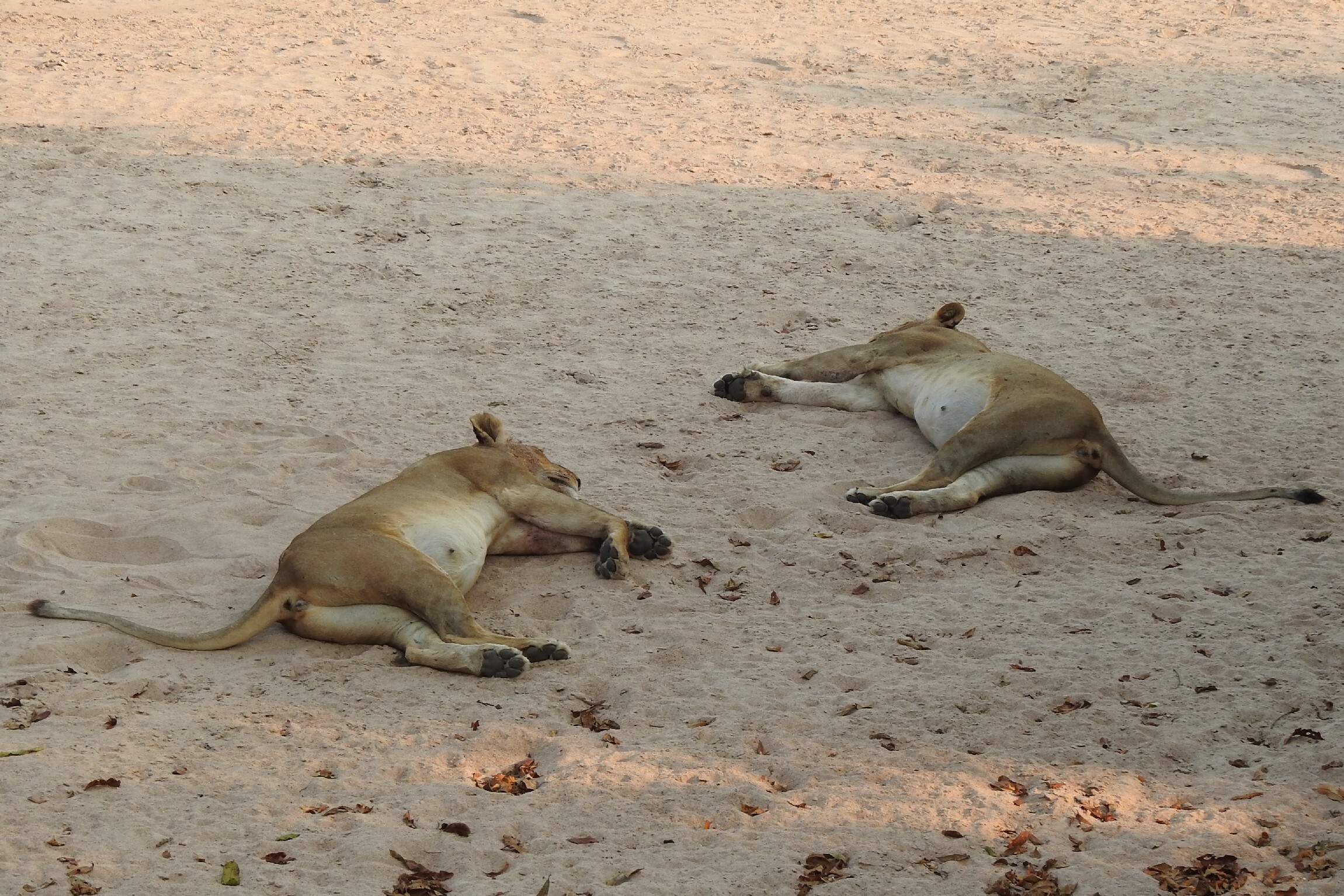
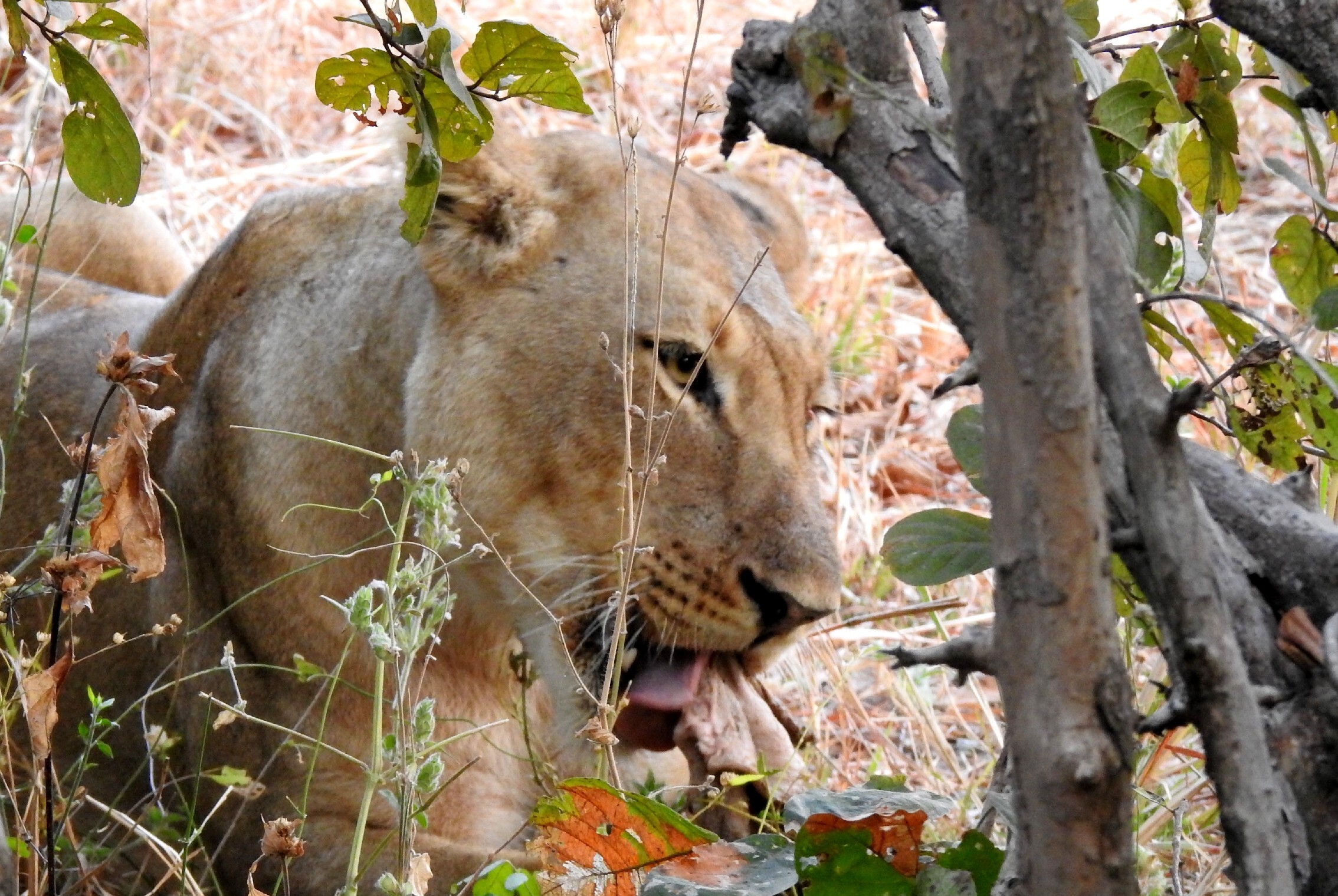
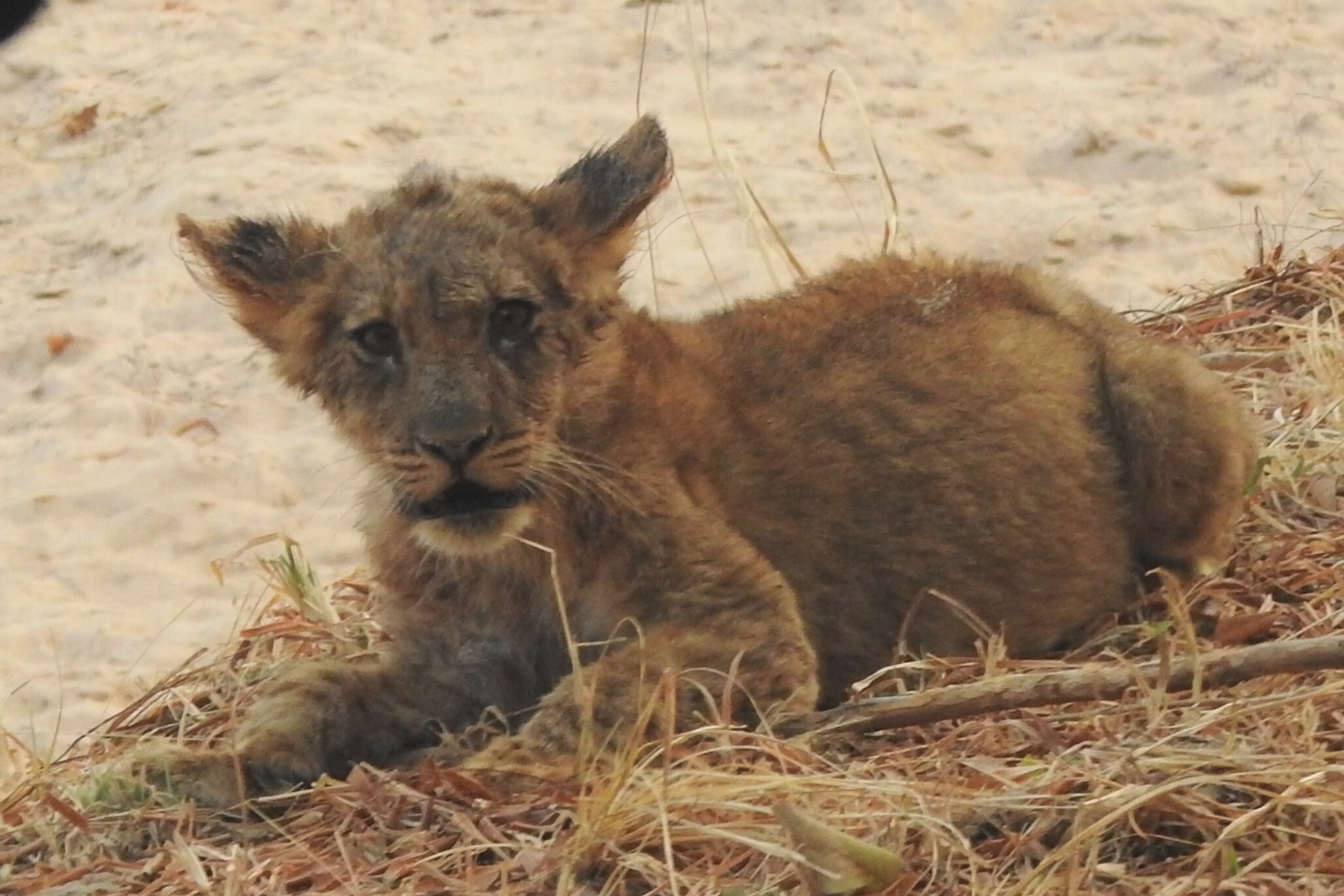
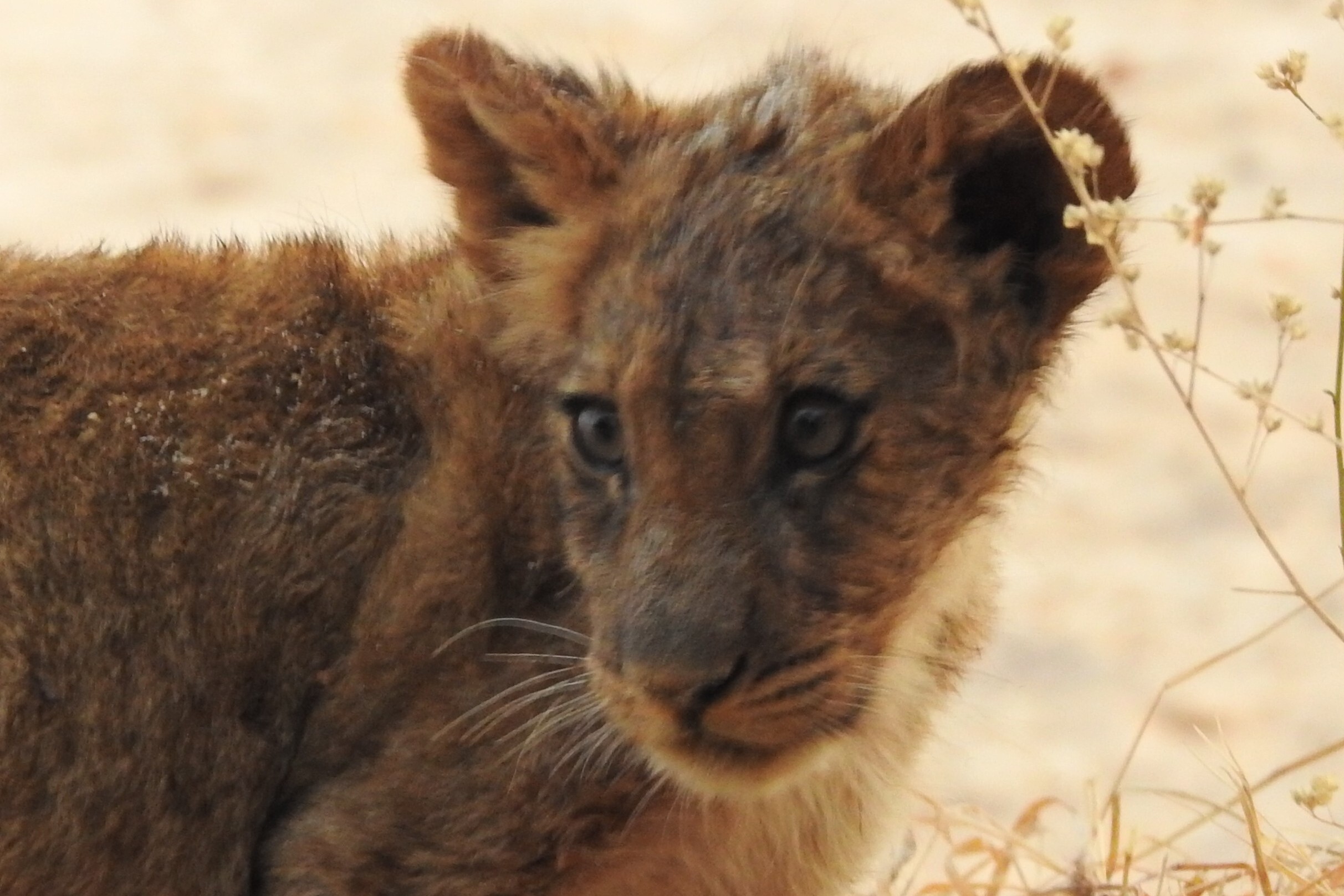
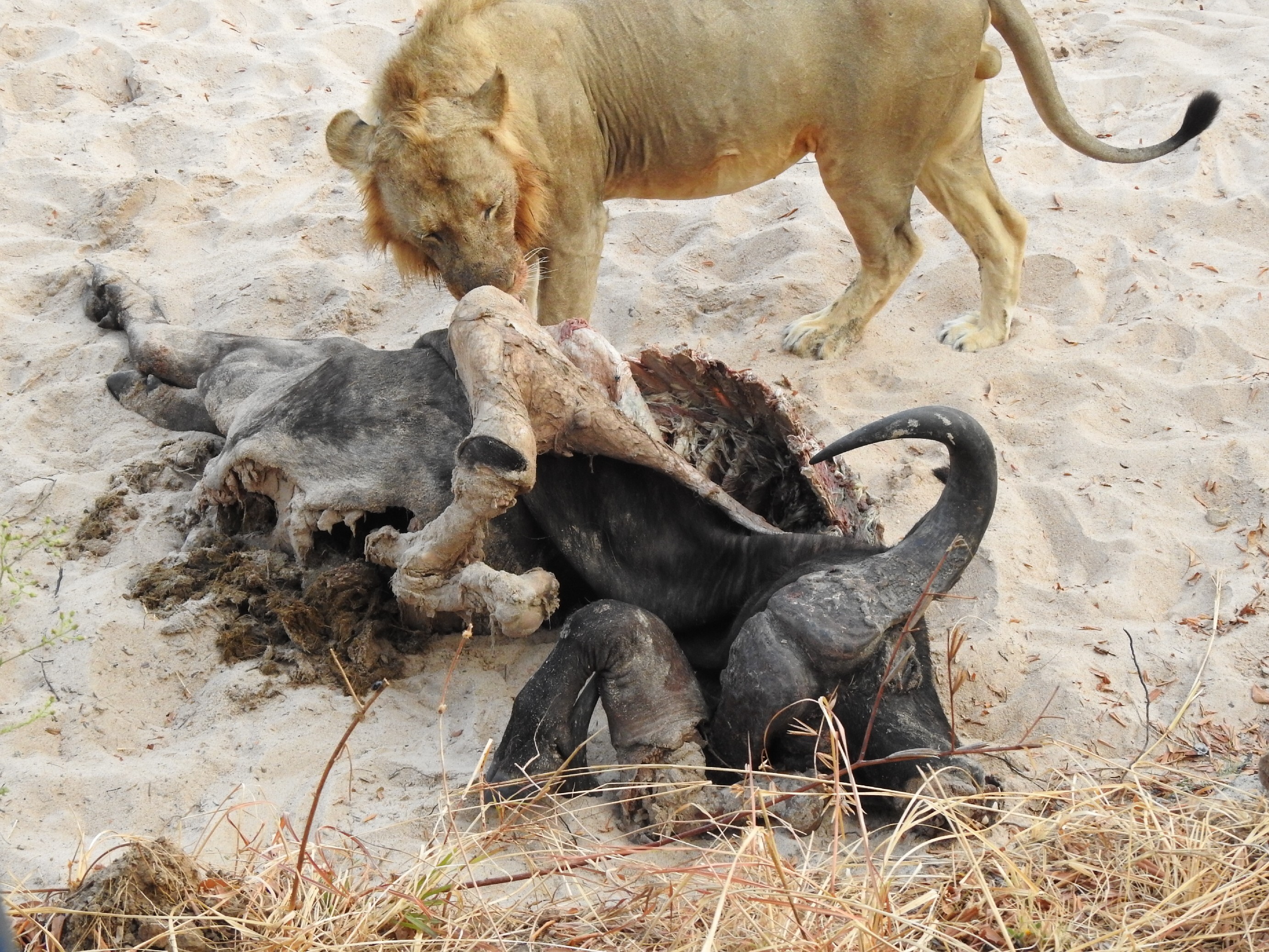
and today’s excitement: a pride of lions eating a cape buffalo; there were 4 females, 1 male and 2 cubs (at first we thought one was dead – it was skinnier and weaker but it was just sleeping
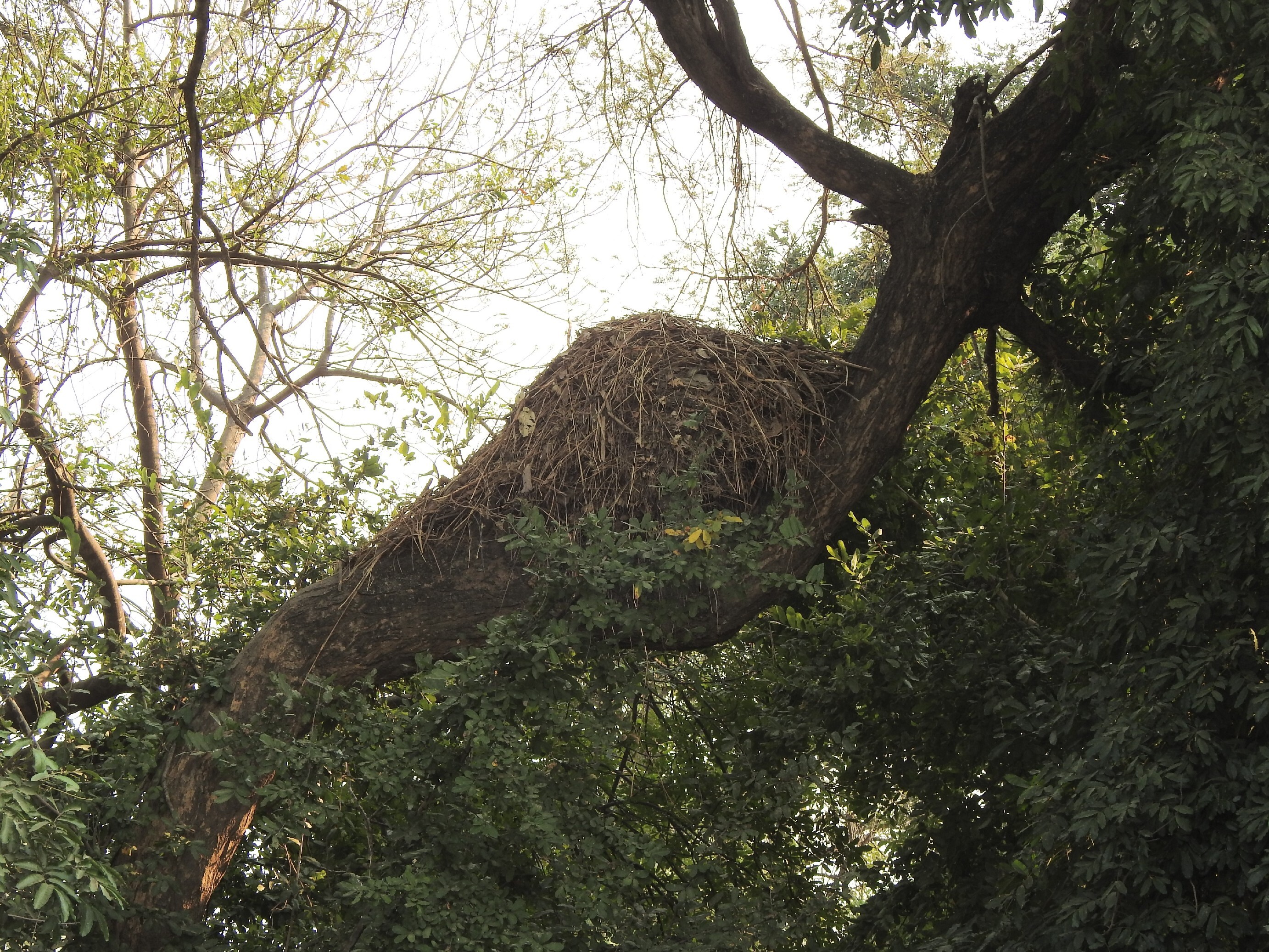
This is a hammerkop’s nest – huge for such a smallish bird:
Saddleback stork
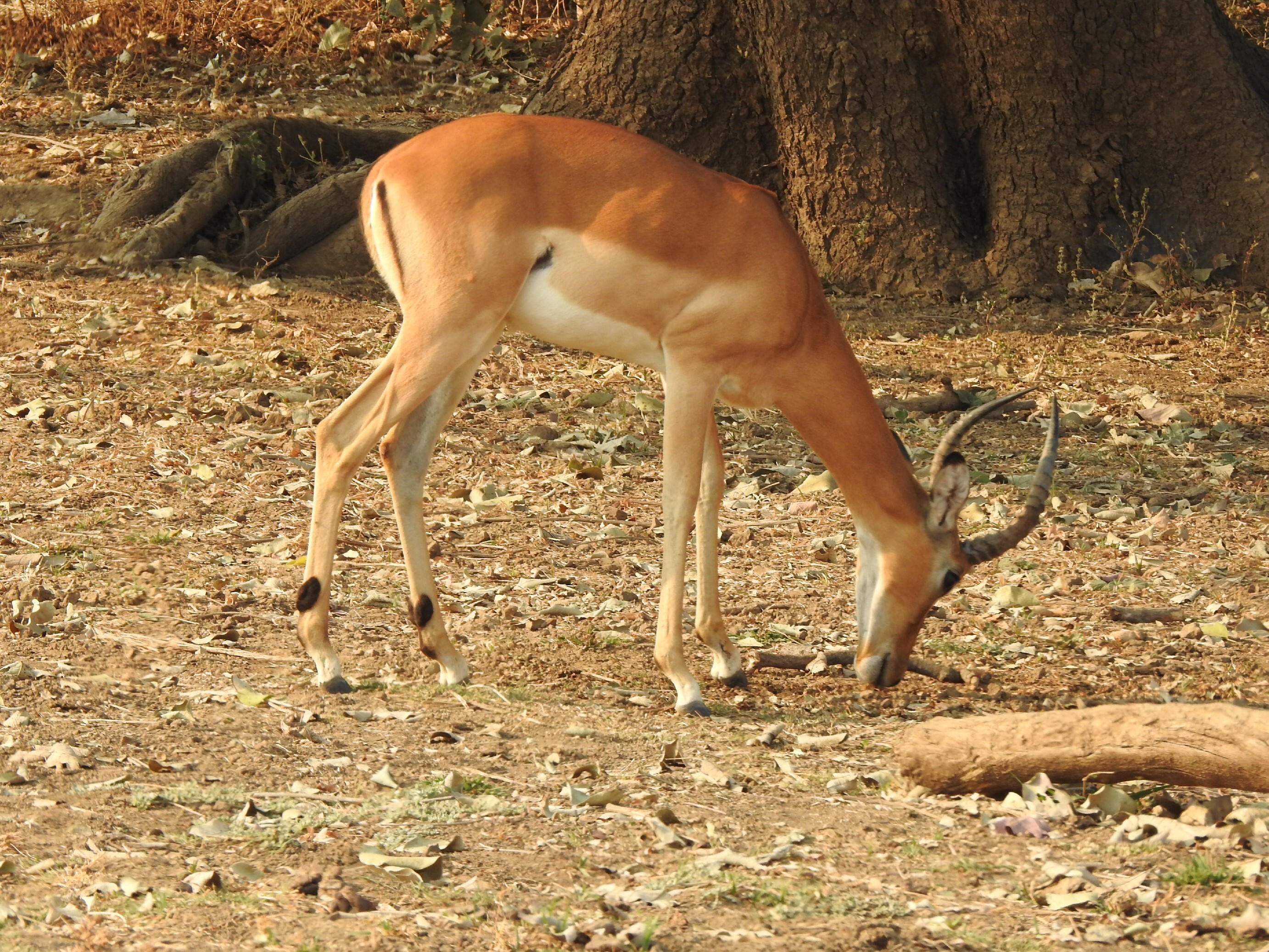
Wart hogs, Impala
A trio of elephants stroll by:
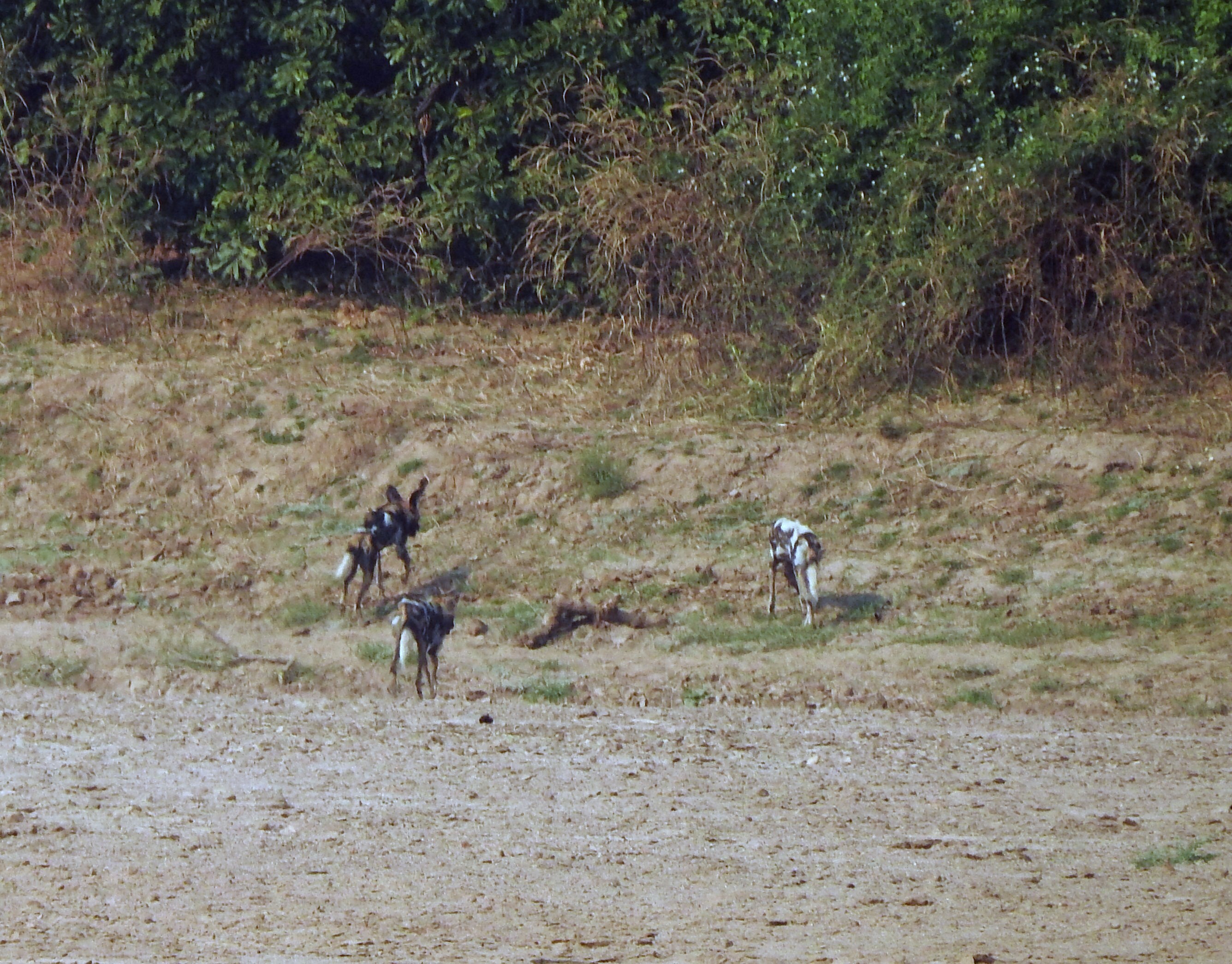
We head to the break spot on the river, where we spotted wild dogs across the river and they were far away but we saw them!

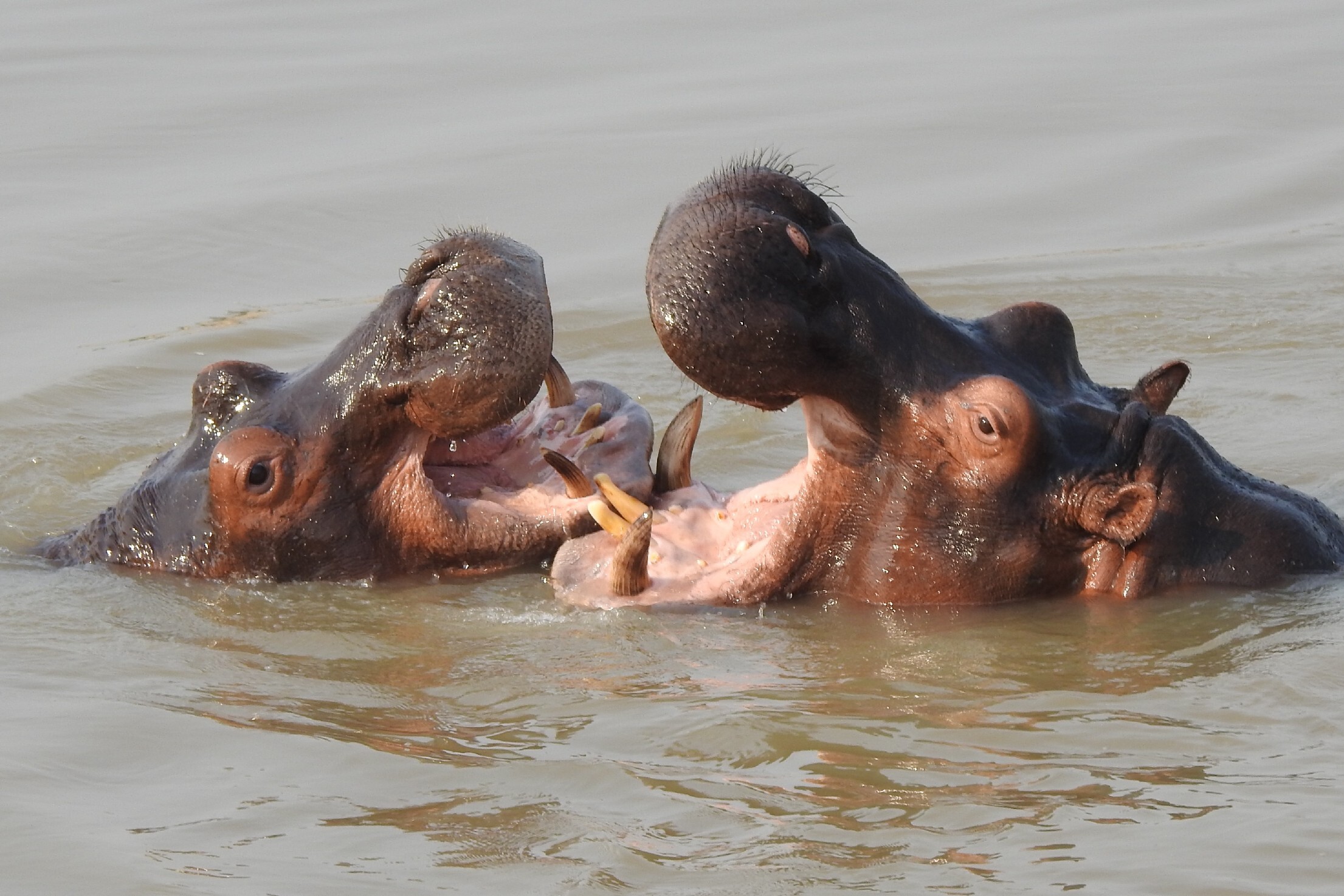
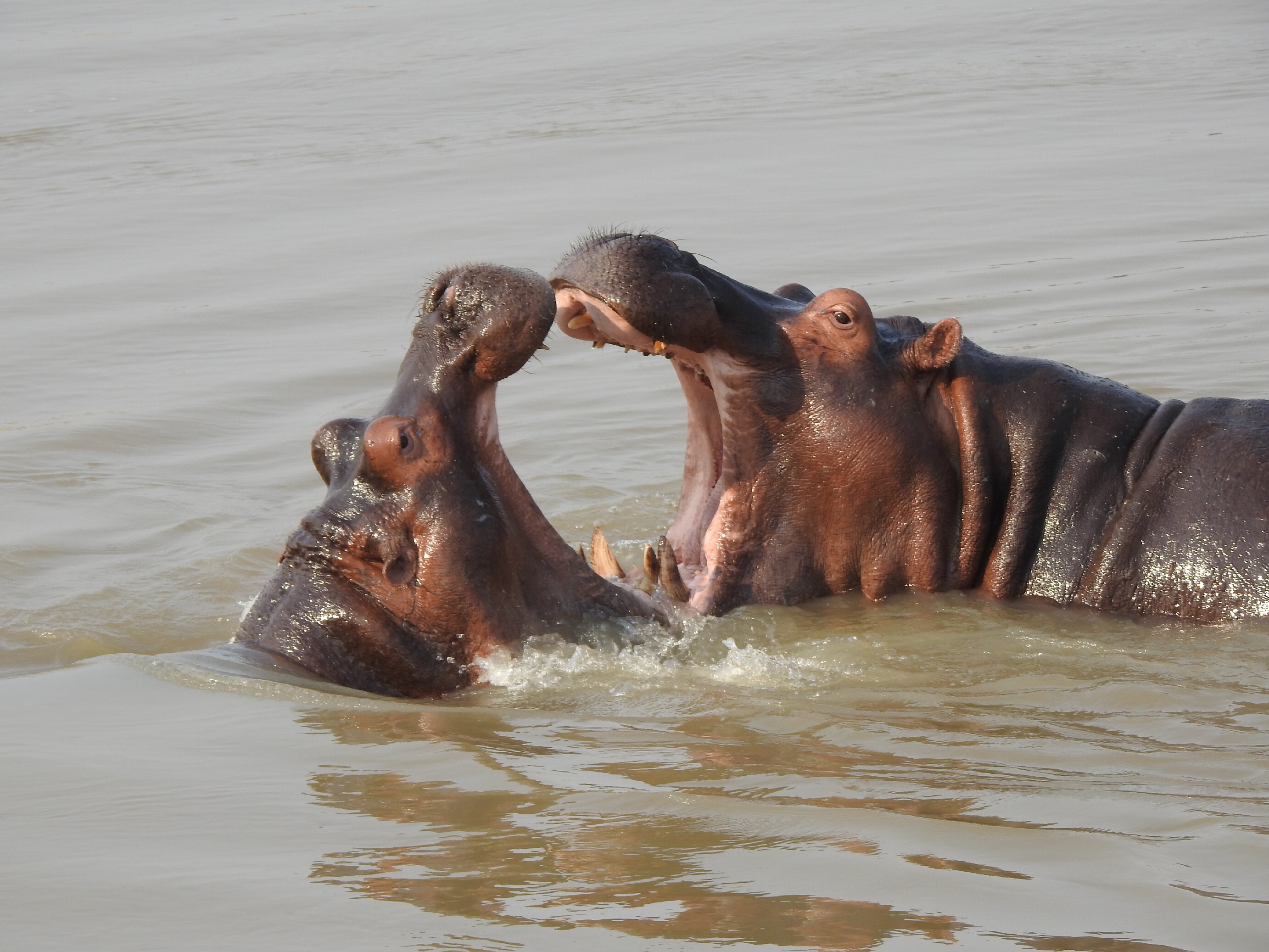
A blot of hippos with a few play fighting:
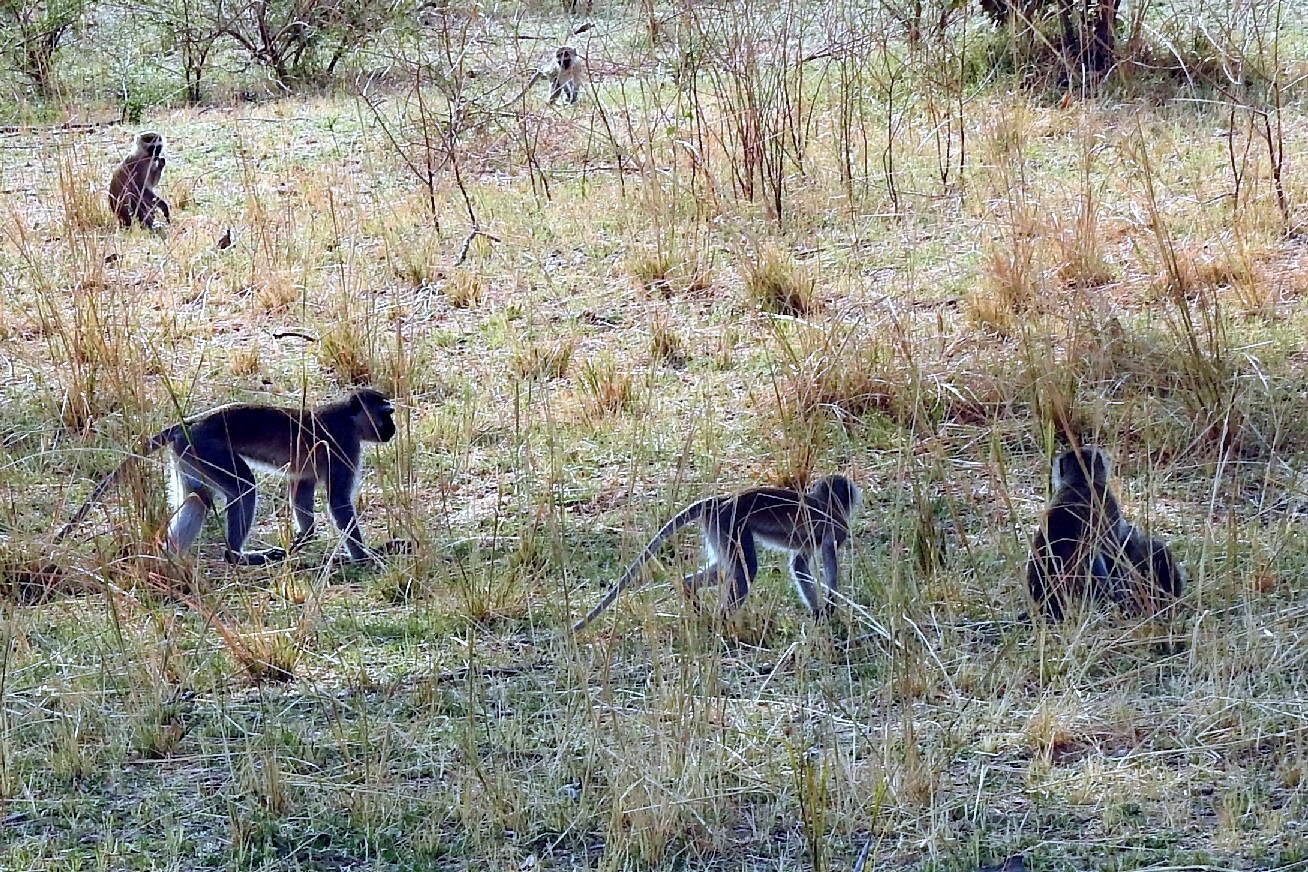
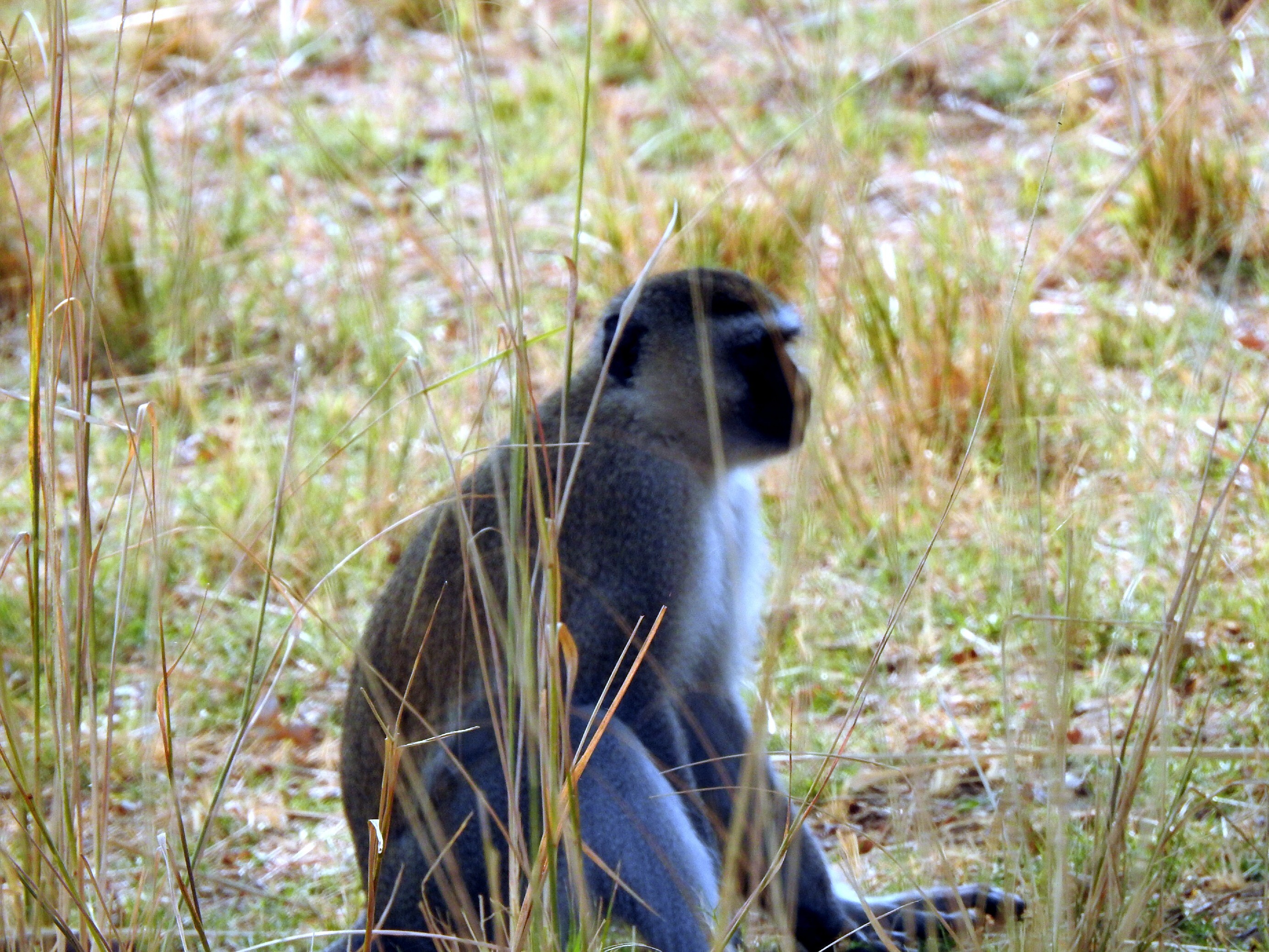
Vervet monkeys
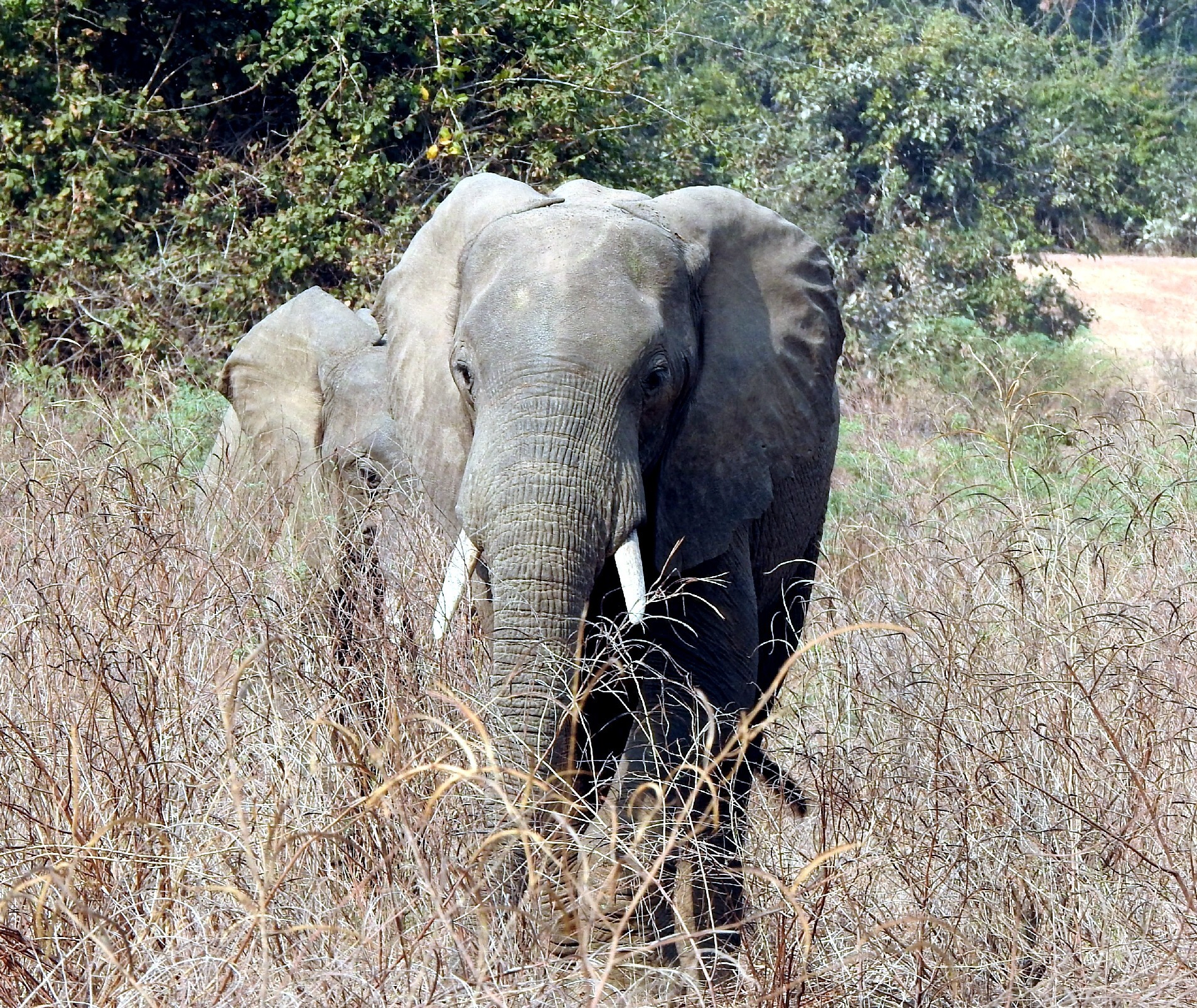
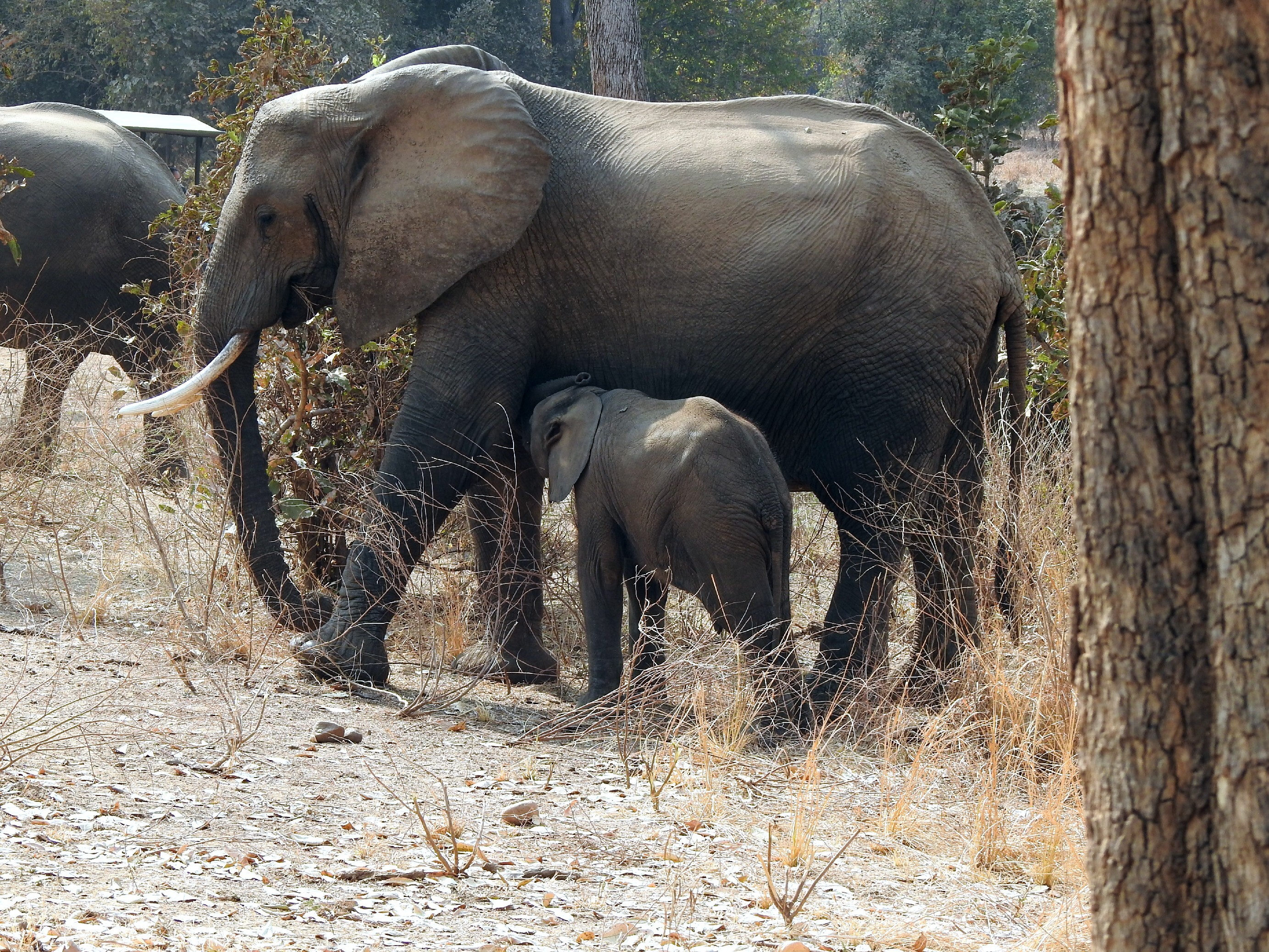
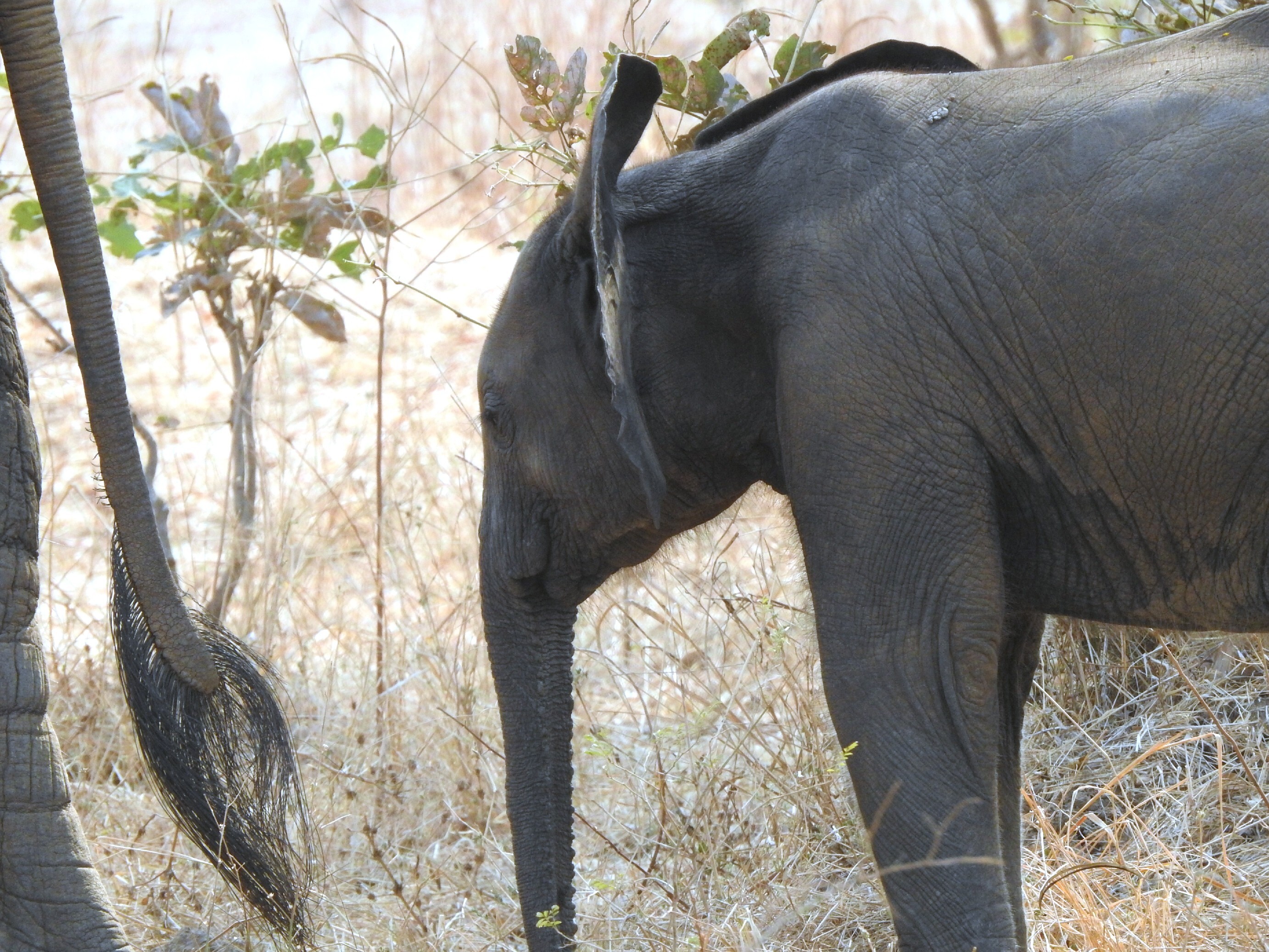
More elephants:
Carmine bee eaters
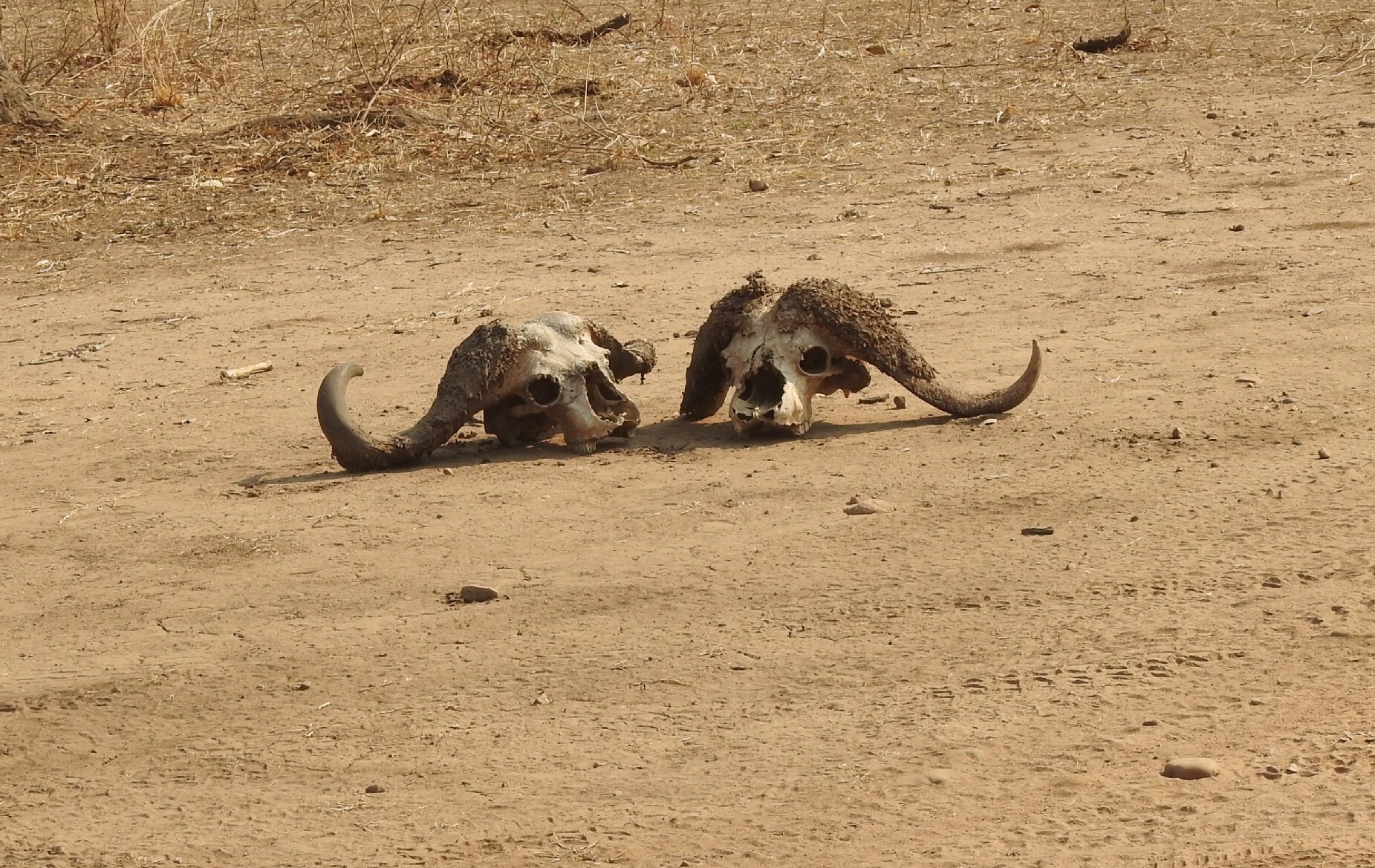
 Skulls of two cape buffalo who had died near the spot
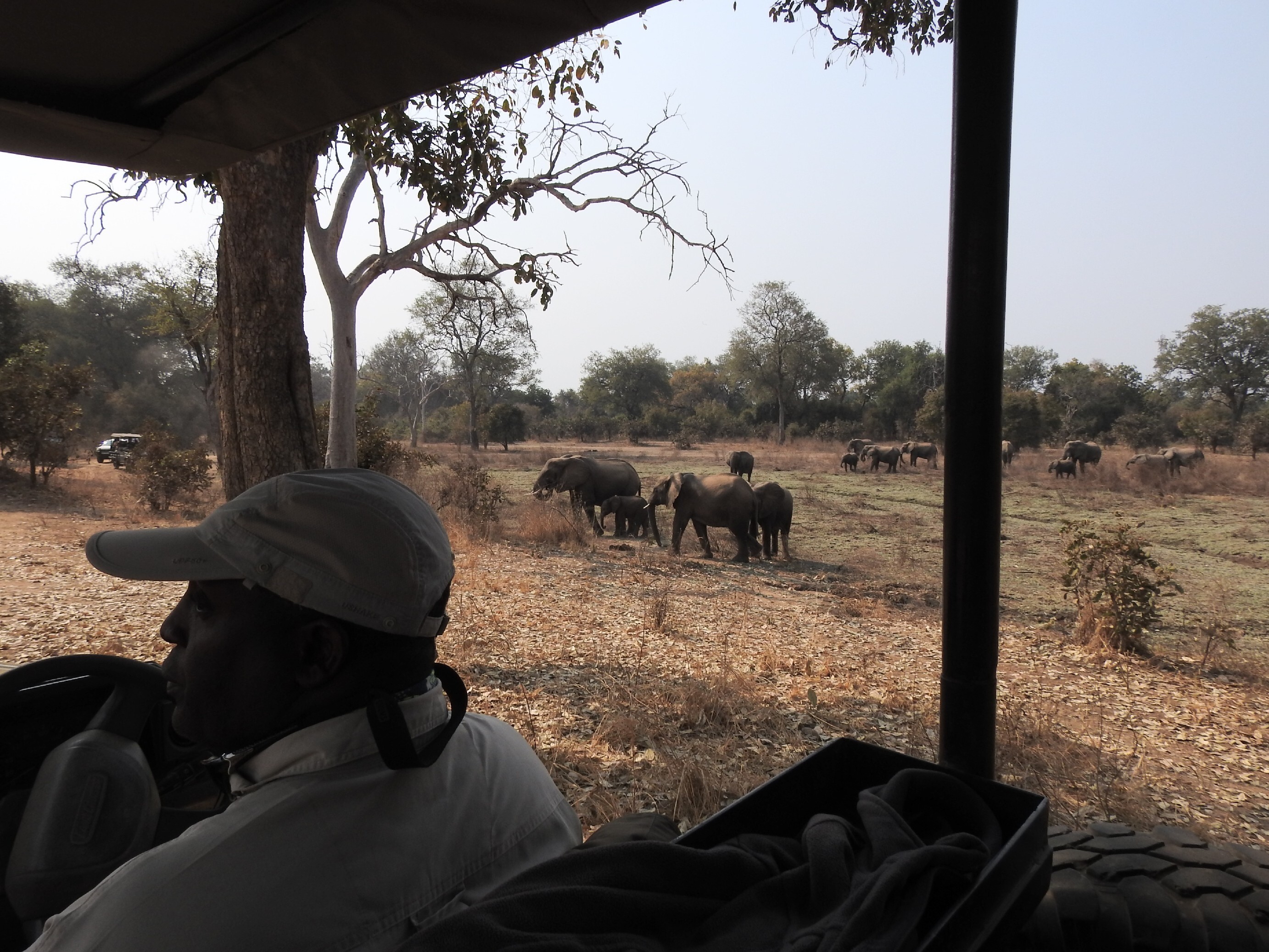
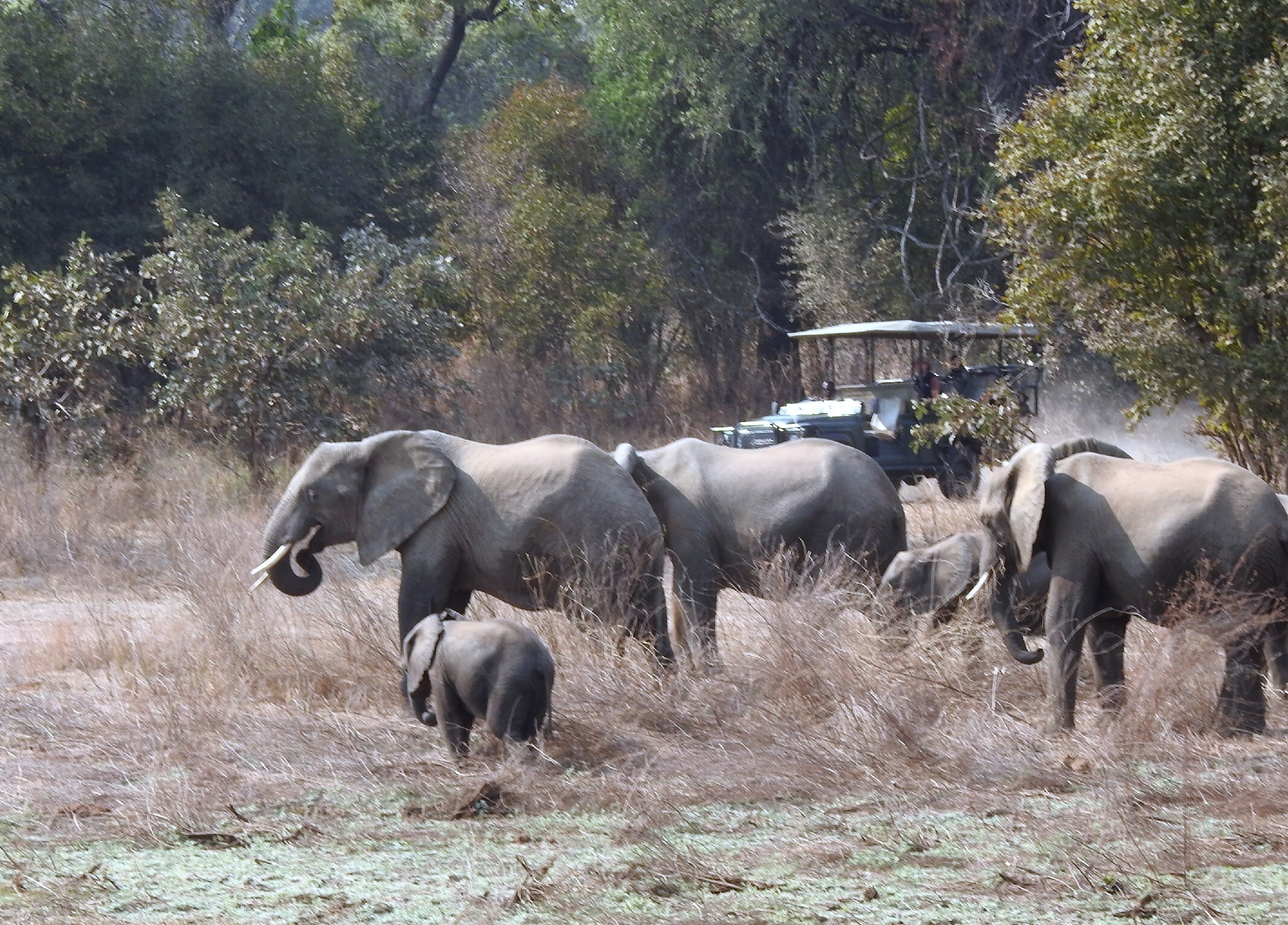
Herd of elephants. 29 of them!:

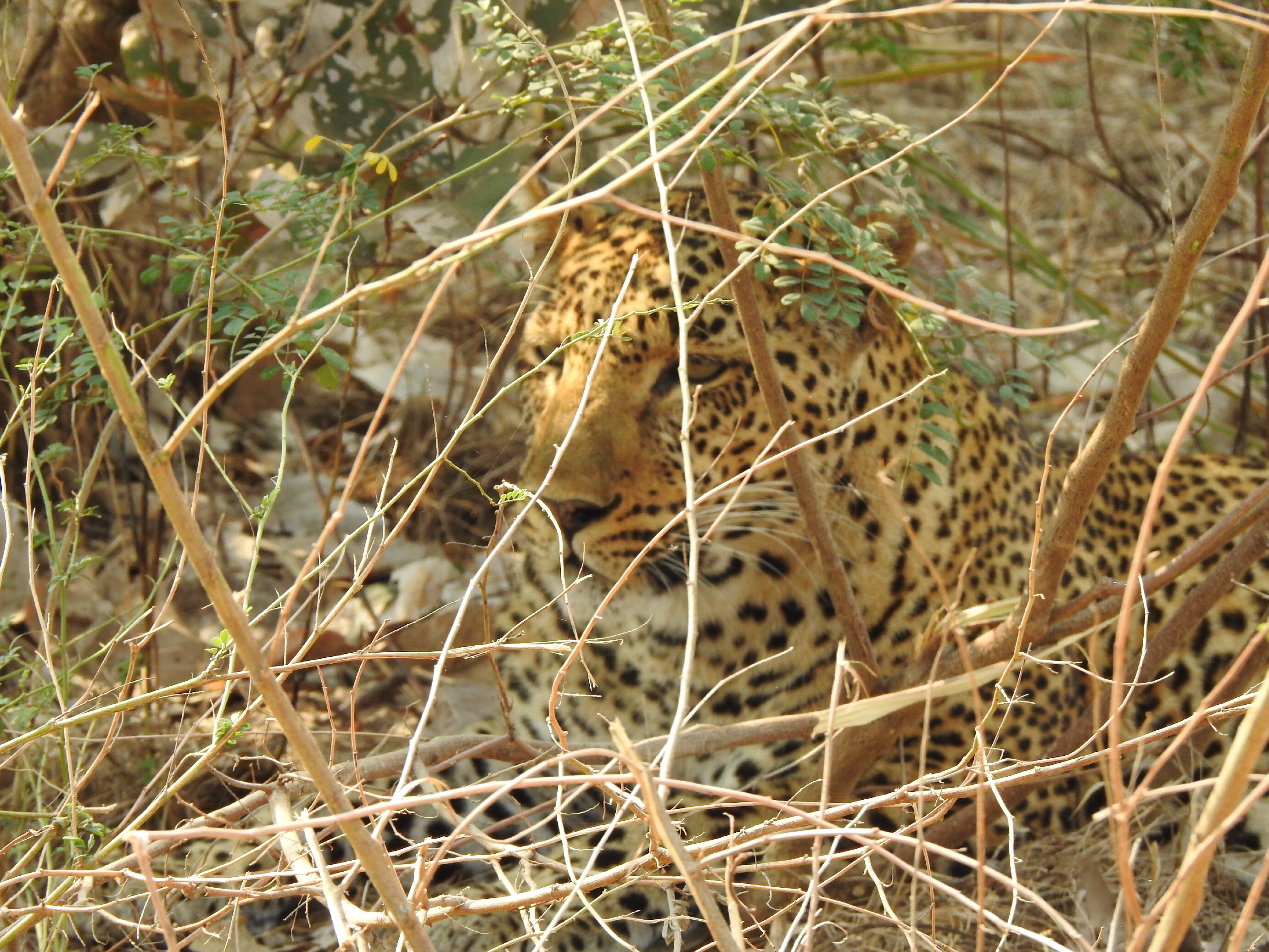
Leopard resting in the grass and we see what’s left of her kill in the tree:
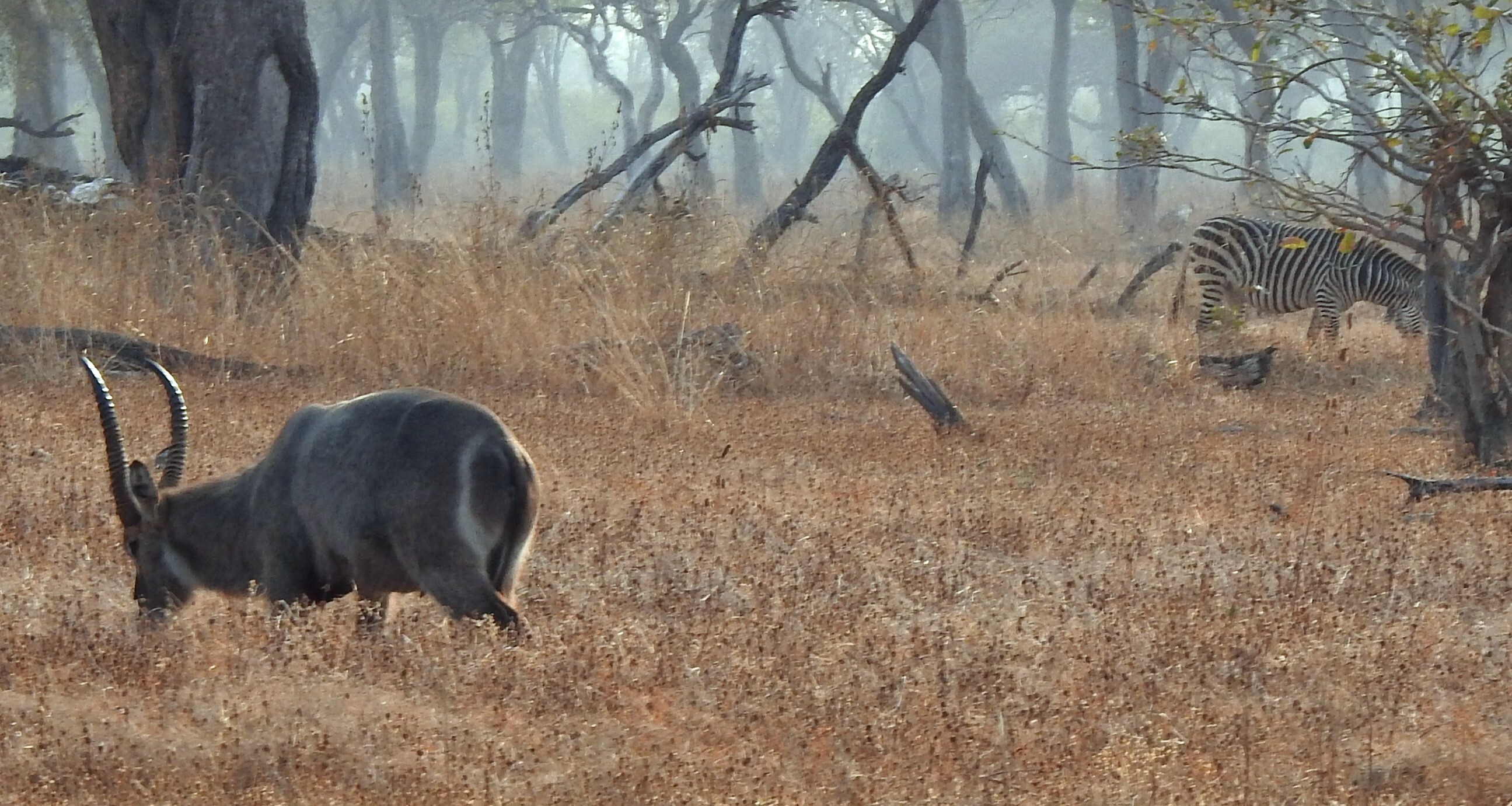
 Male waterbuck with a zebra in the background:
After a shower from the dusty drive, lunch and another chill and at times frustrating afternoon (with the WiFi), we were off on our next drive at 4 during which we spotted an African civet that stayed in our sights. Tonight we returned to the lion’s kill and also saw:
Lots of impala and in the distance we spotted puku, a few bushbuck, a bush buck (no pics)
We saw elephants on the river bank as we crossed the bridge into the park

then almost right away a couple more: 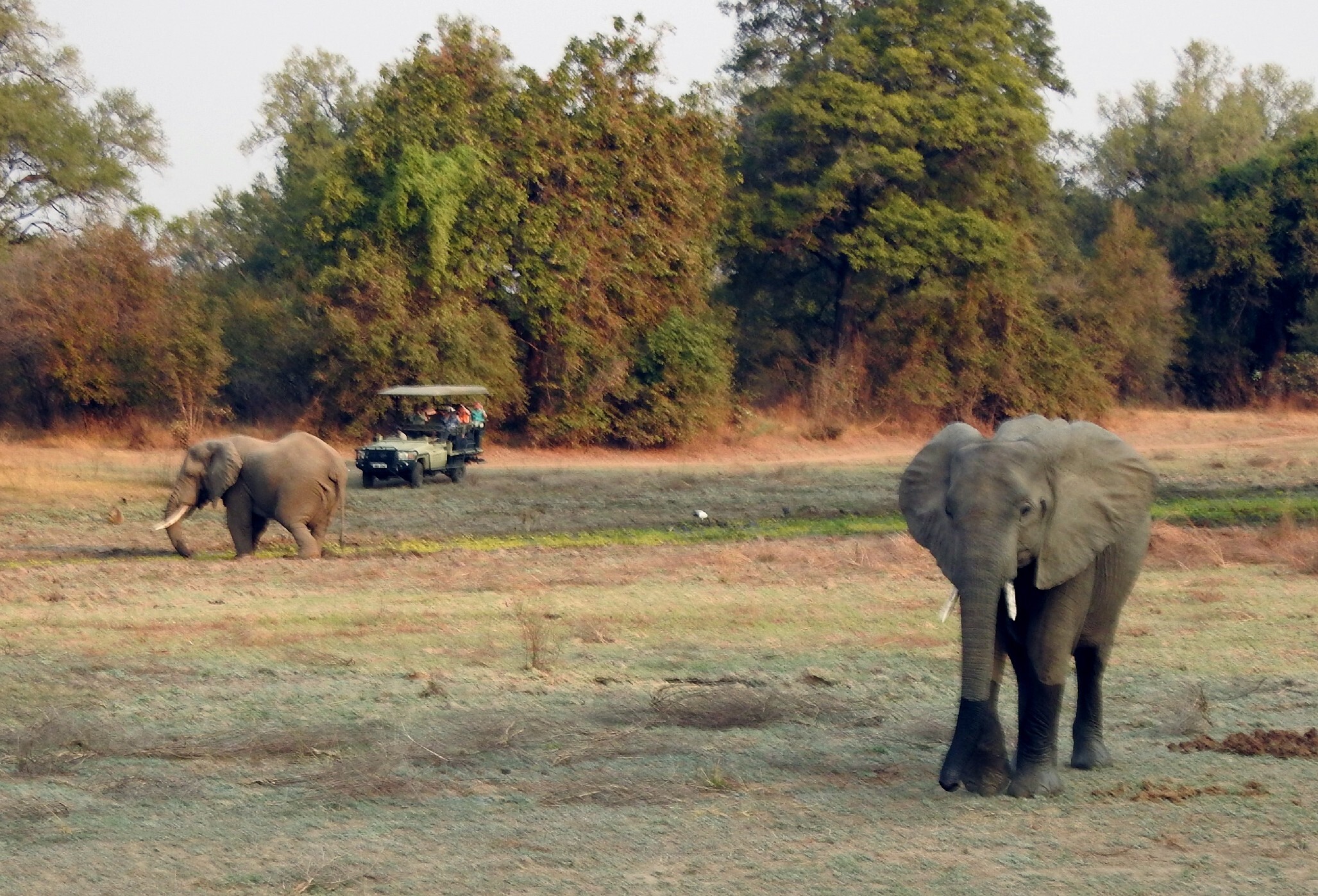
We head to Lucy’s tree to see if she’s still there:
Red billed hornbill

Guinea fowl
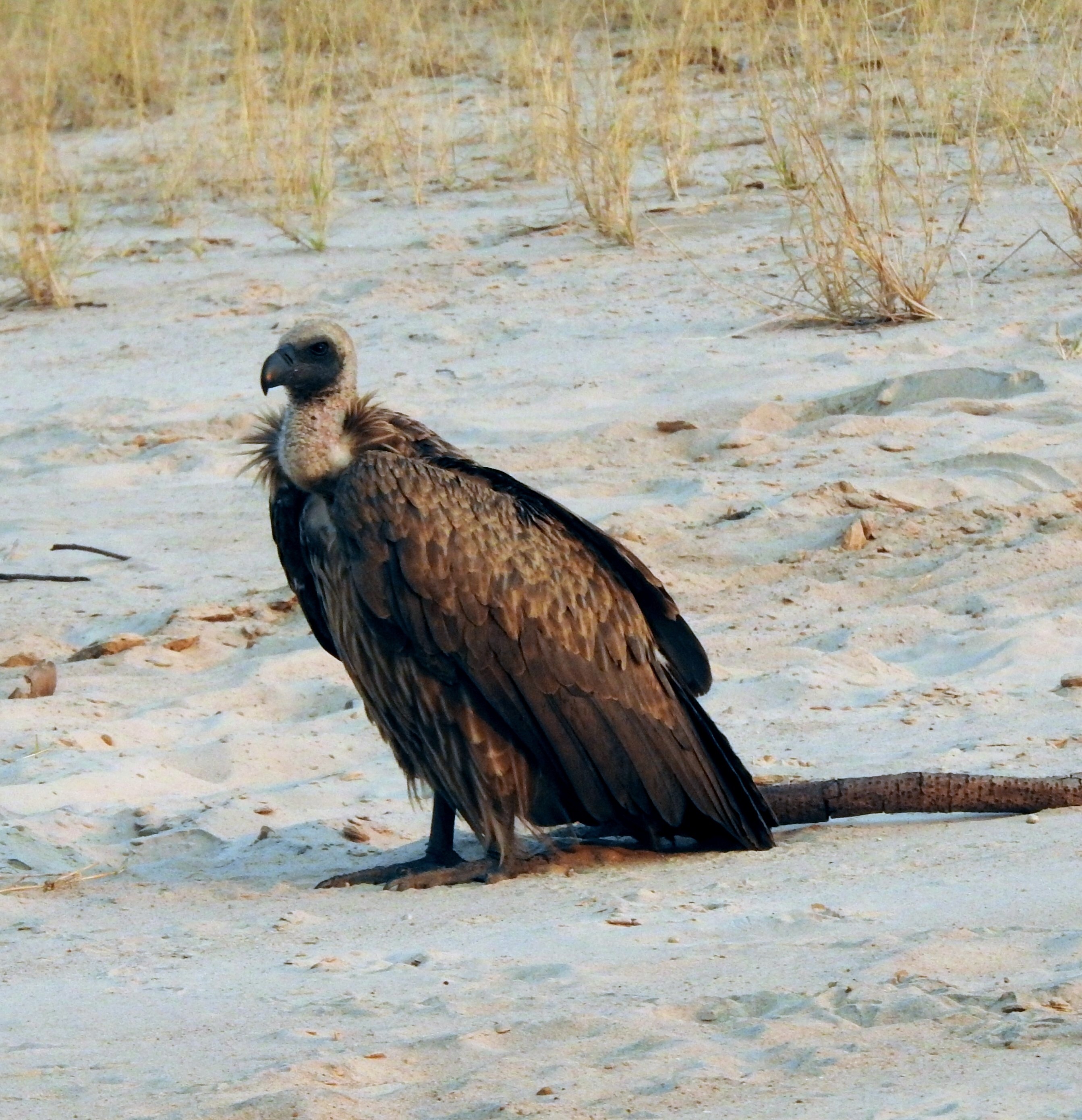
We’re back at lion pride’s kill and there are now five lionesses and two lions as well as three vultures:
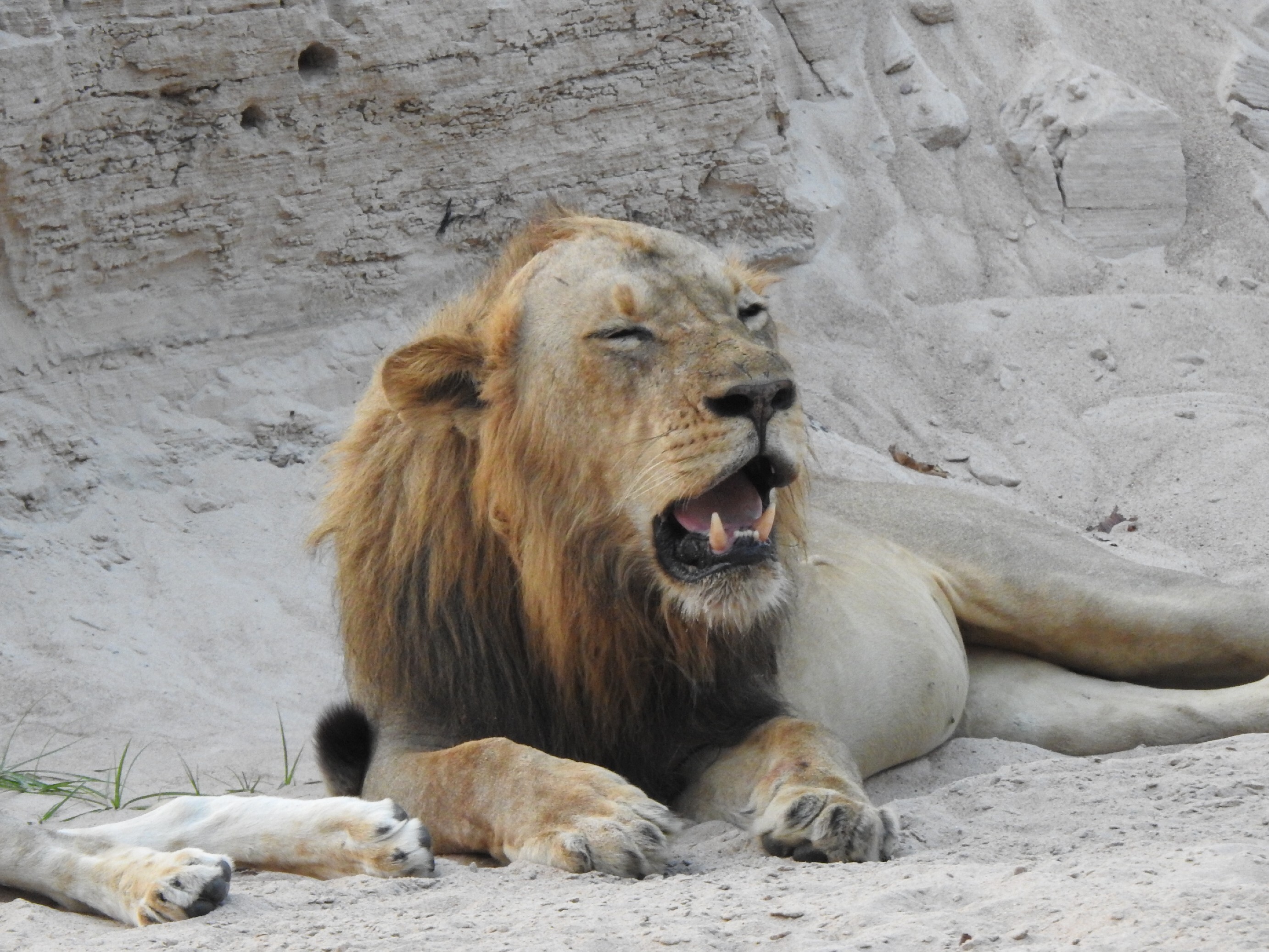
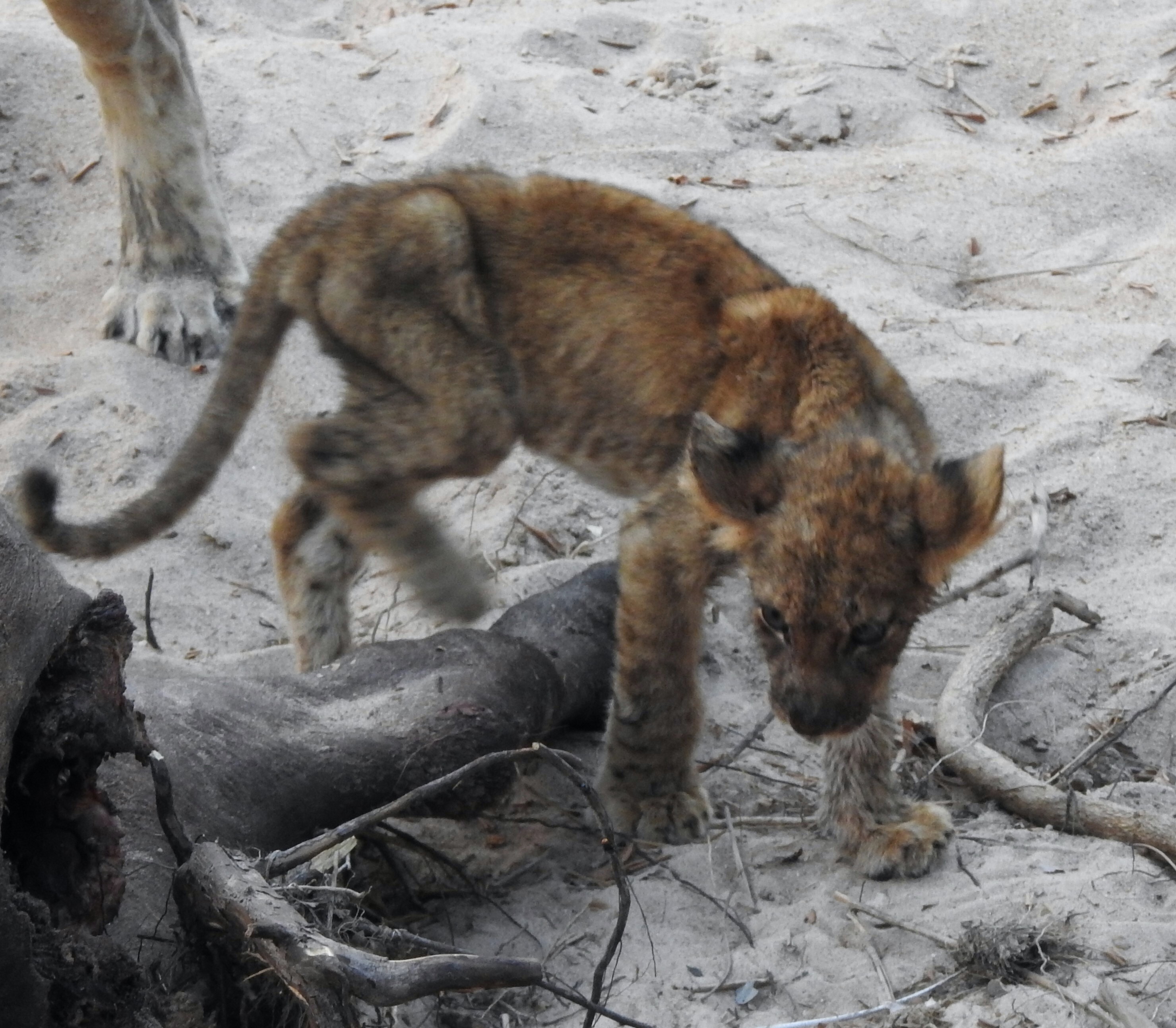

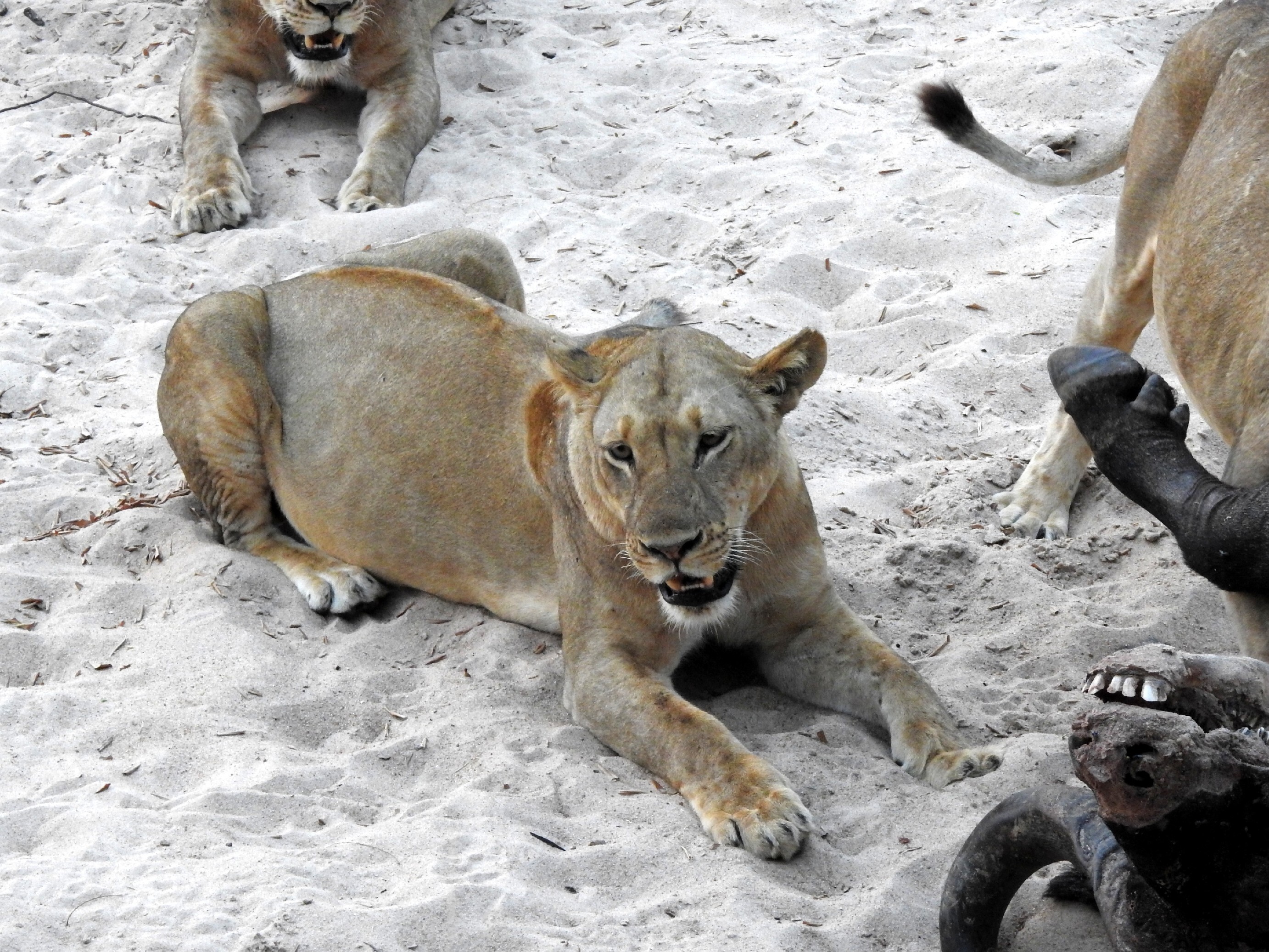
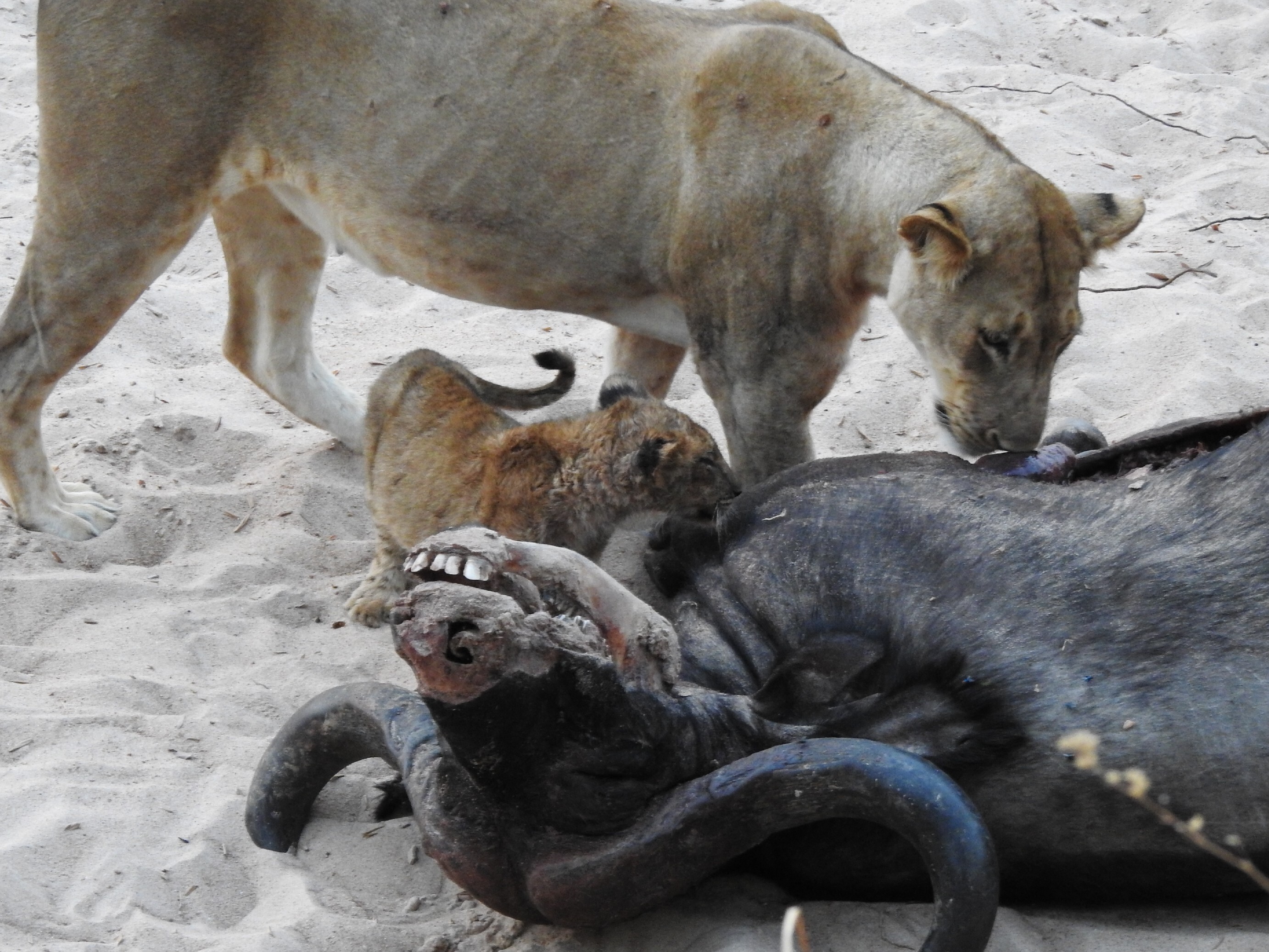
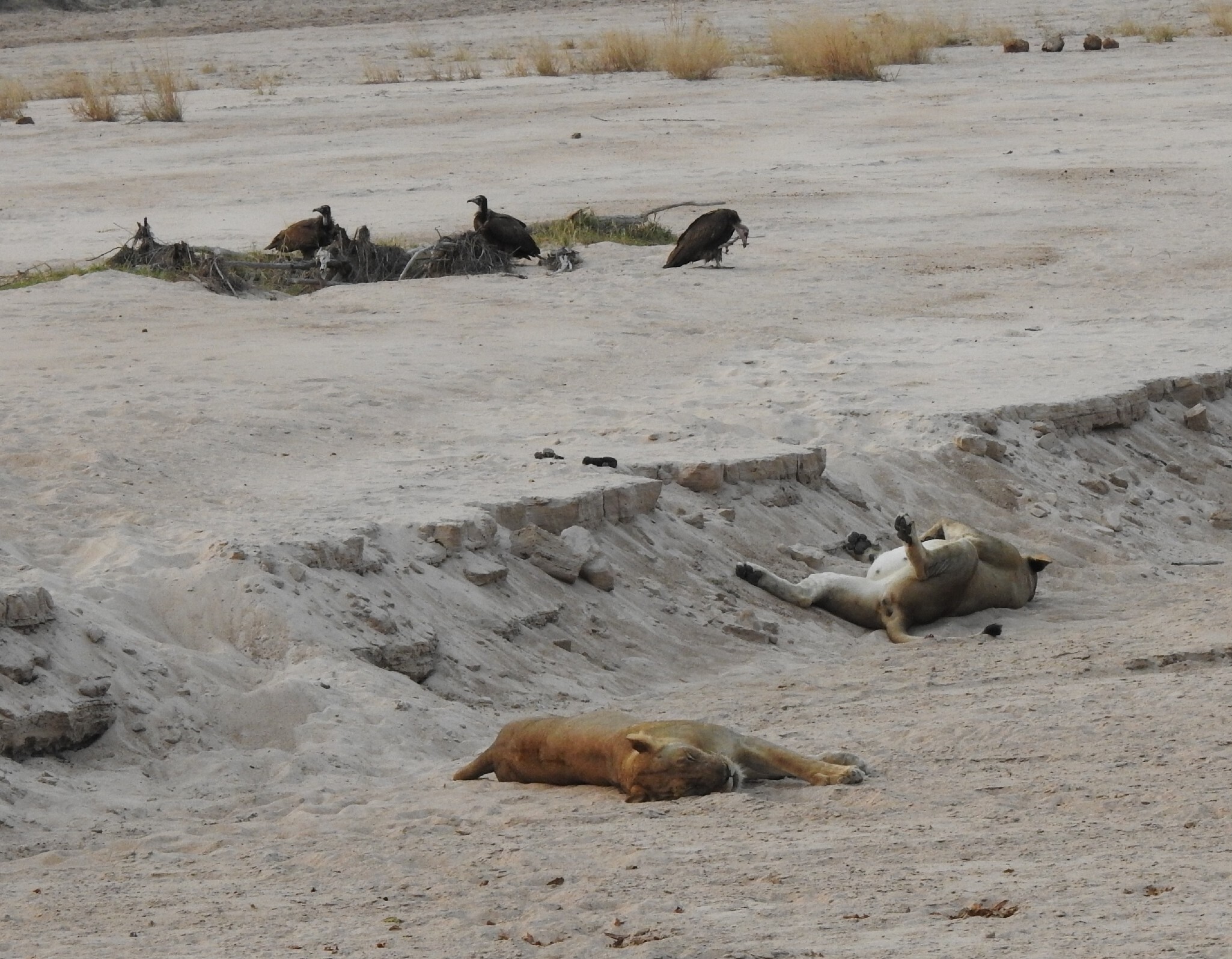
After our evening sundowner break, we returned to the kill and one of the lionesses climb up to the river bank near us:

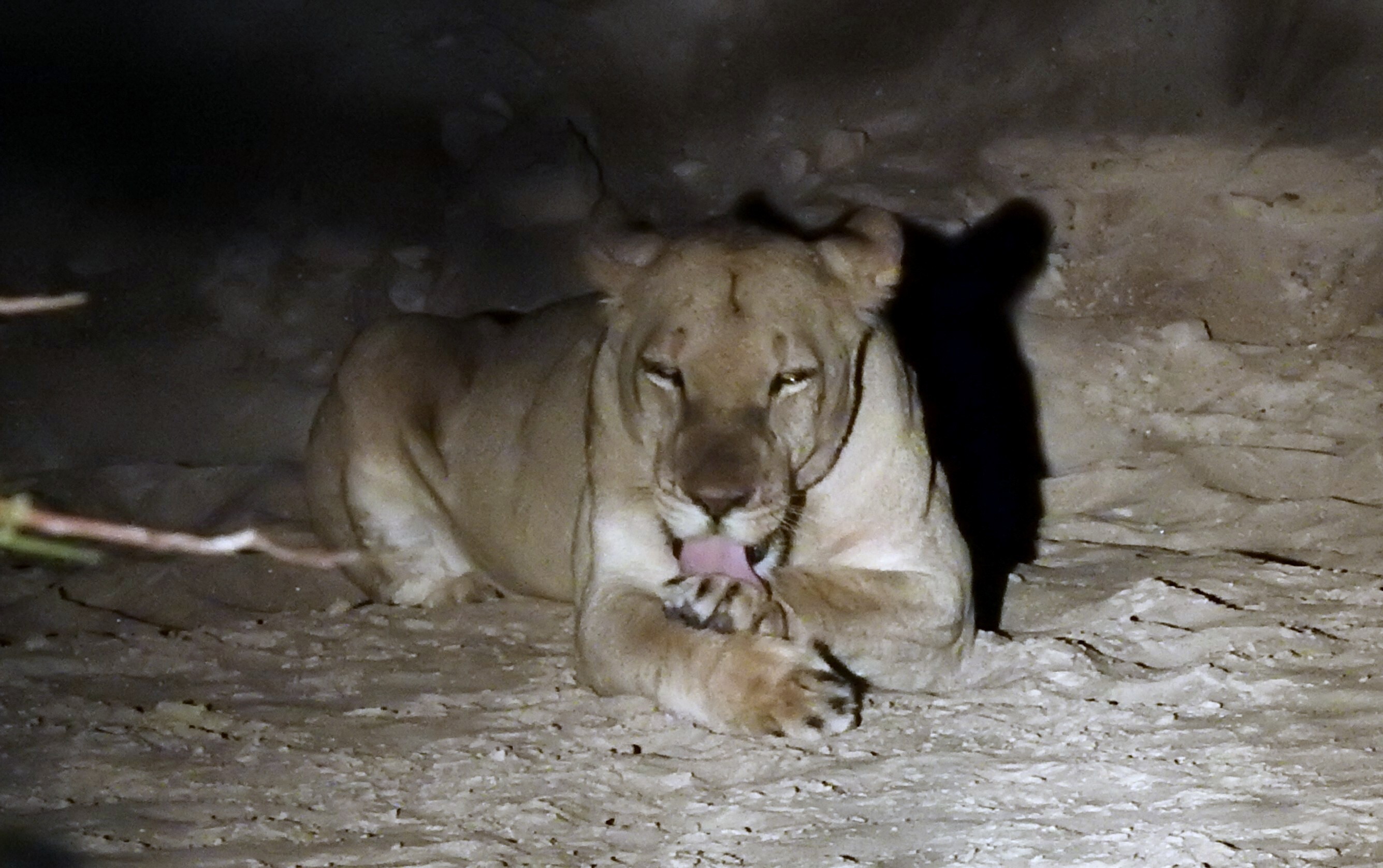
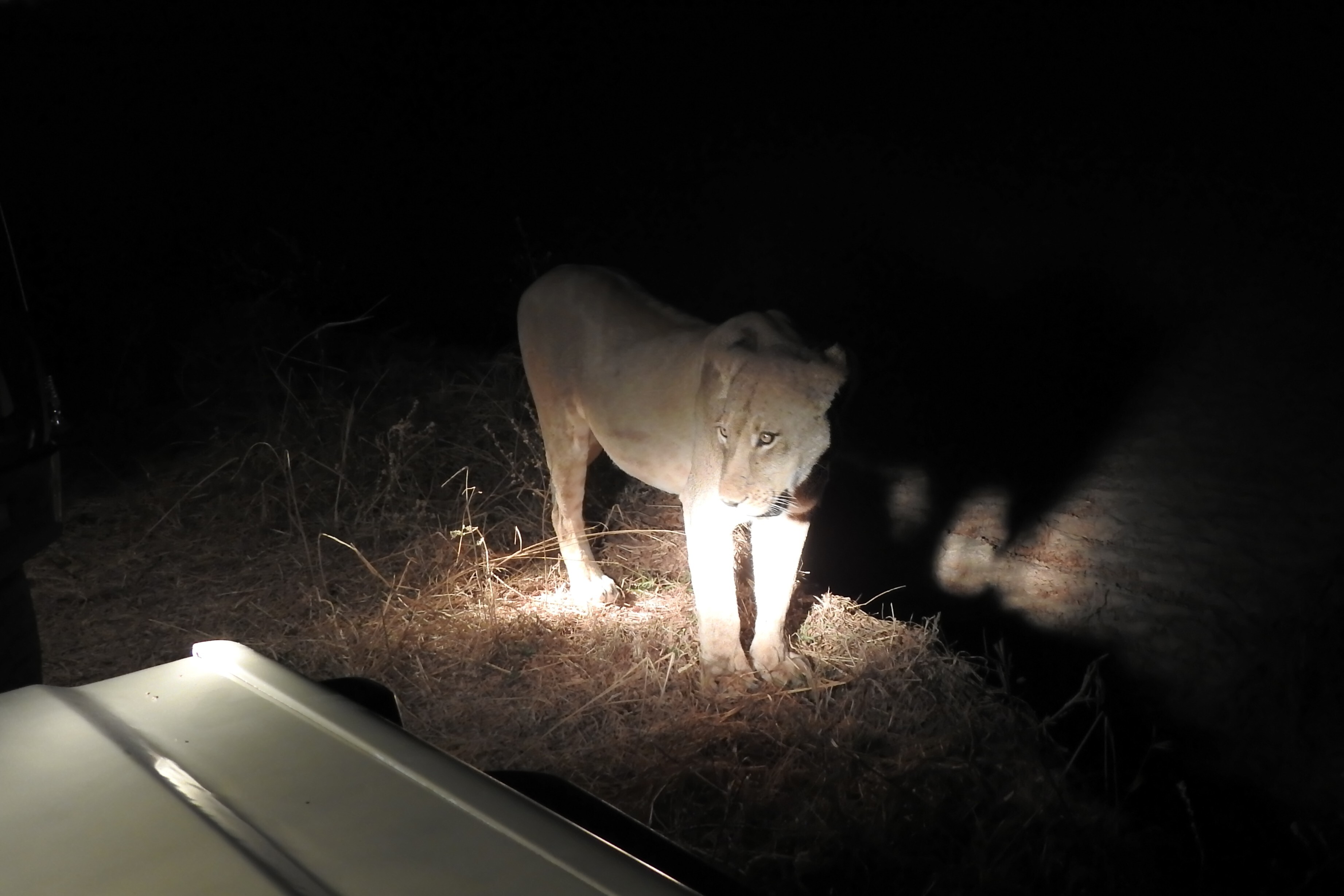
As on every other night we saw a bunny rabbit scampering away as well as the odd solo hippo in the dark looking for a place to graze. Then it was a white tailed mongoose 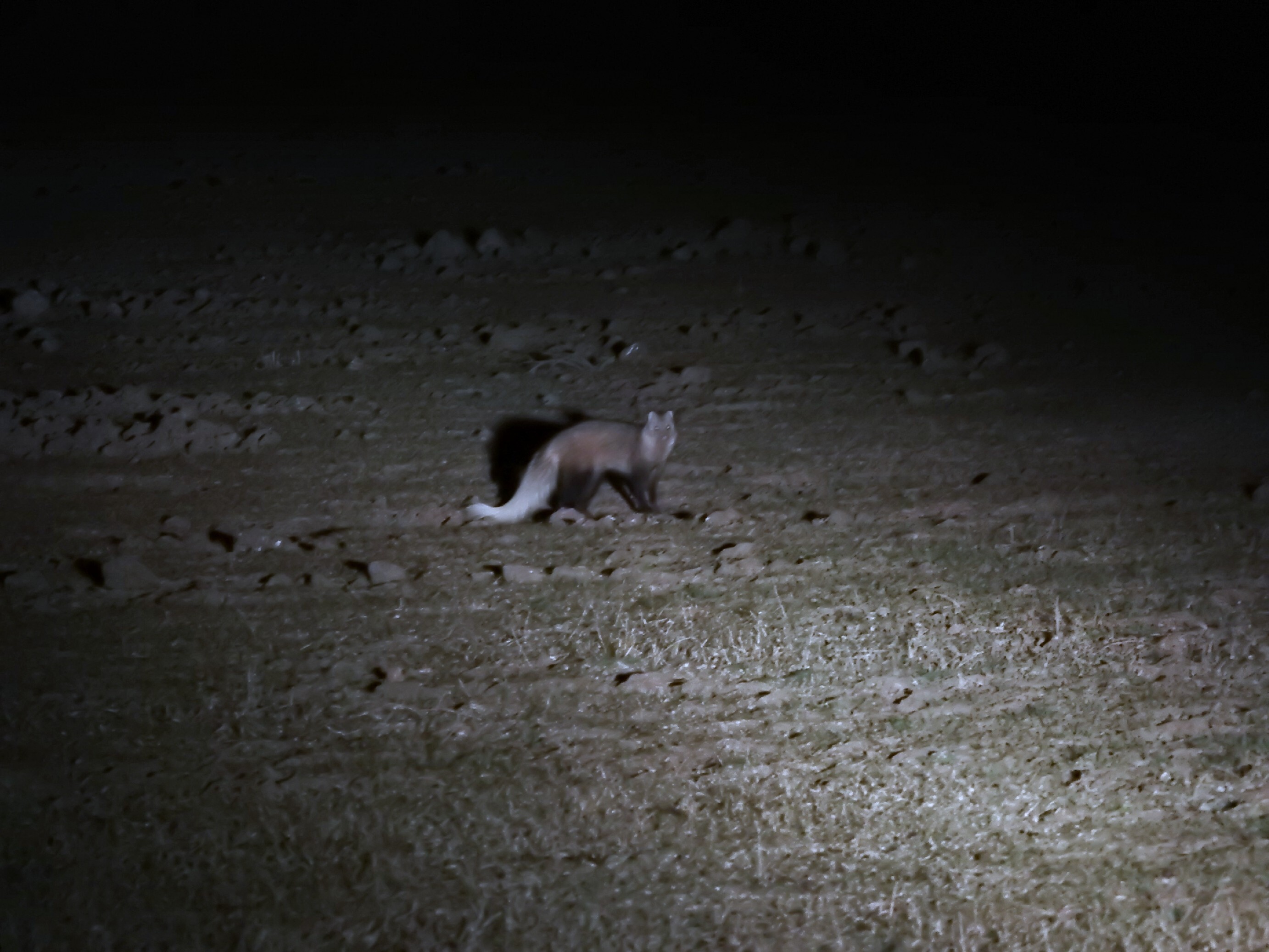
and the African civet: 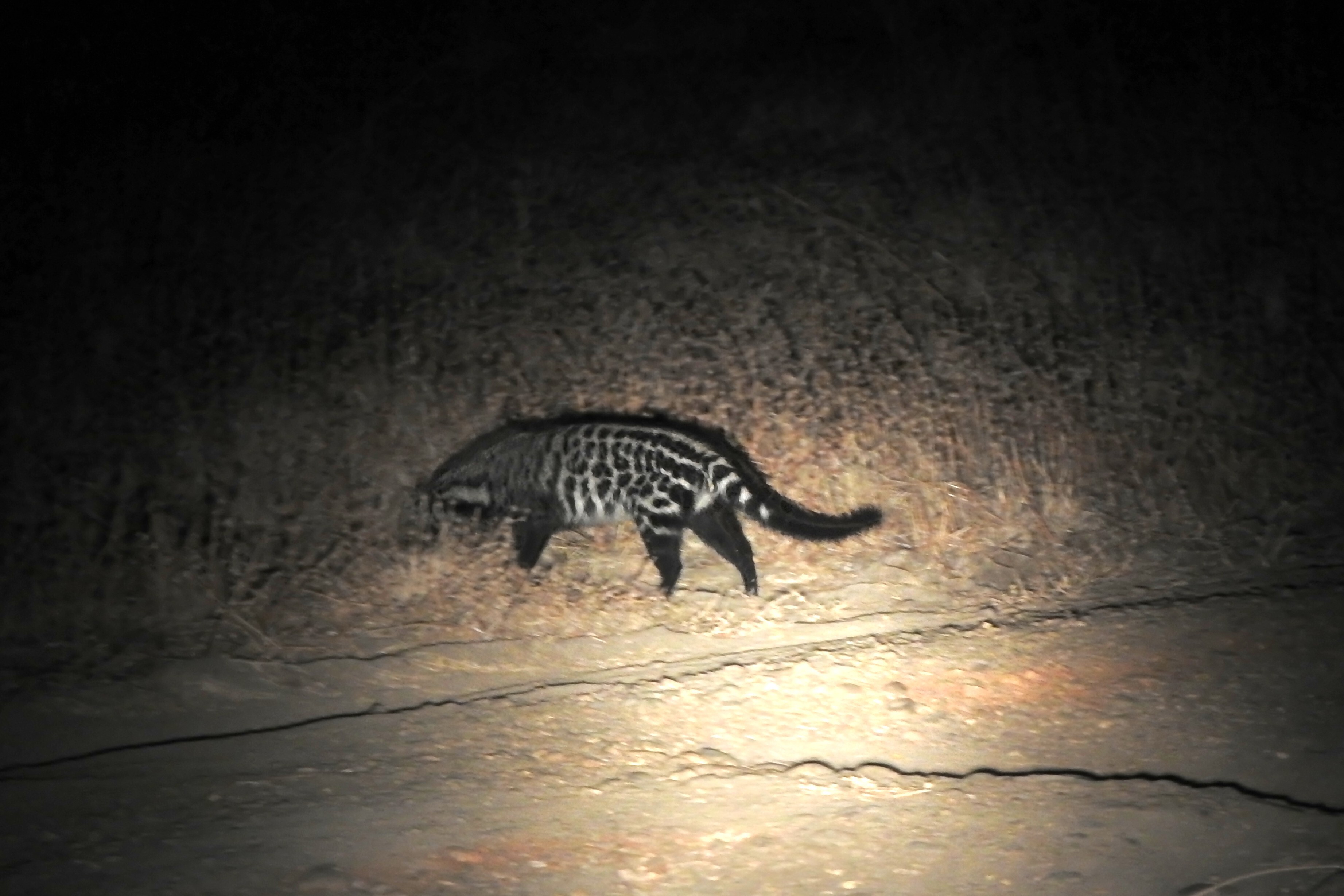 fun fact: the civet used to be classified in the cat family but has been reclassified to the mongoose family.
We did see very quickly another genet tonight but as usual, he was too skittish for us. The evening finished off with an elephant encounter and then a crocodile.
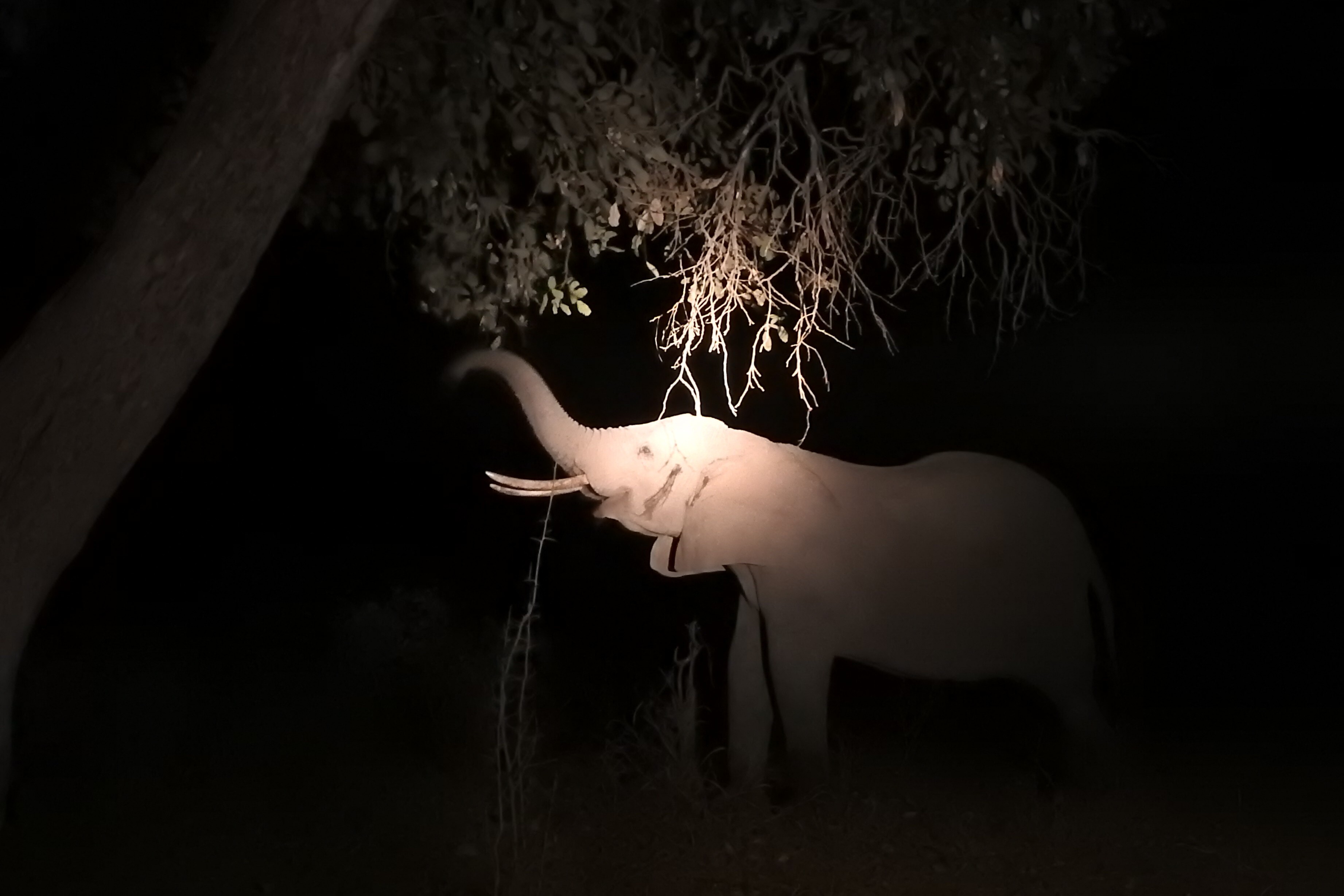
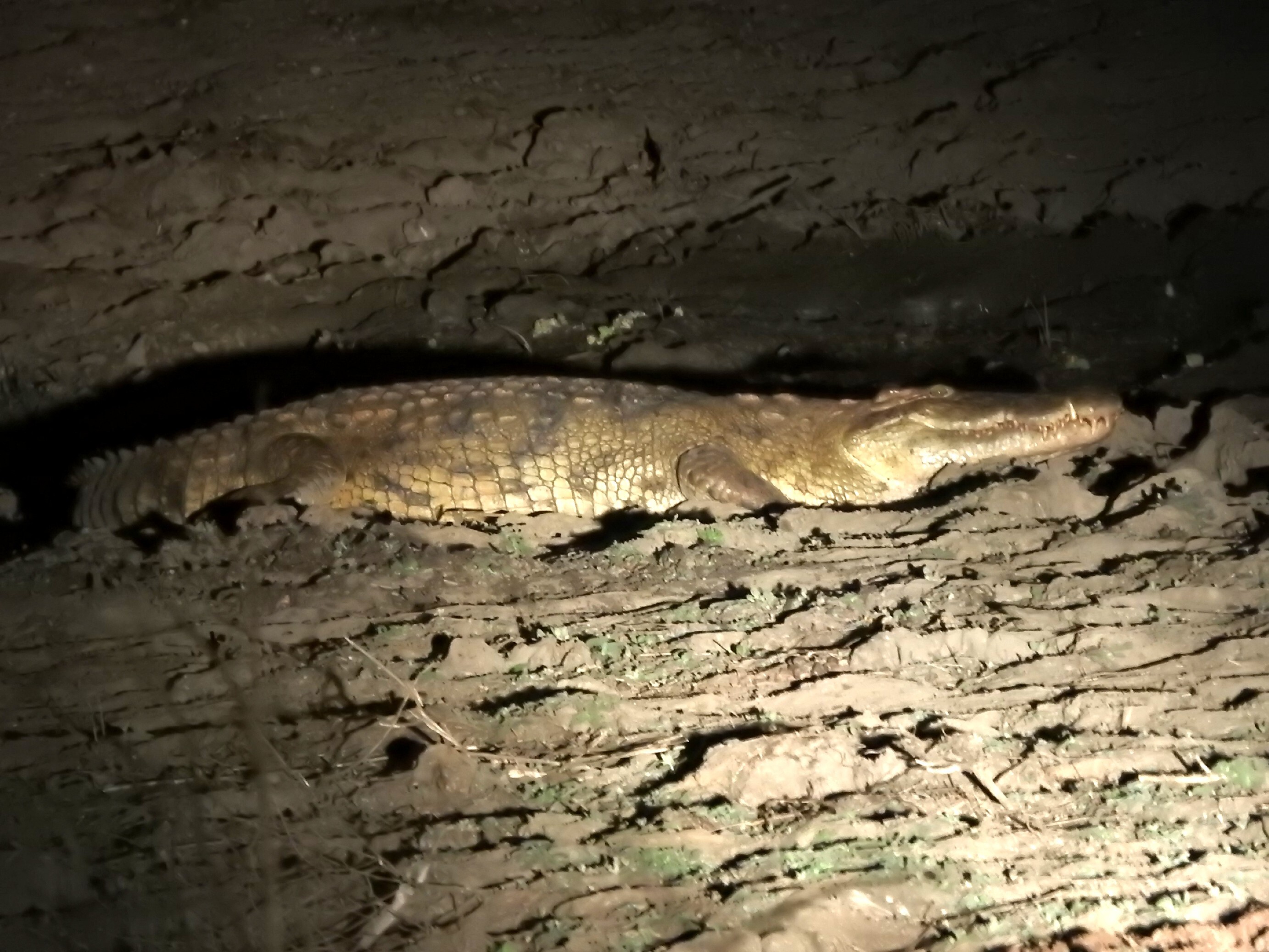 Thursday morning was our final drive and it was also beyond the expectations we’d had for Zambia – and we finished off the drive with two more giraffe! Our company today was Katie and an American woman, Rosemary, with her guide, Johnny. We observed:
Great white egret
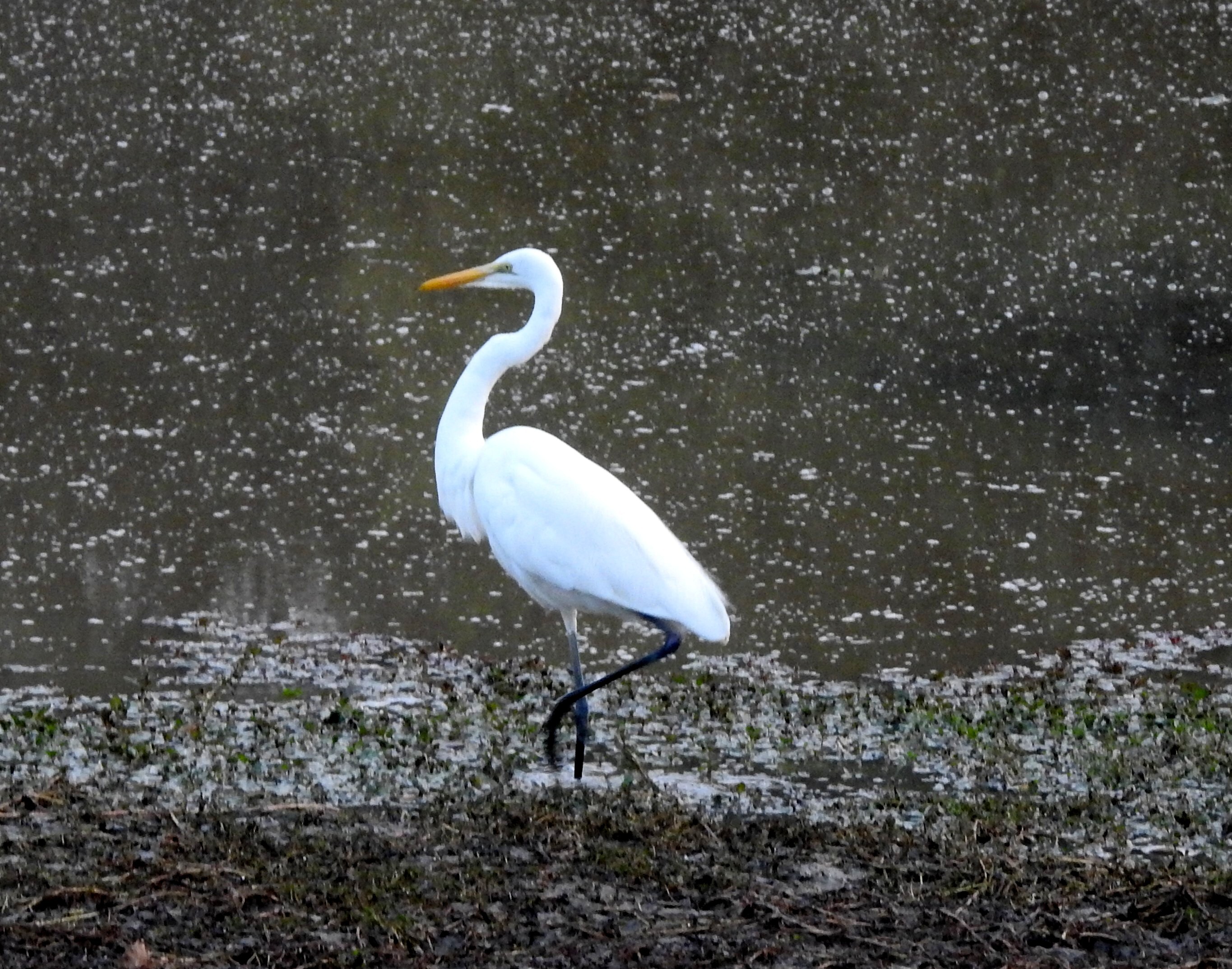
Yellow billed stork
Hammerkop
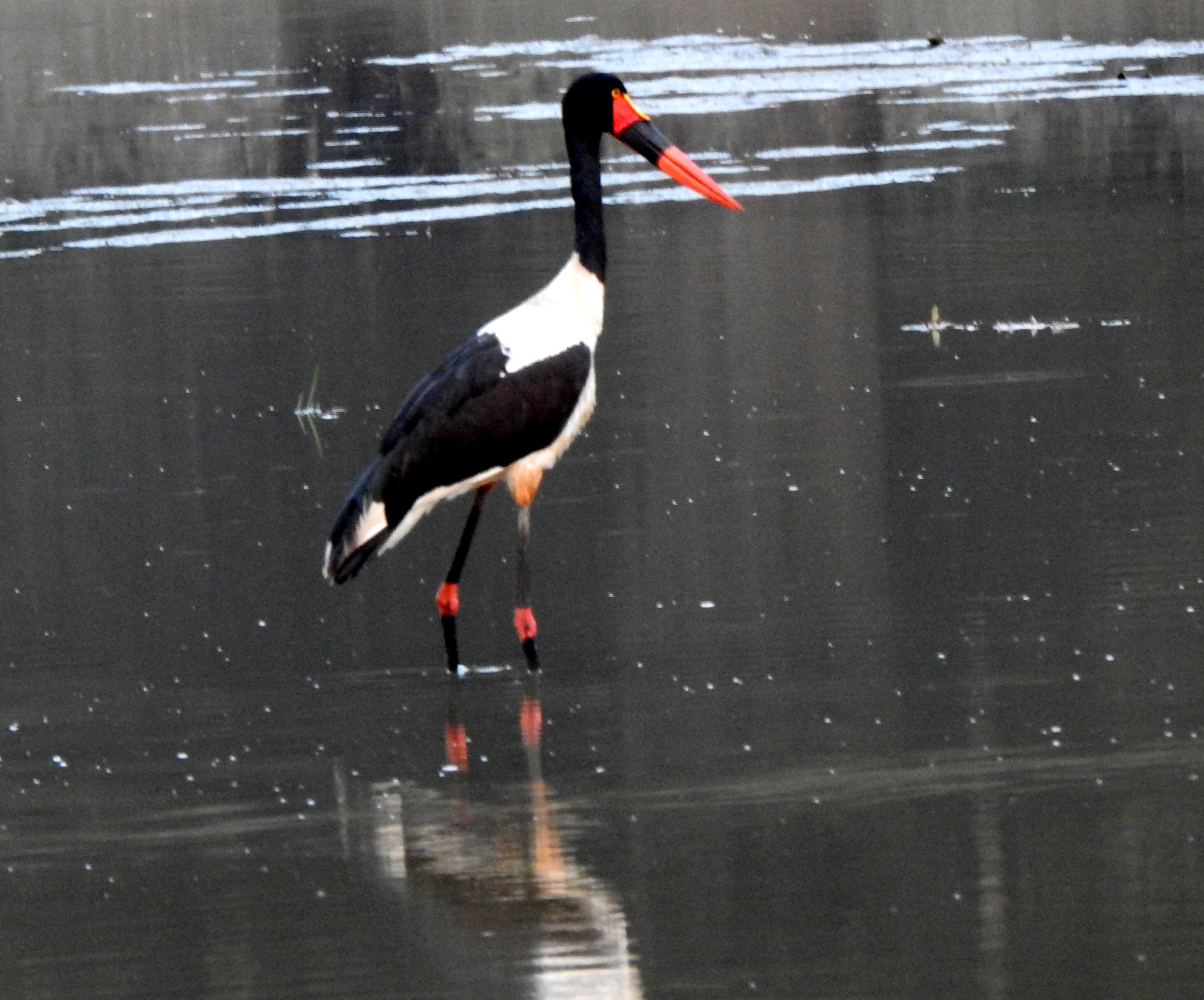
 Saddle billed stork
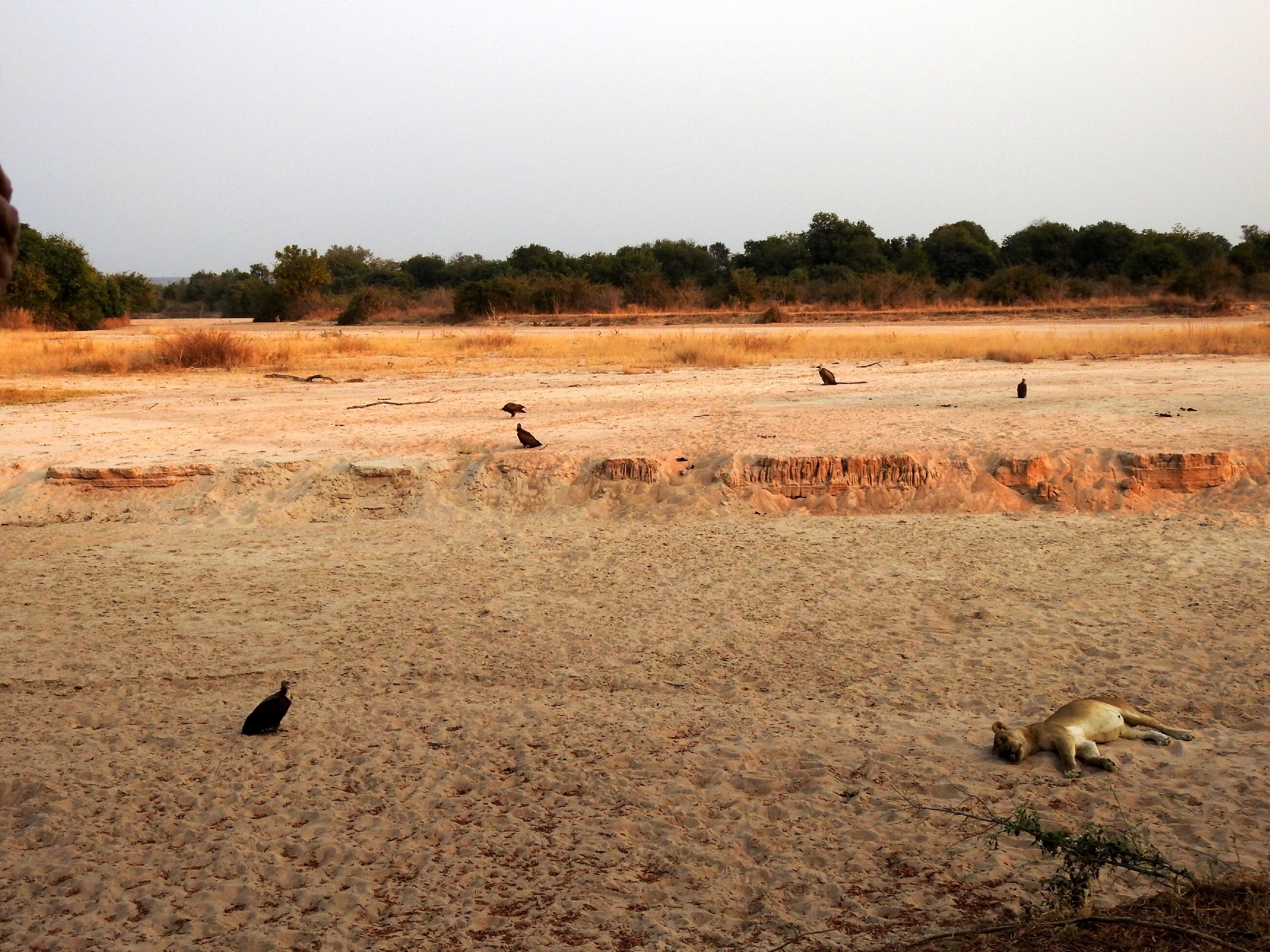
back to lion kill. 4 vultures

Big baobab tree again
A few elephants crossed the road after being at the water hole and then threw sand on their bodies:
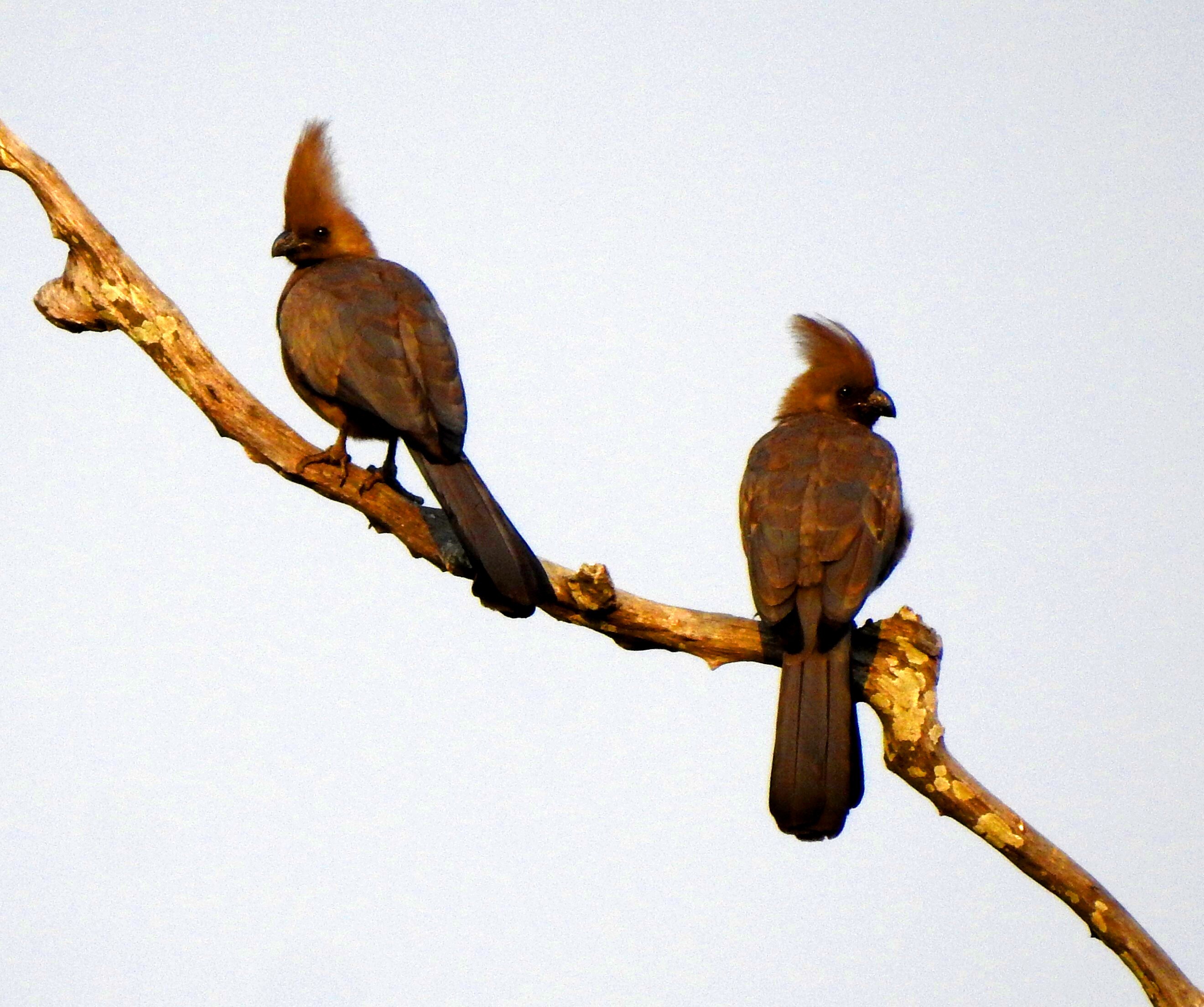
Grey Laurie also known as the “Go away” bird due to its song
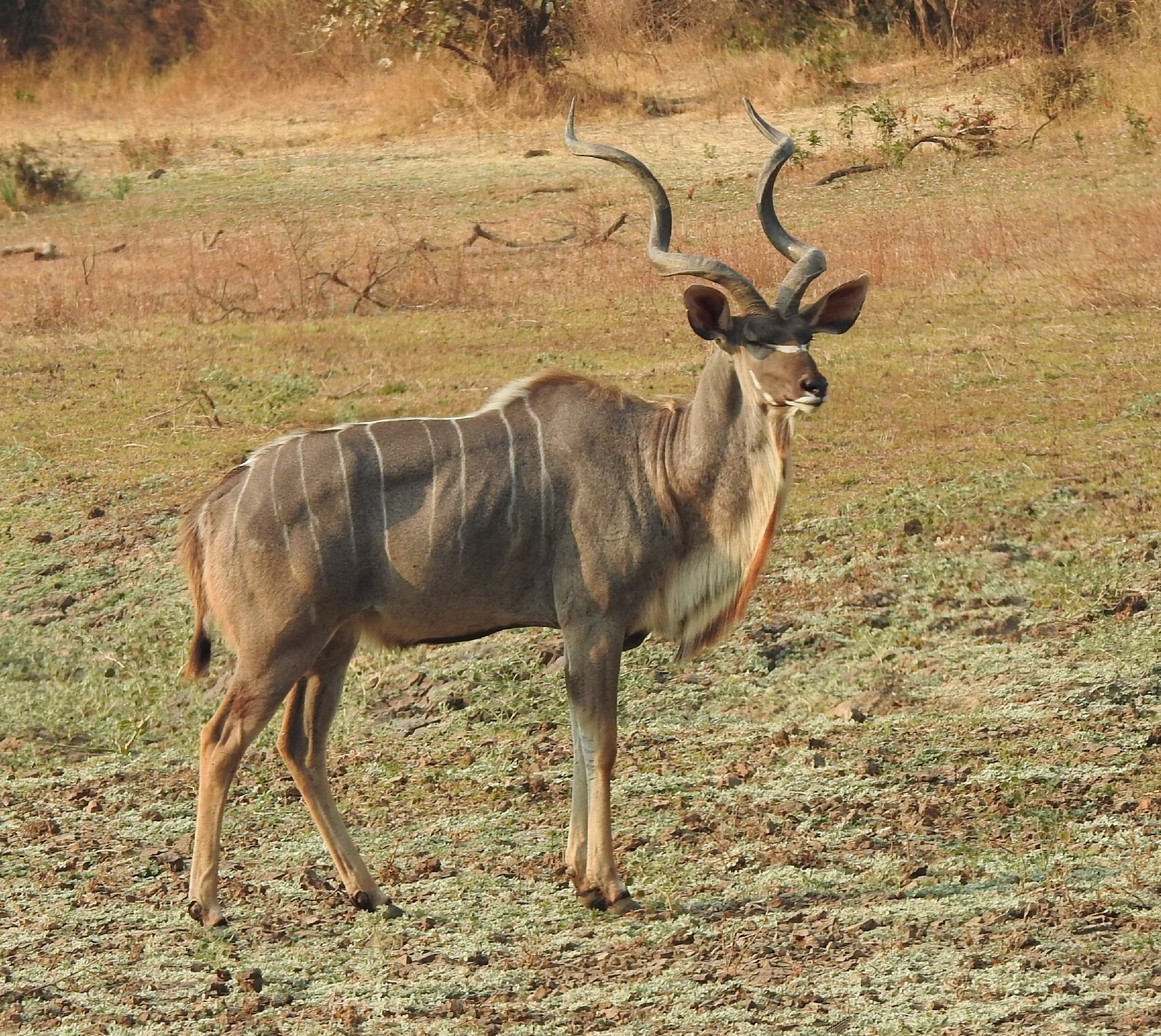
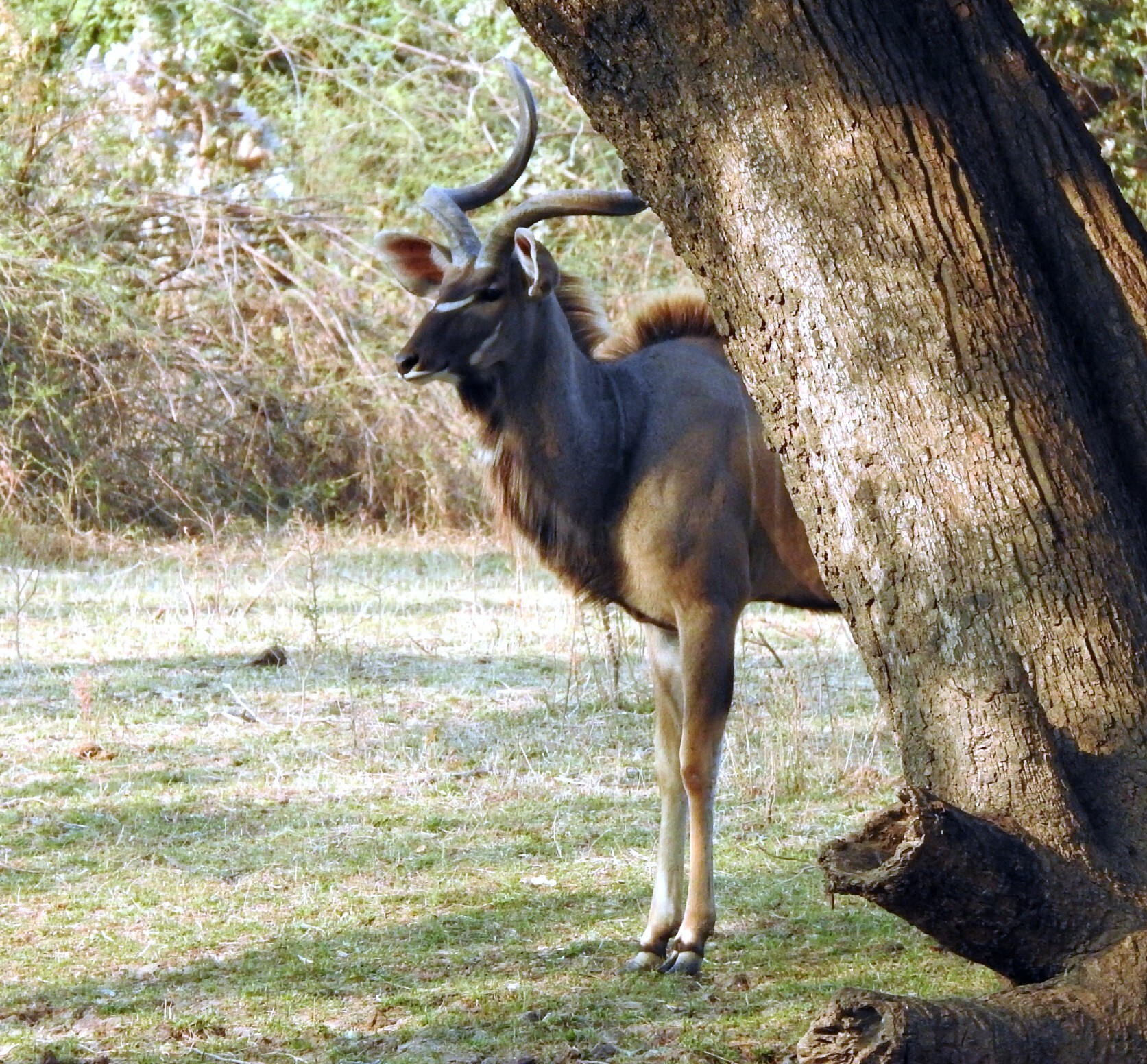
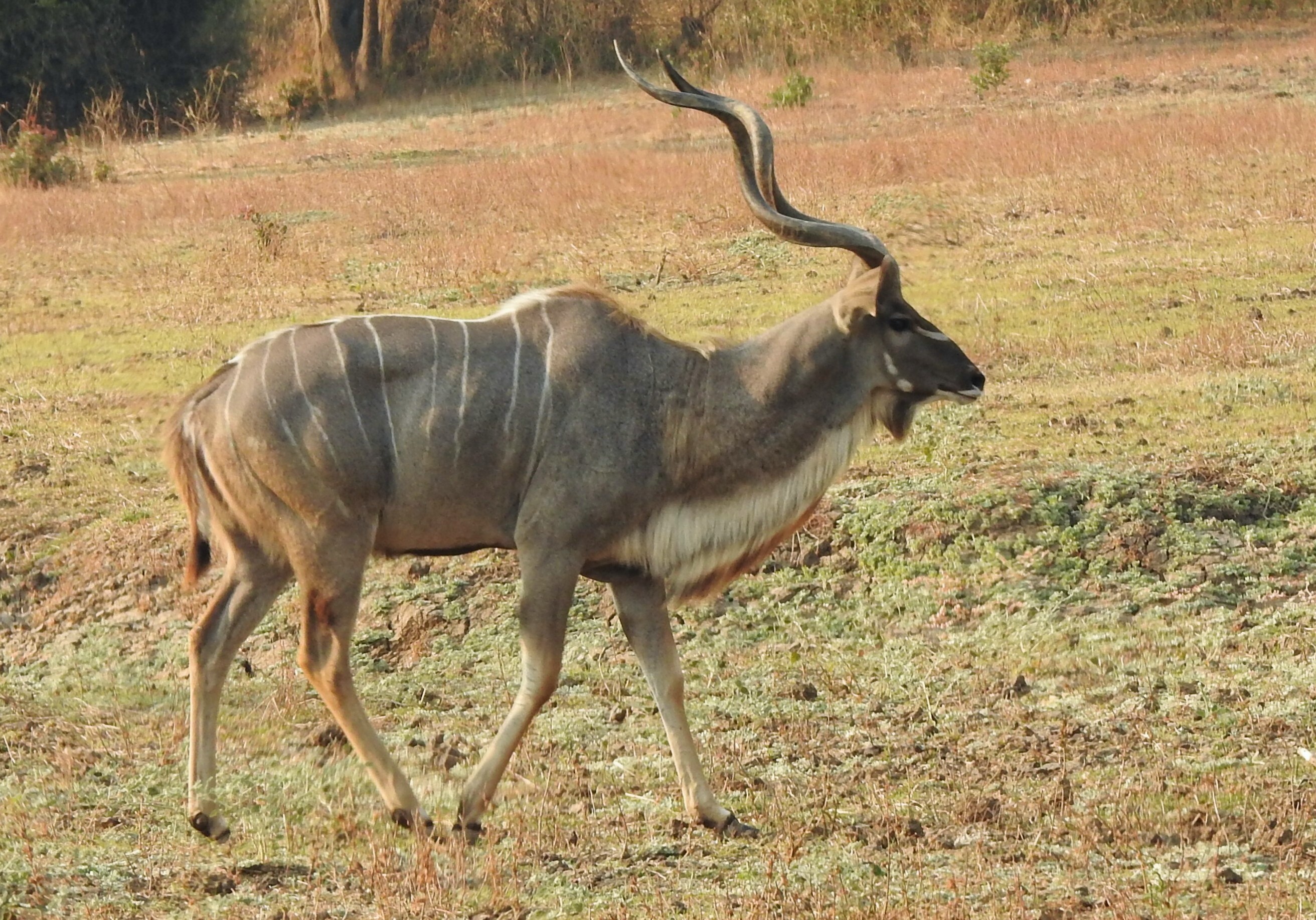
Three bull kudus


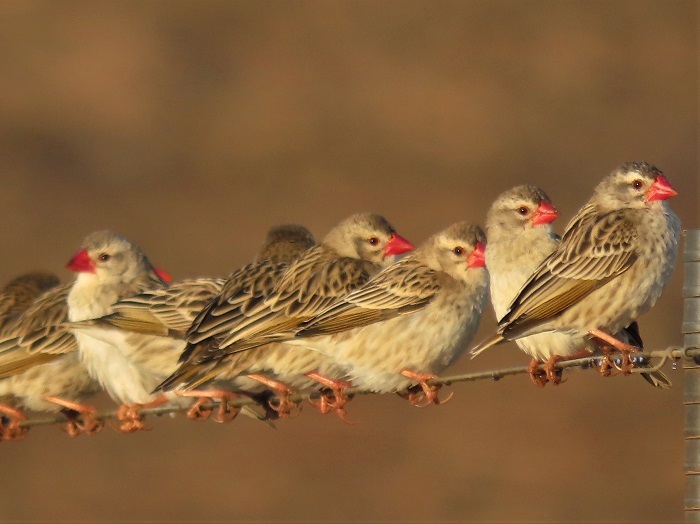
We saw a few red billed quelea hanging out:
And another lilac breasted roller posing for us:

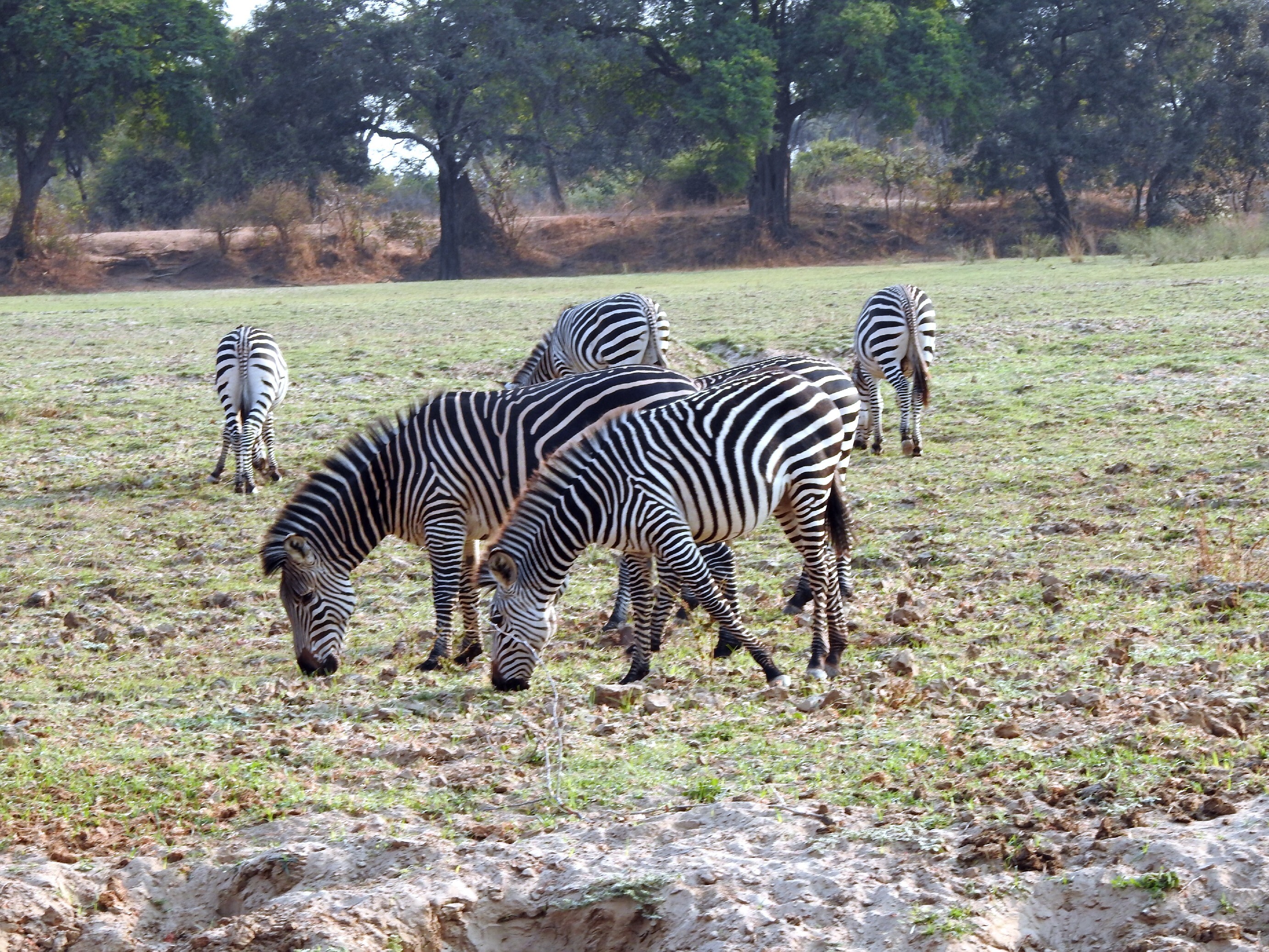
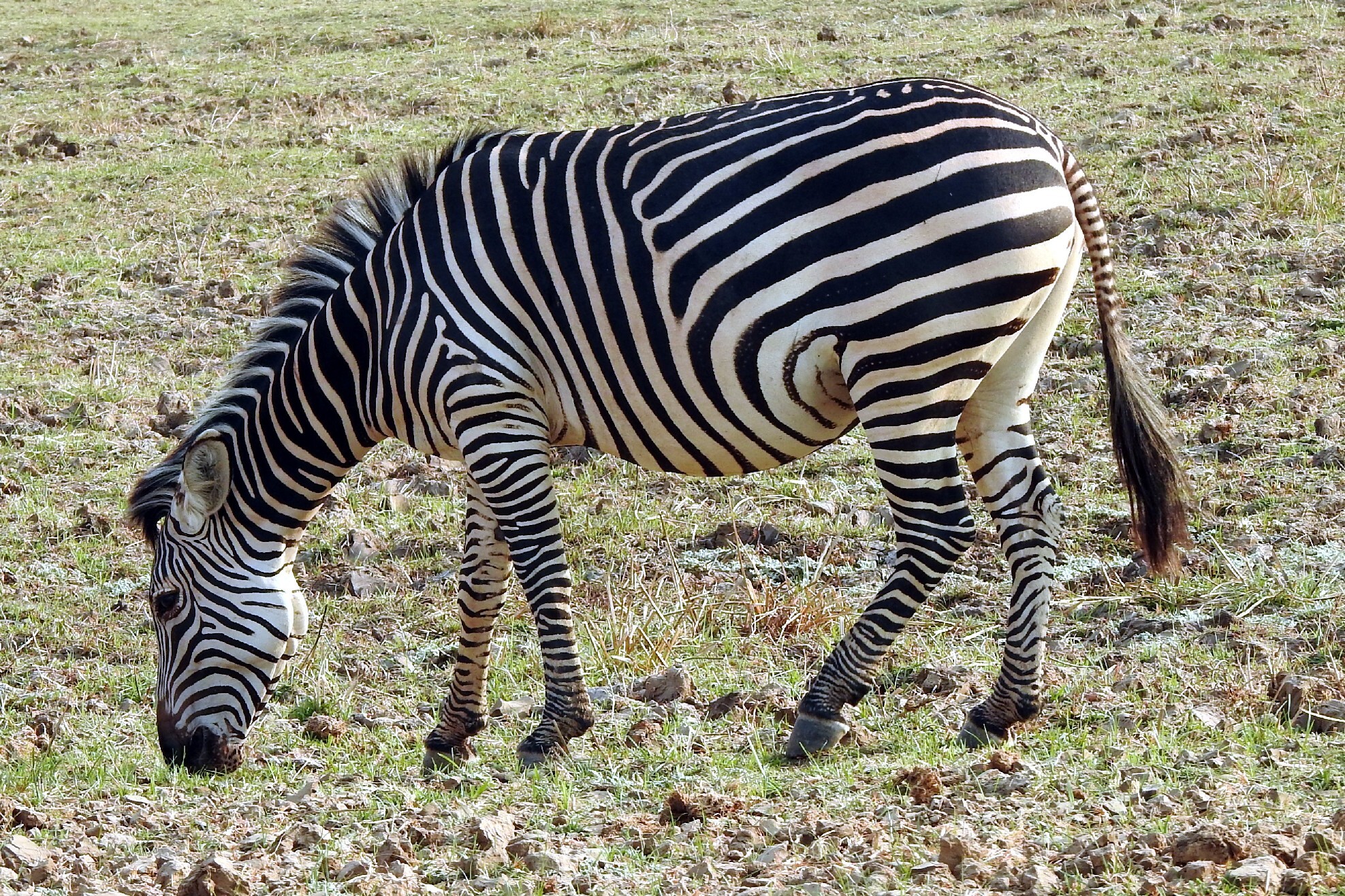
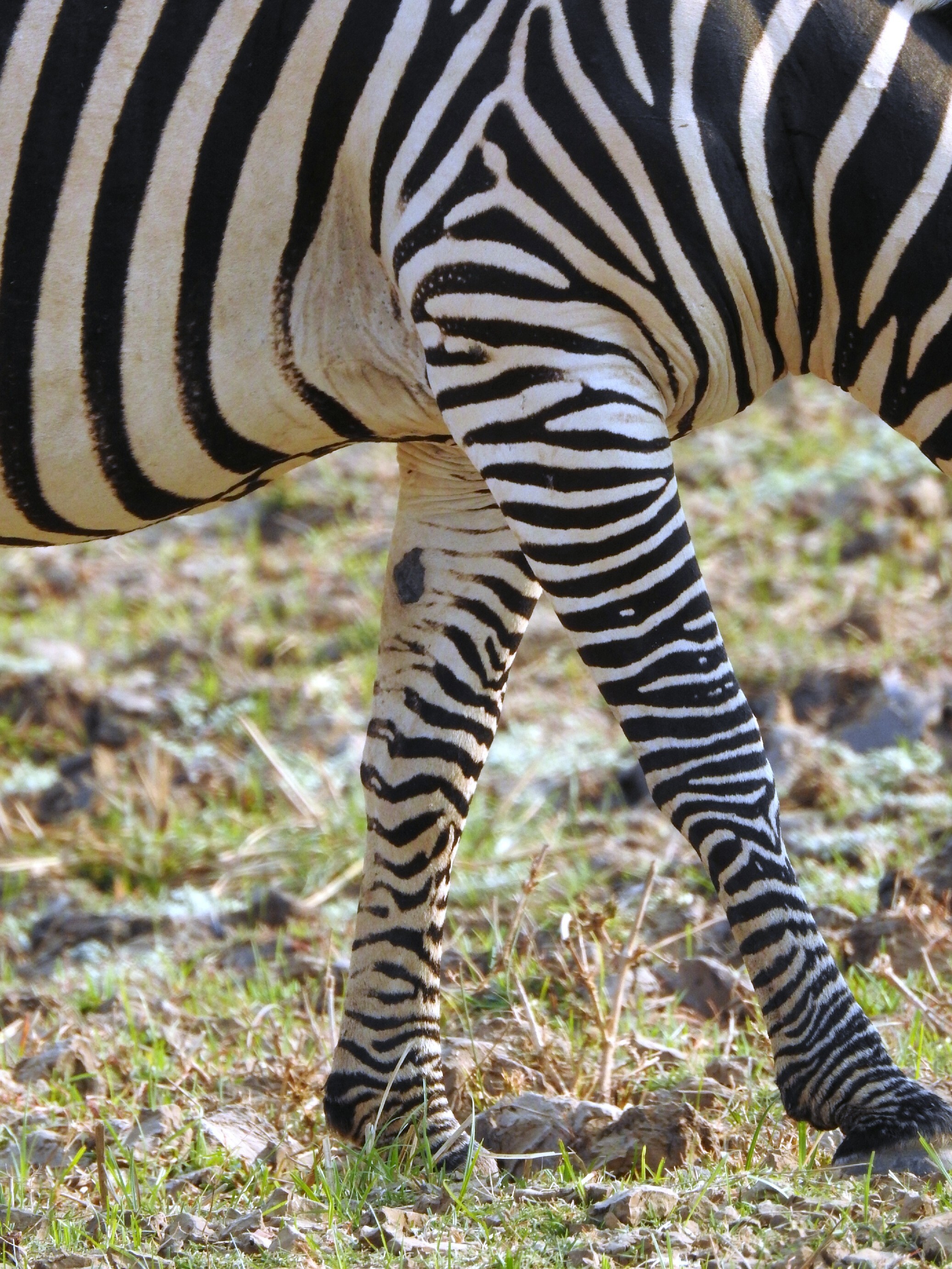
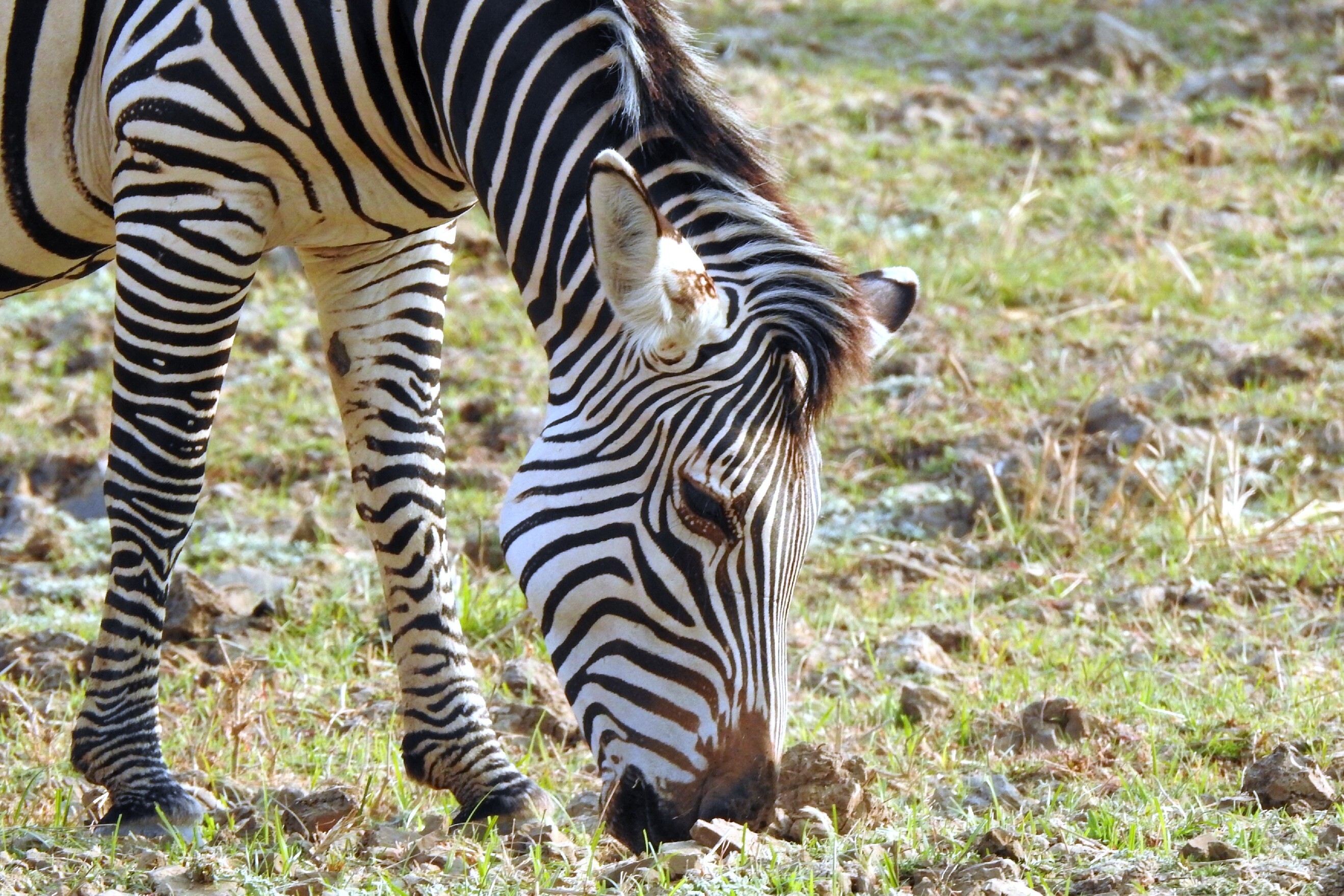
Zebra

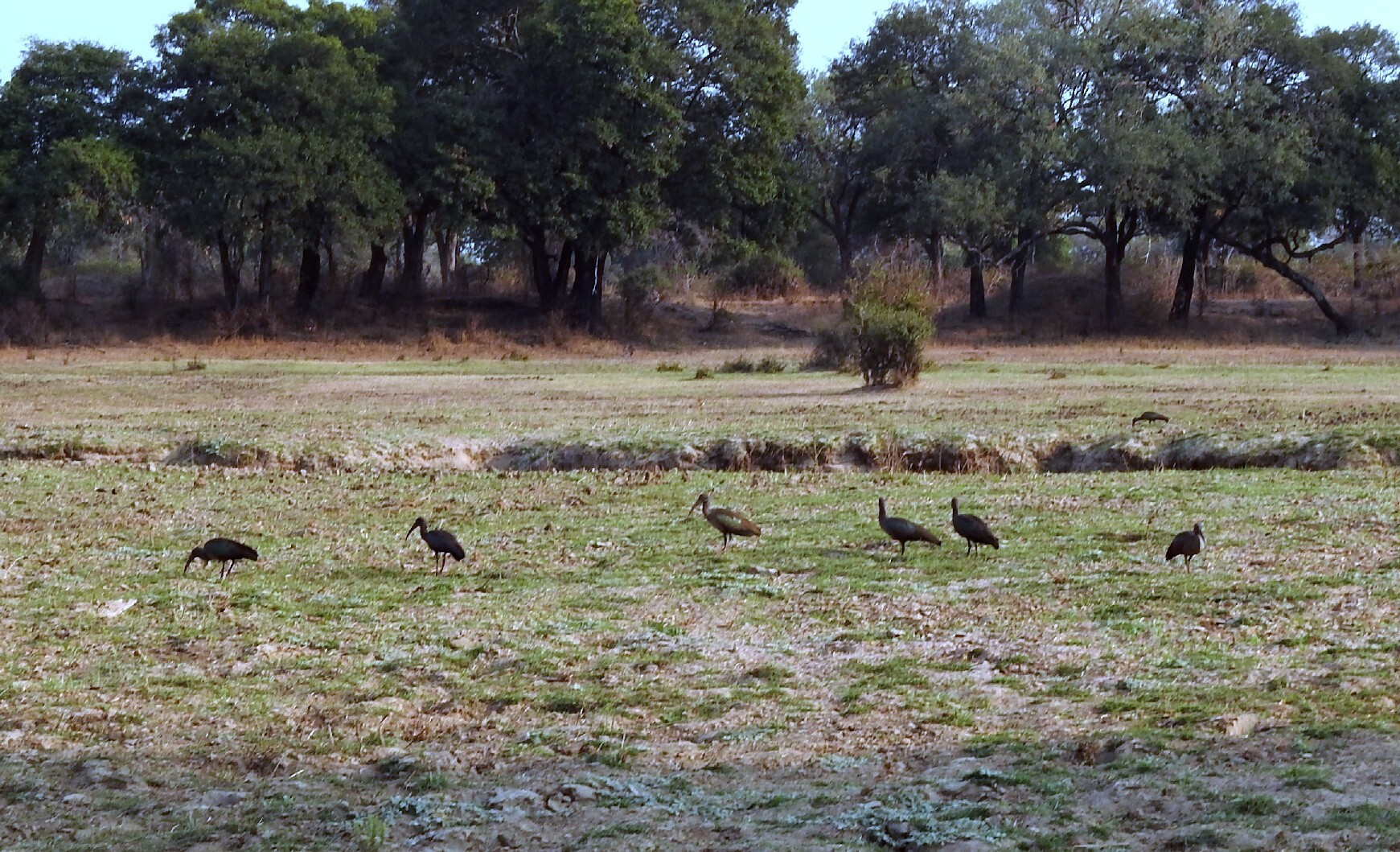
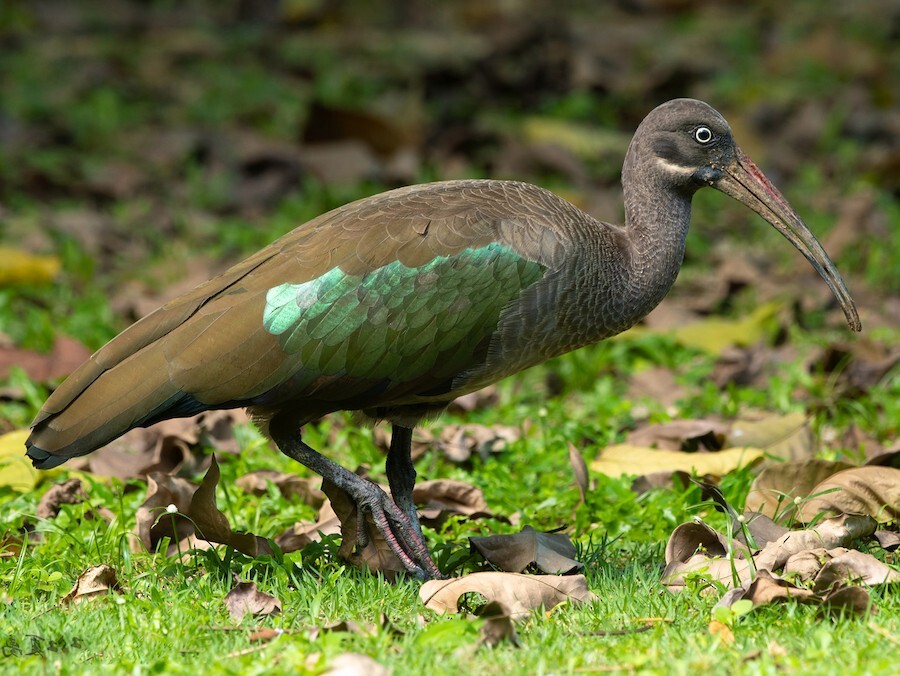
Hadeda ibis
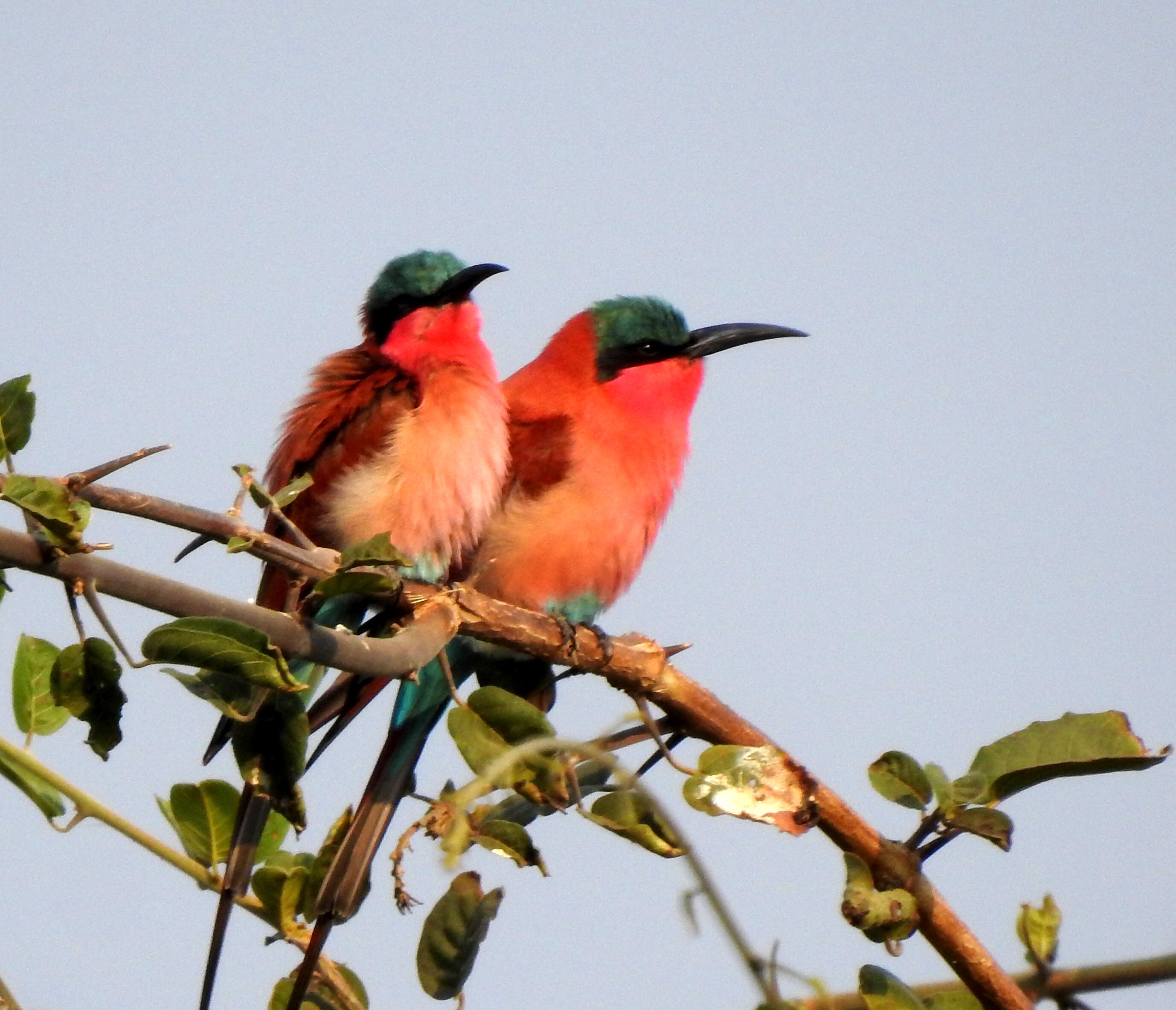
Carmine bee eaters
White fronted bee eater
Hippos at break spot again


a pair of yellow billed stork across the river

We also spot olive baboons over there:
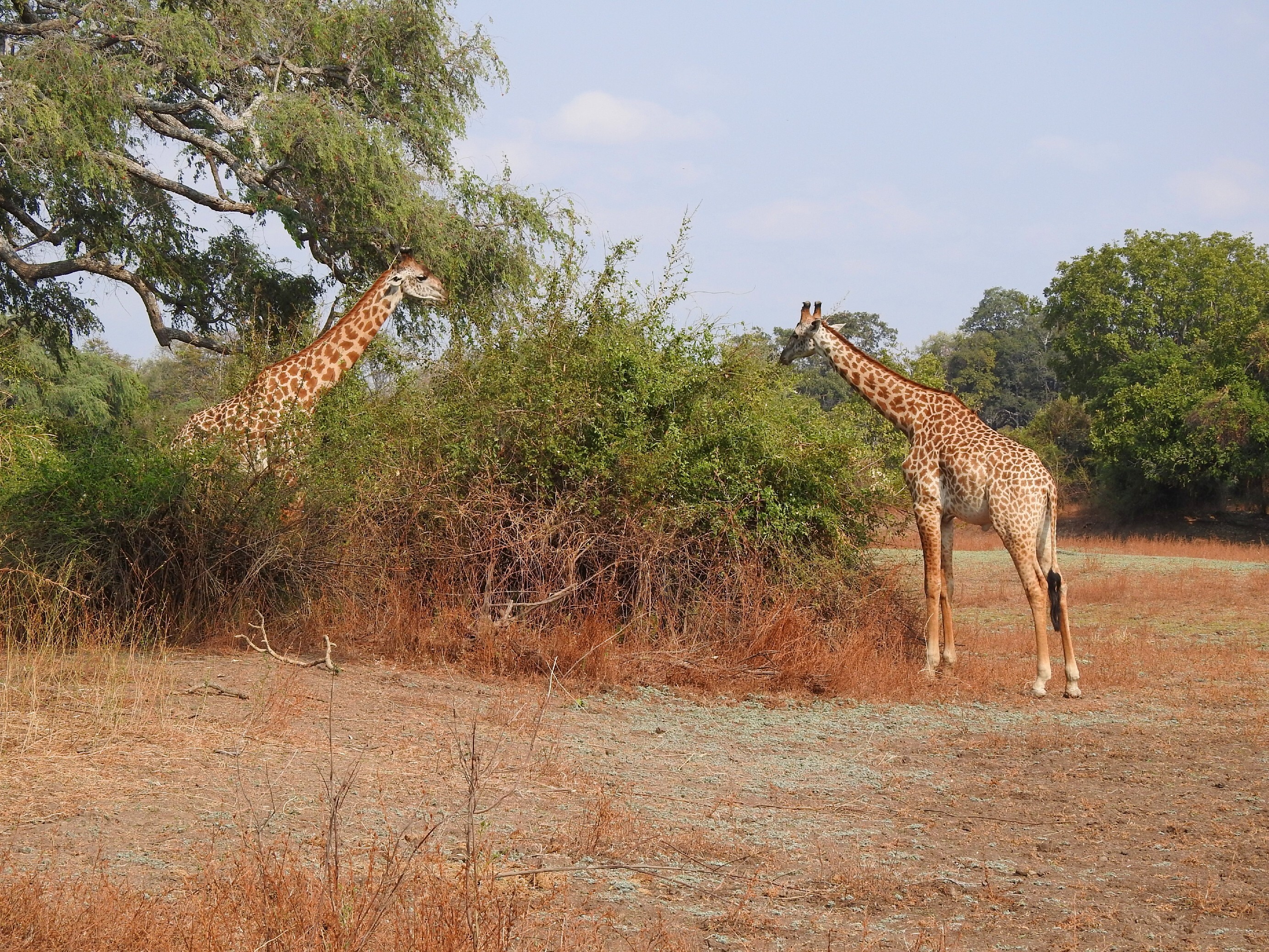
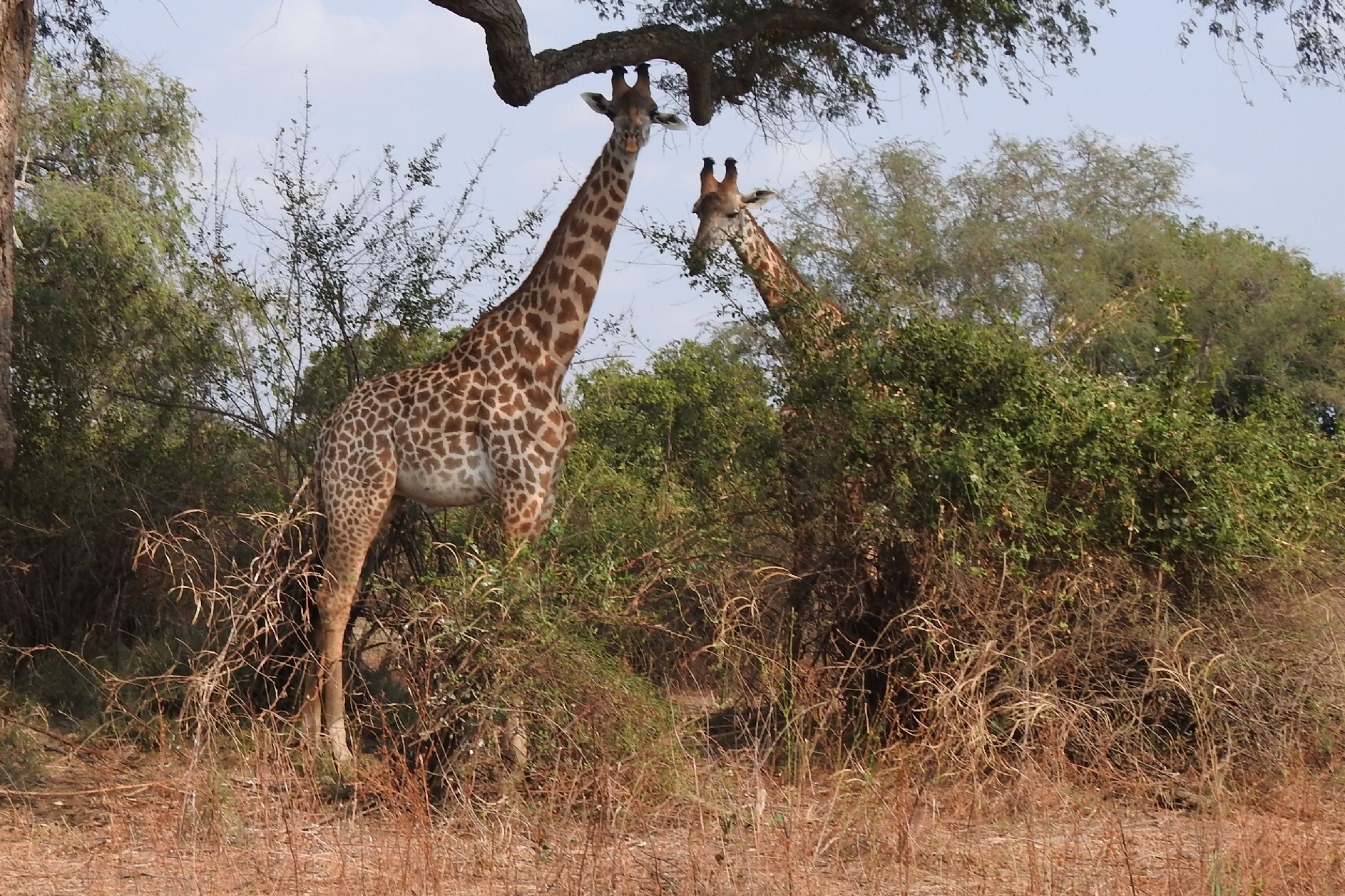
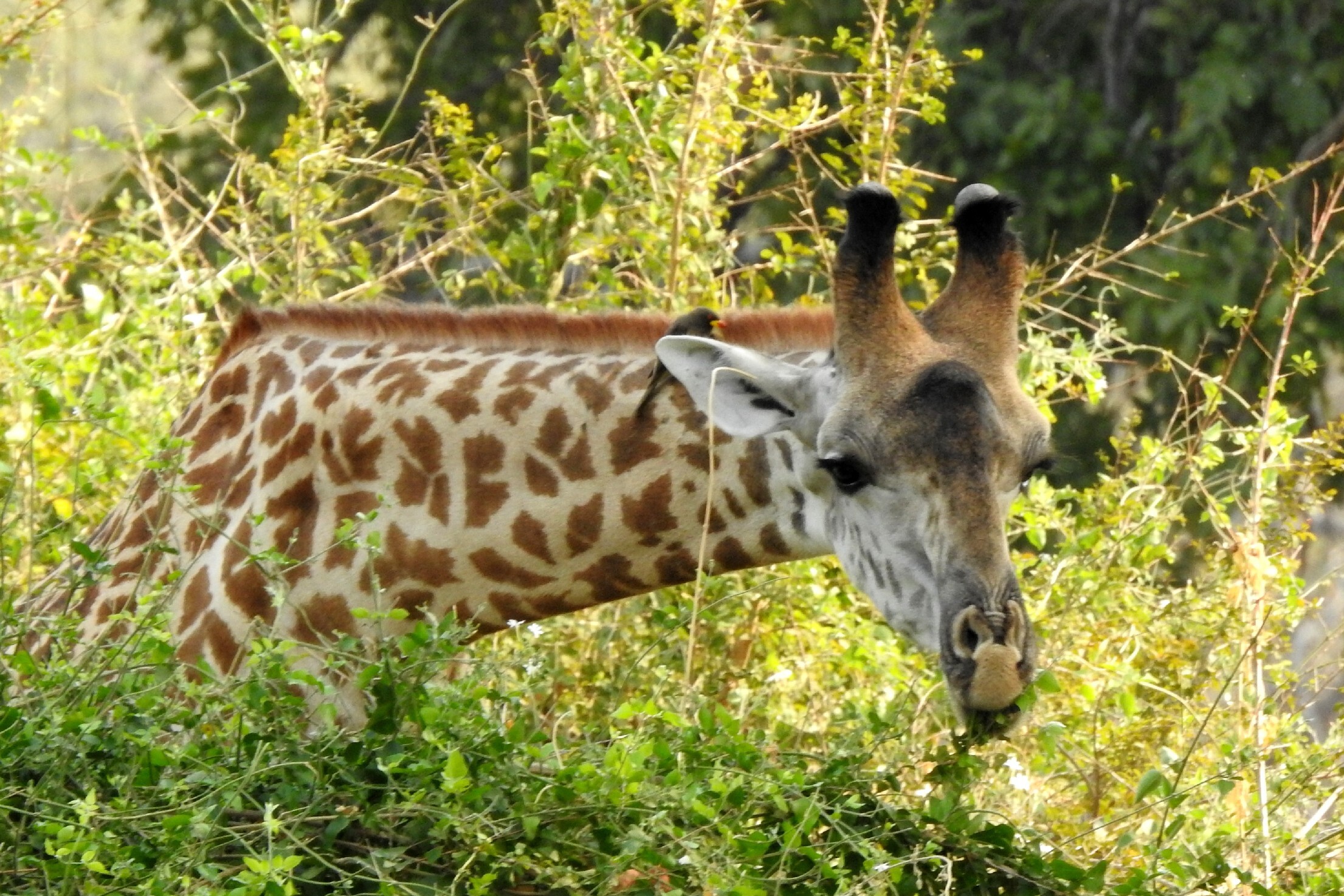
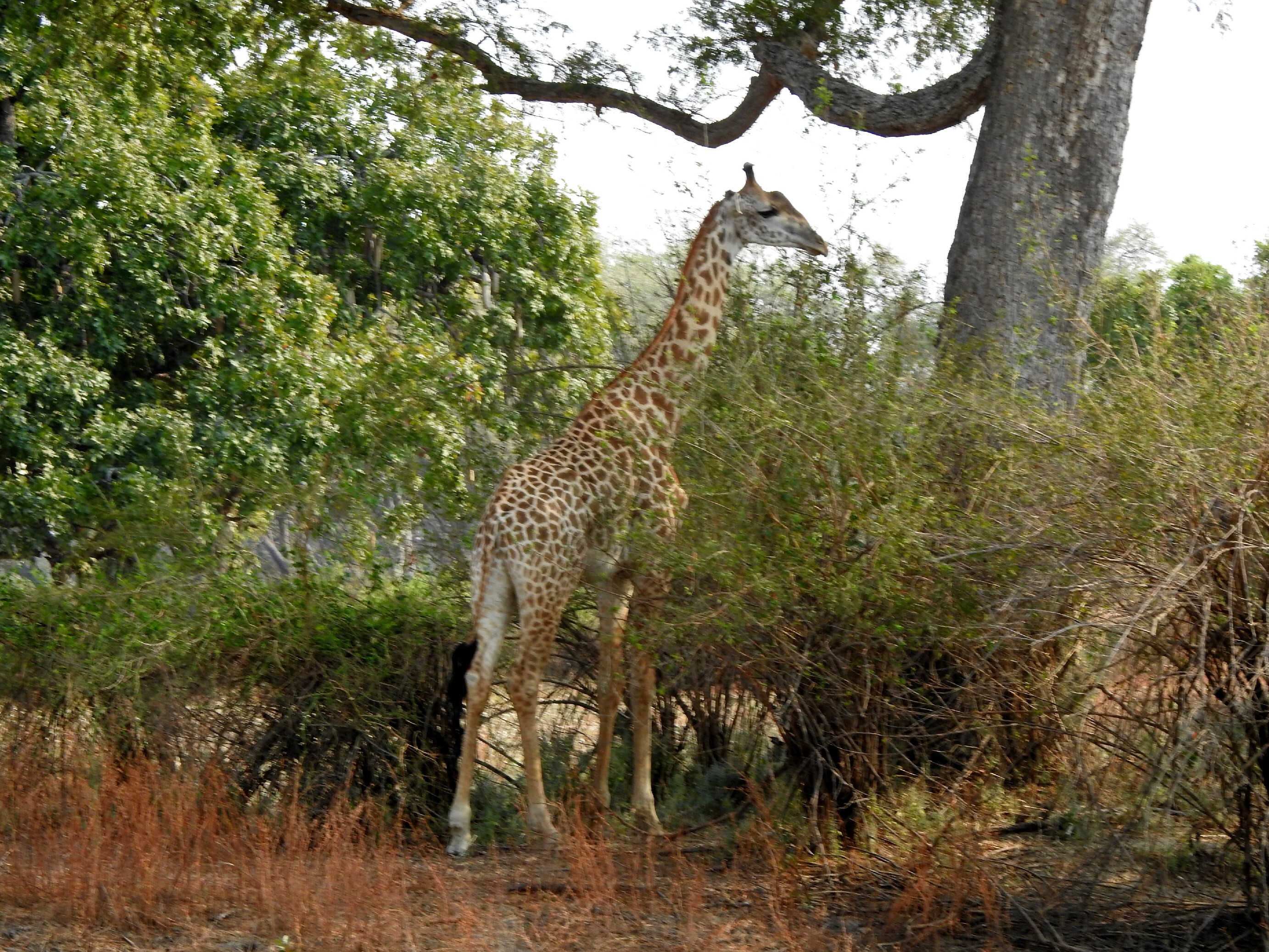
And finally, finally, for Fran, we encounter two giraffes that we could observe for a while (Thanks Simon!)
A lone wart hog

African grey hornbill

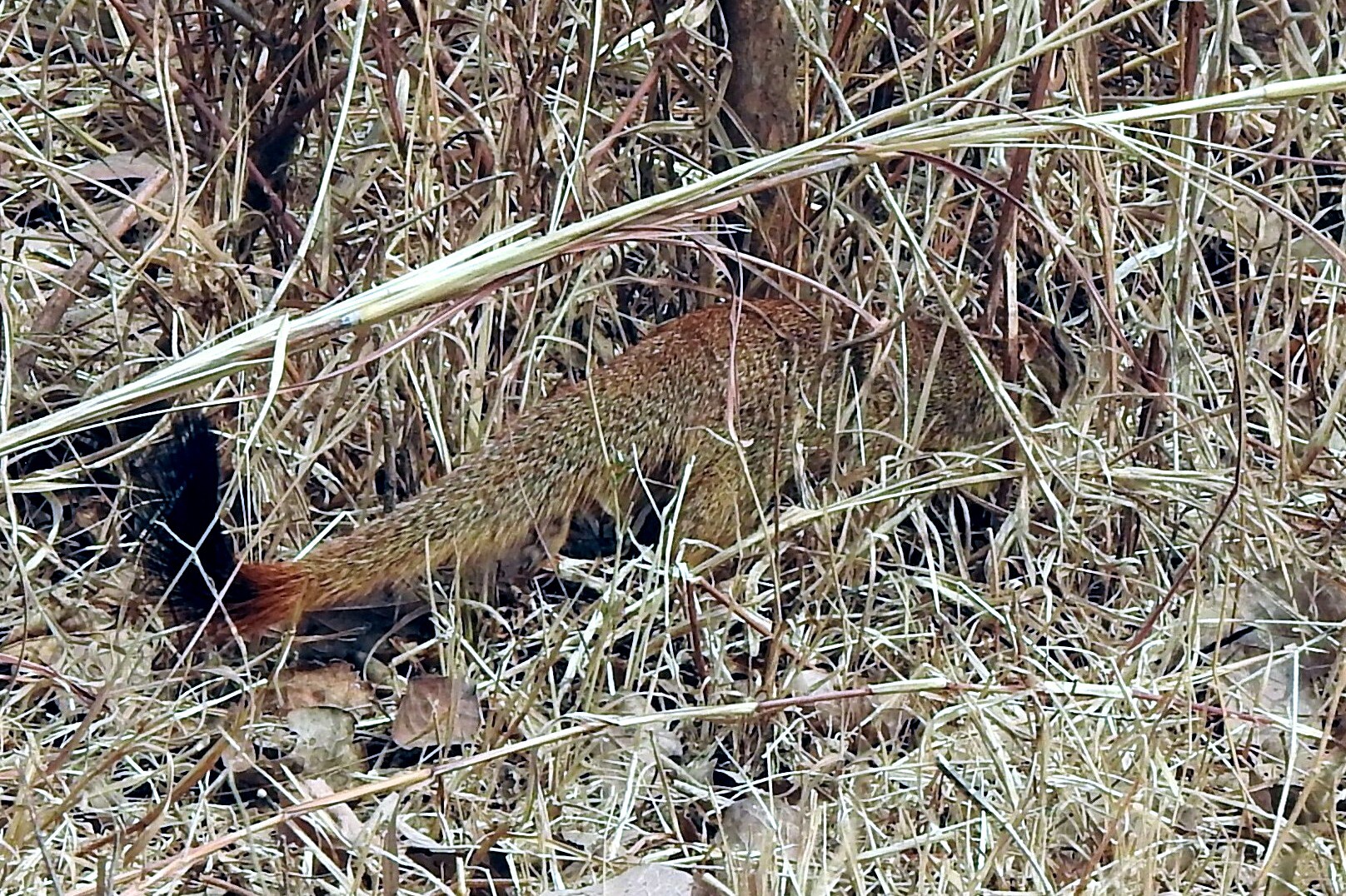
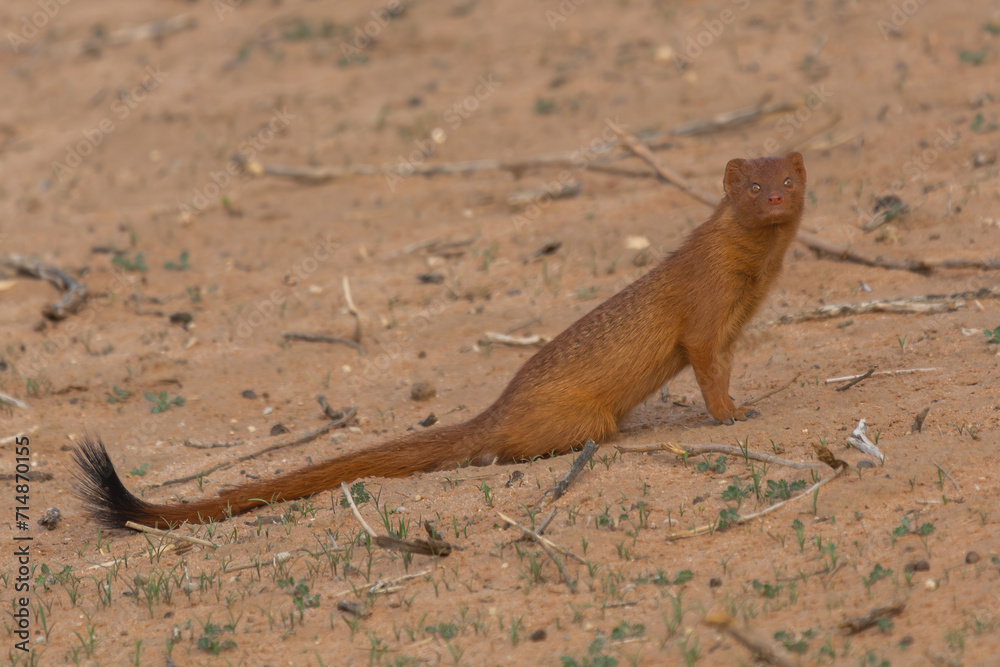
Slender Mongoose takes off into the grass:
This is a pic of what he looks like from online:
Hippos on shore of a watering hole with crocs nearby:


Jacanas
We left the lodge shortly after returning from the game drive; Fran quickly changed, we got online for a few minutes to check email and confirm our reservation at the AirBNB we’d booked (same complex as before in Lilongwe and we’ve also booked it for our last night in Malawi).
Today’s drive took us about 5 hours back to Lilongwe as the border took 12 minutes instead of nearly two hours as we didn’t have to import the car into Malawi as it was a Malawi plated vehicle. Alie, who had helped us deal with the border a few days ago, we there and we used his help once again and we’re sure that saved us a bunch of time as getting stamped back into the country seemed to take as long as it took him to do the car paperwork!
Our eSim for Malawi began to work and we went online to Saily and managed to get full refunds for the Zambia data which we’d never been able to use. Good customer service points for them.
This time we have a studio apartment and we’d bought groceries before we left Zambia and made ourselves some dinner and had a quiet night trying to catch up on our sleep after so many early mornings of getting up at 5 to do have breakfast before our 6am game drives.
As we didn’t explore too much of Zambia, we’ll not do a fun facts here.


