
August 21st, 2026
Mozambique, officially the Republic of Mozambique, is a country in Southeast Africa bordered by the Indian Ocean to the east, Tanzania to the north, Malawi and Zambia to the northwest, Zimbabwe to the west, and Eswatini and South Africa to the south and southwest. The capital and largest city is Maputo.
It is roughly the size of Pakistan, approximately the size of the province of Alberta and one and a half times bigger than the state of Texas.
Between the 7th and 11th centuries, a series of Swahili port towns developed in the area, which contributed to the development of a distinct Swahili culture and dialect. In the late medieval period, these towns were frequented by traders from Somalia, Ethiopia, Egypt, Arabia, Persia, and India. The voyage of Vasco da Gama in 1498, marked the arrival of the Portuguese, who began a gradual process of colonization and settlement in 1505. After over four centuries of Portuguese rule, Mozambique gained independence in 1975. After only two years of independence, the country descended into an intense and protracted civil war lasting from 1977 to 1992. In 1994, Mozambique held its first multiparty elections and has since remained a relatively stable presidential republic, although it still faces a low-intensity insurgency mainly in the furthest regions from the southern capital and where Islam is dominant. A disputed election in 2024 resulted in massive protests across the country. Security forces responded with deadly force, arbitrary arrests resulting in widespread causalities and human rights violations.
Mozambique is endowed with rich and extensive natural resources. The country’s economy is based chiefly on fishery and agriculture with a growing industry of food and beverages, chemical manufacturing, aluminum and oil. The tourism sector is expanding.
The nation remains one of the poorest and most underdeveloped countries in the world, ranking low in measures of inequality and average life expectancy. It has suffered many years of civil war and a few coups.
Mozambique’s population consists of more than 2,000 ethnic groups and is composed overwhelmingly of Bantu peoples. However, the only official language in the country is Portuguese, which is spoken in urban areas as a first or second language by most, and generally as a linqua franca between younger Mozambicans with access to formal education. However, 46 languages are spoken in the country. The most popular religion is Christianity, with significant minorities following Islam and African traditional religions.
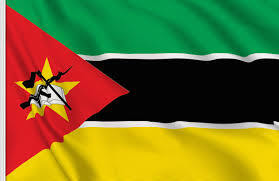
The flag was adopted in 1983, and is known for being the only national flag featuring a modern firearm, an AK-47, symbolizing defense and vigilance. Its design reflects the nation’s history of anti-colonial struggle, socialist ideals, and rich natural landscape, using colors that represent the land, the African continent, its mineral wealth, and peace.
Currency: The Mozambique Metical (MZN) – $0.016 USD and $0.022 CAD
Gas: 93.69 MZN per litre; roughly $5.56 USD per gallon
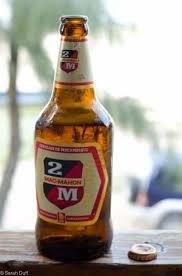
Beer: Dois M
License plate:

The flight landed in Maputo at 11:30 (instead of 9:30) as we had taxied in Joburg for what seemed like a half hour before taking off. We went through immigration with our visas, got our bags and went outside to find the rental car people. They, naturally, weren’t there and Doug called and they said another 5 minutes. We’d been told to call when we landed and they’d be there in 20 minutes – so much for that.
While we waited, Doug got some cash and then Quick Cars showed up and we did the paperwork and confirmed we had want we needed to cross the border into Eswatini next week. All seemed in order and off we went to our hotel. Fran had been in touch with them throughout all this and they said the security guard would be waiting to let us in.
We found the hotel, after crossing the Maputo-Katembe bridge and the security guard was sleeping outside – shame! It took a minute or so of banging and shouting for Fran to wake him up, but he opened the gate and took us to our room advising we can register in the morning. By 1am we were in bed.
Wonna Bay Vila Lodge gave us the wrong room but it was too late to argue about it upon arrival so we dealt with it in the morning. The issue was Fran had specifically booked a ground floor room and we had to climb a number of steps to get to the new room they gave us. Reception said they’d given us an upgrade but Fran insisted we wanted the room we booked so she wouldn’t have to deal with stairs. After breakfast, we packed up and they put us in a ground floor room.

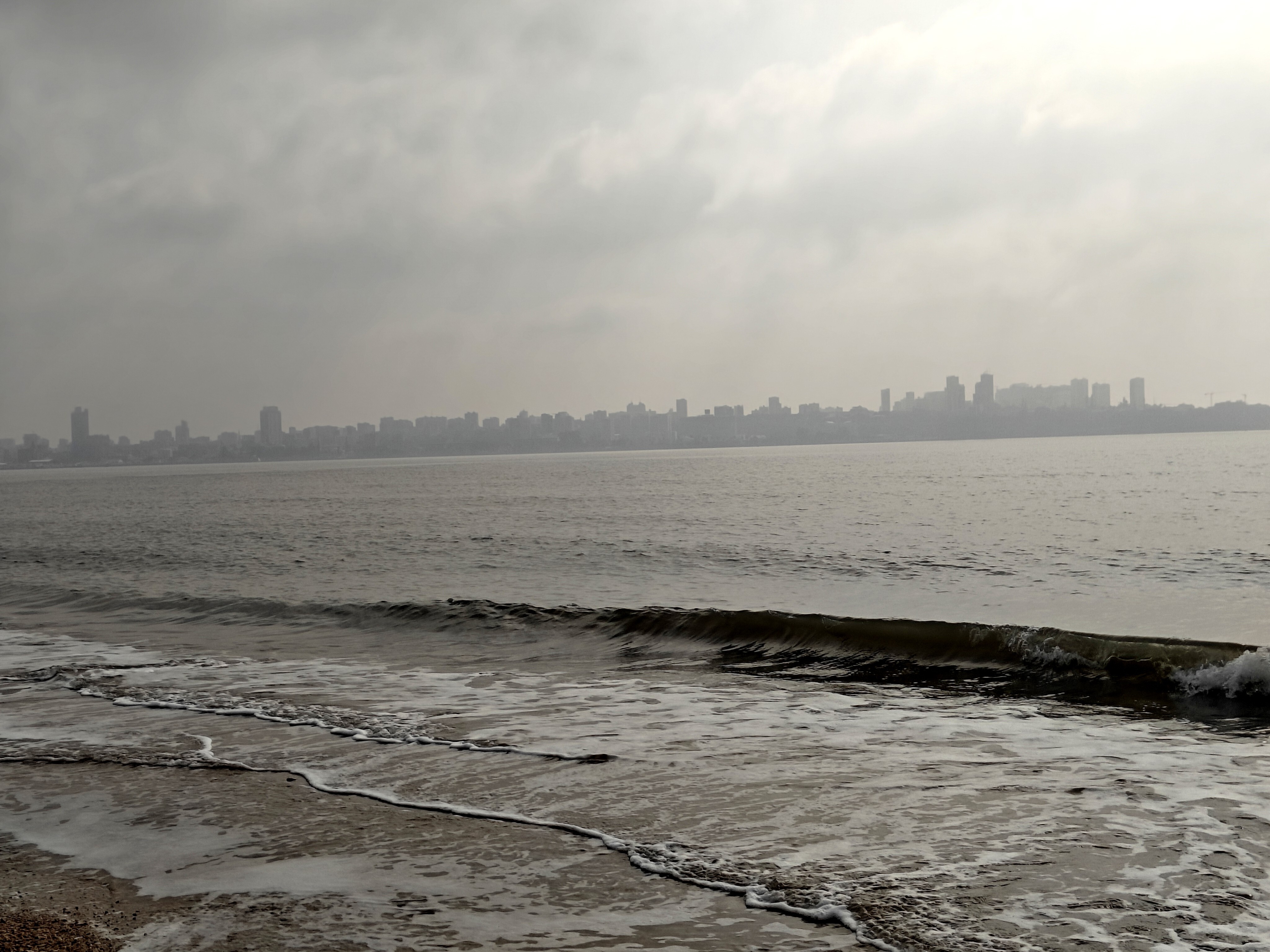
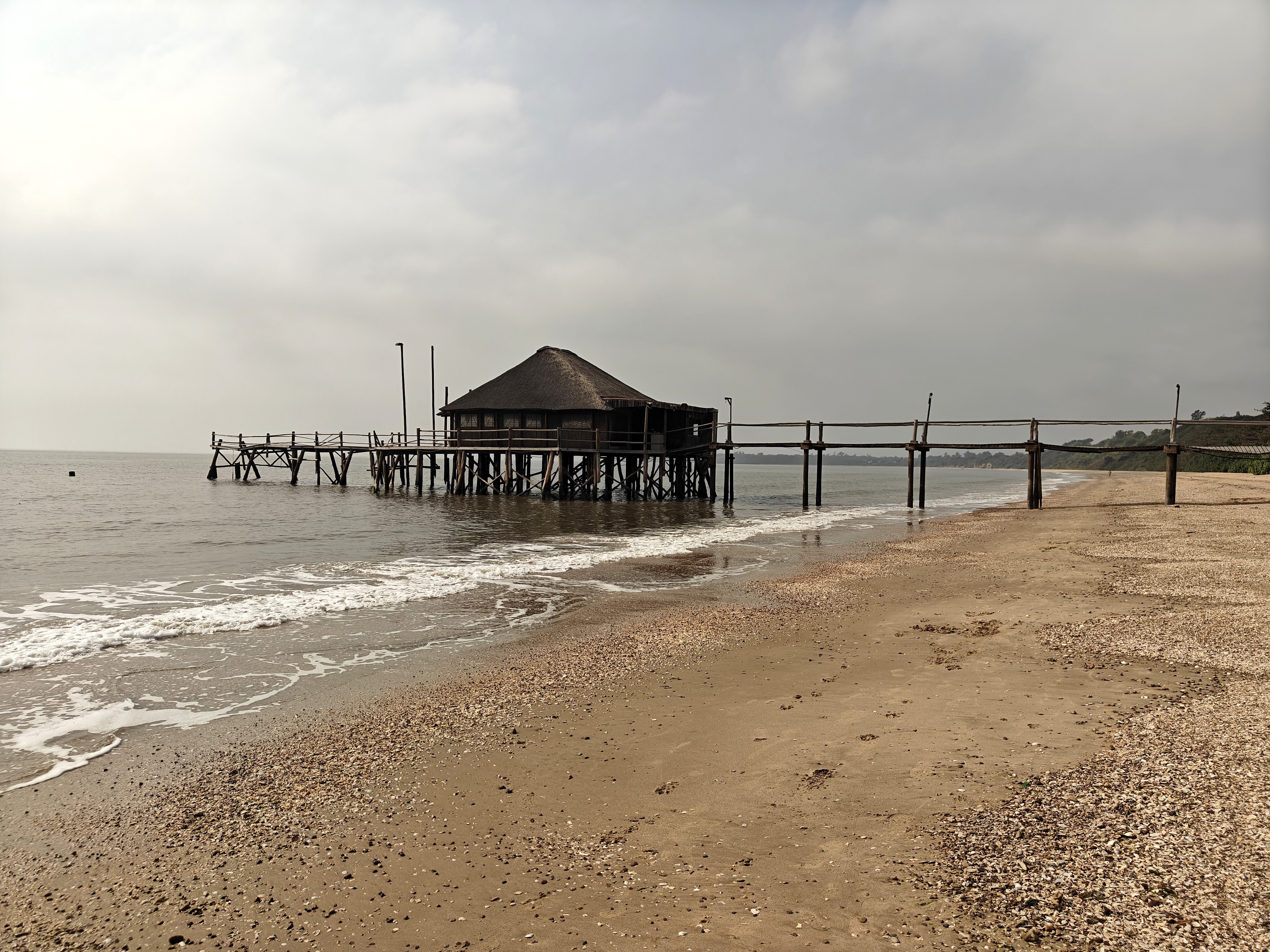
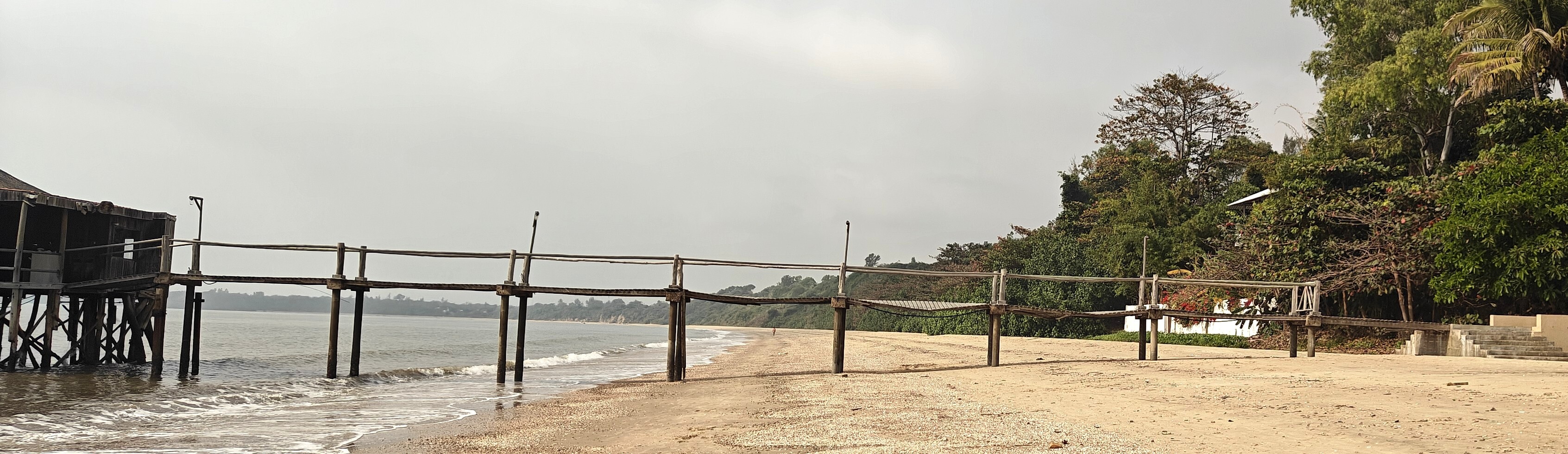
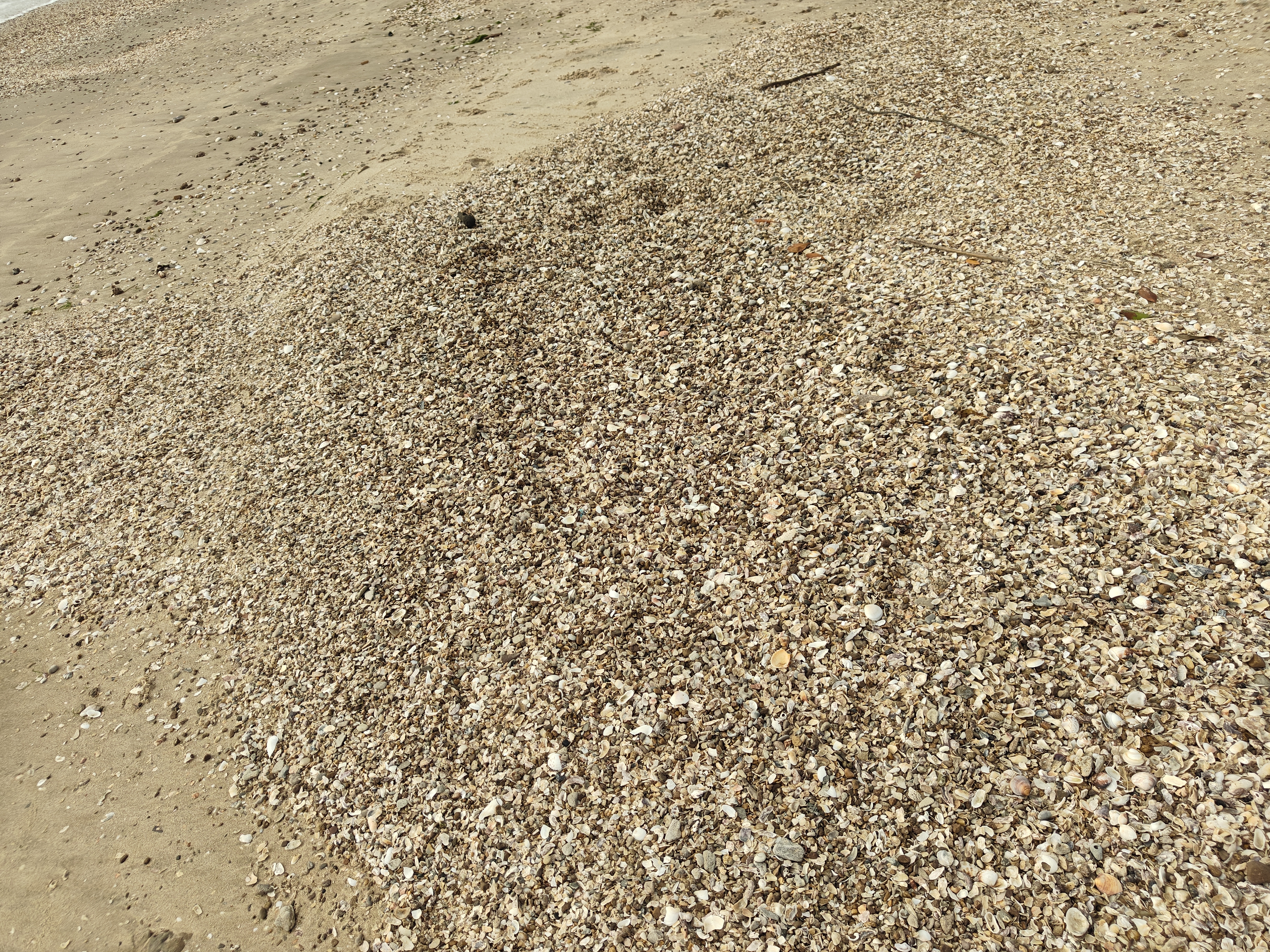
Next day we were both very wiped out; Doug didn’t even want to go for a jog! We decided to make this a chill day and after breakfast we did a short walk down to the beach (a block away) to check it out. It has lovely soft sand, but no shade and at the water line are millions of shells. It was hard pack at the shore and we strolled a bit until Fran said “uncle”. There was a falling down pier and some fisherman at the beach. We could just make out the city skyline in the fog/smog and barely make out the bridge.
The area where we are staying is a quiet area, with a mix of lower and middle class homes, some empty lots and unfinished buildings but it’s away from the hustle and bustle. The owner, Melo and his wife, Rashida, are very kind as are the staff.
We returned to the room and Fran began work on the blog while Doug went for a walk looking for Coke Zero. He later found some kids to make balloon animals for and then found out the hotel bar has Coke Zero! As we wanted water and beer in the room, we later took the car to an ATM as he’d not been able to withdraw enough last night and found a shop with 3 Coke Zero’s left and bought them as well as a 2L bottle of water and a six pack of beer.
Upon returning to the hotel, Fran laid down for an hour but didn’t really sleep. Doug went to read by the pool and when she came out, we moved to the restaurant and had a light lunch and chatted with the owner. We also pre-ordered dinner as the kitchen closes at 6 tonight.
We read for a while, chilled in the room and went for dinner at 5:45 before going to bed. We both slept well and Sunday morning, Doug went for his long run and we had a late breakfast before heading out to explore the city.
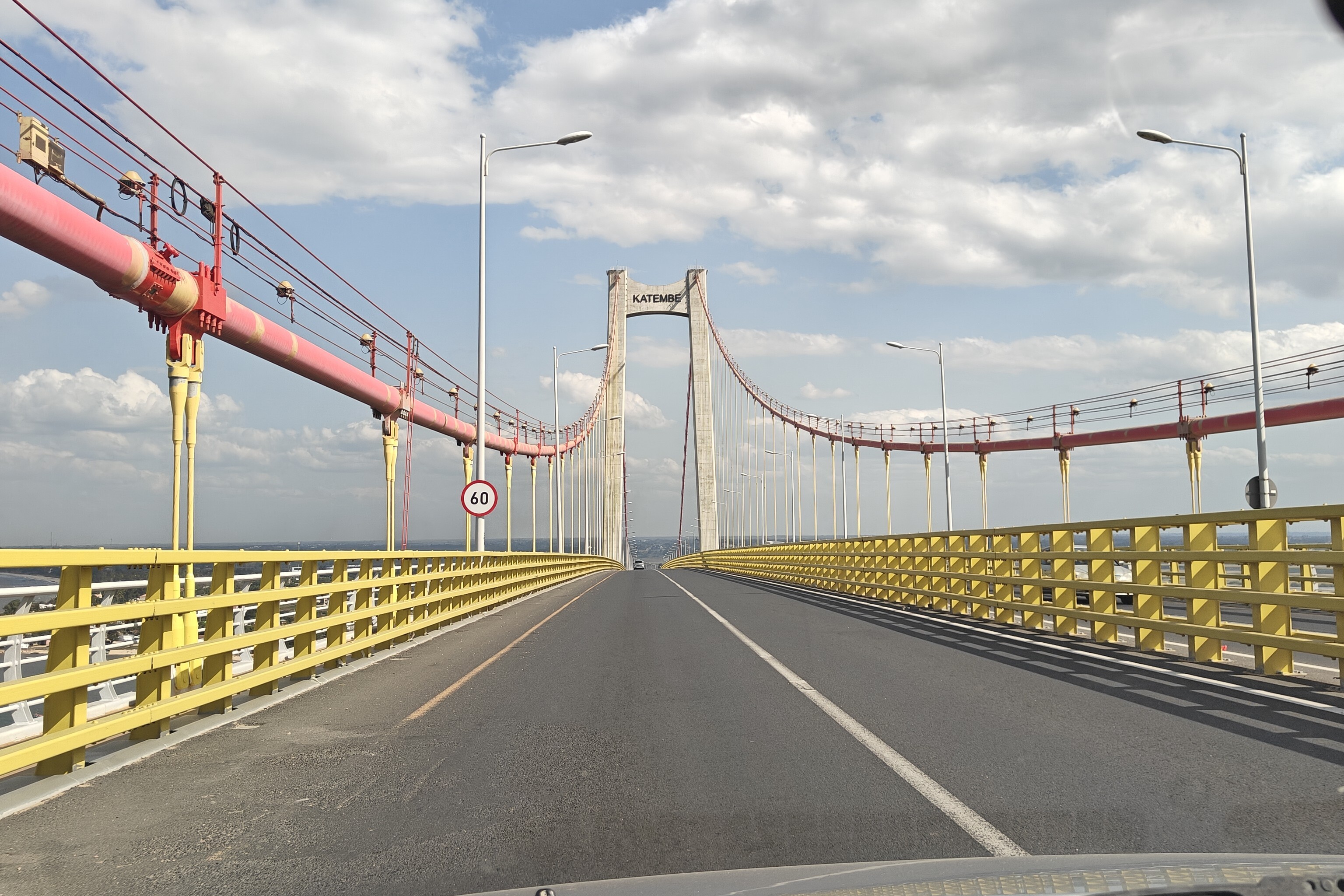
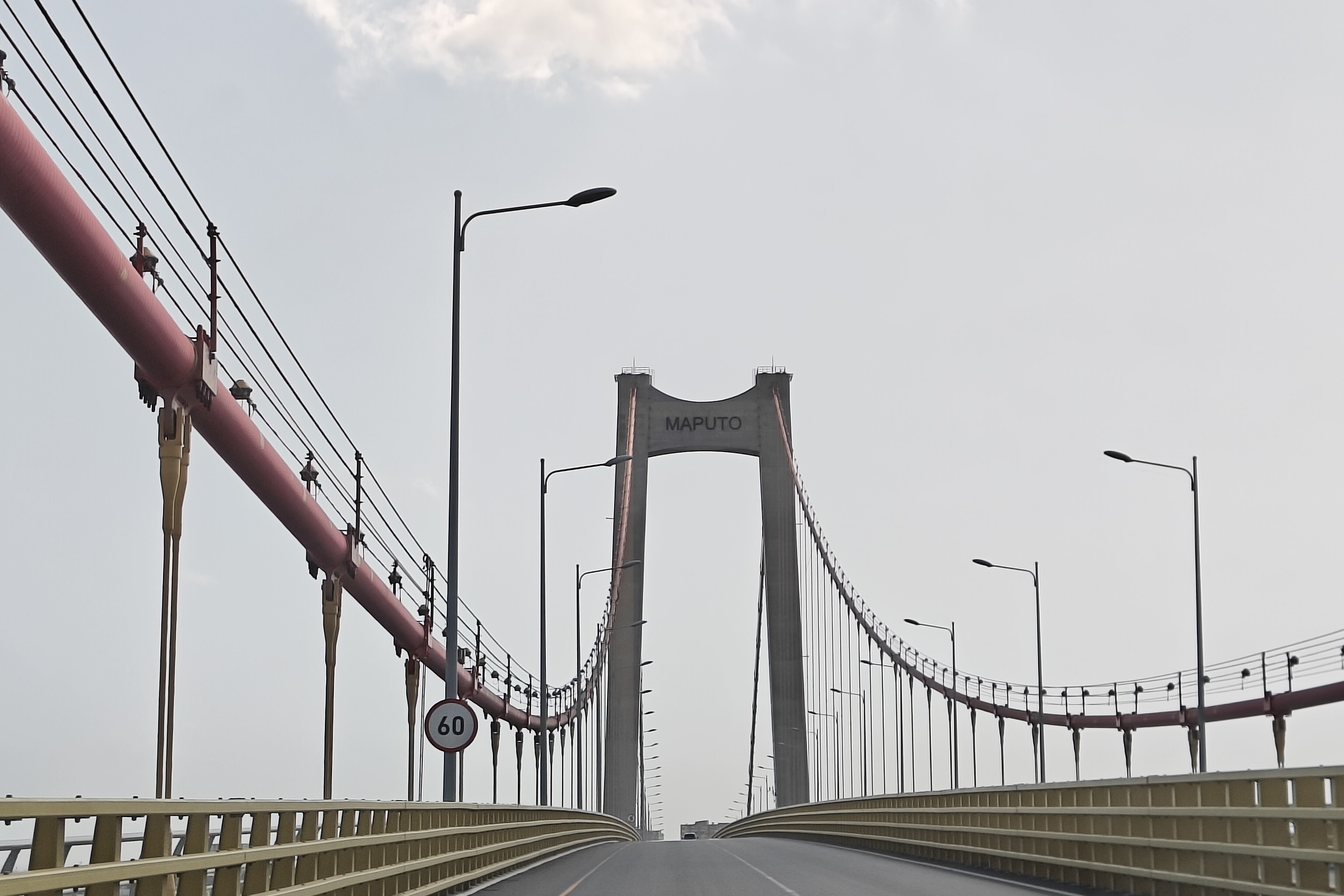
It was not a long drive into the city at all; we had to cross the Maputo-Katembe bridge again and in no time we were downtown. (This bridge as a 100 MZN ($1.57 USD) toll each time you cross it.)

The Maputo–Katembe bridge is a suspension bridge across Maputo Bay. The bridge connects the Mozambican capital Maputo on the northern bank with its the suburb of Katembe on the southern bank. Construction work began in 2014 and the bridge officially opened 10 November 2018. The construction work and the financing was carried out by the Chinese.
The bridge is the longest suspension bridge on the African continent, replacing the Matadi Bridge, completed in 1983 in the Congo for this distinction.
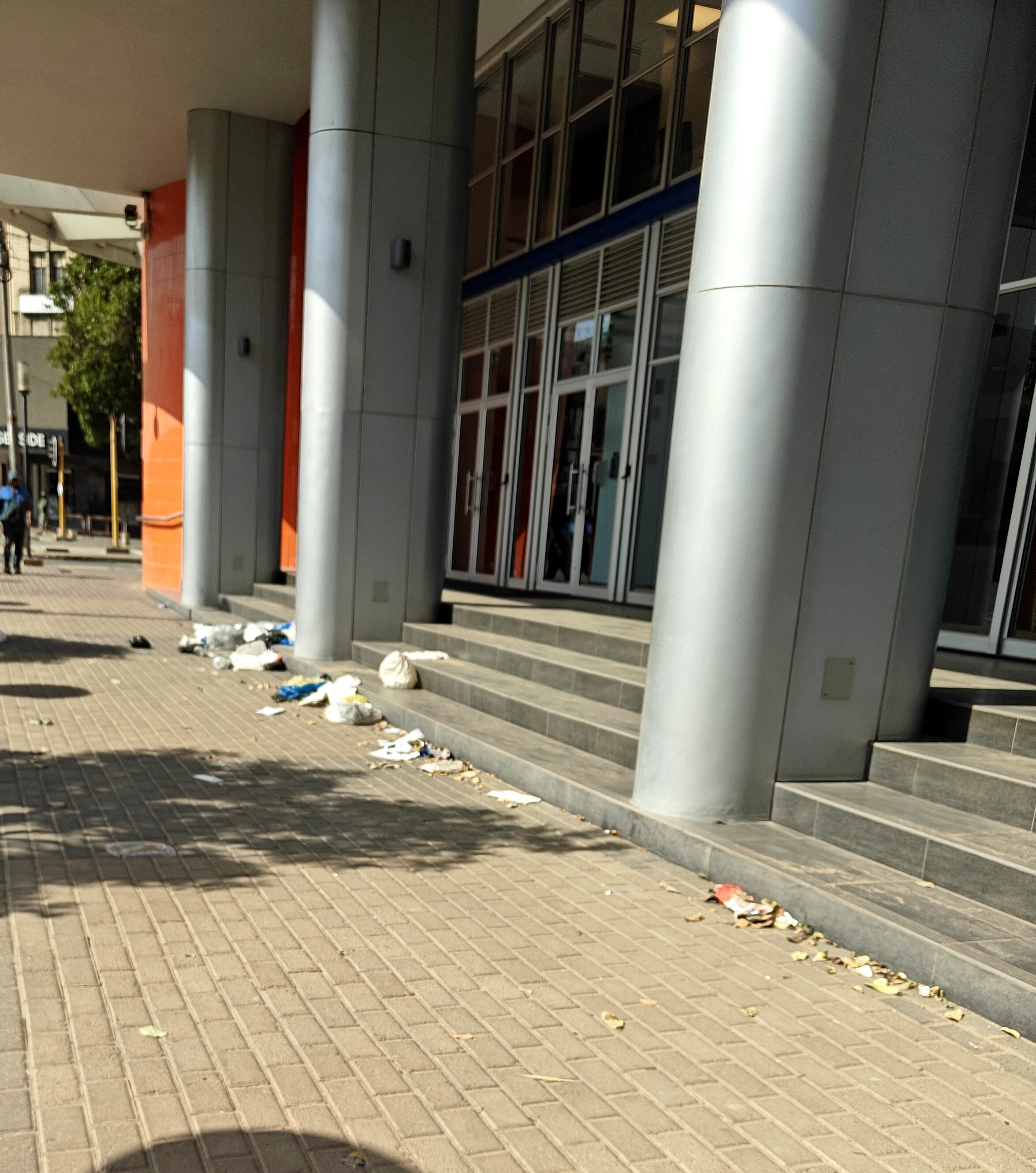
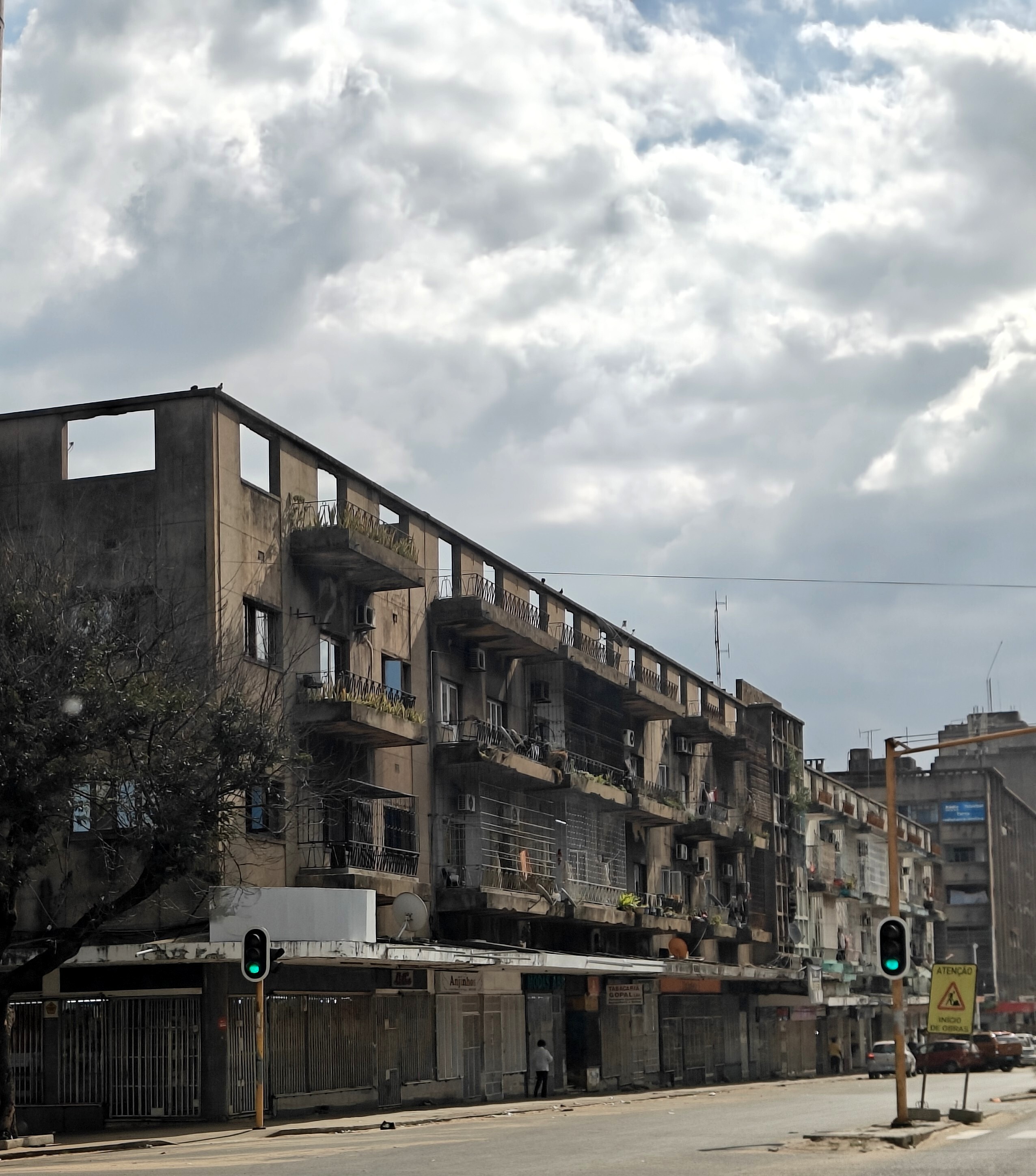
Well, the city is pretty ugly, with very few people around other than street people and vendors hawking their wares. Being Sunday, all offices were closed as were most shops so it made it even sadder. There is garbage everywhere and lots of streets under construction.
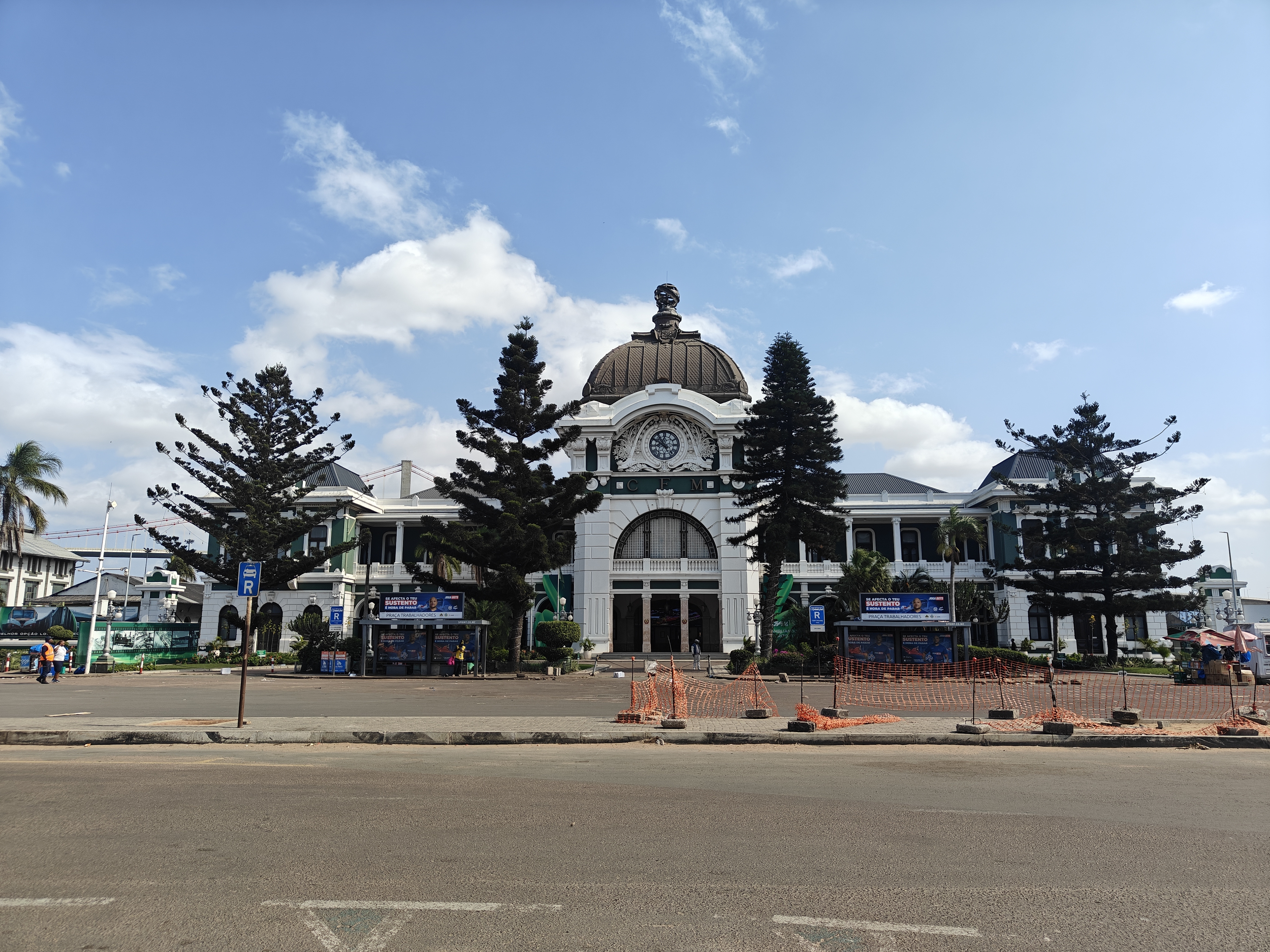
The owner/manager of our hotel had told us it was fairly safe to park our car down by the train station so we did that, in fact we parked right outside a bank with an ATM with a security guard. We walked over to the train station (ranked in the top ten of beautiful train stations in the world). It’s a nice green and white colonial building that has a museum inside it. We were not interested in that but told the fellow who tried to get us to come in, we might check it out later when we return to get our car.

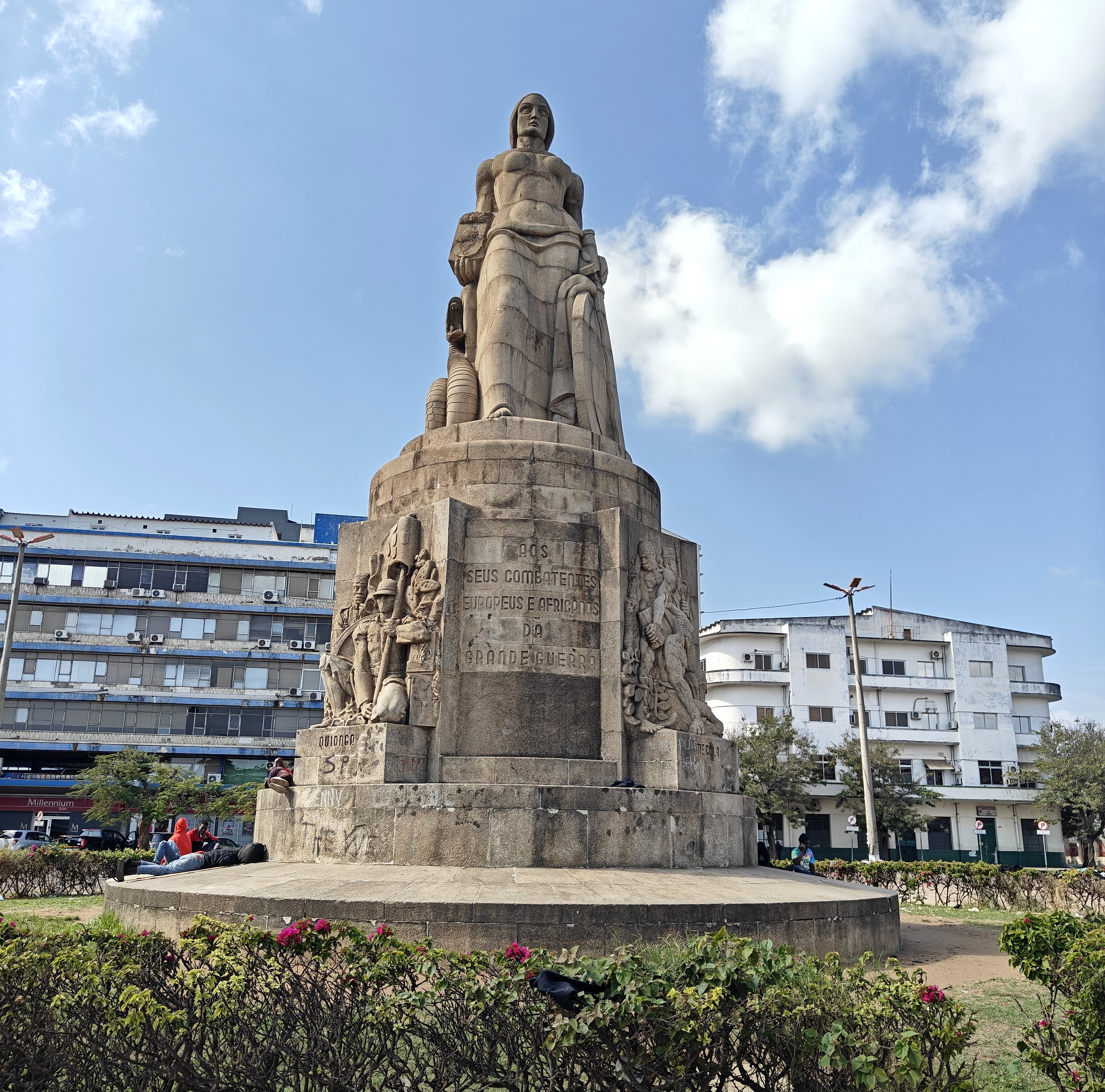
We saw the Praça del Trabalhadores – a war memorial to those who died in WWI. It’s a statue of Athena holding a book, a sword and there’s a mamba snake beside her.
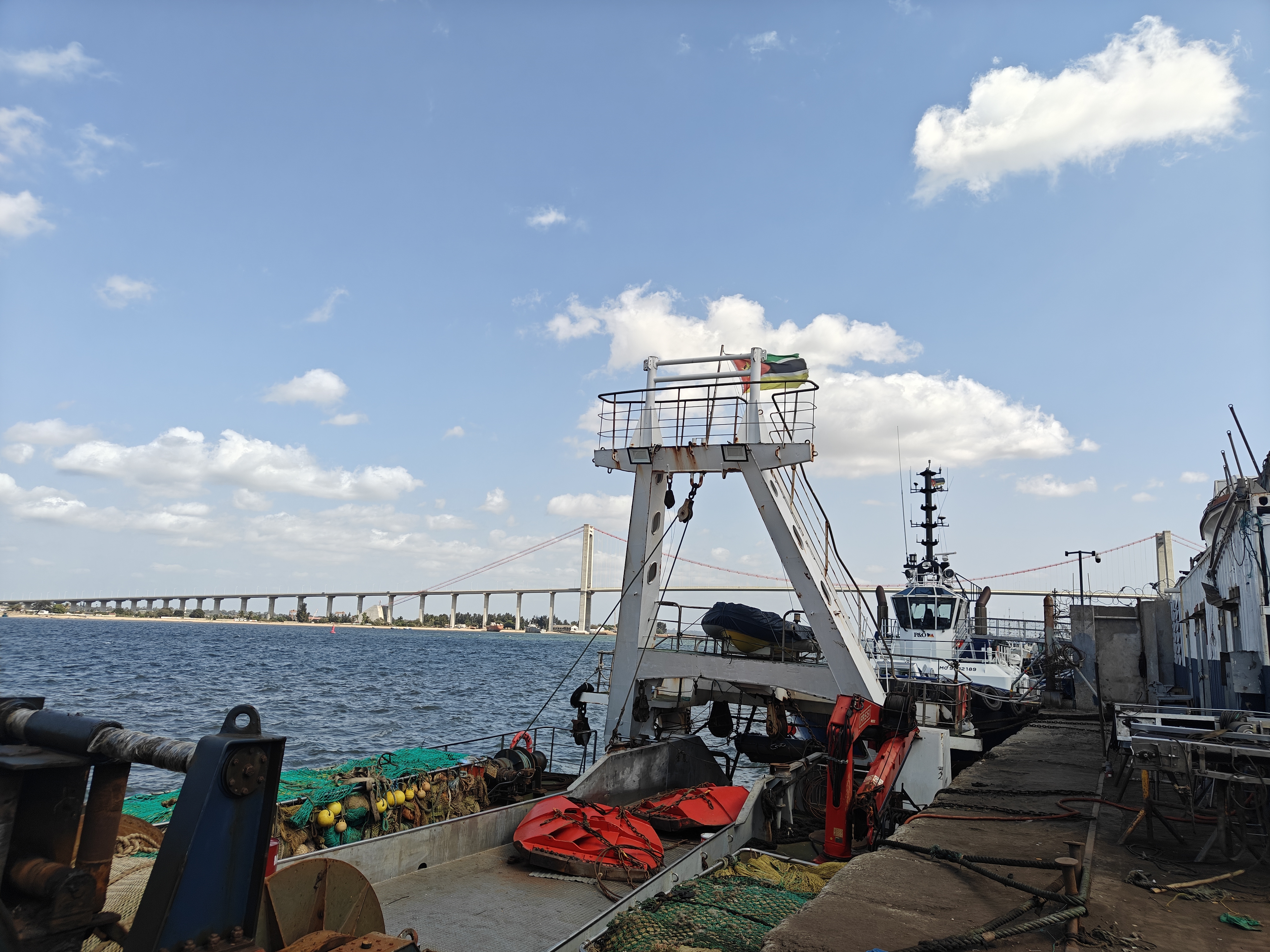
We had been wanting to see about getting a good photo of the bridge but from the beach where we are staying it’s far away. There’s didn’t seem to be a good spot. We walked over to the port and asked if we could come in and see the bridge. They let us but still there were a good number of obstructions:
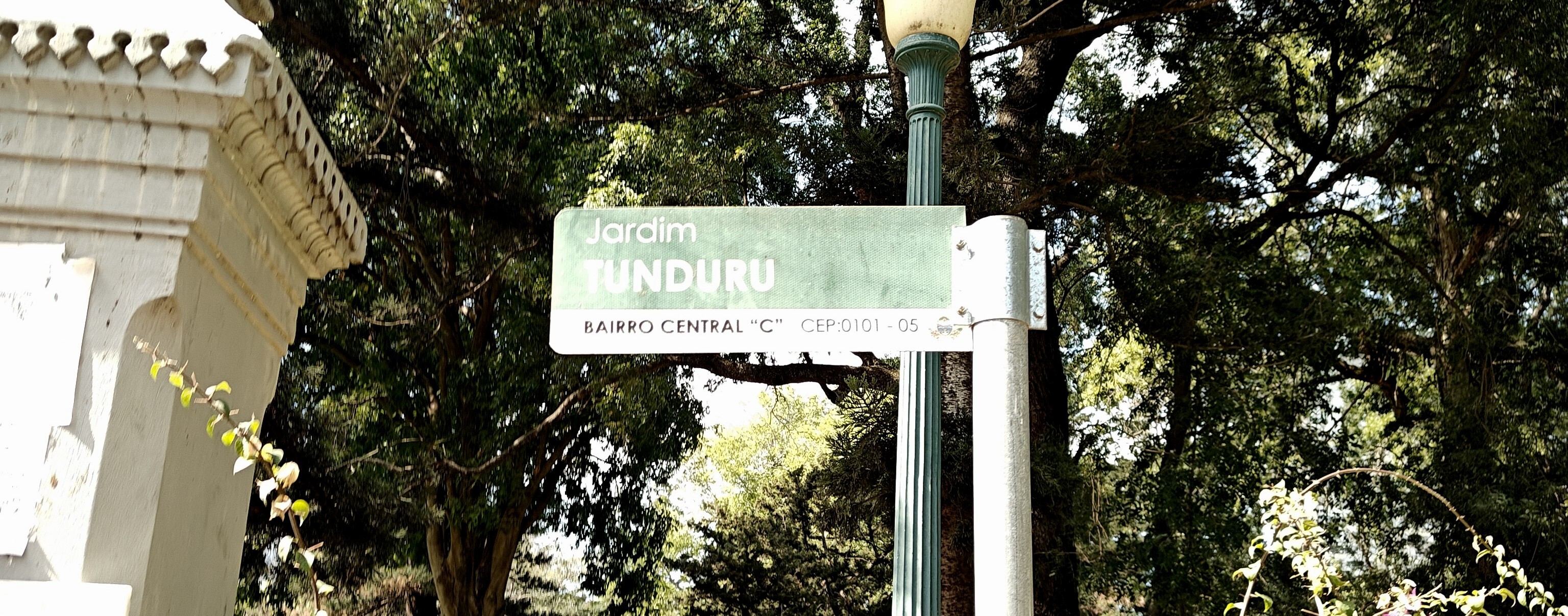
We went to the botanical gardens to check out the fruit bats.

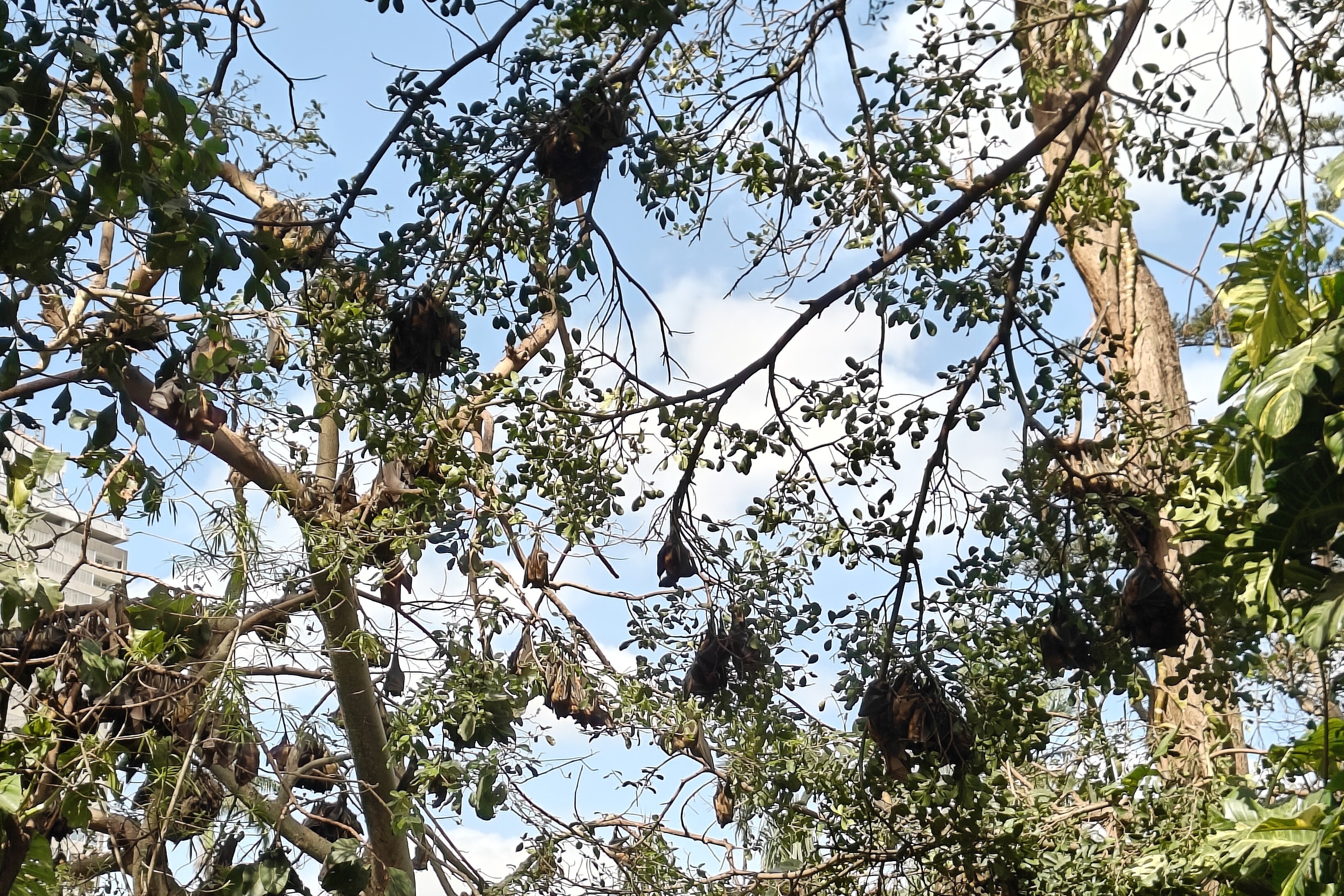
These Straw-colored fruit bats, which are large African mega-bats with wingspans reaching up to 75 cm (30 inches). They act as essential pollinators and seed dispersers for native trees and plants across the region. The urban colony faces local pressures, including harassment from invasive alien species like house crows, but the gardens remain a safe and tranquil daytime refuge to observe them.
We are saddened to say this was the highlight of our day!
We saw the giant statue of Samora Michel
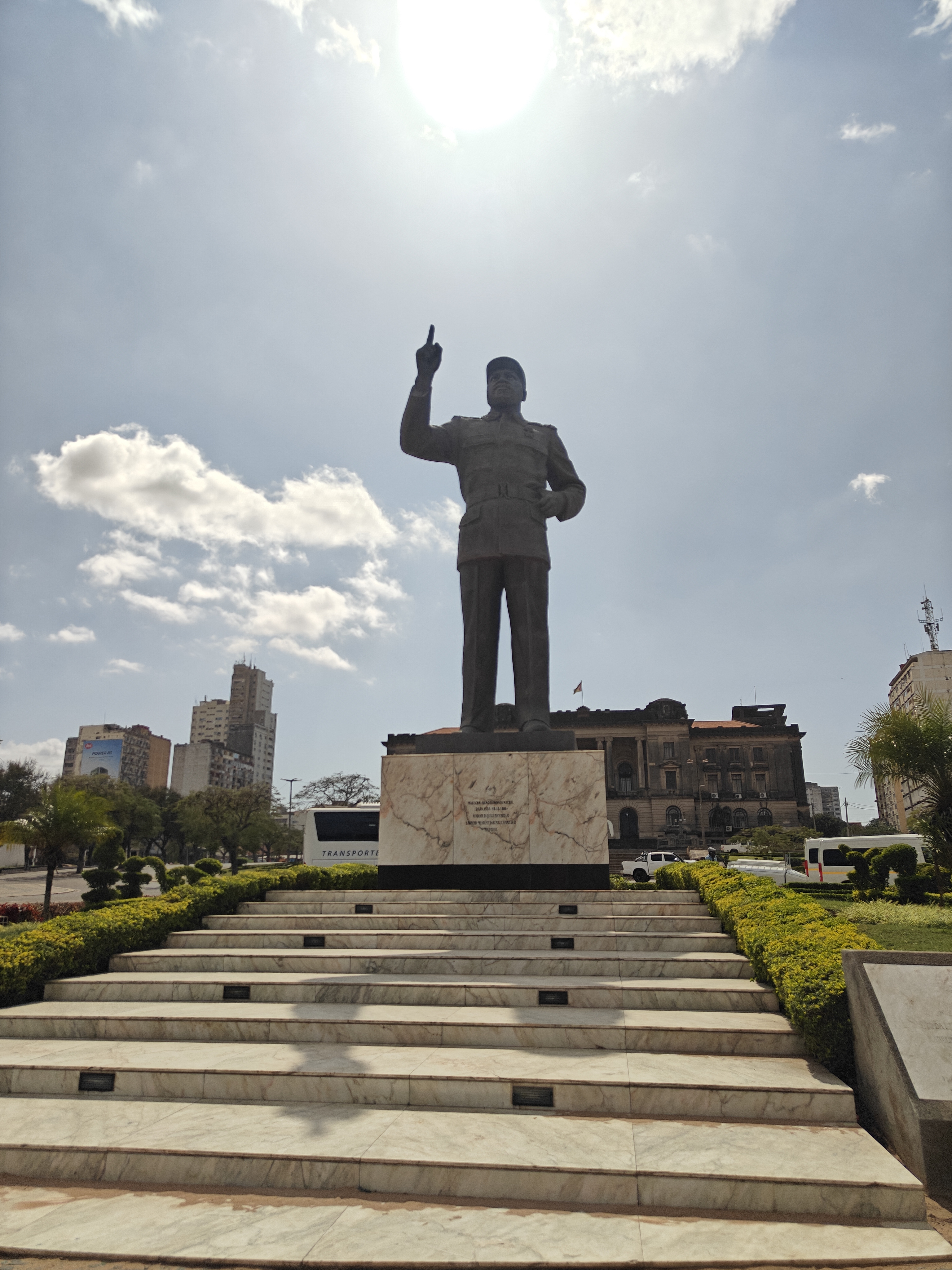
Samora Moisés Machel (1933–986) was a Mozambican politician and revolutionary who served as the first president of the country after independence in 1975 until his death in the a plane crash in 1986 which had killed 34 people, including several Mozambican ministers and government officials. Machel was a socialist in the tradition of Marxism-Leninism.
city hall

the white cathedral

the Iron House – not a good design in a country that is too hot in summer and too cool in winter to live in such a building!

Franco cultural centre:

the fortress:

we returned to the train station and walked inside to check it and there wasn’t much to see. A young man offered to guide us through the museum but we passed.
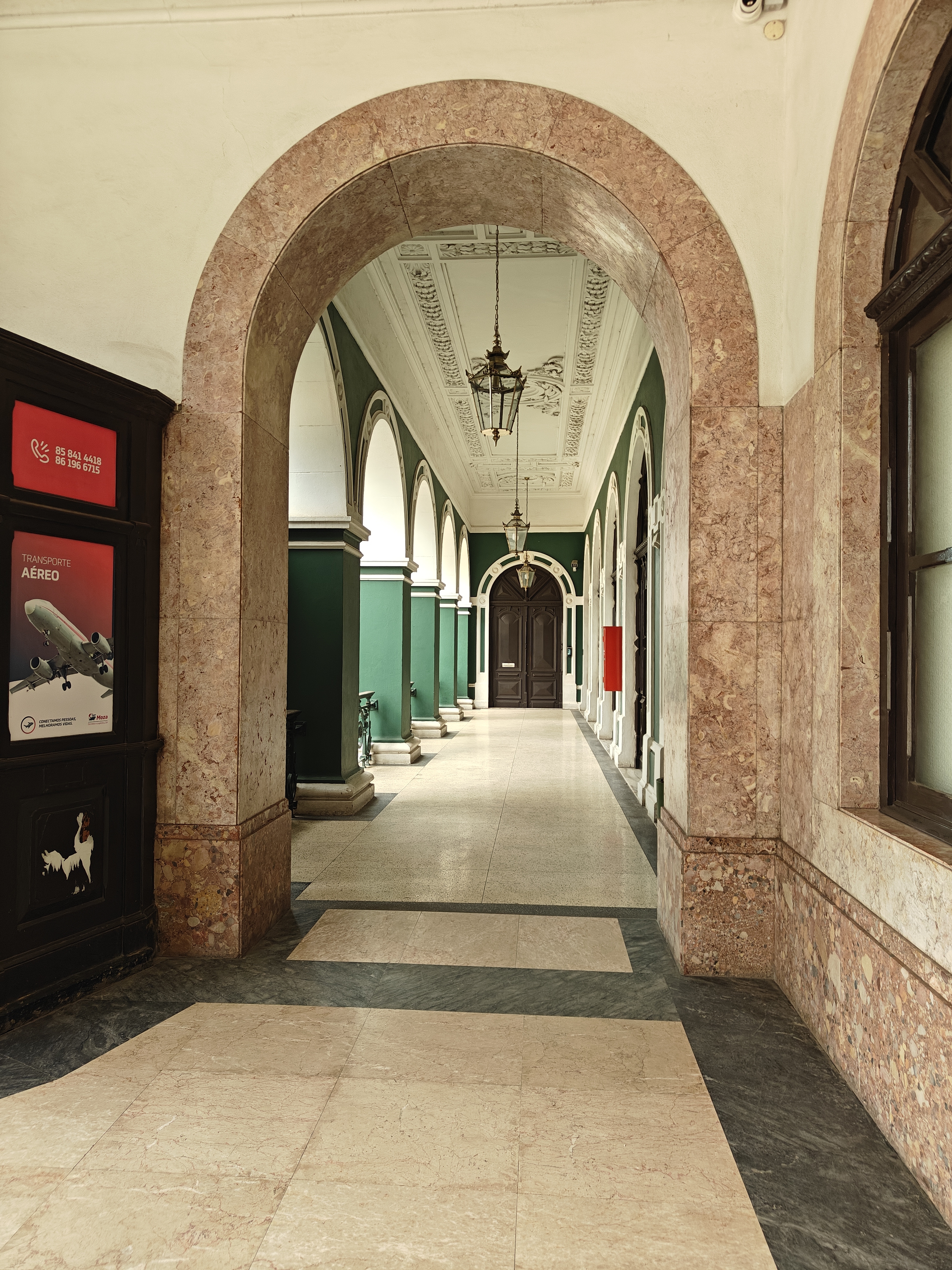
However he did tell us some info about the Athena statue.
The local oral tradition and urban legend completely reinterpreted the sculpture, giving birth to the famous folklore of the snake lady. According to legend, a massive, highly venomous snake lived in the large acacia trees in the square. It routinely attacked and killed people who tried to rest or pass beneath the shade. A brave local woman (often said to be from Katembe) decided to rid the community of the beast. She cooked a large pot of thick, boiling-hot porridge and balanced it right on her head. She walked calmly beneath the tree where the monster lurked. When the creature lunged down to bite her head, it plunged straight into the scalding hot pot and died instantly. The community celebrated her as a heroine, and the statue holding the serpent commemorates this legendary victory in the hearts of locals rather than the official colonial war narrative.
After returning to the car, (which the security guard at the ATM had watched over for us – Doug tipped him) we drove over to see the Presidential Palace but it was very well hidden behind the department of defense so we headed up Avenida Marginal which runs along the sea and drove up to the Costa do Sol to see the beach up there. We stopped once to get out of the car and the sand has a fair bit of garbage and things in it so not so pleasant and the water was quite choppy. It did seem this is where many of the city’s citizens spend their Sunday as there are a good number of cars and people parked along this road.
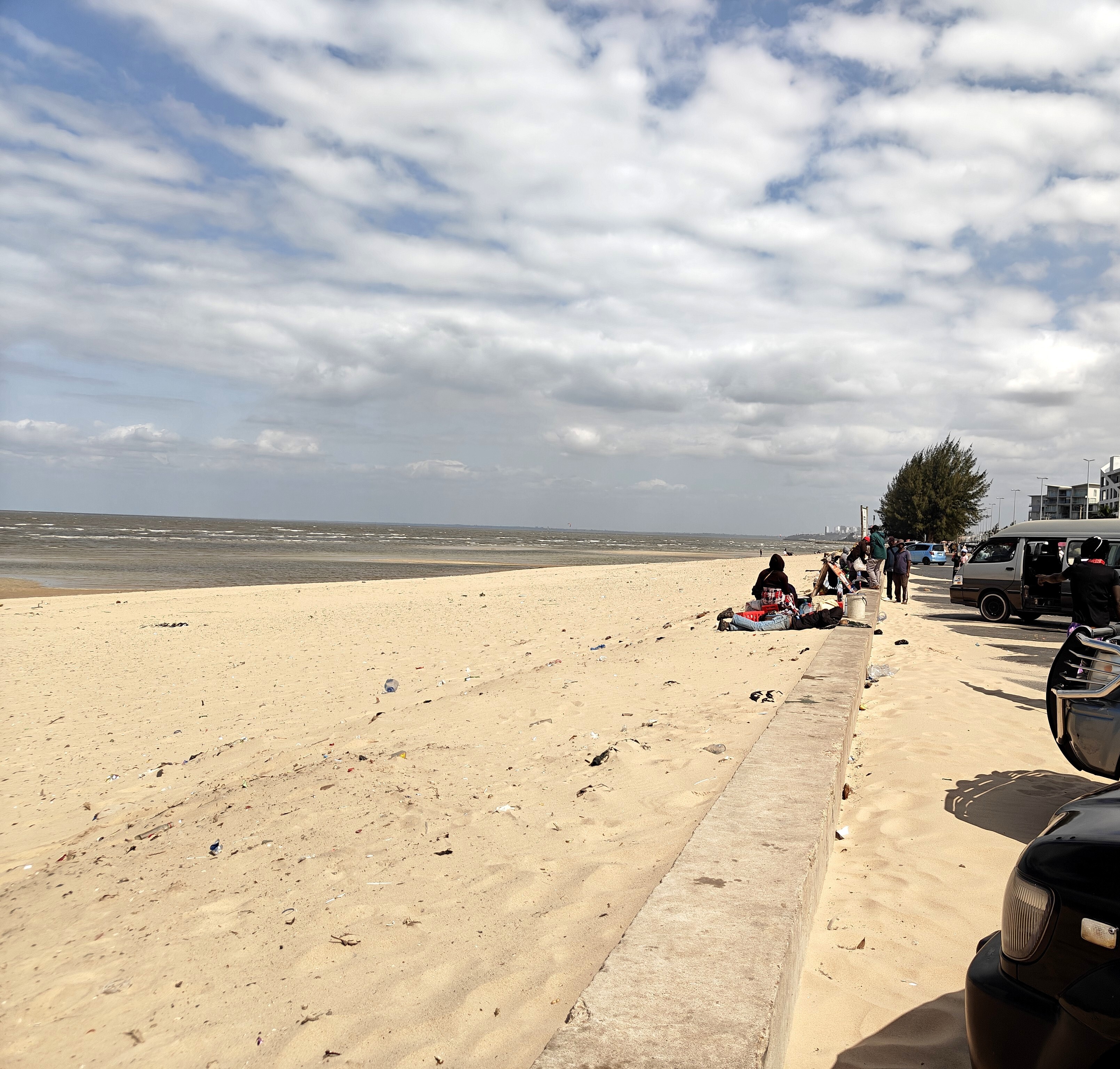
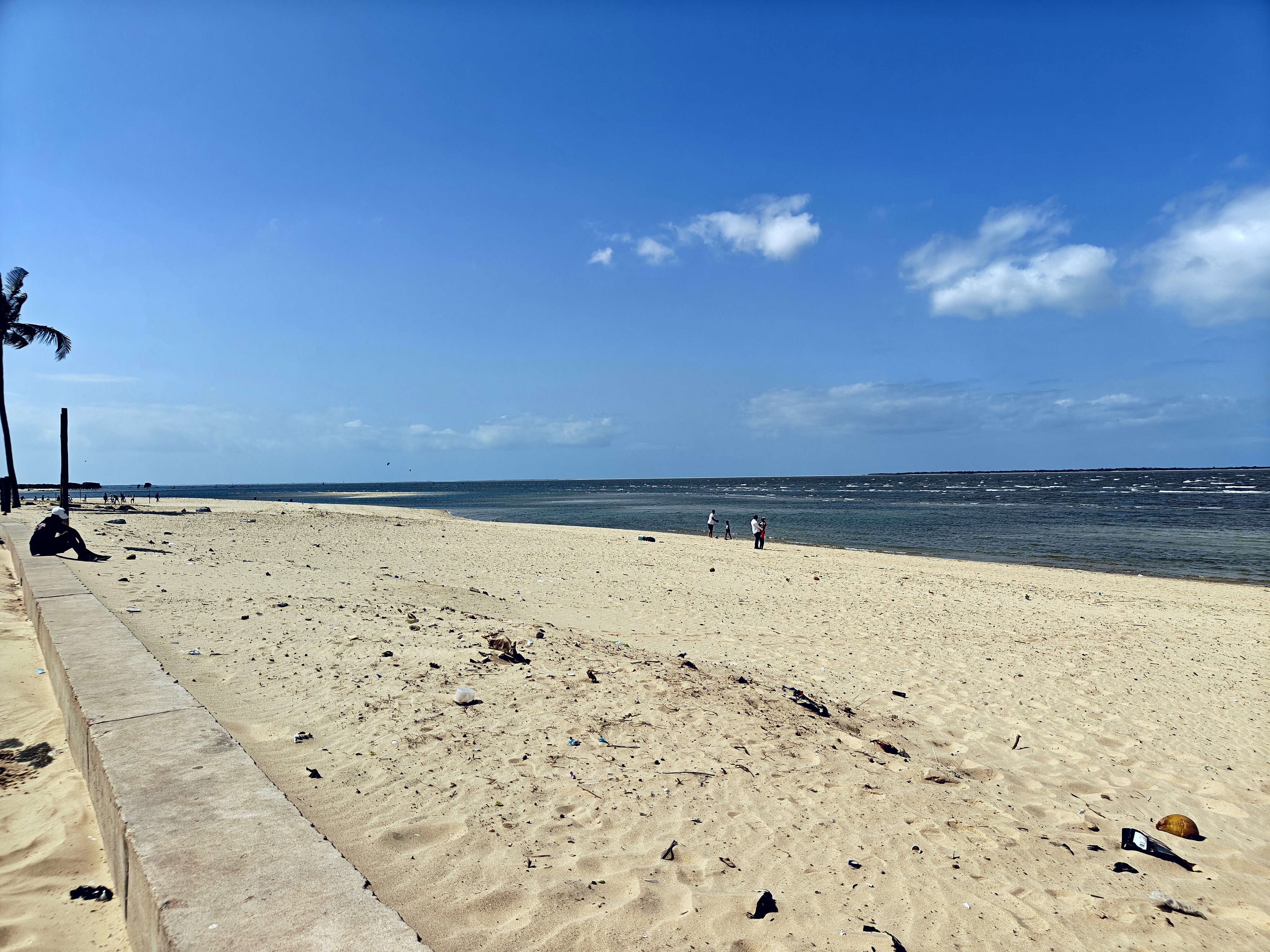
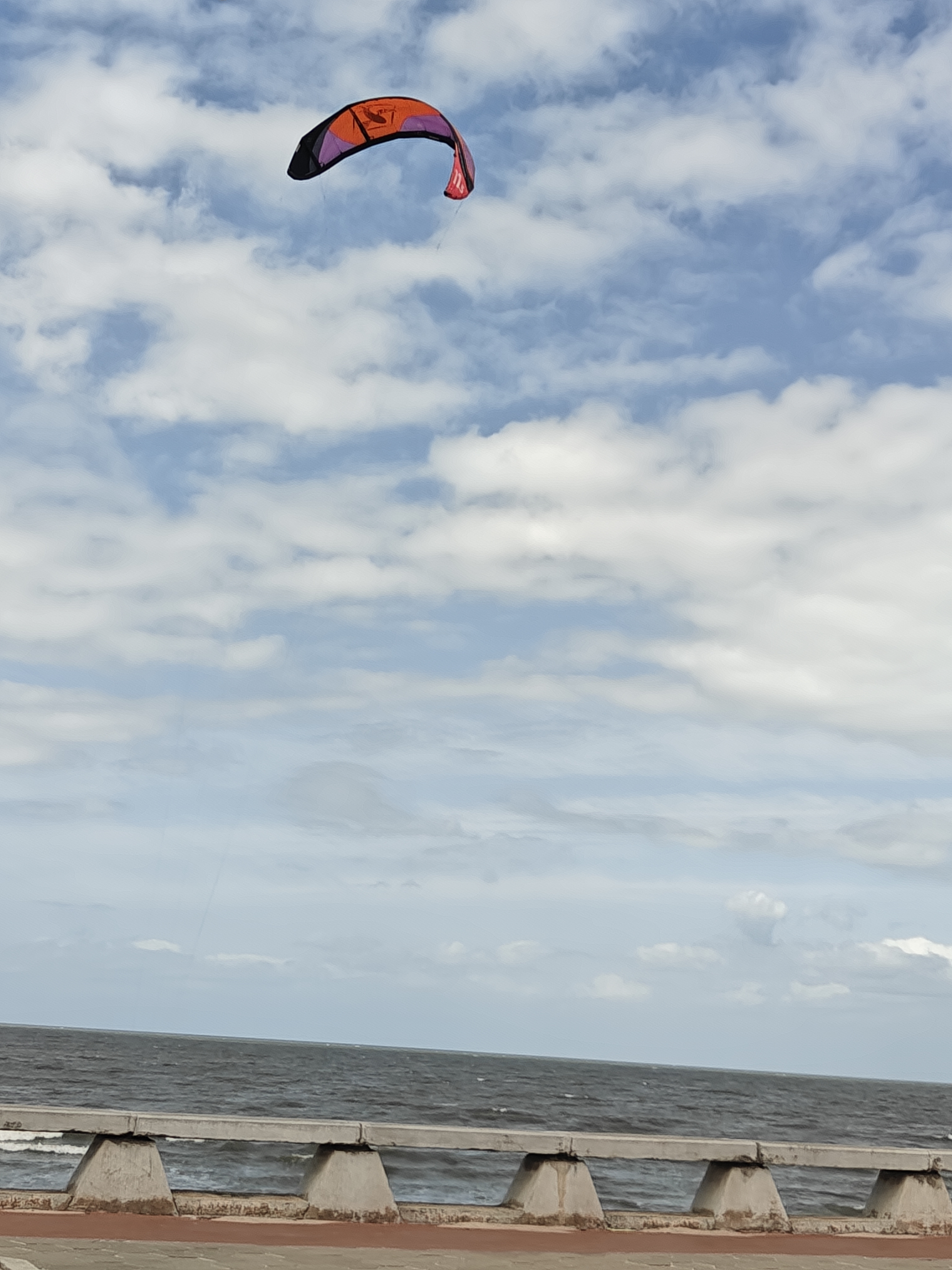 In the street:

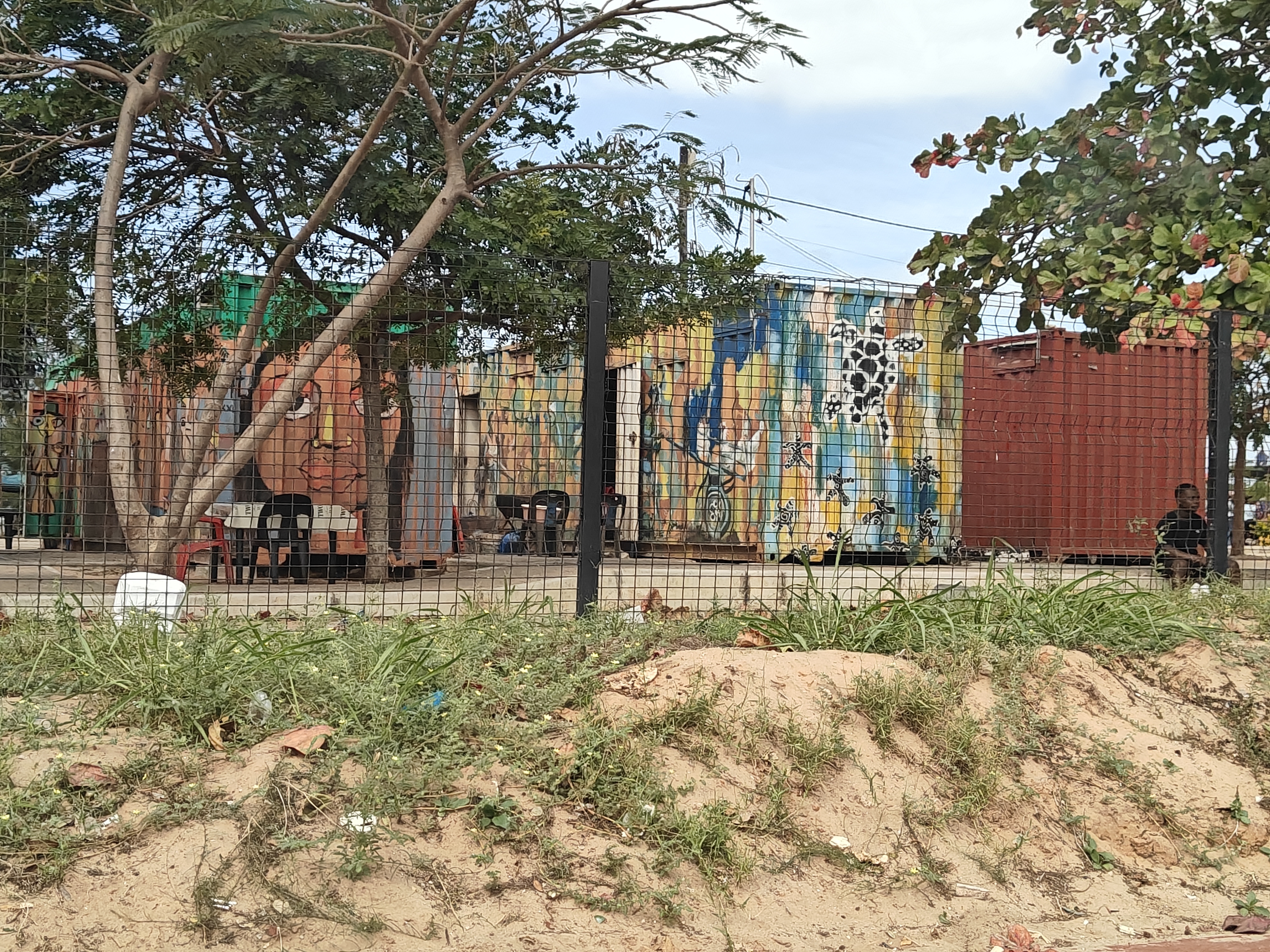
At one point, you get to a sort of food court built from containers:
Next was a stop at a large supermarket to pick up some things, mostly beverages for our stay south of here at Ponta do Oro. The SuperSpar had everything on our list and we loaded it up in the car. The selection was good and the store was modern and clean – actually inside a mall that would fit in anywhere in a first world country.
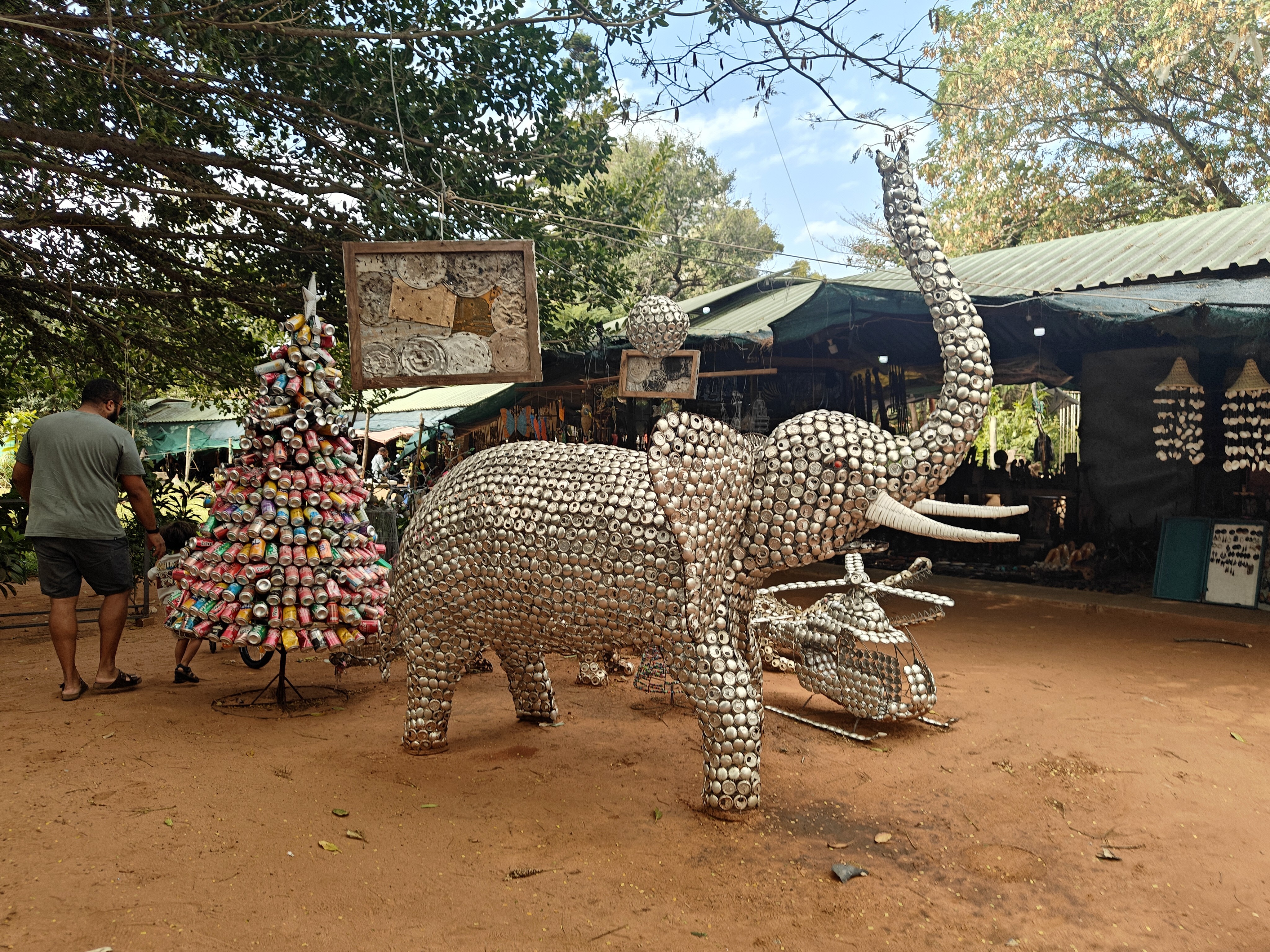
We had one more stop to make at the FEIMA artisanal market to look for our country souvenir. We parked in a lot outside the market and wandered over. The place has lots of kiosks and cafes/bars and if we hadn’t walked so much beforehand, we might have stayed longer. We finally found an item we liked and called it a day, returning the car and the hotel. We chilled for a while by the pool/patio before dinner at six.

Fran tried the country’s specialty for dinner that night: curried prawns and it was very good, a bit pricey but it is prawns (we saw the same dish at Ponta do Oro the next day and it was almost double there, so the price was not that bad!).
After another quiet night with both of us sleeping well, we had breakfast and paid our bill before packing up the car once again to head south to Ponta do Oro – a beach town just above the South African border. We had one toll of 80 MZN.
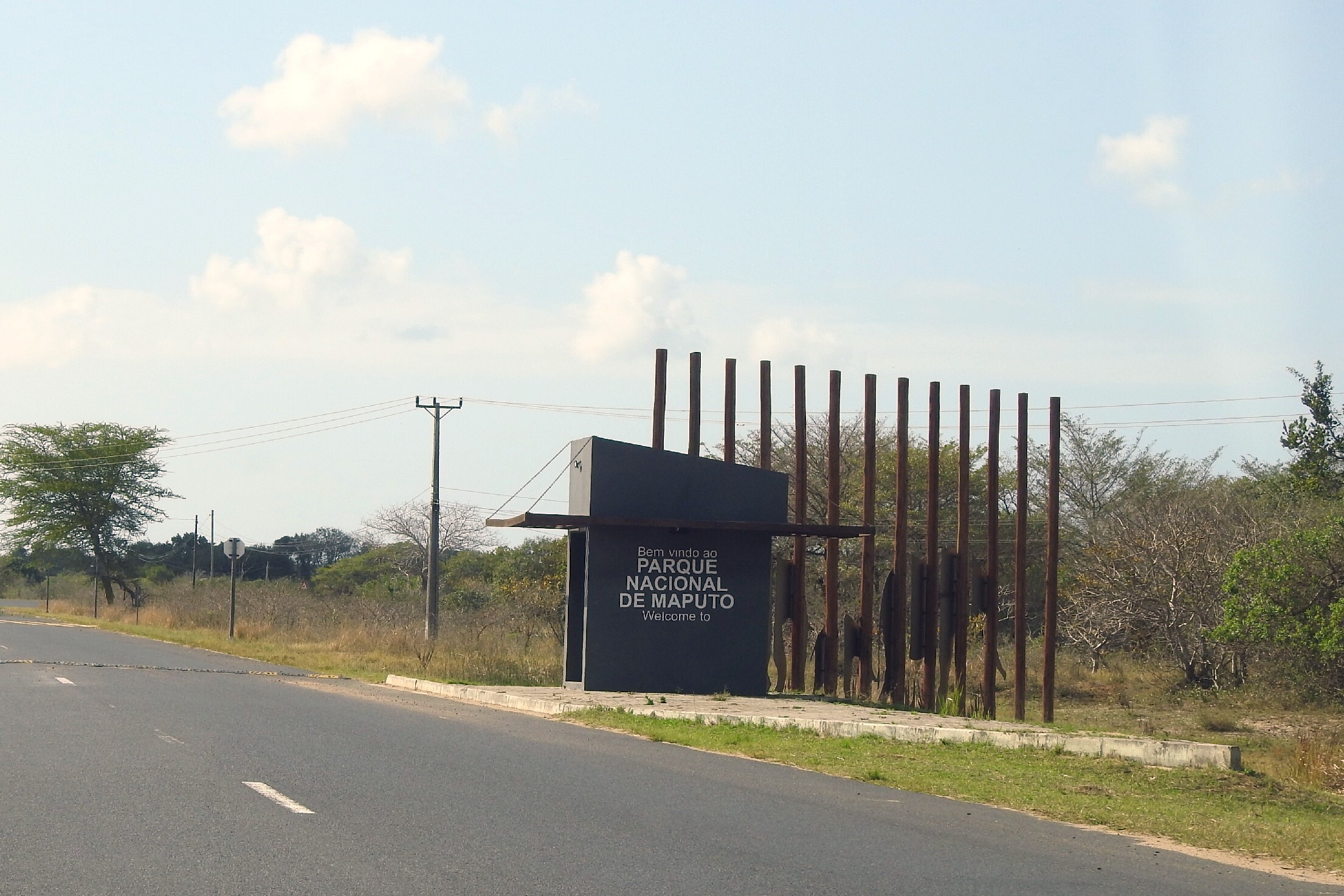
There is a national park about half down along the drive. Fran had reached out in April about doing a day safari there and they had booked us in but sent us a bill in which we had to pay for six people not just the two of us. We balked at this and they said, they’d reach out when others were interested in that date. Fran had not heard anything back by two weeks ago and she reached out again. They told her yes there was interest and they were awaiting their payment. Then five days later she was told, there was NO availability at all.
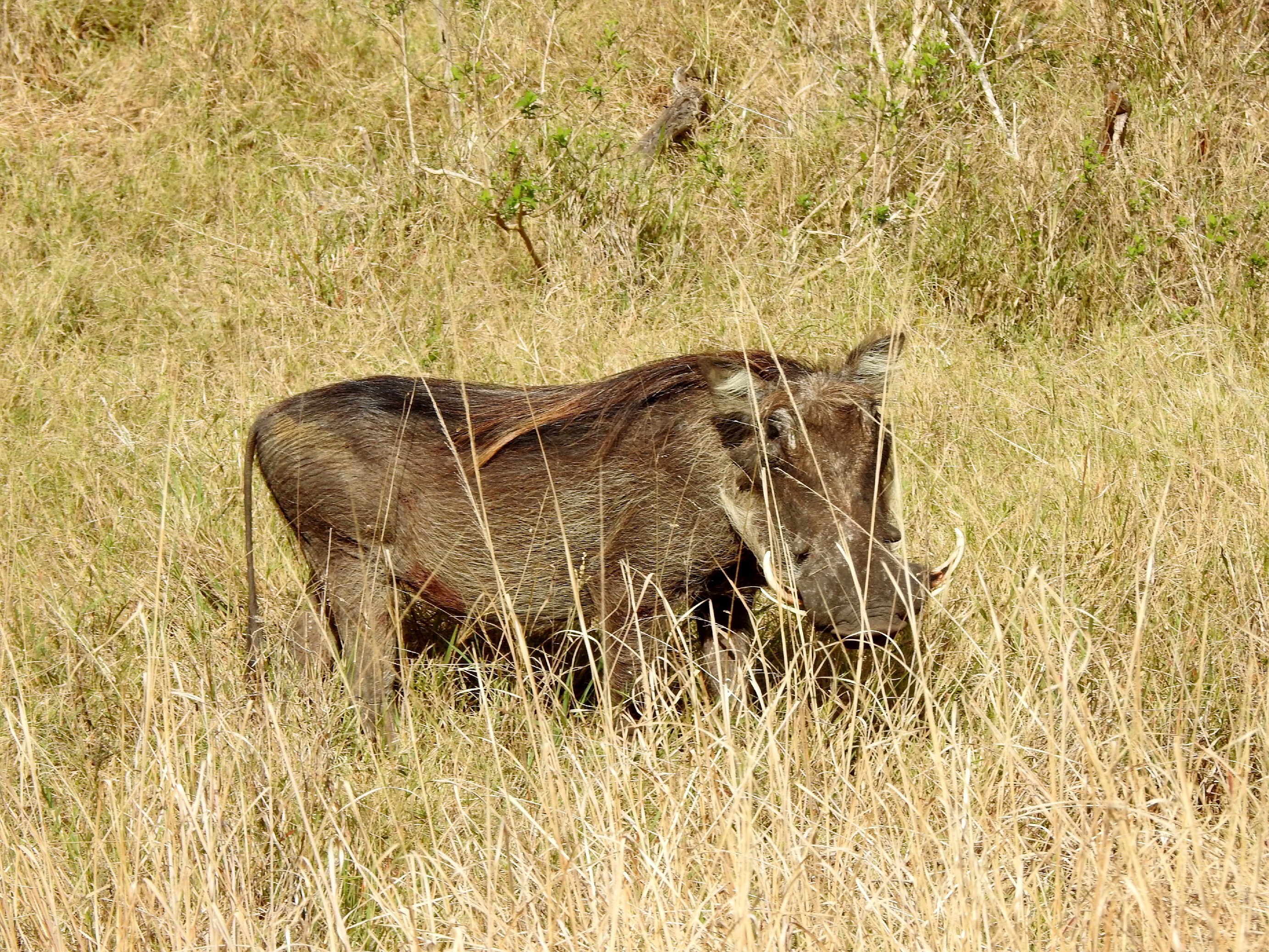
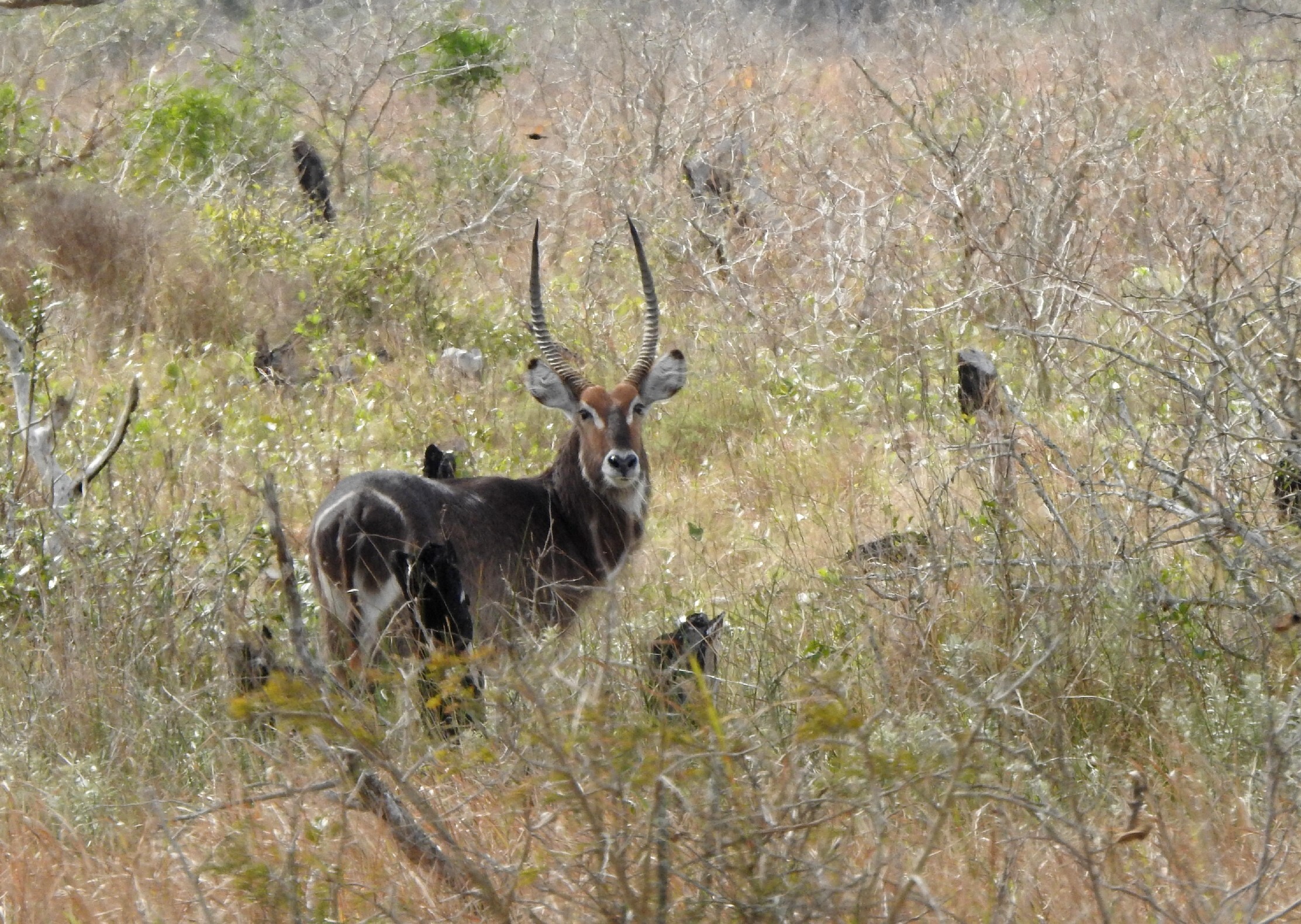
You can self drive in this park but 4×4 with high clearance is required and even then much the park is restricted to park vehicles so that wasn’t what we wanted. So we drove through the part of the park that is on the highway south to the South African border. We did see some wildlife both before and after passing through the gates:
wart hogs
water buck
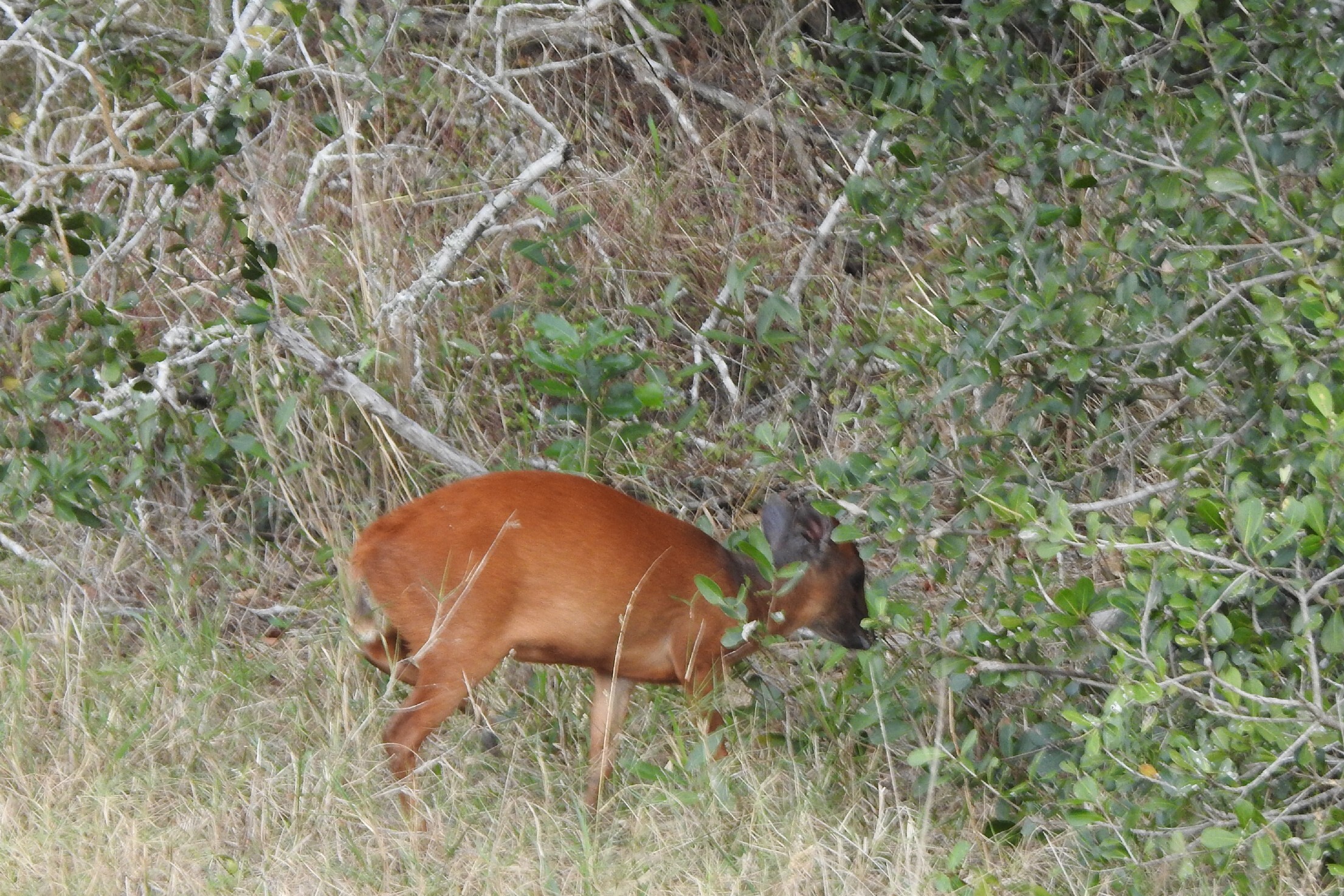
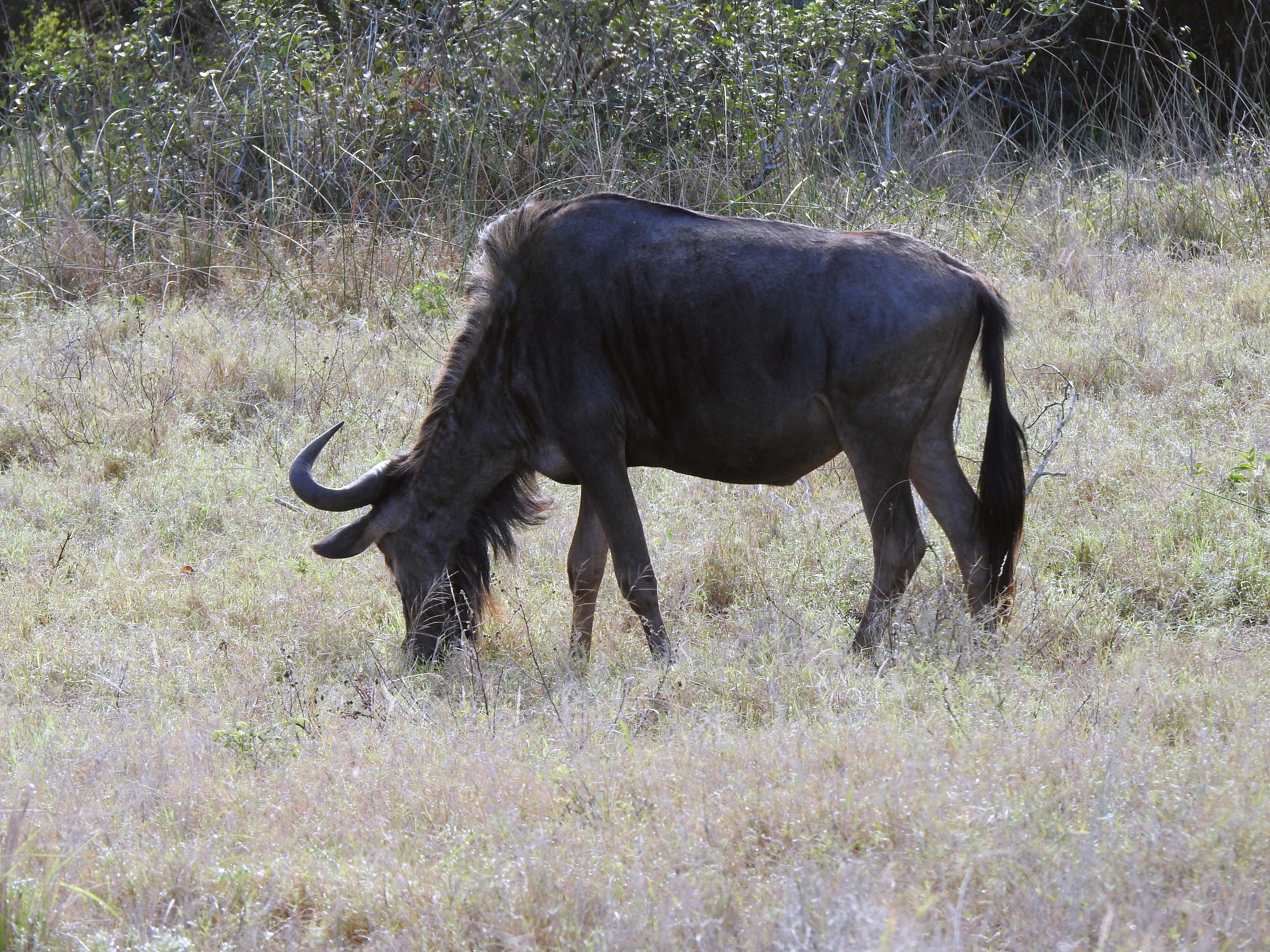
a duiker and wildebeest – both of which we’d not seen on this trip

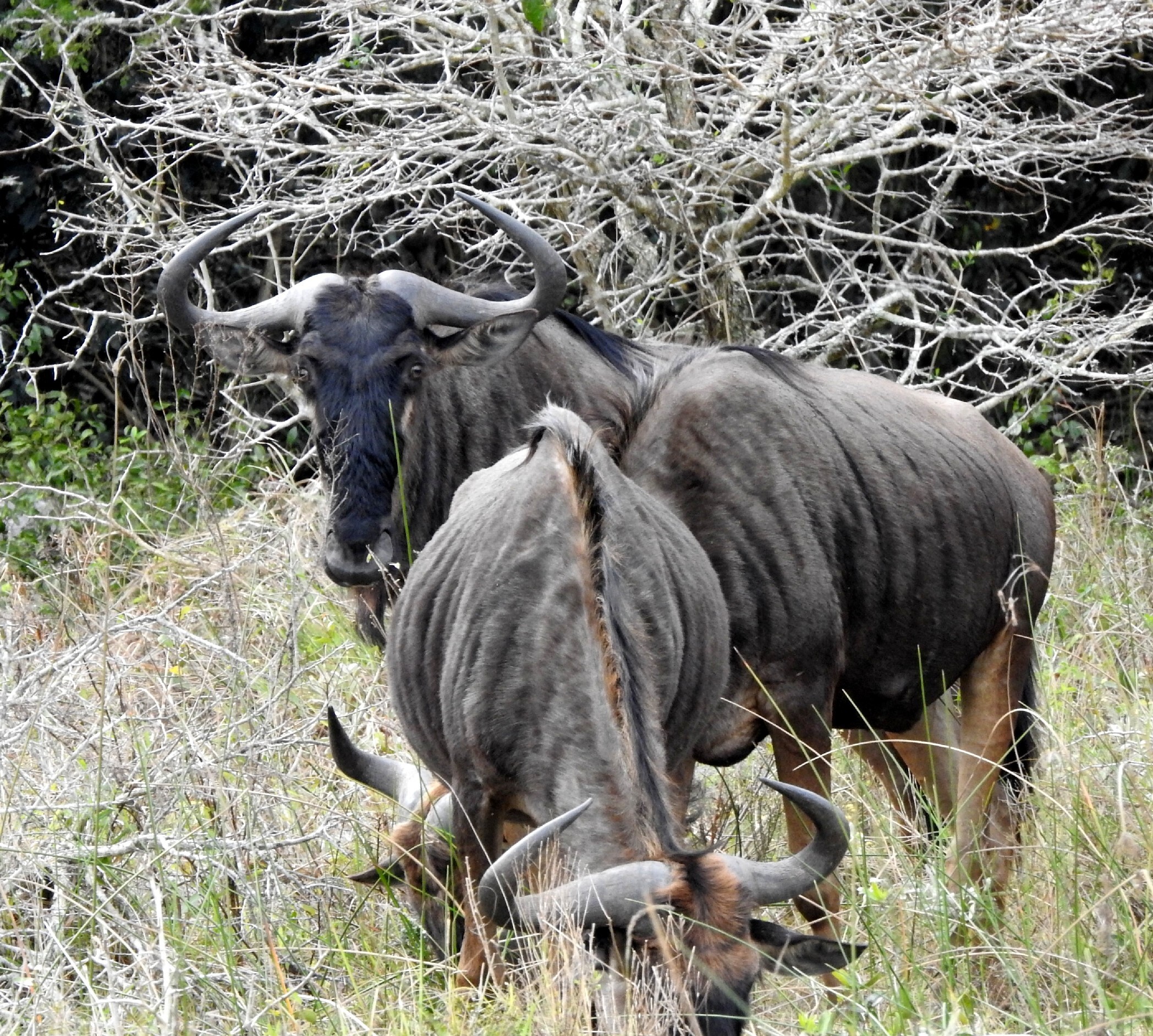
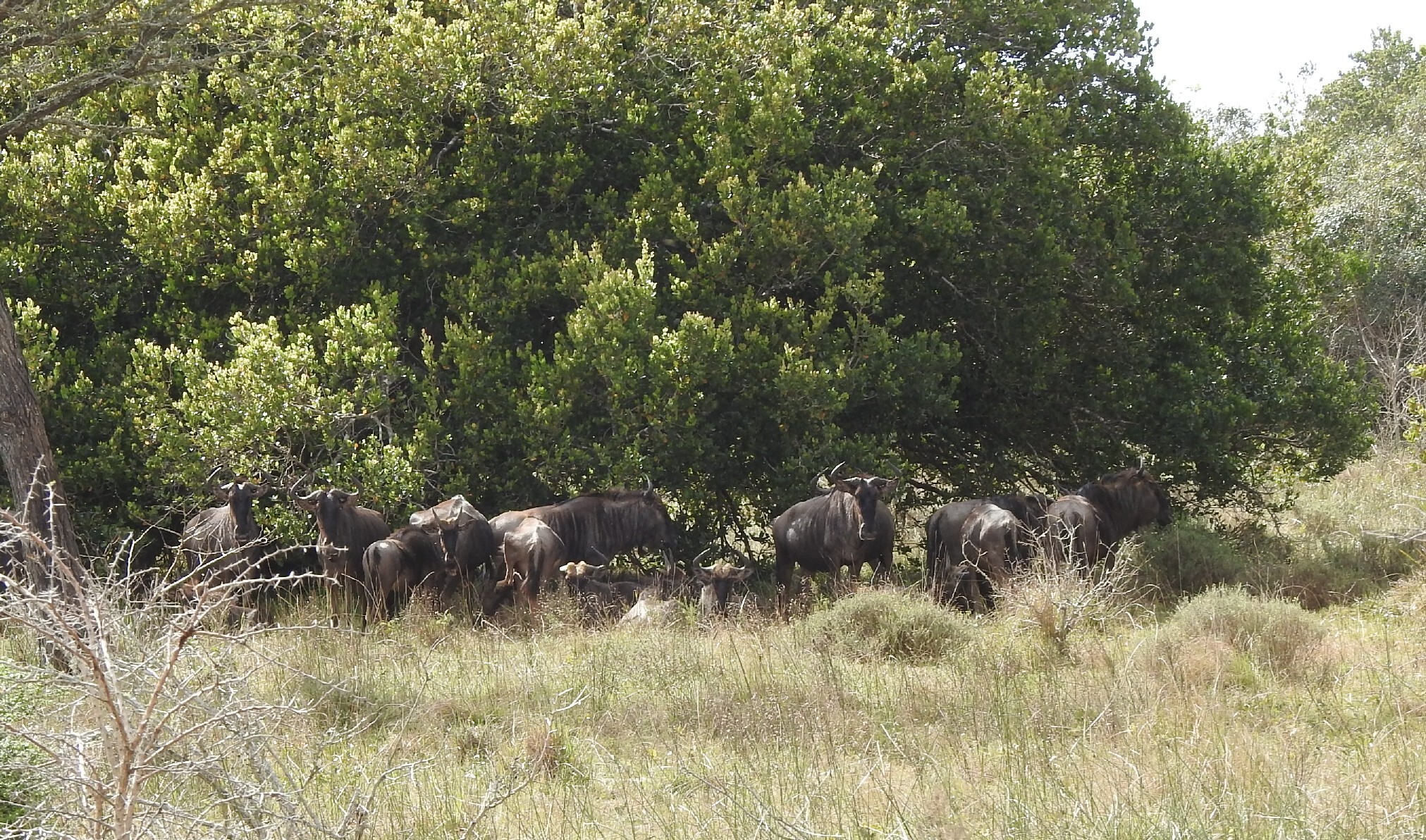
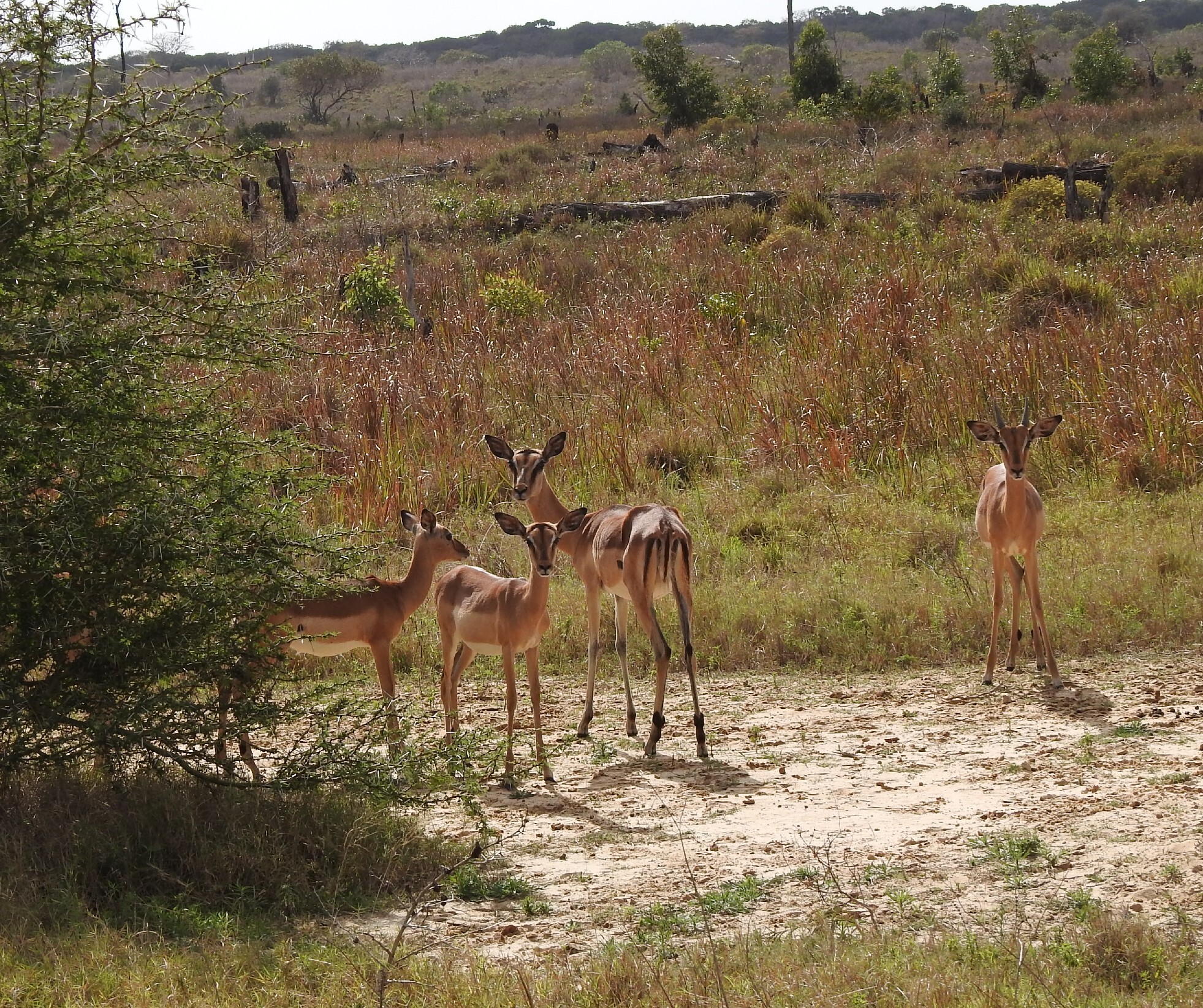
impala
It’s about an 8km / 5 mi stretch and although there were signs saying watch for elephant, today they were not near the road.
We filled up with petrol before reaching Ponta do Oro – timing was good for a pee break – and then we learned that no we couldn’t check in early; we’d have to wait until 2. When Fran mentioned she told us otherwise before, she said she’d arrange for them to clean out the place as fast as possible as the guests from the night before only left at ten.
So anyway, we stopped in town for some cider before finding the complex where the house was located. They again advised, that the place was not ready so we asked them to show us the way to the beach and we’d wait to hear from the owner down there.
We got to the beach where there is a beach bar and outside of it a fellow named, Joel, rents gazebo type shade cover and camp chairs so Doug made a deal with him for five days and that he’d set it up each morning and we could use as we wanted.
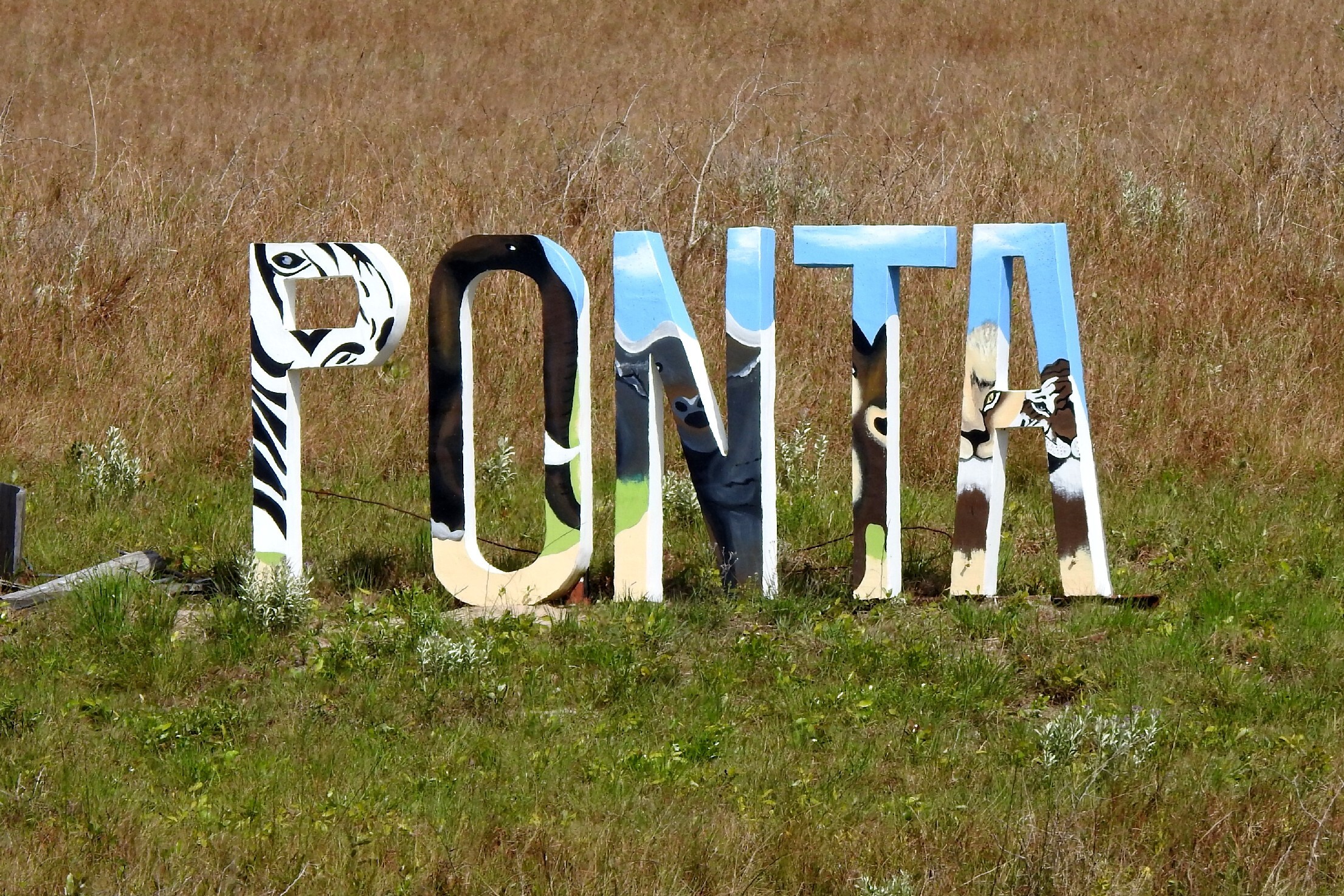
About 12:45 Fran heard that the place was ready so we went back and the security guard got into our car to show us where to park and where the unit was located up the hill.
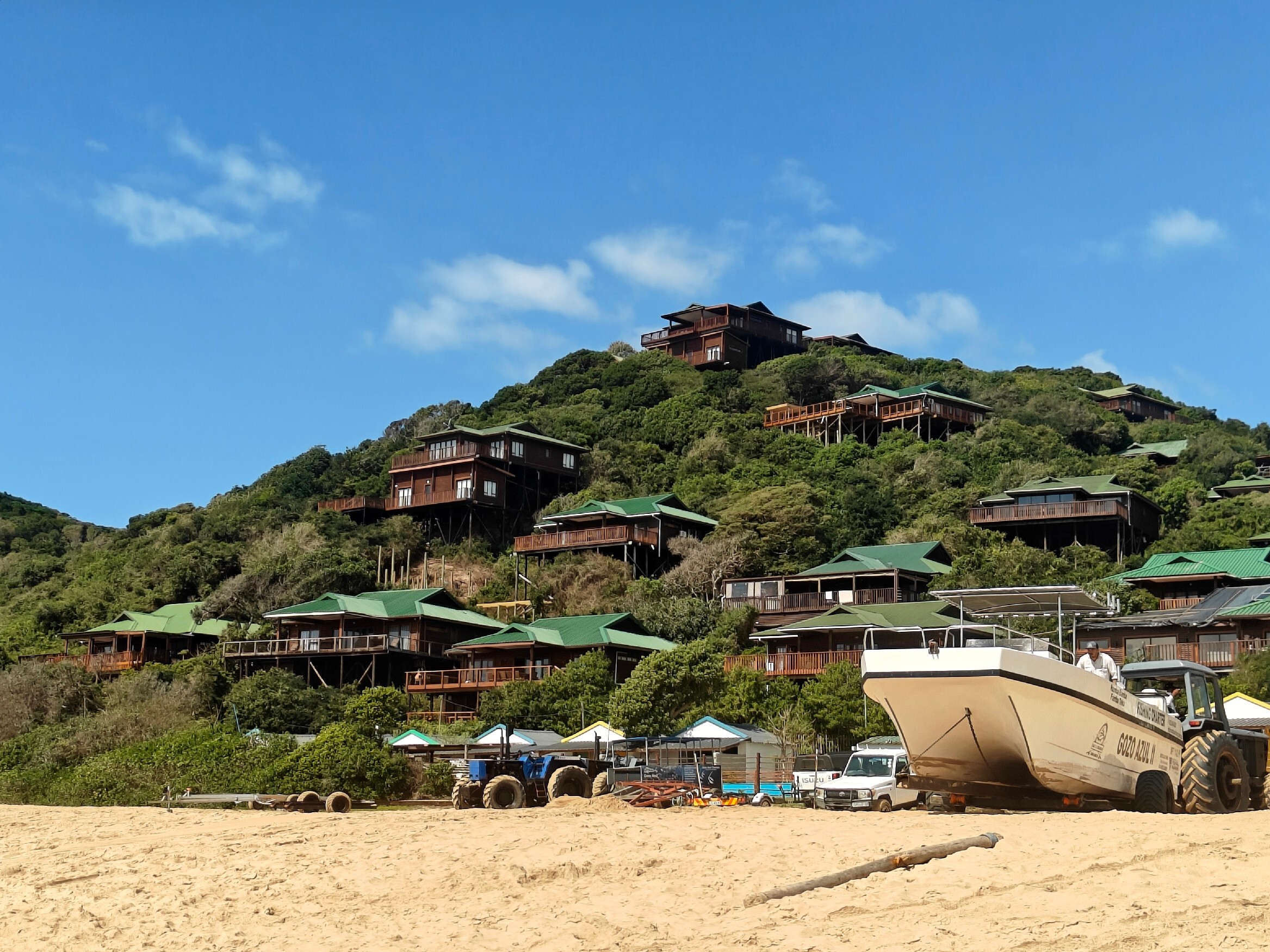
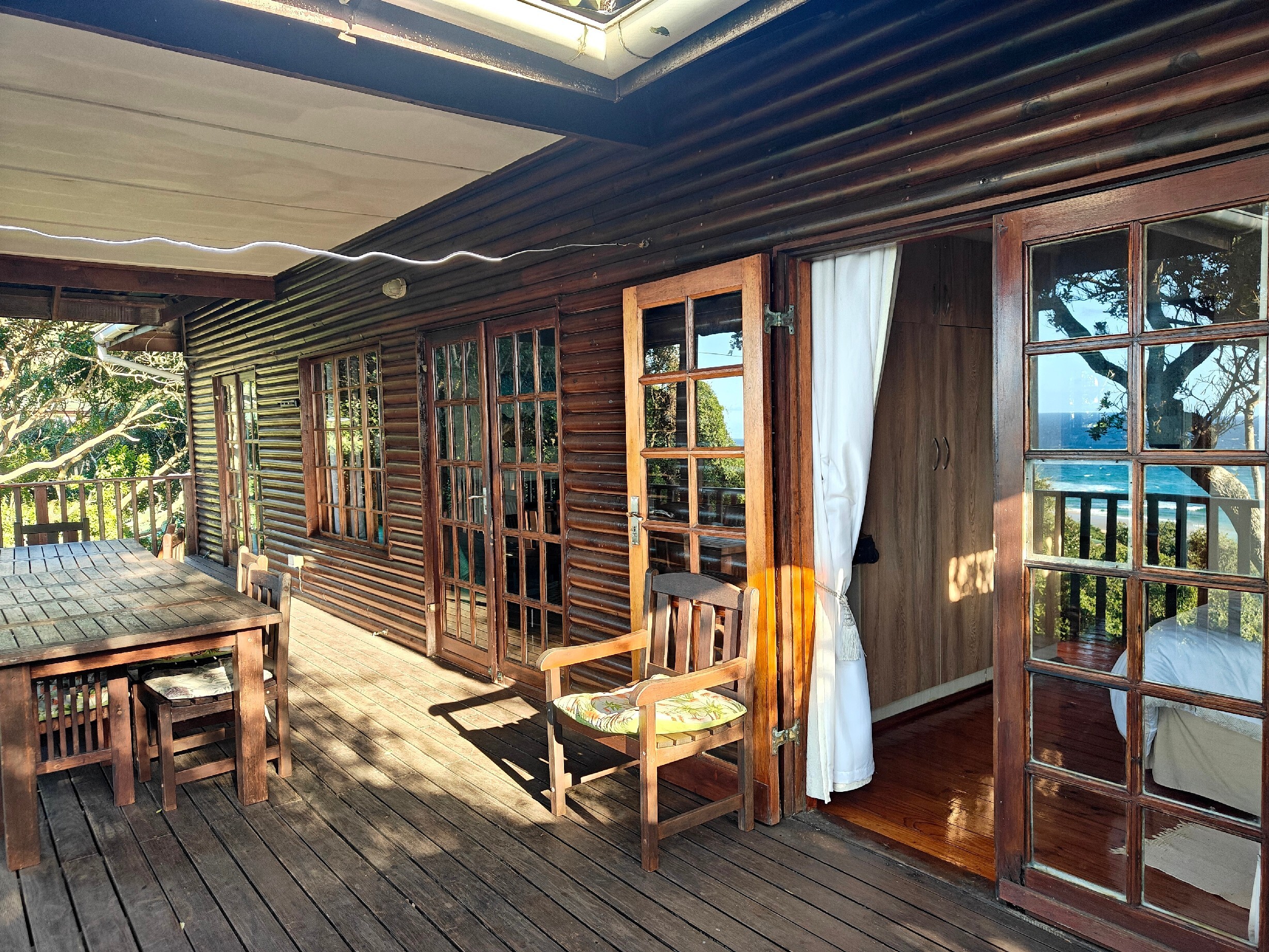
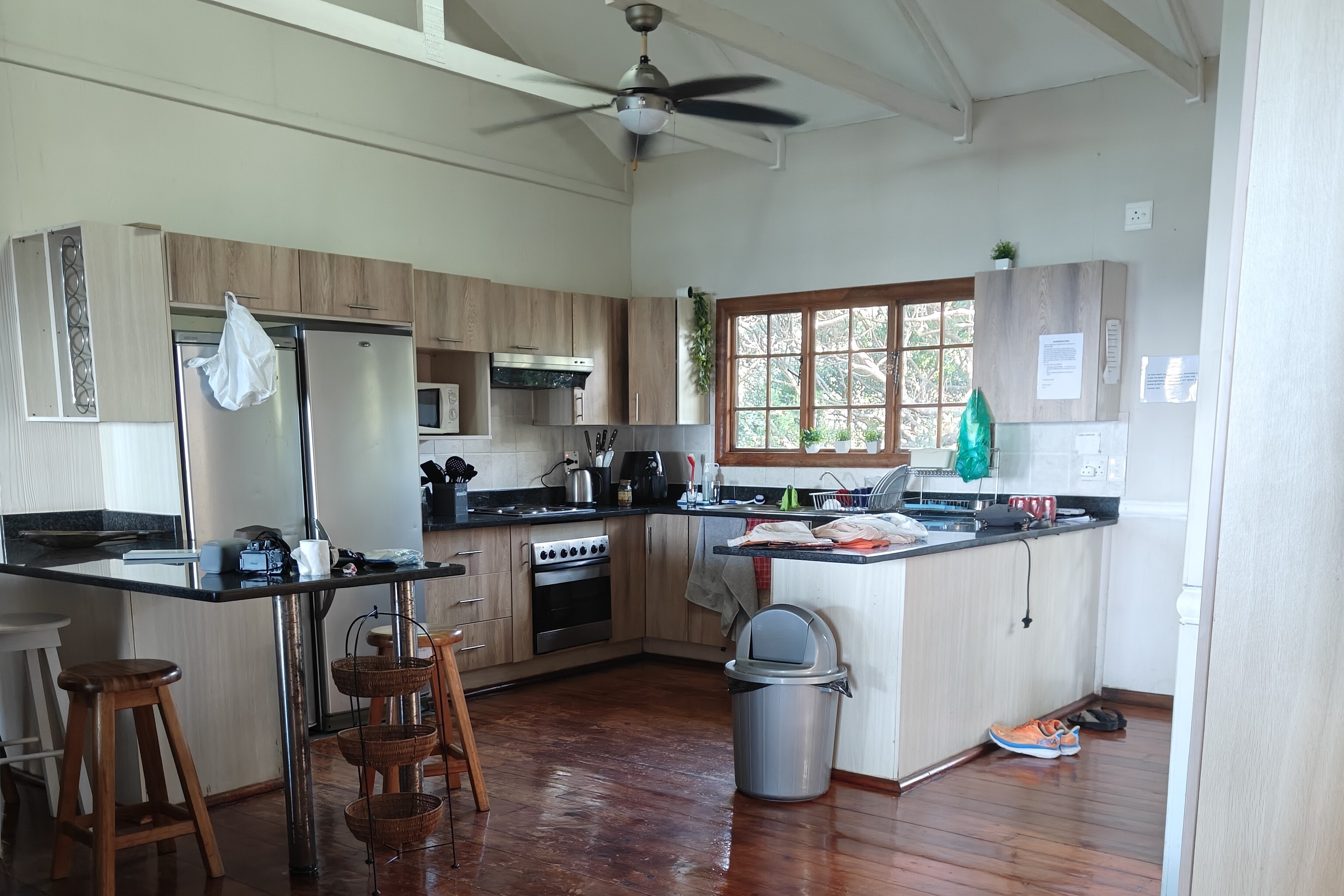
This complex consists of about 45 “houses” on stilts facing the ocean. We have a four bedroom, two bath unit complete with washer/dryer (latter not operating), a huge balcony facing the sea, WiFi (for which we had to pay extra for), ceiling fans in all rooms as well as AC in all four bedrooms. It’s an older complex but more than enough space for us and the view is awesome.

We got settled and headed back to our shade on the beach and had a late lunch around 2 at the beach bar – we made that our supper as well other than a snack in the evening.
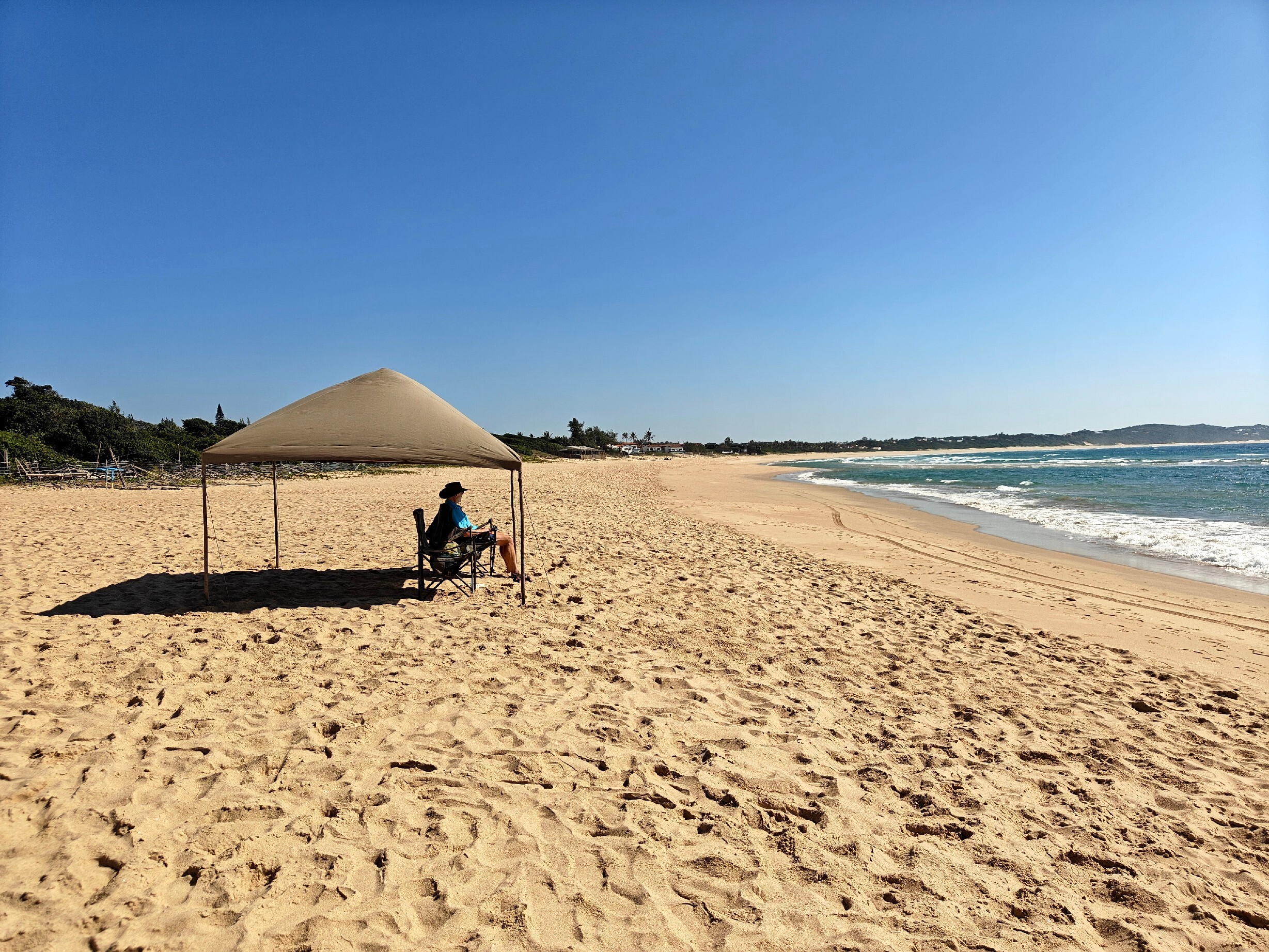
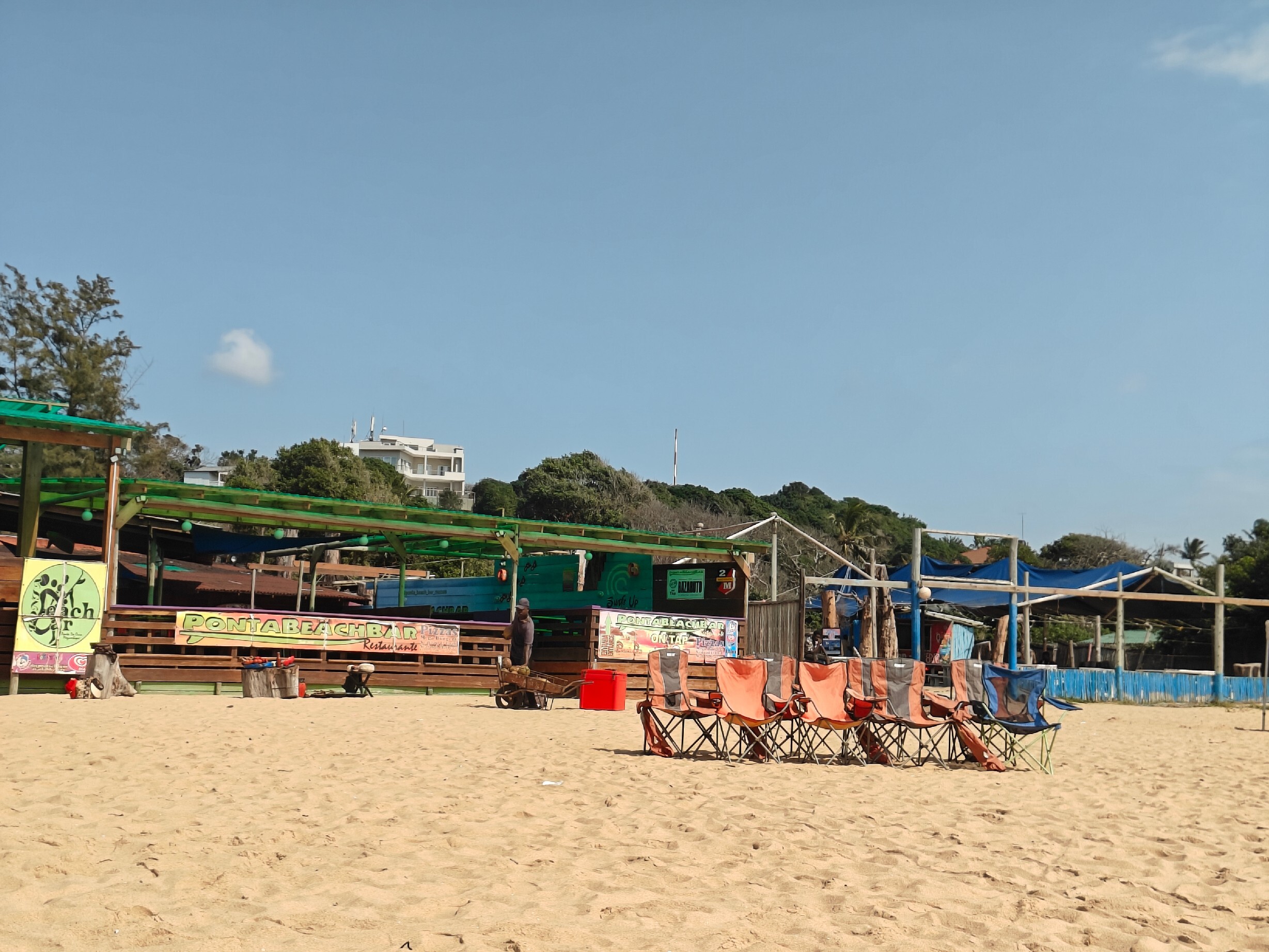
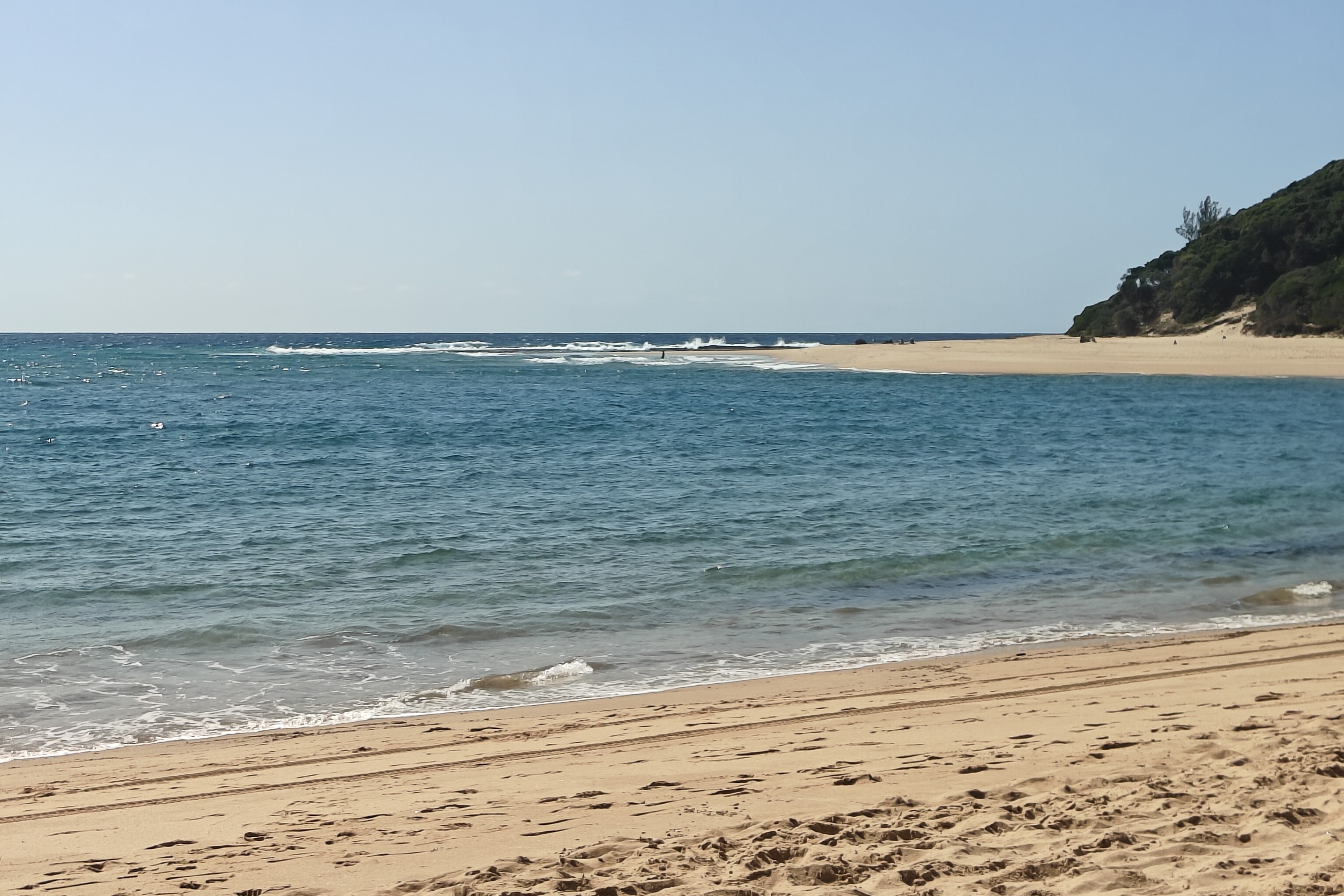
The beach is a lovely, deep crescent and the sand is nice and clean – no garbage on the beach – no palm trees either but our gazebo keeps us in the shade.
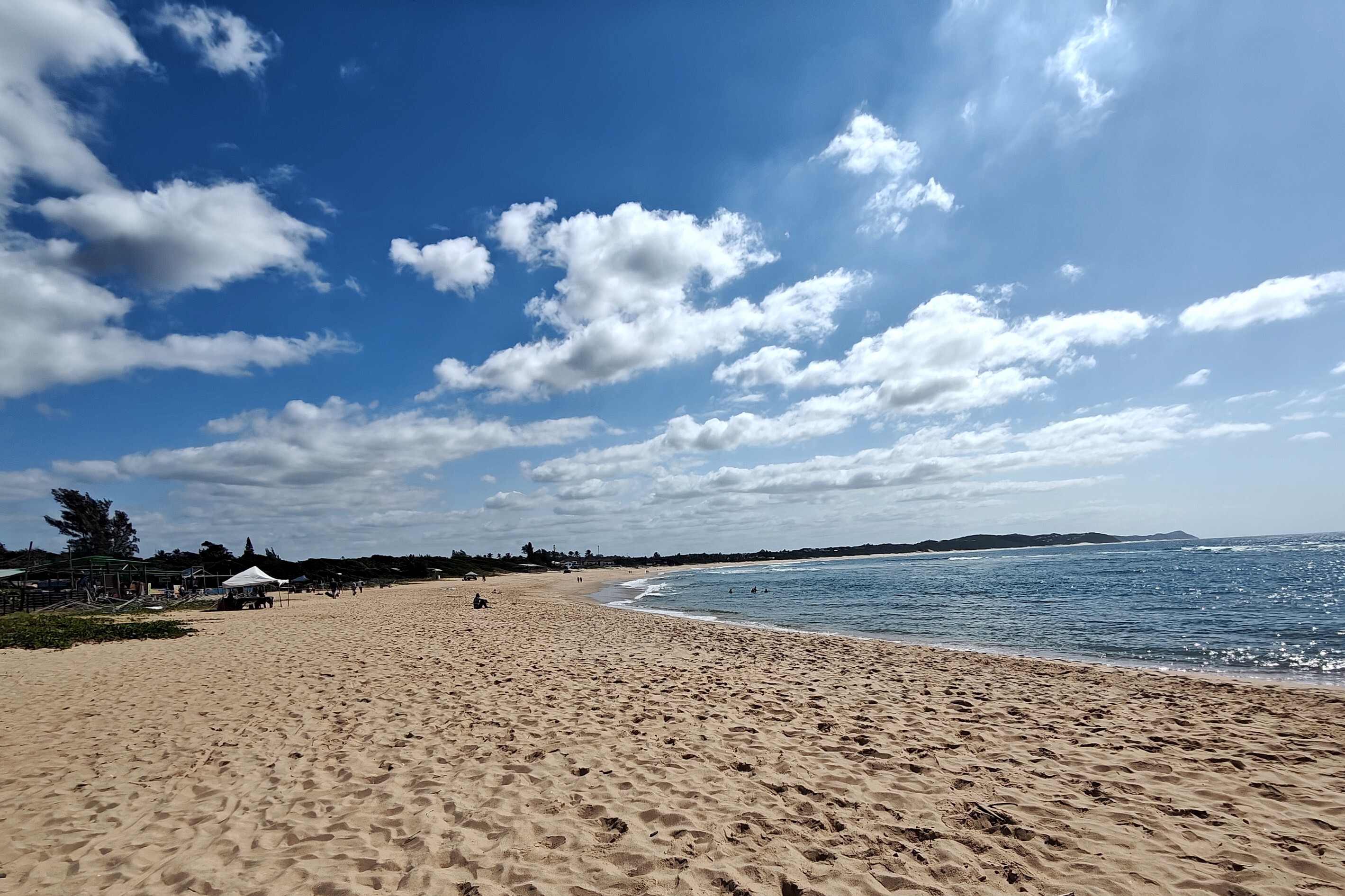
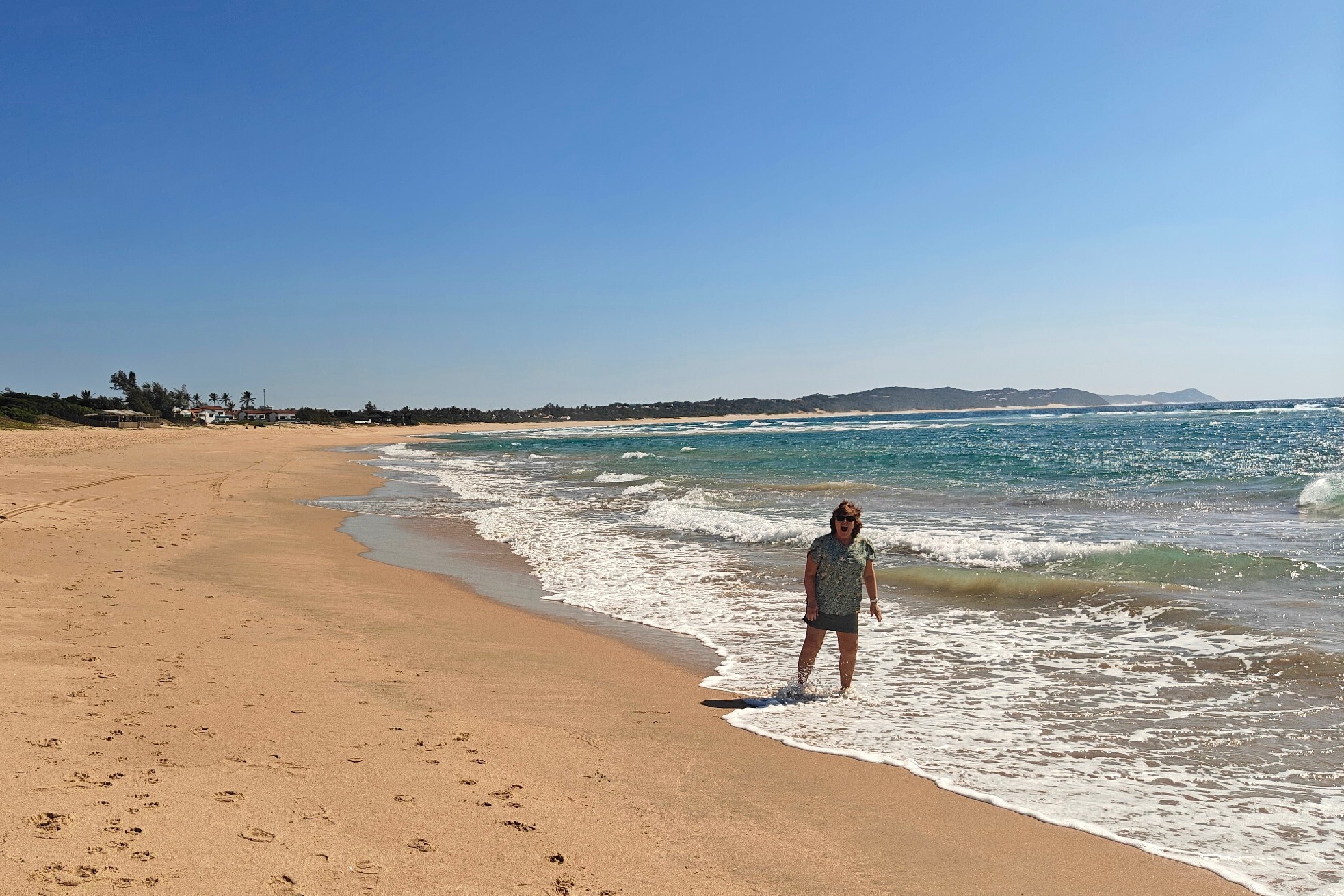
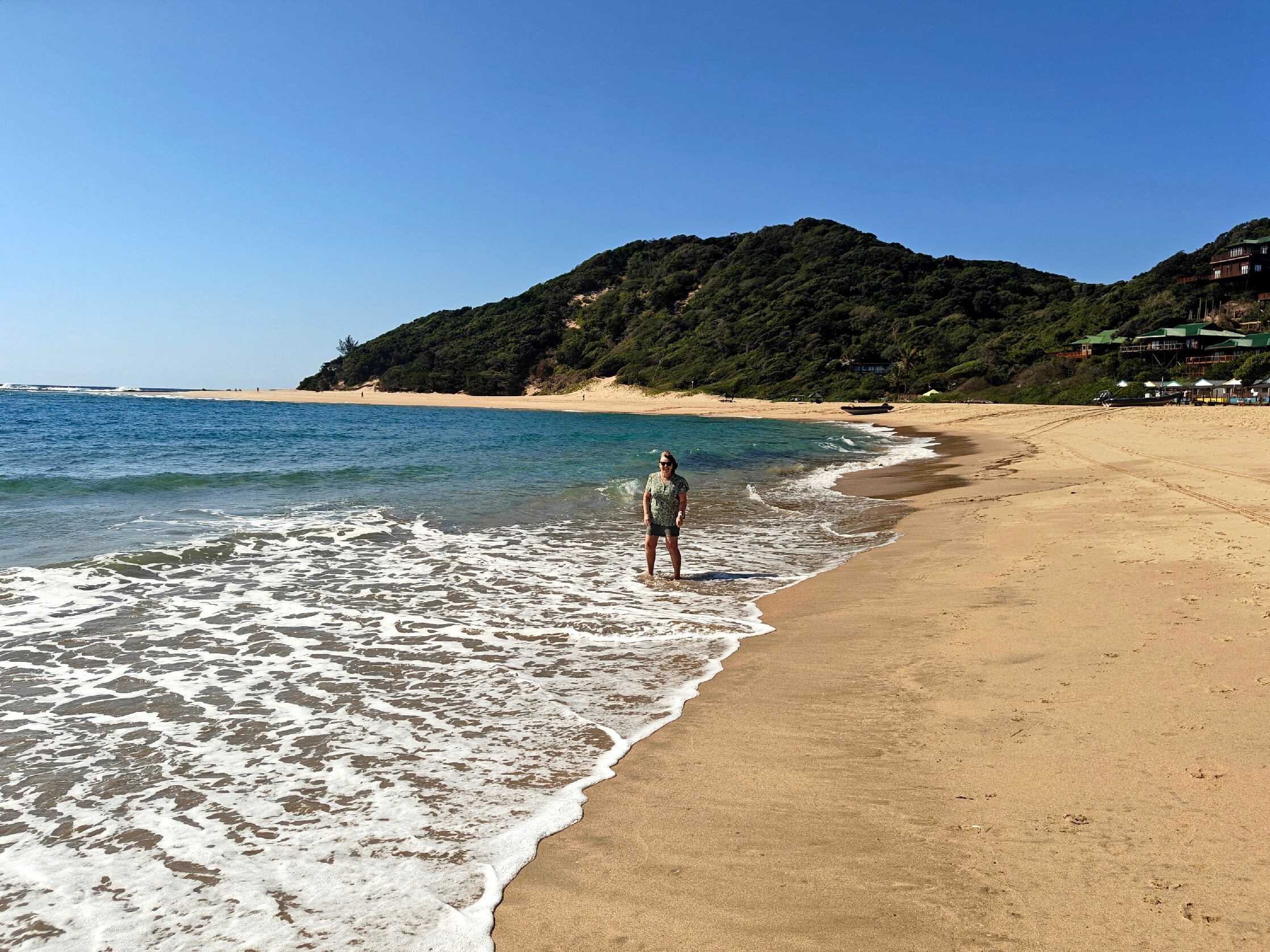
There were people in the water and surfers trying out the waves (which are never that big this time of year) and several people enjoying the beach like us. We asked a young man we’d seen surfing how the water was and he said maybe 22C / 74F but when we put our feet in, there was no way it was that warm!
Unfortunately, there are vendors on the beach, selling their wares and that gets annoying but we know that they are just trying to make a living. We so rarely buy anything and sometimes you really have to say “no” a lot before they leave you alone.
The outside temperature is in the mid 20’s C/ upper 70’s F and there’s quite a cool breeze coming off the ocean. We sat with our legs in the sun and our heads under cover. At times Fran laid on a beach blanket on her stomach to read with her head in the shade as well.
Tuesday we began a sort of routine, no brekkie, just tea/coffee, off to the beach before 10, come back at lunch for some toast and fruit and back to the beach in the mid afternoon with a meal on the beach or in town (or vice versa for meals). The beach bar plays good music and Doug loved to sit there and read to enjoy it when Fran did not come down to the beach when he did.
We got caught up on laundry, Fran worked on the website, Doug worked on finances and planning our drive into Eswatini on Saturday. We had arranged with this rental car agency to give us the paperwork we needed to cross the border and return to Maputo. Doug realized the rental agreement and consent letter showed his US passport and we’d entered under our Canadian one so on Wednesday he arranged for a new consent letter and we found a place to print it with the help of the house owner. (Our US passports were filling up and some countries require two side by side blank pages – which is really a pile of crapola but we didn’t want to take a chance so we’d switched to the Canadian ones when we left Madagascar.)
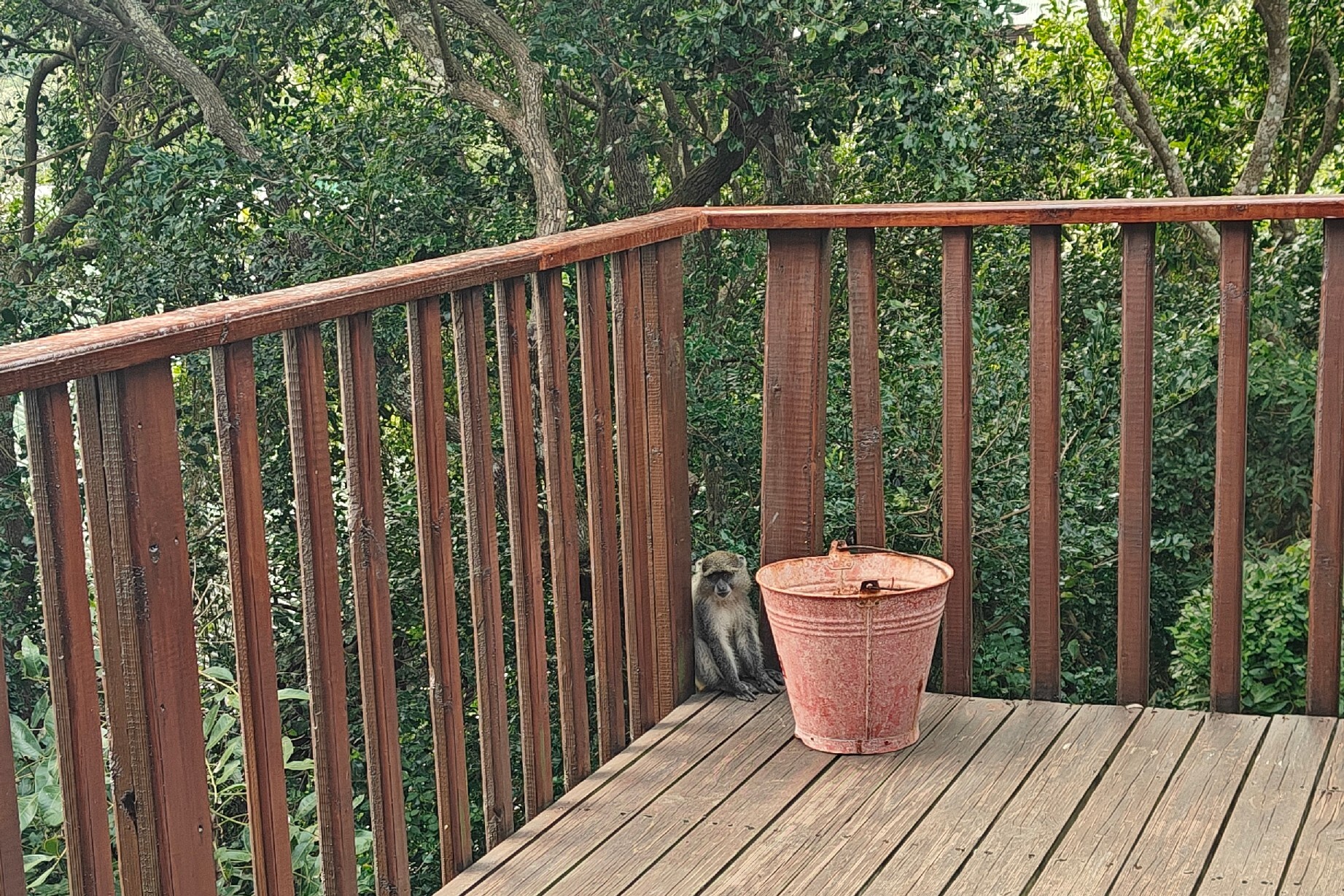
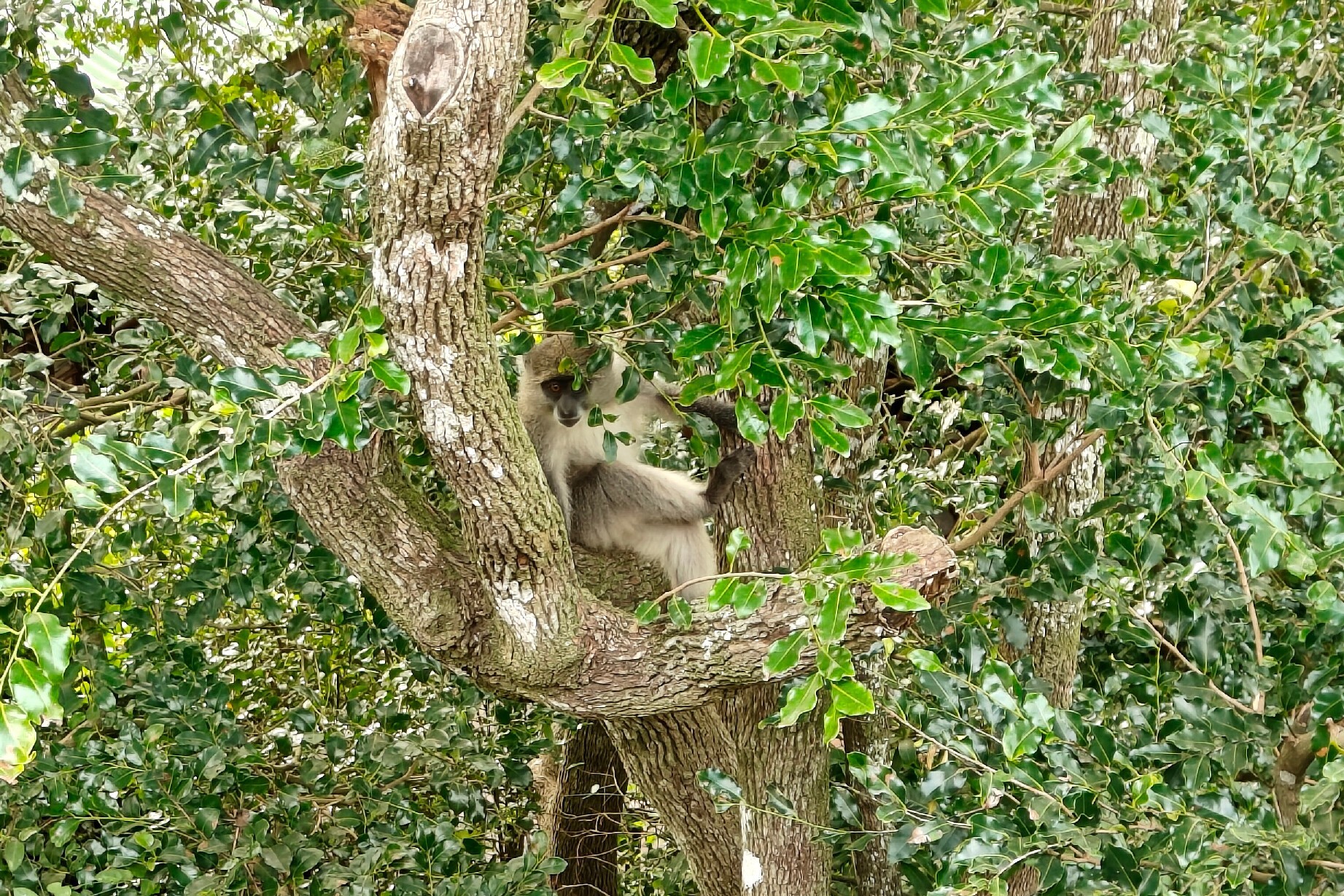
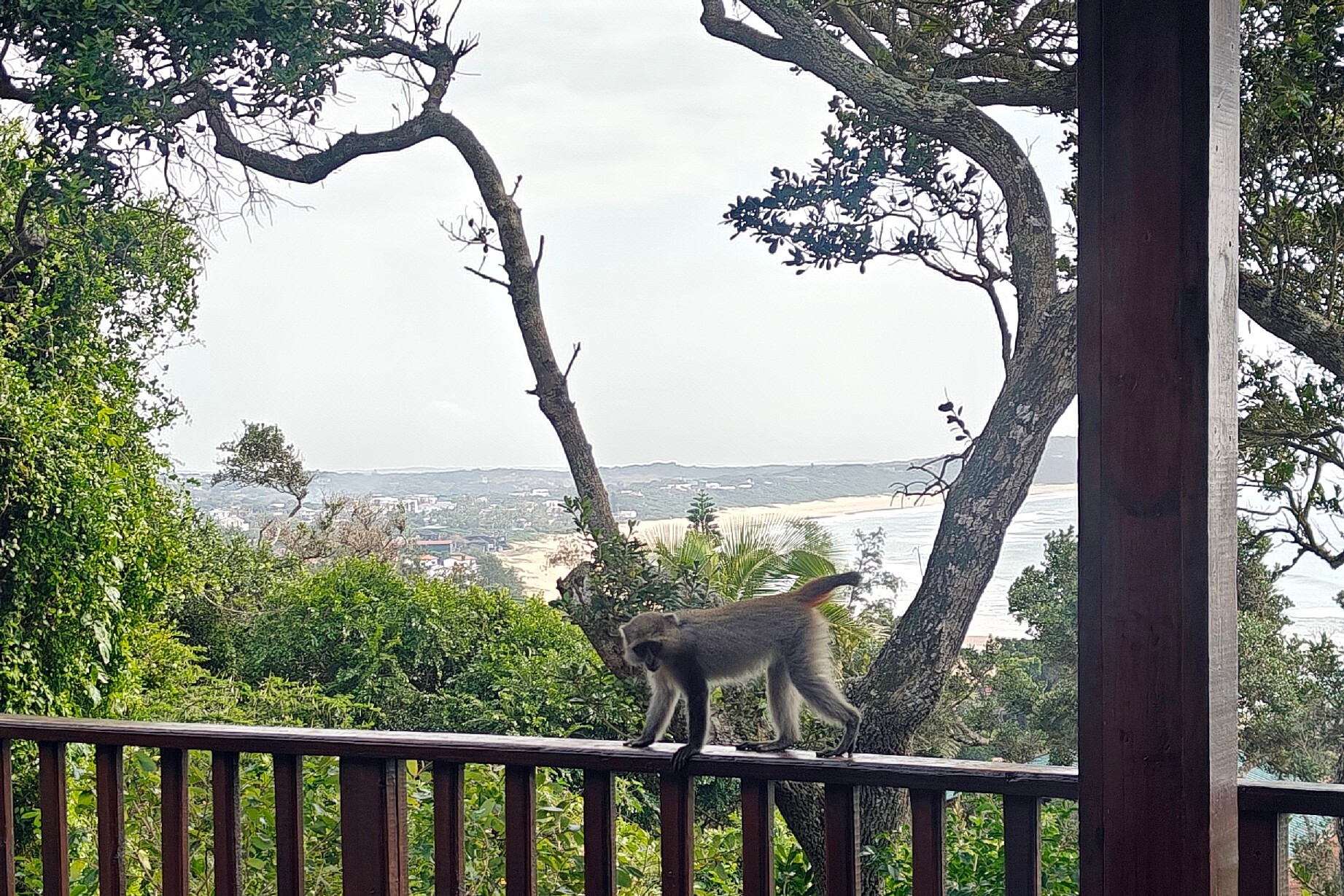
It warmed up considerably on Wednesday and the wind came from the land not the sea so it was the best day yet! Today we had our first “visitor” to the house arrived: a vervet monkey came onto the balcony. He wasn’t too frightened when Fran took a few pics although he did jump into the nearest tree.
When she backed up he jumped back on the balcony and when she stepped inside he jumped onto and then under the table. When he couldn’t find anything and she shut the patio door, he took off along the railing.
 We sat out on the beach longer than any other day. We went back to the “house” for lunch, Doug went for a walk in town to get the new border letter printed and a few groceries and met Fran back at the beach where we sat until 4:30 before heading into the Beach Bar for an early dinner (so as not to walk all the way back up to the house and come back an hour later – it’s about a 500 m walk, mostly on a slope on a wooden boardwalk – the killer is going down for Fran as it’s just enough of a slope to hurt) and there we met yet another South African couple whom we did more than just chat a few moments with. Tony and Orpa live outside Pretoria and are retired. We chatted while they finished dinner and then we ordered ours. Their were two other couples at the restaurant and Tony ordered a round for everyone before they left. We may see them again as they too are staying at Mar e Sol and arrived today for a week.
We had another very good meal and then headed back for the night.
Thursday, it rained hard just after Doug left for his run. In order to run here as it’s all very sandy roads, he drives the car to the paved road and runs from there. It rained for less than hour and the rest of the day was mostly cloudy. Still warm but not a good sit on the beach day. Mid morning we saw vervet monkeys playing in the trees. 


We got in the car before lunch and went into town for lunch to try a different restaurant. We found Ponta Flavour that had a third level patio and we could just see the ocean:
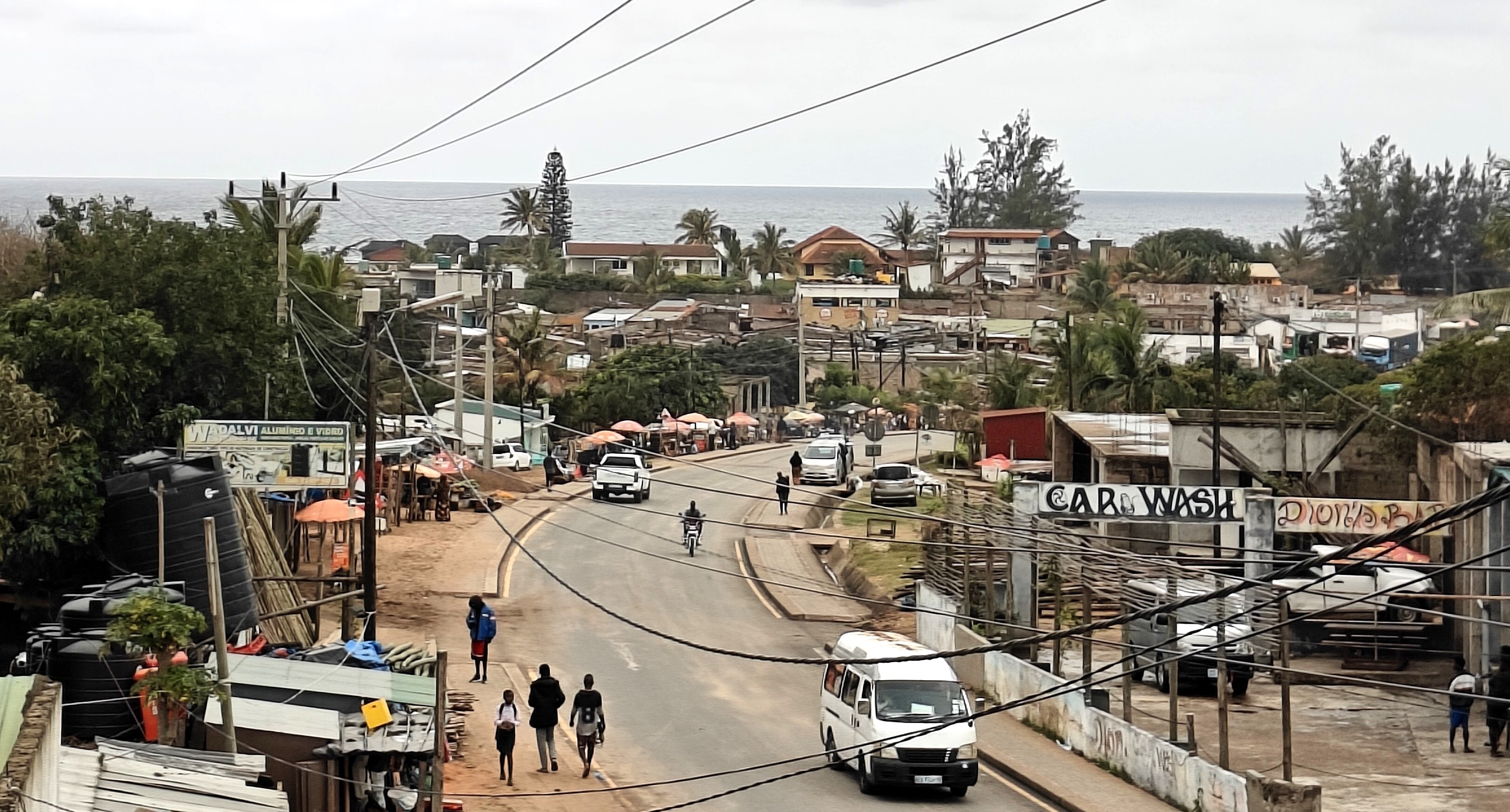
After ordering drinks and food, it was getting too chilly on the third level with the wind so we moved back down to the main level that had wind protection. The food was very good – Doug had seafood pasta (which he regretted not for the taste but for all the “work” he had to do to get at the seafood!) and Fran had prawn cakes and vegetable rice which we both enjoyed.
We spent the rest of this cool day vegging indoors and we made a light dinner for ourselves that night.
Friday, our last full day, started out cloudy and windy, but the sun began to pop itself out mid morning. The tide was quite low and we could see a huge sandbar in the bay.
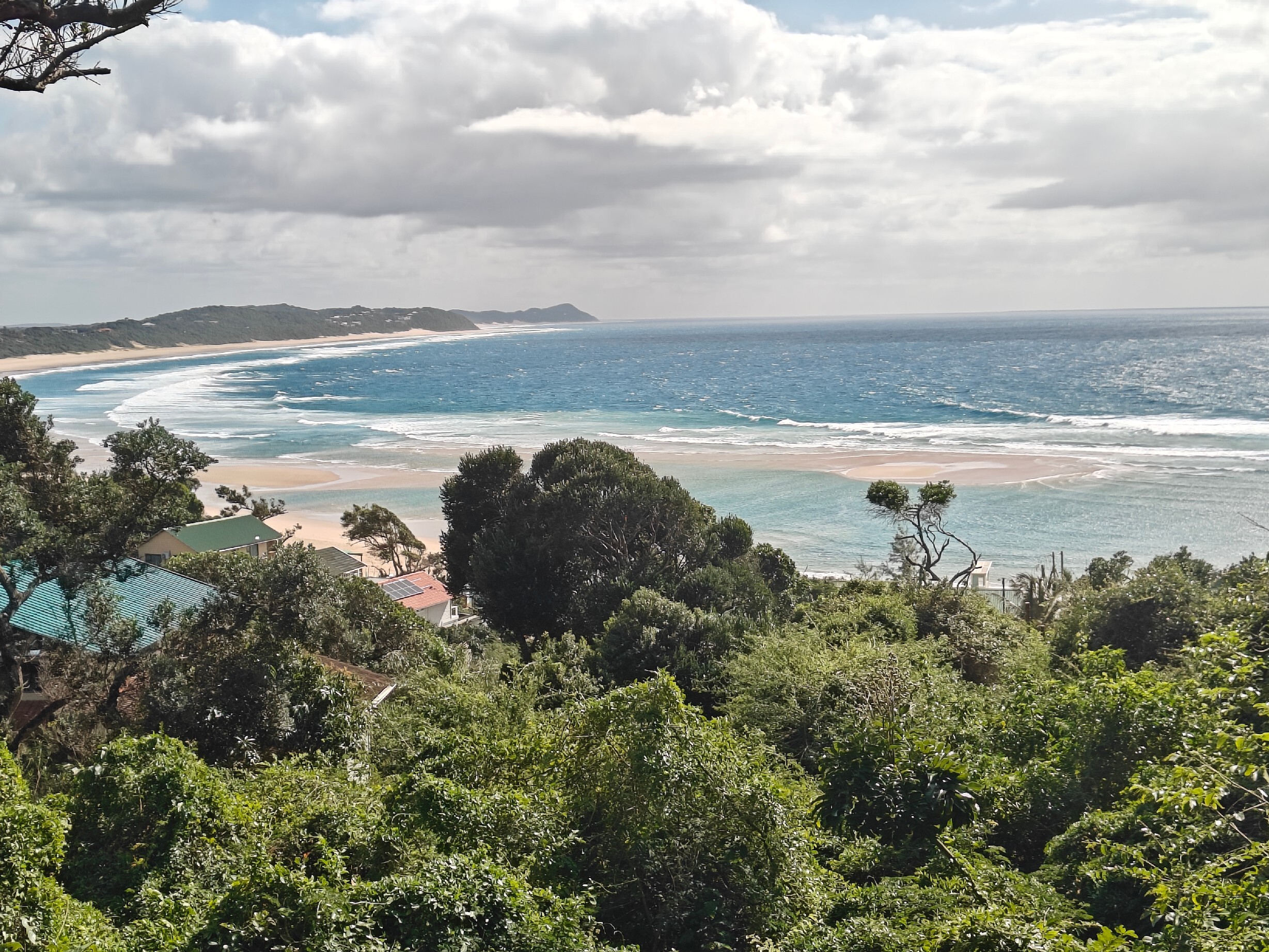
We took a walk out to the rocky point today:

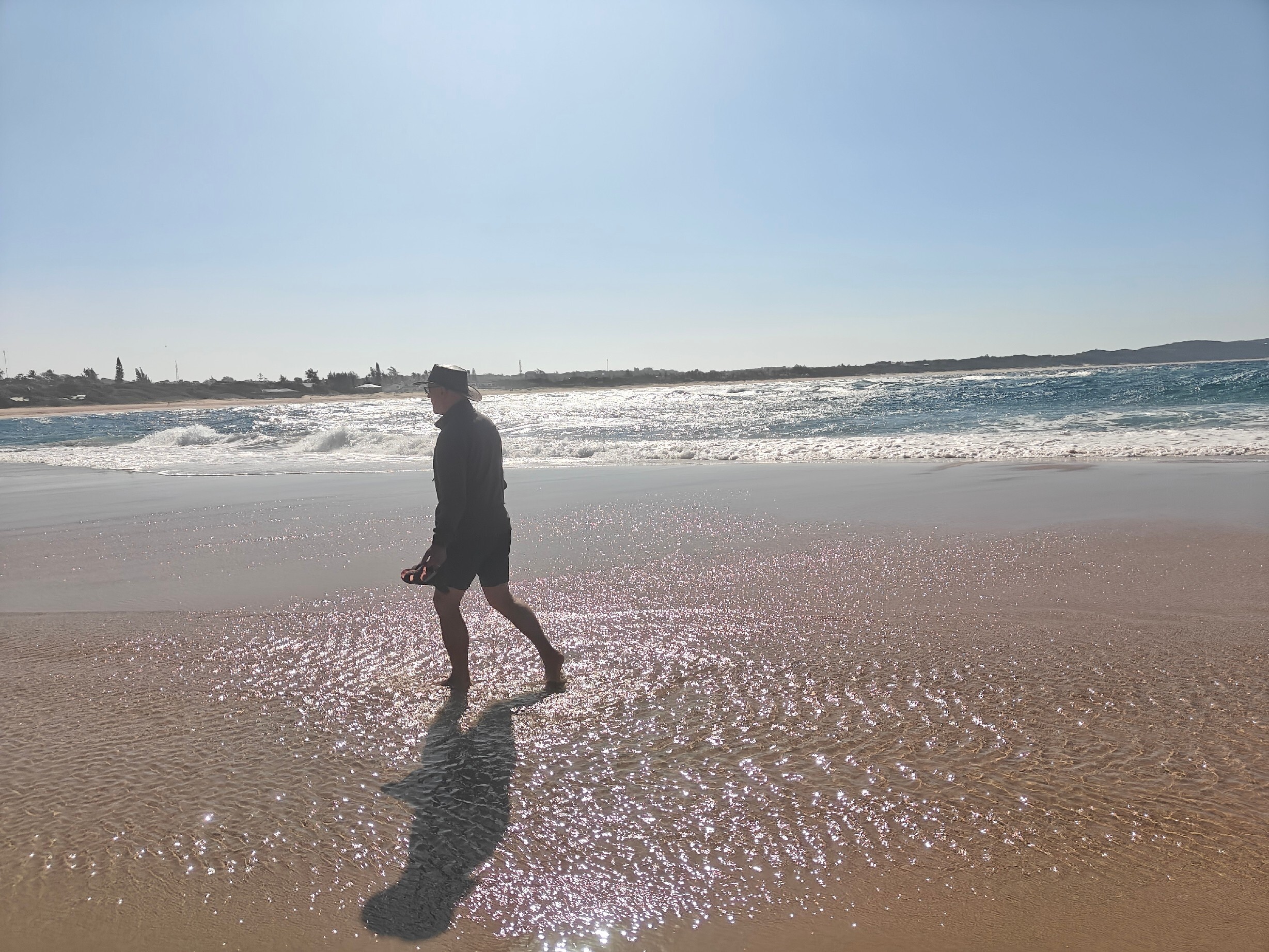
Doug headed down to the beach to see if our gazebo was ready and Fran finished up the laundry before heading down. The washing machine decided not to spin today and it was a bunch of very wet clothes she had to hang out on the balcony but with the strong wind, she was confident it would dry. (We have advised the owner of the BNB.)
We sat on the beach for about an hour in the sun and wind before going for one last meal at the Beach Bar. After another hour or so after lunch, the wind got so strong it was no longer enjoyable. The clothes were all dry except a couple of things and we began to pack up. The afternoon remained very sunny but also super windy.
We had a quiet dinner at “home” tonight and finished up most of the packing. Saturday morning, we had our tea/coffee and left dropping the keys off at reception around 8am. We had a drive of 150 km / 93 mi to the Eswatini border and we weren’t completely sure of the road conditions nor the length of time it would take to cross the border.
We again drove through a 10 km / 6 mi section of the Maputo National Park and today saw:
buffalo – one of the big five!

Impala crossing the road:
warthogs
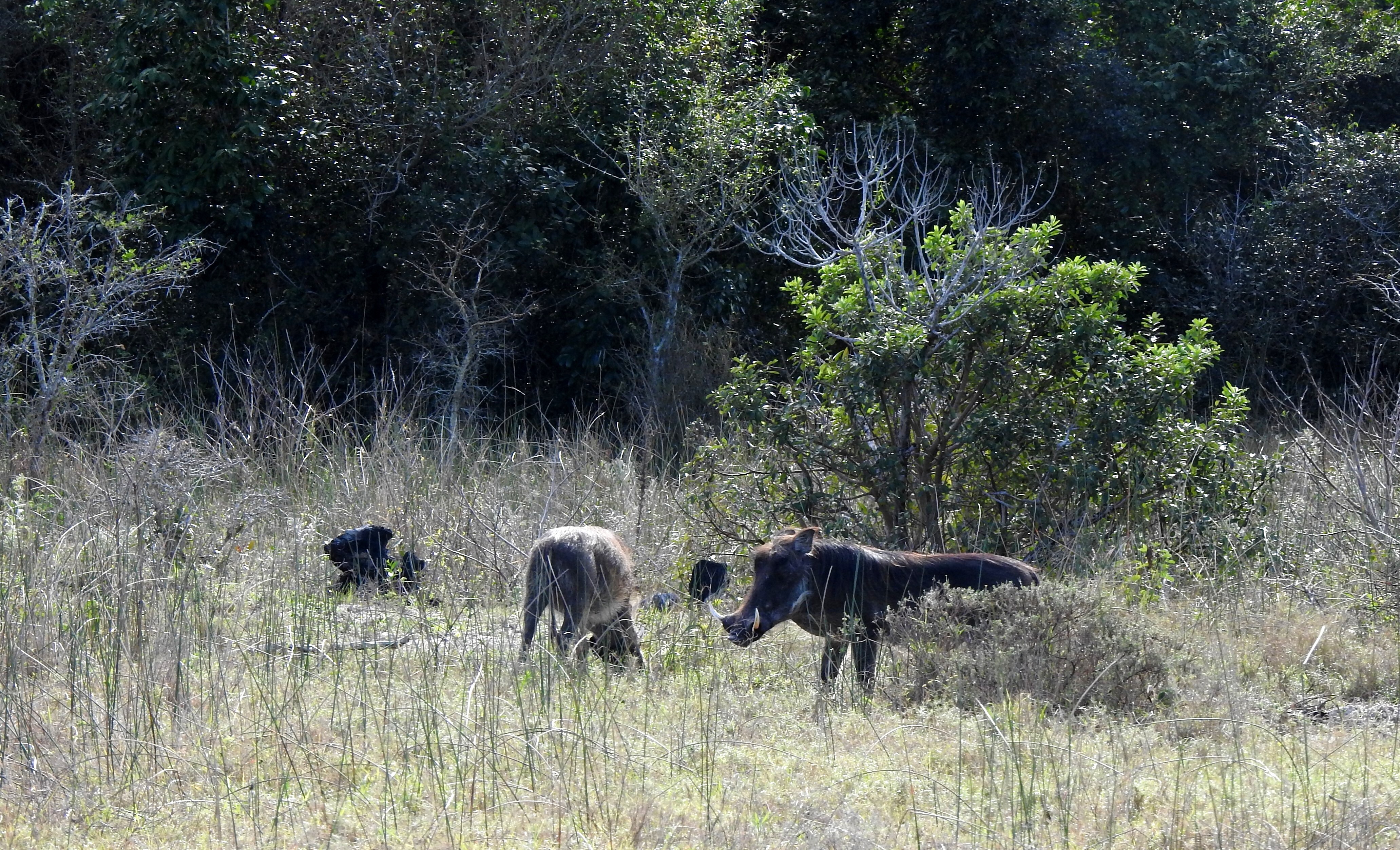
wildebeest
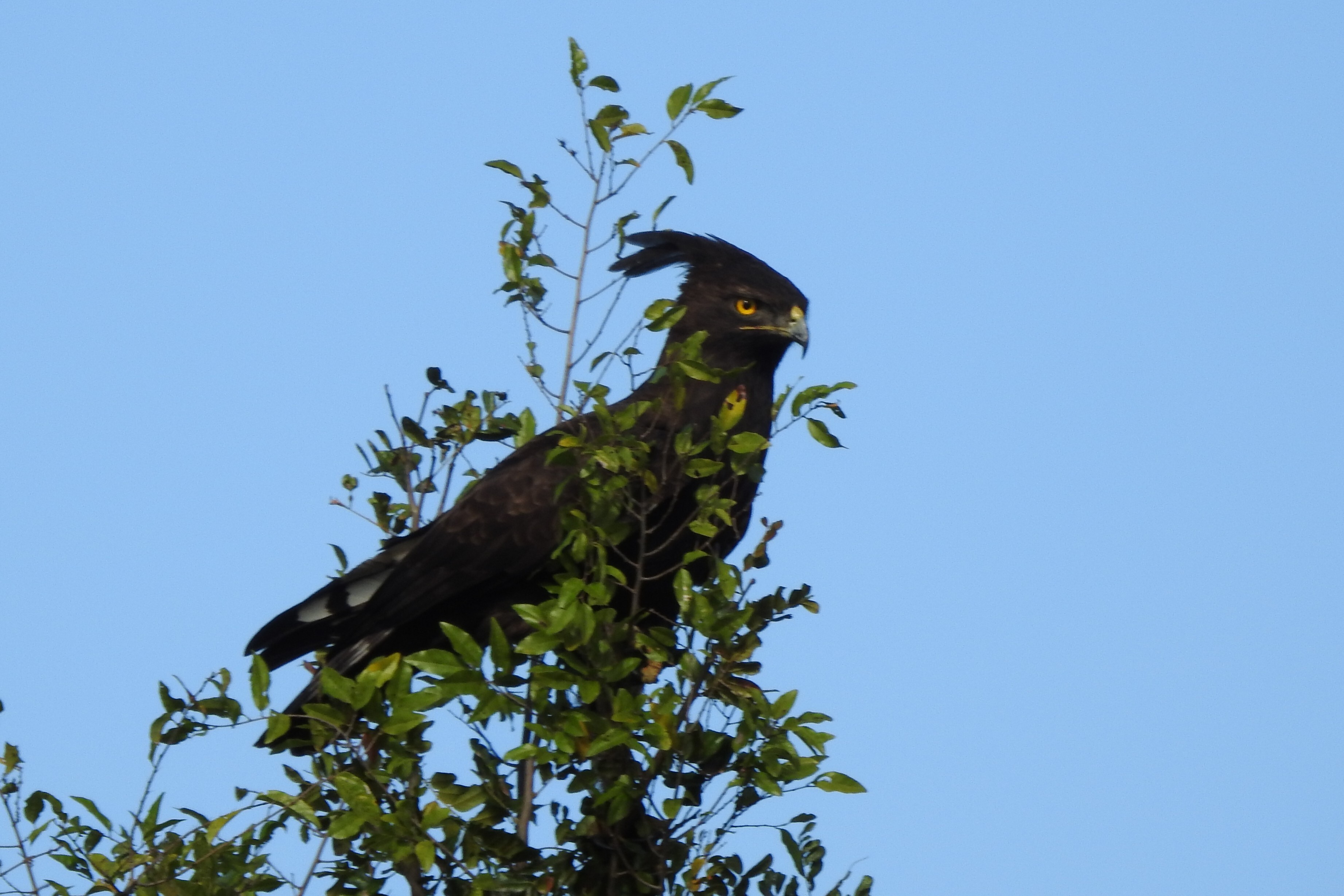
long crested eagle:
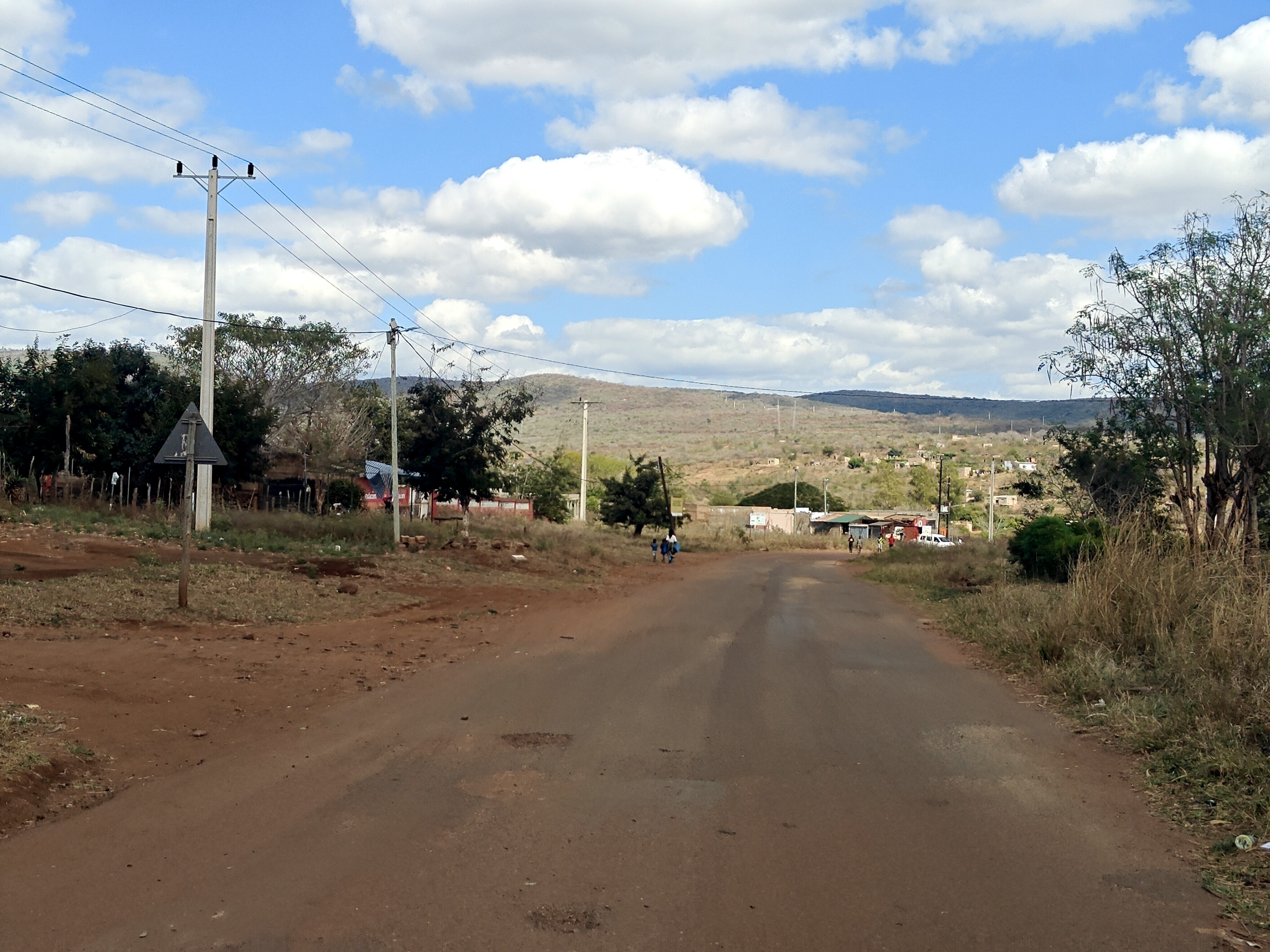
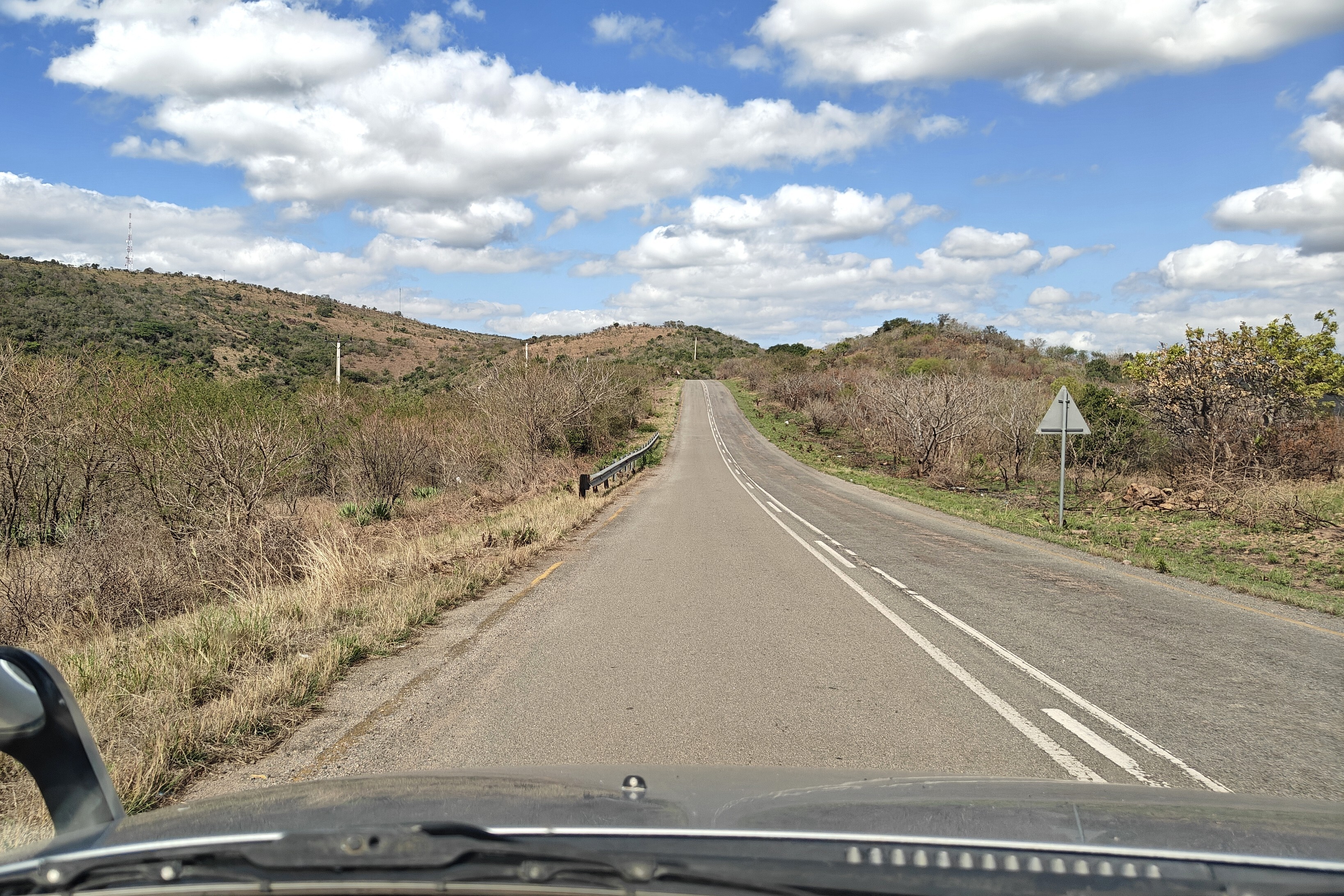
Turns out much of the way to the border was good pavement; we did hit decent dirt road after about 100 km / 60 mi and then it was potholed pavement (reminiscent of Malawi!) for the next 20 km / 12 mi then it was potholed pavement for the 16 km / 10 mi before we reached a major highway to the border. All in all, no where near as bad as we’d read about.
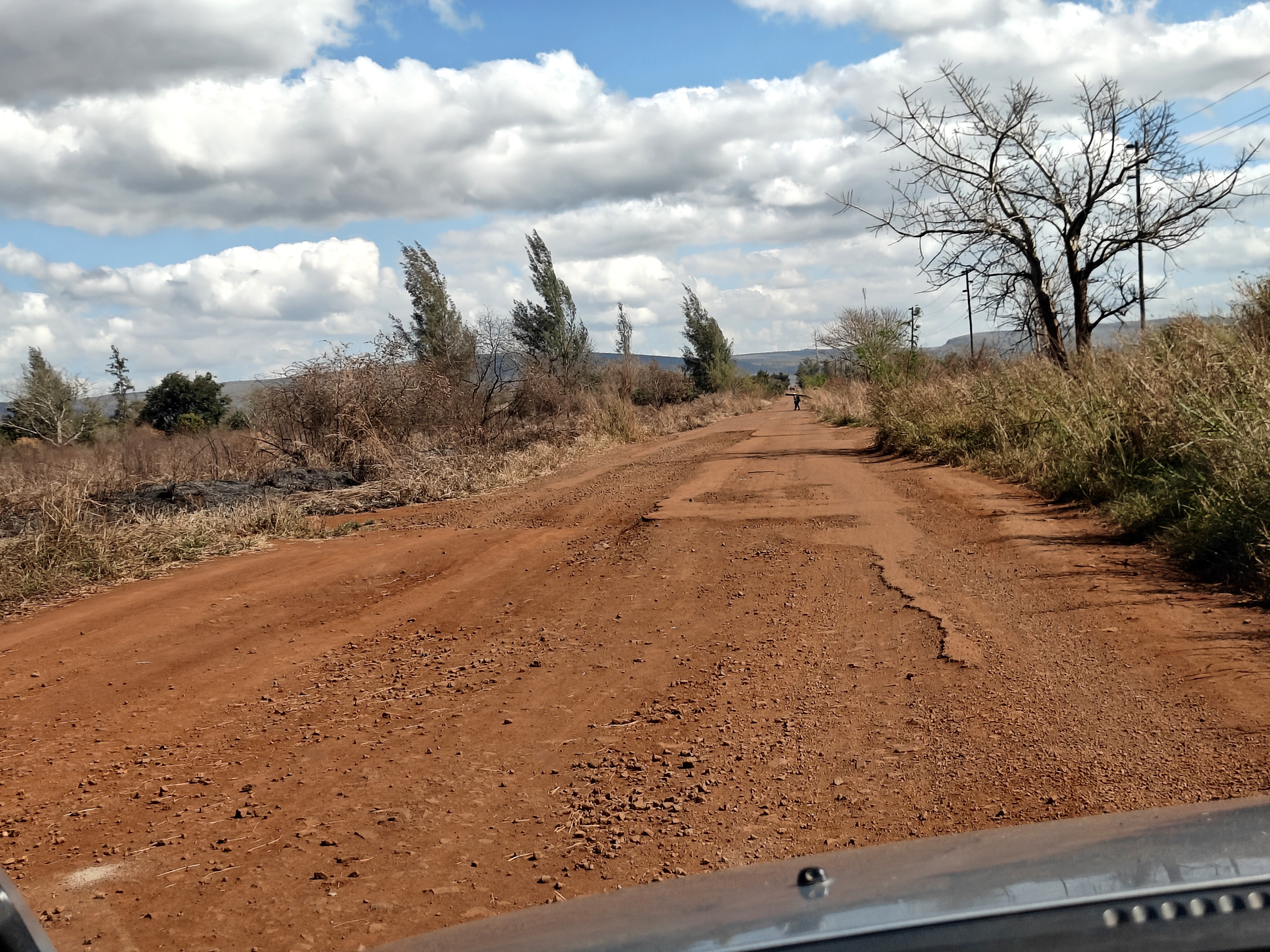
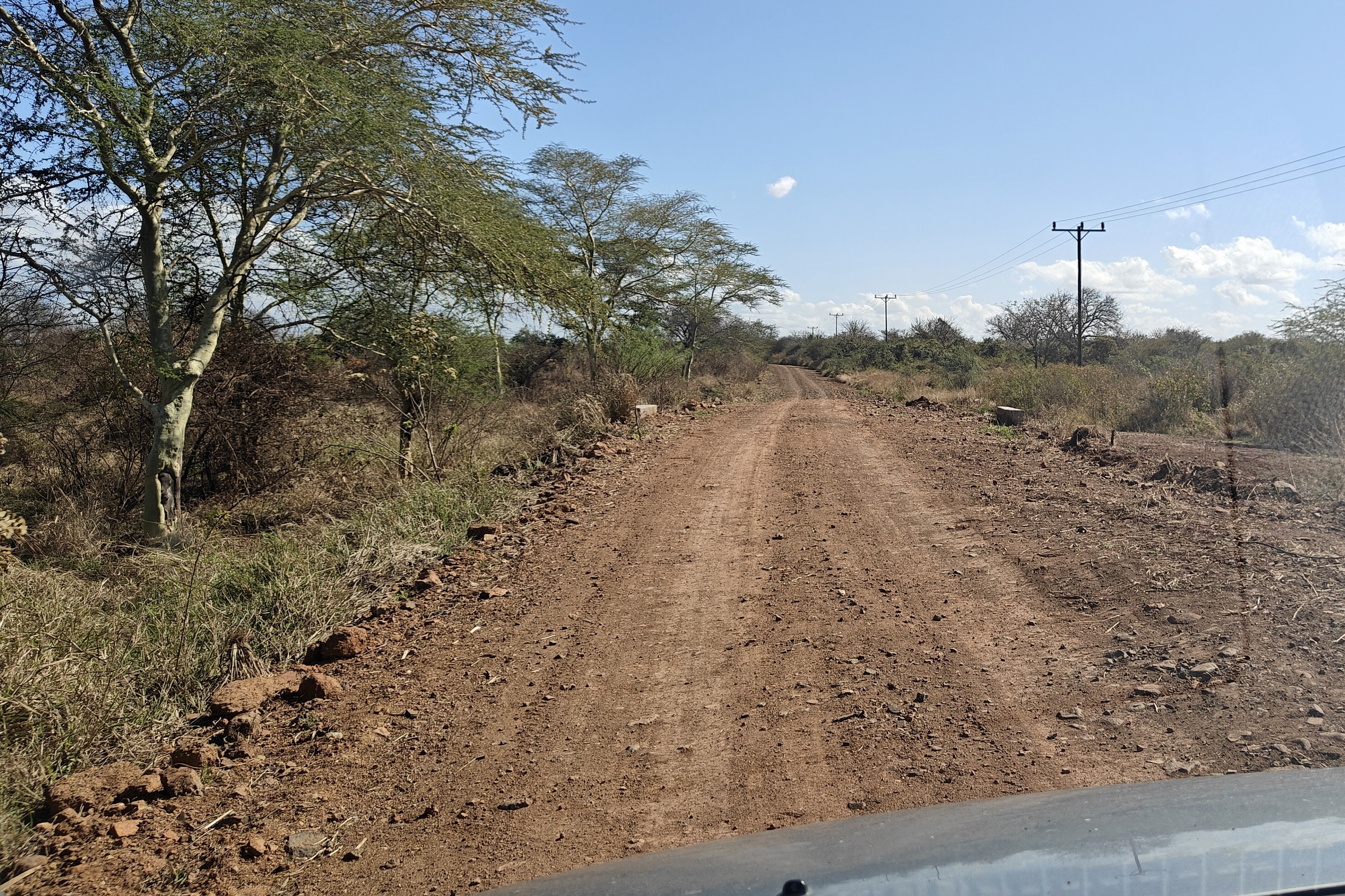
The border crossing at Eswatini (both sides) took less than 30 minutes and we were on our way. This was not a “one stop shop” situation but neither side took very long nor were there many people crossing. The only fee we had to pay here was for taking a car out of the country.
Back to MZ after Eswatini:
September 1st, 2026
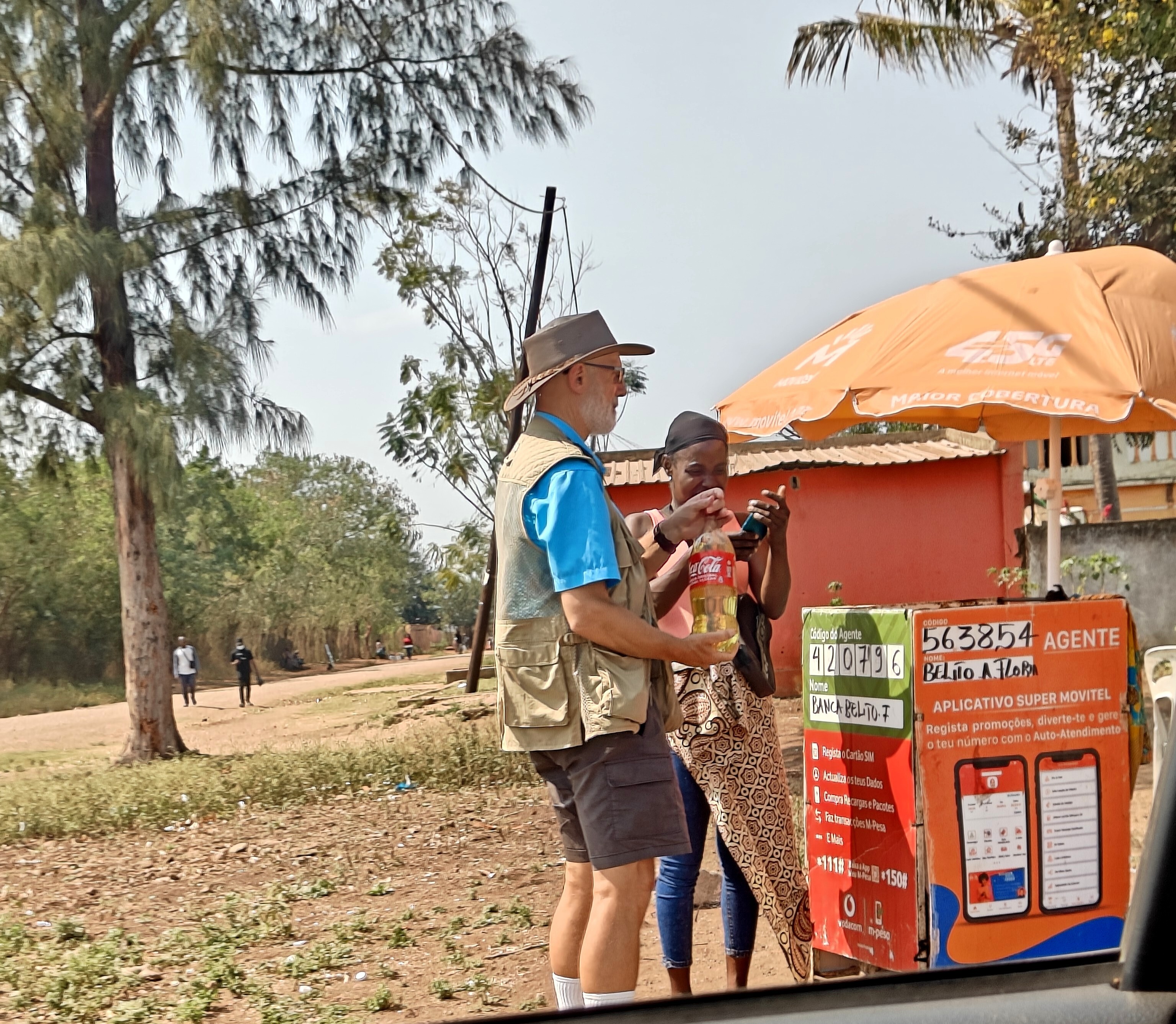
We returned to Mozambique via a different border post and almost ran out of gas! We had enough gas to make it to the border and we had seen two stations in the border town on our maps – but nope, they were not open – or out of gas! We had to go about 30 km / 20 mi to the next one on Google so we were pushing it. It turned out that there was no station there at all but a woman at the shop near where it was supposed to be, said to go down the road to the market and someone might have gas.
Turned out a lady was selling it in 2l coke bottles. Doug took a sniff to be sure it was petrol and then we put it in the tank hoping to make it to past Boane where there was another station – that was about 13 km / 7 mi.
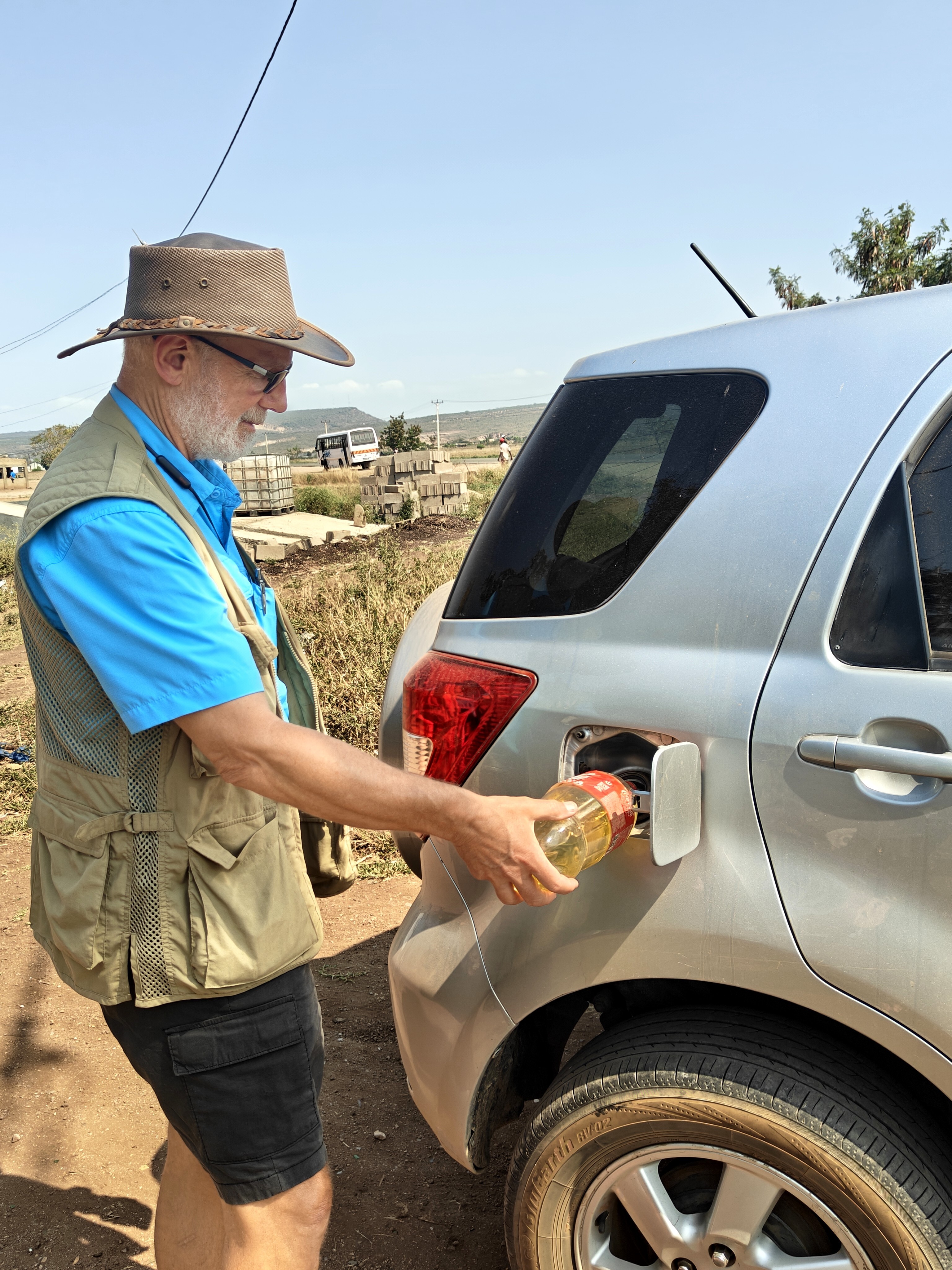
As we approached Boane, we did find a station but it too was out of petrol; only had diesel. Outside the station there was a young man selling one and two litre bottles again so we bought one hoping that would make it closer to Maputo.
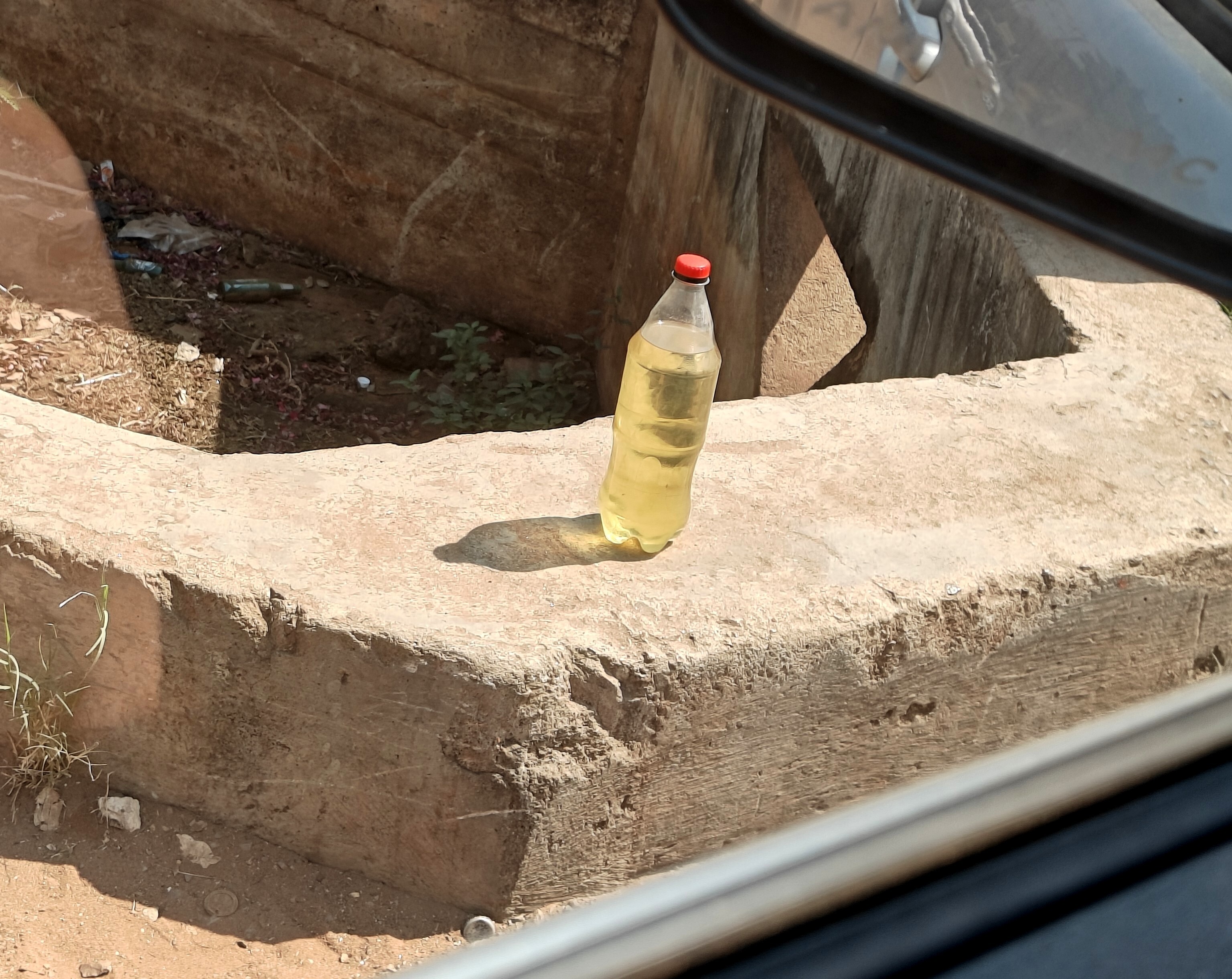
Then it turned out there was a station 500m down the road that had petrol so we used a good deal of our cash to get ¾ of a tank. We’ll top it off before getting to our lodgings tonight as we’ll only have to go 11 km / 6 mi to the airport tomorrow.
The drive into Maputo was very slow with traffic everywhere. There was one toll of 30 MZN. Our plan was to get gas and go to a grocery store to get a few things for dinner. There were two stations before the mall and we went to the first in case the second had none. We filled up and went to the mall where we’d been a week ago and Doug went in to get a couple of things while Fran waited in the car with all our belongings to be safe.
We had been told we could check in to the one bedroom apartment we’d booked at 2 and it was now 1:30 so we tried and it was ready. Security let us in and we were told the owner would come by later for us to pay by credit card.
It’s a small one bedroom apartment complete with parking, AC, a kitchen, living room, king bed and WiFi.
We both showered, repacked, did several things online since the internet is so much better here.
We drove a total of 837 km / 520 mi in both Mozambique and Eswatini.
Thoughts on the country:
This too is another very poor, underdeveloped country with many people just barely getting by and we didn’t go north of Maputo at all where apparently it is worse (as are the roads hence out decision to stay south). We’re glad we’d done our research and planned to visit only this southern portion of the country. We felt bad for all the vendors on the beach really trying to sell their wares over and over again. They always did show their gratefulness if you gave them money. When we were in the city, you can see from the buildings that are now falling apart, that at one time there was money here but it’s so war ravaged it’s sad.
The people are very friendly, most speak some English.
It does feel like a relatively safe country.
We found no dead cellular zones in the areas we traveled within.
They depend a great deal on South Africa – especially for tourism and give good exchange rates for the Rand.
The main road out of Maputo going south is in very good condition (we did hit one area under construction which made no sense as the road seems newish) and there was a toll at one point and it appeared there was a second one just after our turn off to Ponta do Oro.
It is much emptier of humans than Malawi was; we had stretches of driving for several kilometers devoid of civilization and not nearly as denuded. There is not a great deal of traffic and driving was easier than both Malawi and Madagascar.
Fun Facts:
- Mozambique has one of the longest Coastlines in Africa; it runs for more than 2,400 km / 1500 mi.
- Maputo’s Katembe Bridge is the longest suspension bridge in Africa, linking the capital to the southern coastal regions.
- Mozambique takes its name from an offshore island of the same name which was apparently named after Mussa al-Bik, an influential Arab slave trader who set himself up as sultan on the island in the 15th century.
- If Scrabble allowed place names (proper nouns are not permitted), Mozambique would be worth 34 points
- Resistance leader Samora Machel was Mozambique’s first president. He died in 1986 when his plane crashed in South Africa. It was widely believed that the South African government was involved in his death, although it strongly denied any association.
- Mozambique is one of the Commonwealth members without historic ties to the United Kingdom – it joined in 1995.
- Several scenes from the 2006 Oscar-nominated movie Blood Diamond starring Leonardo DiCaprio were shot in Mozambique.