July 13th, 2026
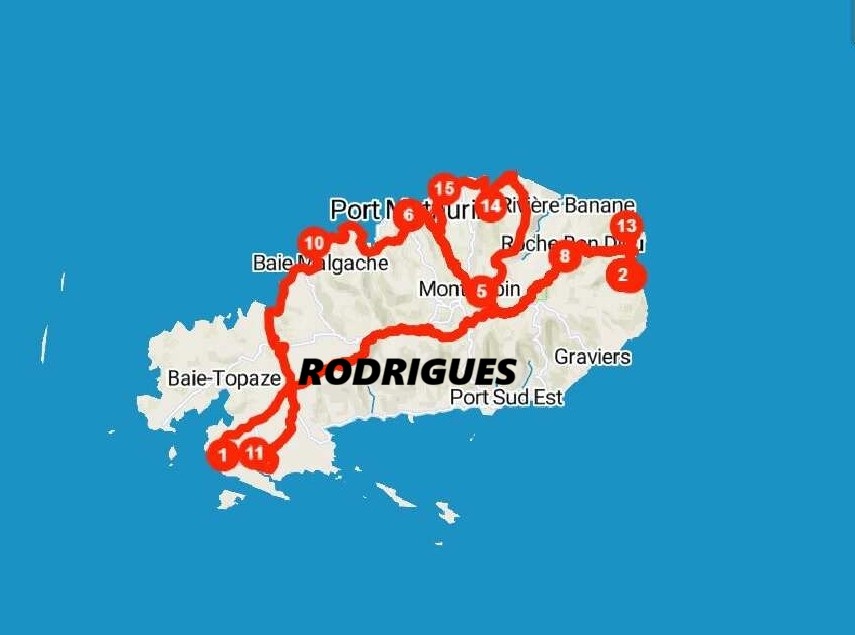
Rodrigues is an autonomous outer island of the Republic Mauritius, located 560 km / 350 mi east of the main island of Mauritius. The outer islands of Mauritius are managed by the Prime Minister of Mauritius through the Prime Minister’s Office by the Outer Islands Development Corporation.
It is really quite small – roughly have the size of Washington DC. It’s about 18 km / 11 mi long and 8 km / 5 mi wide.
Rodrigues was named after Portuguese explorer: Diogo Rodrigues, who first came upon the uninhabited island in 1528, under direction of Portuguese Viceroy Pedro Mascarenhas – the (namesake of the Mascarene Islands).
Due to the island lying far off the beaten track of seafarers at that time, it received few visits. From 1601, the Dutch began visiting the island somewhat more regularly for fresh supplies of food. In 1691, the Hugenot Francois Leguat and seven companions landed on the island, intending to set up a farming colony of Protestant refugees. Farming was not successful, but there was an abundance of tortoises, turtles, birds, fish and other seafood.
Of volcanic origin, Rodrigues is surrounded by coral reef and some tiny uninhabited islands that lie just off its coast. The Island rises from a ridge along the edge of the Mascarene Plateau. The tectonically active Rodrigues Triple Point lies on the sea-floor nearby. Rodrigues is only 1.5 million years old, even though the plateau under the lagoon surrounding Rodrigues, is much more ancient than the island.
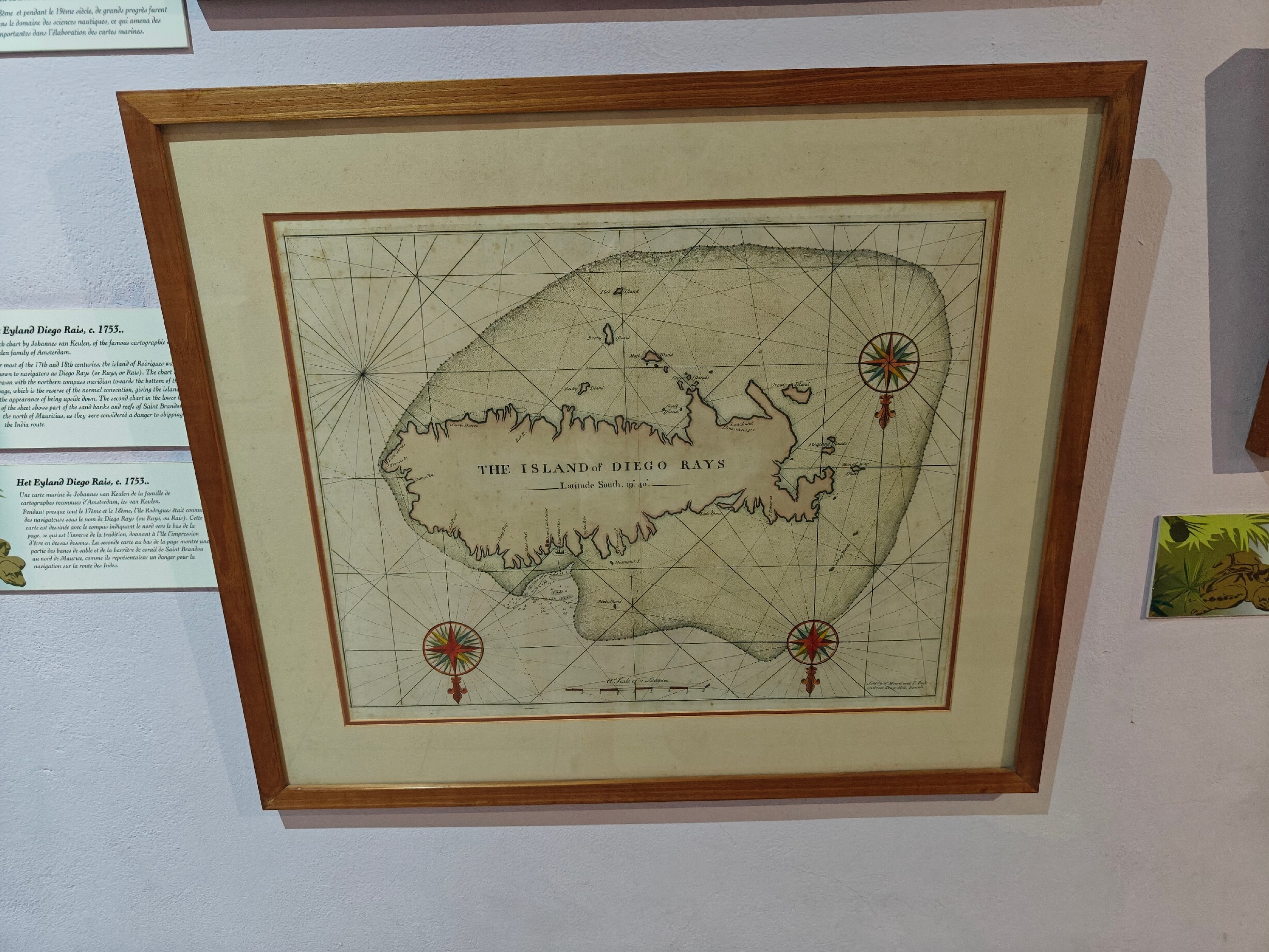
Over time Rodrigues has developed a unique environment, including many endemic species but since the seventeenth century much of its biodiversity has been eradicated. The island was home to two now-extinct endemic giant tortoises, a domed species and a saddle-backed species and the extinct solitaire bird.
The tenth District of Mauritius until 2002, it was granted autonomous status and has since been managed by the Rodrigues Regional Assembly for its everyday governance. The capital and largest city is Port Mathurin.
Its people, mostly of African descent, are Mauritian citizens and form part of the wider Mauritian Creole community. Its economy is based mainly on fishing, farming, handicraft and a developing tourism sector.
Flag
As it is part of Mauritius, it does use the same flag but also has its own. The flag of Rodrigues Island features a white background (representing peace) bordered by four horizontal stripes—red, blue, yellow, and green—which match the national flag of Mauritius. Centered on the flag is the local coat of arms, which depicts endemic birds (the Solitaire and warbler) and local resources above the motto “Travail, Solidarité, Fierté” (Work, Solidarity, Pride).
Currency: Mauritian Rupee MUR to USD: $0. 21; CDN $0.30
Gas: 64.25 MUR – $5.19 USD per gallon; $1.91 CDN per litre
Beer: Phoenix – a Mauritian beer
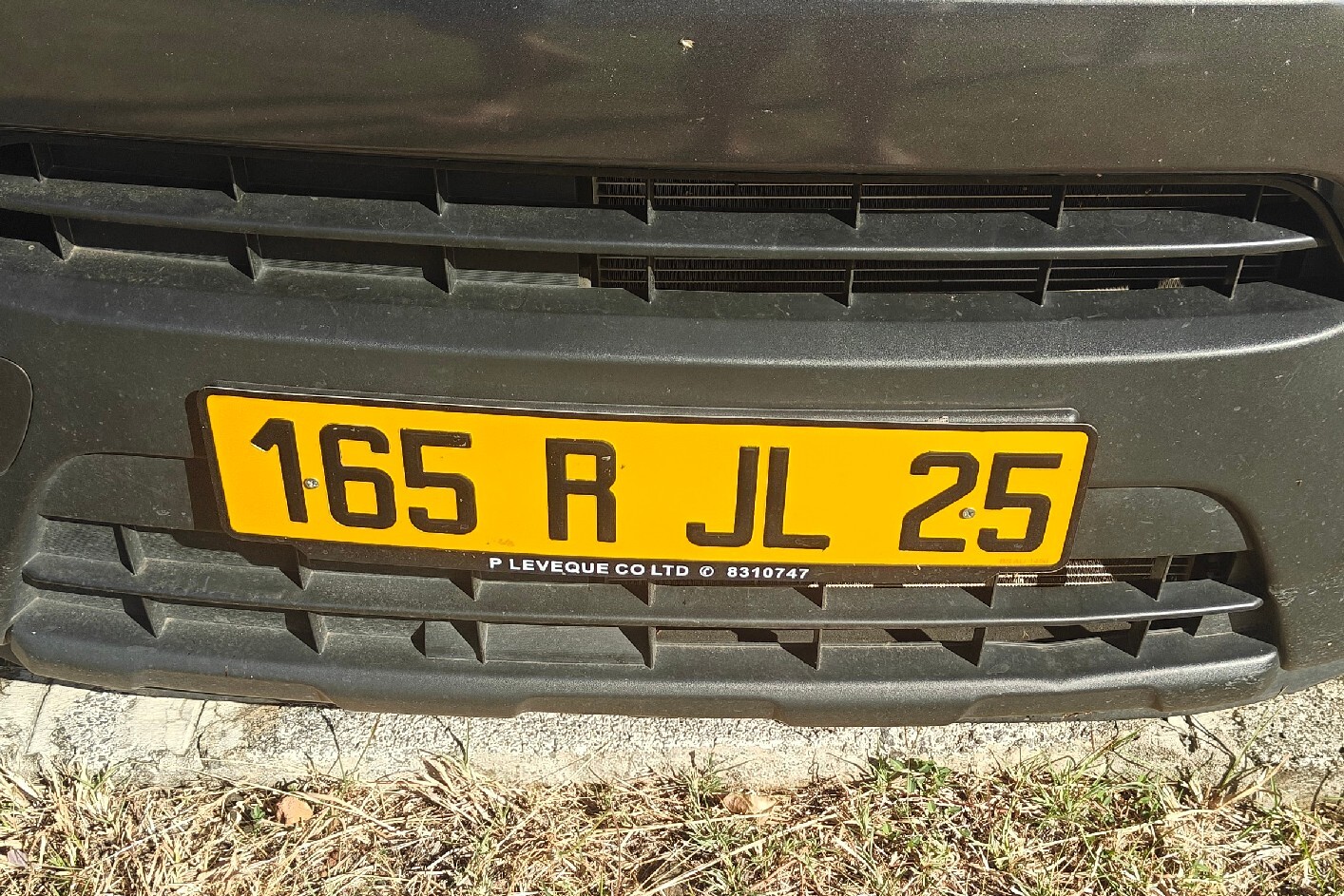
License plate:
When we landed in Mauritius to catch our connecting flight to Rodrigues, we naturally had to go through immigration as we’d done from Réunion, however on the plane trip over here, we had to fill in new immigration type papers and health forms which was weird as we were not entering a new country but they claim it’s a way of keeping track of tourists. It was a short flight – about an hour.
We landed a bit early on Rodrigues Island and our luggage came out fairly quickly after clearing “Immigration”. We went out to arrivals looking for a guy with our name on a sign so we could get out rental car. Well, there was no such man but we did finally meet up with Irvin about five minutes later and got our little Suzuki.
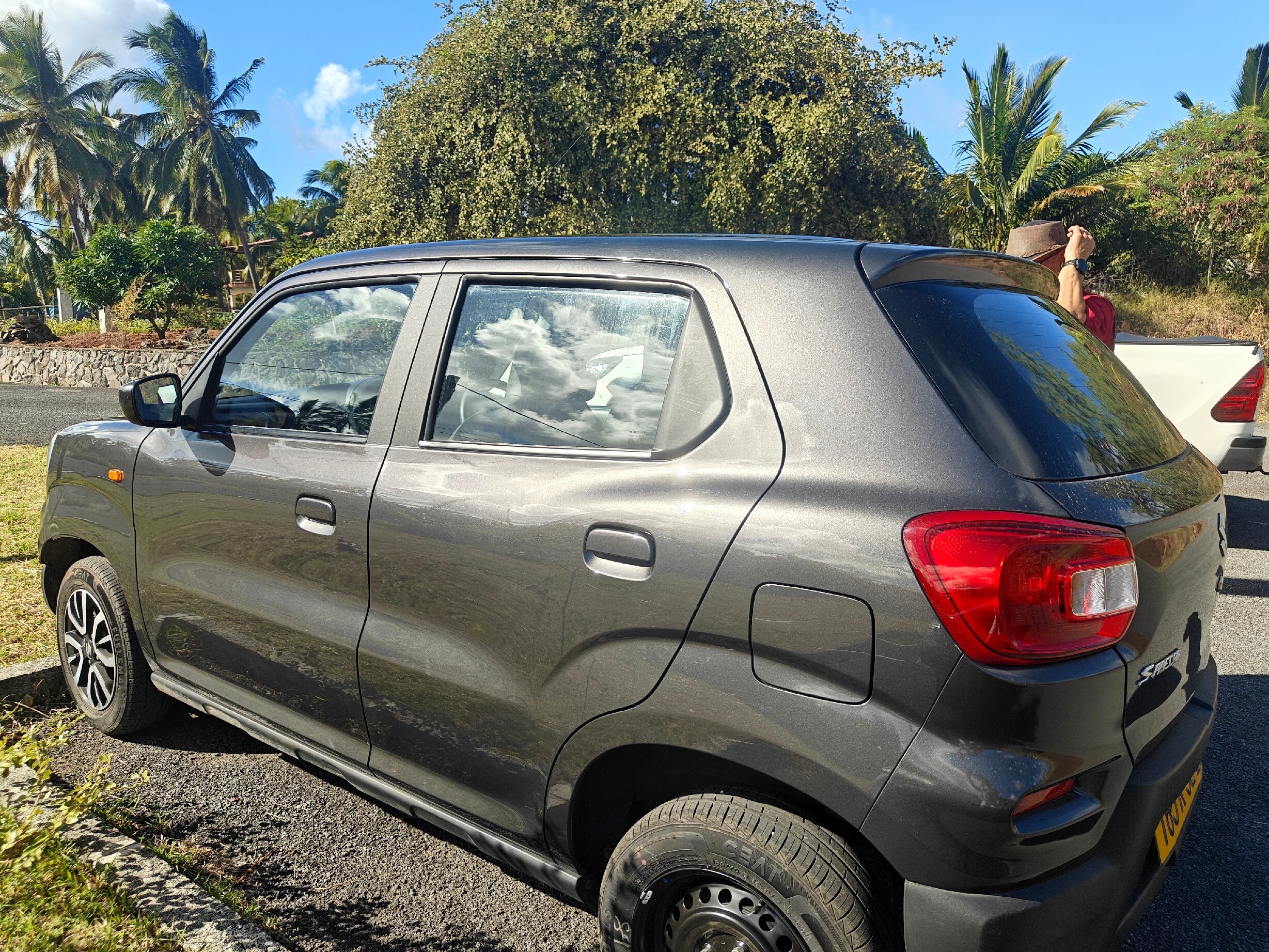
It turned out we’d not paid ahead for this and Irvin wanted cash, so Fran walked back to the airport building to the ATM to get more cash to get sorted before we could leave. It’s now getting close to 7 pm and it’s dark. The airport is on the southwest corner of the island and we had to drive to the east coast to our accommodation.
It’s warmer here than on Réunion with temps in the high twenties and during the day, a great deal of humidity.
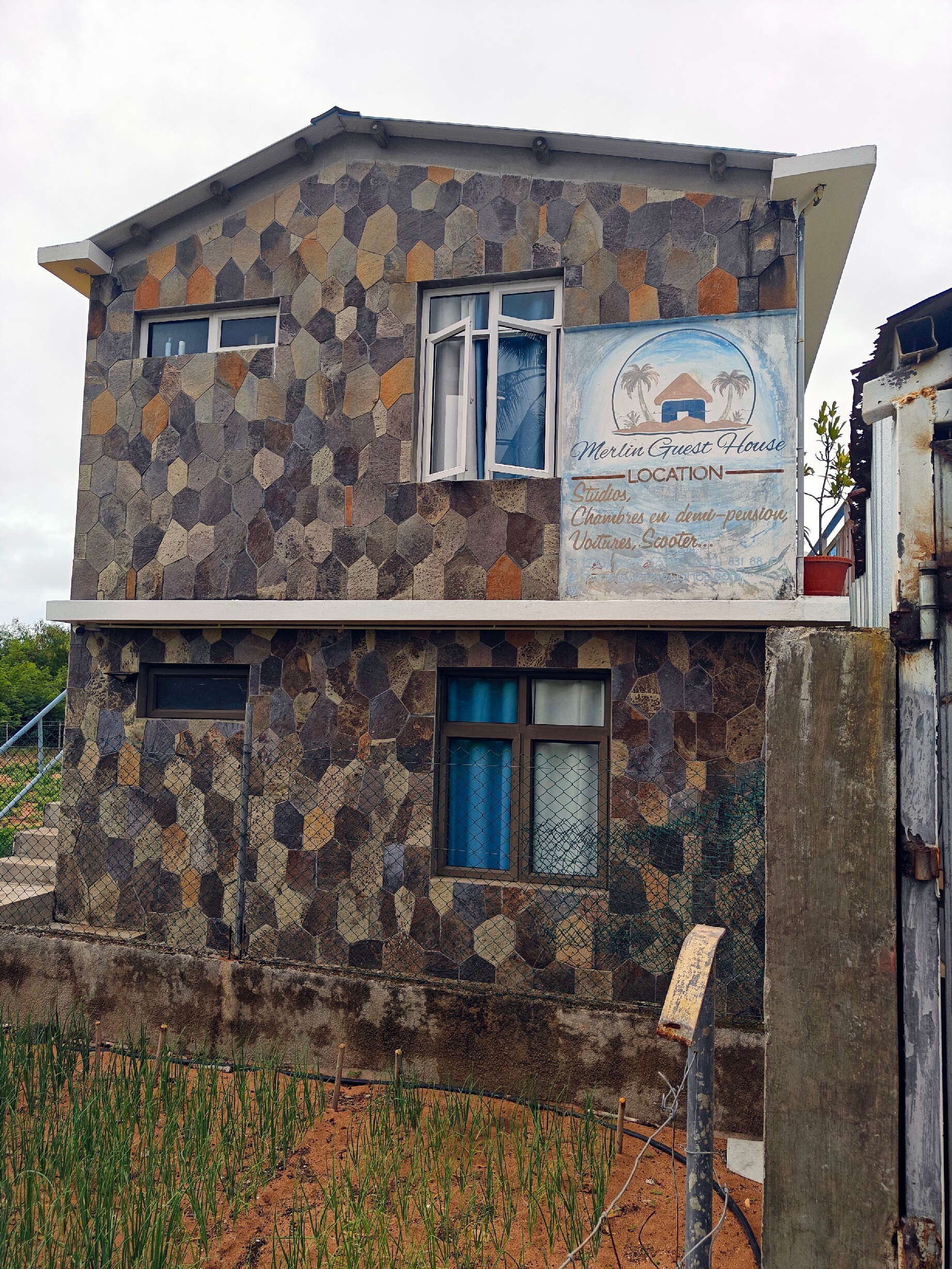
After making a quick stop for a few drinks at one of the few convenience stores that was still open, we made it to Merlin Guest House at Saint Francois Beach. Here we have a 1 bedroom apartment with a queen bed, as well as a single in the dining area (great for dumping our things on!). There is a table and chairs, a not very well supplied kitchen with a fridge, kettle, microwave and a large sink and counter. The hot water in the bathroom is on demand, there is WiFi and an AC unit in the bedroom but not the main room. We also have a large balcony with a table and chairs which gets the ocean breeze.
Turns out we bookings here are “half board” and we’d arrived just in time for dinner at 7:30. We joined the two other couples and a family of four, all from Réunion Island and all French. Two of the women spoke some English and couple of more people had a smattering.
Dinner was three slow courses of a salad and an appie, a main and a little dessert and we were done around 8:45.
Note: many of the nights we had some sort of seafood for the appie: octopus, tuna, shrimp, a salad of some sort as well and the main was usually rice (sometimes mashed potatoes) with meat/fish and a vegetable (sometimes squash or lentils) and the dessert was simple: a flan, ice cream (the mango one was delicious) and one night apples in mulled wine.
Tuesday, we awoke to clear skies that didn’t last all day but it was mostly sunny. Breakfast was served at 8 am and after cooling off a bit on our balcony with the lovely breeze, (the mugginess starts early) we walked down to check out the beach:
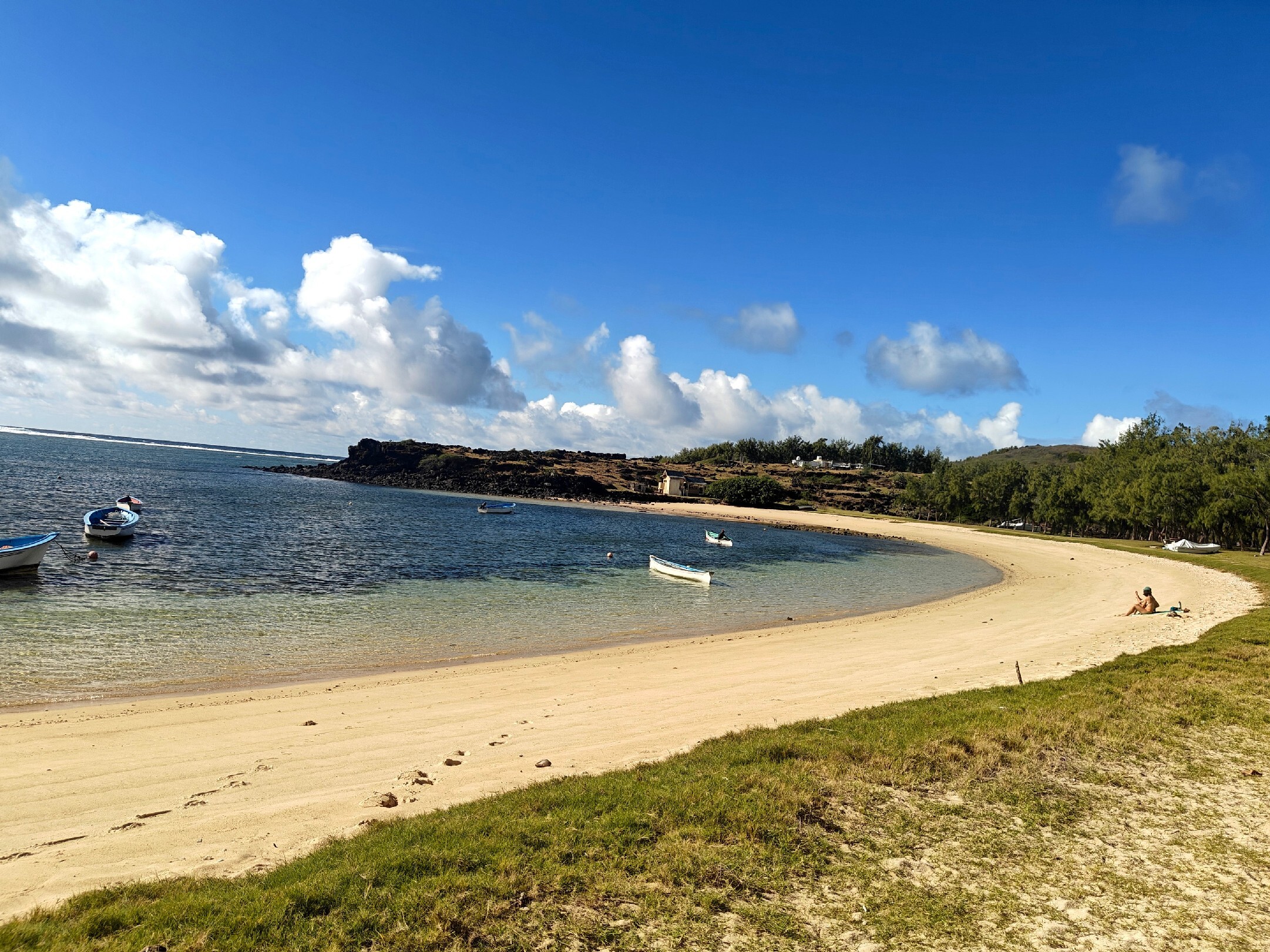 It’s a long crescent beach but it’s quite sloped and narrow with no services that we saw. Later in the day we discovered that there are really old bathrooms nearby and several picnic tables but no chairs or umbrellas for rent. There is a large somewhat grassy/sandy section under trees for shade that pretty much runs the length of the beach with grass with a lot of small cones from the trees on the ground.
We returned to Merlin’s Guest house and got in our car and drove to Mont Limon – the highest point on the island at 398 m / 1305‘. There is a small staircase up to a trail and atop the mountain is a view with a 360º view. It’s about a five minute walk as you not starting at sea level. The views on the drive were rural, hilly and many of the coast in the distance.
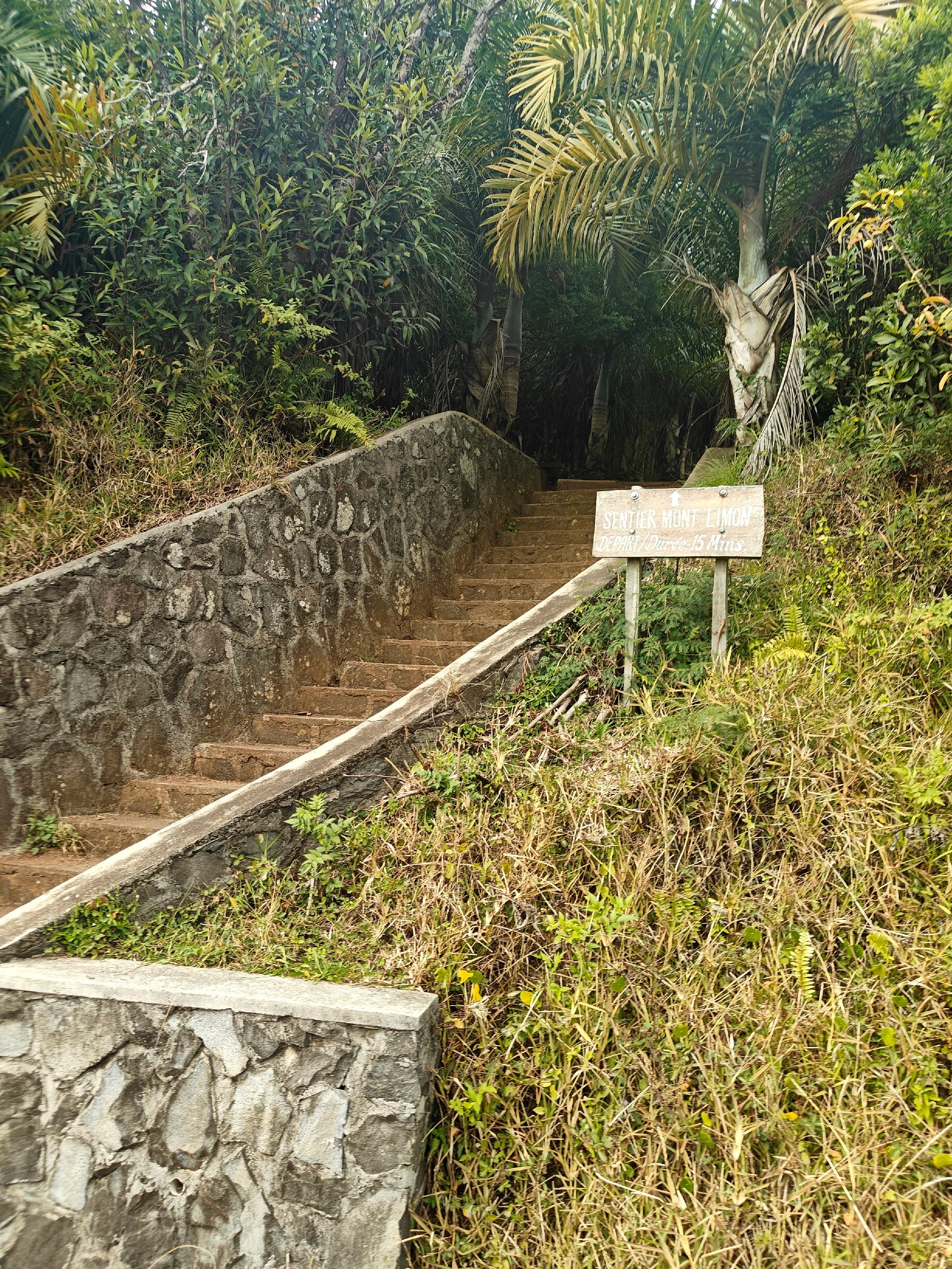
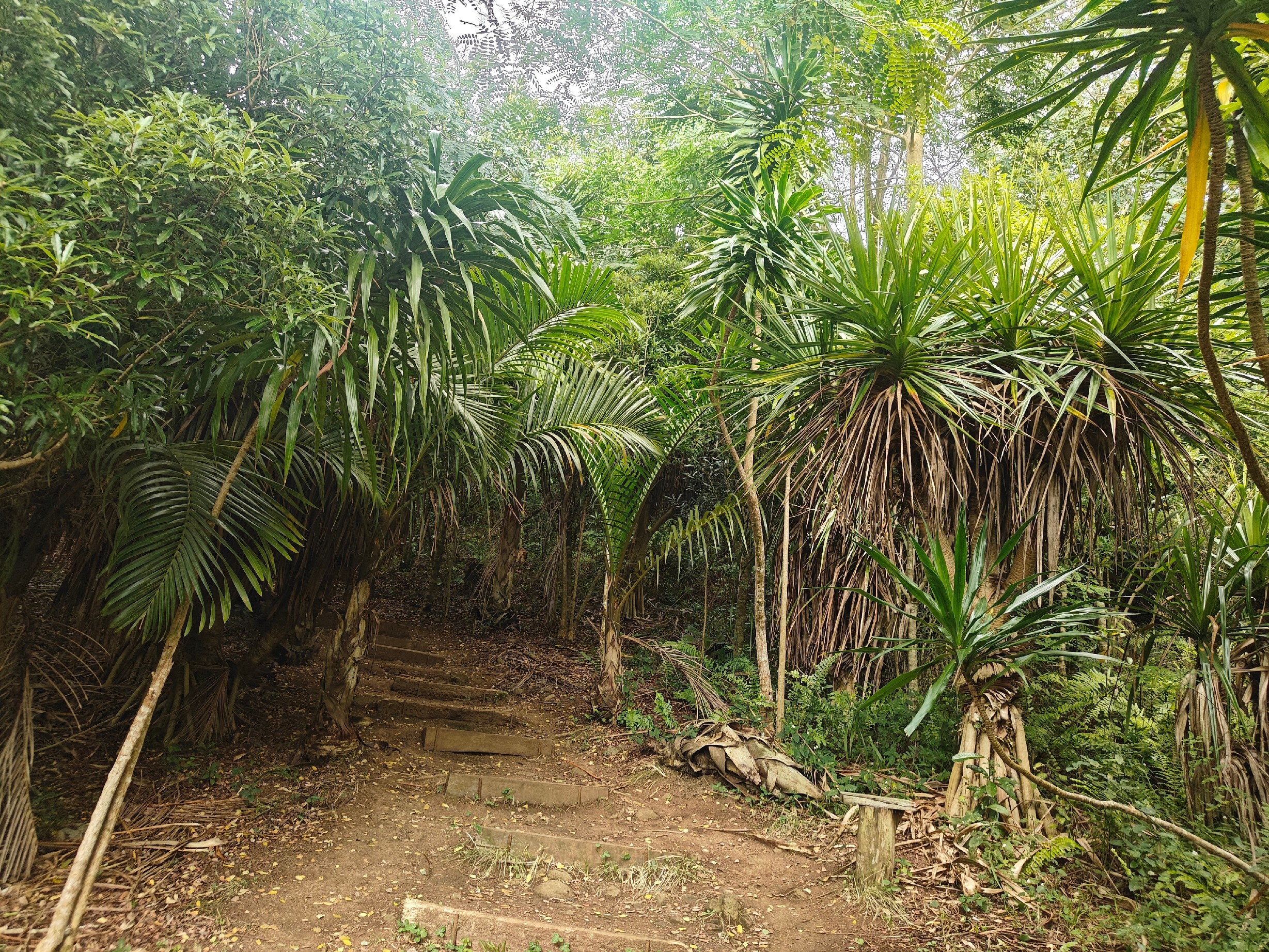

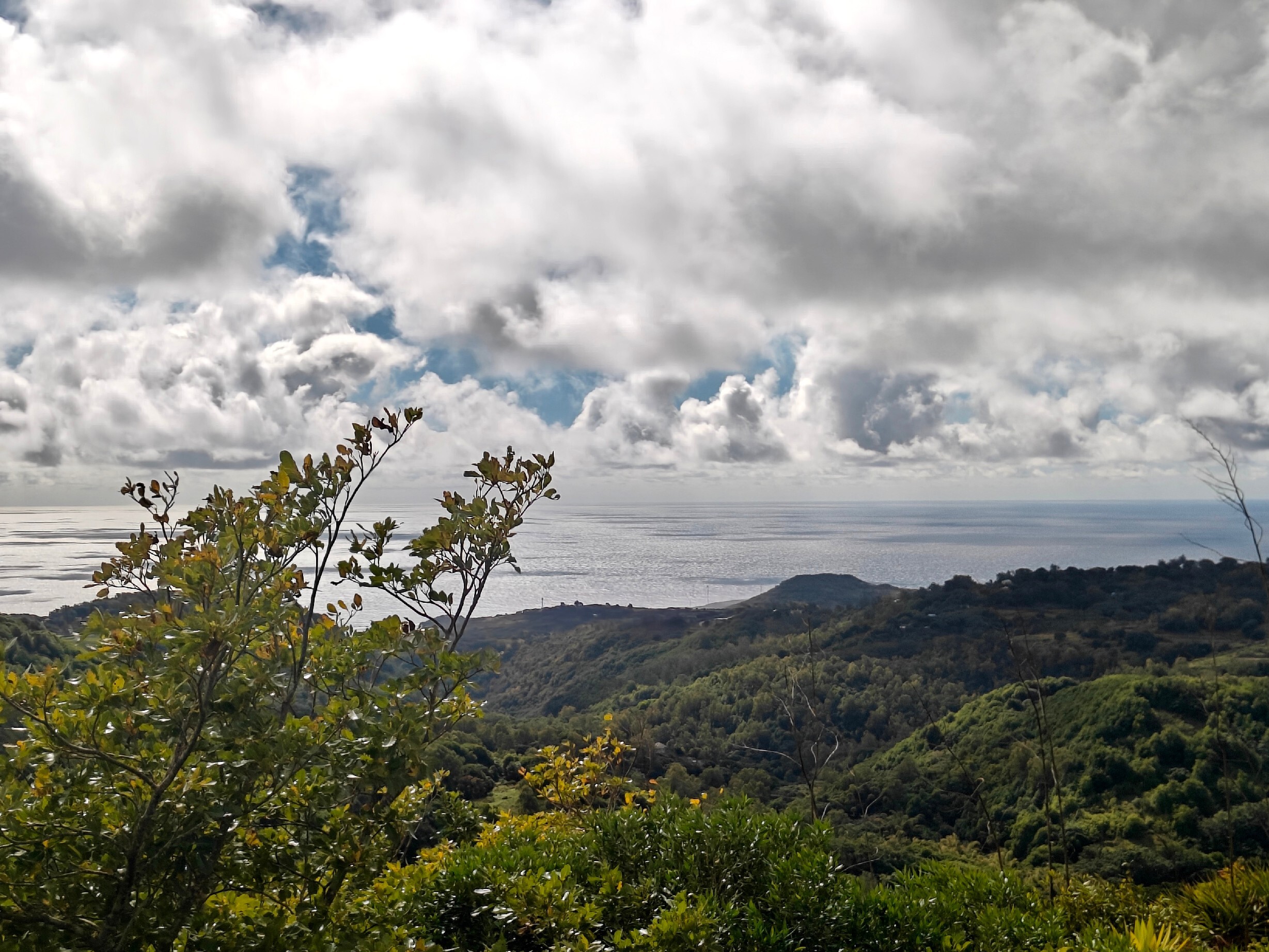
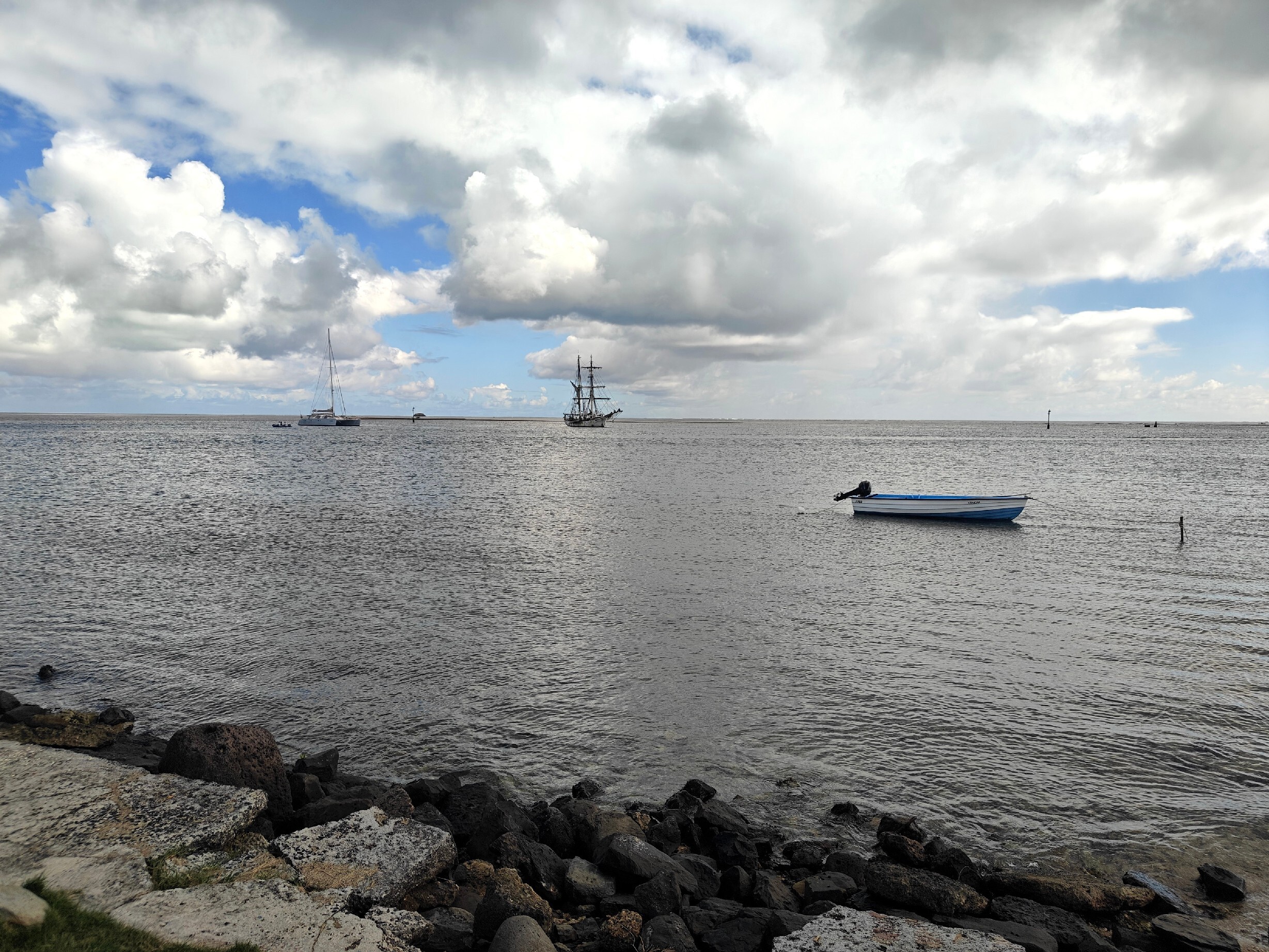
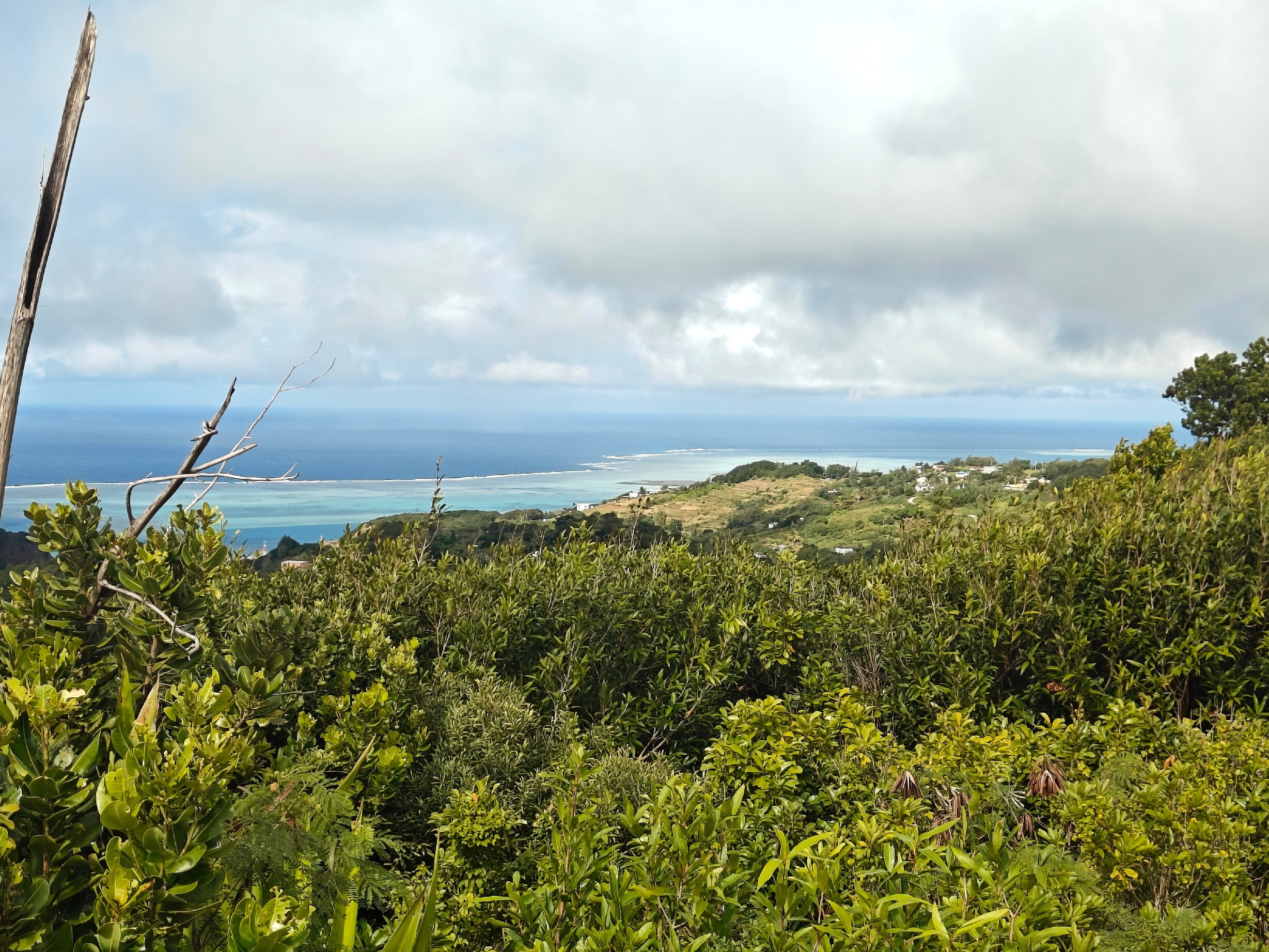 We continued into the largest city, Port Mathurin (about five streets paralleling the water) and got parked in a large dirt lot next to the water. We went for a walk to check it out and saw very few sights.
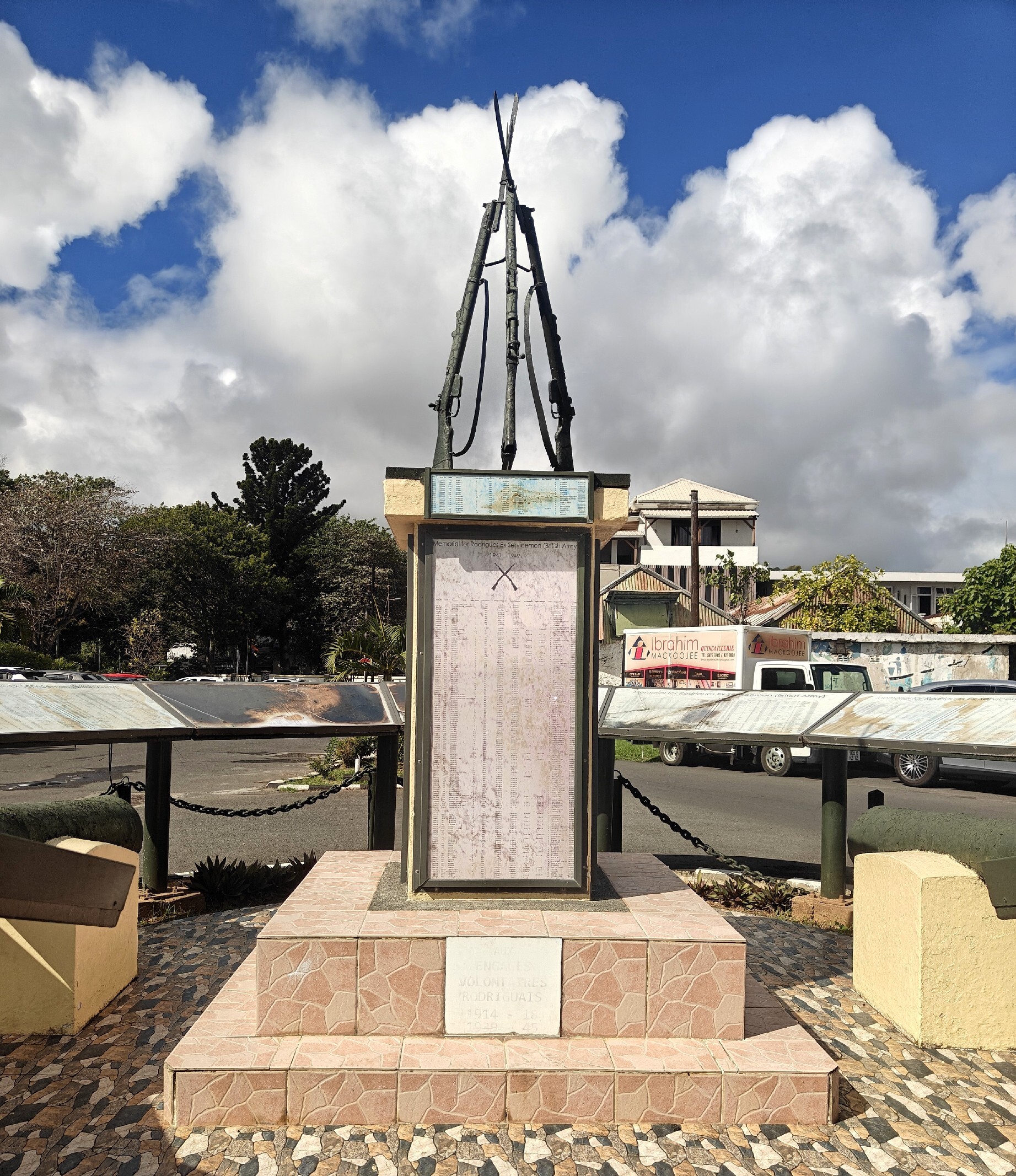
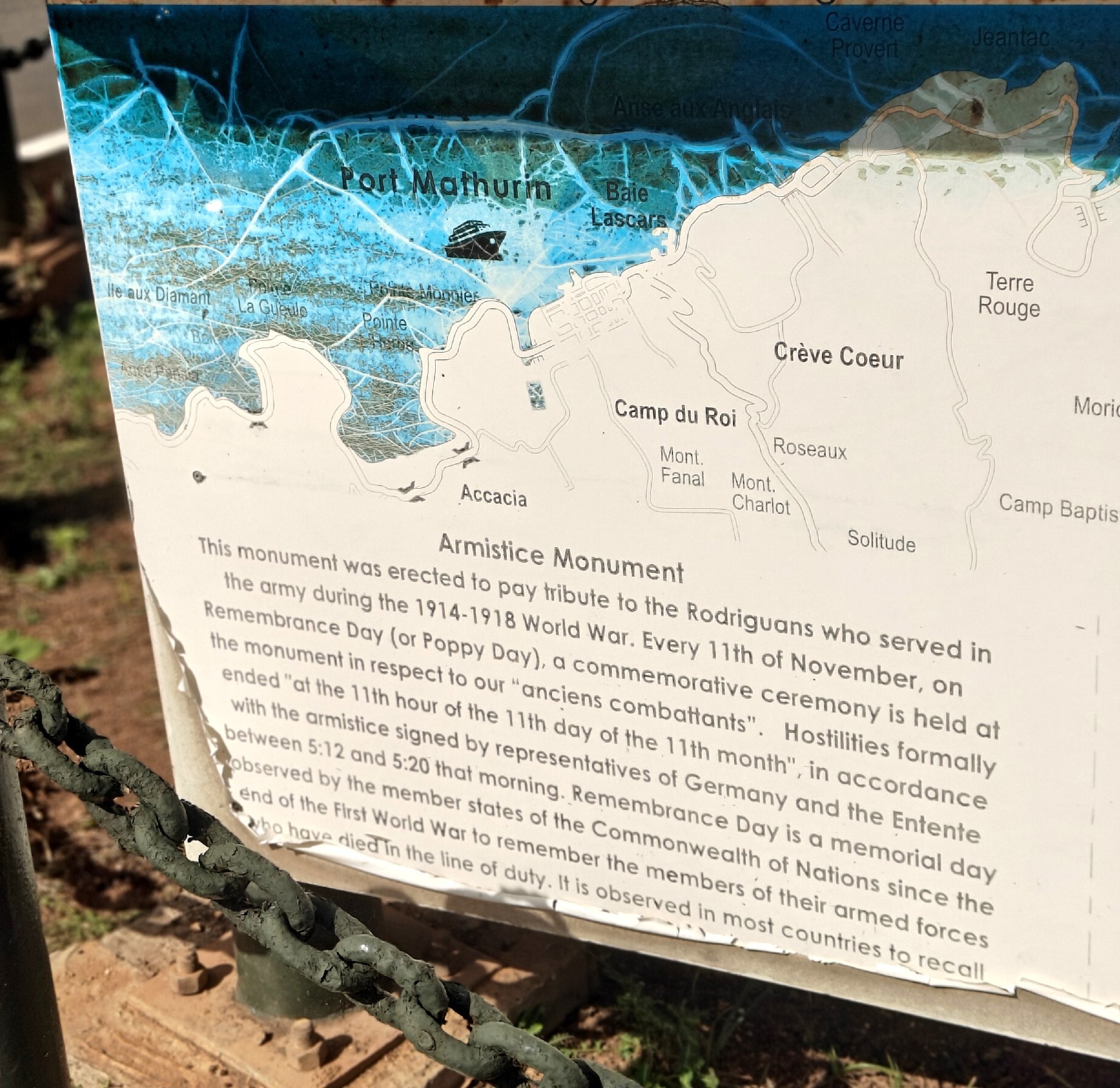
Just as you exit the parking lot, there was a war memorial devoted to all who fought not just those who lost their lives.
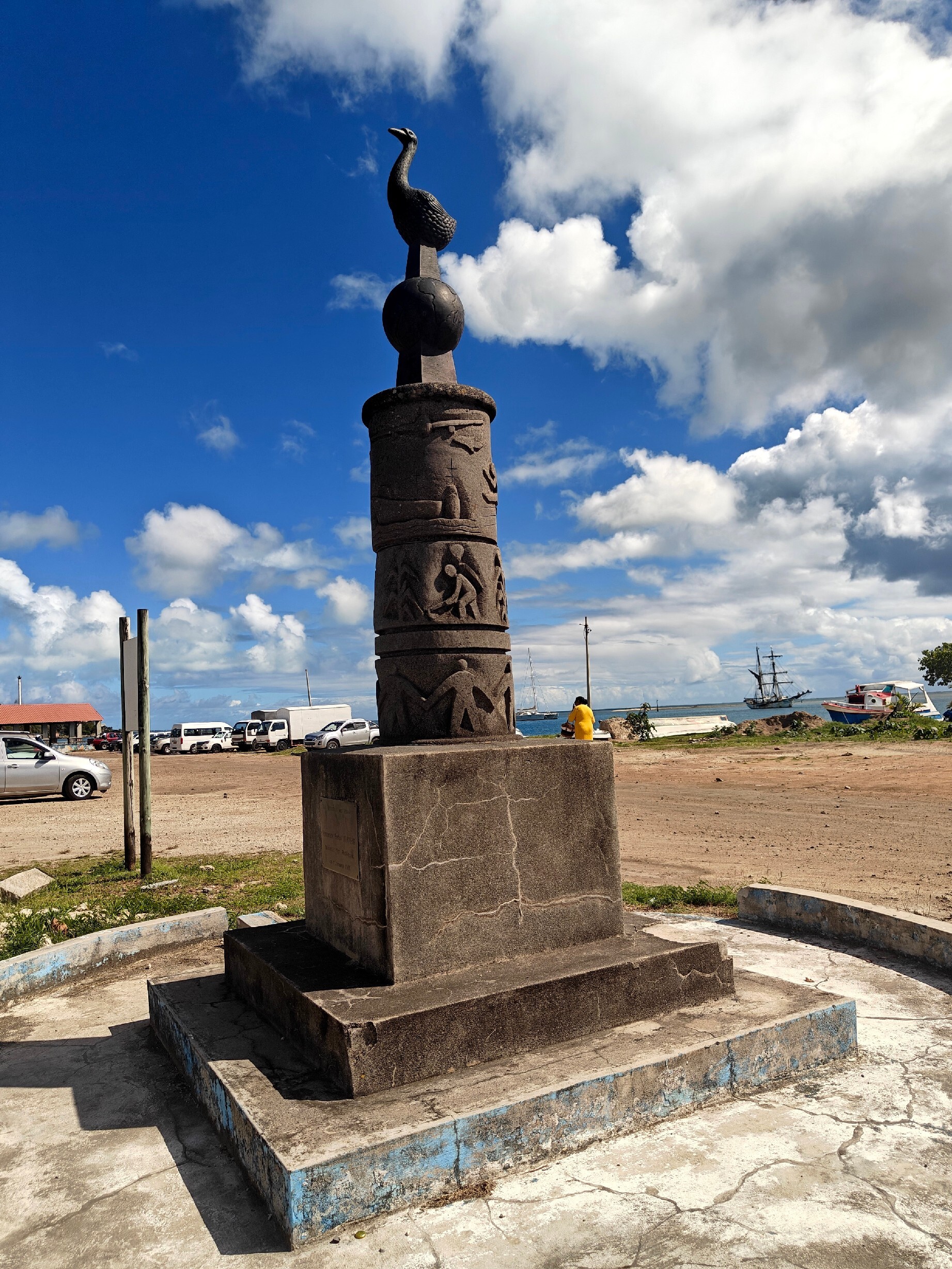
A Millennium Monument in the centre of the dirt parking lot:
After walking the streets, we found a grocery store where we could buy pop, water and beer/cider (Fran found Savana – a cider from South Africa she loves) and a few snacks. We returned to the car and then found a boulangerie to get a few more snacks before returning to out digs by noonish. We figure the snacks will tide us over each day without lunch till the late (for us) dinner.
After chilling a while back in the room – we got into our swim suits and went down to the beach. We’d brought little beach blankets and found a place to lay in the shade in the grass. The water is very clear but was cooler than expected with bits of debris along this end of the beach so not too inviting. There was a lovely breeze to keep us cool anyway. It wasn’t the most comfortable and after an hour we gave up. We showered off as even though we did not totally immerse ourselves in the ocean, the strong breeze made us feel like we had. We chilled until dinner. During dinner, the power went out but within minutes, a generator was running and it only last about 20 minutes.
Wednesday, started with on an off showers, then cleared up by the time Doug got back from his long run. He made it up to the top of Mont Limon but not the way he’d intended as that trail kept petering out.
We had considered going snorkeling here in a large bay on the south coast, as the water and reef are supposed to be pretty good but after hearing from the French family that all they saw were small colourful fish and coral and nothing more, we reconsidered it. After doing a bit of research we learned that winter here is not a good time for snorkeling even though the water is clear, the winds change the current and a lot of marine life does not visit this area.
So instead, we decided to go to the Francois Leguat Reserve where you can learn about and interact with giant tortoises. Fran found out what time the tours were and we weren’t going to make the next one so we decided to try for the 1:30 tour and make a few stops enroute.
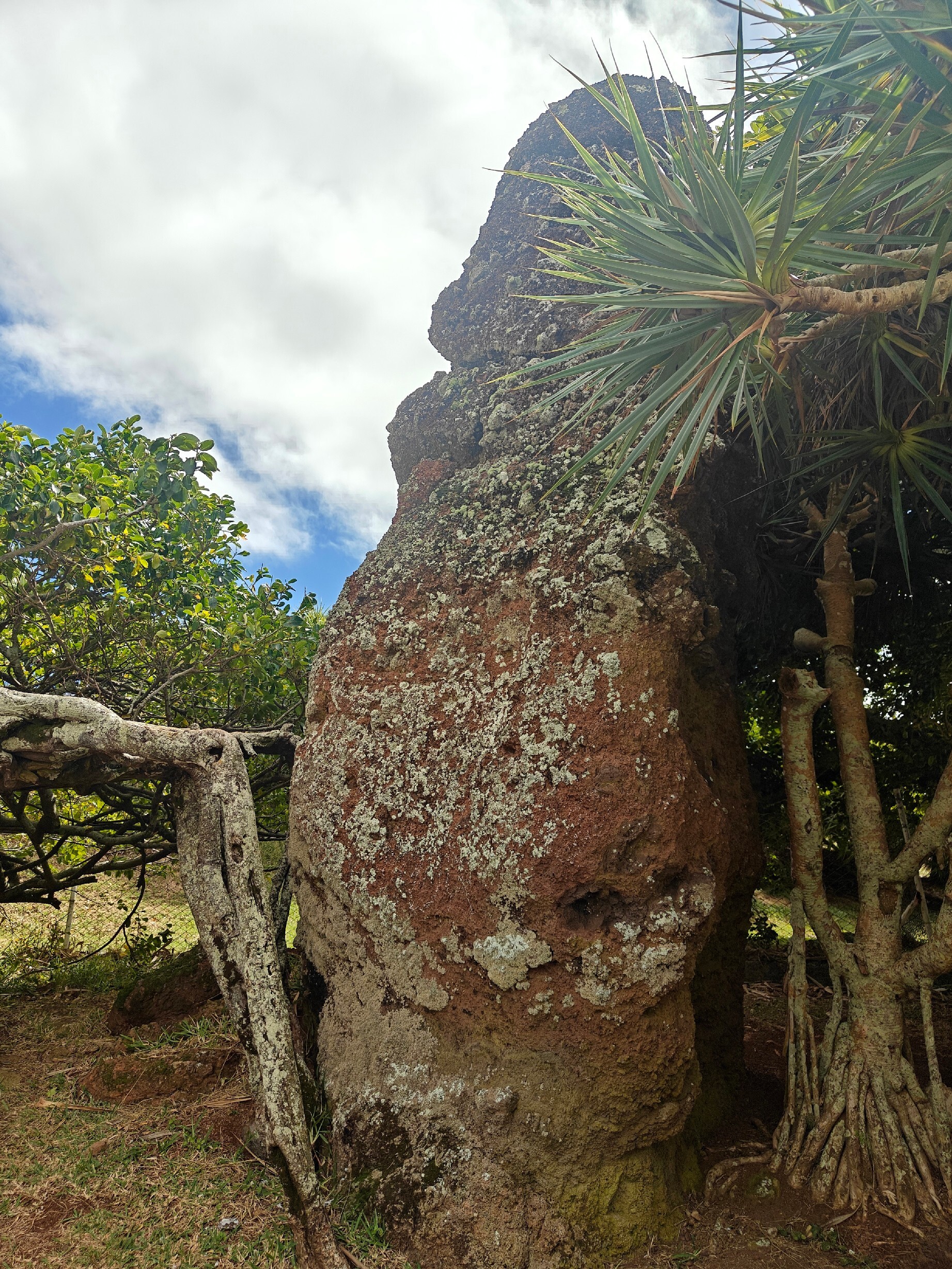
We’d seen signs for the “Roche Bon Dieu” and decided to check it out.
Roche Bon Dieu (Good God’s Rock), is named after a local legend claiming the boulder fell directly from the sky. According to folklore, touching the mysterious rock or making a wish while visiting brings good fortune and makes dreams come true. Although parts of the surrounding environment were altered by modern road construction, the site remains a prominent part of the island’s cultural heritage and is a popular stop on eastern island.
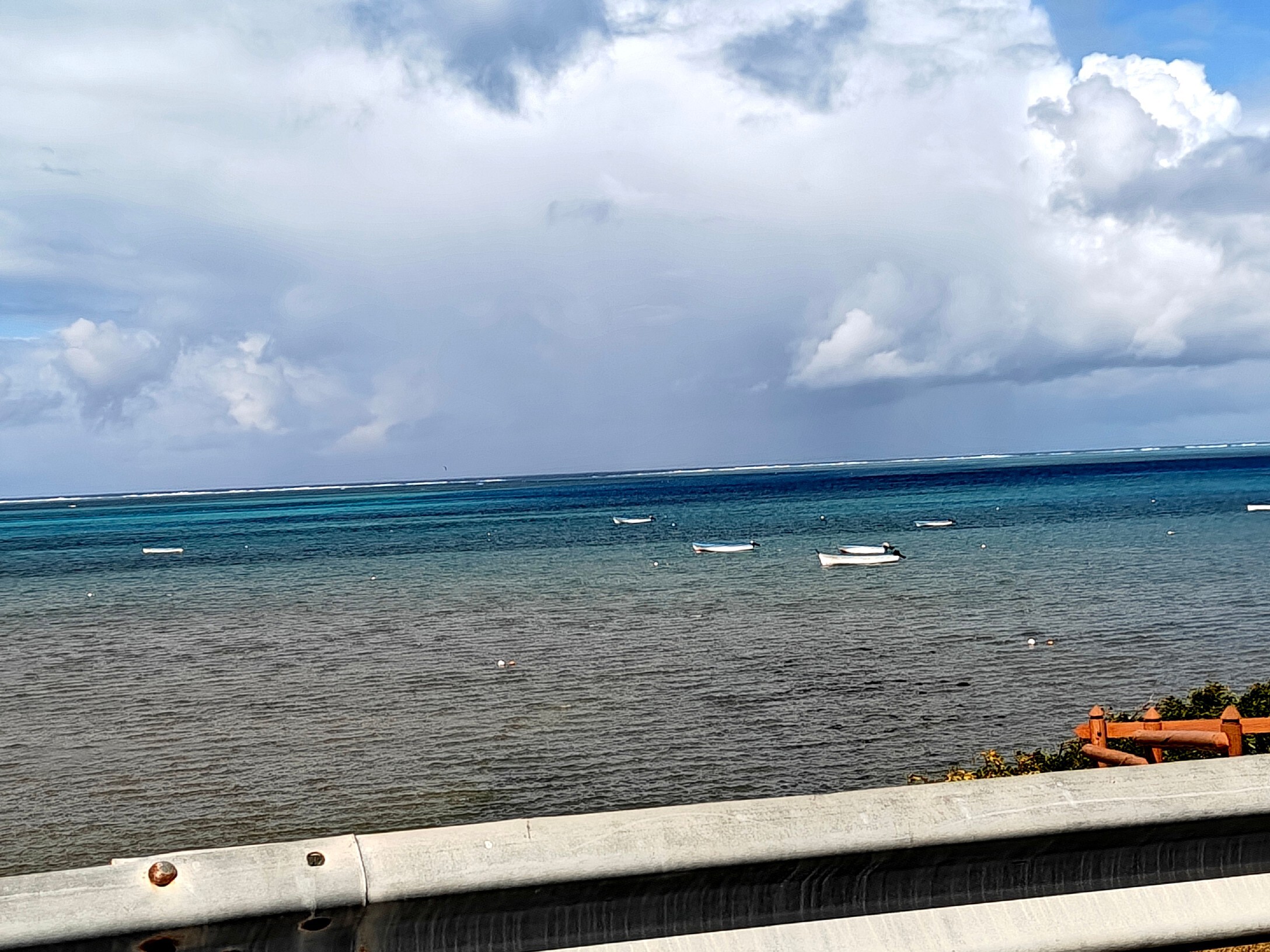
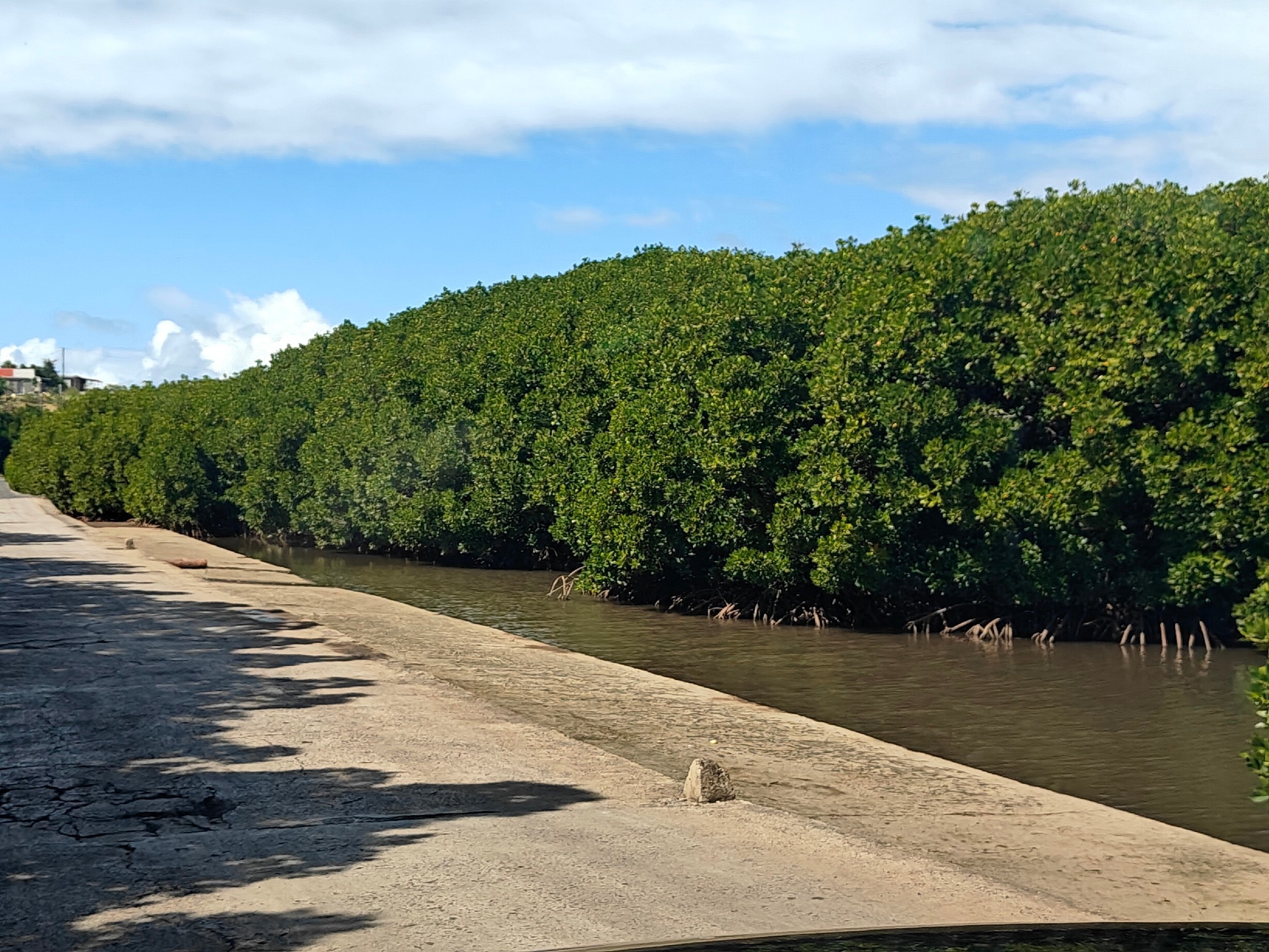
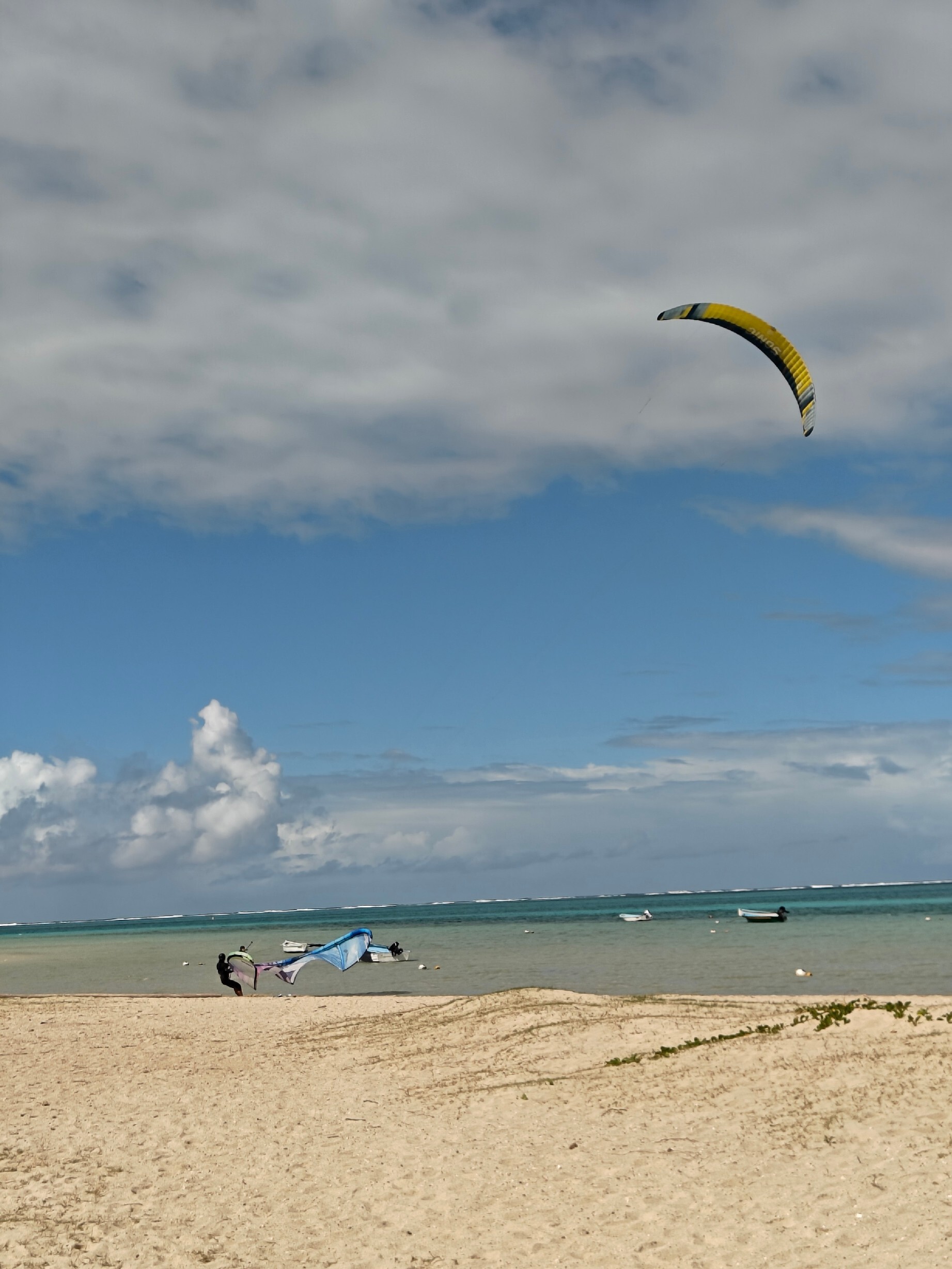
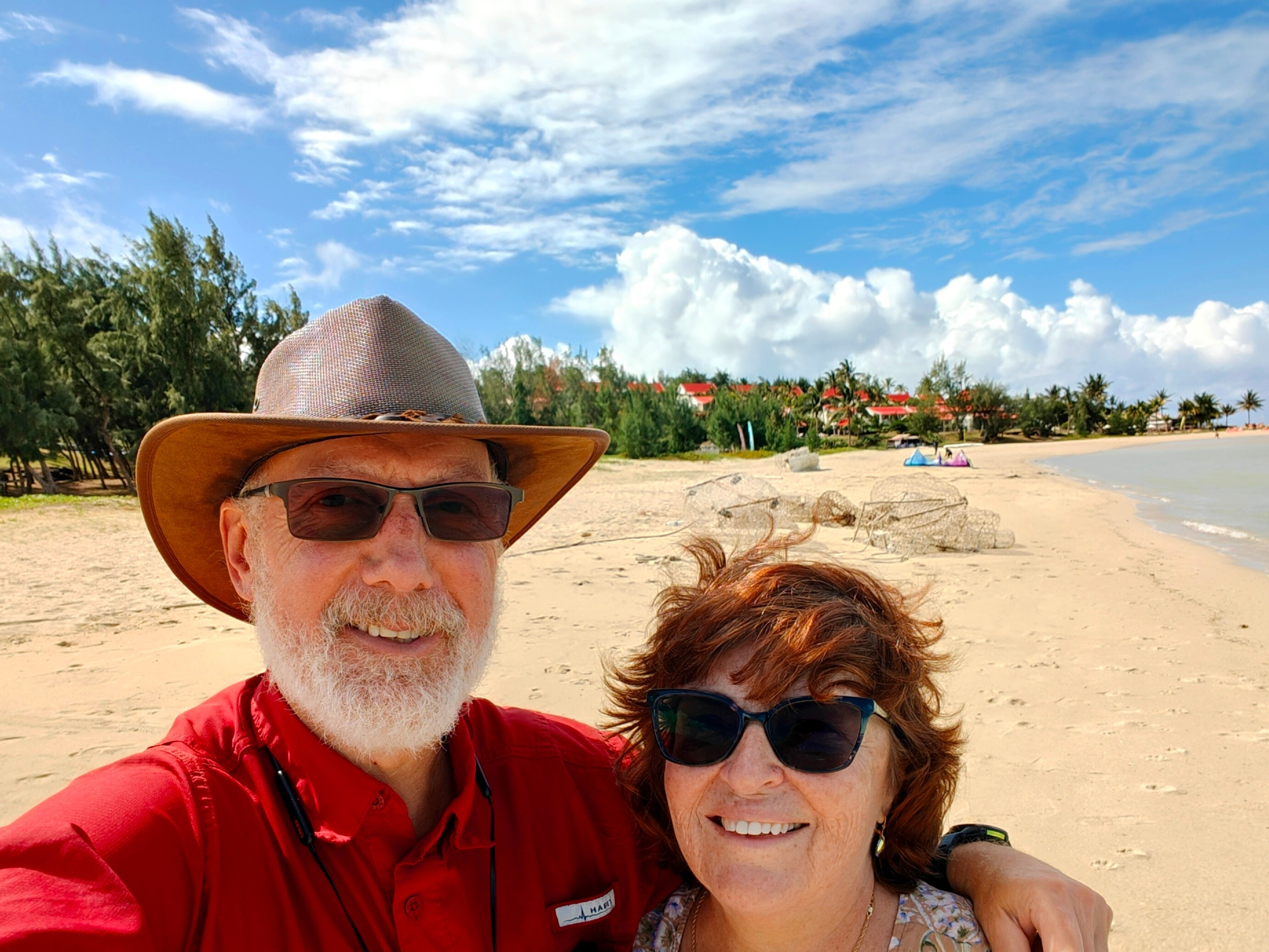
 Then it was on to the south coast to check out Mourouk to see about maybe getting a private boat hire to take us around this beautiful bay but not to snorkel. Sadly, no luck and all the boats we did see, had no shade cover so it wouldn’t have appealed to us anyway but we got to watch a few kite surfers:


Next we went to hit the grocery store again for more drinks before heading over to the tortoise sanctuary.
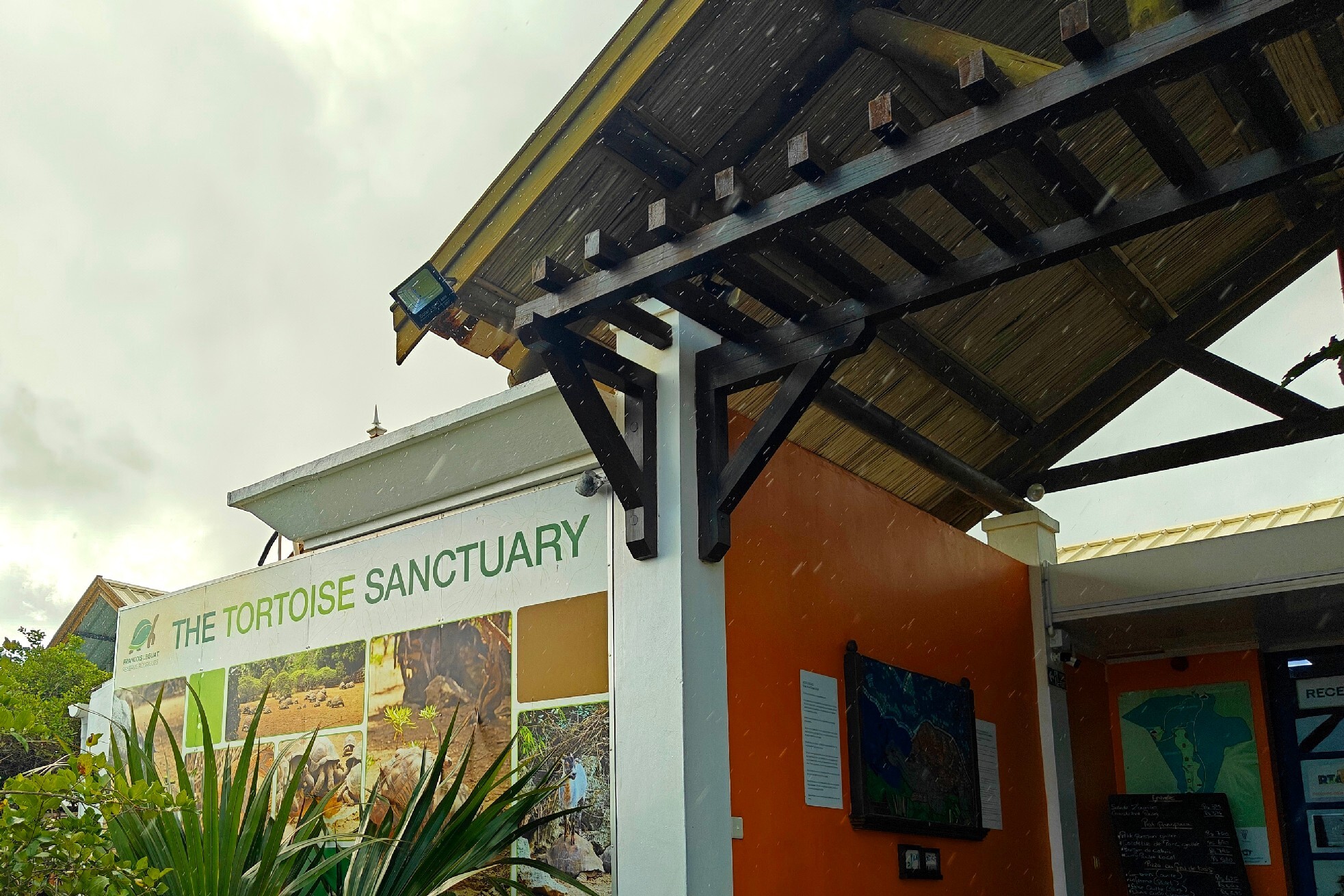
The Francois Leguat Giant Tortoise Reserve opened in 2002 privately and to the public in August 2007. This conservation project, conceived by the owners of La Vanille Reserve des Mascareignes, is located on a 20-acre site in Anse Quitor, in the south of Rodrigues, a few hundred meters from airport. It is the home to over 12,000 tortoises with nurseries for babies and young ones, a number in captivity away from the public and more than 300 free roaming ones.
In the 17th, century with the arrival of the Dutch, the Cylindraspis tortoise, inhabited this island. However, they were captured in large numbers and used as a main course on ships. Their fat was also used to treat certain illnesses. As a result, these tortoises quickly disappeared from the island.
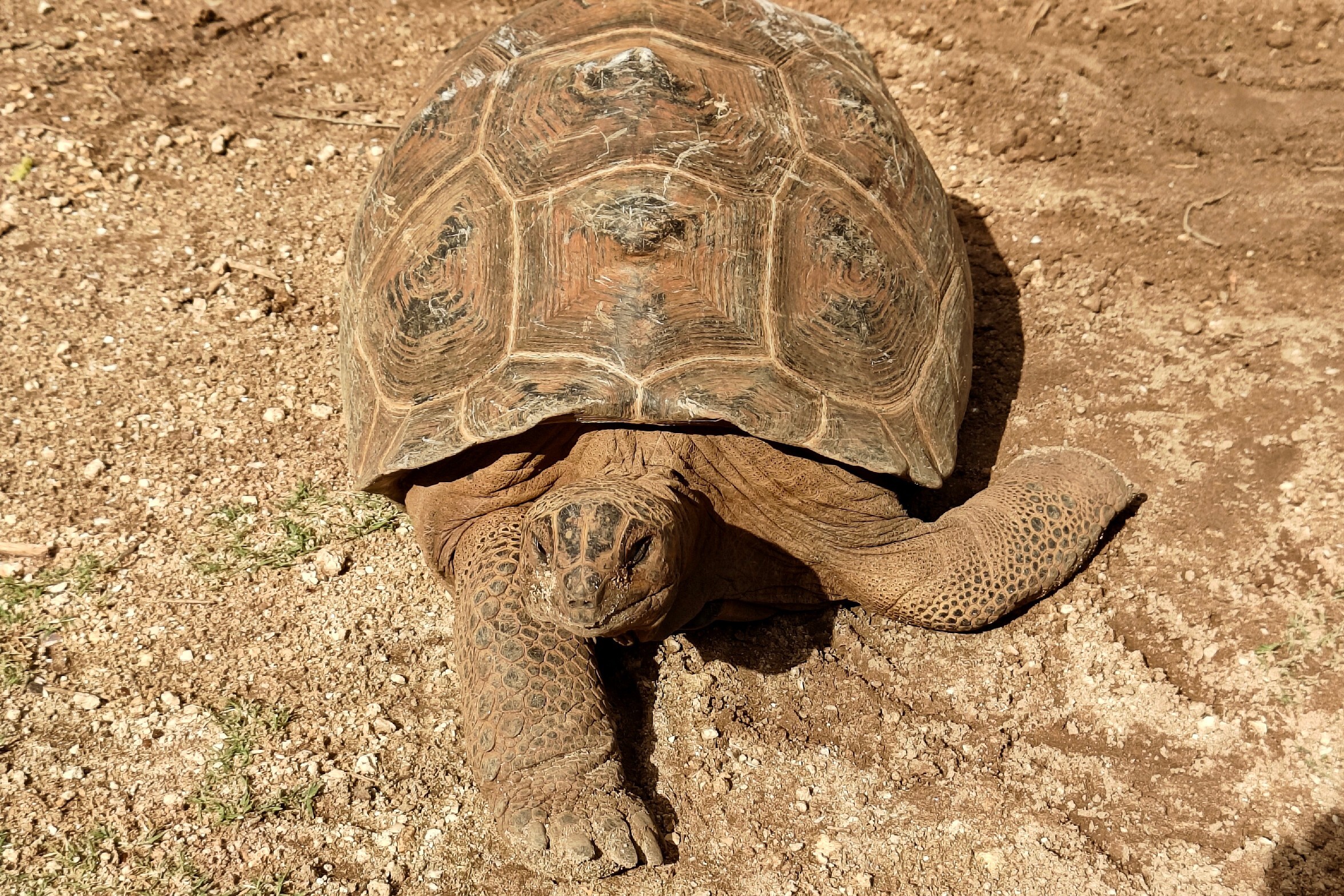
The reserve introduced a group of 500 Aldabra tortoises and 40 radiated tortoises from Madagascar. The Aldabra tortoise is a species that was imported from the Aldabra Atroll in the Seychelles. The choice of the Aldabra tortoise was not accidental. Due to its size (the shell measures on average 1.20 m / 3’ long) and weight (up to nearly 300 kg / 660 lbs for the heaviest specimens), this species closely resembles the Cylindraspis tortoise.
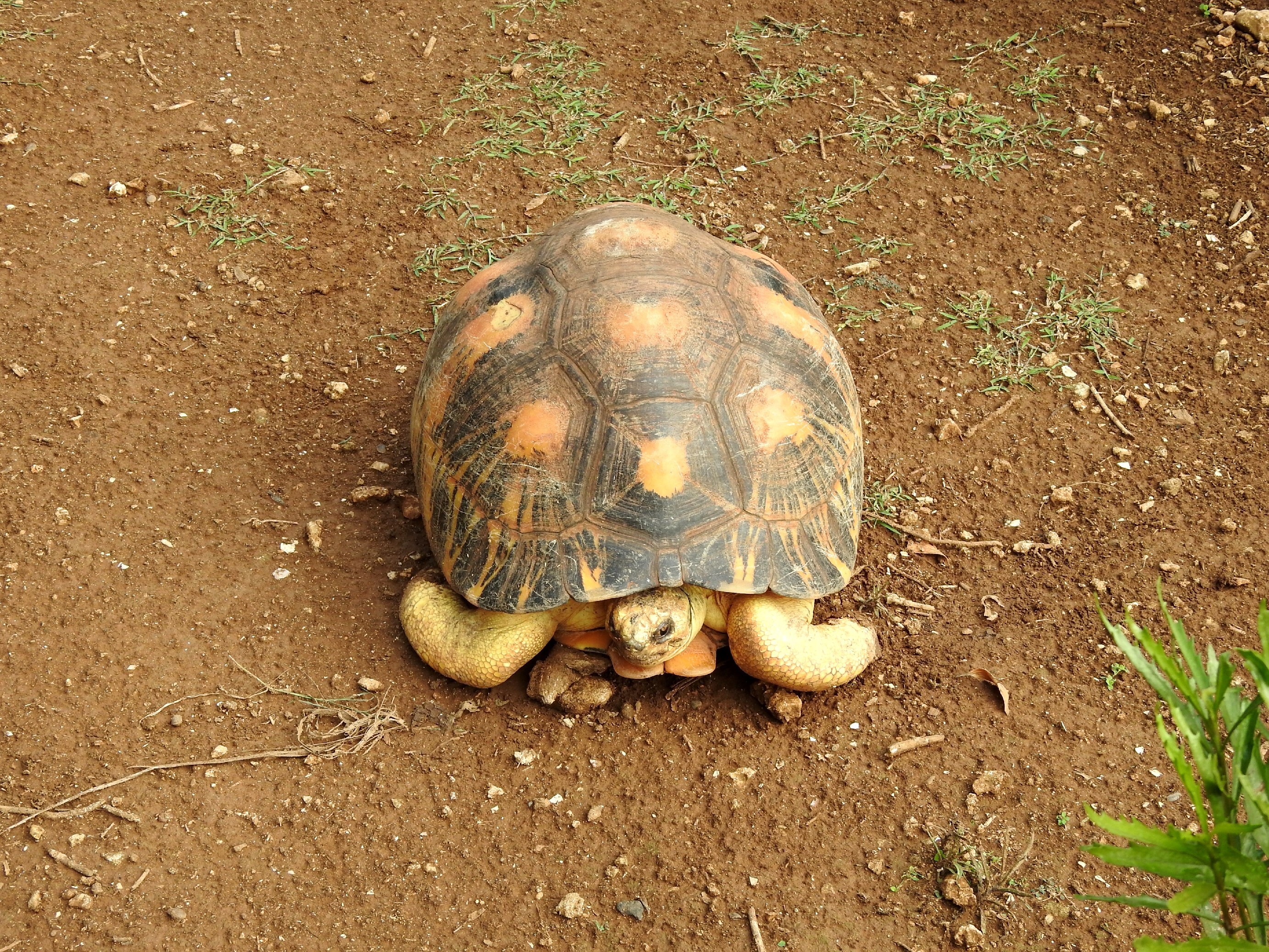
The radiated tortoise or the star-shaped tortoise also comes from Madagascar and is on the endangered list. As adults, they measure about 40 centimeters in length for males and 30 centimeters for females. They can then weigh 20 kg for males and 15 kg for females. Their lifespan is about 100 years. The oldest and earliest recorded radiated tortoise of Madagascar was Tu’i Malila, who was presented to the Tongan royal family by Captain James Cook shortly after hatching in 1777. Tu’i Malila remained with the Tongan royal family until her natural death on May 19, 1965t that is, at 188 years old. It was often kept as a pet, especially on the island of Reunion and subject to trafficking in Asia.
The third type of tortoise found here is the Ploughshare aka the angonoka tortoise, introduced recently as they were found in possession of poachers enroute to Malaysia. It also comes from Madagascar and is critically endangered. The average length of an adult male angonoka tortoise is 414.8 mm (16.33 in) and the average weight is 10.3 kg (23 lb). Females measure at a 370.1 mm (14.57 in) average and weigh 8.8 kg (19 lb) on average.
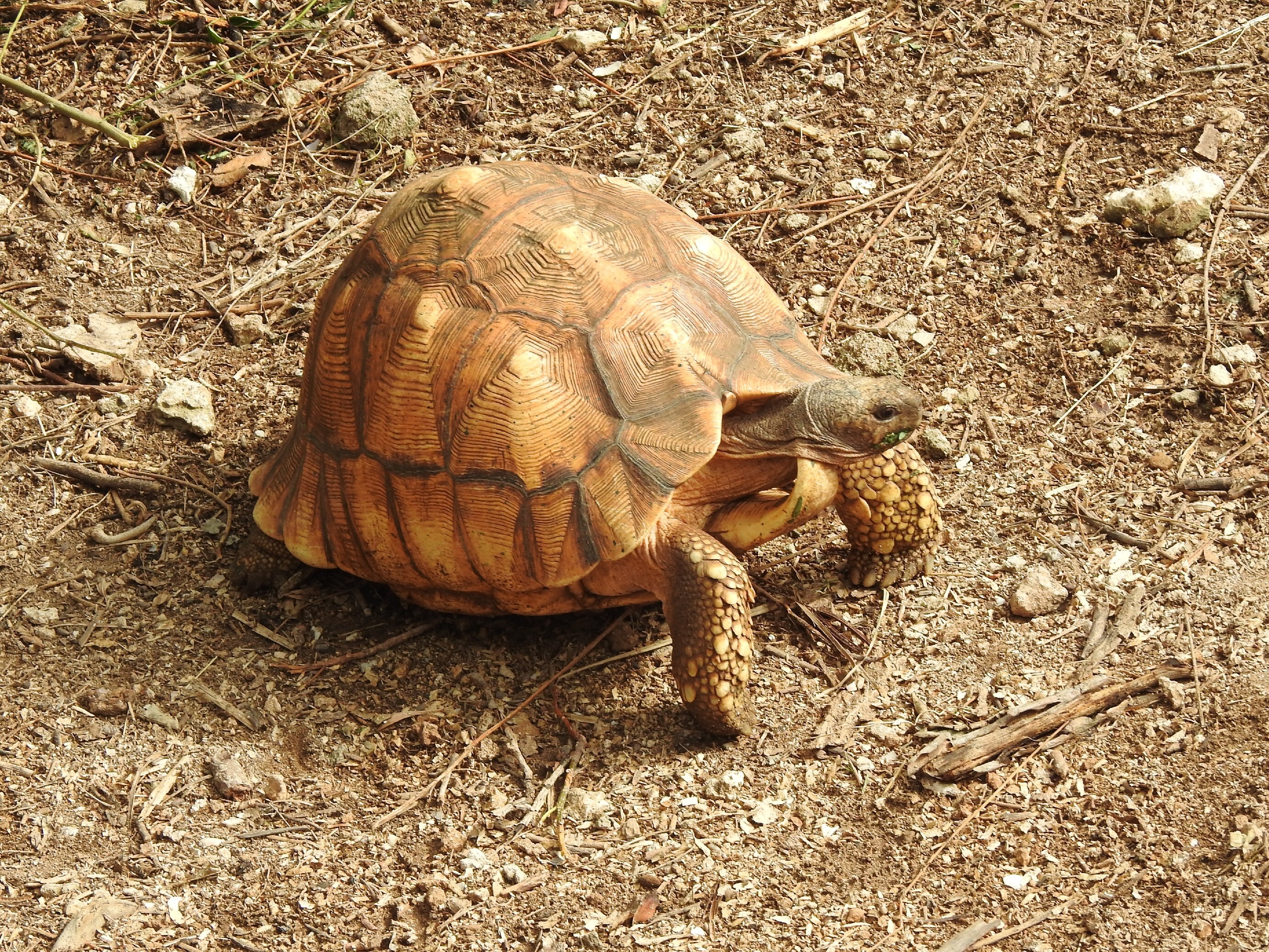
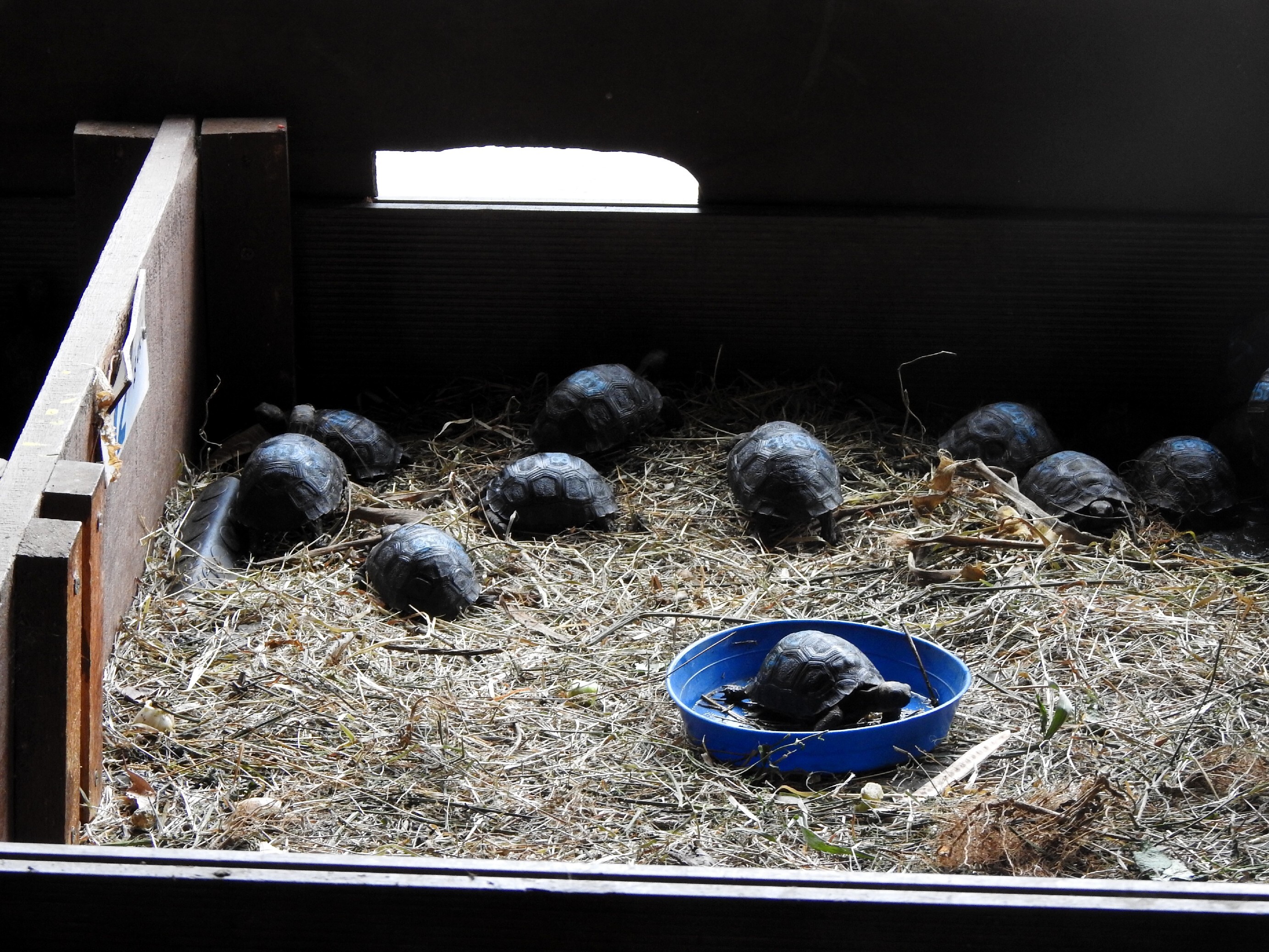
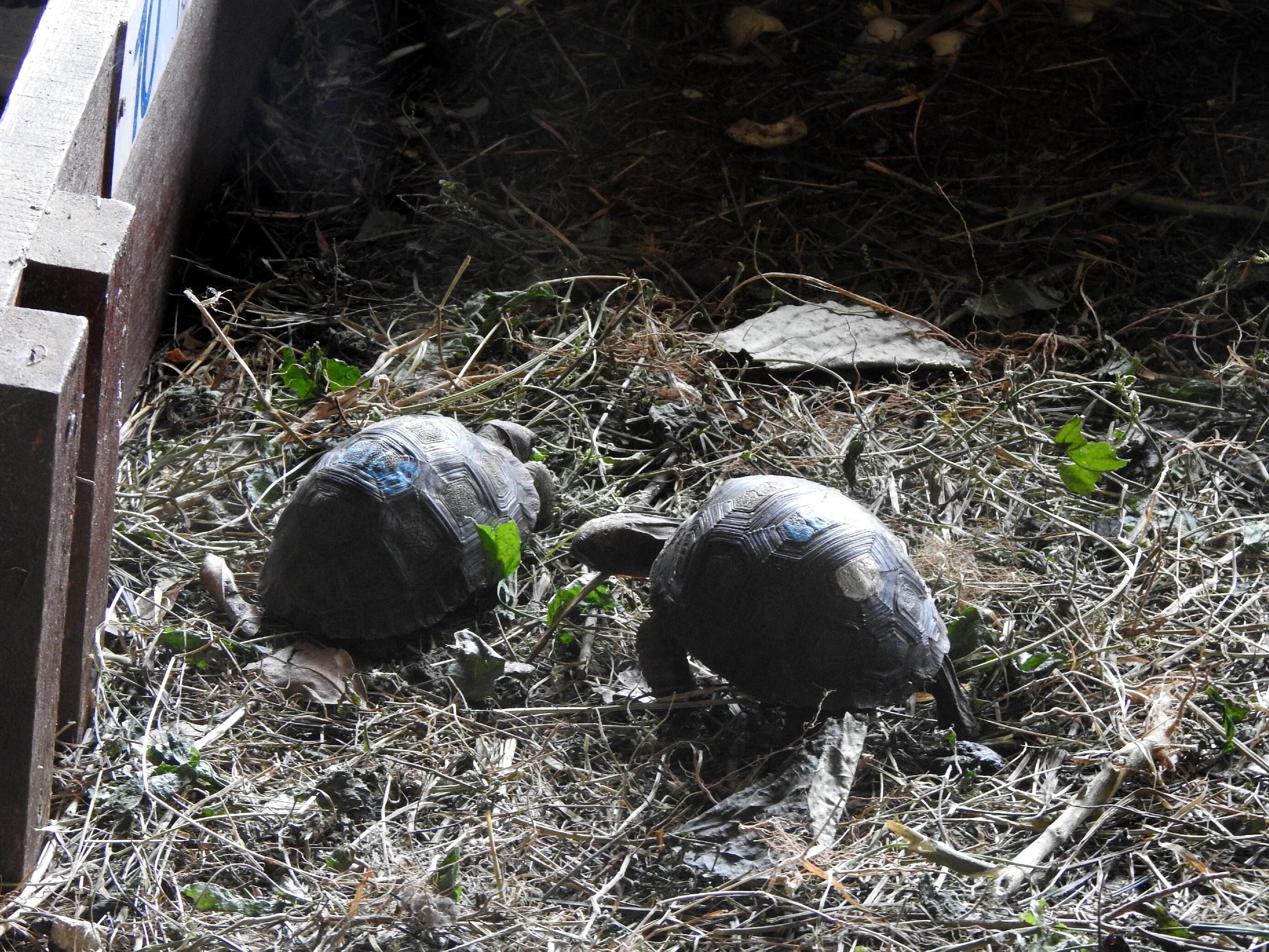
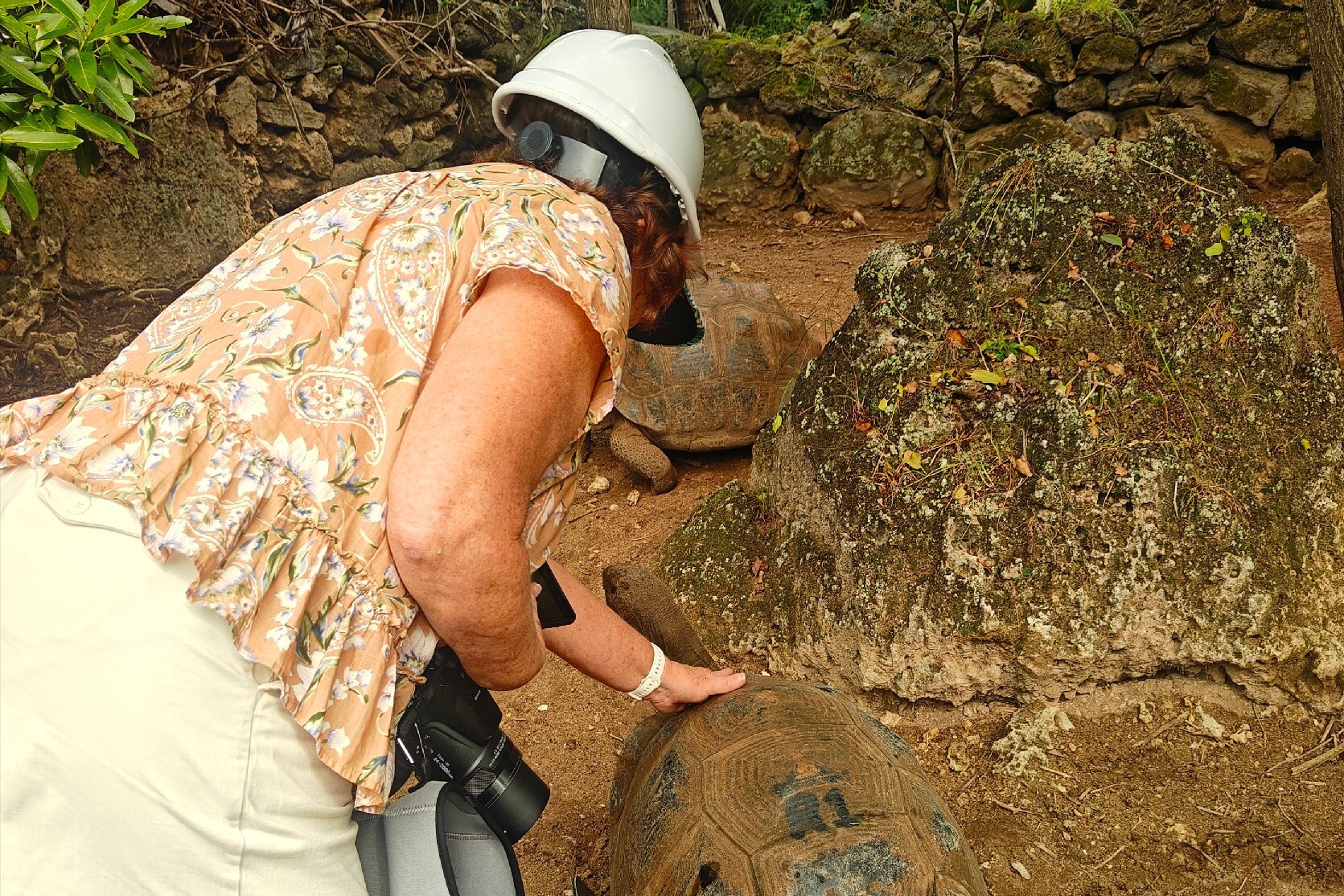
This was definitely a highlight of our visit here in Rodrigues. You must take a tour for about $16 USD for foreigners and the tour teaches you a great deal. You are shown the nurseries then you are walked to some fenced in areas with the ploughshare tortoises (which seem to like to just hide! so photos were difficult) and then down into a canyon to wander amount the Aldabra and radiated tortoises. You are encouraged to interact with the reptiles and we found that as soon as you approached them, their necks went up and they wanted to be touched and rubbed. We were told we could rub anyway, including the shell, just not to put our hands in front of their mouths. As we approached the nursery a tortoise was near the entrance to the next part, welcoming us:


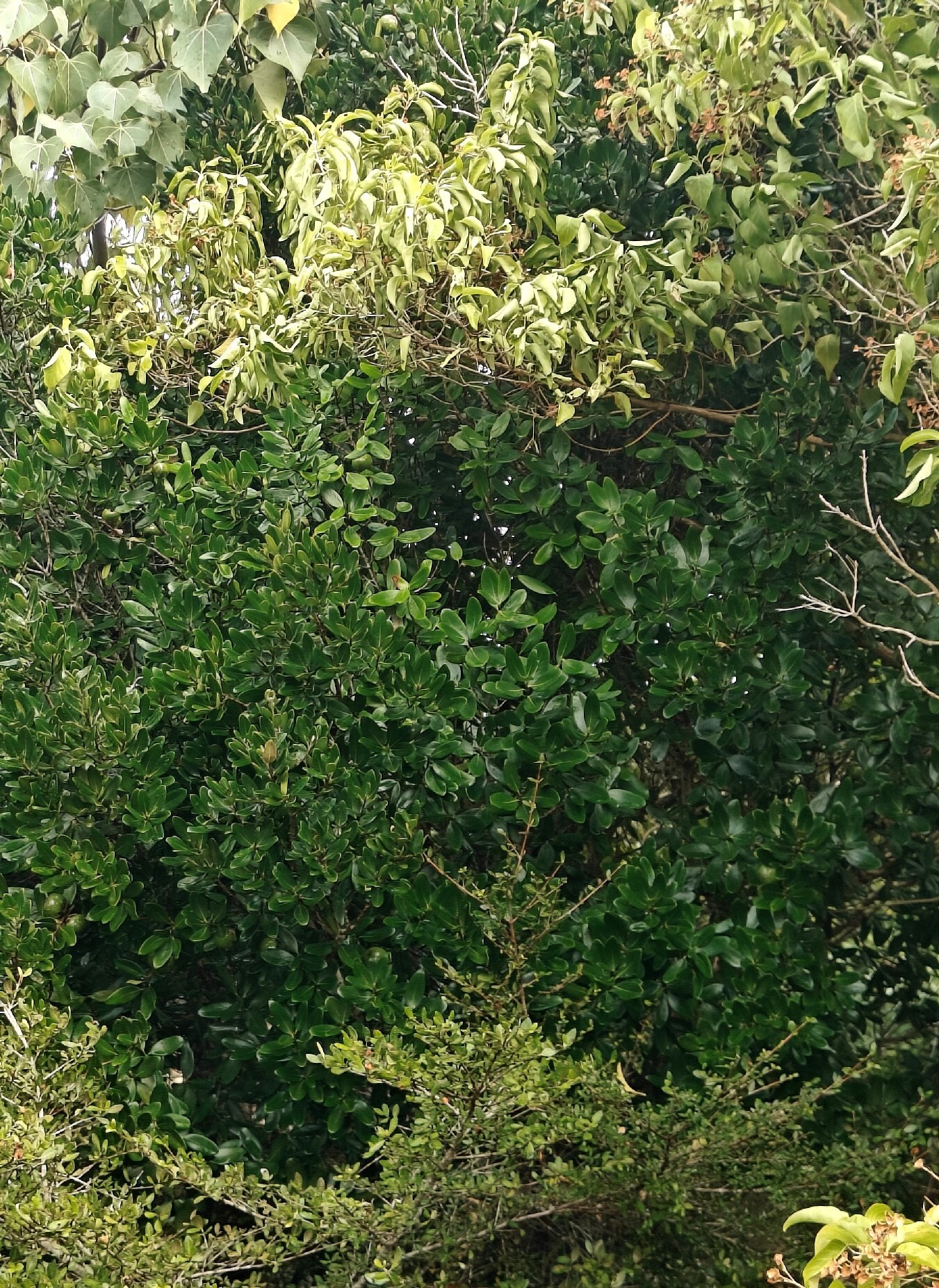
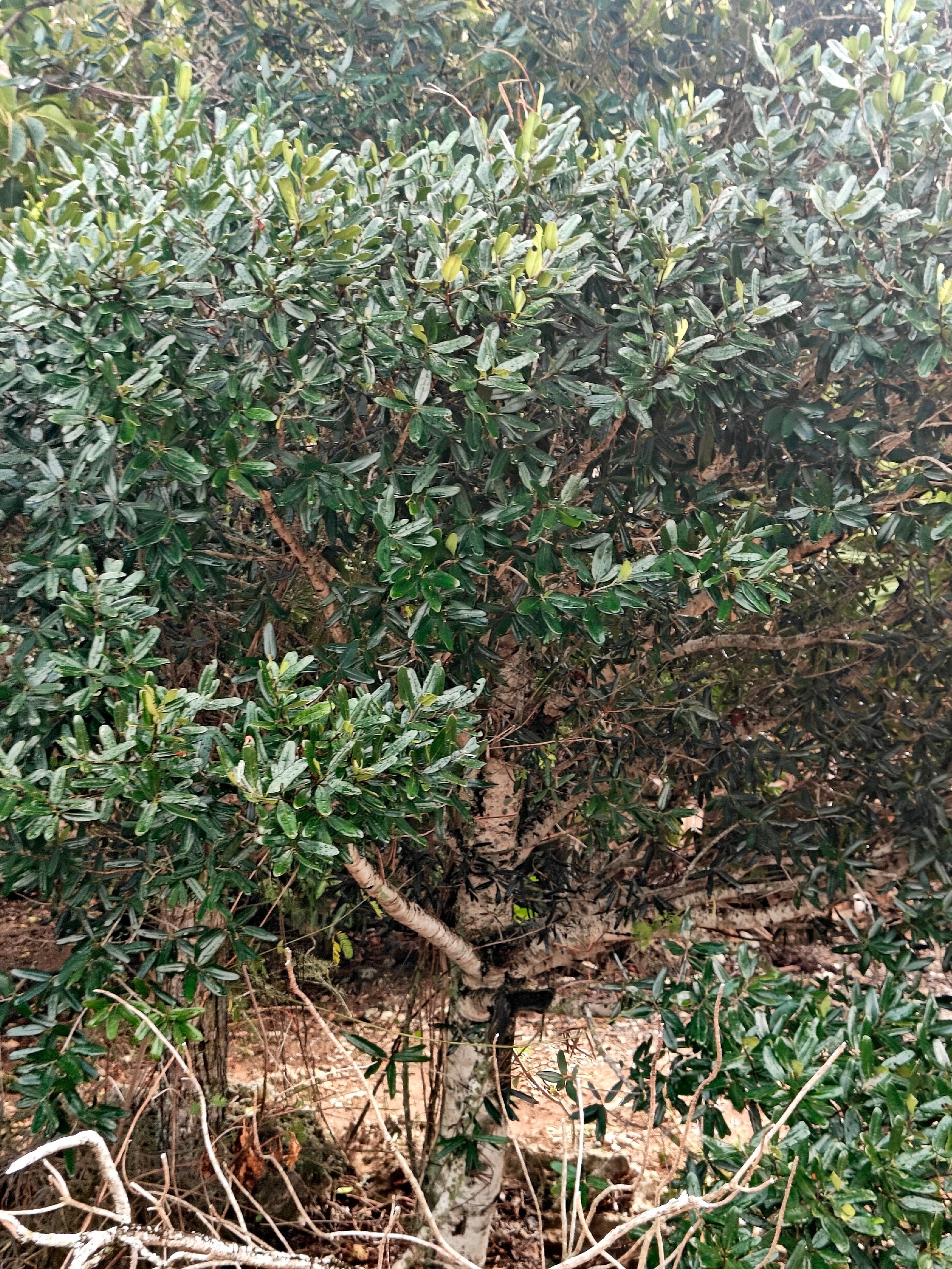
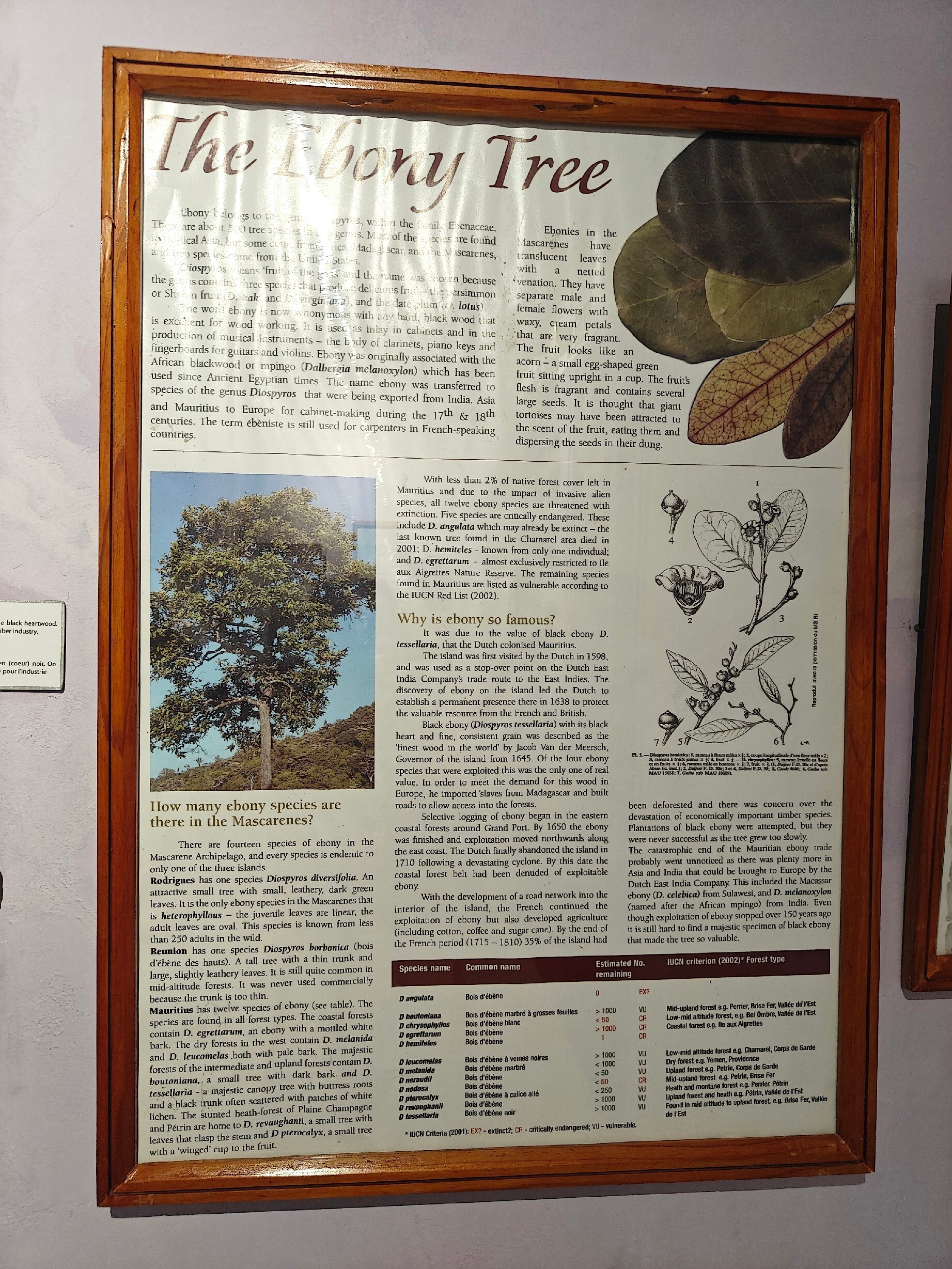
We we shown both the female and male ebony tree but not sure we’d know the difference!
We then walked to the main event:
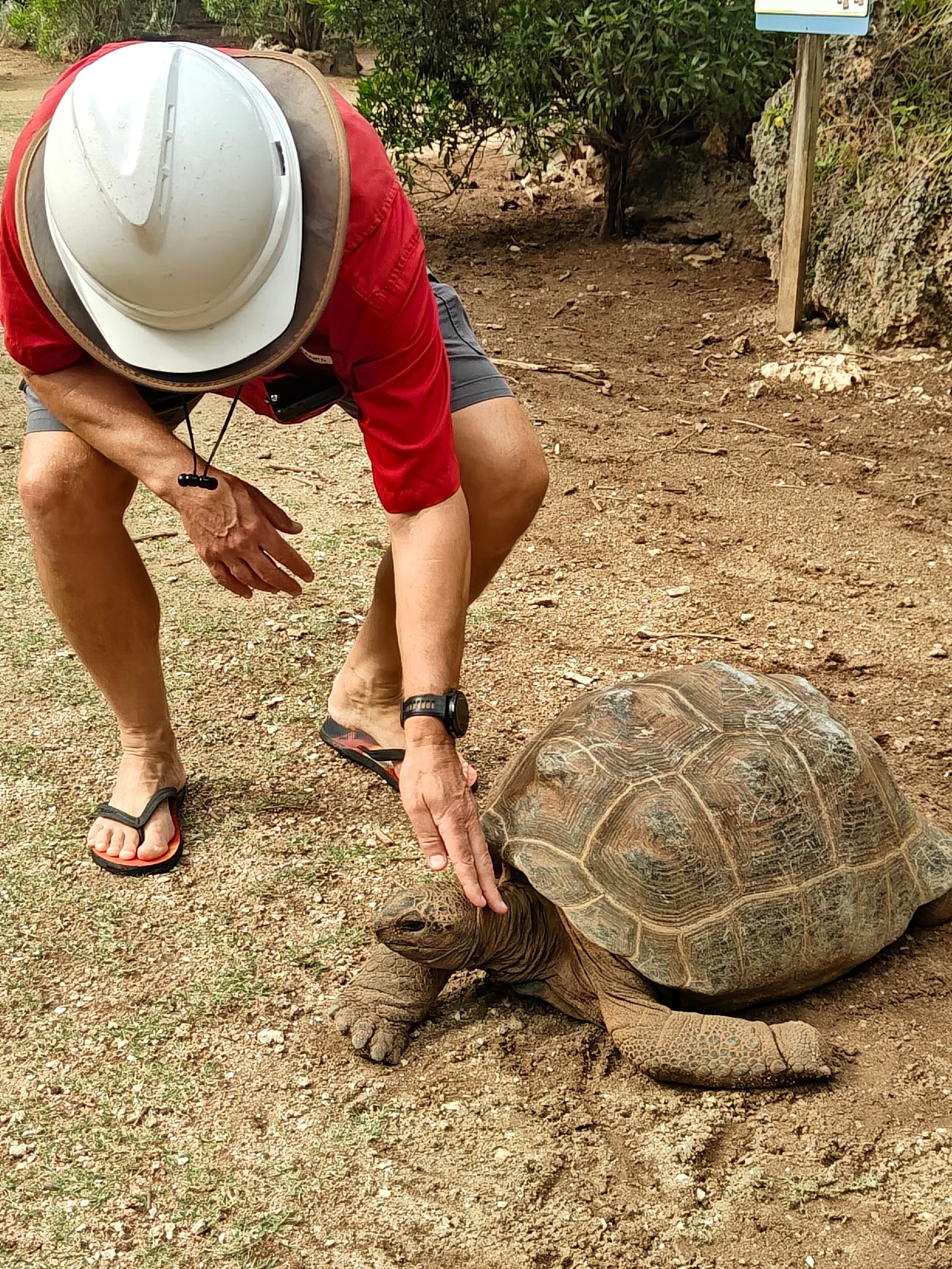
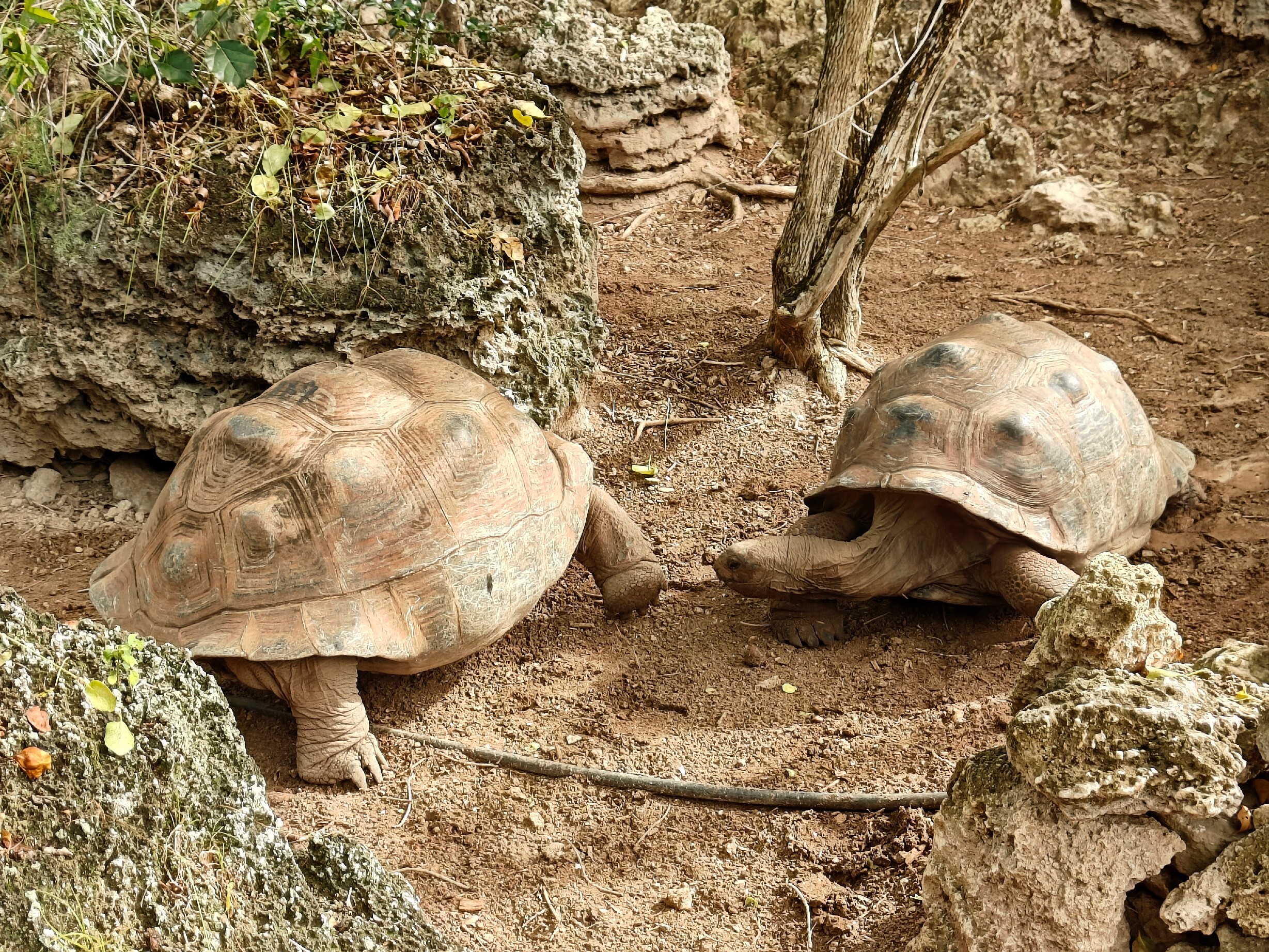
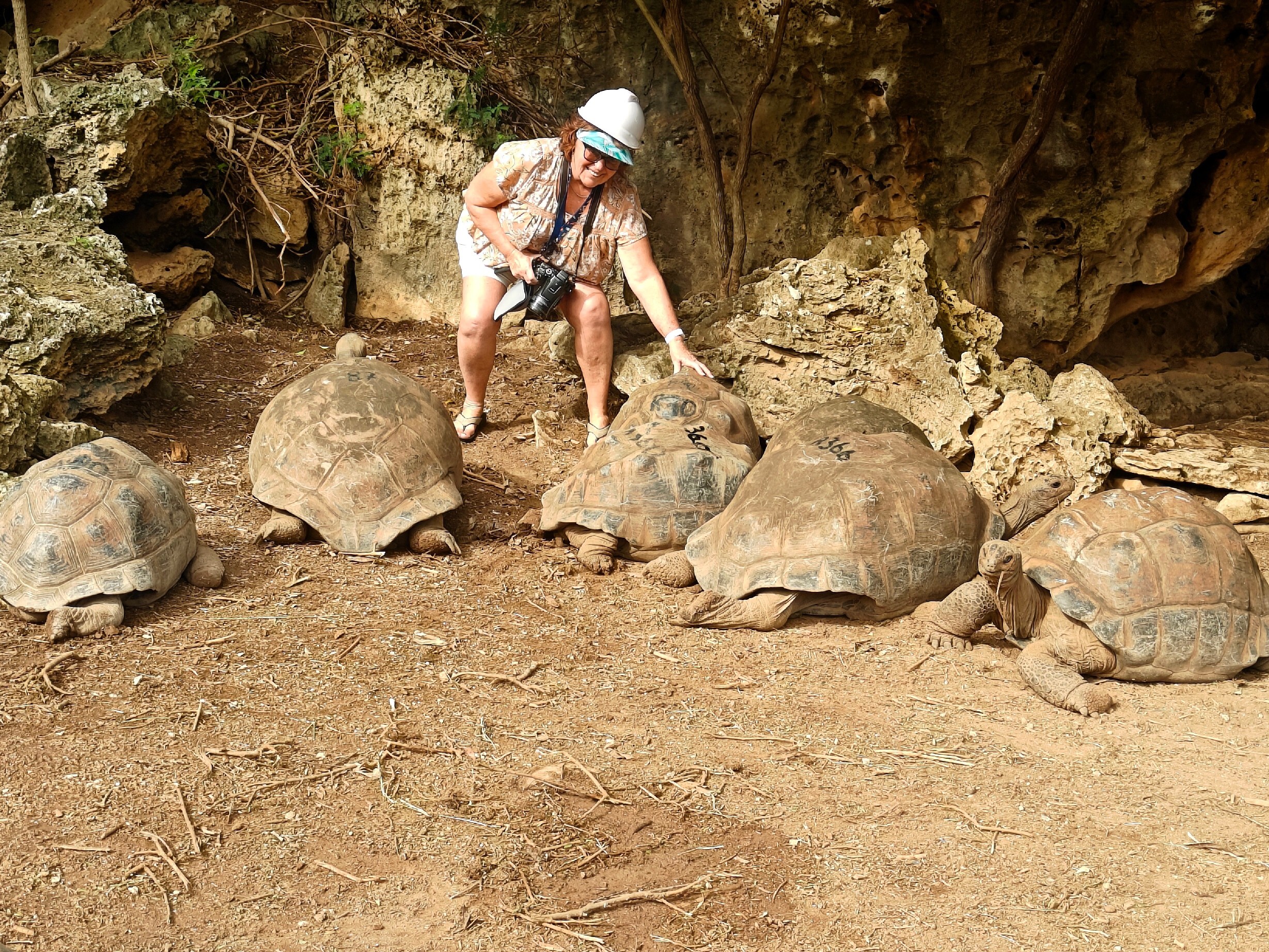
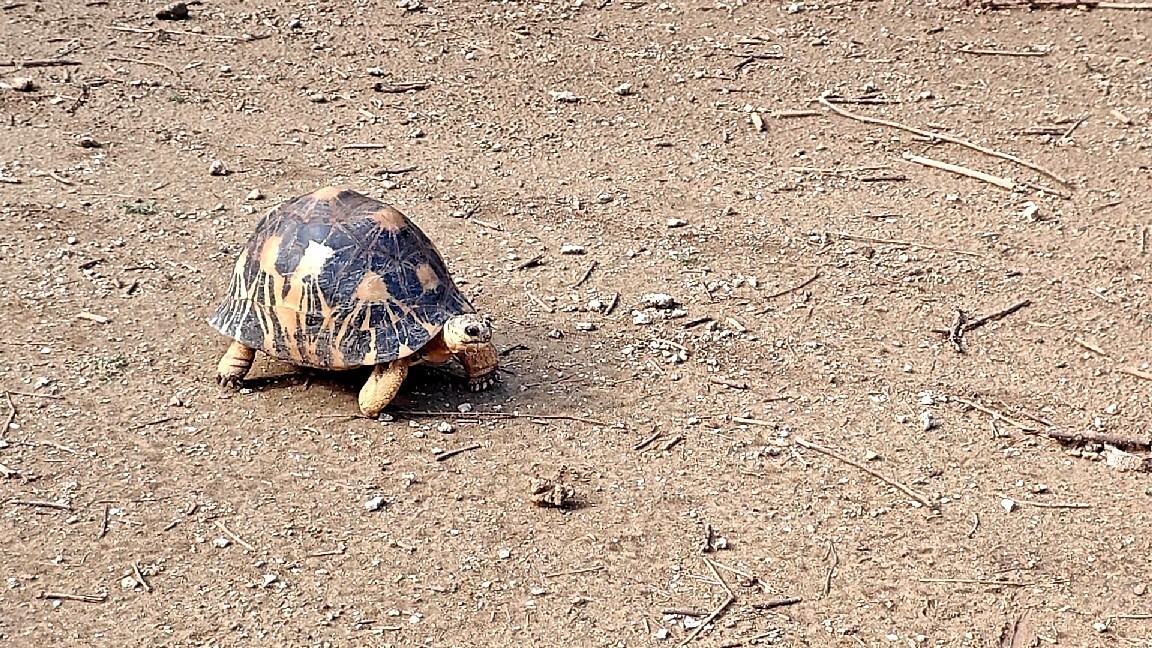
The tortoise on the right in this photo is eighty years old. Their shells flatten out some and the humps get more pronounced.
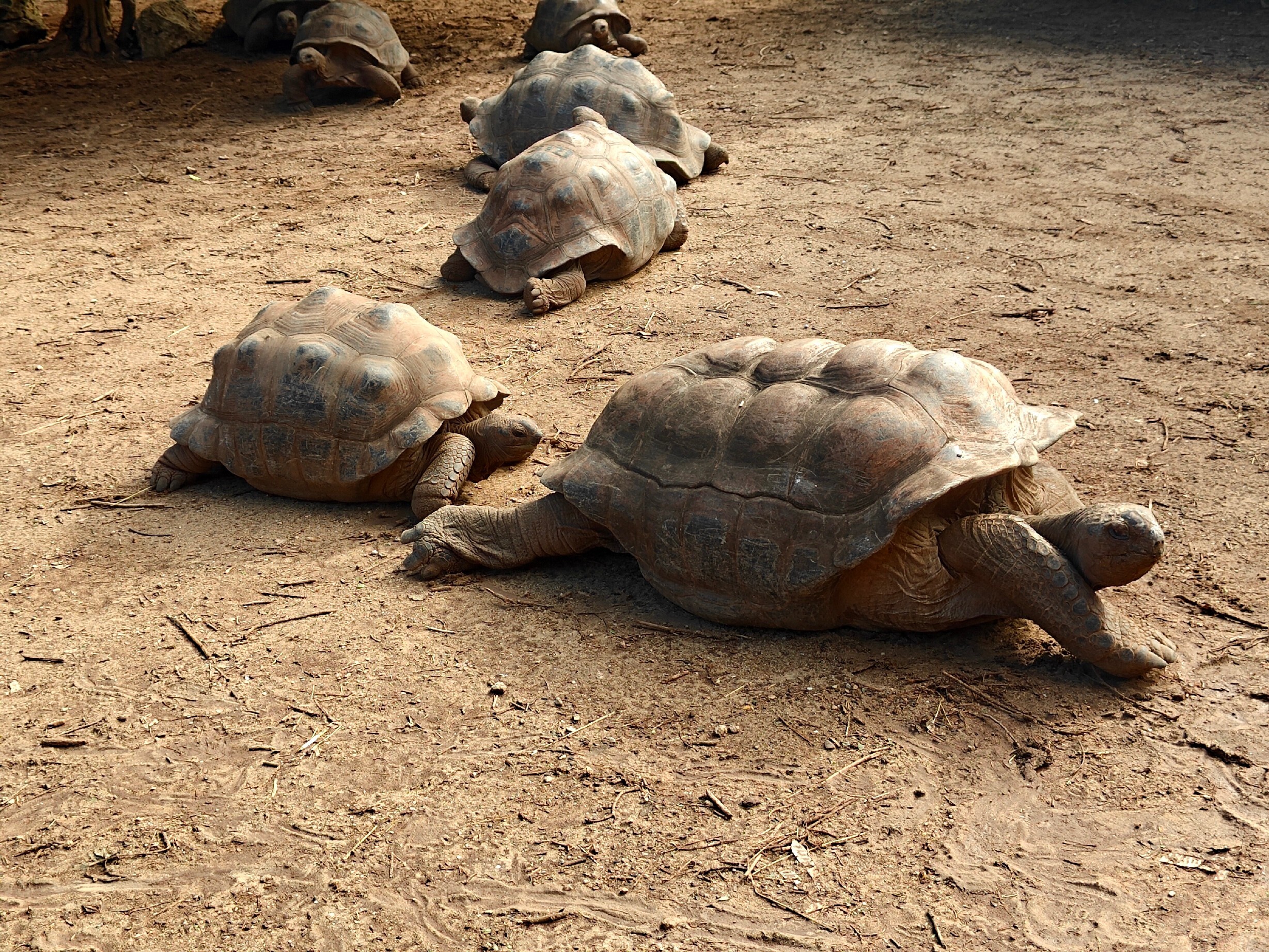
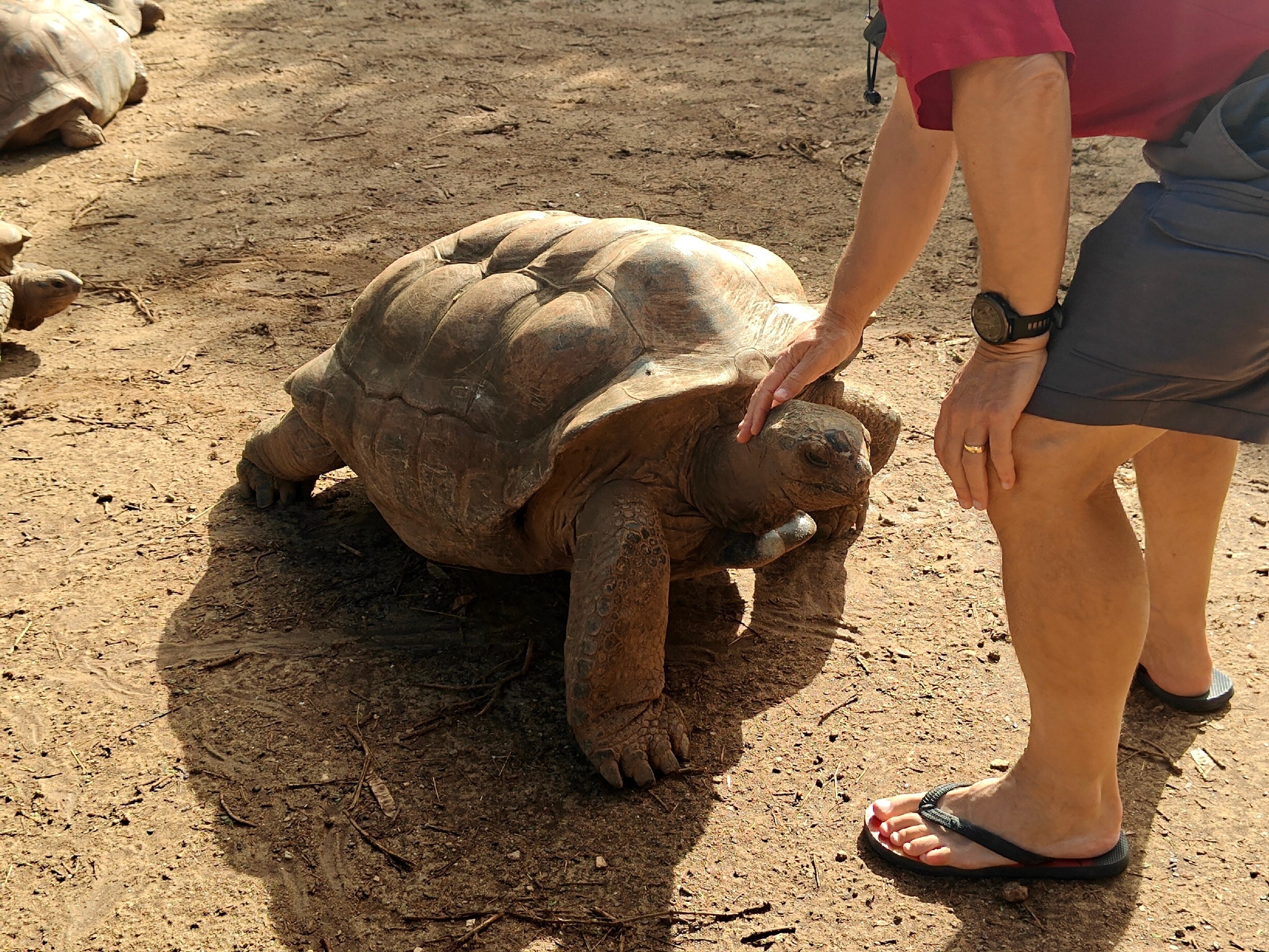
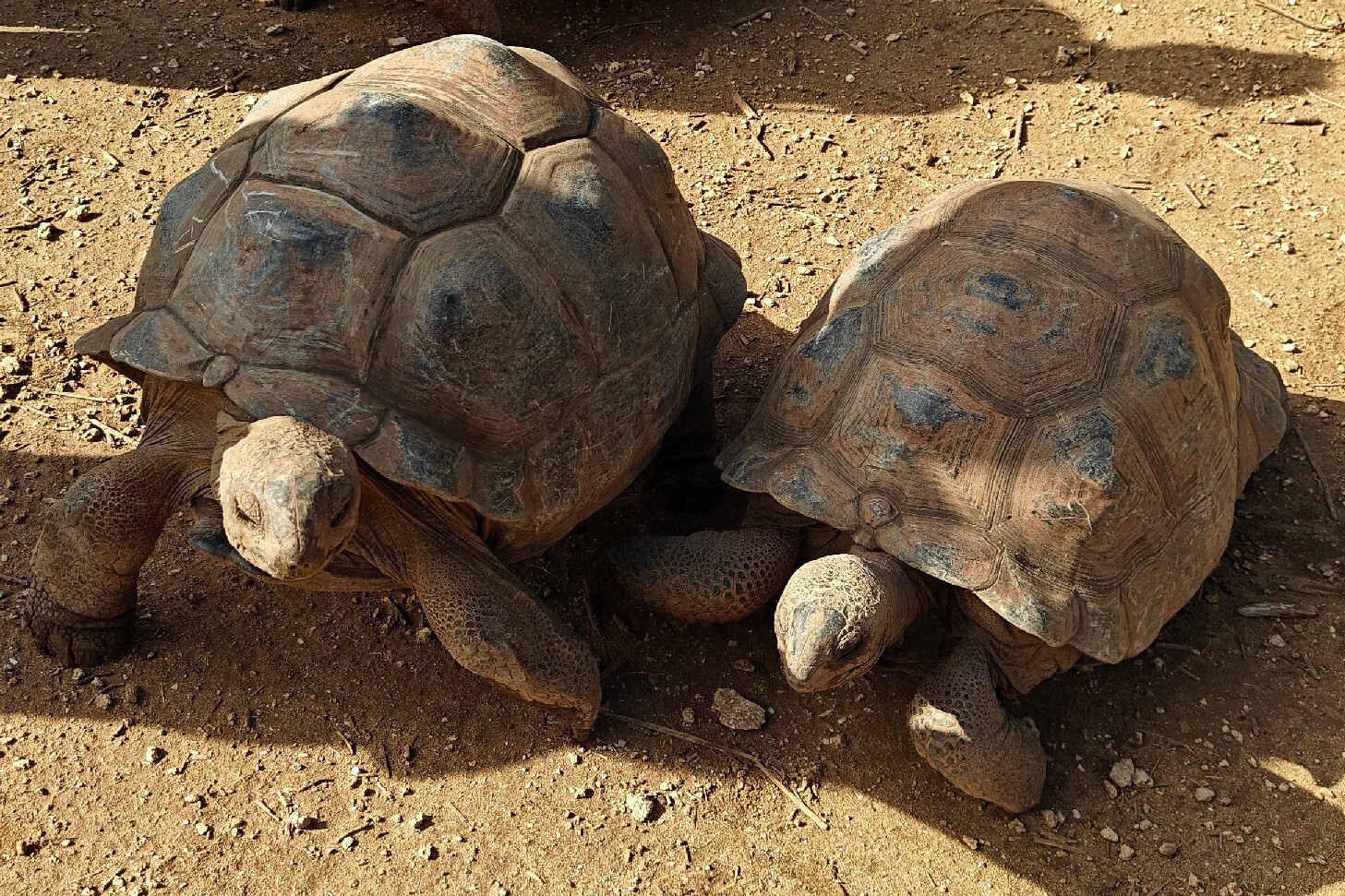
This was very special – we spent about 45 minutes interacting them before taking the stairs up out of the canyon. So many would just come up to you stretching out their necks, looking for attention (just like a dog!).
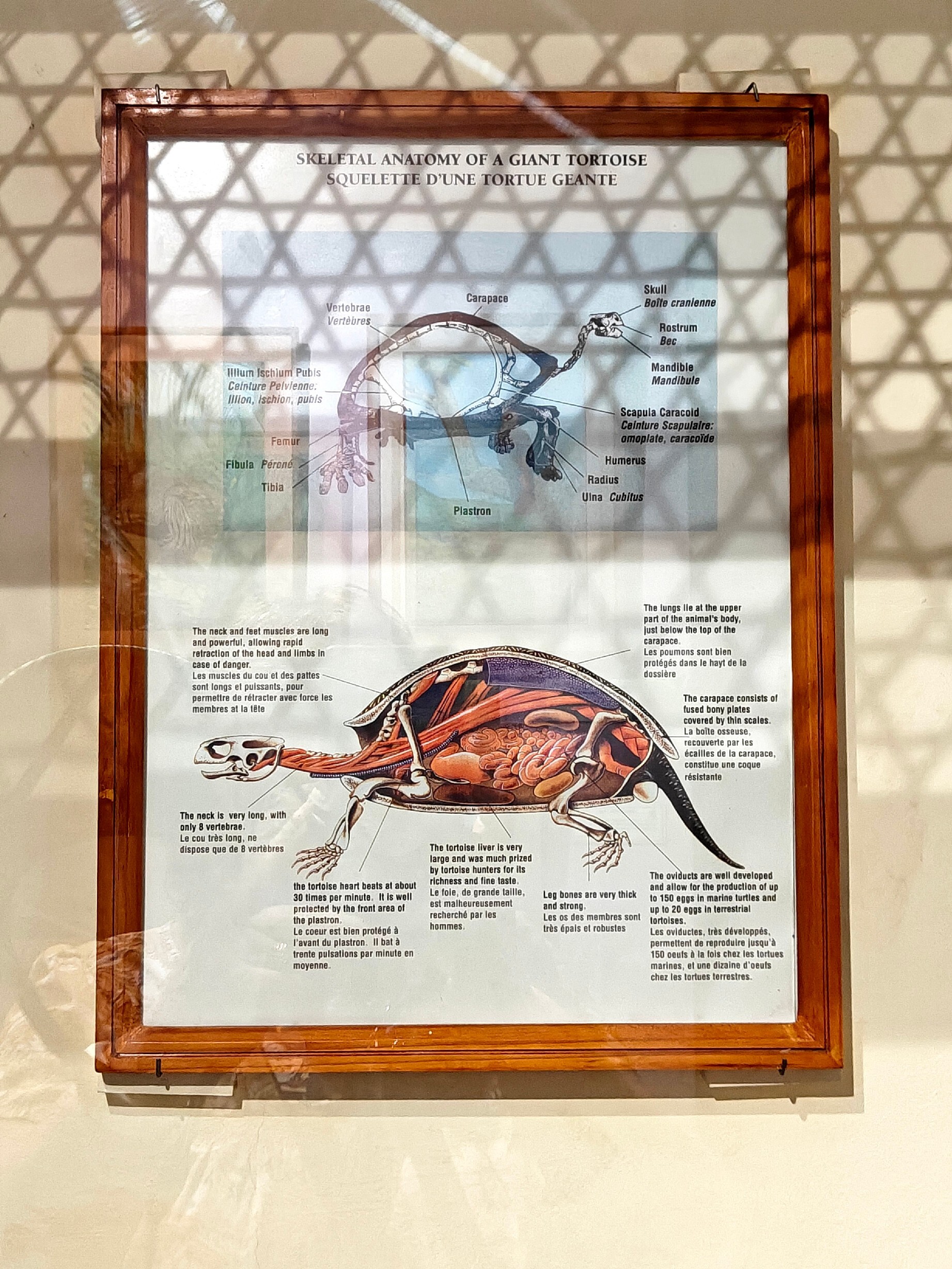
The next part of the tour was a cave explore (hence the hard hats in our photos) but we’ve seen so many caves, we passed on that and returned to the main building where we walked through the museum and then sat in the restaurant for some cold beer and treats. It had been a hot walk in the canyon with no breeze so we felt much better after nourishing ourselves. A great visit. Enjoy these videos and photos:



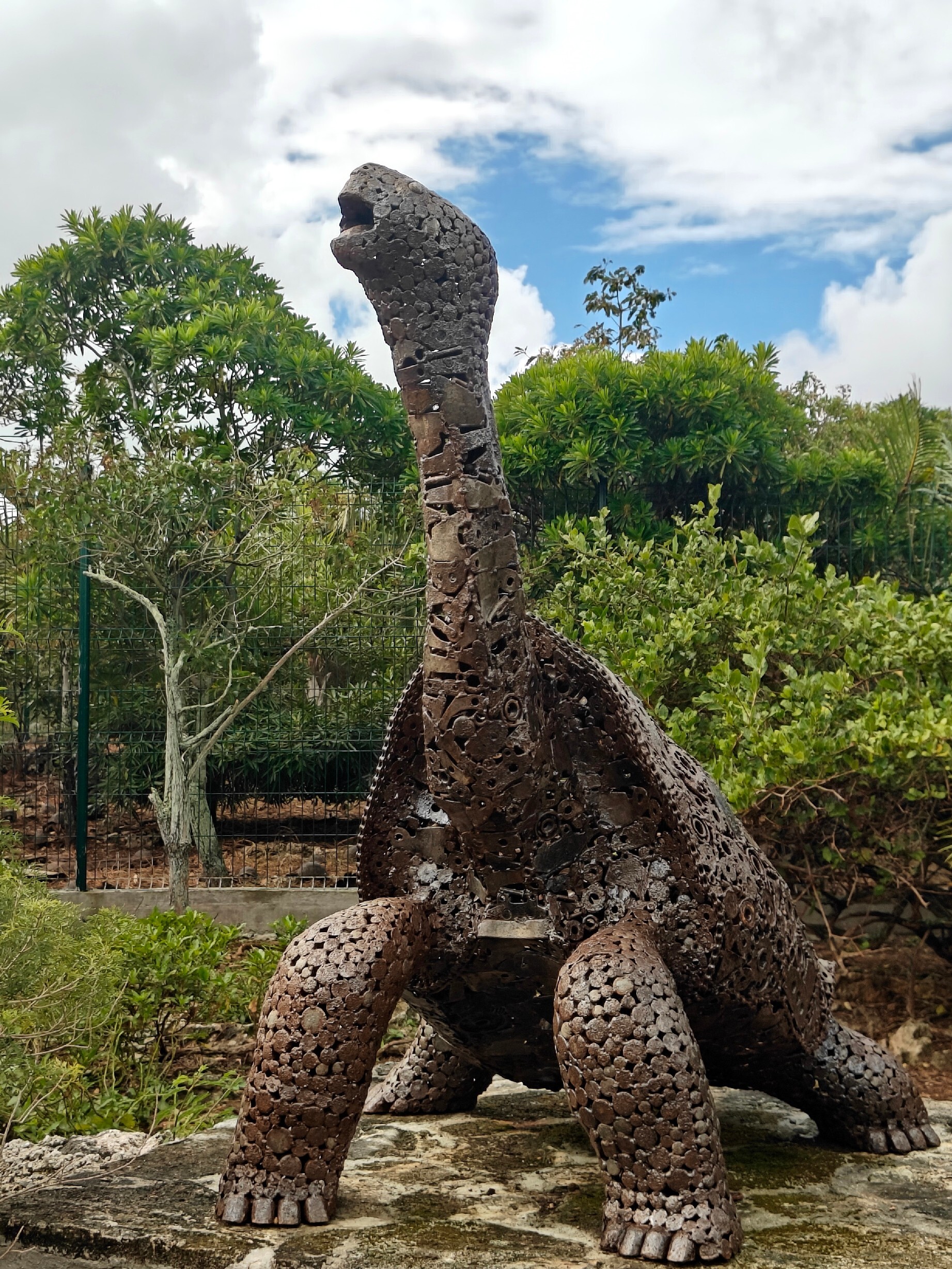
There were two metal statues near the entrance to the reserve: one of the original giant tortoises that inhabited this island and one of the solitaire bird which also roamed Rodrigues.
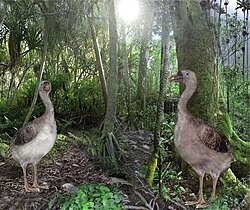
 The Rodrigues solitaire is an extinct flightless bird that was endemic to the island of Rodrigues. A member of the family of pigeons and doves, it was most closely related to the also extinct dodo of the island Mauritius.
Rodrigues solitaires grew to the size of swans, and demonstrated pronounced sexual dimorphism. Males were much larger than females and measured up to 75.7–90 cm / (30–35” in height and 28 kg / 62 lb in weight, contrasting with 63.8–70 cm / 25–28” and 17 kg / 37 lb for females.
Its plumage was grey and brown; the female was paler than the male. It had a black band at the base of its slightly hooked beak, and its neck and legs were long. Gizzard stones helped digest its food, which included fruit and seeds. Both sexes were highly territorial, with large bony knobs on their wings that were used in combat, probably due to competition for the limited resources on the island. The Rodrigues solitaire laid a single egg that was incubated in turn by both sexes.
First mentioned during the 17th century, the Rodrigues solitaire was described in detail by Francois Leguat in 1691–1693. It was hunted by humans and introduced animals, and was extinct by the late 18th century. Apart from Leguat’s account and drawing, and a few other contemporary descriptions, nothing was known about the bird until a few subfossil bones were found in a cave in 1786. Thousands of bones have subsequently been excavated. It is the only extinct bird with a former constellation named after it: Turdus Solitarius.
Here is a renderings from Wikipedia:
 We returned “home” where we chilled until dinner – this is when the on and off heavy and light rain started and went right through the next day. One of the French couples left this morning and in their place another French couple, Ben and Arnaud arrived. They were actually from France and both spoke good English.
Since it was raining hard when we woke up, we postponed our hike to the beaches near here and stayed around the guest house. Doug did leave in the car to try unsuccessfully get a hair cut. Fran did go for a walk for a bit when the sky brightened and didn’t threaten rain (her right knee is pretty normal and the right one is slowly feeling better) and managed to take advantage of the day to catch up on website things. Doug took a longer walk when he returned from town. It pretty much rained on and off the rest of the day.
That evening we heard a kind of screeching in the nearby palms and Fran that it was weird that birds were making noise at 9pm at night. Next morning we learned it was fruit bats not birds. On our last night, she actually saw three separate ones fly by when she was on the balcony at dusk.
Friday, however, we awoke to a feeling of less humidity and lots of blue skies. Sadly, we heard the news that Doug’s brother-in-law passed away yesterday. He’d been unwell for a while now and after heart surgery on Monday, things deteriorated and he passed. It’s been a long haul for Doug’s sister, Dana, and we hope that after saying goodbye to Mark and grieving as much as she needs, she can carry on into a new phase of her life. Rest in peace, Mark.
After breakfast, we went out on a hike; Fran’s left knee still hurts but not all the time and right one is 90% better. Our rental car came with one of those large sports umbrellas, so she used that as a walking stick. The hike took us past 2 lovely beaches: Anse Philibert and Trou d’argent – the latter the more beautiful. It was up and down, with and without stairs and we also added in the short walk to the eastern most point of Africa!
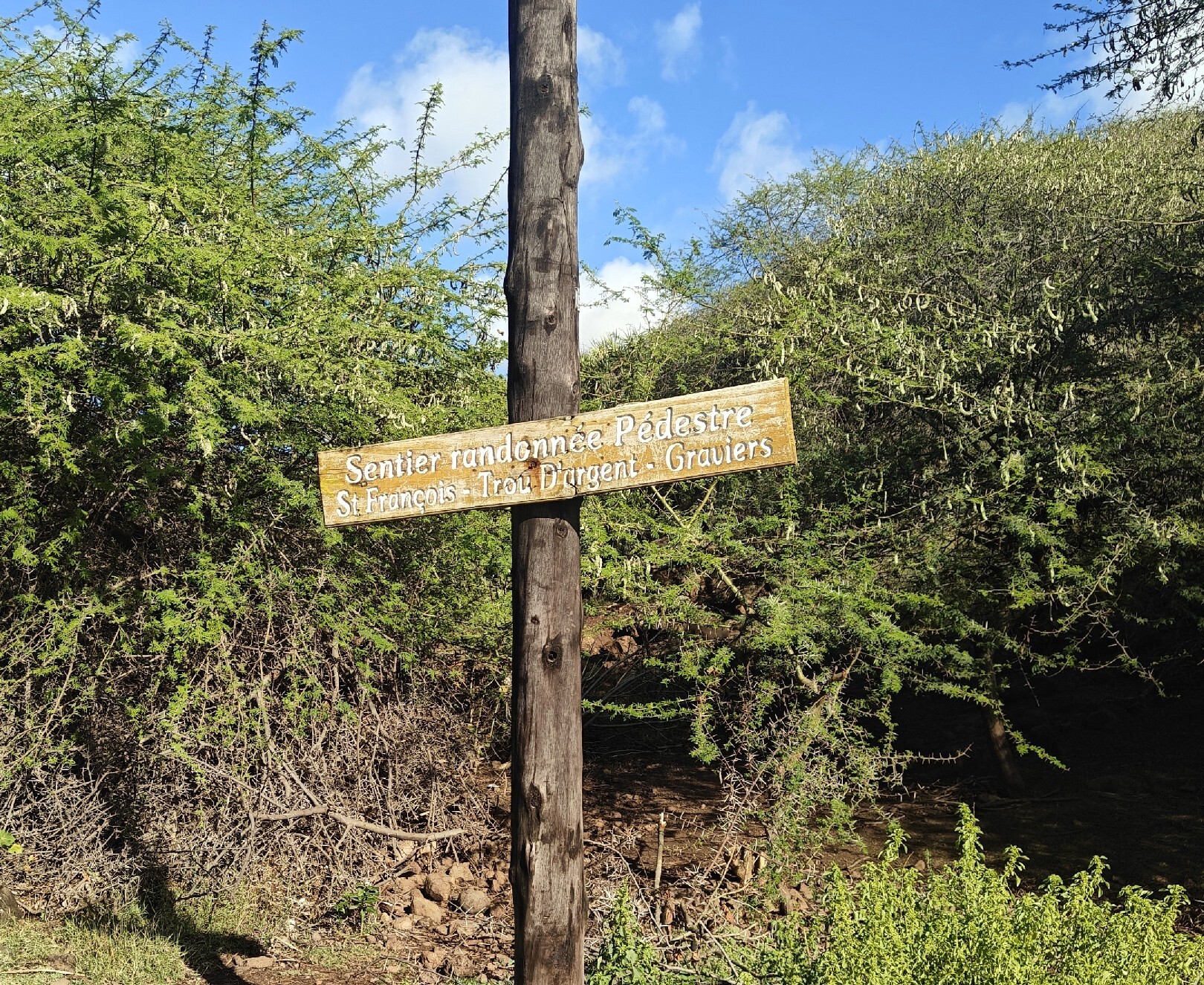

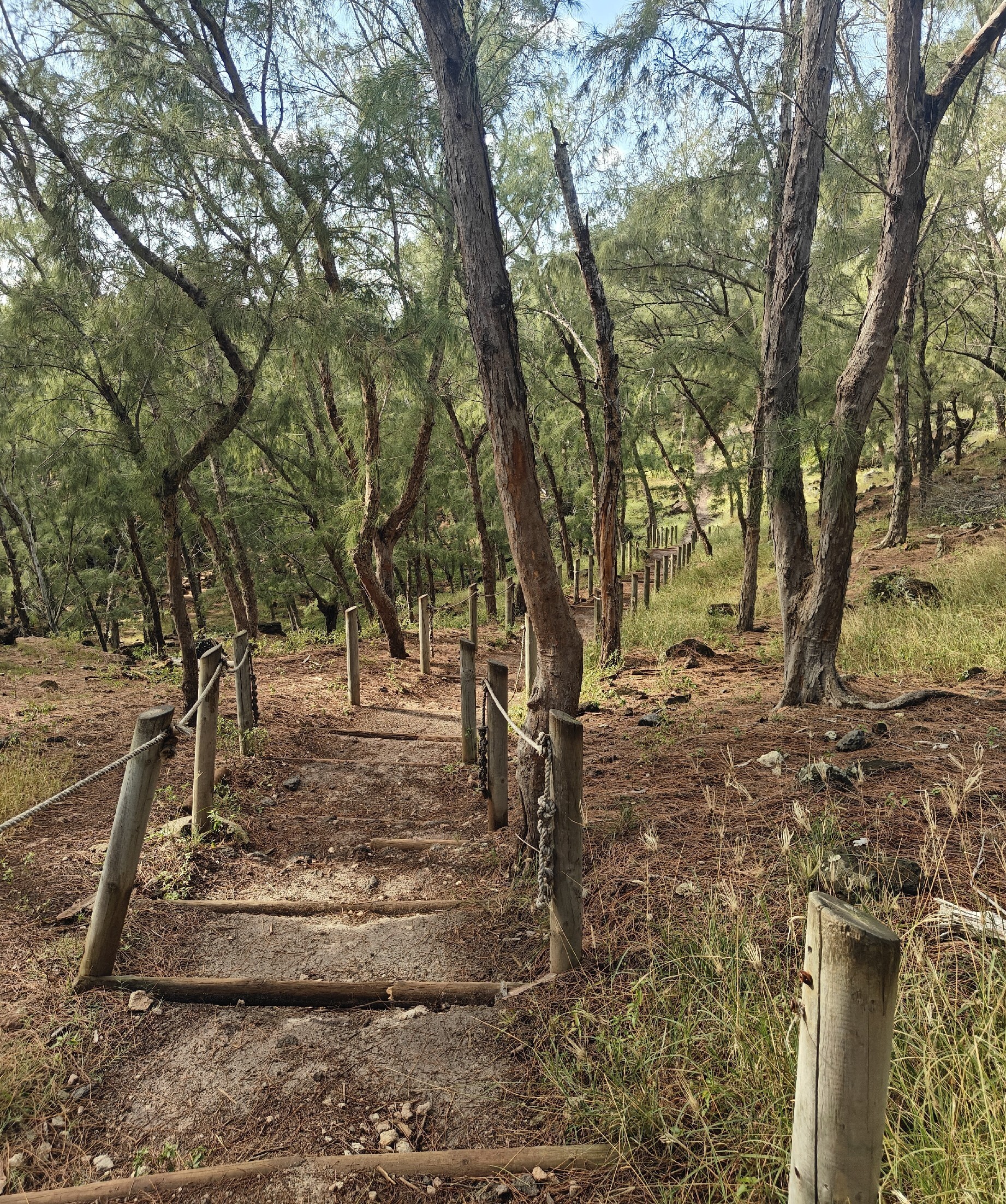
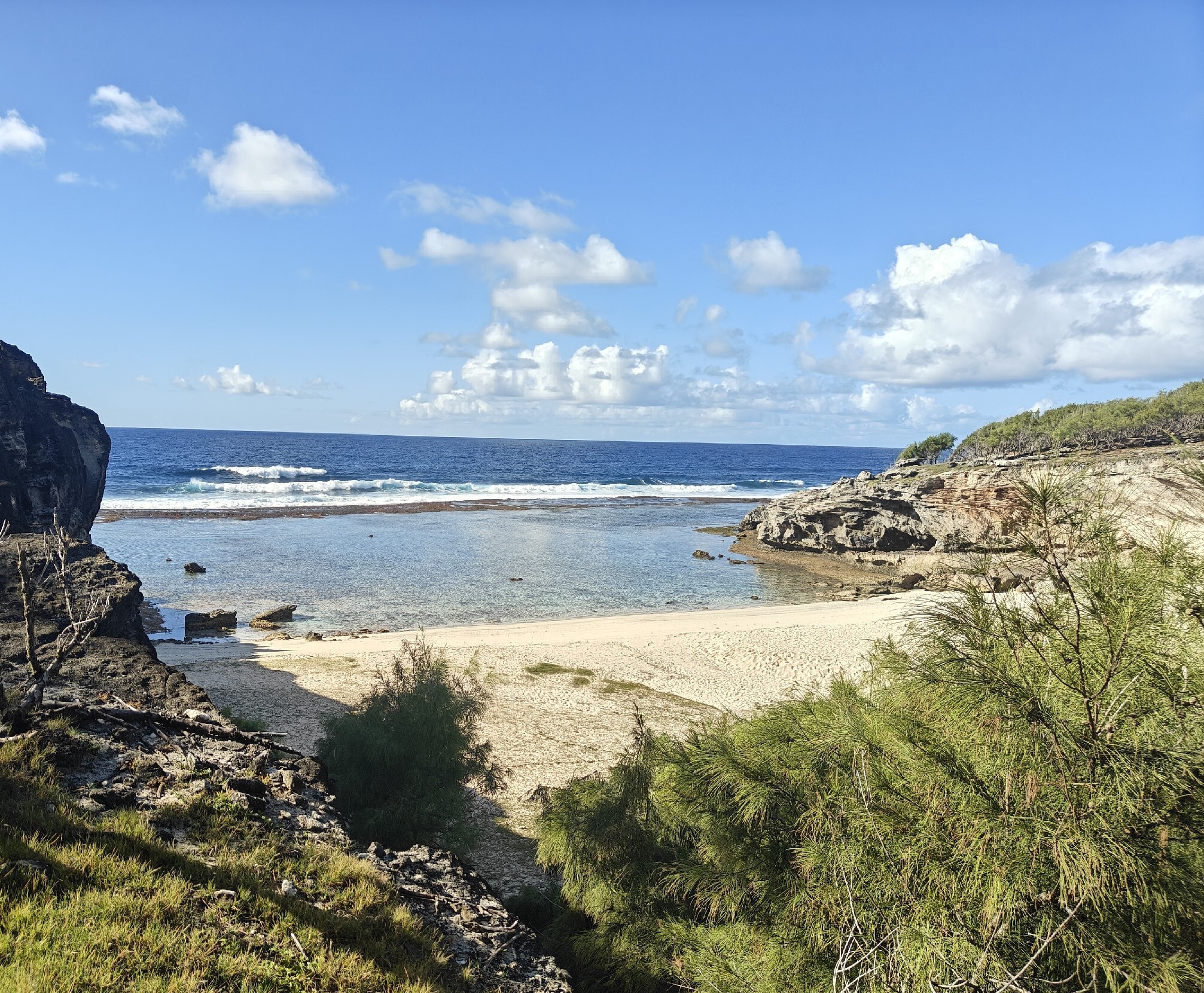

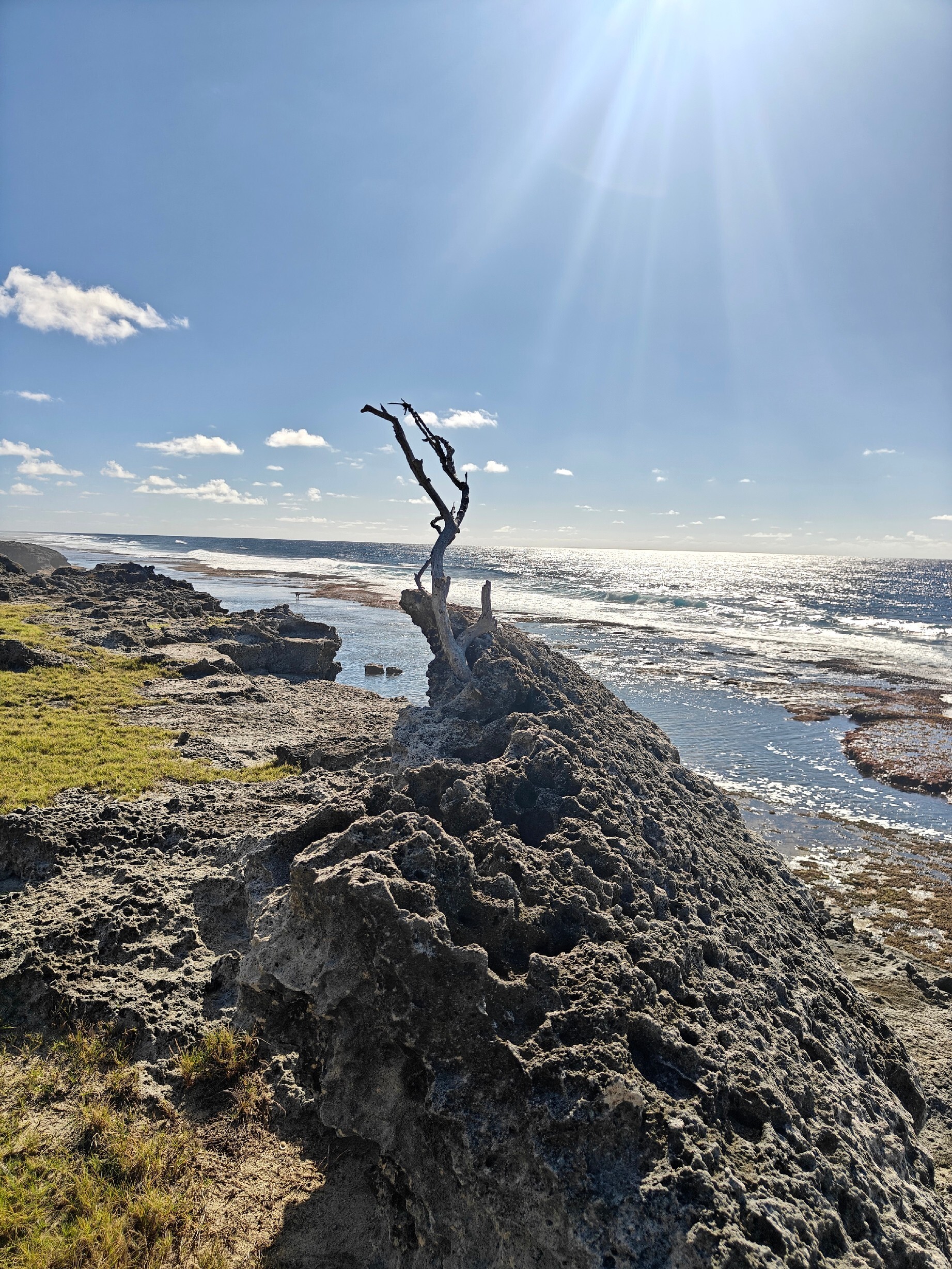
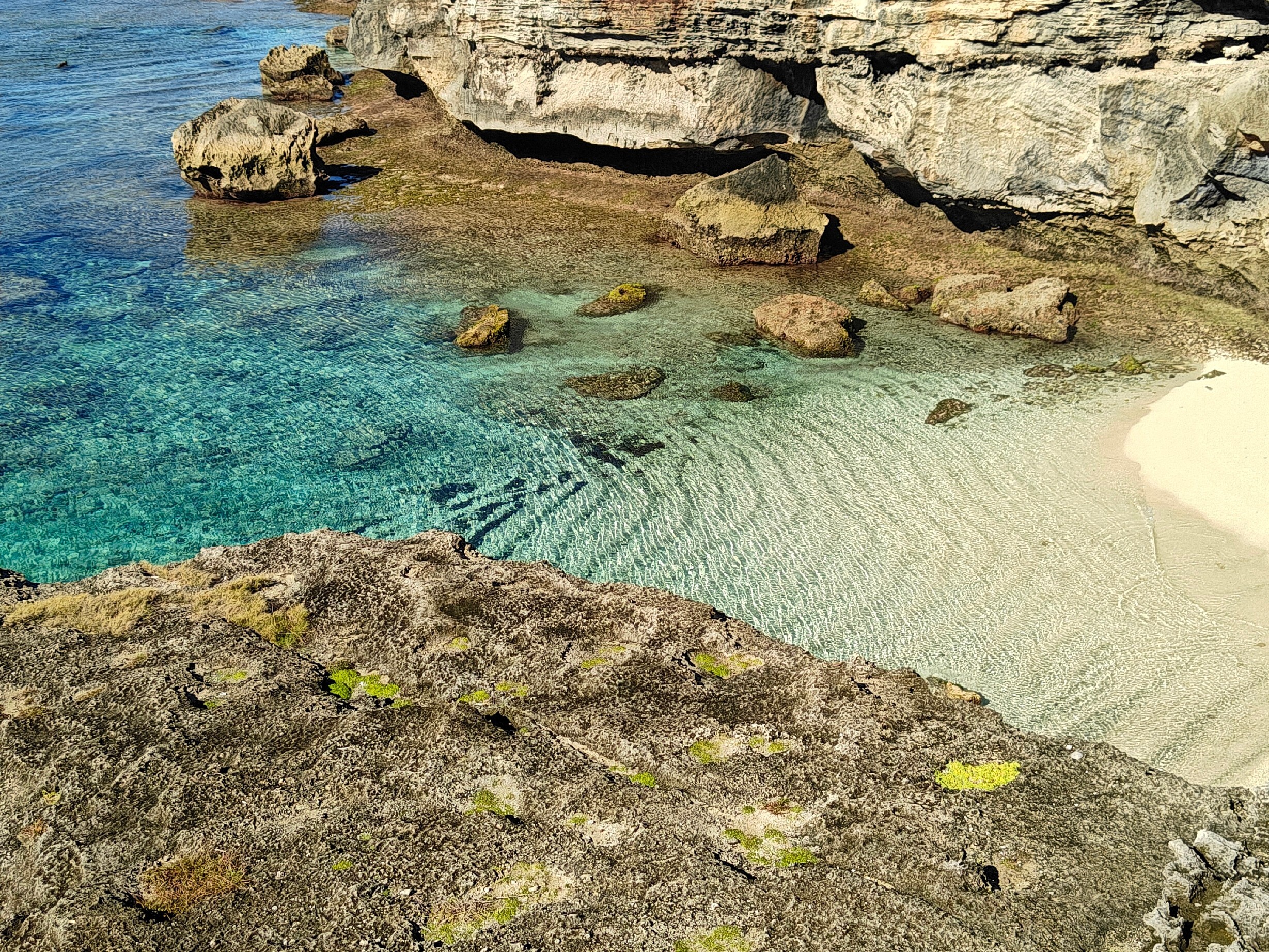
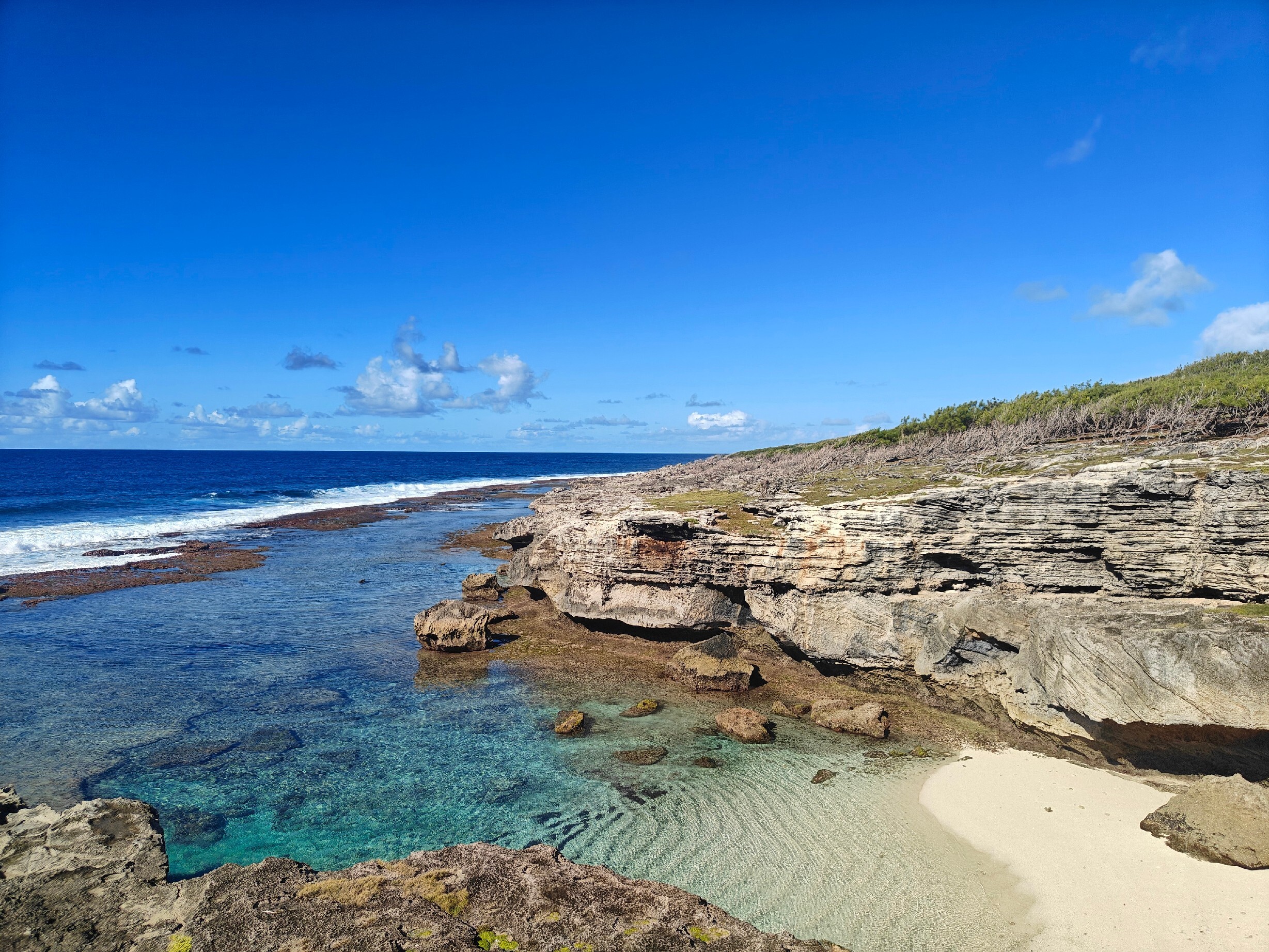
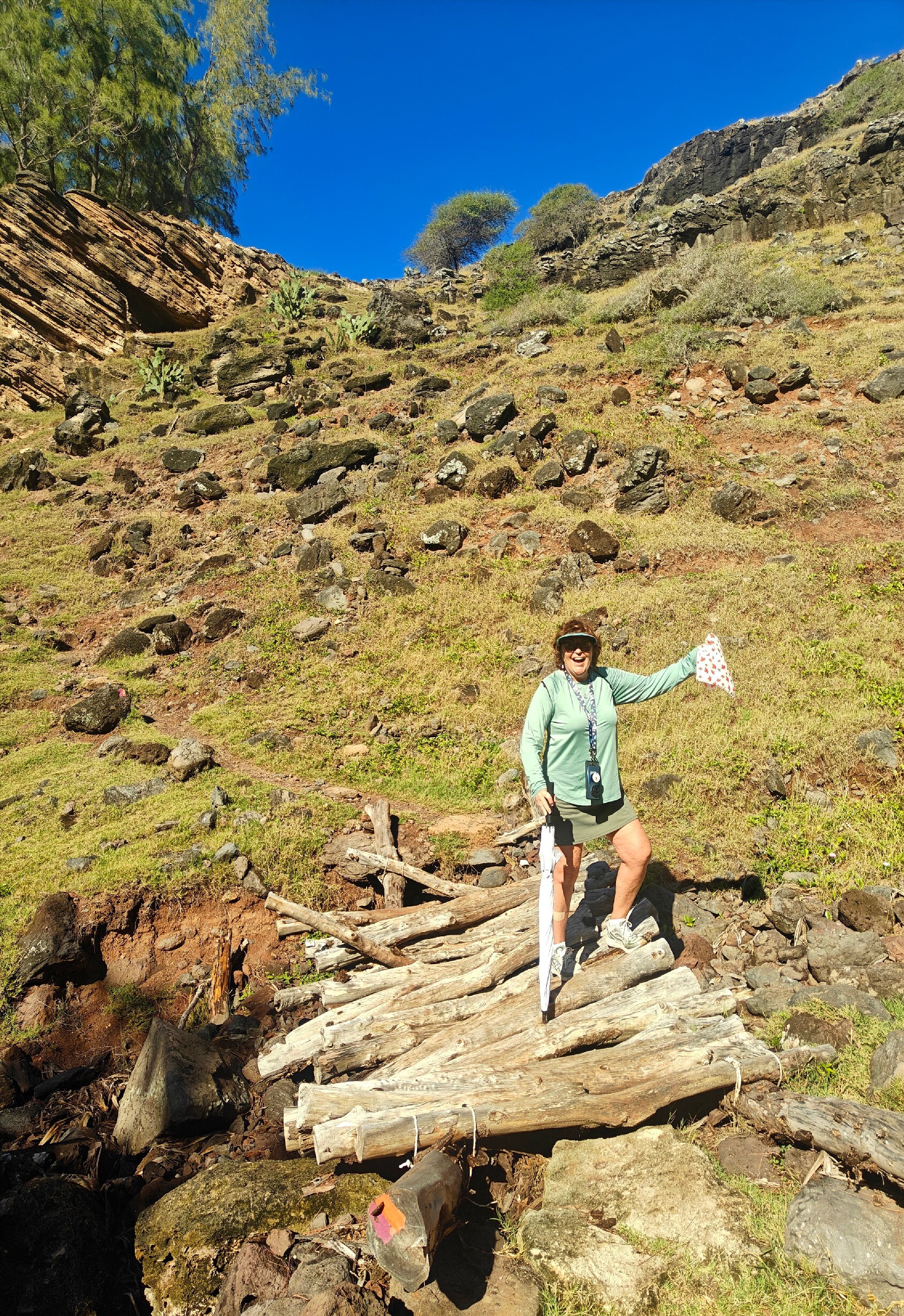

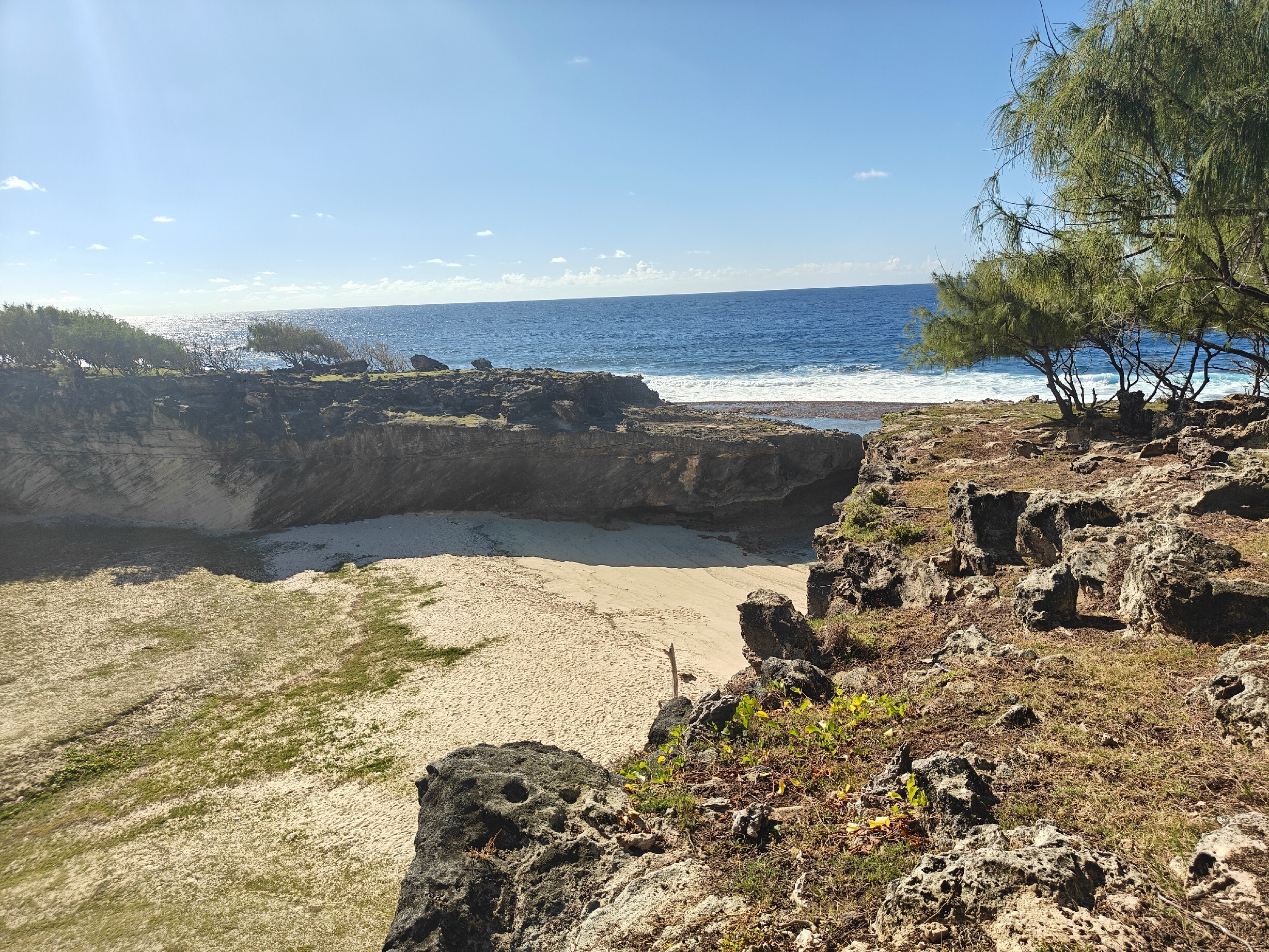
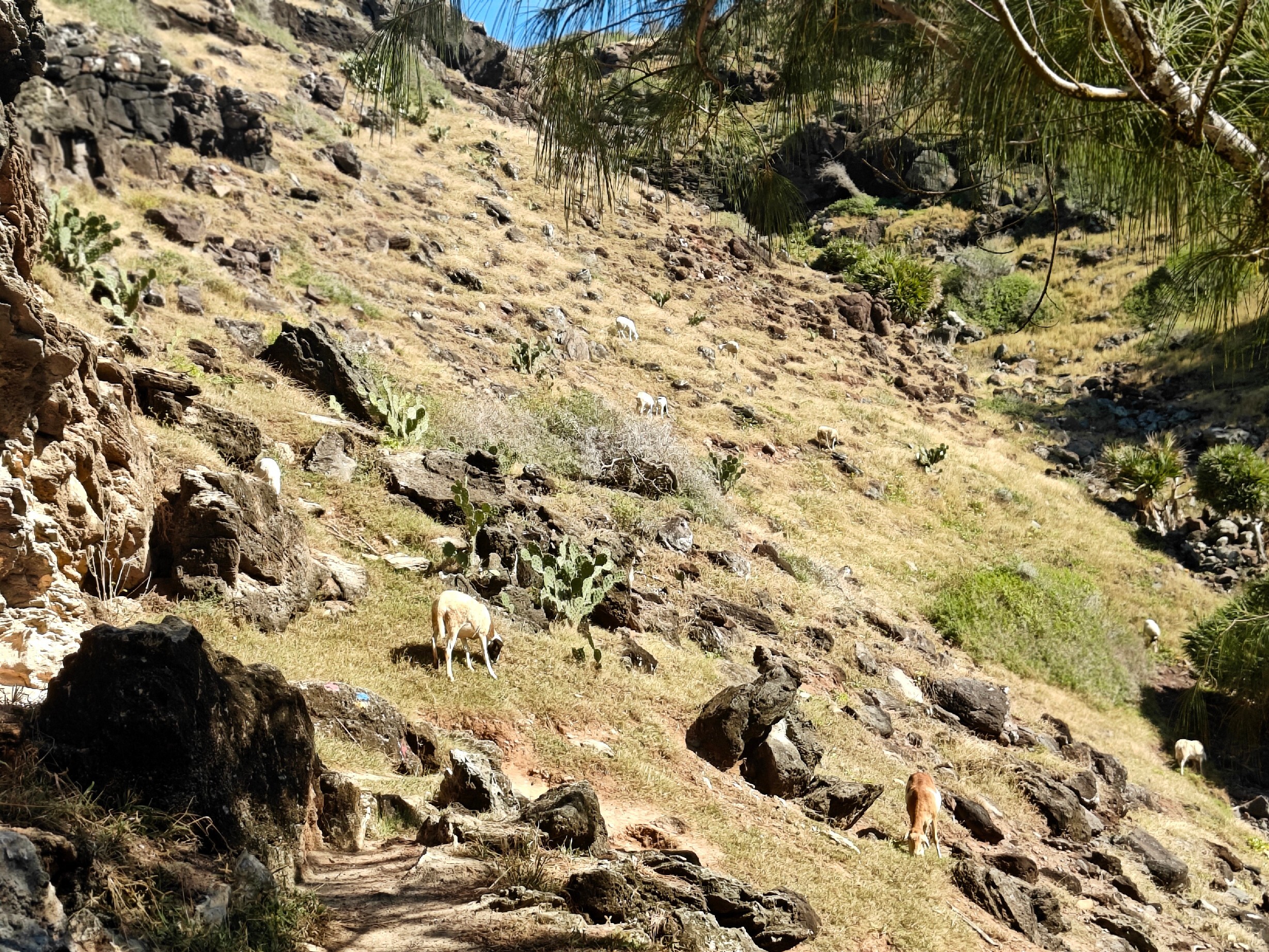 We had planned to go to one more beach, Grand Anse but the way down was quite rocky and slippery from the recent rains, which meant more difficult for Fran, so Doug went on ahead to check it and it was not great so we turned around. This took us about two hours and Fran really felt the heat/humidity and had to stop to take a break a few times. She showered upon returning and felt better.
We had given our laundry to the staff here this morning and it was brought back to us after being washed; no one told us they would not hang them out to dry! She told us we could hang them on our balcony but the line is about not much more than a metre long (maybe four feet) so she showed us another balcony around the corner we could use. That clothes line was much longer and as always, Fran carries a rope and clothes pegs in her suitcase, so we managed to hang it all up also using the clothes hangers in the room.
Doug went out again to try to find a barber and was more successful today. Done, off the list!
In the afternoon we took a drive to see Pointe Coton (Cotton Point) which had a nice beach recommended by Ben and Arnaud but we’d not brought our swimsuits (not sure why not). They were actually there and were leaving as they did not like the debris bits along the shore (we don’t like that either).
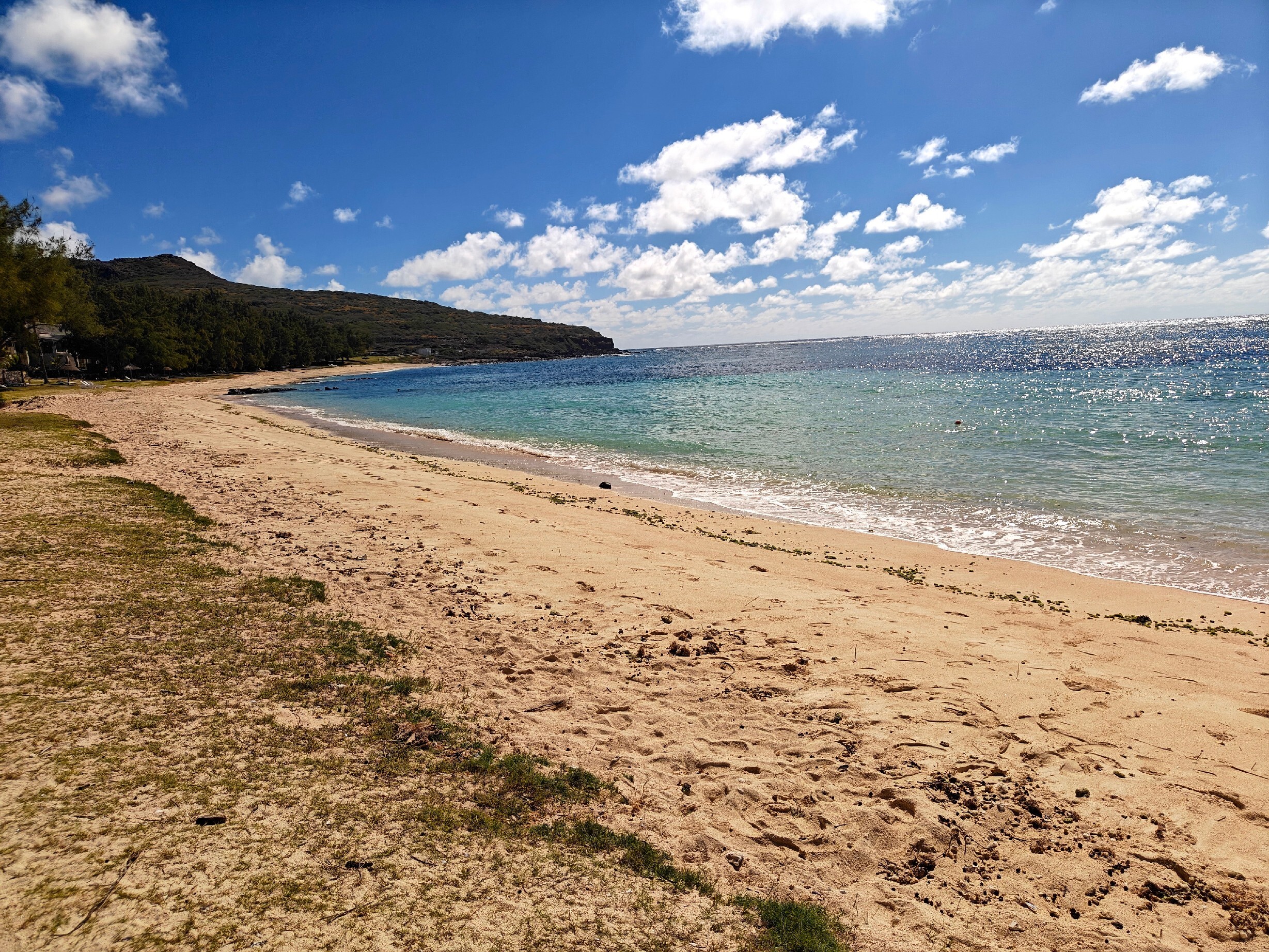
Next we drove over to Grand Baie to have a peek – it was nice but no place to sit again and the beach was very narrow – they must get flooding here as there were lots of sand bags in some places.
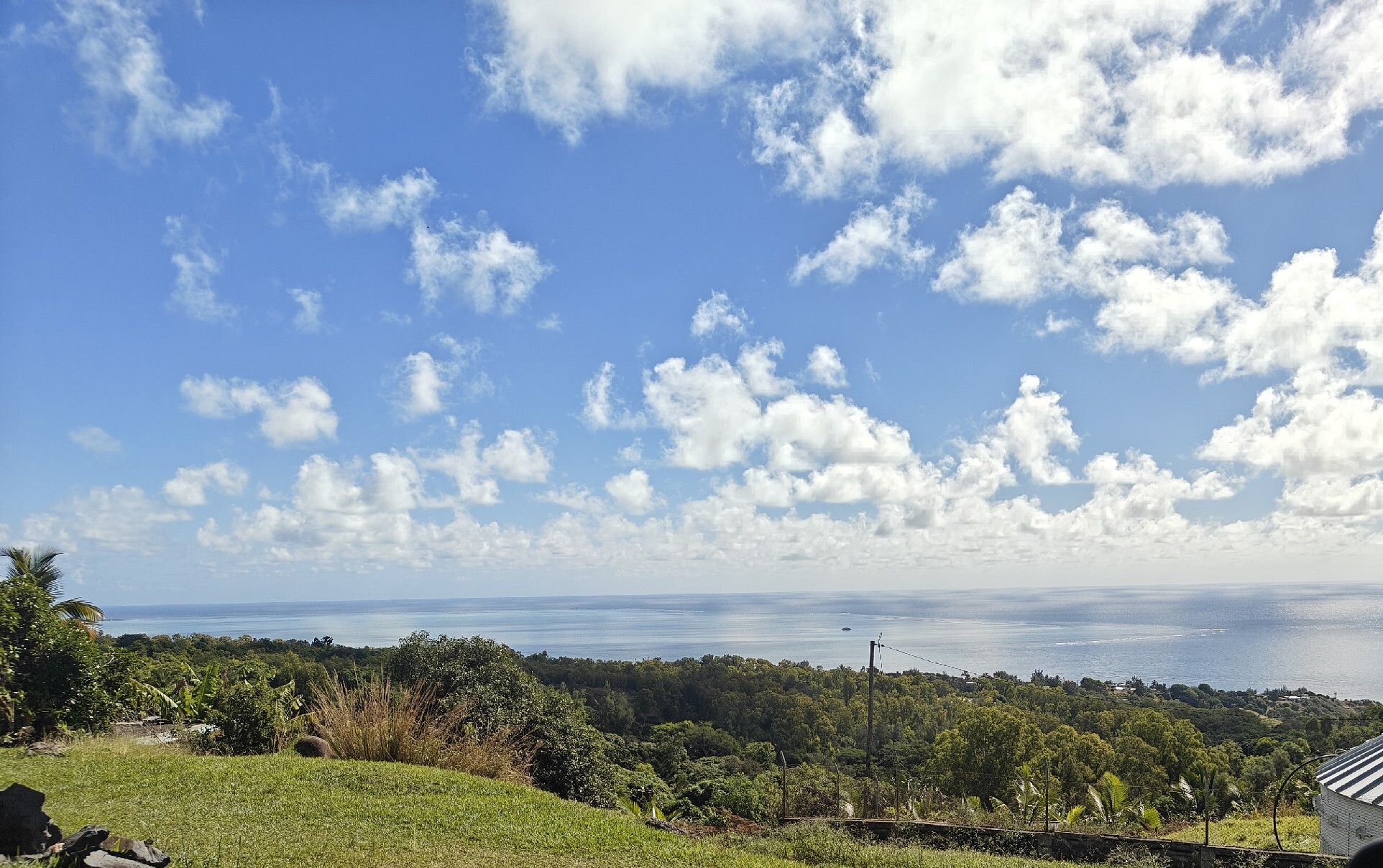

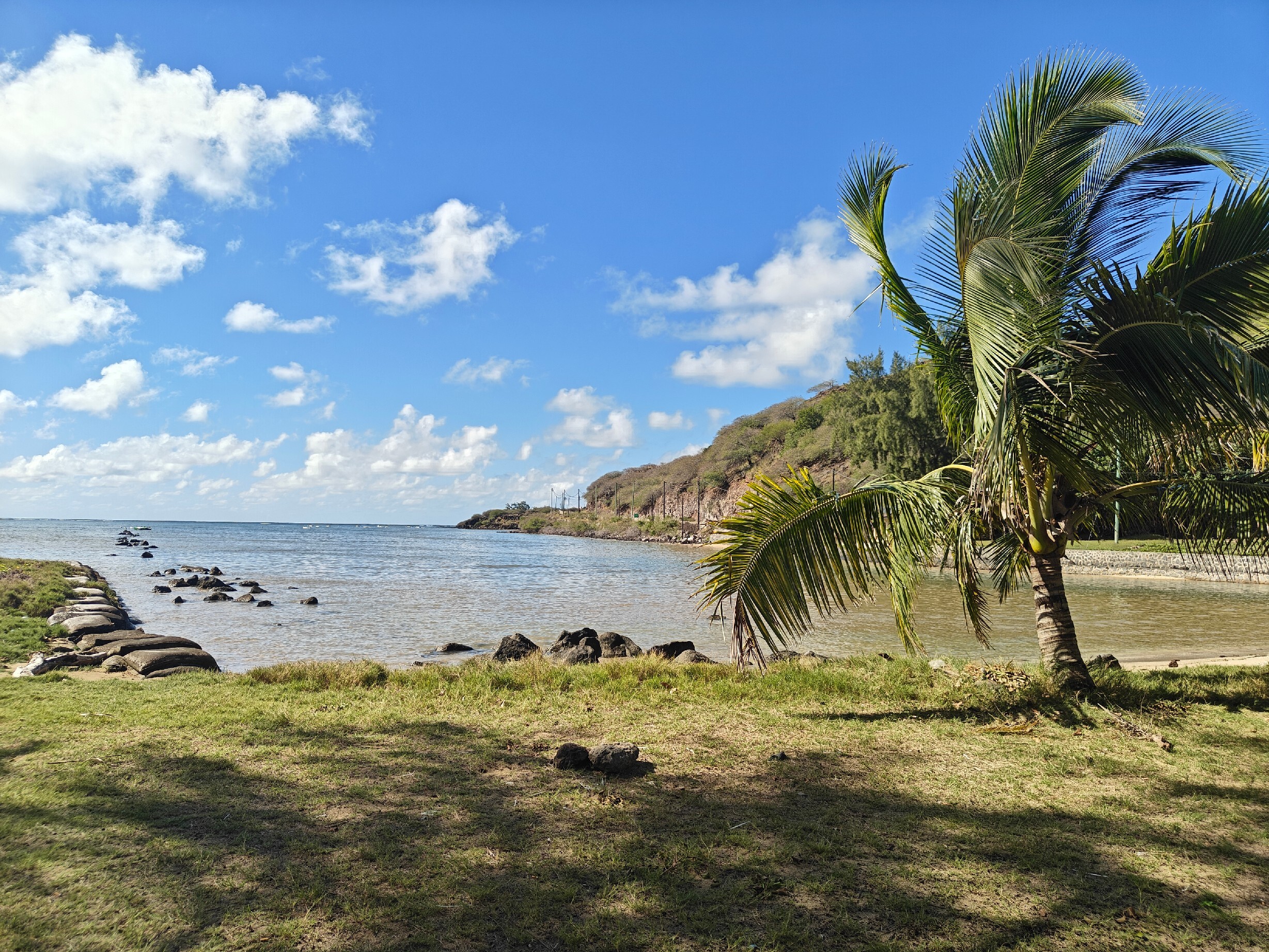
Then it was on to English Bay – this was not an enticing beach as the water at the shoreline was quite brown with lots of debris on the extremely narrow beach, so even less inviting.
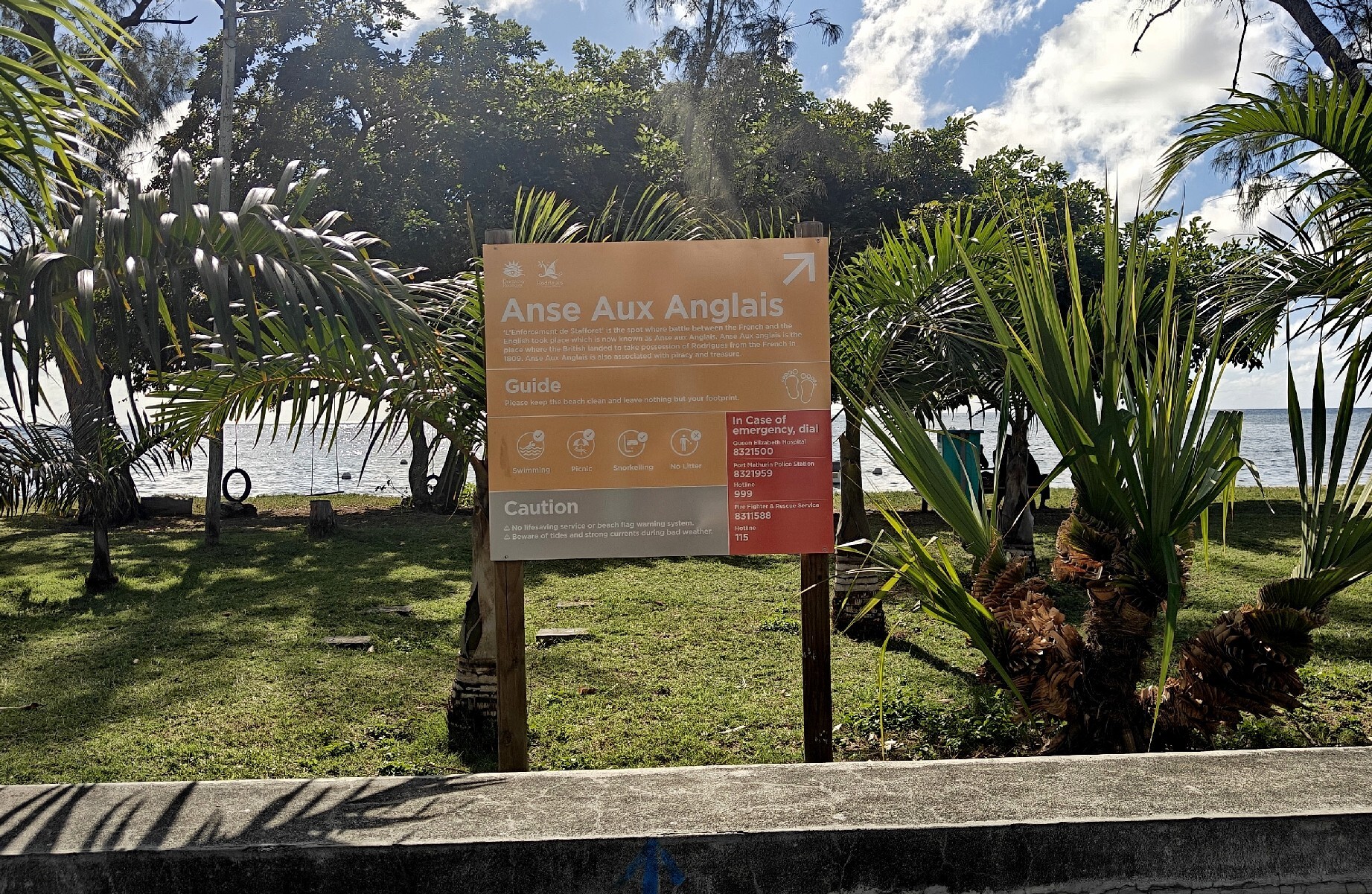
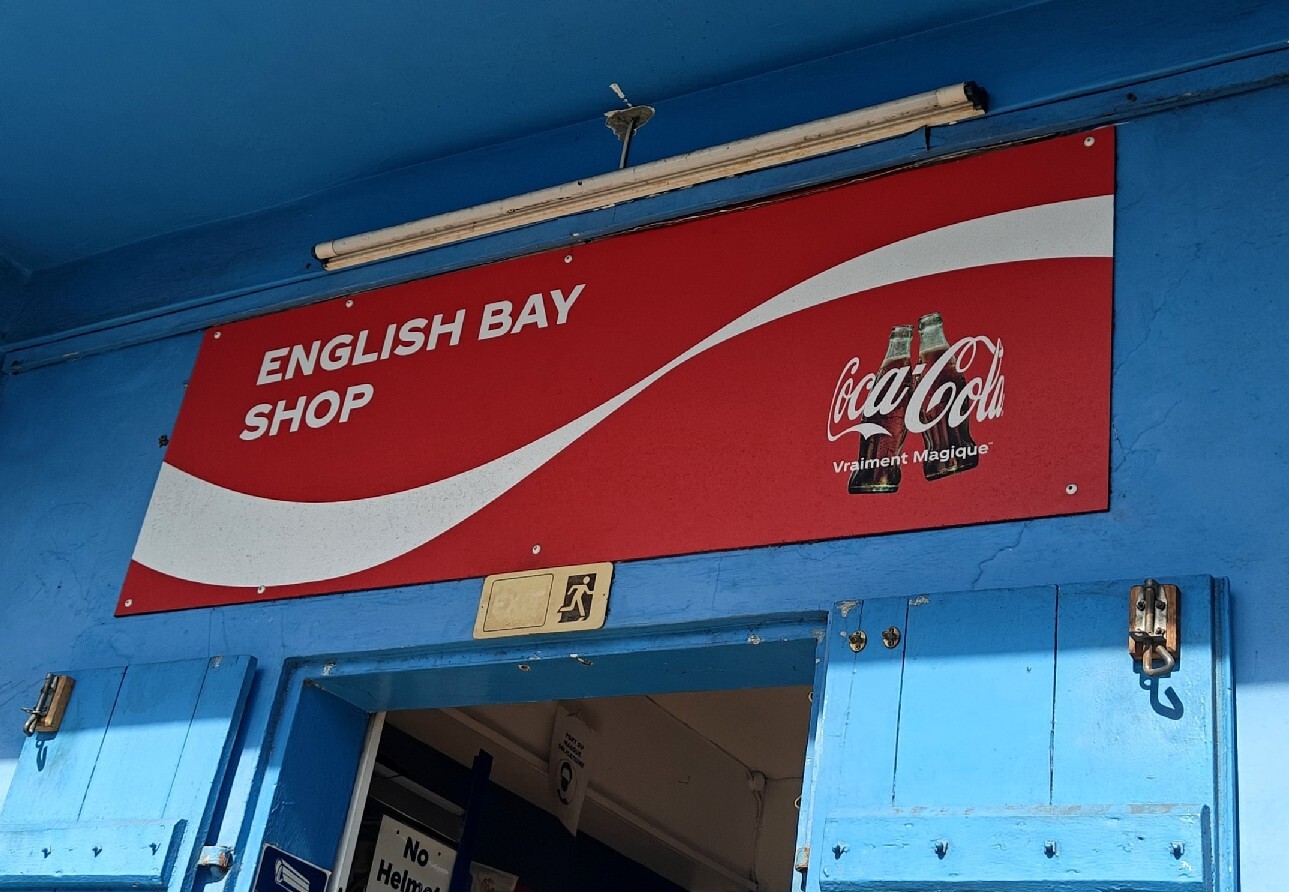
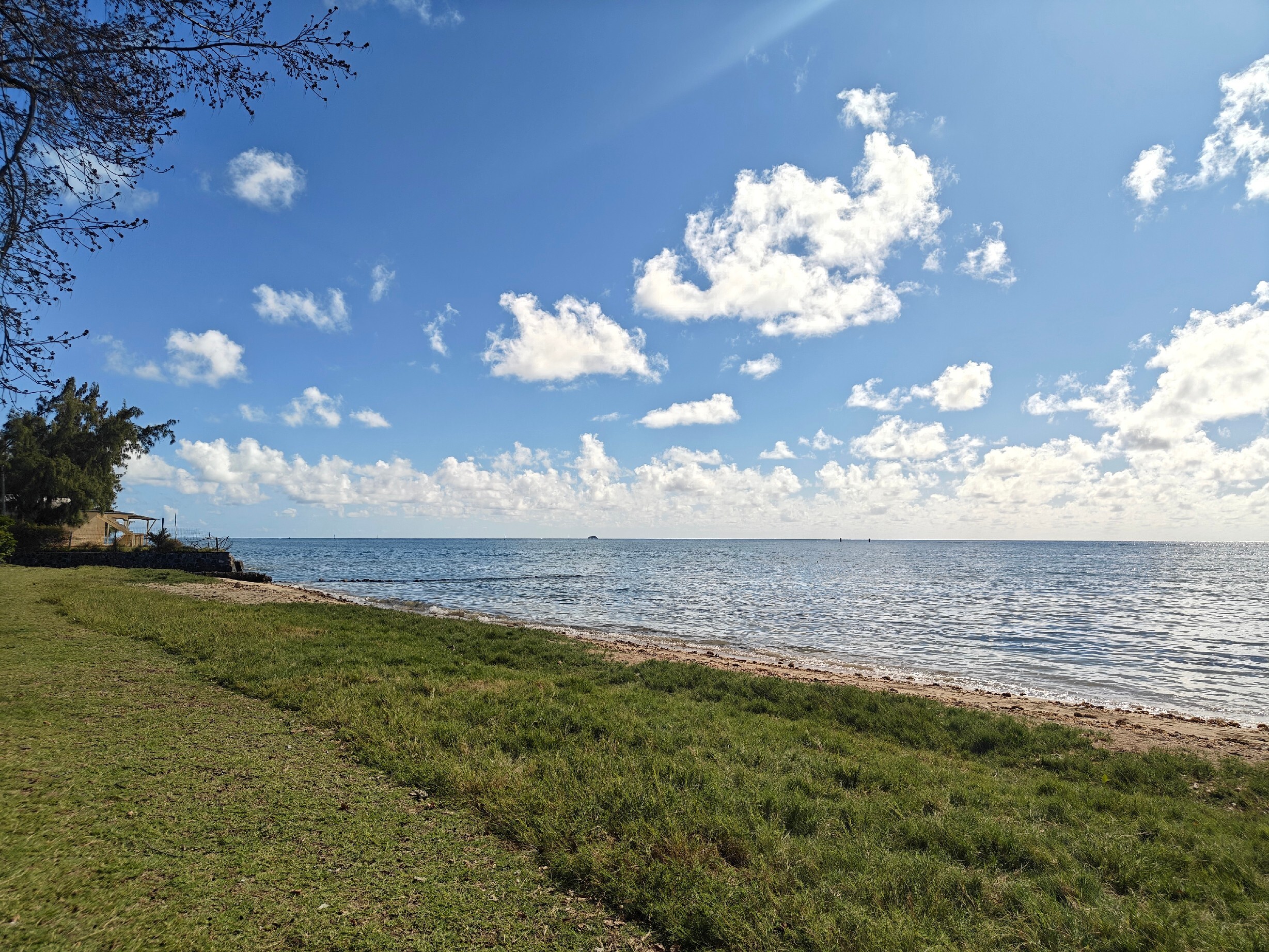
Note: on none of the beaches on this island did we see garbage – they are kept clean and the debris is plants, sticks and the like.
Ben and Arnaud told us of a cafe here called “Amelie” which they’d been to last year and when they went yesterday, it was closed. Well today it was open and we enjoyed some lovely, although expensive, treats.
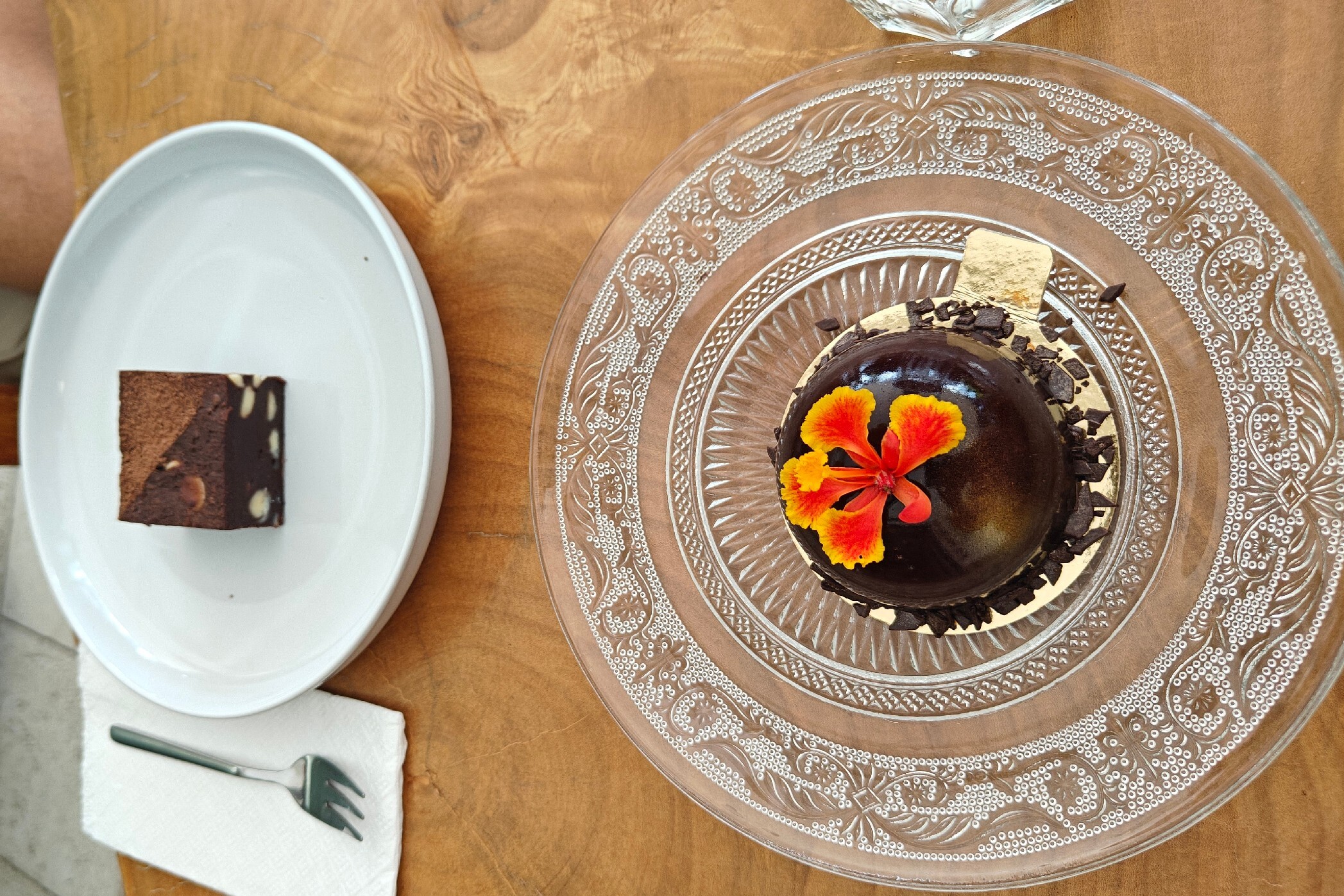
Outside of this pretty cafe we found this:
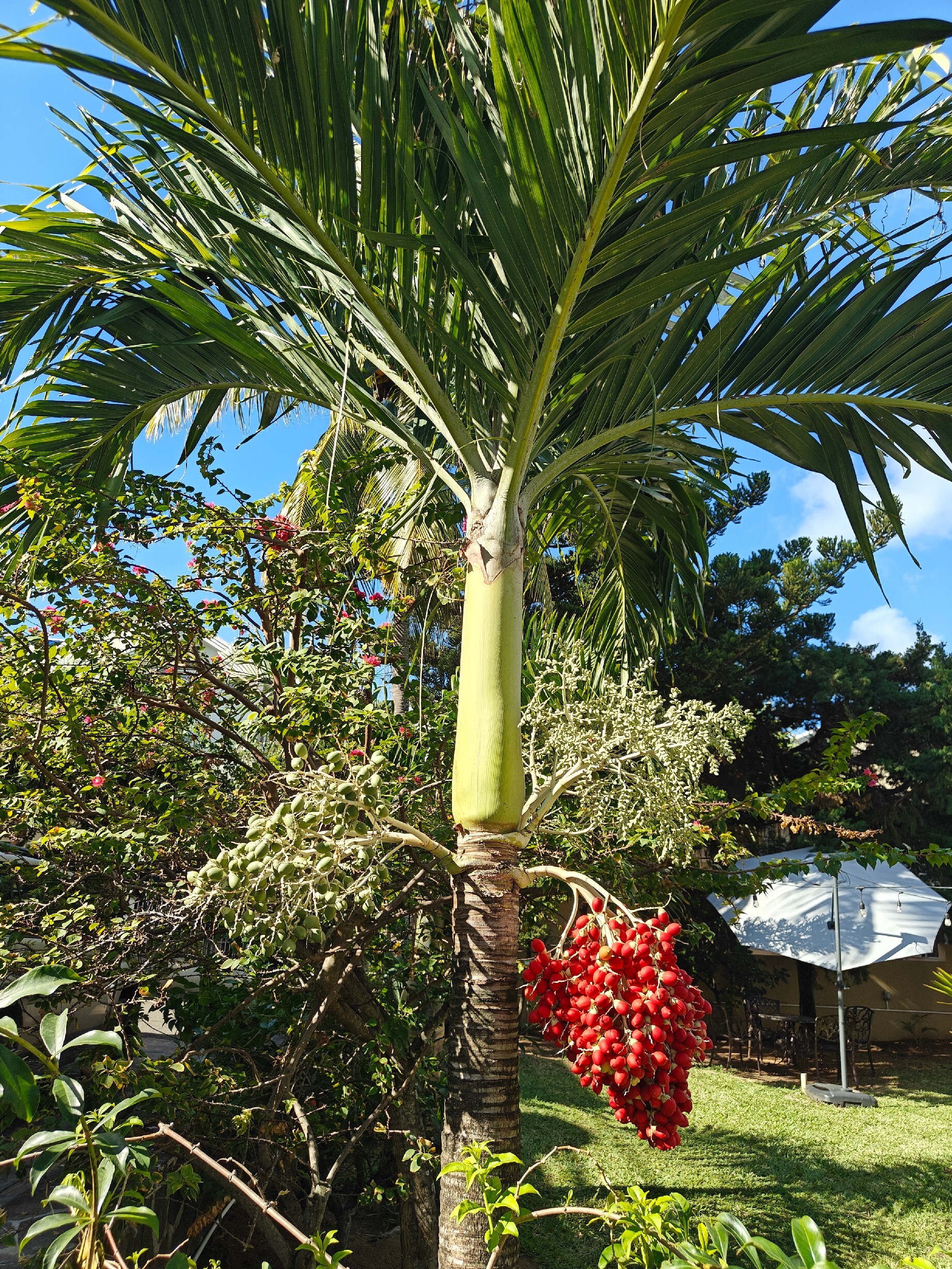
and can you guess what type of palm tree this is? It’s a Christmas palm!
Upon returning, we checked our clothes and 85% were dry so we left the damp ones hanging on our balcony only and of those that were still wet at dusk we put them in our room for the night. At night we turn on the AC in our bedroom as that’s the only place there is AC, and it was all dry by morning.
Today the power went out after sunset and before dinner for almost an hour this time, but again the gennie was turned on and we all had lights but some people said that they had no water in the afternoon which we had not tried.
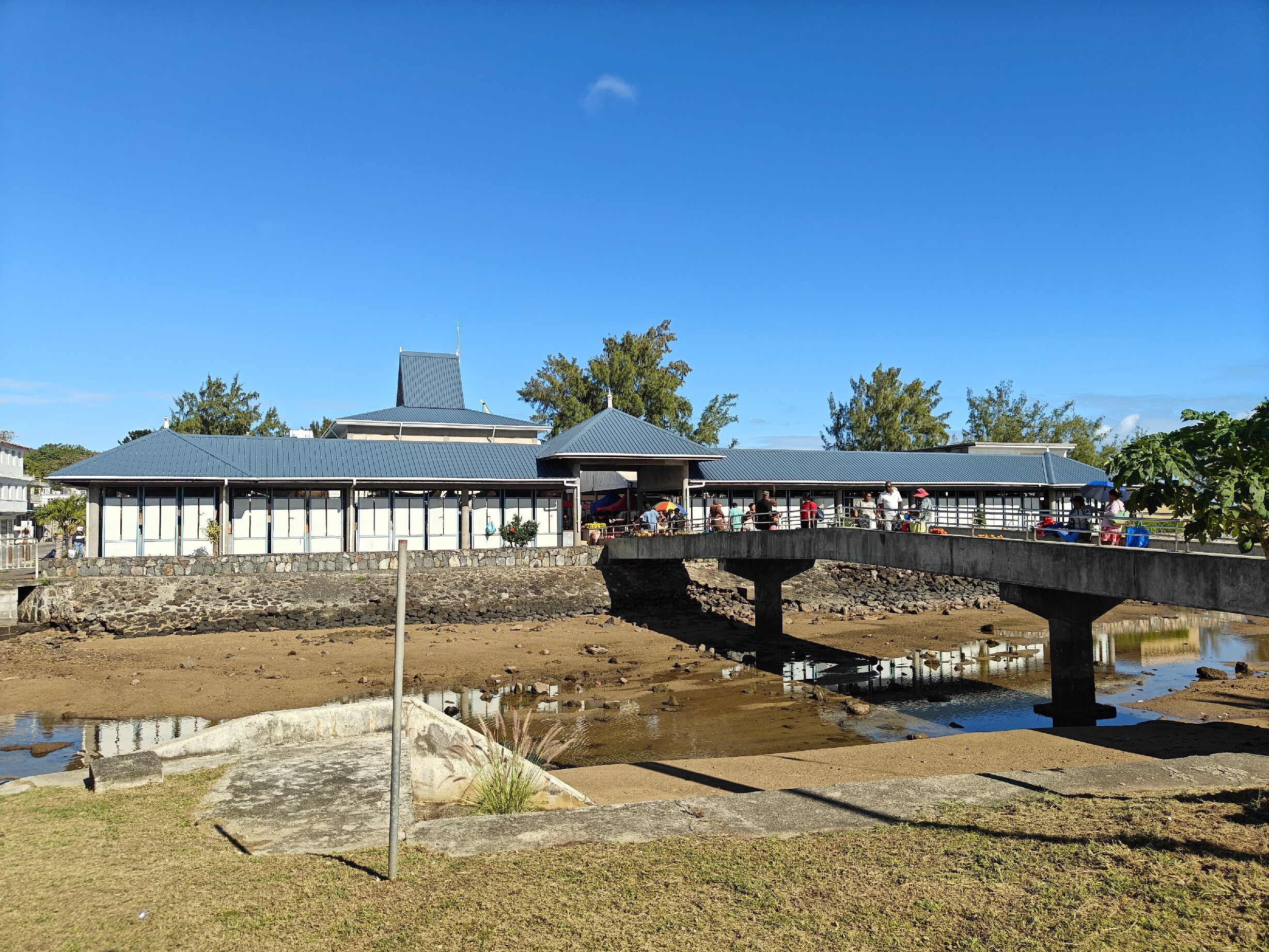
Saturday is market day on Rodrigues so after breakfast (and saying goodbye to the French family) we headed into the city for that. We had been told there were be lots of people but it was not so busy. We found our tortoise souvenir of the island here (they did not have a good one at the sanctuary the other day), bought some pies made of coco and papaya and some fruit for our afternoon snack.
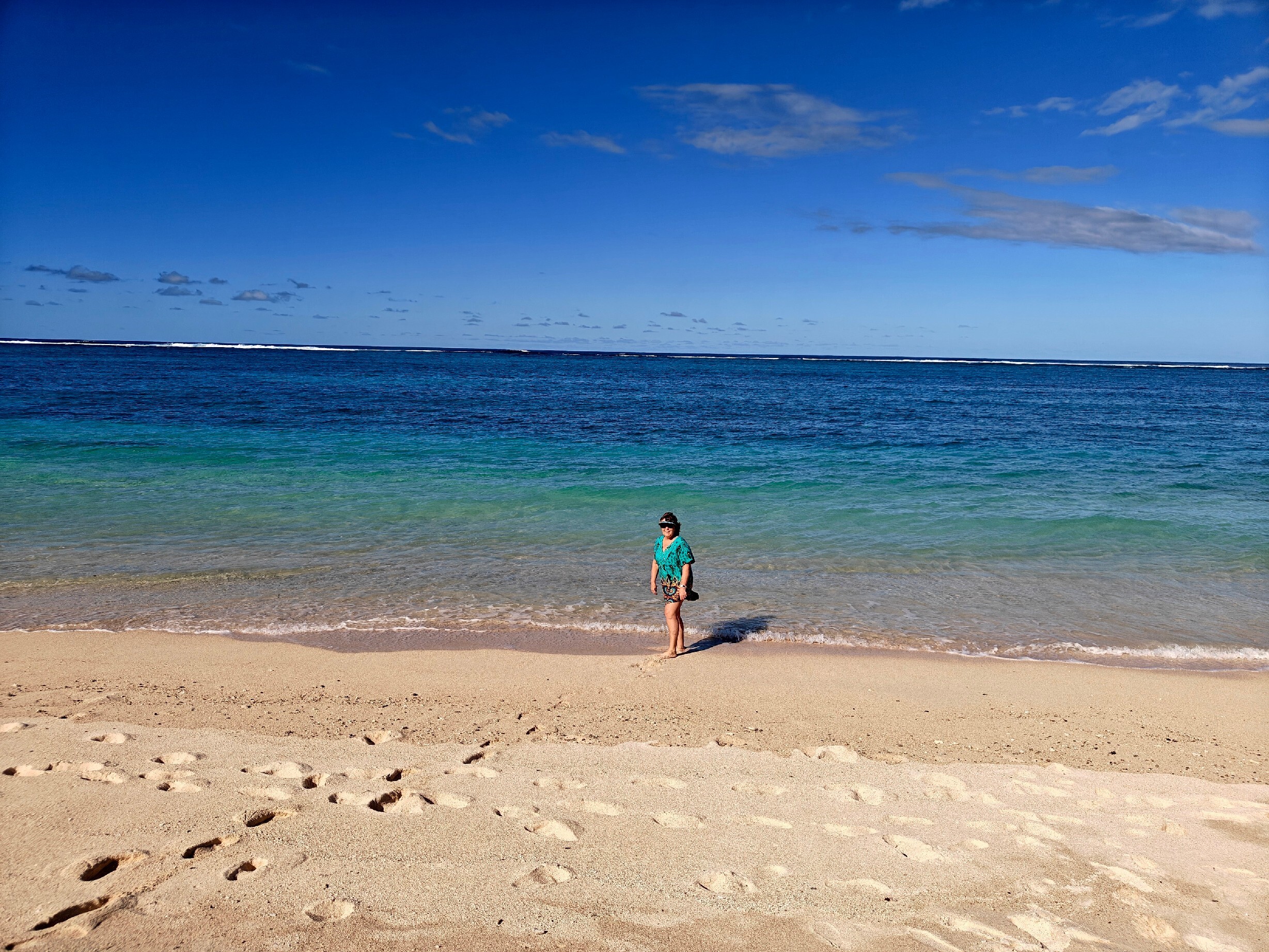
We returned to the hotel and a couple of hours later we went to check out the next beach from ours: Anse Ally – it was lovely and the water had no debris in it. We stayed here a couple of hours, checking out the water (but never felt the urge to swim), laying on our beach blankets (this time with towels on top to make it more comfortable and we snagged a couple of throw pillows from the room) and we read for a quite a while. Doug went to kiosk for a couple of beers at one point which we enjoyed watching the waves break out on the reef.
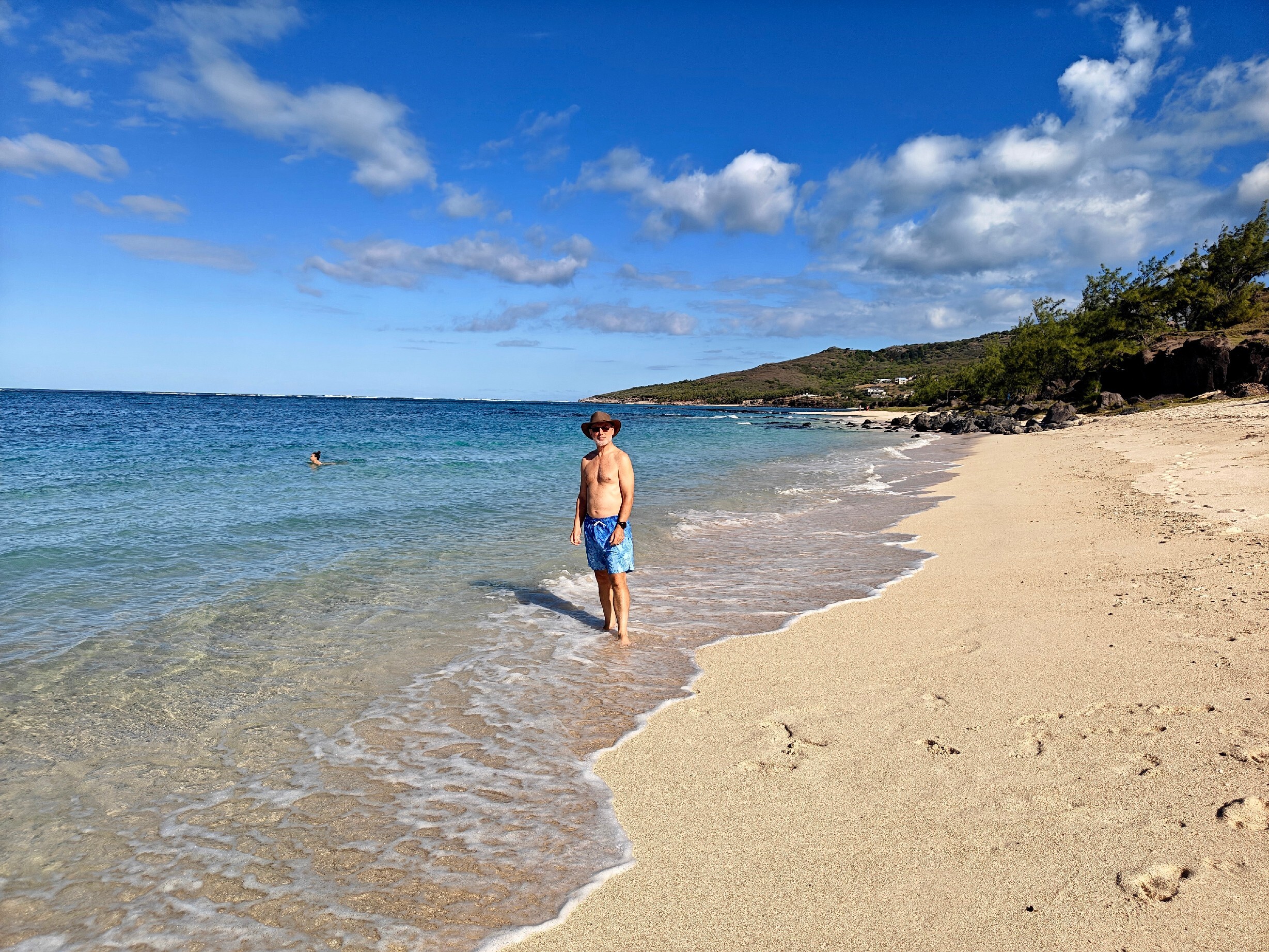
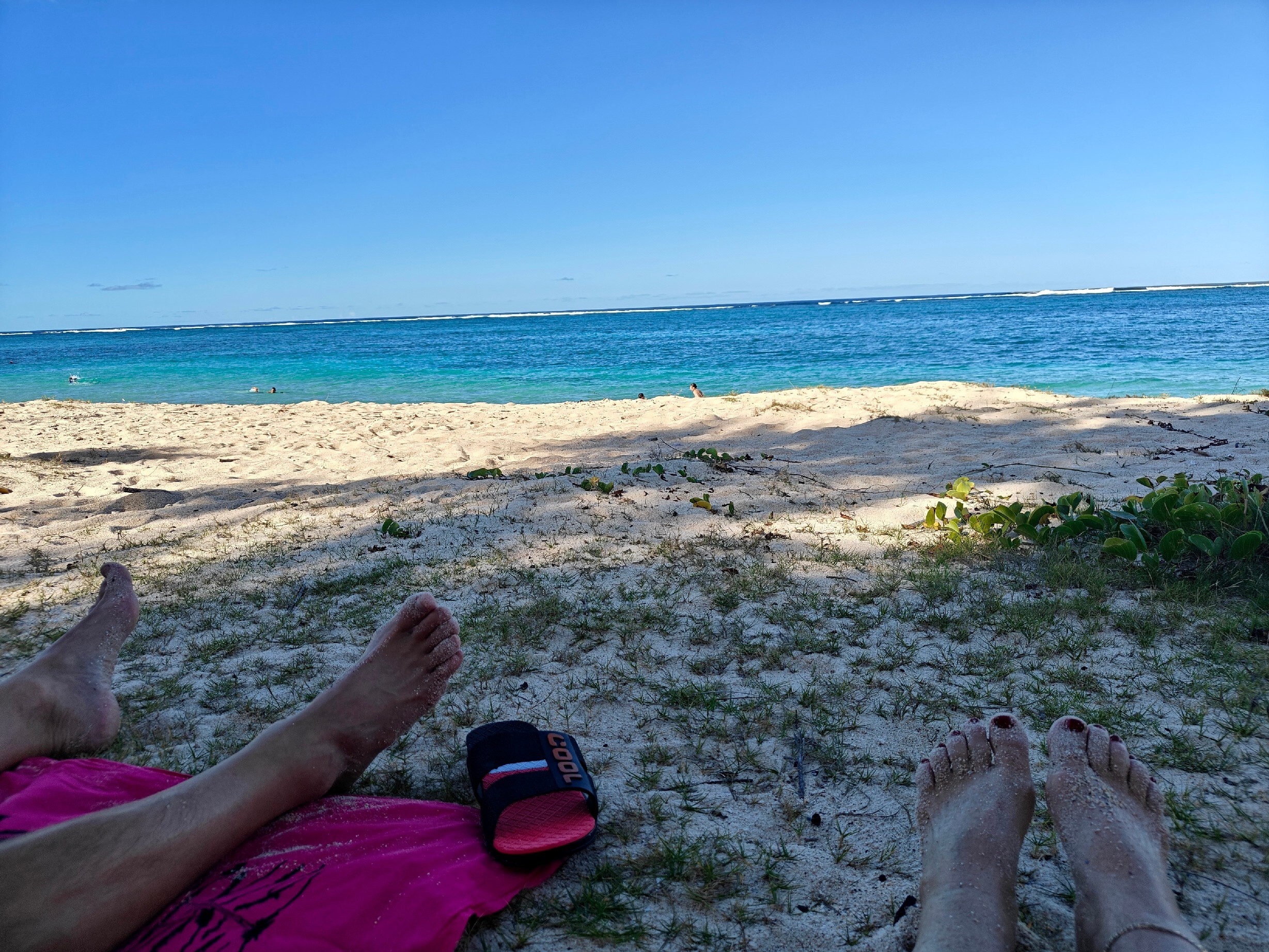
Tonight at dinner it was just four of us so all the conversation was all in English which was nice. It was pretty warm today with none of the ocean breeze we felt the first few days here. We watched our shows after dinner on our bed so we could sit the AC!
Sunday morning we packed up, had breakfast with Ben and Arnaud and then we left for the airport around 11. We took a slightly different route to stay along the coast as we had plenty of time. Unfortunately, the tide was out so the beaches were not very pretty.
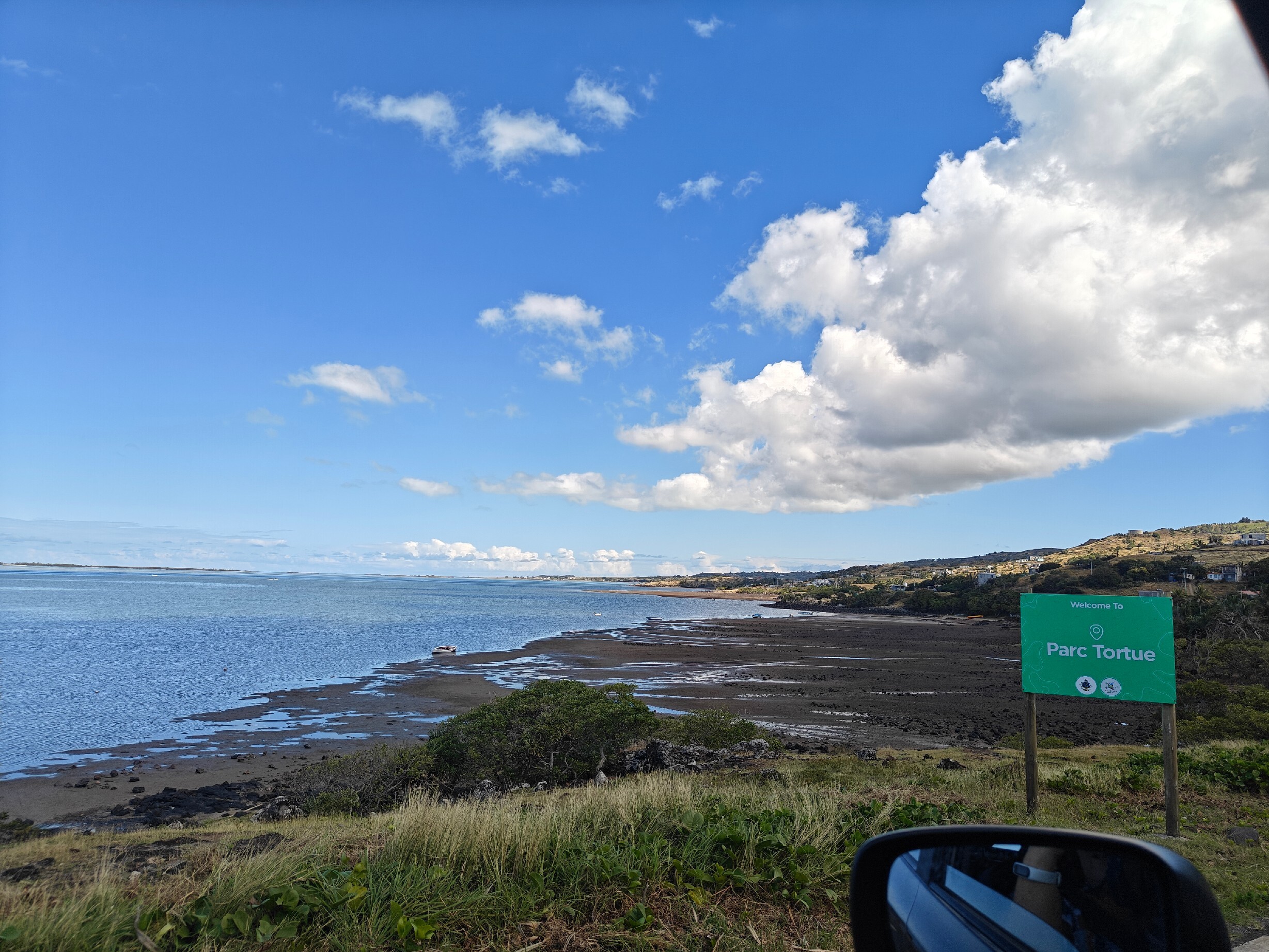
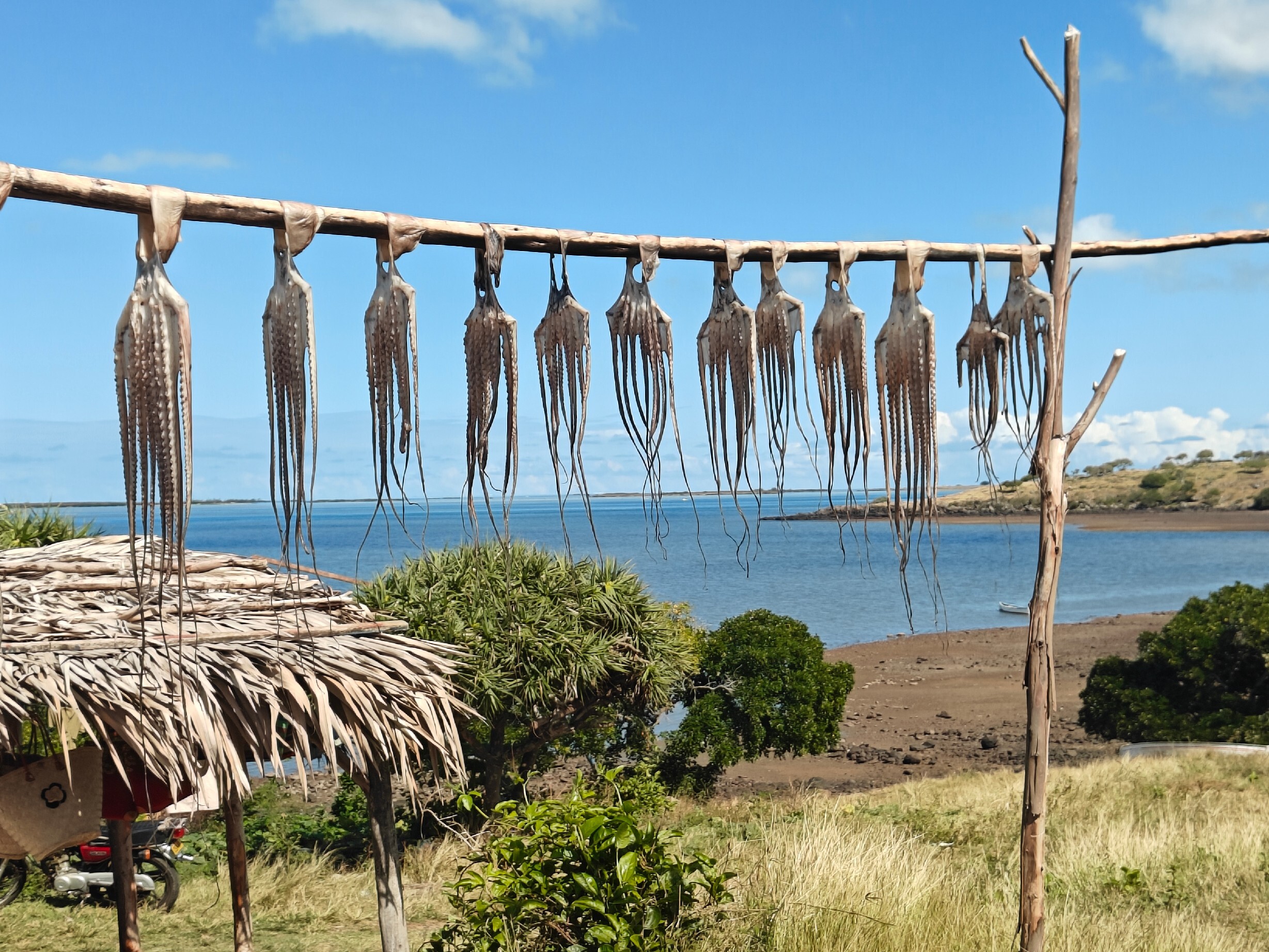
While on the island we’ve been looking for racks with drying octopus (a big deal here and we’d been served it twice at dinner) and expected to see them at the market but had no such luck. Finally, this morning we did!
We met Irvin before noon to drop off the car, dropped off our bags for flight our was at 2:10 pm back to Mauritius. This flight takes about 1.5 hours.
We quite enjoyed our time here and a week was about the right amount of time. It is very laid back and we never felt rushed. While there are not really a great deal of tourist sights, that just made it that much more relaxing.
We amazingly drove a total of 233 / 145 mi on this tiny island.
Fun Facts about Rodrigues:
-
The Lagoon is Twice the Size of the Island: The island landmass covers about 108 km², but it is surrounded by a massive, shallow coral lagoon that spans over 200 km², creating perfect, protected conditions for kite surfing and world-class snorkeling.
-
It is often refereed to as the original “Robinson Crusoe” Island: In the 17th century, a small group of French Huguenots fleeing persecution established a settlement on the island. The isolation and lack of human contact proved to be too much, and after just two years, they built a boat from driftwood and escaped.
-
Heaven for Octopus Lovers: Octopus (known locally as ourite) is the signature staple of the island’s cuisine. The traditional Salade d’Ourite (octopus salad) is a must-try dish, made from locally caught, sun-dried octopus.
-
No Traffic Lights: Life on Rodrigues is incredibly simple and stripped-back. There are no traffic lights, no shopping malls, no cinemas, and no fast food chains. People live deeply connected to the land and sea.
-
Home to the Longest Cave in Mauritius: Tucked away in the southwest of the island is the Cavern Patate. Stretching for over 1.5 km, it features spectacular stalactite and stalagmite formations carved from coral limestone