August 29th, 2026
Eswatini, officially the Kingdom of eSwatini (formerly known as Swaziland), is a landlocked country in Southern Africa. It is bordered by South Africa on all sides except the east, where it shares a border with Mozambique. Eswatini is one of the smallest countries on the continent, however, its climate and topography are diverse, ranging from a cool and mountainous area to hot and dry lowlands. The executive capital and largest city is Mbabane, and the legislative and second capital is Lobamba.
In size, Eswatini is slightly smaller than Slovenia, three times larger than the province of Prince Edward Island and just a bit bigger than the state of Connecticut.
The population is composed primarily of ethnic Swazis. The prevalent language is Swazi. The Swazis established their kingdom in the mid-18th century under the leadership of Ngwane III. The country and the Swazi take their names from Mswati II, the 19th-century king under whose rule the country was expanded and unified. Its boundaries were drawn up in 1881 in the midst of the European scramble for Africa.
After the Second Boer War, the kingdom, under the name of Swaziland, was a British high commission territory from 1903 until it regained its full independence on 6 September 1968. In April 2018, the king changed the official name from Kingdom of Swaziland to Kingdom of Eswatini, the name commonly used in the Swazi language.
Eswatini’s government is an absolute monarchy, the last of its kind in Africa. The country has been ruled by King Mswatti III since 1986. Elections are held every five years to determine the House of Assembly and the Senate majority, but political parties are prohibited from running. Eswatini’s constitution was adopted in 2005.
The Swazi population faces major health issues: HIV/AIDS and (to a lesser extent) TB are widespread. Twenty-eight percent of the adult population are HIV-positive. As of 2018, young people constitute 35% of the country’s population; the median age is 22 years.
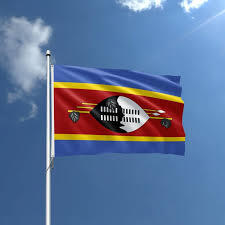
The flag of Eswatini was adopted on October 6, 1968, symbolizes the nation’s history, peace, and natural wealth. Its design features a central Nguni shield—representing protection and unity—set against horizontal stripes of blue (peace), yellow (resources), and red (past battles).
Currency: Swazi lilangeni (SZL) – $0.06 USD; $0.08 CAD (however, South African is accepted everywhere)
Gas: 24.47 SZL per litre – $5.45 USD per gallon
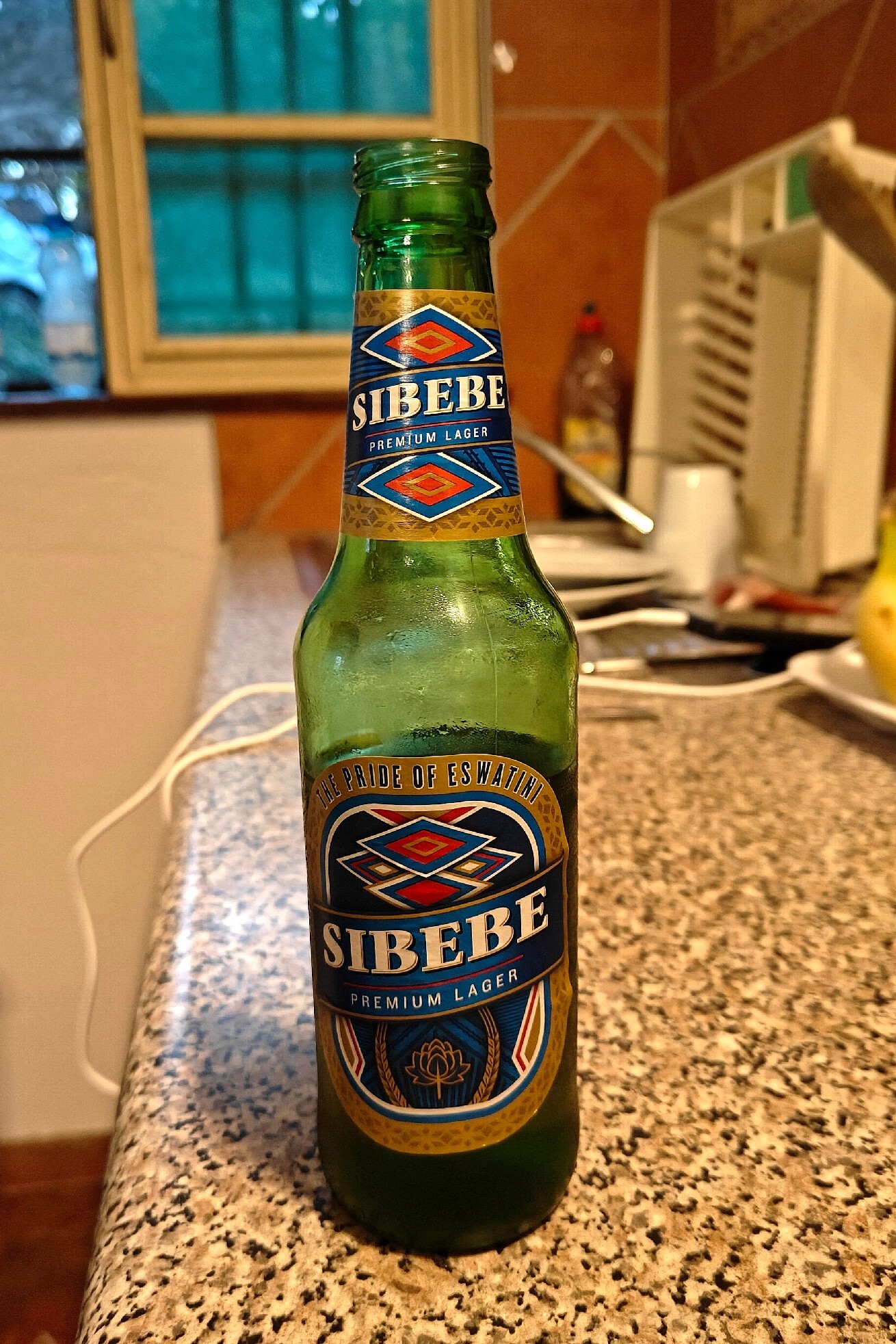
Beer: Sibede
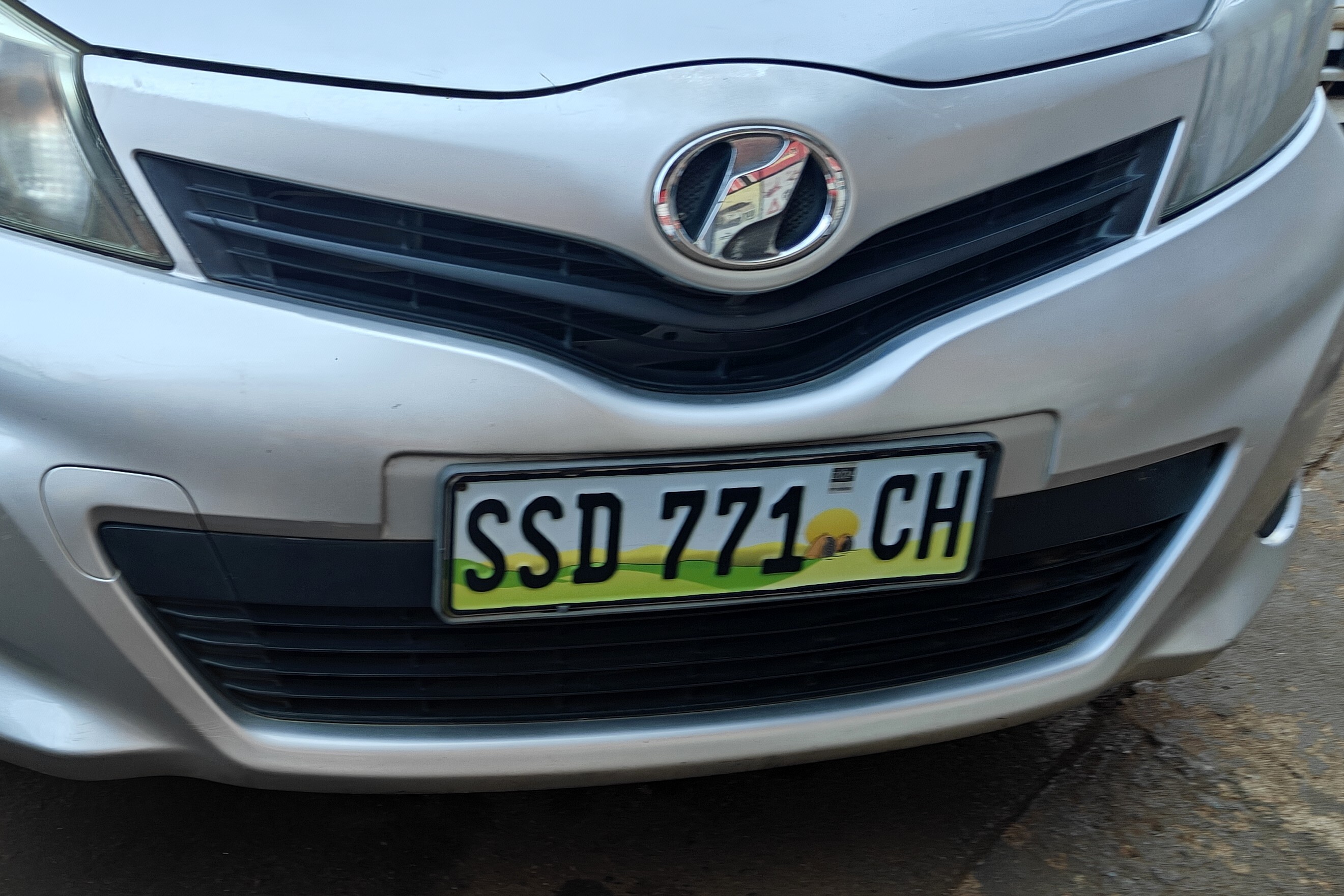
License plate:
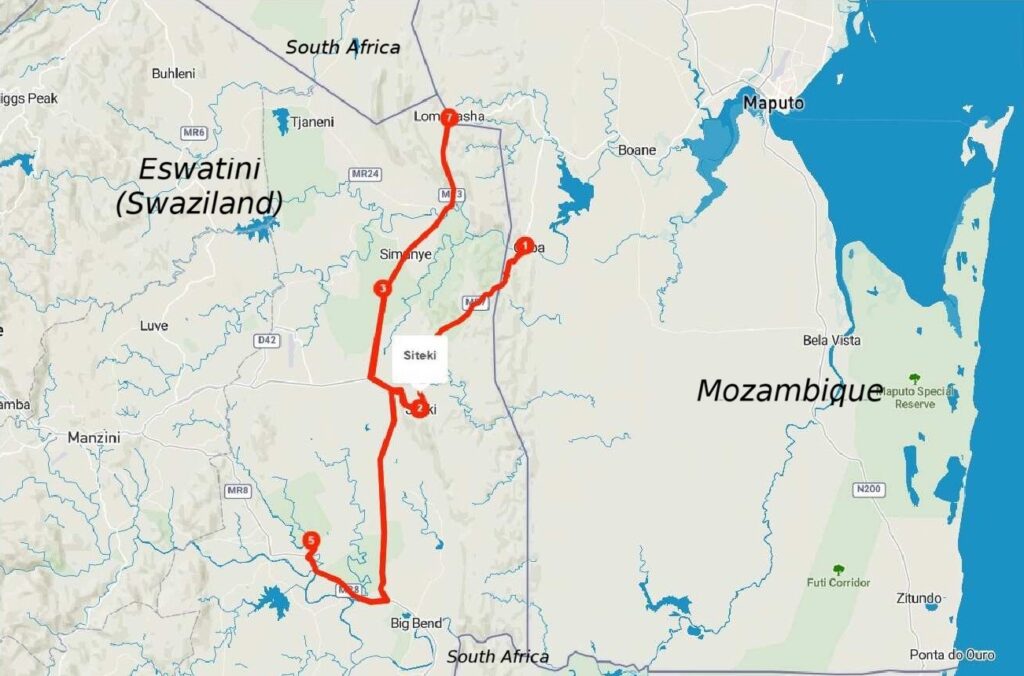
Back in the 80’s when we lived in South Africa, we did visit Swaziland a few times but only the western side. This trip we enter by vehicle from Mozambique to check out two national parks.
After that easy border crossing from Mozambique, we had about 30 km / 19 mi to our accommodation for the next three nights and the road in Eswatini was all paved until 1 klik before Mabuda Guest Farm when it turned to dirt but it was no biggie. Before getting there we stopped at a mall where we got Eswatini lilangeni (you can also get South African Rand from the ATM’s here) and we went into a grocery store for a few items.
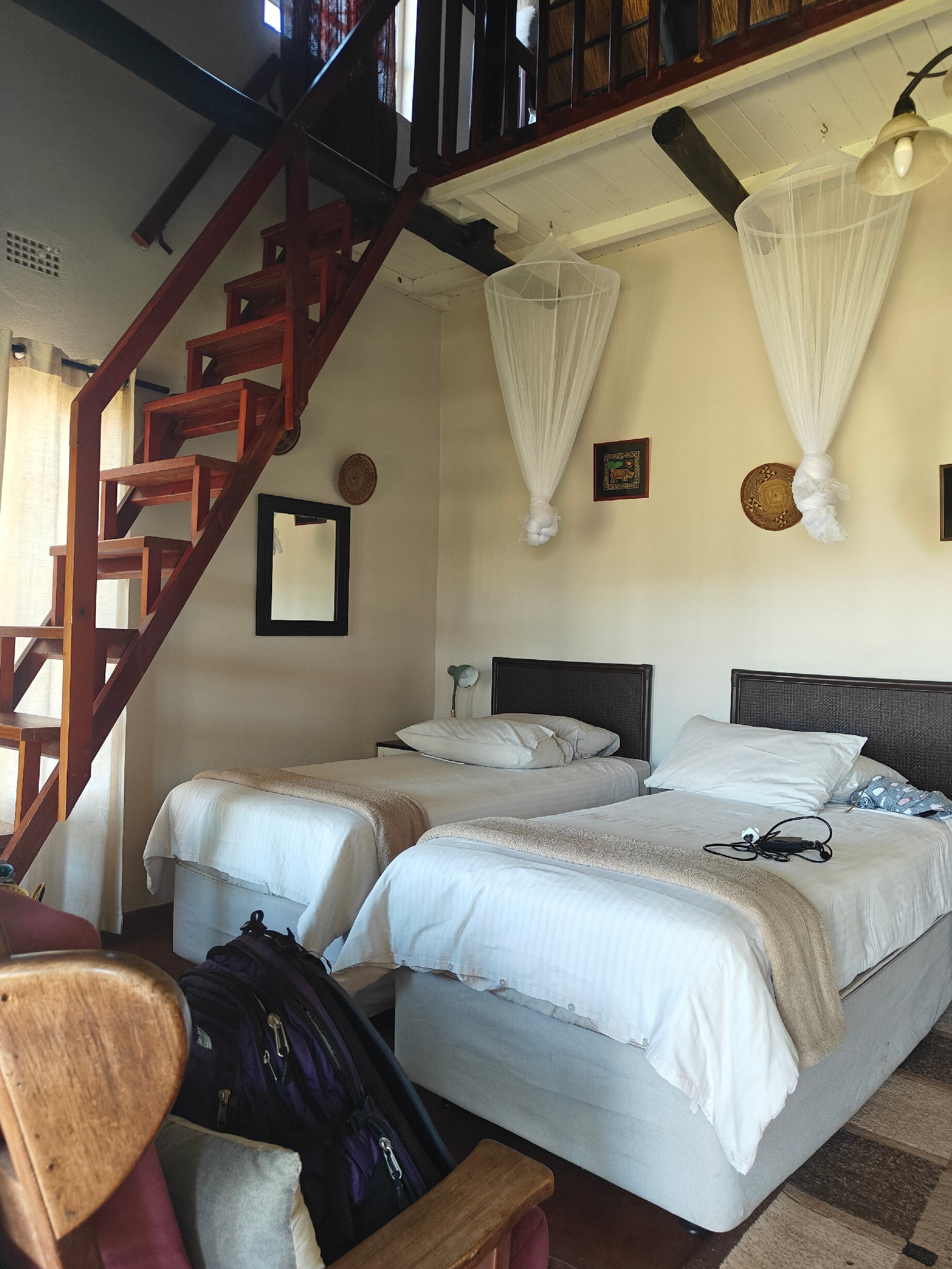
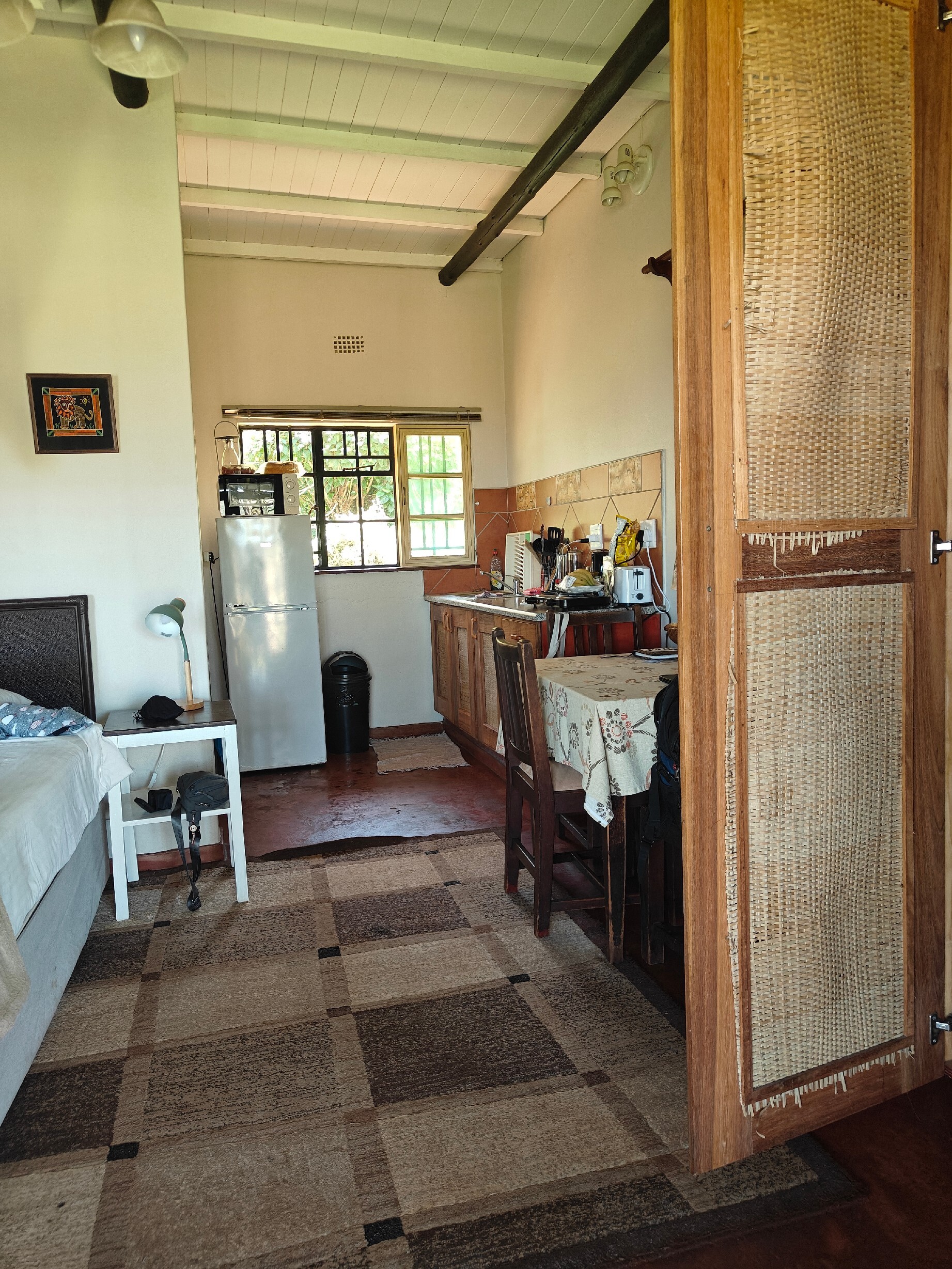
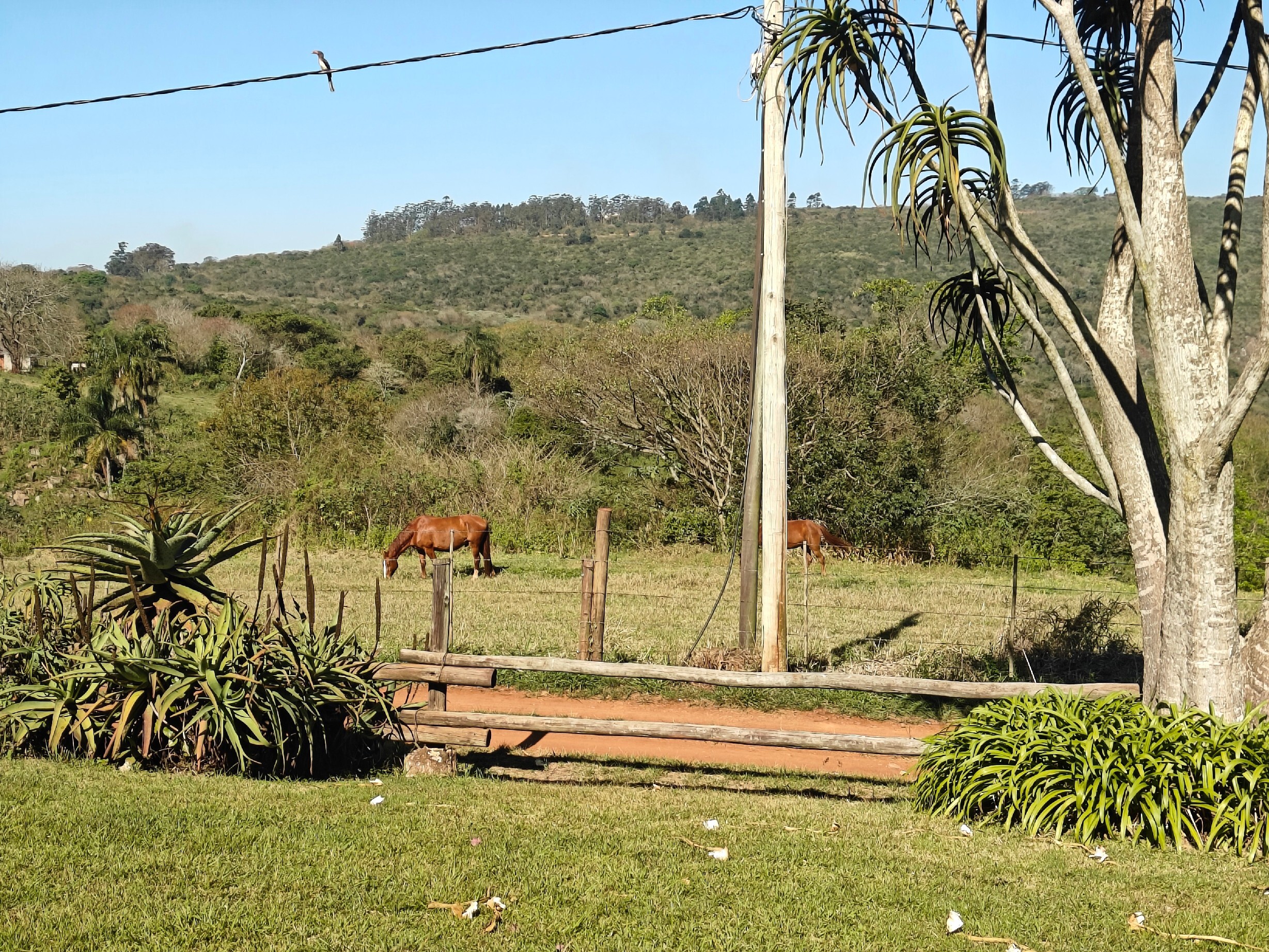
At Mabuda Guest Farm we have a “chalet” with twin beds, a patio, a kitchenette and bathroom on the main floor and a loft with two more twin beds. The view is spectacular too:
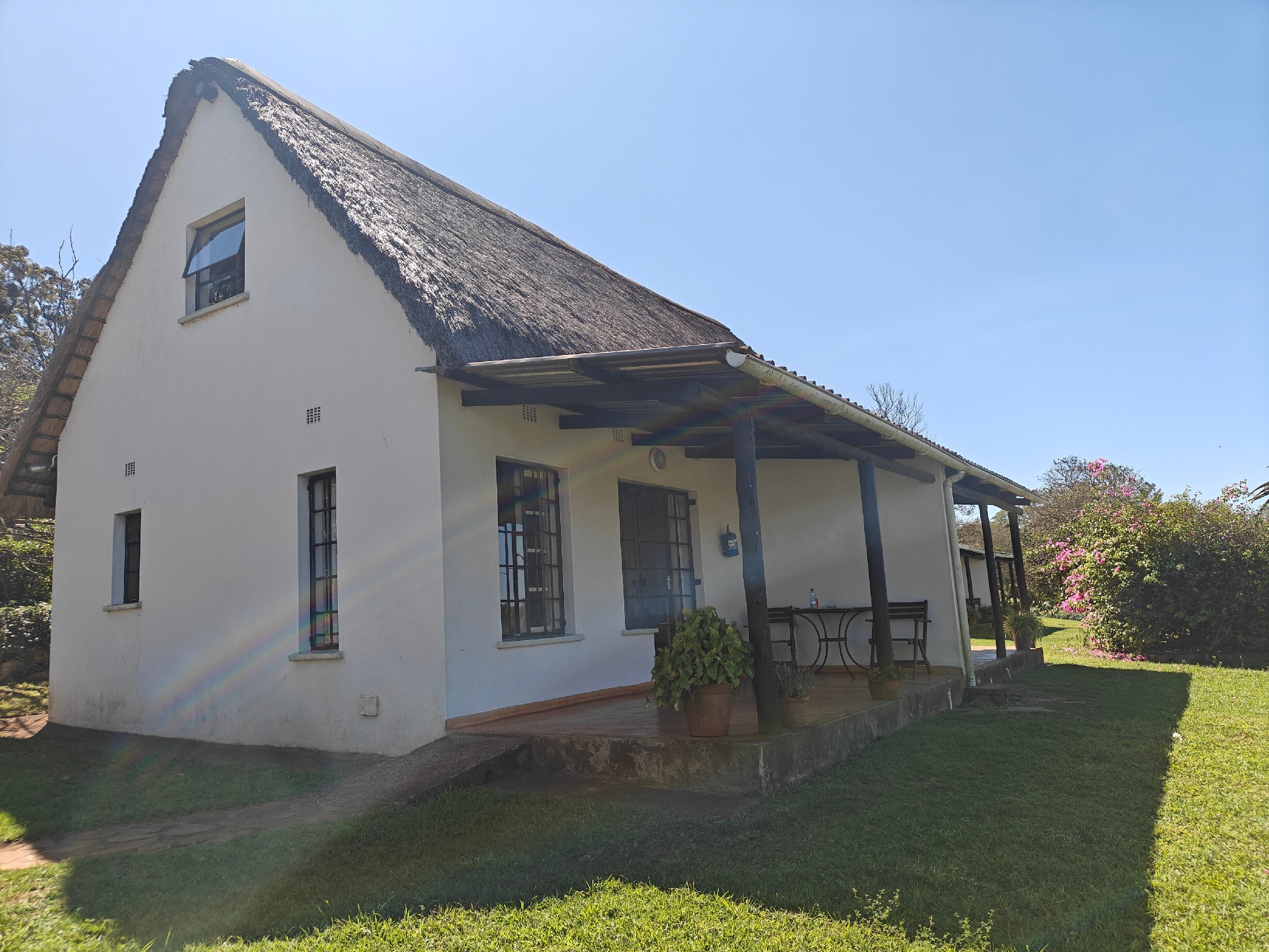
We were given chits for 1GB of WiFi at a time (six of them) and shown where to park.
We had brought food with us for dinner and spent a chilly evening in our room. There was a heater that we found but due to the high ceiling it took quite a while to feel comfortable. Luckily, there were lots of extra blankets and we kept warm overnight.
After Doug’s run Sunday morning, we had tea/coffee and made our way to one of the two game parks we planned to visit here. Enroute we saw lots of sugar cane fields and countryside:
Today’s park was Hlane Royal National Park which has 4 of the big 5 – no buffalo. Most of the park is doable as self drive but they do offer 2.5 hour safaris three times a day which include “restricted areas”. These areas contain lions and some rhinos.
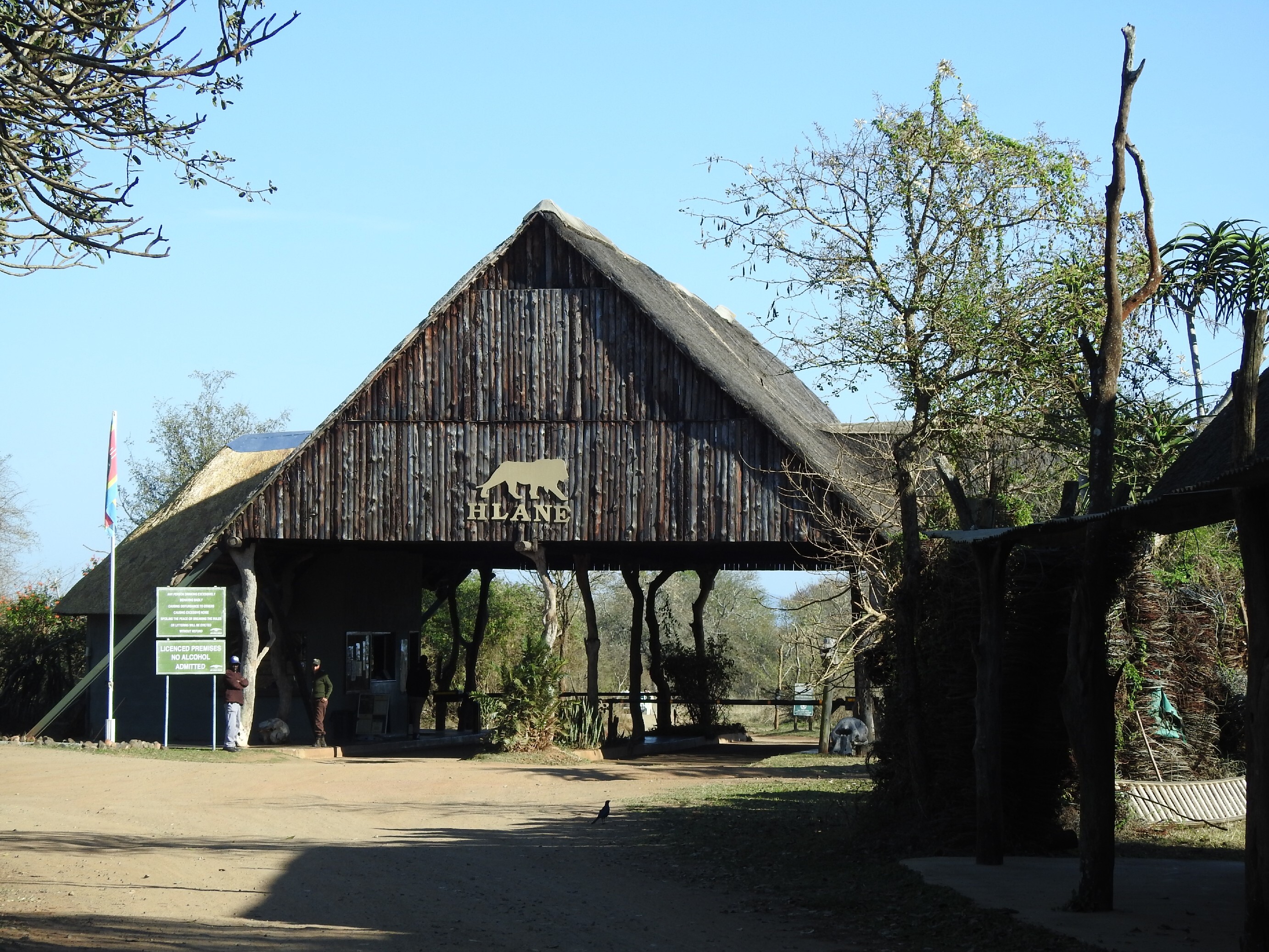
Hlane Royal National Park is a national park which prior to being designated a public park, was a private royal hunting ground. Hlane, meaning ‘wilderness’, was named by King Sobhuza II. It is now held in trust for the nation by His Majesty King Mswati III, and is managed by Big Game Parks, a privately owned body.
Hlane is home to populations of lion, elephant, giraffe, white rhino with herds of wildebeest, impala and zebra. After a long absence, cheetah populations have been reintroduced in this park.It has an abundant and diverse birdlife and is home to the southernmost nesting site of the marabou stork.
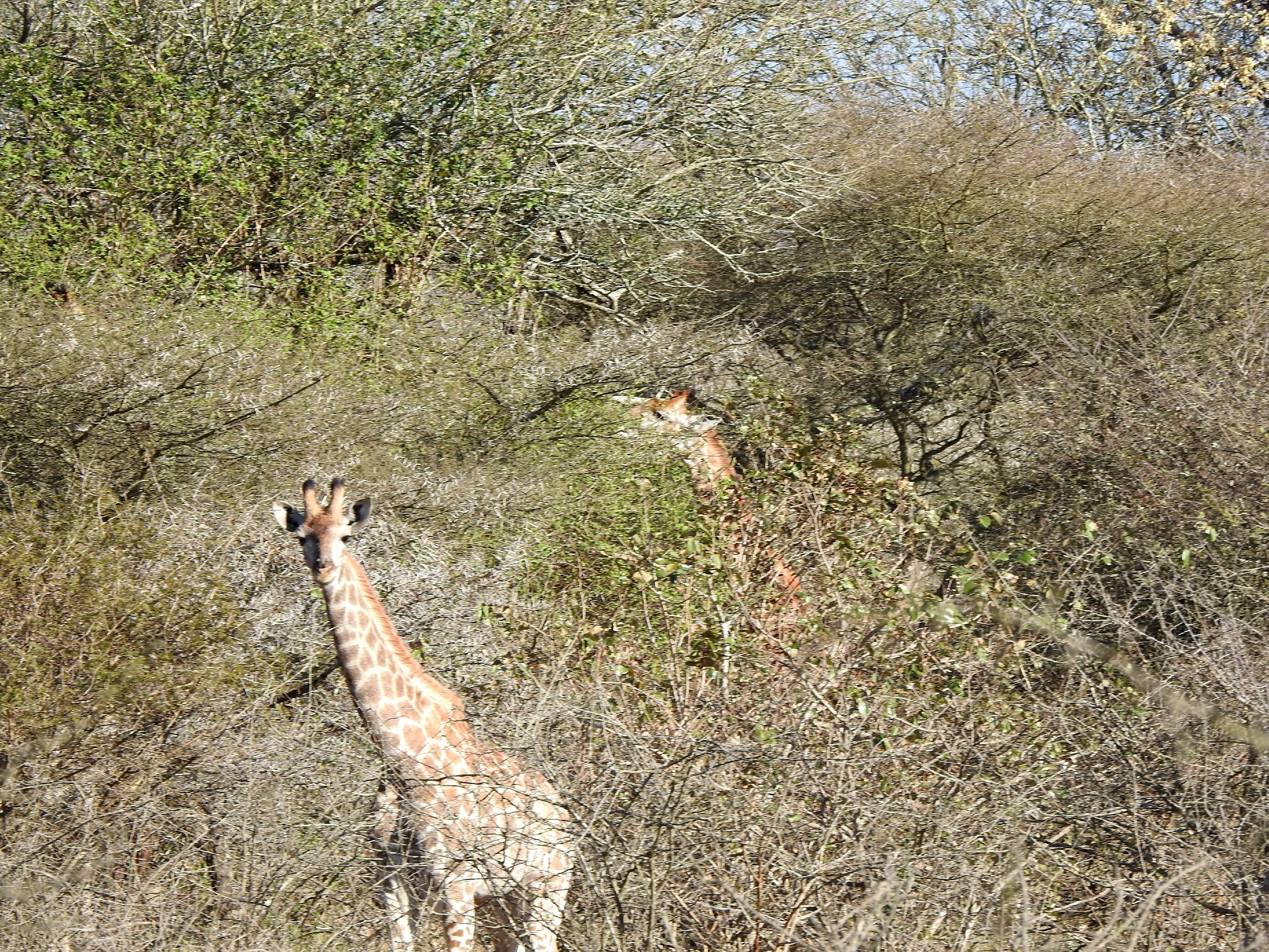
We had already seen 5 giraffes, a few impalas, baboons and one elephant on the drive up to the gate:


We pulled up to the gate paid our entry fee R95 each and were advised they’d have a map of the park at the reception ahead. We found reception and as we walked over to the counter, Fran’s shoe caught on a metal grate and down she went. A young man caught her before her head hit the ground but her left elbow and knee hit hard. Luckily no blood!
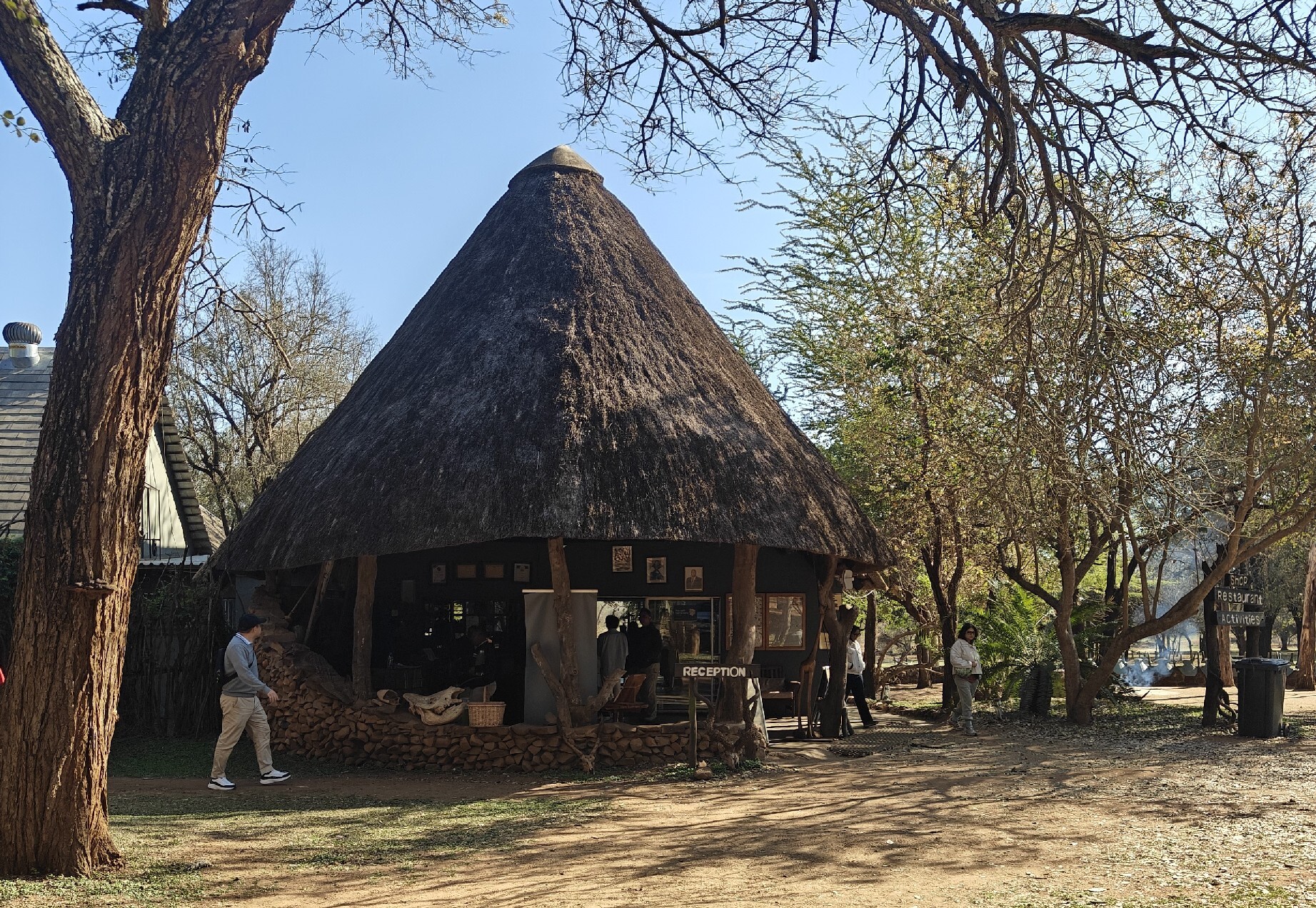
They told us they have no paper maps but we could take a photo of the plastic one that had at the counter. We asked about how much of the park we could self drive, and when we learned we could traverse most of the park ourselves, we opted not to take a safari. It was already after 8 and the early safari had returned – they saw one rhino and no lions in the restricted area).
We took a photo of the map, made a plan and off we went. We drove all the roads on the east side, much of the west and we went as far south as you could go and part way north.
We saw SO Many nyalas – male and female:
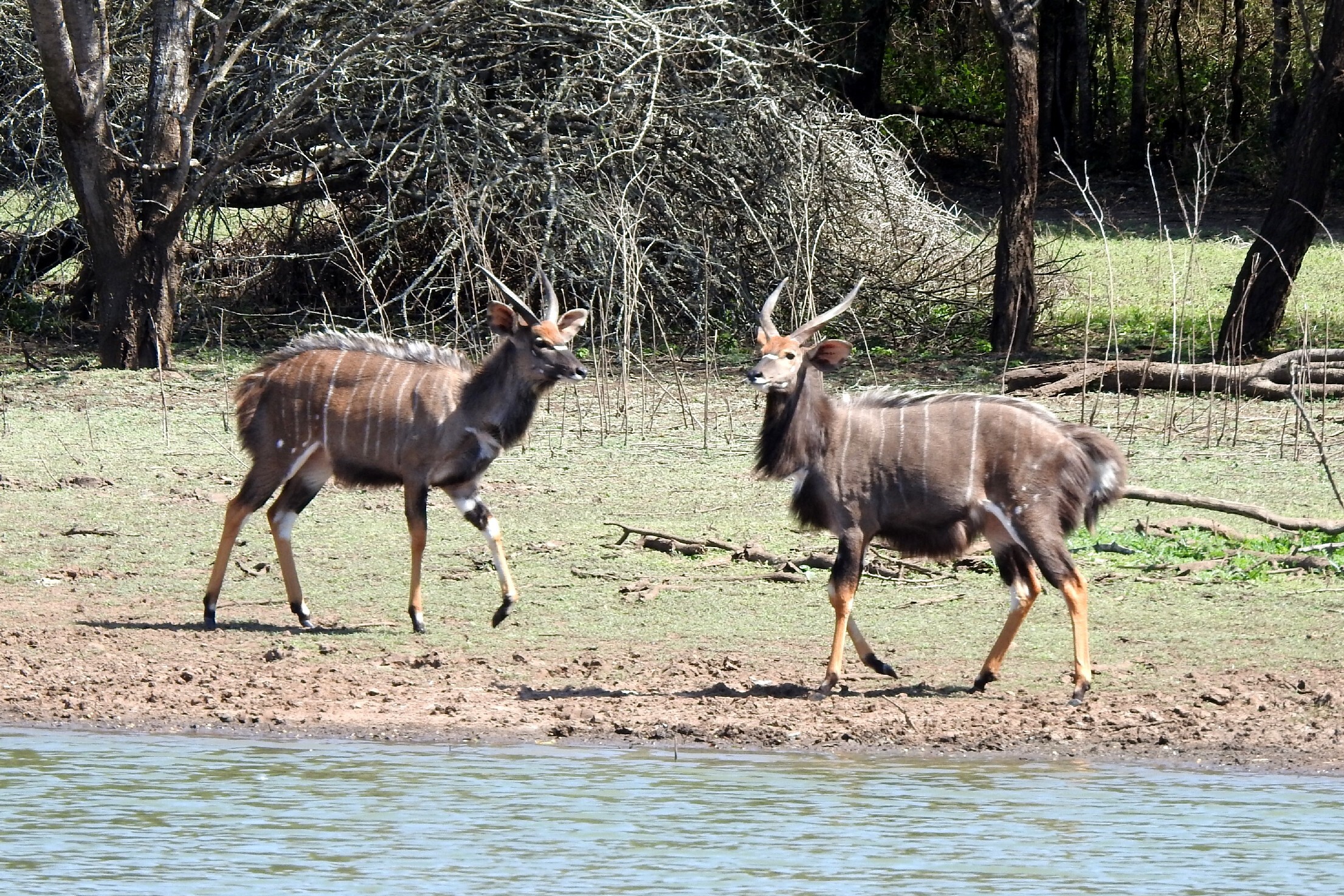


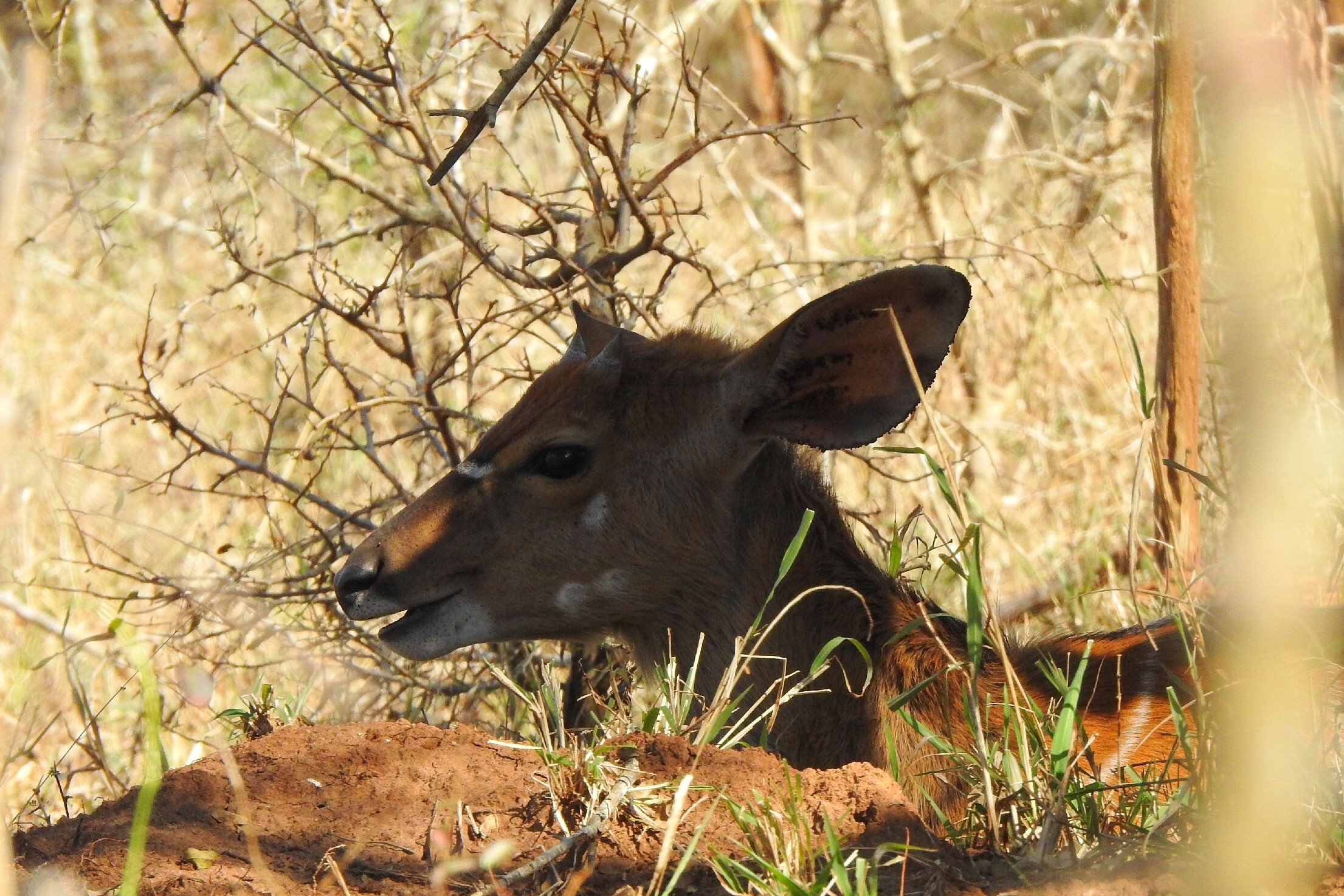

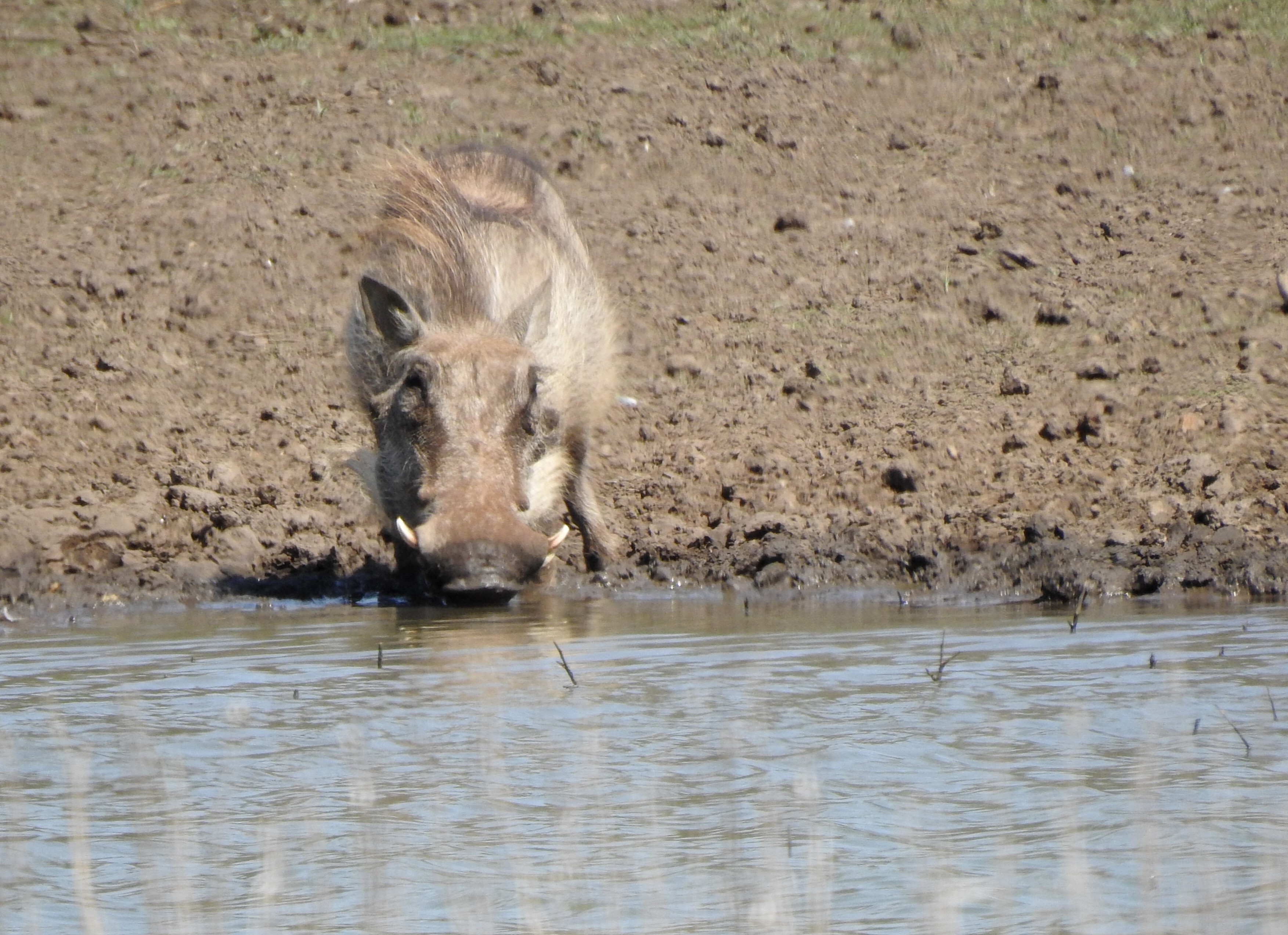
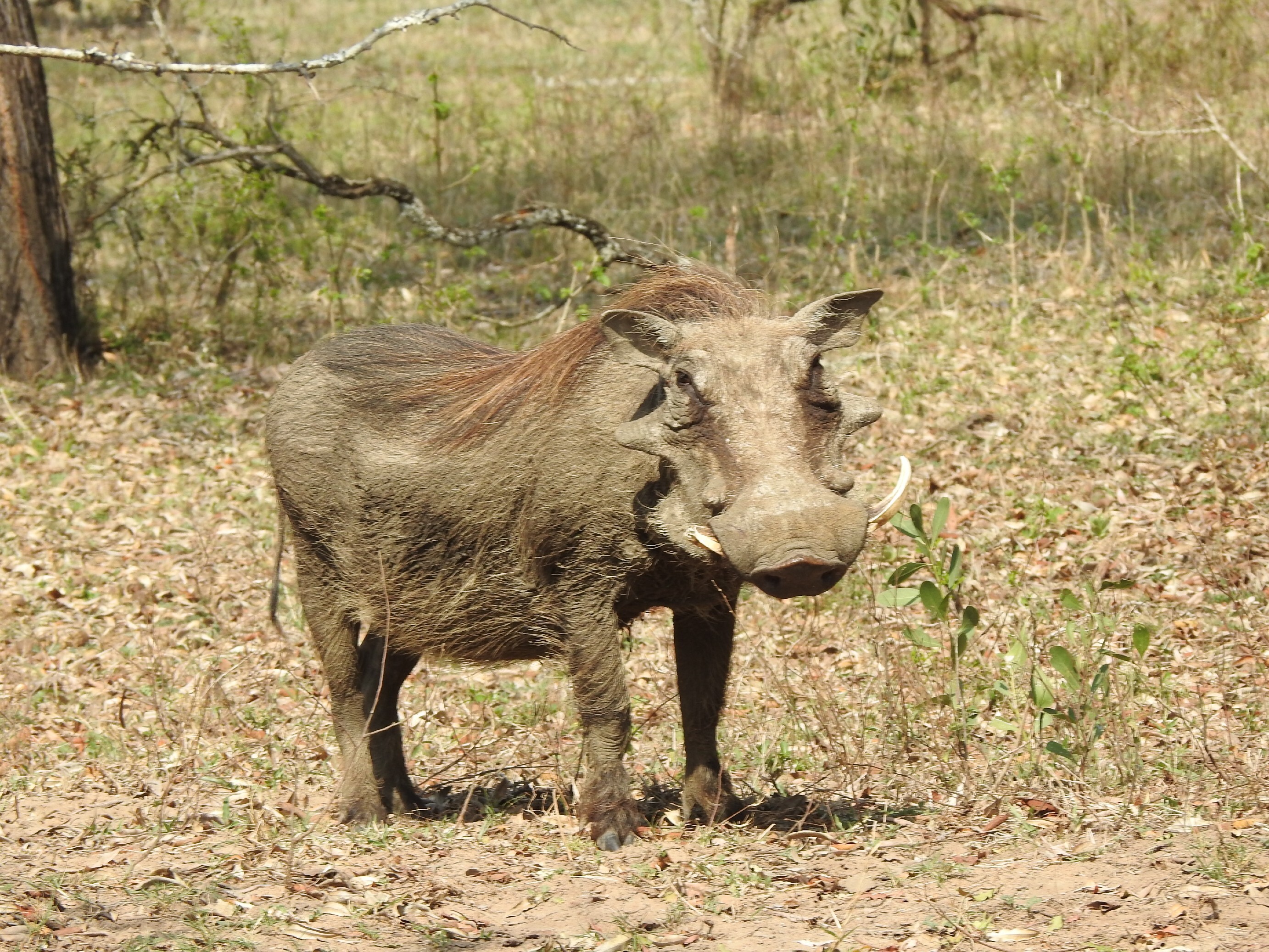
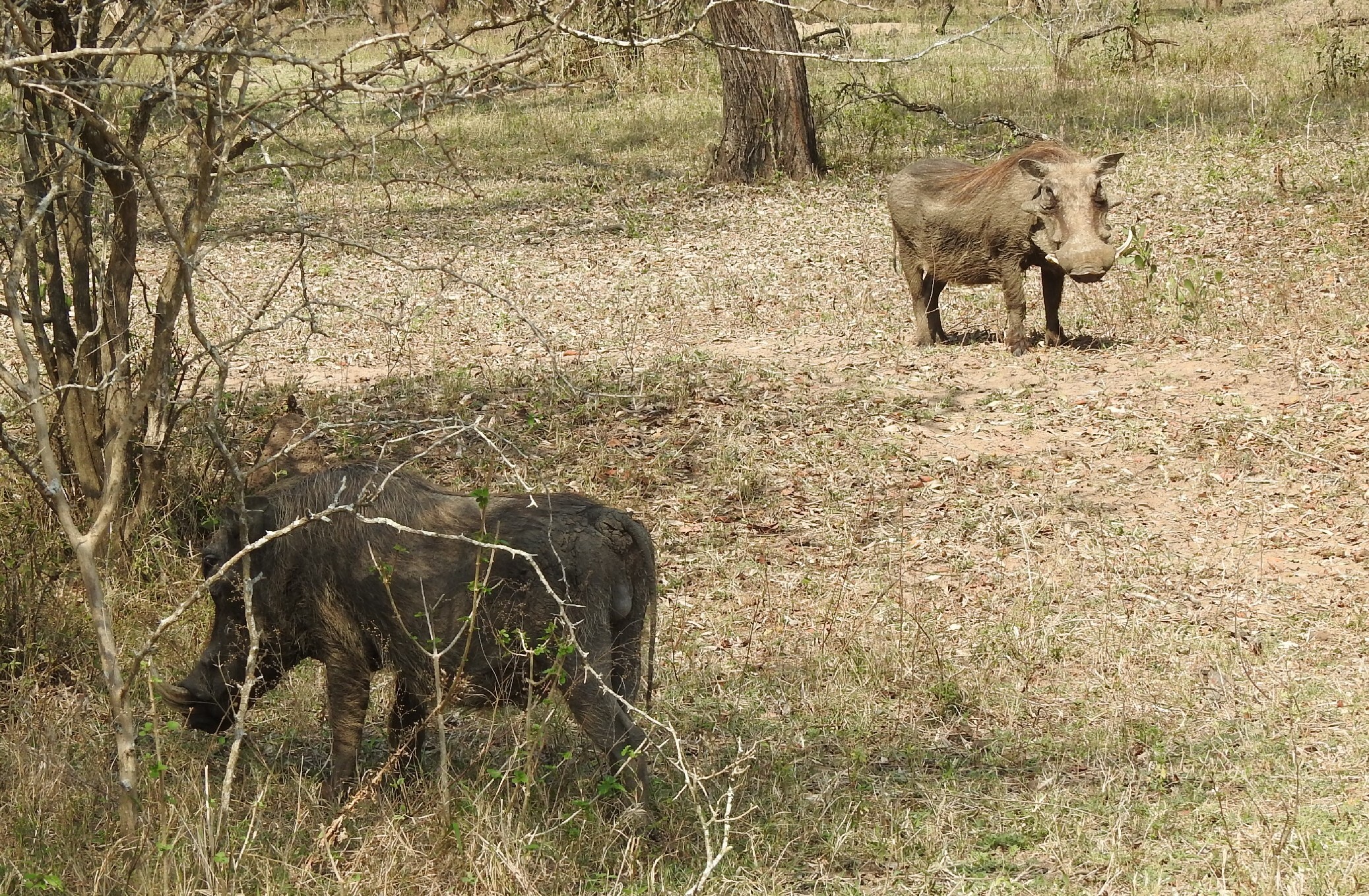
Several warthogs:

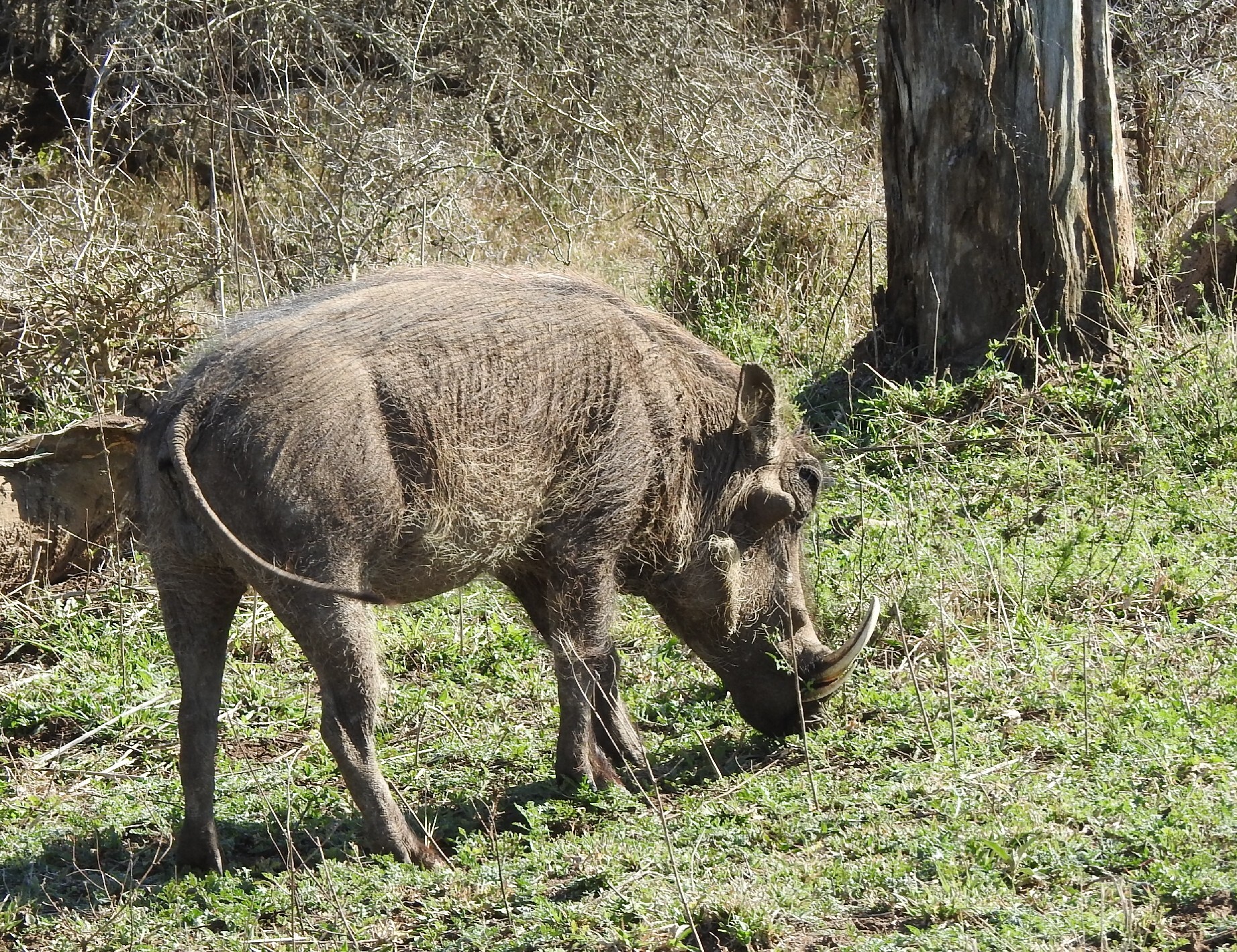
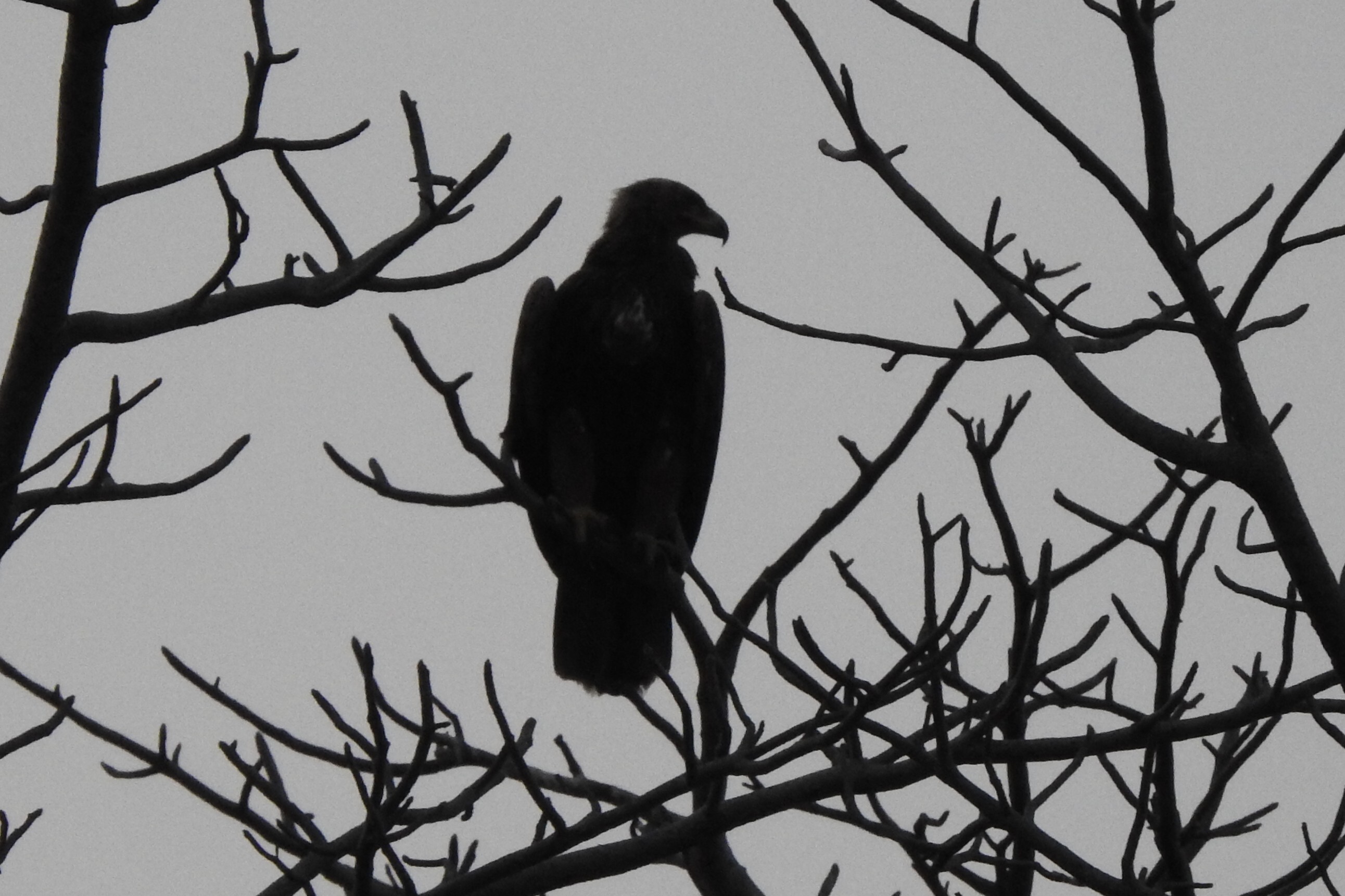
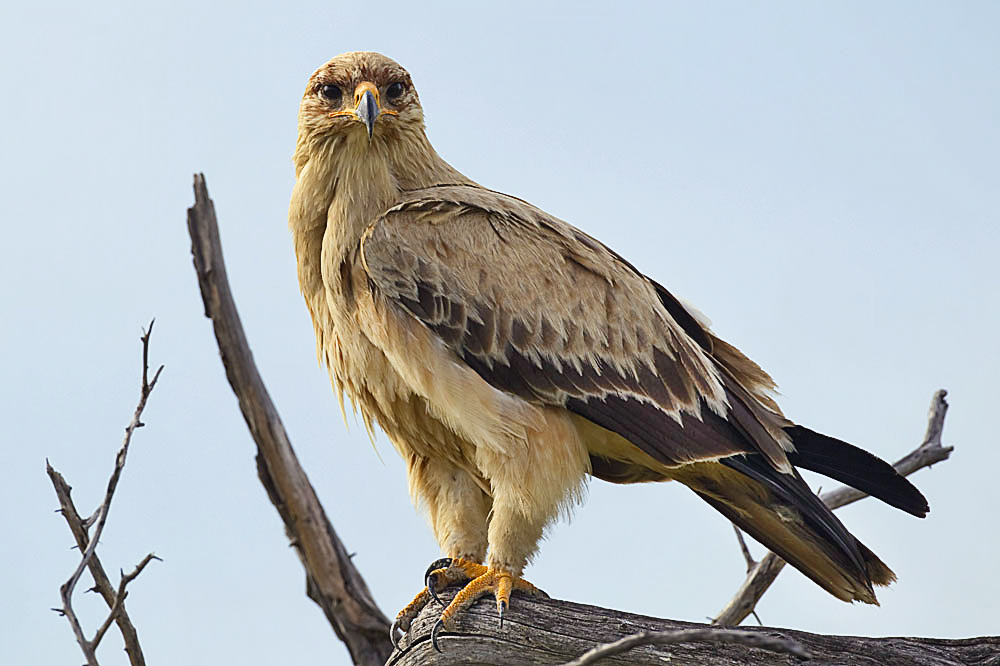
A tawny hawk two or three times but only got one chance to photograph it:
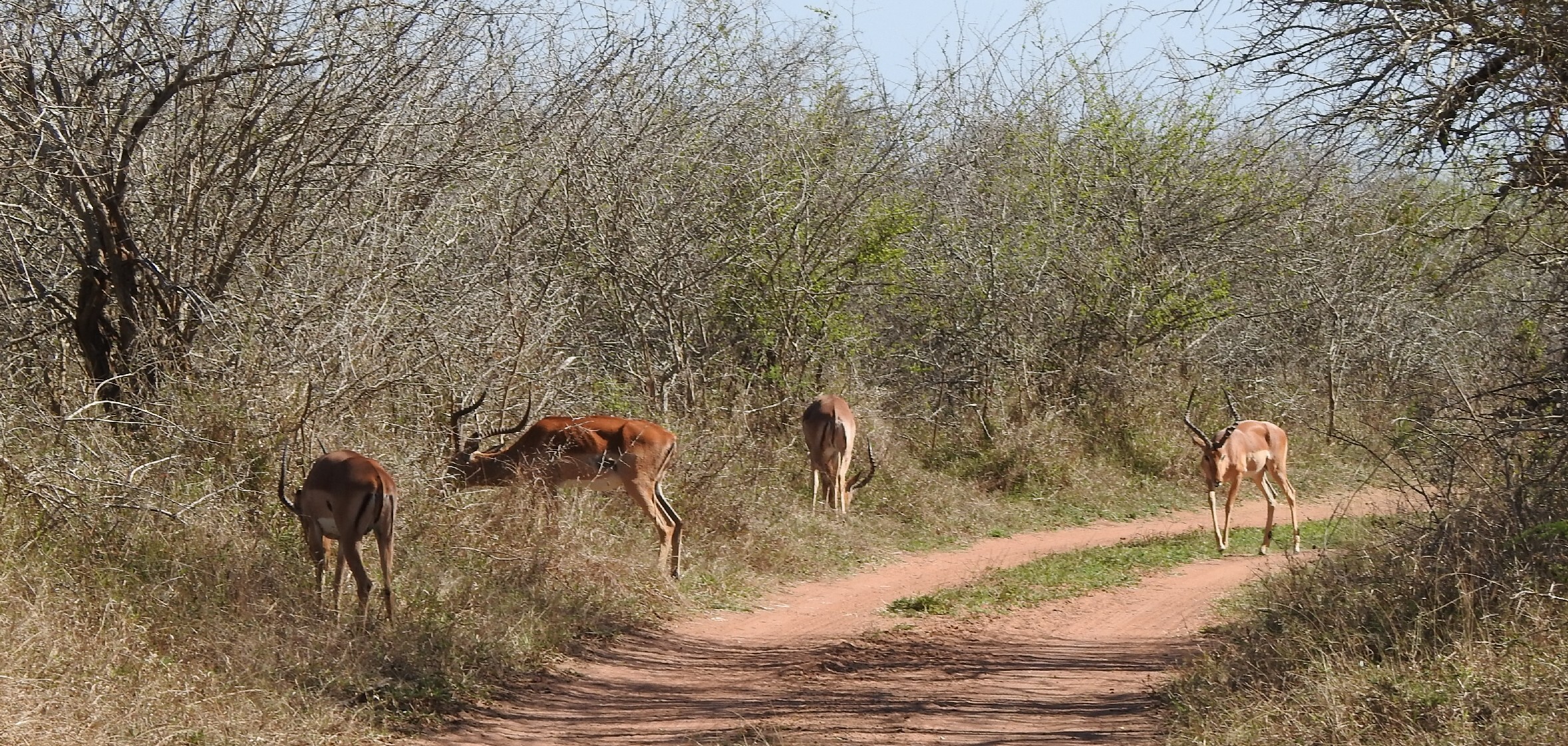
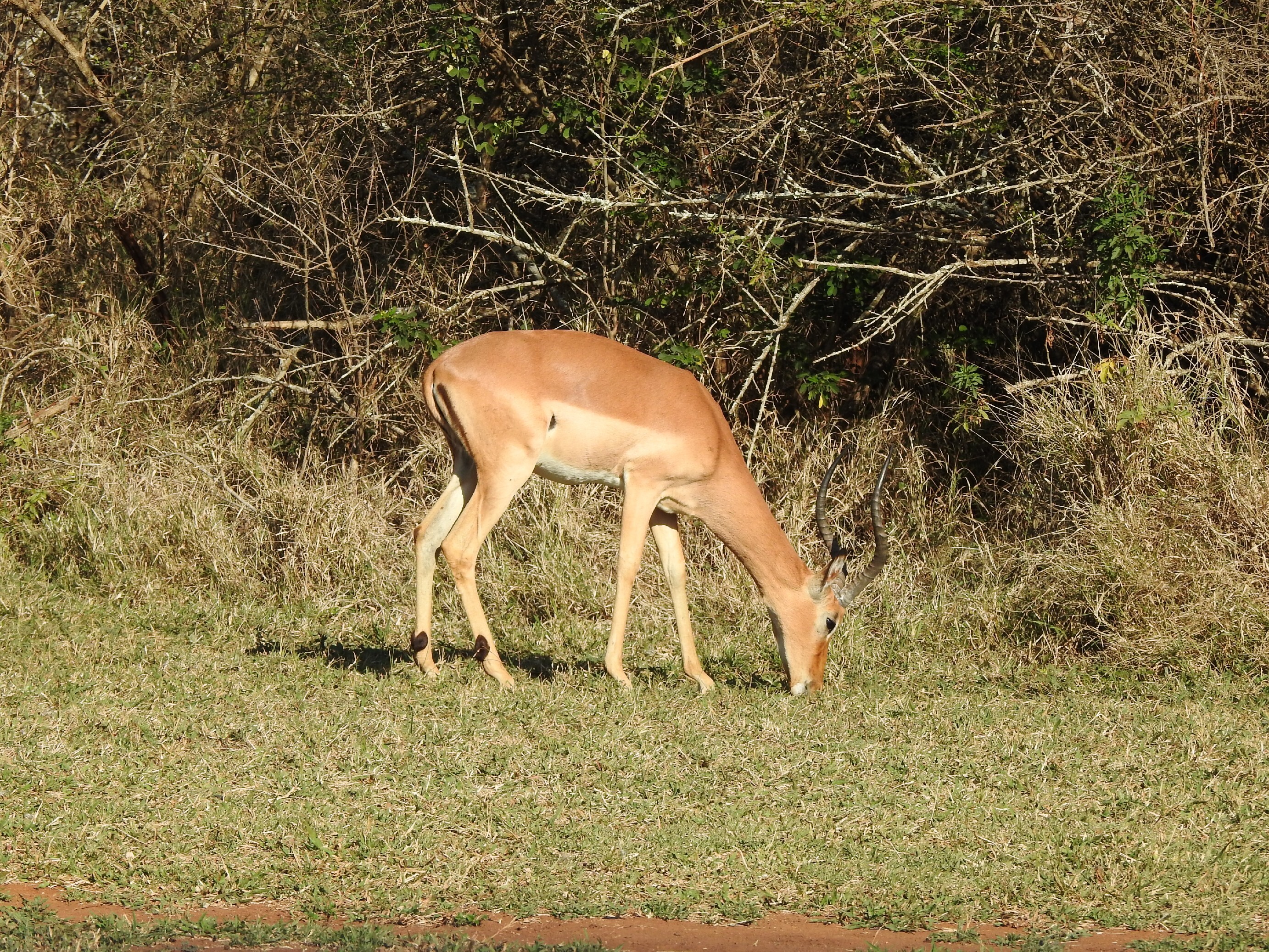
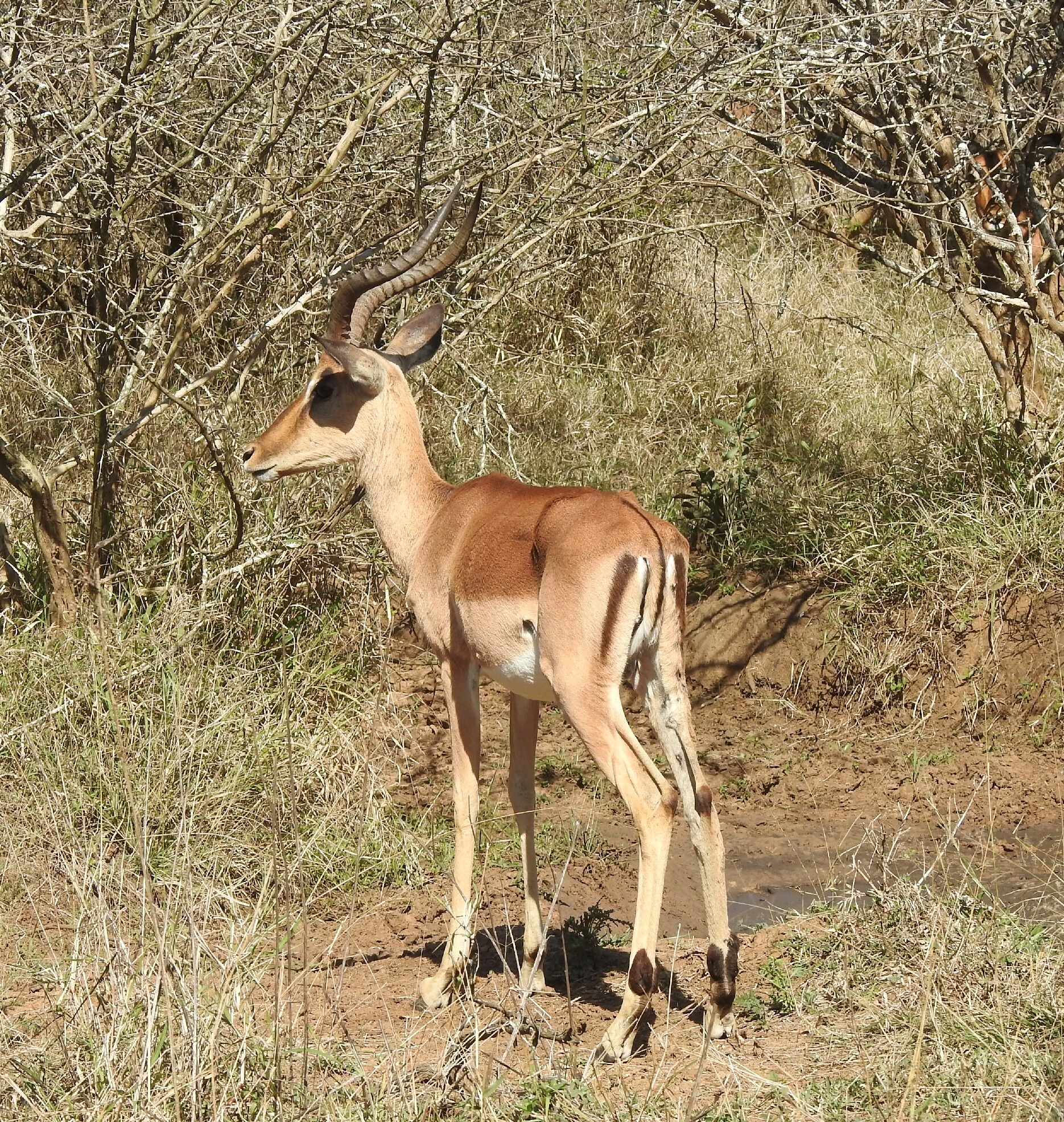
Lots of impala, of course:
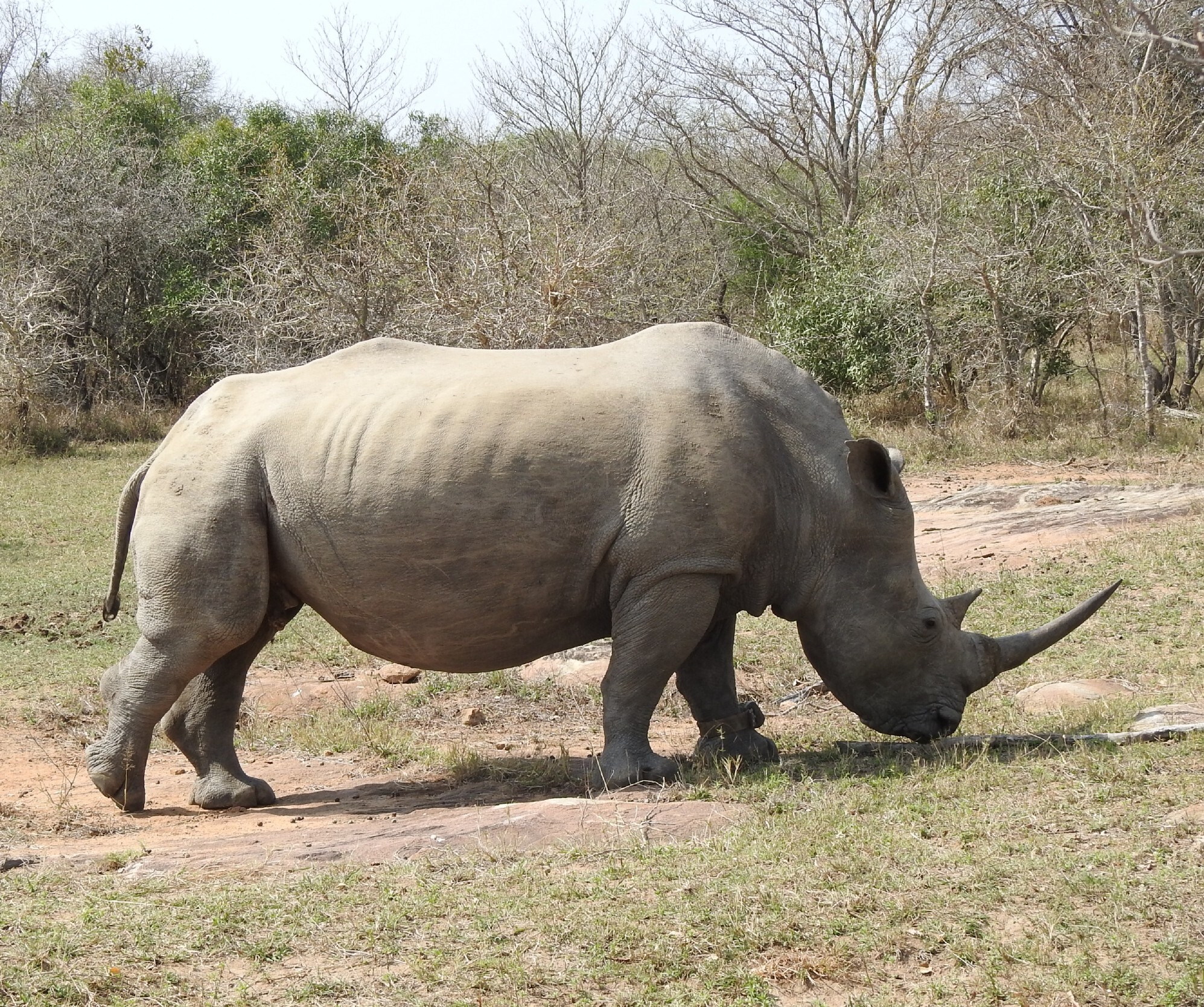
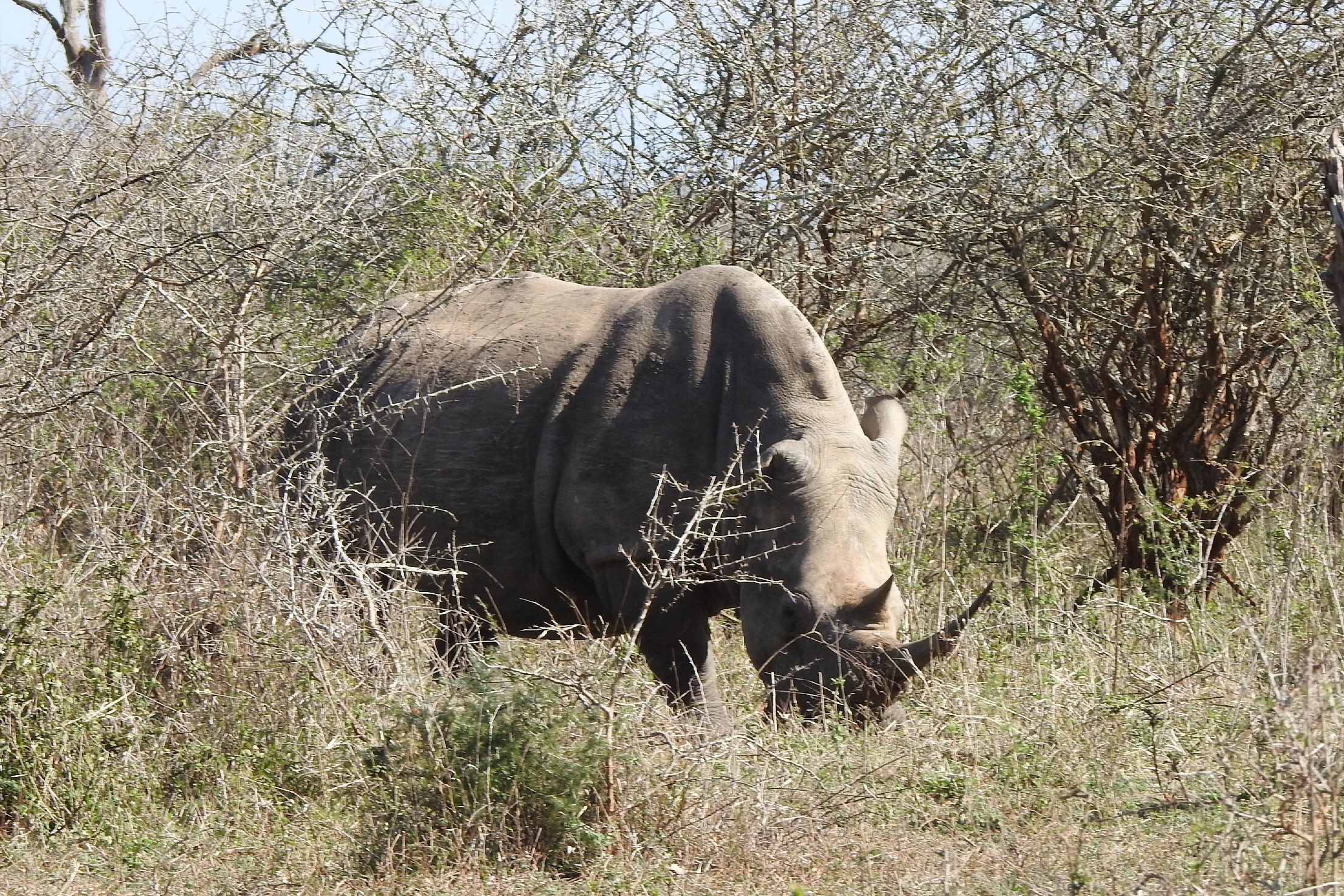
Then the highlight: a pair of rhinos grazing:


Later we saw two more pairs but no where near as close to us:
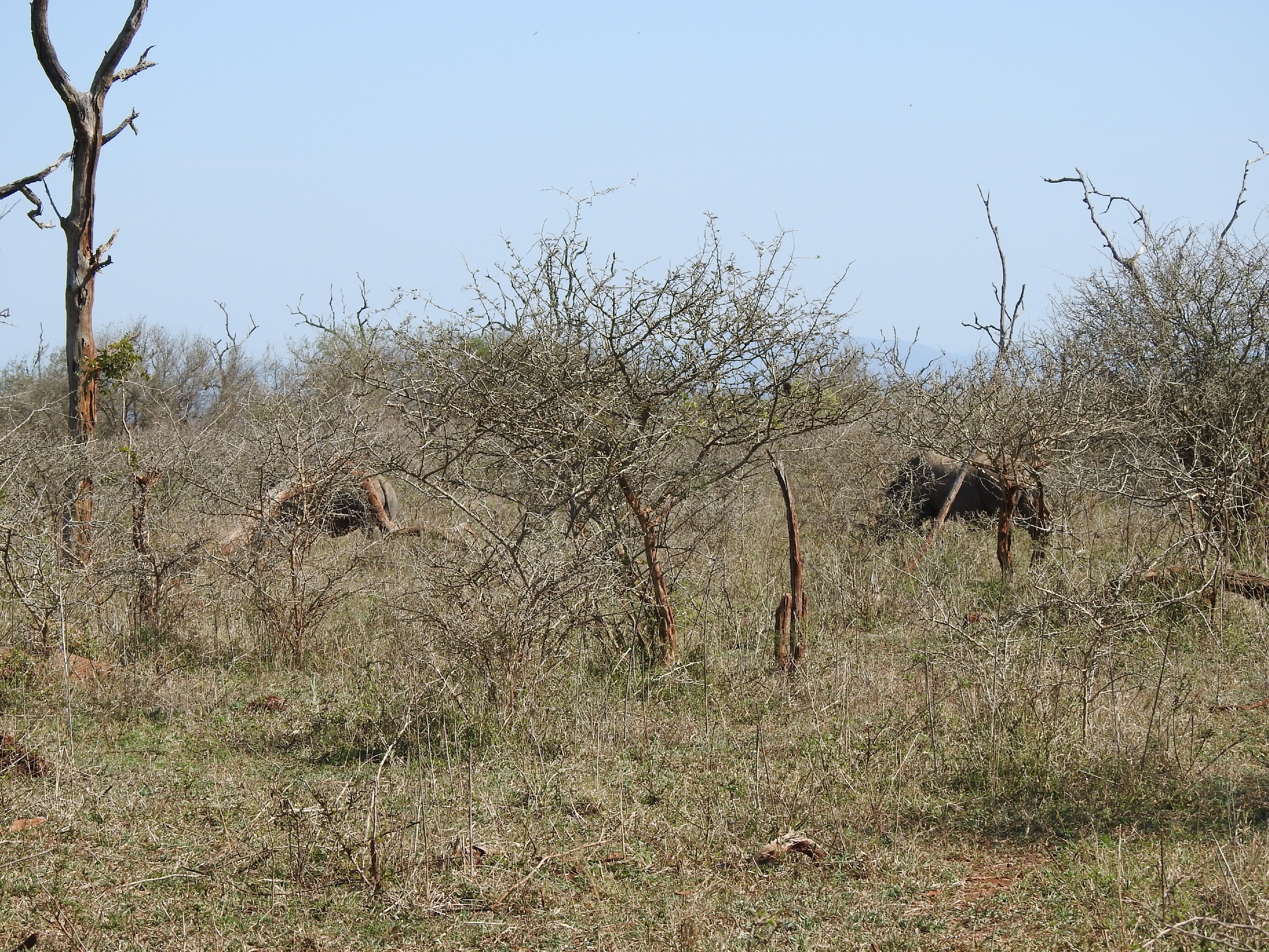
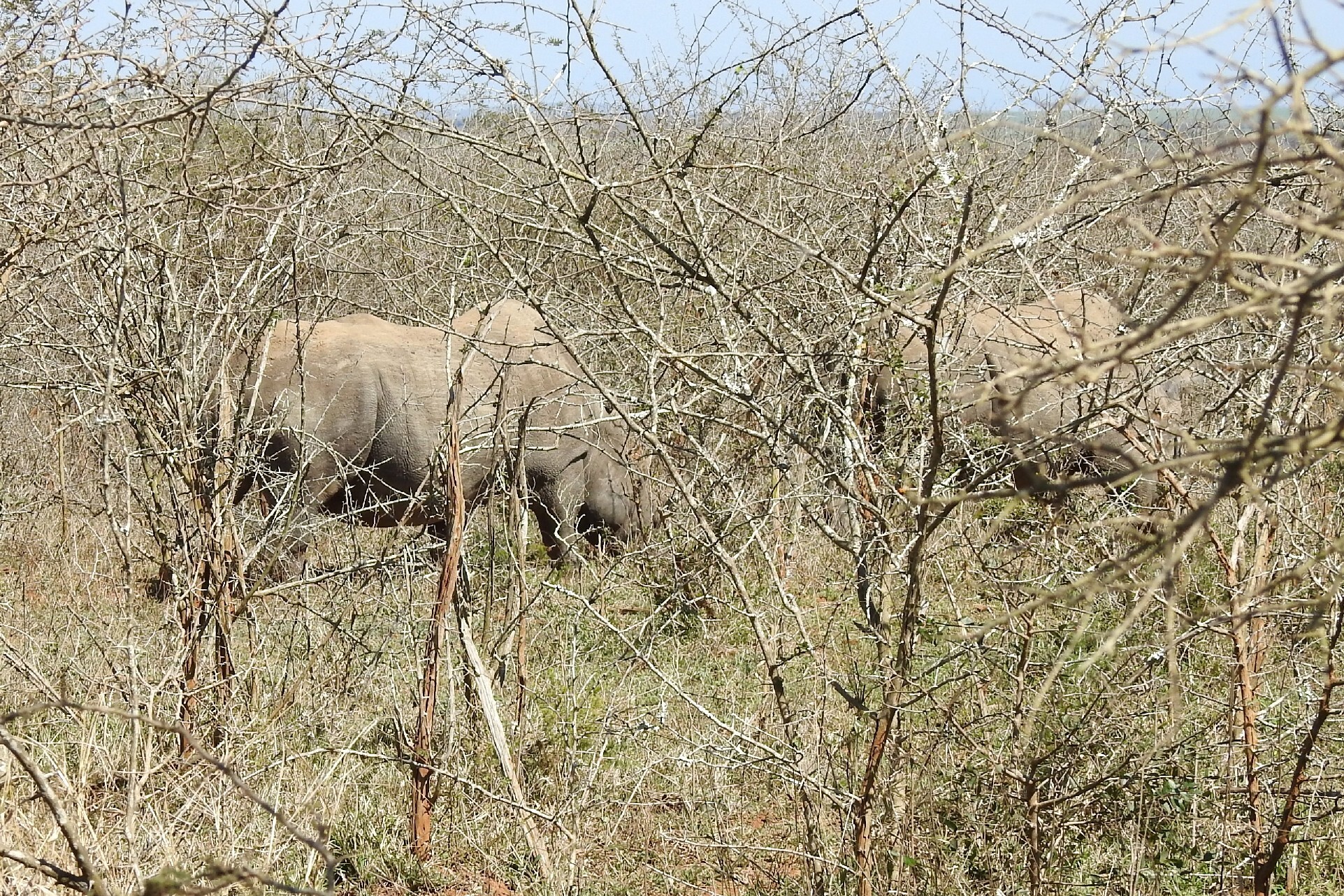
As we headed to the hippo pool in the south we came across an old bull giraffe who stood his ground in the middle of the road:

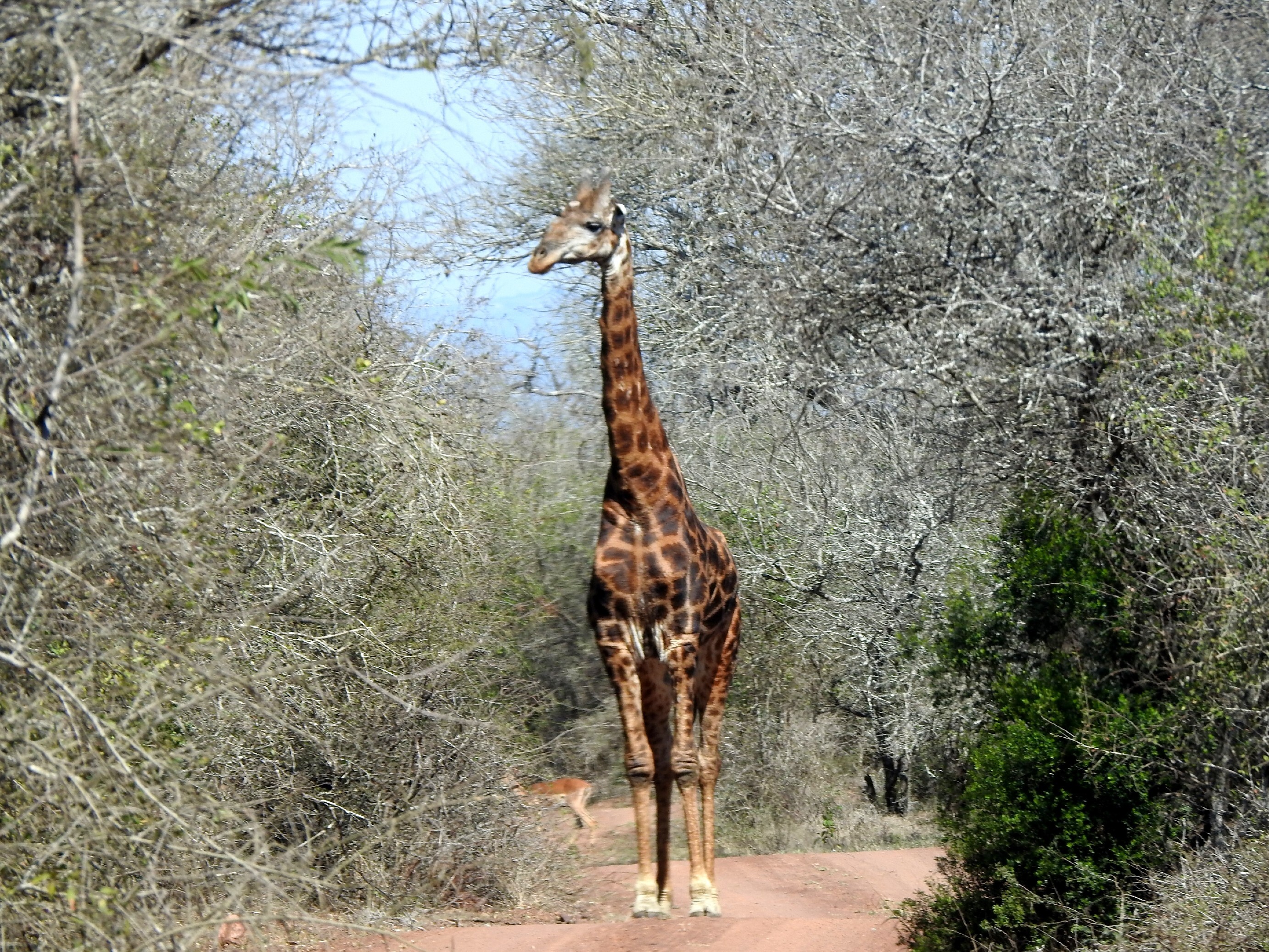


We watched him for a while, inched forward a few times and eventually he got bored looking at us and wandered to the side.
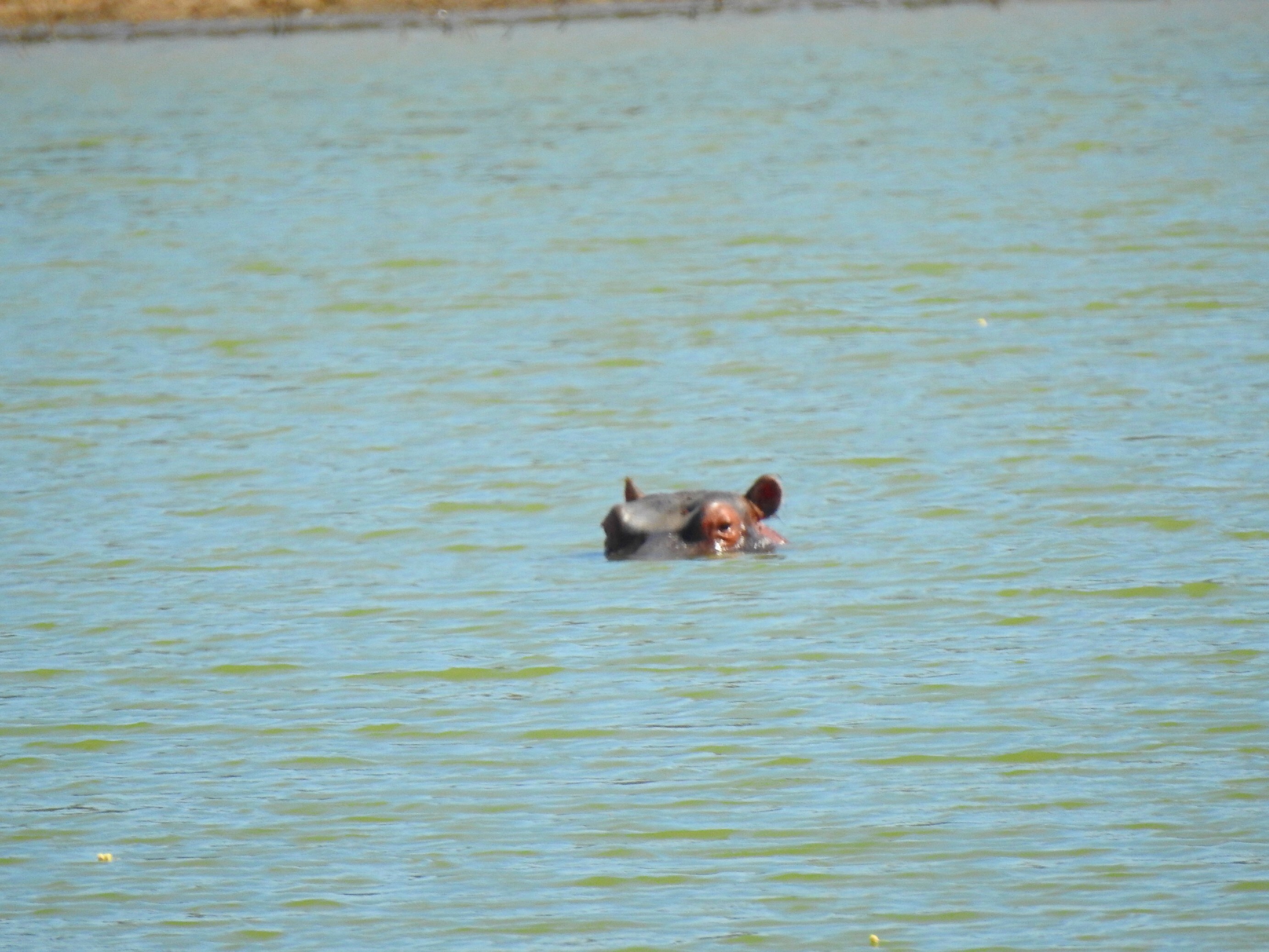
The hippo pond only had one hippo that we saw but lots of other life:
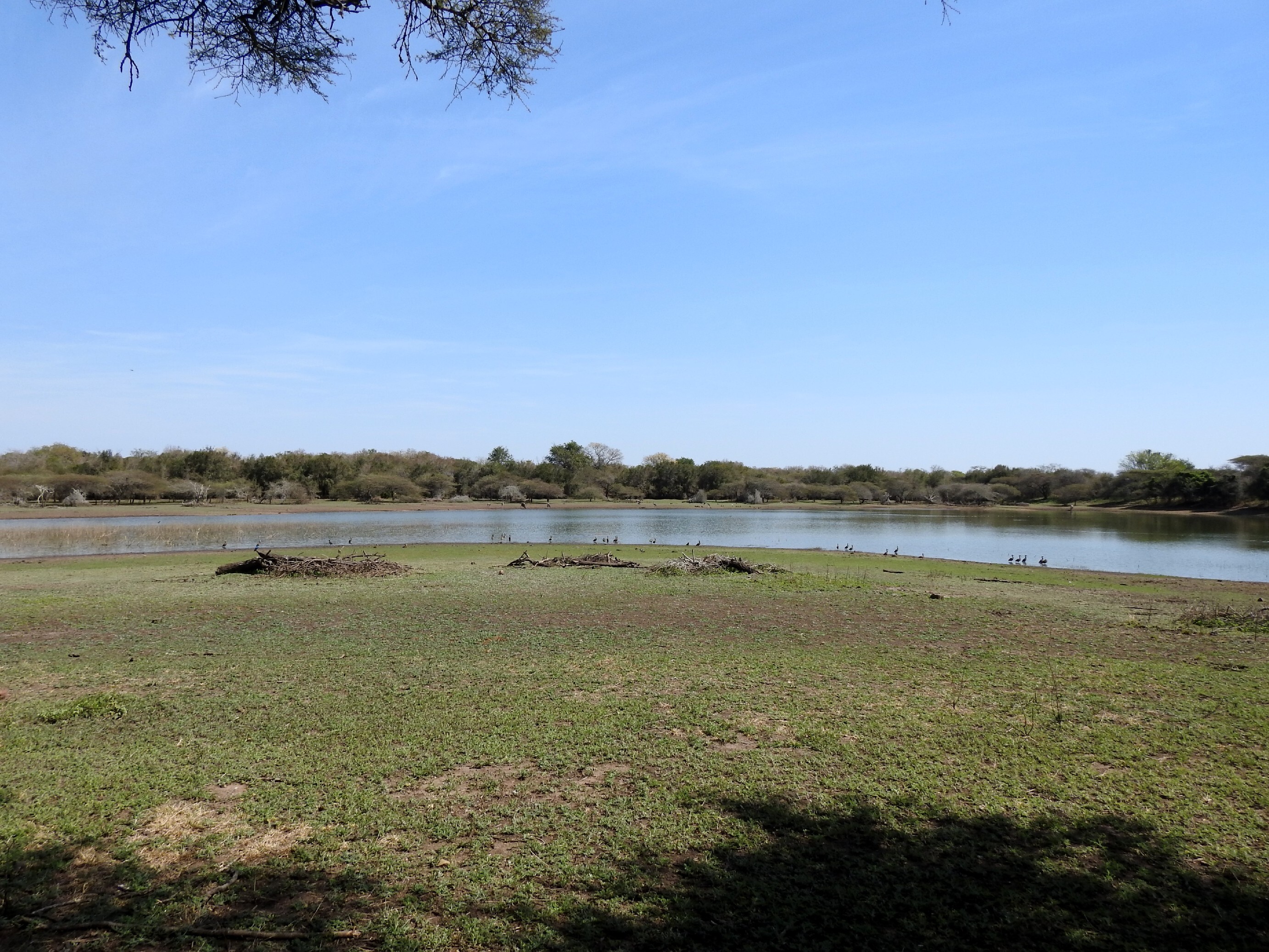
We saw a croc in the pond who headed to the shore:

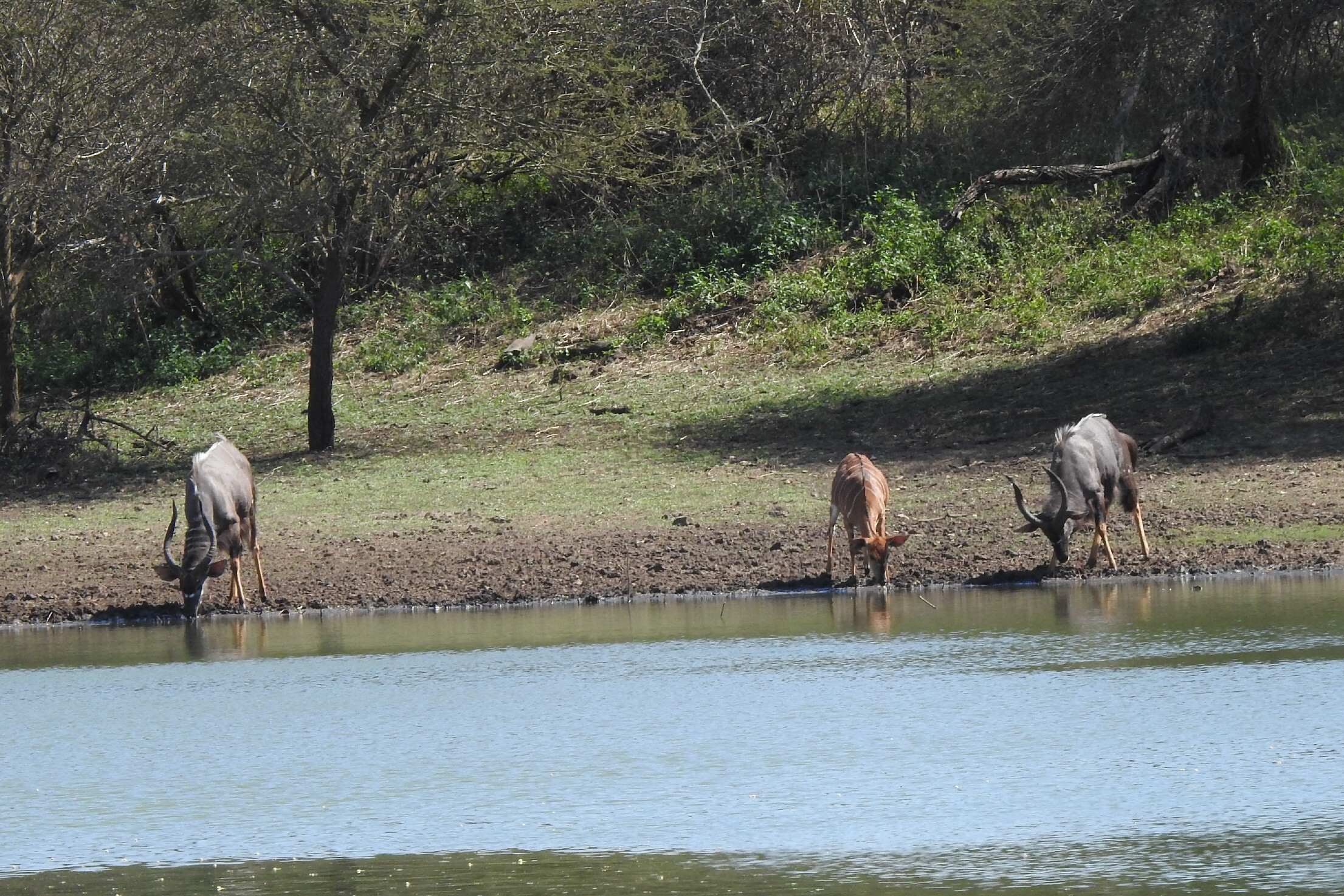
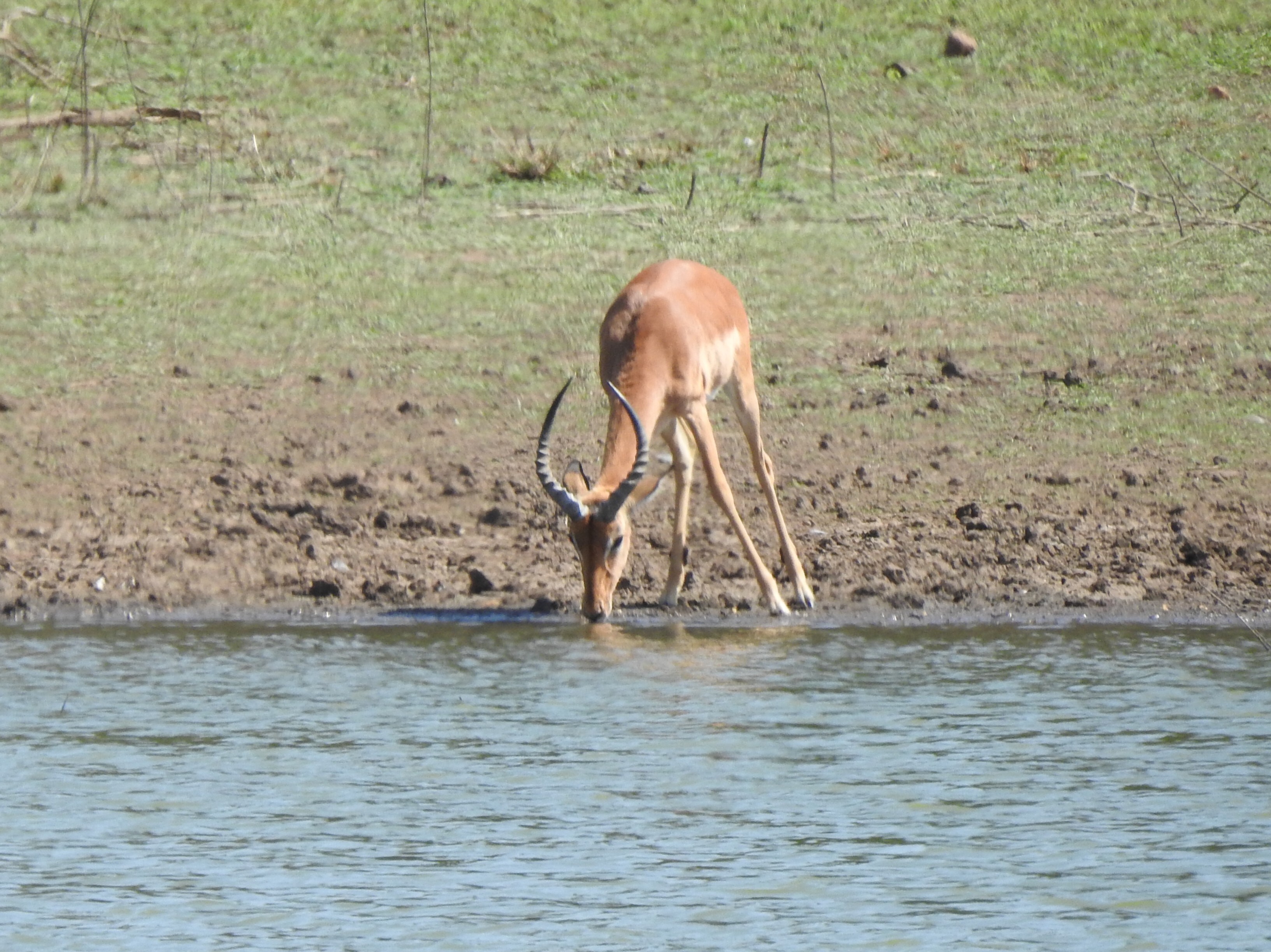
lots of nyala and impala, sometimes drinking,

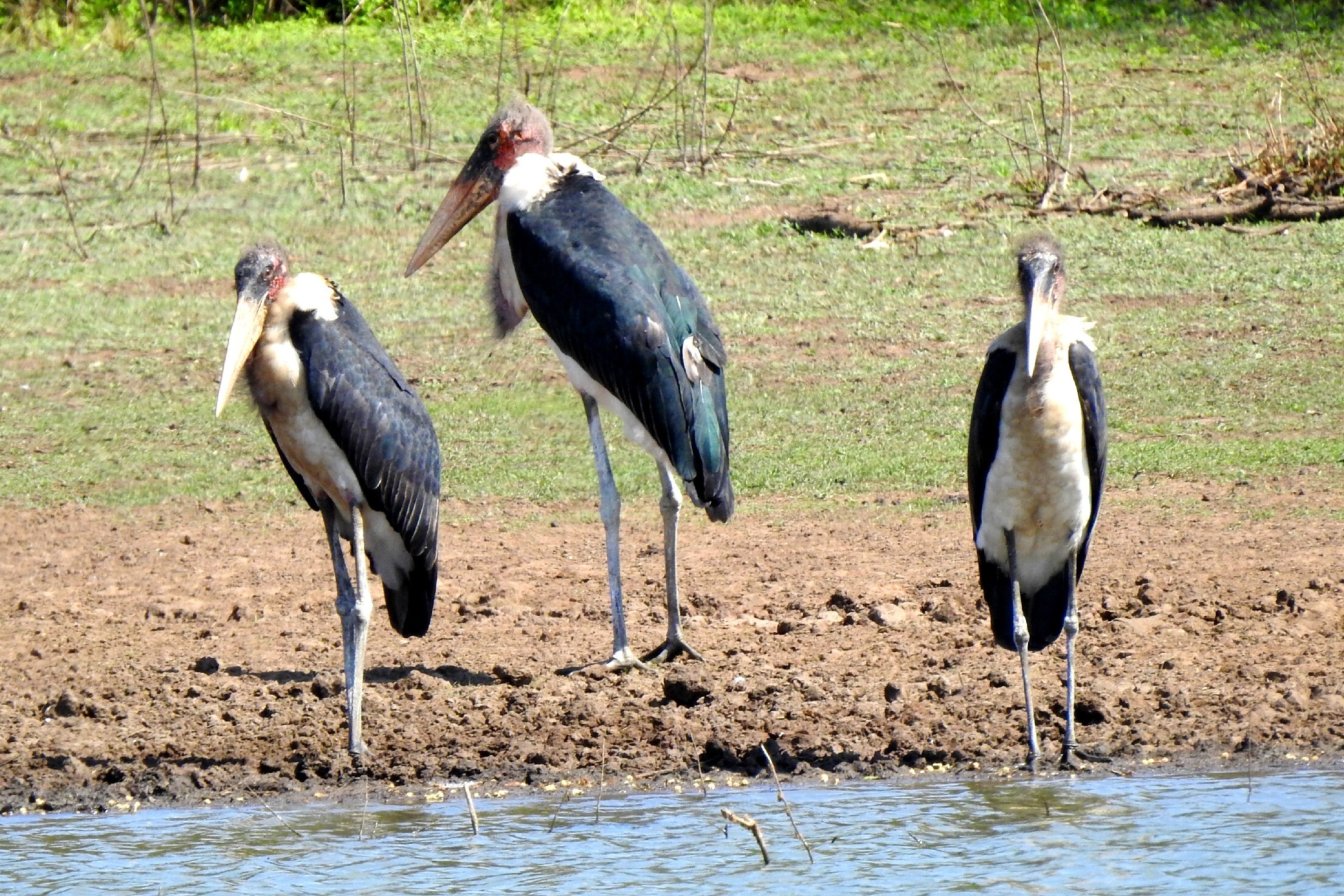
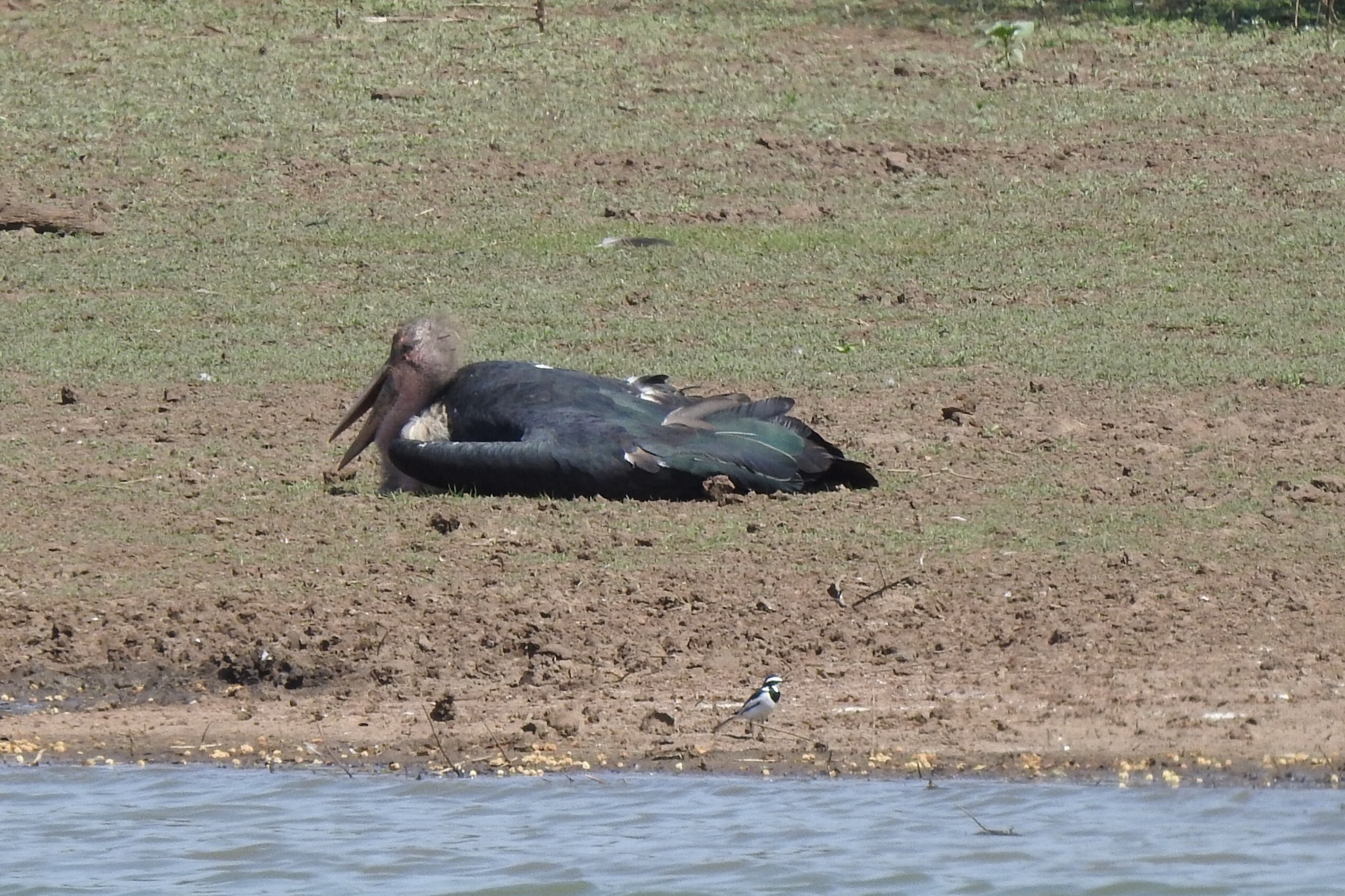
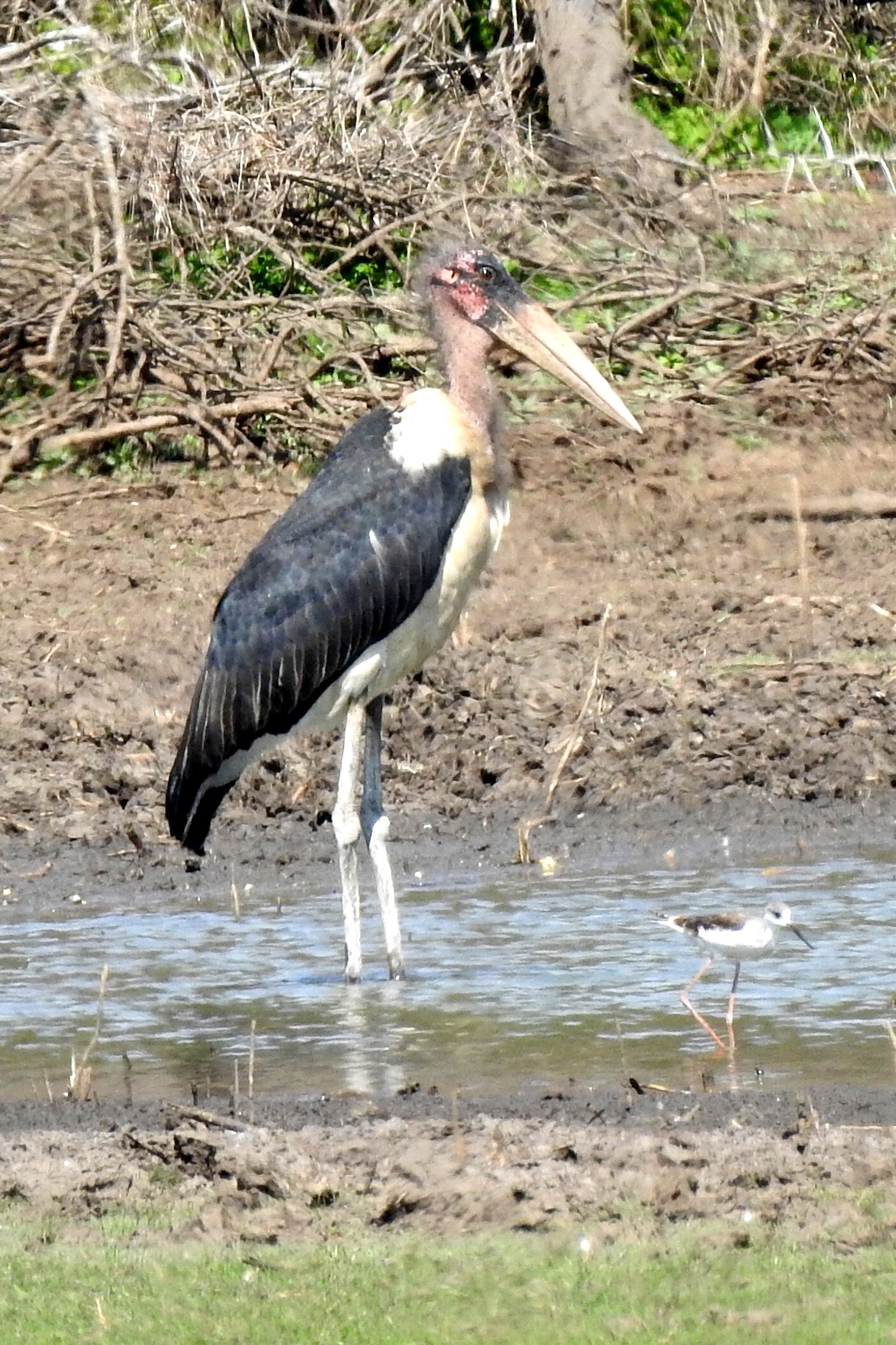
a dozen or so maribou storks
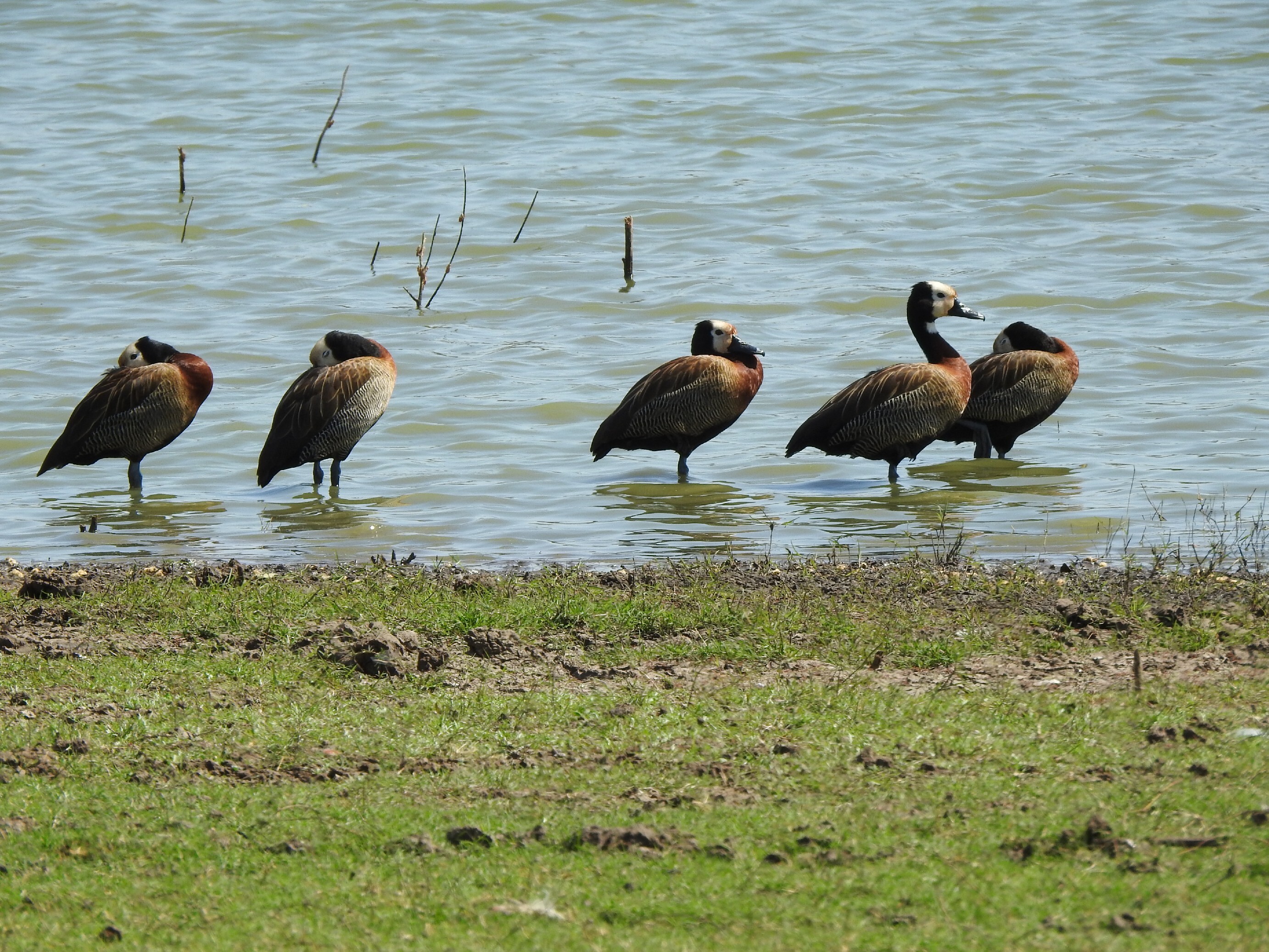
white faced ducks:

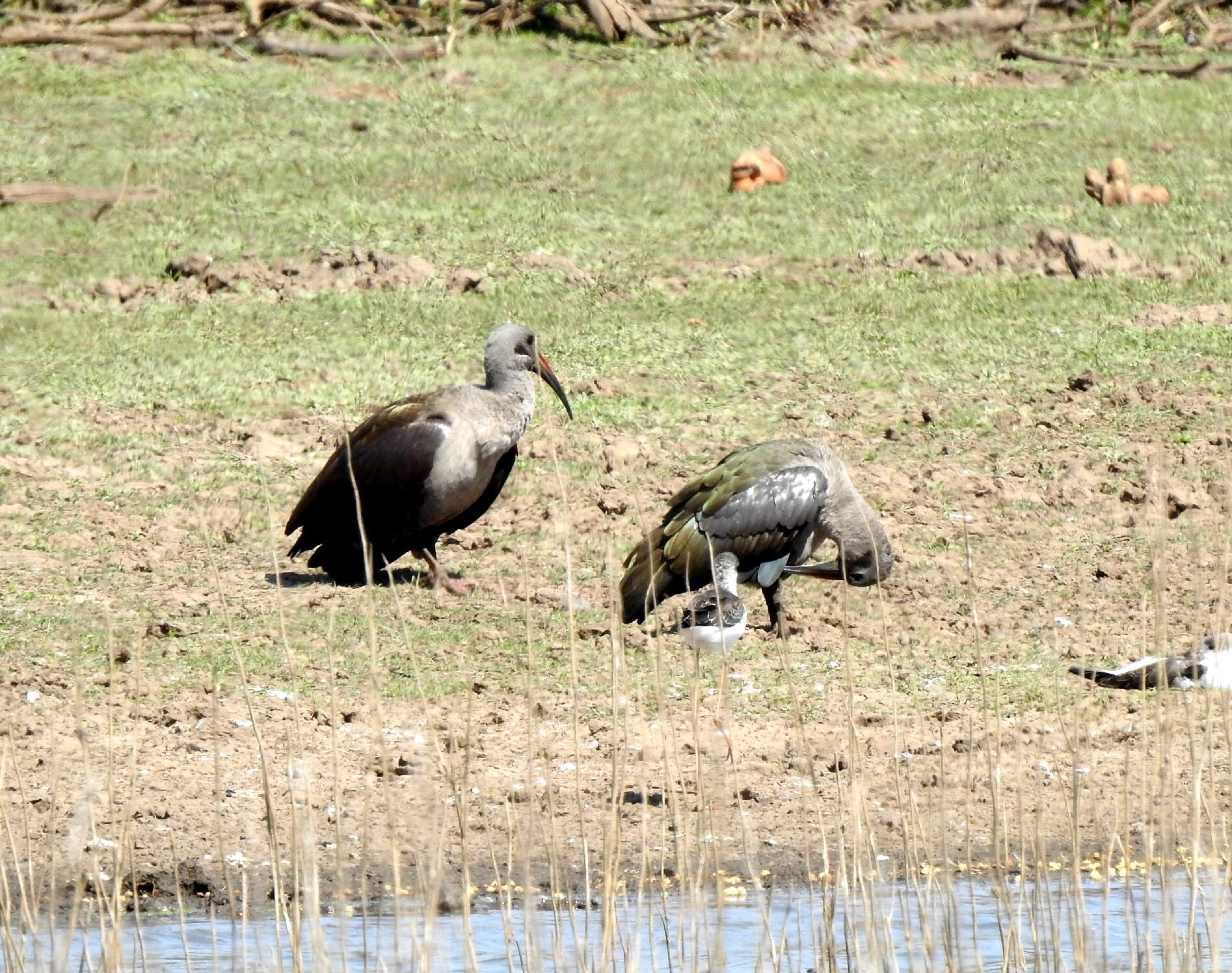
hadida birds:
We continued south from there and mostly saw nyala and impala. We had hoped to find that elephant we’d seen from the road in but had no luck.
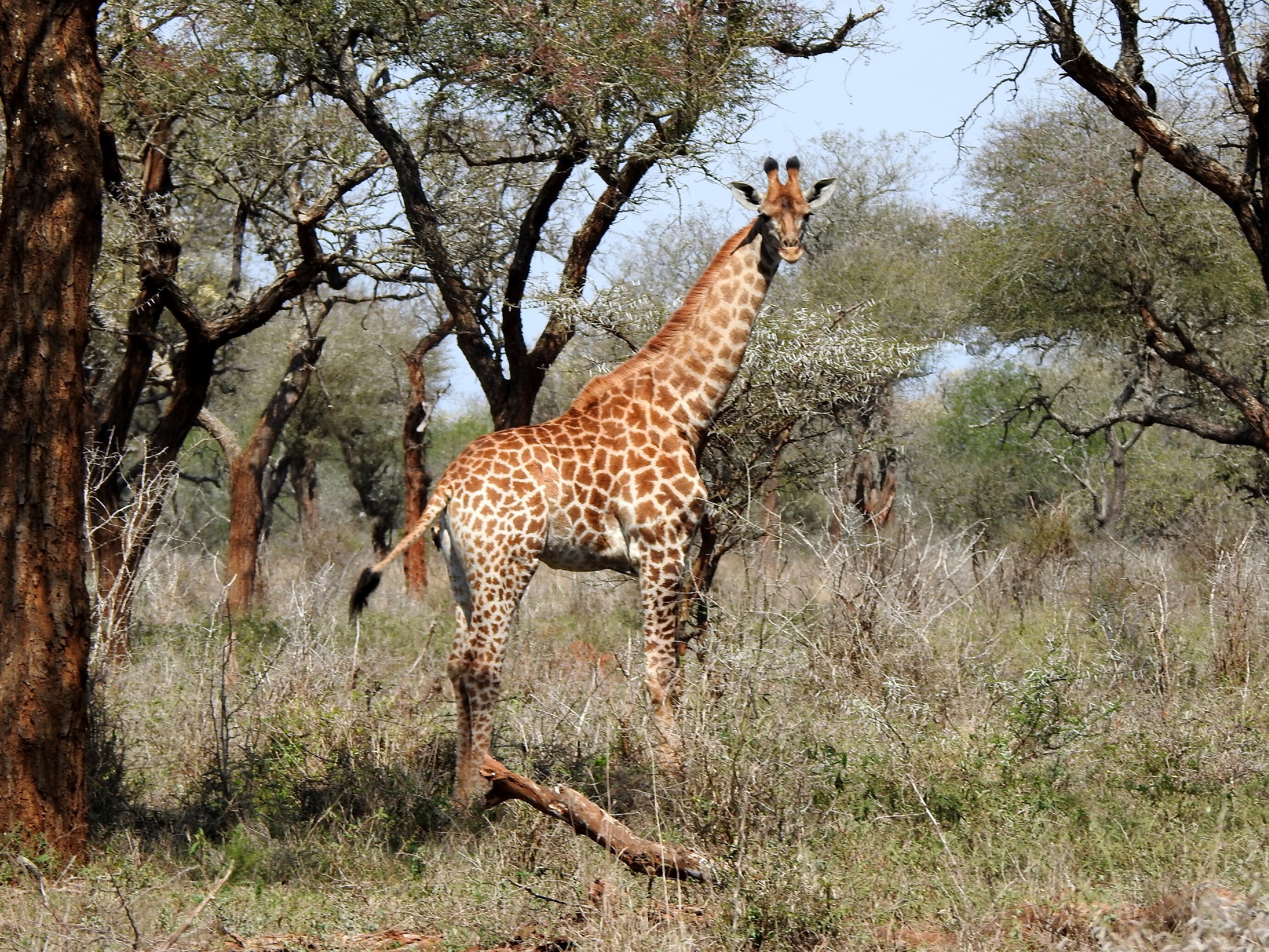
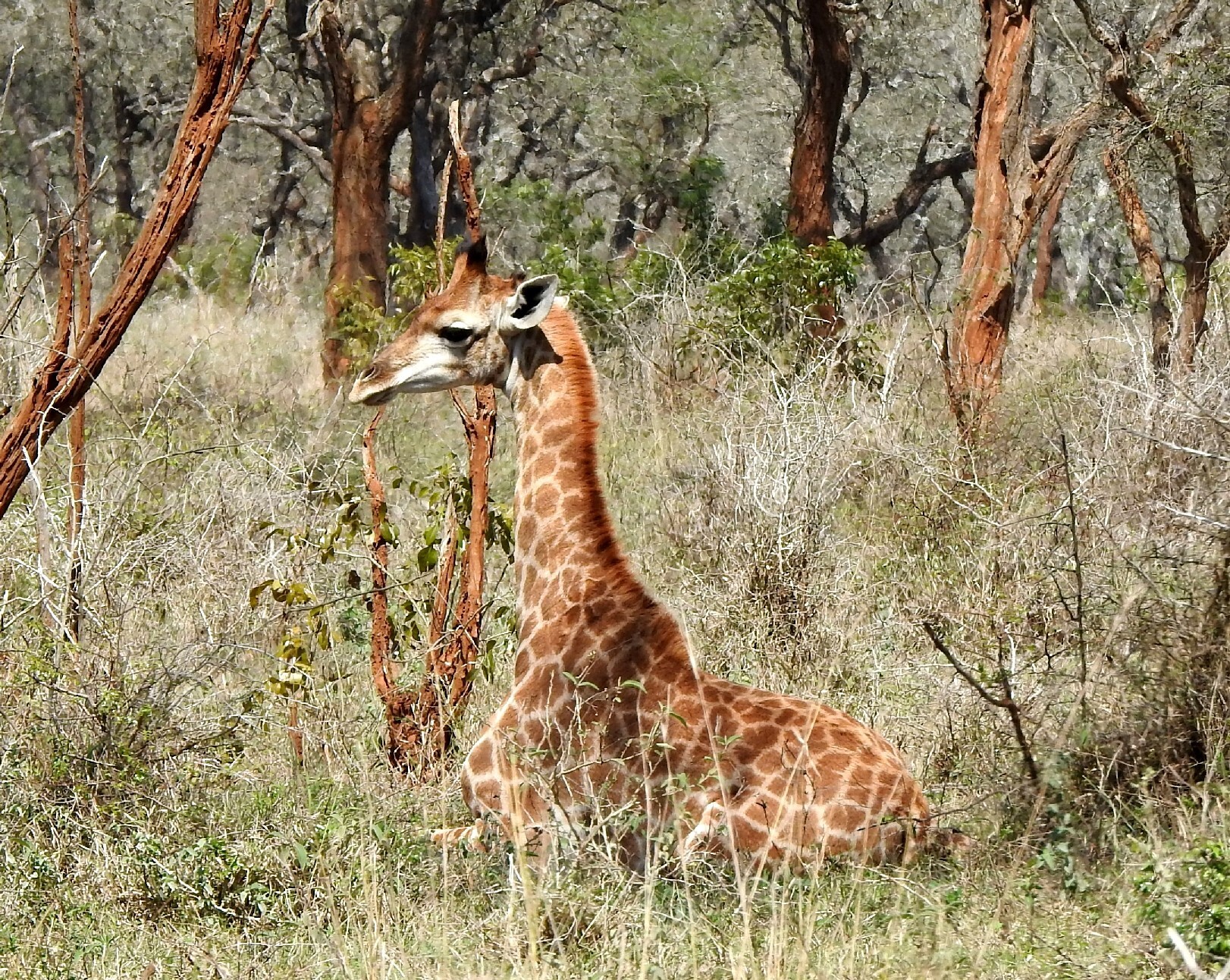
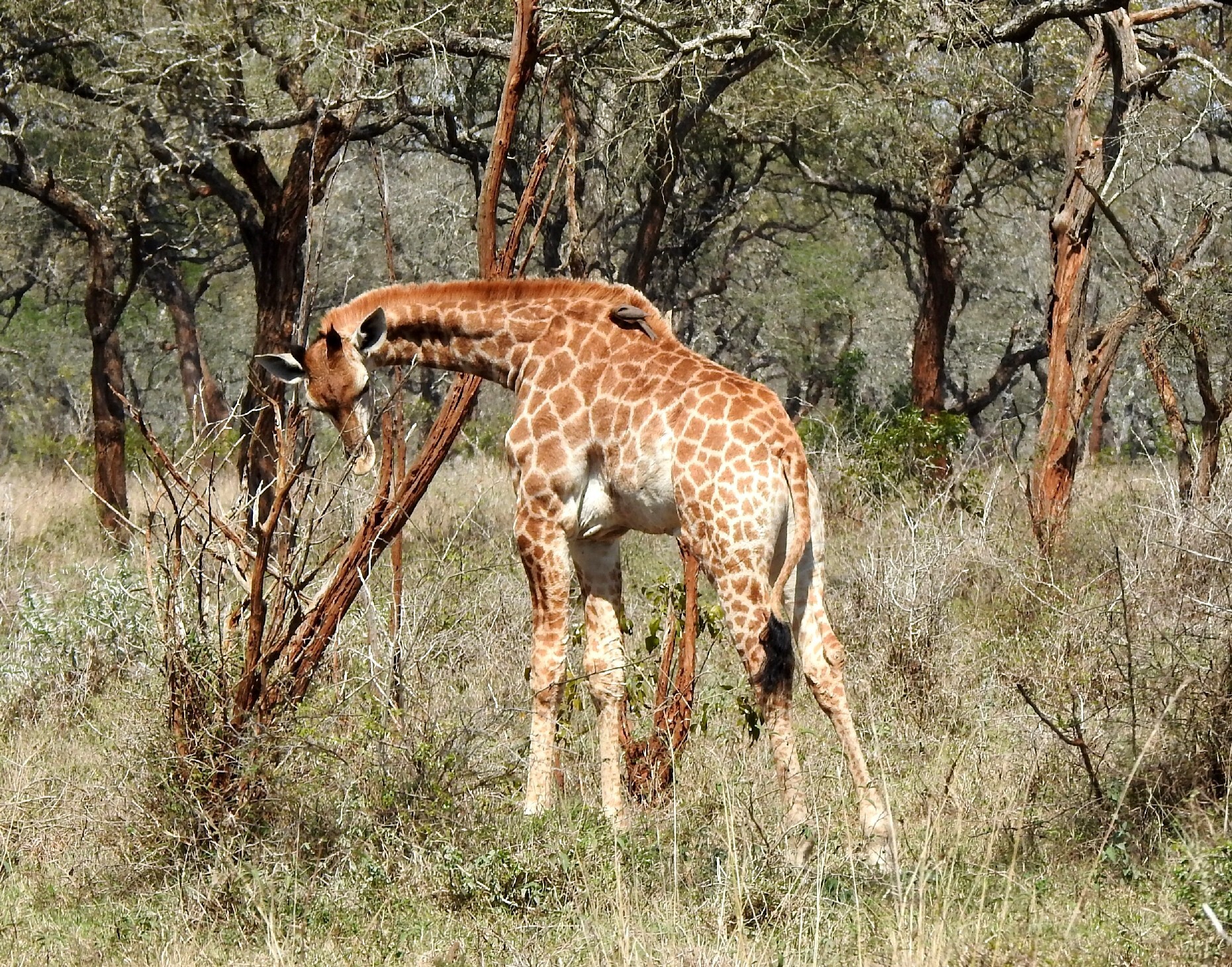
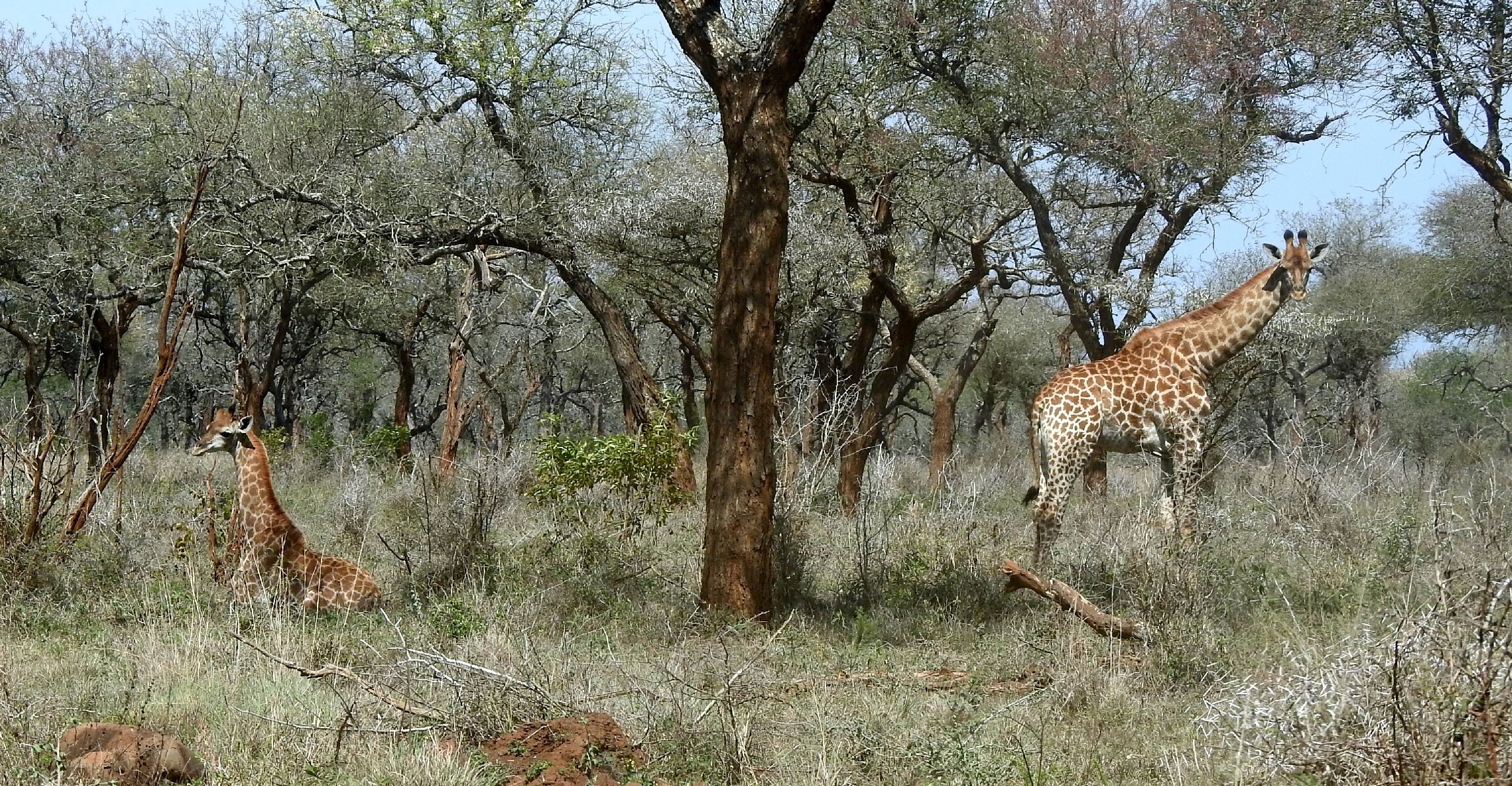
We found four more giraffe:
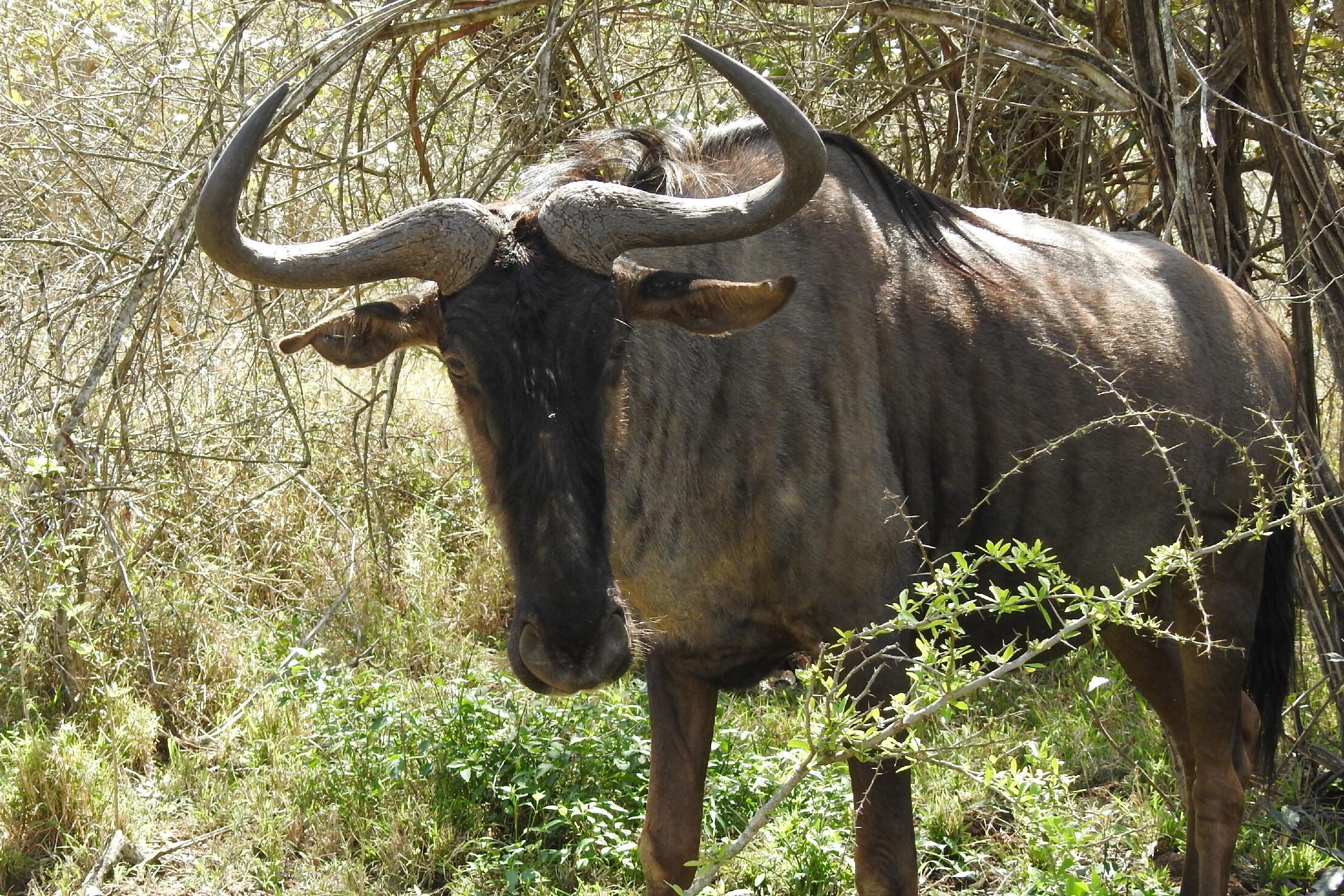
We came upon a small herd of wildebeest a bit off the road, most of them trying to get shade:
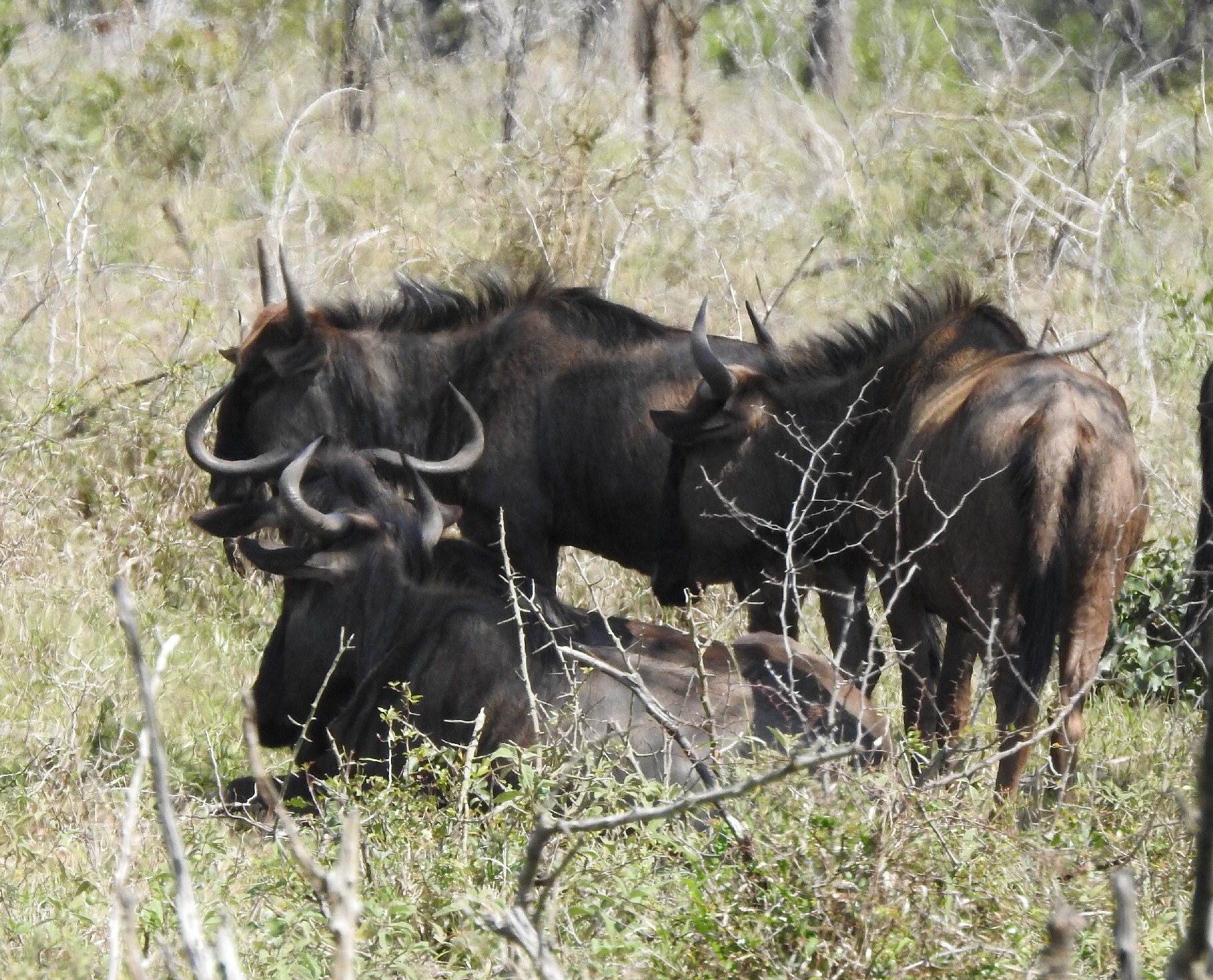
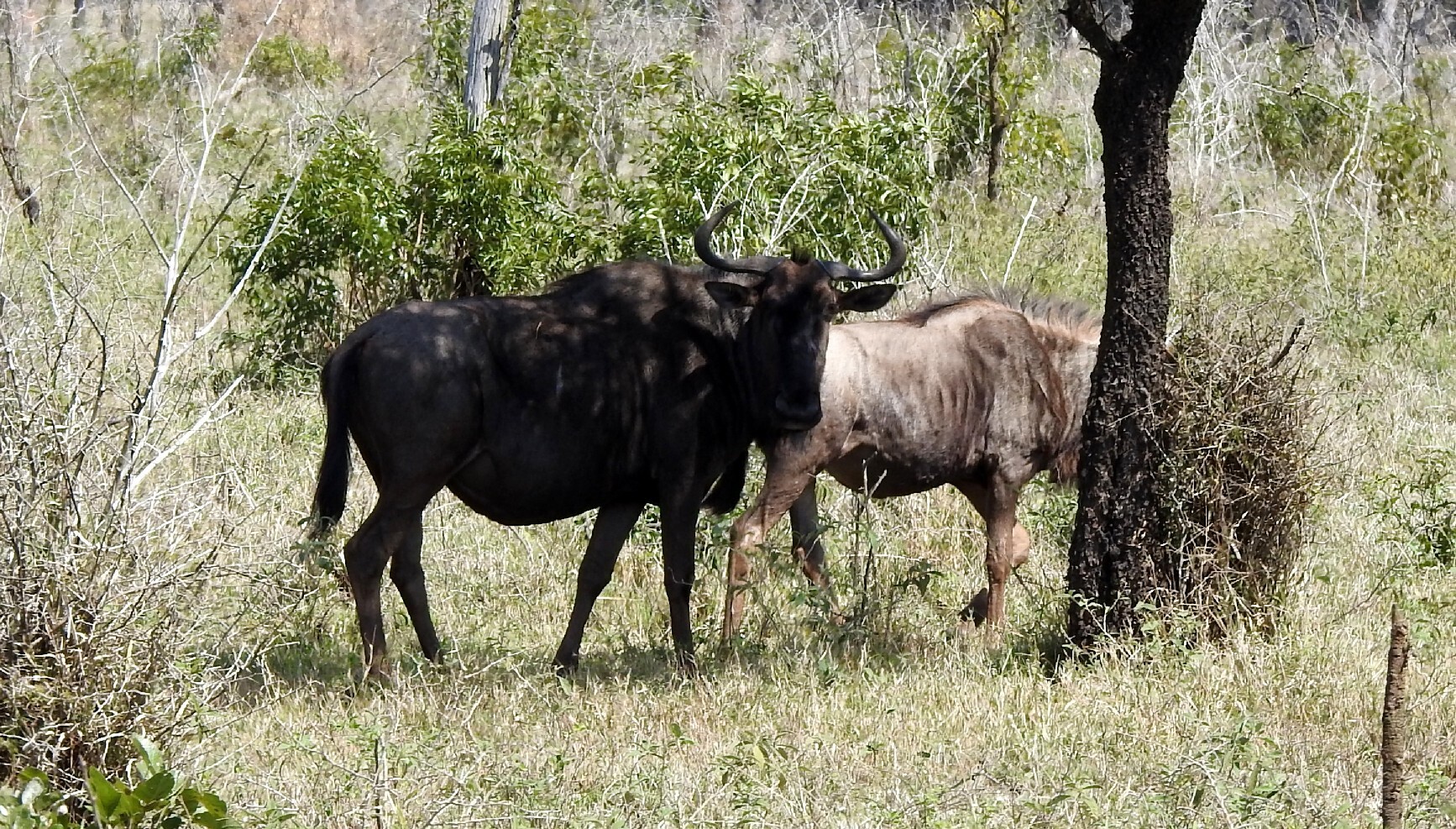
We got to a point where we had to turn around and the way back to the pond via a different road, we saw another giraffe and then the forest got quite dense and other than spotting buck amoungst the trees once in a while, saw nothing much else.

At the pond this time which we approached from the opposite side, we went to the bird hide across the river from where we’d been before and we could see impala in front of that hide:
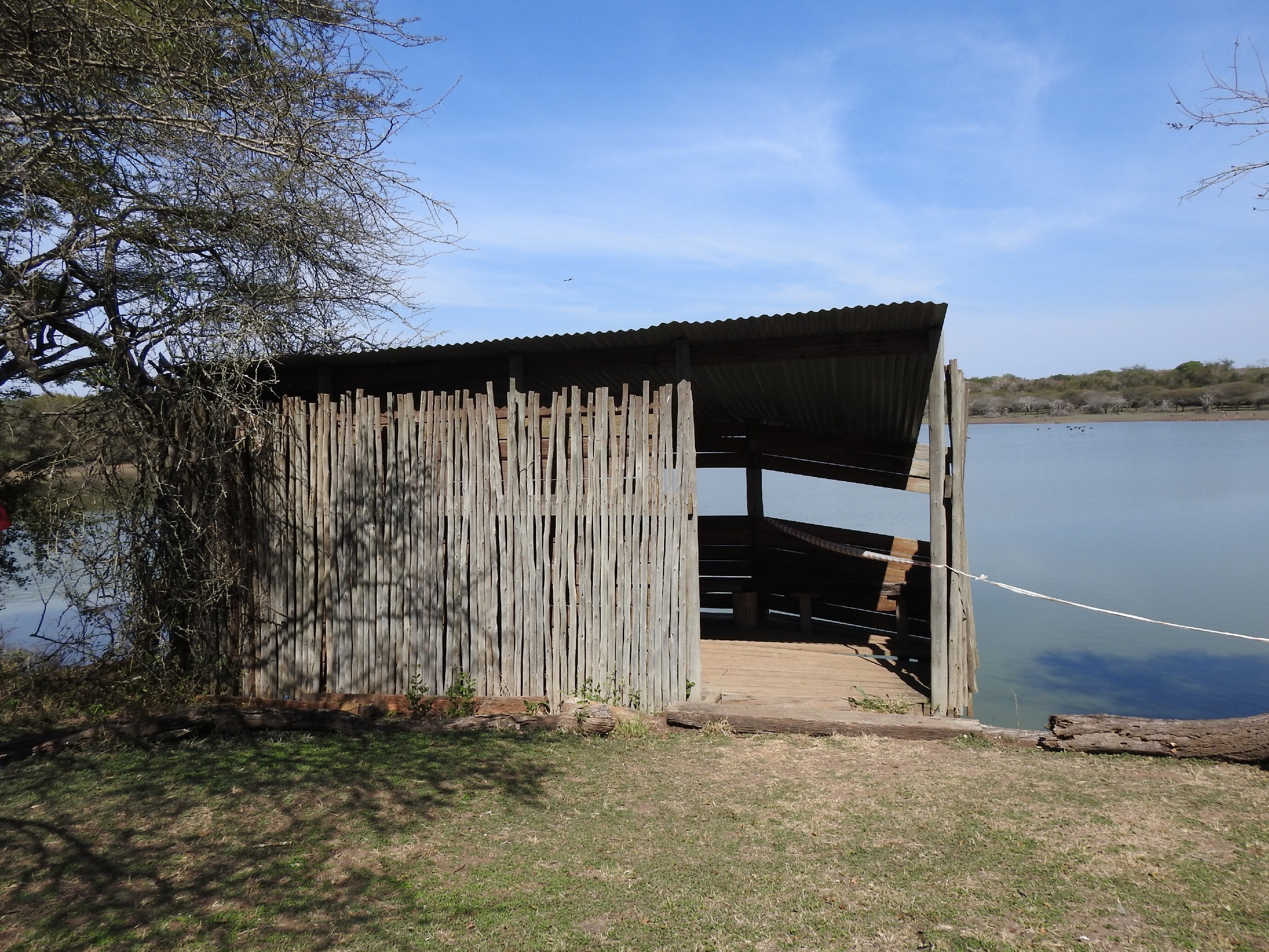
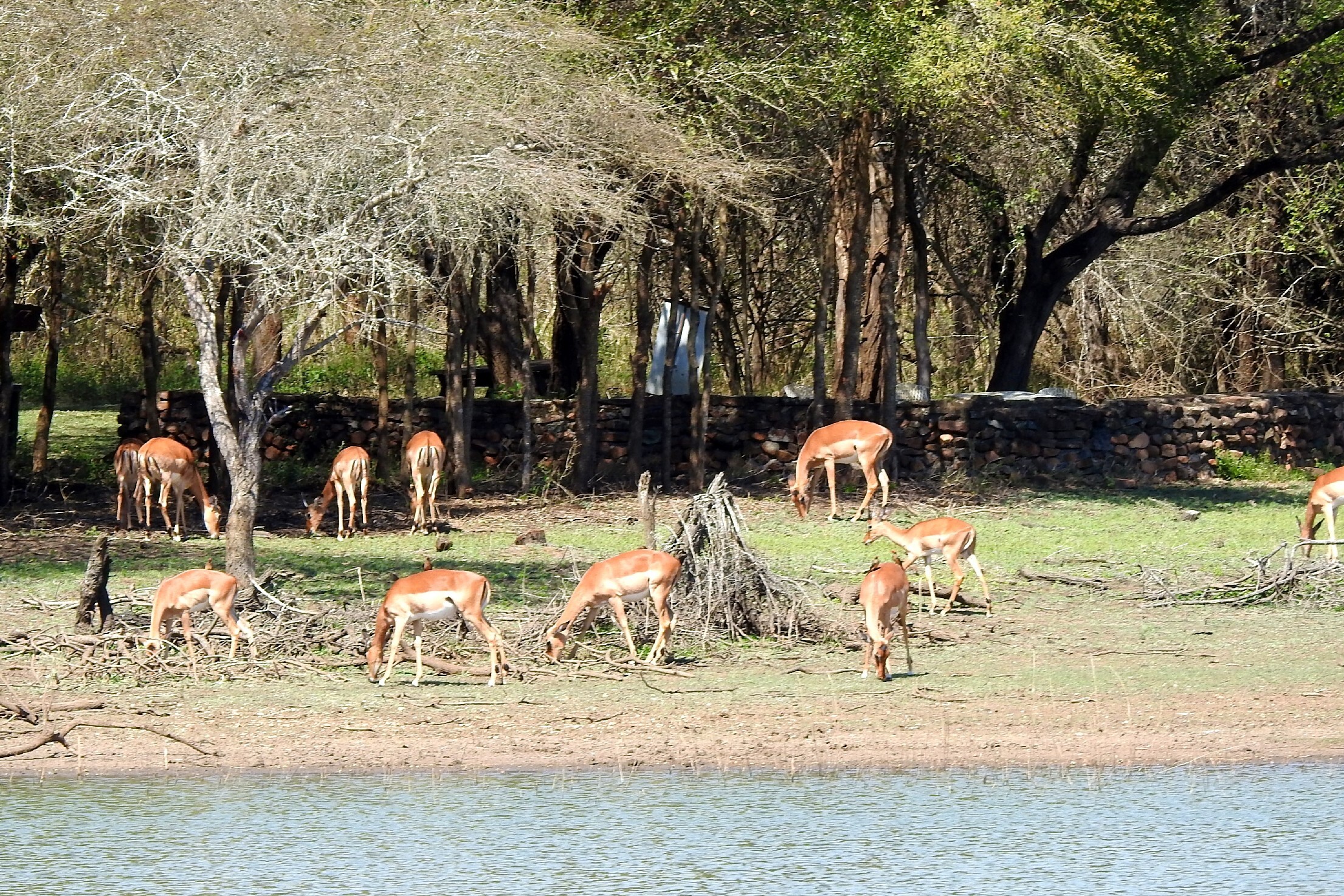
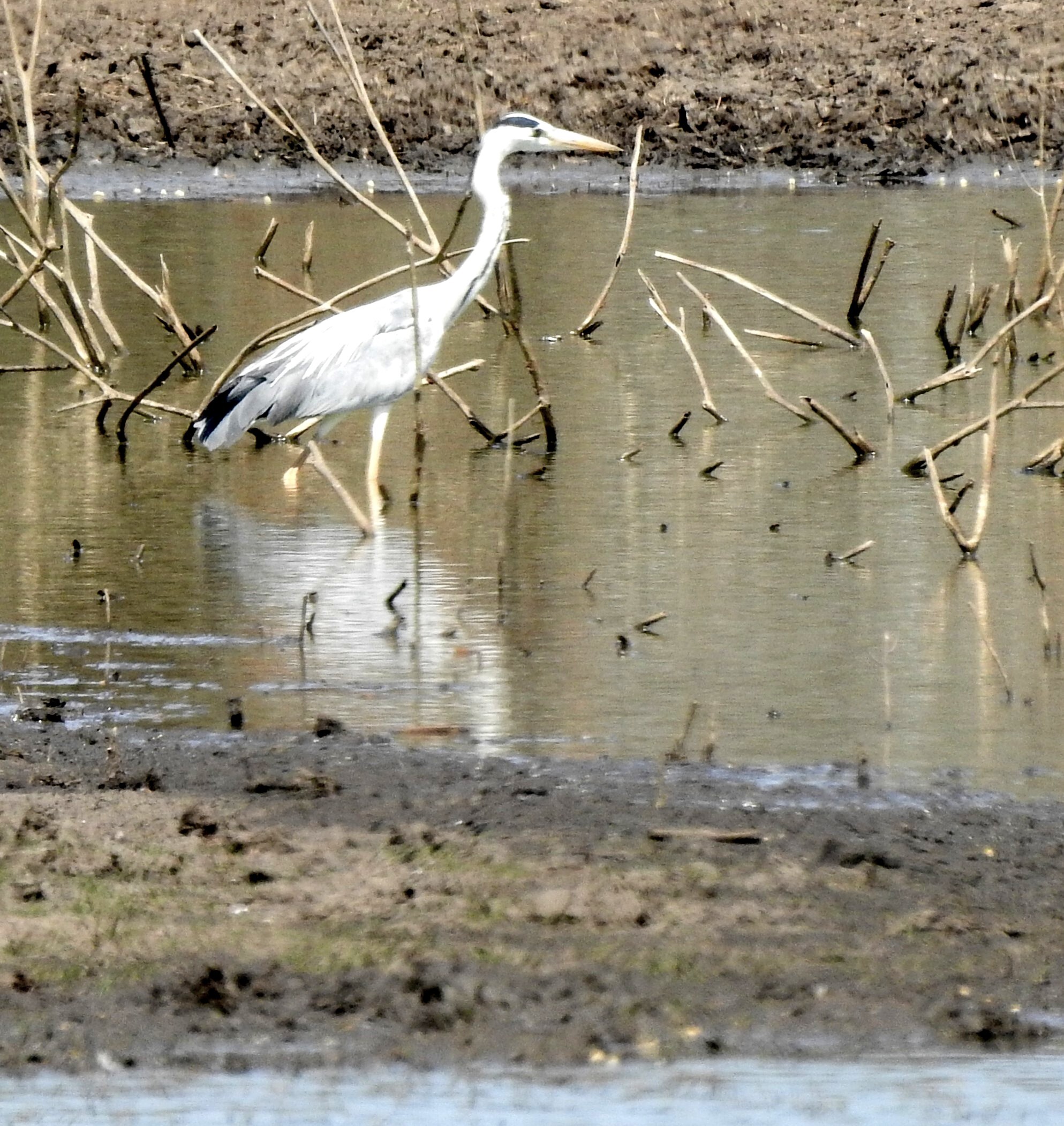
After we left the pond, we went north on a new road that was also quite dense and again we saw only buck and one lone wildebeest:
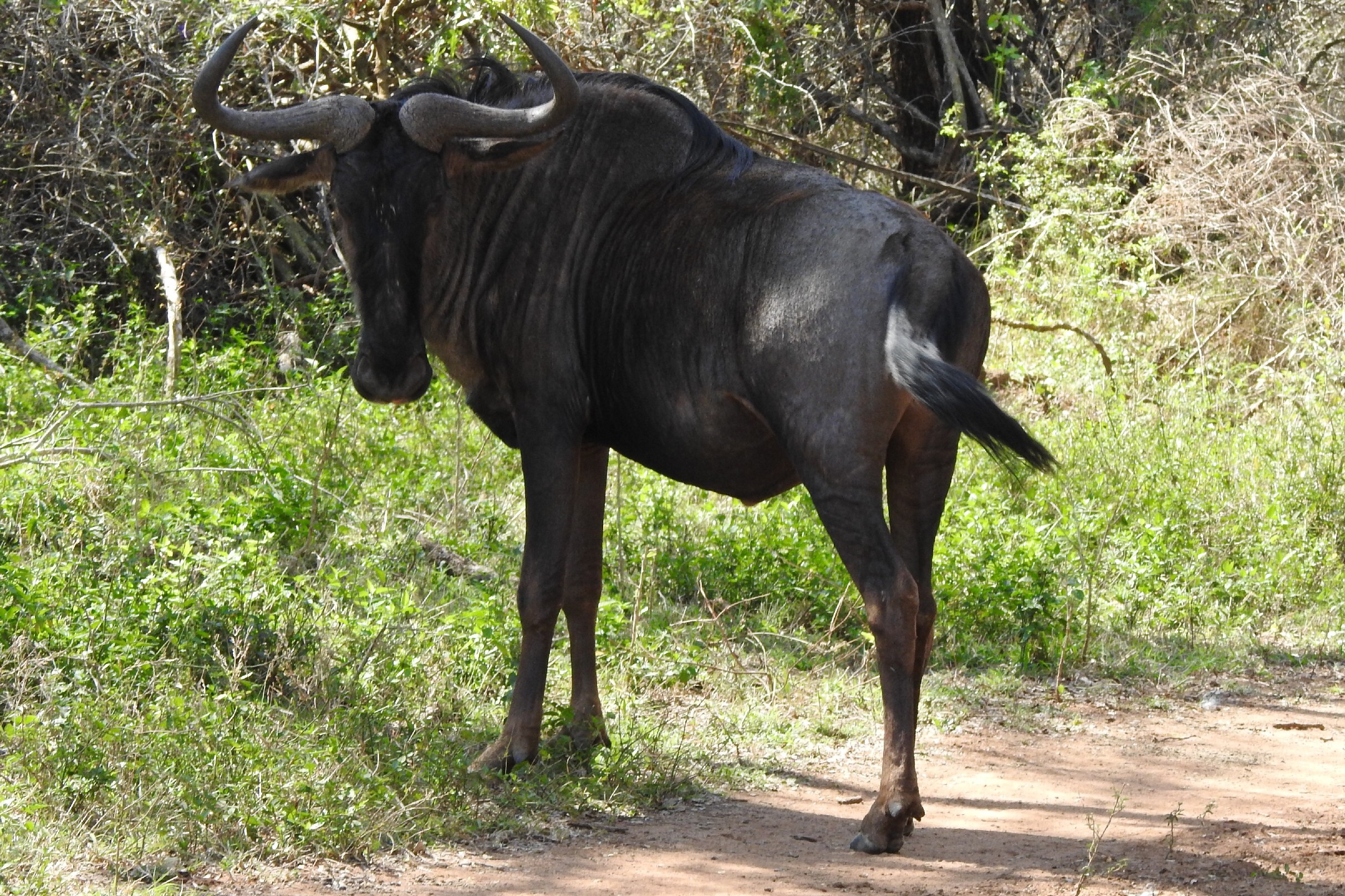
We decided our luck was running out but that maybe, maybe the rhino would still be in the area we’d seen them in this morning. Enroute we came across a different kind of guinea fowl than we’d see this entire trip though. They are called crested guinea fowl:

We had no luck spotting the rhinos again where we’d seen them – no surprise. It was now 1:30 and we figured it was getting too hot now: 31C / 88F so the animals were not so active any more. We’d see our two faves (Doug – rhino and Fran – giraffe) so we figured we’d had a very good game drive today and returned to our guest farm after stopping at a store to pick up a few things.
We left the park and again on the way out we saw giraffe, baboons and that lone bull elephant beyond the fence.
It was a good day!
We returned to the lodge after stopping for some items at the grocery store – we planned to have dinner at the lodgings. We got our laptops and went to the coffee shop to sit for a while and then inquired about dinner. They told us you have to had booked dinners when you booked the lodgings – which NO one told us so we asked about getting some of the “lite bites” off the menu but it was now after 4 and the kitchen closed at 3. Again no one told us.
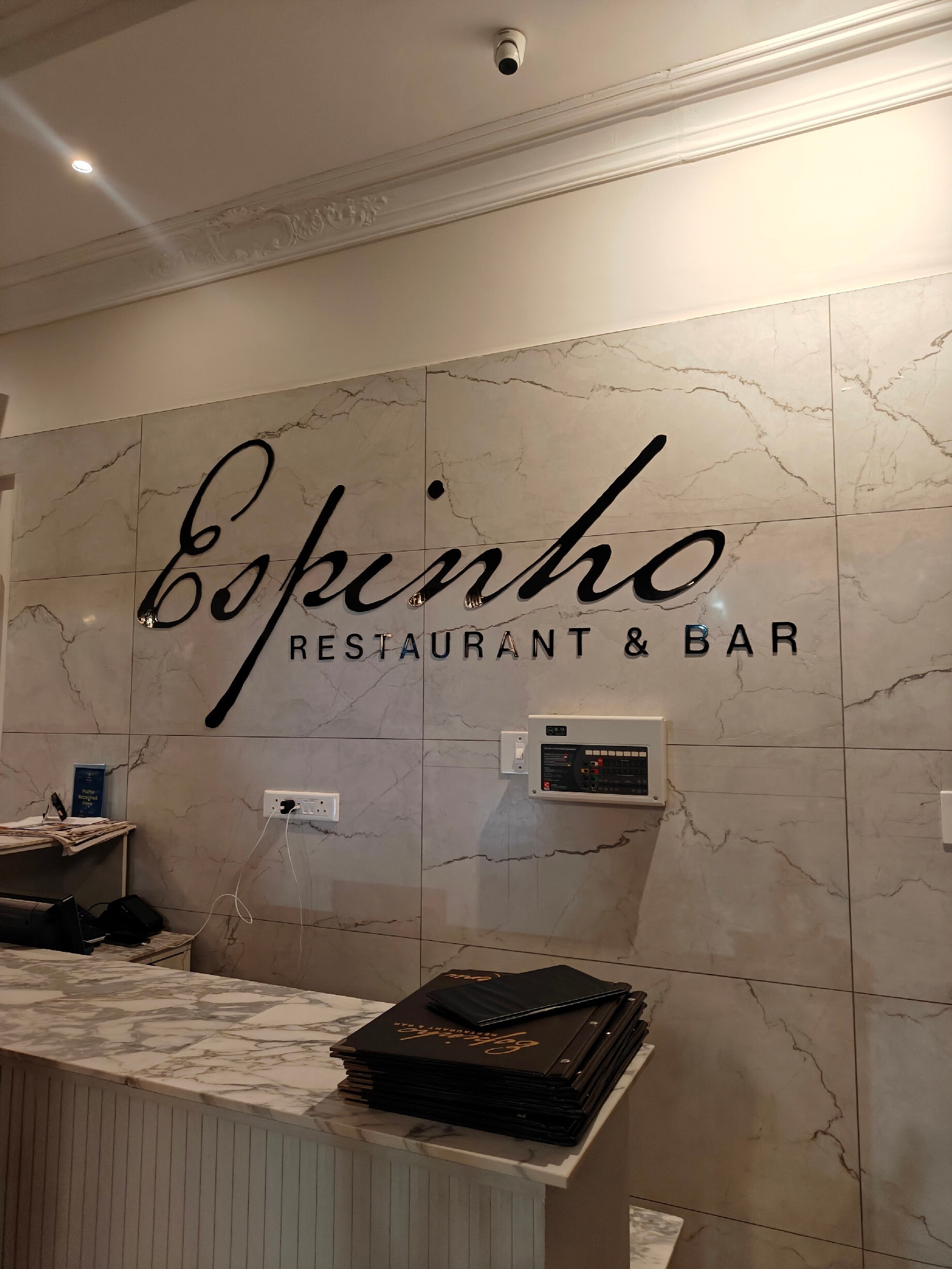
So Doug went into town around 4:45 and the grocery store offered nothing healthy (we were getting tired of bread and PB & J!) so he found an Italian restaurant that was open until 8 this evening. He returned and at 5:30 we went over and had a very nice meal. The place was very nice, not African standards at all, the staff was good, the service a bit slow but we each ordered large pizzas in order to have left overs for tomorrow night.
They were surprisingly good and we had a nice time. When the few locals that were also eating her walked by our table, they always greeted us and were happy to see us in their country enjoying it.
Next morning, we had a safari booked in Mkhaya game reserve which specializes in white AND black rhino. You cannot self drive here and Fran had booked this back in April. It runs from 10-4 and includes lunch.
Mkhaya Game Reserve is named after the knob thorn tree which is known as mkhaya in siSwati. Mkhaya is staffed and patrolled entirely by local Swazi people. All travel within the reserve is guided and requires pre-booking. The reserve is self-financed solely through visitor revenues.
The game reserve was established in 1979 to save Nguni cattle, which were close to extinction, and has gone on to include other endangered species such as the black and white rhino, hippos, various rare antelope, and Cape Buffalo.
We drove to the pick up point and waited ten minutes – no one came so we began to drive to the gate and then a man on a motorcycle came towards us and he was the person we were supposed to be met by. He turned around and caught up to us and opened the gates as we went forward.
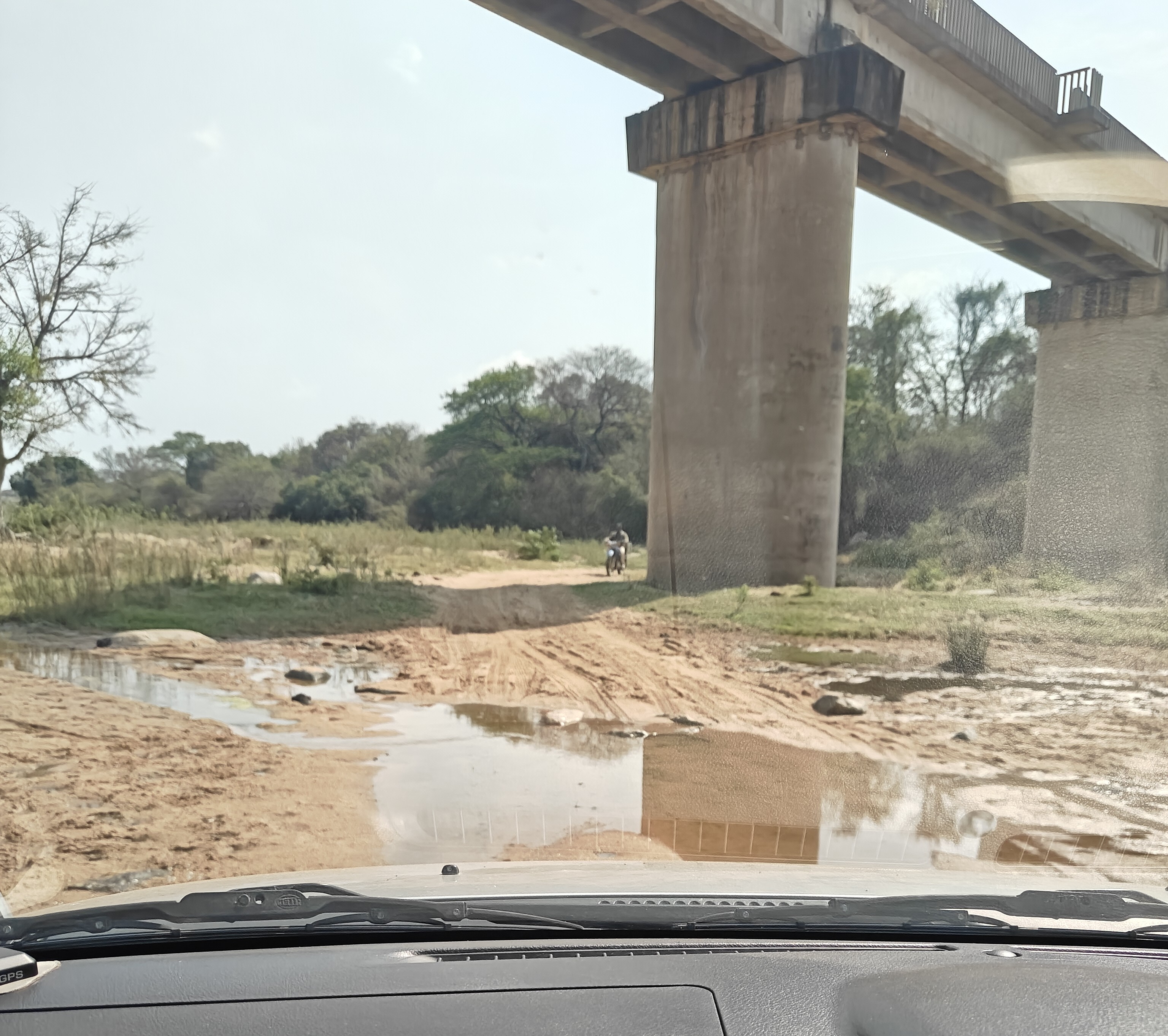
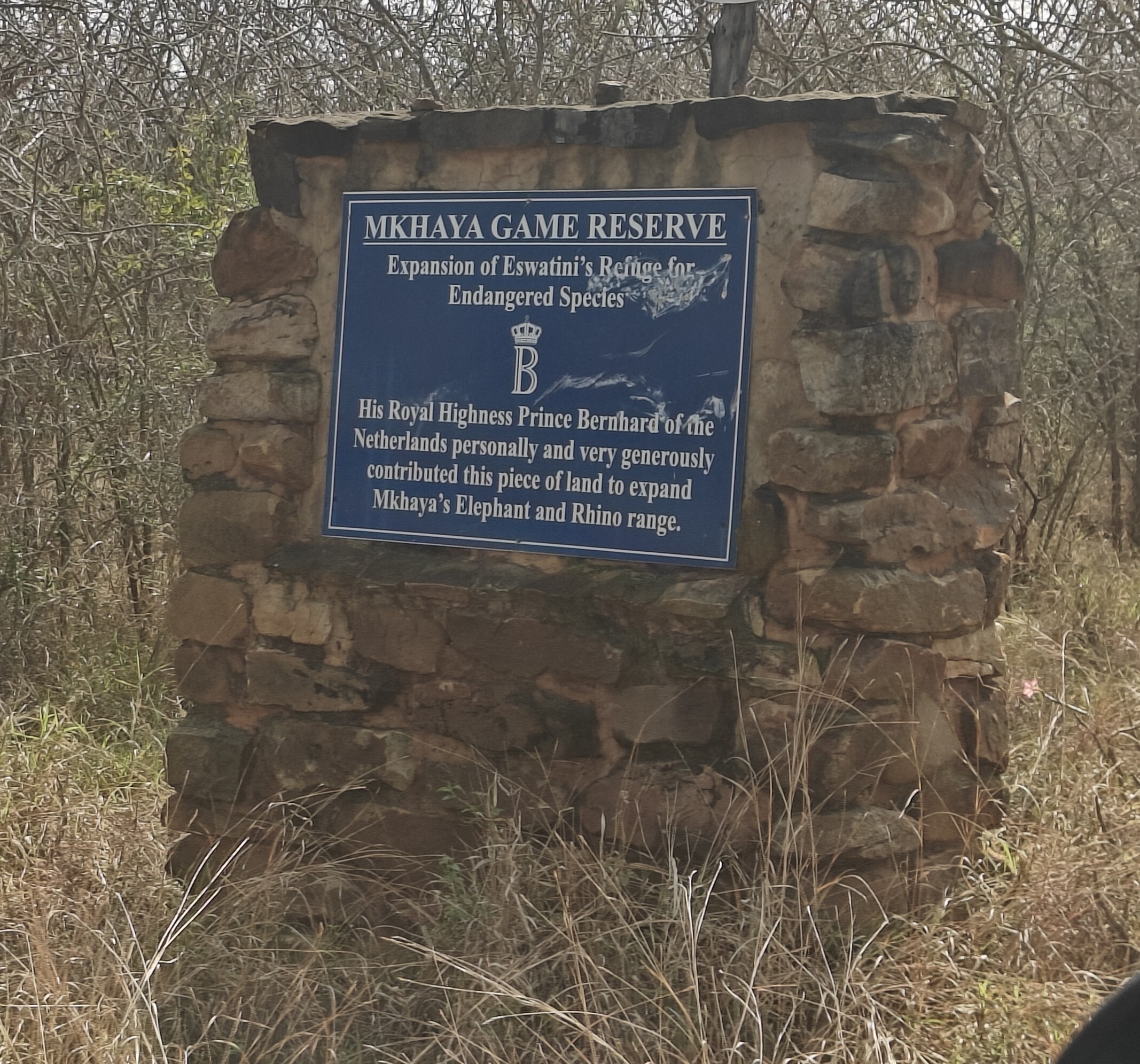
Lucky was our guide and we followed him into the park passing through three gates and then parked. He had us sign indemnity forms, we were given a glass of cold juice, a water bottle each and we hit the loo before boarding our safari vehicle. We were the only ones!

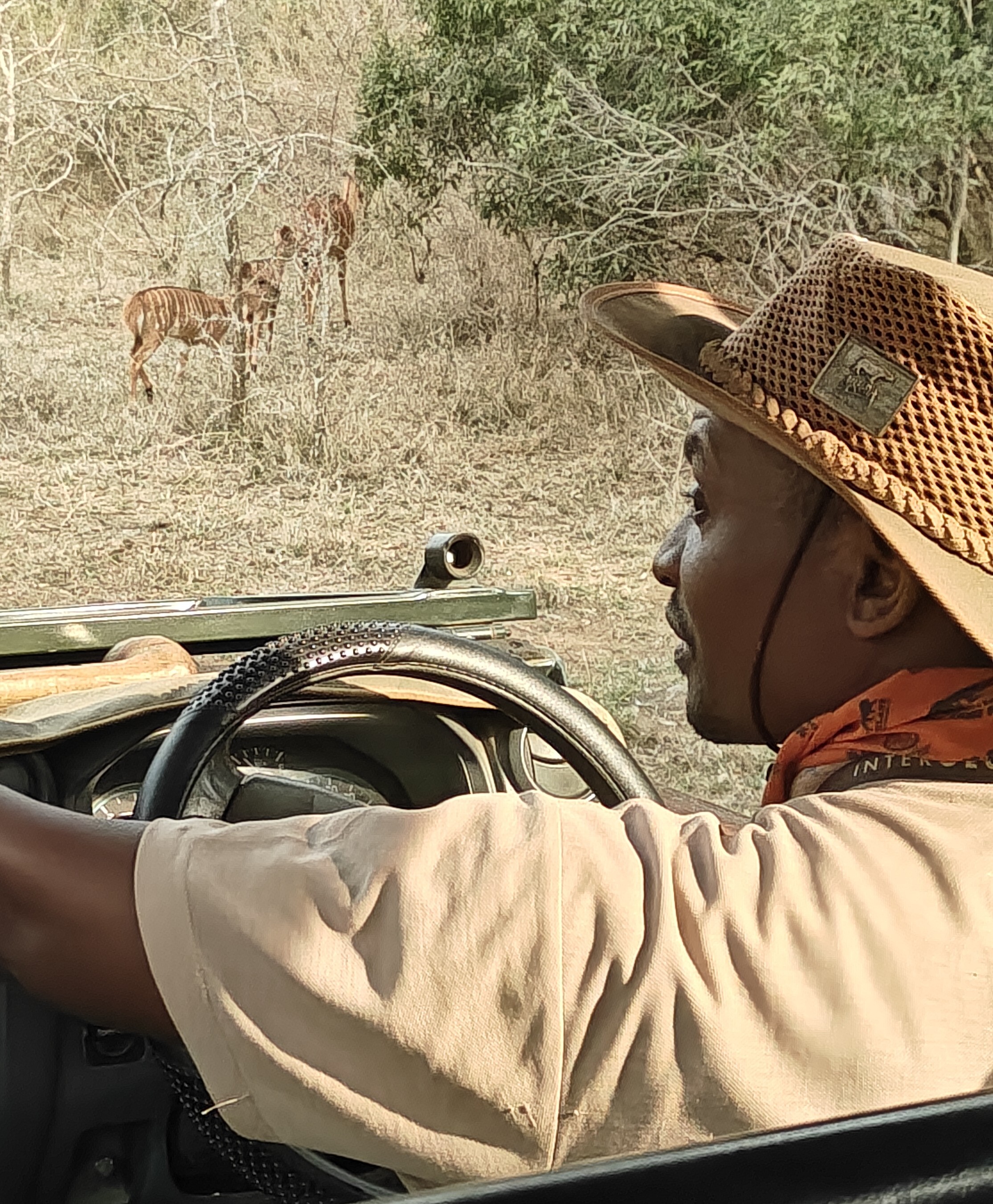

Lucky told us about the park and how it has suffered greatly the past few years due to short winters and drought. They have lost many animals and it’s not what it used to be.
First stop was the fenced in quarantine area where we saw a mama and 2 year old rhino who were having a hard time – hence the quarantine:


Further back in the grass was a male suffering as well; he’d lost weight and had trouble grazing but he was too far into the bush to get a photo.
Then we found three white rhinos in the wild! We hung around here for a while watching and listening to Lucky tell us about them and the rhino program here.
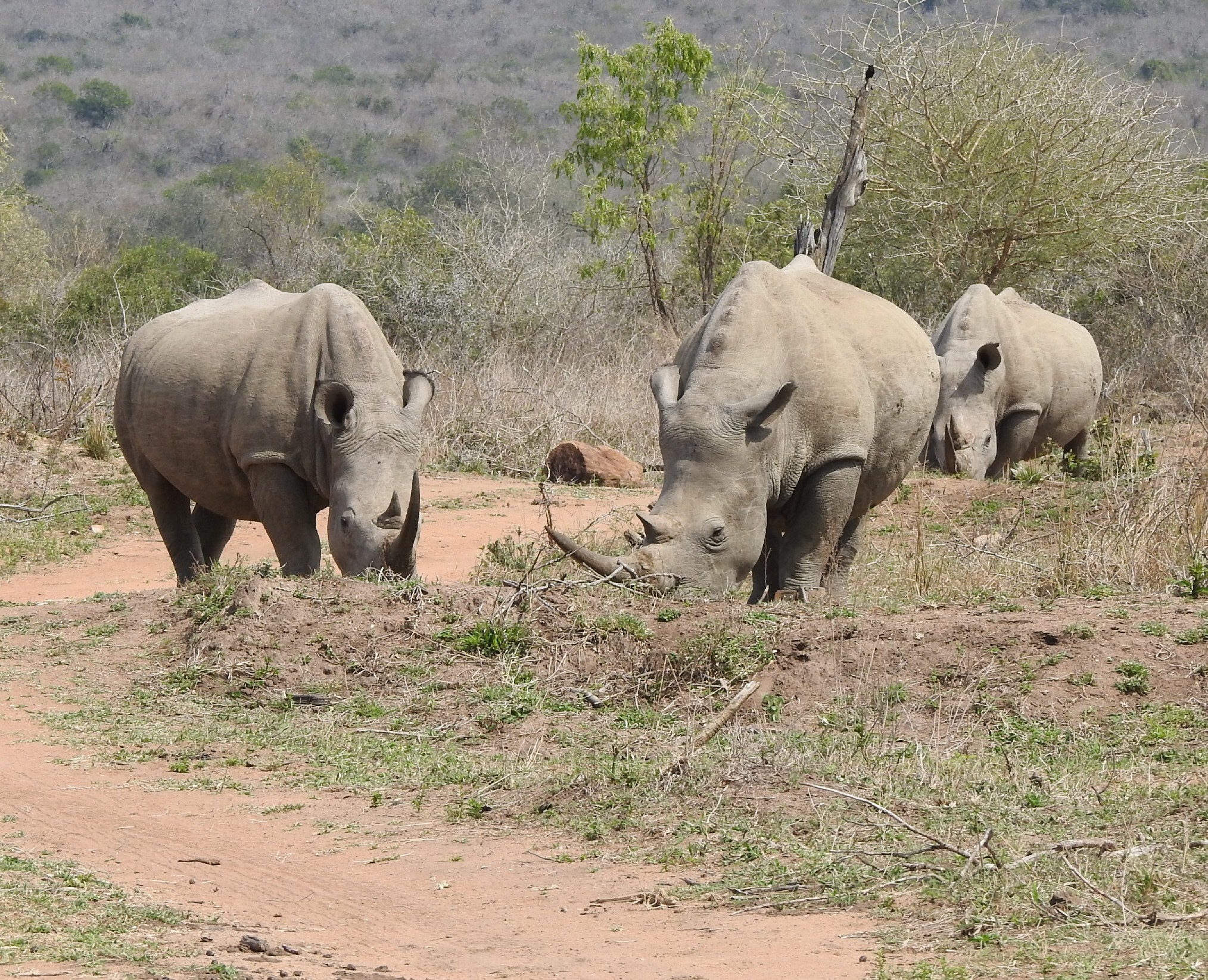


The main difference between white and black rhinos is the shape of their lips, which matches their feeding habits, rather than their actual color since both are gray. The white rhino features a wide, square lip designed for grazing on short grass close to the ground while the black features a pointed, hooked lip used for browsing leaves, twigs, and branches from trees and bushes.
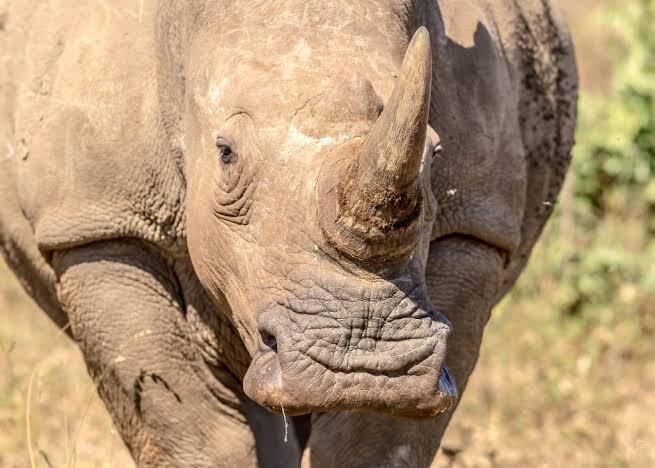
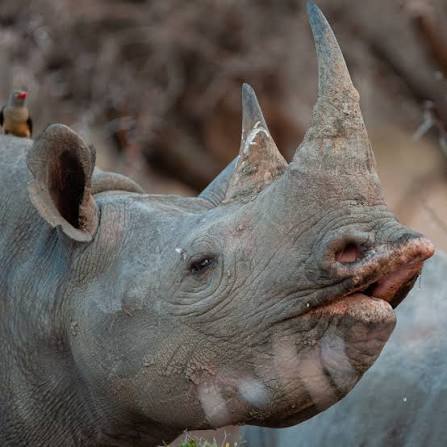
The white rhino is much larger, weighing between 1,800 and 2,500 kg, with a barrel-shaped body, a flat back, and a noticeable shoulder hump to support its heavy head. The black rhino is smaller and more compact, weighing between 800 and 1,400 kg, with an arched back and no pronounced shoulder hump.
The white rhino is more social and docile, often found living in groups where as the black rhino is typically solitary and more aggressive or reactive when disturbed.
As for habitats, the white rhino prefers open grasslands and savannas where short grass is abundant while the black rhino prefers dense thickets, brush lands, and wooded areas that provide woody plants to browse.
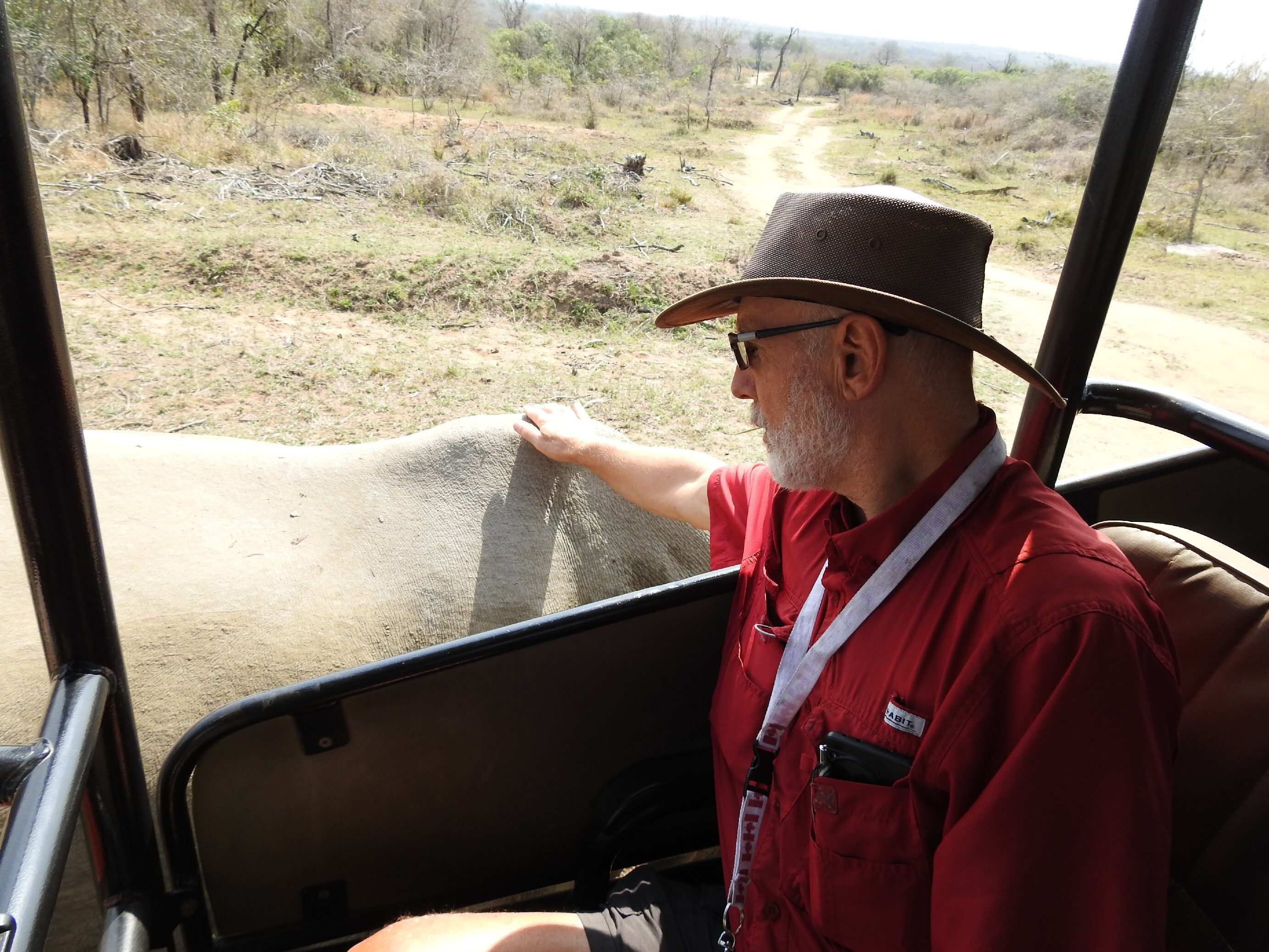
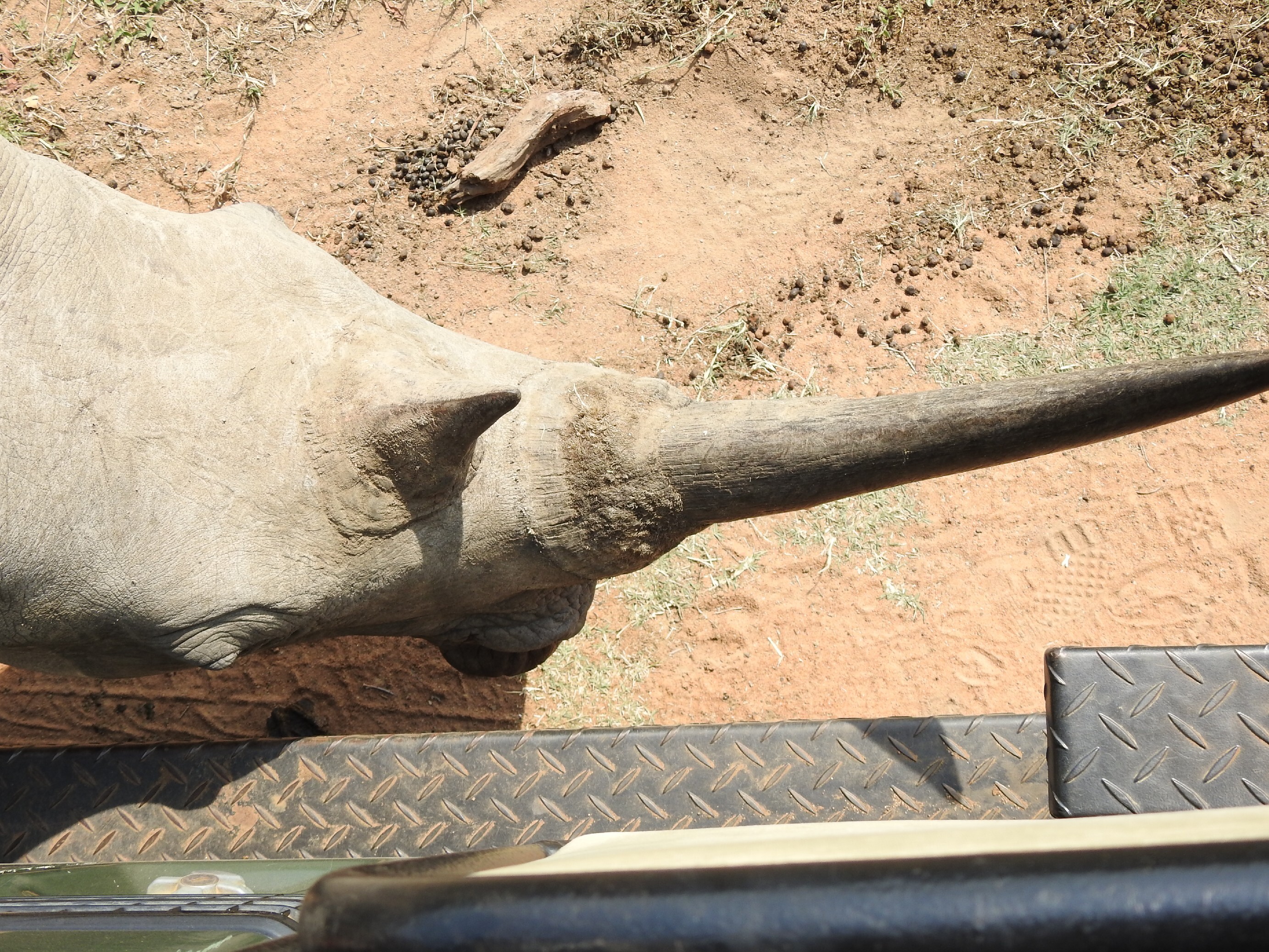
One of the females came right up to the vehicle and rubbed her horn and wanted some loving – Doug thoroughly enjoyed getting so close:


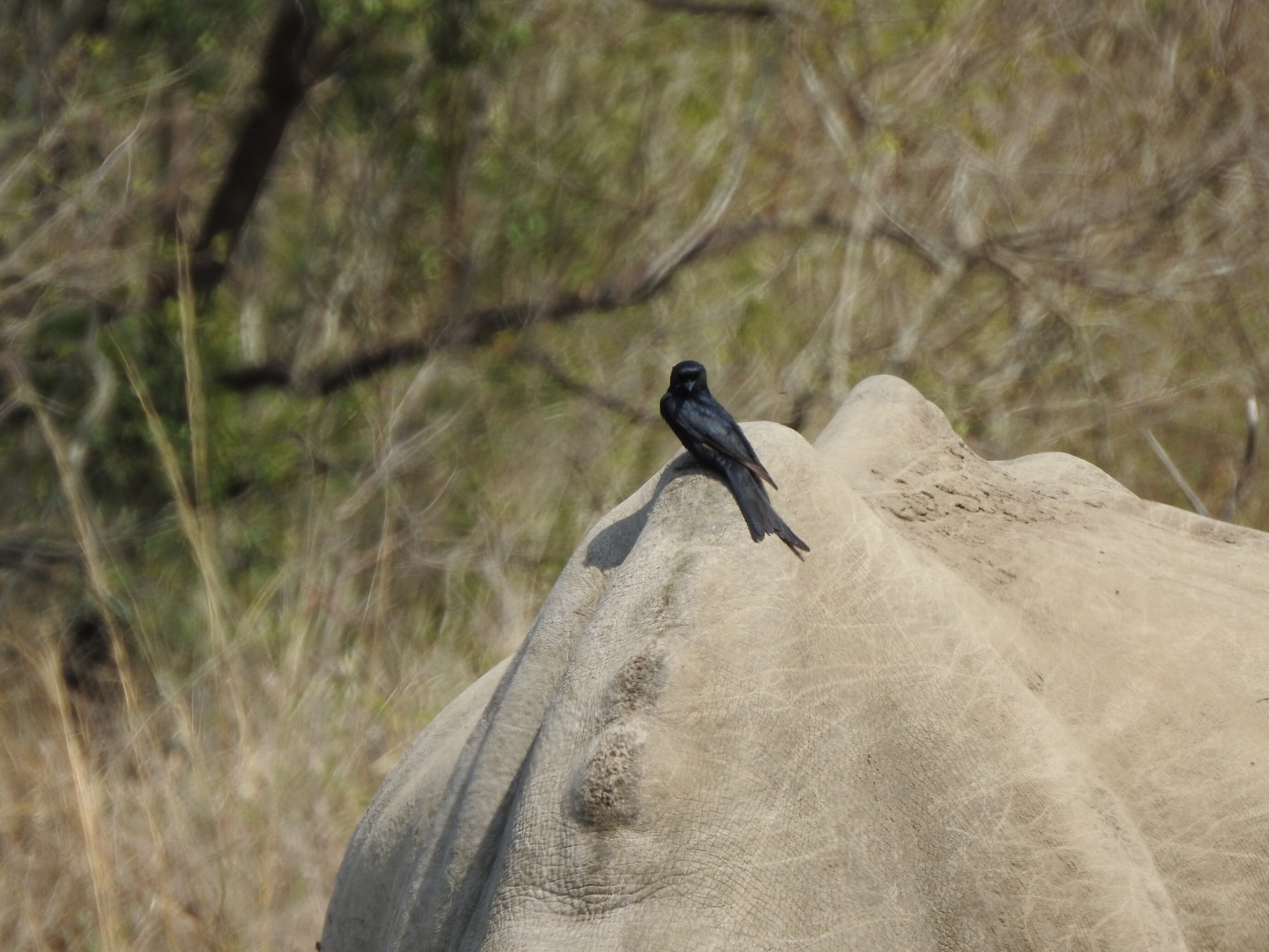
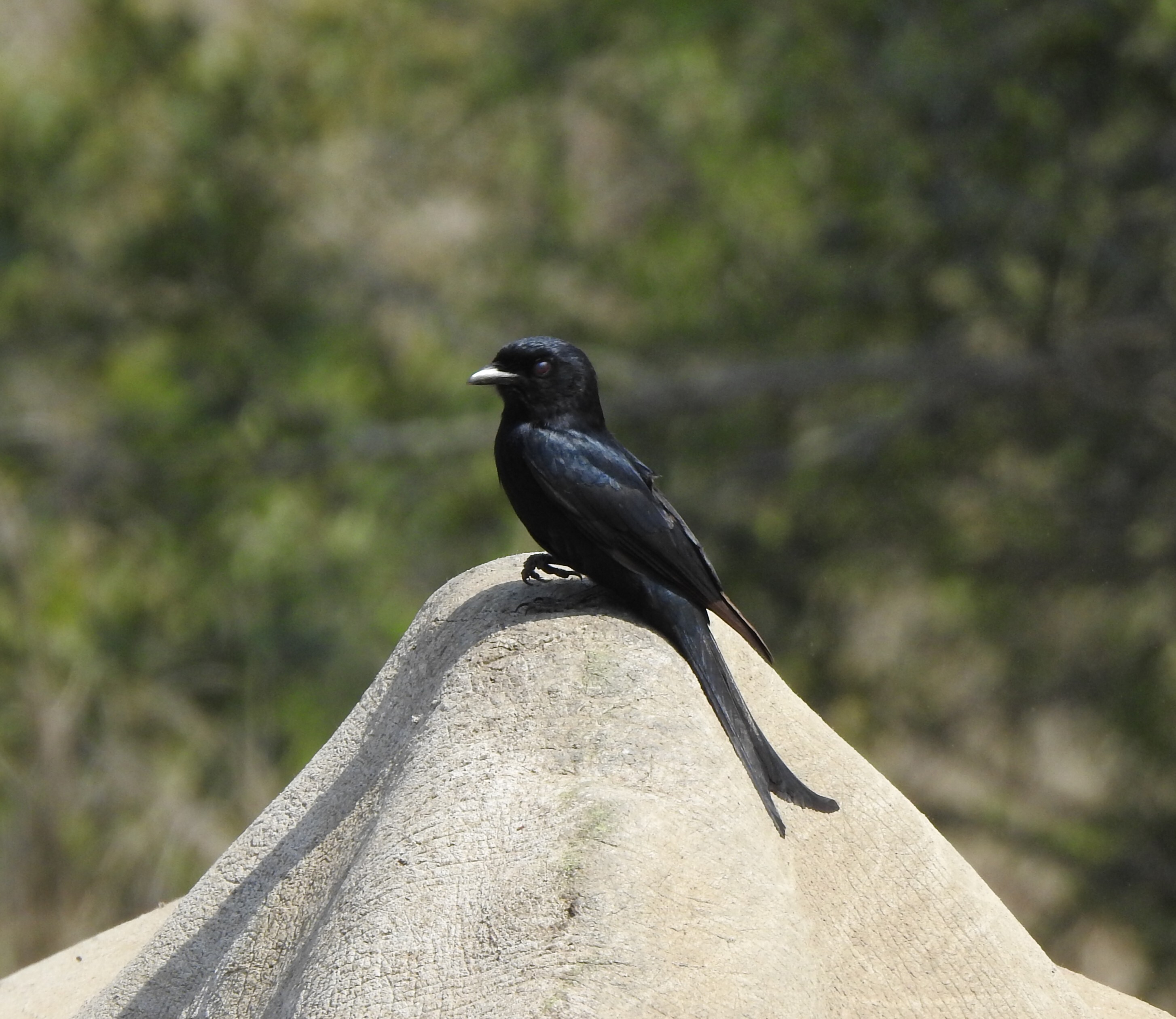
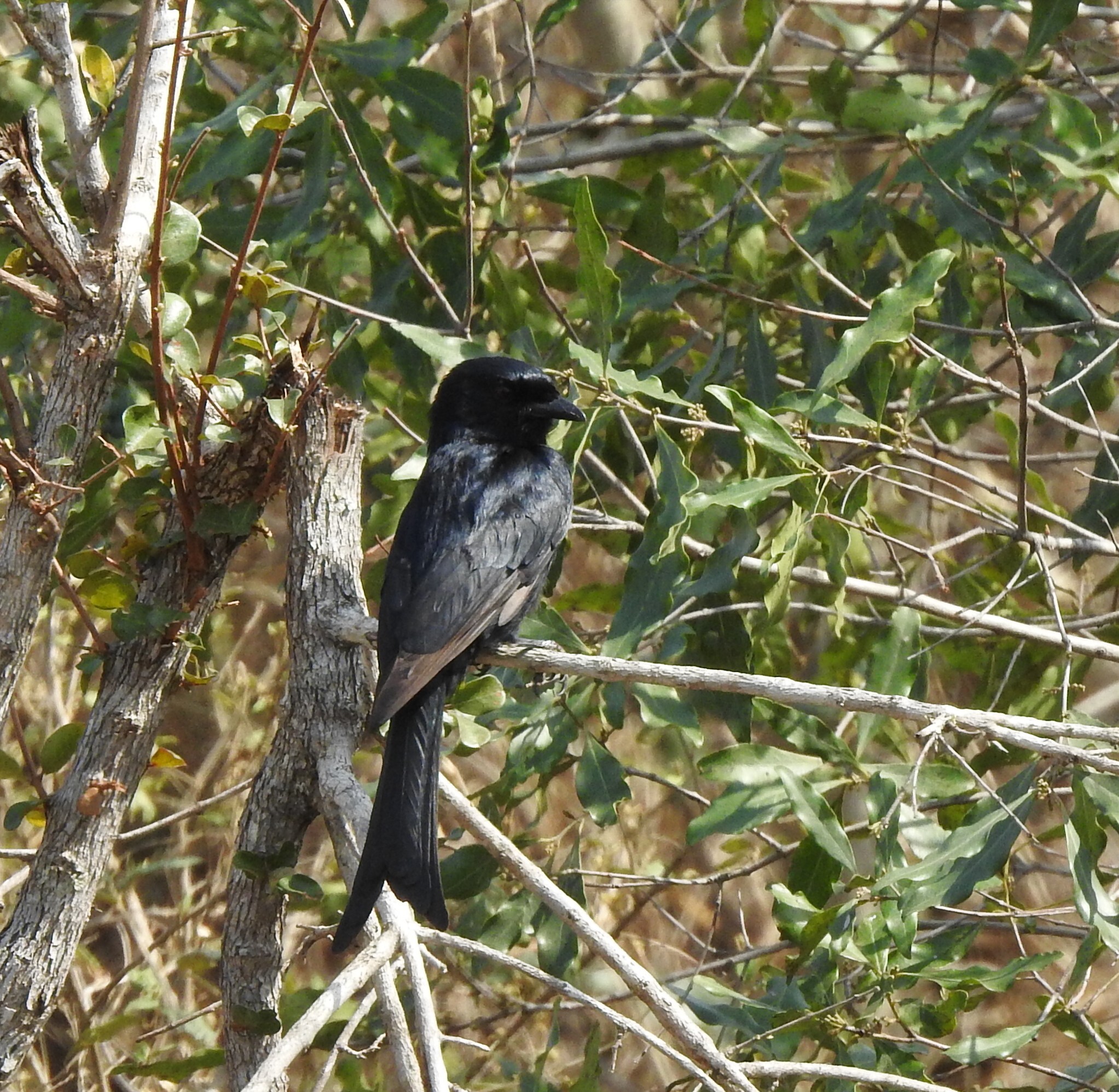
Often on many larger game you see oxpecker birds but today we saw drongos on the rhinos:
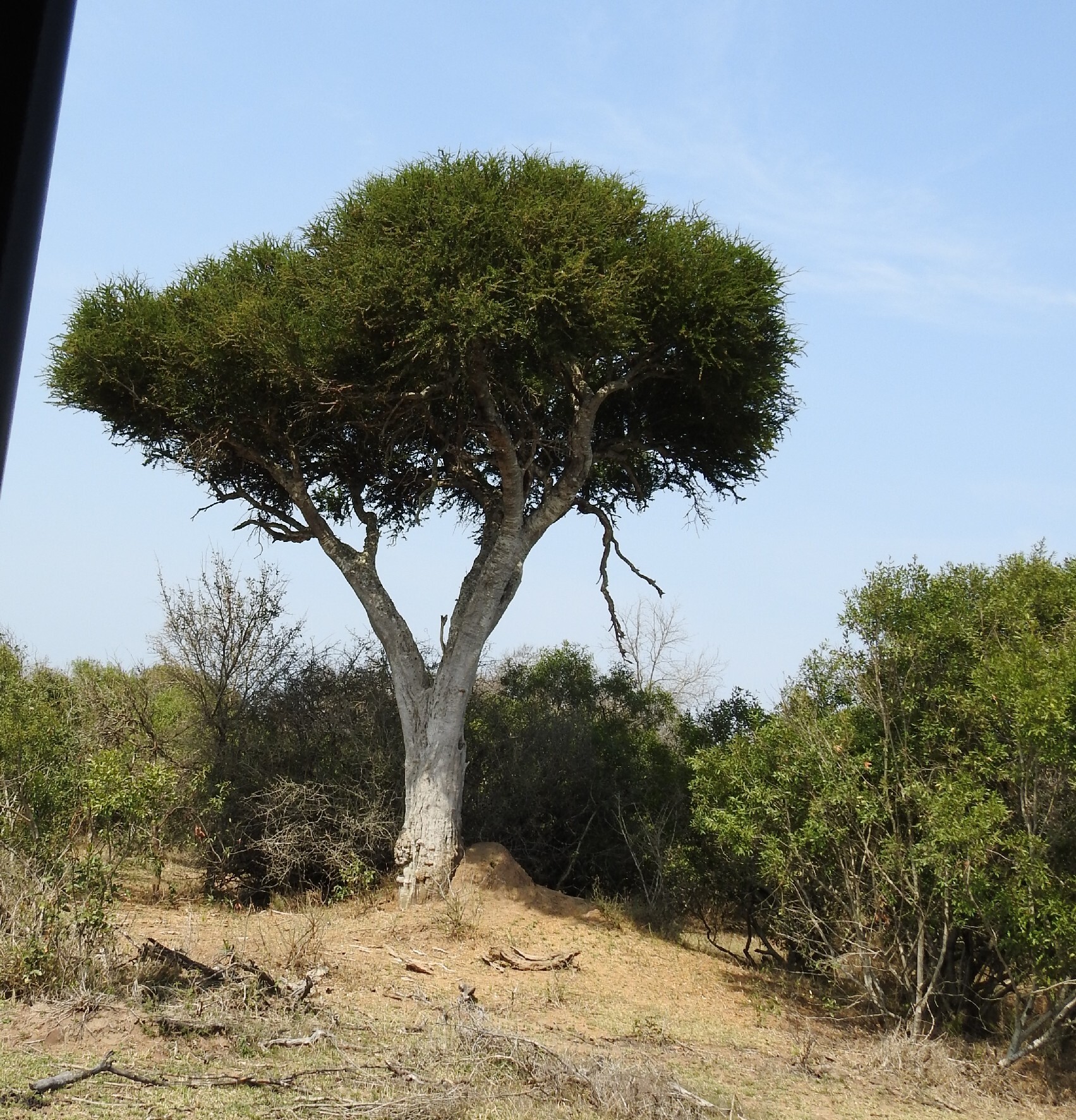
Lucky pointed out a species of tree that is drought resistant. It’s a shepherd tree named so because it is often the only shade around for herders to sit under:
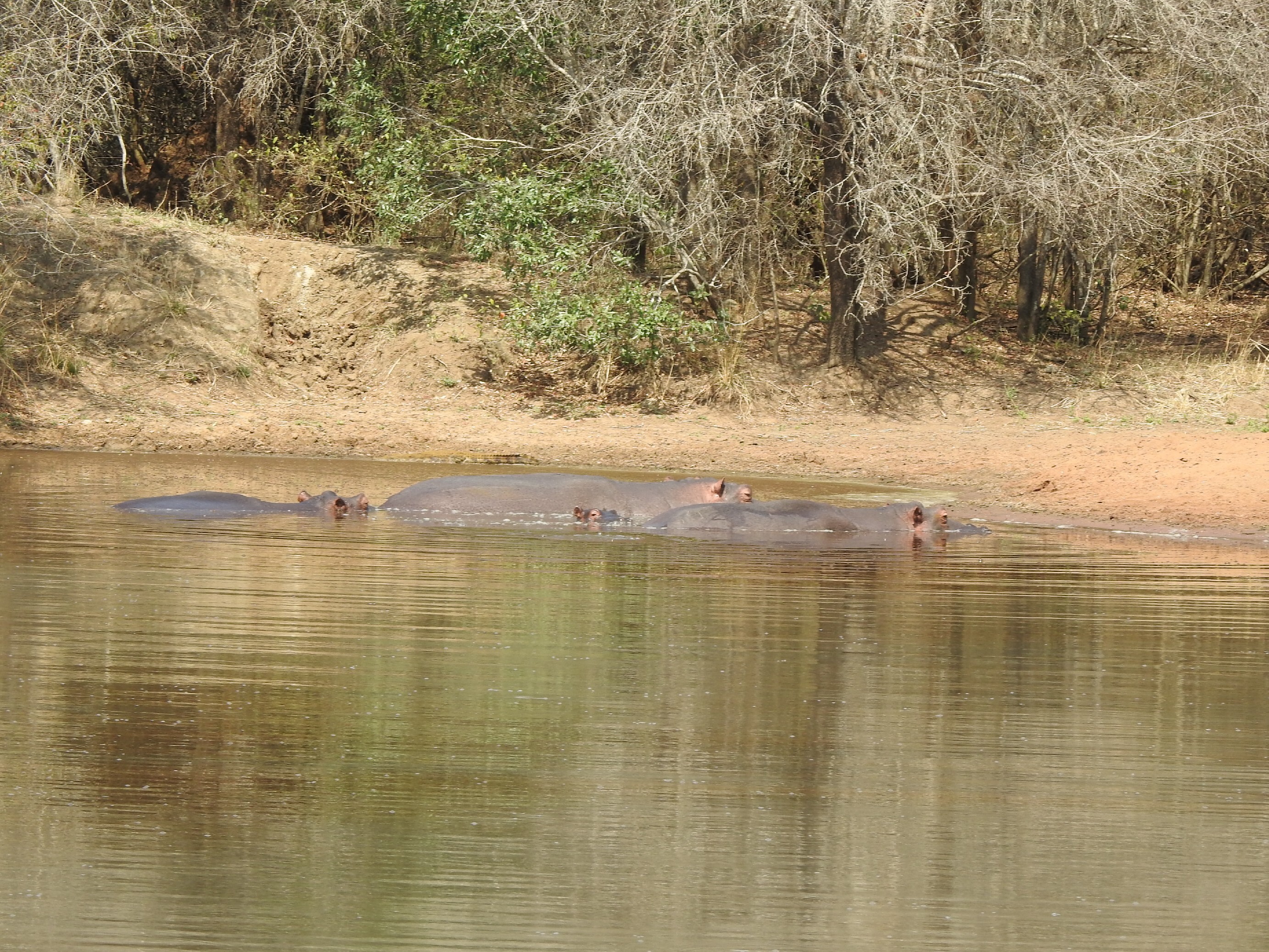
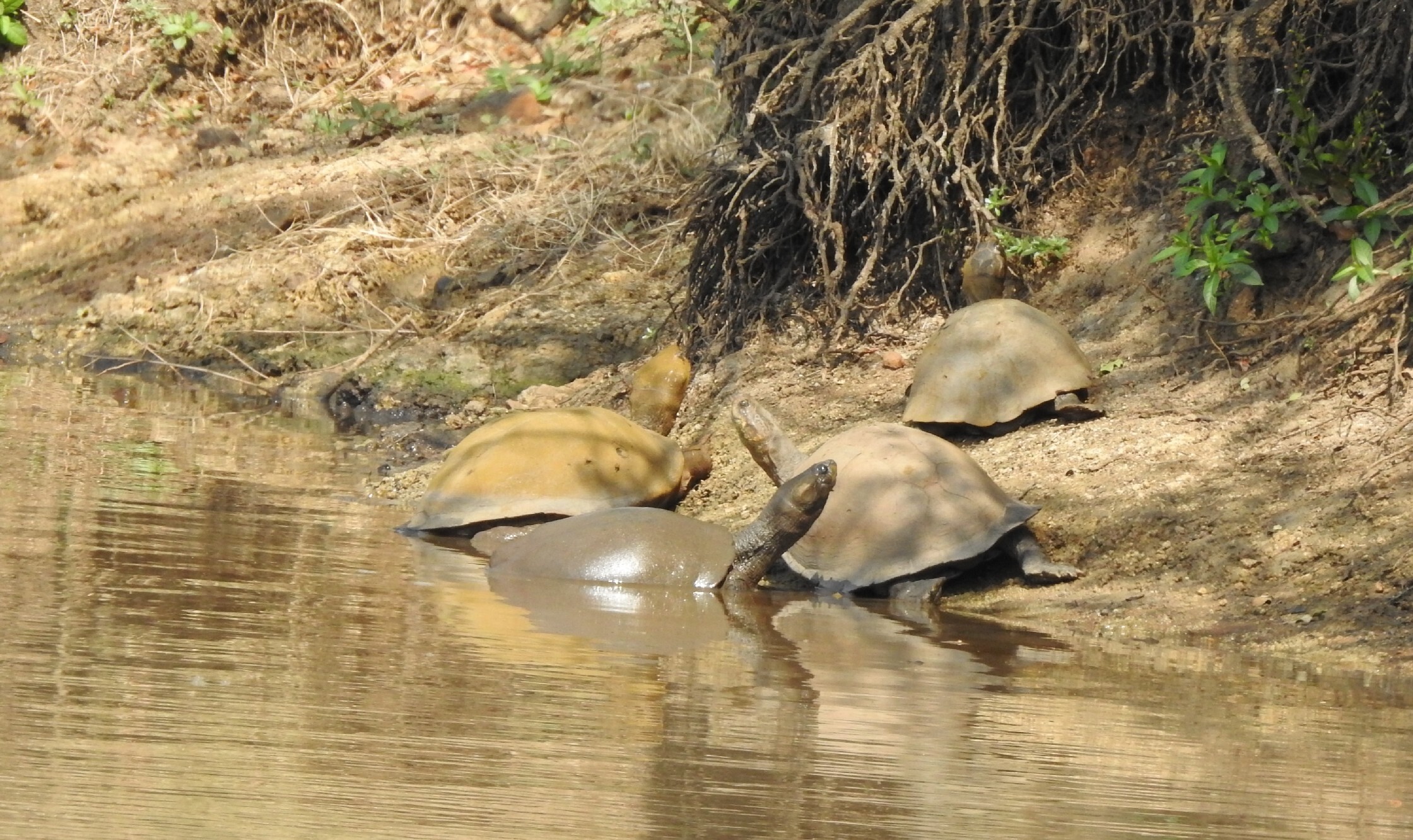
At the hippo pool we saw:
hippos (of course!):
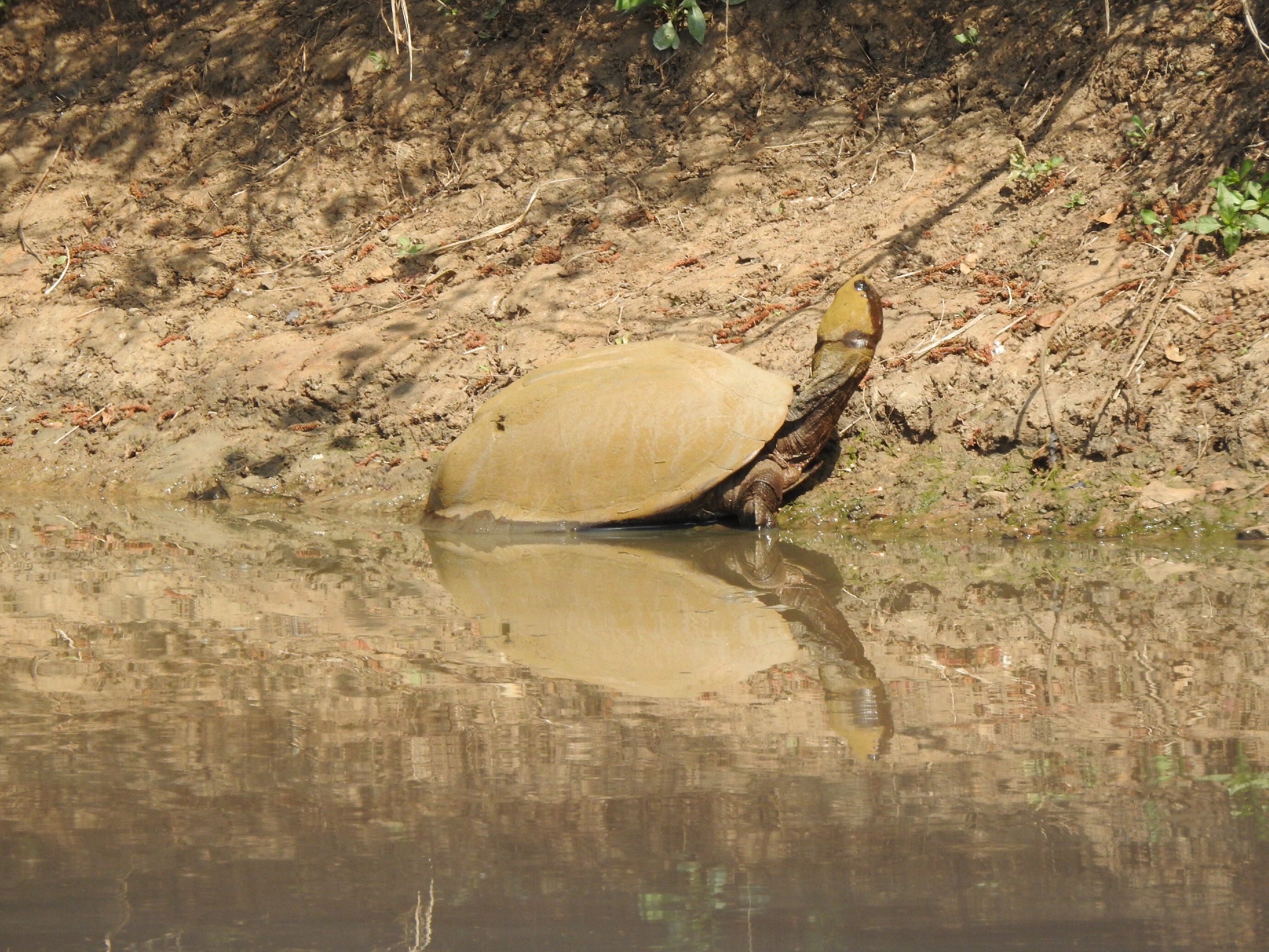
terrapins
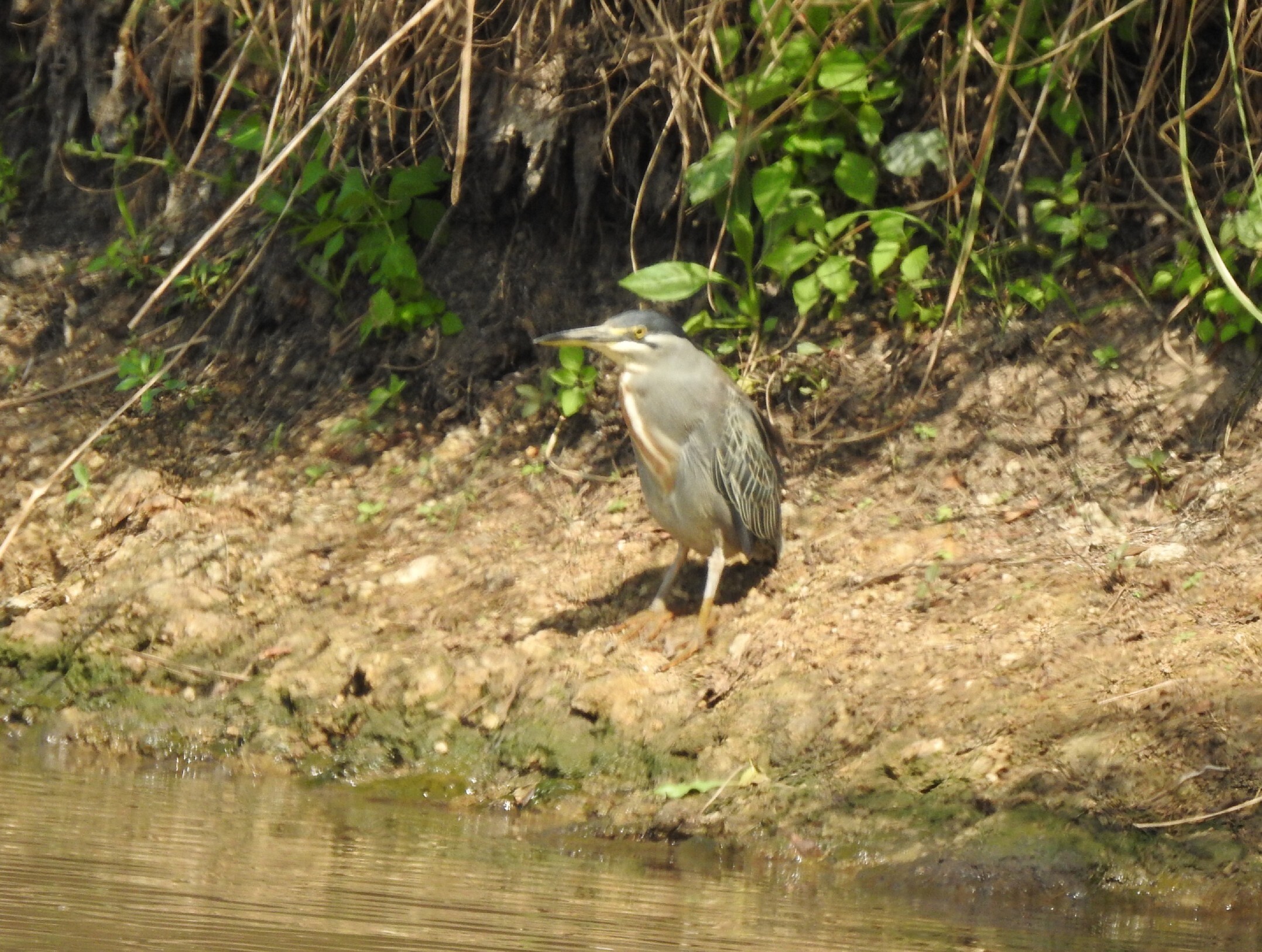
a green heron
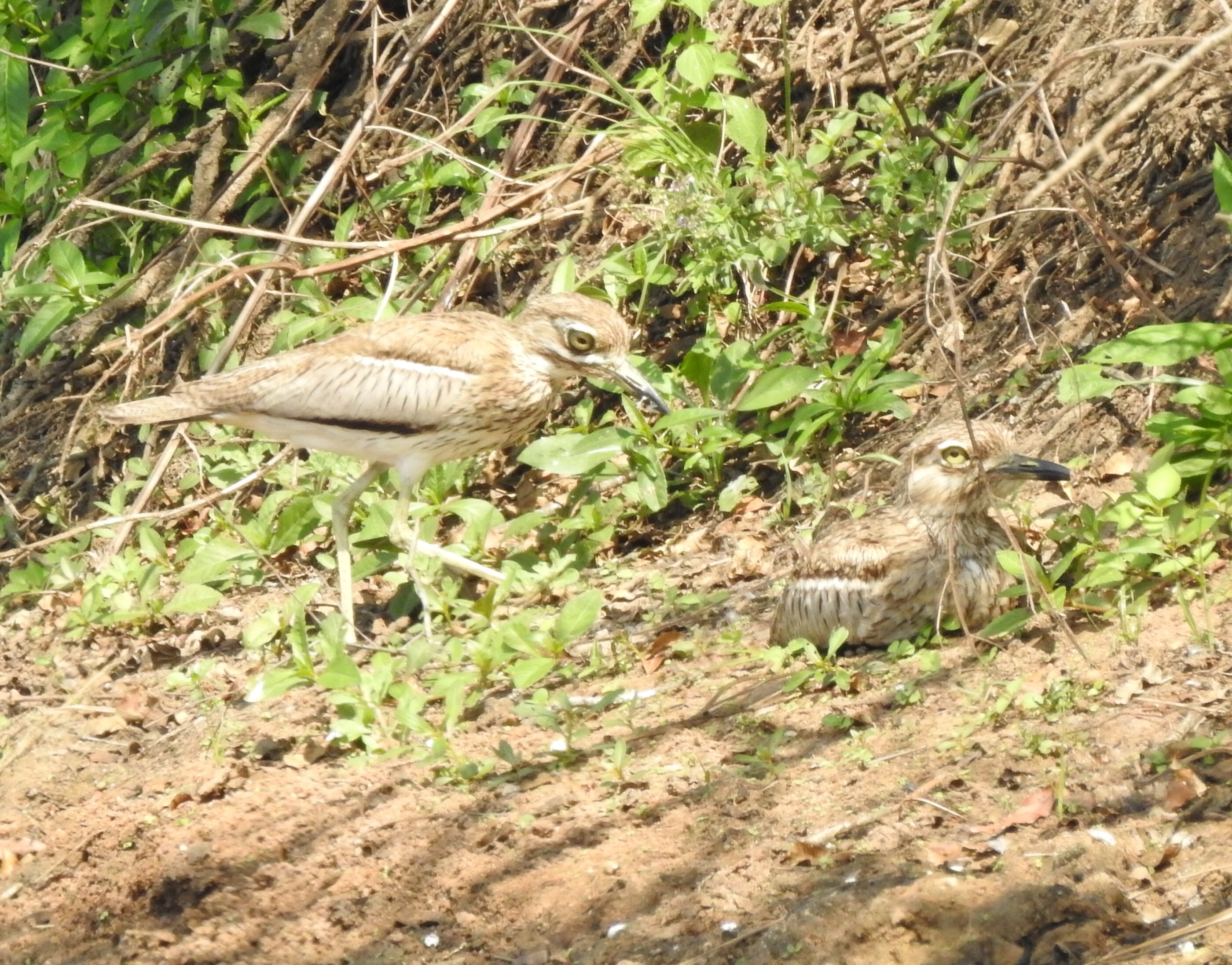
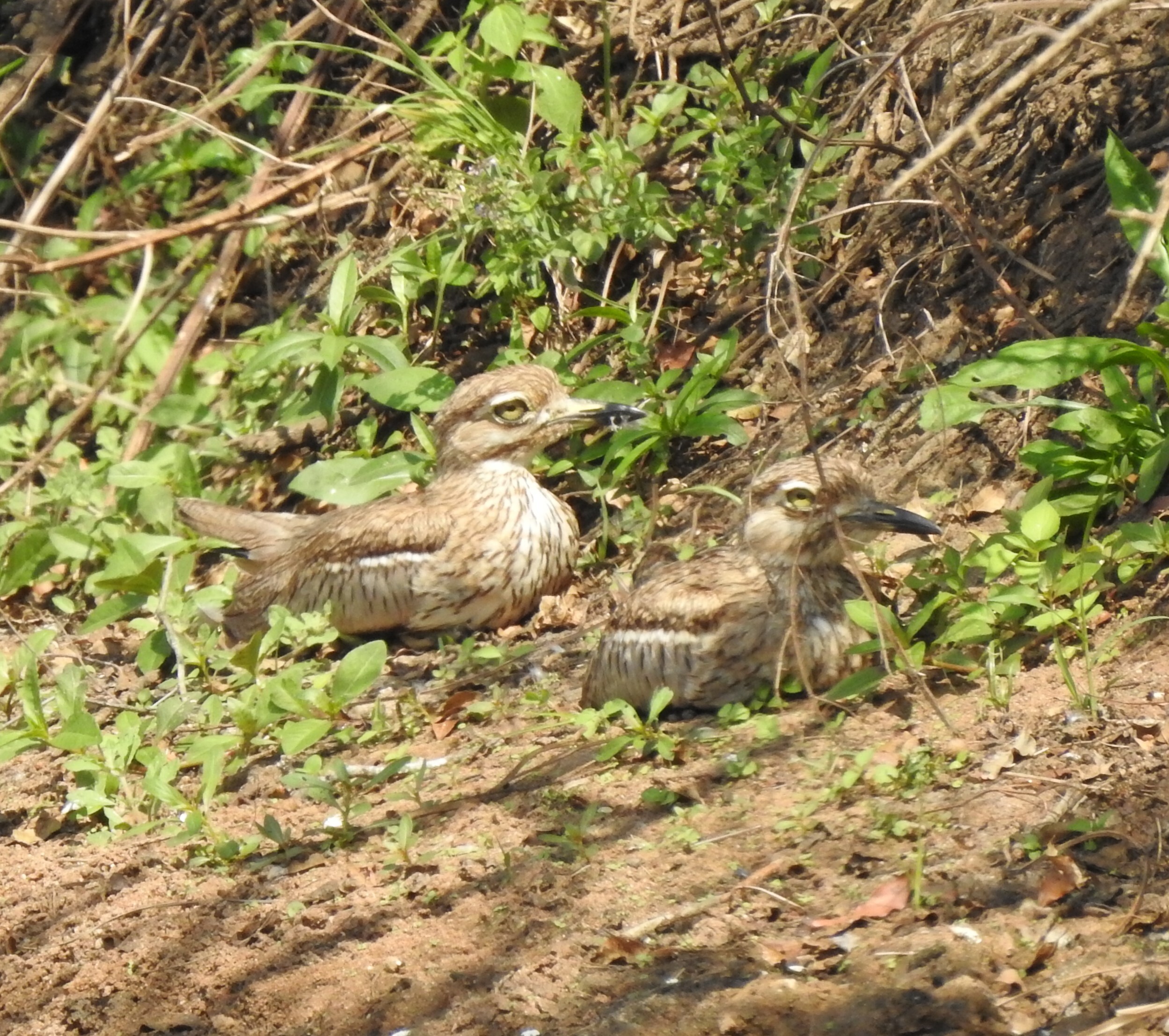
a pair of water thick knee birds:
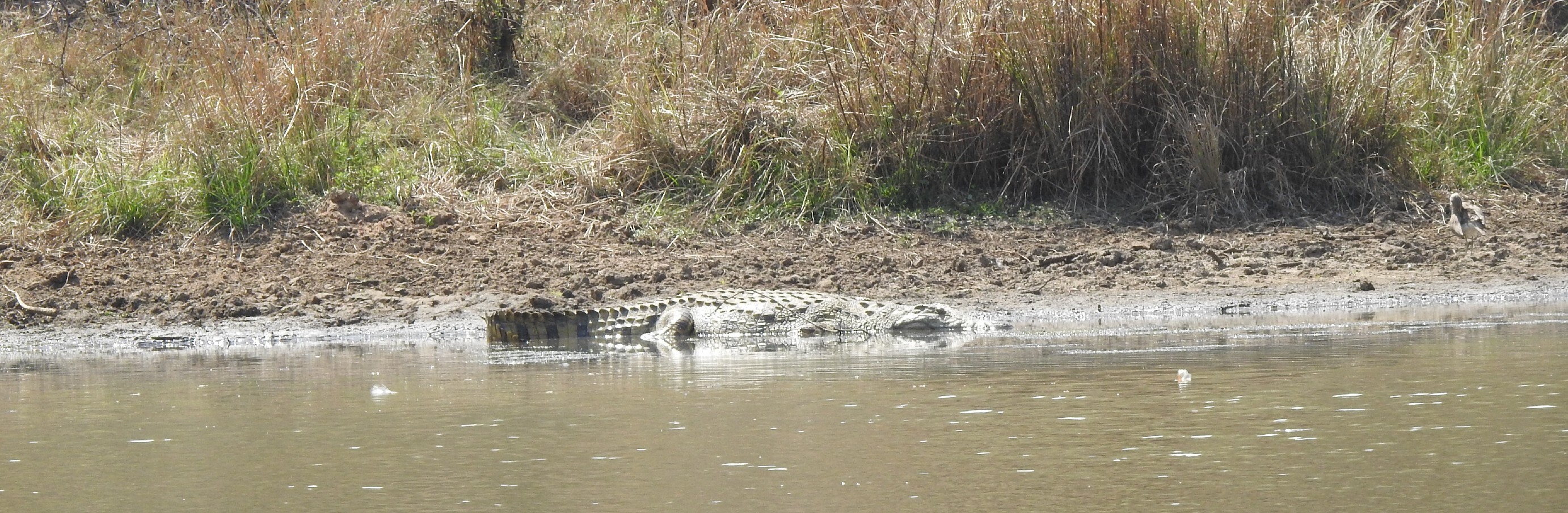
a couple of crocodiles:

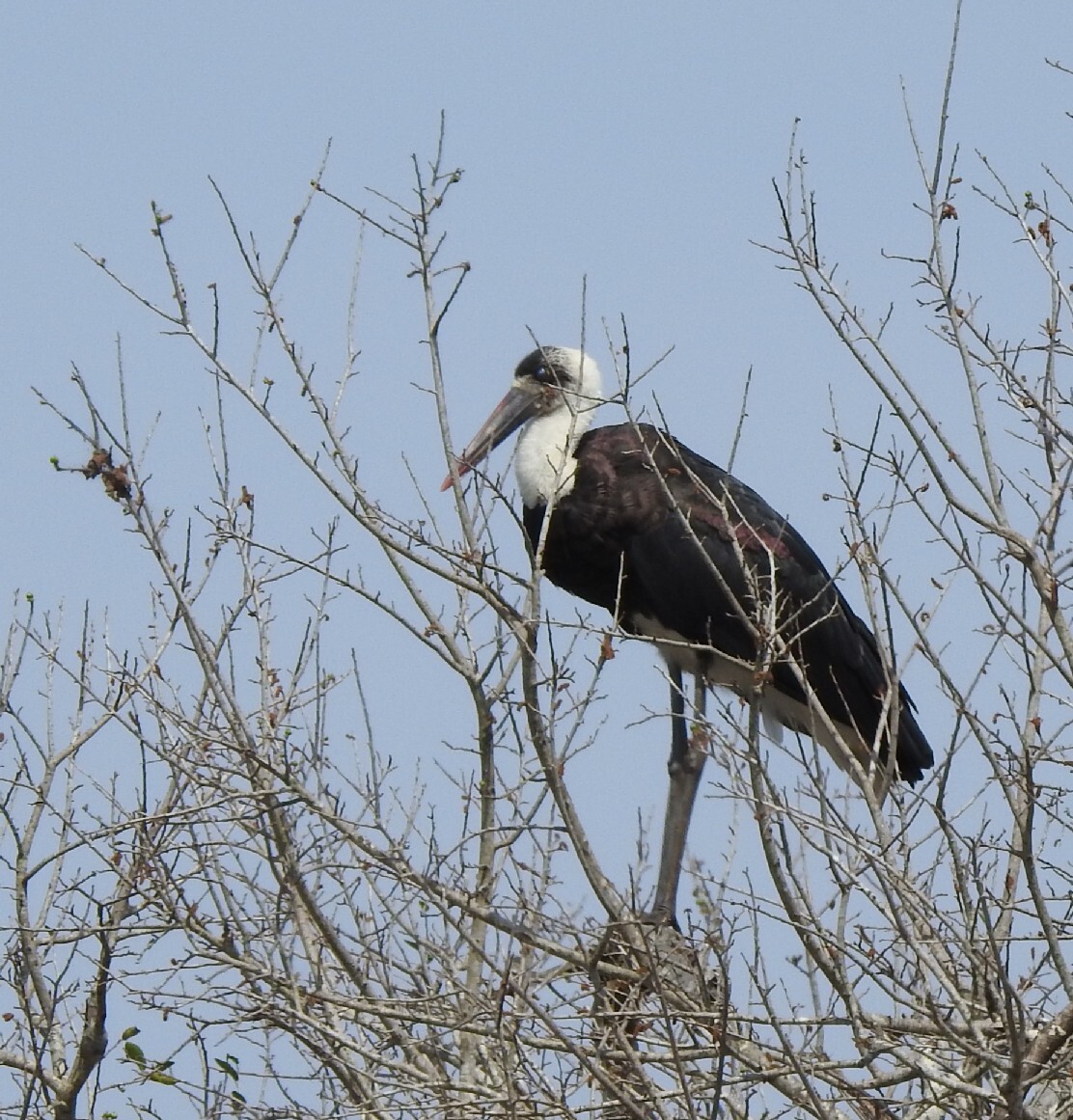
a wooly neck stork up in a tree:
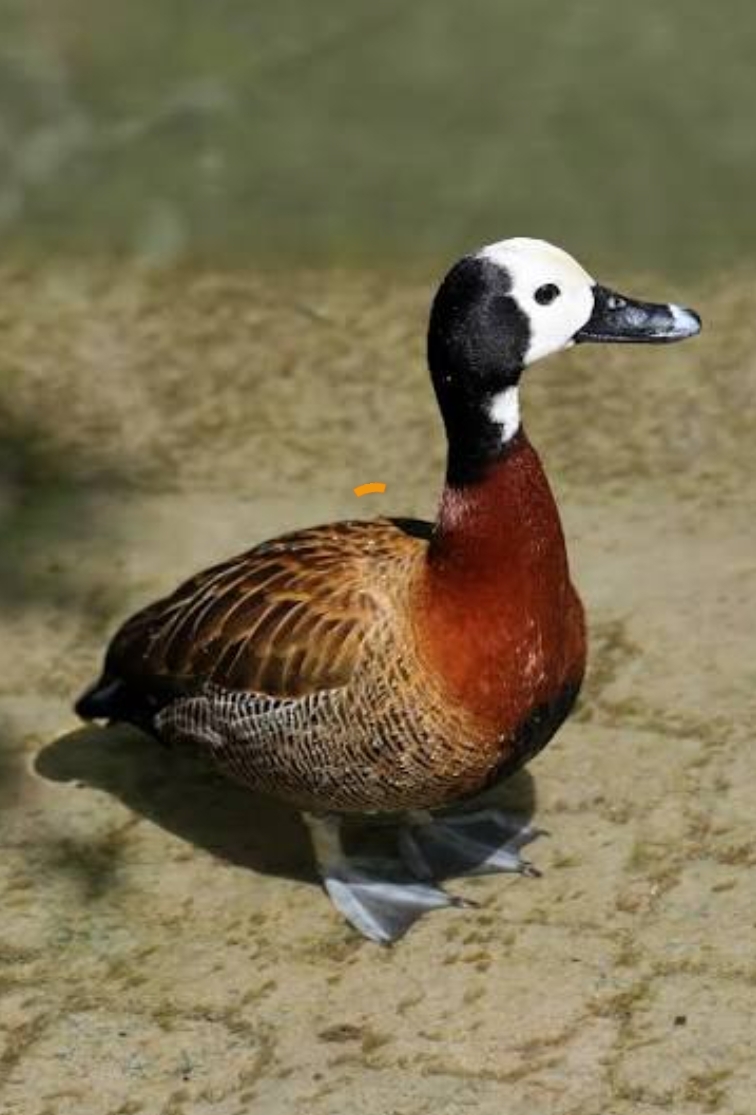
a few white faced ducks
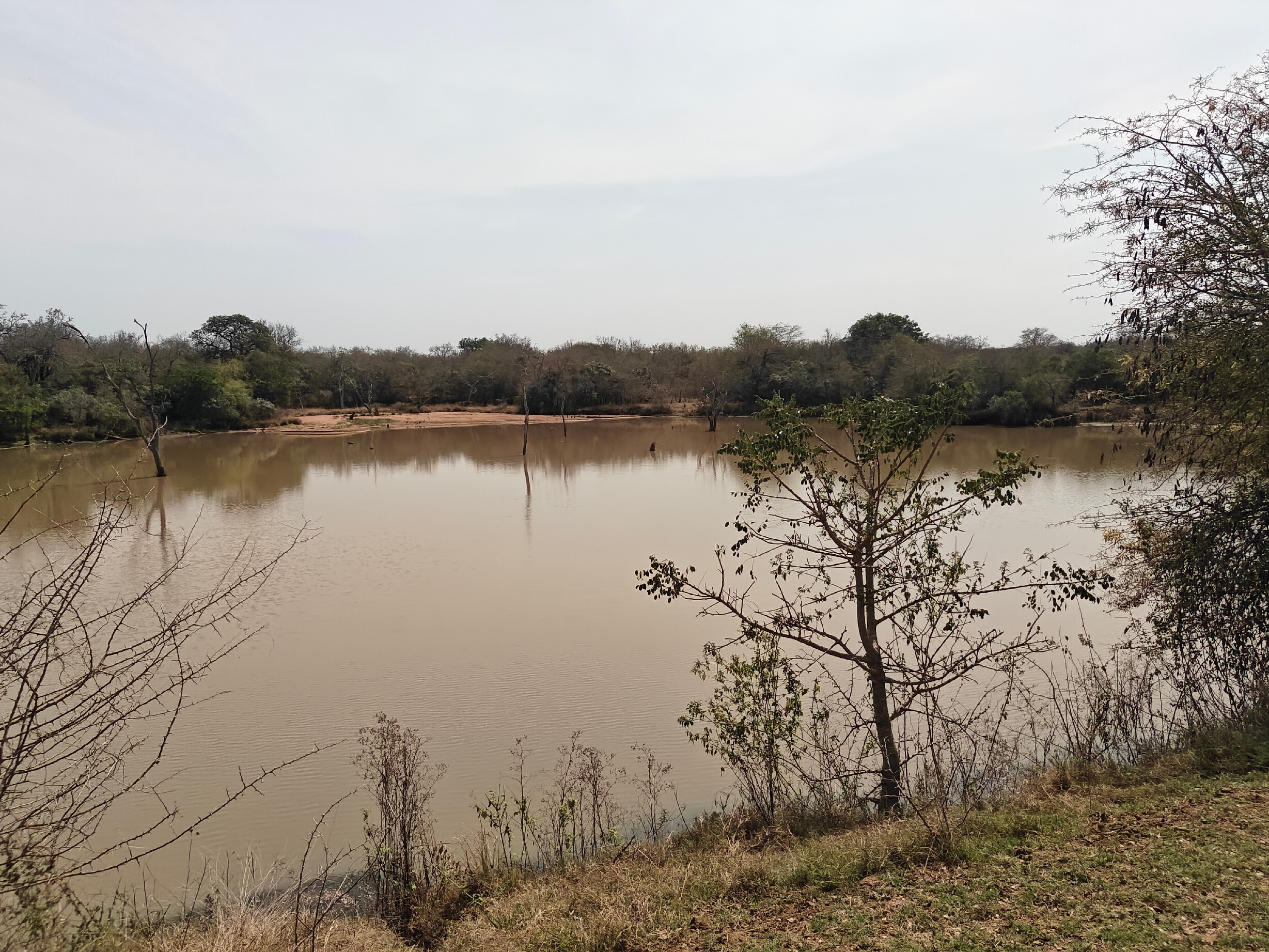
And here’s a shot of the pond from the other side as we went to explore more of the park:
Other wildlife we spotted in Mkhaya:
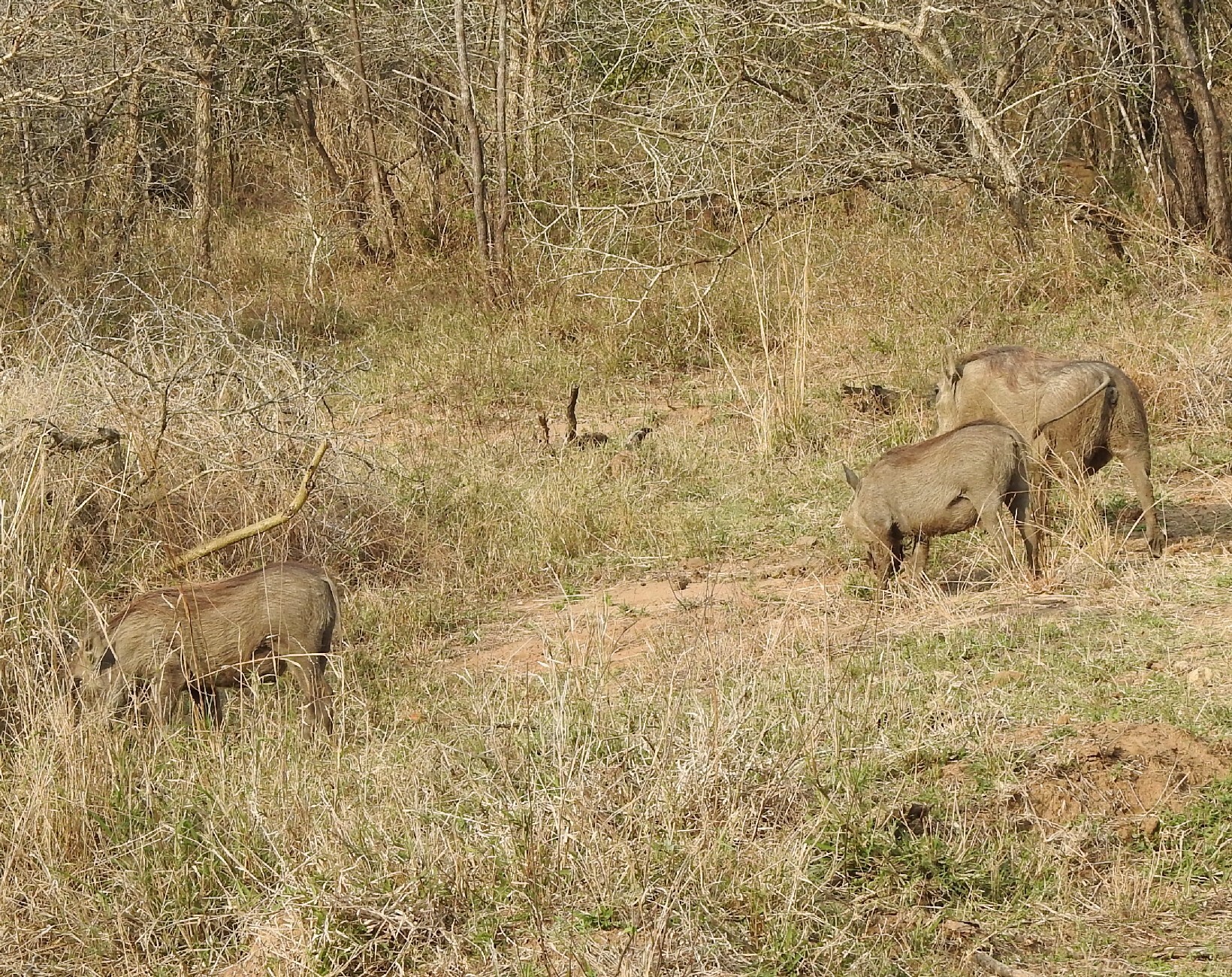
warthogs
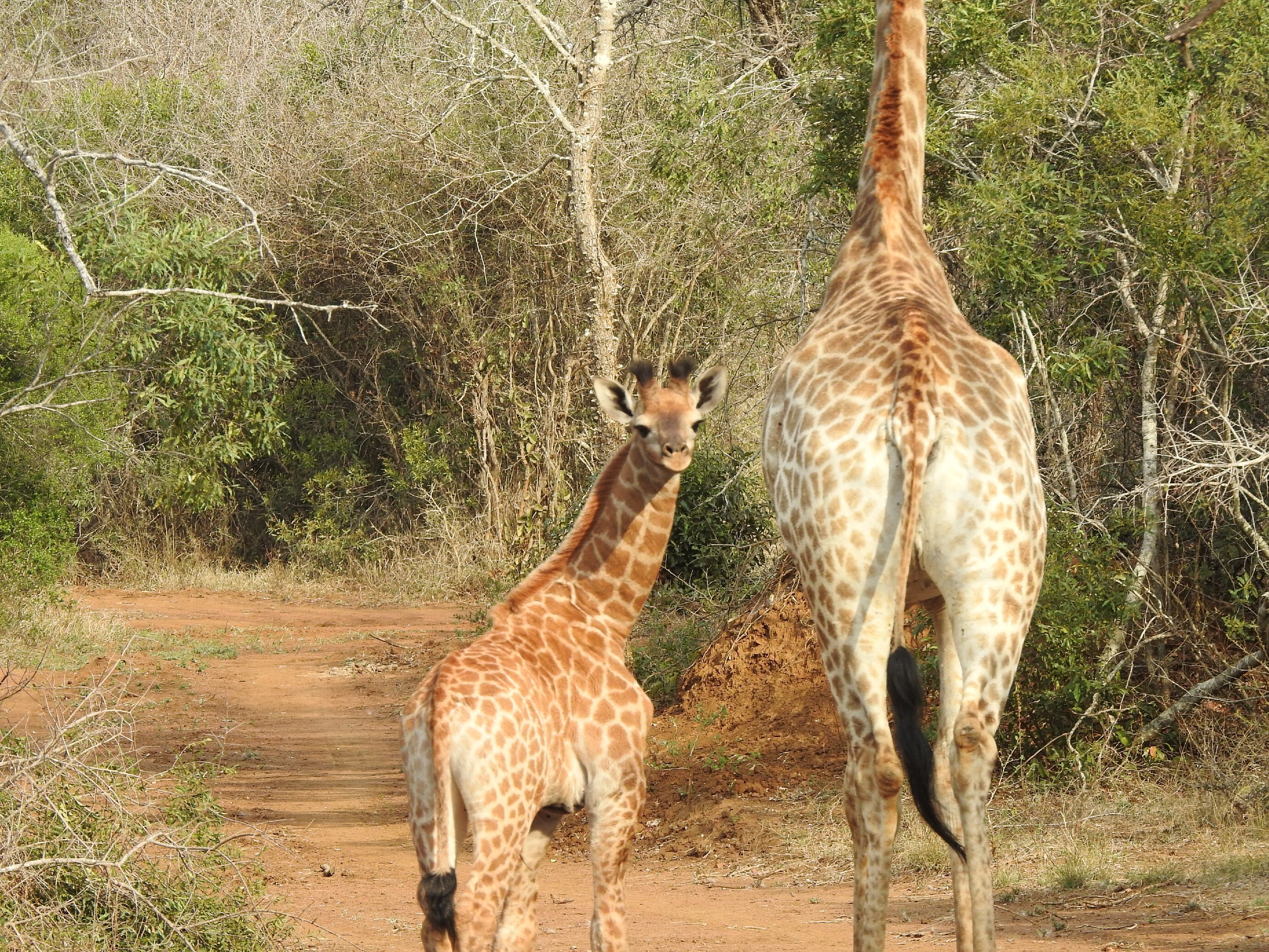
mama and baby giraffes:
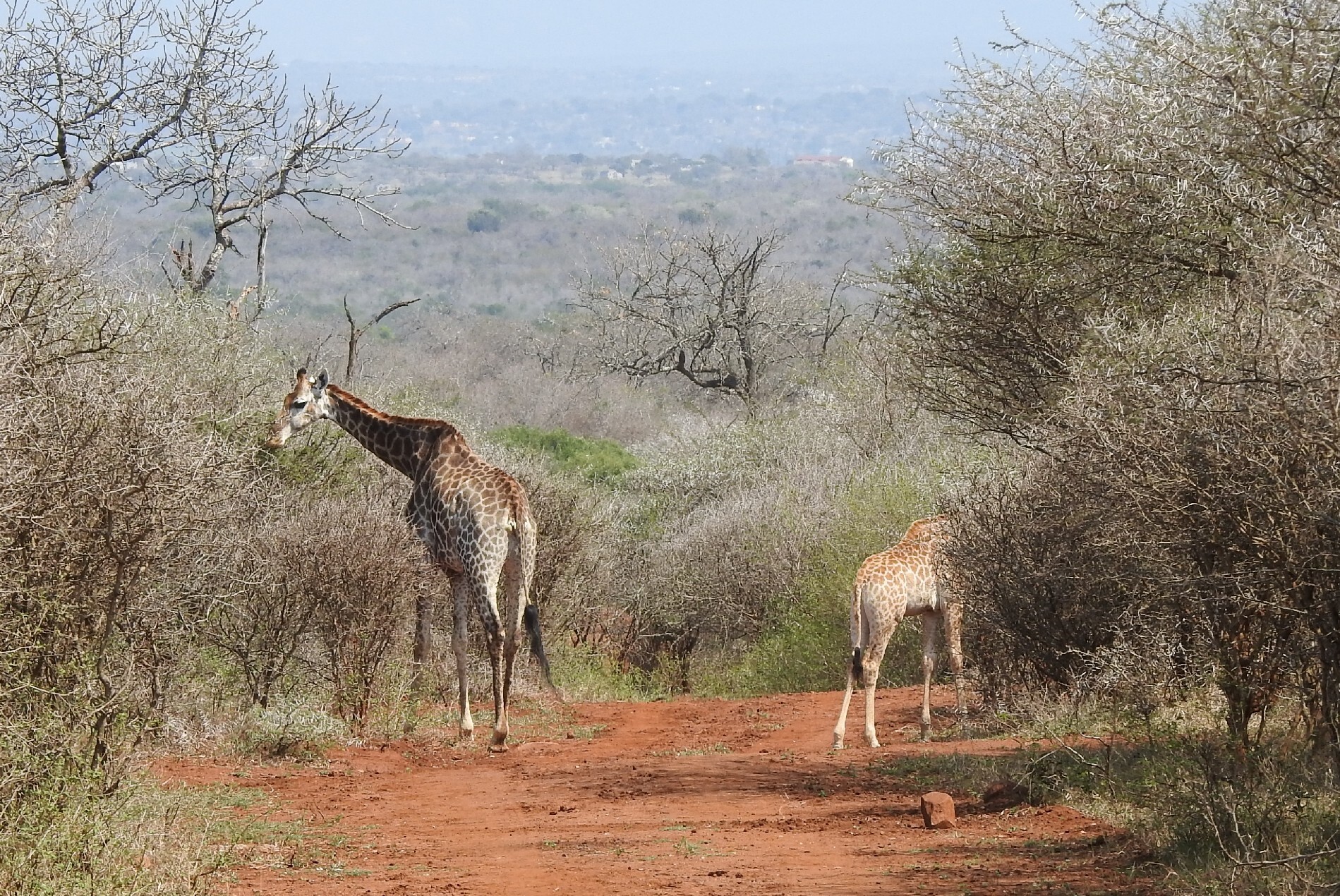
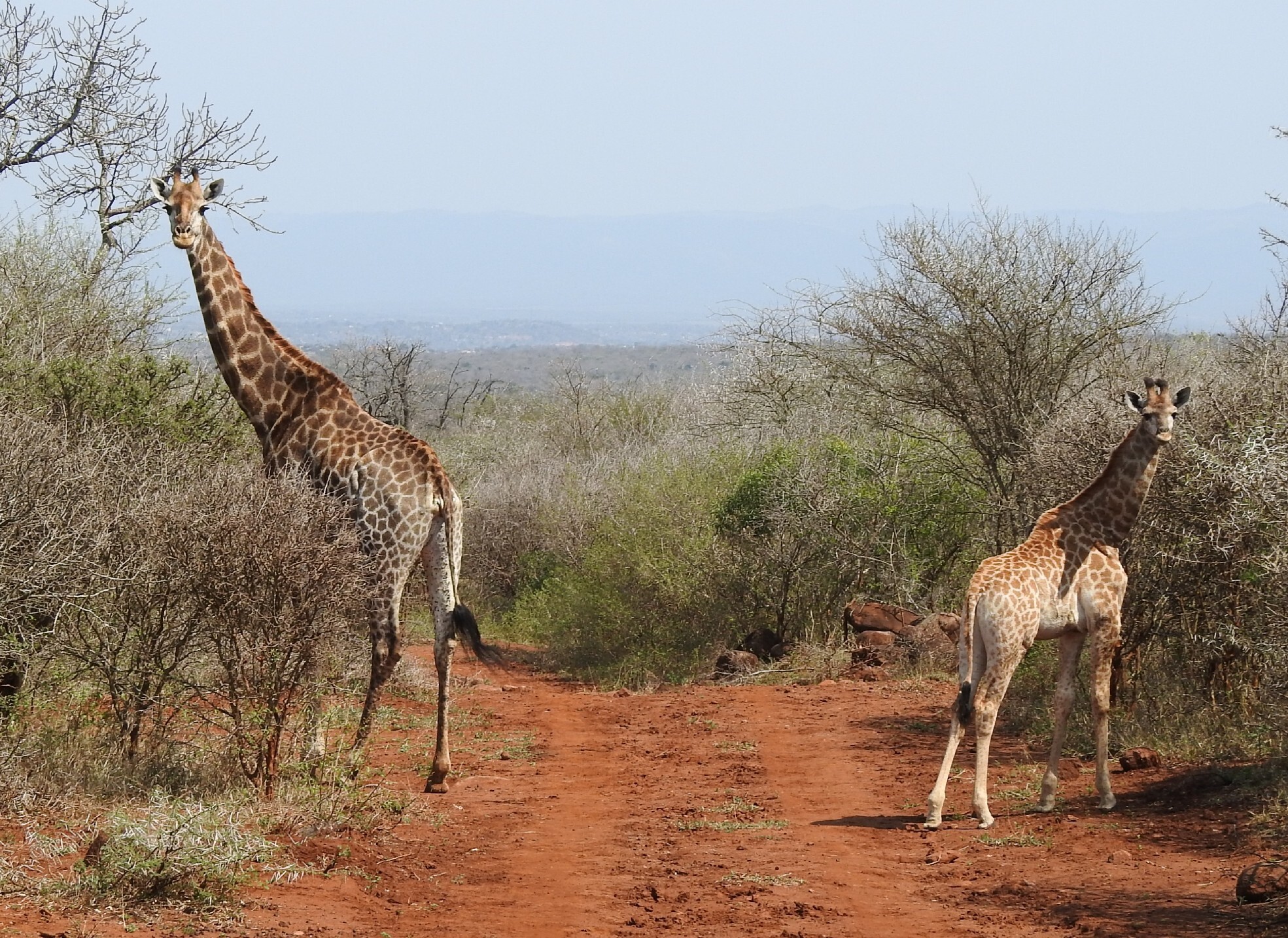

So many more giraffes
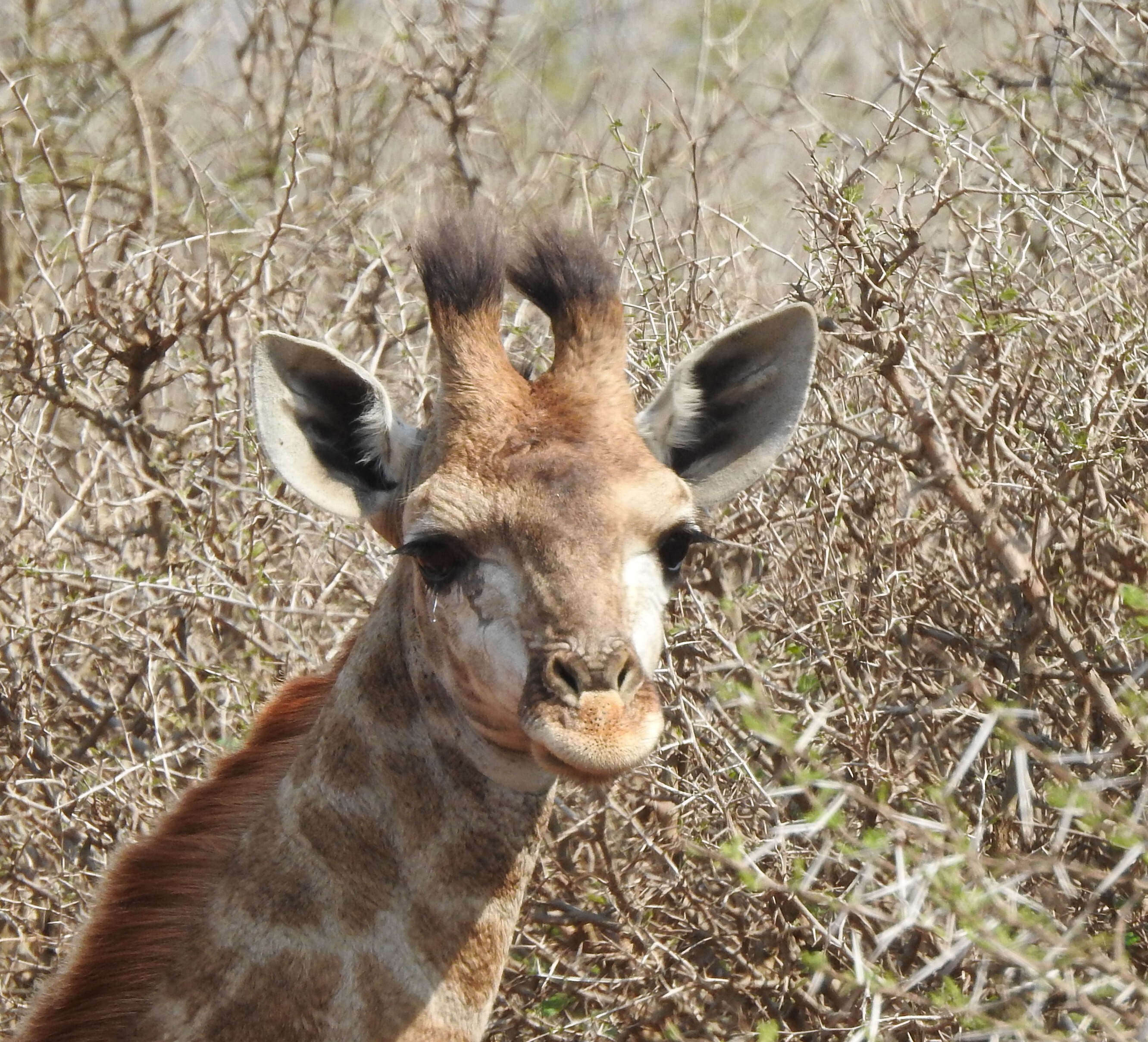
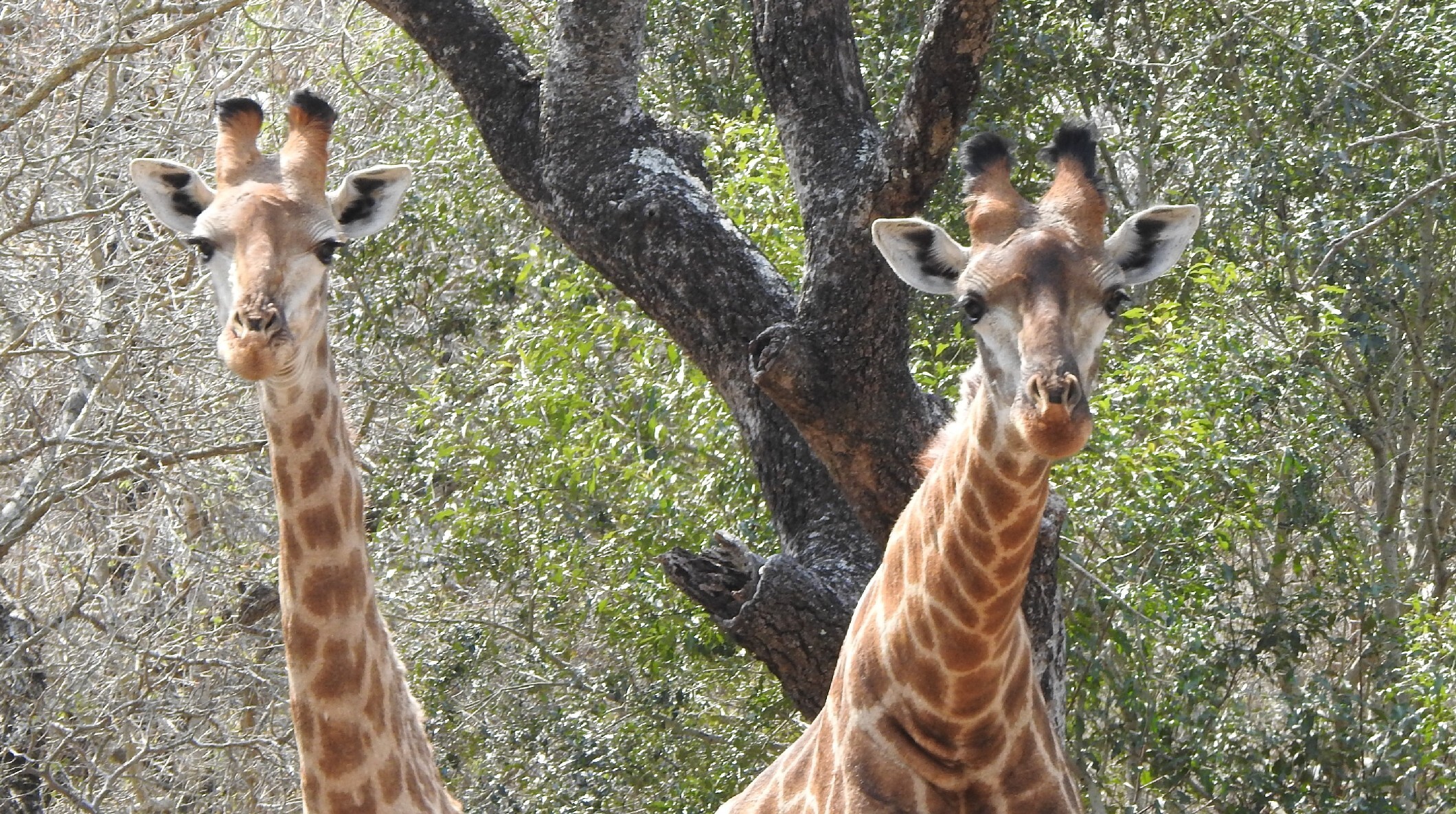


young nyalas
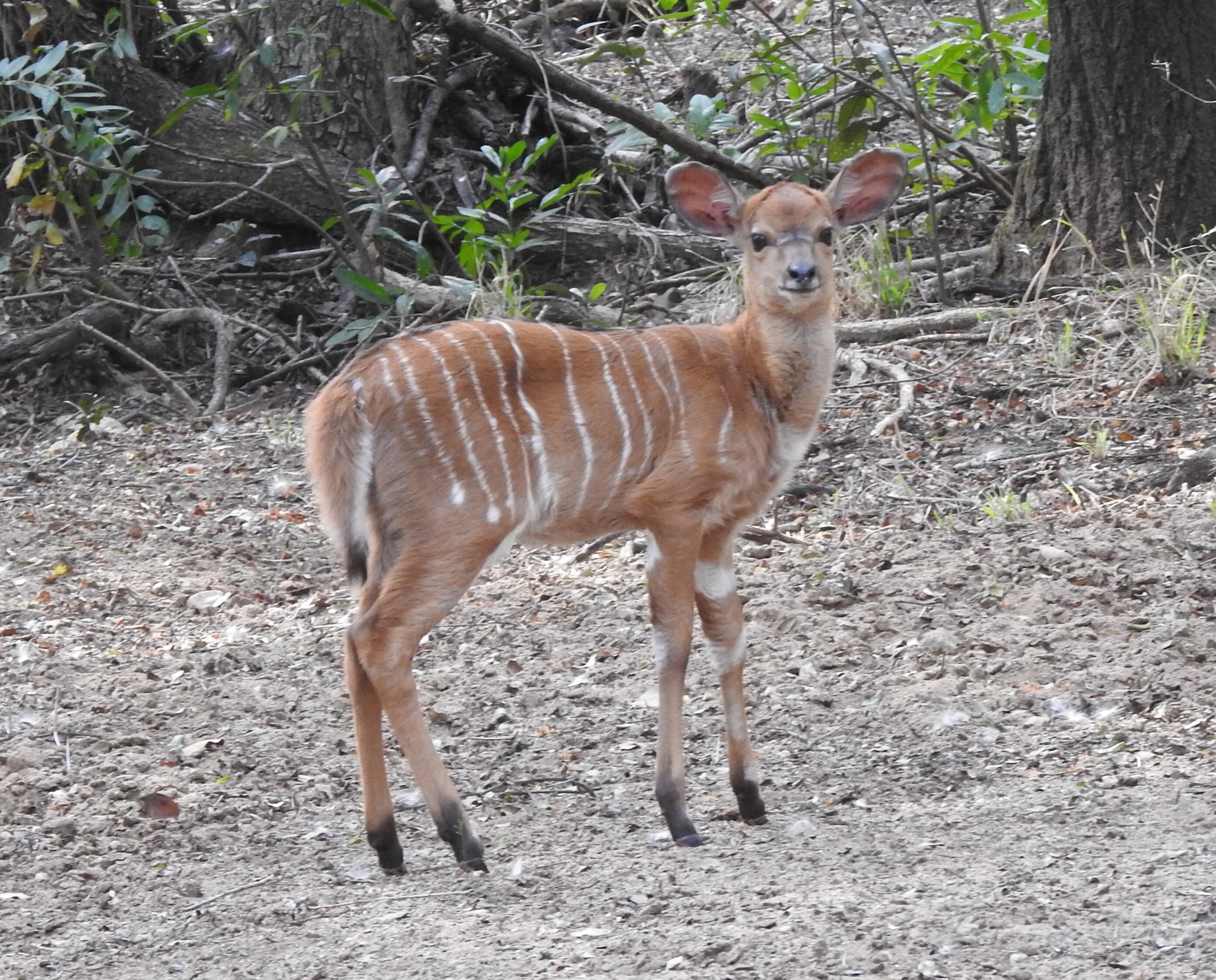
female nyalas

Eswatini’s national bird – purple crested turaco

Lunch at the lodge with some wild visitors:
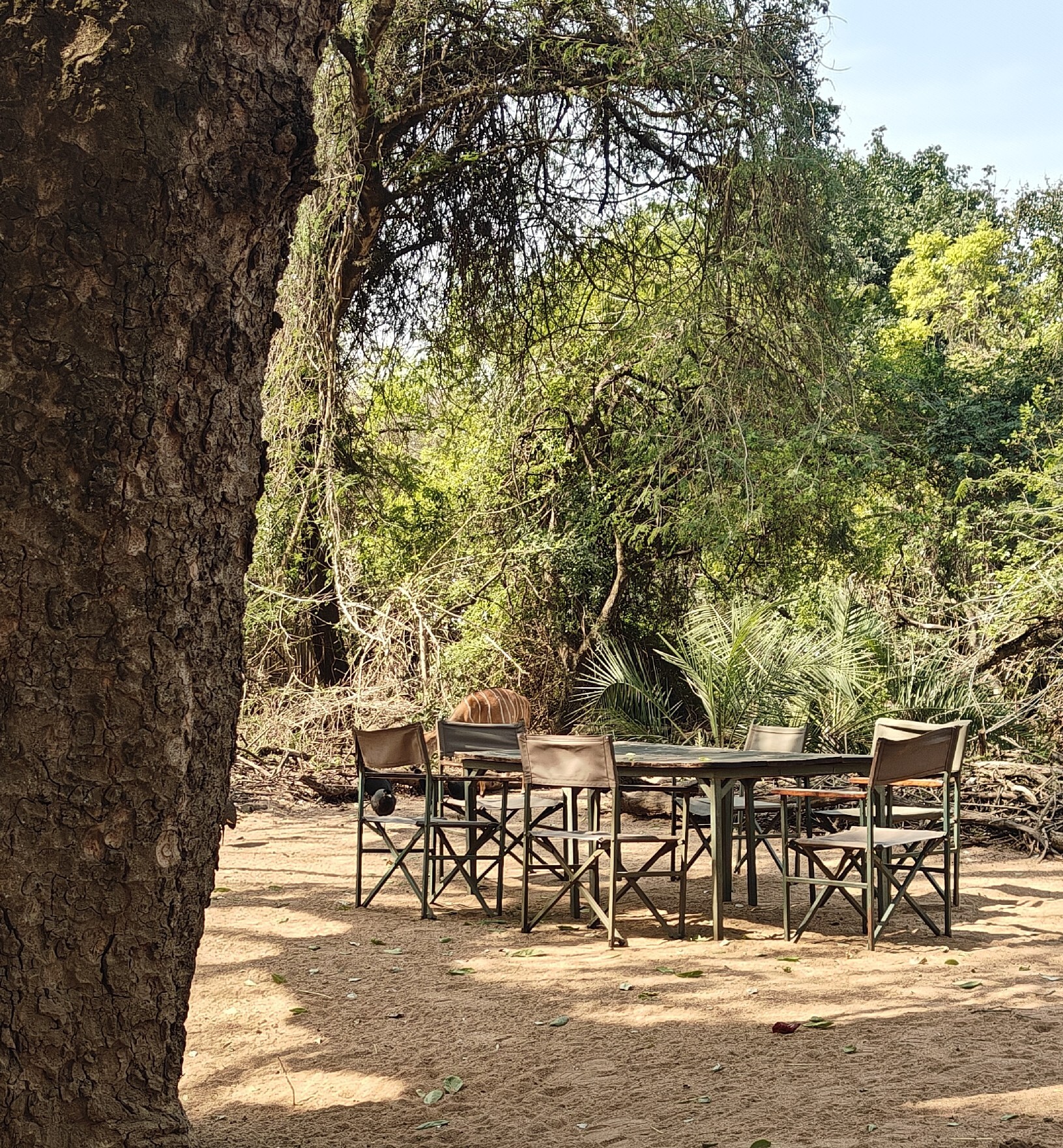
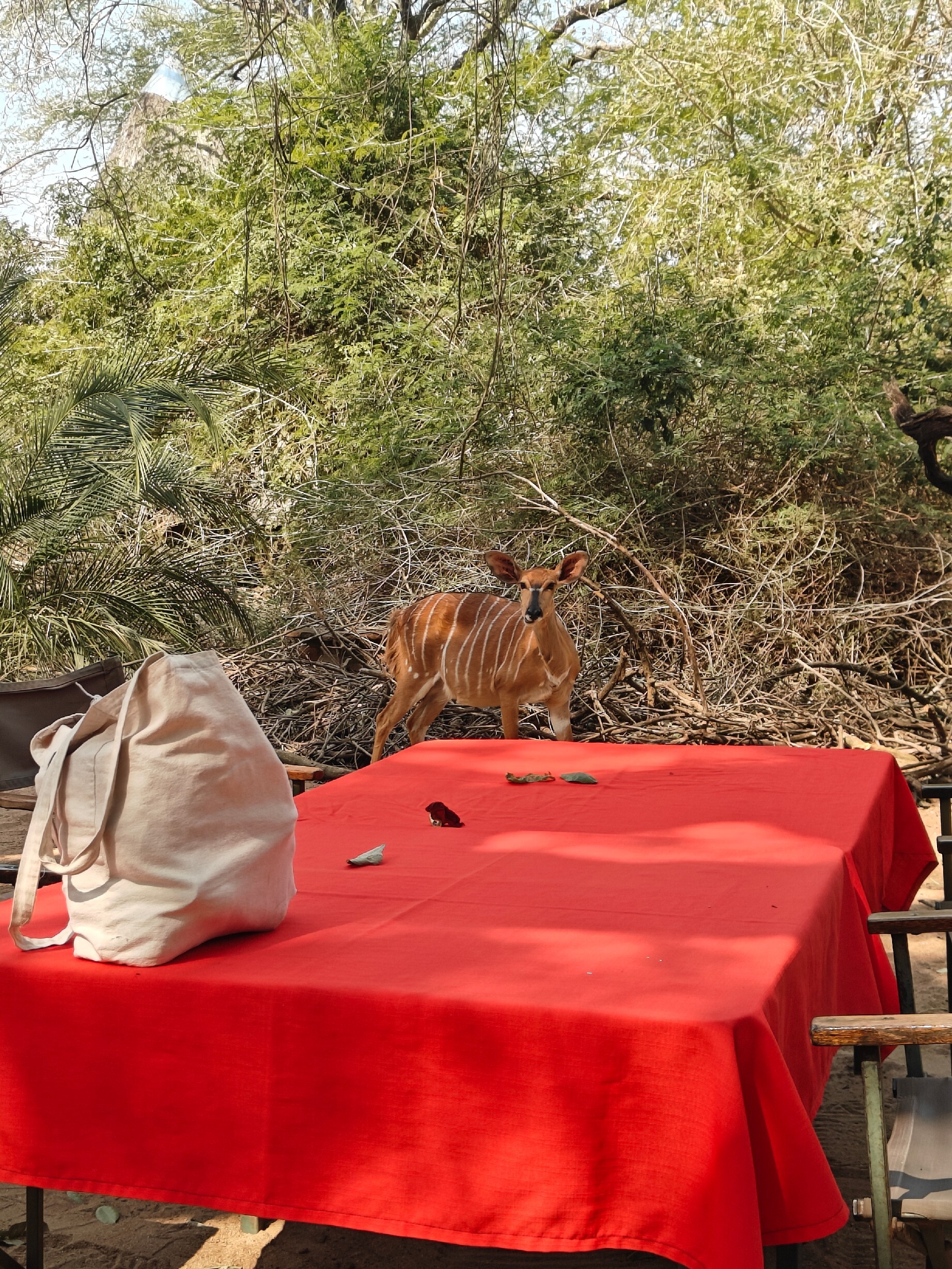
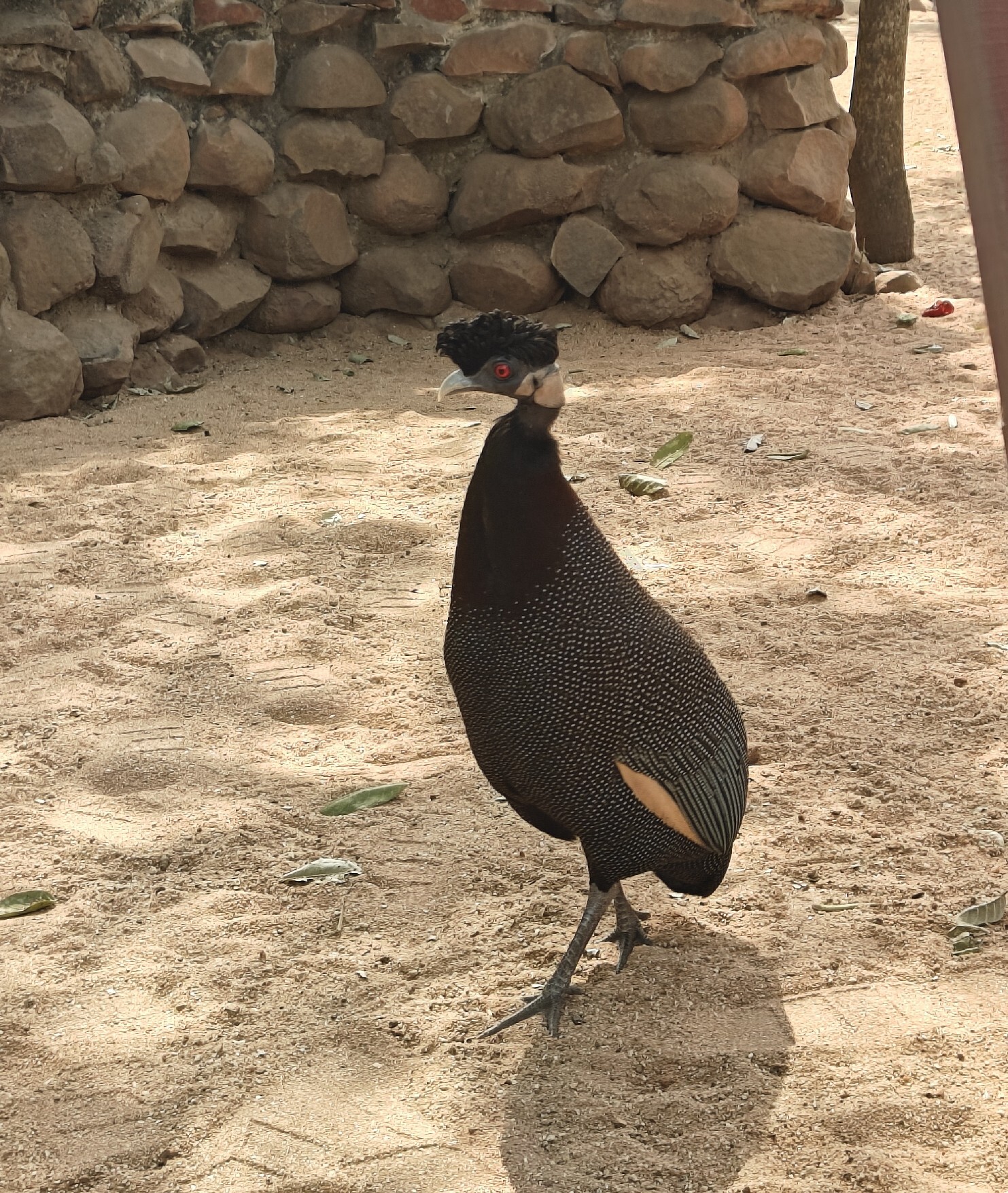
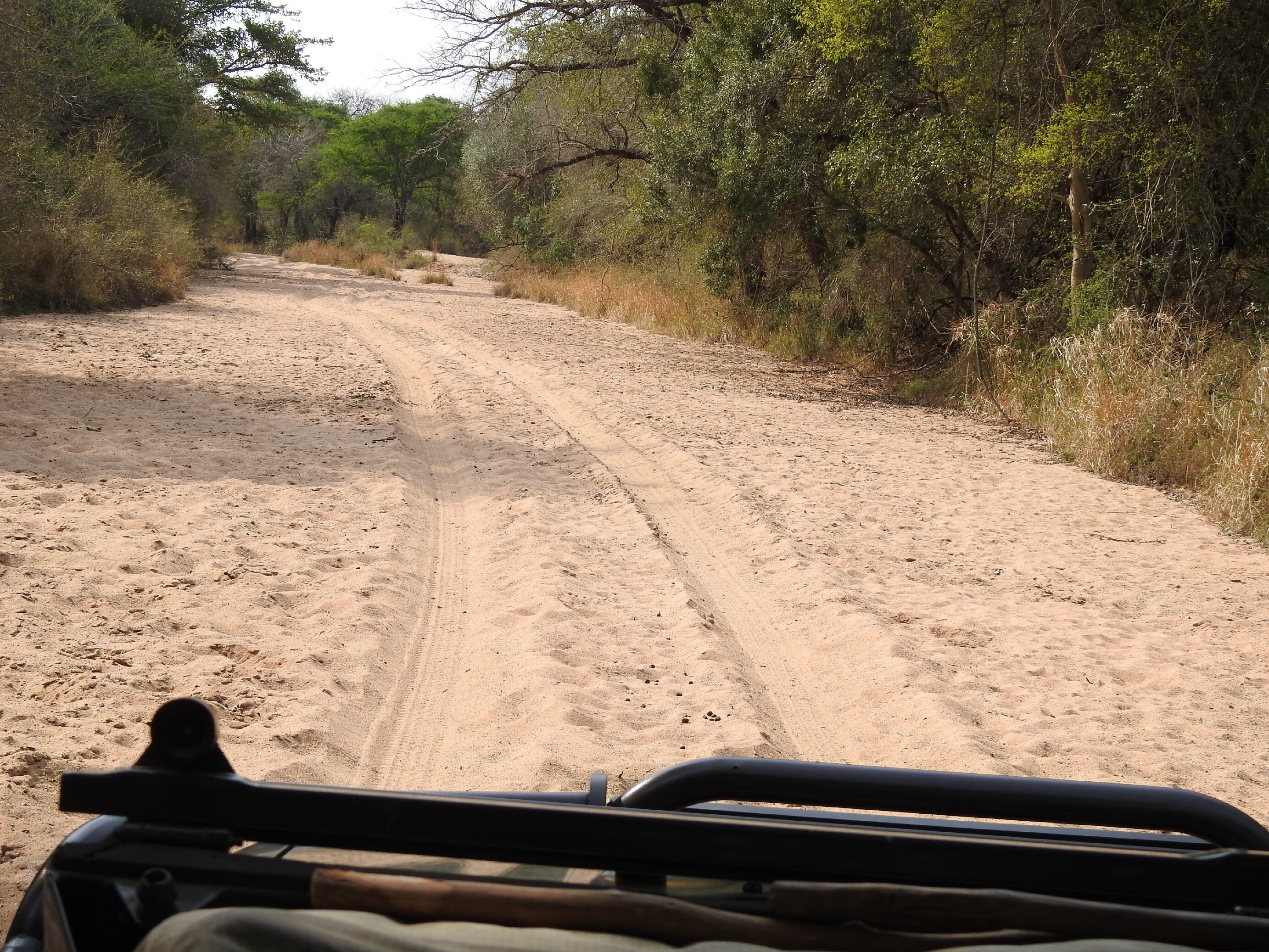
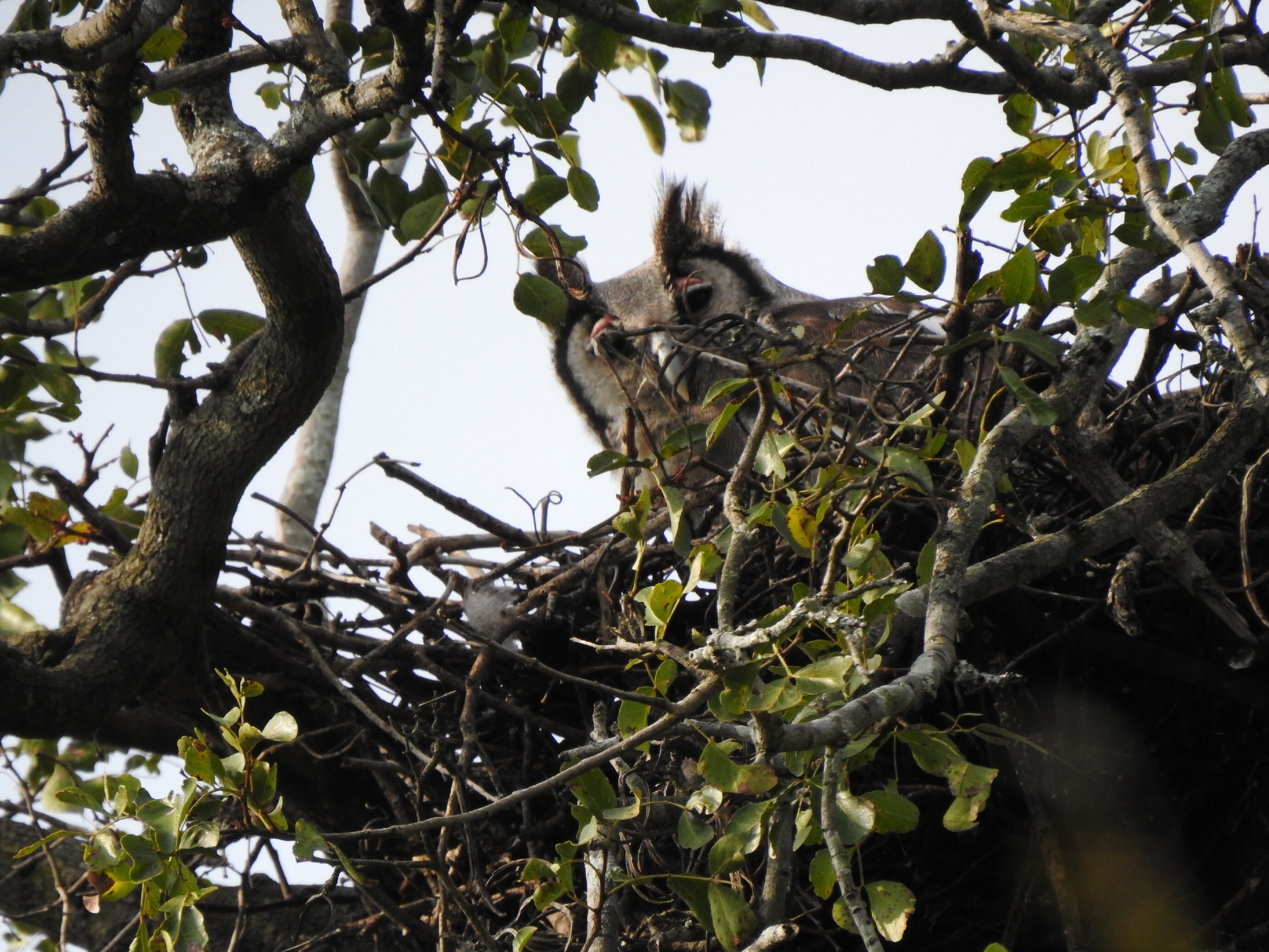
After lunch we drove the dry river bed and spotted a giant owl aka Verreaux eagle-owl sitting in a vulture’s nest and one pic from google:
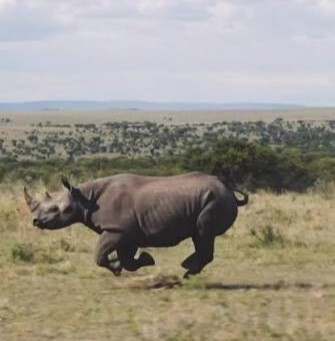
We finally saw a running black rhino leaving the mud pool and who wouldn’t stop for a photo – image that! So here are some pics from the park’s website: 
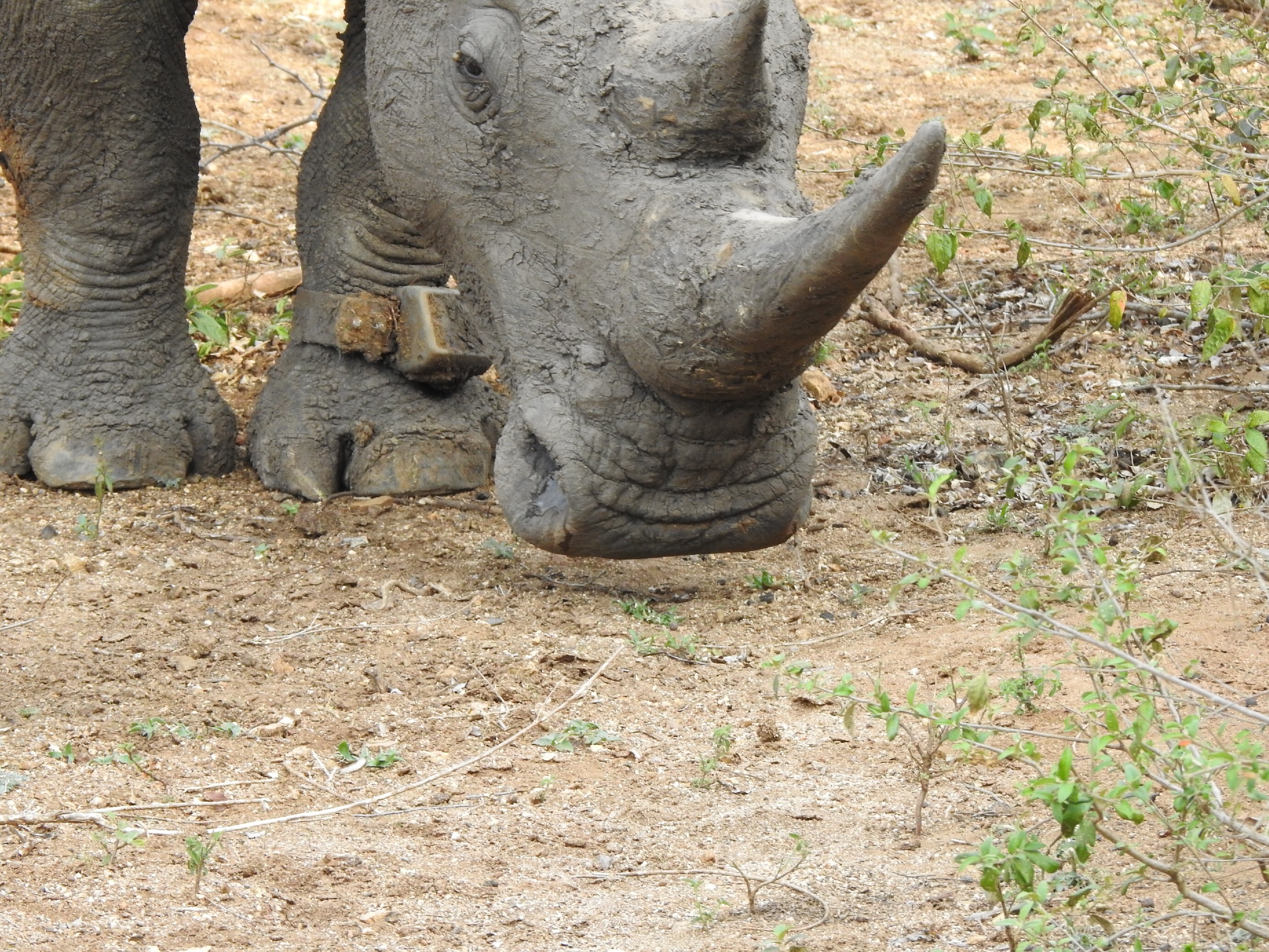
then at the mud pool, we found a muddy white rhino


followed by another rhino for good measure:
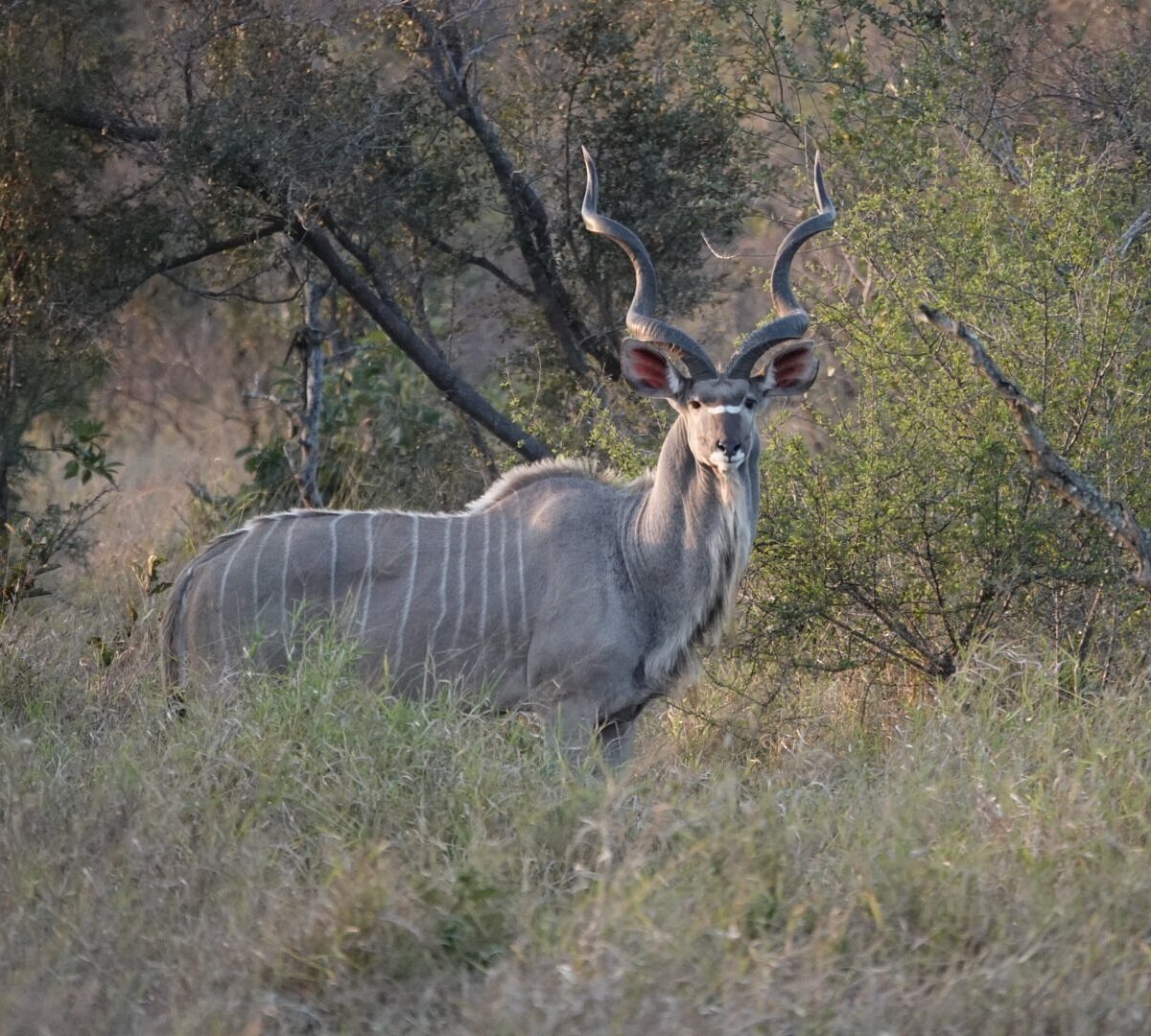
a solitary kudu
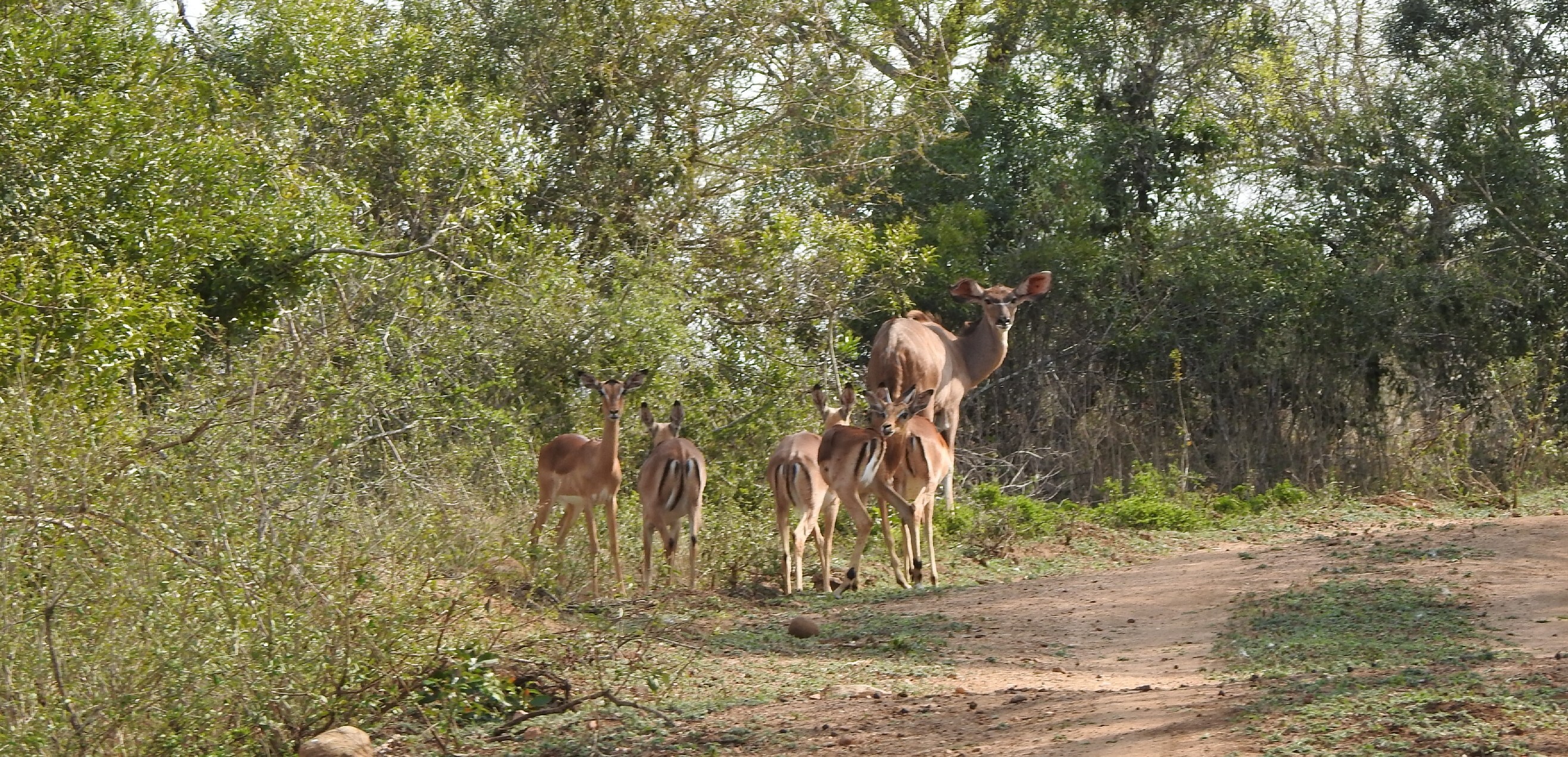
a few impala
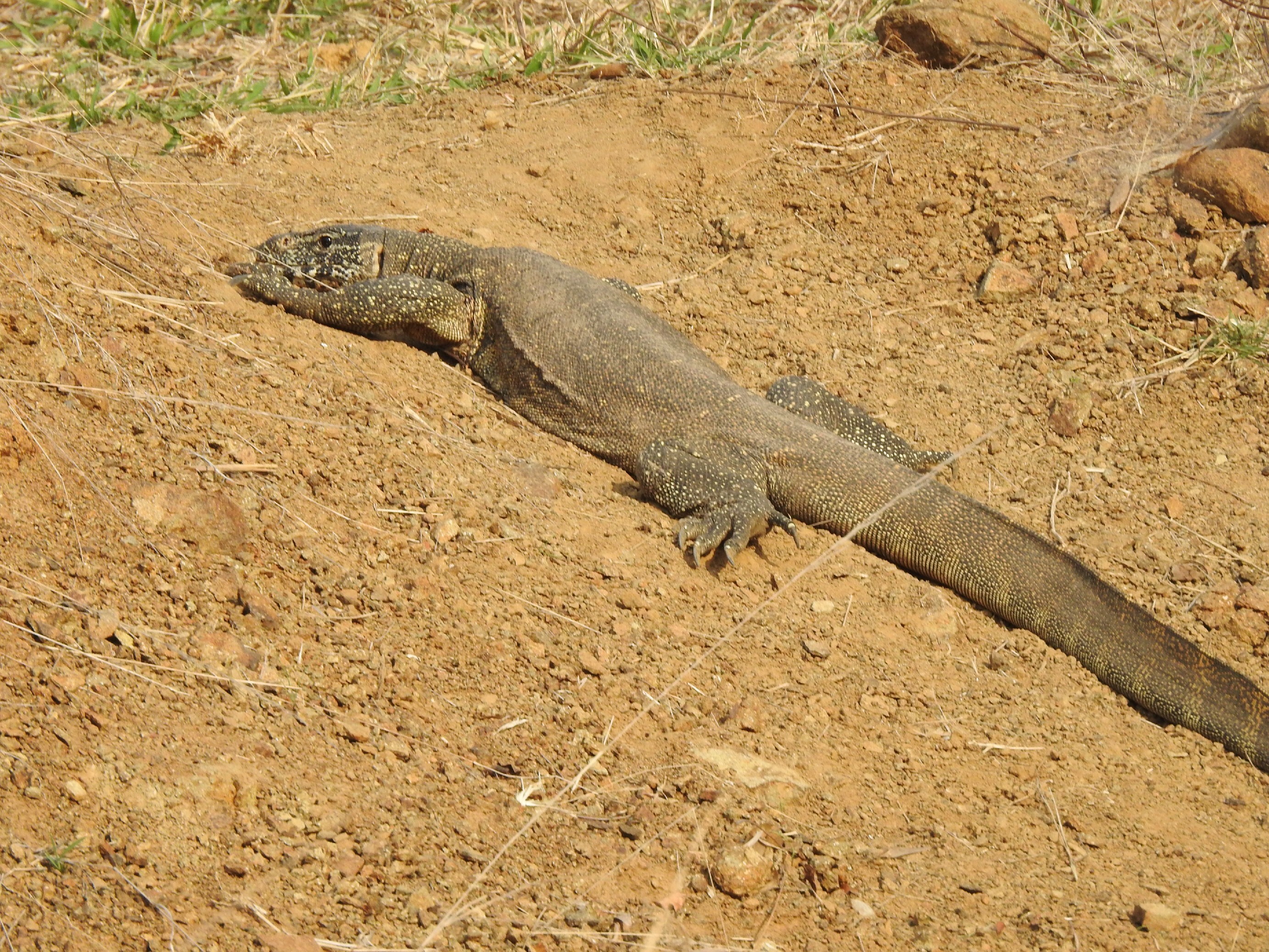
a monitor lizard
That night we had our leftover pizza for dinner. We kept trying to get online but the connection kept crapping out.
Around 9pm Doug got a message from Kenya Airways that due to a strike at the airport, many flights were being canceled or had major delays. Our flight home on September 7 is with Kenya. We got as much info as we could but due to the crappy internet, couldn’t do much. We learned they are giving full refunds and it appeared our flight numbers would be amoung the canceled ones. Doug began looking at alternate flights and they were not cheap but we didn’t want to do anything until we spoke to the airline tomorrow.
Next morning, Doug went for a run and after tea/coffee, we went over to sit in the cafe to do somethings online. At was a this time we learned that the strike at the airport was over and things were very slowly getting back to normal. Phew!!
We left the guest farm around 10 and began the drive to then northern border. We had to pass through Hlane National Park again on the highway but other than seeing some nyala a couple of times, we saw no other wildlife.
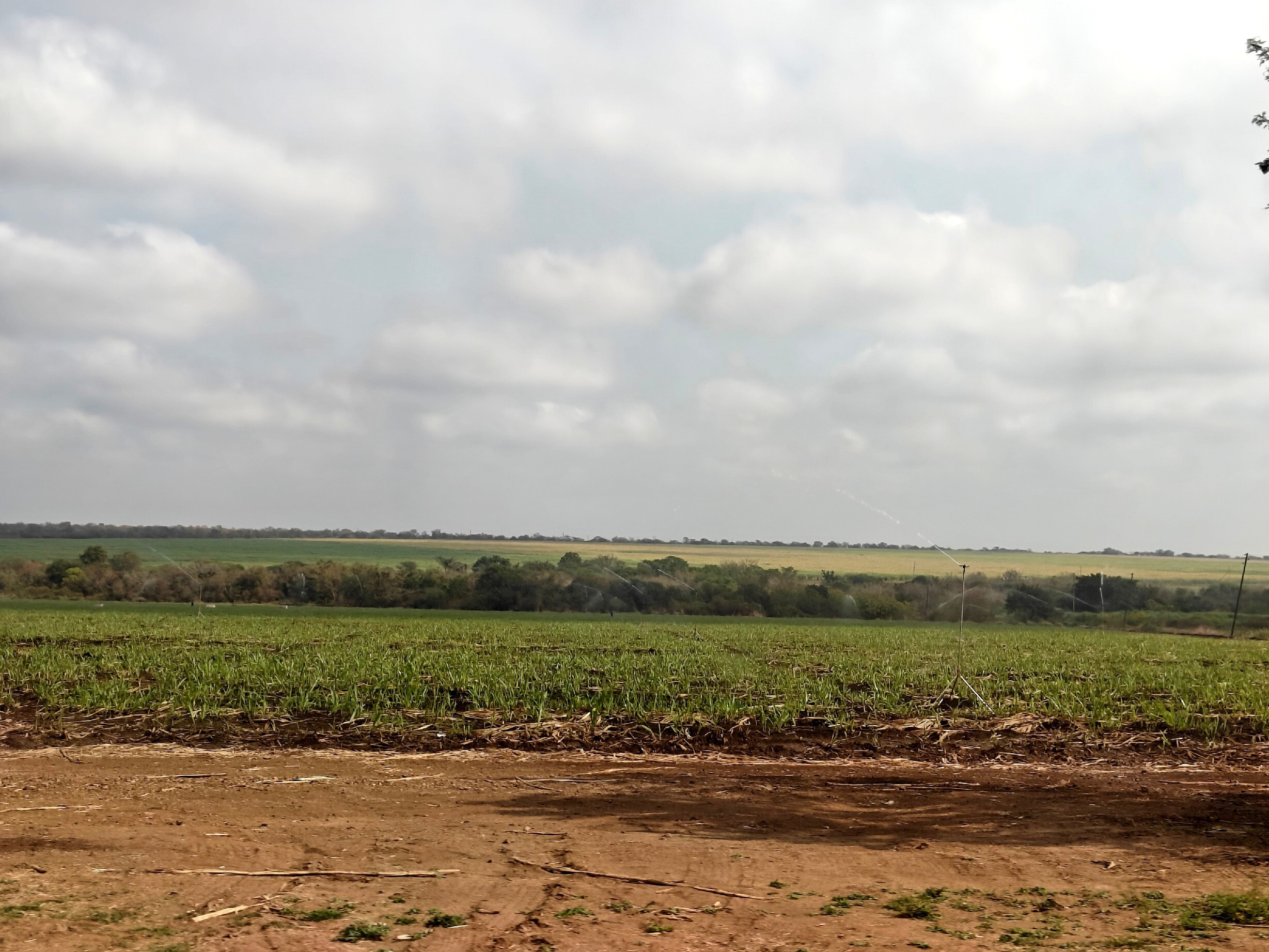
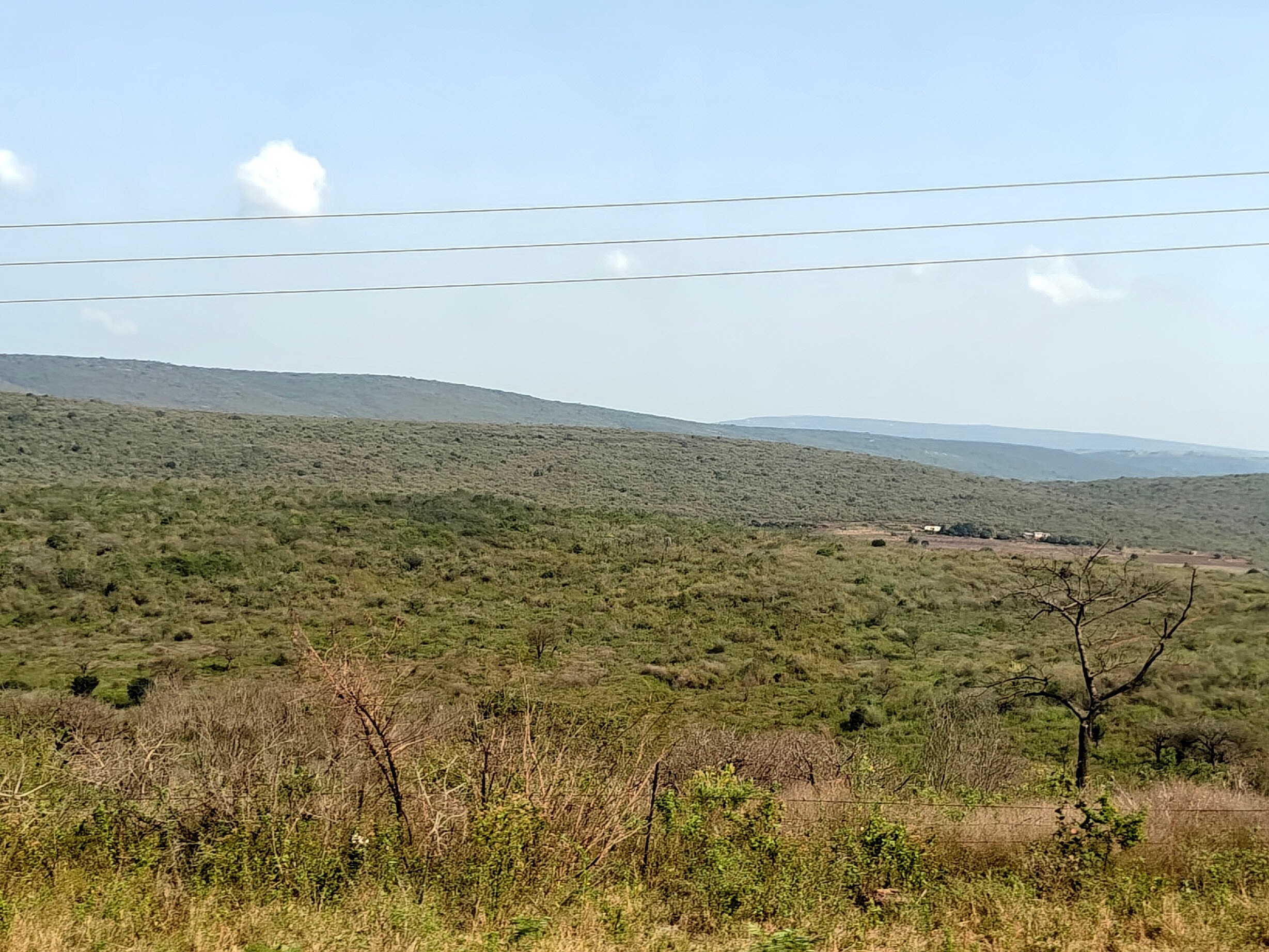
The countryside enroute to the border:
We arrived at the border, got checked out of Eswatini and then drove over to the Mozambique side. Both were quick and easy and it was all done in about 17 minutes.
Fun facts:
- The country has two capital cities: Mbabane (the administrative capital) and Lobamba (the royal and legislative capital).
- Sibebe Rock is the second largest monolith (after Uluru) and the largest exposed granite dome in the world, estimated to be around 3 billion years old.
- The Makhonjwa Mountains contain some of the oldest exposed rock on Earth, dating back over 3.5 billion years.
- The Ngwenya Mine features open-cast iron ore extraction dating back an astounding 43,000 years.
- It is Africa’s last remaining absolute monarchy, where the King holds supreme authority over governance and traditional affairs.
- The famous Umhlanga Reed Dance is an annual cultural event where tens of thousands of unmarried young women gather to cut reeds and dance for the royal family.
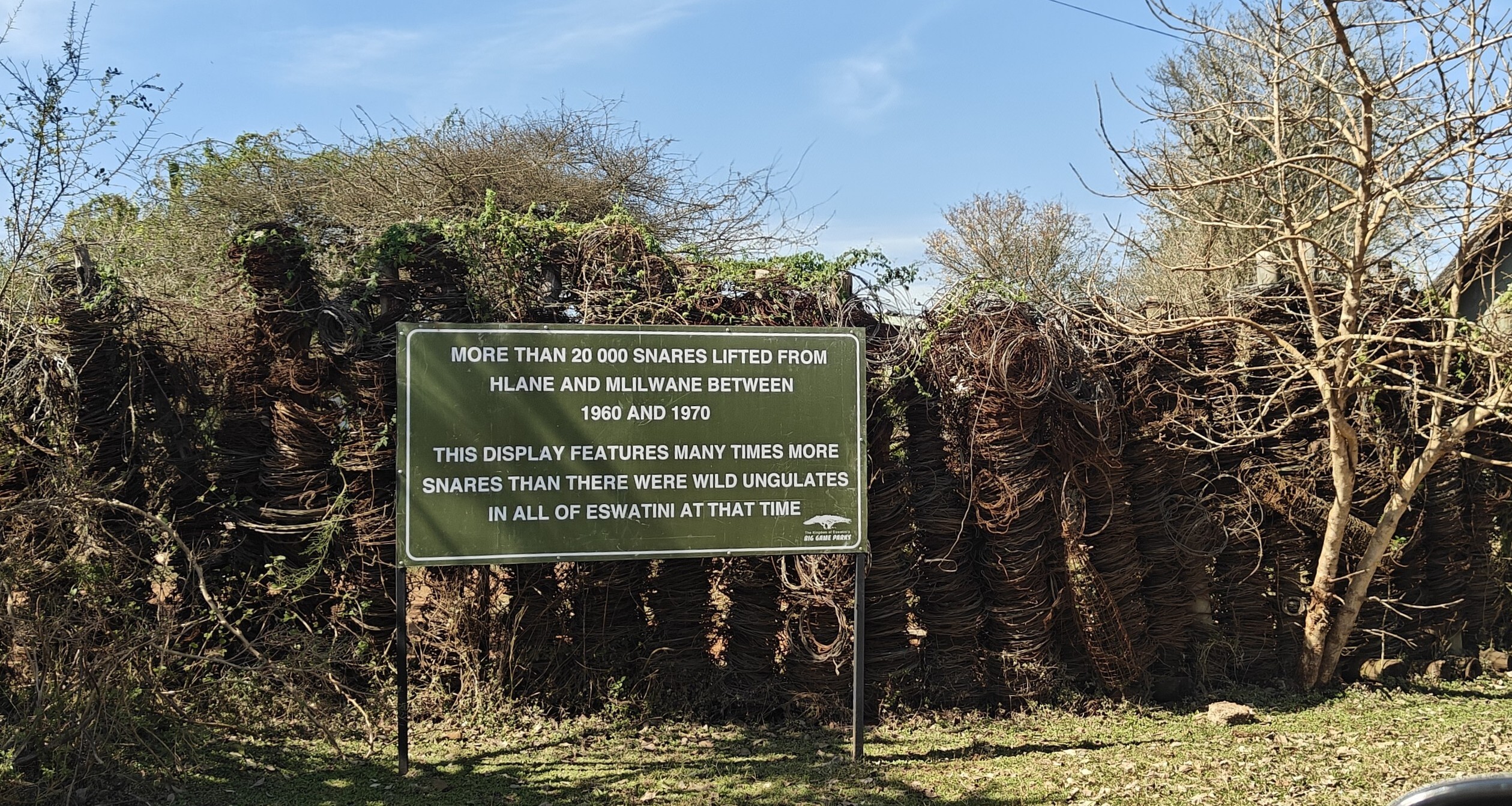
- Under Swazi law, game rangers in Eswatini can shoot and kill poachers caught in the act.