

April 30th, 2025
Fiji, officially the Republic of Fiji, is an island country in Melanesia, a part of Ocean in the South Pacific Ocean. It lies about 2,000 km / 1,300 mi north-northeast of New Zealand. Fiji consists of more than 330 islands—of which about 110 are permanently inhabited—and more than 500 islets. About 87% of the total population live on the two major islands, Viti Levu and Vanua Levu.
Fiji is slightly smaller in size than Wales and slightly smaller than the state of New Jersey.
The majority of Fiji’s islands were formed by volcanic activity starting around 150 million years ago. Some geothermal activity still occurs today. Humans have lived in Fiji since the second millennium BC- first Austronesian and later Melanesians, with some Polynesian influences. Europeans first visited Fiji in the 17th century. In 1874, after a brief period in which Fiji was an independent kingdom, the British established the Colony of Fiji. Fiji was a Crown colony until 1970, when it gained independence. The country has had a few coup d’etats but has been stable for over a decade.
Fiji has one of the most developed economies in the Pacific through its natural resources which include timber, fish, gold, copper, offshore oil, and hydro power. Politics in Fiji normally take place in the framework of a parliamentary representative democratic republic wherein the Prime Minister of Fiji is the head of government and the President the head of State, and of a multi-party system. Executive power is exercised by the government, legislative power is vested both in government and parliament with the judiciary being independent.
Fiji has a significant number of soft coral reefs (with the main one in the world being Rainbow Reef) and scuba diving/snorkeling are common tourist activities. Fiji’s main attractions to tourists are primarily white sandy beaches and aesthetically pleasing islands with all-year tropical weather. In general, Fiji is a mid-range priced holiday/vacation destination with most of the accommodations in this range.
Fiji has also served as a location for various Hollywood movies starting from the Mr. Robinson Crusoe in 1932 to The Blue Lagoon in and Return to the Blue Lagoon in 1991. Another popular movie that was shot in Fiji was Castaway in 2000.
The U.S. version of the show Survivor has filmed all of its semiannual seasons in the Mamanuca Islands since its 33rd season in 2016. Typically, two 26 day competitions will be filmed back to back, with the first season airing in the fall of that year, and the second airing in the spring of the following year.

The Fijian flag features a light blue background representing the Pacific Ocean, a Union Jack in the upper left corner symbolizing the country’s historical ties to the United Kingdom, and the shield from Fiji’s coat of arms in the lower right corner. The shield contains elements representing agricultural activities like sugar cane, coconut palms, bananas, and a dove of peace.
Currency: The Fijian Dollar FJ – 1 FJ is $0.44 USD and $0.61 CAD
Petrol/Diesel price: $2.68 FJ per litre which is about $4.49 USD a gallon
License plate:

Beer: Fiji Gold & Fiji Bitter

Bula from Fiji!
This means hello and people say it to you when you are just walking down the street all the time.
We arrived in Nadi on time after dark. After immigration and a bit of a long wait for our bags, we got SIM cards (75G for $25FJ for 7 days or 175 GB for $35FJ for a month – we got one of each as we are here for 8 days and Doug will just hot spot off Fran’s phone on the last day) and cash. The rep from our car rental agency was waiting for and took us to the office for the paperwork. They gave us a little blue Toyota “Vitz”.

The temperature on arrival was about 26C / 79 F and you can feel humidity. We are now two hours ahead of Sydney.
Fran had booked a nearby guest house about one kilometre. Upon arrival we had to wait for the manager as it was after hours (we had advised when we’d be arriving). We have a small room at Pacific Apartments for about $30 USD with a queen bed, fridge, kettle, poor Wi-Fi but good AC and a private bathroom. It was okay for a night, no balcony or view but all we needed was a place to crash as we were heading out first thing in the morning to explore the island.
We did have a quiet night and were out the door by 8ish. We drove into Nadi to go to the bank to get more cash – seems cash is king here, as they charge at least 3% on credit payments (sometimes 4.5%) so we needed more. We also wanted to get a few drinks and fruit/snacks for the road and the grocery store by the ATM was not great so we had to hit another larger one on the way out of town.
Our first stop was the Momi Bay Battery Historical Park not to see the remains, but to see the view. It was a windy potholed/paved and dirt road up there. Fran took a few pics when we got out of the car:


They wanted $10 ea to actually enter and be able to access not only the site but the nice deck off the visitor’s centre for direct views but we opted out as we could see the view from the parking lot.
Next stop was the Sand Dunes National Park. It’s supposedly quite large but it’s way too hot to take a 2 hour hike mid day here (the signs even say don’t hike between 11 and 2) so we read some of the info in the Visitor’s Centre and chatted with the ranger. He said much of the hike is out in the open sun and it’s a long way to the ocean and the dunes without trees; best to just go to the lookout where you can see both – about 20 minutes return. So we paid our $10FJ each, grabbed our hats and some water and off we went.

The first part of the trail is rugged stairs all in the trees. Then you come out to the grassy trail and reach the lookout where the shelter is now just a concrete slab. Here you can see the ocean and in the distance two sand dunes otherwise they are all covered vegetation as far as we could see. 
The first part of the trail is rugged stairs all in the trees. Then you come out to the grassy trail and reach the lookout where the shelter is now just a concrete slab. Here you can see the ocean:
 and way out in the distance two sand dunes otherwise they are all covered vegetation as far as we could see.
So it was not that fabulous.
We have a resort booked for two nights in Pacific Harbour but since it’s not that far from Fiji’s capital, Suva, we thought we’d check that out before settling in. It took us till about 1:30 to get to Suva stopping at our resort to drop off our bags (our car is a hatchback with no cover over the back).
Well, Suva turned out not to be worth the trip – it’s Fiji’s largest city and one of the largest in the South Pacific but didn’t have much charm. There is a sea wall but it’s not too exciting and it was a crowded. It’s definitely not a “first world” city but there are a few high rise buildings. It reminded us of many Latin American mid size cities.

 We thought we’d go to the market for lunch but it was really just a produce market and then we walked over to a more commercial area, Cumming Street, but no restaurants for lunch. Doug looked on Google and found a place on the third floor of a department store that had vegan options. They had a little balcony with about 8 tables and we had a decent lunch around 2:30.
On the way back to the parking lot, we did see the Ivi Triangle.
The Ivi Triangle features an old ivi (Tahitian nut) tree. It is a popular resting place in a triangular shape at an intersection, the symbolic centre of Suva. A whitewashed marker commemorates the dates of the first missionaries arriving in Fiji, the establishment of the capital and the first public land sales in the country (though the historical information on it has been disputed). Apparently, Wesleyan missionaries, David Cross and William Cargill, arrived on 12 October 1835 (not 14 October). Fiji did become a crown colony on 10 October 1874. Suva was proclaimed the capital in 1877, not 1882. Public land sales took place under a different Ivi tree. Someone did try to set fire to the tree in 2012, and the tree was damaged by Cyclone Winston.


the former ornate city hall:

and the Andrew Carnegie Library. A grant of 1500 GBP was given by this philanthropist for a free library for all citizens.

before heading back to the resort: Pearl South Pacific. We thought getting out of the city would take a while but it was faster than entering! We were back at the resort by 4:30 and in our nice air conditioned room to try and sort out the rest of our flights etc.
Today it reached 32C / 90 F with 88% humidity but it’s way better than the wet, cool 19C we had in Sydney! They sky was mostly clear all day except near Suva although the sun continued to shine and it didn’t rain. We are at the end of the rainy season here being the end of May.
Feel free to check out all our photos here.
Our room here at the is quite nice: king bed, balcony, desk, fridge, kettle, couch, chairs and a big screen tv. We are paying $296 USD with taxes for two nights here at Pearl South Resort.


We ventured over to the bar after 6 for the end of happy hour and also ordered dinner. There was a man playing a guitar to entertain us and the few others that were there.
We thought we had booked a snorkeling tour to Beqa Lagoon for tomorrow but Doug couldn’t find the confirmation so he called only to be told they closed down a couple of weeks ago! Fran went down to the front desk to see about arranging one with them as it was advertised there. The receptionist said it was too late tonight and to come down at 7 and arrange it with the tour desk by the pool. Long story short, by 8 am next morning, we had a booking to go snorkeling at 9am. At 8:45 we were told that the boat captain was not available so we were told we’d depart at 9:30 after they found someone else. As it was quite humid out we went back to our room to stay cool. At 9:30 we went back down, got our snorkel gear after a bit of a wait. We left the dock with two other couples and within 5 minutes the boat died! After fiddling for about 10 minutes they got it going but it didn’t seem to be up to speed but we made it to the reef.
We snorkeled for about an hour around the reef. The water was fairly clear and there was a lot of good coral and a good number of fish. It was not up to Great Barrier Reef standards and we didn’t see any soft coral but it was nice (especially for Fran) to be snorkeling!


We saw two unusual creatures we’d never seen before and one orange fish. The first was a black and white snake called a Banded Sea Krait

From Mr. Google:

and a crown of thorns starfish


So no big creatures like turtles or sharks, but quite a good population of the usual reef fish.


We were back at the resort by 11:30, showered and changed before heading out in our car to the Arts Village which we’d read about in our guide book. We told the front desk that’s where we were going and nothing was said to us about it being closed! It’s under renovation and says “no entry” but a woman told us we could walk around. Only a couple of shops were open.


We then went looking for lunch and ended up at the Supermarket Mall at the Grace Garden considered an “Asian” restaurant but turned out to be way more than that. After lunch we checked out the supermarket to see if we could grab something for dinner, but no luck.
We returned to the resort and spent some time online and then went down to the pool to read and chill. After showering and changing, we decided to take our own drinks down to the beach and watch the sunset which was mediocre at best.

However, to our surprise, that night there was a “hot rock walking” ceremony show being put on and we had front row seats!
Now this video is over 10 minutes long so you are forewarned:
But here are some single shots:


We then went across the street to the shop for a few items for dinner that night and had a quiet night before getting up and on the road by 8 the next day.
On the drive back to Nadi, we stopped at a bakery for some food and then to check out Natadoli Beach (not easy to get to as the most direct route was closed). It’s supposed to be the nicest on this island:

We dropped off the rental car at 11:30 right at the airport and walked over to the domestic terminal to catch our flight to another Fijian island called Taveuni. We arrived WAY too early as it’s a tiny terminal and a lot of people just showed up at 1:30 for a 2 o’clock flight that left 25 minutes late. We were allowed 2 checked bags each on this flight so since we carry a duffle bag in our suitcases, we “spread out” a bit putting things in the duffle so our roller boards were not so “bursting”.
The access to lots more photos is here.
The flight was just over an hour on an 18 seater plane. The views were quite lovely of Vita Levu as well as the islands and reefs enroute:


At the tiny airport of Matei, a taxi driver met us (we’d been told $5 for a cab and he tried to charge us $10) but it was less than 2km to the lodge we booked.
Here at Maravu Plantation Resort, we have a “bure” (cabin) with a king bed, a double bed, some chairs, a lounger, fridge, kettle, AC and besides the private bathroom, we also have a private outdoor shower. It’s quite large. Here the power is by generator as it was in Raja Ampat but it runs from 4pm to 11am not just overnight so the AC works to cool down the room overnight. We paid $251USD for two nights here.


Upon checking in, we went to our room and changed into bathing suits as the room was sweltering before the power comes on. In the pool we met a number of young people from various countries (UK, Holland, Austria, Israel to name a few). We were not the only “old folks” but they were not in the pool.
We ordered cold beer from the bar (no tabs – you have to pay each time you order and you pay for meals the same way). Then we ordered dinner for 6pm (the earliest time) as we’d had not much to eat today as there was no meal on the flight and NO food at the domestic terminal.
After dinner we retired to our bure and we were both quite tired.
Doug had booked us an excursion on Sunday to snorkel in the famous Rainbow Reef. We could hear it rain in the early morning and the day was mostly overcast with on and off short showers.
We were picked up at 7:30 and taken to the dive shop where we were greeted with a welcome song by the staff:

We were fitted for fins, given briefings and then taken out to one of two dive boats heading out that day. There were 8 divers on our boat and 4 more of us were snorkeling. We were taken to two different spots on the Rainbow Reef for very good snorkeling.
These are an small assortment of pictures and videos for both sites we were taken to:
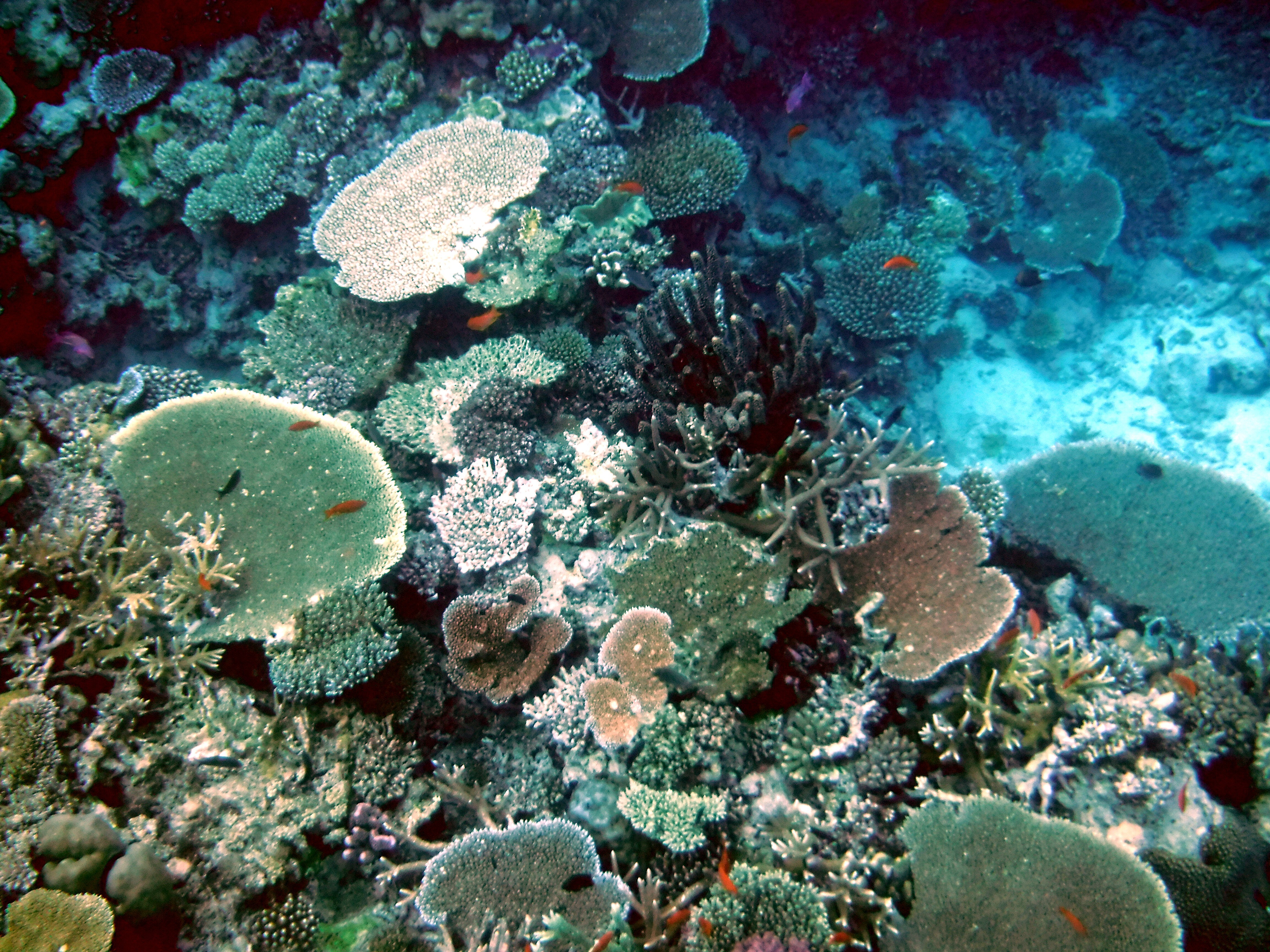
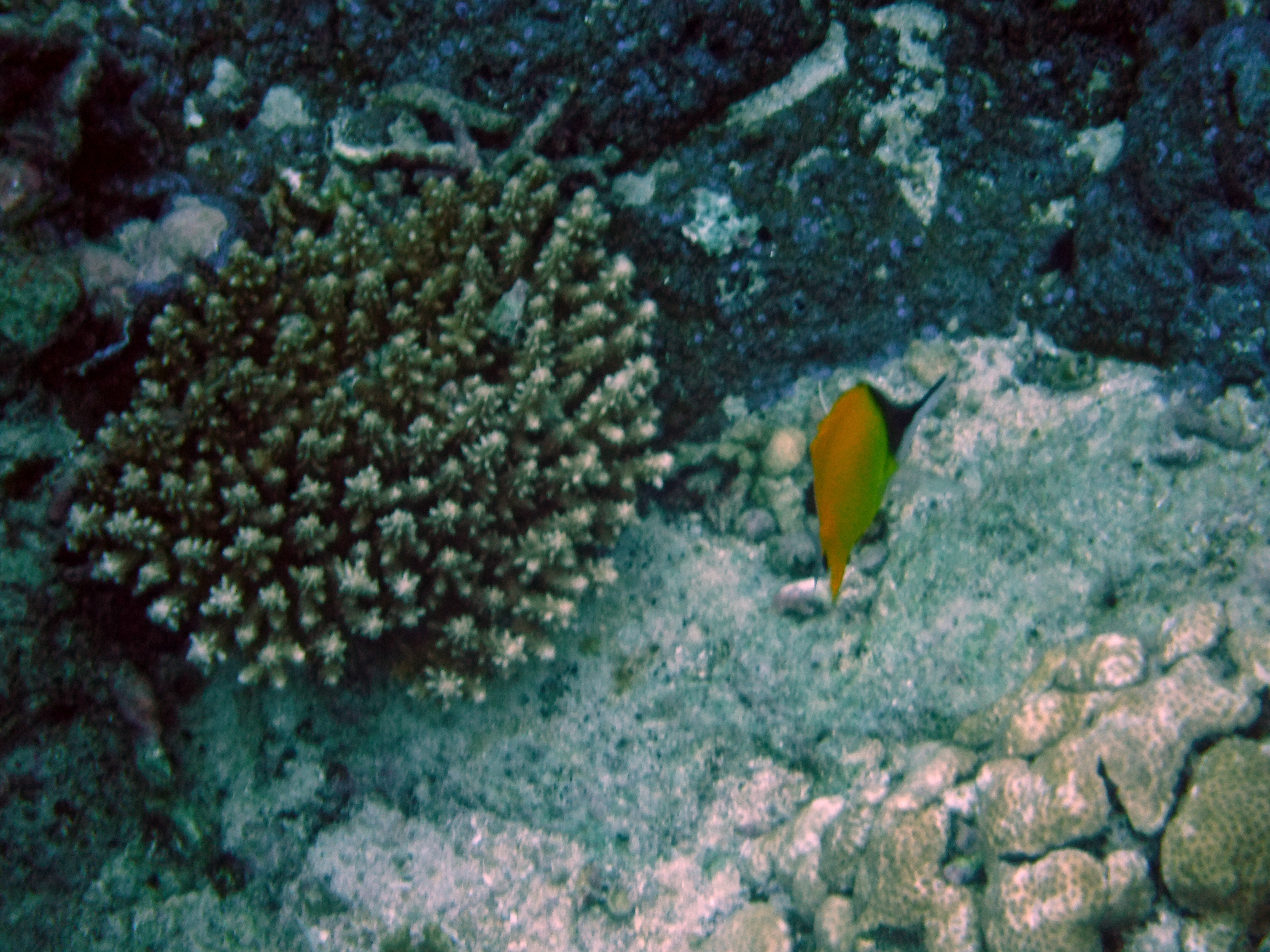
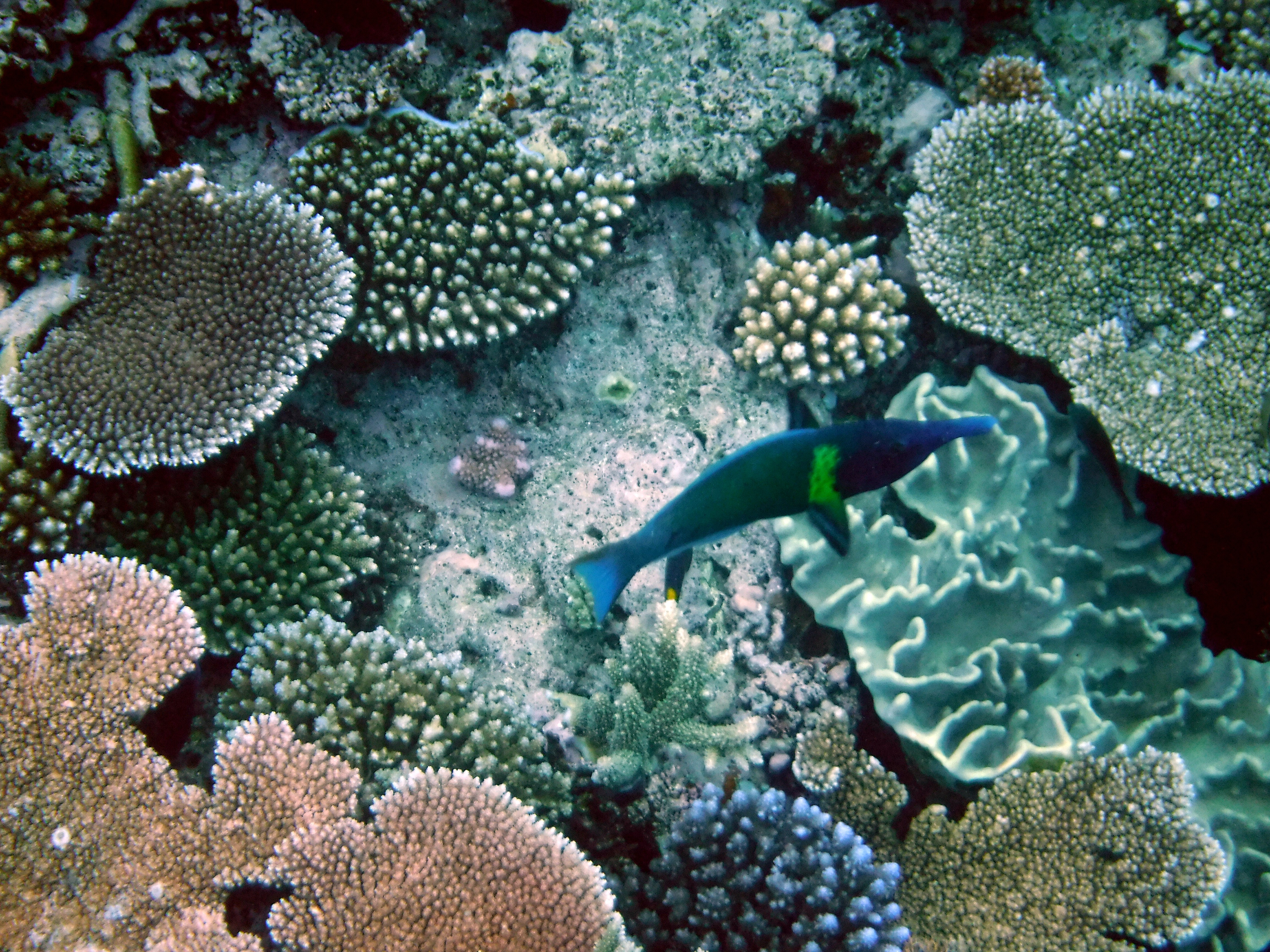
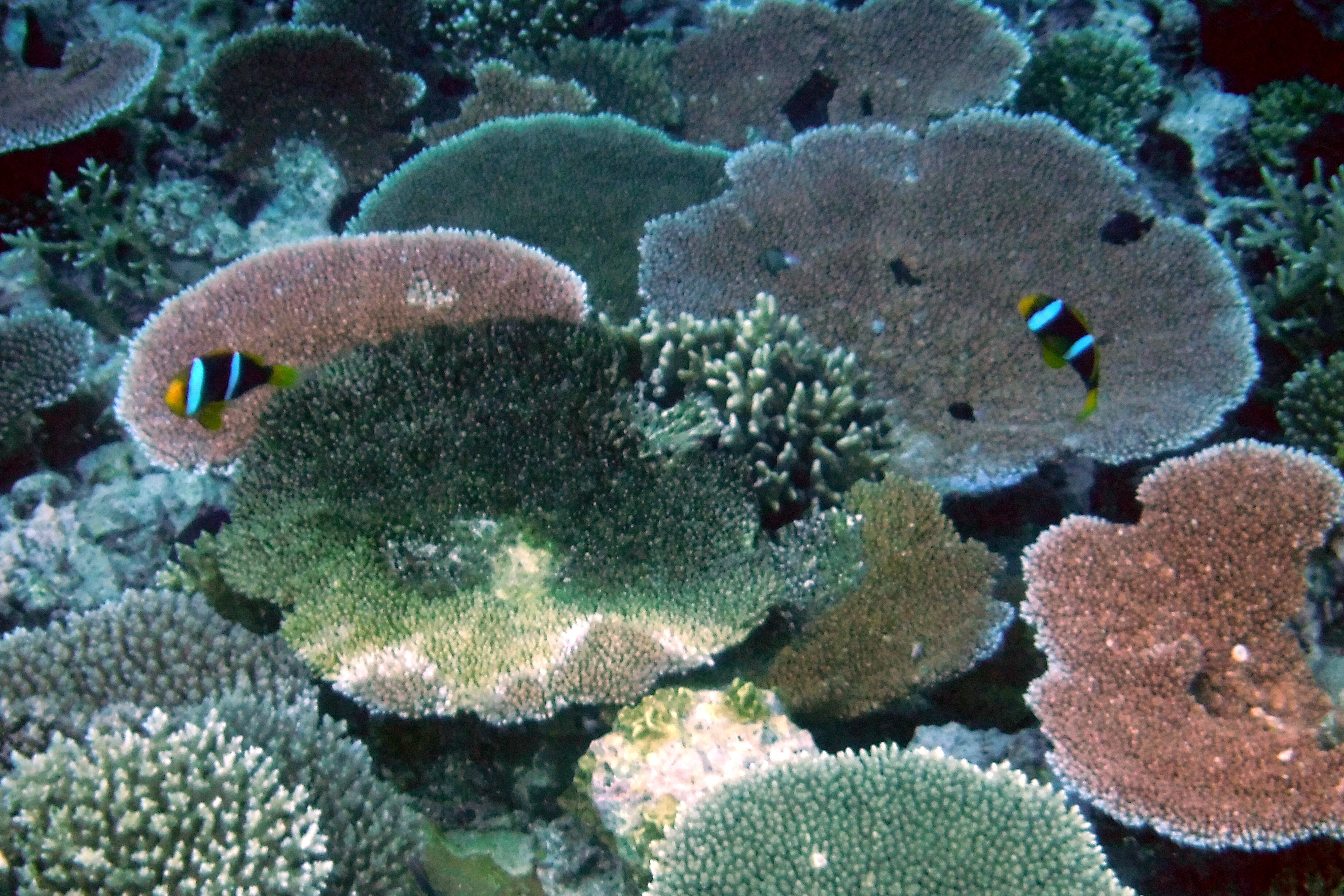
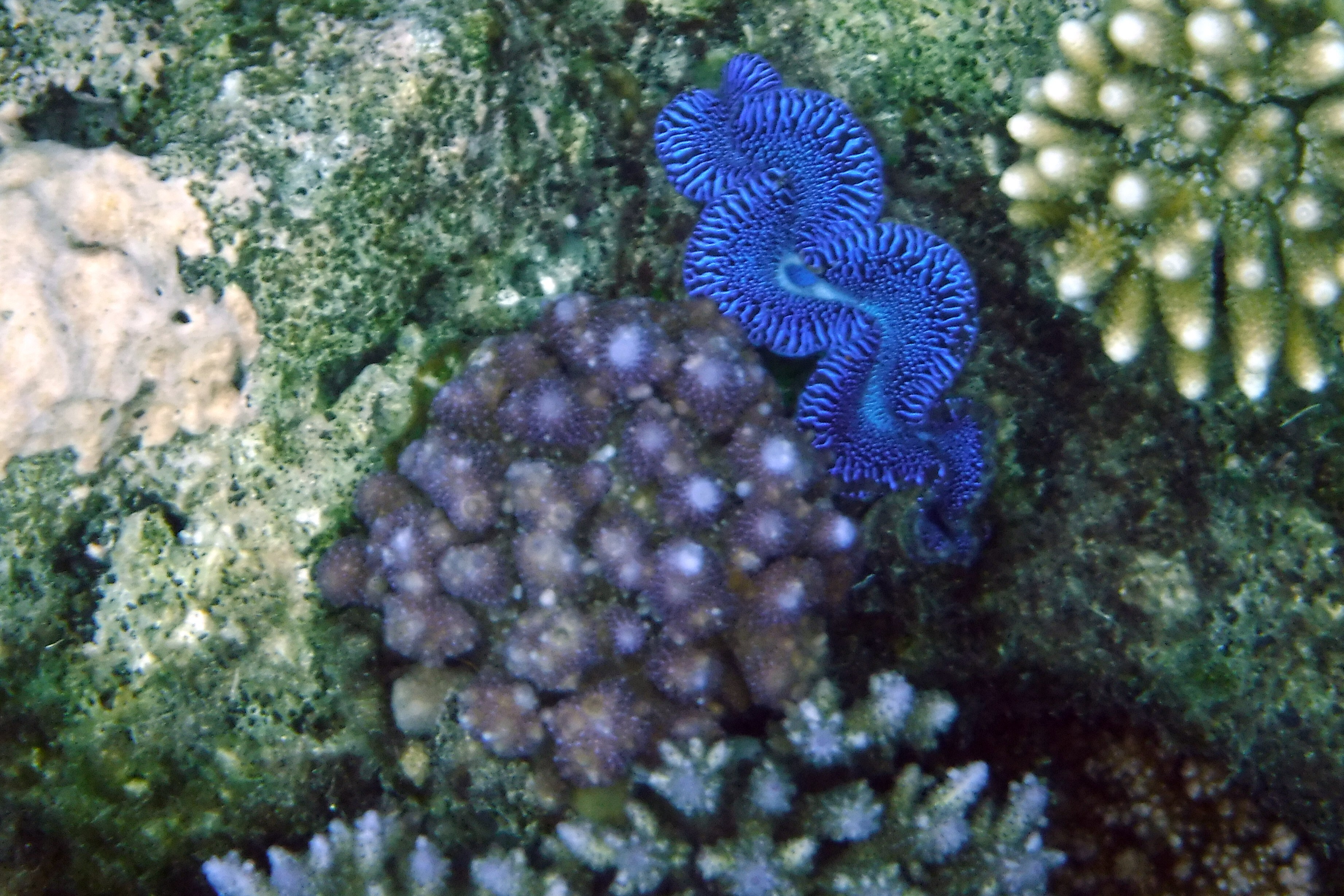
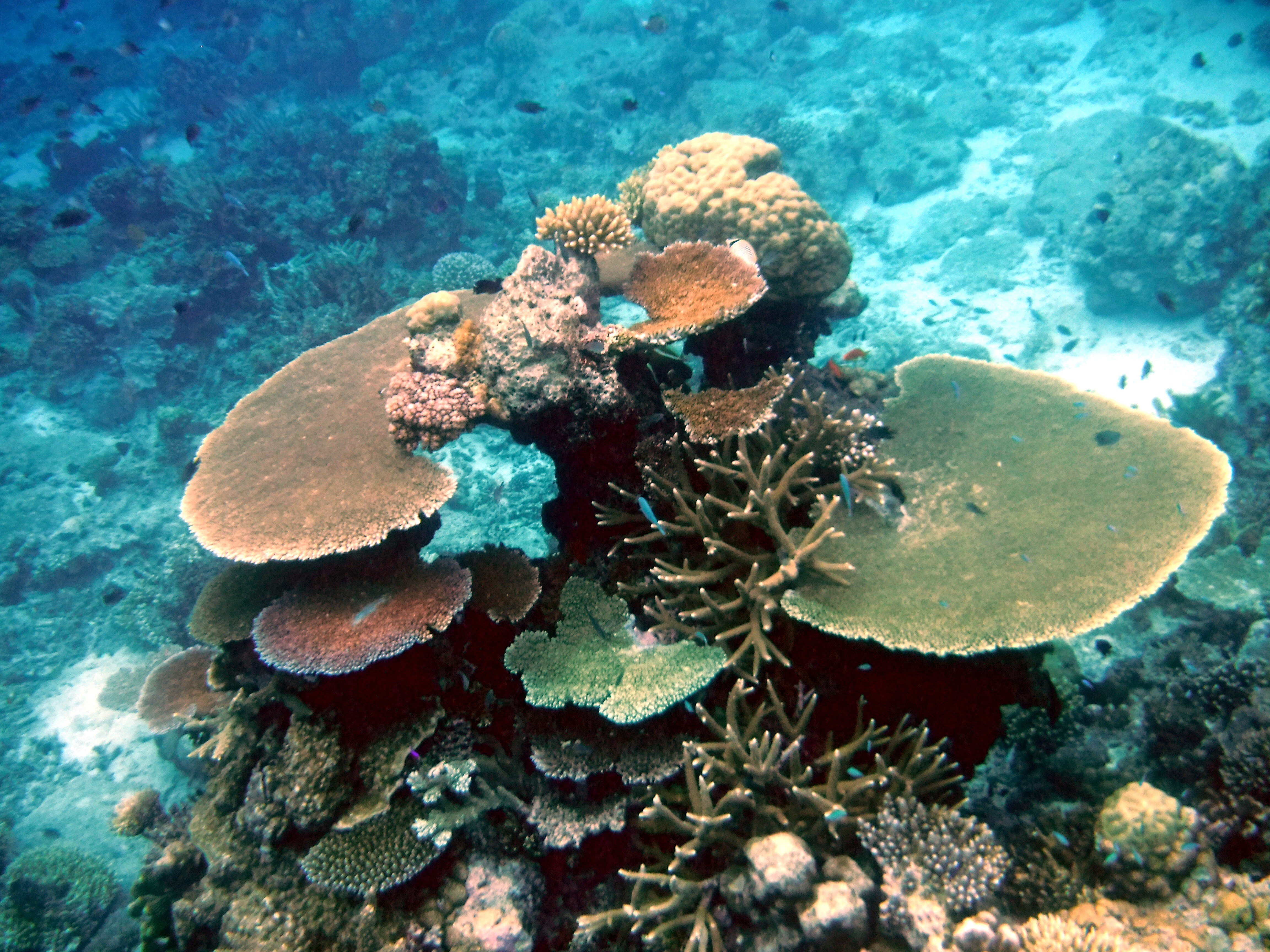
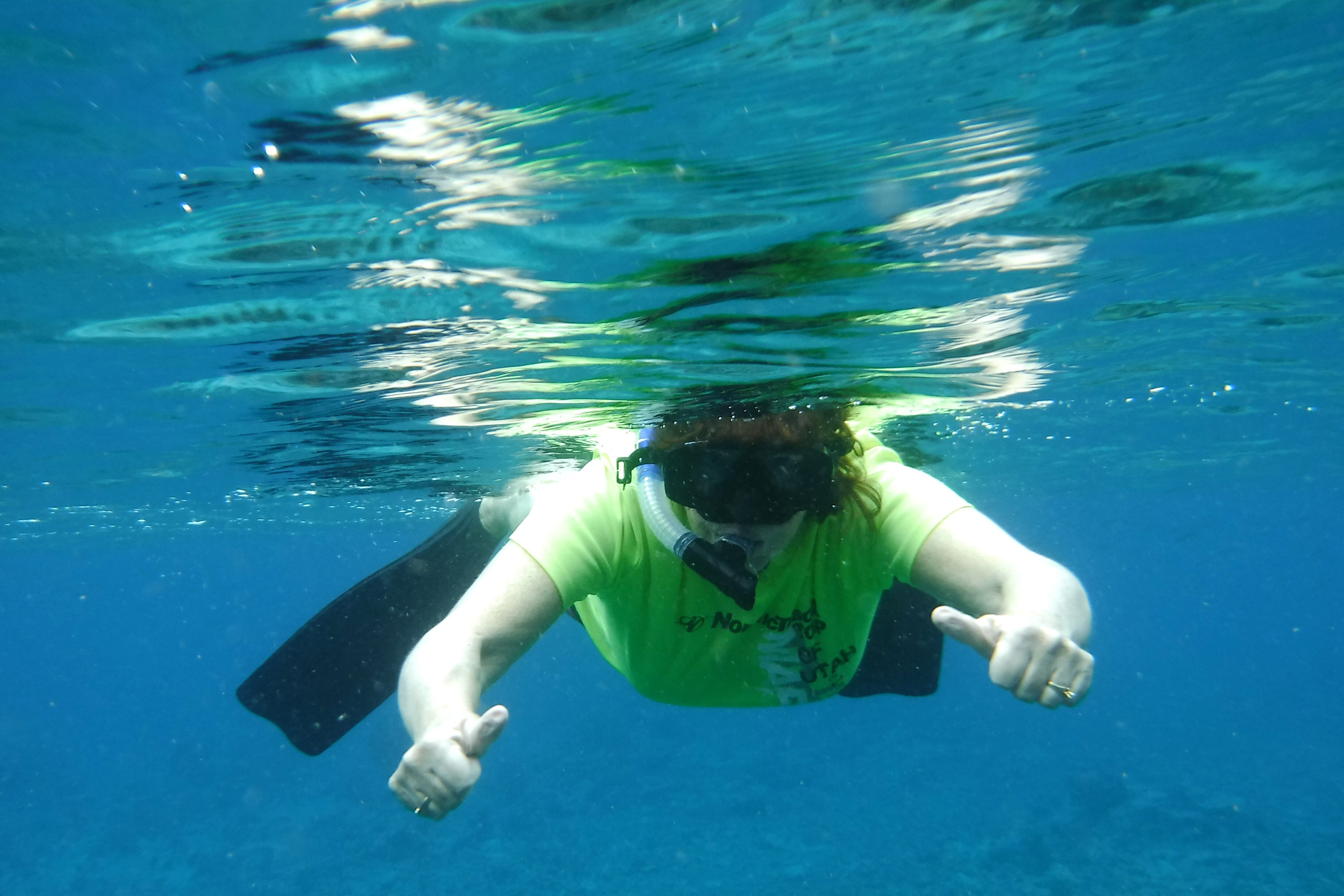
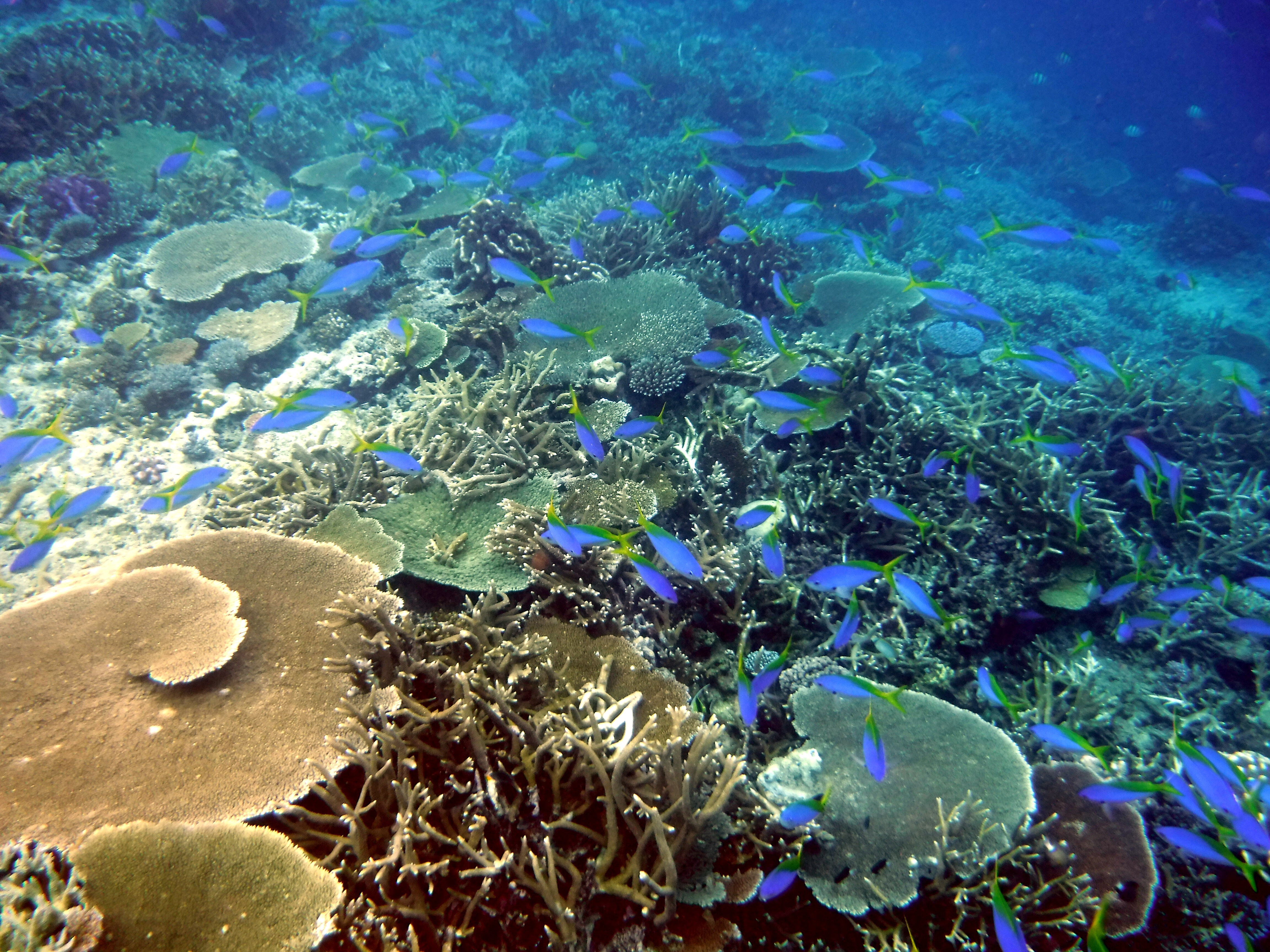
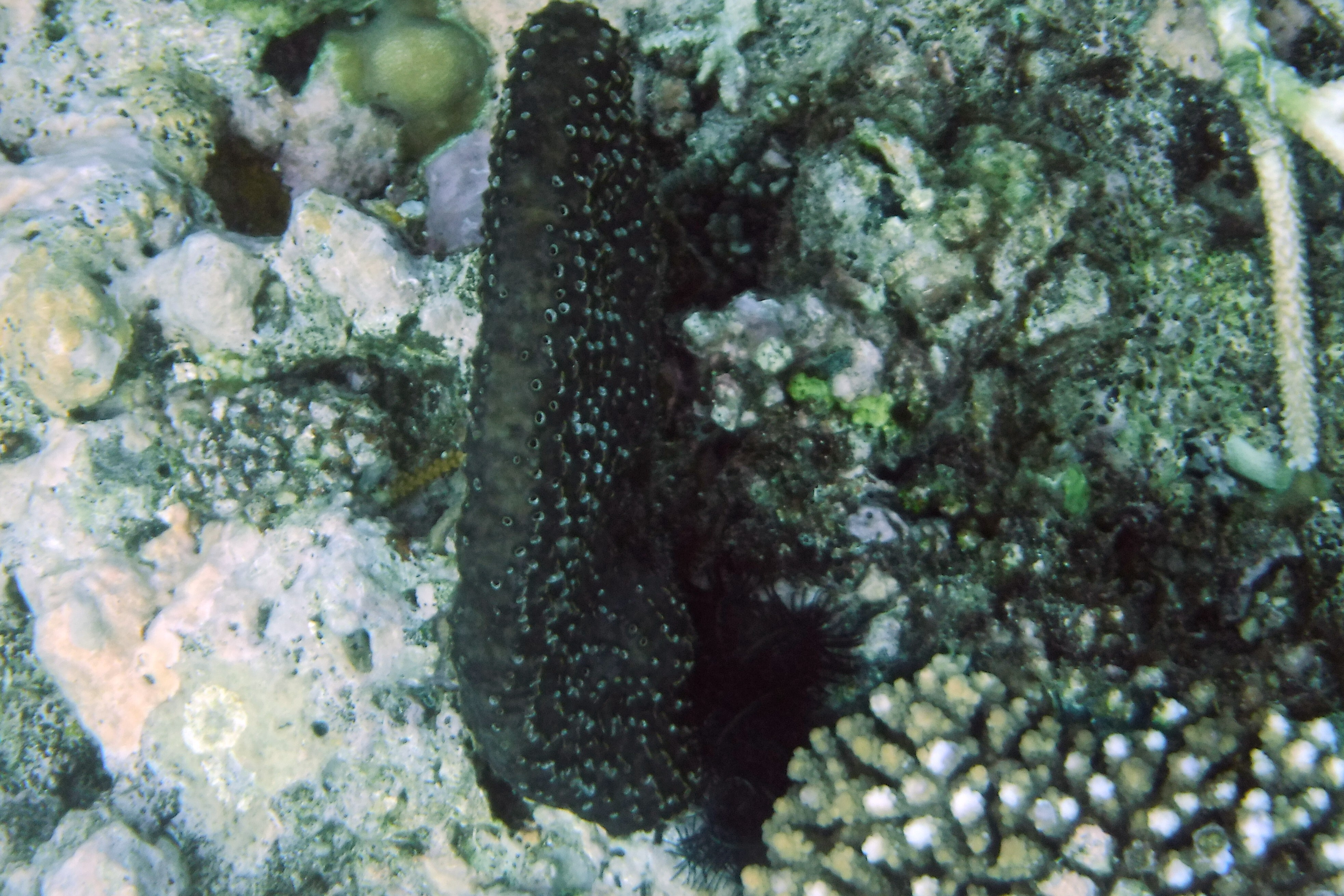
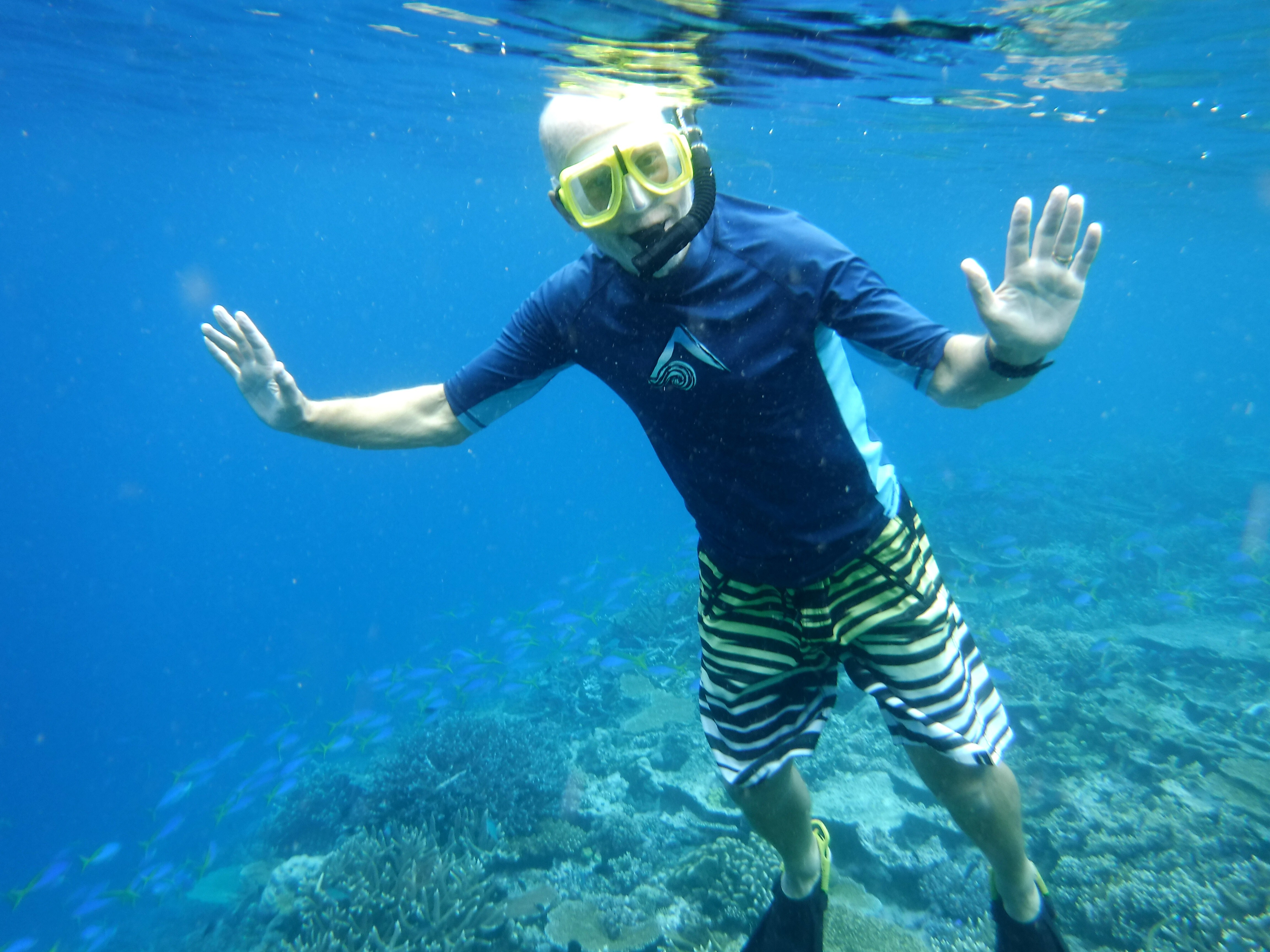
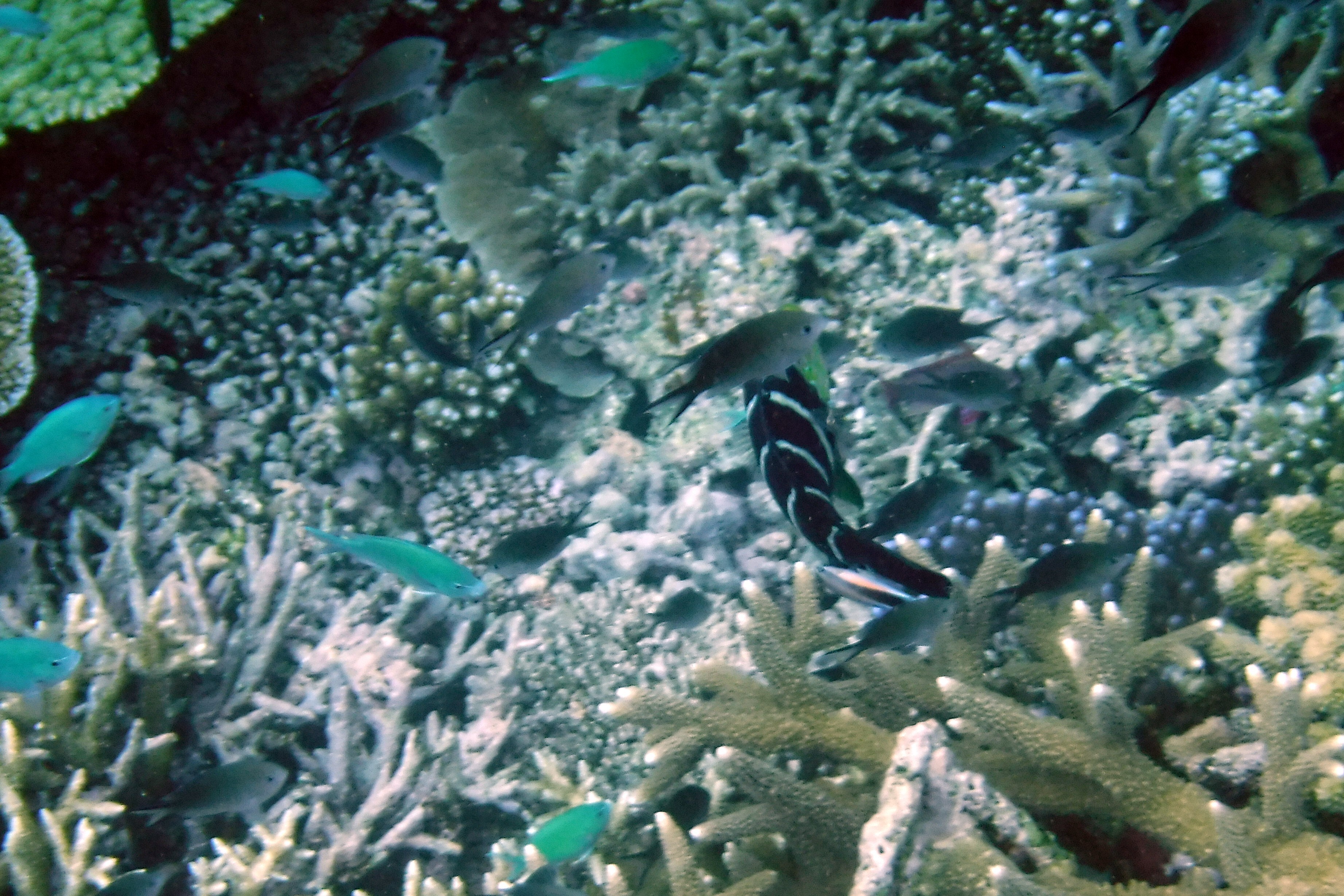
We were served cold and hot beverages between snorkels and given a marine wildlife talk as well. While Eric was talking we saw a few manta rays playing in the water – almost impossible to get photos with our underwater camera though as it only has a 5x zoom. They never fully jumped out of the water but did make their presence known for quite a while.
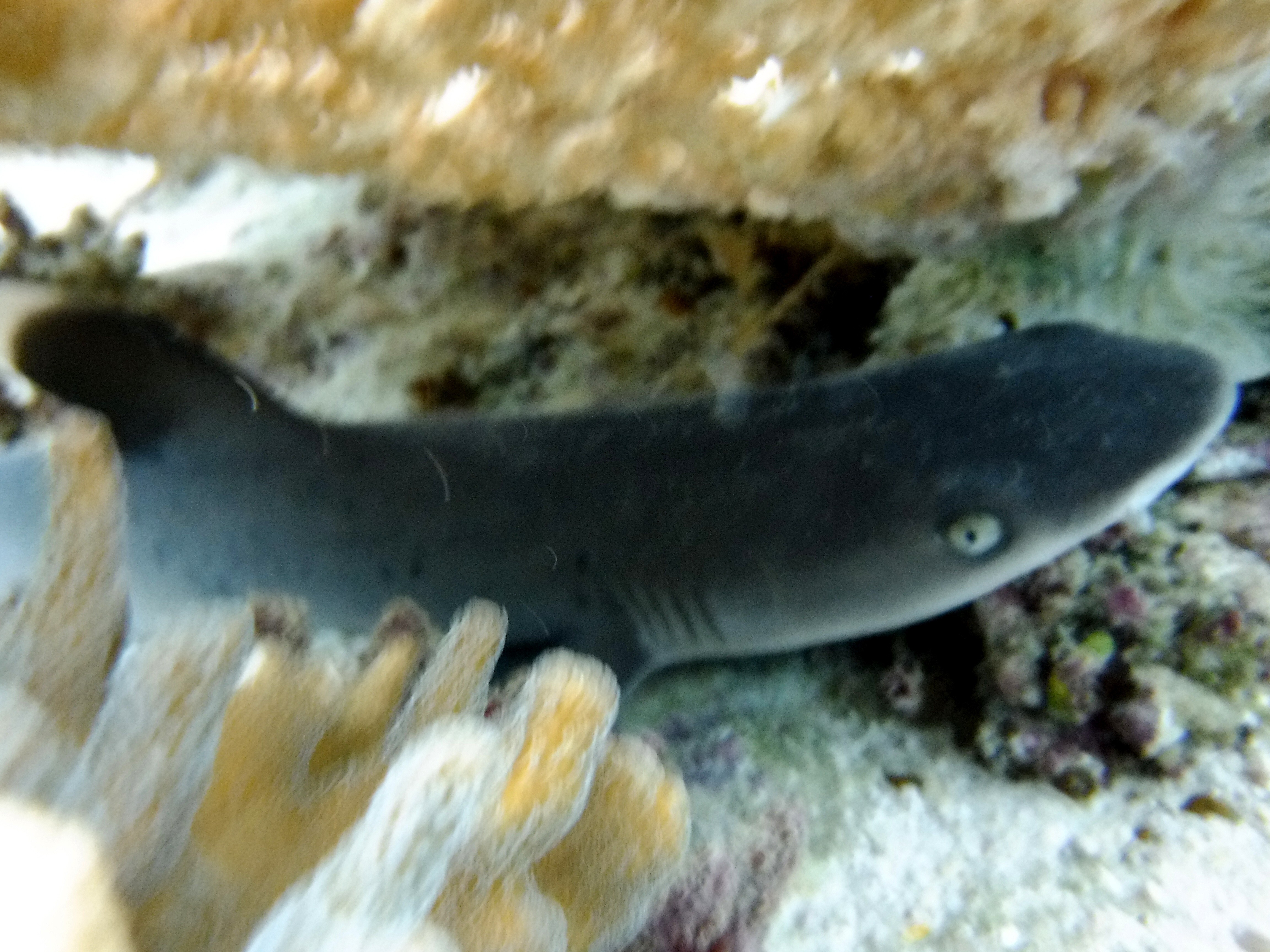
Both sites were quite good – visibility was good even without the sunshine, lots and lots more coral at the first site than the second but lots more fish at the second. Fran saw a black tipped shark as it took off and the snorkel guide pointed out a few things like a small shark which he kindly went down to take a photo of as he hid under some coral (a little blurry):
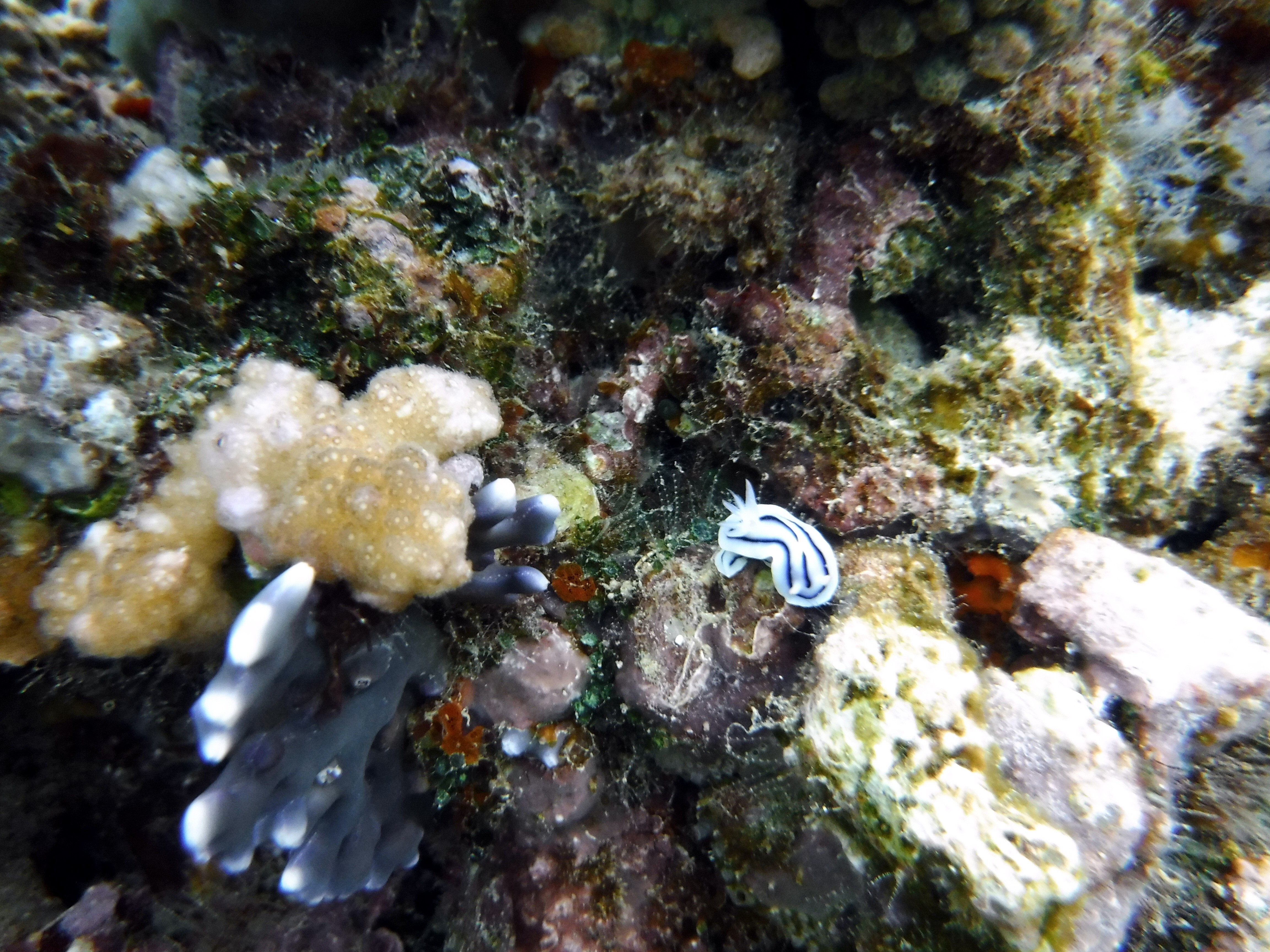
What he called a “snail without a shell” (the white and blue striped creature):
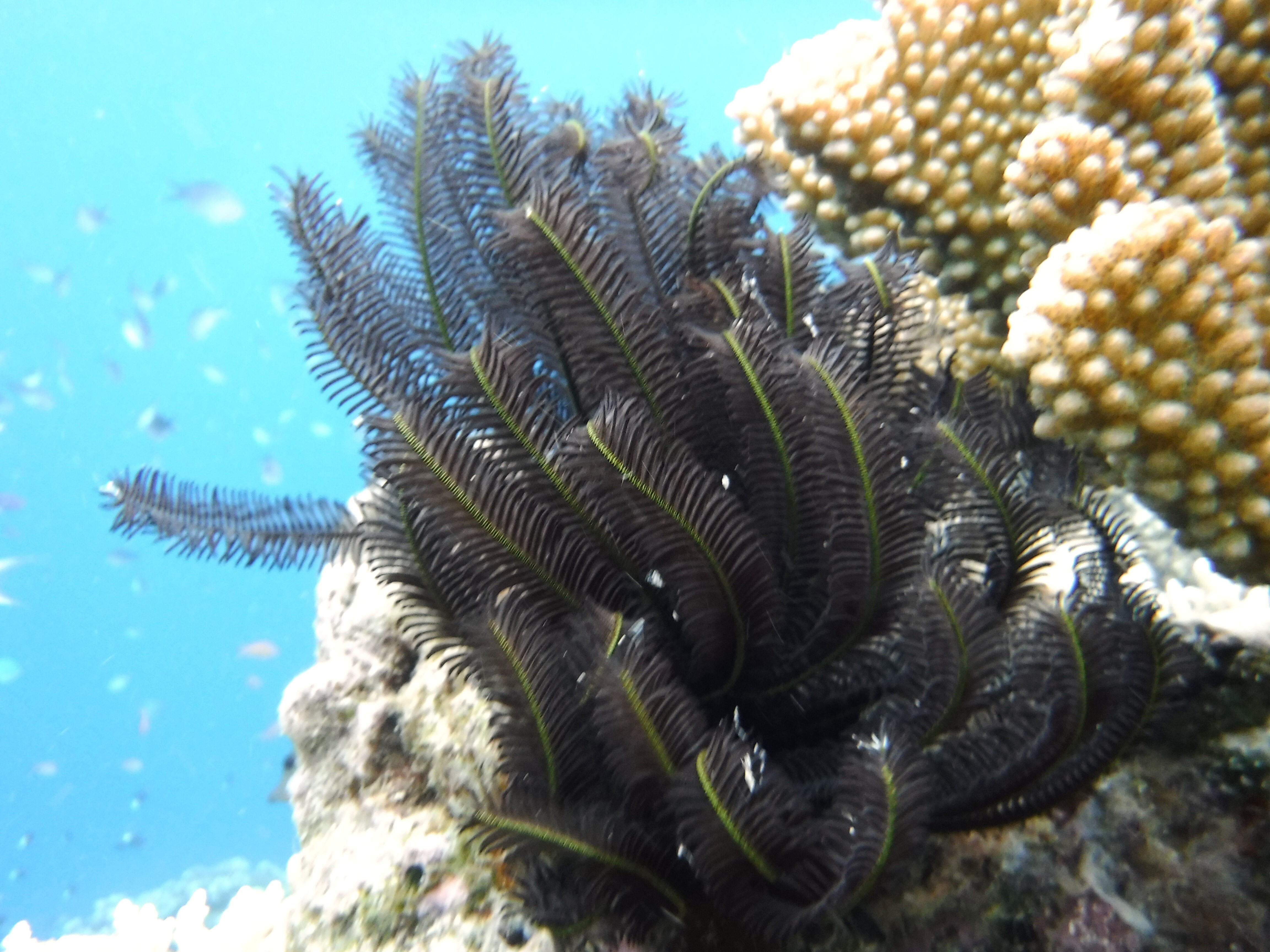
some feather coral:
and we saw so many fish it felt like we were inside an aquarium! Sometimes a school went past that took a full minute or more to go by!
On the ride back we saw a few dolphins in the strait but too far away to get photos.
There are a lot more photos of our great snorkeling adventure right here.
We were back at the Lodge by 1:45, ordered lunch, showered and changed. After lunch we went for a walk to see the beach across the road but you cannot access it without walking down the road a few hundred metres. There we saw a bar and dive shop and went over to look and decided to have a beer and watch the water.

We returned to the lodge and got on our laptops in the common area (this area has power all day) for a couple of hours. After a later dinner than last night we returned to our air conditioned room.
Monday morning after exercising, we took our laptops over to the common area where the Wi-Fi was better and just before 10 had to check out of our room or pay $10 for each additional hour so we put our bags in the storage area since our flight was not until 3:15 pm.
When checking out, Doug ordered a taxi to take us to the International Date Line Monument about 16 km / 7.5 mi from here. This is one of the few places where the date line crosses land. The island of Taveuni therefore is split in theory but they do not observe this as it would be too confusing to have the west side of the island on “today’s time” and the east side on “yesterday’s”!


Our driver, Mateo, took us to see some of the biggest town on the island including the Roman Catholic Church and then dropped us at Kai Time Restaurant and Bar to have some lunch and he agreed to wait for us. This was a very nice place to have lunch facing the sea with palm trees and a nice breeze.

 Mateo then took us on a hunt for a souvenir for our collection of Christmas tree ornaments – at the third place we found something. This was a small shell craft shop run by women. The fisherman keep the pearls they find in the shells and the woman craft items from the shells. We found a nice shell on a string (really a necklace) and for $5 more, they engraved Fiji on it. We were happy.
We returned to the lodge for about an hour after arranging with Mateo to come back and pick us up to take us to the airport.
While waiting for our flight back to Nadi, we sat in the tiny departure lounge at Matei airport and chatted with two other couples heading on the same flight; one from the San Juan Islands in Washington State and one from Newcastle, Australia.
We drove a whopping 38 km / 24 mi on the island of Taveuni and clicking here you can see more pics from our time on this island.
The flight actually left fifteen minutes early so our pick up from the airport to our B&B was late in arriving. He took us to the Newtown Bed & Bath and we got sorted before heading over to the grocery store to pick up a few drinks and food. We took our bag of groceries with us and went down the block to the beach for a sunset drink:
 Cheers:

The beach is pretty nice and quite long; many people were walking it and playing on it in the water.
At Newtown B & B we have a room with a queen bed and private bathroom with AC. There is a shared kitchen and Wi-Fi only out there. The AC worked well and the ceiling fan helped spread the “cool” around. We are paying $136 USD for two nights here.
Next morning we were picked up for a day trip to the Mamanuca Islands – this is where they film Survivor and the movies mentioned above, like Tom Hank’s Castaway.

We left the dock at Port Denerau at 9 onboard the Catalyst with 26 other people and about 8 crew. The seats were padded and the ride was pretty smooth sailing.

The sun was shining and it was a lovely cruising day. Lots of islands to see; some are day trip islands that are party islands close to the “mainland” and some uninhabited (could be Survivor islands) and of course, some with homes or resorts.
We cruised away to our first of three stops. This was a sand bank outside Manu Island where the producers and film crew stay while filming Survivor. We could also see Redemption Island from here.

This sand bank was quite idyllic. You could snorkel, swim or just hang out on the sand here – we were here for about an hour.


We grabbed snorkel gear (we forgot Doug’s mask though so he couldn’t see quite as well). Before going in the water, we asked for antifog and were told they had none which sucked because our masks kept fogging up and we couldn’t see – even spit didn’t work. We did see some coral and a few fish but didn’t like how they fed the fish from the boat!


 We gave up and returned to the boat only to be told then that they had some shampoo to use on the masks! We got some put on and then just headed to the sand bar to have some time on that and take photos before our time here was up.
We all got back on board and headed to a small cove off Monu Island. This reminded us of a day trip we took in Greece with gorgeous blue water and rock walls. You could snorkel here but we were told there wasn’t much really but what you could do since the water was quite deep here was jump off the top of the boat! Doug chose to do that: (excuse the video there appears to have been water on the lens and when you’re already IN the water, it’s impossible to get it all off!):


and then we just floated on pool noodles in the water for about a half hour.

Our last stop was Monriki Island where Tom Hanks’ character, Chuck Noland, spent four years stranded with his only company being “Wilson” the volleyball. Of course, Tom wasn’t there but his HELP ME sign was and so was Wilson!


Upon arriving here, we were served a picnic lunch with good variety and cold drinks (you could get drinks including beer and wine all day included in the cruise price). We sat on beach mats under a thatched shaded area and after lunch we went for a short hike on the island.


We returned to the beach, grabbed a beer and a pool noodle and spent an hour or so in the water chatting with others. There were lots of Canadians and Americans on board, a few Aussies and a couple of men from Spain.
At 3pm were tendered back to the boat from shore and returned to Nadi. We quite enjoyed the day (except for the snorkeling, which to be fair, we had not really expected much as this is not an area known for that), the weather held and was mostly sunny and hot all day. The boat had good shade cover and we were back at short about 4:45. We were taken to vans for our rides back to our accommodations (seems our ride bad luck held up as our drive was 15 minutes late like our pick up from the airport).
Upon returning, we were both tired after a long day in the sun and water and Doug went to the shop to pick up a few things we could eat in the room and we crashed by 9:30.
Next morning after exercise and tea, we spent time repacking – this flight to Samoa only gives us one checked bag each so we now had to cram into our roller boards! But we managed, just!
Our hotel manager gave us a ride back to the Nadi Airport where we got through check in, security and immigration super quick – like the only ones nearly! Our flight was delayed about a half hour due to late arrival of the plane but went smoothly.
Other than being driven to and from airport and drive to the port, we did not drive ourselves at all this time so mileage was about 40 km / 25 mi for this couple of days in Nadi.
This link will take you to lots more photos of our last days in Fiji and the cruise through the Mamanuca Islands.
TOTAL MILEAGE in Fiji: 526 km / 327 mi
In Fiji, we were at about 16-17 degrees south of the equator – further south than the most northerly point we visited in Australia!
Thoughts on our time in Fiji:
-
it’s very green and tropical as expected
-
the people are happy and quick to smile and say “bula” to tourists
-
the water is warm and the sun is hot
-
it’s not a wealthy country but it’s very clean – they must education and promote the environment well
-
we did see some homelessness
-
lots to offer a tourist: water sports in crystal clear waters, hiking, relaxation
-
relatively inexpensive but travel between islands adds up
-
we saw very few motorbikes which seemed odd to us
-
reasonable infrastructure.
Fun facts about Fiji
-
90% of Fiji’s territory is water.
-
Fiji is known as the soft coral capital of the world.
-
Fiji has three official languages: English, Fiji Hindi and Fijian.
-
The country is a melting pot of cultures.
-
The country was once known as the “Cannibal Islands”. This practice was stopped in 1871.
-
You should never wear a hat when visiting a Fijian village.
-
One of Fiji’s most fascinating cultural traditions is the fire walking ceremony, practiced only by the descendants of the Sawau tribe of Beqa island. Legend has it that this gift was given to an ancestor who caught and then freed a spirit.
-
Rugby is the most popular sport.
-
The number one export is “Fiji Water”. It is harvested from an artesian aquifer in the Yaqara Valley, a remote part of Fiji’s main island, Viti Levu.
-
The root of the yaqona bush is ground up and strained with water to make Fiji’s traditional drink, kava and a deeply ingrained part of the culture. It’s a mildly sedative beverage made from the crushed root of the Piper methysticum plant, a relative of the pepper plant. Kava is traditionally served in a large communal bowl as part of a kava ceremony, often welcoming guests into a village or celebrating important occasions.


