
April 5th, 2026
Happy Easter!
We had set our alarm for 5:30 am as we did not hear back from our transport before going to bed but upon ringing we saw a message that they’d pick us up at 7:30 not six. We tried to go back to sleep with no luck.
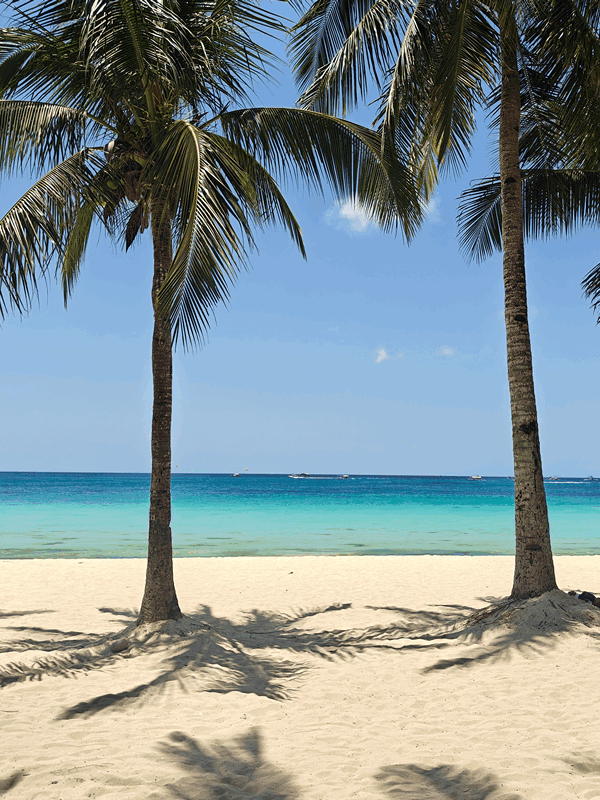
After packing up and double checking the apartment, we went over to the hotel reception a bit early to see the beach one last time.
 Our guides were already there and we were not the only ones being picked up. Once everyone arrived we walked over to the where the van was parked (the road does not quite reach the beach as no vehicles are allowed on the beach) and got loaded in. They took us to the boat docks, got our tickets and helped us board. You get assigned seating on and this time we got seats together and Fran had the window.
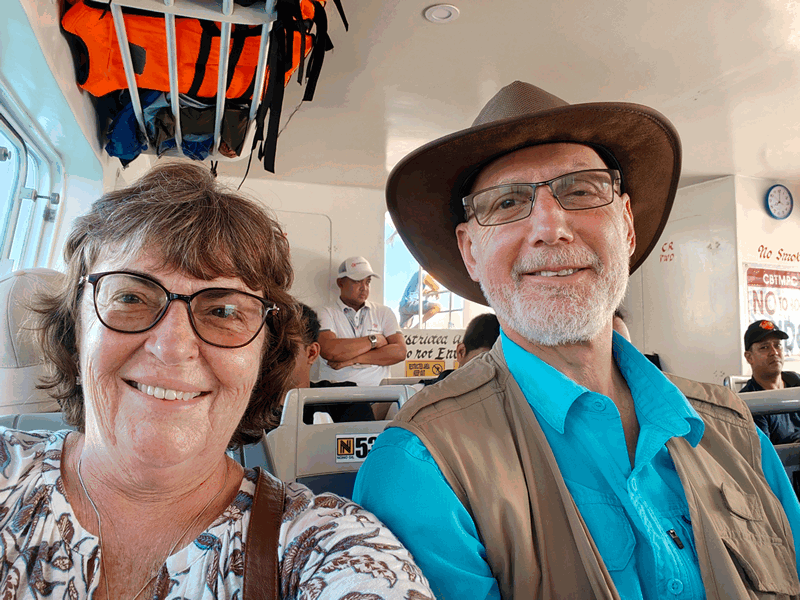
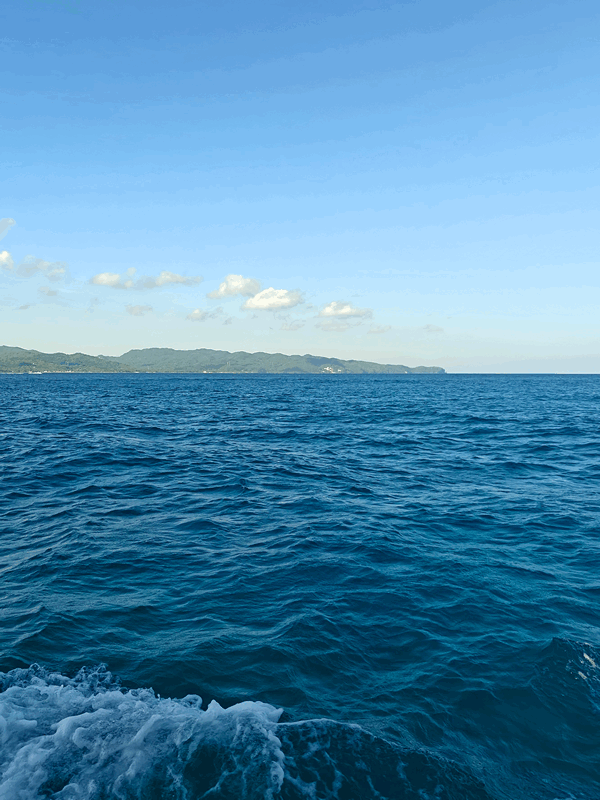
Upon disembarking, we were loaded back up into a van and taken to the airport. Man, this is the way to do it. Last time we did all this ourselves, and it took way longer. At the airport we were all told our check in gate numbers and we were done.
 Upon checking in, you naturally go through security but in separate lines based on gender. The Women’s line was way slower. Once inside, we got some drinks and pastries to wait the hour or so until boarding. Right after sitting down, they called our flight and we all had to move into a separate tented building to wait for the bus to take us to the plane. We waited about 30 minutes, then were corralled onto buses and board the plane after which we more or less left on time.
The flight is only 50 minutes to Manila and our luggage arrived quickly. Doug had arranged a rental car for our time here and the fellow (Mel) was not reading the messages about the pick up location so he called and he showed up about 22 minutes later. We got an upgrade from the smaller car we’d booked as it had not returned as yet so we have a Toyota Innova in a really dark purple/brown colour.
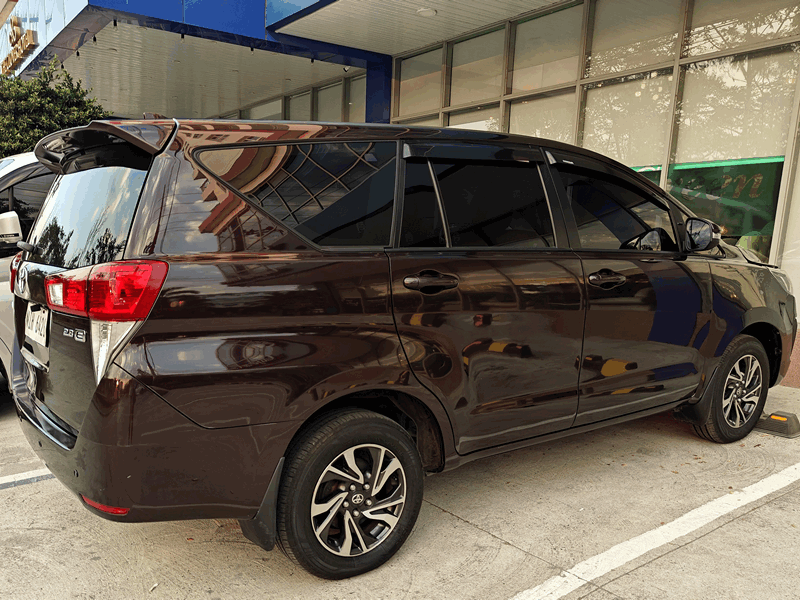 This vehicle is a diesel which is slightly more expensive than gas; we found prices ranged from 130PHP per litre to as high as 163PHP per litre (that’s $8.23 USD per gallon up to 10.13!).
After signing papers and getting keys, off we went. We received the car with just over a quarter of a tank so the first thing we did was fill up. We wanted to get out of Manila before the mad rush of people returning from their Easter weekend got really bad. Everyone has Holy Thursday and Good Friday off so it’s a longer weekend. However, we heard due to rising fuel prices, fewer people are supposedly driving…..
We opted to take the toll highway as although it was a slightly longer route, it meant no lights and less traffic. The car came with an RFID reader but with no money on it and Mel, said we could either put money on it or pay cash at the booths.
There was a toll almost immediately upon getting on the road (85 PHP) and then not another until we got off (340 PHP). Then it was a ten minute drive to our hotel in Angeles, which is about 100 km / 60 mi north of Manila. We chose this location as Doug has an appointment on Monday with an ocularist to get fitted for a new prosthetic eye. It’s been about 12 years and this should be done more often than that but in the US, even being on Medicare, it will cost so much more. So he set up three different appointments and he’ll see at the first one if he’ll proceed.
We stopped at a McDonald’s for breakfast once and while waiting saw this – never ending gravy!
 Filipinos love their fried chicken – it is served nearly everywhere.
So we checked into the hotel, got our room and went for a walk to see about getting pedicures. Doug had found a few places nearby, actually open on Easter Sunday! Tulua’s Nail & Cafe did an excellent job as our feet needed TLC after walking on the beach so much and we enjoyed a fruit smoothie while having them done.
Doug was done first so he went for a walk looking for places for us to have dinner tonight and Fran met him back at the room after she was done. Around six we went over to “Grumpy Joe’s” for dinner. They seated us after a couple of minutes, then a few minutes later brought water but never came to take our order. We caught someone after 20 of arriving, and she disappeared! Then a few minutes after that a fellow (maybe higher up than the woman) came over to ask what the problem was! After telling him, we’d been waiting 20 minute to have our order taken as he seemed to think it was our food we were waiting for, he took our order and as per what often happens in this part of the world, Fran’s order came and Doug’s arrived while she was halfway through it. At Sun Moon Lake, when we were out for dinner, Doug’s came and Fran’s didn’t show up until he was finished.

The food was good though and it was not an expensive meal – under $20.
We are staying two nights at the Clover Hotel. We paid $107 for two nights and it’s pretty modern but has some weird quirks. We have a “king” room but the bed is a queen. It has a kitchenette complete with a big fridge and a gas stove but no supplies to eat or cook. There is a motion sensor light as you come in the room which can be nice but it also turns on every time you go to use the bathroom and you can’t turn it off. We had requested extra pillows in the app but they were not in the room so we went down to ask for them and ask about this light. They charged us 75 PHP for each extra pillow (?!) and had the maintenance guy come up and cover the sensor for the duration of our stay as we both get up on the night and didn’t want that light coming on every time.
We had the morning to ourselves on Monday before Doug’s 1pm appointment. He went for a walk to get some room supplies and then brought up some iced coffees before we went down to the hotel cafe at 11:30 for breakfast.
We arrived at Doug’s ocularist’s office a little early and as he is an optometrist as well, Fran had an eye exam done (needs a new script) but after looking at glasses she opted not to get them here. She wants high index lens and they take longer to make and there’s a good chance they won’t be ready and the price was not much cheaper than back in the US.
So the result from Doug’s appointment was that his prosthetic eye is in good shape and getting a new one won’t help his eyelid – he just needs to use drops more to keep it better lubricated. He did look into eyelid surgery after the ocularist gave him a referral but that doctor said eyelid surgery for an artificial eye is much more complicated and he couldn’t do it during the time we had left here in the Philippines. It was now nearly 4pm so we returned to the hotel for some downtime before downstairs for some dinner right in the hotel cafe.
Since Doug no longer has two more appointments for his eye, we have some extra time here in the Philippines.
So on Tuesday we headed north leaving around 7:15 to beat the traffic and drove 326 km / 202 mi up the coast to the colonial city of Vigan. The drive was about one-toll road for which we paid 230 PHP ( less than $4) and then it was like driving in Latin America or Africa on a main highway but through one town after another but with few traffic lights. We went through a long section where grape picking was available in many places – too bad we couldn’t take some home with us!
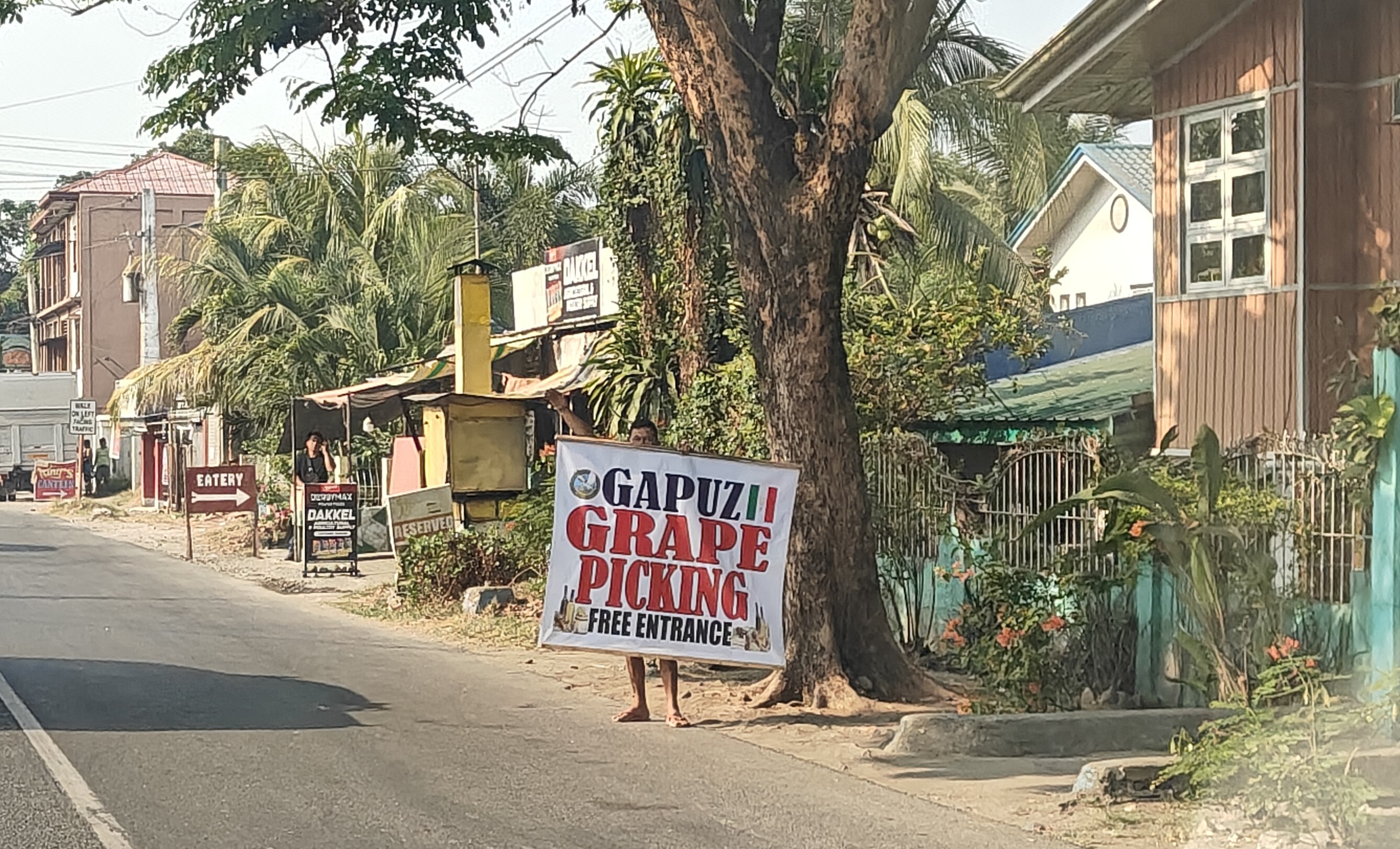
We shared the road with motor bikes, buses, jeepneys and tricycles, some electric tuk tuks and some it was quite chaotic. Maybe one quarter of the drive was through rural lands with some sporadic housing with no density. It was very reminiscent of driving in Latin America or many parts of Africa with many ramshackle roadside businesses/food stands. At times there were police checkpoints but we were just waved through.
We arrived in Vigan in the early afternoon.
Located on the north western coast of the large island of Luzon, facing the South China Sea, it is a UNESCO World Heritage Site and it is one of the few Spanish colonial towns left in the Philippines whose old structures have mostly remained intact. It is well known for its cobblestone streets and a unique architecture of the Spanish Philippines colonial era which fuses native Philippine and Oriental building designs and construction, with colonial Spanish architecture that is still abundant in the area, mainly the “bahay na bato” houses.
In May 2015, Vigan was officially recognized as one of the New 7 Wonders Cities together with Beirut, Doha, Durban, Havana, Kuala Lumpur and La Paz.
During the pre-colonial period, Vigan was a coastal trading post frequented by trade ships from Arab, Indian, Chinese, and (mainly) Japanese traders. Traders sailing from the South China Sea came to Isla de Vigan (Island of Vigan) via the Mestizo River that surrounded it.
The Spaniards led by Captain Juan de Salcedo marched north from Manila on May 20, 1572. After the successful expedition and the exploration of the North, Juan de Salcedo founded “Villa Fernandina de Vigan” in honor of King Philip II’s son, Prince Ferdinand, who died at the age of four.
In 1574, Salcedo returned to Vigan, bringing with him his soldiers and some Augustinian missionaries to pioneer the evangelization of the Ilocos region. He established a Spanish city for the purpose of controlling the neighboring country.
On July 27, 2022, a 7.0 magnitude earthquake struck parts of the island of Luzon damaging the city’s sites including the Vigan Cathedral and old-century houses, as well as few power lines toppled along Calle Crisologo.
Fran had booked us into one of the historical houses that has been turned into a hotel called Escolta’s Homey Lodge and it was quite something inside; high ceilings, wooden slatted floors and lots of old furniture. We paid $30 for a queen room with private bath, AC (which we needed as it was 34 C feels like 40C!), Wi-Fi and parking around the corner in a secure lot that the hotel paid for. We told the parking attendant we were guests of the hotel and after calling the hotel as requested, staff came over to pay the parking and help us with our bags. We had the use of a fridge in the downstairs kitchen too.

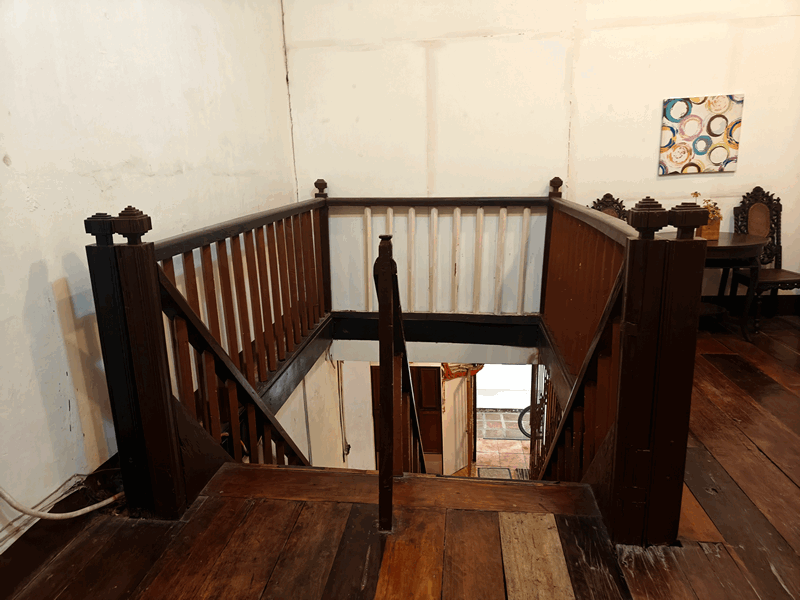

Our room seemed to have the original floorboards and you could see the light from the lower floor:

Báhay na bató (Filipino for “stone house It was popular among the ruling upper-and middle-class families in the 19th to early 20th centuries. Báhay na bató are also commonly referred to as “ancestral house”, due to it being the most common style for surviving ancestral family homes.
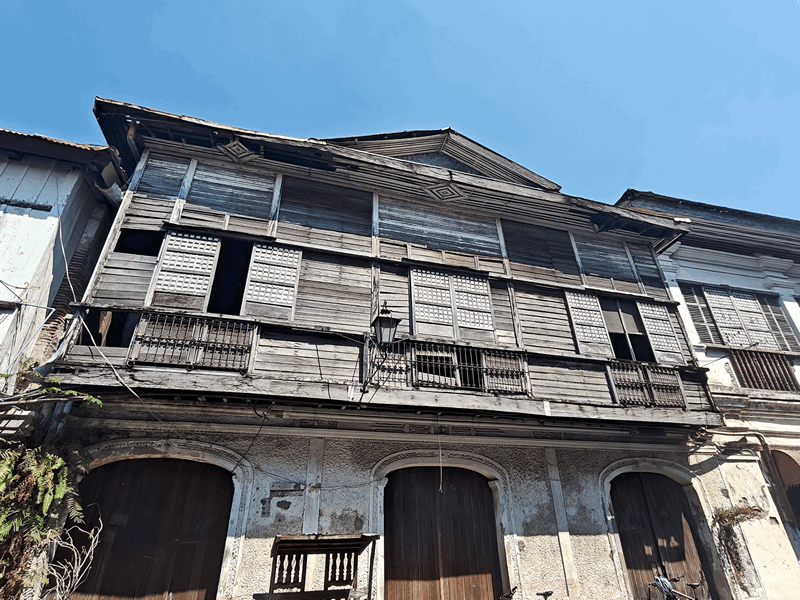
After getting our stuff into the room, we went for a walk around the city and did not regret coming here at all. It reminded us of walking around Antigua in Guatemala with the old colonial buildings, some in disrepair and cobbled streets. We checked out a couple of plazas, a mansion museum of the former Congressman Crisologo (which was also the name of the pedestrian street our hotel was on) and tried to check out a pottery place but it was closed.


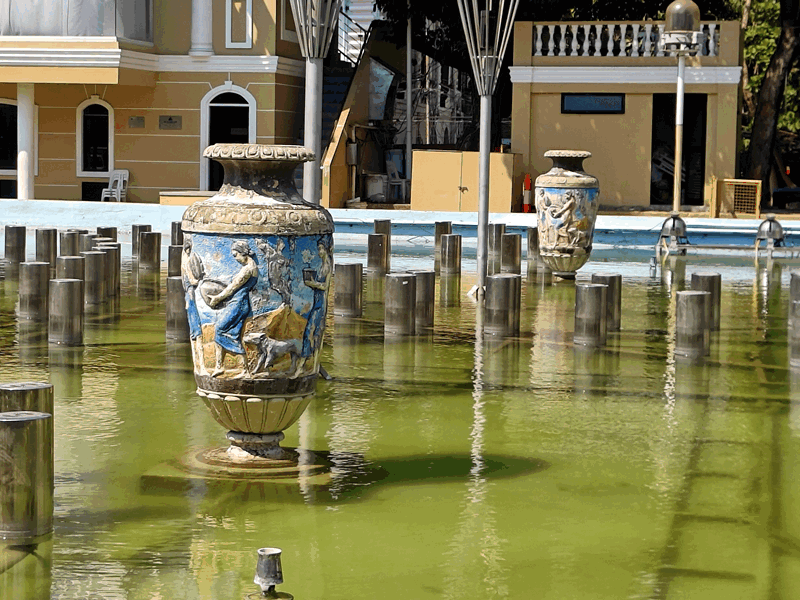
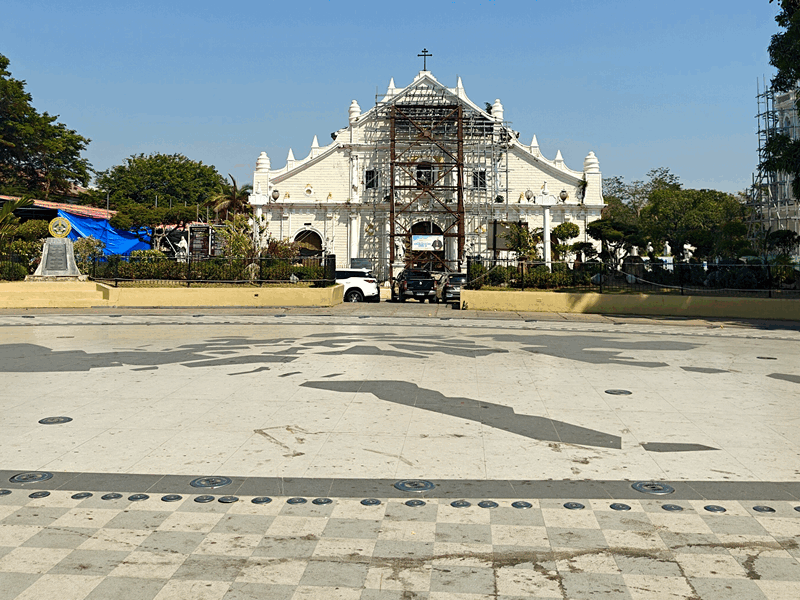
 At the main plaza we saw the cathedral under restoration and a huge pond with nonfunctioning fountains and coloured pots in a few spots:

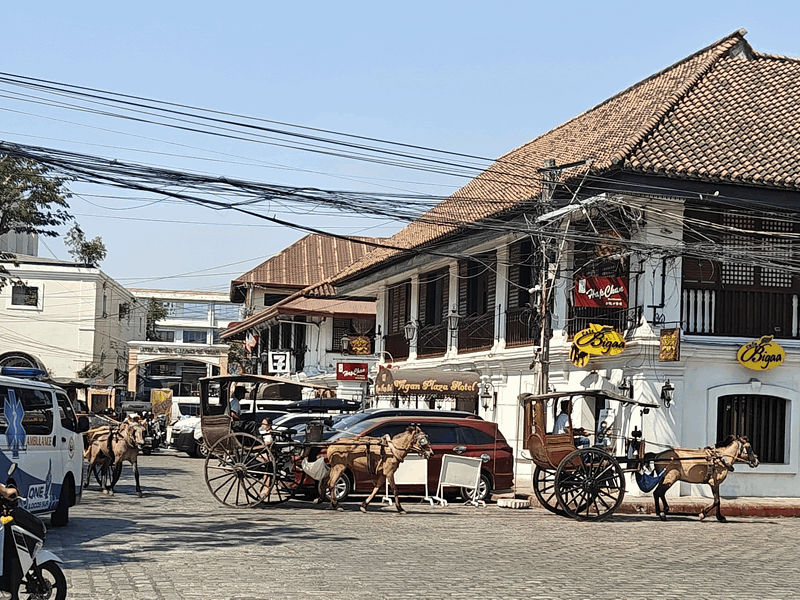
You can also take horse and buggy rounds through town here which they called Kalesas:
We stopped at a cell phone place and asked about getting new screen protectors and they pointed us to the Central Mall – this place was full of accessory store – no idea how they make money. Anyway, we each had one affixed for 450 PHP ($7.50) and they didn’t have the exact one but the saleslady had someone come over and cut the edges of another type to fit. (Turned out she should have cut the top as well as it began to peel off a bit at the top.)
We needed something to cool down so we stopped for some ice cream around 3:30 before continuing to stroll and then a beer before at a bar later, around 5, after which we returned to the room to cool off and get ready for our 6pm KEGS meeting.
After our meeting we headed over to 1995 Studio Cafe for some dinner. As usual our food did not come at the same time, Doug was nearly finished his pasta before Fran’s dinner came and as it wasn’t enough dinner for him, he ordered another plate but it never came before Fran was done. We gave up and asked for the bill; as Doug was paying she remember the other plate and Doug said, it’s not even on the bill so don’t worry but she got it and put it in a take away container so he ate it back at our room.
We had an okay night’s sleep; the air con is very loud but it did work pretty good. We left just after seven and were helped to our car by staff using a cart to carry our bags to the parking lot.
One thing we find at most hotels, is the beds rarely have top sheets, just a duvet or a blanket both of which are too warm for Fran but luckily, she can use one of our beach blankets (sarong style) instead.
Wednesday the 8th’s drive was nearly as long in time but not so much in distance. It was only 163 km / 102 mi but due to the slower speeds as there is no toll highway this far north. We made one stop enroute to Pagudpud at the small town of Paoay to see its very old church of some note.
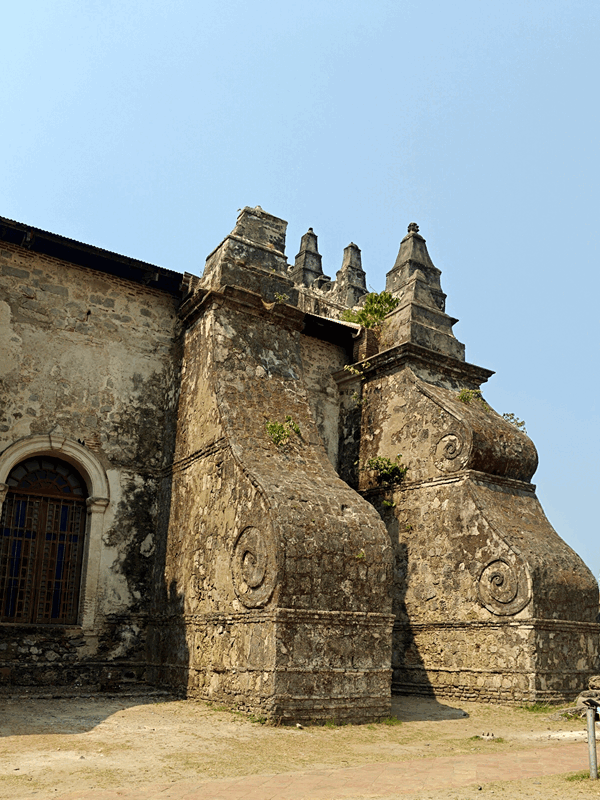
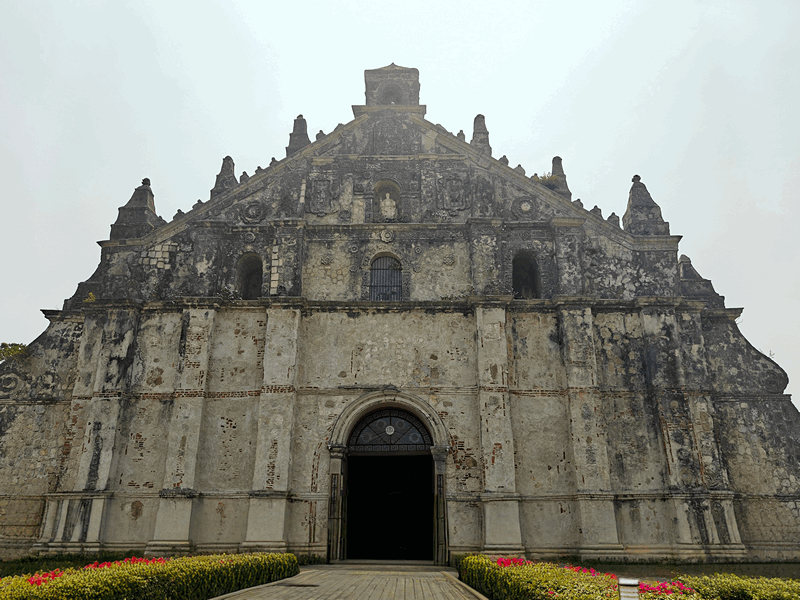
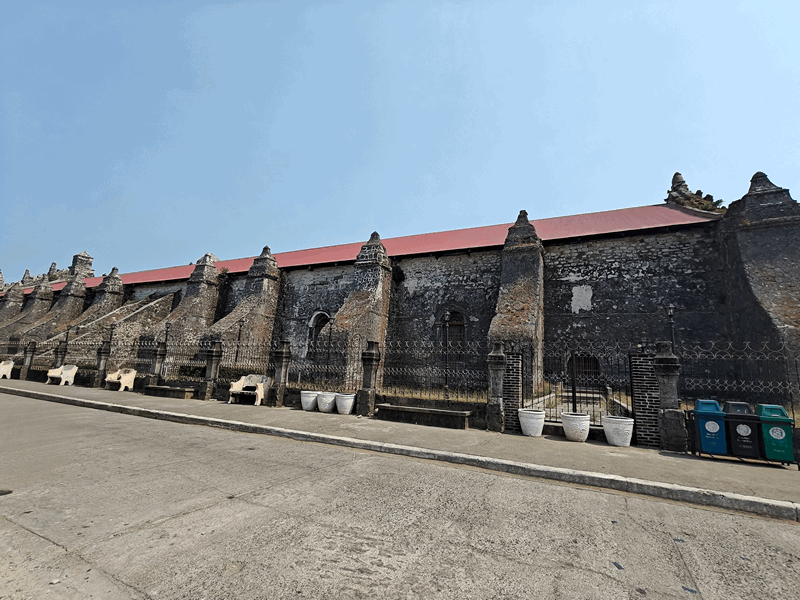
Saint Augustine Parish Church, commonly known as Paoay Church, is a Catholic church famous for its distinctive architecture, a highlight of which are the enormous buttresses on the sides and the back of the building. The parish was founded in 1593, construction began in 1694 with the cornerstone laid in 1704 and was completed in 1710. The church was declared a UNESCO site in 1993.
Some portions of the church were damaged in the 1865 and 1885 earthquakes but was later restored under the initiative of former First Lady, Imelda Marcos.
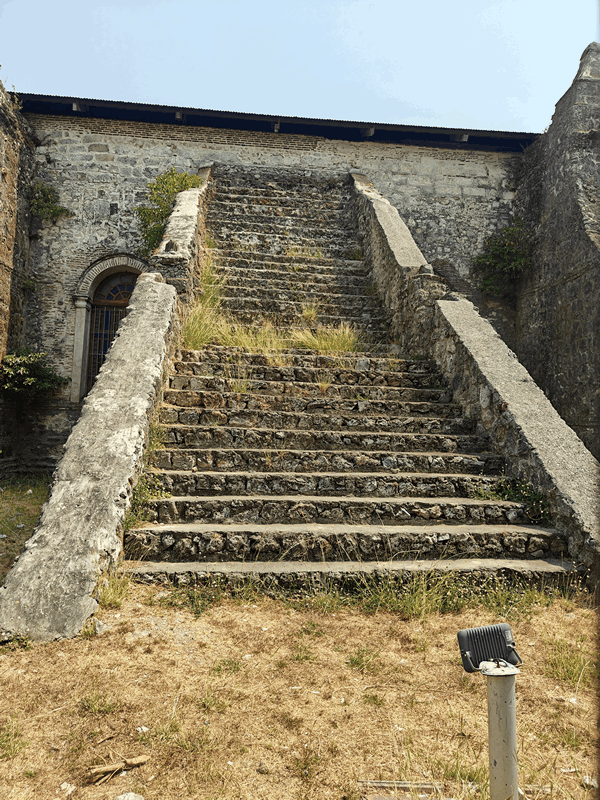
Paoay church is the Philippines’ primary example of a Spanish colonial earthquake baroque architecture adapted to the seismic condition of the country through the use of enormous buttresses on the sides and back of the building. The most striking feature of Paoay Church is the 24 huge buttresses of about 1.67 m / 5.5’ thick at the sides and back of the church building. Extending from the exterior walls, it was conceived to a solution to possible destruction of the building due to earthquakes. Its stair-like buttresses (known as step buttresses) at the sides of the church is possibly for easy access of the roof.
Its walls are made of large coral stones on the lower part and bricks at the upper levels. The mortar used in the church includes sand and lime with sugarcane juice boiled with mango leaves, leather and rice straw.
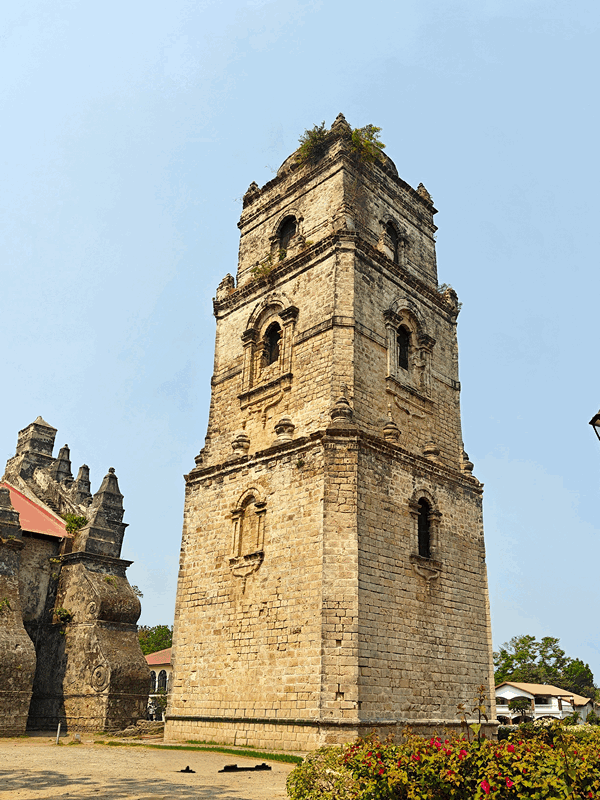
Adjacent to the façade is a three-storey coral bell tower constructed separately from the church building on the right side resembling a pagoda. It was in 1793 when the cornerstone of the bell tower was laid. It stands at some distance from the church as a protection against earthquake. It served as observational post for Filipino revolutionaries against the Spaniards in 1898 and by Filipino guerrillas against Japanese soldiers during WWII.
This was quite impressive and much more so the outside than the interior.


As the ice was melting fast in our makeshift cooler, when stopping at a 7-Eleven to get more ice, we saw a cooler being used in a display and asked if they sold them; she said no but the next town has a shop with them so we made that our next stop. It was a big department/grocery store and we got a thick walled Styrofoam cooler for about $6.50. We bought a few more items and were on our way to the north end of the island.