
July 30th, 2026
Our flight left Morondava on time and landed in Tana early and our new driver, Tojo and the today’s guide were waiting for us and took us to the hotel to check in; it was too early to do so. We left our bags with the front desk and, Herijohn (John), our city guide, took us on a tour of Antananarivo for a couple of hours. It took a good 45 minutes to get there.

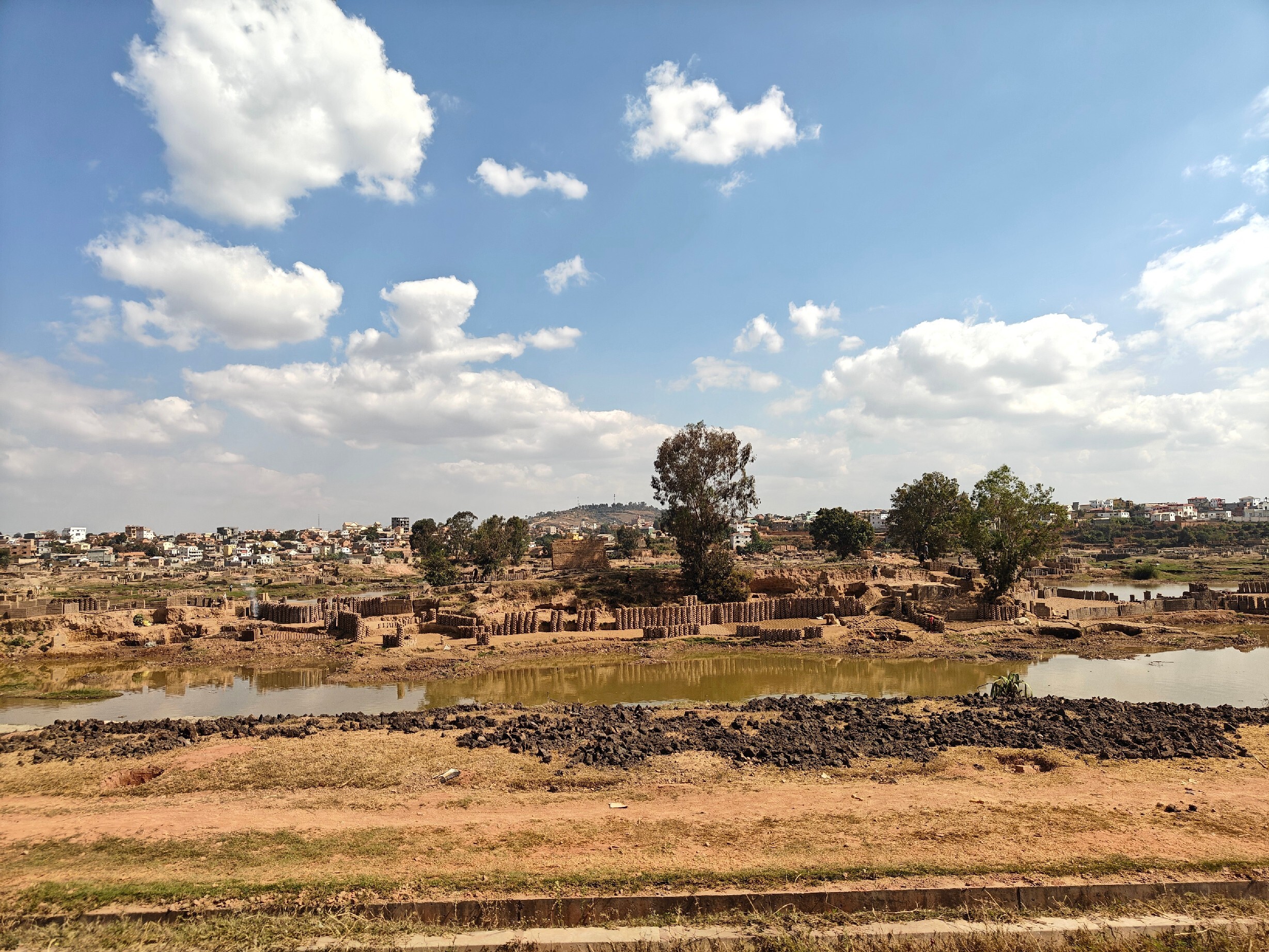
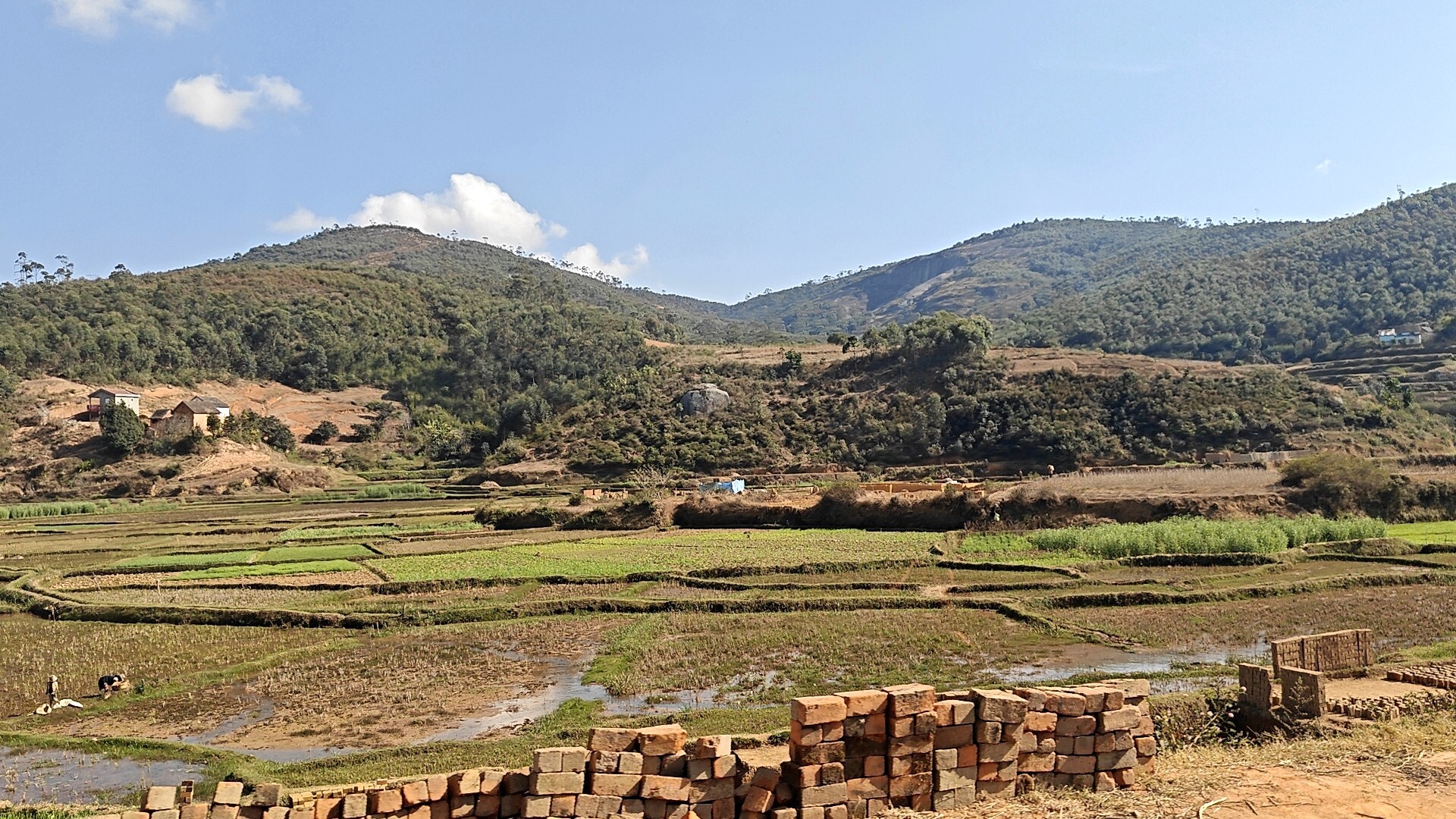
This city sits up around 1300 m / 4265’ and quite comfortable during the day, and just a bit too cool at night. It’s not a beautiful city but it’s huge with three “levels”. The lower city is poorer with lots of rice farmers and brick makers:

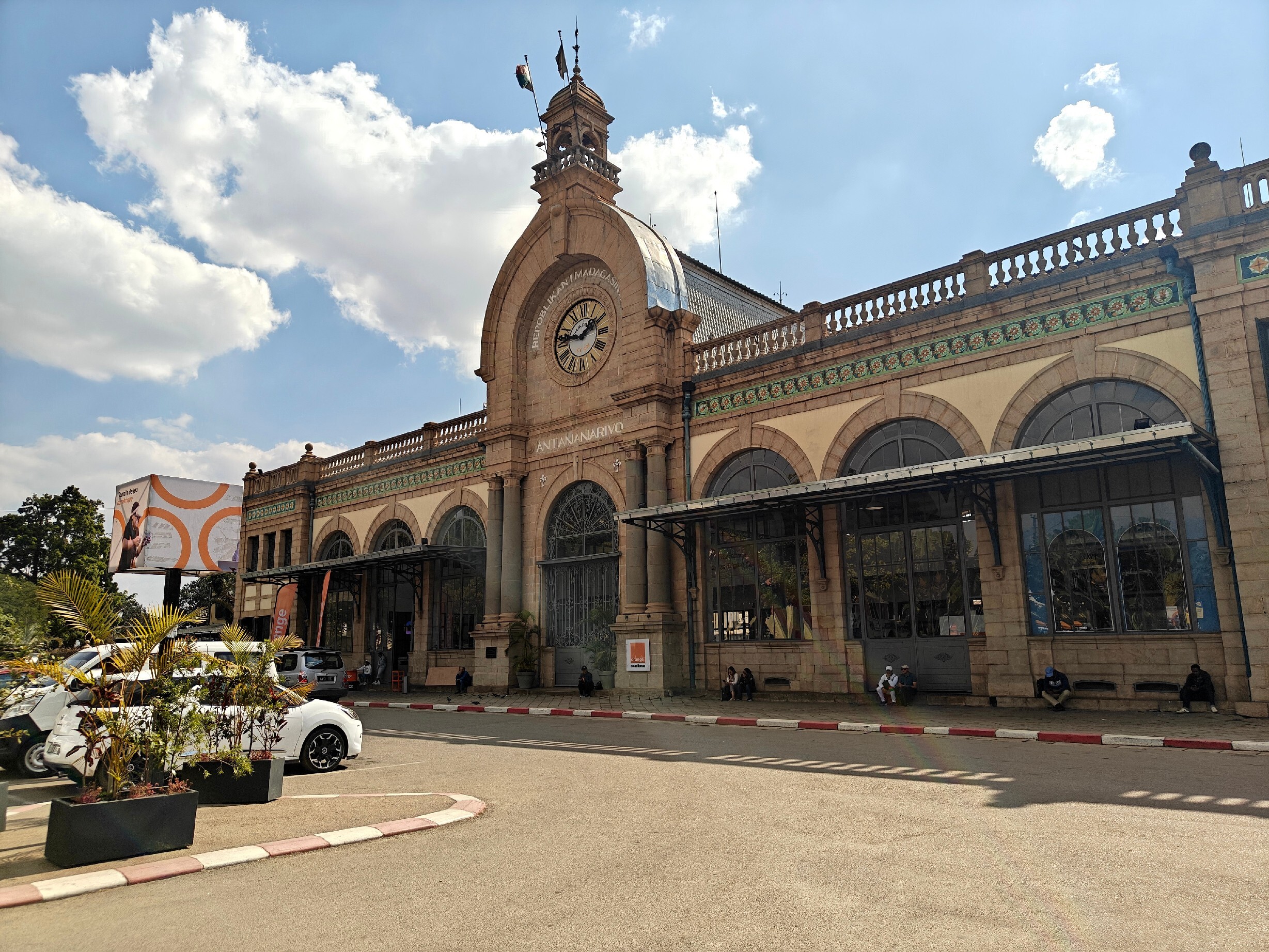
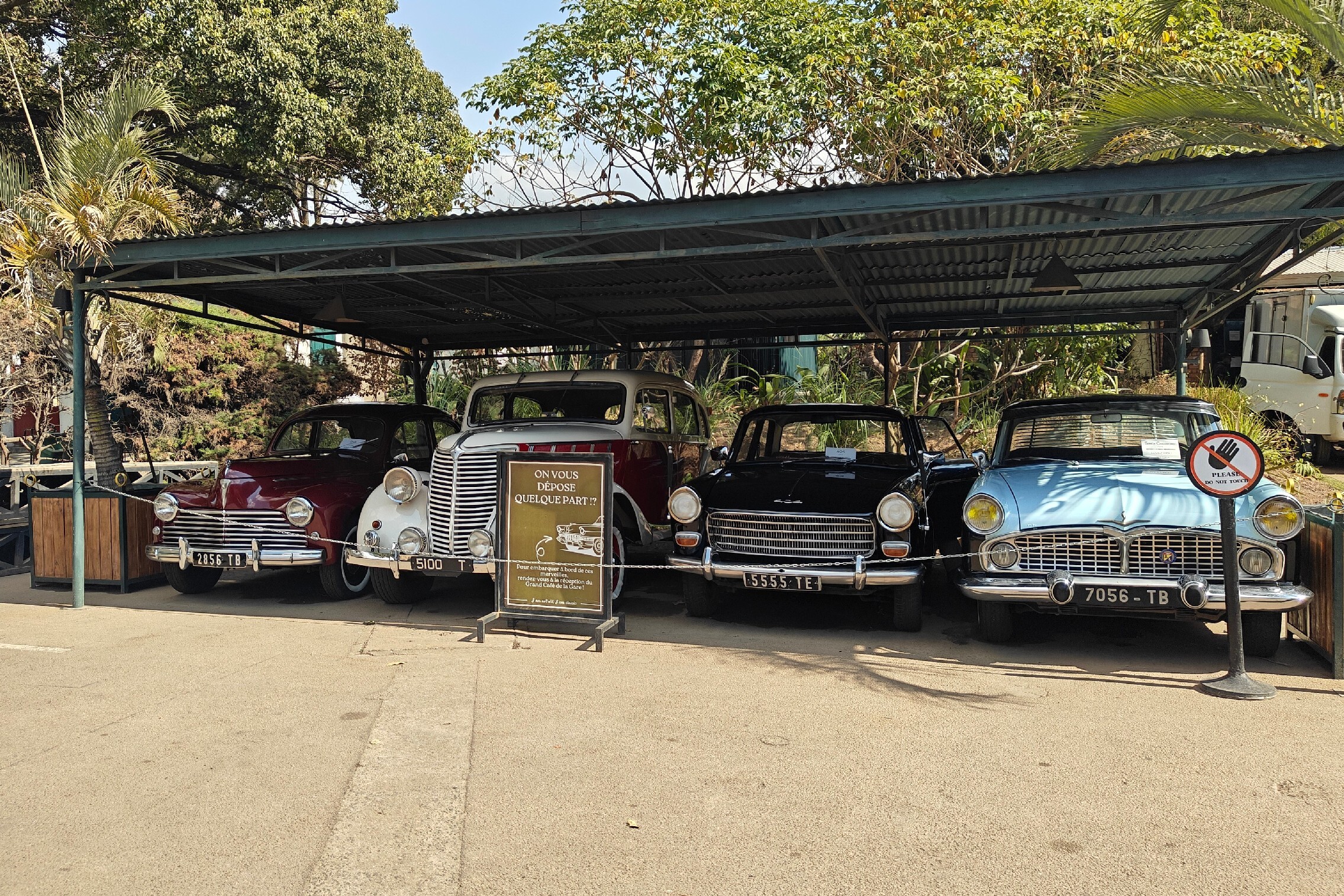
 The middle city is the financial area with a lot of residential which is where we started the tour. Tojo dropped us off at the at the old colonial train station that is no longer in use. John showed us a few vintage cars parked outside the station which you can actually rent!
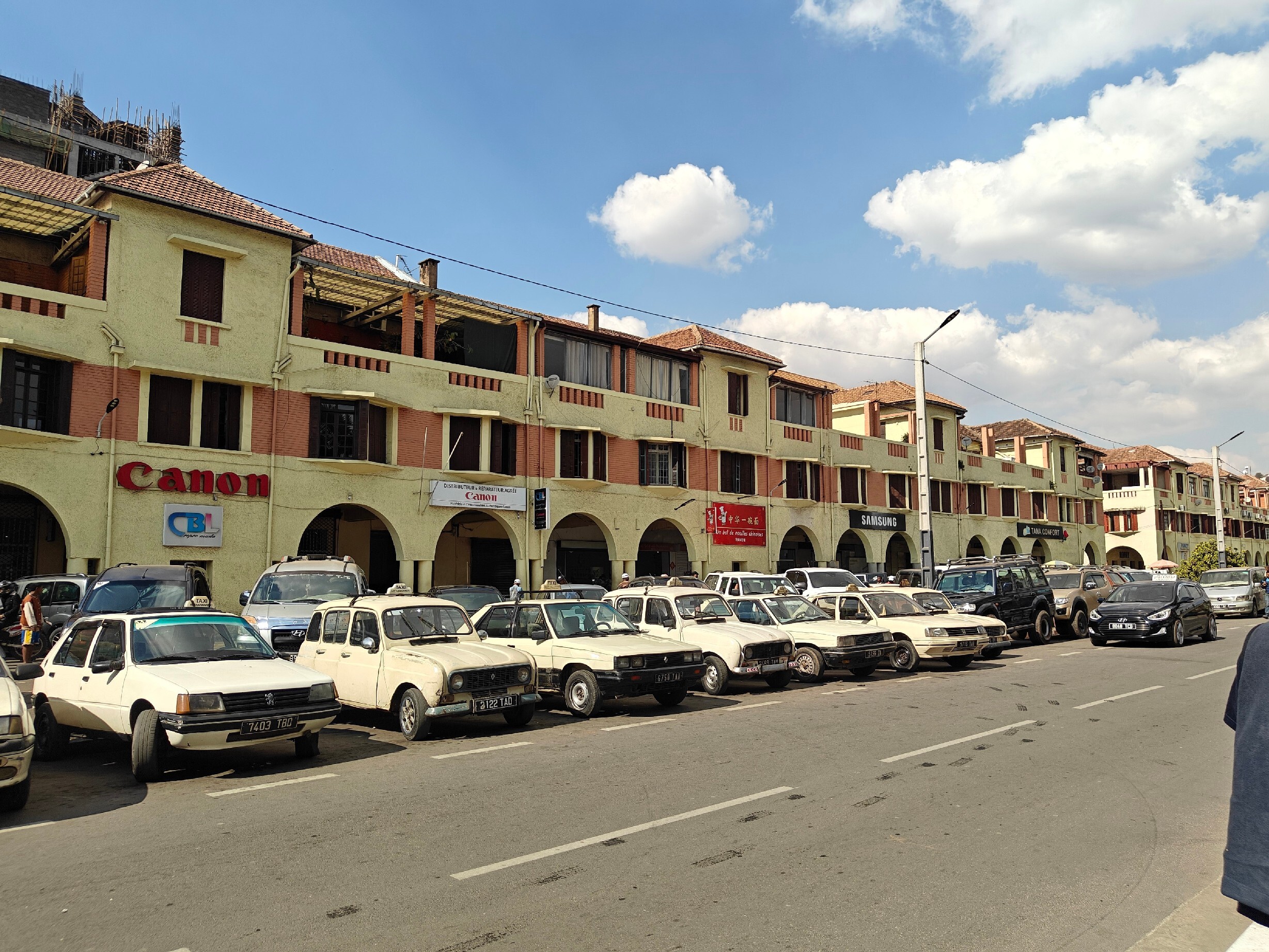
 Next we walked along what John called “Independence Avenue” (our map had a different name on it) and we saw all the historical identical building lining the boulevard. They are no longer used in the same way with shops and businesses taking up the ground level.
He kindly took us to a supermarket to get some Coke Zero (we haven’t had any since we got to the country!) and we purchased enough for the next four days.
Right at the cash registers you can buy condoms. 
We continued to the market which is huge – at one time it was the largest in Africa but due to traffic congestions around it, they broke it up and now different parts (like flowers, animals, etc.) are located in other parts of the city.
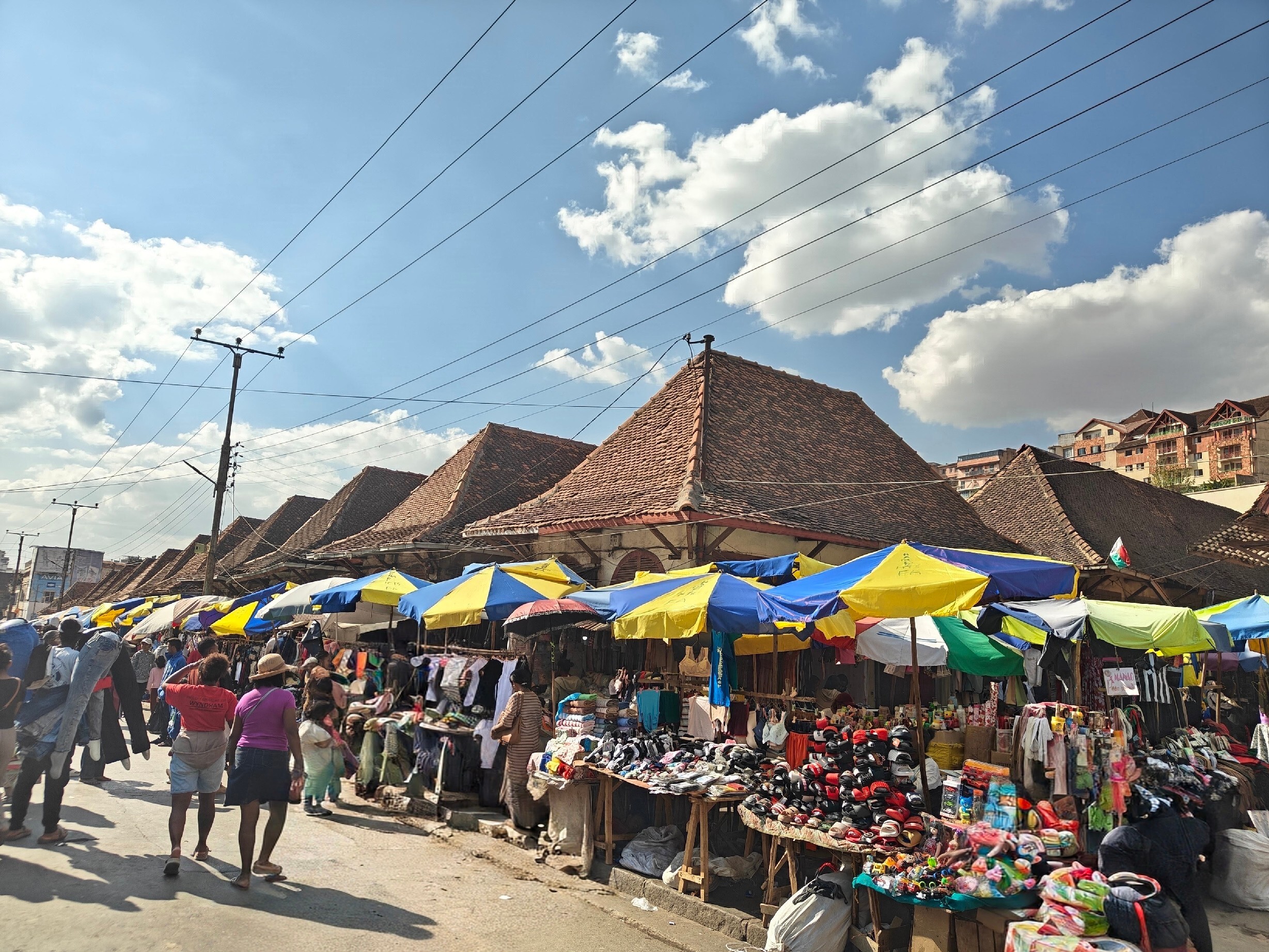
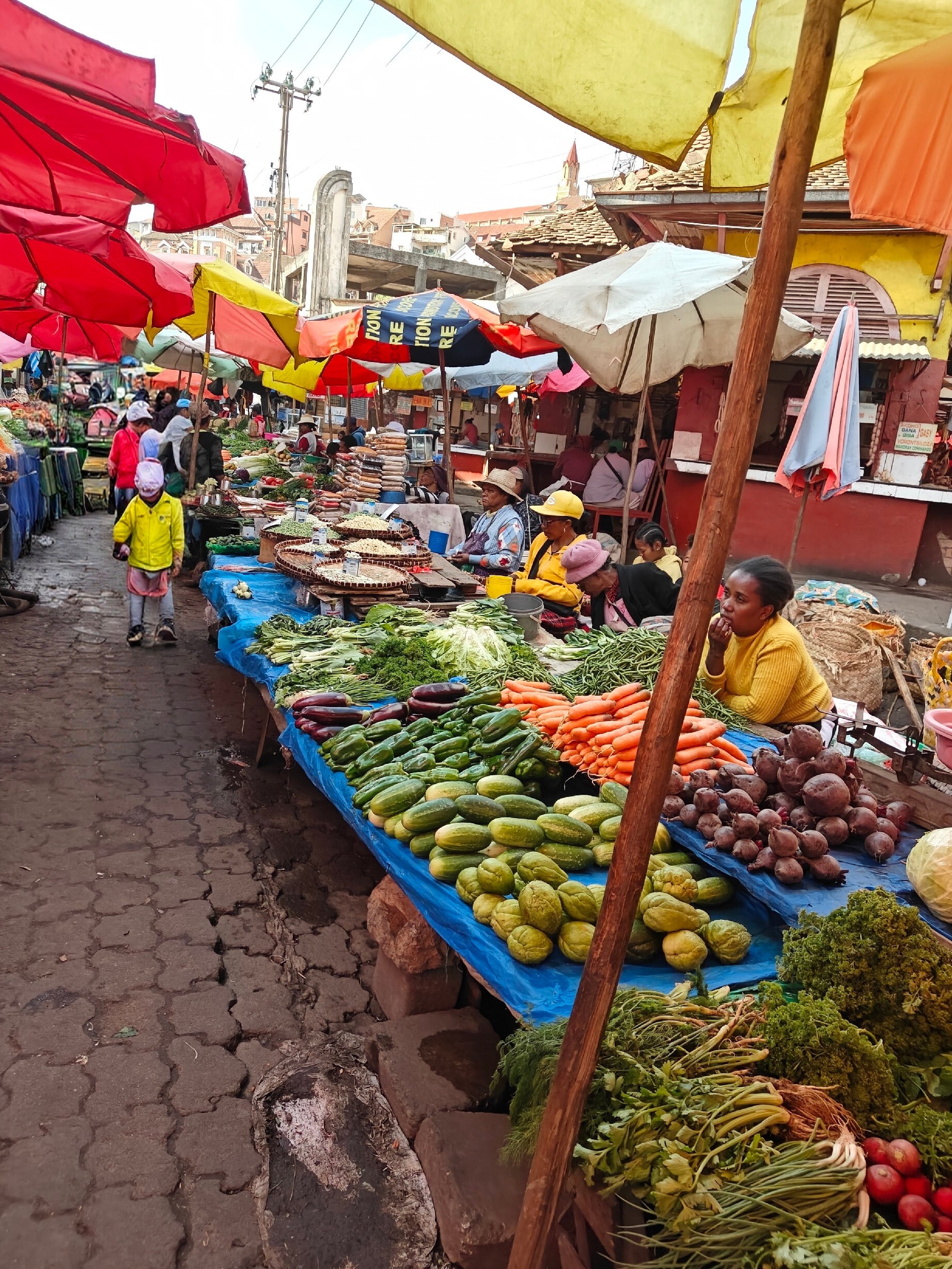
The market extends up the staircase to upper level of the city and on our way up the stairs John found us a money vendor and we purchased a few coins. Coins are rarely used here anymore so bringing some home to the grandkids and our nieces was not going to be easy. We bought them the 50 Ariary coins which have baobabs on them!
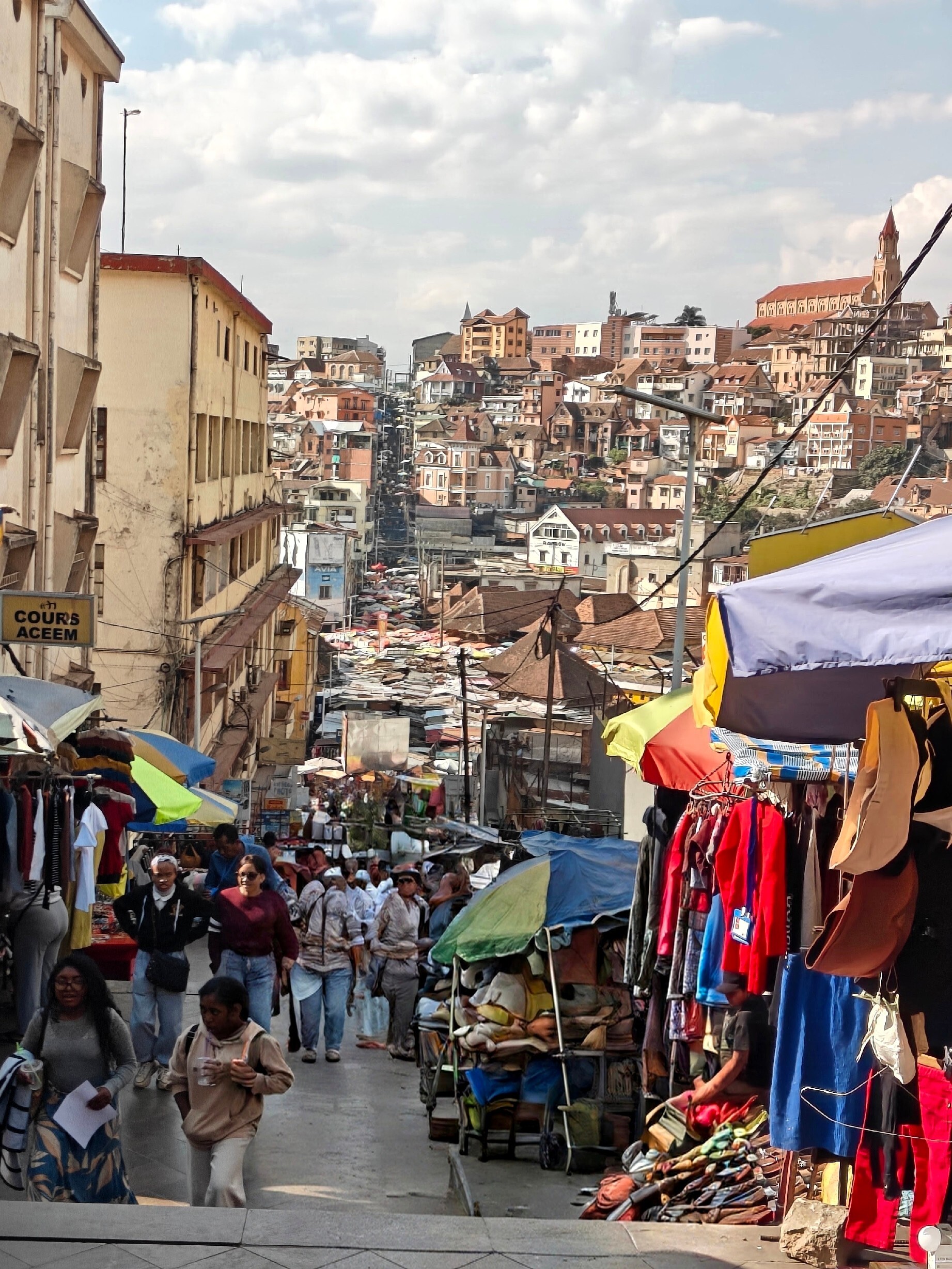

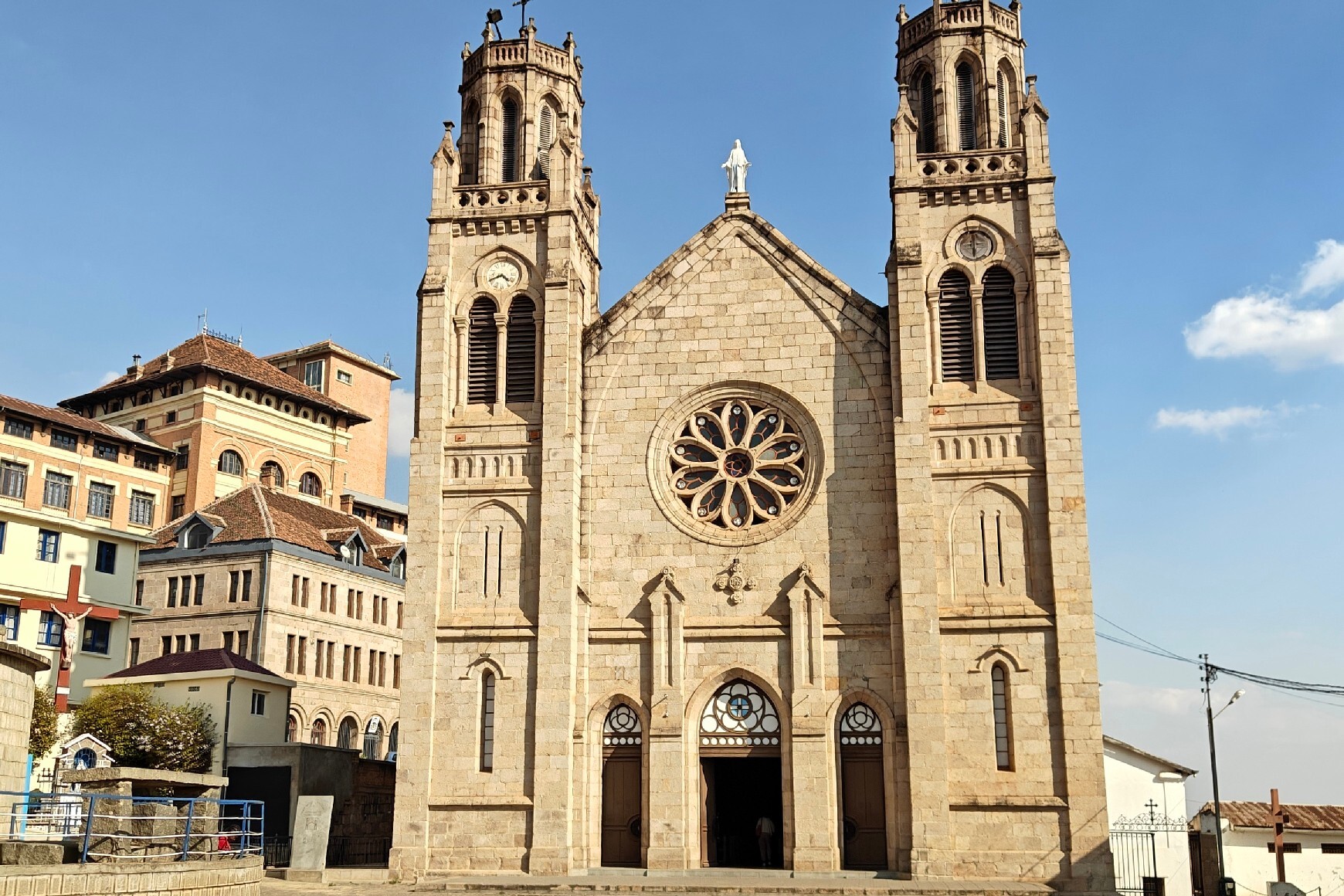
The top part of the city is on one of twelve hills (the tallest one) and within the old city walls and contains a lot of churches and the Queen’s palace. We had looked into the latter before coming and opted not to visit inside but they took us up there to have a look as well as to a viewpoint over the city. The air here is not healthy; full of smoke, smog and more. You can hardly see the sky for the smog – it reminded us on Beijing back in 2004 when we went to China.


After the tour, Herijohn left us and Tojo returned us to the hotel before 5, got checked in and settled and went up to the rooftop bar for sunset, a drink and dinner. We shared a Zebu burger which was good but the fries were better!

We are staying at the same hotel as our first night in Madagascar just a different room. This time we only have one king bed and there are no slippers or bathrobes. Poor us!
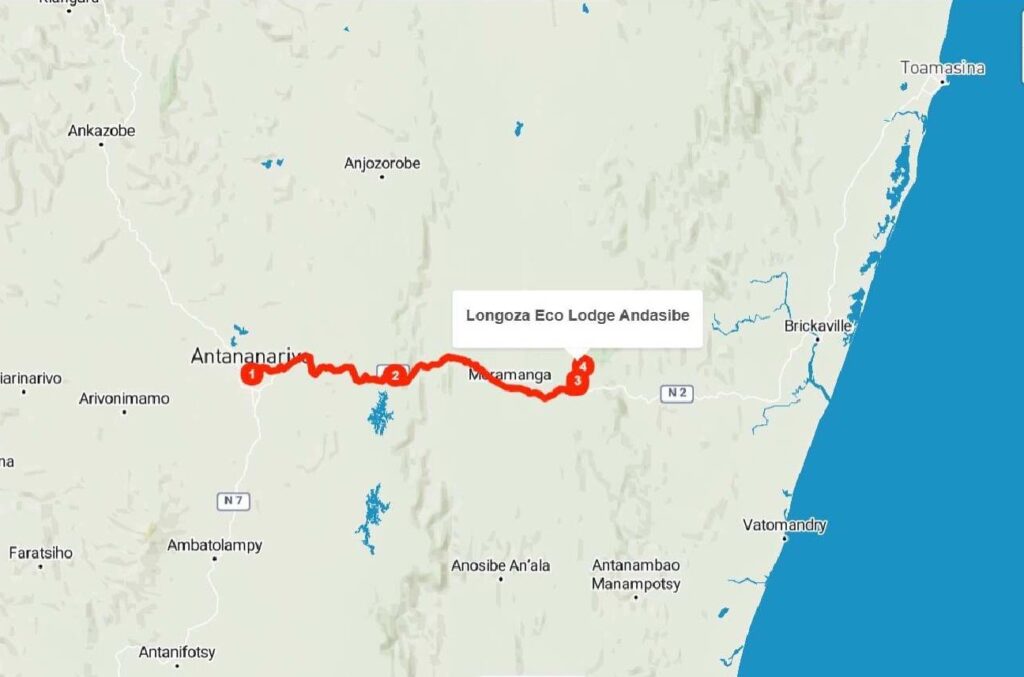
Friday, after another great breakfast at this hotel, Tojo picked us up at 8 and we began the 170 km / 106 mile drive eastward to the national parks to see lemurs and chameleons. This road was paved the entire way but had lots of section with broken pavement, potholes and sections under repair.

About one third of the way, we stopped at Mandraka Reptile Park (aka Reserve Peyrieras) . Here a local guide who did not speak very good English unfortunately and what he did speak, was with a very strong accent, took us around the park to the cages with the various types of chameleons, a snake and some frogs. So some of the photos in the photo galleries have names, others not.
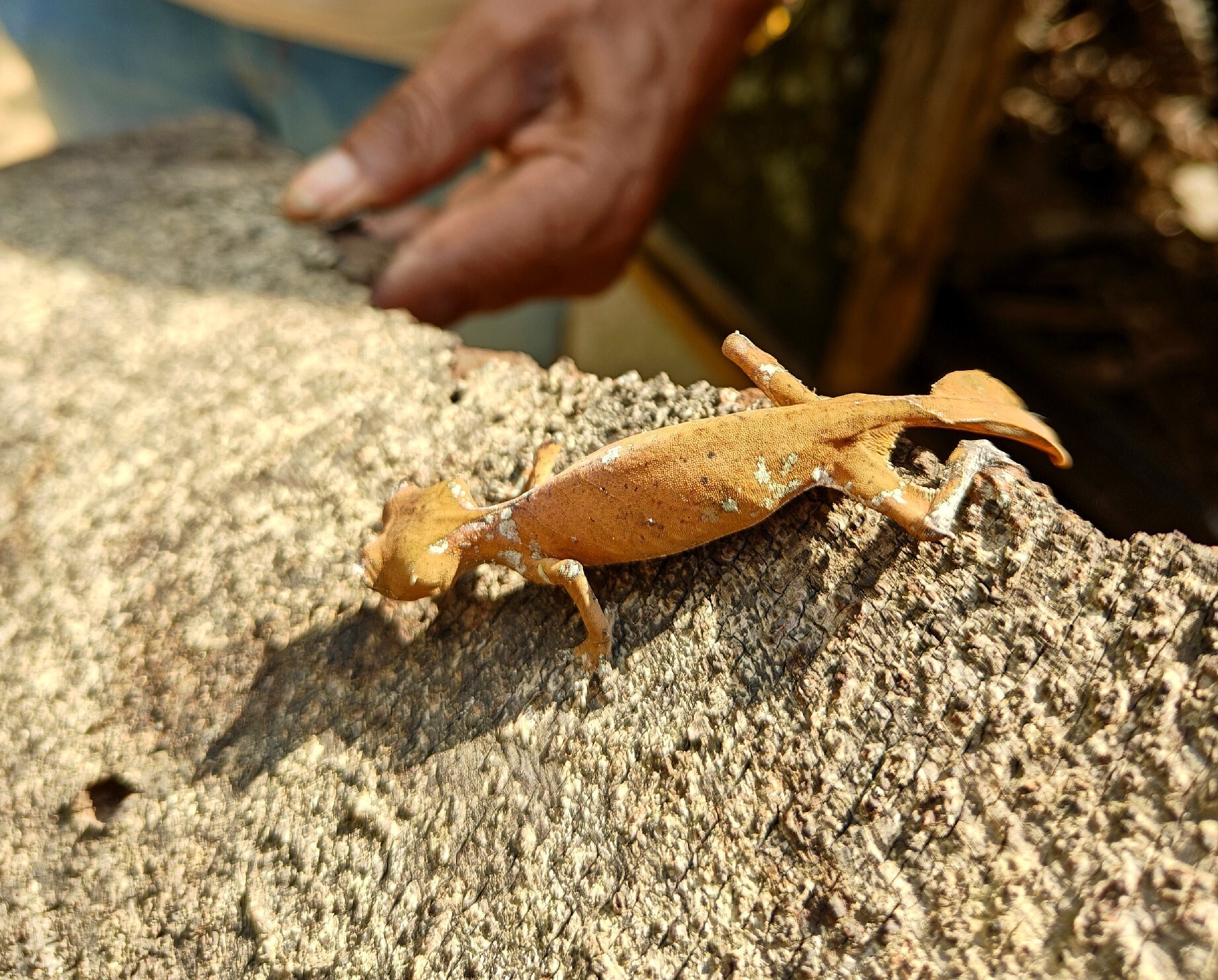
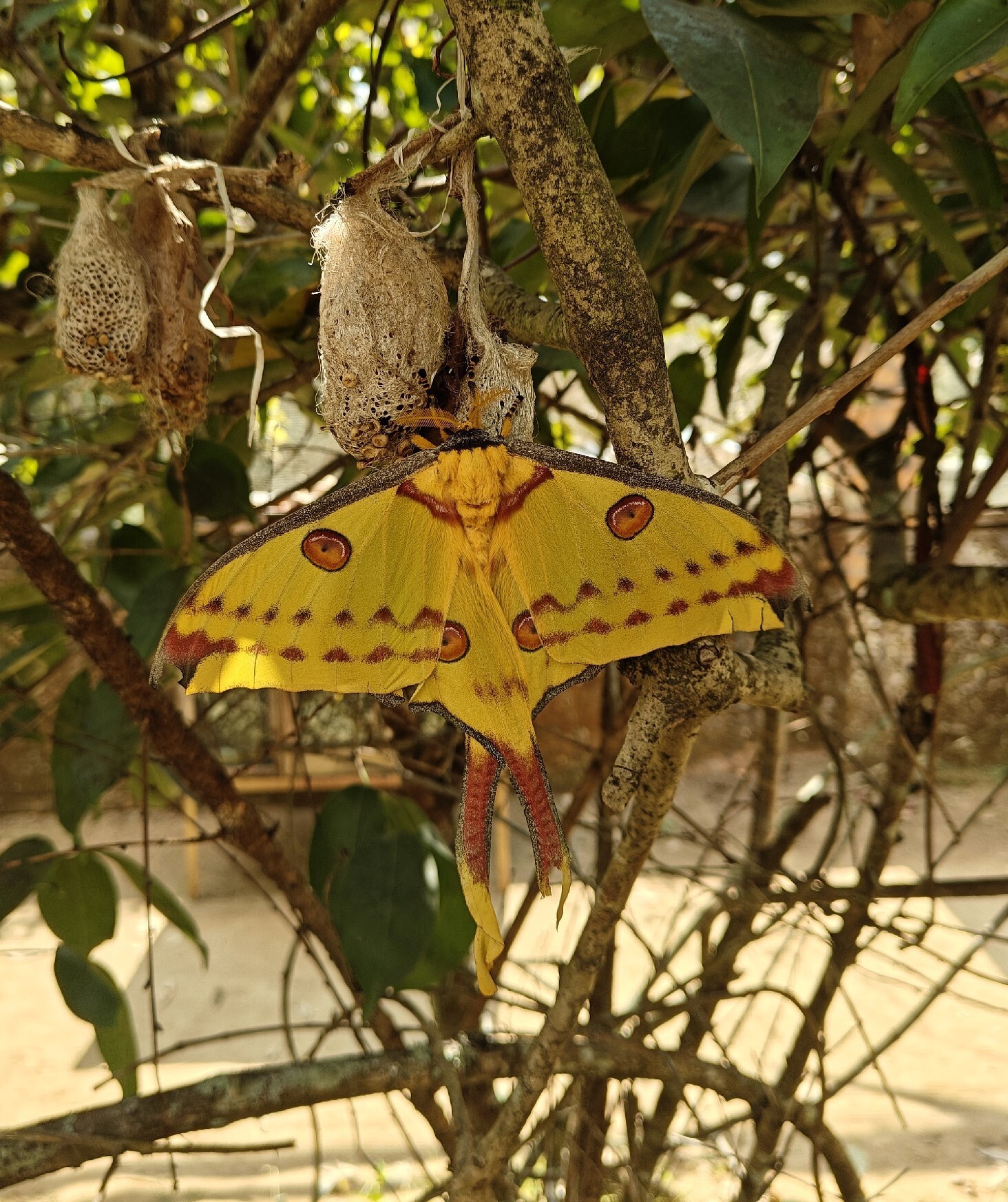
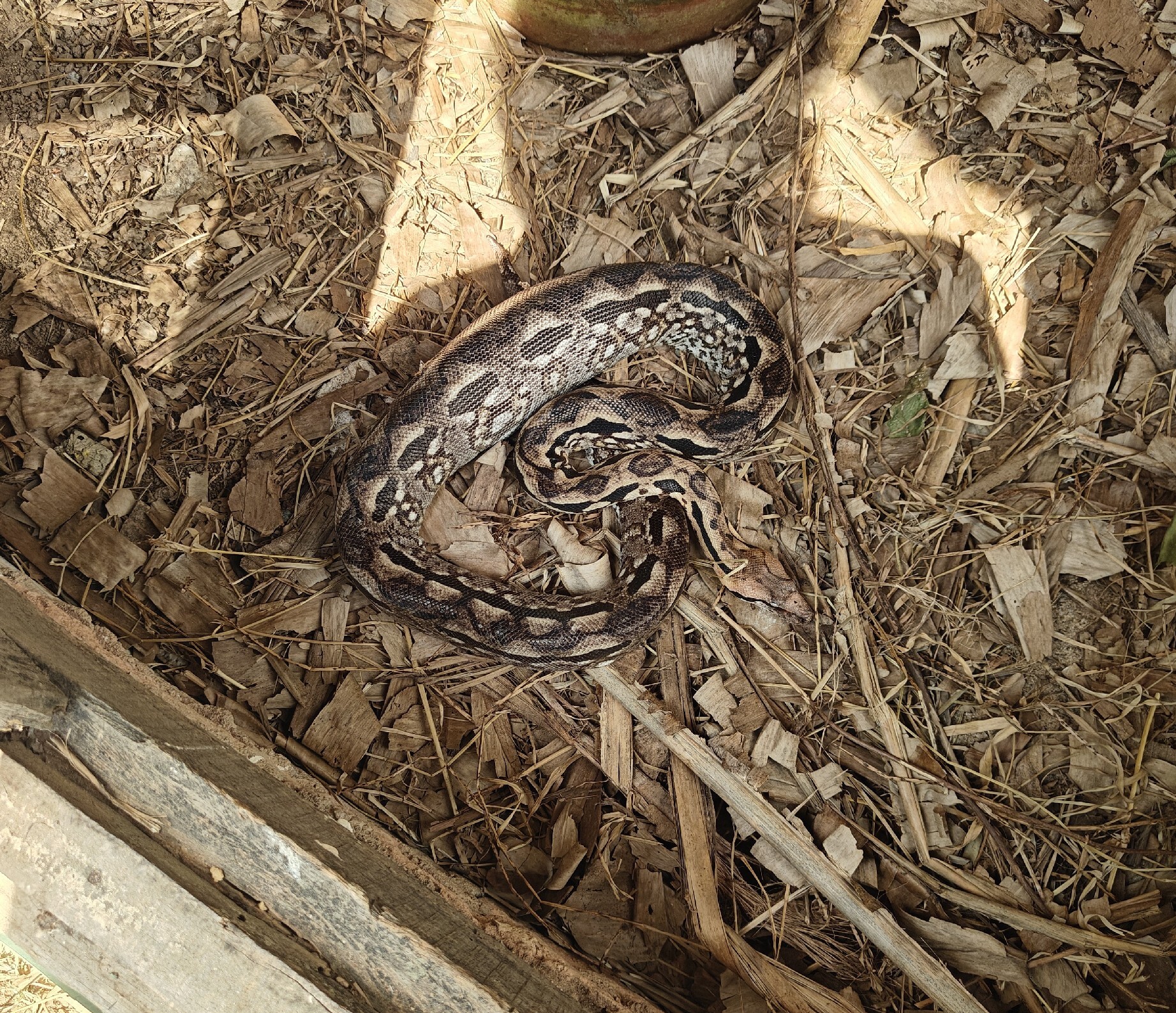
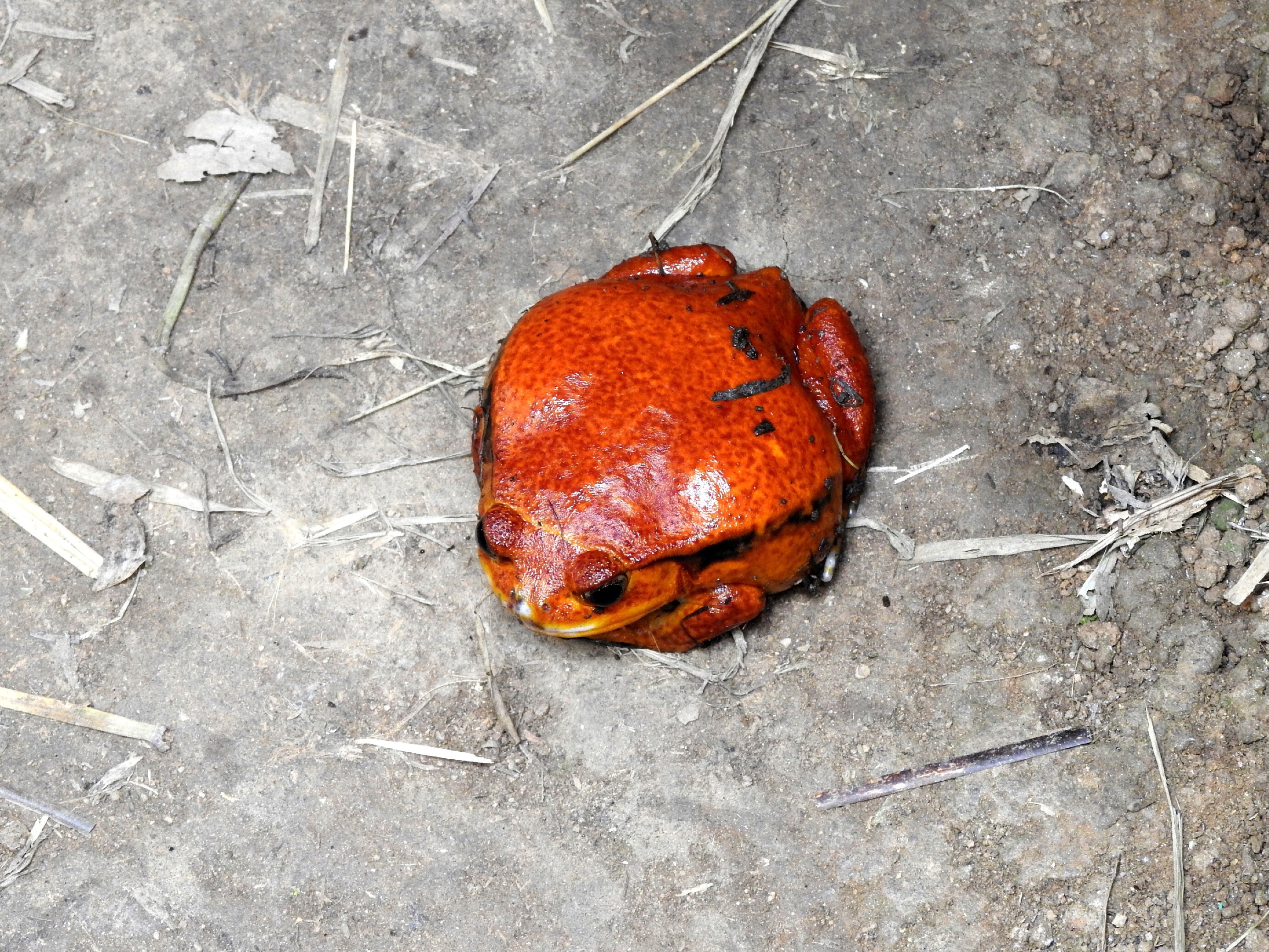

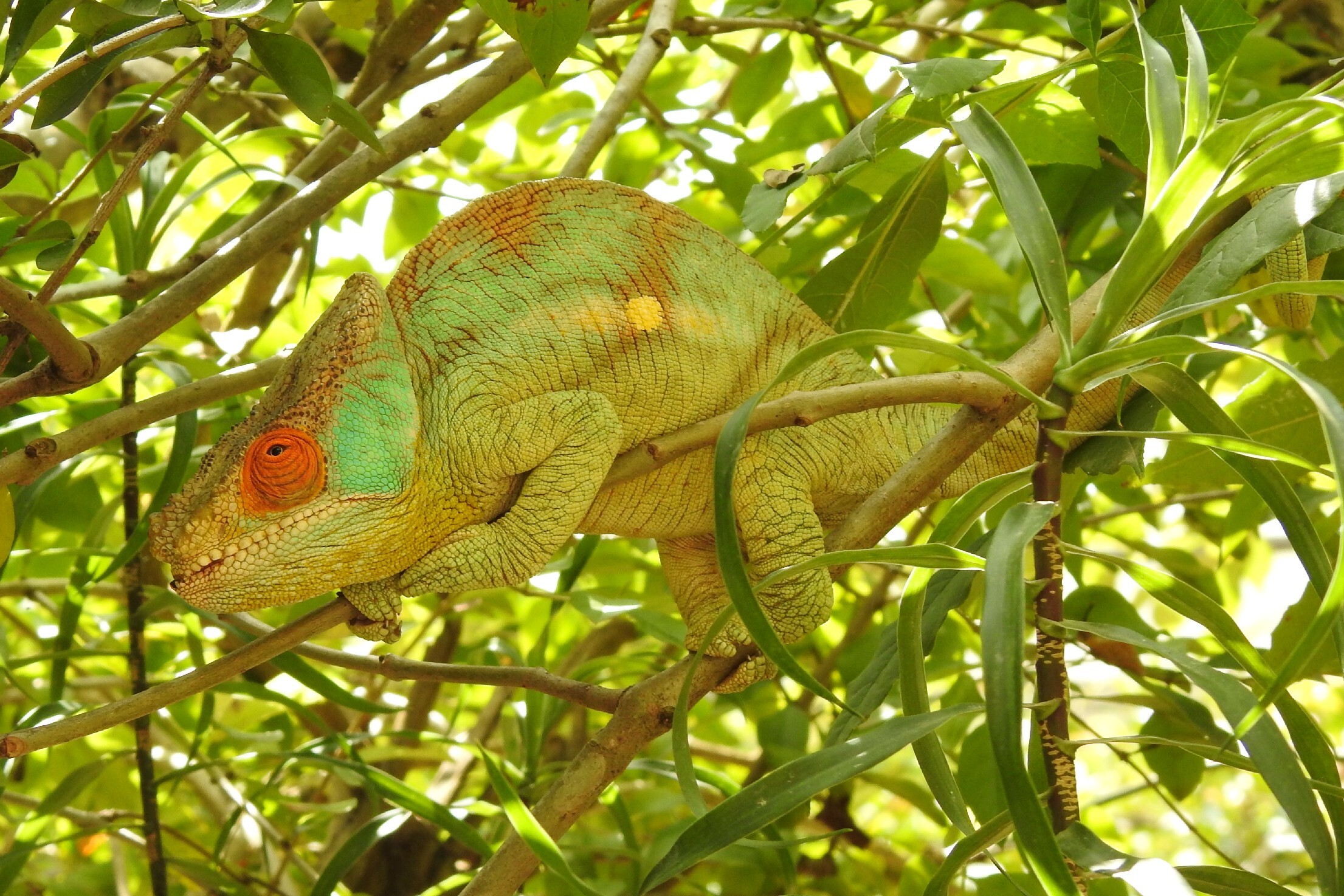
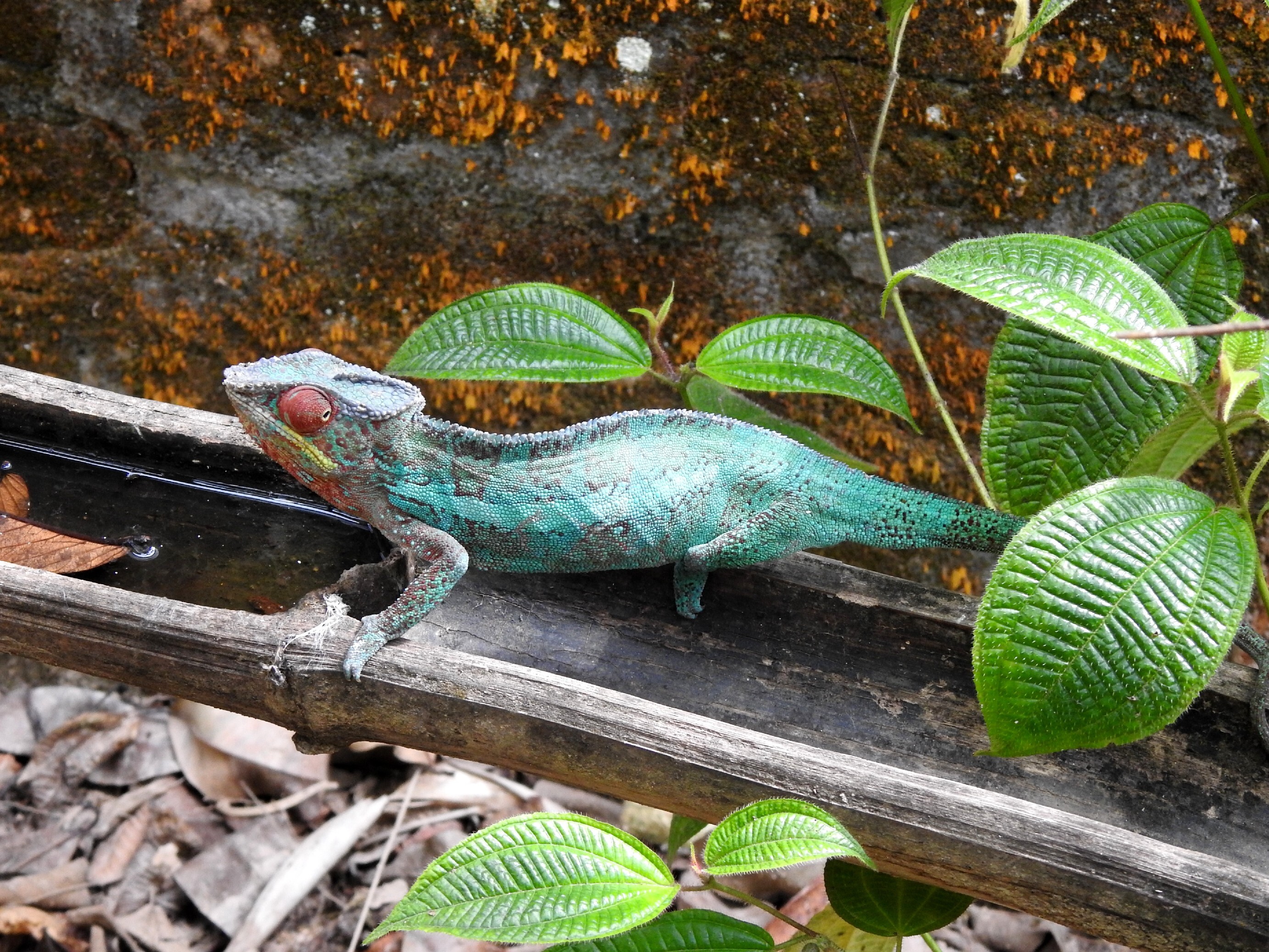
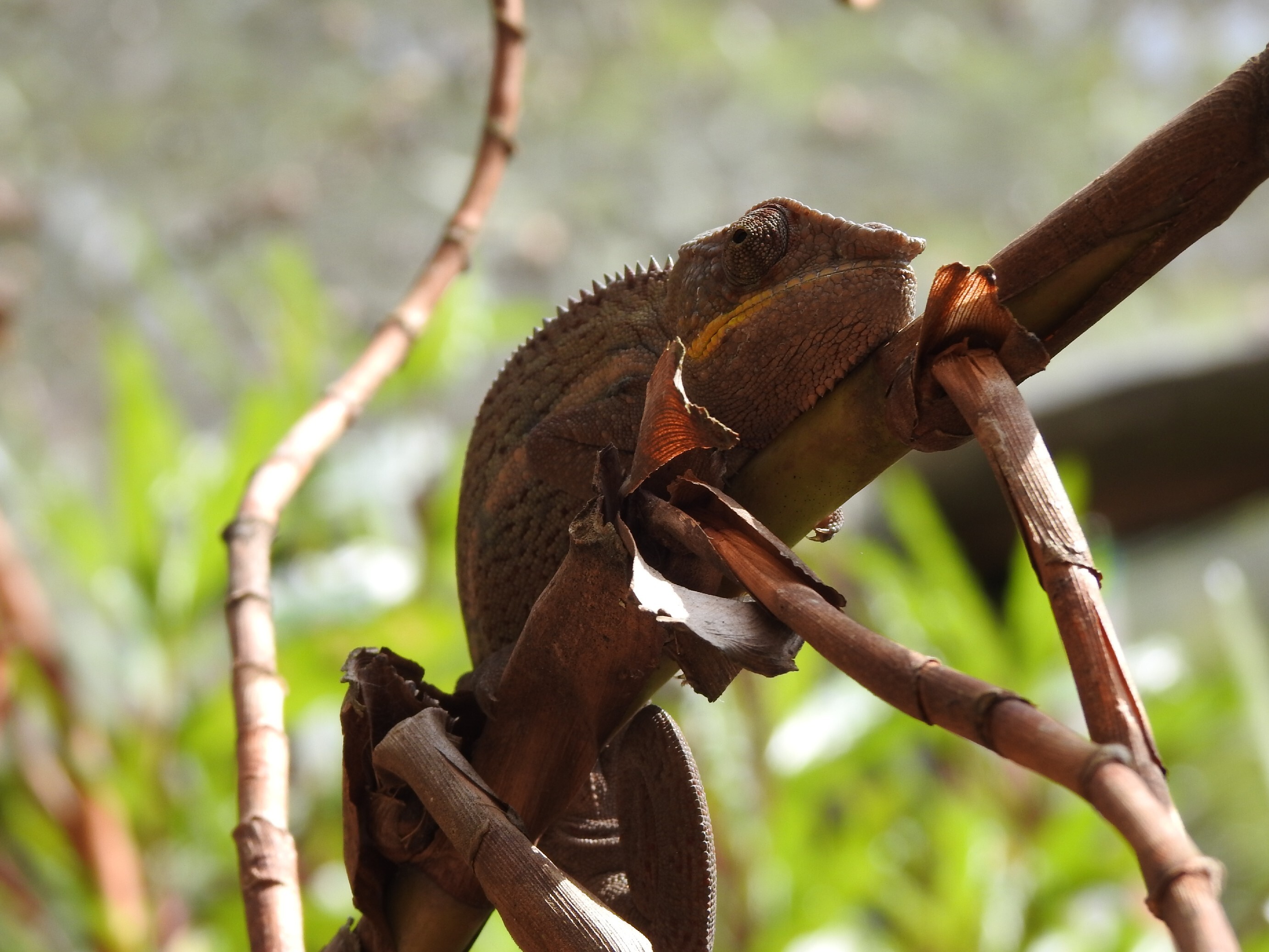
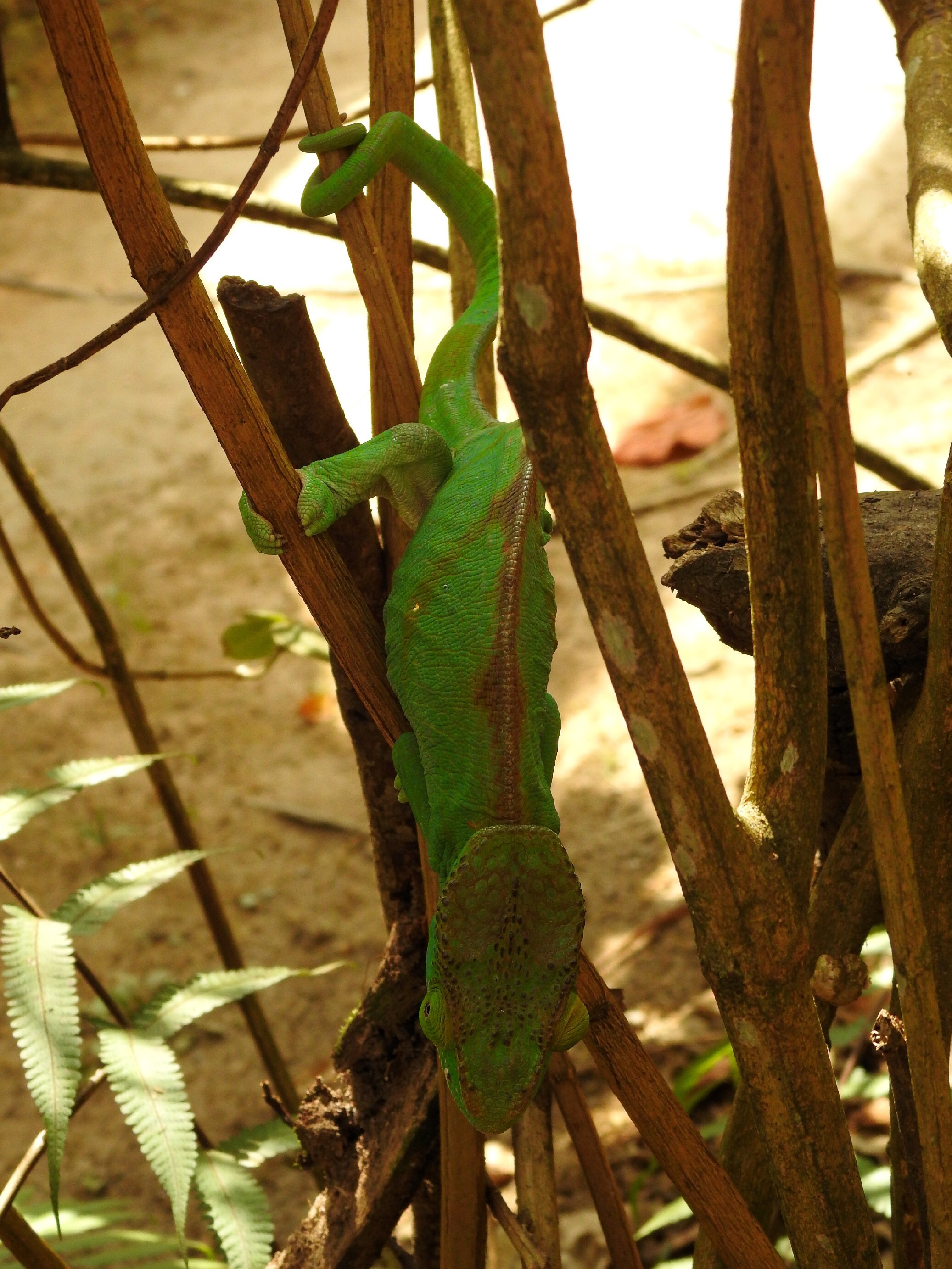 This took about 40 minutes and we were fascinated by all the different creatures we saw including a huge moth asleep next to its cocoon. All the creatures were nocturnal.
We finished the drive around two and got to our hotel: Longoza Eco Lodge. Again as in the west, we had a cabin to ourselves (these ones are not as big) with a queen bed, small bathroom, small desk, a kettle and the WiFi reached the room (they have StarLink here). We chilled for the afternoon.
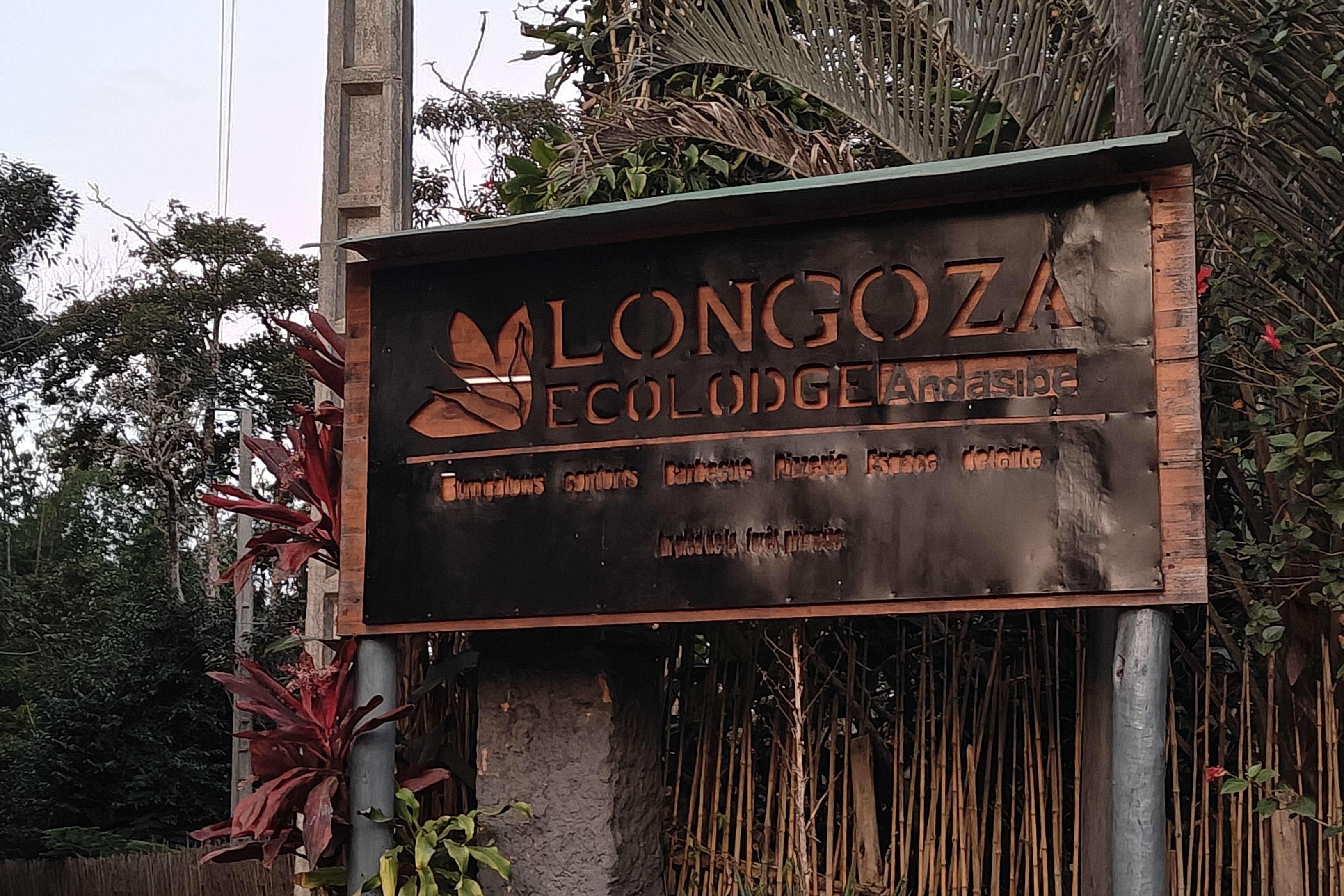
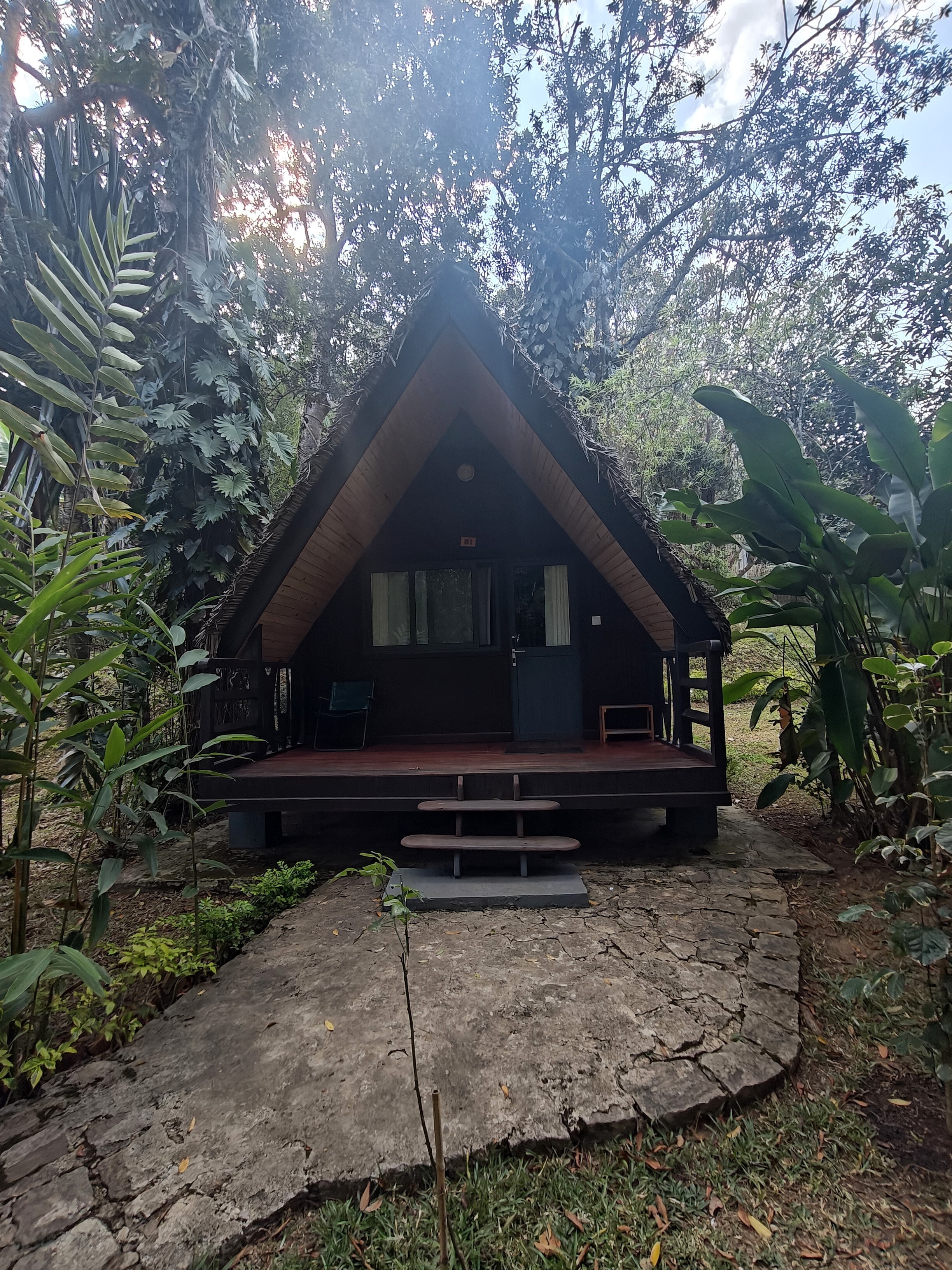
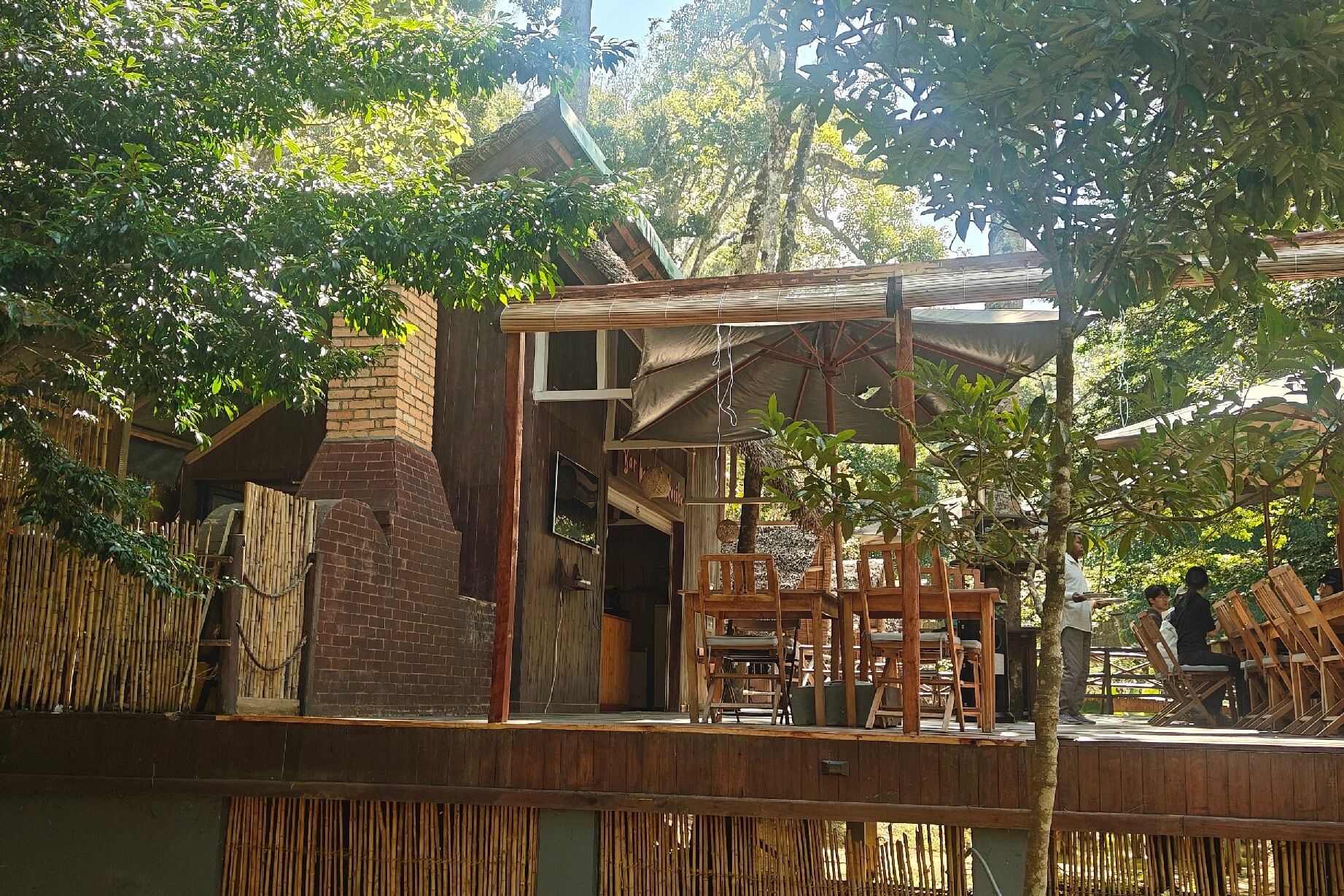
It’s much cooler here than Tana here but not as cool as Kirindy was overnight. There is no heat in the rooms, so the comforters are cozy and warm. There is a bar and two restaurants (one Chinese) and breakfast is included as it was in all our accommodation here in Madagascar. We spent the afternoon online (Fran is way behind on photos and blogging since we’ve not had a lot of WiFi, let alone time to work on them).
Before six, we walked over to the restaurant to order our dinner as we had a night walk at six. Tojo picked us up and drove us to VOIMMA – a community based project with guides to take you into the forest to spot lemurs and chameleons. We had two guides today: Chris the main spotter and his assistant Ifity who helped Fran in tricky spots.
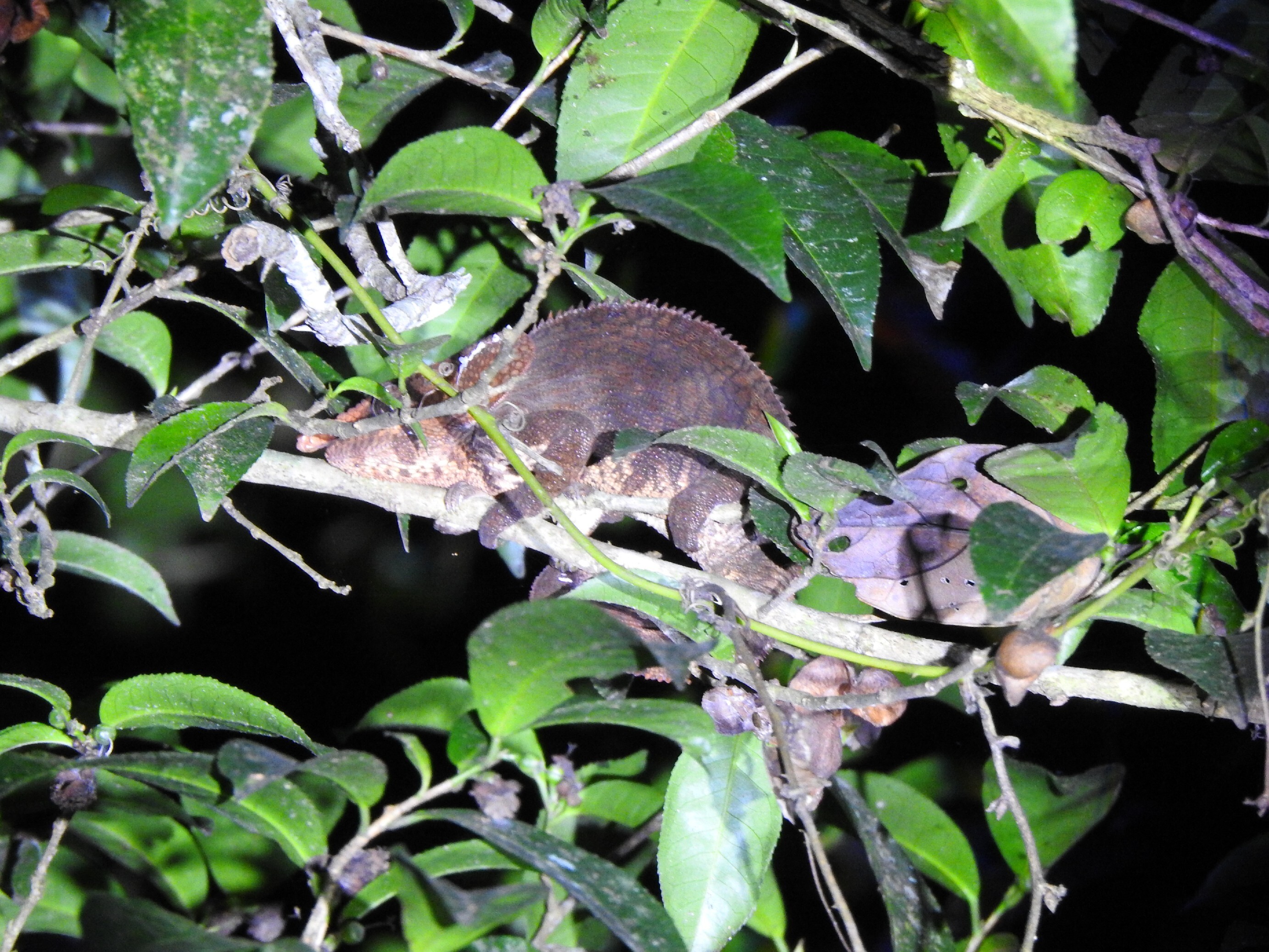
Chris found us a Parsons Chameleon right away – this one in a lighter camouflage.
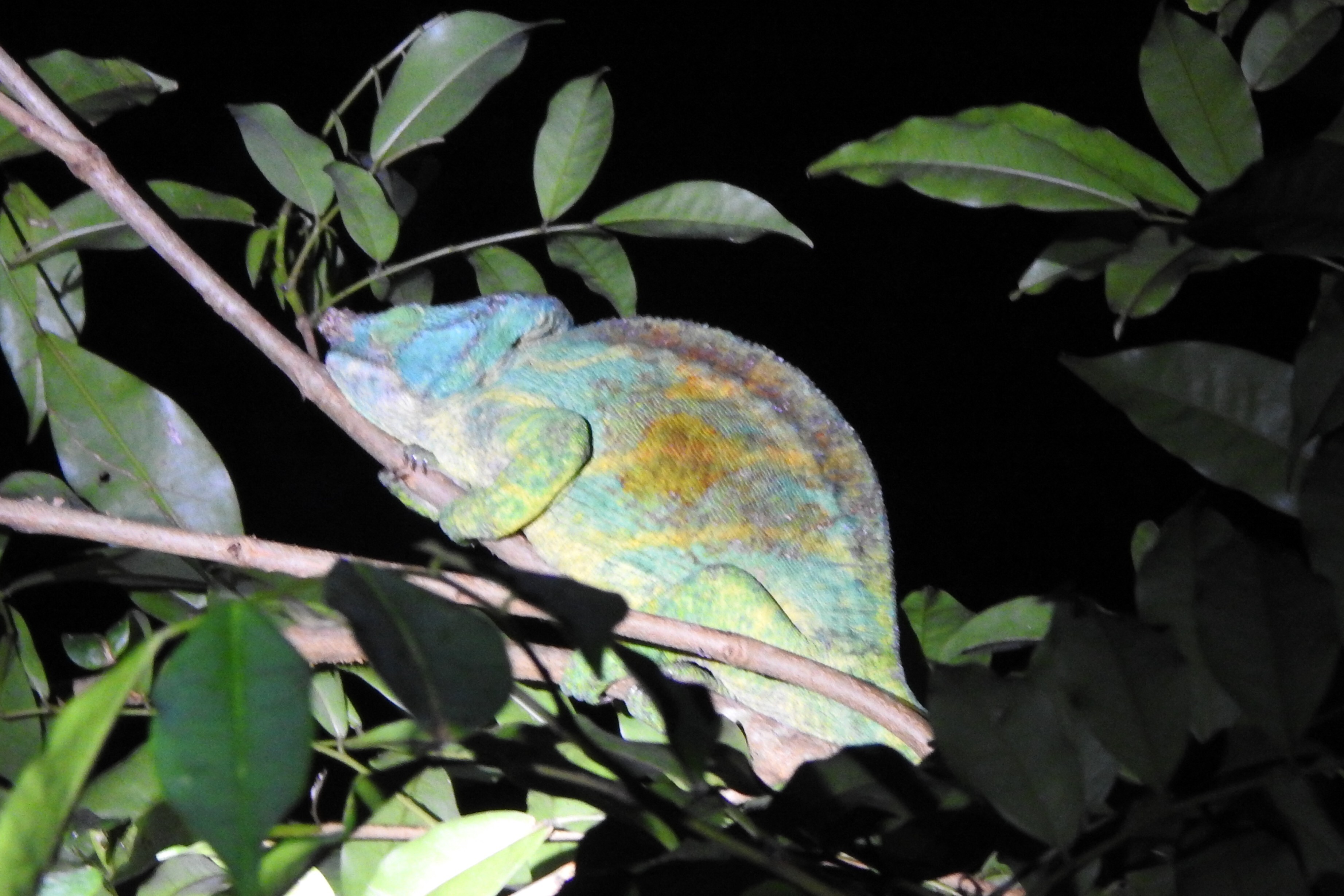
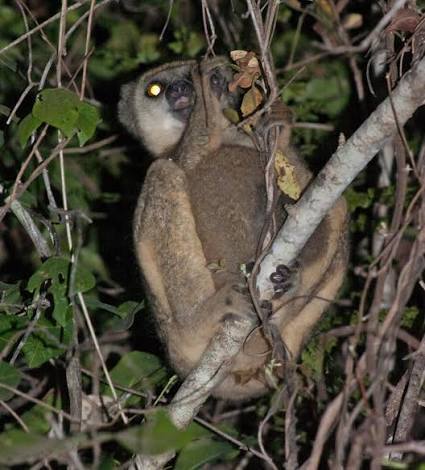
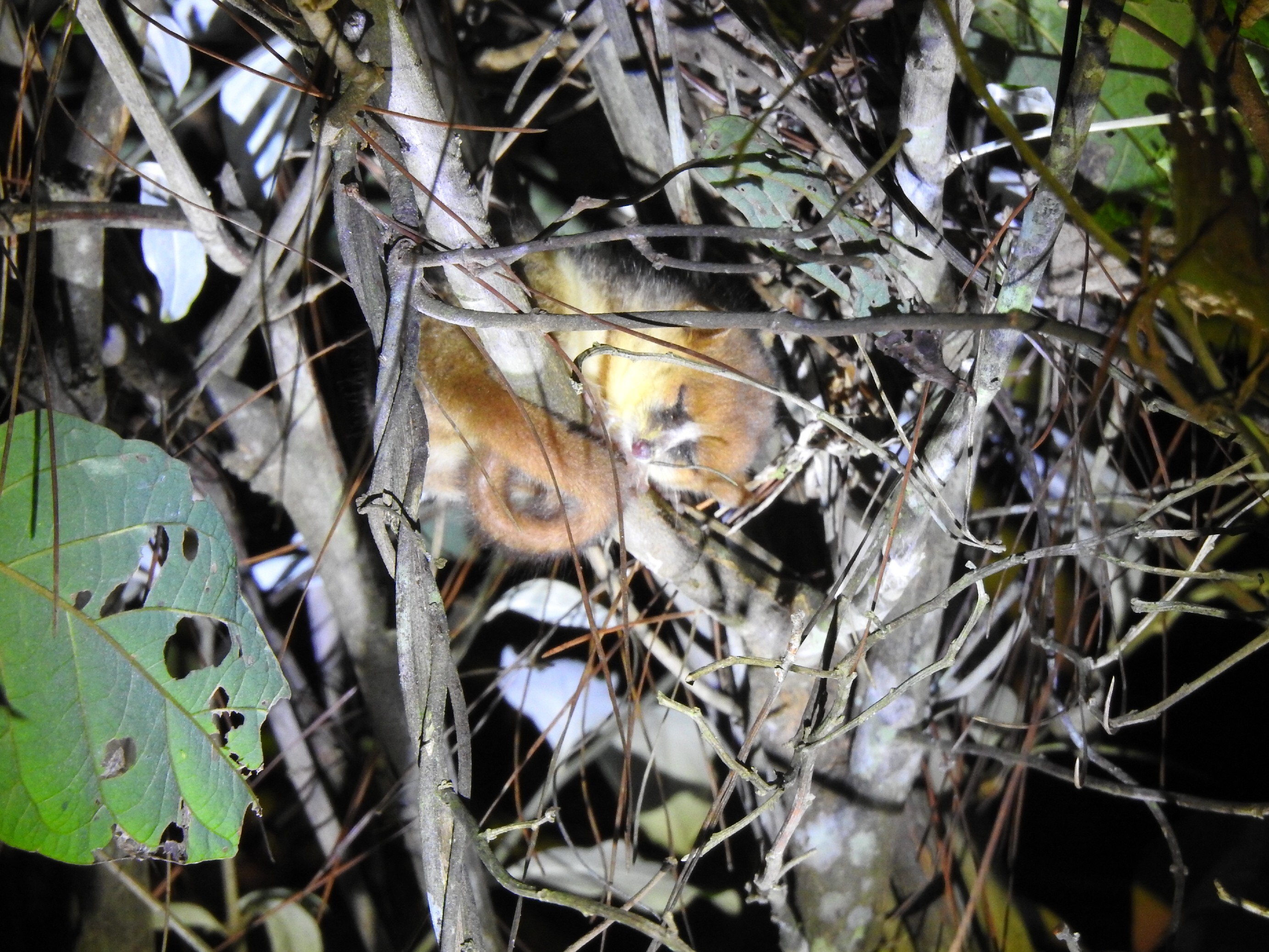
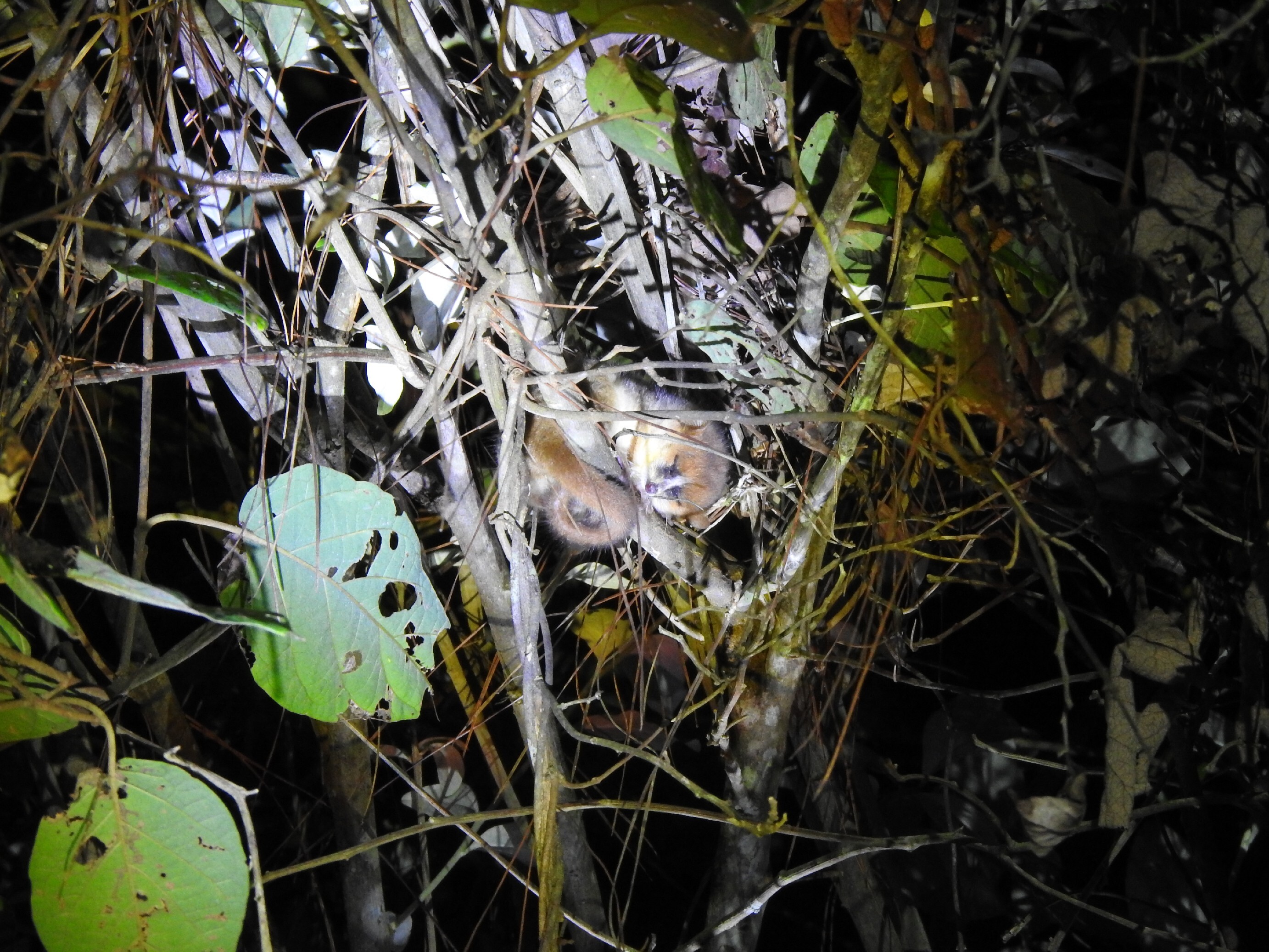
Then we saw a couple of Goodman mouse lemur and the Eastern Wooly lemur.
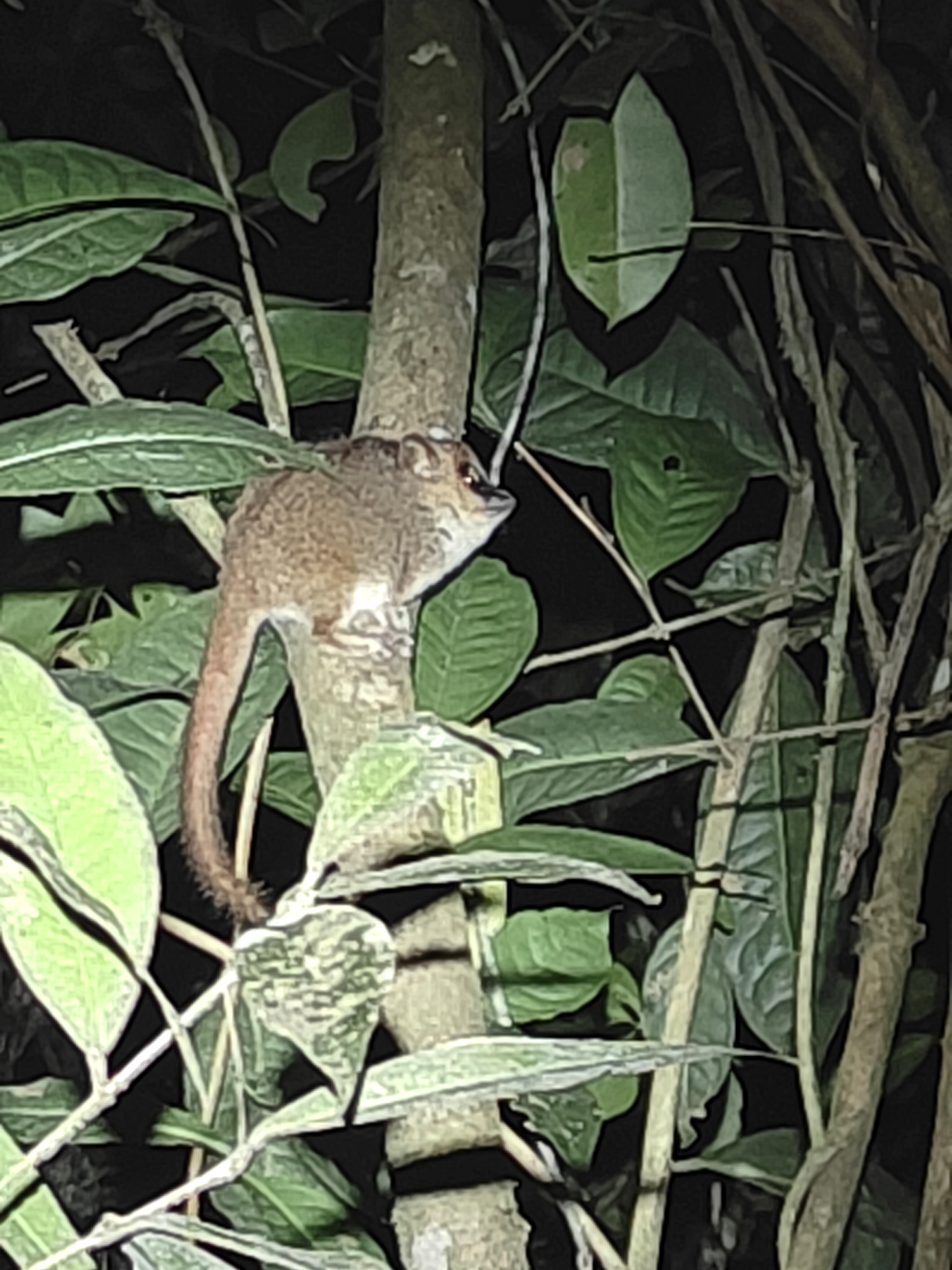

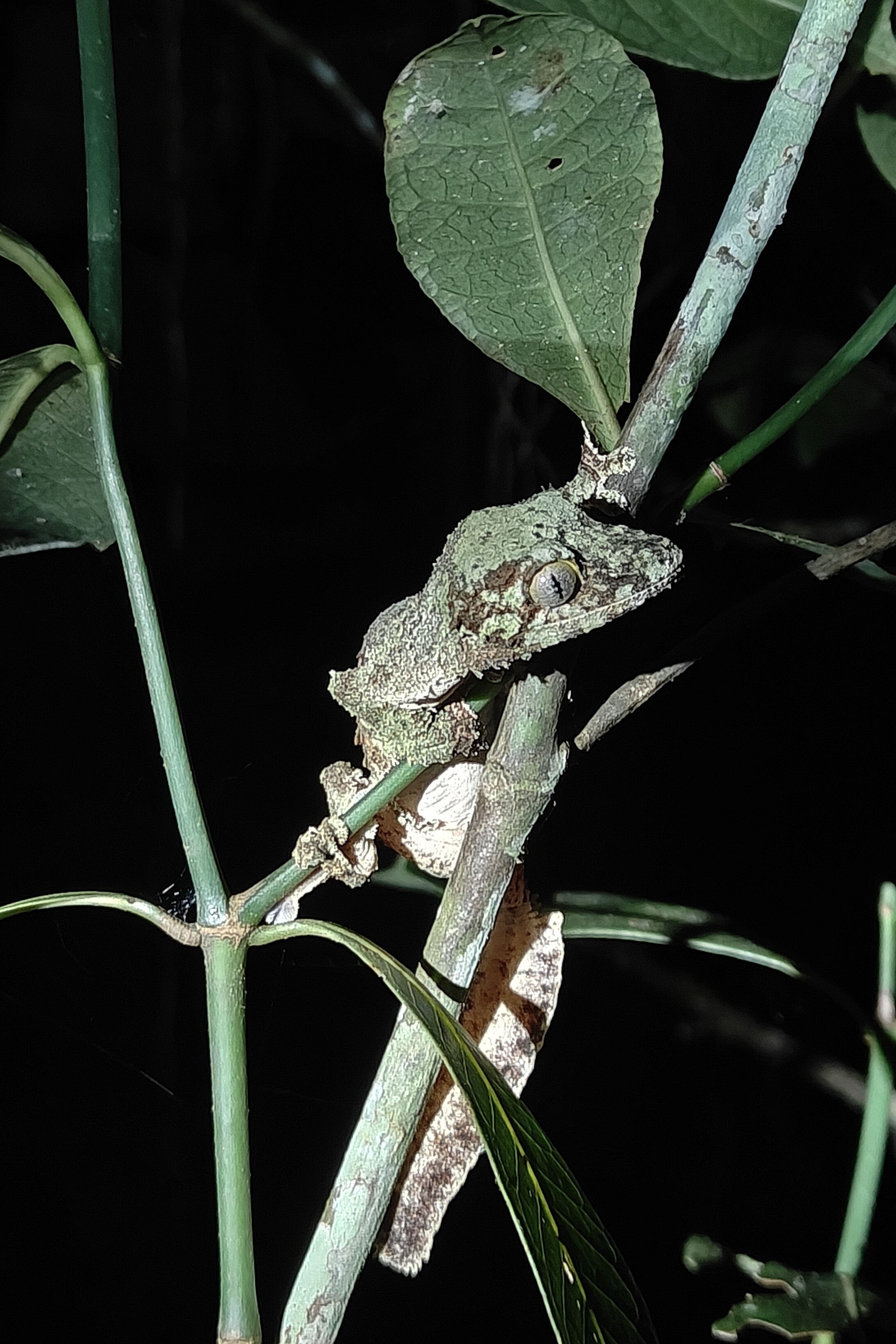
and lastly the leaf tail gecko.
 This walk was slightly modified for Fran’s knees and not too difficult taking just under an hour.
Saturday morning after breakfast at the bar/restaurant we were taken for a morning walk in the Analamazaotra Forest also modified for the least amount of downhill for Fran.
It started with the viewing of a traveler’s tree:
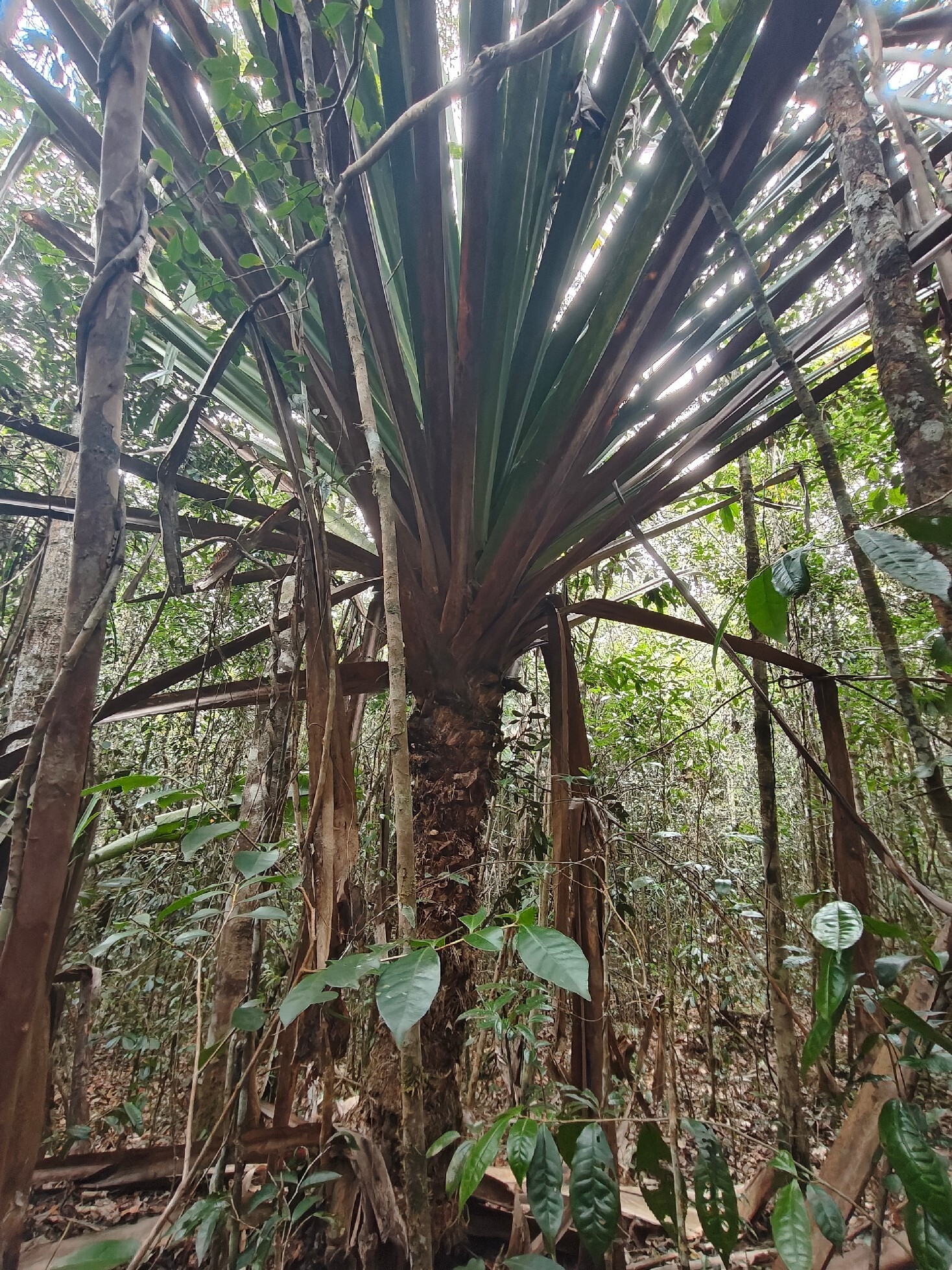 The cup shaped bases of the long leaf stalks can hold a great deal of water and were a good emergency source for travelers. The leaves could be used as a cup or a plate or an umbrella!
AND the highlight of the walk, the indri indri lemur – the largest of the lemurs. It has the loudest call of all the lemurs and there are three types of calls: territorial, warning of predators and a love call. We heard the first upon entering the forest and before seeing them. Here are a bunch of videos and photos in no particular order. Some have babies and one came down to get closer to us!
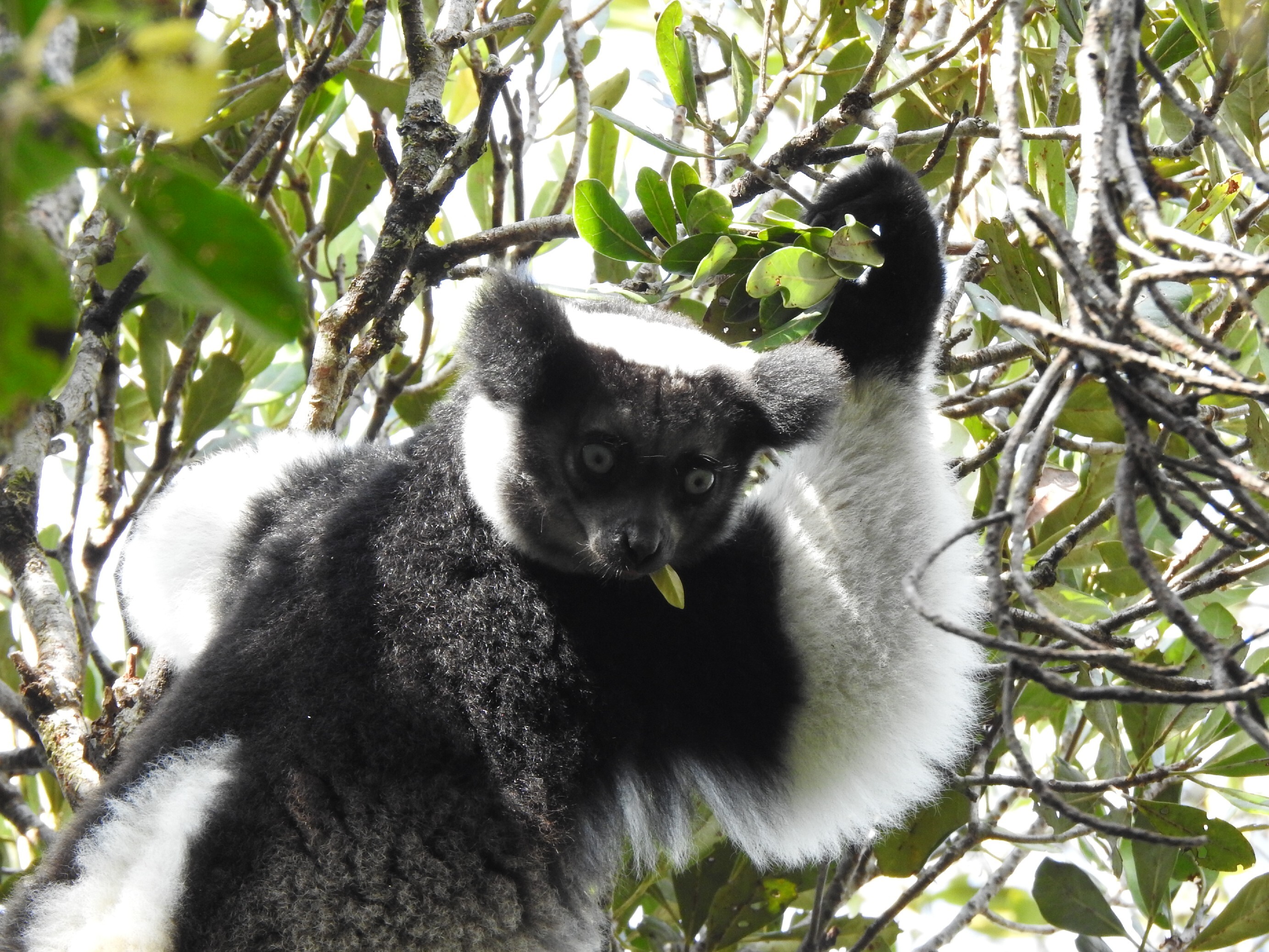
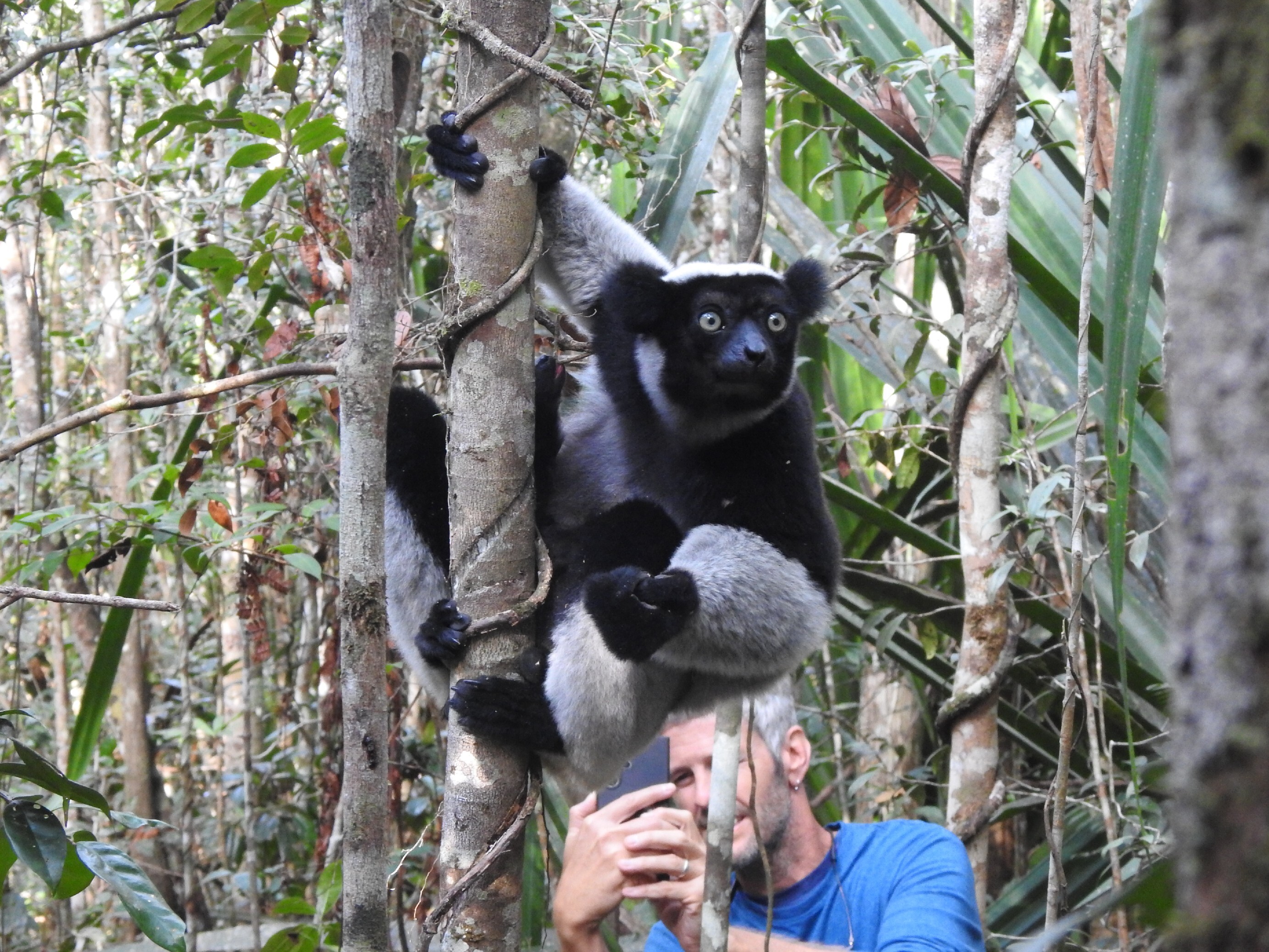
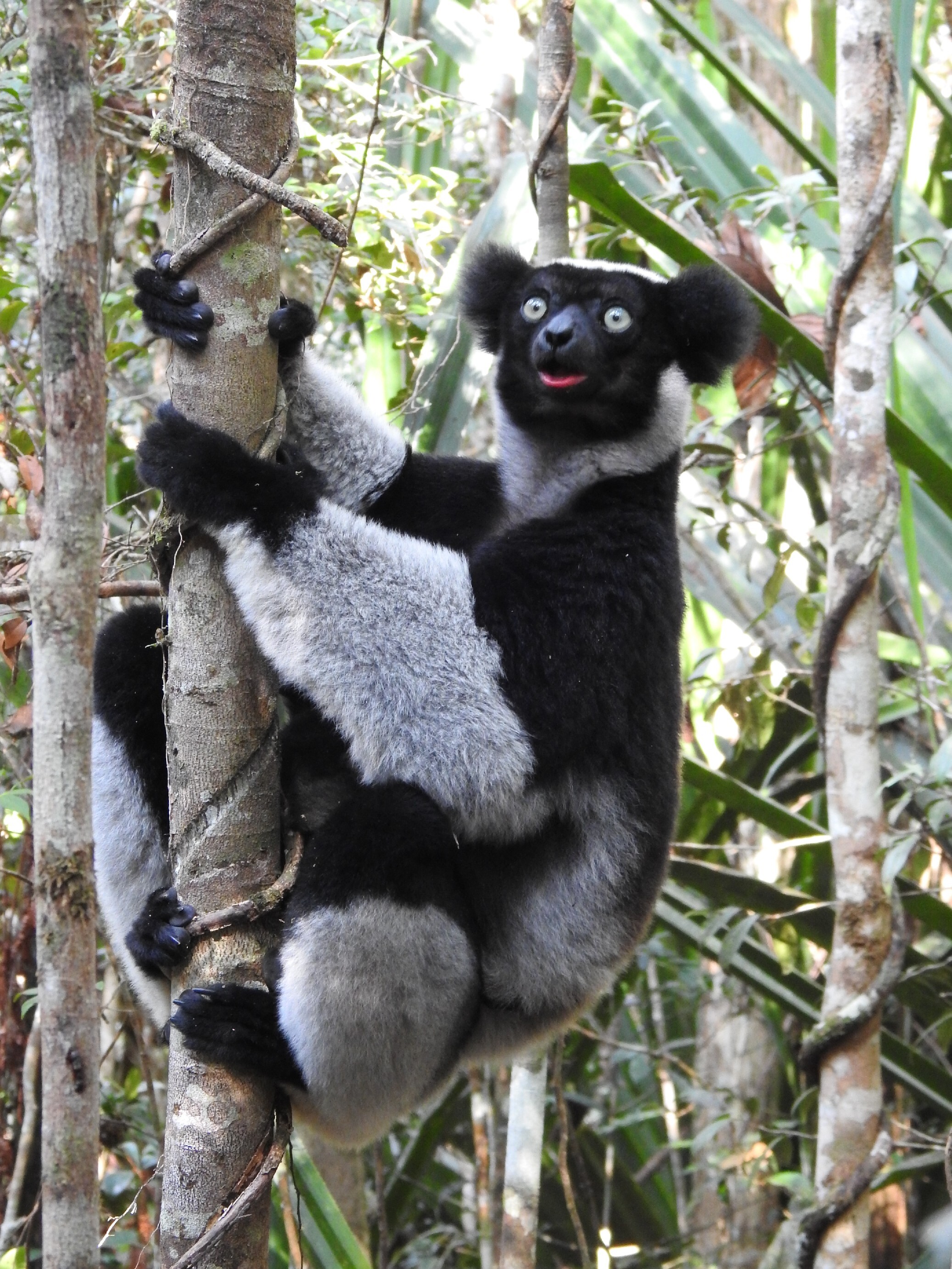
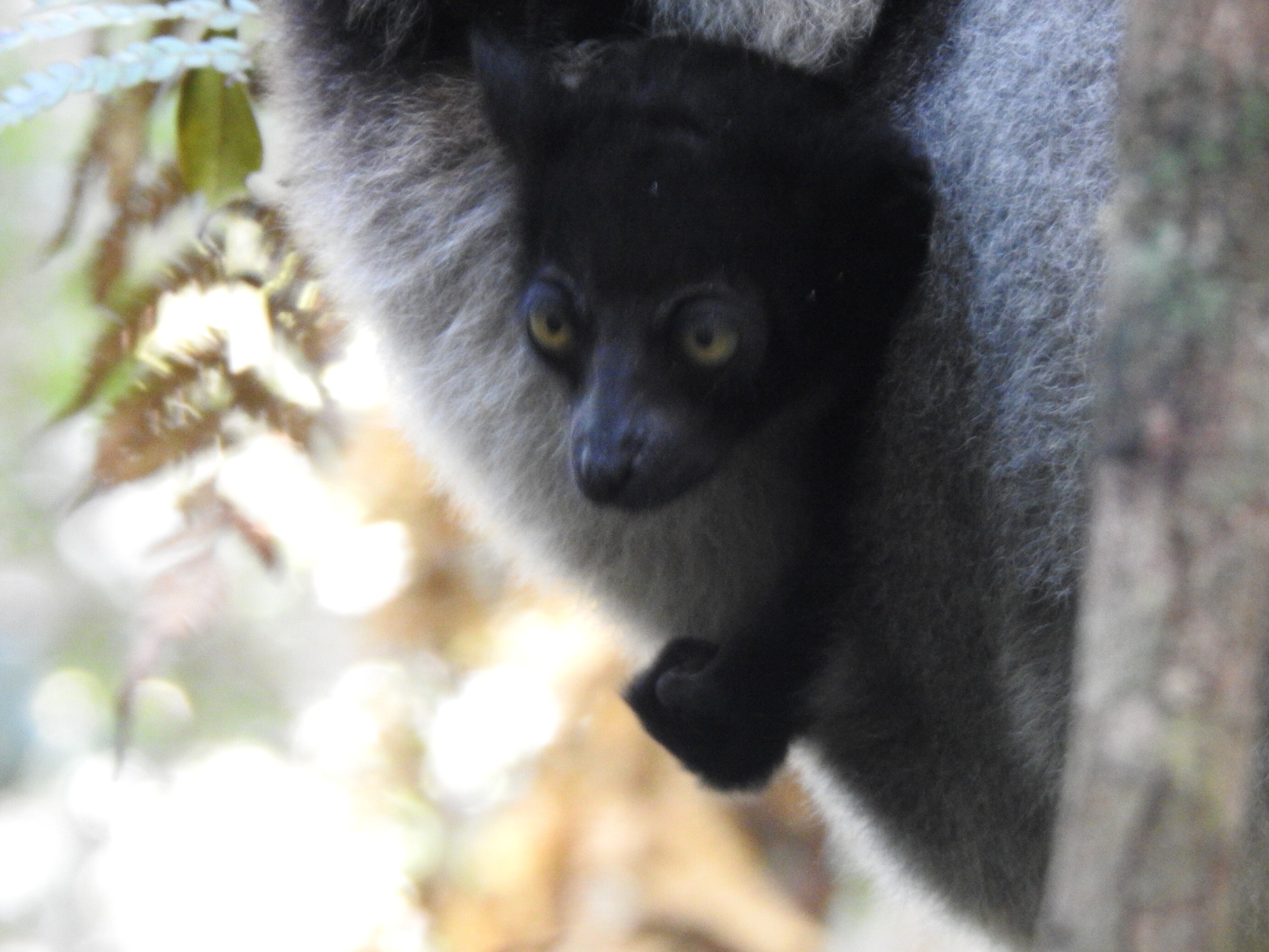
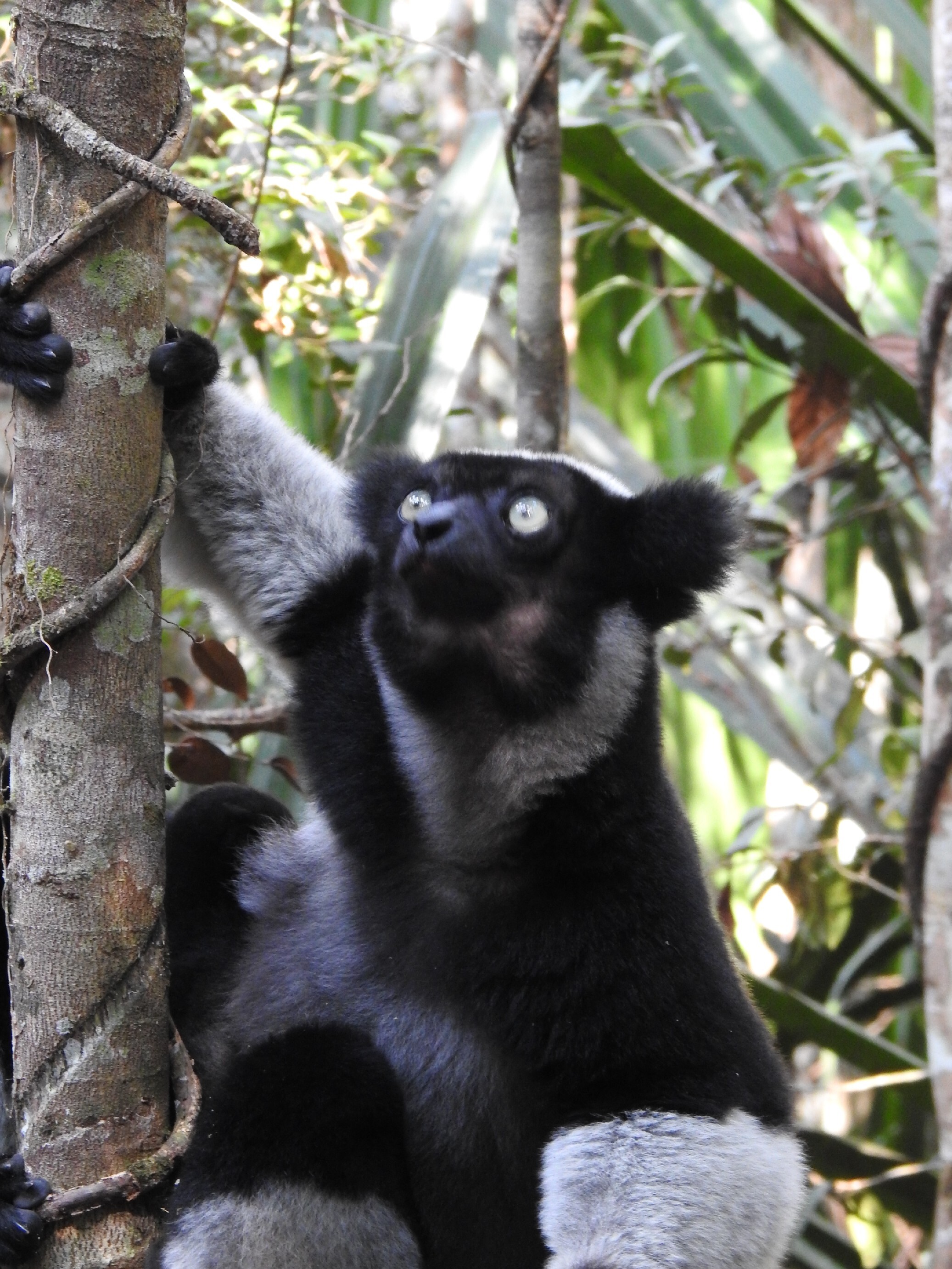
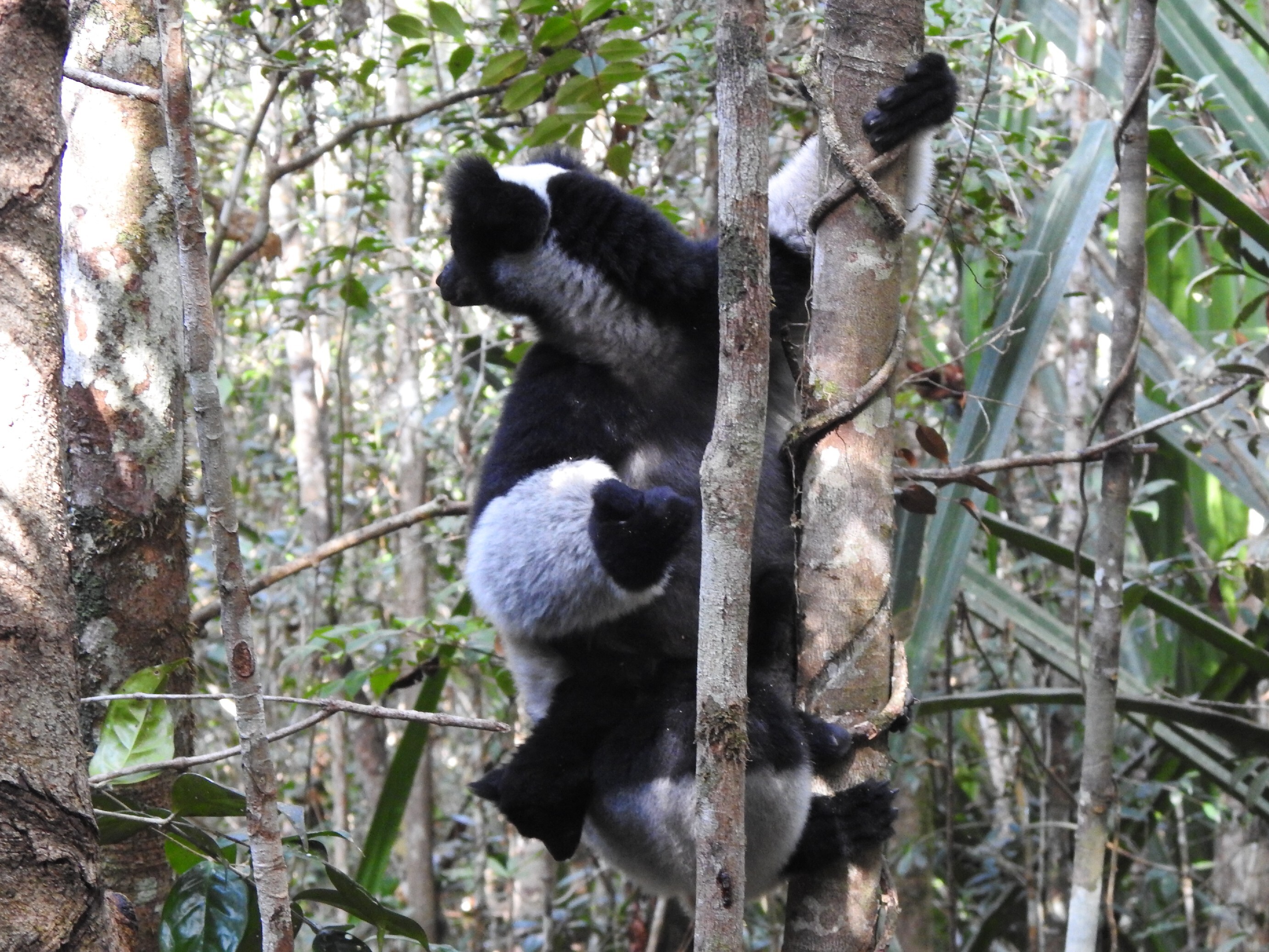
this one is not so good; the guide took it with Fran’s phone:
After we left them all, they began to call out the first type of call and we recorded it.
The walk ended after the sighting of the Parsons Chameleon – this time dressed in green.
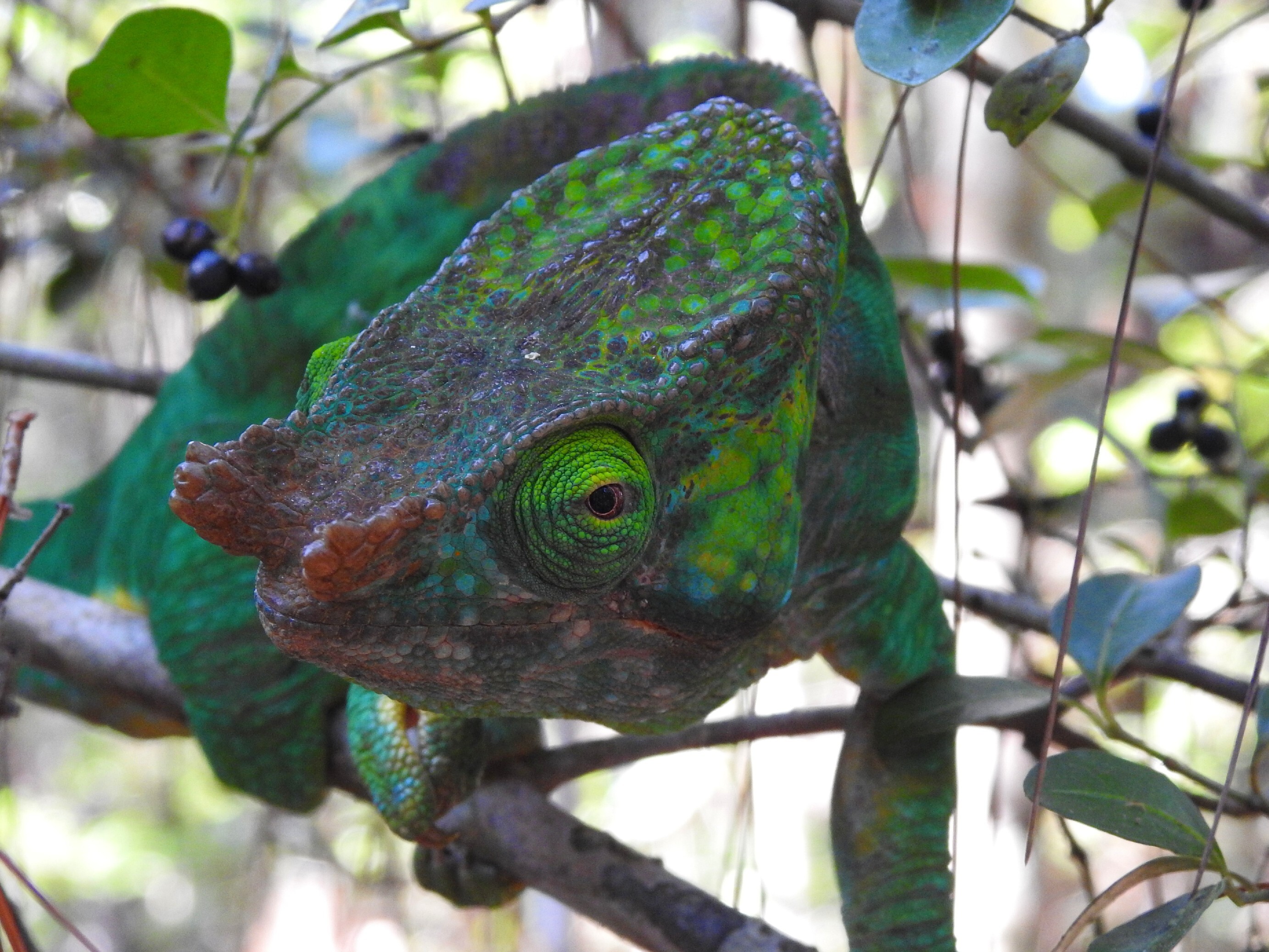 This walk took slightly over an hour with two guides.
Then Tojo asked us if we wanted to go to the Lemur Island. As we had not done the biggest forest walk that was in the itinerary due to Fran’s knees there was enough money in the tour budget to maybe go there. We said yes and it turned out we had to pay a bit as there was not quite enough for both of us but it was SO worth it.
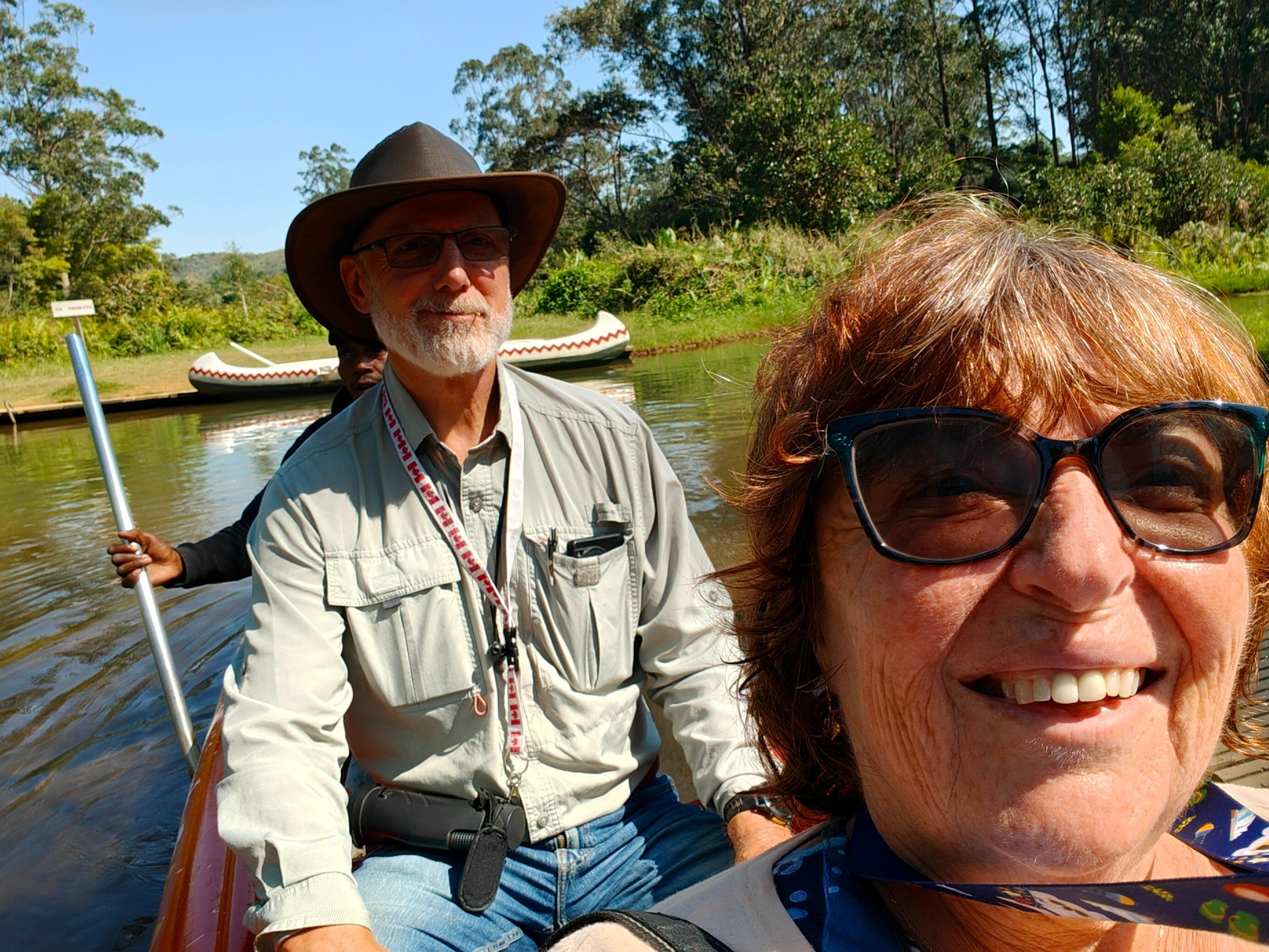
Lemur Island is a private reserve and is actually five islands – two with lemurs on them. The animals are in semi captivity and get fed only once day. You take a canoe across the very narrow river to the main island where three types can be found and then walk with a guide.

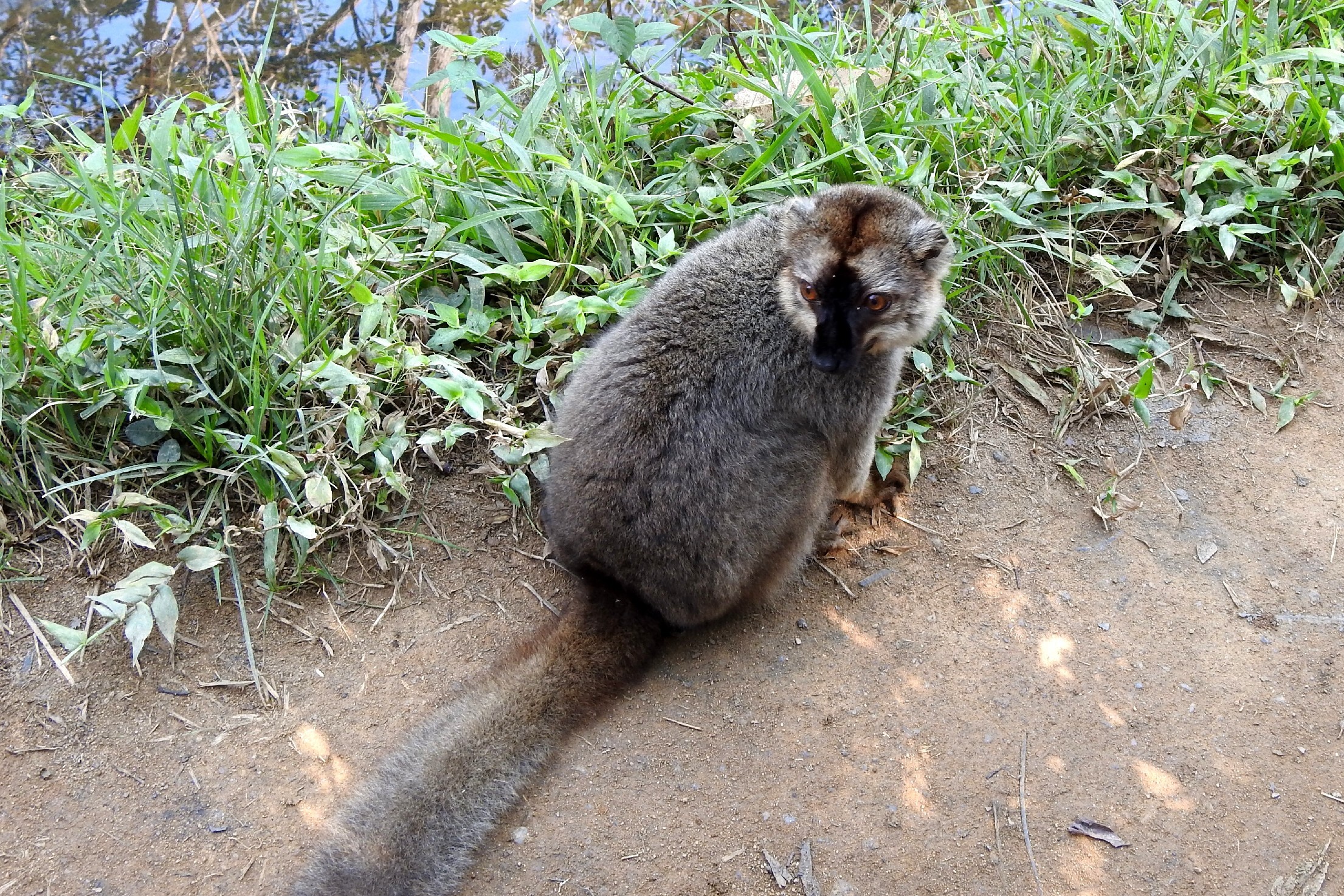
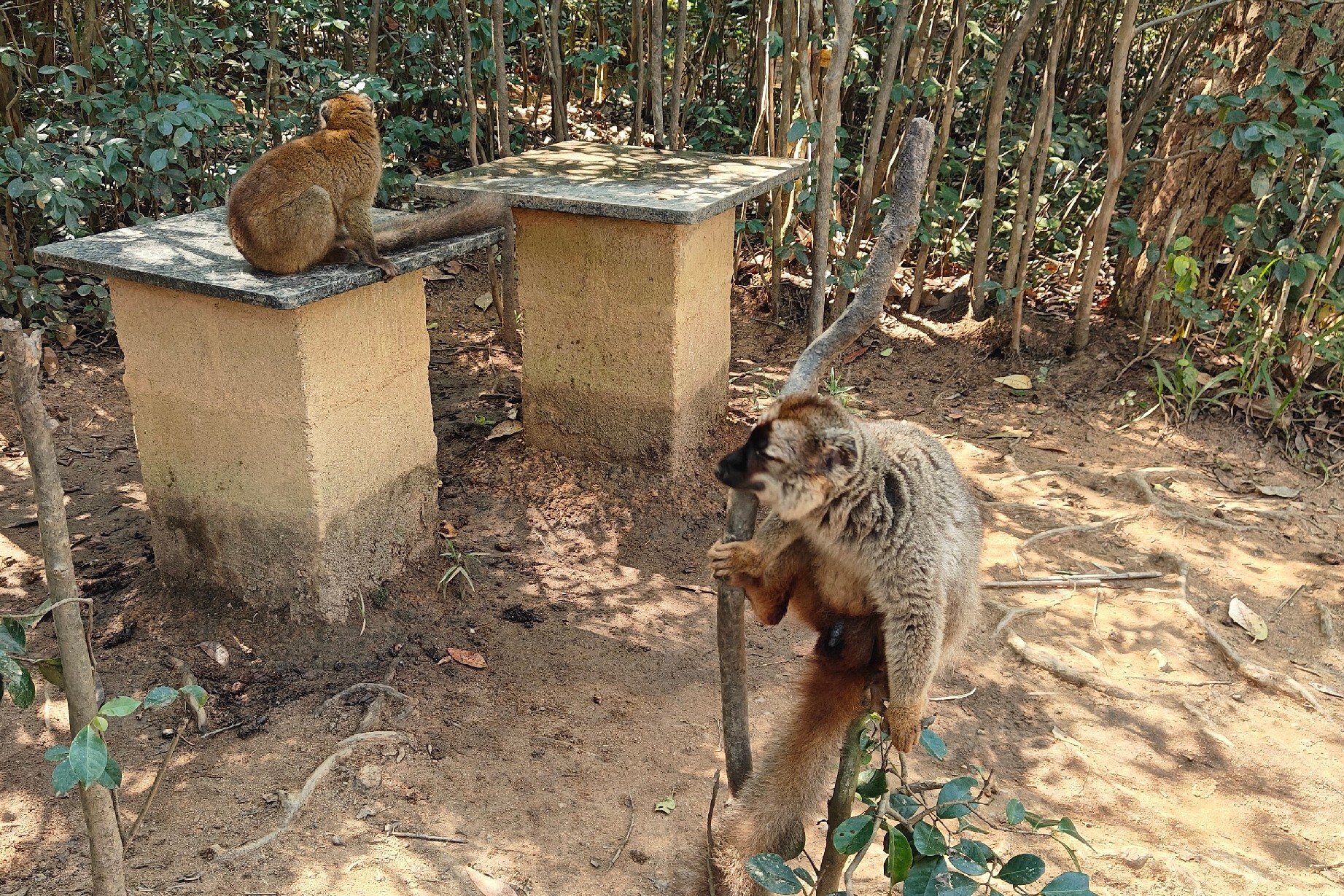
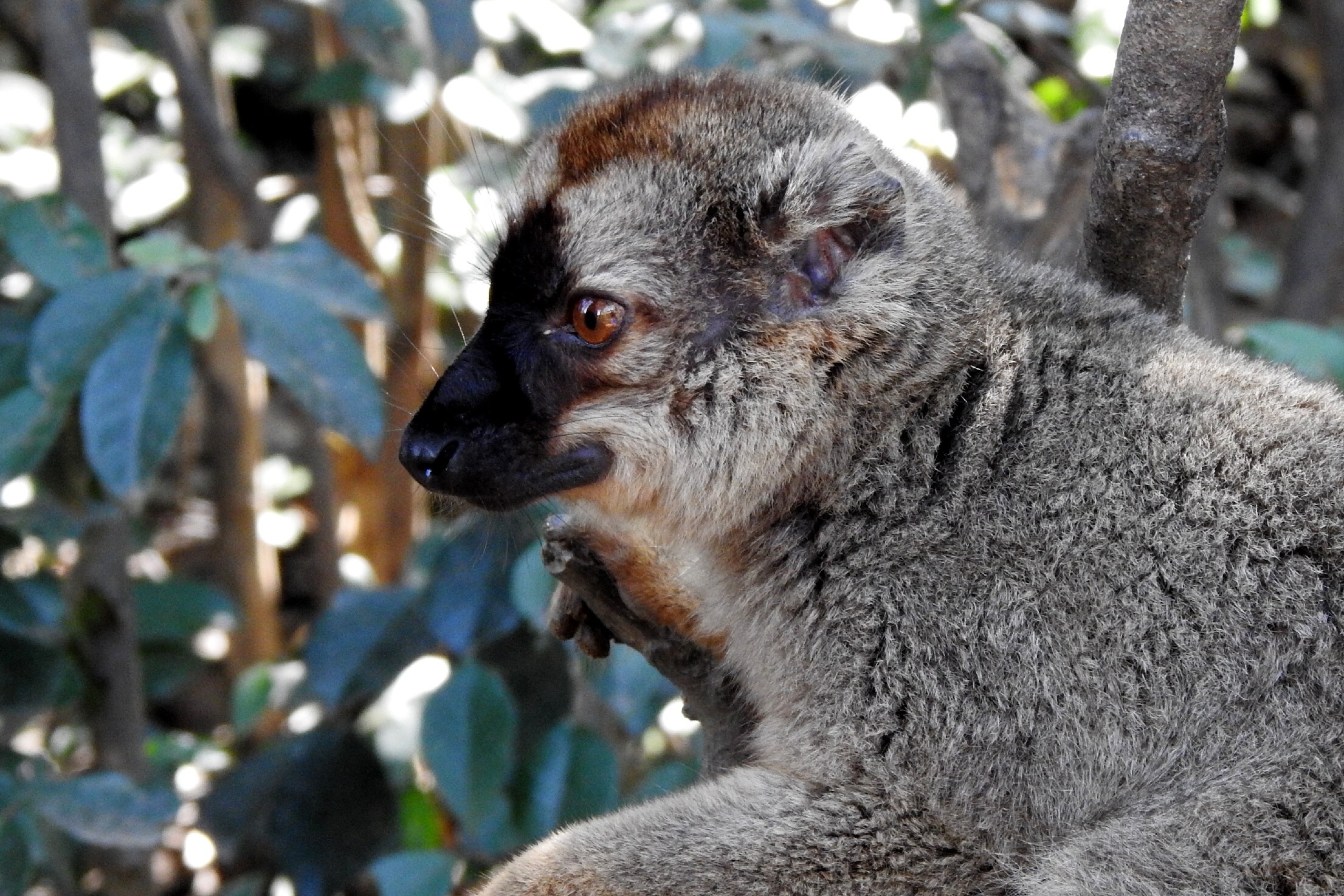
Filbert found us brown lemurs right away (they know he might have food we could tell).
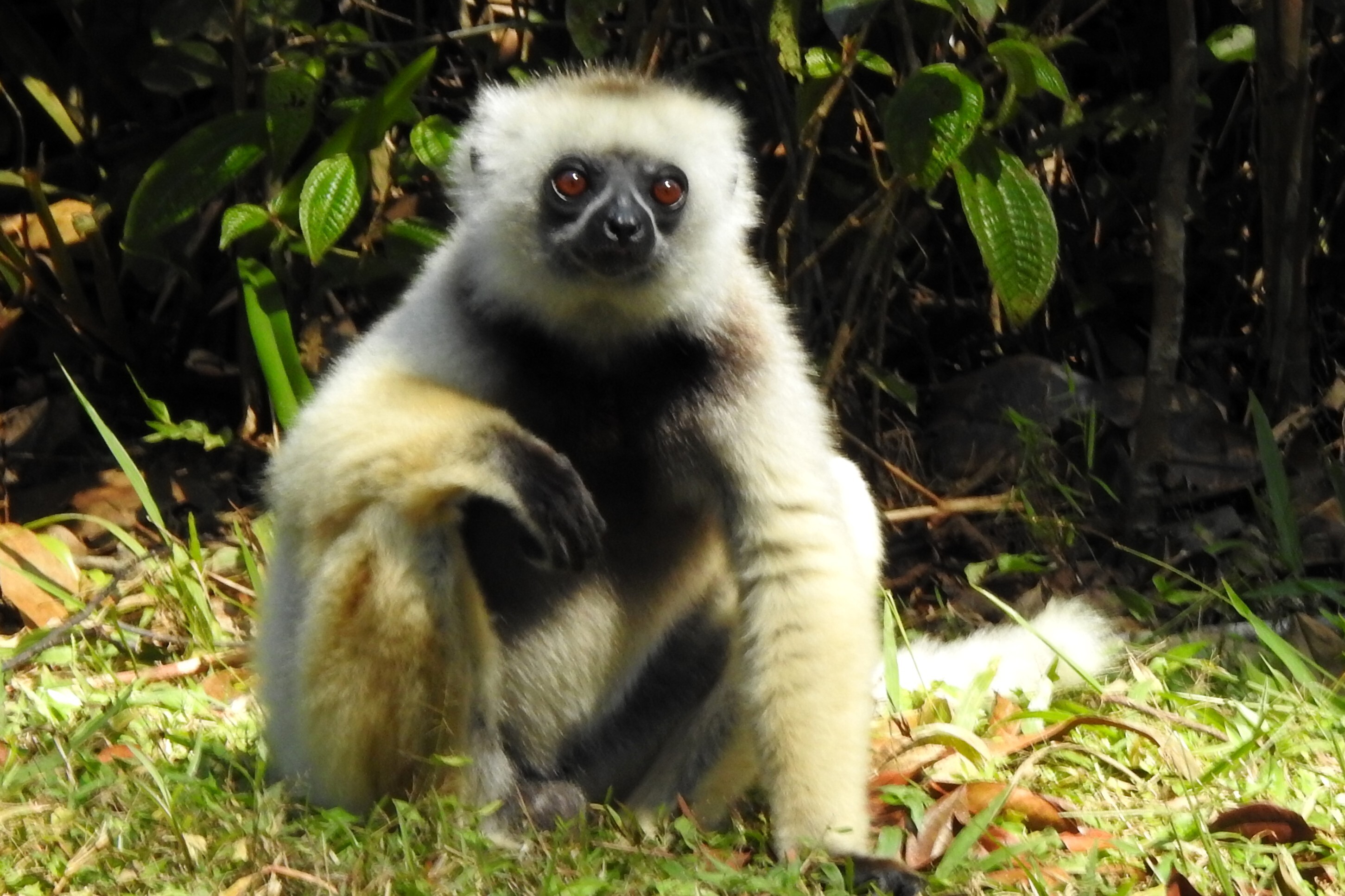
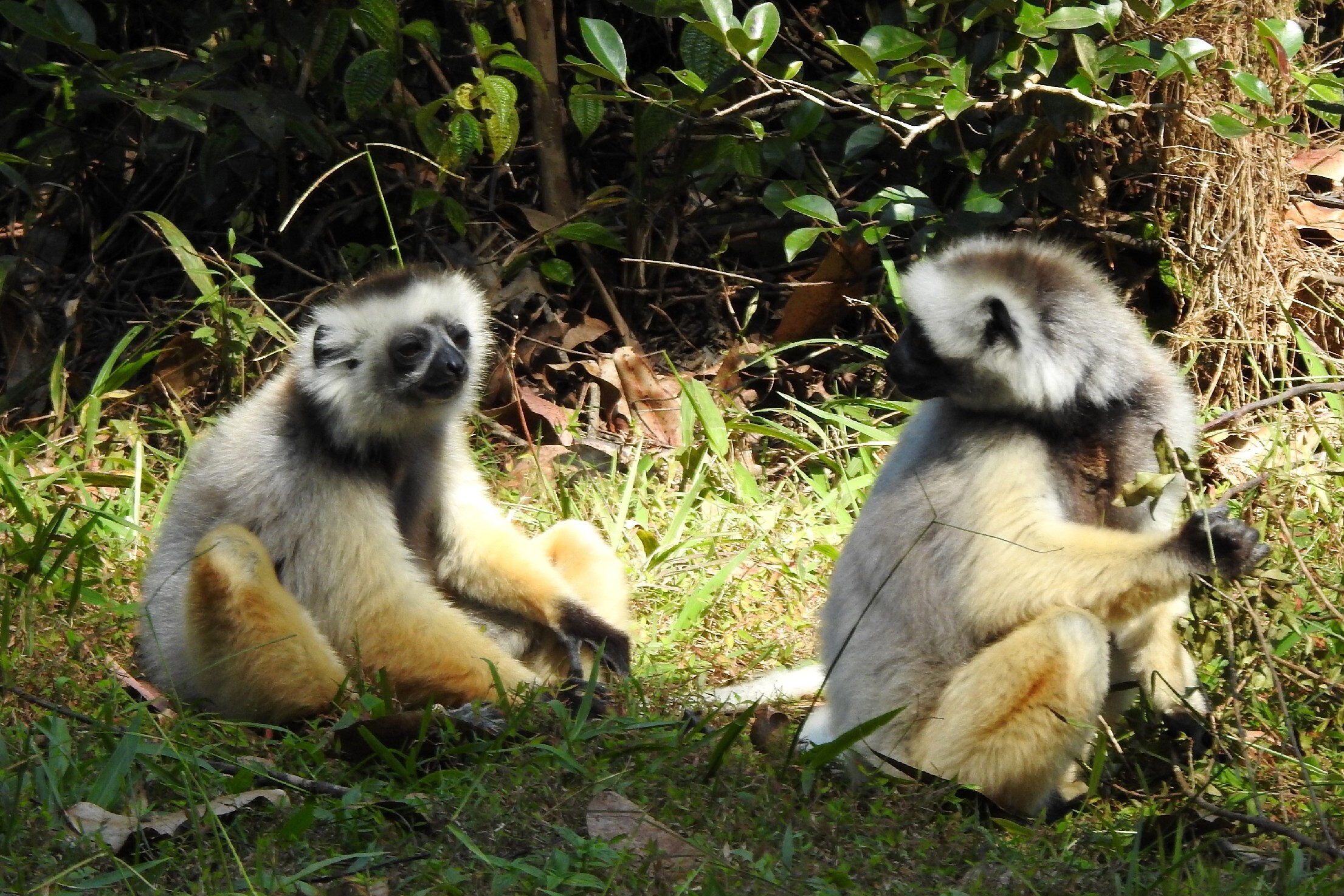
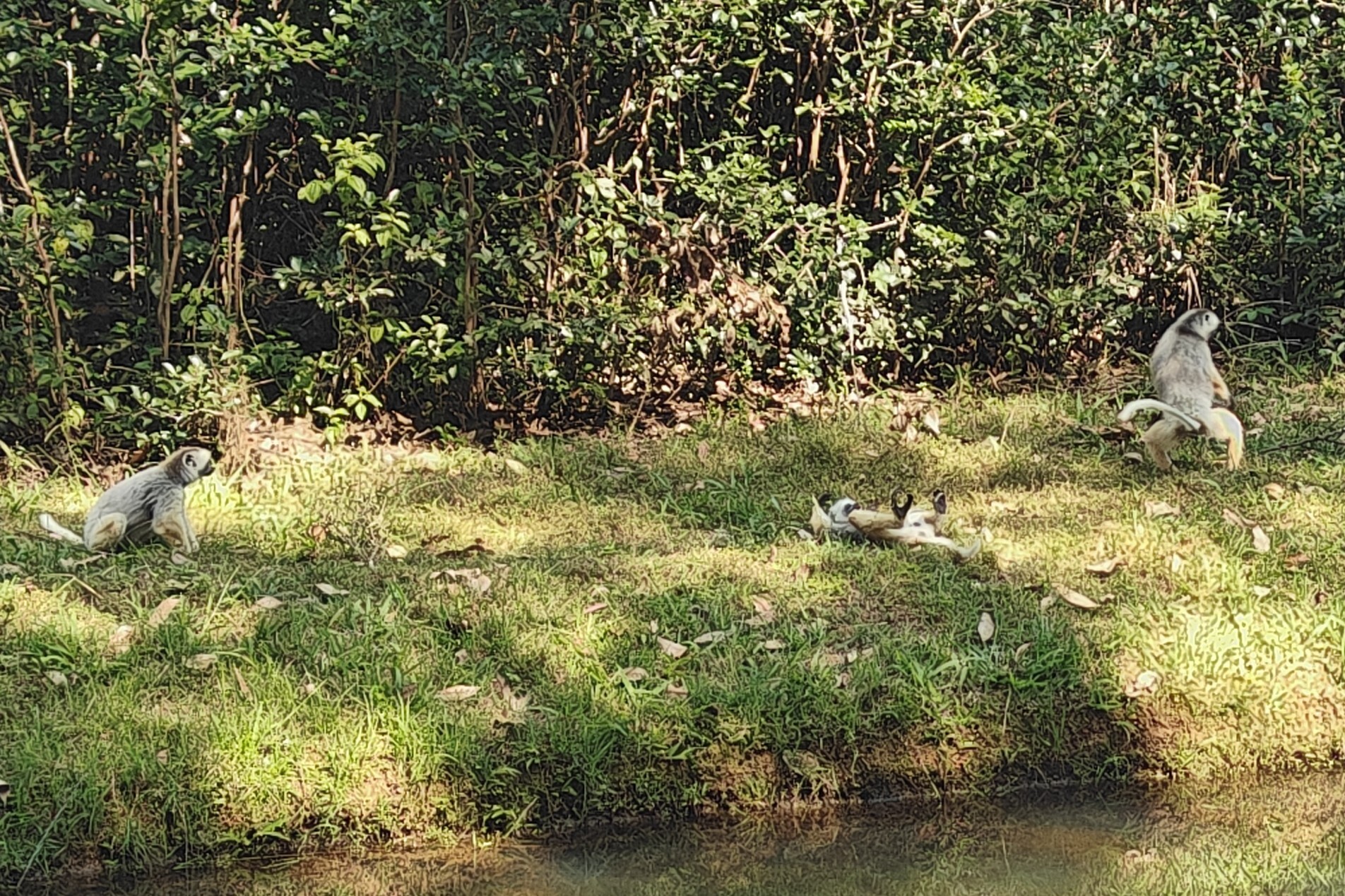
Then a little further down the path (the island is very small) we could see a dancing lemur (a sifaka) across the river on a second island. This was so cool.
here’s a slow mo video too:
Later we there were four altogether sitting and grooming together before jumping away.
 We looked for the bamboo lemur with no luck but we did seethe black and white lemurs – probably the most beautiful of all.
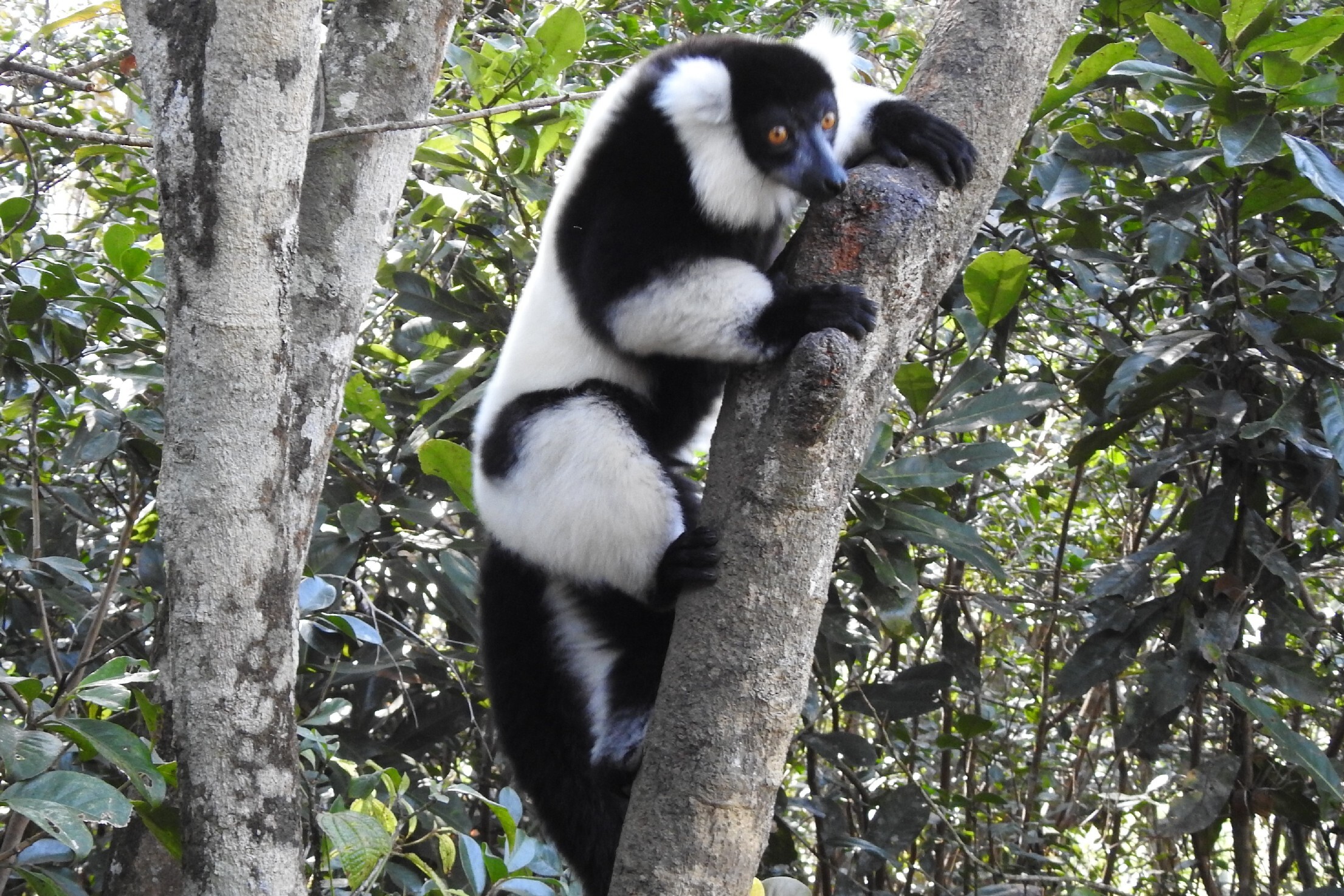
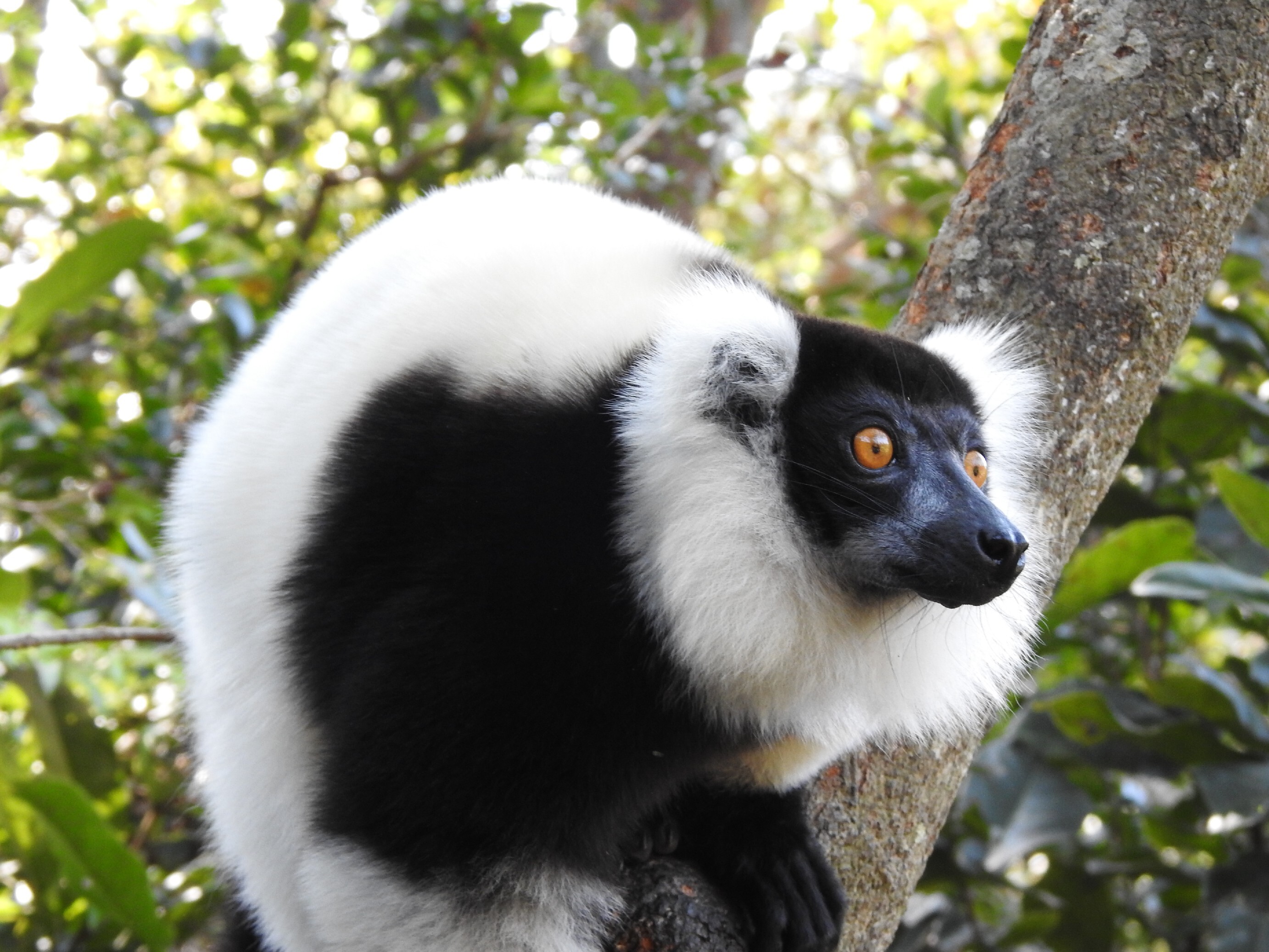
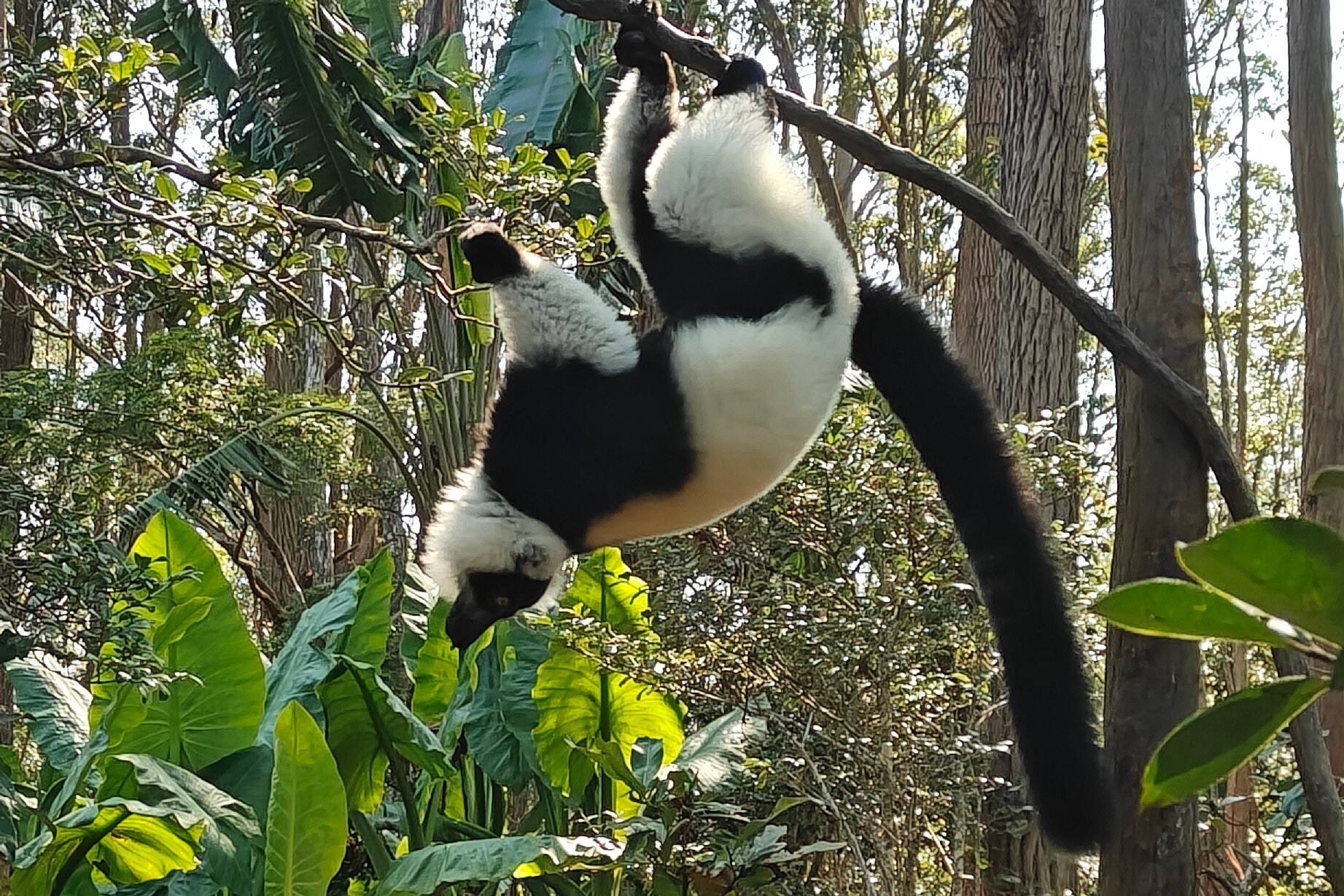

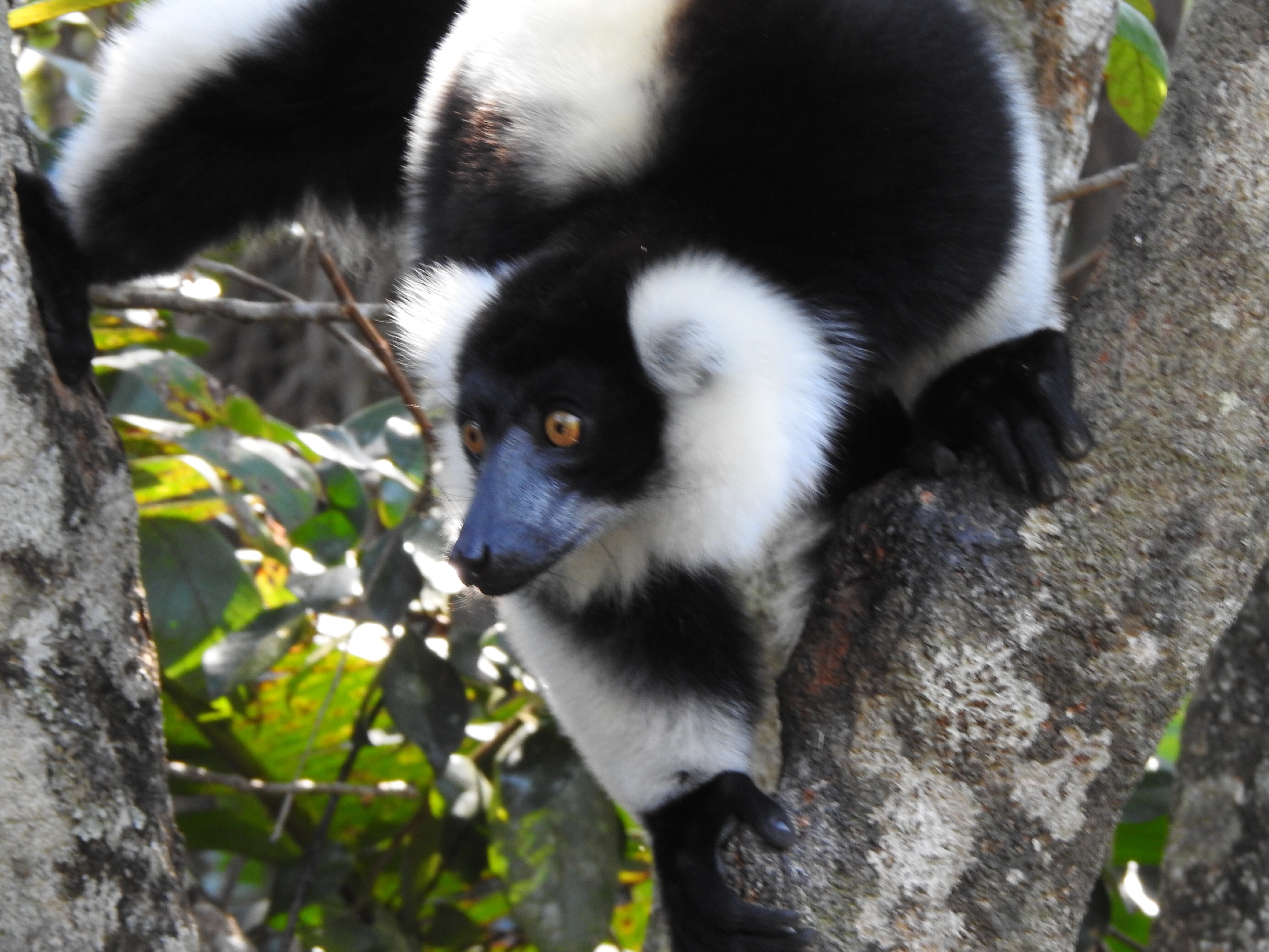
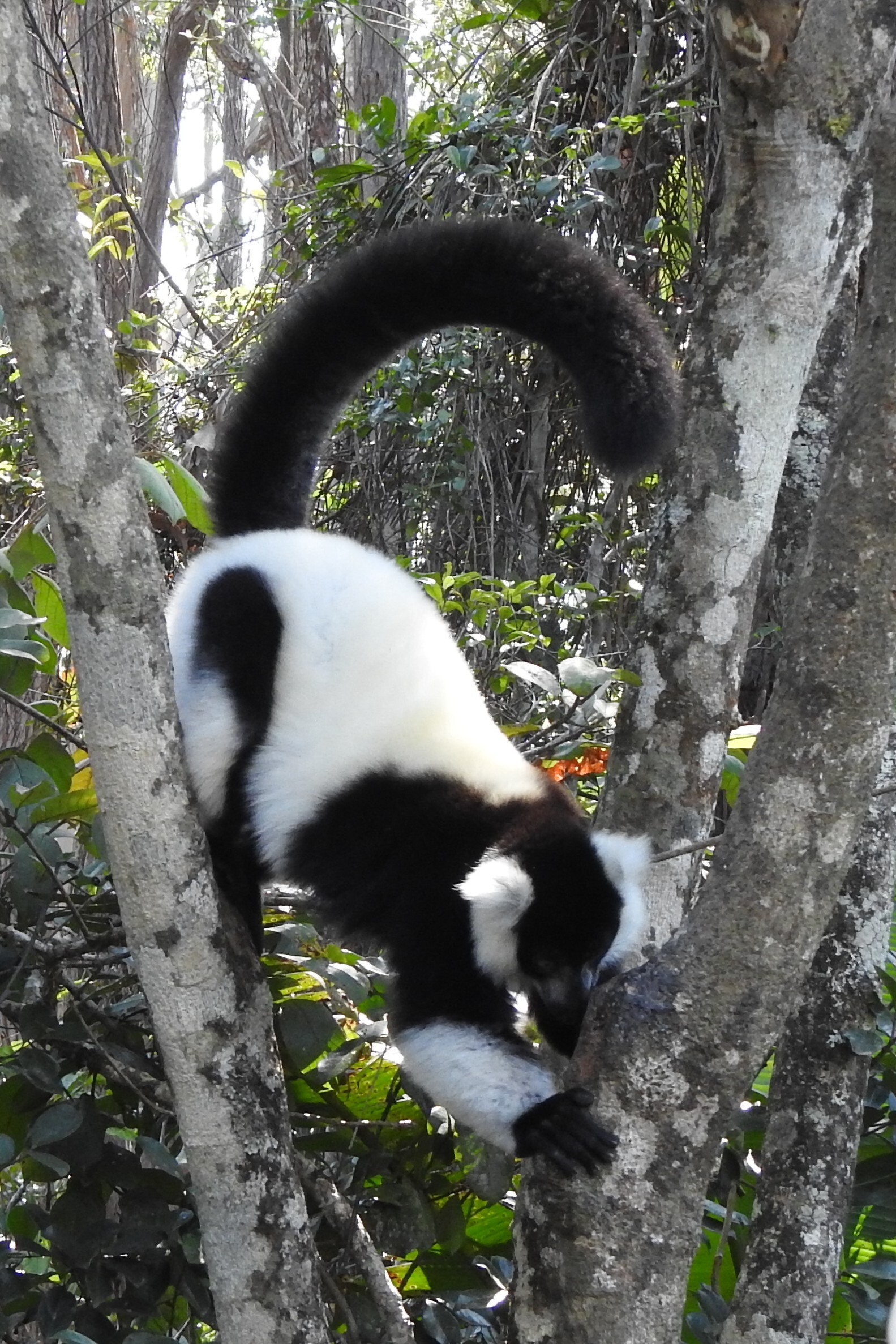
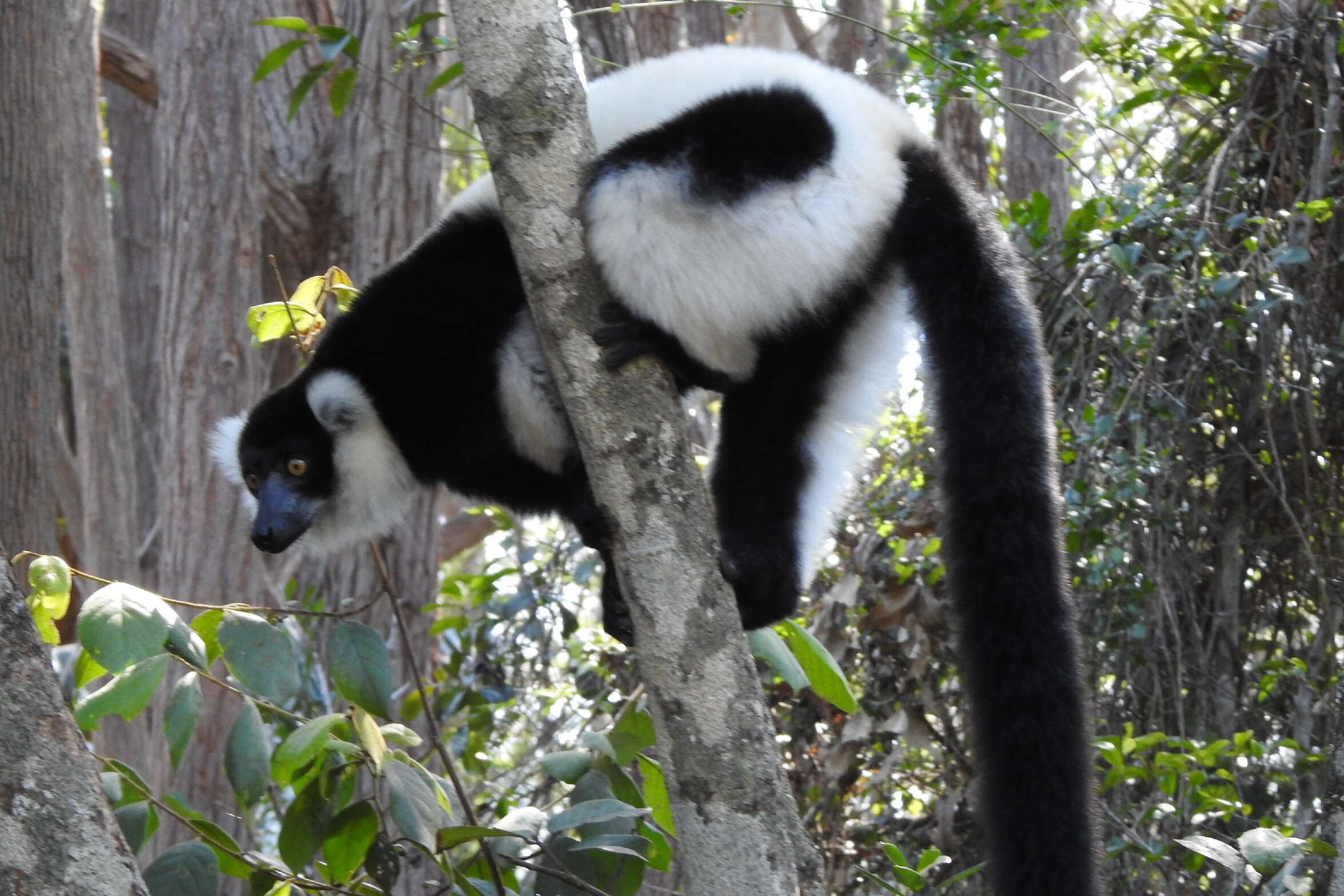
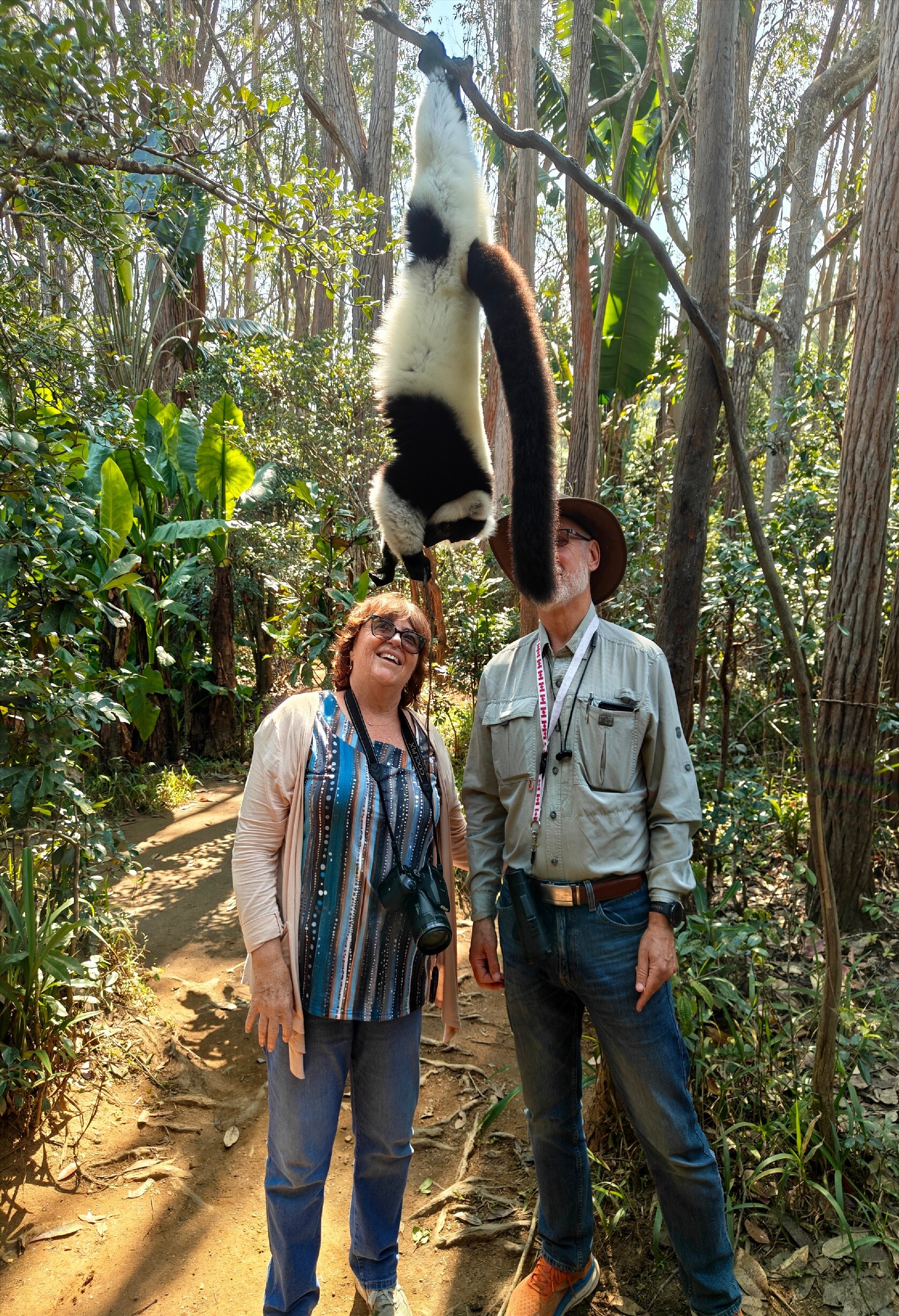
We were on this tiny island for maybe 45 minutes before taking the canoe back. It was now around noon and Tojo took us back to the hotel for the afternoon. Doug did a long run and Fran got to work.
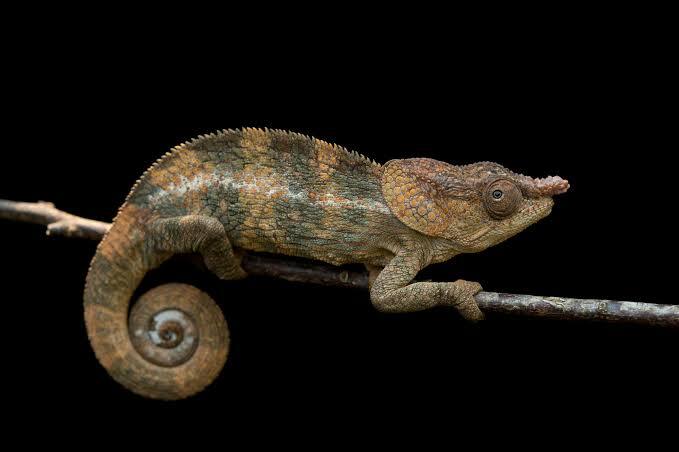
We had a night walk about an hour long on the main road tonight with a guide named Maurice who spoke pretty good English (but loved to repeat himself and clarify simple things). He found us some Goodman Mouse Lemurs and an elephant ear chameleon.
We had dinner at the main restaurant again and it was better than last night although it could have been more this time. Ya can’t win!
We had another quiet night and went to breakfast just after 7 for our pick up at 8:15. Tojo was waiting for us and we drove over to the national park office:
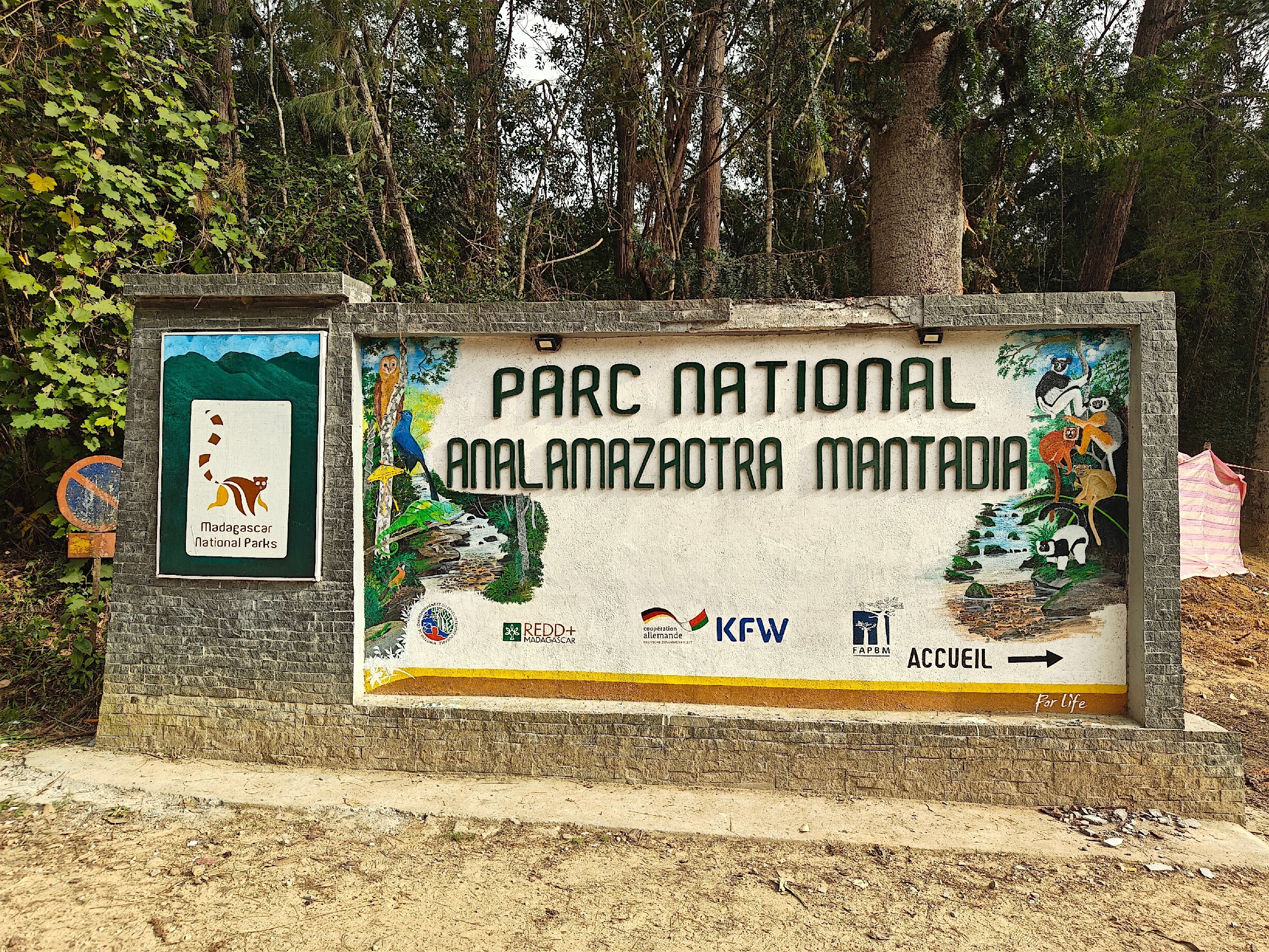
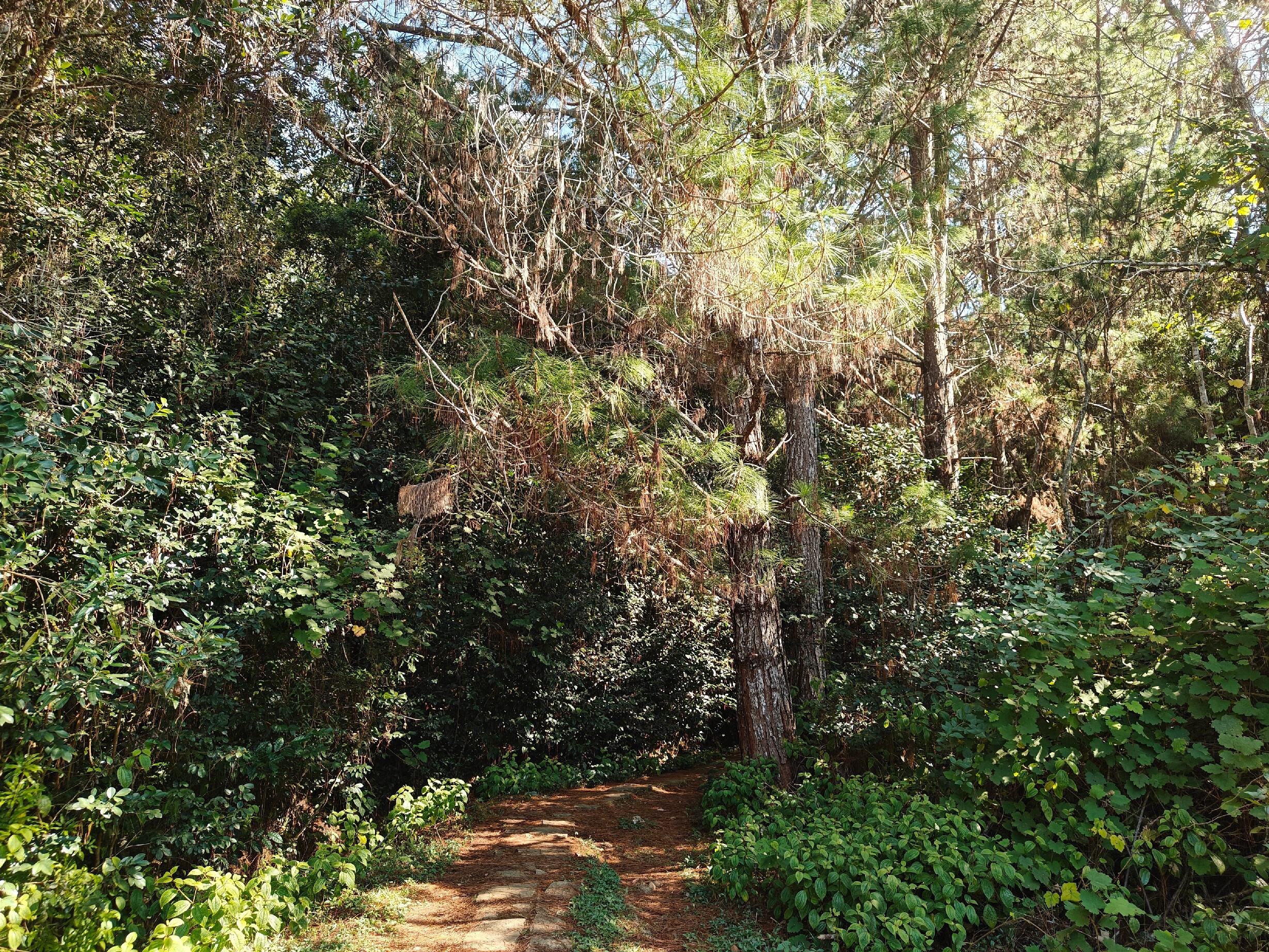
Here Maurice met us once again and took us on a forest walk for nearly two hours trying to find the bamboo lemur with no success. This park also has indri indri and sifakas but they are much higher up in the park and he was trying to save Fran’s knees.
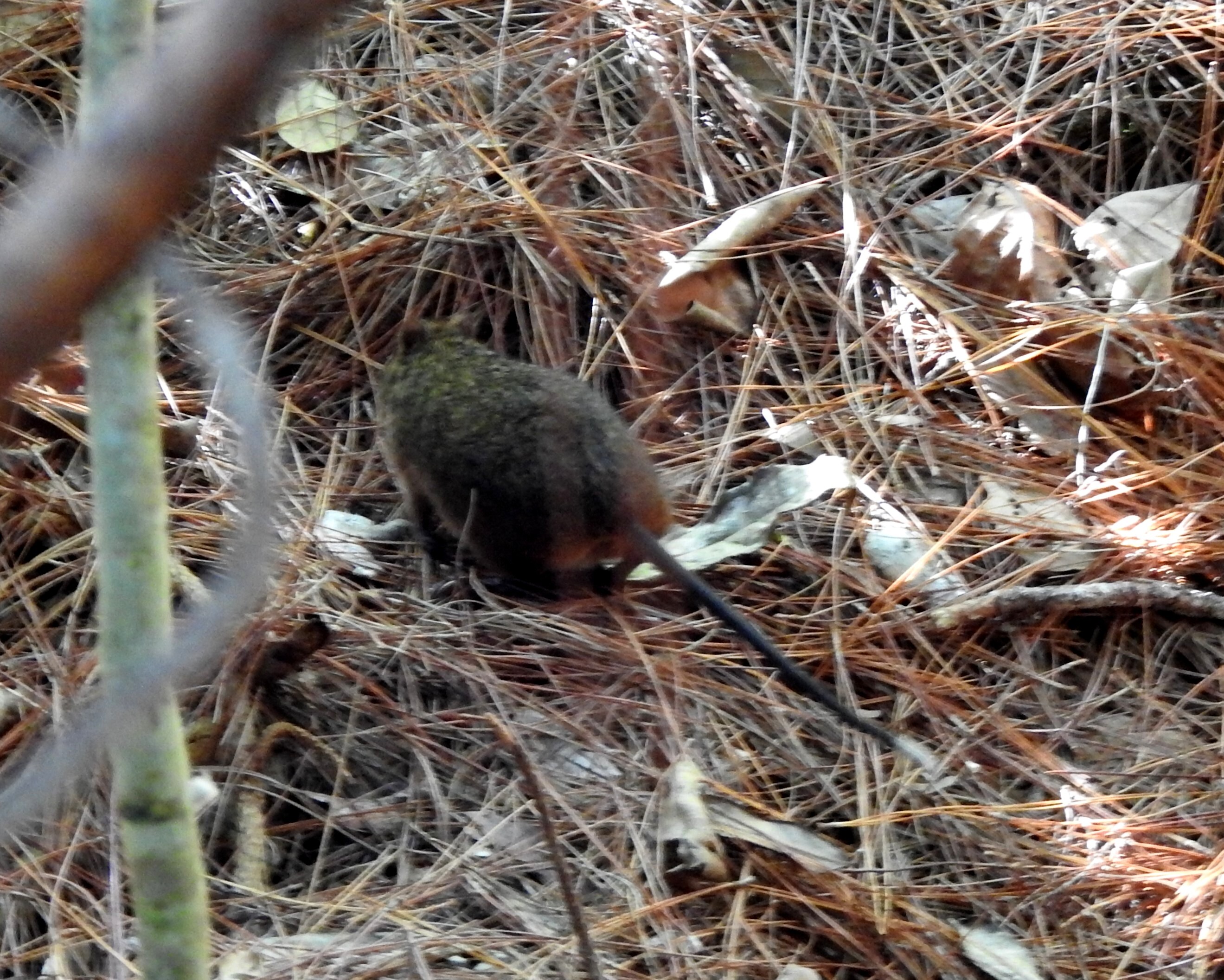
We did see some geckos and birds:


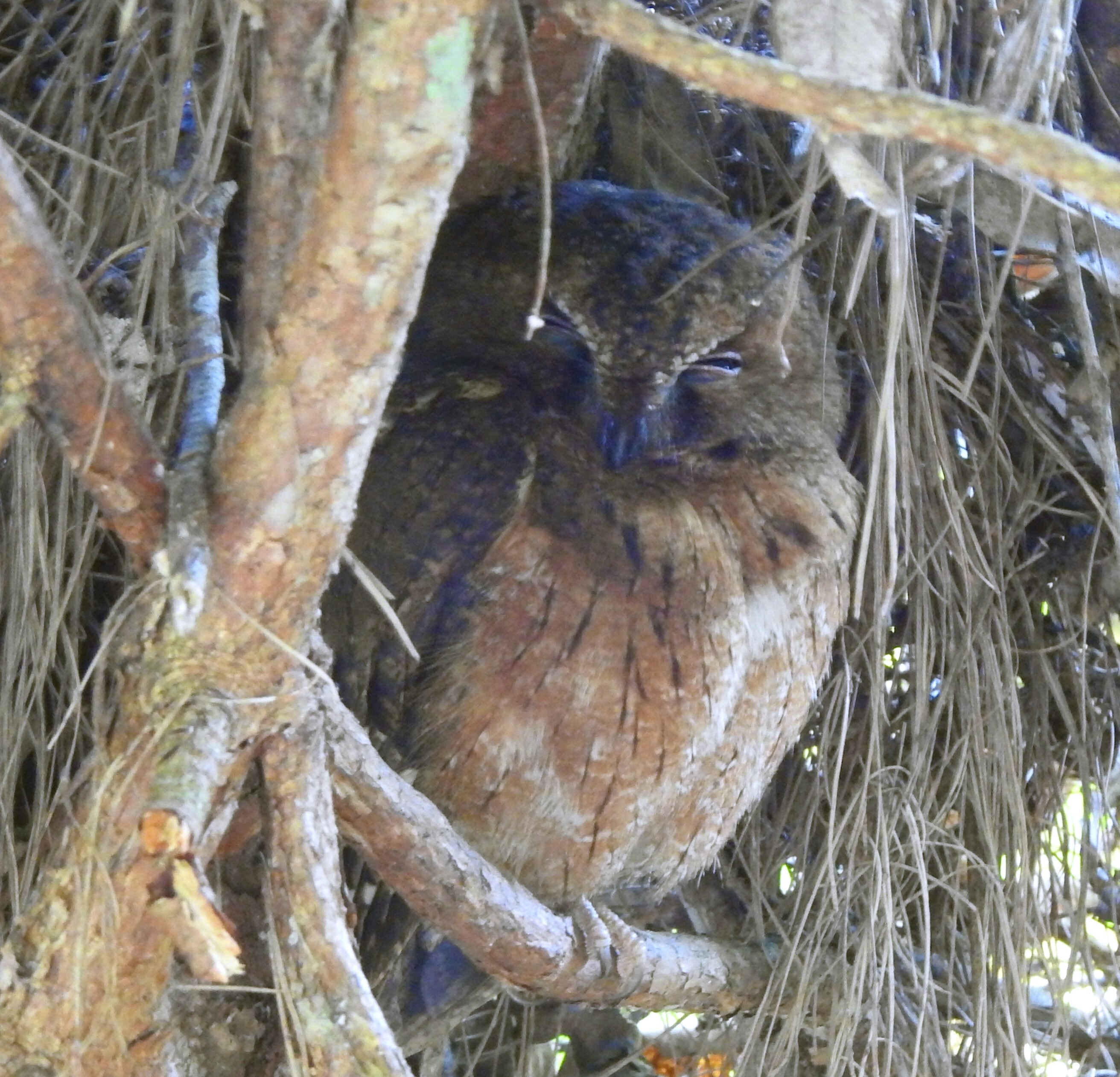
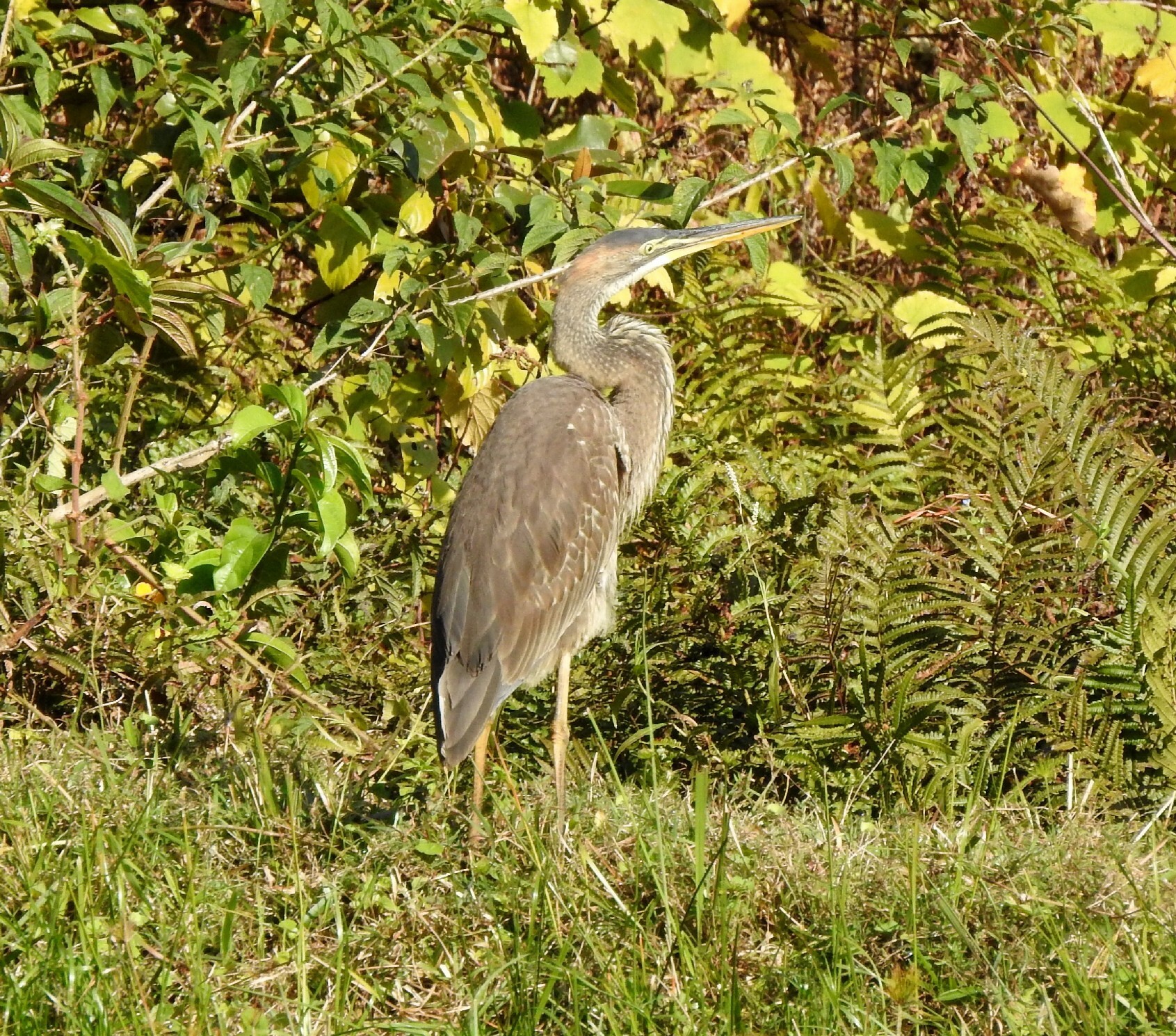

Note: all the local guides here have been very kind in this regard and most helpful with the up’s and down’s for Fran.
After the walk, since we’d already checked out and had our bags in the back of the car, we began the drive to Antananarivo around 10:30 and arrived by 3ish.
We said our goodbyes to Tojo as we fly tomorrow and will use the hotel shuttle to get to the airport. The drive to Tana was about 150 km / 93 mi and took over four hours. No high speeds in this country!
We got checked into the hotel and settled in for the night. It is once again, the same hotel, different room. Same layout as the second room, different floor.

We had dinner up at the rooftop bar again with virtually no sunset tonight due to the cloud cover. At the reception counter we saw this advertisement for a Madagascan built vehicle you can rent – these are the ones Haja had told us about that require a huge deposit.

Monday morning after Doug’s run and Fran’s exercising followed by showers, we enjoyed another wonderful breakfast buffet at the hotel before checking out at 11:15.
We used the hotel shuttle to get us to the airport 3 hours before our flight time. We had not checked in online as we wanted to switch our passports for the rest of our journey – we were running out of pages in our US passport. At the check in counter we explained the situation and we will now use our Canadian passports going forward until, of course, we land back at JFK.
The plane was not at the gate while we waited to board until about 20 minutes before and we managed to leave only about ten minutes late, landing in time in Johannesburg.
In the morning, Fran took this video of the lively street scene out of our hotel room window.
Thoughts on Madagascar:
It is a very, very poor country.
It has a lot to offer but it’s not easy to access
The people are very friendly, are quick to smile and want to help.
The weather here during winter was very comfortable never really getting cold unless you are at elevation.
The infrastructure which was probably build by the French is falling apart.
You’d don’t see many of the shops/restaurants you’re used to like no McDonald’s/Starbucks but we did see a KFC in the capital.
You can’t find things you are used to seeing in shops – we really struggled to get Coke Zero; we did see Lays and Mars Bars but most other products were unknown brands.
Note: this is a country we might come back to in order to see more. The people are very friendly and the food and accommodation was not too expensive – it’s just the getting around. Maybe by then, it will be easier. Also the lemurs are spread around and we barely touched the surface of the species you can see. For example, the ring tailed lemur is in the south west so we didn’t get to see the mascot of Madagascar. The north has its own species and its own Tsingy (actually two, a grey one like we saw and a red one – both are smaller than the one we went to though). There is also an island called Nosy Be which is supposed to have one of the most best beaches in the world and in the southwest, there is a the world’s 3rd largest coral reef. So you never know…..
Below is a map of all of Madagascar – you can see we only touched the surface of visiting this country – we did the middle of the west side and then a section of the middle of the eastern side.
Below is a map of all of Madagascar – you can see we only touched the surface of visiting this country – we did the middle of the west side and then a section of the middle of the eastern side.

Fun facts about Madagascar:
- Madagascar is the only country with lemurs. There are 250,000 species are found here, spread out across the country depending on the environment each needs.
- 250,000 species are found here, of which 70% are found nowhere else in the world.
- It is home to roughly half of the world’s chameleon species, ranging from giant varieties to ones the size of a fingernail.
- Six of the world’s eight baobab tree species are found only here, some living for over 1,000 years.
- The island is sometimes referred to the “Great Red Island” due to the colour of much of its soil.
- Madagascar has one of the least developed road networks in the world.
- There are also over 346 species of reptiles found nowhere else besides Madagascar including the world’s biggest chameleons (Parson’s chameleon) and smallest (dwarf chameleon of Brookesia).
- There are 7 species of baobab trees in Madagascar compared to only one in all of the rest of Africa.
- The famous Italian explorer Marco Polo also mentioned the island in his journals in the 13th century, after hearing about it from regional sailors.
- Madagascar is the world’s leading producer of vanilla.