March 20th, 2026
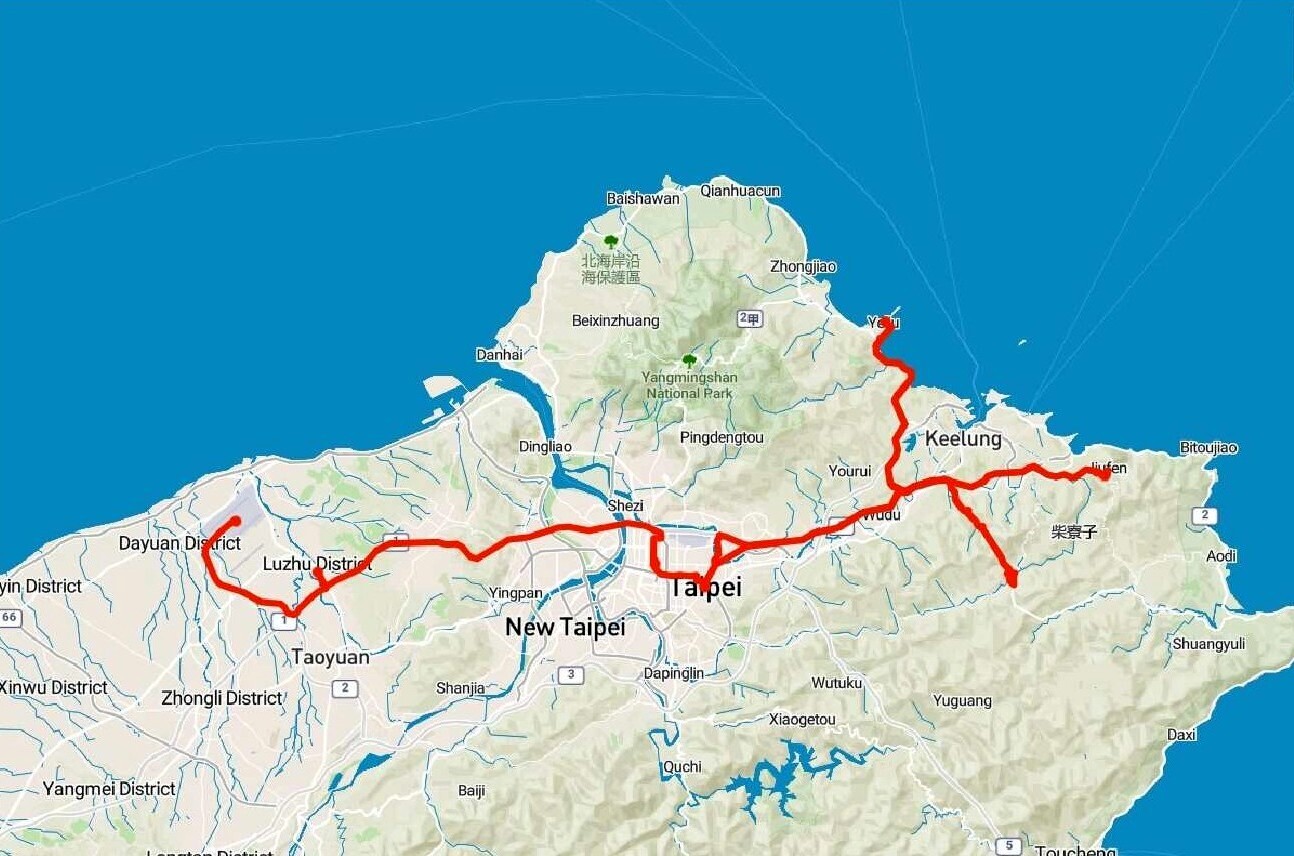
Taiwan operates as a de facto independent country with its own government, military, economy, and passport, yet it lacks widespread formal international recognition due to China’s “One China” principle. While Taiwan functions as a democracy, Beijing views it as a breakaway province, limiting its formal diplomatic recognition to around a dozen countries; officially it is part the Republic of China, and is a country in East Asia. The main island, also known as Formosa, lies between the East and South China Seas in the northwestern Pacific Ocean, with mainland China to the northwest, Japan to the northeast and the Philippines to the south. The largest metropolitan area is formed by Taipei (the capital), New Taipei City and Keelung.
Taiwan has been settled for at least 25,000 years. Ancestors of Taiwanese indigenous peoples settled the island around 6,000 years ago. In the 17th century, large-scale Han Chinese immigration began under Dutch colonial rule and continued until 1683 when the island was annexed by the Qing Dynasty and later ceded to Japan in 1895. China assumed control following the surrender of Japan in WWII on 1945 but with the loss of mainland China to Communists, the government moved to Taiwan in 1949.
The political and international status of Taiwan is contentious. Despite being a founding member, the Republic of China (ROC) no longer represents China as a member of the United Nations after UN members voted in 1971 to recognize the People’s Republic of China instead. The ROC maintained its claim to be the sole legitimate representative of China and its territory until 1991, when it ceased to regard the Chinese Communist Party as a rebellious group and acknowledged its control over mainland China. Taiwan is claimed by the PRC, which refuses to establish diplomatic relations with countries that recognize the ROC. Taiwan maintains official diplomatic relations with 11 out of 193 UN member states and the Holy See. Many others maintain unofficial diplomatic ties through representative offices and institutions that function as de facto embassies and consulates. International organizations in which the PRC participates either refuse to grant membership to Taiwan or allow it to participate on a non-state basis.
Domestically, the major political contention is between the Pan Blue-Coalition, which favors eventual Chinese unification under the ROC and promoting a pan-Chinese, contrasted with the an-Green Coalition, which favors eventual Taiwan Independence and promoting a Taiwanese identity; in the 21st century, both sides have moderated their positions to broaden their appeal.
Adopted in 1928, the flag of Taiwan symbolizes the blood of revolutionaries (red), the sky (blue), and progress/equality (white sun).
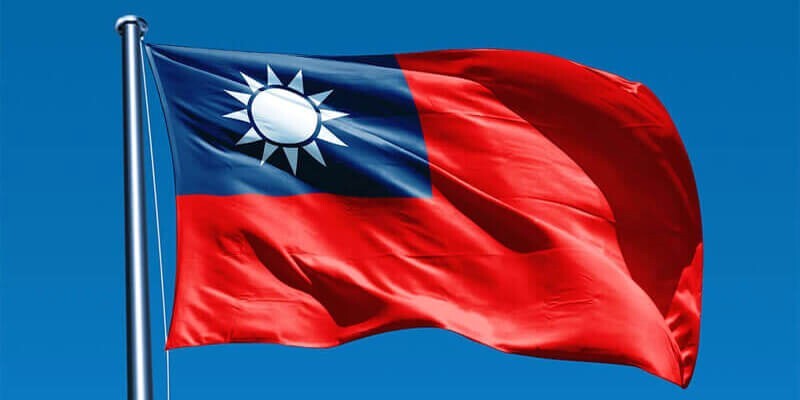
The flag of Taiwan, (officially the flag of China), features a red field with a blue canton containing a white sun with 12 rays. It symbolizes the Three Principles of the People (Nationalism, Democracy, Social Well-being), with blue for liberty/equality, white for fraternity/democracy, and red for sacrifice. The 12 rays represent the months and traditional hours, signifying progress.
Currency: New Taiwan dollar (TWD) = $0.031 USD; $0.043 CDN
Gas: $0.88 TWD per litre; ($3.33 per gallon USD – $1.21 per litre CDN)
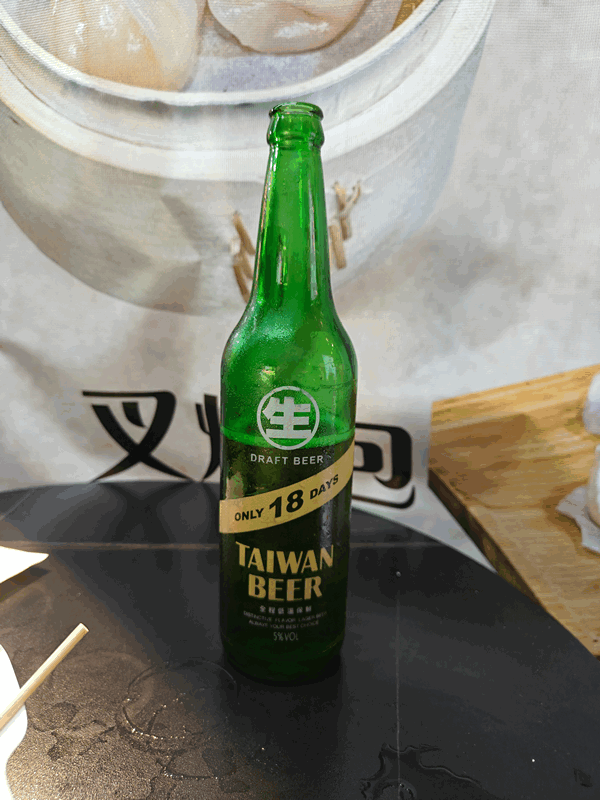
Beer: Taiwan Beer & Draft 18 day Taiwan Beer (latter is better)
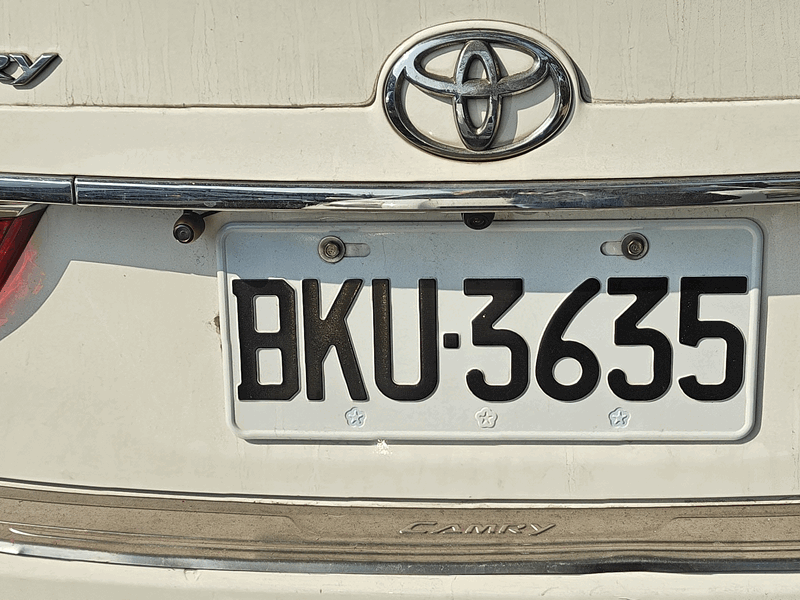
License plate: (very plain – not even the country name!)
Our flight left Vegas at 11 arriving in Seattle 3 hours later for a 3 hour lay over before our direct flight to Taipei. We’d purchased this flight with Delta Sky Miles getting a bonus price for getting and using the Delta Amex card. The downside was we couldn’t select seats but we did get a free checked bag each. When checking in the day before in the app, Doug managed to “secure” seats but couldn’t verify Fran’s seats despite them showing up and we were told in Vegas to check with the gate agent in Seattle. This worried us some as it was a 13 hour flight and we didn’t want to get stuck in the middle.
Upon arriving in Seattle, of course, the gate agent was not at the counter yet so we went for a couple of cold drinks (non-alcoholic) at the closest bar and planned out our our time in the city of Taipei.
We were at the gate in time and managed to snag two aisle seats but five rows apart. Two minutes after we moved away from the counter, they announced no more seat changes so we had just lucked out! Then they asked for 5 volunteers to be bumped to tomorrow’s flight – the offer was $1000 plus food vouchers and a hotel. It was tempting so we looked into it; they promised better seats on the flight tomorrow as well. Boarding time began and we’d hadn’t heard anything so we tried to board (we’d also received a message that our bags were on the plane) and we got stopped as we had opted to take the bump; we explained we didn’t want to wait until everyone boarded to learn if we’d been bumped and then lose the seats we had so we boarded. Maybe coming home…..it was a very good offer especially considering we’d used points to book.
The flight went smoothly and landed early by about 40 minutes. The good news for Fran was all that yoga/Pilates she’s been doing meant she had NO back pain in the flight and her recent cortisone shot meant no knee pain or stiffness and she actually managed a couple of hours sleep! Doug had some major butt pain and some knee discomfort and did not do more than doze off some.
Taiwan is our 101st country!
We headed to immigration finding SIM cards ($16 unlimited 4G data for ten days) and an ATM enroute. We also picked up rechargeable MRT payment cards at the SIM shop. Immigration went pretty quick and by the time we got to baggage, our bags were already off the carousel and waiting for us. Our hotel had advised that at this time of night (we landed at 8:30 pm) it was best to take a taxi as being new to the city, sorting out the MRT might be daunting and the hotel hard to find on our own in the dark so we did just that. At the Guey Lin Hotel (about 7 km / 4 mi from the airport but not in the city proper), we had an “executive room” with a queen bed and private bath for $84. The room was quite large and had a desk and a fridge and very good WiFi as well. We got a bit sorted and headed to bed. So we left Vegas on Friday morning and it’s now Saturday night! We went to bed and managed to stay there until almost 5am. Breakfast was “delivered” to our door around 7 am – a breakfast sandwich from a fast food place with hash browns and a tin of warm apple juice. Doug had gone out earlier to a 7-11 (they are EVERYWHERE!) and got some fruit and filled our MRT Easy Card. The Easy Card gets you on and off the MRT and the main rail system, the TRA. You can also use it to pay for things at certain shops, like 7-11.
The weather is humid here with day time highs around the mid to high 20’s C / high 70’s F. It was quite overcast to start the day but cleared up nicely before noon. We were wearing jeans, jackets and sneakers that first day and it was pretty warm!
We left the hotel around 7:45 to catch a bus that turned out not to be coming for over and hour so we called an Uber to take us to the MRT station which turned out to be 3 km / 2 mi away so it was a good thing we hadn’t taken the MRT to the hotel we’d have been walking all that way in the dark! It took two train lines (purple and orange) to get to our next hotel in the city. This first one we stayed at is near the airport and about 30 km / 20 mi from the other one. We were able to check in but not get into our room as it was only 9:30 ish so we left our bags and went back to the train station a couple of blocks away to head to the furthest site first and that took two train lines as well (orange and red).
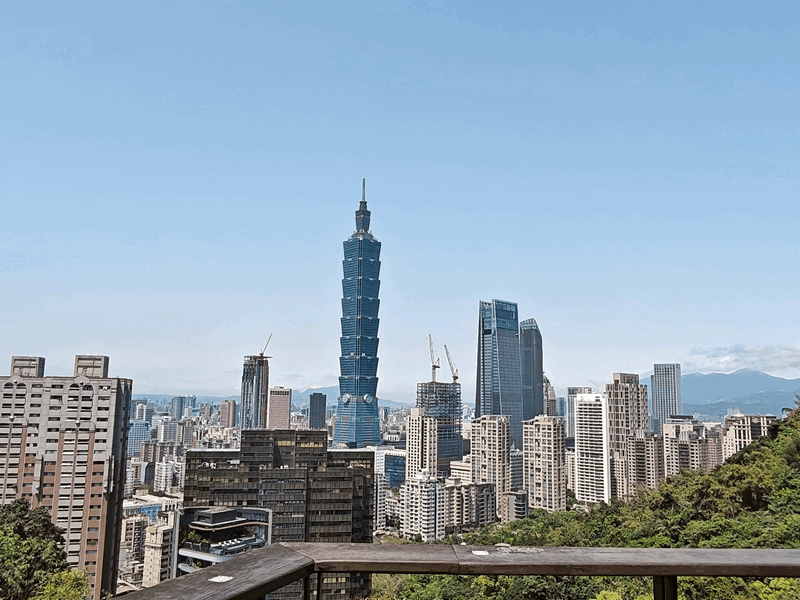
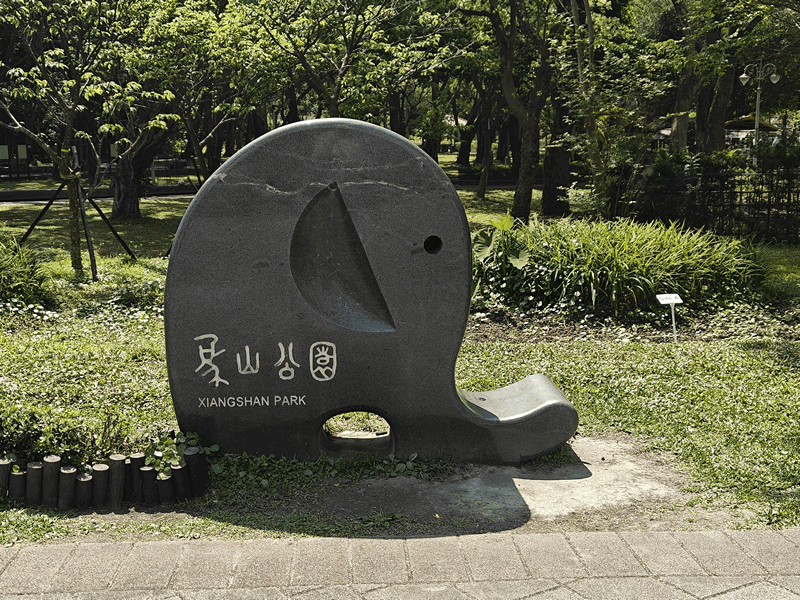
We got off at the end of the red line and walked for ten minutes to Xiangshan Park where the beginning of the hike up Elephant Mountain (the three nearby mountains are Tiger, Lion and Leopard) is located for city views including the famous Taipei 101 Building. The ‘hike’ was really just a long a$$ set of stairs. The humidity made it quite a warm trek up and Fran felt like she needed another shower by the time we reached the “photo platform”!
It was a lovely view though:
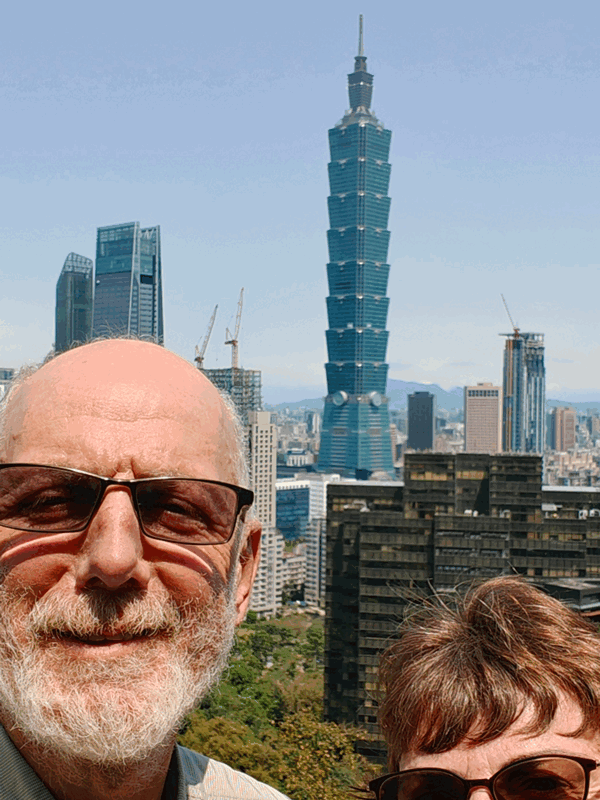
 We walked back down and there was a nice breeze most of the time which was really nice. Instead of catching the MRT only one stop to the Taipei 101 Building, the next stop, we walked over.
Tickets cost us $17 each and it was worth it. They take you to the 89th floor and there you can do a 360 walk inside. In the elevator is a little video screen showing the current height and speed of the elevator.
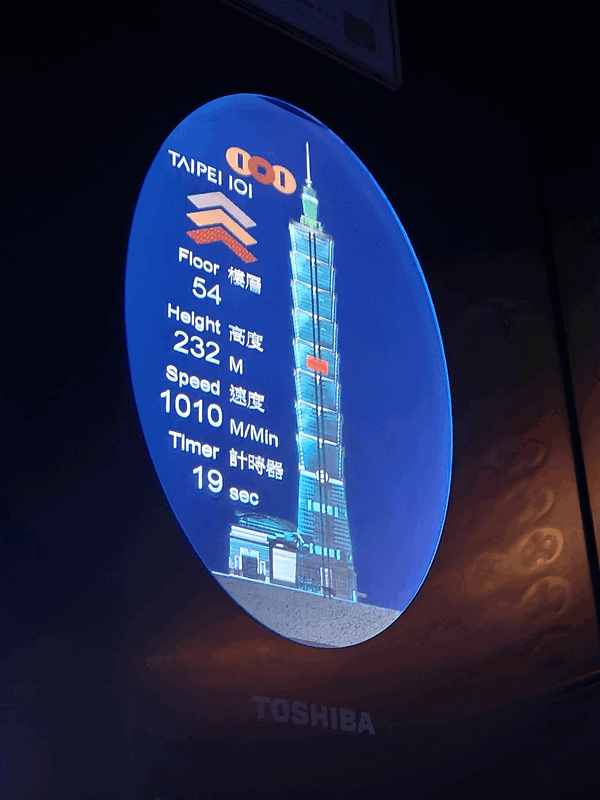 (yes we should have taken a video!)
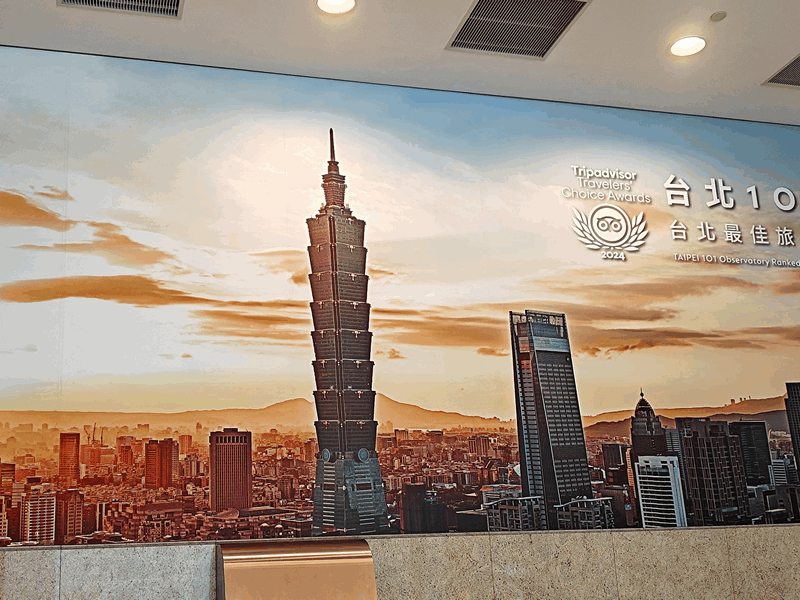
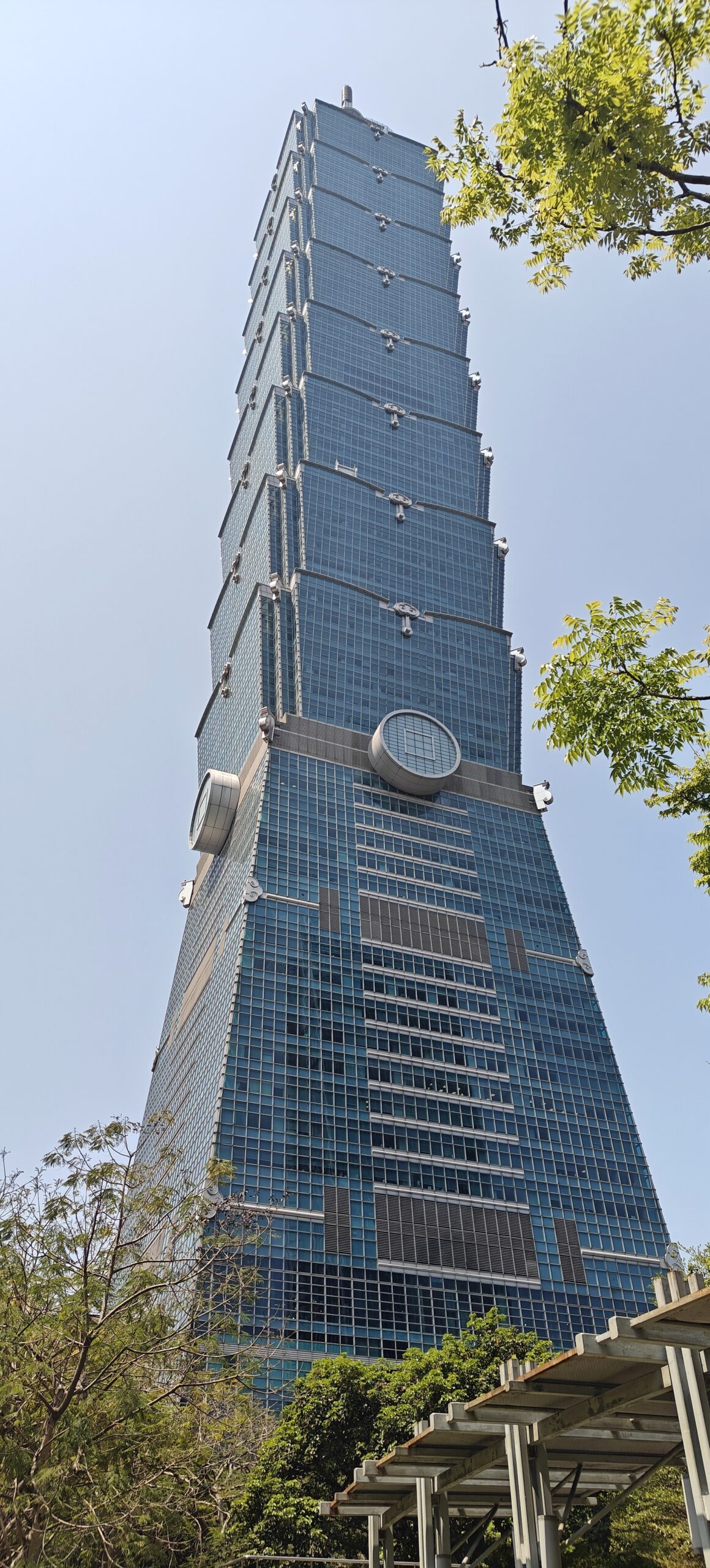
Taipei 101 formerly known as the Taipei World Financial Center, is a 508-meter (1,667 ft), 101-story skyscraper. It was officially classified as the world’s tallest building from its opening on 31 December 2004, until it was dethroned by the Burj Khalifa in 2009. Upon completion, it became the world’s first skyscraper to exceed half a kilometer. It is the tallest building in Taiwan and the and the eleventh tallest in the world.
Taipei 101 is designed to withstand typhoon winds and earthquake tremors that are common in the area in the east of Taiwan. It was designed to withstand gale winds of 60 meters per second 216 km/h or 134 mph, as well as the strongest earthquakes in a 2,500-year cycle. Taipei 101 was designed to be flexible as well as structurally resistant, because while flexibility prevents structural damage, resistance ensures comfort both for the occupants and for the protection of the glass. Most designs achieve the necessary strength by enlarging critical structural elements such as bracing. Because of the height of Taipei 101, combined with the surrounding area’s geology—the building is located just 660 ft (200 m) away from a major fault line—outrigger trusses, located at eight-floor intervals, connect the columns in the building’s core to those on the exterior.
These features, combined with the solidity of its foundation, made Taipei 101 one of the most stable buildings ever constructed. The foundation is reinforced by 380 piles driven 80 m / 262 ft’ into the ground, extending as far as 30 m / 98 ft into the bedrock. Each pile is 1.5 m / 4’ 11” in diameter and can bear a load of 1,000–1,320 metric tons.
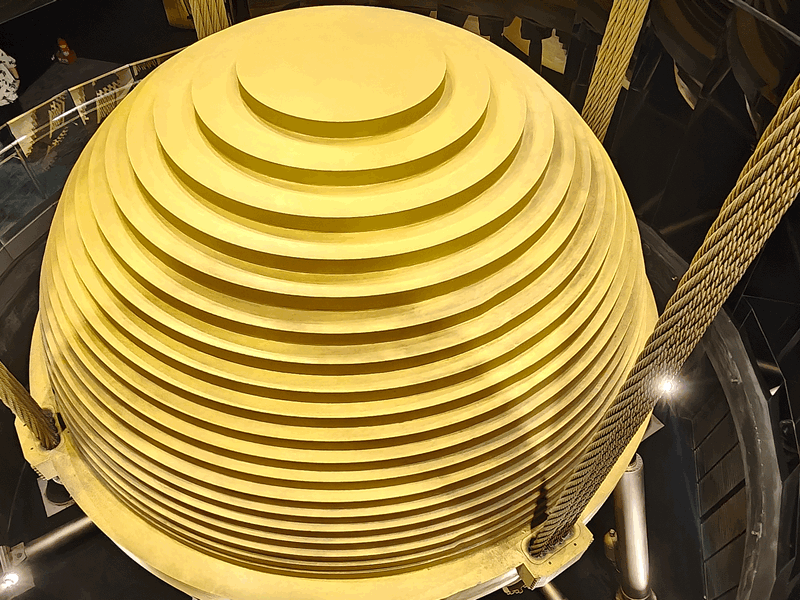
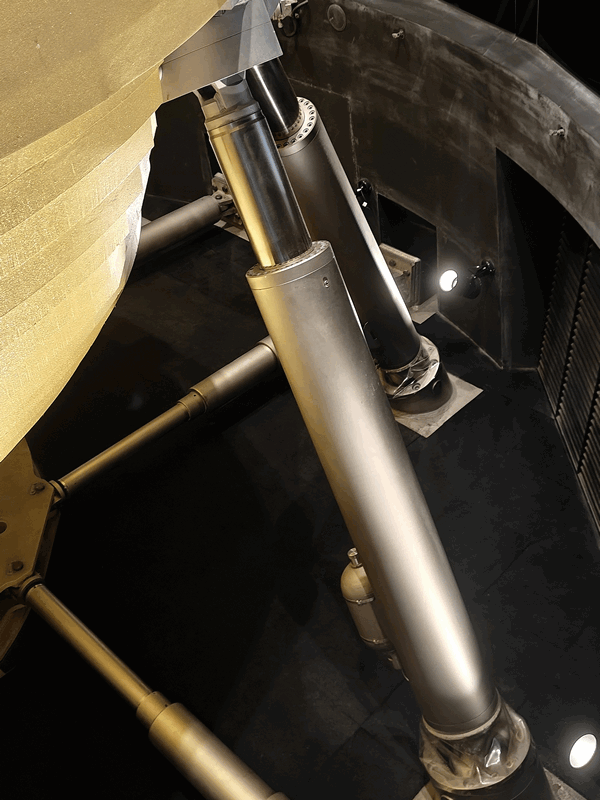
From the 89th floor, you can see the “tuned mass damper” and walk down to the 88th floor to see the bottom.
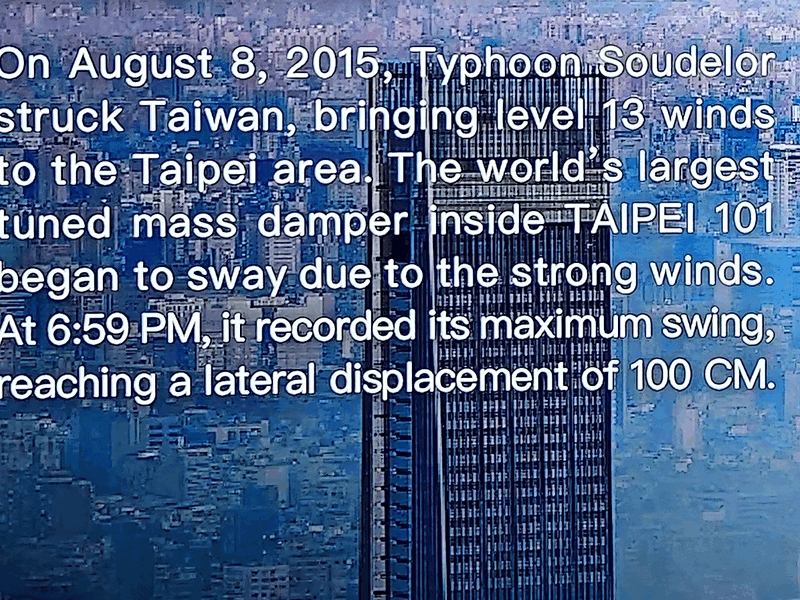
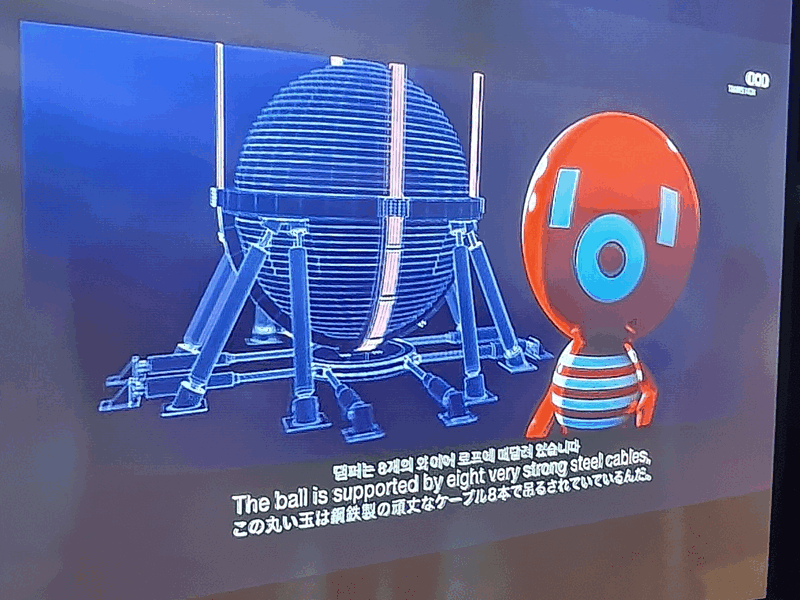
Motioneering (a subsidiary of a Canadian firm) designed a 660-metric-ton steel pendulum that serves as a tuned mass damper, at a cost of US$4 million. Suspended from the 92nd to the 88th floor, the pendulum sways to offset movements in the building caused by strong gusts. The tuned mass damper is visible to all visitors on the 88th floor upwards until the 92nd floor. It can reduce up to 40% of the tower’s movements. Its ball, the largest damper ball in the world, consists of 41 circular steel plates of varying diameters, each 125 mm / 4.92” thick, welded together to form a 5.5 m / 18’ diameter ball. Two additional tuned mass dampers, each weighing 6 metric tons (7 short tons), are installed at the tip of the spire which help prevent damage to the structure due to strong wind loads. On 8 August 2015, strong winds from Typhoon Soudelor swayed the main damper by 1 m / 39” —the /largest movement ever recorded by the damper.
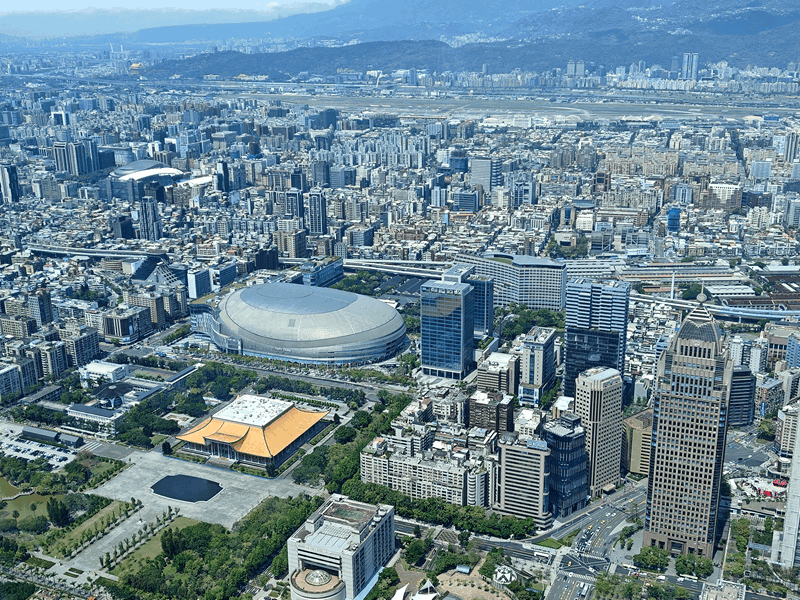
Doug of course, found this fascinating. The views were spectacular of course, as well.
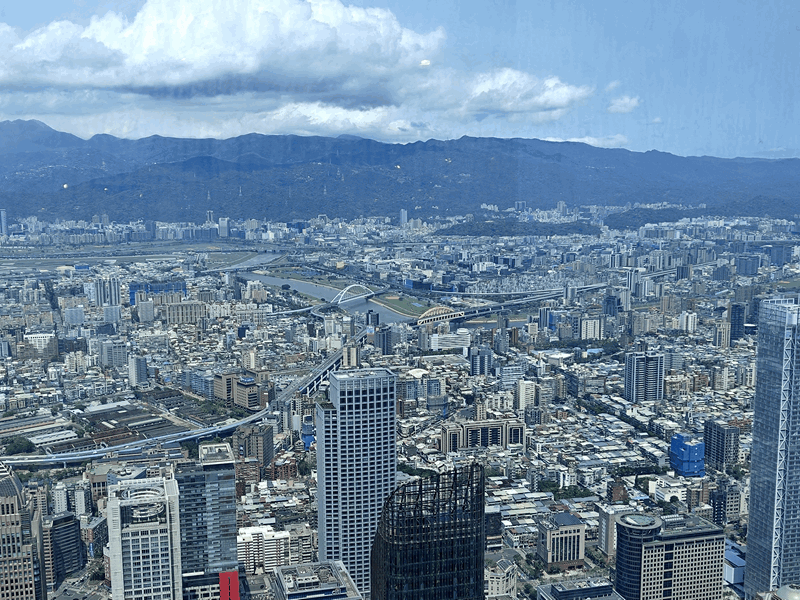
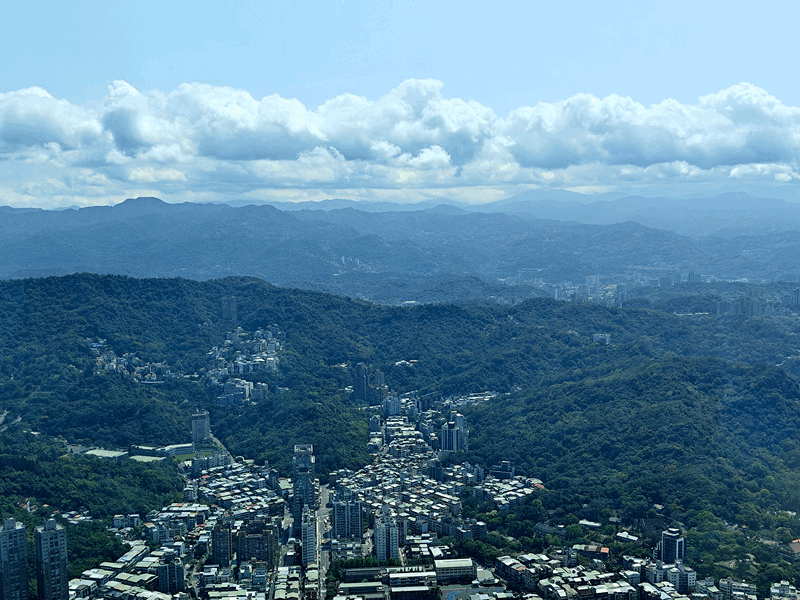
In each corner of the 89th floor they had fun displays in which to take photos:
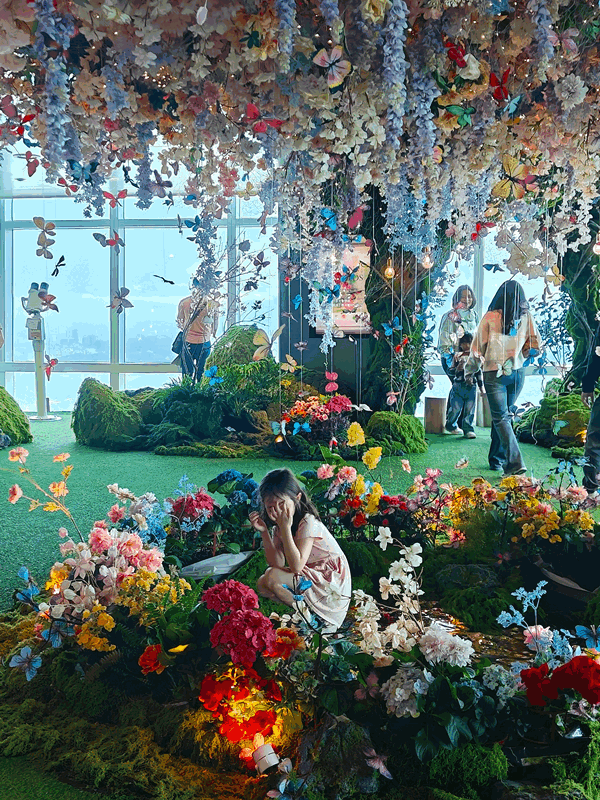
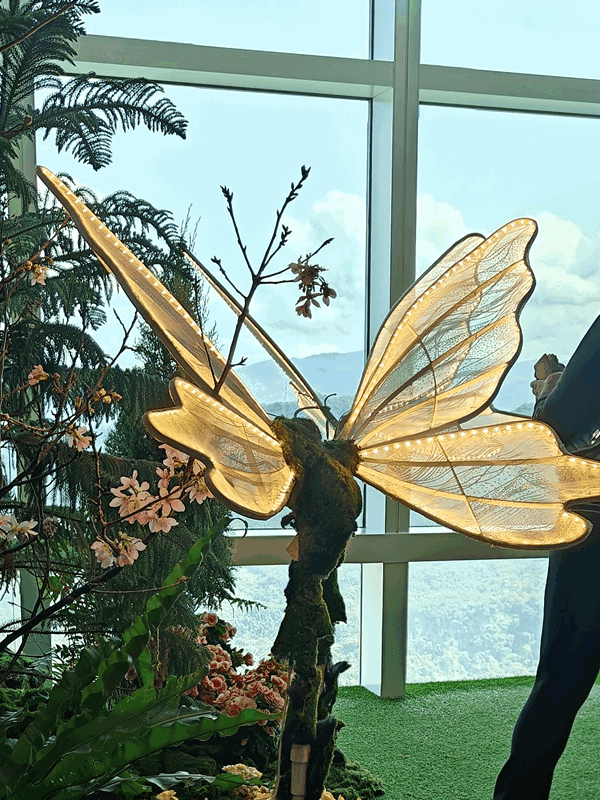
We’re feeling somewhat dehydrated from our flights yesterday and have been trying to drink a lot; however, with the hot hike, we did sweat a great deal. We got a snack (donuts) and a coke zero to share before getting back on the subway.
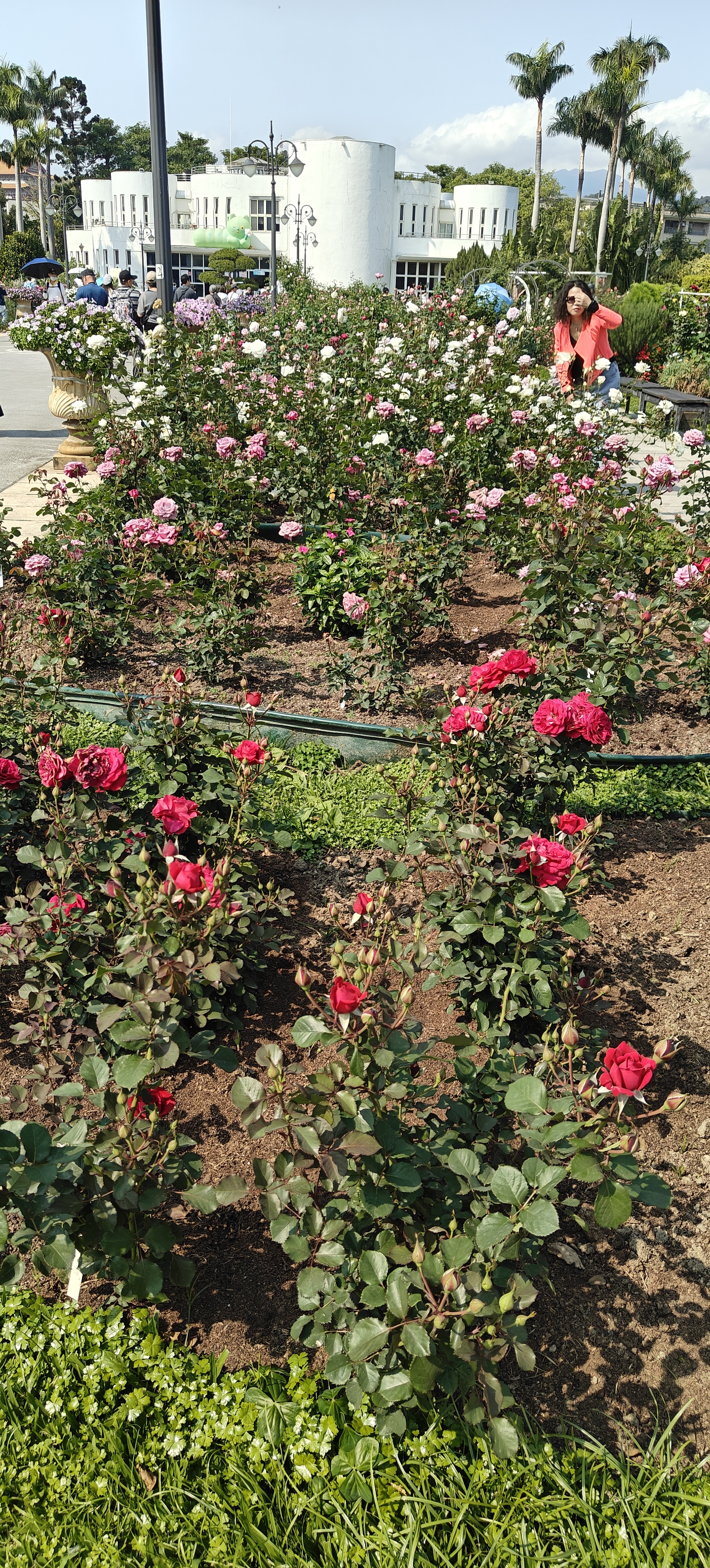
From the 101 we took two subway lines (red and orange) north and visited the Lin An Tai Historical house. Enroute we had to pass by the Taipei Rose Garden which was in full bloom but SO busy with people we didn’t wander through it.
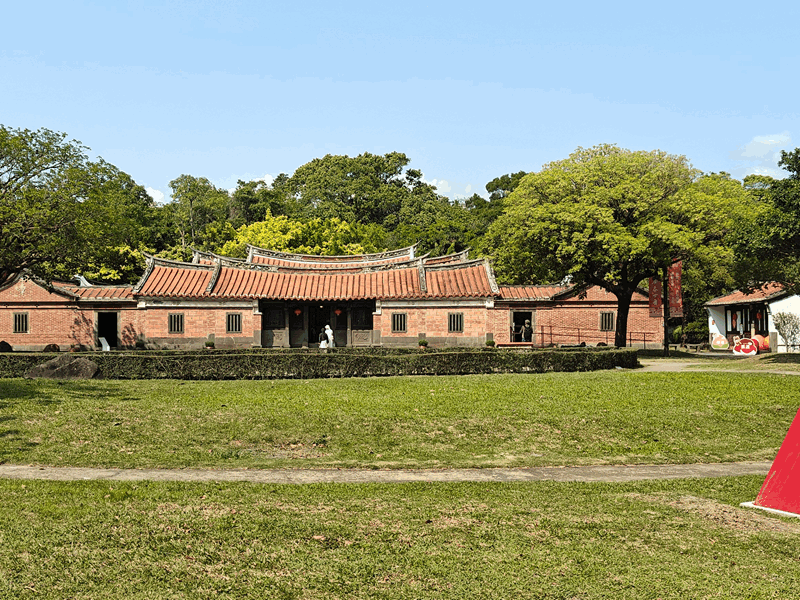
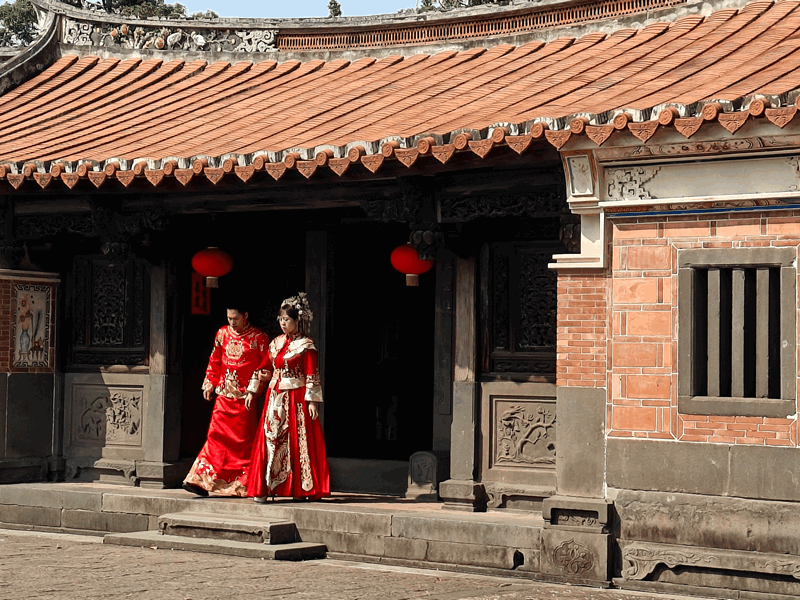
The building was originally built by the Lin Family who migrated to Taiwan in the 18th century. The building follows the southern Fujian style courtyard. Rocks that cover the front yard of the house are the rocks taken from what was mainland merchants used to stabilize their ships. There is a pond in front of the house used for defense purpose and also for drinking and fire extinguisher. It also has a “rock hill” out front with pathways, tunnels and arches.
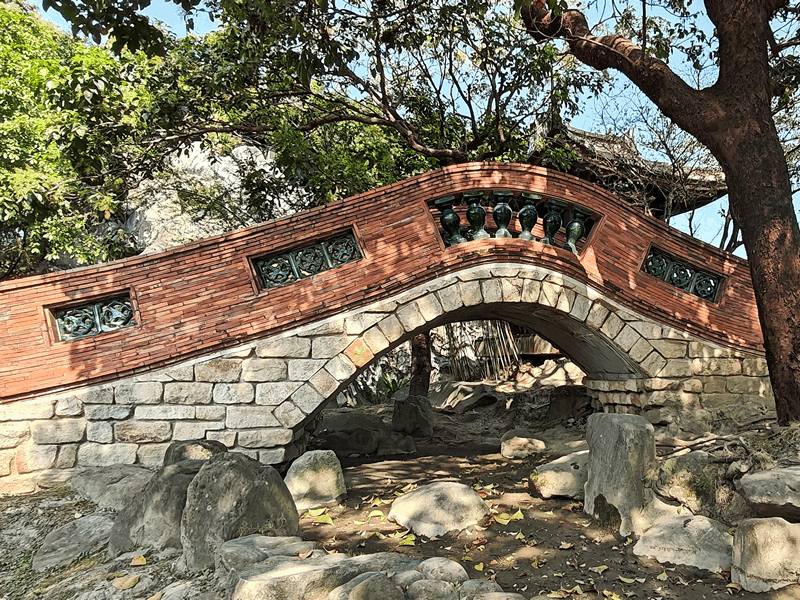
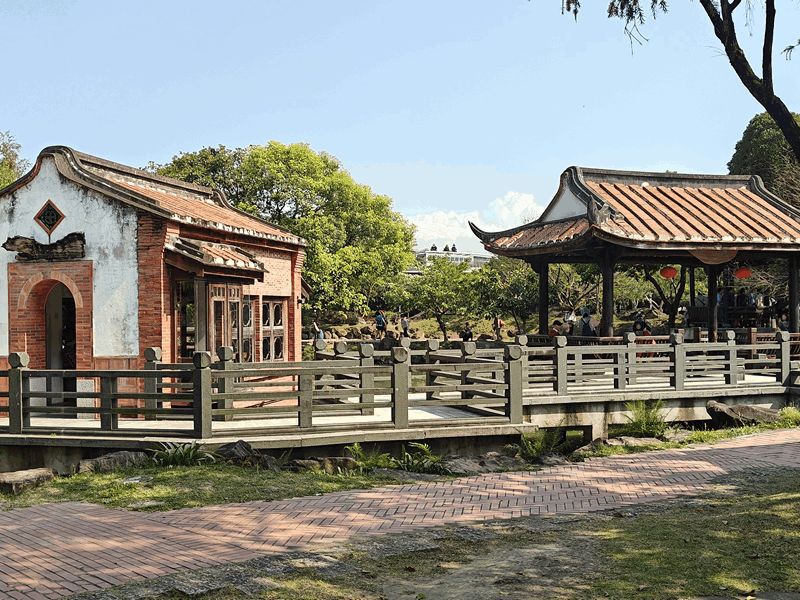
The house was okay but we enjoyed the cool walk through the rock formation out front:
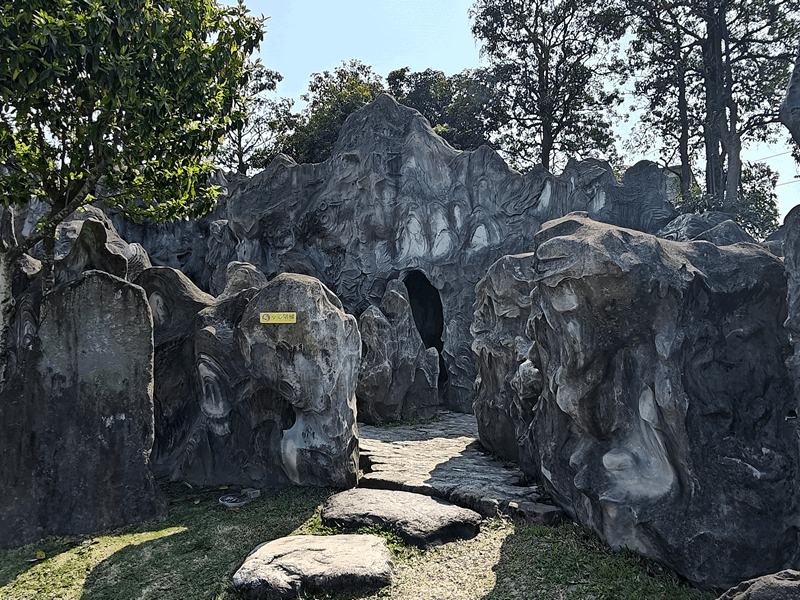
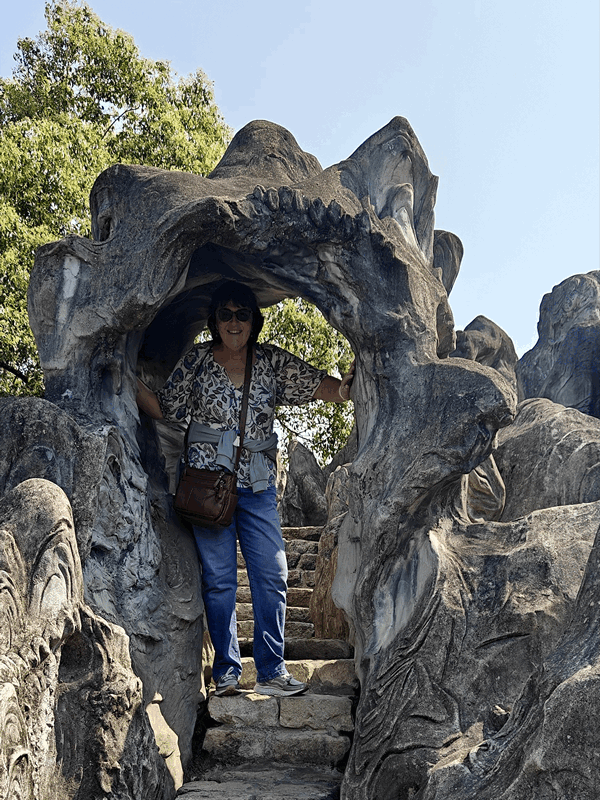
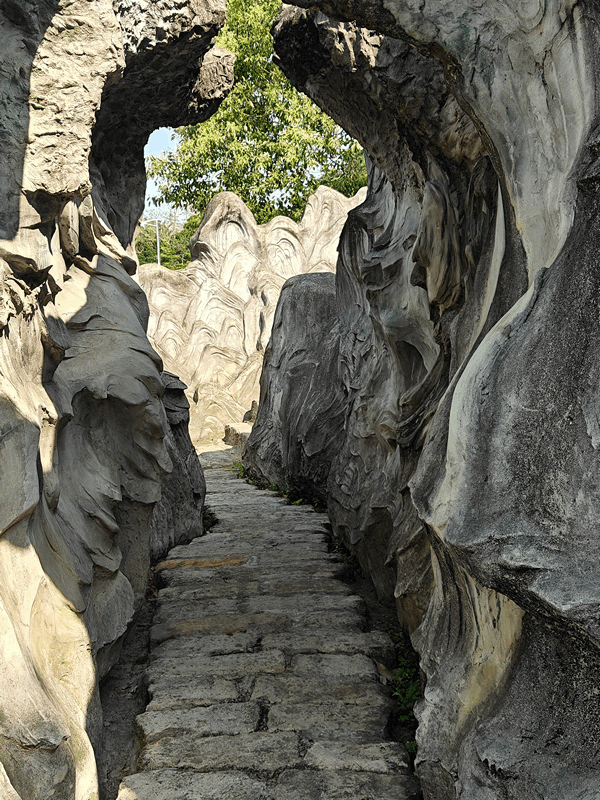
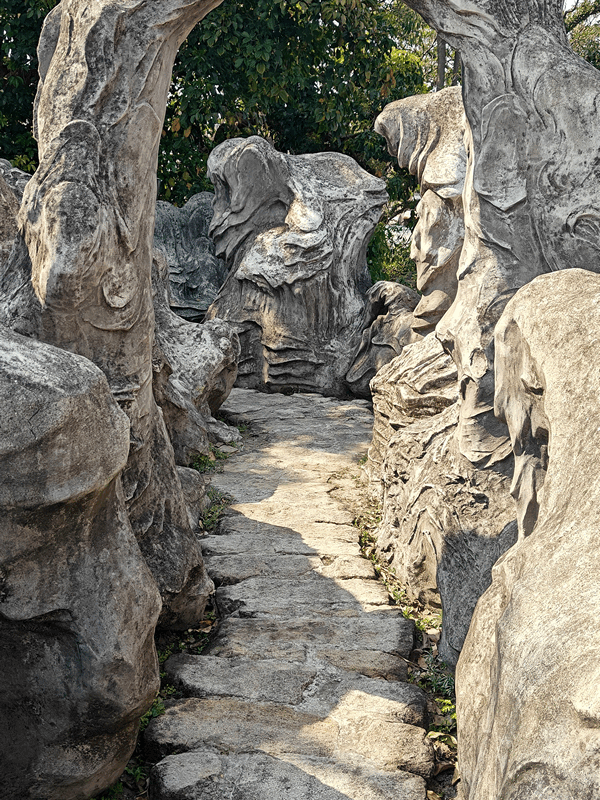
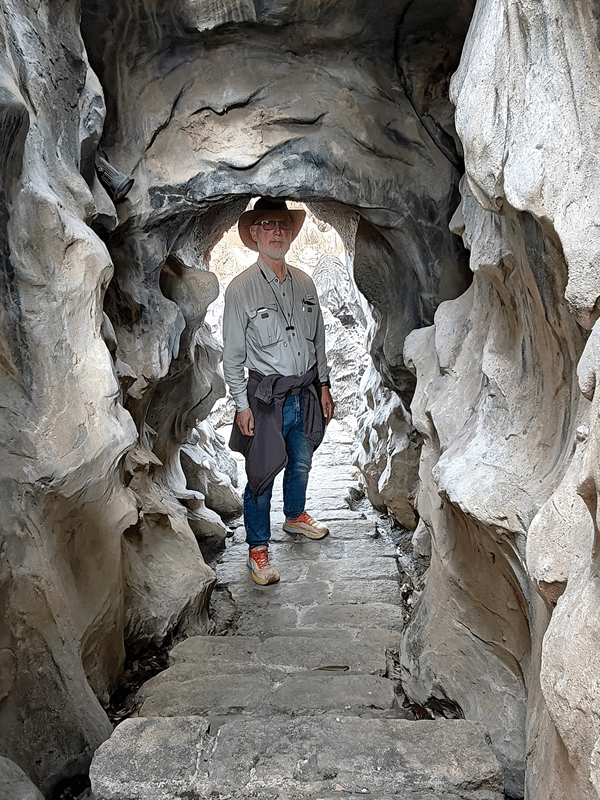
By now it’s around 2:30 and we’ve had enough; it’s too hot for jeans, our bodies and minds are tired and we have a KEGS meeting scheduled for 6pm. We stopped at a 7-11 for a snack and cold Coke Zero before returning to our hotel.
Our bags had been taken to our room and we went to chill before our meeting which ended up being canceled due to a death in Kitojo and we’ve rescheduled.
After 6 we went out to find food for dinner. It’s Sunday so not everything is open and not everything has an English menu. We tried to get into a couple of places that looked promising but one was for a tour group only and the Japanese place was full so we made a reservation for tomorrow and ended up at a Korean BBQ. We’ve never done this and probably won’t again. No English and the waitress helped a bit but while it was okay, it was nothing special and we didn’t really like having to cook our own food!
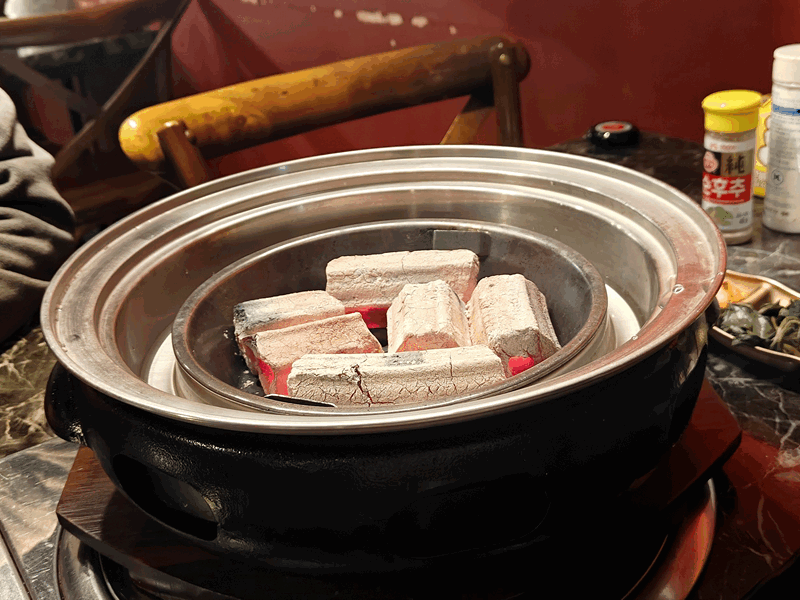 We managed to stay up until just before 9 tonight which was pretty darn good we thought – probably helped be outside all day and going out for dinner as it got dark so we weren’t just sitting in the room. We managed to sleep until 4 and Doug was up and out by 5; Fran got up at 5:30, exercised and Doug was back around 6:20.
Monday was quite overcast in the morning but cleared up some and was supposed to be just as warm as yesterday.
Today after stopping at a nearby French bakery for some sustenance, we caught the MRT and went south to do a portion of a “political” walk around Central Taipei. It started at the Chiang Kai Shek Memorial Hall. We walked about two km to the park housing this monument.
Chiang Kai-shek was a Chinese military commander, revolutionary, and statesman who led the Republic of China from 1928 until his death in 1975. His government was based in mainland China until it was defeated by Mao Zedong in 1949, after which he continued to lead the ROC government on the island of Taiwan.
During his early years as a leader, he pursued unification and modernization while prioritizing the suppression of the Communists over confrontation with Japan following the latter’s invasion. Between 1937 and 1945, Chiang led China in the Second Sino-Japanese war. As the leader of a major Allied Power, he was involved in the discussion for the terms for Japan’s surrender, including the return of Taiwan, where he suppressed the February 28th uprising.
In 1949,when Mao’s CCP party took over, he retreated to Taiwan, where he imposed martial law and the “White Terror” which lasted until 1987 and 1992, respectively. Beginning in 1948, he was re-elected five times by the same Eternal Parliament with six-year terms as President of the ROC, head of a de facto one-party, for 25 years until his death. He was considered the legitimate leader of China by the UN until 1971, when the ROC’s seat was transferred to the People’s Republic of China.
Chiang is a controversial figure. Supporters credit him with unifying the nation and ending the century of humiliation, leading the resistance against Japan, fostering economic development and promoting Chinese culture in contrast to Mao. He is also credited with safeguarding the national treasures of the Forebidden City during the wars, eventually relocating a substantial portion to Taiwan, where he founded the National Palace Museum. Critics fault him for his early appeasement of Japan, the deliberate flooding of the Yellow River, cronyism and corruption.
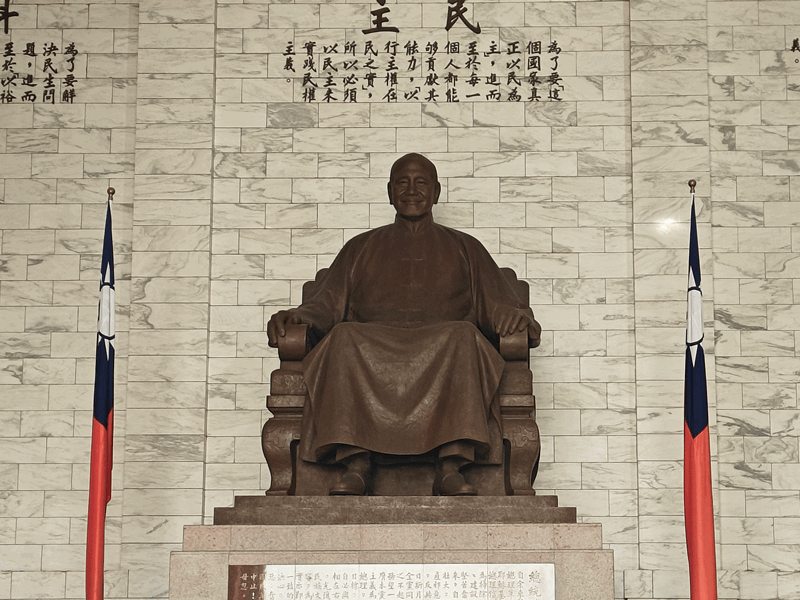
This memorial is huge! There is the main hall with a bronze statue on the top level inside the building and a few outdoor terraces on different levels around the main building. Out front there is a huge plaza called “Democracy Boulevard” and at the end of the plaza are two identical looking buildings that look like temples but one is the national theatre and the other is the national concert hall. There is an exhibit hall inside with enormous doors and ornate ceilings There is also a huge gate across the square.
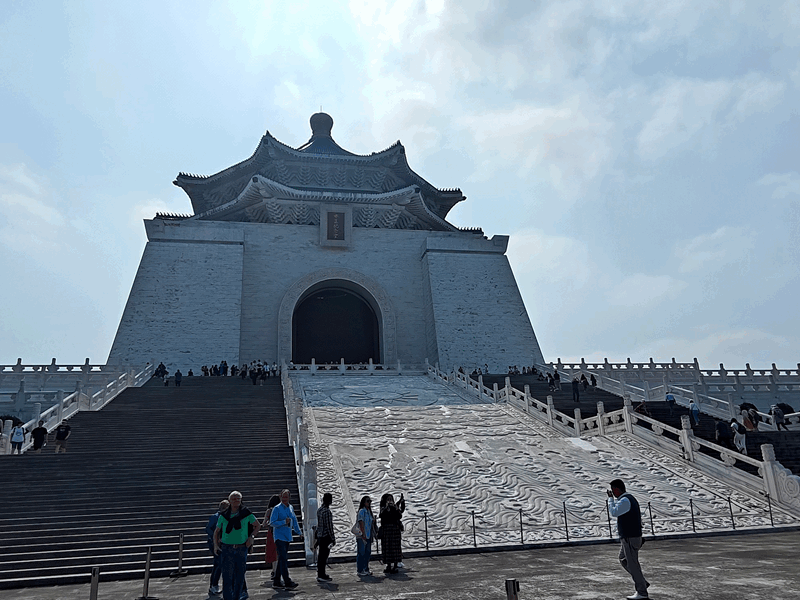
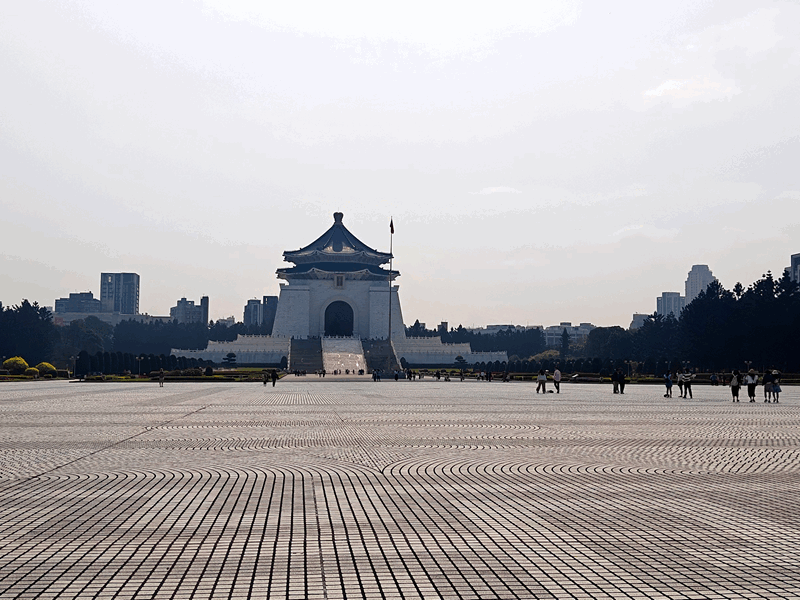
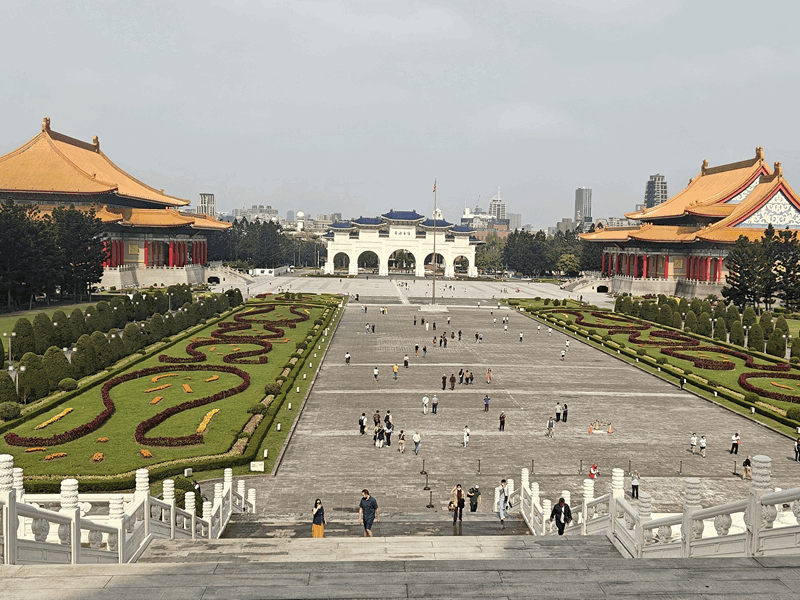
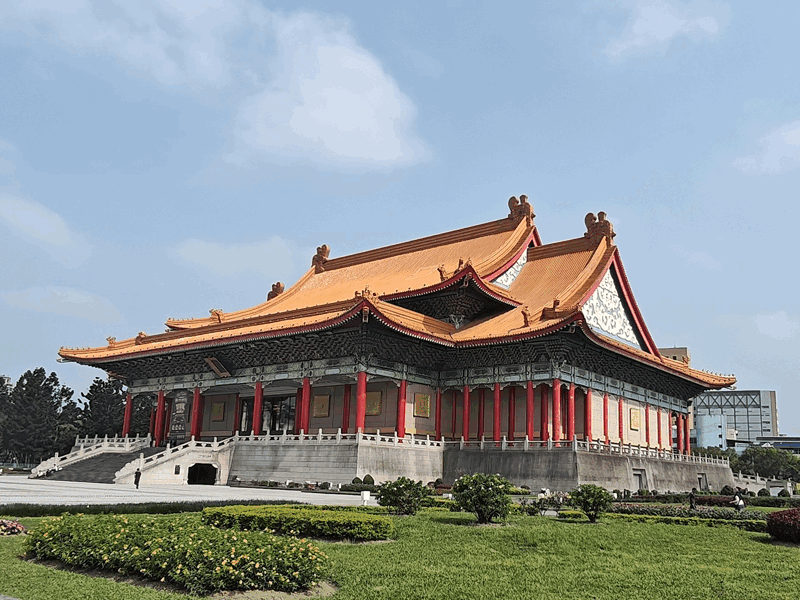
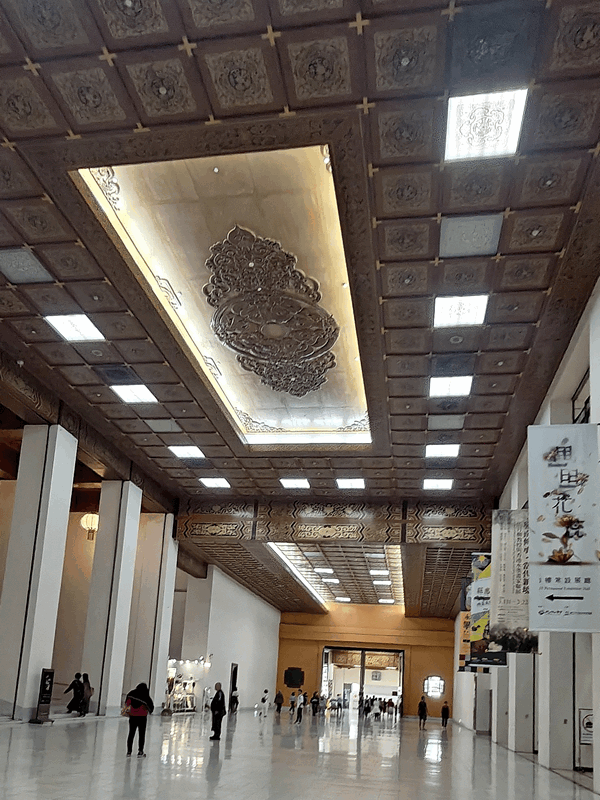
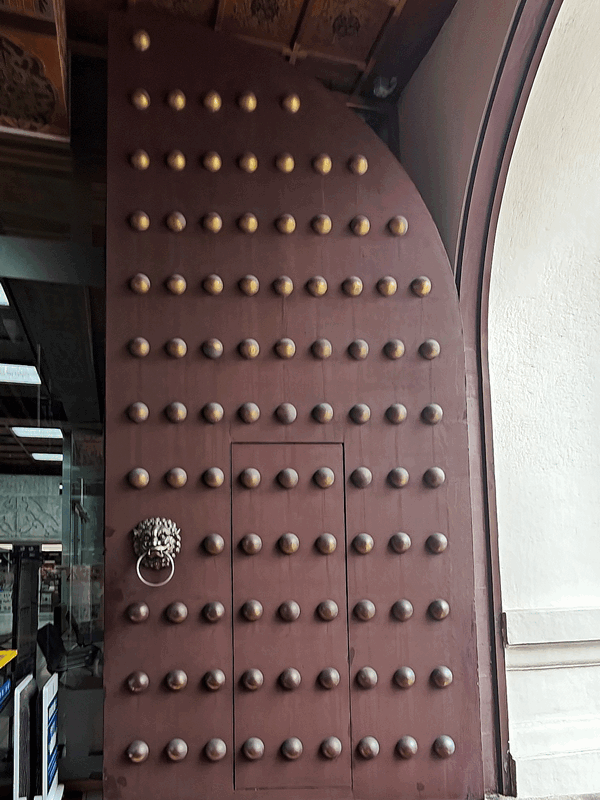
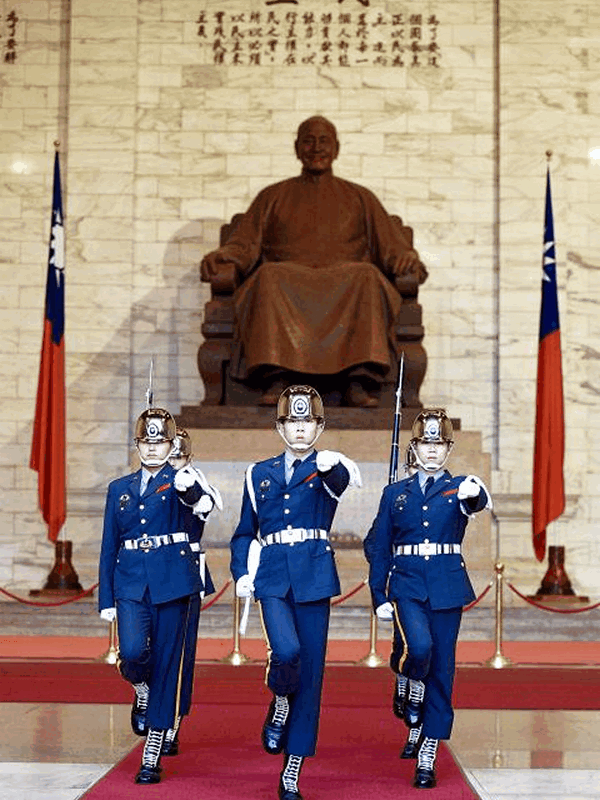
There are changing of the honour guard ceremonies but we just missed one.
By this picture we found online, they are not super impressive.
Also there are apparently often signs touting that “Taiwan does not need a memorial to a dictator”.
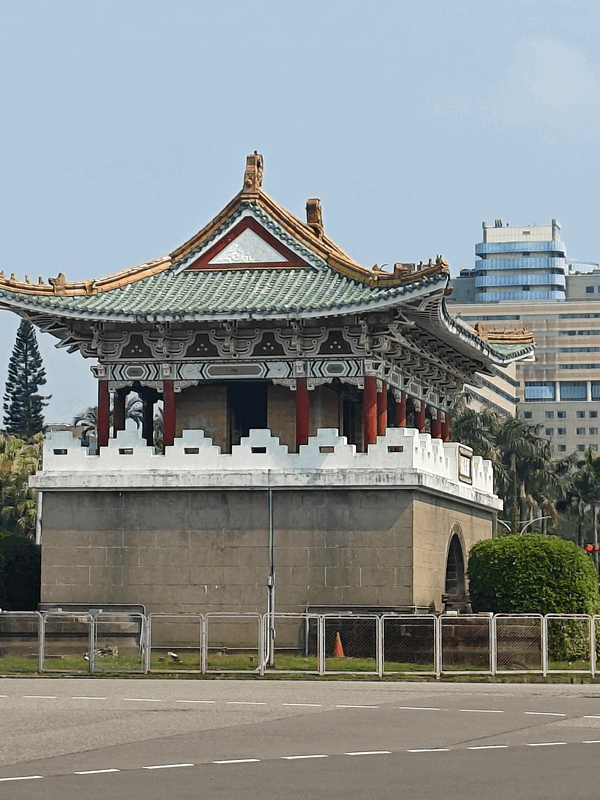
Exiting the memorial park you come across the East Gate of the City of Taipei which is not in its original state:
Across the traffic circle is the gated Taipei Guesthouse where visiting dignitaries used to stay but you can only peer through the gates these days as they renovate it. Apparently it’s open once a month for visitors but not today.
We peered through the gate:
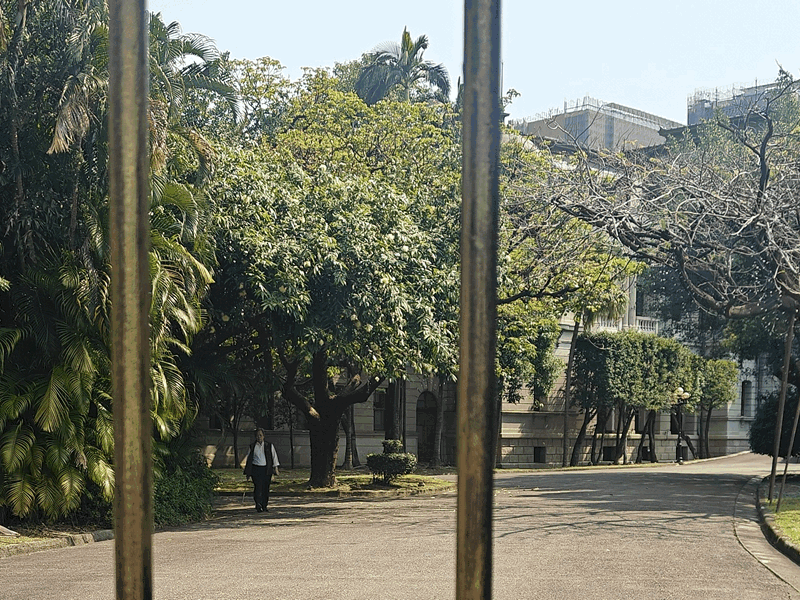
We passed by a street corner with a memorial to the victims of the “white terror” (more on that later) which is kitty corner to the Presidential Office Building:
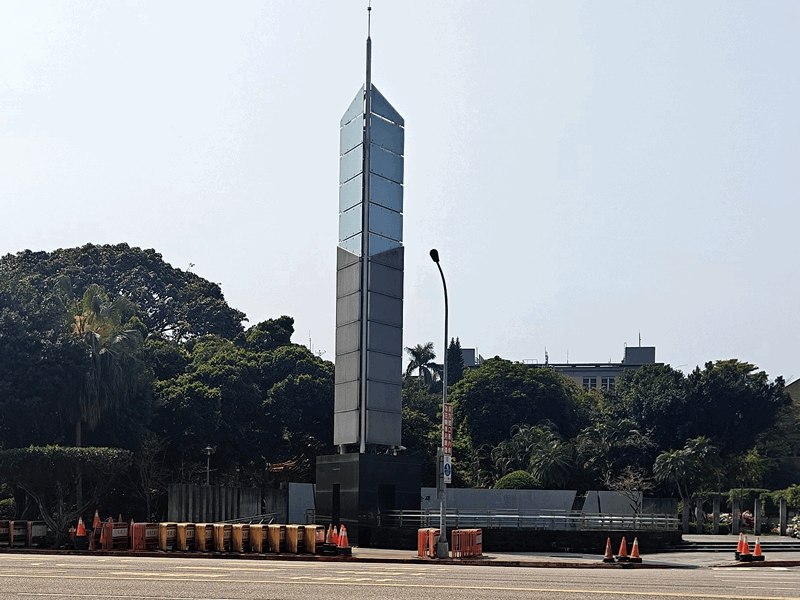
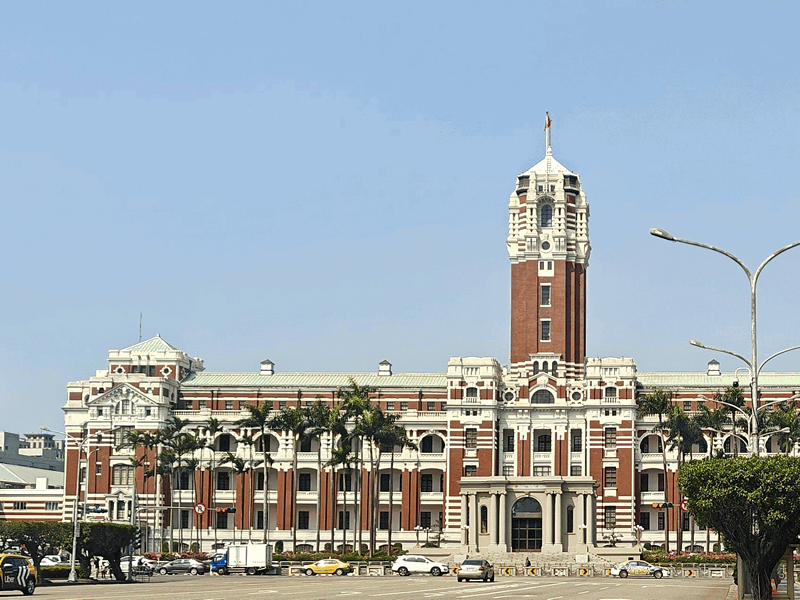
You can visit this building in the mornings and actually “see the desk the president works at” (one of the very few places in the world you can do this) but this did not interest us.
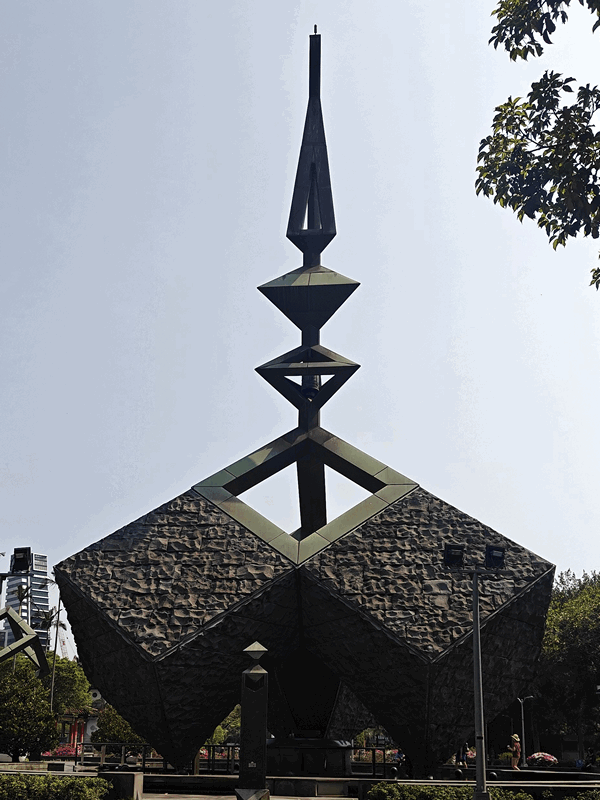
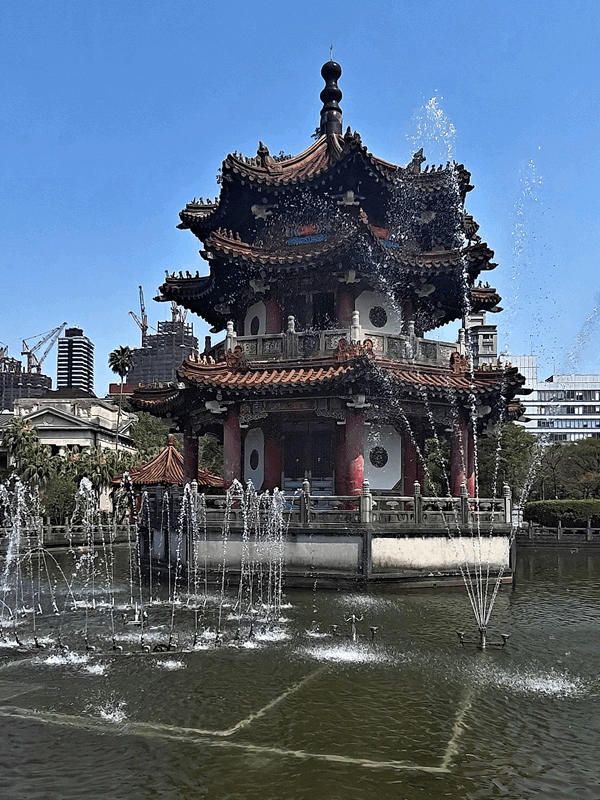
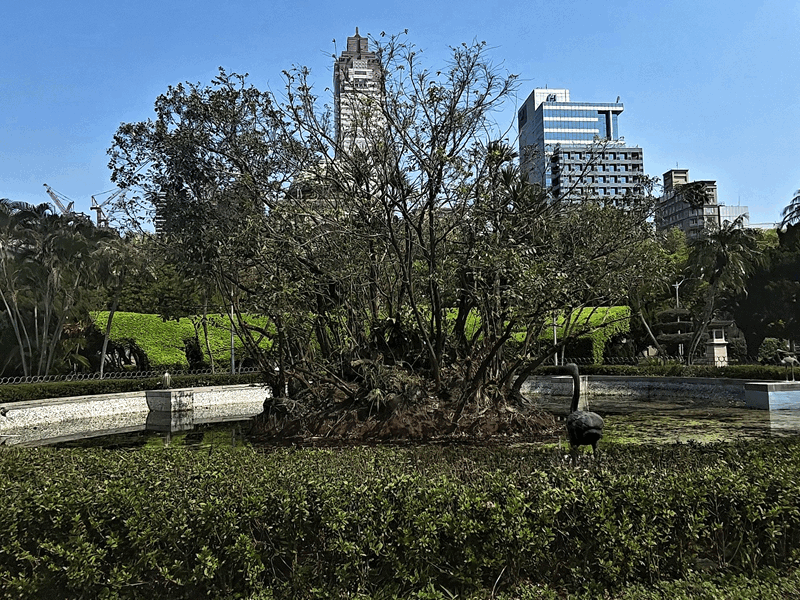
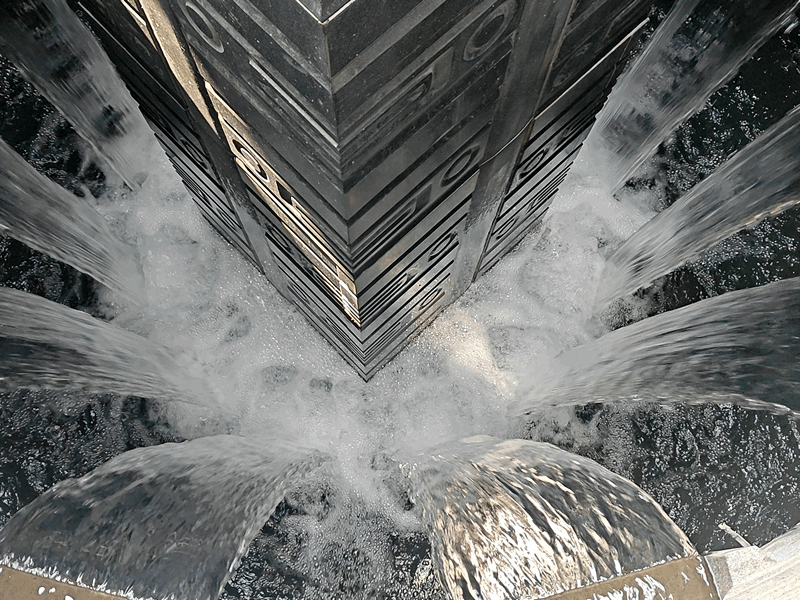
Next stop was the 2-28 Peace Memorial Park. There is a lovely sculpture/fountain here and a small museum building which was not open today.
The February 28 incident was an anti-government uprising in Taiwan in 1947 that was violently suppressed by the Republic of China. Led by president Chian Kai-shek, thousands of civilians were killed beginning on February 28. The incident is considered one of the most important events in Taiwan’s modern history and was a critical impetus for the Taiwan independence movement.
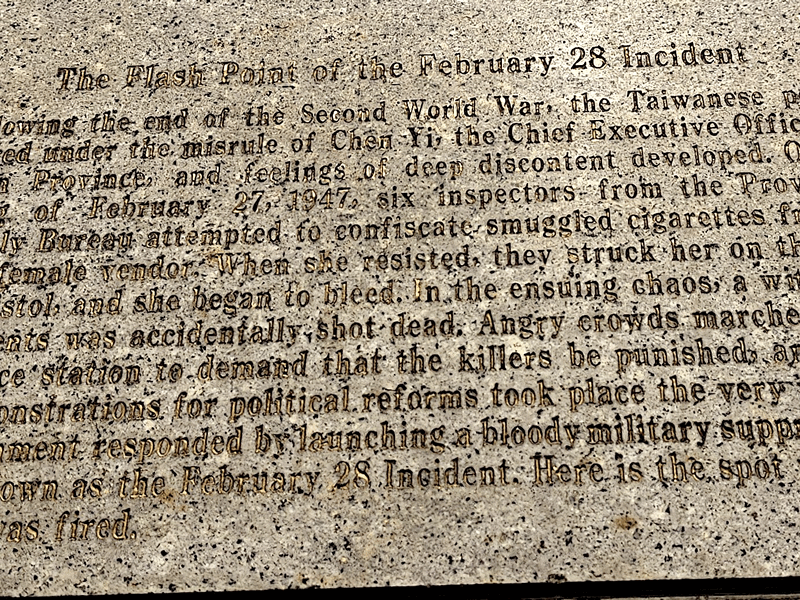
The flashpoint came on February 27, 1947, in Taipei, when agents of the State Monopoly Bureau struck a Taiwanese widow suspected of selling contraband cigarettes. An officer then fired into a crowd of angry bystanders, hitting one man, who died the next day. Soldiers fired upon demonstrators the next day, after which a radio station was seized by protesters and news of the revolt was broadcast to the entire island. As the uprising spread, governor called for military reinforcements, and the uprising was violently put down by the National Revolutionary Army. Two years later, and for 38 years thereafter, the island would be placed under martial law in a period known as the “White Terror“.
During the White Terror, the government persecuted perceived political dissidents, and the incident was considered too taboo to be discussed. The event has been openly discussed since 1995, and its details have become the subject of government and academic investigation. February 28 is now an official public holiday called Peace Memorial Day, on which the president of Taiwan gathers with other officials to ring a commemorative bell in memory of the victims. Monuments and memorial parks to the victims of the February 28 incident have been erected in a number of Taiwanese cities.
The number of deaths from the incident and massacre was estimated to be between 18,000 and 28,000. A commission was given the power to award to the family of anyone who died in the period of the insurrection and the restoration of Nationalist government rule an amount of NT$6,000,000, about US$150,000. The families did not have to prove that the death was related to the above events. A total of 800 people came forward to get the awards for the people who died during the period.
It’s a beautiful and as a matter of fact Taipei has many green spaces with shade and lots of bathroom facilities.
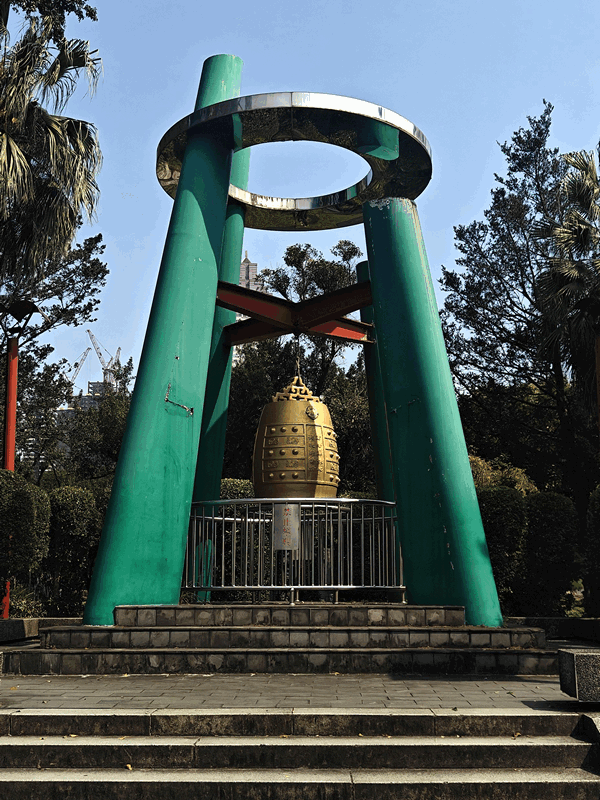
We left via the northwest corner hoping to find a food stall selling sour plum juice but there was nothing set up anywhere nearby. We were quite hot as the sun had come out as we left the first memorial and it was pretty muggy so since we couldn’t get juice we went looking for some ice coffee (hoping to find a cafe like Cong Kafe in Vietnam). We found a little shop that does iced Americanos and enjoying some time at a table in the AC.
The next few stops on this walk did not interest us and the National Taiwan Museum was not open today (we have a day here in the city before we head home and if we can manage it, we’ll fit it in as it’s a Thursday) so we strolled off refreshed heading to the North City Gate (the only one that still remains in its original style we read) only to find it covered in scaffolding! The second picture is a photo of what it will look like when renos are done.
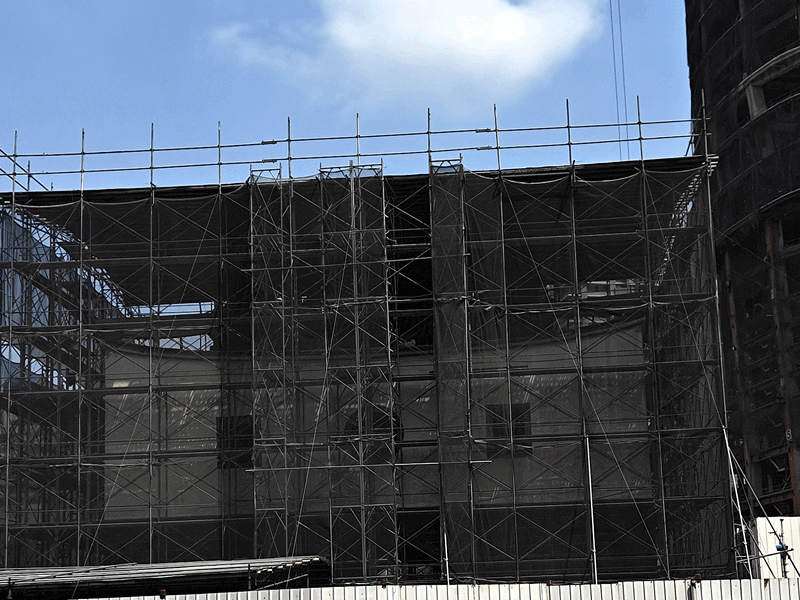
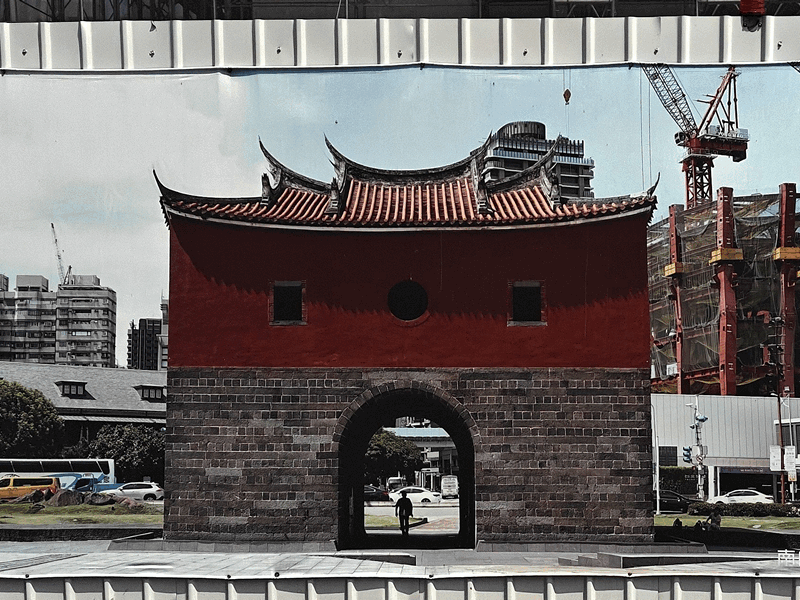
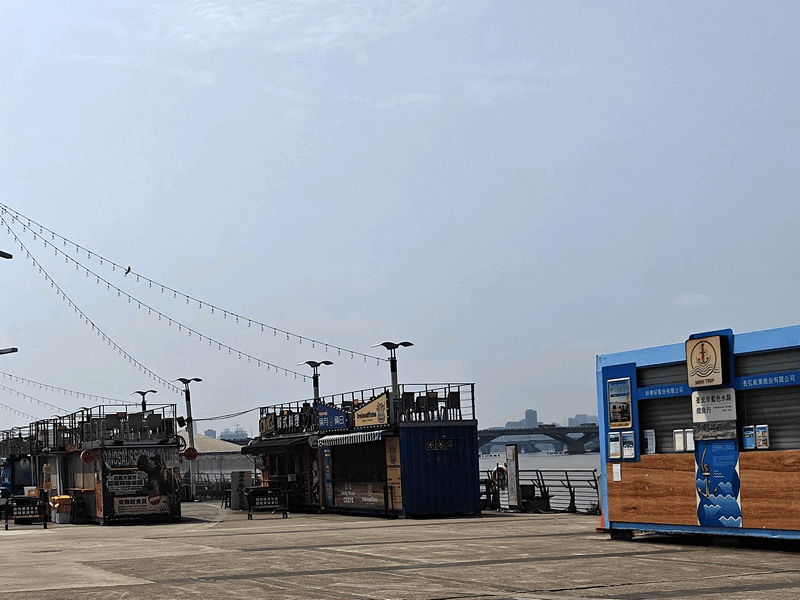
We continued westward to the Tamsui River over to Pier 5 – an attraction in our guide book. The walk along the river came with a much welcome breeze but upon arriving at the Pier (where you can catch a ferry across the river), it appeared to be a place that was only open in the evenings as it was a number of restaurants with a great deal of outdoor seating.
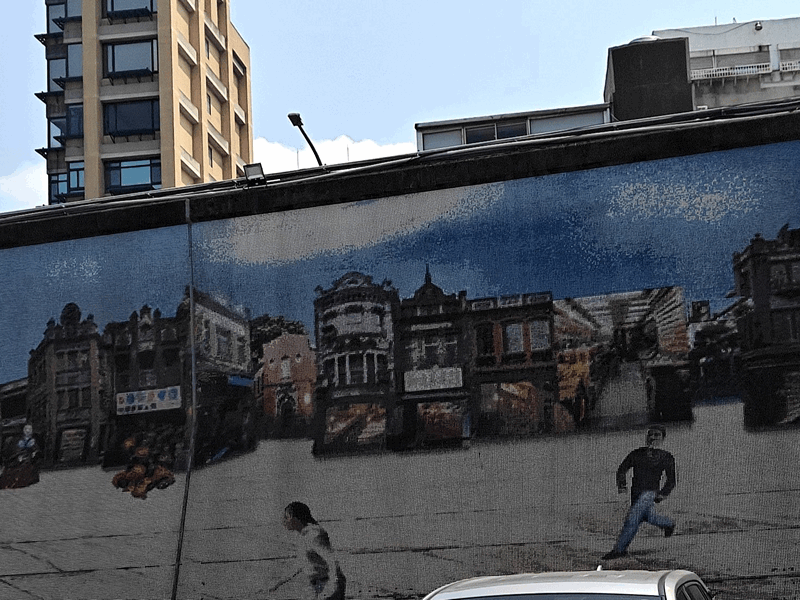
However we did see a few murals along the nearby walls under one of the highways:
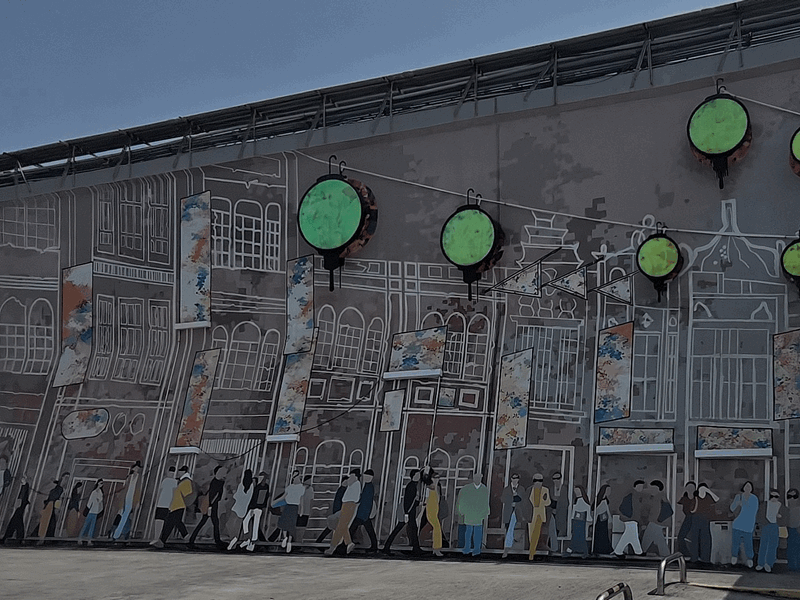
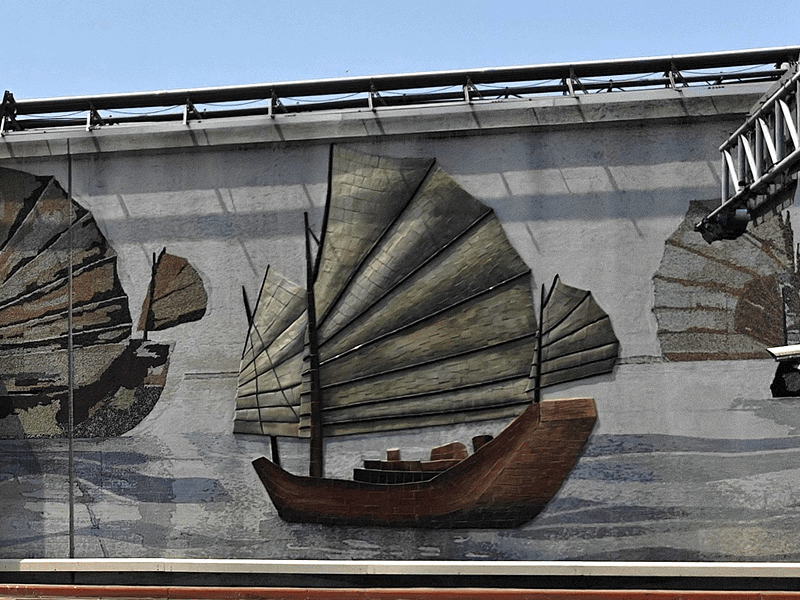 We had one more “sight” to check out today. The day was going faster than expected since the museum was closed. Dihua Street consists of a long row of former merchant mansion which has been restored and is now peppered with cafes and various types of shops. It was a pleasant stroll but we are not shoppers. If you don’t come out from under the covered sidewalks and look up, you won’t see the building facades:
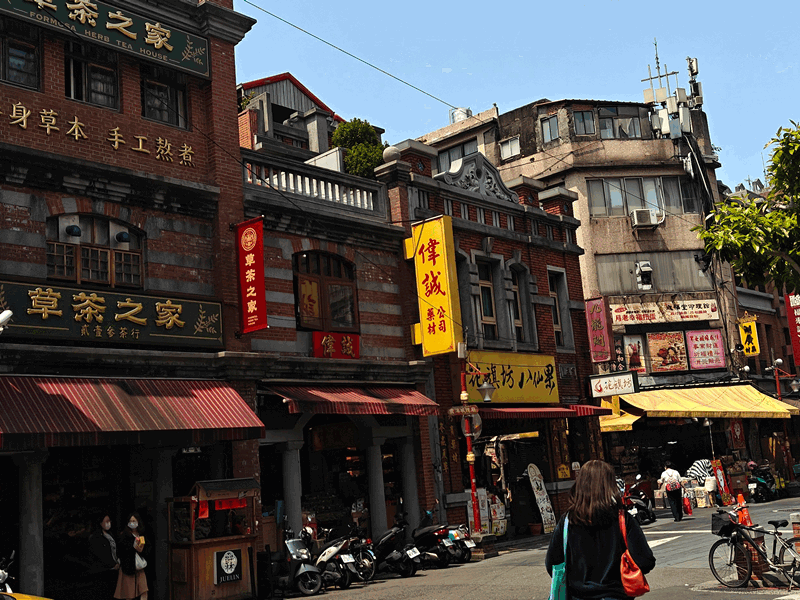
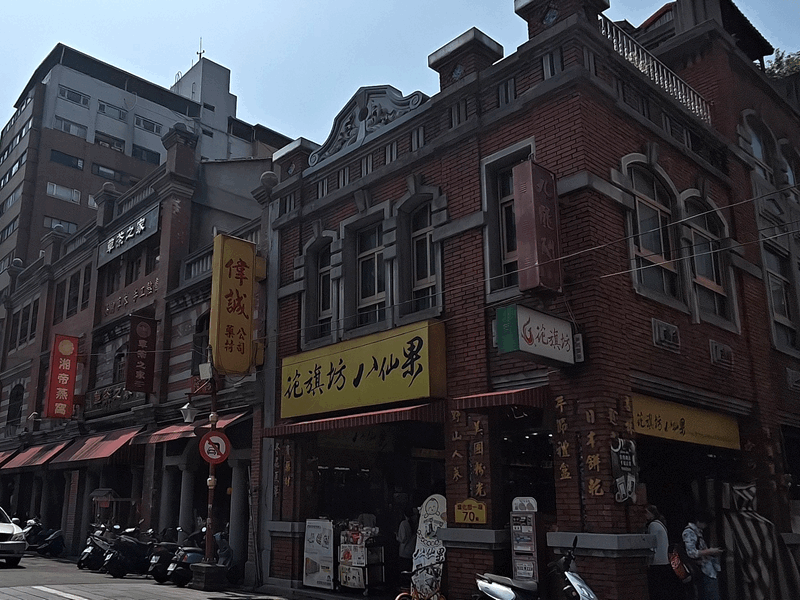
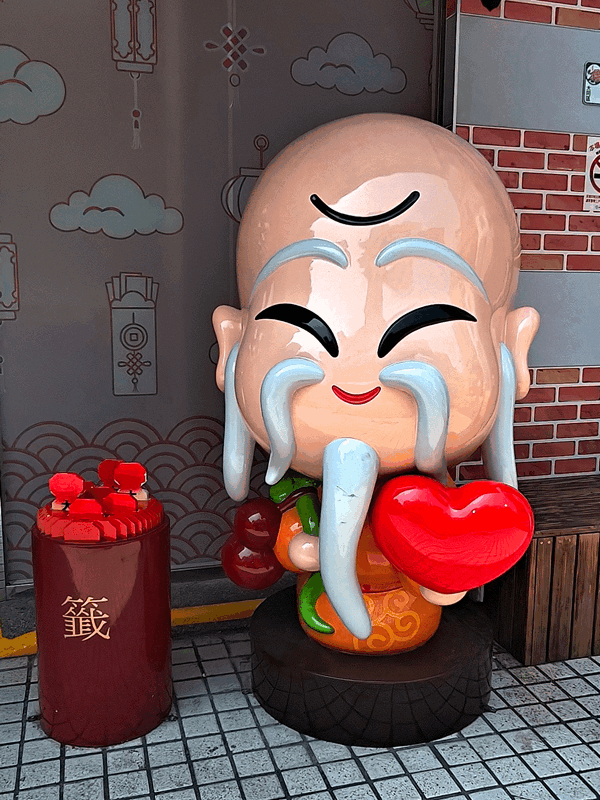
A random sighting:
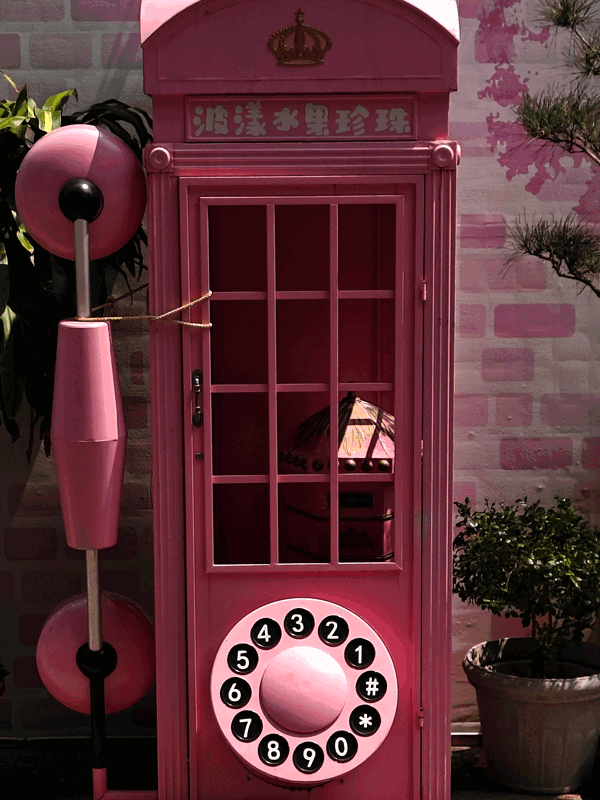
We were now near the street where our hotel was located so we walked over to it and returned. Enroute we saw the plaque installed where the shot from the 2 28 incident took place.
We also stopped in a tall skinny mall where Doug wanted to check out the price of Hoka’s – his fave sneaker – they had been so cheap in Vietnam ($30ish) but no such luck here. With the exchange rate they were merely $12 less than in the US.
Upon arriving at the hotel, Fran asked the receptionist about train tickets. We want to catch the train on Wednesday to the city of Hualien on the east coast and we should be able to purchase these tickets with our Easy Card. She suggested not waiting to do that at the train station the day of but rather booking ahead and she said all the machines were only in Chinese at the station and the 7-11’s. However we could purchase them online, take the booking reference and our passports to the 7-11 and pay for them there. This sounded good so Fran did that. However when we got to the 7-11 he told us we can only use cash to pay for tickets. Oh well, we’ll find a way to use up the balance.
We spent the afternoon reading and chilling before heading out for dinner at 6. After making a reservation last night at this busy spot for tonight, we were surprised we were the ONLY customers. Luckily the fellow running the place spoke very good English (he’d spent two months in California) and he made us a lovely dinner. Fran tried the local Taiwanese Plum Wine and it was very good. It’s quite aromatic and only 9% alcohol.
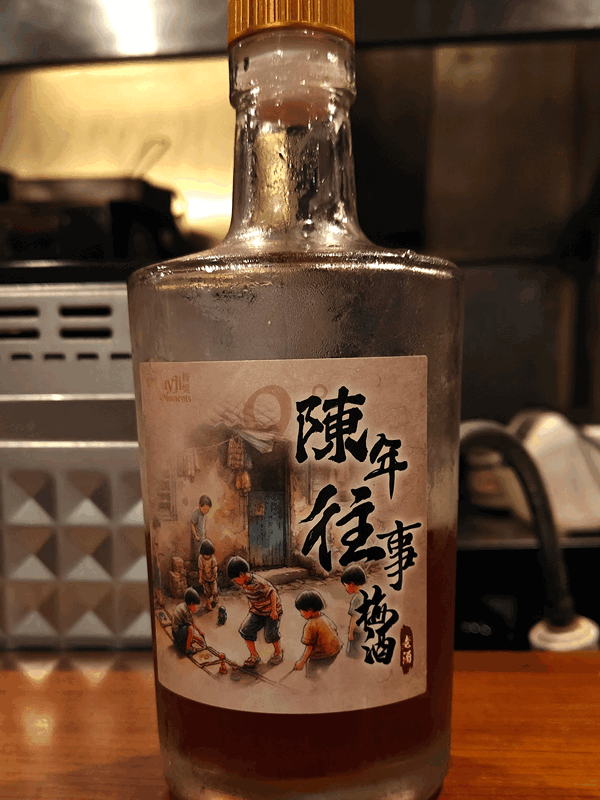
Tonight we struggled to stay up. We had hoped to make it till ten pm tonight but gave up at 9:15. We have booked a tour for tomorrow to take us to some spots outside the city.
Again, we were up before 5 which is about an hour before the sun rises. The sky was overcast and threatened rain. We had to be at the tour meeting point by 8:45 so after doing morning stuff we headed out hoping to hit the lovely Boulangerie but it wasn’t open yet. Enroute to the Taipei Main Station to meet our guide, we passed a McDonald’s and we thought we’d try an egg McMuffin – it was pretty true to standard.
The meeting point was at the main station and we were early so we went into the station to use the restroom and see if we can figure out where we need to go tomorrow to catch our train south. We think we did but we’ll know tomorrow for sure!
Our guide was a the meeting point outside the station and everyone was given a lanyard tag to where before piling onto the bus. The group was not as small as we’d hoped but it could have been worse. Tony, the guide, spoken fair English with a strong accent and love to interject the word “okay” a couple of times in every sentence!
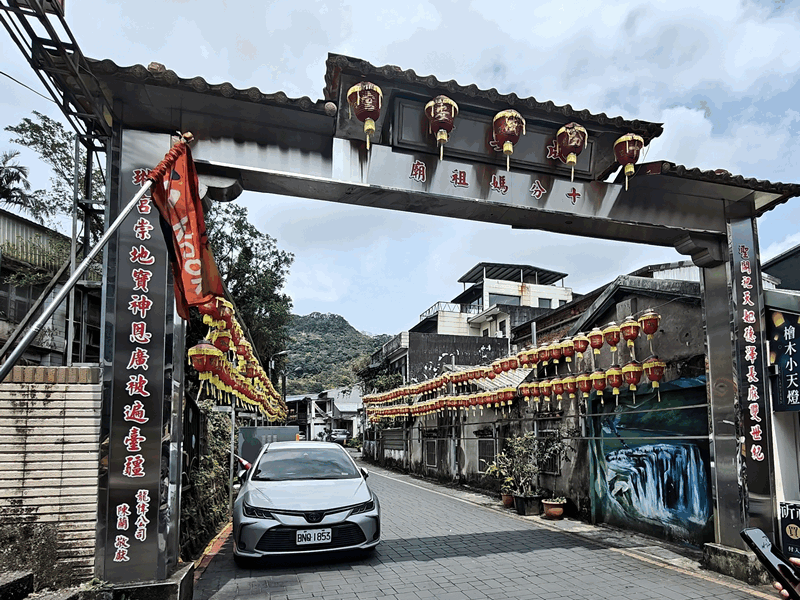
We drove for just over an hour eastward out of Taipei to the small village of Shifen in the mountains which was formerly a coaling mine town back in its day. The sun came out for a while but never fully. During the drive Tony gave us some info about the town and took orders for lanterns, drinks and snacks that would be ready for us on arrival.
Here we first visited the Waterfalls – 20 m / 66′ tall and 40 m / 130′ across making a lovely curtain of water into a pool (the guide actually compared it to Niagara Falls – NOT!).
In order to get to the view platform we had to cross a suspension bridge over the river and we could see the coal carts from the mining days and we had to pass through a gauntlet of shops.
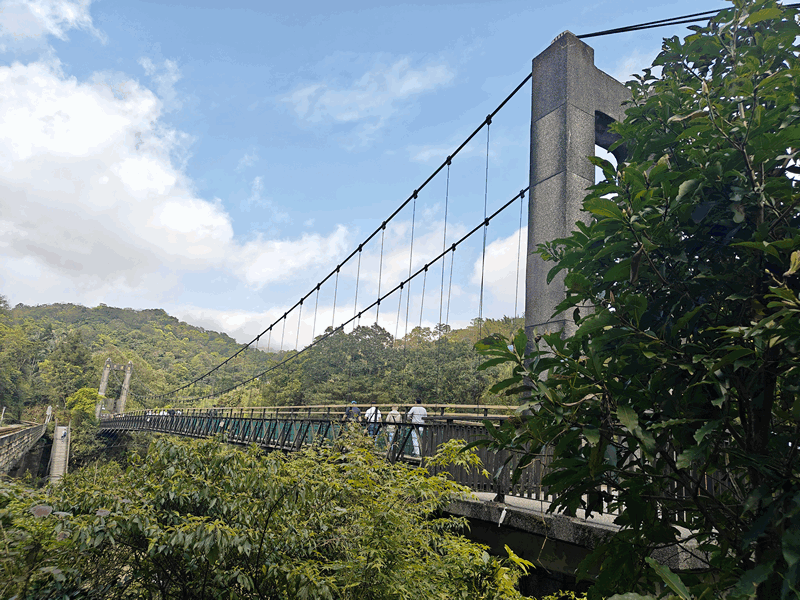


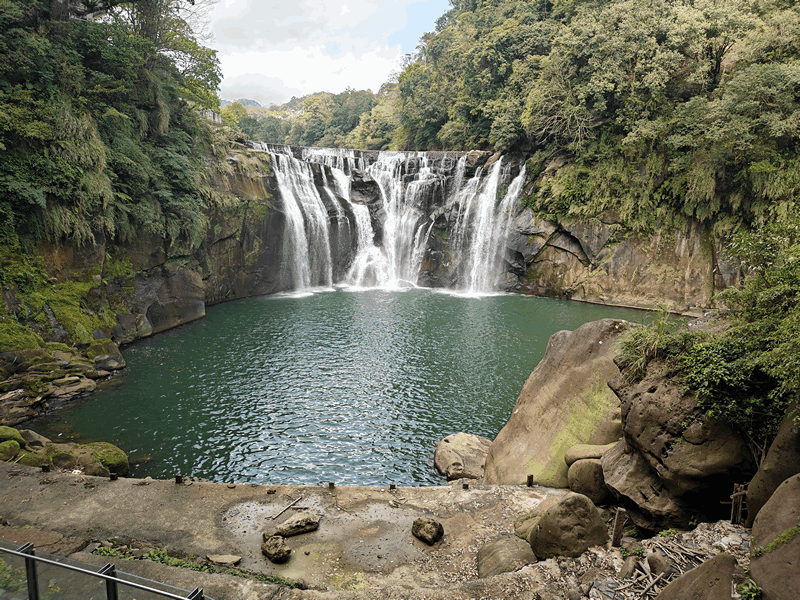

We wandered the trails checking out different view points and returned to the pick up point on time. A very nice stop.
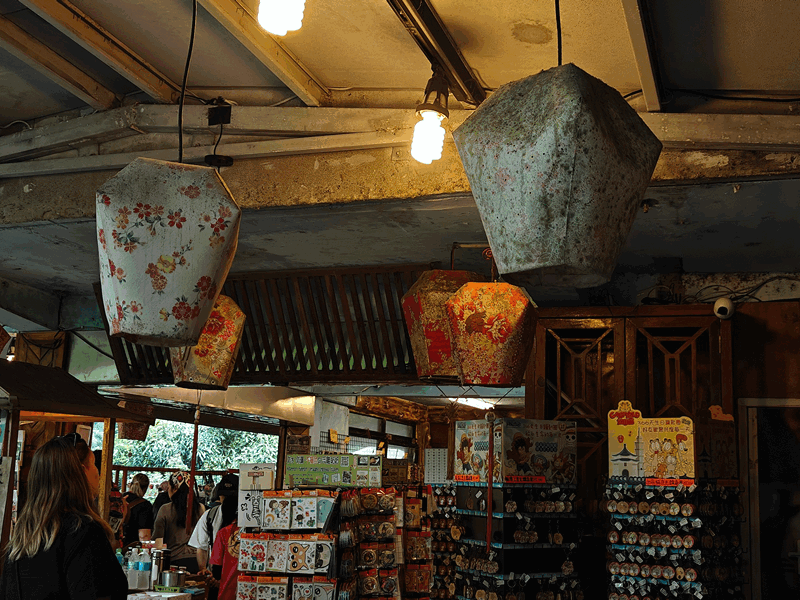
The bus took us into the village (we could have walked!) and we were taken to a shop that sells the lanterns. There are rather large four sided paper lanterns with a frame in the bottom. This town has a sky lantern festival in February but for the rest of the year, you can come and choose a colour (different colours have different meanings), write messages/wishes on it and then you go out and stand on the train tracks where a young man takes way too many photos of you (with your own phone) and it is lit and you send it up into the air. A bit corny but fun.
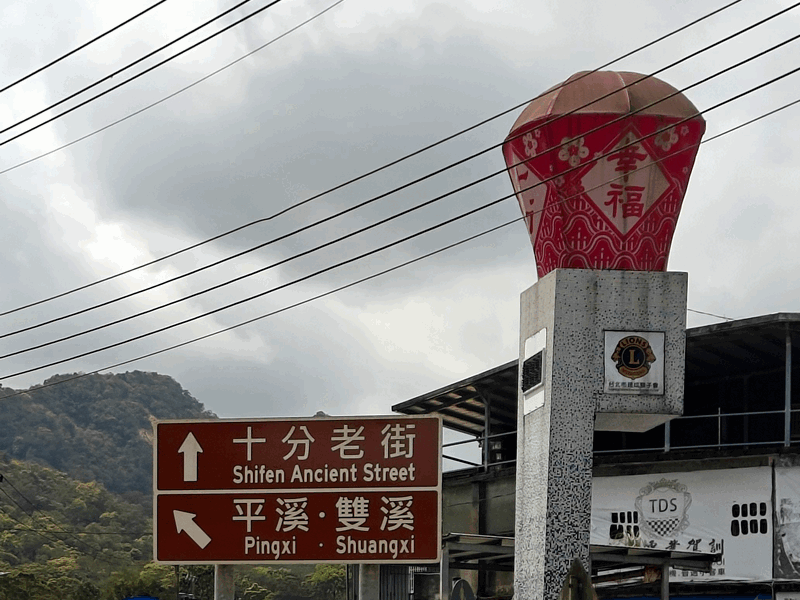
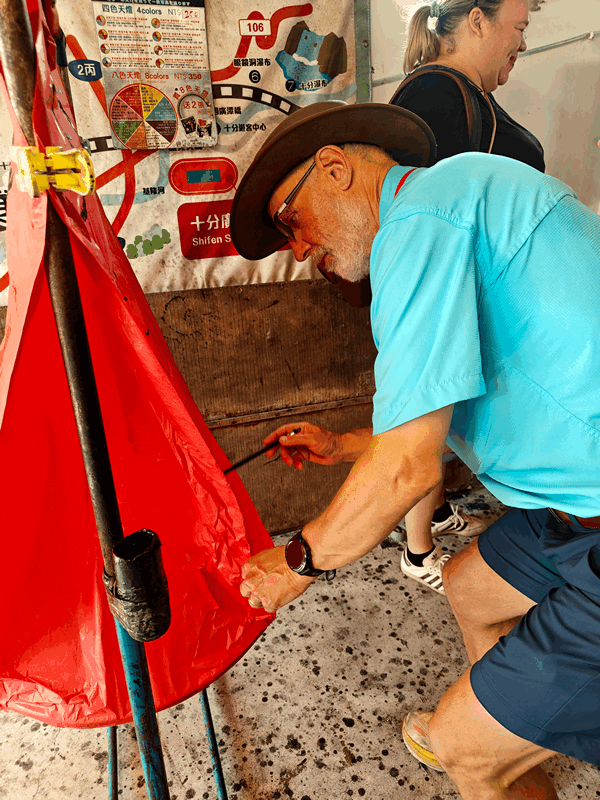
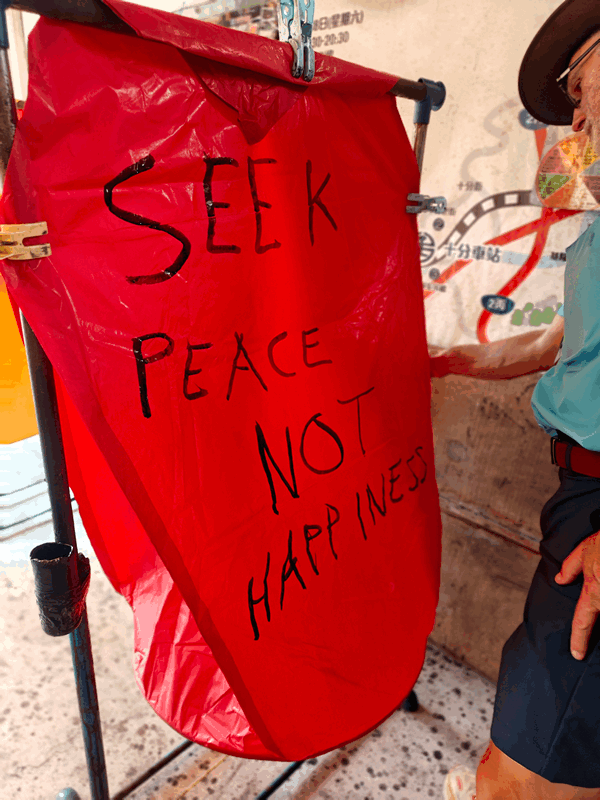


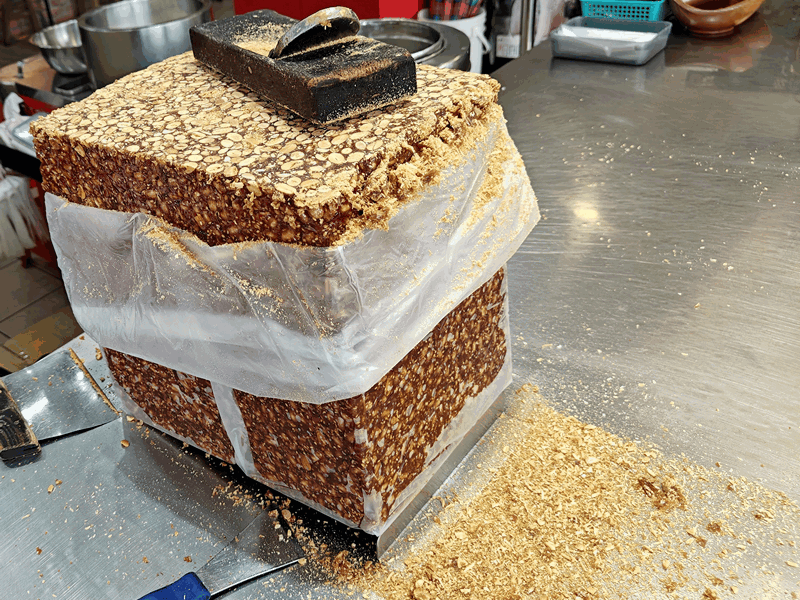
Tony then handed out the food/drinks. Doug ordered the bbq chicken wing stuffed with rice and a lemon smoothie and Fran had a peanut ice cream roll and a mango smoothie – everything was quite good. Later we saw how they make peanut ice cream rolls. the big block of nuts what they shave to put on the rice tortilla.

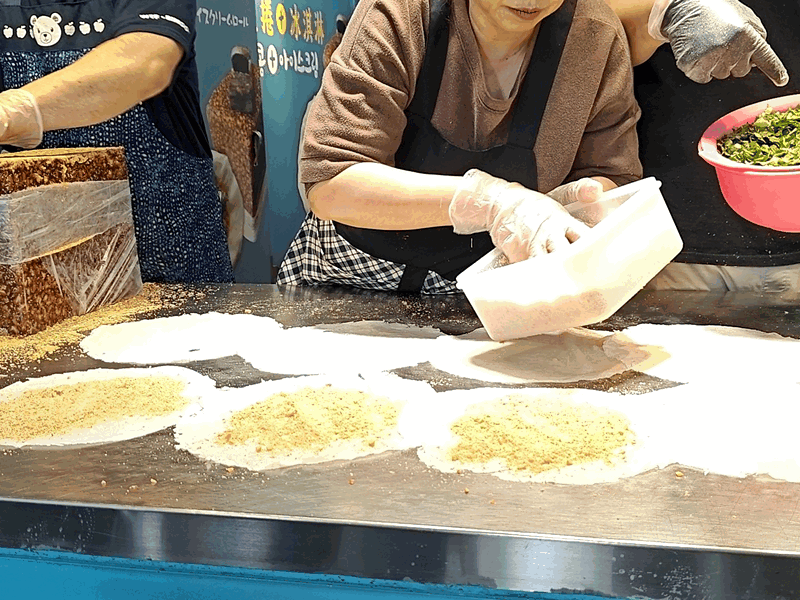

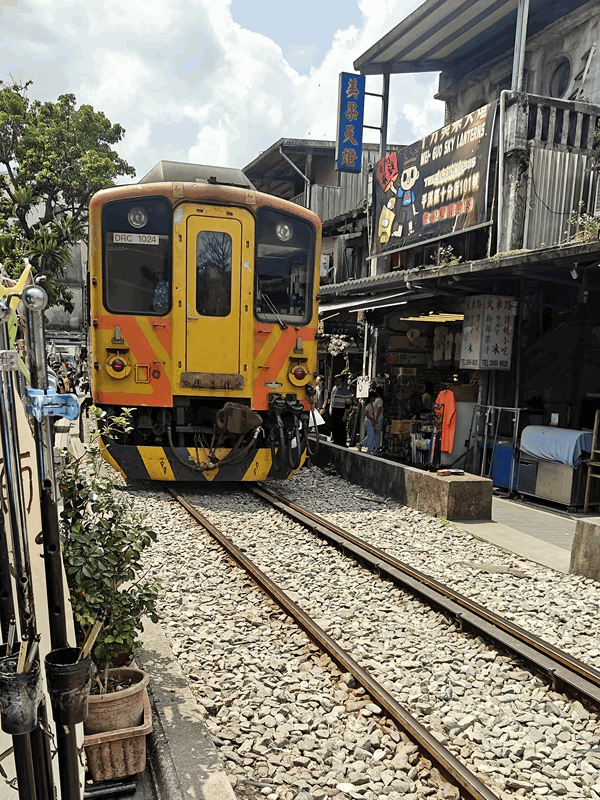
We wandered the “ancient street” which had a train track running up the centre of it (similar to Hanoi but not as close to the buildings). The train came through twice while we we there.

Here we purchased out Taiwan souvenir: a miniature sky lantern of course.
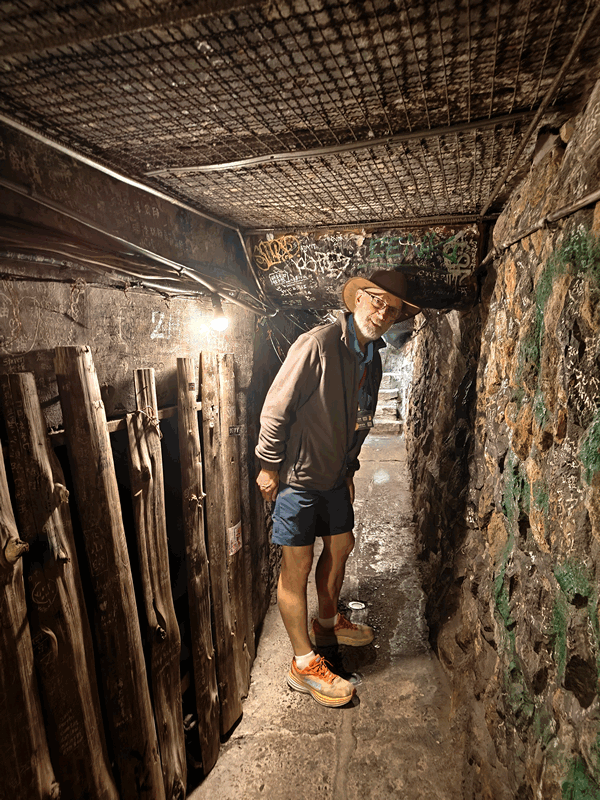
We were in Shifen for about an hour which was about the right amount of time. Back on the bus we went and about an hour later further into the mountains, we came to the village of Jiufen – a former gold mining town. This was a much bigger town with a much longer touristy street that twisted and winded around the hill. It was a nearly two hour stop and that was far too long. By the time we reached this town the fog was very thick and while wandering the town, it began to misty rain. We are not foodies and we’d just had snacks in the last town so we just walked around looking for a place to maybe sit and drink something with no luck. In the last town we’d seen a stall with Vietnamese ice coffee but already had drinks so we looked here with no luck. We did found a cool small tunnel. There are hundreds of food stalls but few have seating areas – they apparently want you to eat and browse the shops. Just before leaving we found a pineapple cake stall, tried a couple of samples and bought a package.


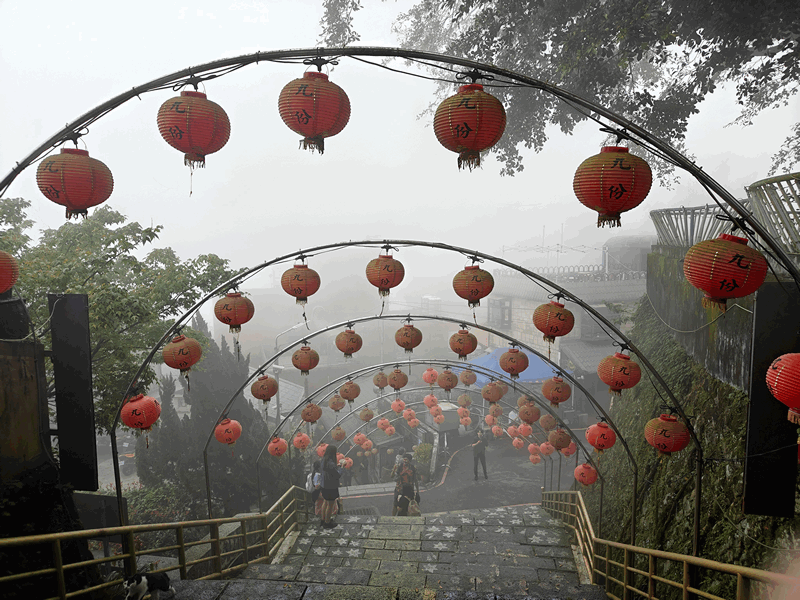
Here was the view of the harbours below on the coast that we got:
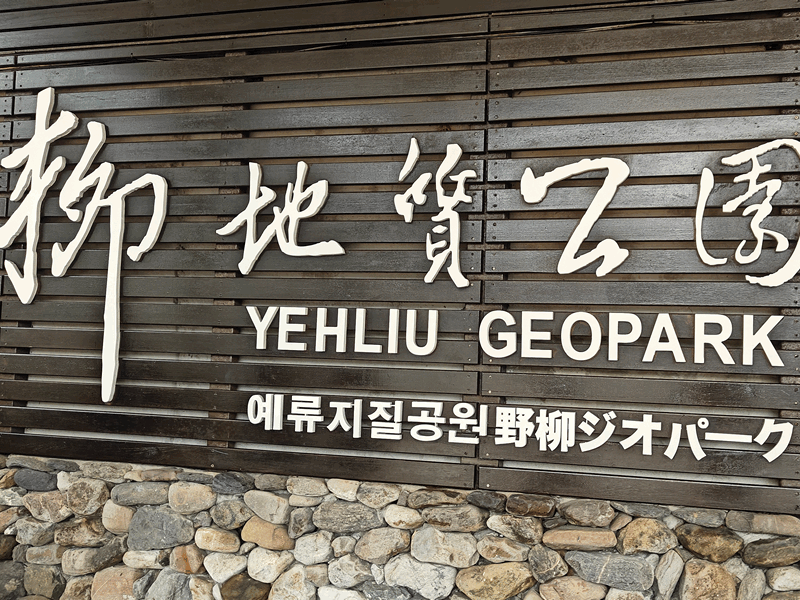
We were back on the bus at 3pm heading to our last place on the tour: Yelhiu Geopark. It was about 35 km / 22 mi away and as we drove further the rain stopped and once we got there, the fog lifted a lot but the sky remained overcast.
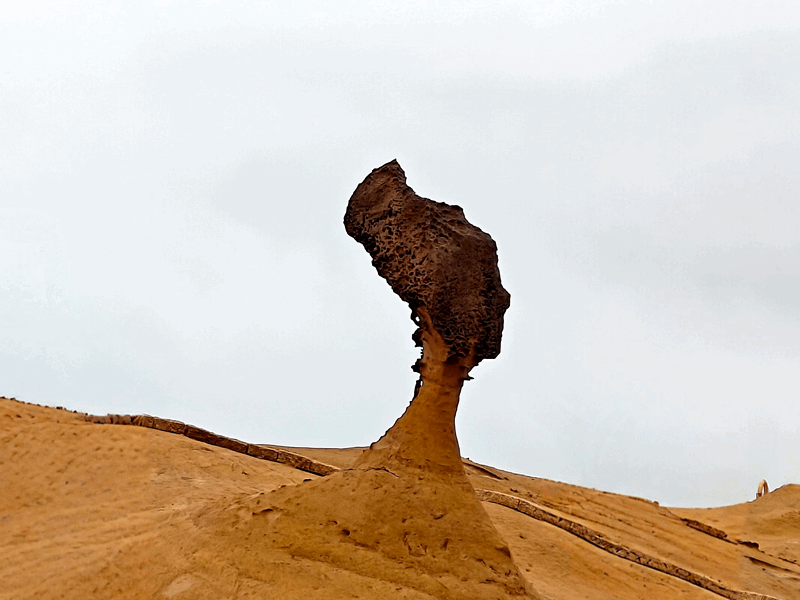
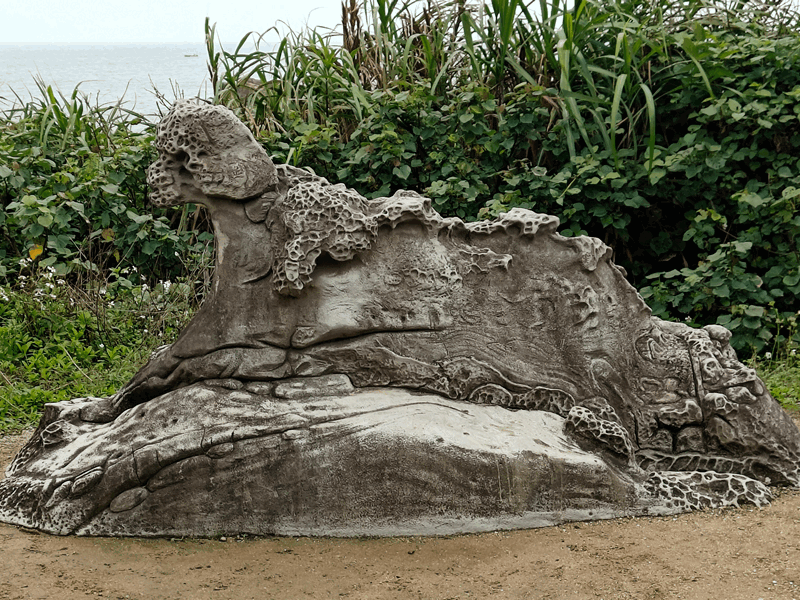
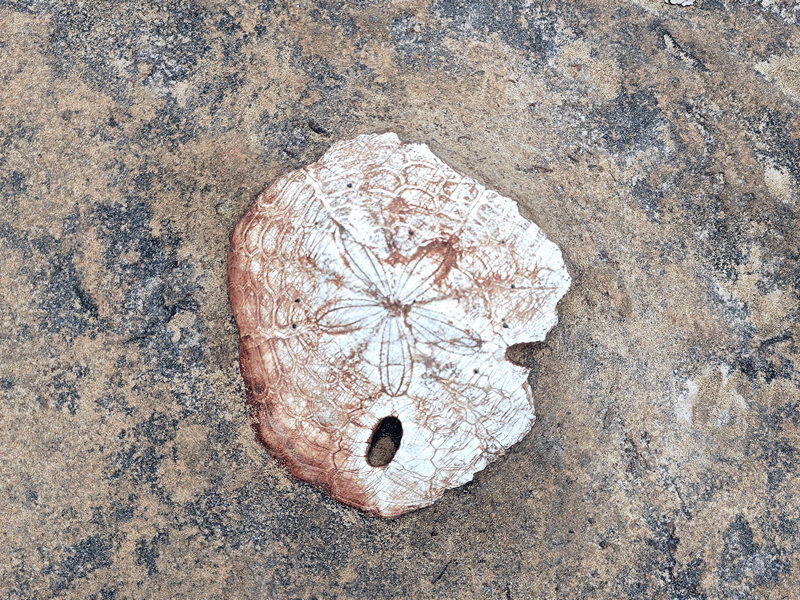
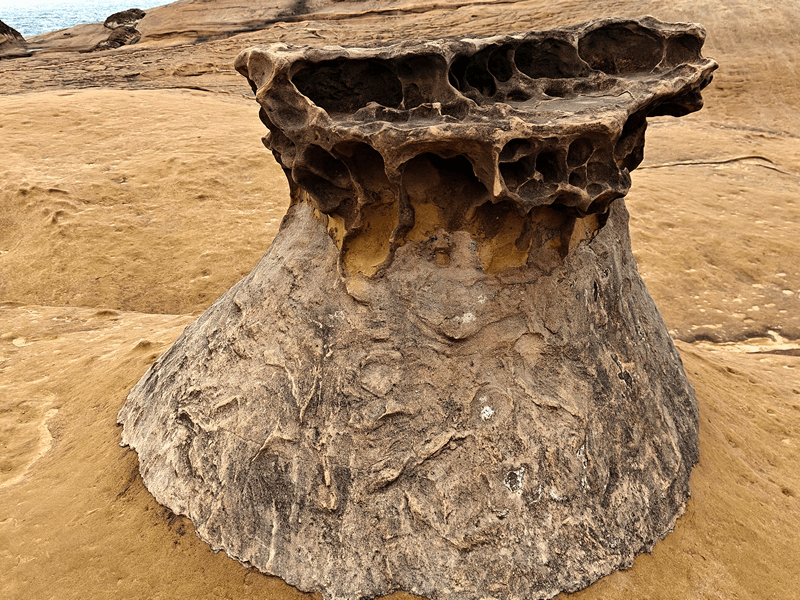
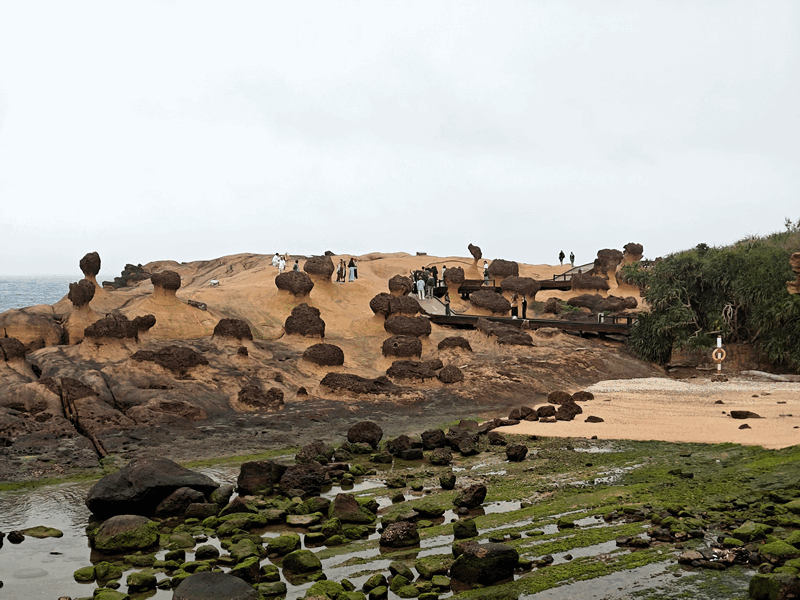
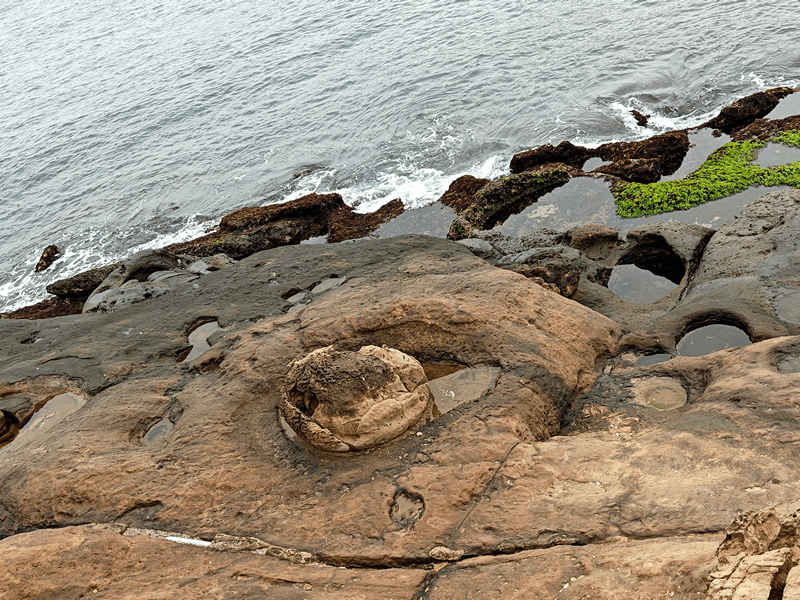
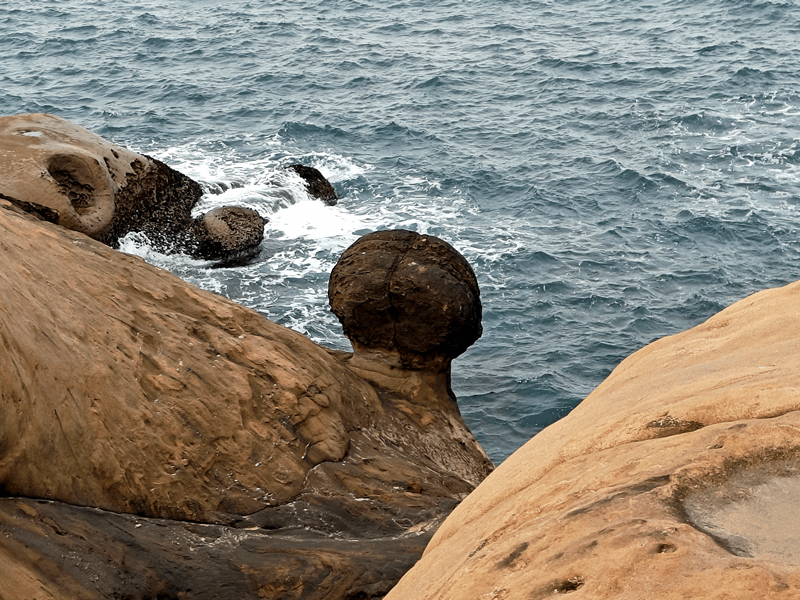
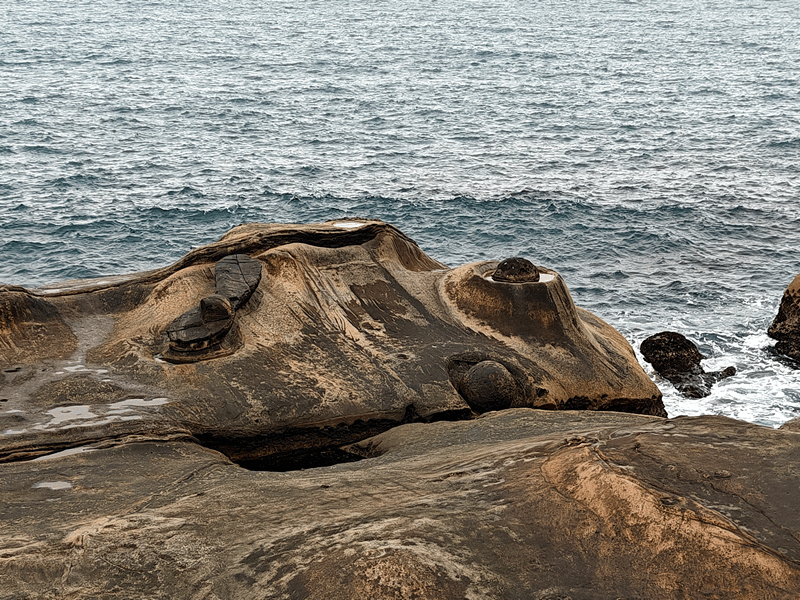
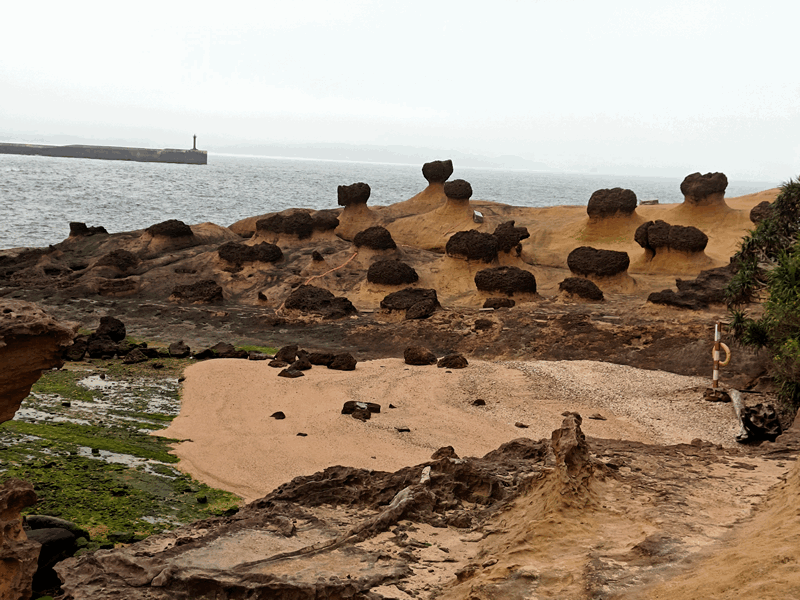
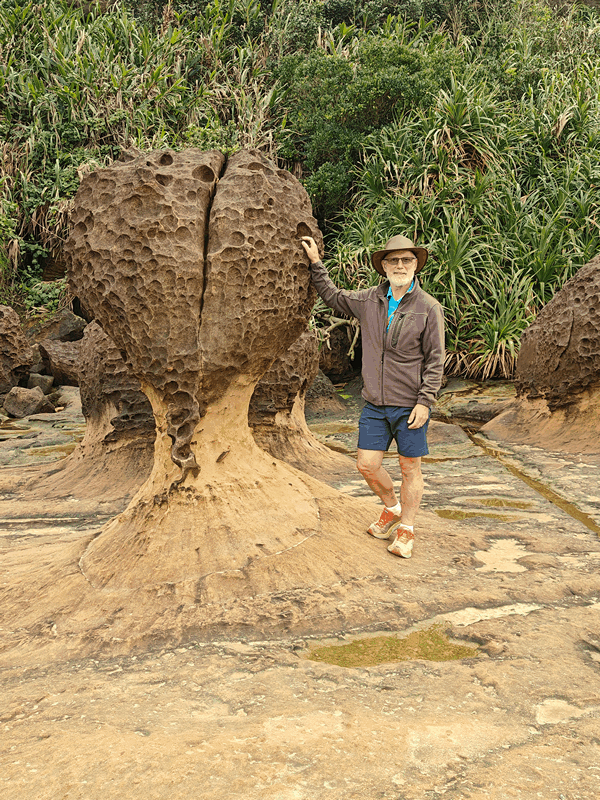
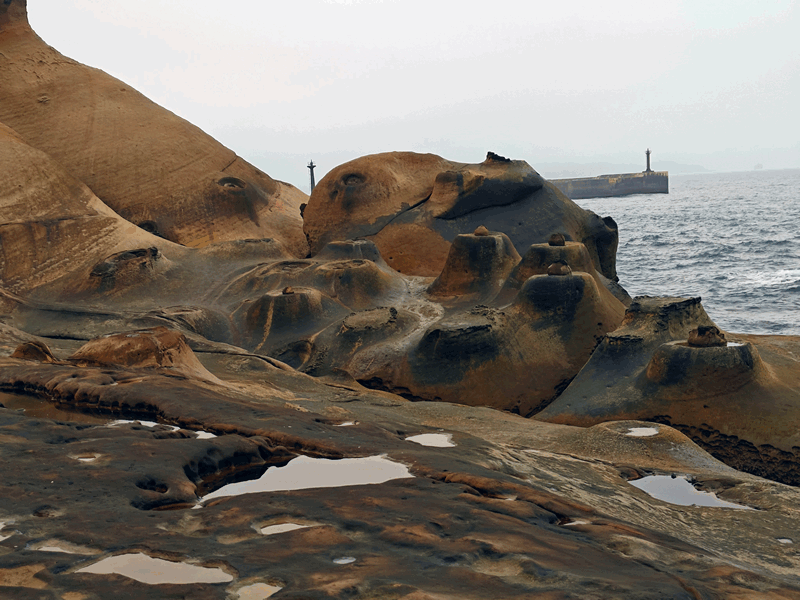
The cape, known by geologists as the Yehliu Promontory stretches approximately 1,700 / 5,600’ into the ocean and was formed as geological forces pushed the Datun Mountains out of the sea. A distinctive feature of the cape is the hoodoo stones that dot its surface. A number of rock formations have been given imaginative names based on their shapes. The best-known is the “Queen’s Head” an iconic image in Taiwan.
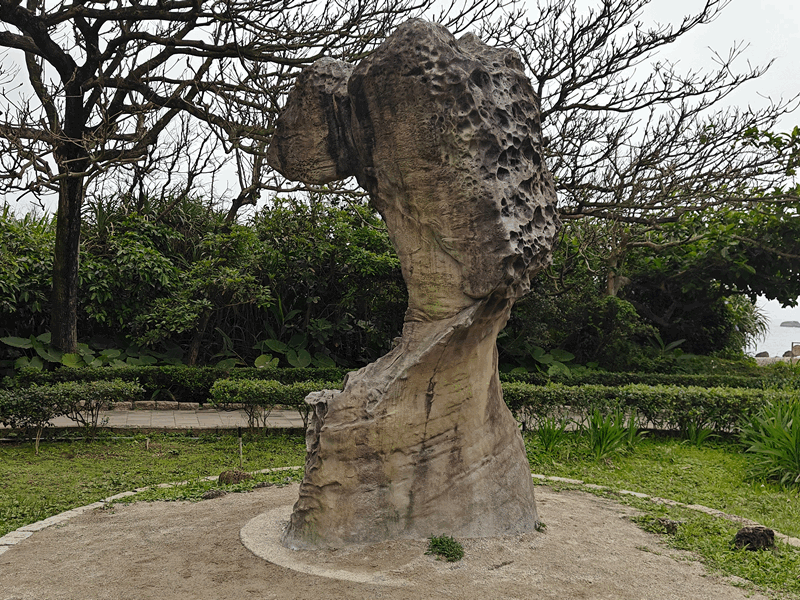
The Queen’s Head rock is a natural formation named after its resemblance to a woman’s head, it took over 4,000 years to form. The length of its neck is 125 cm / 49”, and it has been weathered at a rate of 0.2 to 0.5 cm / 0.079 to 0.197” per year. A successor to Queen’s Head, named Princess’ Head, was selected to redirect attention from Queen’s Head and prevent its further deterioration from human contact.
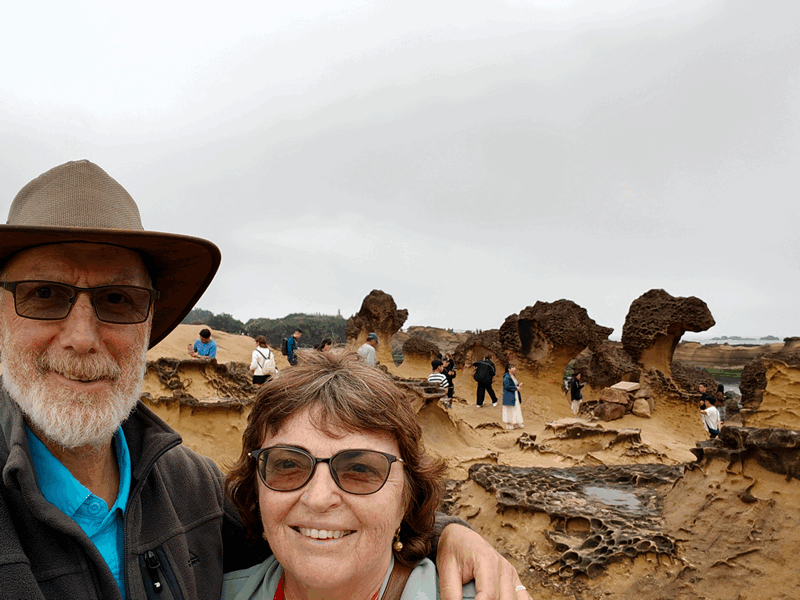
Here we were given 70 minutes to wander which was a bit rushed as this was a pretty cool spot and we could have seen more of the park although to be fair, the main sights were in the part we saw we understand.


After boarding the bus for the final time, we were taken back to Taipei and dropped off on the east side of the city at the Raohe Night Market. This worked well for us as we’d not taken in a night market as yet and the MRT station was right next to it with the green line to take us back near our hotel.

The big thing to eat at this market is the black pepper pork bun – supposedly Michelin star rated! The market is small but the oldest in the city. It’s about a block long and very crowded. We went down the less crowded side first which meant we missed the pork bun stall but upon turning around we found some chicken skewers, fries and beer to start our dinner.

Doug had tried the Taiwan Beer the other night and was not impressed but the lady at the stall told him to try the “18 day draft version” and it was much better.
We asked a few people about the pork buns only to learn they were right at the entrance so we must have walked right by them trying to take the less crowded side of the market. Fran was not too interested as she is not a big fan of pork but Doug got in a line that looked long but moved quite efficiently and he met her at the entrance. He found the bun tasty but too peppery for his taste so we didn’t get another – remember, we are not foodies!

Next we needed restrooms before going to find more food; we were told to go to the temple just outside the gates (which was lovely by the way – a Hindu temple) and lo and behold at the back were restrooms and an ATM – right in the temple!

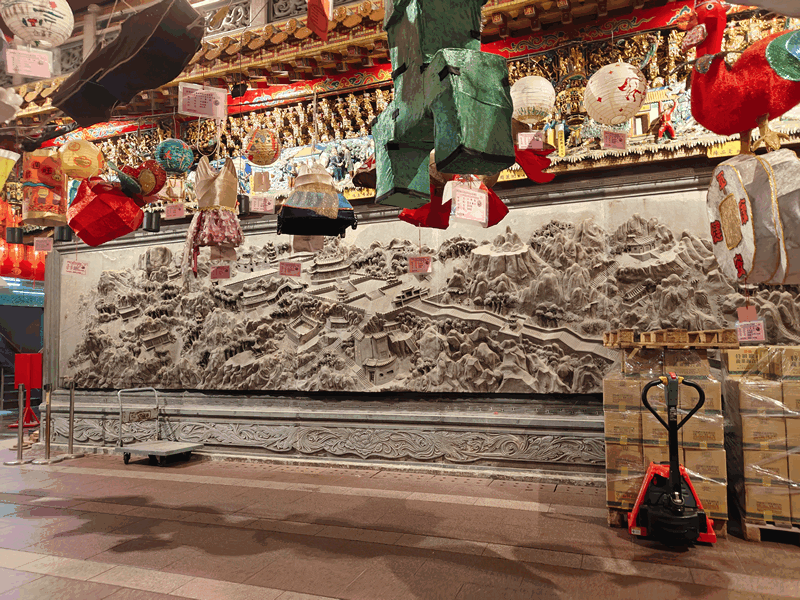
We returned to the market and got ice cream filled cream hot cream puffs – very yummy – and another beer. By now we felt full enough and headed to the train station after consuming our food – no food/drink allowed on the trains.
We were back in our hotel by 7:30 and struggled to stay away but forced ourselves till about 9:30.
Today we passed through 11 tunnels.